
 info@apexautoparts.co.uk
 +44 203 915 7535
 Safe & Fast Shipping
 Whish List
 Compare
 Sign In

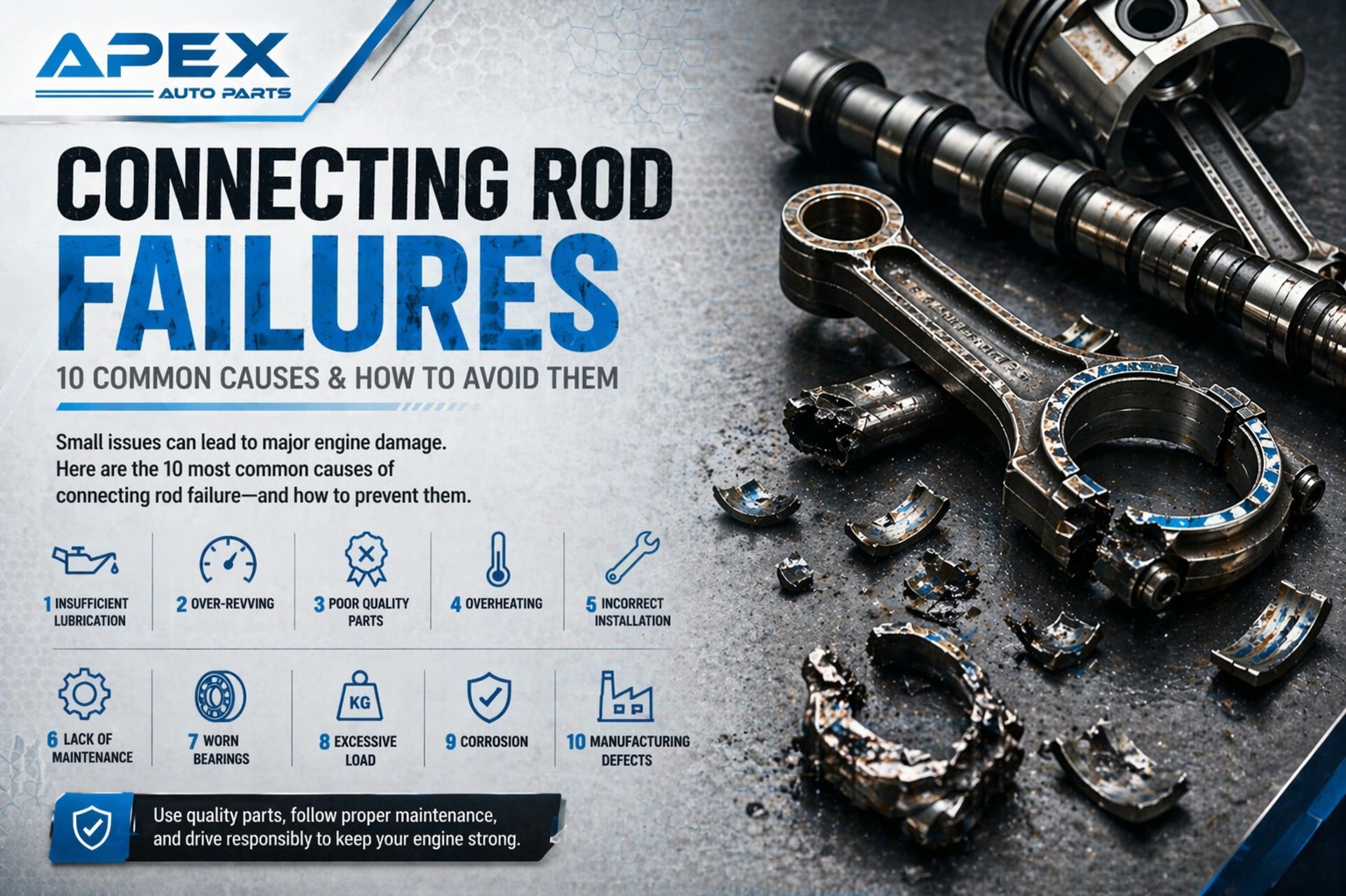
When it comes to your vehicle’s engine, the connecting rod is one of the most crucial components. It connects the piston to the crankshaft and plays a major role in ensuring your engine runs smoothly. However, if a connecting rod fails, it can lead to severe engine damage, leaving you with expensive repairs. Understanding the common causes of connecting rod failure and how to avoid them can help you maintain a healthy engine and avoid costly repairs.
In this guide, we’ll explain the most common causes of connecting rod failures and provide simple, actionable tips on how to prevent them.
1. Insufficient Lubrication
The Problem:
Lack of proper lubrication is one of the most common causes of connecting rod failure. When the connecting rod bearing does not get enough oil, it causes excessive friction. This leads to overheating, wear, and eventually, failure.
How to Avoid It:
Regularly check your engine oil levels and quality. If your oil is low, dirty, or old, it won’t be able to lubricate the connecting rod properly. Always use the correct type of oil for your engine and change it according to your vehicle's recommended schedule. Proper lubrication ensures that the connecting rod bearing works efficiently and reduces the risk of failure.
2. Over-revving the Engine
The Problem:
When you push your engine to its limits by over-revving it (driving at too high RPMs), you put a lot of stress on the connecting rod. This can cause it to bend or break under the extreme pressure.
How to Avoid It:
Avoid pushing your engine beyond its limit, especially during high-speed driving or racing. Over-revving may seem exciting, but it can lead to permanent engine damage. If you are unsure about your vehicle’s limits, consult the owner's manual or get advice from a professional mechanic.
3. Poor Quality Parts
 The Problem:
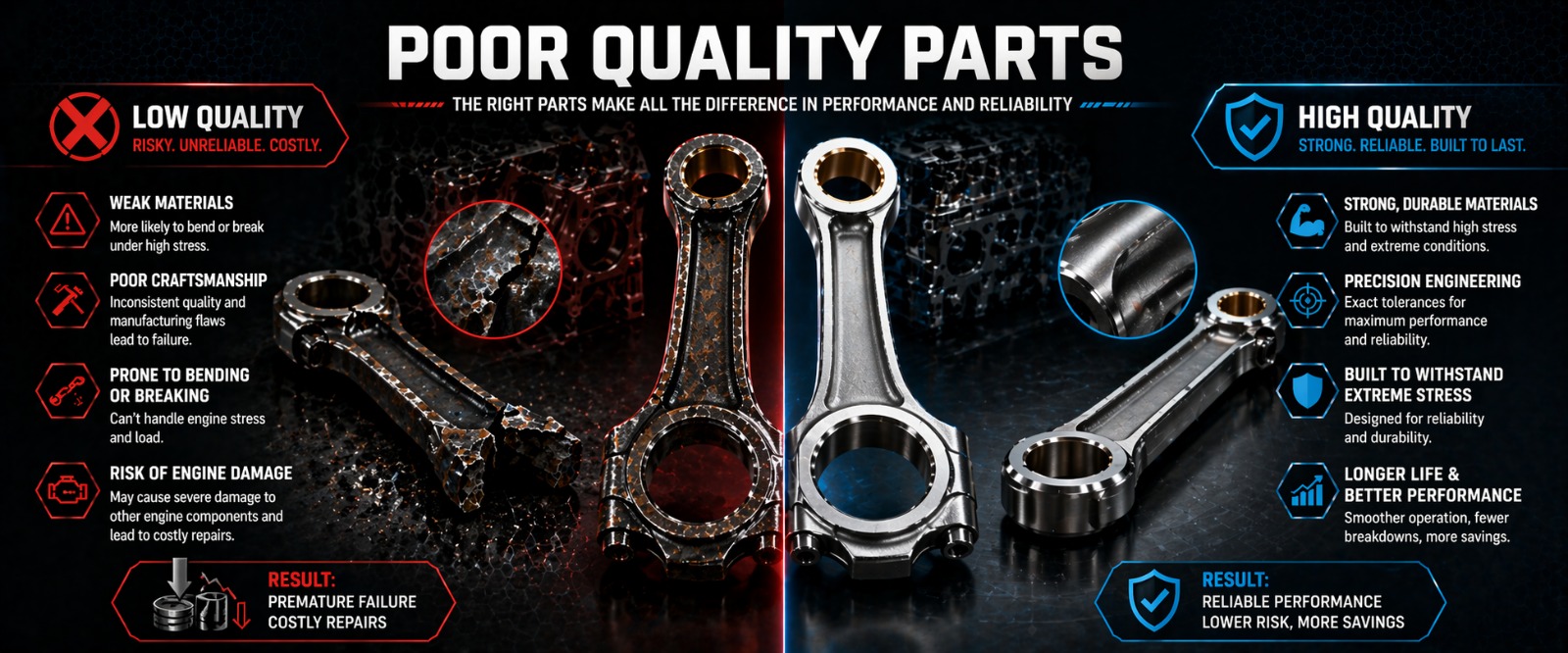
Using low-quality or cheap connecting rods can result in premature failure. A poor-quality rod might not be able to withstand the stresses of normal engine operation, which increases the chances of bending or breaking.
How to Avoid It:
Invest in high-quality connecting rods from trusted manufacturers. Premium connecting rods are made with stronger materials and designed to last longer. If you're replacing parts, always choose quality over cost-saving shortcuts.
While you can find affordable options, quality parts, like the ones available at trusted suppliers, will save you from costly repairs in the long run.
4. Overheating
The Problem:
Excessive heat from engine operation can weaken the connecting rod. If your engine consistently runs too hot, it can damage the rod’s metal structure and cause it to fail over time.
How to Avoid It:
Ensure your engine’s cooling system is working properly. Overheating can be caused by issues like low coolant levels, a faulty thermostat, or a damaged radiator. Regularly check your engine's temperature and cooling system to prevent overheating.
5. Incorrect Installation
The Problem:
Incorrect installation of the connecting rod can cause stress and misalignment, which may lead to engine failure. If the rod isn’t installed correctly, it can cause misfires, poor engine performance, and even a complete breakdown.
How to Avoid It:
Proper installation is key to ensuring your connecting rod functions well. If you’re replacing the connecting rod or doing engine work, make sure it’s installed by a professional or follow the manufacturer’s instructions carefully. Always double-check the alignment and torque specifications to avoid installation issues.
6. Lack of Engine Maintenance
The Problem:
Neglecting regular engine maintenance is one of the biggest contributors to connecting rod failure. Without regular oil changes, air filter replacements, and proper inspections, your engine can experience undue wear and tear, which increases the likelihood of connecting rod failure.
How to Avoid It:
Follow your vehicle’s recommended maintenance schedule to keep your engine in top shape. Regular oil changes, air filter replacements, and inspections are simple steps that help prevent excessive wear on the connecting rod and other engine components.
7. Worn-out or Damaged Bearings
The Problem:
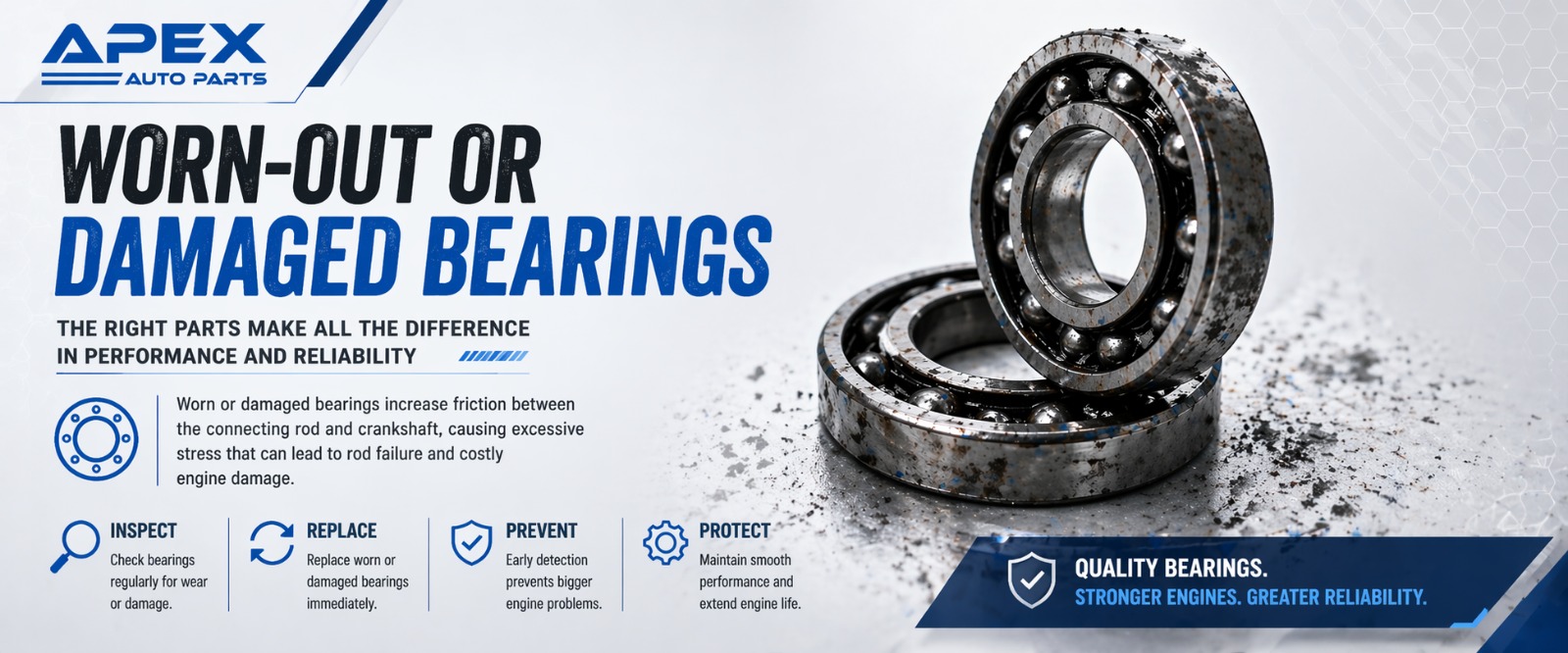
The connecting rod bearing can wear out over time due to friction and heat. When this happens, the bearing becomes less effective at reducing friction between the connecting rod and the crankshaft, which increases stress on the rod and can lead to failure.
How to Avoid It:
Inspect your connecting rod bearings regularly for signs of wear. If you notice that they are worn or damaged, replace them as soon as possible to prevent further engine damage. Regular inspections can help catch issues early before they turn into bigger problems.
8. Excessive Engine Load
The Problem:
Putting too much load on the engine, such as towing heavy loads or aggressive driving, can place excess pressure on the connecting rod. This increased strain can lead to bending or breaking of the rod.
How to Avoid It:
Avoid putting more load on your engine than it’s designed to handle. If you're towing or carrying heavy loads, ensure your vehicle is capable of handling the extra strain. Always follow your vehicle’s recommended load limits to keep your connecting rod from excessive stress.
9. Corrosion
The Problem:
Corrosion can weaken the connecting rod and its bearing, especially if the engine has been exposed to moisture or extreme conditions. Over time, rust or corrosion can cause the rod to fail prematurely.
How to Avoid It:
Keep your engine clean and dry. If your vehicle sits unused for long periods, make sure you take steps to protect the engine from rust, such as using moisture-absorbing products or running the engine periodically. Regularly cleaning and inspecting the engine can help prevent corrosion from damaging your connecting rod.
10. Manufacturing Defects
The Problem:
Though rare, manufacturing defects in the connecting rod can cause it to fail. These defects might include weaknesses in the metal or improper heat treatment, which reduce the rod's durability.
How to Avoid It:
Always purchase connecting rods from trusted suppliers and manufacturers who meet high-quality standards. Reputable brands ensure that their products undergo rigorous quality checks to minimize the chances of manufacturing defects. Using parts from Apex Auto Parts, for example, ensures you get high-quality, reliable components for your engine.
Conclusion
By understanding the 10 common causes of connecting rod failures and how to avoid them, you can take proactive steps to maintain your engine and prevent costly repairs. Regular maintenance, using high-quality parts, and driving responsibly will go a long way in extending the life of your engine.
If you’re looking for reliable connecting rods or connecting rod bearings, make sure to choose high-quality parts that match your engine’s needs. Taking care of your vehicle’s internal components ensures smooth performance and long-term durability. If you need help choosing the right parts or have any questions, feel free to reach out to trusted auto parts suppliers who can guide you in making the best decision for your engine.
FAQs - Connecting Rod
1. What causes a connecting rod to fail?
A connecting rod can fail due to several reasons, including insufficient lubrication, overheating, over-revving the engine, poor-quality parts, and incorrect installation. Regular maintenance, using high-quality parts, and avoiding excessive engine stress can help prevent these issues.
2. How do I know if my connecting rod is failing?
Signs of a failing connecting rod include engine knocking sounds, low oil pressure, excessive oil consumption, and reduced engine performance. If you notice any of these symptoms, it’s important to have your engine inspected as soon as possible.
3. Can a faulty connecting rod cause engine failure?
Yes, a connecting rod failure can lead to catastrophic engine damage. If the rod breaks or bends, it can cause misalignment in the engine, leading to poor compression, excessive wear, and complete engine failure. Regular inspection and maintenance can help prevent this.
4. How often should I replace my connecting rod?
In most cases, connecting rods last the lifetime of the engine. However, if you're rebuilding your engine or replacing worn-out components, it’s a good idea to inspect the connecting rods for any signs of damage. If they show signs of wear, such as cracks or bending, replace them as soon as possible.
5. What type of connecting rod should I use for my engine?
The type of connecting rod you choose depends on your engine’s needs. For everyday driving, OEM connecting rods are typically sufficient. For performance or racing engines, forged or billet connecting rods are better choices because they are stronger and more durable.
6. Can I use aluminum connecting rods in my engine?
Yes, aluminum connecting rods are used in high-performance applications, such as drag racing. They are lighter than steel rods, which can improve acceleration and throttle response. However, they are not as durable as steel rods and have a shorter lifespan. Make sure to choose the right material based on your engine’s requirements.
7. How do I prevent connecting rod failure due to overheating?
To prevent connecting rod failure caused by overheating, ensure your engine’s cooling system is working properly. Regularly check coolant levels, radiator function, and thermostat operation. Overheating can weaken the connecting rod material and cause it to fail, so it’s important to monitor your engine temperature.
8. Is it necessary to replace all connecting rods if one is damaged?
Yes, if one connecting rod is damaged, it’s recommended to replace all of them. Replacing just one can lead to engine imbalance, as the other rods may have experienced similar wear or stress. Replacing all rods ensures uniformity and optimal engine performance.
9. What is the role of a connecting rod bearing in preventing failure?
The connecting rod bearing helps reduce friction between the connecting rod and the crankshaft. This reduces wear and heat buildup, ensuring that the connecting rod moves smoothly. If the bearing wears out or becomes damaged, it can cause increased friction and lead to connecting rod failure.
10. How can I ensure the longevity of my connecting rods?
To ensure the longevity of your connecting rods, regularly maintain your engine, check oil levels, use high-quality parts, and avoid excessive engine loads. Using the right connecting rod bearing and keeping your engine temperature under control will also help prevent premature failure.