
 info@apexautoparts.co.uk
 +44 203 915 7535
 Safe & Fast Shipping
 Whish List
 Compare
 Sign In

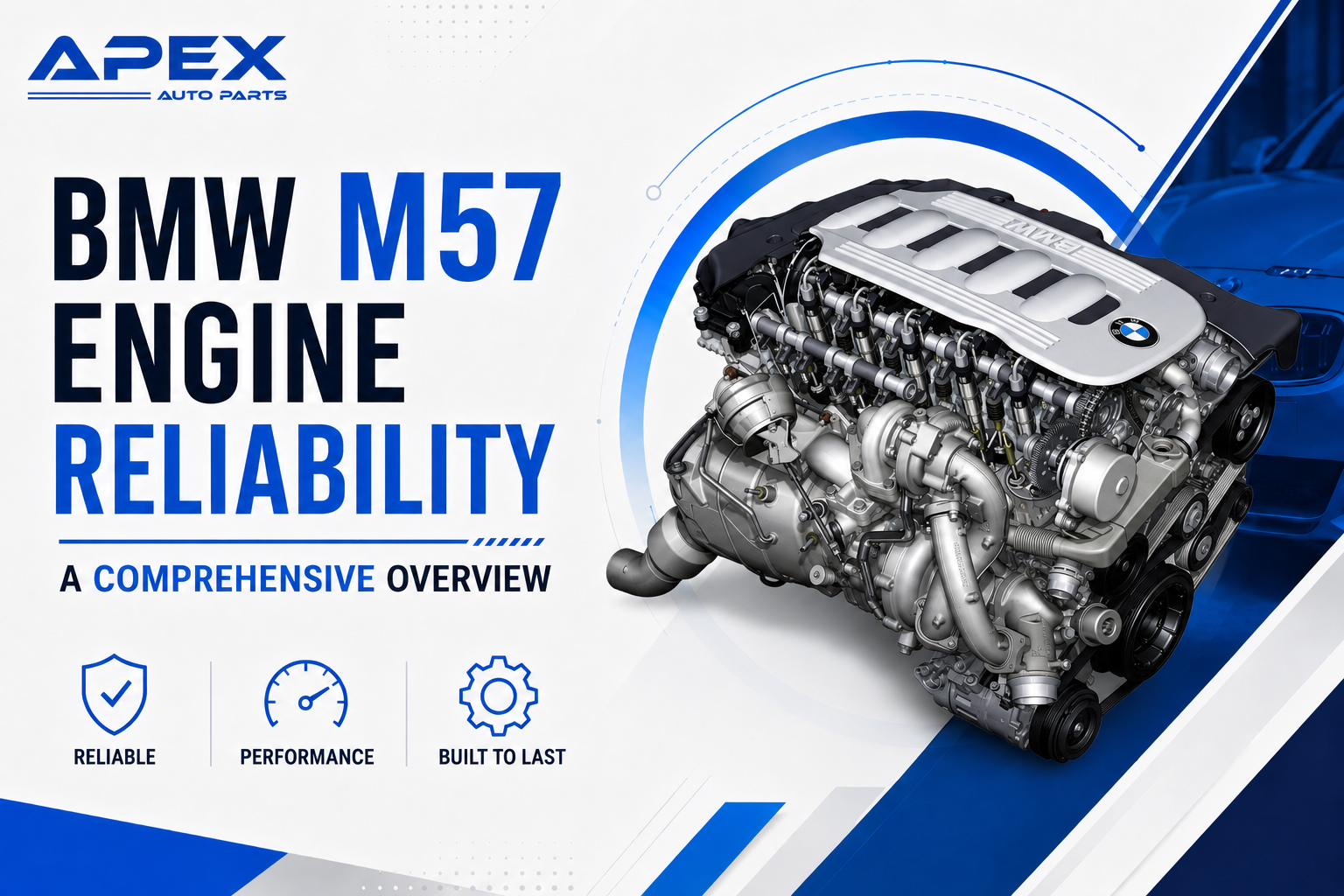
The BMW M57 engine is one of the most trusted diesel engines BMW has ever made. Many BMW owners still talk about it with respect because it is strong, smooth, and able to last for many miles when properly serviced. It is no longer a new engine, but it still has a strong presence in the used-car market, especially in the UK.
When people search for M57 engine reliability, they usually want a clear answer before buying a used BMW diesel. The simple answer is that the M57 is a very good engine, but its condition depends on how well it has been cared for. A clean service history, good oil changes, quality parts, and careful driving make a big difference.
The M57 engine was used in many BMW models, from the 3 Series to the X5. It became popular because it gives strong pulling power without feeling rough. It is a six-cylinder diesel engine, so it feels smoother than many smaller diesel engines. This is one reason many drivers still prefer it over some newer BMW diesel engines.
At Apex Auto Parts, we know many BMW owners want to keep their engines running for as long as possible. For older BMW diesel engines like the M57, the right engine parts matter. A strong engine can still suffer if poor-quality parts are used during repairs.
Why the BMW M57 Engine Has Such a Strong Name
The BMW M57 engine has a strong reputation because it was built with power and longevity in mind. It is not just liked because it is fast. It is liked because it feels solid and dependable. Many owners have driven M57-powered cars for very high mileage without major engine failure.
This engine was used in cars that needed good torque. Torque is the pulling power that helps a car move easily, especially at low speeds. That is why the M57 engine feels strong when joining a motorway, climbing hills, or carrying weight.
Another reason people trust the M57 is that it does not feel stressed during normal driving. In many models, the engine has enough power without working too hard. This helps long-term reliability, provided the engine receives proper care.
The BMW M57 engine also has a better reputation than many smaller diesel engines because it is smoother and stronger. A six-cylinder diesel engine is naturally more balanced than a four-cylinder diesel engine. This makes the car feel more refined and less harsh.
Is the M57 Engine Reliable?
Yes, the M57 engine is reliable when well-maintained. Many BMW specialists and owners see it as one of BMW’s best diesel engines. It can handle high mileage, long motorway trips, and daily driving without major issues if the service history is good.
Still, no engine is perfect. The BMW M57 engine is now old in many cars, so age-related problems are common. Rubber seals, hoses, turbo parts, injectors, glow plugs, and cooling system parts can wear out. This does not mean the engine is weak. It simply means old parts need attention.
The most important factor in the M57 engine's reliability is maintenance. A well-serviced car can be a great buy. A poorly serviced car can become expensive very quickly. Buyers should not only look at mileage. They should look at service records, repair history, smoke, oil leaks, engine noise, and how the car drives.
A high-mileage M57 with full service history can be better than a low-mileage car that has been ignored. Diesel engines often like longer journeys because they reach a proper working temperature and stay there. Short trips can cause more soot buildup and more wear over time.
What Makes the BMW M57 Engine Strong?
The main strength of the BMW M57 engine is its basic design. It is a six-cylinder diesel engine with strong pulling power and a solid build. BMW used it in many large vehicles, indicating that the engine was designed to withstand heavy use.
The engine block and main internal parts are known to be strong. This is why many owners trust the engine for high mileage. It can withstand normal daily use when the oil is changed on time and the cooling system is kept in good shape.
Another strong point is the driving feel. The M57 engine delivers power smoothly. It does not need to be pushed hard all the time. That relaxed driving style helps the engine last longer.
The M57 also has a large support network. Because it was used in many BMW models, parts and knowledge are readily available. Mechanics know the common problems, and owners can usually find the right replacement parts without too much trouble.
Common BMW M57 Engine Problems
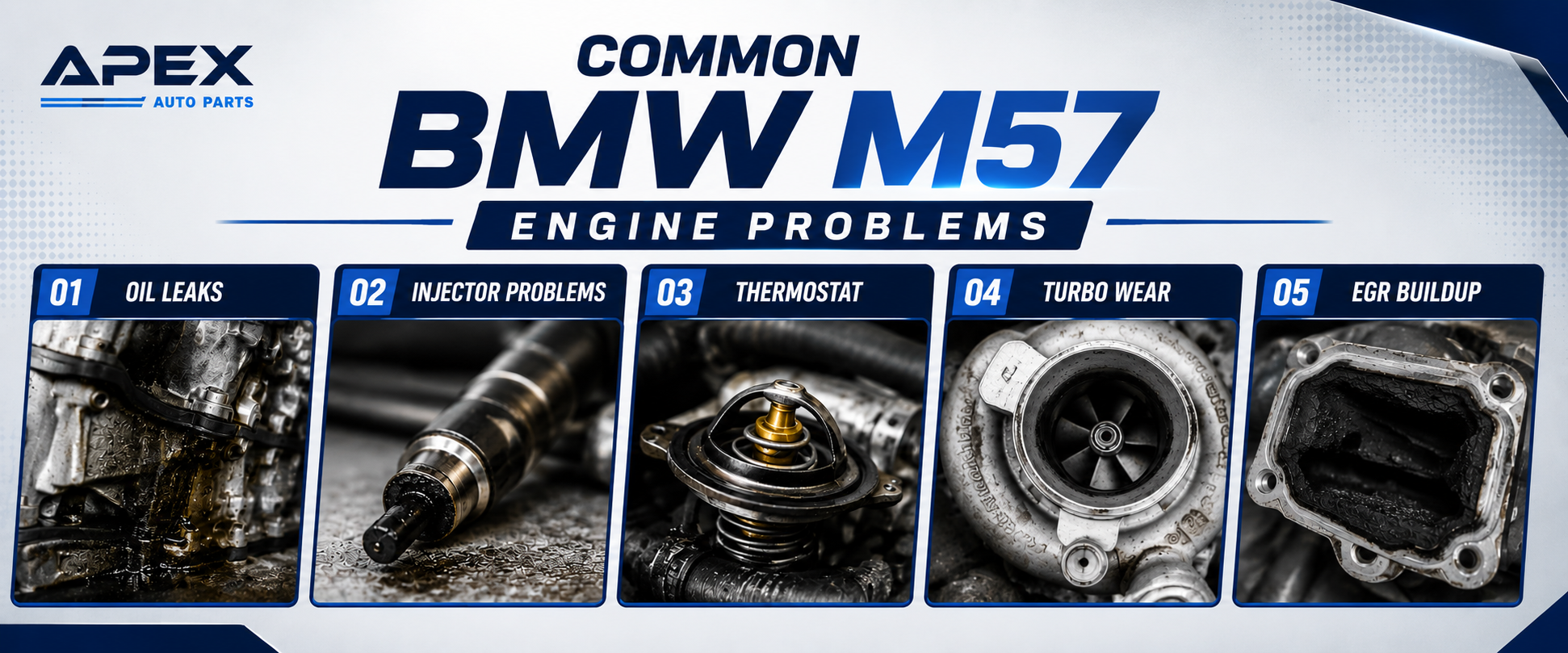
The BMW M57 engine is strong, but it does have some common issues. Most of these problems are not unusual for an older diesel engine. The key is to spot them early and repair them with good parts.
One of the best-known issues is swirl flap failure. Swirl flaps are small parts inside the intake system. They help control air flow into the engine. On some older M57 engines, these flaps can wear out. If they break, they can cause serious engine damage. Many owners check or replace them as a preventive step.
EGR buildup is another common issue. The EGR system helps reduce emissions, but it can become dirty over time. Soot and carbon can clog the system, making the engine feel weak or rough. This is more common in cars that do many short trips.
Turbo wear can also happen, especially if oil changes have been missed. The turbo needs clean oil to work properly. If the oil is old or dirty, the turbo can wear faster. A loud whistle, power loss, or smoke can be signs of turbo trouble.
Injector problems may develop as the engine ages. Bad injectors can cause a rough idle, poor starting, smoke, or increased fuel consumption. Injectors are important because they control how fuel enters the engine. When they do not work well, the engine cannot run smoothly.
Thermostat issues are also common. If the thermostat fails, the engine may run too cool. This can reduce fuel economy and affect performance. It can also make the car less efficient during cold weather.
Oil leaks are common on many older engines, including the M57. Small leaks from seals or gaskets should not be ignored. A small leak can worsen and lead to low oil levels if left unchecked.
M57 Engine Reliability and High Mileage
High mileage does not scare many M57 owners. In fact, the BMW M57 engine is known for doing high mileage better than many other diesel engines. It is not rare to see these engines pass 200,000 miles when serviced properly.
But high mileage only tells part of the story. A car with 180,000 motorway miles and regular oil changes may be in better condition than one with 90,000 miles and a poor service history. How the car was driven matters.
A healthy high-mileage M57 engine should start well, idle smoothly, pull strongly, and produce little to no smoke. It should not overheat or lose coolant. The turbo should sound normal, and the engine should not make loud knocking sounds.
Before buying a high-mileage M57, it is wise to carefully review service records. Look for oil changes, fuel filter changes, cooling system repairs, turbo work, injector work, and any intake system repairs. If the owner has kept receipts, that is a good sign.
For owners who already have an M57, regular servicing is the best way to protect the engine. Do not wait until parts fully fail. Replacing worn parts early can help avoid bigger repair bills.
What Cars Have the M57 Engine?
Many people search for cars with the M57 engine because they want to buy a used BMW with this trusted diesel engine. The M57 was used in many BMW models over the years.
You can find the M57 engine in several BMW 3 Series models, especially the 330d and some 335d versions. It was also used in the BMW 5 Series, including models like the 525d, 530d, and 535d. The 5 Series with the M57 is one of the most popular choices because it gives a good balance of comfort, power, and economy.
The BMW M57 engine was also used in larger cars, such as the 7 Series, primarily in the 730d. It was strong enough for bigger vehicles, which shows how capable the engine is. BMW also used it in SUV models like the X3, X5, and X6.
Some Range Rover models also used a version of this engine. This is another reason the M57 is well known outside the BMW community.
If you are checking what cars have the M57 engine, always confirm the exact engine code before buying. BMW changed engines across different years and models, so the badge alone is not always enough.
BMW M57 Engine Compared With N47 Engine Reliability
Many buyers compare the reliability of the M57 engine with that of the N47 engine because both are common in used BMW diesel cars. The M57 is a six-cylinder diesel engine, while the N47 is a four-cylinder diesel engine.
The BMW M57 engine is usually seen as stronger and smoother. It gives better pulling power and feels more relaxed, especially in larger cars. It also has a better long-term name among many BMW diesel fans.
The N47 can be good for fuel economy. It is often found in smaller BMW models and can be cheaper to run. But when people talk about the N47 engine reliability, timing chain issues are often mentioned. This has made some buyers more careful with N47-powered cars.
That does not mean every N47 is bad. A well-maintained N47 can still be a good engine. It also does not mean every M57 is perfect. A neglected M57 can still have expensive problems. But in terms of reputation, many buyers feel more confident with the M57.
If you want smooth power and long-distance comfort, the m57 engine is often the better choice. If you want lower fuel use and a smaller car, the N47 may still make sense, but it needs careful checking.
Best Way to Keep an M57 Engine Reliable
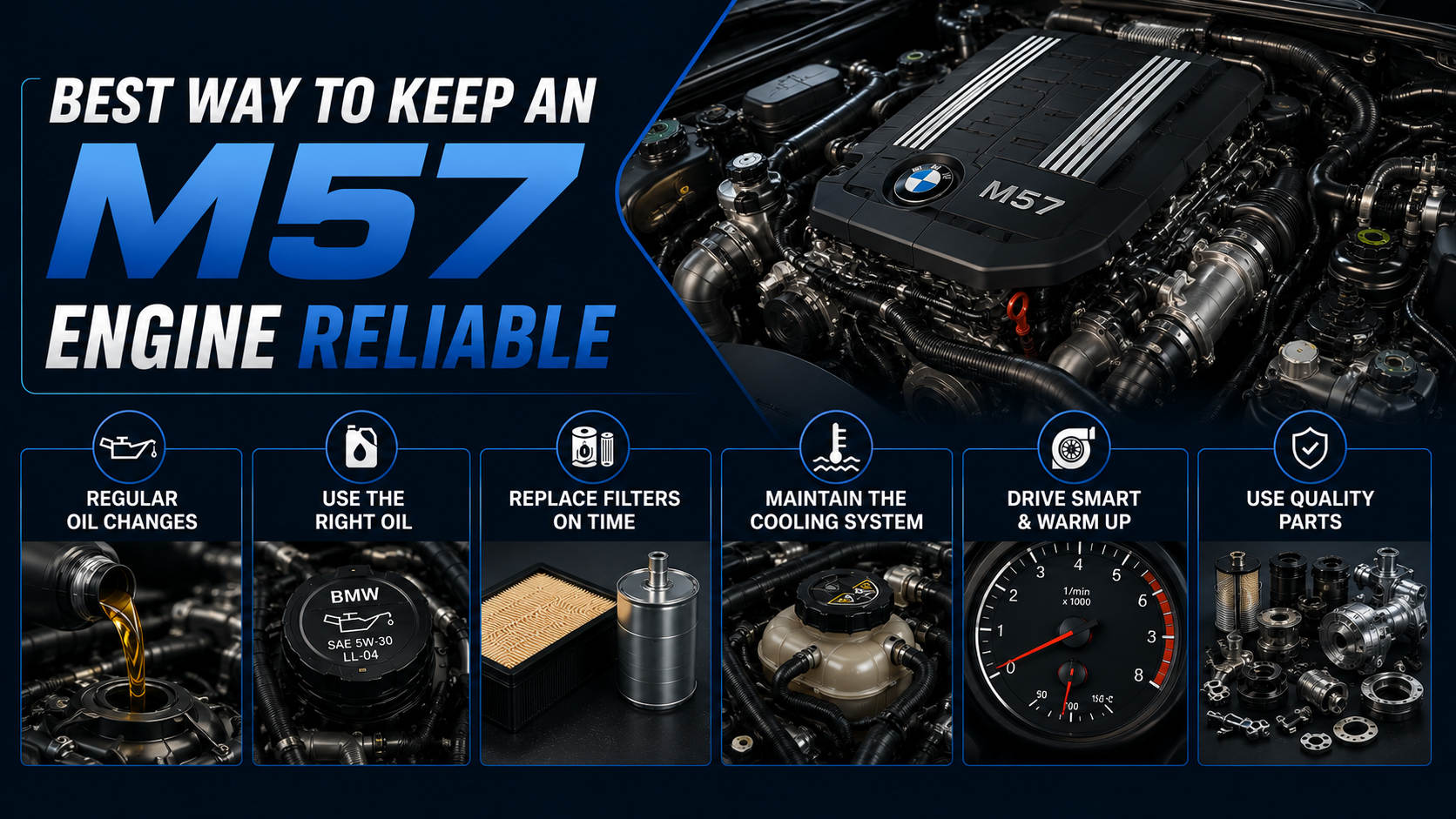
The best way to protect the reliability of the M57 engine is to service it properly. Oil changes are one of the most important things. Clean oil protects the turbo, timing parts, bearings, and other moving parts inside the engine.
Using the right oil is also important. Diesel engines produce soot, and the oil has to withstand heat and dirt. Cheap oil or long service gaps can cause wear over time.
The air filter and fuel filter should also be changed on time. A clean air filter helps the engine breathe properly. A clean fuel filter helps protect the injectors. Small service items can make a big difference to how the engine runs.
The cooling system should not be ignored. Overheating can damage any engine, even a strong one like the BMW M57 engine. Coolant leaks, weak thermostats, old hoses, and tired water pumps should be checked.
Drivers should also avoid hard driving when the engine is cold. Let the engine warm up before using full power. After a hard drive, it also helps to let the engine settle before switching it off. This gives the turbo a better chance of lasting longer.
Quality parts are very important. At Apex Auto Parts, we sell car engine parts in UK, and our aim is to help customers find parts they can trust. Using the right part for older BMW diesel engines can protect the engine and improve long-term reliability.
Is the BMW M57 Engine Good for Daily Driving?
The BMW M57 engine is very good for daily driving if your trips suit a diesel engine. It is best for drivers who do longer journeys, motorway driving, or regular mixed driving. The engine feels smooth, strong, and relaxed.
For very short trips, the M57 can still work, but it may not be ideal. Diesel engines need time to warm up. If the car only does short journeys, carbon build-up, EGR issues, and DPF problems can occur more quickly on later models.
In normal use, the M57 engine delivers a good balance of power and fuel economy. It can move a heavy BMW without feeling slow. This makes it good for family use, long trips, towing, and motorway driving.
The engine is also comfortable because it does not need to rev high to make power. This gives the car a calm feel. Many drivers like this because it makes the car easy to drive every day.
Is the BMW M57 Engine Expensive to Repair?
The BMW M57 engine is not always cheap to repair, but it is not the most difficult engine either. Because the engine is popular, many parts are available. Many mechanics also know how to work on it.
The cost depends on the problem. Basic service parts are usually not too expensive. Oil filters, fuel filters, air filters, glow plugs, gaskets, and hoses are normal maintenance items.
Bigger repairs can cost more. Turbo replacement, injector work, intake repairs, and major oil leaks can be more expensive. If the engine has internal damage, the repair bill can become high.
This is why preventive care matters. Spending money on service parts early is often cheaper than waiting for a major failure. A car that has been looked after will usually cost less over time than one that has been ignored.
Signs of a Good BMW M57 Engine
A healthy BMW M57 engine should start easily, even when cold. It should idle smoothly without excessive shaking. Some diesel sound is normal, but loud knocking or uneven running is not a good sign.
When driving, the engine should pull strongly and smoothly. There should not be heavy smoke from the exhaust. A small puff under hard acceleration can happen on some older diesels, but thick black, blue, or white smoke should be checked.
The temperature should stay steady once the engine is warm. If the car runs too cold, the thermostat may be faulty. If it gets too hot, there may be a problem with the cooling system.
There should also be no major oil leaks. Small weeps are common on older cars, but heavy leaks need attention. The oil level should be checked often because low oil can damage the turbo and engine internals.
Signs of a Bad M57 Engine
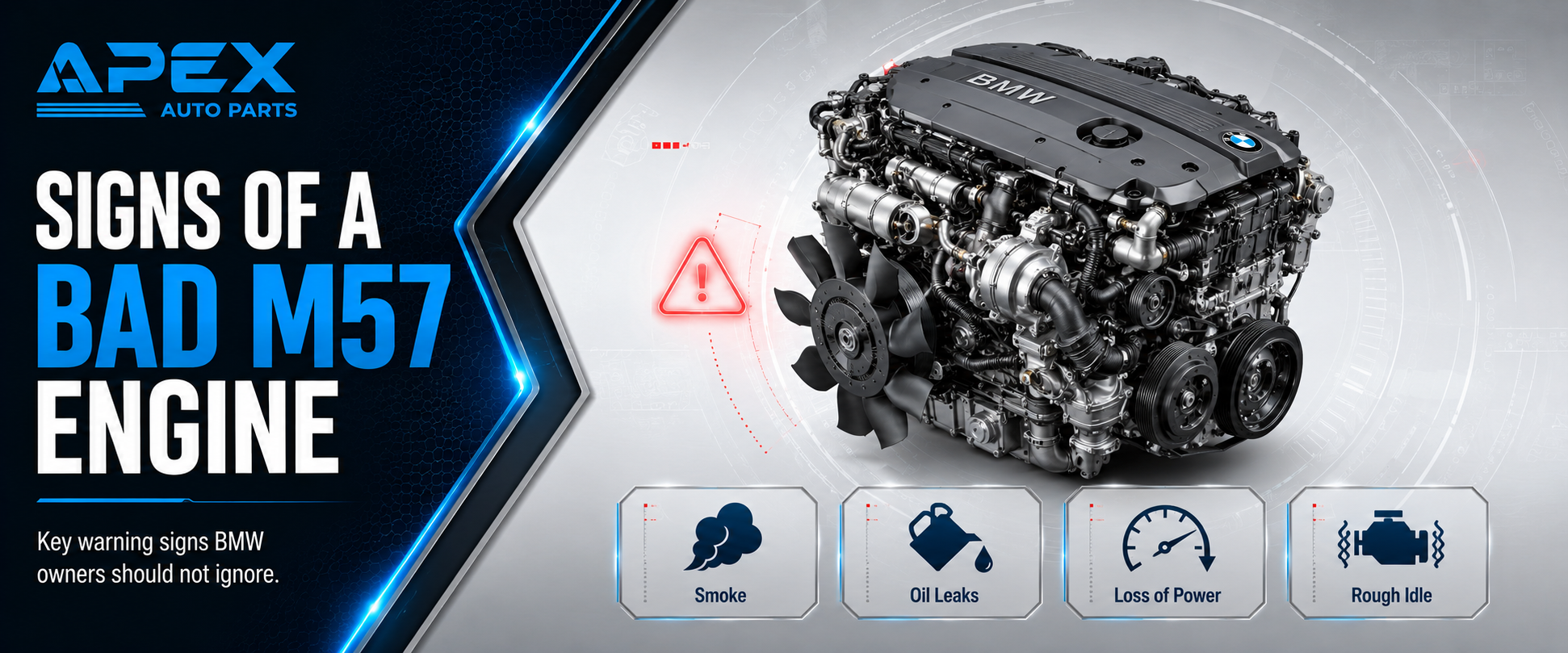
A bad M57 engine may show warning signs before it fails. Rough starting, shaking at idle, loss of power, heavy smoke, and strange noises are all signs that something is wrong.
Blue smoke can mean the engine is burning oil. Black smoke can indicate problems with the air, fuel, EGR, turbo, or injectors. White smoke after the engine is warm can be a sign of deeper issues and should not be ignored.
A loud turbo whistle, boost leak sound, or sudden loss of power can point to turbo or intake problems. Coolant loss, overheating, or pressure in the cooling system can be serious.
If you are buying a used BMW with the BMW M57 engine, do not rush. Drive the car from the cold if possible. Listen carefully, watch the exhaust, and check for warning lights. A proper inspection can save a lot of money.
Should You Buy a BMW With the M57 Engine?
A BMW with the M57 engine can be a very good buy if the car has been looked after. The engine has a strong name for a reason. It is smooth, powerful, and able to last for high mileage.
But buying the right car matters. Do not buy only because it has the M57 engine. Check the car's condition in full. Look at the gearbox, suspension, electronics, service history, MOT history, and engine bay condition.
A cheap M57 BMW can become expensive if it needs many repairs. A slightly more expensive car with better history may save money in the long run.
For many UK drivers, the m57 engine is still a great choice for long journeys and strong diesel performance. It gives an older BMW a solid and confident feel. If you maintain it well and use good parts, it can still be a very dependable engine.
Final Verdict on M57 Engine Reliability
The M57 engine reliability rating is strong. This engine is one of BMW’s most respected diesel engines because it combines power, smoothness, and long life. It is not perfect, but most of its problems are well-known and can be managed with proper care.
The BMW M57 engine is best suited to drivers who value strength, comfort, and long-distance driving. It is also a good choice for people who understand that older diesel engines need regular maintenance.
Compared with the n47 engine, the M57 often feels like the safer choice for buyers who want a stronger engine with a better long-term reputation. The N47 can still be good, but it needs careful inspection, especially regarding the timing chain history.
If you are asking what cars have the M57 engine, you will find it in many popular BMW diesel models, including the 330d, 530d, 535d, 730d, X3, X5, and X6. Always check the exact engine code before buying.
For owners, the advice is simple. Change the oil on time, use quality parts, fix small problems early, and do not ignore smoke, leaks, overheating, or strange noises. Do that, and the BMW M57 engine can remain a strong, reliable engine for many years.
Apex Auto Parts supports UK drivers by supplying car engine parts online. For engines like the M57, reliable replacement parts are not just about repair. They are about keeping the engine healthy, safe, and ready for many more miles.
FAQs About BMW M57 Engine Reliability
1. Is the BMW M57 engine reliable?
Yes, the BMW M57 is a reliable diesel engine. It can last for a long time when serviced properly. Good oil changes, clean filters, cooling system care, and quality parts are very important. Most problems come from age, poor maintenance, or ignored warning signs.
2. How long does an M57 engine last?
A well-maintained M57 engine can often last more than 200,000 miles. Some examples go much higher. The engine itself is strong, but parts like the turbo, injectors, thermostat, EGR system, and cooling components may need repair or replacement as the car ages.
3. What are the main BMW M57 engine problems?
Common BMW M57 engine problems include swirl flap wear, EGR buildup, turbo wear, injector faults, thermostat failure, glow plug issues, and oil leaks. These issues are common on older diesel engines. Finding them early and using good replacement parts helps protect the engine.
4. Is the M57 better than the N47 engine?
Many BMW owners rate the M57 engine's reliability higher than that of the N47 engine. The M57 is smoother, stronger, and has a better long-term reputation. The N47 can be fuel-efficient, but some versions are known for timing chain issues, so buyers should check the service history carefully.
5. What cars have the M57 engine?
People searching what cars have the m57 engine should look at BMW models such as the 330d, 335d, 525d, 530d, 535d, 730d, X3, X5, and X6. Some Range Rover diesel models also used it. Always check the exact engine code before buying.
6. Is the BMW M57 engine good for high mileage?
Yes, the BMW M57 engine is good for high mileage when well cared for. Mileage is not the only thing that matters. A high-mileage car with regular servicing can be better than a low-mileage car with poor maintenance. Service history is very important.
7. Does the M57 engine have timing chain problems?
The M57 engine can suffer from timing chain wear, as with any older engine, but it is not as widely known for timing chain failure as the N47. Poor oil changes can increase wear. Listen for unusual chain noise and check the car’s service record before buying.
8. Is the M57 engine expensive to maintain?
The BMW M57 engine can be reasonably maintained if problems are handled early. Normal service parts are easy to find, but bigger repairs like turbo or injector replacement can cost more. Using quality parts and keeping up with service work helps lower long-term repair costs.
9. Which BMW M57 engine version is best?
Many owners prefer the 3.0-liter M57 engine because it gives strong power and good reliability. The single turbo versions are often seen as simpler and easier to maintain. Twin-turbo versions are faster, but they can cost more to repair due to the extra parts.
10. Should I buy a used BMW with an M57 engine?
Yes, a used BMW with the BMW M57 engine can be a smart buy if it has good service history and runs properly. Check for smoke, oil leaks, coolant loss, turbo noise, rough idle, and warning lights. The engine is strong, but condition matters most.