
 info@apexautoparts.co.uk
 +44 203 915 7535
 Safe & Fast Shipping
 Whish List
 Compare
 Sign In

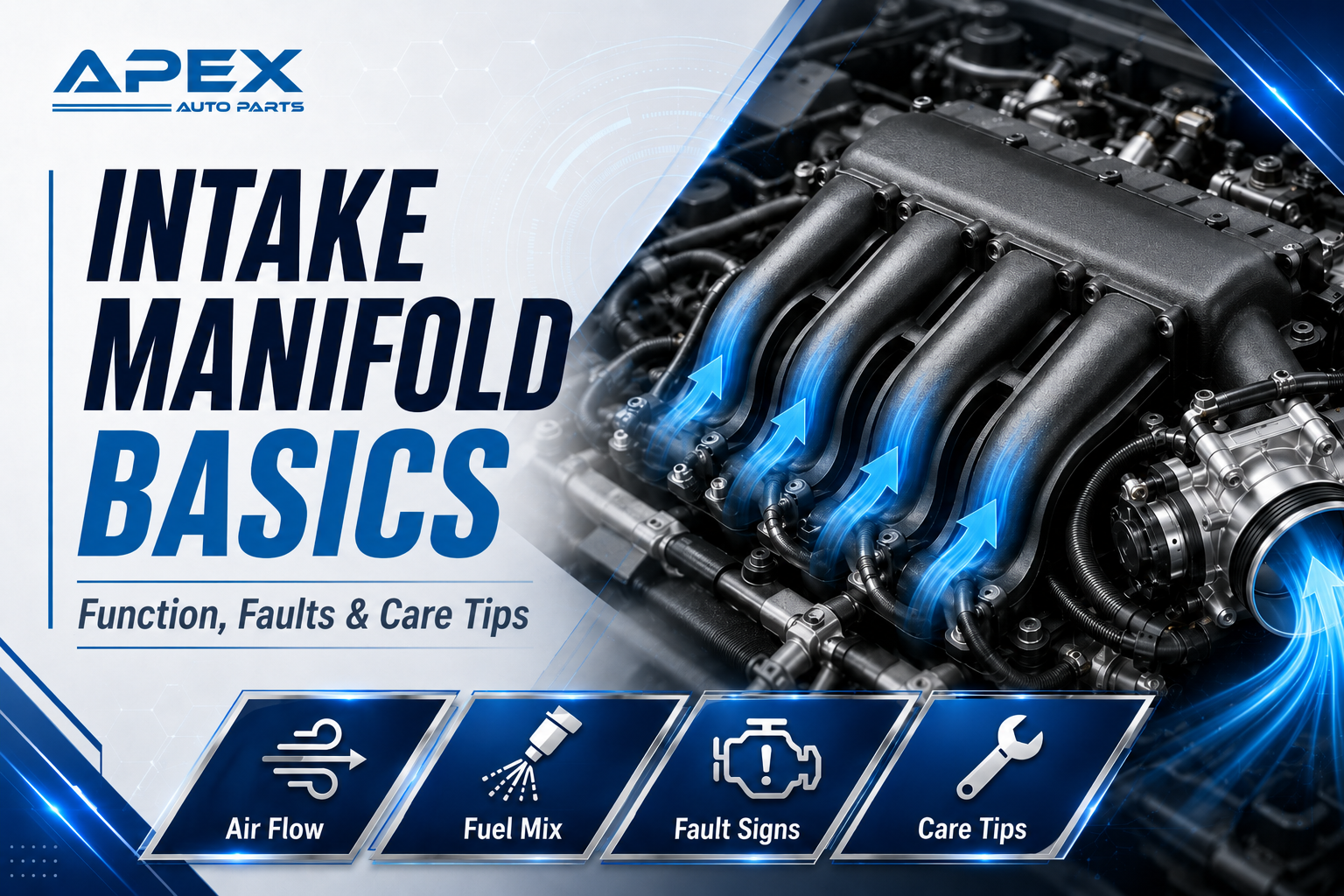
When people think about car engines, they often imagine big moving parts like pistons or crankshafts. However, some of the most important parts are the ones that quietly do their job in the background. One such part is the intake manifold. Even though it may not look exciting, it plays a very important role in how your engine performs every day.
The intake manifold is responsible for delivering air into the engine in the correct way. Without it, your engine would struggle to run properly. Whether you drive a small city car or a larger SUV on UK roads, the intake manifold is always working to keep your engine balanced and efficient.
In this guide, we will explain everything you need to know about the intake manifold in simple and easy language. This will help you understand your car better and take proper care of it.
What is an Intake Manifold
The intake manifold is a part of the engine that distributes air to each cylinder. Your engine needs a mix of air and fuel to create power. The intake manifold makes sure that the air is evenly spread so each cylinder gets the right amount.
You can imagine the intake manifold like a network of pipes. Air enters through one opening and then travels through these pipes to reach different parts of the engine. This even distribution is very important because uneven airflow can lead to poor engine performance.
In simple terms, the intake manifold helps your engine breathe in a controlled and balanced way.
Why the Intake Manifold is Important for Your Engine
The intake manifold plays a key role in keeping your engine running smoothly. It ensures that the air entering the engine is properly managed. When the airflow is correct, the engine can burn fuel efficiently and produce the power needed to move your car.
If the intake manifold is not working properly, it can disturb the air and fuel mixture. This can lead to poor acceleration, rough driving, and increased fuel consumption. For UK drivers, where fuel costs can add up quickly, this can become expensive over time.
A well-working intake manifold also helps reduce harmful emissions. This is important because vehicles in the UK must meet strict environmental standards. Keeping your intake manifold in good condition can help your car pass its MOT test without issues.
How the Intake Manifold Works
The intake manifold works closely with other parts of the engine. When you press the accelerator, the throttle body opens and allows air to enter the intake manifold.
Once the air enters, it travels through channels known as runners. These runners are carefully designed to deliver air evenly to each cylinder. The cylinders then mix the air with fuel and ignite it to create power.
This process happens very quickly and continuously while the engine is running. The intake manifold must maintain a steady and balanced flow of air at all times. Even a small problem in airflow can affect how the engine performs.
Modern intake manifold systems are designed to improve efficiency and performance. Some even adjust airflow depending on engine speed, which helps provide better fuel economy and smoother driving.
Types of Intake Manifolds Used in Cars
Metal Intake Manifold
Older vehicles often use a metal intake manifold, usually made from aluminum. These are strong and can handle high temperatures. They are also quite durable, which makes them suitable for long-term use.
Plastic Intake Manifold
Most modern cars now use a plastic intake manifold. These are lighter than metal ones and help improve fuel efficiency. They are also more cost-effective to produce, which helps keep vehicle prices lower.
However, plastic intake manifold parts can sometimes develop cracks over time due to heat and pressure.
Performance Intake Manifold
Performance intake manifold options are designed for better airflow and increased engine power. These are commonly used by car enthusiasts who want improved performance.
While they can boost power, they must be chosen carefully to match the engine type.
Common Problems with the Intake Manifold
Like any other engine part, the intake manifold can develop issues over time. Understanding these problems can help you act quickly before they become serious.
Intake Manifold Leaks
A leak is one of the most common problems. It allows air to enter or escape in an uncontrolled way. This disturbs the air and fuel mixture and can cause the engine to run poorly.
Cracks in the Intake Manifold
Plastic intake manifold parts are more likely to develop cracks. These cracks can lead to air leaks or coolant leaks, depending on the design of the engine.
Carbon Build Up
Over time, dirt and carbon deposits can build up inside the intake manifold. This can block airflow and reduce engine efficiency.
Faulty Gaskets
The intake manifold gasket helps seal the connection between the manifold and the engine. If this gasket fails, it can lead to leaks and performance issues.
Signs That Your Intake Manifold Is Failing
It is important to recognize the warning signs of a faulty intake manifold. Catching problems early can save you money and prevent further damage.
One common sign is poor engine performance. If your car feels slower than usual or struggles to accelerate, the intake manifold may not be working properly.
Another sign is engine misfire. You may notice shaking or hear unusual noises from the engine. This happens when the air and fuel mixture is not correct.
Increased fuel consumption is also a warning sign. If your car is using more fuel than usual, it could be due to an issue with the intake manifold.
You may also notice coolant leaks in some cases. This can happen if the intake manifold has a crack or a damaged gasket.
Finally, the check engine light may come on. Modern vehicles can detect problems with the intake manifold and alert you through the dashboard.
Why You Should Not Ignore Intake Manifold Issues
Ignoring problems with the intake manifold can lead to serious engine damage. A small leak may not seem like a big issue at first, but it can quickly affect the entire engine.
Poor airflow can lead to incomplete fuel burning. This not only reduces performance but can also damage other engine components over time.
In addition, a faulty intake manifold can increase emissions. This may cause your car to fail its MOT test, which is a legal requirement in the UK.
Fixing intake manifold issues early is always the best approach.
How to Maintain Your Intake Manifold
Taking care of your intake manifold does not require a lot of effort, but it does require regular attention.
- Keeping your engine clean is a good starting point. Dirt and dust can affect airflow and lead to a buildup inside the intake manifold.
- Checking and replacing the air filter regularly is also important. A clean air filter ensures that only clean air enters the intake manifold.
- Using good-quality fuel can help reduce carbon deposits. Poor fuel quality can leave residue that builds up over time.
- Regular servicing is one of the best ways to keep your intake manifold in good condition. A professional mechanic can spot early signs of damage and fix them before they become serious.
Cleaning the Intake Manifold
Cleaning the intake manifold can improve engine performance and fuel efficiency. Over time, carbon deposits can restrict airflow, which affects how the engine runs.
Professional cleaning is usually recommended, as it ensures the job is done properly. Some experienced car owners choose to clean their intake manifold themselves, but this requires proper tools and knowledge.
A clean intake manifold helps your engine run smoother and more efficiently.
Upgrading Your Intake Manifold
Some drivers choose to upgrade their intake manifold for better performance. A performance intake manifold can improve airflow and increase engine power.
This is especially popular among car enthusiasts in the UK who enjoy modifying their vehicles for a better driving experience.
If you are considering an upgrade, it is important to choose the right part for your engine. Reliable suppliers like Apex Auto Parts offer a range of intake manifold options and engine components that can suit different vehicle types.
Cost of Replacing an Intake Manifold in the UK
The cost of replacing an intake manifold can vary depending on your car and the type of part needed. Labor costs in the UK can also affect the total price.
In general, replacing an intake manifold may cost a few hundred pounds. While this may seem like a large expense, it is often necessary to prevent more serious engine damage.
Investing in a good-quality intake manifold can save money in the long term by improving efficiency and preventing further issues.
Should You Repair or Replace the Intake Manifold
In some cases, a damaged intake manifold can be repaired. For example, minor leaks or gasket issues may be fixed without replacing the entire part.
However, if the intake manifold is cracked or heavily damaged, replacement is usually the better option. A new intake manifold ensures reliable performance and peace of mind.
A professional mechanic can help you decide the best option based on the condition of your vehicle.
Intake Manifold and Fuel Efficiency
The intake manifold plays a direct role in fuel efficiency. When it delivers air properly, the engine can burn fuel more effectively.
If the intake manifold is blocked or leaking, the engine may use more fuel to produce the same amount of power. This increases your fuel costs over time.
For UK drivers who want to save on fuel, maintaining the intake manifold is a simple but effective step.
Intake Manifold and Emissions
A properly working intake manifold helps reduce harmful emissions. This is important for meeting environmental standards in the UK.
If the intake manifold is faulty, it can cause incomplete fuel burning. This leads to higher emissions and can cause your vehicle to fail its MOT test.
Keeping your intake manifold in good condition helps protect the environment and ensures your car meets legal requirements.
Final Thoughts
The intake manifold may not be the most visible part of your engine, but it is one of the most important. It controls how air enters the engine and ensures that each cylinder gets the right amount.
By understanding how the intake manifold works, you can take better care of your car and avoid costly repairs. Regular maintenance, early problem detection, and using quality parts all make a big difference.
If you ever need to replace or upgrade your intake manifold, choosing a trusted supplier like Apex Auto Parts can help ensure reliability and performance.
Taking care of your intake manifold is a simple step that leads to better driving, improved fuel efficiency, and a longer-lasting engine.
Frequently Asked Questions About Intake Manifold
1. What does an intake manifold do in a car?
The intake manifold delivers air to the engine cylinders. It makes sure each cylinder gets the right amount of air so the engine can mix it with fuel and create power. Without a properly working intake manifold, the engine cannot run smoothly.
2. What are the symptoms of a bad intake manifold?
Common symptoms include poor engine performance, rough idling, engine misfire, and increased fuel consumption. You may also notice a check engine light or even coolant leaks in some cases.
3. Can you drive with a faulty intake manifold?
Yes, but it is not recommended. Driving with a damaged intake manifold can lead to worse engine problems over time. It can reduce performance and increase fuel usage, which can cost more in the long run.
4. How much does it cost to replace an intake manifold in the UK?
The cost can vary depending on the car model and labor charges. In the UK, replacing an intake manifold usually costs between £100 and £600, including parts and labor.
5. What causes an intake manifold to fail?
An intake manifold can fail due to heat damage, cracks, worn-out gaskets, or carbon buildup. Over time, these issues can affect how air flows into the engine.
6. How long does an intake manifold last?
A good quality intake manifold can last many years, often over 100000 miles. However, its lifespan depends on driving habits, maintenance, and the quality of parts used.
7. Can a leaking intake manifold affect fuel economy?
Yes, a leaking intake manifold can reduce fuel efficiency. It disturbs the air and fuel mixture, causing the engine to use more fuel than needed.
8. How do you fix an intake manifold leak?
The fix depends on the problem. In some cases, replacing the gasket is enough. If there is a crack, the intake manifold may need to be replaced to restore proper function.
9. Does cleaning the intake manifold improve performance?
Yes, cleaning the intake manifold can improve airflow. This helps the engine run more smoothly and can improve fuel efficiency and performance.
10. Is upgrading the intake manifold worth it?
Upgrading the intake manifold can improve engine power and airflow, especially for performance vehicles. However, it should only be done if it matches your engine and driving needs.