
 info@apexautoparts.co.uk
 +44 203 915 7535
 Safe & Fast Shipping
 Whish List
 Compare
 Sign In

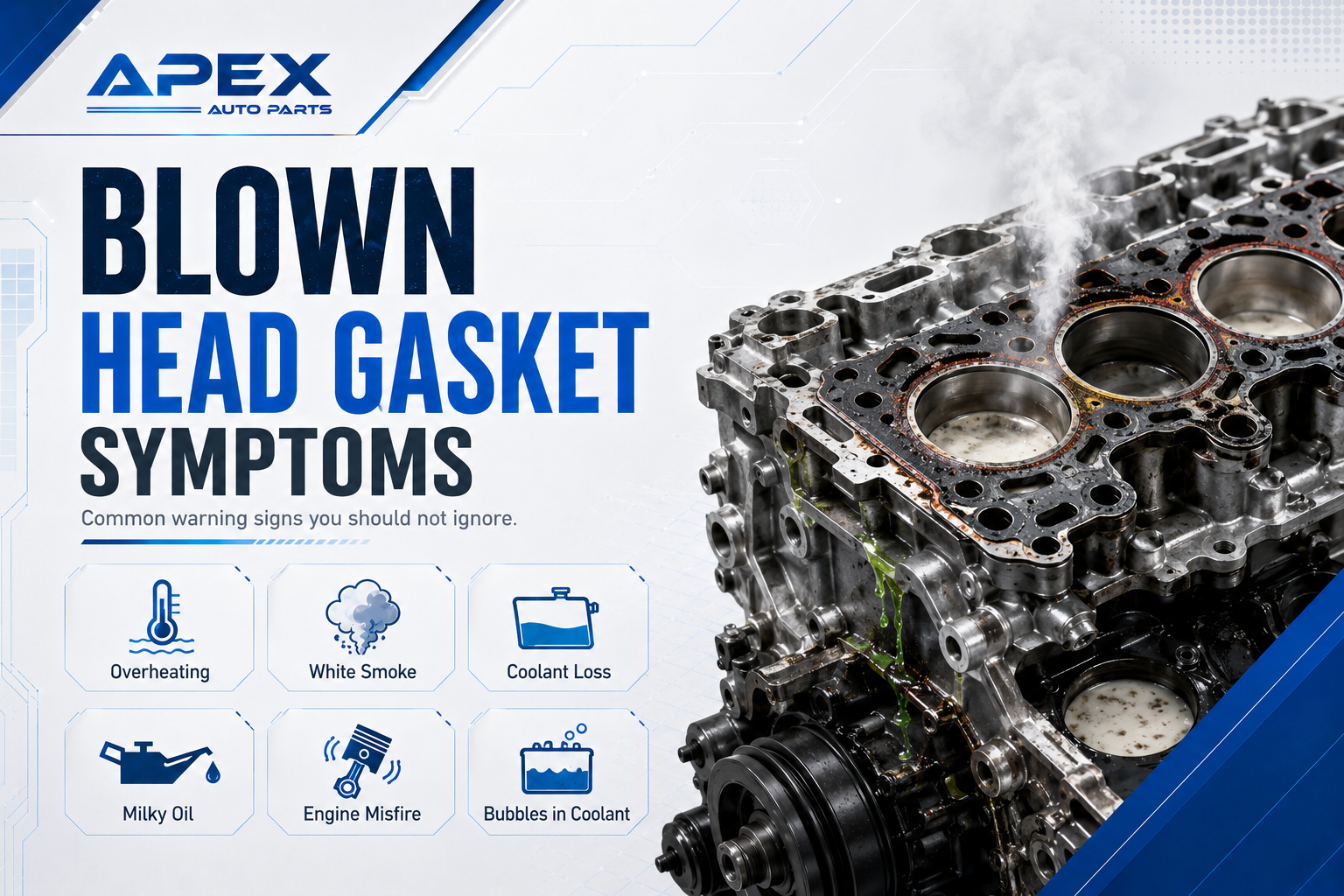
Modern car engines rely on many parts working together to maintain proper performance and temperature. One small component that plays a critical role in engine health is the head gasket. When this part fails, it can cause serious engine problems that quickly become expensive if ignored. Many drivers do not recognize blown head gasket symptoms early, which is why the issue often becomes severe before action is taken.
Understanding the early head gasket symptoms can help prevent major damage and expensive repairs. When drivers know the warning signs of head gasket failure, they can address the problem quickly and protect their engine.
This guide explains what a blown head gasket is, why it happens, the most common blown head gasket symptoms, and how proper engine maintenance and quality replacement parts can help keep your vehicle running reliably.
What a Head Gasket Does in an Engine
The head gasket sits between the engine block and the cylinder head. Its main job is to seal the combustion chamber and keep engine fluids separated.
Inside a vehicle engine, several systems operate at the same time. Combustion gases, coolant, and engine oil all move through different channels. The head gasket creates a tight seal that keeps these substances from mixing.
When the gasket works properly, the engine maintains the right compression and temperature. When it fails, combustion gases may leak into the cooling system or coolant may enter the engine cylinders. This is when blown head gasket symptoms begin to appear.
Because this component deals with high pressure and high temperatures, it must be durable and precisely fitted. If the seal breaks or deteriorates, the engine can quickly develop serious problems.
Why Head Gasket Failure Happens
Head gasket failure does not always occur suddenly. In many cases, the gasket weakens gradually due to heat, pressure, and engine wear.
One of the most common causes is engine overheating. When an engine overheats, metal parts expand beyond their normal limits. This can warp the cylinder head and break the seal created by the head gasket.
Poor cooling system maintenance is another common cause. A failing radiator, worn thermostat, blocked coolant passages, or low coolant levels can all raise engine temperatures. Over time, this stress may damage the gasket.
Improper installation can also lead to signs of head gasket failure. If the gasket is not installed correctly or if the cylinder head bolts are not tightened to the proper specifications, the seal may weaken.
Engine age and wear also play a role. Vehicles that have travelled high mileage may eventually develop head gasket symptoms as engine components naturally degrade.
Recognizing blown head gasket symptoms early can prevent severe engine damage.
Common Blown Head Gasket Symptoms
Several warning signs can indicate a blown head gasket. These symptoms may appear gradually or all at once, depending on how serious the damage is.
Engine Overheating
One of the most noticeable blown head gasket symptoms is frequent engine overheating. When the gasket fails, combustion gases can leak into the cooling system. This disrupts coolant circulation and raises engine temperature.
Drivers may notice the temperature gauge rising higher than normal or the engine overheating during longer drives. In many cases, overheating becomes more frequent over time.
Cooling system components such as the radiator, thermostat, and water pump must function correctly to prevent overheating. If the head gasket has already weakened, overheating may become constant.
White Smoke from the Exhaust
Another common sign of head gasket failure is thick white smoke coming from the exhaust. This occurs when coolant leaks into the combustion chamber and burns along with fuel.
The smoke often appears more noticeable during engine startup. In severe cases, the smoke may continue while driving.
This symptom usually indicates that coolant is entering the cylinders due to a damaged head gasket seal.
Coolant Loss Without Visible Leaks
Drivers sometimes notice that coolant levels drop frequently, even though no external leak is visible. This can be one of the hidden blown head gasket symptoms.
When the gasket fails, coolant may leak internally into the engine cylinders or mix with engine oil. Because the leak occurs inside the engine, it may not leave visible signs under the vehicle.
Regularly checking coolant levels can help detect early head gasket symptoms before the problem worsens.
Milky Engine Oil
Another serious sign of head gasket failure appears during an oil inspection. If coolant mixes with engine oil, the oil may look milky or foamy.
This occurs because coolant contamination changes the oil's texture and color. Instead of the usual dark brown appearance, the oil may become lighter and creamier.
Contaminated oil cannot properly lubricate engine components, which increases the risk of engine damage.
Engine Misfires and Loss of Power
A blown head gasket can also affect engine performance. If the gasket leaks around the combustion chamber, the engine may lose compression.
Low compression can lead to engine misfires, rough idling, and noticeable power loss while driving. Drivers may feel the vehicle struggling during acceleration.
These head gasket symptoms often appear along with other warning signs, such as overheating or smoke from the exhaust.
Bubbles in the Radiator or Coolant Reservoir
When combustion gases leak into the cooling system, they may create bubbles in the radiator or coolant reservoir.
This happens because high-pressure gases enter the coolant passages through the damaged gasket. Drivers or mechanics may notice bubbling when the radiator cap is removed.
This symptom is a strong indicator of blown head gasket symptoms and should be inspected immediately.
Sweet Smell from the Exhaust
Burning coolant produces a distinct sweet smell. When coolant leaks into the engine cylinders due to head gasket failure, this odor may come from the exhaust.
Although the smell may seem minor at first, it can indicate serious internal engine problems.
Drivers who notice this smell should check for other head gasket symptoms as well.
How Engine Overheating Contributes to Head Gasket Damage
Engine overheating is both a cause and a symptom of head gasket failure. High temperatures place extreme stress on the gasket material and nearby engine components.
If the cooling system fails to control engine temperature, metal parts expand unevenly. This expansion can distort the cylinder head and weaken the gasket seal.
Maintaining the cooling system is essential for preventing blown head gasket symptoms. Several engine parts play an important role in keeping temperatures stable.
Radiators help remove heat from coolant before it circulates through the engine again.
Thermostats regulate coolant flow based on engine temperature.
Water pumps circulate coolant through the engine block and cylinder head.
Cooling fans provide airflow through the radiator when the vehicle is stationary or moving slowly.
Faulty components in any of these areas can lead to overheating and eventually cause signs of head gasket failure.
Other Engine Parts That Help Prevent Overheating
Many drivers focus only on the radiator when thinking about engine cooling. In reality, several engine parts work together to prevent overheating and protect the head gasket.
A properly functioning thermostat ensures coolant flows through the engine at the right temperature.
The water pump moves coolant continuously through the cooling passages. If the pump fails, coolant circulation stops and temperatures rise quickly.
Radiator hoses and coolant pipes carry coolant between the engine and radiator. Cracked or blocked hoses can restrict coolant flow.
Engine oil also plays an important role in controlling heat. Oil lubricates moving parts and helps dissipate heat generated by friction.
Using reliable engine components helps maintain stable engine temperatures and reduces the risk of blown head gasket symptoms.
Diagnosing Signs of Head Gasket Failure
Diagnosing head gasket symptoms often requires a combination of visual inspection and testing.
Mechanics typically begin by checking coolant levels, oil condition, and exhaust smoke. These simple checks can reveal early signs of head gasket failure.
Compression tests are also commonly used to measure cylinder pressure. Low compression in one or more cylinders may indicate a damaged head gasket.
A chemical block test can detect combustion gases in the coolant system. This test confirms whether gases are leaking through the gasket.
Professional diagnosis ensures the correct problem is identified before replacing engine parts.
Repairing a Blown Head Gasket
Repairing a blown head gasket can be complex because it requires removing the cylinder head from the engine block. During the repair process, mechanics inspect the head, block surface, and other components for damage.
If the cylinder head has warped due to overheating, it may need to be resurfaced before installing a new gasket.
Replacing the gasket itself requires careful installation and precise torque specifications for the head bolts. Incorrect installation can lead to repeated head gasket symptoms.
Because the repair process is detailed, using quality engine parts is essential for long-term reliability.
Preventing Head Gasket Failure
Although some head gasket failures occur due to age or wear, many cases can be prevented with proper engine care.
Regular cooling system maintenance helps keep temperatures under control. Checking coolant levels, inspecting hoses, and ensuring the radiator and thermostat work properly can prevent overheating.
Drivers should also watch for early blown head gasket symptoms such as rising engine temperature or unexplained coolant loss.
Routine oil changes also protect the engine and reduce internal stress.
Using properly designed replacement parts ensures the engine operates efficiently and maintains stable temperatures.
Importance of Using Reliable Engine Parts
Every engine component plays a role in maintaining performance and preventing damage. Poor quality parts may not provide the durability required for high temperature engine conditions.
Head gaskets in particular must withstand extreme pressure and heat. Choosing dependable engine parts ensures the seal remains strong and prevents signs of head gasket failure from returning.
Drivers who maintain their vehicles with quality components often experience fewer engine issues and longer engine life.
For vehicle owners who need replacement head gaskets or other engine components, reliable suppliers make it easier to find the right parts for their vehicle.
Apex Auto Parts offers a wide selection of engine components, including head gasket products designed for proper engine sealing and durability. Using the right engine parts helps maintain cooling system efficiency and reduces the risk of overheating-related head gasket symptoms.
Final Thoughts
A blown head gasket can lead to serious engine damage if it is not addressed quickly. Recognizing blown head gasket symptoms early allows drivers to repair the issue before it becomes more severe.
Common head gasket symptoms include overheating, white exhaust smoke, coolant loss, contaminated oil, and engine misfires. These warning signs often indicate that the seal between the engine block and cylinder head has been compromised.
Maintaining the cooling system and using reliable engine components are important steps in preventing signs of head gasket failure. Components such as radiators, thermostats, water pumps, and properly fitted head gaskets help control engine temperature and protect internal engine systems.
When drivers understand the symptoms and causes of head gasket failure, they are better prepared to maintain their vehicles and avoid costly engine repairs. Proper maintenance and dependable engine parts play an important role in keeping engines running smoothly for many years.
Frequently Asked Questions - Blown Head Gasket
What are the most common blown head gasket symptoms?
The most common blown head gasket symptoms include engine overheating, thick white smoke from the exhaust, coolant loss without visible leaks, milky engine oil, and poor engine performance. These head gasket symptoms occur because the gasket fails to properly seal the combustion chamber, allowing coolant, oil, or combustion gases to mix.
How do I know if my car has a blown head gasket?
You may have a blown head gasket if you notice persistent overheating, bubbling in the coolant reservoir, white smoke from the exhaust, or a sweet smell coming from the engine. These signs of head gasket failure usually appear when the gasket seal breaks and allows fluids to mix inside the engine.
Can I still drive with a blown head gasket?
Driving with a blown head gasket is not recommended because it can lead to severe engine damage. The engine may overheat quickly, lose compression, or allow coolant to mix with oil. Ignoring blown head gasket symptoms can result in costly repairs or even complete engine failure.
What causes a head gasket to fail?
The most common cause of head gasket failure is engine overheating. High temperatures can warp the cylinder head and damage the gasket seal. Other causes include poor engine maintenance, low coolant levels, improper installation, and long-term engine wear.
Does a blown head gasket always cause overheating?
In many cases, overheating is one of the main blown head gasket symptoms, but it does not always occur immediately. Some vehicles may first show other head gasket symptoms, such as coolant loss, engine misfires, or white exhaust smoke before overheating becomes noticeable.
How much does it cost to fix a blown head gasket?
The cost to repair a blown head gasket varies depending on the vehicle and engine type. In many cases, the repair can be expensive because it requires removing the cylinder head and replacing the gasket. Using quality replacement parts during the repair helps prevent repeated signs of head gasket failure.
What does white smoke from the exhaust mean?
White smoke coming from the exhaust is often one of the clear signs of a blown head gasket. This usually happens when coolant leaks into the combustion chamber and burns with the fuel. If the smoke continues while driving, it may indicate serious head gasket symptoms that require inspection.
Can low coolant cause head gasket problems?
Yes, low coolant levels can contribute to head gasket failure. When coolant levels drop, the engine temperature rises and overheating may occur. Continuous overheating puts pressure on the gasket and can eventually lead to blown head gasket symptoms.
How long can a blown head gasket last before complete failure?
A blown head gasket may continue functioning for a short period, but the engine will gradually develop more severe problems. Signs of head gasket failure such as overheating, engine misfires, and coolant loss often worsen quickly, making early repair important.
What engine parts should be checked when diagnosing head gasket symptoms?
When diagnosing head gasket symptoms, mechanics usually inspect the cooling system, radiator, thermostat, water pump, engine oil, and cylinder head. These components play a role in controlling engine temperature and maintaining proper engine pressure. If a blown head gasket is confirmed, replacing it with a reliable engine part is essential for restoring proper engine performance.