
 info@apexautoparts.co.uk
 +44 203 915 7535
 Safe & Fast Shipping
 Whish List
 Compare
 Sign In

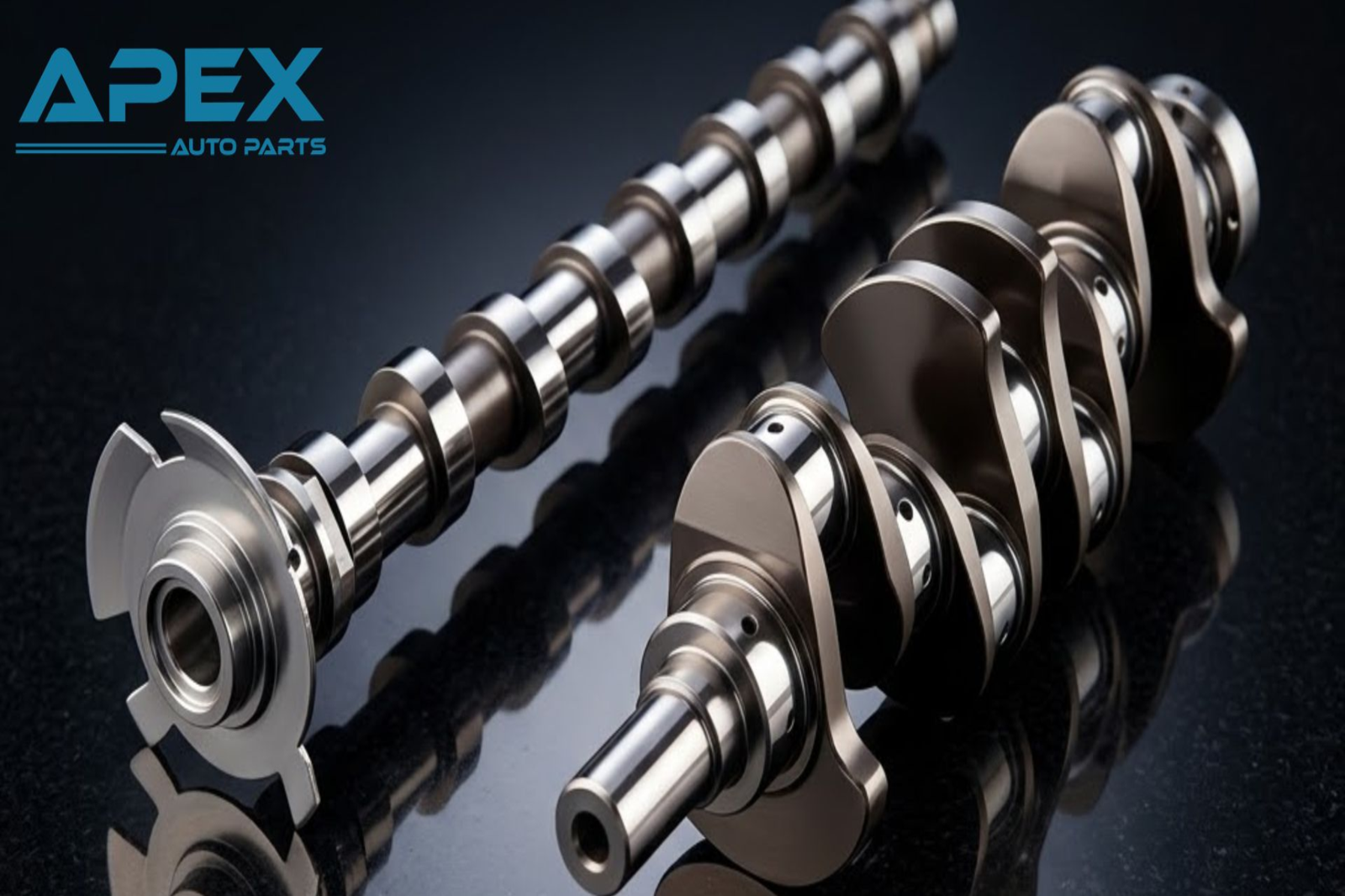
Most drivers know that pistons move inside an engine and that fuel creates power, but two parts control almost everything that happens around those pistons. These parts are the camshaft and crankshaft.
They sound similar, and both rotate while the engine is running, but they have very different jobs. The crankshaft turns piston movement into useful rotation. The camshaft controls when the engine valves open and close. If either part loses timing, lubrication, or support, the engine can quickly develop serious problems.
Understanding Camshaft vs Crankshaft is useful when dealing with engine noise, oil leaks, poor performance, timing faults, or internal engine damage. It can also help you understand why a mechanic may recommend replacing a seal, pulley, timing component, bearing, or complete shaft instead of simply clearing a warning light.
At Apex Auto Parts, we supply engine parts to UK drivers, garages, mechanics, and engine rebuild specialists. Parts such as camshafts, crankshafts, bearings, seals, timing components, pistons, and cylinder head parts need correct fitment. A small difference in engine code or production year can change which component is suitable.
This guide explains how the camshaft and crankshaft work, the difference between them, the signs of Camshaft problems and Crankshaft problems, common seal leaks, pulley faults, reliability, diagnosis, and what to check before buying replacement engine parts.
What Is a Camshaft?
A camshaft is a long metal shaft fitted with raised sections called lobes. These lobes move against parts of the valve system as the camshaft rotates.
The main purpose of the camshaft is to control the opening and closing of the intake and exhaust valves.
The intake valves allow fresh air, or an air and fuel mixture on some engines, into the cylinders. The exhaust valves allow burnt gases to leave after combustion.
The timing of these valves is extremely important.
If an intake valve opens too early or too late, the cylinder may not fill correctly. If an exhaust valve does not close at the right moment, compression can be lost. A badly timed camshaft can cause weak power, rough running, poor fuel use, misfires, or even internal engine damage.
Some engines use one camshaft. Others use two or more.
A simple older engine may use one camshaft to operate all the valves. Many modern engines use separate intake and exhaust camshafts. This gives the engine maker more control over valve timing and performance.
Modern engines may also use variable valve timing. This allows the engine computer to adjust camshaft position while the engine is running.
What Is a Crankshaft?
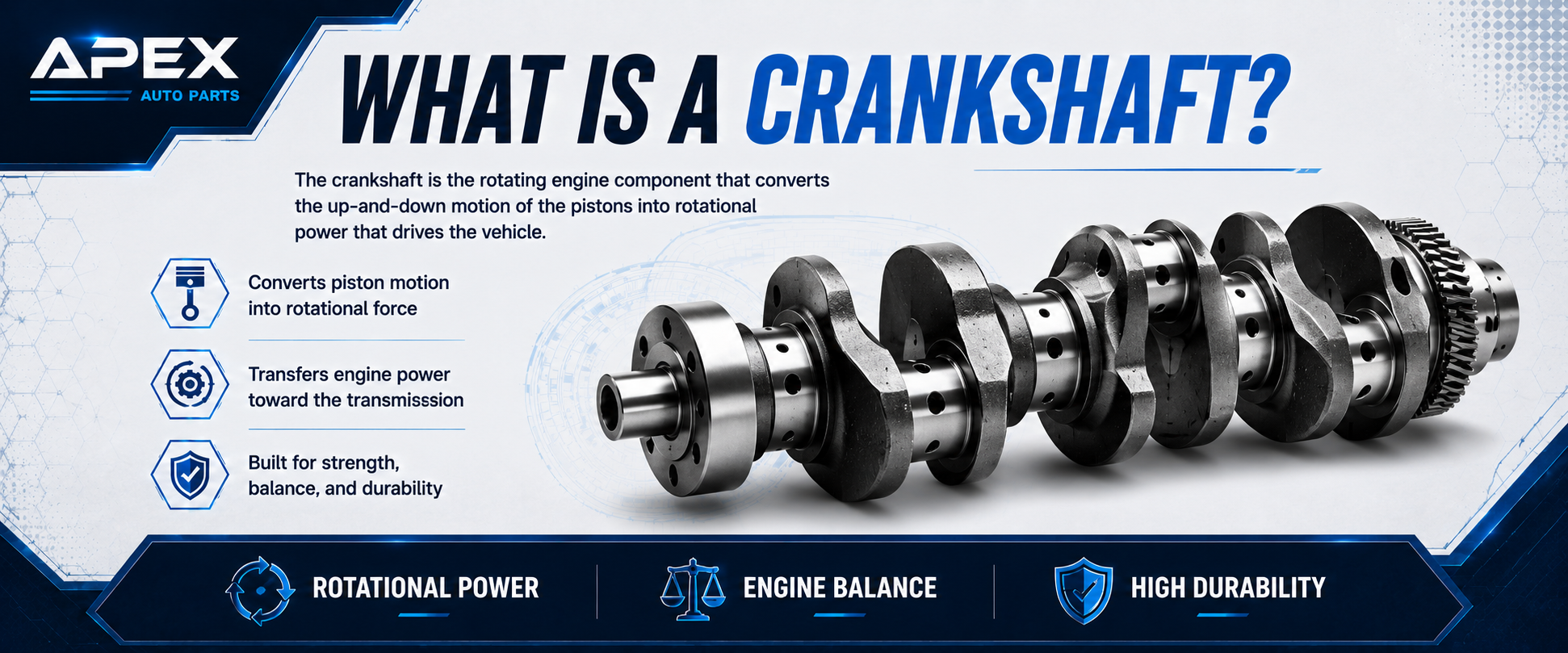
The crankshaft sits lower in the engine and connects to the pistons through connecting rods.
When combustion pushes a piston down the cylinder, the connecting rod transfers that force to the crankshaft. The special shape of the crankshaft changes the up and down movement of the pistons into rotating movement.
That rotation is then passed through the flywheel or flex plate, gearbox, driveshafts, and finally to the wheels.
The crankshaft also helps drive other engine systems.
Depending on the engine design, it may help drive the oil pump, timing system, alternator, air conditioning compressor, coolant pump, and other parts through gears, chains, belts, or pulleys.
Because the crankshaft deals directly with combustion force, it must be extremely strong. It also relies on a constant supply of clean engine oil.
Crankshaft bearings support the shaft and allow it to rotate with very little friction. If oil pressure falls or the bearings wear badly, the crankshaft can become damaged.
Camshaft vs Crankshaft: What Is the Main Difference?
The simplest difference is their job.
The crankshaft takes the force made by the pistons and turns it into rotation.
The camshaft uses rotation to control the valves.
Both parts must remain perfectly timed with each other.
In a normal four stroke engine, the crankshaft rotates twice for every one full rotation of the camshaft. This relationship allows the valves to open at the correct stage of the intake, compression, power, and exhaust cycle.
A timing belt, timing chain, or timing gears normally connect the two systems.
If that connection jumps, stretches, breaks, or is installed incorrectly, the valves may open at the wrong time.
On an interference engine, incorrect timing can allow the pistons to hit open valves. This can bend valves, damage pistons, break rocker arms, damage the cylinder head, or cause much larger engine failure.
The key differences are:
- The crankshaft converts piston movement into rotation.
- The camshaft controls intake and exhaust valves.
- The crankshaft normally turns faster than the camshaft.
- Both depend on correct timing.
- Both require good lubrication.
- Failure of either part can lead to major engine damage.
How do the Camshaft and Crankshaft Work Together?
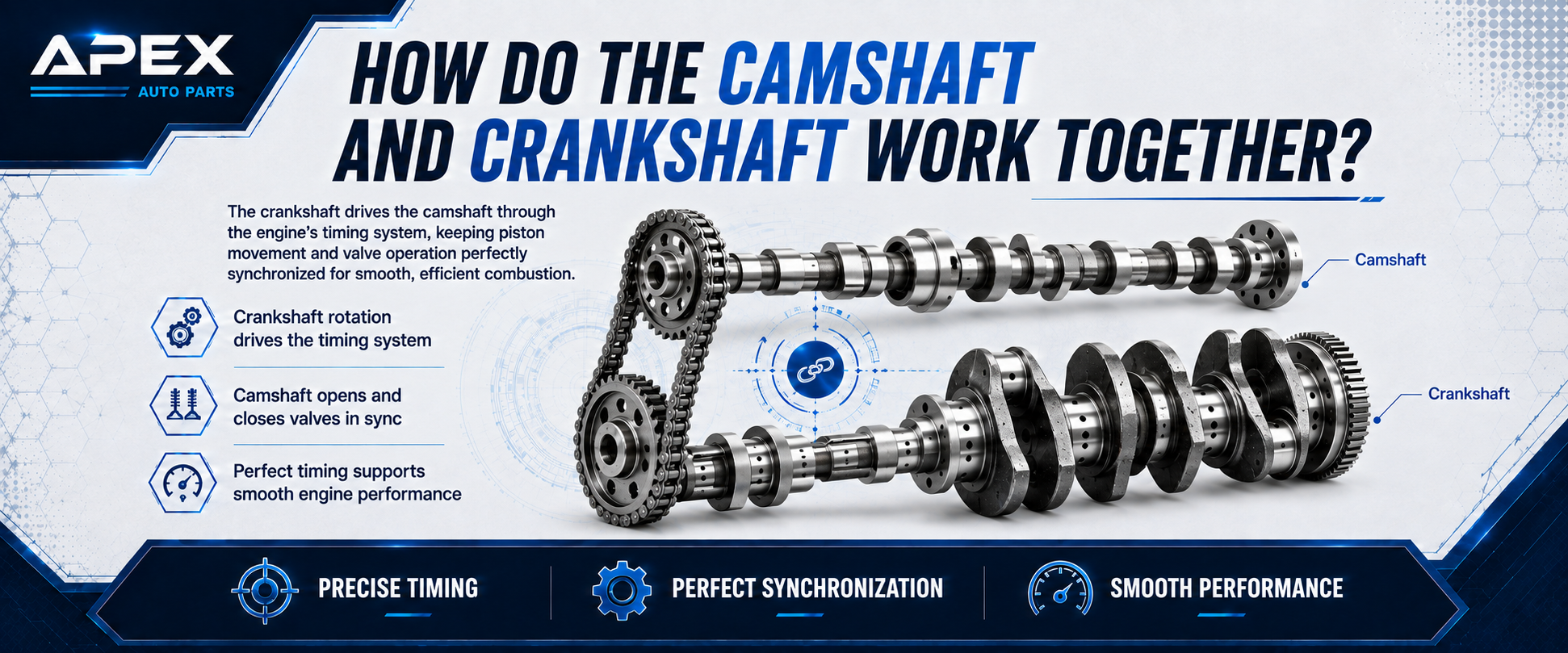
The camshaft and crankshaft should never be viewed as completely separate parts.
They work as one timed system.
When the crankshaft moves a piston down during the intake stroke, the camshaft must open the intake valve.
As the piston rises during compression, the valves must close.
Combustion then pushes the piston down during the power stroke.
Finally, the exhaust valve opens while the piston rises again and pushes burnt gases out of the cylinder.
This process repeats many times every second while the engine is running.
The timing system keeps the camshaft and crankshaft synchronized.
A stretched timing chain, worn guide, weak tensioner, damaged sprocket, worn belt, or incorrect installation can change this relationship.
This is why a rattling timing chain should not be ignored. The engine may still run normally at first, but the timing may become worse as wear increases.
Why Does Camshaft Condition Matters?
The camshaft operates under repeated pressure.
Every lobe repeatedly pushes against a follower, rocker arm, lifter, or another valve system component. A thin film of engine oil separates the moving metal surfaces.
If lubrication is good, the components can last for many years.
If the oil becomes dirty, the wrong oil is used, or oil pressure becomes too low, camshaft surfaces may start to wear.
A worn lobe may no longer lift a valve far enough.
This can reduce the amount of air entering or leaving the cylinder. The engine may then lose power or run unevenly.
Modern variable timing systems make camshaft condition even more important. Oil passages and control valves must remain clean enough for the system to move the camshaft accurately.
Understanding Camshaft Reliability
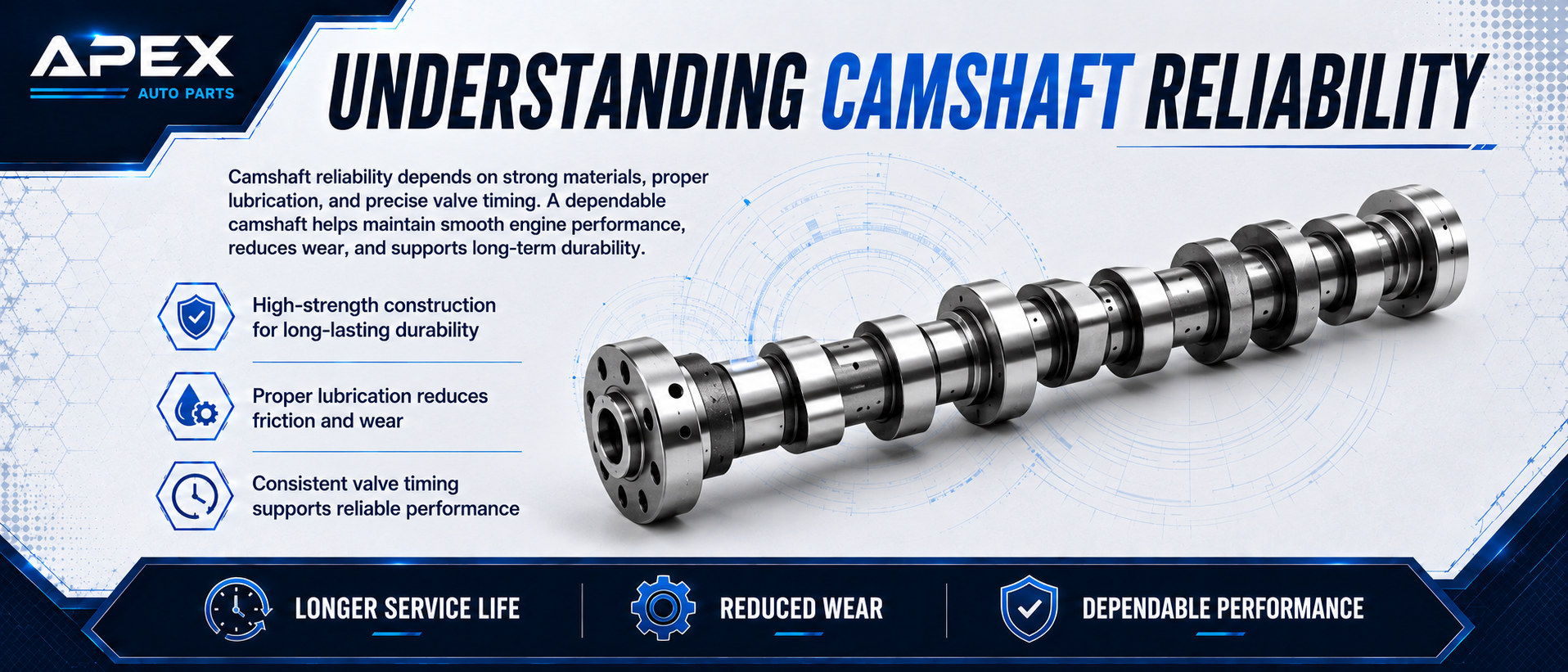
Camshaft Reliability is usually good when the engine receives regular oil changes and does not suffer from low oil pressure.
Camshafts are designed to last a long time. They are not normal service parts like filters or spark plugs.
When a camshaft fails, there is often another cause behind the damage.
Low oil level is a major risk. Dirty oil can also block small oil passages. A weak oil pump may fail to provide enough pressure. Worn lifters or followers can damage camshaft lobes. Incorrect valve clearances on certain engines can also increase wear.
Poor timing repairs can damage the shaft as well.
When replacing a worn camshaft, the mechanic should inspect the parts that work directly against it. Fitting a new camshaft against badly worn followers may damage the replacement part.
A good repair should identify why the original camshaft failed.
Common Camshaft problems
Most Camshaft problems develop through lubrication failure, timing faults, wear, or damage elsewhere in the valve system.
The symptoms depend on the engine.
One common sign is a tapping or ticking noise from the upper engine. This may become faster as engine speed rises.
Another symptom is poor performance. A worn camshaft lobe can reduce valve lift, making it harder for the engine to breathe properly.
Misfires can occur when one cylinder is affected more than the others.
Some engines may also store camshaft timing fault codes. However, a camshaft related fault code does not automatically mean the camshaft itself is damaged.
A weak camshaft sensor, stretched timing chain, low oil pressure, faulty variable timing valve, wiring problem, or incorrect timing can produce similar codes.
This is why diagnosis matters before parts are ordered.
Signs of Serious Camshaft Wear
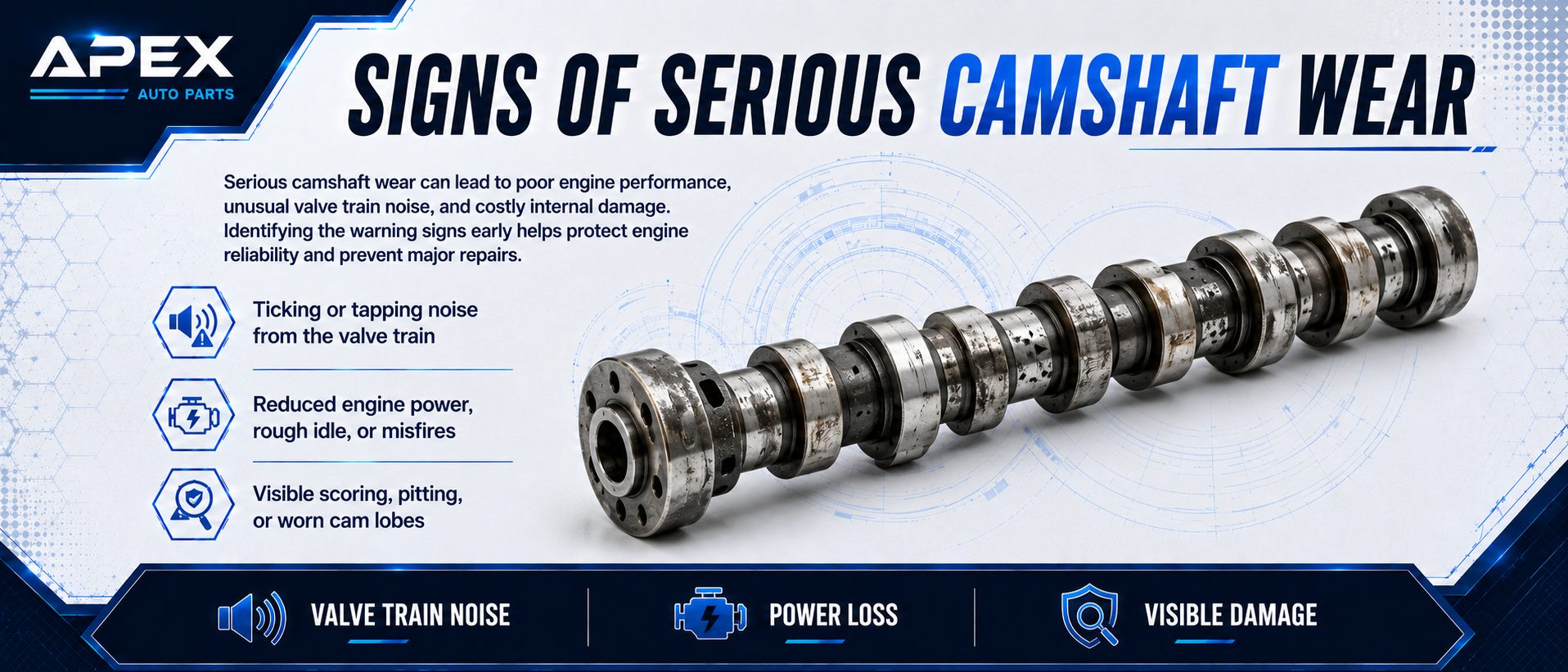
A badly worn camshaft can create several warning signs.
The engine may sound noisy from the cylinder head. Power can become weaker, especially at higher engine speeds. The idle may become uneven.
Metal particles may appear in the oil or oil filter if wear becomes severe.
A mechanic can remove the valve cover and inspect the visible camshaft surfaces. Lobes should have smooth working surfaces without deep scoring, rough edges, or unusual flat spots.
Measurements may be required when wear is not obvious.
Simply looking at a camshaft is not always enough to prove that it is within specification.
What Is a Camshaft Seal?
A camshaft seal stops engine oil escaping where the camshaft passes through the cylinder head.
It is normally made from a flexible sealing material that fits tightly around the rotating shaft.
Over time, heat can make the seal hard. The sealing lip may wear, and crankcase pressure can force oil past a weak seal.
An oil leak around the camshaft area may spread across the engine and make the source difficult to identify.
On engines where the timing belt is close to the seal, the leak needs quick attention.
Oil can damage a timing belt and shorten its life. If the belt slips or breaks, serious internal engine damage may follow.
Replacing the seal is normally much cheaper than repairing a damaged cylinder head.
What Is a Crankshaft Made to Handle?
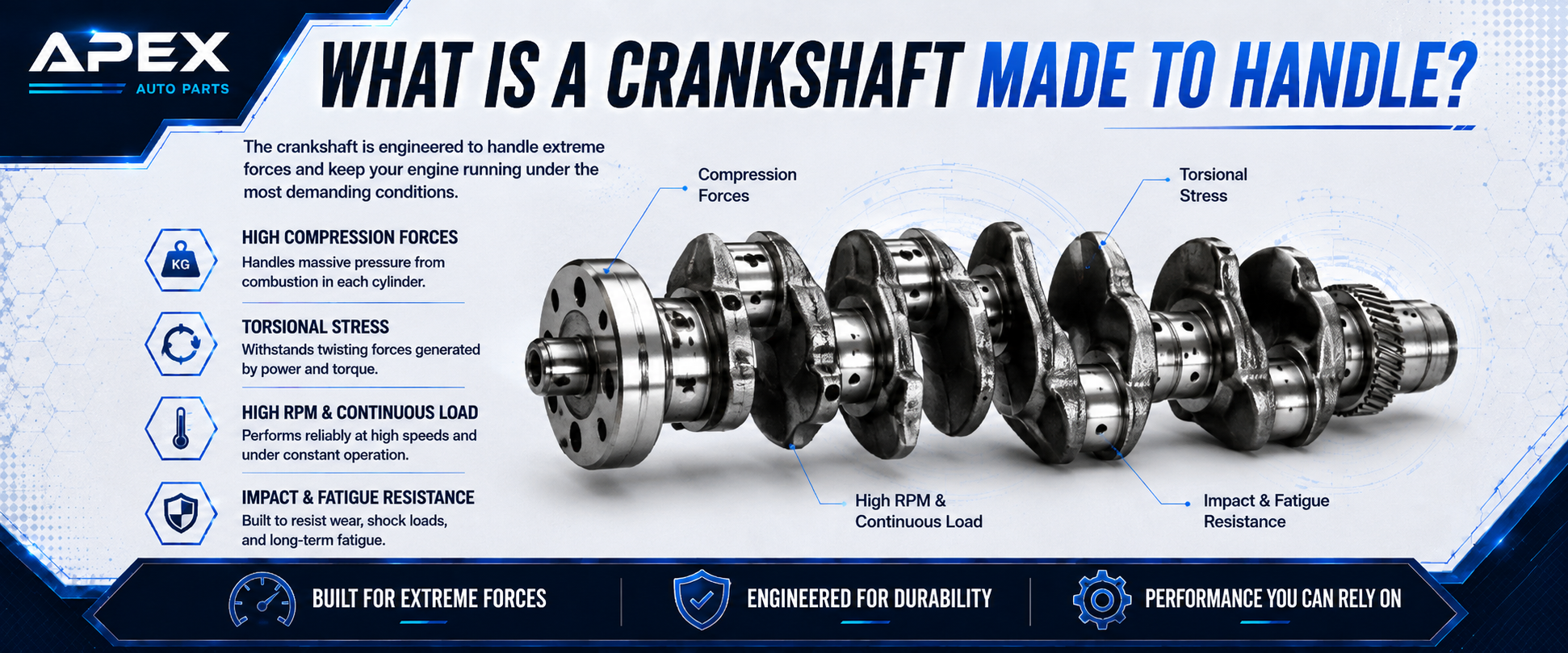
A crankshaft has one of the hardest jobs inside an engine.
Every combustion event pushes force through a piston and connecting rod into the crankshaft.
The shaft must handle this load while rotating thousands of times every minute.
It must also remain accurately aligned inside the engine block.
Main bearings support the crankshaft. Connecting rod bearings sit between the crankshaft journals and connecting rods.
Engine oil creates a protective film between these surfaces.
Without enough oil pressure, metal can contact metal.
Once this happens, heat rises quickly and bearing material can start to break apart.
Understanding Crankshaft Reliability
Crankshaft Reliability depends strongly on lubrication, bearing condition, engine temperature, and correct assembly.
A healthy crankshaft can last the full life of the engine.
Many crankshafts are only removed during a major engine rebuild.
Problems normally begin when the shaft loses its oil protection or experiences unusual force.
Running an engine with low oil is one of the fastest ways to damage crankshaft bearings.
Overheating can also affect oil quality and bearing clearance.
A failed oil pump, blocked oil passage, contaminated oil, fuel mixed with the engine oil, or incorrect bearing installation can all cause problems.
Performance tuning can increase cylinder pressure too. A well built engine may handle extra power, but aggressive tuning can put more load on rods, bearings, and crankshaft journals.
Common Crankshaft problems
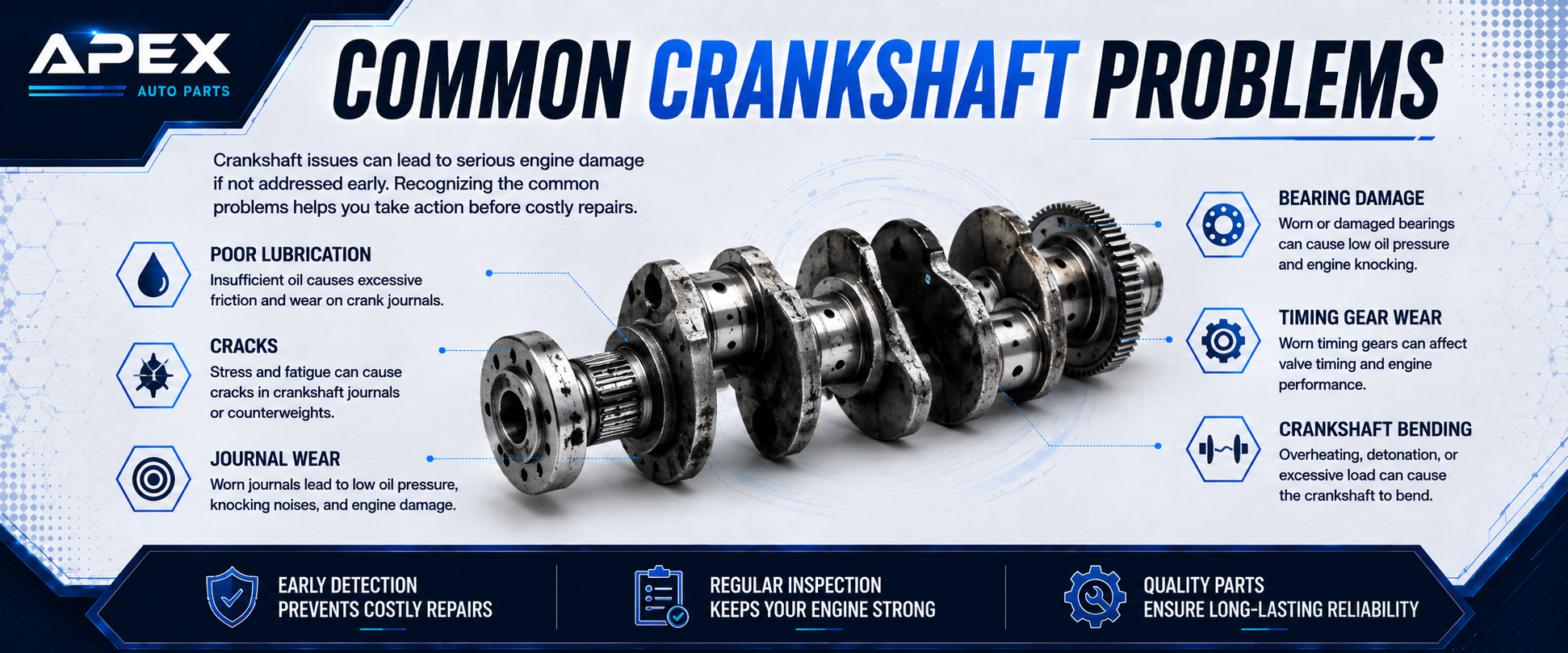
Serious Crankshaft problems should never be ignored because the crankshaft sits at the center of the engine’s rotating assembly.
One common issue is journal wear.
The journals are smooth surfaces where bearings support the shaft. If a bearing fails, the journal may become scratched, scored, or worn out of shape.
A bent crankshaft is less common but can occur after major internal engine damage.
Cracks can also develop in extreme cases.
Another problem is excessive end movement. Thrust bearings control how far the crankshaft can move forward and backward inside the block. If they wear badly, crankshaft movement can become excessive.
Possible warning signs include:
- Deep knocking from the lower engine
- Low oil pressure
- Metal inside the oil filter
- Strong vibration
- Engine seizure
- Excessive crankshaft movement
- Oil leaks from the front or rear of the engine
A deep knock that becomes louder under load needs urgent investigation.
Continuing to drive may turn a bearing repair into a complete engine replacement.
What Is a Crankshaft Seal?
A crankshaft seal prevents engine oil escaping where the crankshaft leaves the engine block.
Most engines have a front seal and a rear seal.
The front seal sits around the front end of the crankshaft, usually close to the crankshaft pulley and timing system.
The rear seal sits between the engine and gearbox.
A leaking front seal may leave oil around the crankshaft pulley, timing cover, or lower engine.
A leaking rear seal may allow oil to appear between the engine and gearbox.
Rear seal replacement can require gearbox removal, so labour can be much higher than the price of the seal itself.
Before replacing a seal, check crankcase ventilation.
Excessive internal engine pressure can push oil past a new seal and cause another leak soon afterwards.
What Does the Crankshaft Pulley Do?
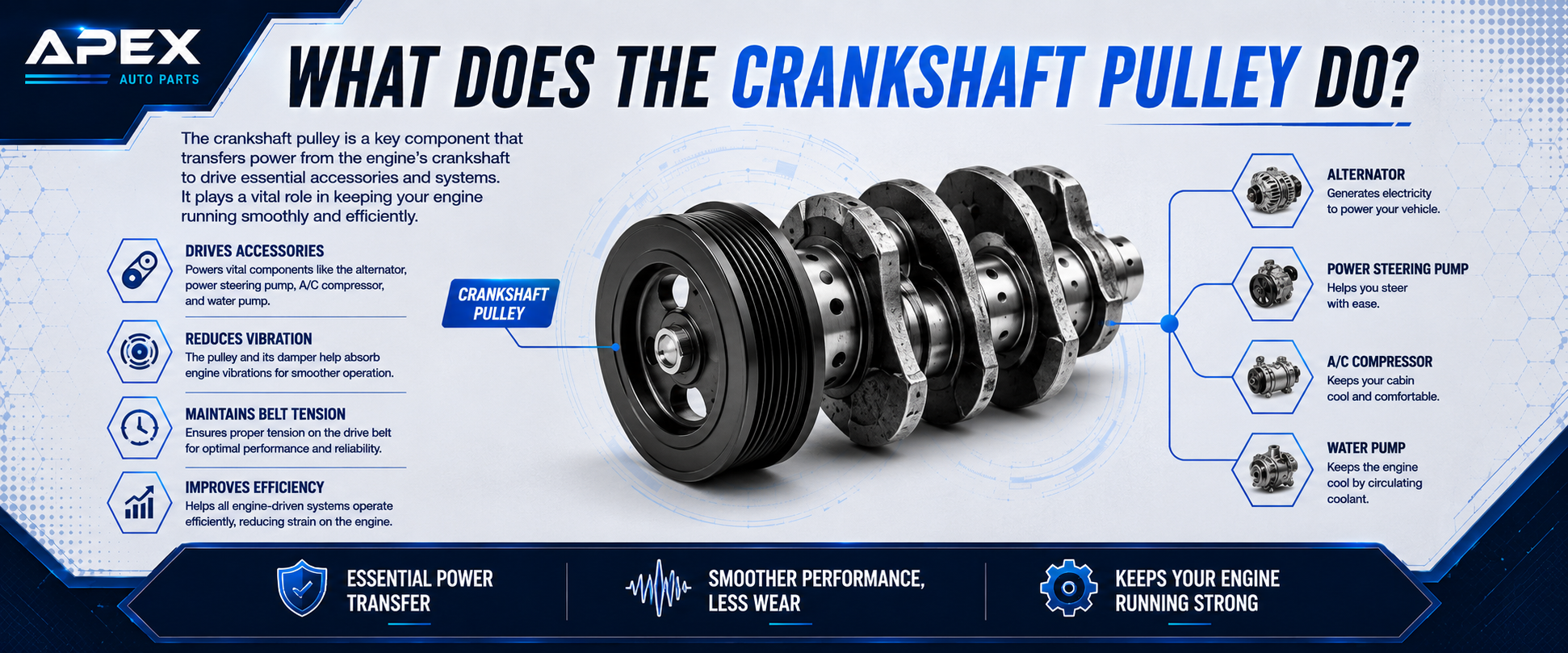
The crankshaft pulley is fitted to the front of the crankshaft.
It normally drives the auxiliary belt, which may operate the alternator, air conditioning compressor, power steering pump on some vehicles, and other accessories.
Many modern pulleys also act as vibration dampers.
They contain rubber or another damping material between different sections of the pulley.
This helps absorb the twisting vibration created by the engine.
As the rubber ages, the pulley may start to separate.
A damaged pulley can wobble, make noise, throw the auxiliary belt, or damage nearby parts.
The pulley bolt must also be tightened correctly during replacement.
Some engines use special procedures or single use bolts.
Signs of a Failing crankshaft pulley
A failing crankshaft pulley may make a knocking, squeaking, or rattling sound from the front of the engine.
The pulley may appear to wobble while the engine is running.
The auxiliary belt may move unevenly.
Cracked or pushed out rubber around the pulley is another warning sign.
If the pulley separates completely, the belt can come off. The alternator may stop charging, and other belt driven systems may stop working.
On some engines, belt damage can create even more serious problems if pieces enter the timing area.
This is why a visibly damaged pulley should not be left until the next service.
Camshaft Sensor and Crankshaft Sensor Faults
Camshaft and crankshaft position sensors are separate from the shafts themselves.
The engine computer uses these sensors to understand where the rotating parts are positioned.
This information helps control ignition timing, fuel injection, and variable valve timing.
A failed sensor may cause difficult starting, cutting out, poor running, or an engine warning light.
A crankshaft sensor failure can sometimes prevent the engine from starting because the computer no longer knows the crankshaft position.
A camshaft sensor fault may allow the engine to run but can make starting slower or affect performance.
Before replacing either shaft, always confirm whether the actual problem is only the sensor or its wiring.
How Mechanics Diagnose Camshaft and Crankshaft Faults?
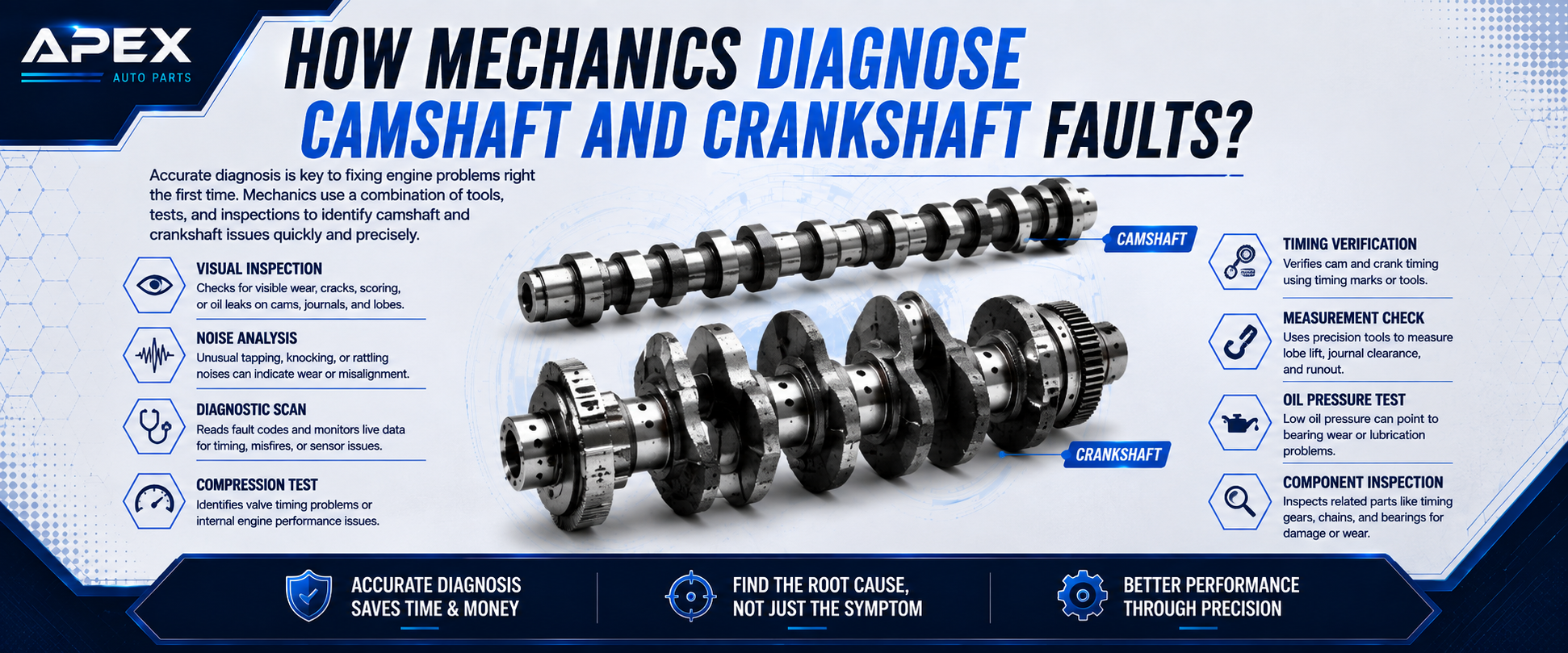
Good diagnosis starts with the symptoms.
A mechanic should listen to where the noise comes from and note whether it changes when the engine becomes warm.
Engine oil level and condition should be checked.
Fault codes can then help guide the next test.
Timing data may show whether camshaft and crankshaft positions agree with each other.
Oil pressure testing can reveal whether poor lubrication is causing upper or lower engine noise.
If internal damage is suspected, the oil filter can be opened and checked for metal.
Compression testing may also help identify valve timing or cylinder problems.
In serious cases, the oil pan, valve cover, cylinder head, or complete engine may need to be opened for inspection.
Can a Damaged Camshaft Be Repaired?
Minor camshaft damage is not normally repaired inside the engine.
A worn or badly damaged camshaft is usually replaced.
Specialist engineering companies may be able to restore certain shafts, but the correct repair depends on the engine and level of wear.
Replacing the shaft without checking followers, lifters, rockers, oil pressure, and oil passages can lead to repeat failure.
If the camshaft was damaged after a timing belt failure, valves and pistons should also be inspected.
The full cause needs to be understood before rebuilding begins.
Can a Damaged Crankshaft Be Repaired?
Some damaged crankshafts can be repaired during an engine rebuild.
A machine shop may measure the journals and determine whether they can be polished or ground to a smaller repair size.
Matching bearings must then be used.
If the shaft is cracked, badly bent, or worn beyond safe limits, replacement is normally the better option.
Accurate measurement matters.
A crankshaft that looks clean can still be out of specification by a very small amount.
Bearing clearance must be correct for oil pressure and long term engine life.
How to Improve Camshaft and Crankshaft Life?
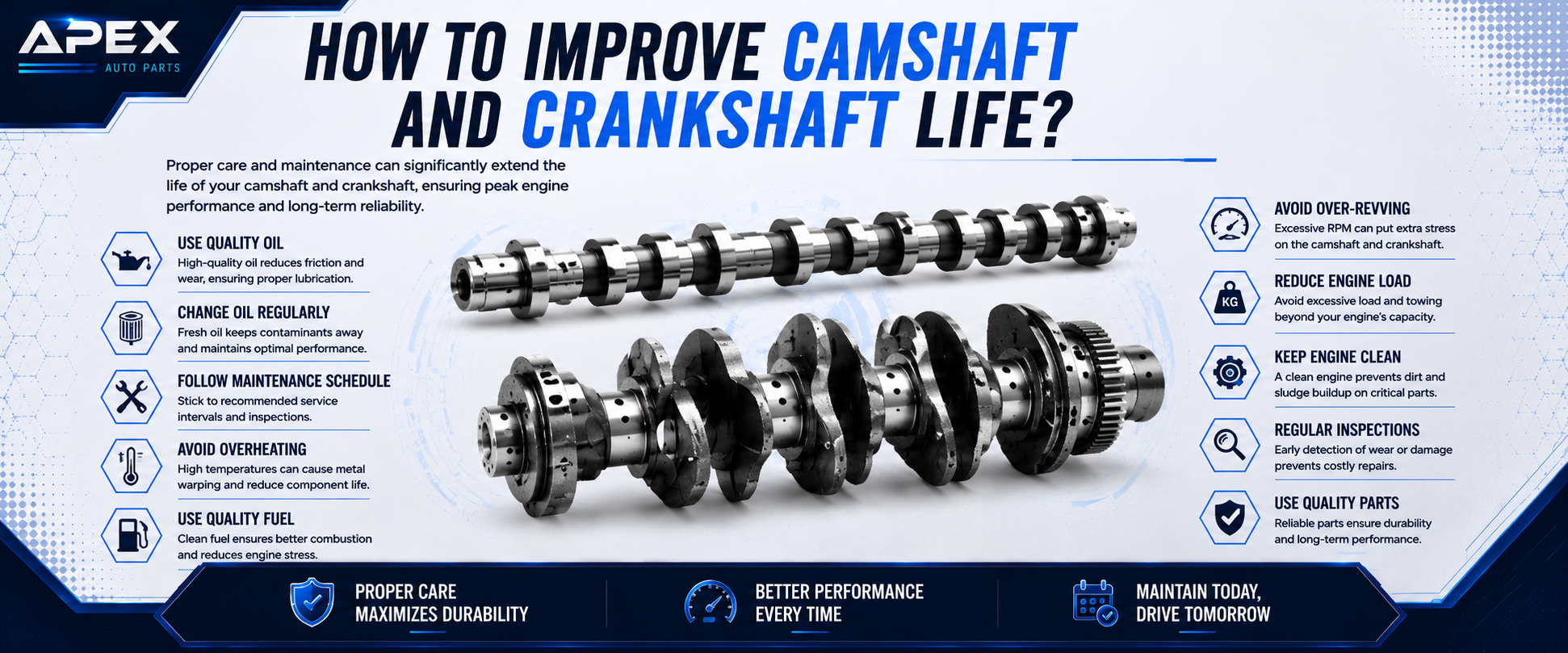
Most shaft failures can be reduced by protecting the engine lubrication and timing systems.
Use the correct engine oil and filter.
Do not ignore a low oil warning.
Investigate oil pressure faults quickly.
Keep the cooling system working properly because high engine temperatures can weaken oil protection.
Replace timing belts at the correct interval and investigate timing chain noise before the chain jumps.
Oil leaks should also be repaired before the level becomes dangerously low.
For better reliability:
- Check oil regularly.
- Use the oil specification required for your engine.
- Repair coolant leaks early.
- Investigate rattles, knocks, and tapping noises.
- Replace worn timing components correctly.
- Avoid driving with low oil pressure.
- Diagnose the original cause before rebuilding an engine.
Choosing the Correct Camshaft or Crankshaft
Buying the correct engine shaft is not as simple as searching by vehicle model.
The same car may use several engines depending on year, fuel type, power output, and market.
Even engines with the same capacity can use different crankshafts or camshafts.
Before ordering, check the VIN, registration number, engine code, production date, and original part number where possible.
Apex Auto Parts supplies internal engine components for a wide range of vehicles in the UK.
When customers are buying a crankshaft, camshaft, bearings, timing parts, seals, pistons, or related rebuild components, matching the exact engine application is important.
Correct fitment saves time and reduces the risk of dismantling the engine twice.
Should You Replace Bearings With a Crankshaft?
If a crankshaft is being replaced because of bearing damage, the bearings should normally be treated as part of the repair.
However, bearing size must be confirmed.
Standard bearings cannot simply be fitted to every shaft.
If the crankshaft has been machined, it may require repair size bearings.
The connecting rods and engine block bearing surfaces should also be checked.
Oil passages need to be clean.
A new crankshaft fitted into an engine still full of metal contamination may fail very quickly.
This is why engine rebuilding must be treated as a complete job rather than a collection of individual parts.
Camshaft vs Crankshaft: Which Is More Expensive to Repair?
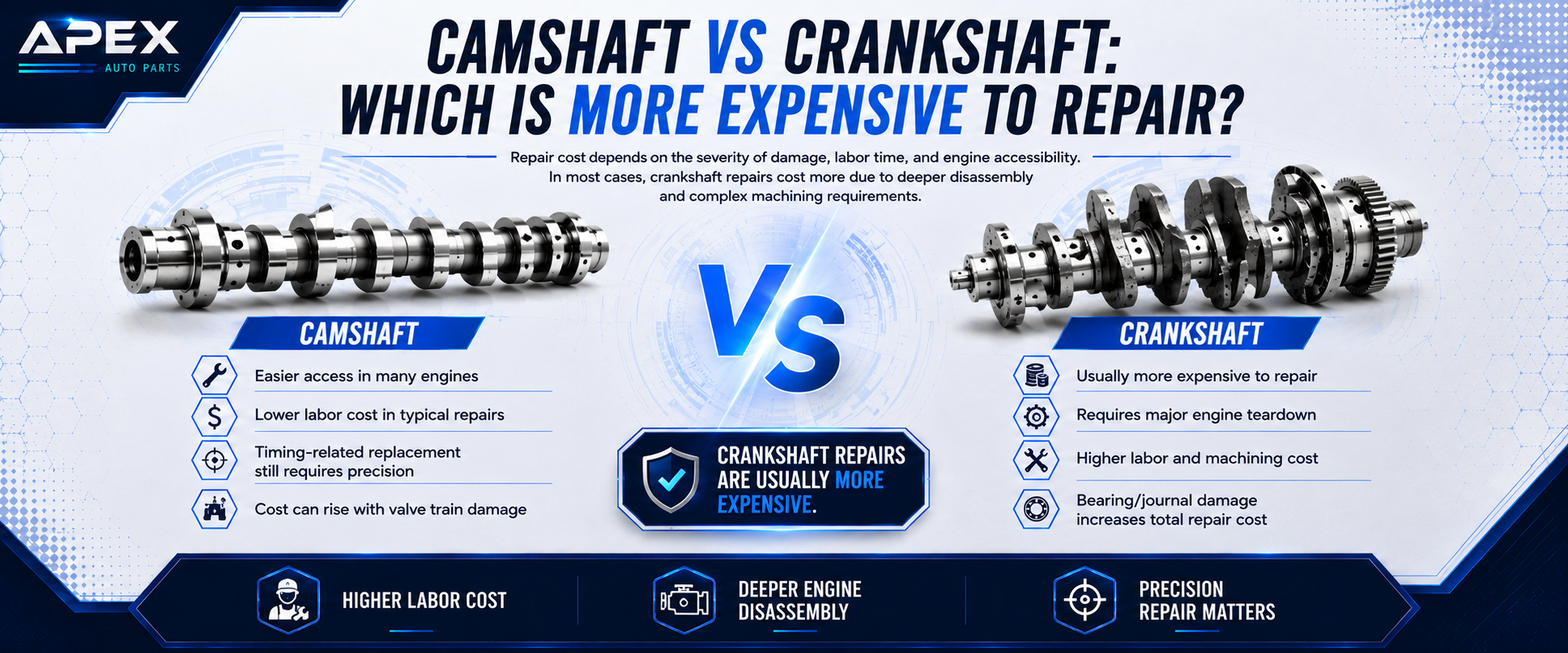
The crankshaft is usually more expensive to repair because it sits deep inside the engine.
Access may require removing the engine, gearbox, oil pan, pistons, connecting rods, and other major parts.
Camshaft repairs can also be expensive, especially on complex multi cam engines, but the cylinder head is generally easier to access than the crankshaft.
The actual cost depends on the vehicle.
A leaking camshaft seal may be a relatively small repair.
A leaking rear crankshaft seal can require many hours of labour because the gearbox may need removal.
A damaged crankshaft pulley is usually far less serious than a damaged crankshaft journal.
Correct diagnosis therefore makes a huge difference to the repair bill.
Final Thoughts
Understanding Camshaft vs Crankshaft makes many engine problems easier to understand.
The camshaft controls valve movement. The crankshaft converts piston force into useful rotation. The timing system keeps both parts working together.
Good Camshaft Reliability depends mainly on clean oil, correct timing, healthy followers, and enough oil pressure.
Strong Crankshaft Reliability depends on correct oil pressure, healthy bearings, controlled engine temperature, and accurate assembly.
Most Camshaft problems and Crankshaft problems give warning signs before complete engine failure. Tapping, knocking, oil leaks, low oil pressure, timing noise, poor performance, vibration, or metal in the oil should never be ignored.
Small parts also matter. A leaking camshaft seal, worn crankshaft seal, or failing crankshaft pulley may look minor compared with a complete engine shaft, but leaving these faults untreated can lead to larger repairs.
The best repair starts with diagnosis. Find the cause, measure the damaged parts, confirm the engine code, and then order components that match the exact engine.
For owners, garages, and rebuild specialists looking for engine parts in the UK, Apex Auto Parts can help with part identification and engine component supply when accurate vehicle and engine information is provided.
FAQs
1. What is the main difference in Camshaft vs Crankshaft?
The main difference in Camshaft vs Crankshaft is their job. The crankshaft converts piston movement into rotation that eventually reaches the wheels. The camshaft controls when the intake and exhaust valves open. Both parts are linked by the timing system and must stay correctly synchronized.
2. Which is more important, camshaft or crankshaft?
Both are essential. Without the crankshaft, piston movement cannot become useful rotating power. Without the camshaft, the valves cannot open and close at the correct time. An engine cannot operate correctly if either shaft fails, so neither part should be considered more important than the other.
3. What are the most common Camshaft problems?
Common Camshaft problems include worn lobes, poor lubrication, damaged followers, incorrect valve timing, and oil supply faults. Symptoms can include tapping noises, misfires, weak performance, rough idle, and timing related fault codes. A proper inspection is needed because sensors and timing components can produce similar symptoms.
4. What are the common Crankshaft problems?
Common Crankshaft problems include worn journals, damaged bearings, excessive end movement, cracks, bending, and oil starvation damage. Drivers may notice deep knocking, vibration, low oil pressure, metal in the oil, or complete engine seizure. Serious crankshaft noise should be investigated before the vehicle is driven further.
5. How good is Camshaft Reliability?
Camshaft Reliability is normally very good when the engine receives clean oil and proper servicing. Camshaft failure is often linked to another problem such as low oil pressure, blocked oil passages, worn lifters, or timing faults. Correct maintenance can allow a camshaft to last for most of the engine’s working life.
6. How good is Crankshaft Reliability?
Crankshaft Reliability is generally excellent in a correctly maintained engine. Crankshafts are designed to handle strong combustion forces for many years. Problems are more likely after oil starvation, bearing failure, overheating, incorrect rebuilding, or severe internal damage. Regular oil checks are one of the best ways to protect the crankshaft.
7. What happens when a camshaft seal leaks?
A leaking camshaft seal allows engine oil to escape around the camshaft. You may see oil near the cylinder head or timing area. If oil reaches a timing belt, the belt may weaken. The leak should be repaired early, and crankcase pressure should also be checked before fitting a replacement seal.
8. Is a leaking crankshaft seal serious?
A leaking crankshaft seal can become serious if enough oil is lost. A front seal leak may spread oil around the pulley and timing cover, while a rear seal may leak between the engine and gearbox. The seal itself may be inexpensive, but rear seal replacement can involve significant labour.
9. What are the signs of a bad crankshaft pulley?
A failing crankshaft pulley can cause rattling, squeaking, belt movement, vibration, or visible wobbling at the front of the engine. Rubber inside a vibration damping pulley may crack or separate. If the pulley fails completely, the auxiliary belt may come off and stop important engine accessories from working.
10. Can a car run with a damaged camshaft or crankshaft?
A car may continue running with early camshaft or crankshaft wear, but driving it is risky. Camshaft damage can affect valve timing and performance, while crankshaft bearing damage can quickly become complete engine failure. Knocking, low oil pressure, timing noise, or metal in the oil should be checked immediately.