 info@apexautoparts.co.uk
 +44 203 915 7535
 Safe & Fast Shipping
 Whish List
 Compare
 Sign In

Engine bearings are small parts, but they do a very important job. They help the crankshaft and connecting rods move smoothly inside the engine. If these bearings wear out, the engine can start making noise, oil pressure can drop, and the repair cost can become very high.
Many people get confused between a crankshaft bearing and a big-end bearing. Both are found near the crankshaft, but they are not the same part. They sit in different places and handle different engine loads.
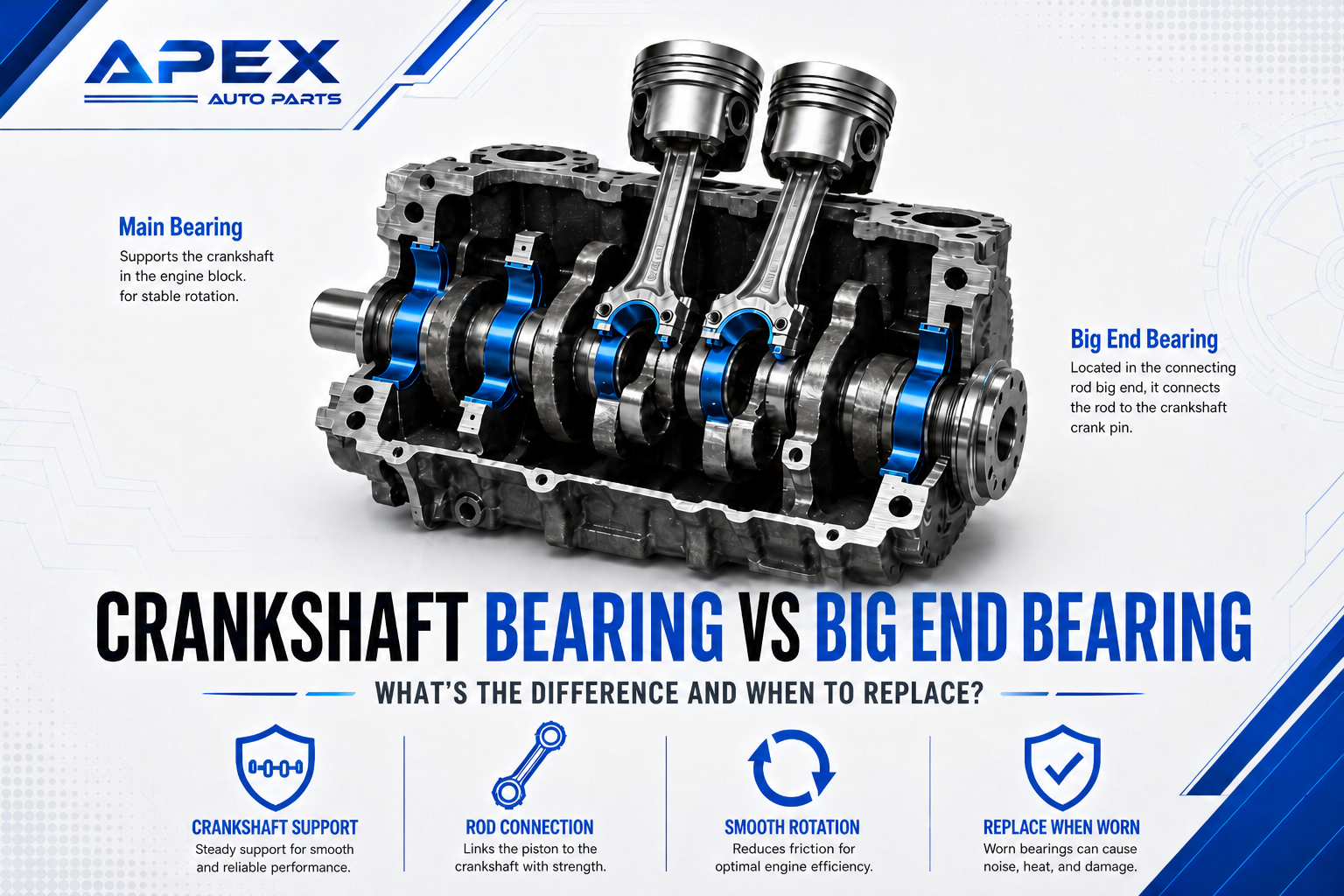
A crankshaft bearing usually means the main bearing. It supports the crankshaft inside the engine block. A big end bearing sits inside the larger end of the connecting rod, where the rod joins the crankshaft. This part is also called a connecting rod bearing.
If you are rebuilding an engine, fixing a knocking sound, or searching for the right bearing for the crankshaft, knowing this difference will help you choose the correct part. Apex Auto Parts helps customers match the right bearing with the engine model, crankshaft size, and repair needs, so they do not waste money on the wrong part.
What Is a Crankshaft Bearing?
A crankshaft bearing is the bearing that supports the crankshaft inside the engine block. It allows the crankshaft to spin smoothly while staying in the correct position. In most engines, this bearing is called the main bearing.
The crankshaft is one of the engine's main moving parts. It converts the up-and-down movement of the pistons into rotational power. That power helps move the vehicle. Since the crankshaft keeps spinning while the engine runs, it needs strong support.
The main bearing supports the crankshaft. It also works with engine oil. Oil creates a thin layer between the bearing and the crankshaft. This layer helps stop direct metal contact. When the oil layer is strong, the crankshaft spins smoothly and safely.
If the crankshaft bearing wears out, the crankshaft can move more than it should. This can cause deep knocking, low oil pressure, rough running, and crankshaft damage.
Main jobs of a crankshaft bearing
- It supports the crankshaft inside the engine block.
- It helps the crankshaft spin smoothly.
- It keeps the crankshaft in the correct position.
- It reduces rubbing between metal parts.
- It helps protect the crankshaft journals.
- It supports stable oil pressure around the crankshaft.
- It helps the engine run quietly.
A worn main bearing can affect the whole lower part of the engine. This is why mechanics often inspect main bearings during engine rebuilds and crankshaft repairs.
What Is a Big End Bearing?
A big end bearing is found inside the big end of the connecting rod. The connecting rod joins the piston to the crankshaft. One side of the rod connects to the piston. The larger side connects to the crankshaft. That larger side is called the big end.
The bearing inside this area is called a big-end bearing. It is also known as a connecting rod bearing.
The big end bearing helps the connecting rod move smoothly around the crankshaft. Every time the piston moves, the connecting rod pushes and pulls on the crankshaft. The bearing allows this movement to occur without harsh metal-to-metal rubbing.
This bearing is subjected to a strong force. When fuel burns inside the engine, the piston pushes down with power. That force passes through the connecting rod and reaches the crankshaft. The big-end bearing handles repeated force.
If this bearing wears out, the engine may make a sharp knocking sound. Many mechanics call this rod knock. This sound often speeds up as engine speed increases.
The main jobs of a big end bearing are
- It supports the connecting rod on the crankshaft.
- It helps the rod move smoothly.
- It protects the crankshaft rod journal.
- It carries force from the piston.
- It helps reduce friction and heat.
- It keeps oil between the rod and crankshaft.
- It helps transfer engine force smoothly.
A damaged big-end bearing should not be ignored. If it fails fully, it can damage the crankshaft, connecting rod, piston, and even the engine block.
Simple Difference Between Crankshaft Bearing and Big End Bearing
The easiest way to understand the difference is by looking at where each bearing sits and what it supports. A crankshaft bearing supports the crankshaft inside the engine block. A big end bearing supports the connecting rod where it connects to the crankshaft.
Both bearings are important. One supports the crankshaft. The other supports the connecting rod. If either one fails, the engine can suffer serious damage.
Main Bearing vs Connecting Rod Bearing
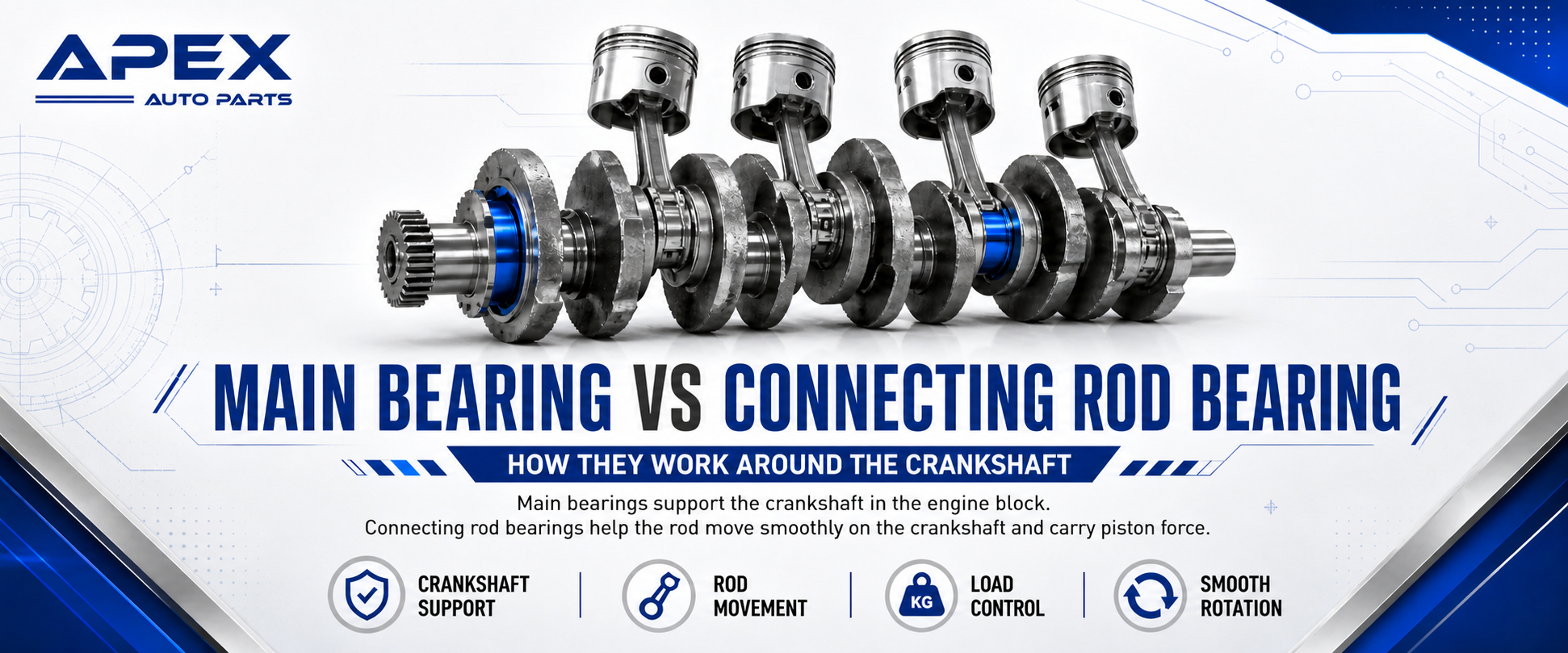
The main bearing and connecting rod bearing both work around the crankshaft, but they do not have the same job.
The main bearing holds the crankshaft inside the engine block. It keeps the crankshaft straight while it spins. If the main bearing wears out, the crankshaft may become loose. This can cause deep noise, low oil pressure, and crankshaft wear.
The connecting rod bearing sits between the connecting rod and the crankshaft. It helps the rod move smoothly as the piston moves up and down. Since the piston creates a strong force, this bearing has to work very hard.
A simple way to remember it is this:
- The main bearing supports the crankshaft.
- The connecting rod bearing supports the rod on the crankshaft.
- The main bearing keeps the crankshaft stable.
- The connecting rod bearing handles the piston force.
- Both need clean oil and the correct size.
If you are not sure which bearing you need, Apex Auto Parts can help you check whether your engine needs main bearings, rod bearings, or a full bearing set.
Where Are These Bearings Located?
The bearing's location helps explain its role.
The crankshaft bearing sits in the lower part of the engine block. The crankshaft rests on these bearings. Most engines use several main bearings because the crankshaft needs support at more than one point.
The big end bearing sits inside the connecting rod. It wraps around the crankshaft rod journal when the rod cap is fitted.
This is why the phrase bearing for crankshaft can mean more than one thing. Some people use it when they need main bearings. Others use it when they need rod bearings. The correct part depends on where the engine problem is.
How Do Engine Bearings Work?
Engine bearings work with oil. Oil creates a thin layer between the bearing and crankshaft. This layer helps moving parts slide smoothly without harsh metal contact.
When the oil level is correct and the oil pressure is high, the bearing stays protected. When oil is dirty, low, or too thin, the bearing can wear quickly.
Bearings can fail because of:
- Low engine oil.
- Dirty engine oil.
- Weak oil pressure.
- Wrong bearing size.
- Worn crankshaft journals.
- Engine overheating.
- Poor fitting during repair.
- Hard driving with weak parts.
A bearing may look simple, but it must fit correctly. If the oil gap is too tight, the bearing can overheat. If the oil gap is too loose, oil pressure can drop and knocking can start.
This is why Apex Auto Parts recommends confirming the bearing size before replacing engine bearings. The right part helps protect the crankshaft and prolongs the repair.
Signs of a Bad Crankshaft Bearing
A bad big-end bearing usually makes a sharper knocking sound. This sound often gets faster as engine speed increases. It may also get louder when you press the accelerator.
Common signs include:
- Sharp knocking from the lower engine.
- Knock gets faster when you rev the engine.
- Noise gets worse under load.
- Low oil pressure.
- Metal dust or flakes in the oil.
- Engine vibration.
- Loss of power.
- The engine may stop in serious cases.
A worn connecting rod bearing can damage the crankshaft rod journal. If the bearing spins inside the rod, it can also damage the connecting rod.
If your engine has a rod knock, stop driving and get it checked. Apex Auto Parts can help with the correct bearing options once your mechanic confirms the crankshaft size and engine details.
Signs of a Bad Big End Bearing
A bad big end bearing usually makes a sharper knocking sound. This sound often gets faster as engine speed increases. It may also get louder when you press the accelerator.
Common signs include:
- Sharp knocking from the lower engine.
- Knock gets faster when you rev the engine.
- Noise gets worse under load.
- Low oil pressure.
- Metal dust or flakes in the oil.
- Engine vibration.
- Loss of power.
- The engine may stop in serious cases.
A worn connecting rod bearing can damage the crankshaft rod journal. If the bearing spins inside the rod, it can also damage the connecting rod.
If your engine has a rod knock, stop driving and get it checked. Apex Auto Parts can help with the correct bearing options once your mechanic confirms the crankshaft size and engine details.
Why Do Engine Bearings Fail?
Bearings often fail because another problem is already present in the engine. The bearing may show the damage, but the real cause may be oil, heat, dirt, poor fitment, or crankshaft wear.
Clean oil is one of the biggest protections for engine bearings. If the oil layer breaks down, metal can come into contact with metal. After that, damage can happen very fast.
This can affect a crankshaft bearing, a big-end bearing, a main bearing, or a connecting rod bearing.
Which Bearing Usually Fails First?
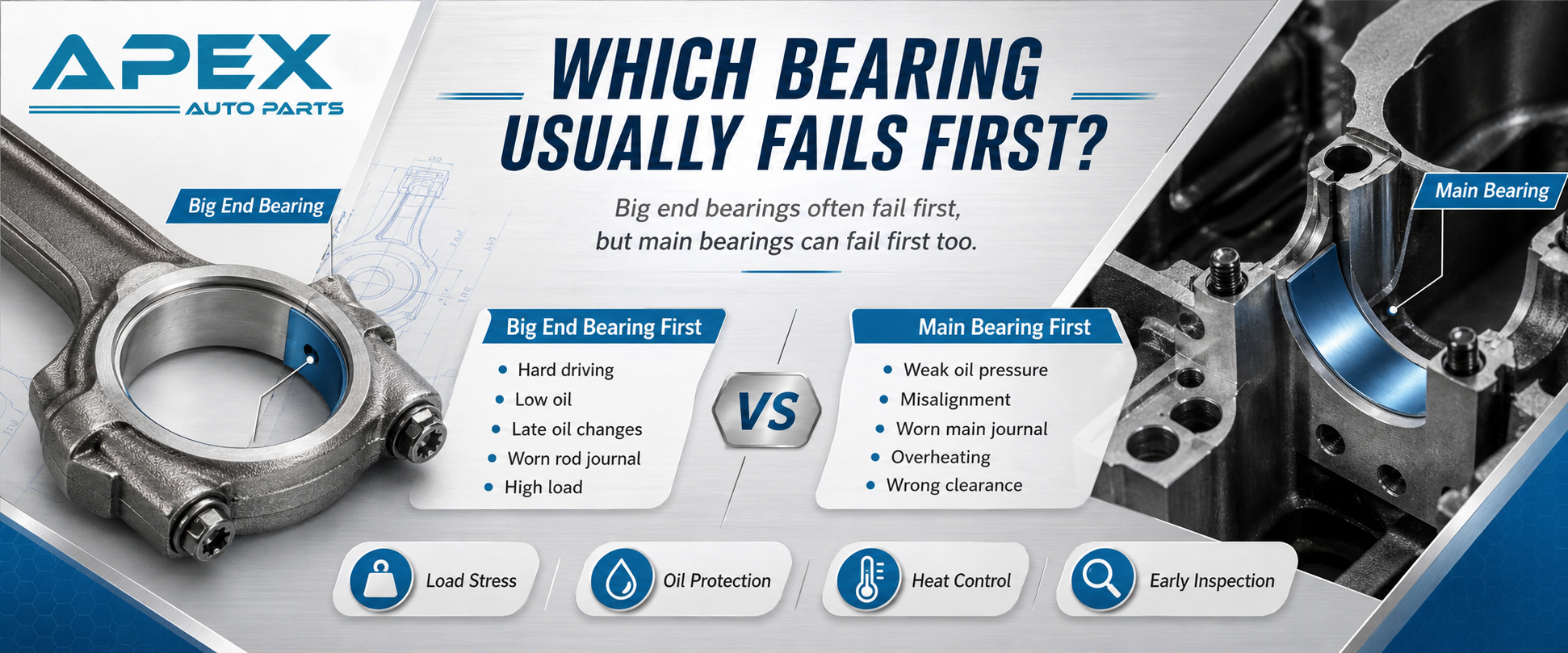
In many engines, the big-end bearing can fail before the main bearing because it must withstand the high force from the piston and connecting rod. It gets hit with load again and again while the engine runs.
The main bearing can also fail first if oil pressure is poor, the crankshaft is worn, or the engine has alignment issues.
The big end bearing may fail first when:
- The engine has been driven hard.
- The oil level was low.
- Oil changes were delayed.
- The crankshaft rod journal is worn.
- The engine has high power or a heavy load.
- The main bearing may fail first when:
- Oil pressure is weak.
- The crankshaft is not sitting correctly.
- The crankshaft main journal is worn.
- The engine has overheated.
- The bearing clearance is wrong.
The best answer depends on the engine condition. Guessing is not enough. A proper inspection tells you which bearing has failed and why.
When Should You Replace a Crankshaft Bearing?
You should replace a crankshaft bearing when it is worn, scratched, loose, or damaged. It should also be replaced during a full engine rebuild.
Replace the main bearings when:
- The engine is being rebuilt.
- The crankshaft has been removed.
- The crankshaft has been polished or ground.
- The old bearings show deep marks.
- Oil pressure is low.
- Metal is found in the oil.
- The engine ran with low oil.
- The engine overheated badly.
- The crankshaft journals are worn.
Before installing new bearings, the crankshaft should be measured. If the crankshaft has been repaired or ground, it may need a different bearing size.
This is where Apex Auto Parts can help. If you have the engine model and crankshaft size, the team can guide you to the right bearing set, rather than leaving you to guess.
When Should You Replace a Big End Bearing?
You should replace a big-end bearing if it makes noise, shows visible wear, or has excessive clearance. You should also replace it during an engine rebuild or connecting rod repair.
Replace big end bearings when:
- You hear a rod knock.
- The bearing surface is scratched.
- The bearing has worn through its top layer.
- The crankshaft rod journal is damaged.
- Oil pressure is low.
- Metal is found in the oil.
- The connecting rods are removed.
- The engine has run with low oil.
• The engine is being rebuilt for safe use.
A new connecting rod bearing should not be fitted on a damaged crankshaft journal. If the crankshaft is rough, the new bearing may fail quickly.
Standard Size and Repair Size Bearings
Bearings are not always one size. This is very important when buying a crankshaft bearing.
A standard-size bearing is used when the crankshaft is still at factory size. If the crankshaft has been ground smaller during repair, the engine may need a repair-size bearing.
Never choose bearings by guesswork. A very small size error can cause low oil pressure, tight movement, overheating, and early failure.
If you are not sure whether your crankshaft is standard or repaired, ask your mechanic to measure it before buying. Apex Auto Parts can help match the bearing once you know the crankshaft size.
Can You Drive With Bad Engine Bearings?
You should not keep driving with a bad crankshaft or rod bearing. A small knocking sound can turn into full engine failure.
When a bearing starts making noise, it means the moving parts are no longer protected properly. The crankshaft may already be hitting the bearing surface. The longer you drive, the more damage can happen.
Driving with bad bearings can cause:
- Crankshaft damage.
- Connecting rod damage.
- Low oil pressure.
- Overheating.
- Metal pieces in the oil.
- Engine seizure.
- Full engine replacement.
If the engine is knocking, stop driving and get it checked. Paying for an inspection early is usually cheaper than replacing the full engine later.
How Mechanics Check Bearing Problems
A good mechanic does not rely on sound alone. Bearing noise gives clues, but the engine still needs proper checking.
A mechanic may check:
- Engine oil level.
- Oil pressure.
- Used oil condition.
- Metal pieces in the oil filter.
- Noise from the lower engine.
- Crankshaft movement.
- Bearing shell condition.
- Connecting rod play.
- Crankshaft journal size.
- Oil clearance.
Sometimes the oil pan must be removed to see the bearings. If the bearing is badly damaged, the crankshaft may also need repair.
How to Choose the Right Bearing
Choosing the right bearing depends on the engine, crankshaft size, and the reason for the repair. A daily-use engine may only need a standard quality bearing. A high-power engine may need a stronger bearing type.
Before choosing a main bearing, check:
- Vehicle make and model.
- Engine code.
- Crankshaft main journal size.
- Bearing size.
- Oil clearance.
- Crankshaft condition.
- Before choosing a rod bearing, check:
- Connecting rod condition.
- Crankshaft rod journal size.
- Old bearing wear pattern.
- Oil pressure history.
- Engine noise history.
• Whether the crankshaft has been ground.
Apex Auto Parts makes this step easier by helping customers find the right bearing set based on fitment details. This is useful when comparing main bearings, rod bearings, and repair-size options.
Final Thoughts
The difference between a crankshaft bearing and a big end bearing is simple once you know where each one fits.
A crankshaft bearing is usually the main bearing. It supports the crankshaft inside the engine block. A big end bearing sits inside the connecting rod. It is also called a connecting rod bearing.
Both bearings need clean oil, the correct size, and proper fitting. If either one fails, the engine may knock, lose oil pressure, or suffer major damage.
If you need a bearing for a crankshaft, do not choose by guesswork. Check the engine model, crankshaft condition, and bearing size first. Apex Auto Parts can help you find the right bearing, so your repair starts with the right part.
FAQs
1. What is the difference between a crankshaft bearing and a big end bearing?
A crankshaft bearing supports the crankshaft inside the engine block. A big-end bearing sits inside the connecting rod where it meets the crankshaft. The crankshaft bearing keeps the crankshaft steady, while the big end bearing helps the rod move smoothly.
2. Is a main bearing the same as a crankshaft bearing?
Yes, a main bearing is often called a crankshaft bearing because it supports the crankshaft in the engine block. It helps the crankshaft spin smoothly with oil protection. If it wears out, the engine may develop deep knocking sounds or low oil pressure.
3. Is a big end bearing the same as a connecting rod bearing?
Yes, a big end bearing is also called a connecting rod bearing. It sits in the big end of the connecting rod. This is the area where the rod connects to the crankshaft, transferring piston movement into crankshaft rotation.
4. What are the signs of a bad big end bearing?
A faulty big-end bearing often causes a sharp knocking sound from the lower end of the engine. The sound may get faster when the engine speed increases. Other signs include low oil pressure, metal in the oil, vibration, and power loss during driving.
5. What are the signs of a bad crankshaft bearing?
A bad crankshaft bearing may cause deep knocking, rumbling noise, low oil pressure, metal flakes in the oil, and engine vibration. Since this bearing supports the crankshaft, ignoring the problem can lead to crankshaft damage and a more expensive repair.
6. When should I replace a main bearing?
You should replace a main bearing during an engine rebuild, after crankshaft repair, or when the old bearing shows wear marks. It should also be replaced after low oil pressure, overheating, oil starvation, or metal dust in the engine oil.
7. Can I replace a connecting rod bearing without replacing the crankshaft?
You can replace a connecting rod bearing without replacing the crankshaft only if the crankshaft journal is smooth and still the correct size. If the journal is scratched, worn, or out of shape, the crankshaft may need repair before new bearings are fitted.
8. What causes a big end bearing to fail?
A big-end bearing can fail due to low oil, dirty oil, low oil pressure, the wrong bearing size, overheating, or crankshaft damage. Hard driving can also speed up wear. Once the oil layer breaks down, the bearing can get damaged very quickly.
9. How do I choose the right bearing for the crankshaft?
To choose the right bearing for the crankshaft, check your engine model, crankshaft journal size, and whether the crankshaft is standard or repaired. Also, confirm whether you need a main bearing or a rod bearing. Apex Auto Parts can help match the correct option.
10. Can bad engine bearings ruin the engine?
Yes, bad bearings can ruin the engine if ignored. A worn crankshaft or rod bearing can damage the crankshaft, connecting rods, oil system, and engine block. If you hear knocking or see low oil pressure, stop driving and get the engine inspected quickly.