
 info@apexautoparts.co.uk
 +44 203 915 7535
 Safe & Fast Shipping
 Whish List
 Compare
 Sign In

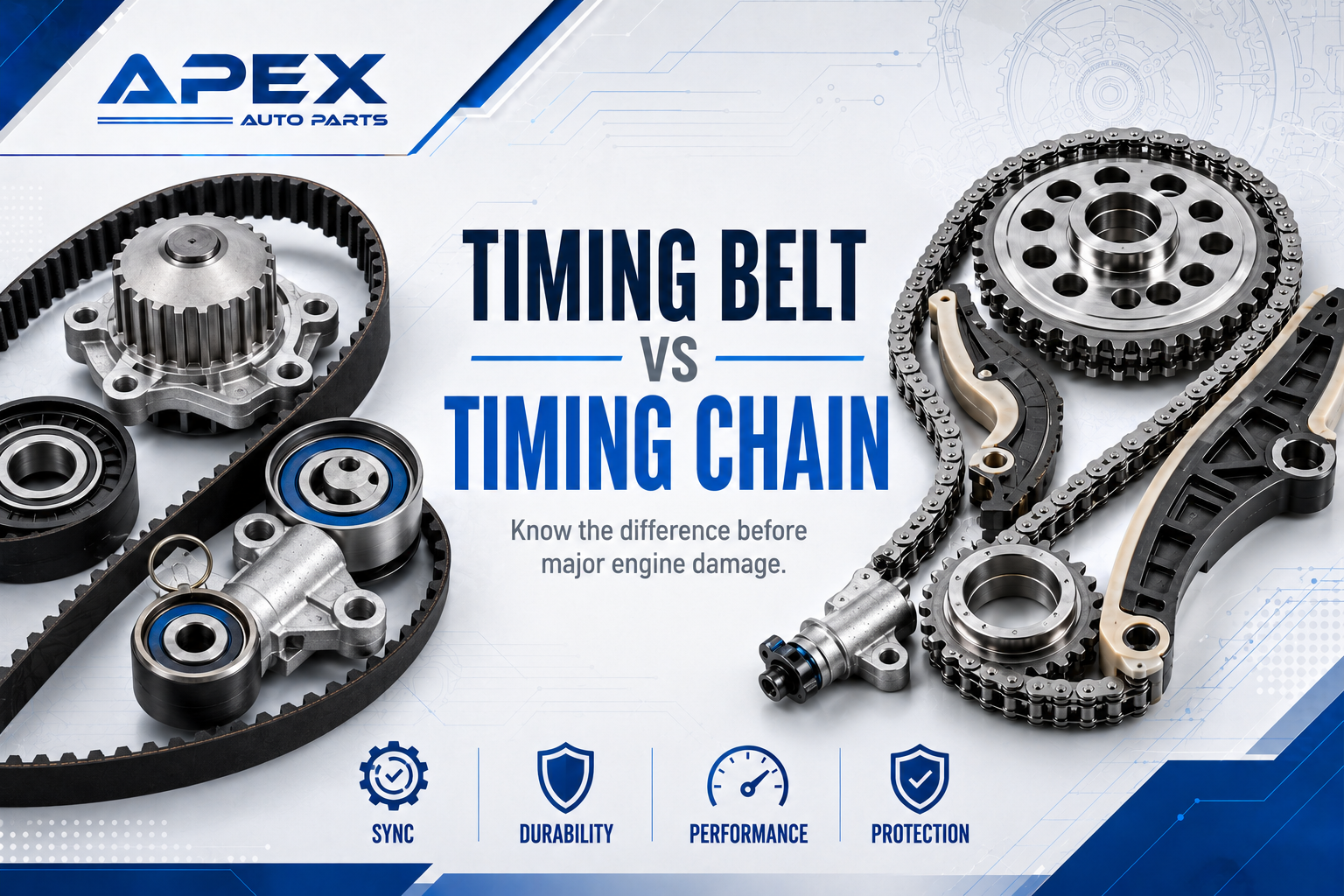
Many drivers only hear about a timing belt or timing chain when something starts going wrong. The car may make a strange noise on startup, the engine may run rough, or a mechanic may warn that the belt or chain is due for attention. At that point, the question becomes simple. What is the difference between a timing belt and a timing chain, and which one does your engine use?
This matters because both parts control engine timing. If the timing is wrong, the engine cannot run properly. If the belt or chain fails, the damage can be serious and expensive.
A timing belt and a timing chain do the same basic job. They keep the crankshaft and camshaft moving together at the right time. The crankshaft moves the pistons. The camshaft opens and closes the valves. These parts must stay in sync, so air, fuel, and exhaust flow through the engine correctly.
If this timing is lost, pistons and valves may hit each other in many engines. That can bend valves, damage pistons, harm the cylinder head, and sometimes destroy the engine.
At Apex Auto Parts, we often speak to drivers, garages, and trade buyers who need timing parts, timing belt kit options, timing chain kit options, tensioners, guides, seals, water pumps, and related engine parts. The most important thing we tell customers is this. Do not guess with timing parts. The right part and the right timing setup can protect the engine. The wrong part can create a bigger problem.
This guide explains the difference between a timing belt and a timing chain, how each one works, warning signs, replacement advice, and how to choose the right parts for your vehicle.
What Is a Timing Belt?
A timing belt is a strong rubber belt with teeth on the inside. These teeth grip the pulleys and keep engine parts turning at the correct time.
The belt is usually hidden behind plastic or metal covers at the side or front of the engine. It does not look like a big part, but it has one of the most important jobs in the engine.
The timing belt connects the crankshaft to the camshaft. As the crankshaft turns, the belt turns the camshaft. This keeps the valves opening and closing at the right moment.
A timing belt is quiet and light. It is also cheaper to make than a chain system in many engines. But it does not last forever. Rubber wears with time, heat, oil leaks, age, and mileage. That is why timing belt replacement is a normal service job on many cars.
A worn belt may crack, lose teeth, stretch, or weaken. If it breaks, the engine can stop suddenly. On interference engines, a broken belt can cause major internal damage.
What Is a Timing Chain?
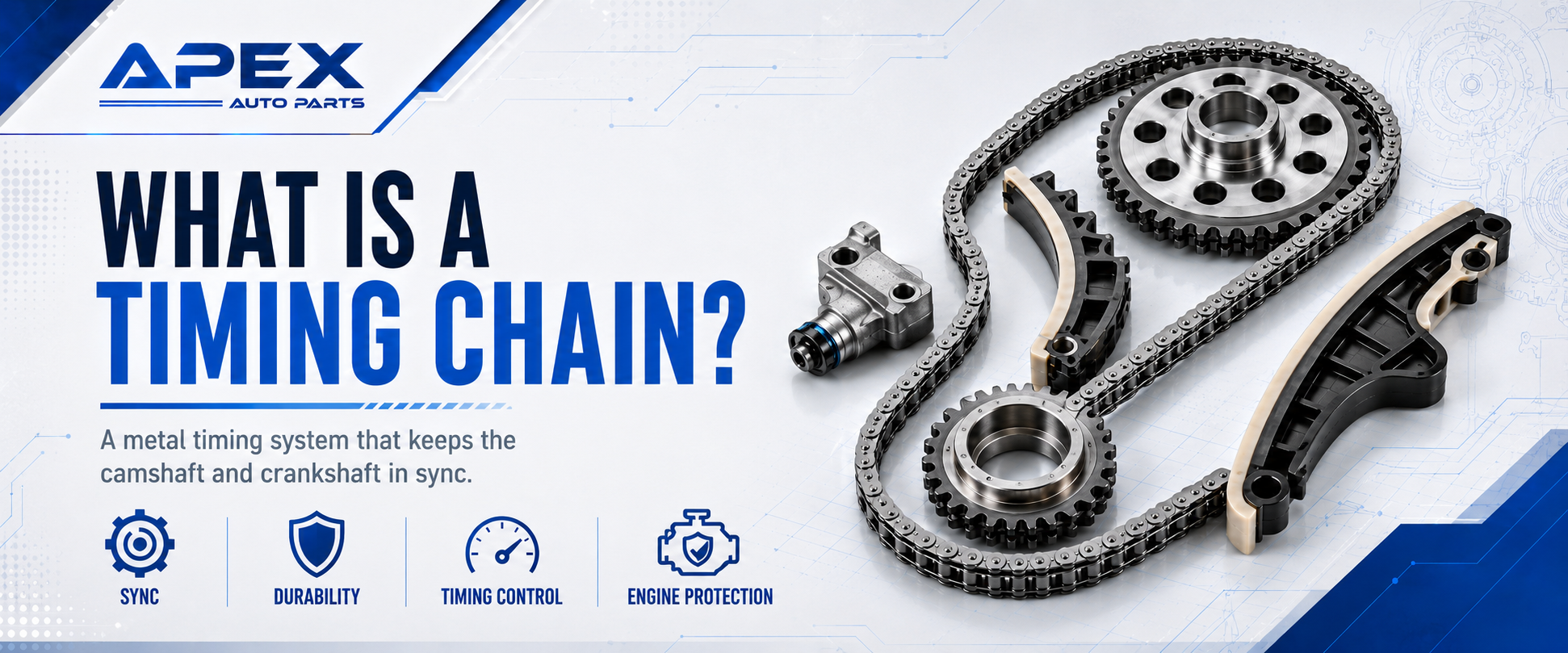
A timing chain is a metal chain that does the same job as a belt. It links the crankshaft and camshaft so engine timing stays correct.
A chain is usually inside the engine. It runs in engine oil to reduce friction and wear. Because it is metal, many drivers think it lasts forever. That is not always true.
A timing chain can last a long time if the engine has clean oil, good oil pressure, and healthy tensioners. But chains can stretch, guides can wear, and the timing chain tensioner can fail. When that happens, the chain may rattle, jump timing, or cause poor engine running.
A chain setup is often stronger than a belt setup, but it can be more expensive to repair. Timing chain replacement usually takes more labor because the chain is often harder to reach.
This is why timing chain problems should not be ignored. A light rattle on startup can be an early warning.
Timing Belt vs Timing Chain in Simple Words
The easiest way to understand timing belt vs timing chain is this.
A timing belt is made from reinforced rubber. A timing chain is made from metal. Both control engine timing. Both can fail. Both need the right tension. Both must be fitted correctly.
A belt is usually quieter and often cheaper to replace. But it has a set service interval and must be changed before it fails. A chain often lasts longer, but it depends heavily on oil condition and tensioner health.
A belt usually sits outside the oil system behind covers. A chain usually sits inside the engine and runs with oil.
A belt often gives fewer warning signs before failure. A chain often makes noise, such as rattling, before the problem gets serious. But this is not always guaranteed.
For drivers, the main point is simple. Whether your car uses a belt or chain, do not ignore service intervals, noises, oil leaks, or rough running.
Why Engine Timing Matters?
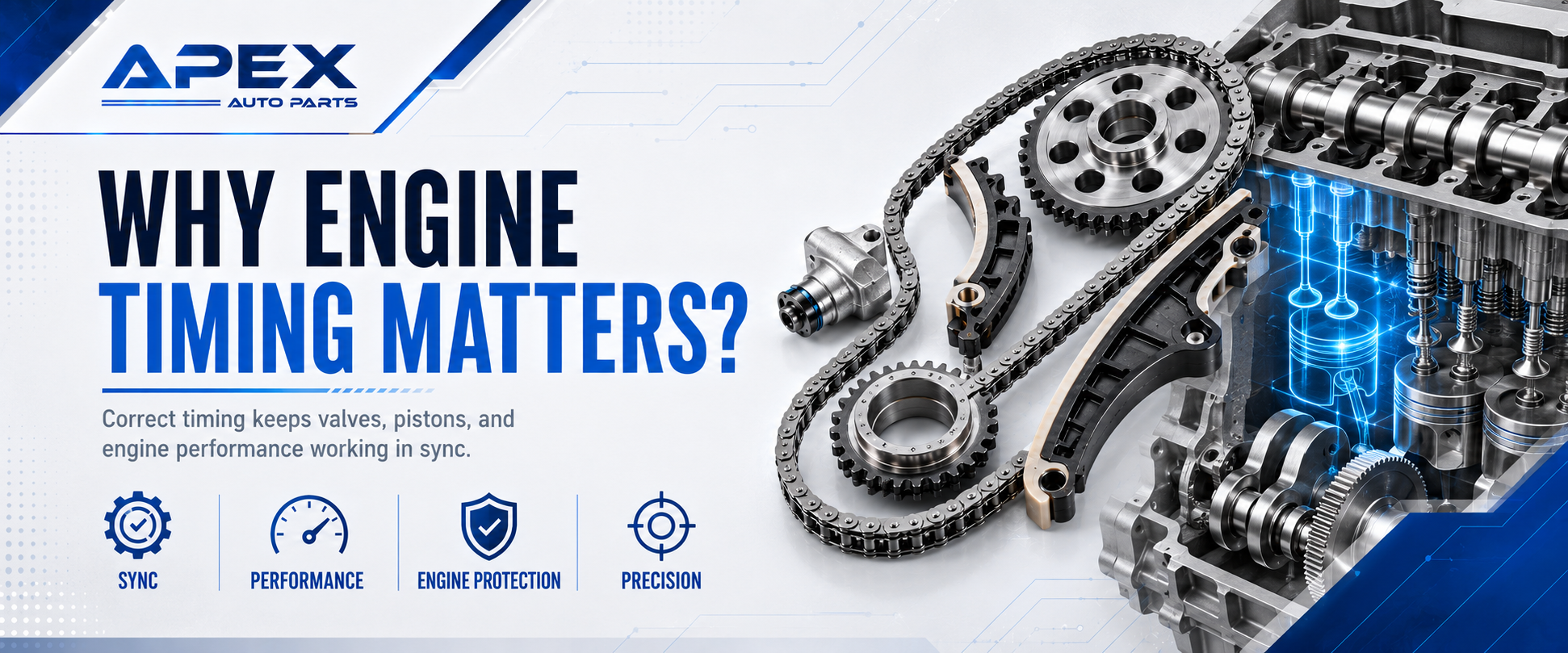
Engine timing controls when the valves open and close compared with piston movement. This must happen at the right moment.
When timing is correct, the engine breathes properly. Air and fuel enter at the right time. Exhaust gases leave at the right time. The spark or fuel injection happens when needed. The engine runs smoothly.
When timing is wrong, the engine may:
- Start badly
- Idle rough
- Lose power
- Misfire
- Use more fuel
- Show engine warning lights
- Make rattling or tapping noises
- Stop running completely
In some engines, bad timing can cause pistons and valves to touch. This is one of the biggest fears with timing belt or chain failure.
This is why timing parts are not parts to delay. They may not be visible every day, but they protect the whole engine.
How a Timing Belt Works?
The timing belt has teeth that match the teeth on the crankshaft and camshaft pulleys. As the crankshaft turns, the belt turns the camshaft in perfect time.
The belt must stay tight enough to hold timing, but not so tight that it causes extra wear. This is where the timing belt tensioner comes in.
The timing belt tensioner keeps the belt at the correct tension. Some engines use manual tensioners, while others use automatic tensioners. The tensioner helps stop the belt from slipping, jumping, or becoming loose.
A full timing belt kit may include the belt, tensioner, idler pulleys, and sometimes bolts. On many engines, the water pump is also replaced at the same time if it is driven by the belt or hidden behind the timing cover.
Replacing only the belt and ignoring worn tensioners or pulleys can be risky. If an old pulley fails, it can damage the new belt.
How a Timing Chain Works?
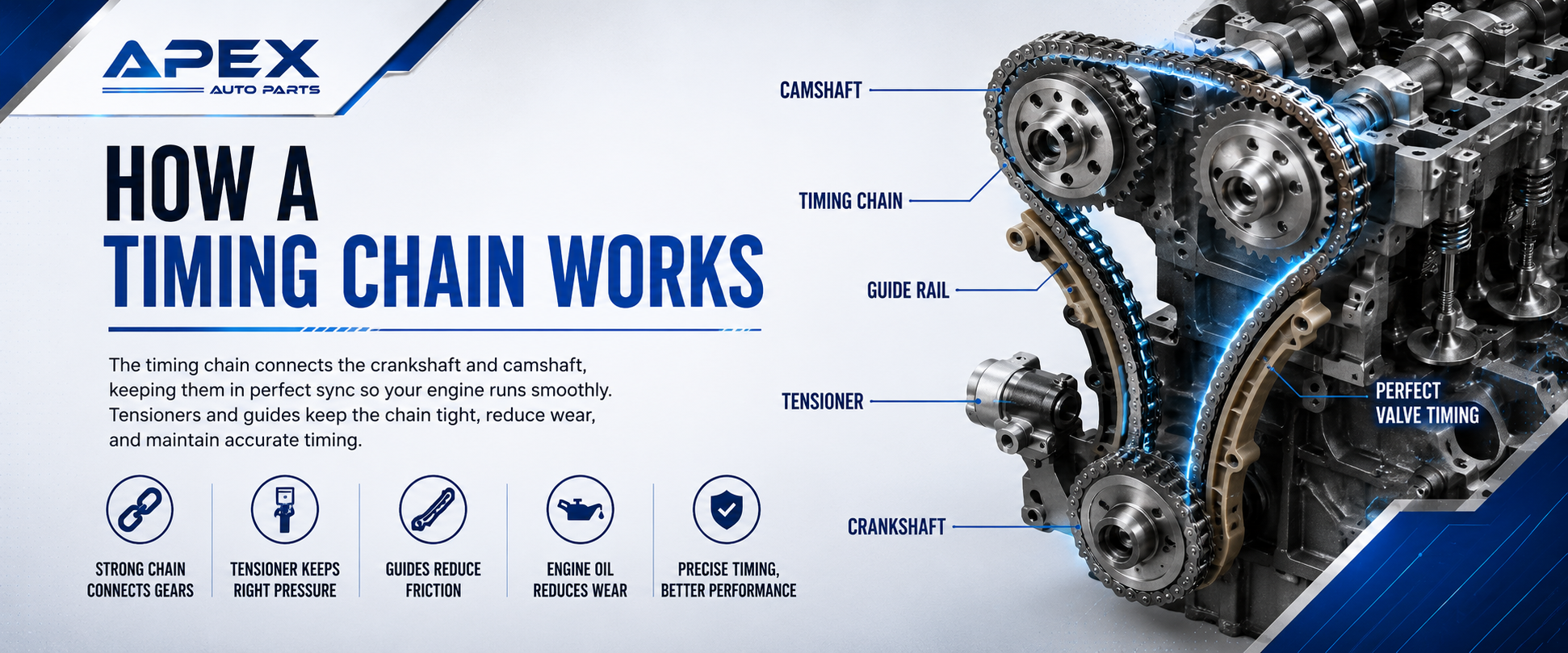
A timing chain works like a strong metal link system. It runs around sprockets on the crankshaft and camshaft. The chain is controlled by guides and the timing chain tensioner.
The tensioner keeps pressure on the chain so it does not run loose. The guides help the chain move smoothly. Engine oil helps reduce wear.
A timing chain kit may include the chain, guides, tensioner, sprockets, bolts, and seals, depending on the engine.
Timing chain systems are often hidden deeper inside the engine. Some are at the front. Some are at the rear. This can make repair time very different from car to car.
When a chain stretches or the timing chain tensioner becomes weak, the chain may rattle. This noise is often heard when the engine starts, especially after sitting overnight. If ignored, the chain may jump teeth and cause timing damage.
Timing Belt Replacement: When Is It Needed?
Timing belt replacement is usually based on mileage, age, or service schedule. The exact interval depends on the vehicle, engine, and manufacturer guidance.
Some belts may be due around 60,000 miles. Others may last longer. Some are based on years as well as mileage. Even if the car has low mileage, the belt can age and crack over time.
You may need a timing belt replacement if:
- The belt is due by mileage
- The belt is due by age
- The belt has cracks
- The belt has missing teeth
- Oil has leaked onto the belt
- The tensioner is noisy
- A pulley has play or rough movement
- The belt has been removed during other work
- The service history is unknown
If you buy a used car and there is no proof of belt replacement, it is safer to check it early. A belt failure can cost far more than planned replacement.
Timing Chain Replacement: When Is It Needed?
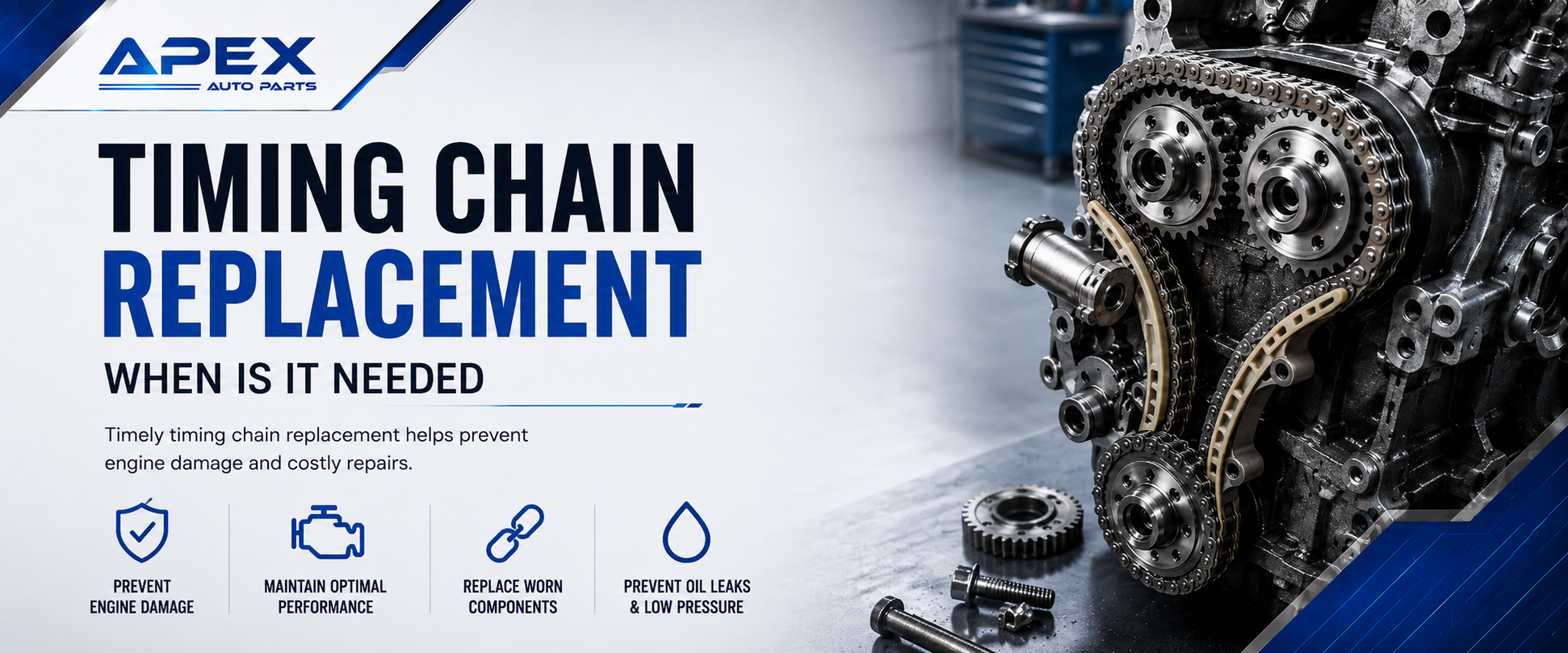
Timing chain replacement is not always listed as a normal service item like a belt, but that does not mean chains never need work.
A timing chain may need replacement when it stretches, rattles, jumps timing, or causes engine fault codes. The guides and timing chain tensioner can also wear and create problems.
Signs that may point to timing chain replacement include:
- Rattle on cold start
- Rattle from the timing cover area
- Rough idle
- Poor starting
- Engine warning light
- Camshaft or crankshaft timing fault codes
- Loss of power
- Metal particles in oil
- Poor engine performance
- Timing chain guide wear
Clean oil is very important for the chain life. Old oil can affect the tensioner function and speed up wear on the chain and guides.
If a chain starts making noise, do not wait until it jumps. Early diagnosis can protect the engine.
What Is a Timing Belt Kit?
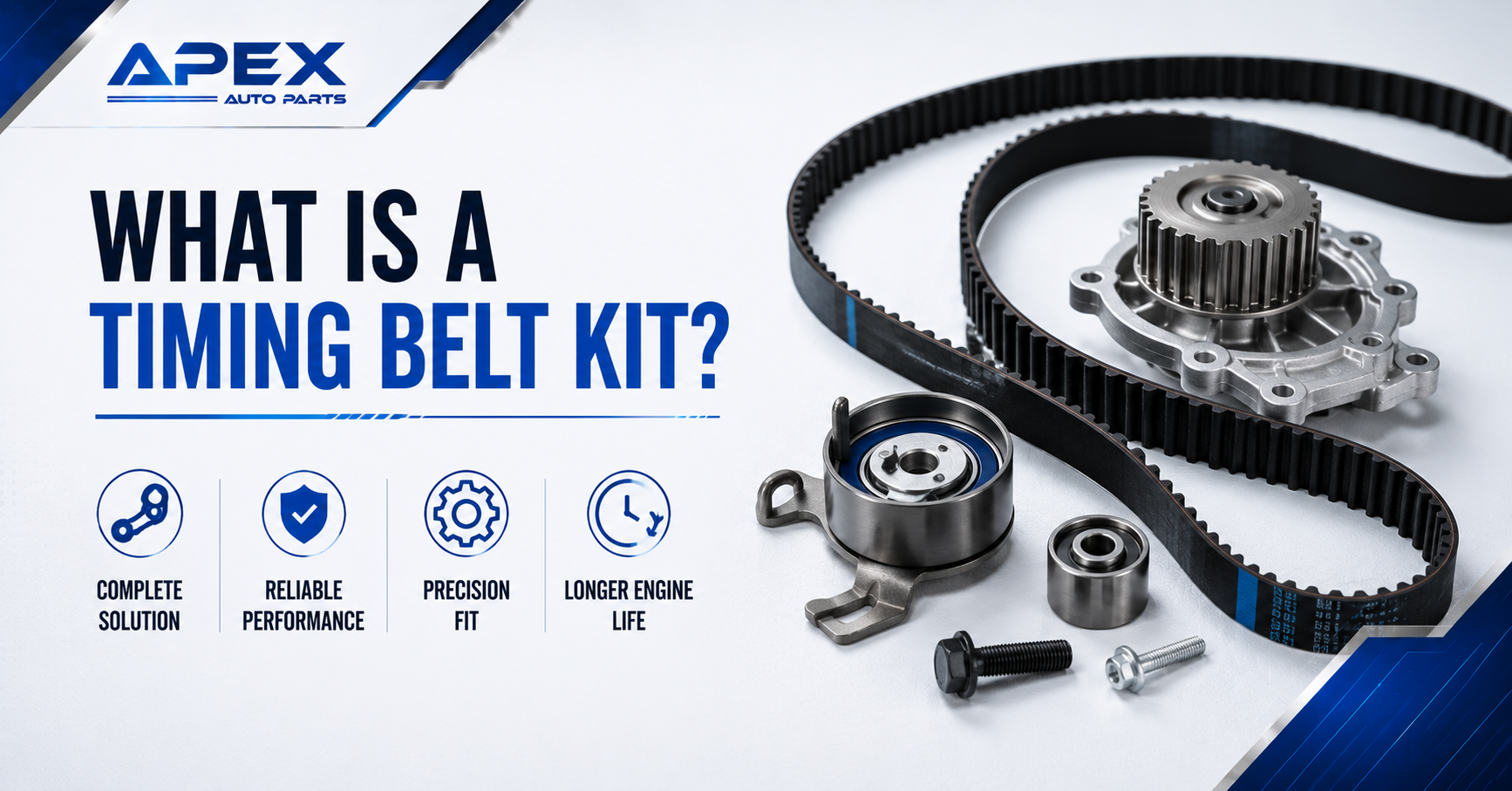
A timing belt kit is a set of parts used when replacing the timing belt. It usually includes more than just the belt.
A good kit may include:
- Timing belt
- Timing belt tensioner
- Idler pulleys
- Guide pulleys
- Bolts where needed
- Water pump in some kits
- Seals in some kits
The reason a kit matters is simple. Timing parts work together. If the belt is new but the old tensioner fails, the engine is still at risk.
Many mechanics prefer replacing the full timing belt kit instead of only the belt. It gives a safer repair and reduces the chance of doing the same labour twice.
At Apex Auto Parts, customers often ask whether they need just the belt or the full kit. In many cases, the full kit is the better option because the labour to access the belt is already being done.
What Is a Timing Chain Kit?
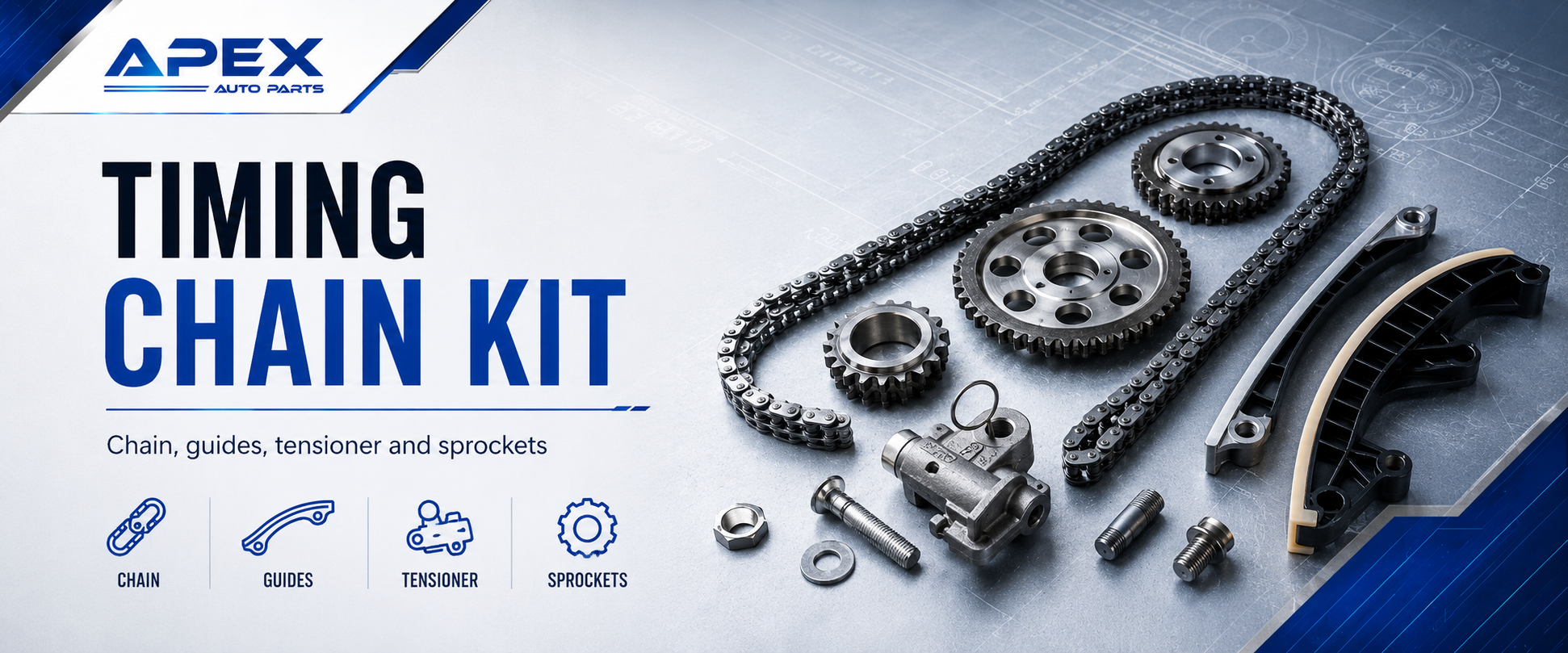
A timing chain kit includes the main parts needed for chain replacement. The contents can vary by engine.
A timing chain kit may include:
- Timing chain
- Timing chain tensioner
- Chain guides
- Sprockets
- Rails
- Bolts
- Seals
- Gaskets were needed
Chain repairs can be labor-heavy, so using the correct kit is important. If one guide is worn, the others may also be near the end of their life. If the tensioner is weak, a new chain alone may not fix the problem.
A proper timing chain kit helps restore chain control and timing accuracy. But the engine should also be checked for oil pressure issues, sludge, and other causes of chain wear.
Timing Belt Tensioner: Why It Matters
The timing belt tensioner keeps the belt tight enough to stay in place. If it fails, the belt may become loose, noisy, or unstable.
A weak tensioner can cause the belt to jump teeth. That can throw the engine timing out and cause damage.
Signs of timing belt tensioner trouble may include:
- Whining noise
- Rattling noise
- Belt movement
- Uneven belt wear
- Belt slack
- Timing fault symptoms
- Poor running
During timing belt replacement, the tensioner should normally be replaced too. It is not worth fitting a new belt and leaving an old, weak tensioner in place.
The tensioner is a small part compared with the engine, but it protects the whole timing system.
Timing Chain Tensioner: Why It Matters?
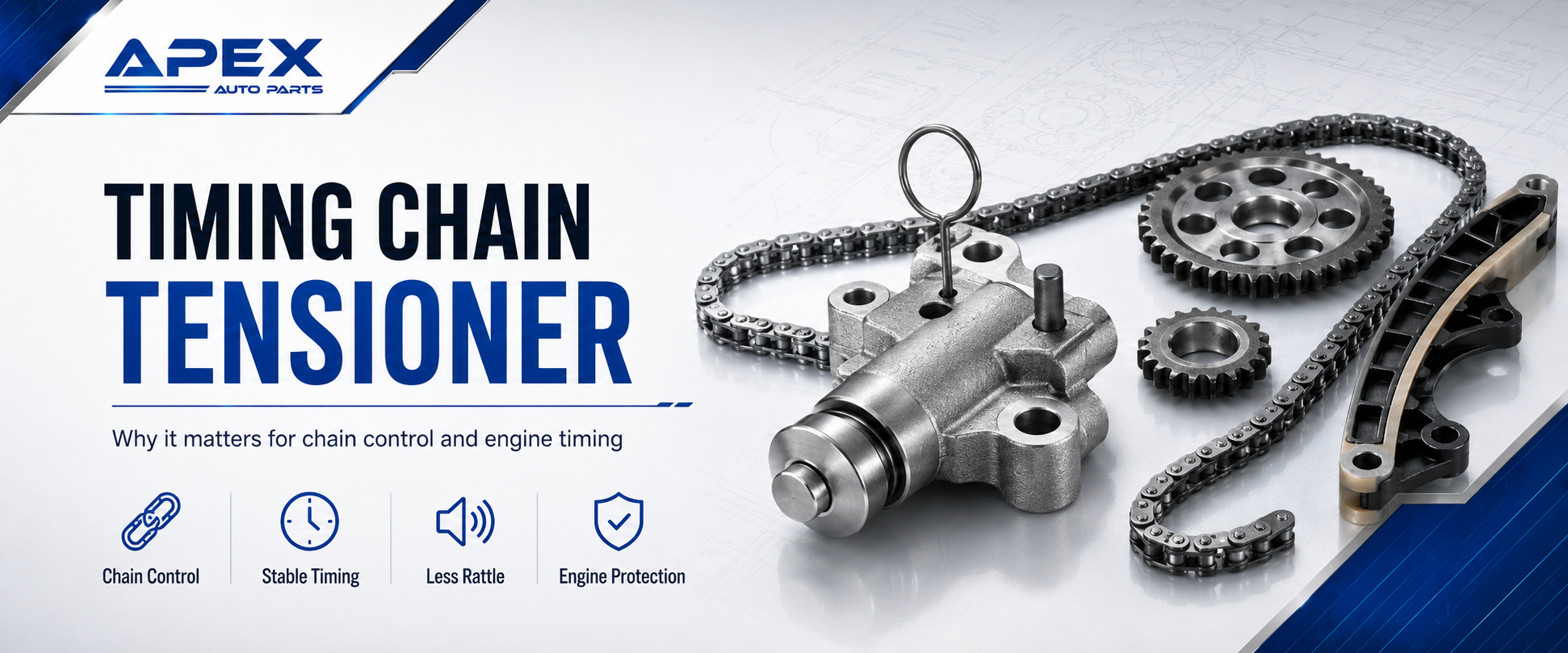
The timing chain tensioner keeps the chain tight while the engine runs. Many chain tensioners use oil pressure to help control chain movement.
If the tensioner becomes weak, the chain may slap against guides or rattle on startup. This can lead to chain stretch, guide wear, timing faults, and serious engine damage.
A bad timing chain tensioner may cause:
- Cold start rattle
- Chain noise
- Timing fault codes
- Rough idle
- Poor starting
- Loss of power
- Chain jump risk
Because the tensioner depends on oil in many engines, poor oil care can make the problem worse. Dirty oil, low oil level, and poor oil pressure can all affect chain control.
A chain repair should not ignore the tensioner. It is one of the most important parts of the system.
Signs of Timing Belt Problems
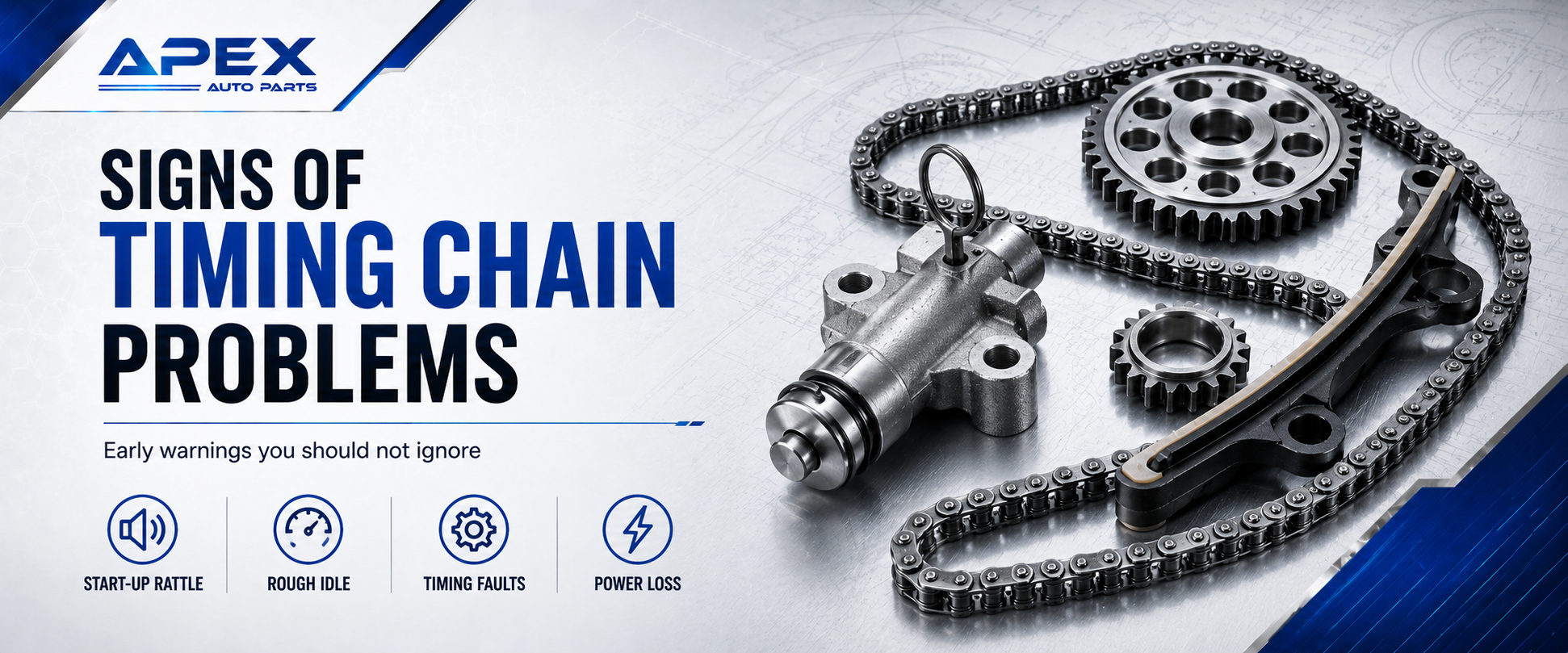
A timing belt may not always give a clear warning before failure. This is why service intervals matter so much. But some signs can point to trouble.
Watch for:
- Ticking noise from the timing area
- Engine misfire
- Rough running
- Trouble starting
- Oil leaking near the belt cover
- Squealing or rubbing noise
- Visible belt cracks if inspected
- The engine stops suddenly
- Loss of power
- Check engine light
Oil leaks near the belt are serious. Oil can weaken rubber and shorten belt life. If a camshaft seal, crankshaft seal, or cover leak is dripping onto the belt, it should be fixed.
A worn belt is not something to gamble with. If it is due, replace it.
Signs of Timing Chain Problems
Timing chain problems often start with noise. The most common warning is a rattle on a cold start.
A timing chain issue may show as:
- Rattle when starting
- Rattle at idle
- Noise from the timing cover
- Rough idle
- Poor acceleration
- Engine light
- Camshaft timing fault code
- Crankshaft timing fault code
- Metal in oil
- Hard starting
A rattling chain should be checked quickly. Sometimes the issue is the chain. Sometimes it is the timing chain tensioner, guides, sprockets, or oil pressure.
Ignoring chain noise can lead to a skipped chain. That can cause major engine damage.
Which Lasts Longer: Timing Belt or Timing Chain?
A timing chain usually lasts longer than a timing belt, but only if the engine is looked after. A chain can still fail if oil changes are missed, the oil level is low, or the tensioner wears out.
A belt has a clearer replacement schedule. You replace it based on time or mileage before it fails.
A chain may not have a fixed replacement time, but that can make some drivers ignore early signs. A noisy chain should never be treated as normal.
So the answer is not just a belt or chain. The real answer is maintenance. A well-serviced chain can last a long time. A neglected chain can fail early. A belt that is replaced on time can protect the engine. A belt left too long can break without warning.
Timing Belt vs Timing Chain: Which Is Better?
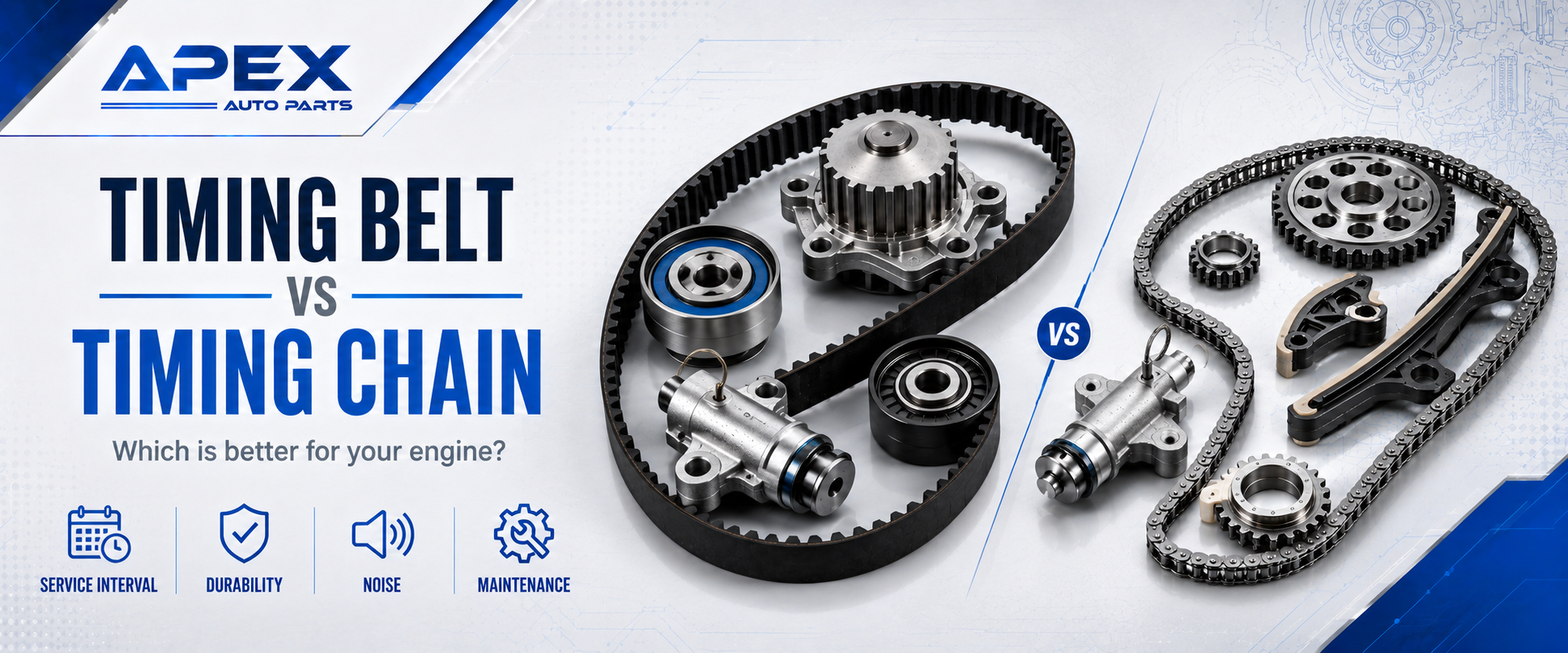
Drivers often ask which is better, the timing belt or the timing chain. The truth is, both can be good when designed well and maintained properly.
A timing belt is quieter, lighter, and often cheaper to replace. But it must be changed on schedule.
A timing chain is stronger and can last longer. But if it fails, repairs can cost more. It also depends heavily on clean oil and good tensioner performance.
For most drivers, the best system is the one that is maintained properly.
If your car has a belt, know the replacement interval. If your car has a chain, listen for noise and keep oil service up to date.
What Happens If Timing Fails?
Timing failure can be serious. If the belt breaks or the chain jumps, the engine may stop instantly.
In many engines, the pistons and valves share the same space at different times. If timing is lost, they can hit each other. This can cause bent valves, damaged pistons, broken rockers, damaged camshafts, or cylinder head damage.
Common results of timing failure include:
- Engine will not start
- Engine stops while driving
- Bent valves
- Piston damage
- Cylinder head damage
- Camshaft damage
- Rocker arm damage
- Major repair cost
- Full engine replacement in severe cases
This is why timing parts are so important. A belt or chain may look like one part, but it protects many expensive engine parts.
Should You Replace the Water Pump With a Timing Belt?
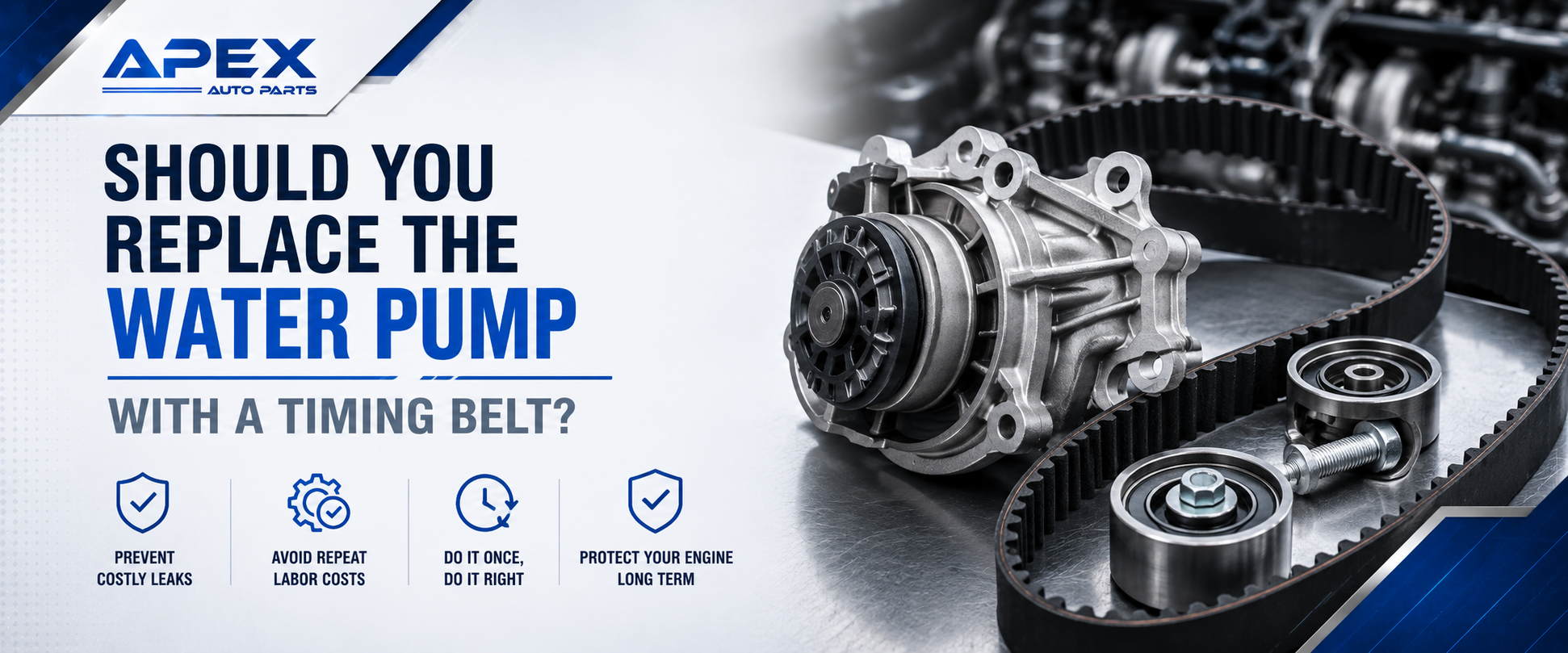
On many engines, the water pump sits near the belt and may be driven by the belt. If the mechanic already has access, it often makes sense to replace the water pump during timing belt replacement.
This depends on the engine design. If the water pump is hidden behind the timing cover or driven by the belt, replacing it at the same time can save labour later.
A failing water pump can leak or seize. If it affects the belt, it can cause timing failure.
A timing belt kit with a water pump is often a smart choice when the pump is part of the timing system.
Why Correct Fitment Matters?
Timing parts must fit exactly. A belt with the wrong tooth count, a wrong tensioner, or a wrong pulley can cause serious problems. The same is true for chain kits.
A timing chain kit or timing belt kit must match the engine code, model year, and engine setup. Two cars with the same engine size may still use different parts.
This is where Apex Auto Parts can help. Customers can provide the registration number, VIN, engine code, or old part number. This helps check fitment before ordering
.
With timing parts, close enough is not good enough. A wrong part can damage the engine.
Common Mistakes Drivers Make
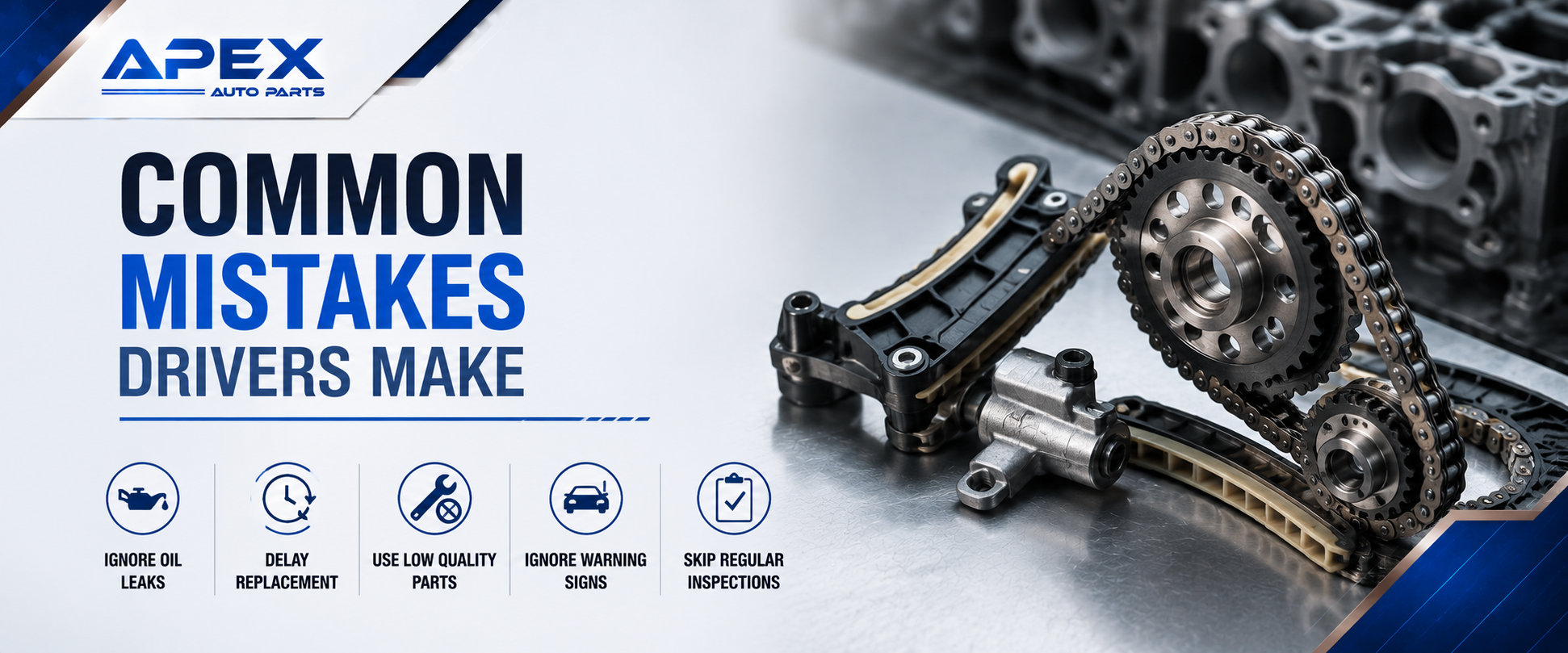
Timing system repairs can go wrong when people rush or guess.
Common mistakes include:
- Ignoring timing belt service intervals
- Driving with a timing chain rattle
- Replacing only the belt and not the tensioner
- Using a cheap kit
- Ordering parts without engine code
- Ignoring oil leaks near the belt
- Ignoring dirty oil in chain engines
- Reusing worn guides or pulleys
- Not checking the water pump condition
- Fitting parts without proper timing tools
A good mechanic knows timing work needs care. Even one tooth out can make the engine run badly or fail.
How Apex Auto Parts Can Help
Apex Auto Parts supplies engine parts for drivers, garages, mechanics, rebuilders, and trade buyers across the UK. Timing parts are one of those areas where correct fitment matters a lot.
Whether you need a timing belt kit, timing belt tensioner, timing chain kit, timing chain tensioner, water pump, gasket, seal, or related engine part, it is important to match the part to the vehicle correctly.
Apex Auto Parts can help customers check vehicle details before ordering. This is useful because many engines have different versions and production changes.
The goal is simple. Help you get the right part first time, reduce repair delays, and protect the engine.
Final Thoughts
The choice between a timing belt and a timing chain is not about which one sounds better. It is about knowing what your engine uses and how to maintain it.
A timing belt is quiet and effective, but it must be replaced on time. A timing chain can last longer, but it needs clean oil, good tensioners, and early checks if it starts rattling.
If your car needs a timing belt replacement, do not delay it. If your engine has chain noise and may need timing chain replacement, do not ignore it. Timing failure can damage the engine badly.
Use the correct timing belt kit or timing chain kit, replace worn tensioners, check related parts, and make sure the work is done properly.
Timing parts may be hidden behind covers, but they are protecting the whole engine every time you start the car.
FAQs
1. What is the difference between a timing belt and a timing chain?
Timing belt vs timing chain means comparing a rubber belt with a metal chain. Both control engine timing by linking the crankshaft and camshaft. A belt is quieter and needs scheduled replacement. A chain often lasts longer, but it can still wear, stretch, or rattle if oil care is poor.
2. When should timing belt replacement be done?
Timing belt replacement should be done based on the vehicle's service schedule, mileage, and age. If the belt has cracks, oil contamination, missing teeth, or an unknown history, it should be checked early. Replacing it before failure can prevent serious engine damage and higher repair costs.
3. What comes in a timing belt kit?
A timing belt kit usually includes the timing belt, timing belt tensioner, idler pulleys, and sometimes bolts or a water pump. The exact contents depend on the engine. Many mechanics prefer fitting a full kit instead of only replacing the belt.
4. What does a timing belt tensioner do?
A timing belt tensioner keeps the belt tight enough to stay in time with the camshaft and crankshaft. If the tensioner fails, the belt can become loose, noisy, or jump teeth. This can cause poor running or serious engine damage if ignored.
5. When is timing chain replacement needed?
Timing chain replacement may be needed if the chain rattles, stretches, jumps, or causes timing fault codes. Cold start rattling is a common warning sign. The chain, guides, sprockets, and timing chain tensioner should be checked before the problem becomes serious.
6. What comes in a timing chain kit?
A timing chain kit can include the chain, guides, rails, sprockets, bolts, seals, and timing chain tensioner. The kit contents vary by engine. Since chain repairs can take a lot of labor, using the correct complete kit is often the safer choice.
7. What does a timing chain tensioner do?
A timing chain tensioner keeps pressure on the chain so it does not run loose. Many tensioners use oil pressure to work properly. If the tensioner becomes weak, the chain may rattle, wear guides, jump timing, or damage the engine.
8. Is a timing chain better than a timing belt?
A timing chain can last longer than a timing belt, but it is not always better. Chains need clean oil and healthy tensioners. Belts need planned replacement. Both systems can work well when maintained properly. The best choice depends on engine design and service care.
9. Can a timing belt break without warning?
Yes, a timing belt can break without much warning, especially if it is old, cracked, oil-soaked, or overdue for replacement. That is why service intervals matter. A broken belt can stop the engine and may cause internal damage to many engines.
10. Can Apex Auto Parts help with timing belt and chain parts?
Yes, Apex Auto Parts can help drivers, garages, and trade buyers find the right timing belt kit, timing chain kit, tensioners, water pumps, seals, and related engine parts. Providing the registration number, VIN, or engine code helps confirm fitment before ordering.
References :
Gates TechZone
Continental