
 info@apexautoparts.co.uk
 +44 203 915 7535
 Safe & Fast Shipping
 Whish List
 Compare
 Sign In

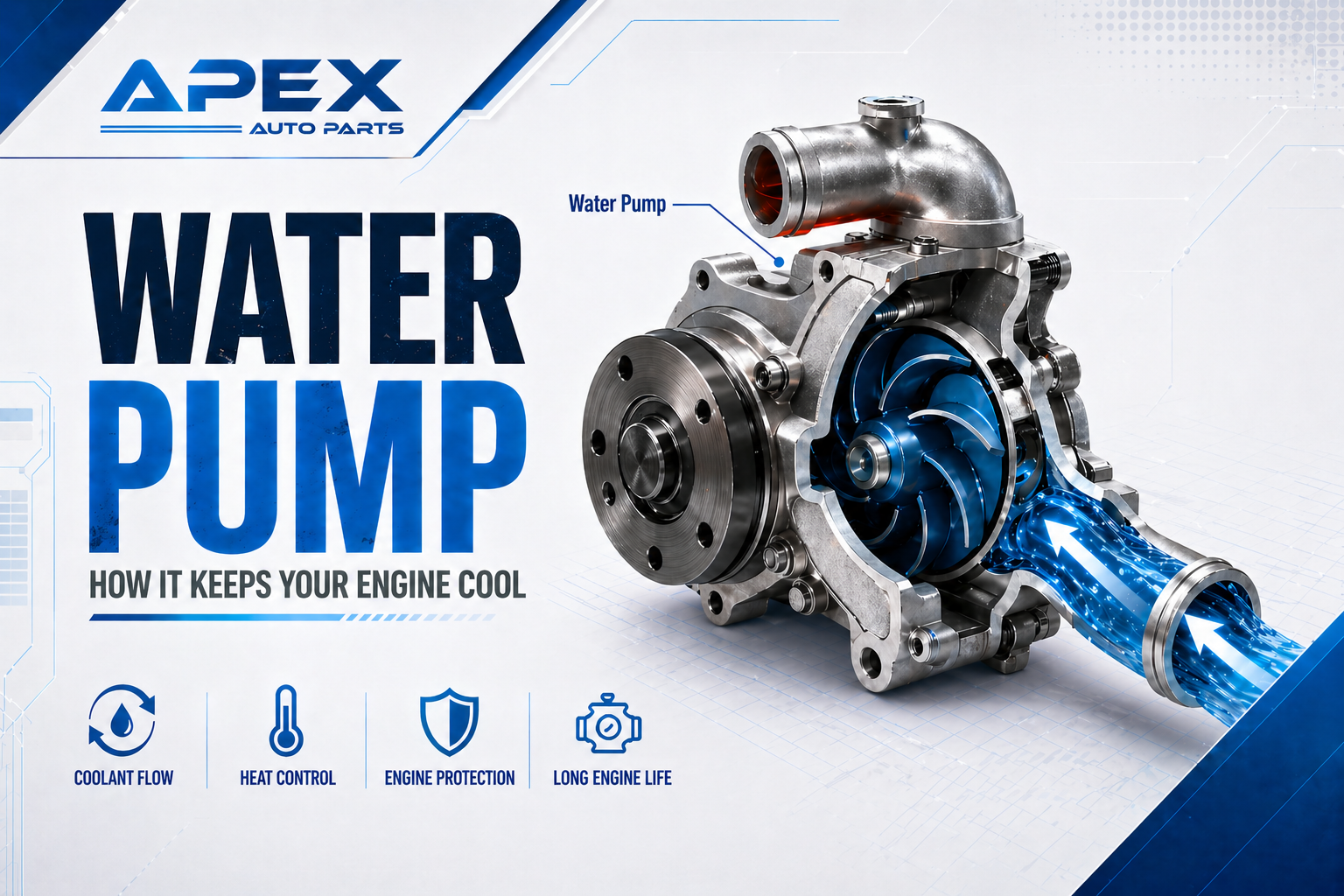
A failing water pump can make your engine dangerously hot within minutes. Your vehicle's water pump keeps coolant moving, helping carry heat away. When your car's water pump fails, warning lights and overheating can quickly follow.
Coolant is the liquid that helps control engine heat. Without enough flow, heat builds up fast inside the engine. Early checks and quick replacement can protect your engine and your money.
A water pump failure means the pump cannot move coolant properly. Its job sounds simple, but your cooling system depends on it. Without this steady flow, engine temperatures can rise sharply.
Common warnings include overheating, coolant leaks, strange grinding sounds, and dashboard warning lights. These signs suggest the engine may not be cooling properly. Each mile driven while overheating raises the risk of serious engine damage.
Ignoring a failed pump can leave you needing an entire engine. This guide helps UK drivers spot problems before that happens. It explains early warnings, common causes, and ways to deal with failure.
What Is a Car Water Pump?
A car water pump moves coolant through the engine and radiator. It also serves the heater core, a small radiator warming your cabin. Most older designs use a belt and work while the engine runs.
The timing belt or auxiliary belt usually drives this type of pump. The auxiliary belt powers parts fitted around the engine. First, the pump draws coolant from the radiator.
Next, it pushes coolant through the engine block, the engine’s main metal body. The coolant takes in heat as it passes through. Then, it returns to the radiator, which releases that heat.
Without steady flow, some engine areas get much hotter than others. Overheating makes metal parts expand unevenly beyond their safe heat limits. Continued driving can eventually crack parts or make them stick together.
This can leave you with a seized engine, meaning its moving parts lock. Keeping the car moving can turn a smaller repair into major damage.
How Does a Water Pump Work?
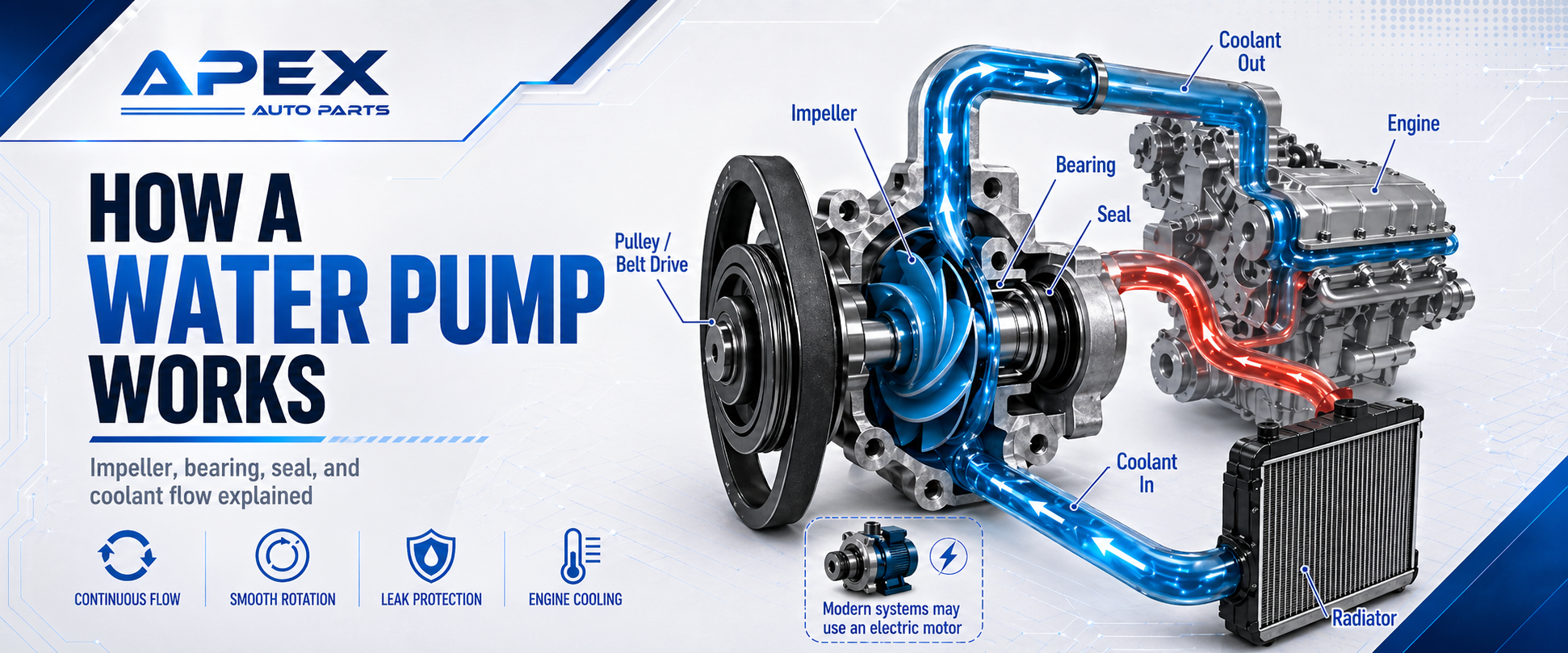
In a mechanical system, the engine’s belt turns the water pump pulley. This pulley, a wheel driven by the belt, turns the impeller inside. The impeller (a spinning part with blades) pushes coolant around the system.
It draws cooled coolant from the radiator and sends it through the engine. There, the liquid takes in heat before returning to cool again. This flow carries heat away from engine parts that need protection.
The thermostat, a valve controlled by heat, manages flow towards the radiator. It stays closed while the engine warms, then opens at the right temperature. This helps keep engine heat within a safe working range.
1. The Engine Powers the Water Pump
The engine turns either the auxiliary belt or the timing belt. That movement drives the pulley and keeps the impeller spinning. In this mechanical setup, no separate electric motor or electronics power the pump.
2. Coolant Enters the Water Pump
The turning impeller creates an area of lower pressure inside the pump. This draws coolant from the bottom of the radiator. That pulling action starts the coolant’s journey back through the engine.
3. Coolant Moves Through the Engine
The impeller blades push coolant into the engine block and around its head. The cylinder head is the upper section of the engine. Coolant travels through small paths around these hot metal parts.
It collects heat from burning fuel and from parts rubbing together. This rubbing is called friction, which also creates heat. Removing both sources of heat helps stop the engine’s metal from overheating.
4. Coolant Returns to the Radiator
Hot coolant leaves the engine and enters the radiator’s thin tubes. Cooling fins and thin metal strips help release heat into passing air. Air entering through the front grille helps bring coolant temperature down again.
5. Steady Flow Controls Engine Heat
This cycle keeps repeating while the system works. The thermostat opens and closes as needed to manage radiator flow. The engine stays warm enough to work well, yet cool enough for safety.
What Causes Vehicle Water Pump Failure?
Water pumps fail when damage stops the impeller from turning smoothly. Damaged seals or bearings inside the pump can also cause trouble. Bearings support moving parts and help them turn with little rubbing.
Normal wear plays a large part, but other problems speed things up. Dirty coolant, the wrong coolant, and poor upkeep can shorten pump life. Overheating and drive belt faults also place extra stress on the pump.
Once bearings grind or seals leak, coolant flow can fall. Complete failure may follow as the damage grows. Leaving old coolant, worn belts, and leaks unchecked adds strain to these parts.
Age and Everyday Wear
A mechanical water pump works throughout your drive, so wear builds over time. Pumps generally last 60,000 to 90,000 miles, though many exceed 100,000 miles. Actual life depends on the pump, vehicle, and care it receives.
Vehicles aged 8 to 10+ years are more likely to develop pump problems. Their pumps may have worked through many heating and cooling cycles. Age and mileage both matter when checking for signs of wear.
Damaged Water Pump Seals
Seals keep coolant inside and protect the bearings from moisture. Over time, they can become hard or develop cracks. Coolant can then leak from the housing, the pump’s outer casing.
Even a small leak can reduce cooling system pressure and coolant flow. This makes cooling less effective and adds stress to the system. Leaving the leak untreated can lead to earlier pump failure.
Worn Water Pump Bearings
Bearings help the impeller turn smoothly and stay in position. As they wear, the spinning parts can become loose and wobble. This can cause leaks and eventually make the pump lock completely.
A Damaged Impeller
The impeller directly moves coolant, so damaged blades reduce its flow. Old coolant, a wrong mixture, or loose dirt can damage this part. Blades may crack, rust away, or break apart inside the pump.
Some pumps have plastic impellers that can weaken under heat and chemical attack. This damage can build slowly over time. The pump may still spin even when its blades no longer work properly.
Worn or weakened blades cannot always move enough coolant through the engine. Because of this, a turning pulley does not prove healthy coolant flow.
Loose or Worn Belt Parts
The pump needs its timing belt or auxiliary belt turning at the right speed. Loose, worn, shiny, or poorly aligned belt parts can disrupt that movement. A shiny belt surface is called glazing and can reduce grip.
Slower pump movement reduces coolant flow and lets engine heat rise. A slipping belt can also place uneven force on the pump shaft. The shaft is the rod that carries the pump’s spinning parts.
This uneven force can wear bearings faster than normal. Leaks may follow as the moving parts lose their proper support. Eventually, the pump may fail completely if these faults remain unchecked.
Signs Your Vehicle Water Pump Is Failing
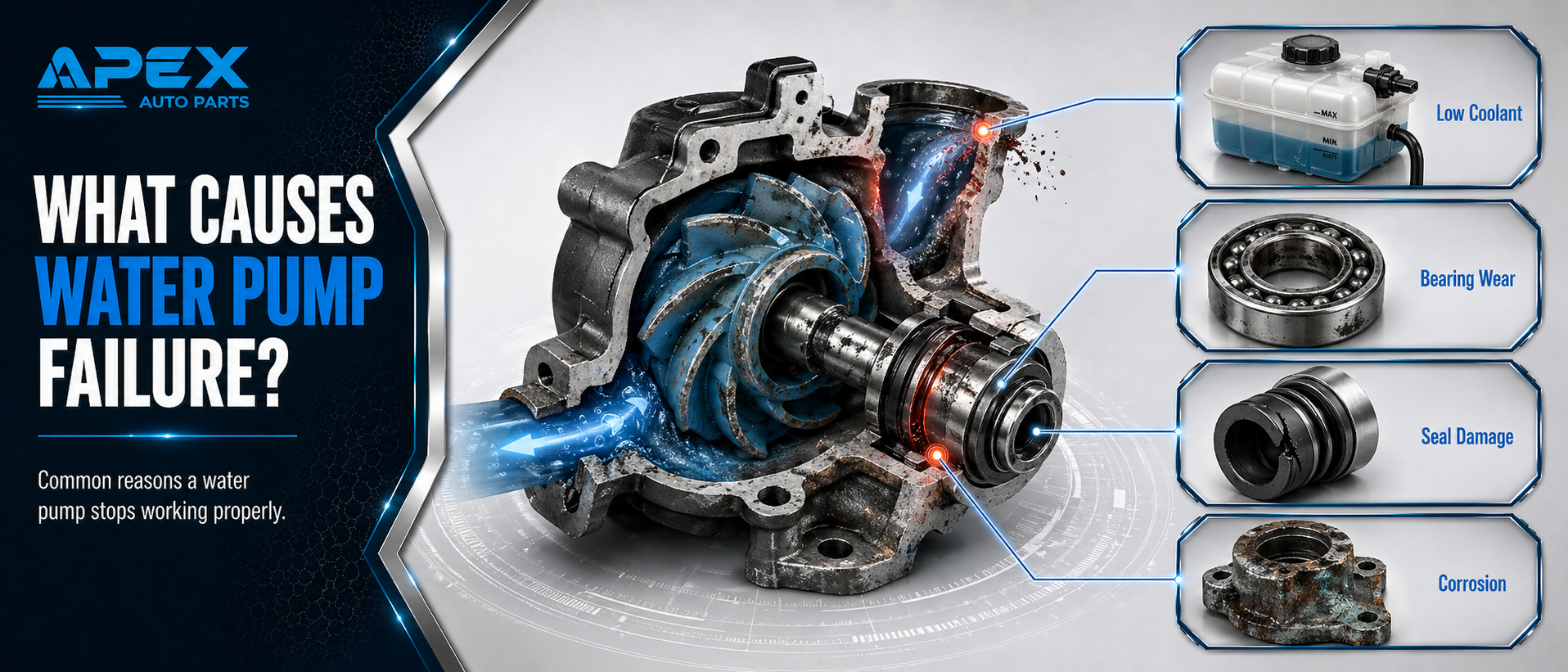
Main warnings include overheating, grinding or whining sounds, steam, and a damaged pulley. Rust or chalky marks around the pump can also signal trouble. Some noises seem to come from the front of the engine.
Arrange a check soon if you notice one or more warning signs. Poor coolant flow can reduce engine performance and increase fuel use. It also raises the chance of far more serious engine damage.
Coolant Leaks Around the Water Pump
Look for green, orange, or pink liquid collecting beneath your parked car. The color depends on the coolant your vehicle uses. You might also spot dried, crusty marks around the pump casing.
Worn internal seals can let coolant escape through the weep hole. This small opening allows leaks past the pump seal to drain outside. Fresh coolant there can warn that the seal needs attention.
Some leaks appear only after the engine has been running. A sweet smell under the bonnet can provide another clue. Together, these signs suggest the pump may be starting to fail.
Overheating With a Normal Coolant Level
Your temperature gauge may climb even with enough coolant in the expansion tank. This tank holds coolant as it expands with heat. A normal level does not prove the pump moves coolant properly.
The engine keeps producing heat, which builds up without strong coolant flow. Watch for overheating soon after starting, changing temperatures, or worsening heat at idle. Idling means the engine runs while the car stays still.
A hot engine with a cool radiator can suggest poor coolant movement. Little heat reaching the hoses can also help guide a mechanic’s checks. These clues need checking, since other cooling faults can cause similar problems.
Grinding or Whining From the Engine Front
A sharp squeal can point towards worn pump bearings or a slipping belt. Worn bearings can stop smooth movement and let the pulley wobble. These problems may create noise near the front of the engine.
A deeper grinding or growling sound can suggest damaged bearings or impeller parts. The pump may be close to locking up, making this more urgent. Changes in sound with engine speed provide another useful clue.
If engine revs rise, the noise may become louder or faster. That can point towards the water pump or its pulley. A mechanic should confirm which part causes the sound before replacing anything.
Rust or Chalky Marks Around the Pump
White, chalky marks and orange rust can reveal a small, ongoing coolant leak. As coolant dries, it leaves mineral traces behind. These can collect around joints, bolts, and the pump’s weep hole.
Old or dirty coolant can become more acidic and attack metal surfaces. This damage, called corrosion, can eat into the pump casing. Leaks and corrosion can gradually weaken seals and reduce cooling performance.
As the damage grows, coolant flow may also suffer. You may notice rising engine temperatures alongside these marks. A cabin heater that gives little warmth can provide another warning.
Steam or Hot Coolant Near the Pump
Steam near the pump can mean hot coolant is escaping from the system. Badly failed seals may let pressurised coolant leak and turn into steam. You might hear hissing or notice a strong, sweet smell under the bonnet.
At this stage, the system may struggle to hold pressure or maintain flow. The engine can suffer serious overheating within minutes. Stop safely, switch off, and let it cool before arranging professional help.
A Loose or Damaged Water Pump Pulley
The belt grips the pulley to turn the pump. A bent or damaged pulley can stop that movement from staying smooth. Wobbling creates shaking and makes pump speed uneven.
Uneven coolant flow can leave some engine areas much hotter than others. It also adds strain to bearings and can eventually tear the belt. Even slight pulley looseness can cause overheating or early pump failure.
How to Fix a Failing Car Water Pump?
First, check for leaks, then inspect the pulley and belts for damage. Adding coolant or adjusting a loose belt may offer brief help. However, these steps do not repair worn parts inside the pump.
Replacing the failed pump and affected parts restores proper coolant flow. A mechanic can decide whether any repair is suitable. Unless you already have repair experience, leave this work to a trained mechanic.
1. Inspect the Water Pump for Leaks
Start with a visual check around the pump and nearby parts. Dried coolant or small puddles beneath the car can reveal early leaks. These may appear near the front after the car has been parked.
Small leaks can change pressure and reduce flow before the pump fails completely. Check the casing, weep hole, and gasket area closely. A gasket is a seal fitted between joined parts to prevent leaks.
Look for fresh liquid, crusty patches, and stains matching your coolant color. The weep hole is the small drain opening built into the pump.
2. Check the pulley and belts.
With the engine off and cool, gently check the pulley for sideways movement. It should feel firmly held in place. Movement may mean worn bearings or loose fixings, both affecting smooth rotation.
Next, inspect the belt for cracks, loose threads, shiny patches, or slack. A damaged belt can slip instead of gripping the pulley. This stops the pump from moving coolant at the speed the engine needs.
Visible wobbling during operation or regular squeaking can suggest a pulley problem. Grinding from the same area also needs checking. Keep hands away from running belts and let a mechanic assess moving parts.
3. Consult a Mechanic
Get professional help if either check reveals anything unusual. Pump problems can worsen quickly once the engine starts overheating. Damage may include a failed head gasket or the seal between major engine sections.
Further overheating can cause lasting engine damage that cannot simply be reversed. A mechanic should explain the fault and suitable repair choices. Expect these checks and details before agreeing to work:
- A full inspection and cooling system pressure test.
- Checks of the belt and pulley.
- A clear explanation of repair or replacement options.
- A price estimate before work starts.
These checks protect engines.
4. Replace the Water Pump
A failed pump, or one close to failure, usually needs replacement. The basic repair follows these steps, with details depending on the vehicle:
- Drain the coolant once the system is cool and safe.
- Remove the drive belt or timing belt cover to reach the pump.
- Unbolt the old pump without damaging the surface beneath its gasket.
- Clean the mounting surface so the new gasket can seal properly.
- Fit the new pump with a fresh gasket or suitable sealant.
- Refit the belt and set its tightness correctly for smooth movement.
- Refill the system and bleed it, meaning remove trapped air pockets.
- Run the engine, checking for leaks, secure seals, and proper coolant flow.
This work can involve cramped spaces and carefully setting engine timing. Special tools may include torque wrenches, coolant trays, and belt tension tools. Torque wrenches tighten bolts to a set force.
You may also need pulleys and pullers, which help remove tightly fitted parts. Buying these items can cost as much as a garage repair. Sometimes, tools alone cost more than the garage’s parts and labour combined.
5. Understand Temporary Water Pump Fixes
For a tiny external leak, products such as K-Seal may offer brief help. This might apply to a slow seep from the pump casing. Such products are only a possible short-term measure for reaching repair help.
They cannot keep a failing pump working safely over time. Any possible benefit depends on a tiny leak and continued proper coolant flow. A pump that no longer circulates coolant needs a different solution.
Sealants cannot repair worn bearings, broken impellers, or damaged internal pump parts. They do not rebuild failed seals or reliably restore lost system pressure. Relying on them for too long risks blocked coolant paths and engine overheating.
Water Pumps in Modern Vehicles
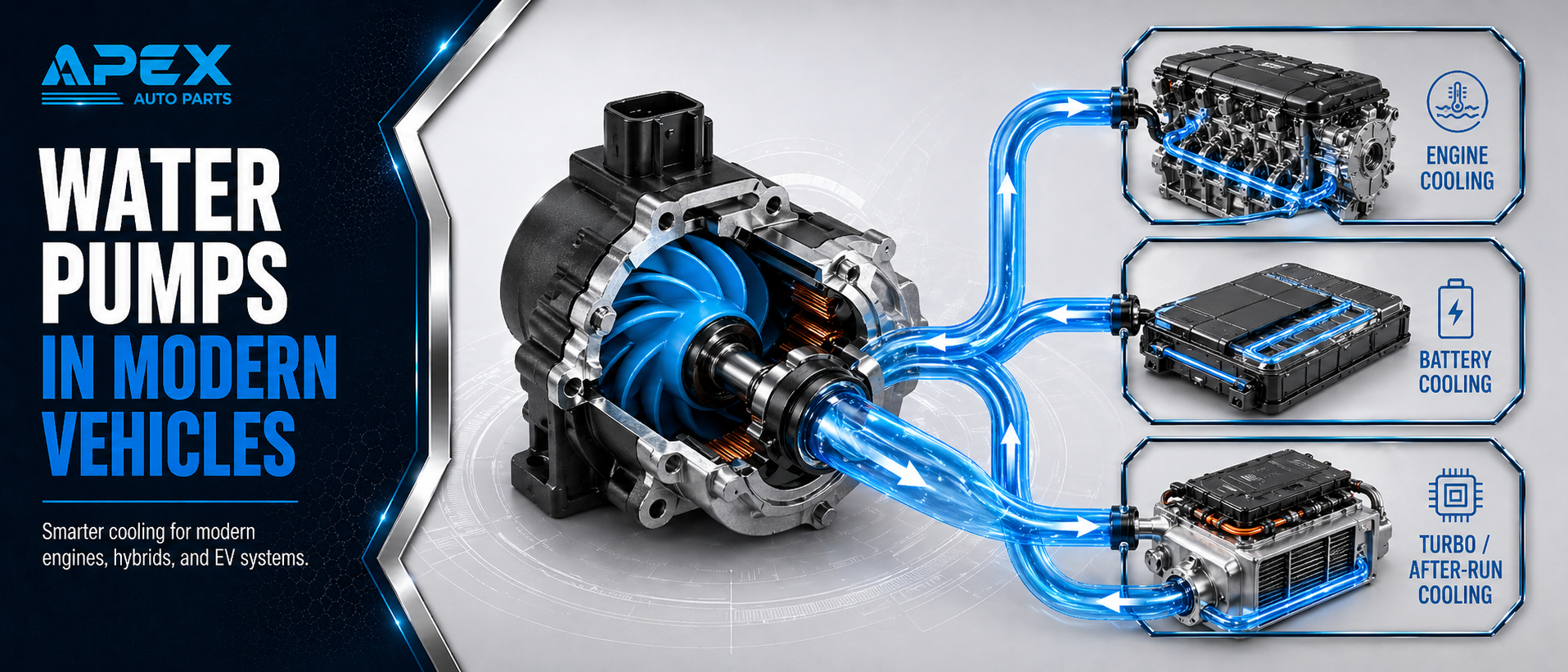
Modern vehicles aim to use less fuel and produce fewer exhaust emissions. They also need better control over temperatures. Because of this, water pump designs have changed beyond older mechanical systems.
Newer vehicles may use electric pumps, pumps with adjustable output, and extra circulation pumps. These provide cooling when needed, helping reduce wasted energy. This lets the vehicle manage heat while working more efficiently.
Hybrids and electric vehicles may have several pumps serving different cooling circuits. They can cool batteries, electric motors, and other electronic parts. Some also serve cabin heating and the inverter, which controls electrical power.
Here, coolant pumps do more than control heat in a fuel-burning engine. They belong to the vehicle’s wider heat control system. Each pump helps keep the parts it serves within their proper temperature range.
Is Fixing Your Car Water Pump Worth It?
Fixing a failing pump usually makes financial sense if the car remains healthy. The repair often costs a few hundred pounds. A cracked engine block can instead leave you facing a four-figure bill.
Still, consider what else the car may need during the next year. Cars over 10 years old or with high mileage may need further work. Possible jobs include suspension parts, brakes, belts, sensors or a clutch.
Suspension parts support the car and help control its movement over bumps. Another £800 repair waiting soon can change your decision. Weigh the pump bill against these expected costs before committing your money.
If the car remains reliable and has useful life left, replacement makes sense. This is especially true when recent repairs have not drained your budget. Look at the whole car rather than judging the pump bill alone.
When Fixing Your Car Makes Sense
Repair is worthwhile when the pump is the main fault. Well-maintained modern engines can last more than a decade. Spending a few hundred pounds may help provide several more years of use.
A clean MOT history and few dashboard warnings support that decision. Check that major parts, including the clutch, brakes and suspension, remain healthy. When those areas are sound, replacing the water pump is a sensible investment.
Final Thoughts
A water pump may not be the most visible part of a vehicle, but it plays one of the most important roles in protecting the engine. It keeps coolant moving, controls engine heat, supports smooth performance, and helps prevent serious damage.
Mechanical water pumps are strong and widely used. Electric water pumps give modern vehicles better cooling control. Variable mechanical pumps help improve efficiency. Water-circulating pumps support additional cooling and heating functions.
No matter which type your vehicle uses, the message is the same: never ignore the cooling system. A failing water pump can lead to overheating, leaks, noise, and costly repairs. Choosing a quality water pump and replacing it on time can save money and protect the engine in the long run.
For reliable water pump options and helpful fitment support, Apex Auto Parts is here to help customers keep their vehicles cool, safe, and ready for the road.
FAQS
1. What does a water pump do in a car?
A car water pump moves coolant through the engine and cooling system. The coolant collects engine heat and carries it to the radiator. There, the heat escapes into the air. This steady flow helps prevent overheating and keeps your cabin heater working.
2. What are the first signs of a failing water pump?
Early signs include coolant leaks, dried coolant marks, and unusual whining or grinding sounds. You may also notice rising engine temperatures or weak cabin heating. These symptoms can have other causes, so arrange a cooling system check before replacing parts.
3. Can you drive with a faulty water pump?
Driving with a faulty vehicle water pump risks overheating and serious engine damage. There is no safe distance you can rely on. If the temperature rises or steam appears, stop safely and switch off. Arrange recovery, and never open the coolant cap while the engine is hot.
4. How much does a car water pump replacement cost in the UK?
Your final bill depends on the car, pump type, and labour needed. Pumps hidden behind timing parts usually take more work to replace. Ask whether the quote includes coolant, seals, and any related belt work. The prices mentioned in this guide are estimates, not fixed limits.
5. How long does a vehicle water pump last?
Many water pumps last around 60,000 to 90,000 miles, while some exceed 100,000 miles. However, there is no single lifespan that applies to every car. Coolant quality, belt condition, and pump design all affect wear. Follow your vehicle’s service schedule and investigate leaks or noises early.
6. Can a water pump fail without leaking?
Yes, a water pump can fail without leaving a visible coolant leak. Its impeller, the spinning part that moves coolant, may become damaged or loose. An electric pump can also stop working because of an electrical fault. The engine may overheat even when the coolant level looks normal.
7. What does a bad water pump sound like?
A worn water pump may make whining, grinding, or growling sounds. The noise can change as engine speed rises or falls. However, belts, tensioners, and nearby pulleys can make similar sounds. A mechanic should locate the noise before deciding which part needs replacing.
8. Should you replace the timing belt with the water pump?
If the timing belt drives the pump, replacing both together often makes sense. Much of the labour overlaps, which can reduce future repair costs. The belt’s age, condition, and service schedule should guide the decision. Cars with separately driven pumps may not need timing belt work.
9. Can you repair a leaking water pump without replacing it?
First, a mechanic must find exactly where the coolant escapes. A nearby hose or mounting gasket may need repair rather than pump replacement. However, worn internal seals, damaged bearings, or broken impellers usually require a new pump. Leak sealants cannot repair these worn moving parts.
10. How can you help prevent water pump failure?
Use coolant that meets your vehicle maker’s requirements and follow its replacement schedule. Check coolant levels when the engine is cold, and investigate unexplained losses. Have worn belts, strange noises, and coolant leaks checked promptly. Correct coolant and timely maintenance help protect the pump and cooling system.