
 info@apexautoparts.co.uk
 +44 203 915 7535
 Safe & Fast Shipping
 Whish List
 Compare
 Sign In

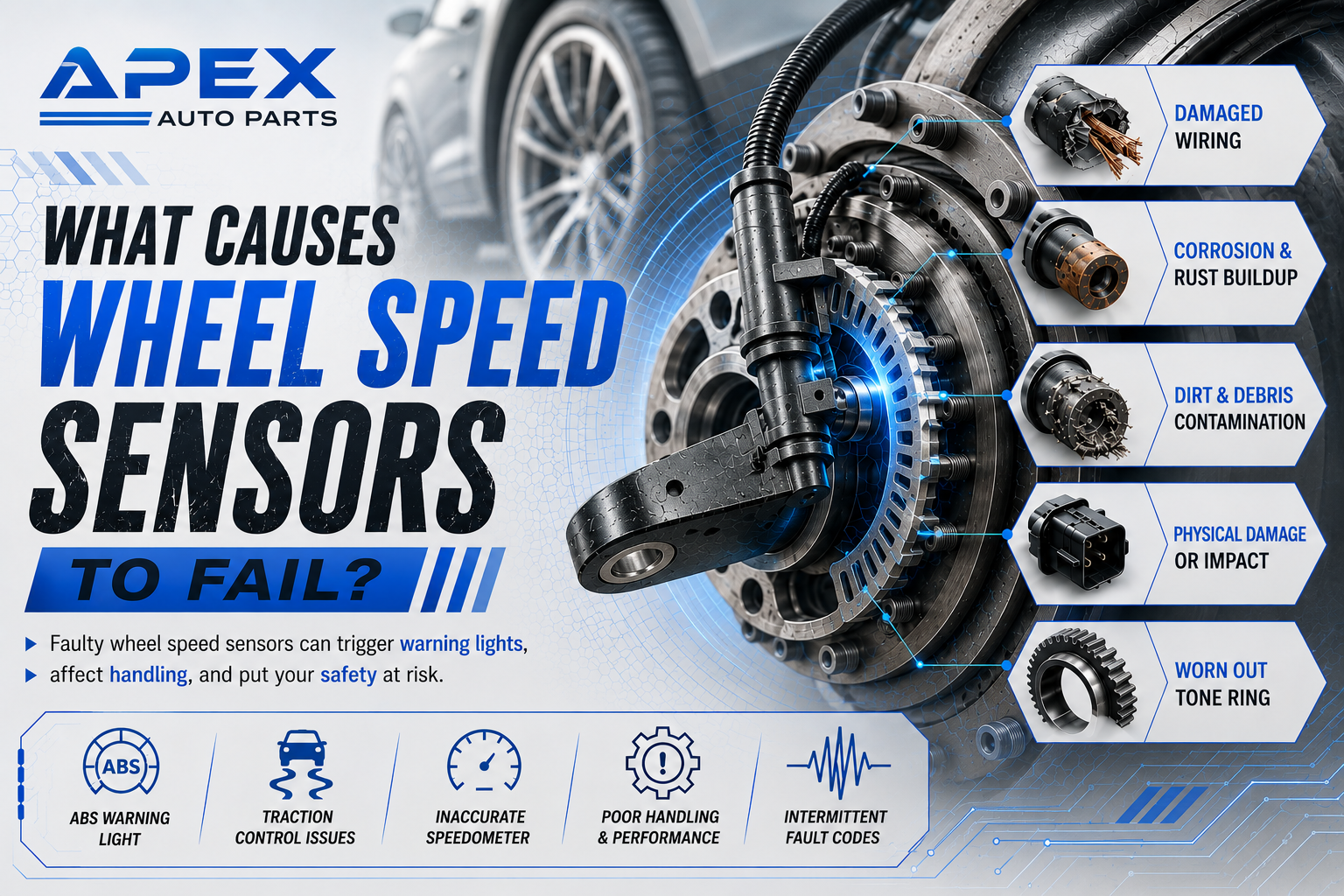
A wheel speed sensor is a small part, but it plays a big role in modern car safety. It watches how fast each wheel is turning and sends that information to the car computer. The ABS system uses this signal to prevent wheel lockup during hard braking. Many modern cars also use the same signal for traction control, stability control, cruise control, and other safety systems.
When wheel speed sensors fail prematurely, drivers often see dashboard warning lights. The ABS light may come on. The traction control light may also appear. In some cases, the brakes may feel strange at low speed, or the car may think one wheel is slipping when it is not.
The main causes of early failure are usually simple. Water gets into the connector. Road salt causes rust. Brake dust and metal dirt build up near the sensor tip. Wiring gets stretched, cut, or rubbed. A bad wheel bearing can change the gap between the sensor and the ring it reads. Poor-fitting parts can also make the sensor fail sooner than expected.
For UK drivers, this is more common because roads often remain wet, salty, and dirty for long periods. If the sensor is already weak, these conditions can accelerate the problem.
Apex Auto Parts is based in the UK and supplies car engine parts online for leading brands. The website focuses on reliable engine parts and helpful support for UK drivers who want the right part for their vehicle. This guide is written to help drivers understand why wheel speed sensors fail early, what signs to watch for, and how to avoid replacing the same part repeatedly.
What Does a Wheel Speed Sensor Do?
A wheel speed sensor measures a wheel's speed while the car is moving. It sends that signal to the ABS control unit. The control unit compares the speed of all wheels. If one wheel slows down too quickly during braking, the system may temporarily reduce brake pressure on that wheel. This helps the tire keep grip with the road.
A normal driver may never notice this part working. It sits close to the wheel hub, bearing, or brake area. It works in a dirty place, near water, heat, brake dust, and road dirt. That is why even a small fault can become a bigger issue over time.
The ABS wheel speed sensor is not only for braking. On many cars, its signal is also used by traction control and stability control. If the sensor sends the wrong reading, the car may think a wheel is slipping. This can cause warning lights, unwanted traction control action, or loss of ABS support.
A wheel speed sensor works together with a few other parts. The ABS control unit reads the signal. The tone ring, or magnetic ring, provides the sensor with something to read. The wiring and connector carry the signal. The wheel bearing or hub holds everything steady. If any of these parts are damaged, the sensor reading can become wrong.
What Does Premature Failure Mean?
Premature failure means the part fails before it should. A sensor can fail after years of use because of age, heat, and normal wear. That is not unusual. But when a new sensor fails soon after or the same corner keeps showing an ABS fault, something else may be causing the problem.
Many people replace the ABS Wheel Speed Sensor first because the fault code names that sensor. But a code does not always mean the sensor itself is bad. It may mean the signal from that wheel is wrong. The real cause may be the wiring, connector, wheel bearing, tone ring, dirt, rust, or poor fitting.
That is why proper checking matters. Replacing the sensor without checking the area around it can lead to the same warning light coming back.
Main Causes of Early Wheel Speed Sensor Failure?
1. Water and Moisture Around the Sensor
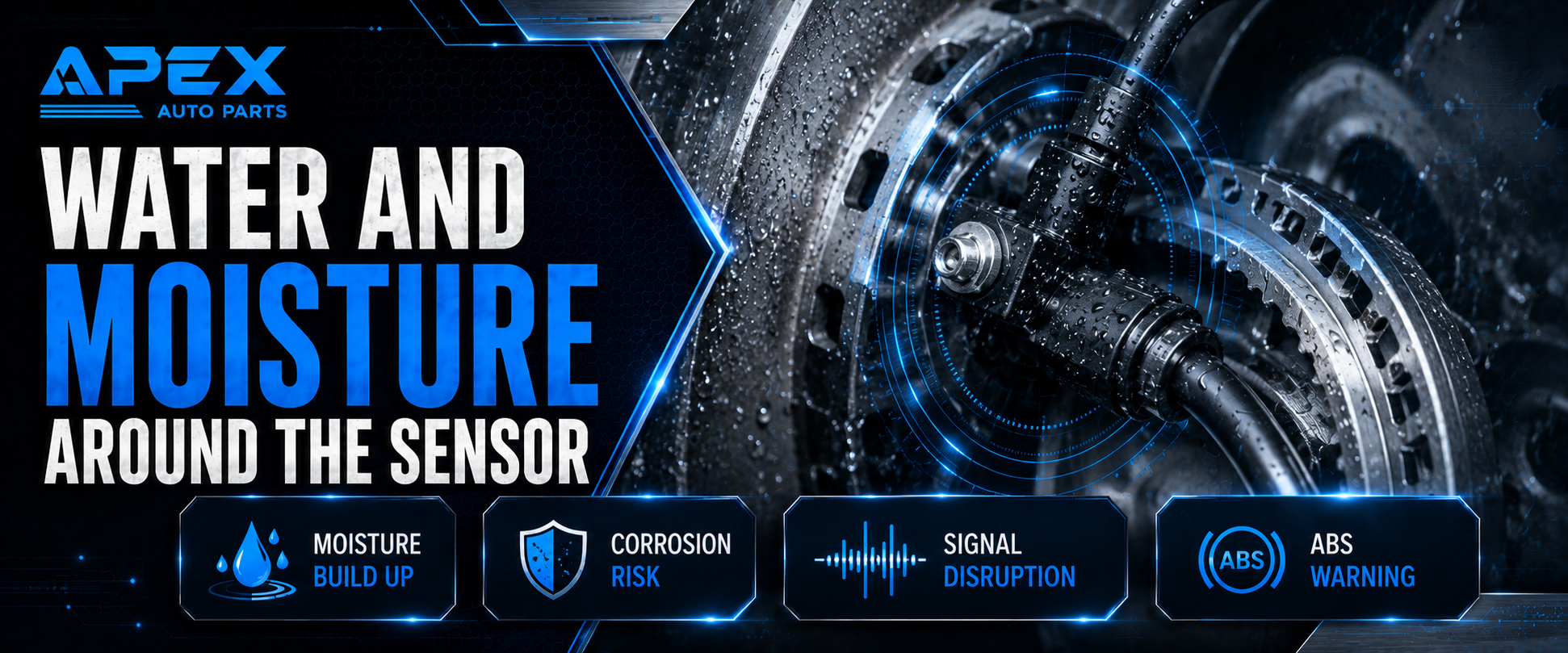
Water is one of the biggest reasons wheel speed sensors fail early. The sensor is placed near the wheel, so it faces rain, puddles, car washing, and wet road spray. Over time, moisture can get into the sensor body or connector.
When water gets inside, it can cause rust on the terminals. Rust can block the signal between the sensor and the ABS unit. At first, the fault may come and go. You may see the ABS light turn on, then disappear after the car dries. Later, the light may stay on all the time.
This is very common in areas with wet weather. UK roads often stay damp, especially in winter. A small crack in the wire cover or a loose connector seal can let water in. Once that happens, the sensor may not last long.
2. Road Salt and Rust
Road salt helps melt ice, but it is harsh on metal parts. It can speed up rust around the hub, sensor hole, bolts, and connector. Rust can make the sensor hard to remove. It can also push the sensor slightly out of place.
Even a small change in position can affect the sensor reading. The sensor needs the right gap between itself and the ring it reads. If rust builds up under the sensor, that gap can become too large. When the gap is wrong, the signal can become weak or unstable.
This is why a rusty fitting area should be cleaned before installing a new ABS wheel speed sensor. If the sensor is fitted over rust, it may not sit flat. The part may be new, but the signal may still be poor.
3. Brake Dust, Dirt, and Metal Debris
The braking area gets dirty fast. Brake pads create dust. Tires throw dirt and stones. Metal particles can stick near magnetic sensors. Over time, this dirt can cover the sensor tip or the tone ring.
A dirty sensor may still work at a higher speed, but fail at a low speed. This can cause odd ABS action when parking or slowing down gently. Some drivers feel a pulsing brake pedal just before stopping, even on a dry road.
Cleaning the area can help if the sensor is not damaged. But if dirt has entered the connector or damaged the sensor body, replacement may be needed.
4. Damaged Wiring
The sensor wire is just as important as the sensor. It carries the signal back to the ABS control unit. If the wire is cut, stretched, crushed, or rubbed, the signal may break.
Wiring can be damaged during repair work. It may be pulled during suspension jobs, brake work, or wheel bearing replacement. It can also rub against the tyre, wheel arch, shock absorber, or control arm if it is not clipped back correctly.
A broken wire may keep a warning light permanently on. A partly broken wire may cause a fault only when turning, braking, or going over bumps. This can make the fault harder to find.
When checking Speed Sensors, the wiring path should always be checked from the sensor to the main loom. Look for cuts, rubbing marks, crushed sections, missing clips, and green rust inside the connector.
5. Loose or Corroded Connectors
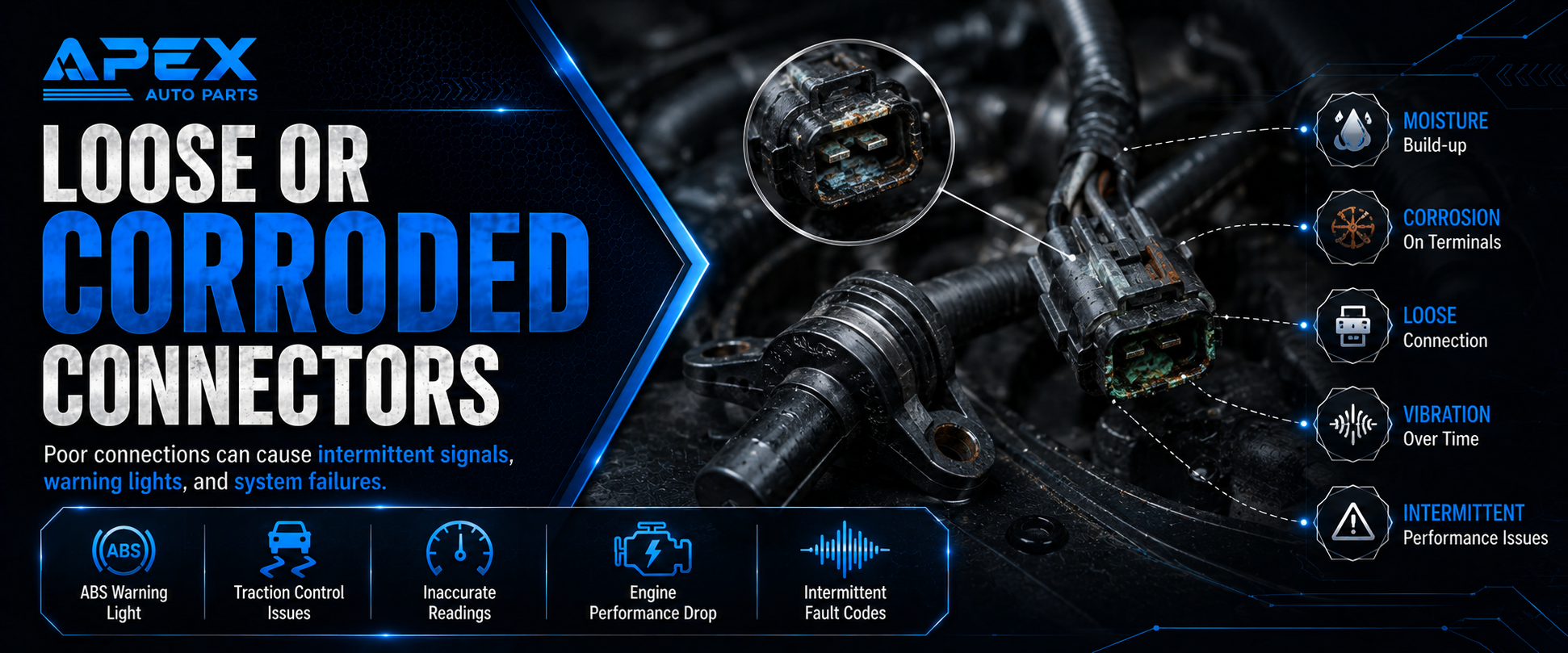
A sensor can be fine, but the connector can still cause trouble. The connector must be clean, dry, and tight. If it is loose, the signal may cut in and out. If the pins are rusty, the signal may become weak.
Connector problems are often worse in cold and wet weather. A small amount of water can sit inside the plug. After some time, the metal pins turn green or white. This creates resistance, preventing the clean signal from reaching the ABS unit.
Before replacing an ABS wheel speed sensor, the connector should be opened and checked. If it is full of water or rust, fitting a new sensor without fixing the connector may not solve the problem.
6. Bad Wheel Bearing or Hub Play
A weak wheel bearing can damage the sensor reading. The wheel should spin smoothly and stay steady. If the bearing has play, the wheel hub can move slightly. This changes the gap between the sensor and the ring.
The ABS unit expects a smooth signal. If the ring moves closer and farther from the sensor while the wheel spins, the signal can become uneven. The car may show a sensor fault even if the sensor is not the main problem.
Some modern cars have the magnetic ring built into the wheel bearing. If that ring is cracked, dirty, or damaged, the sensor cannot read it properly. Replacing only the sensor may not help if the bearing ring is the real cause.
7. Damaged Tone Ring or Magnetic Ring
The sensor reads from a tone ring or a magnetic ring. On older designs, this may look like a toothed metal ring. On newer designs, it may be built into the wheel bearing seal.
If the ring is cracked, rusty, bent, has missing teeth, or is covered in dirt, the sensor signal will be incorrect. This is a common reason for repeated sensor faults. The scan tool may show a fault at one wheel, so the sensor is replaced. But the warning light comes back because the real issue is the ring.
A damaged tone ring can also cause the ABS to act at the wrong time. The system may think the wheel has stopped turning for a moment, even when it has not. This can lead to brake pulsing or warning lights.
8. Wrong Fitting or Wrong Gap
The sensor must sit in the correct position. If it is not fully seated, the gap may be wrong. If the sensor hole is rusty or dirty, the new sensor may not sit flat. If the bolt is over-tightened or fitted at an angle, the sensor body can crack.
Some sensors are very sensitive to the gap between the sensor and the ring. If the gap is too wide, the signal becomes weak. If the sensor comes into contact with the ring, it can be damaged.
Before fitting a new ABS wheel speed sensor, the mounting hole should be cleaned. The sensor should slide into place without force. The wiring should follow the same route as the old wiring. Clips should be fitted back properly so the wire does not rub.
9. Poor Quality Replacement Parts
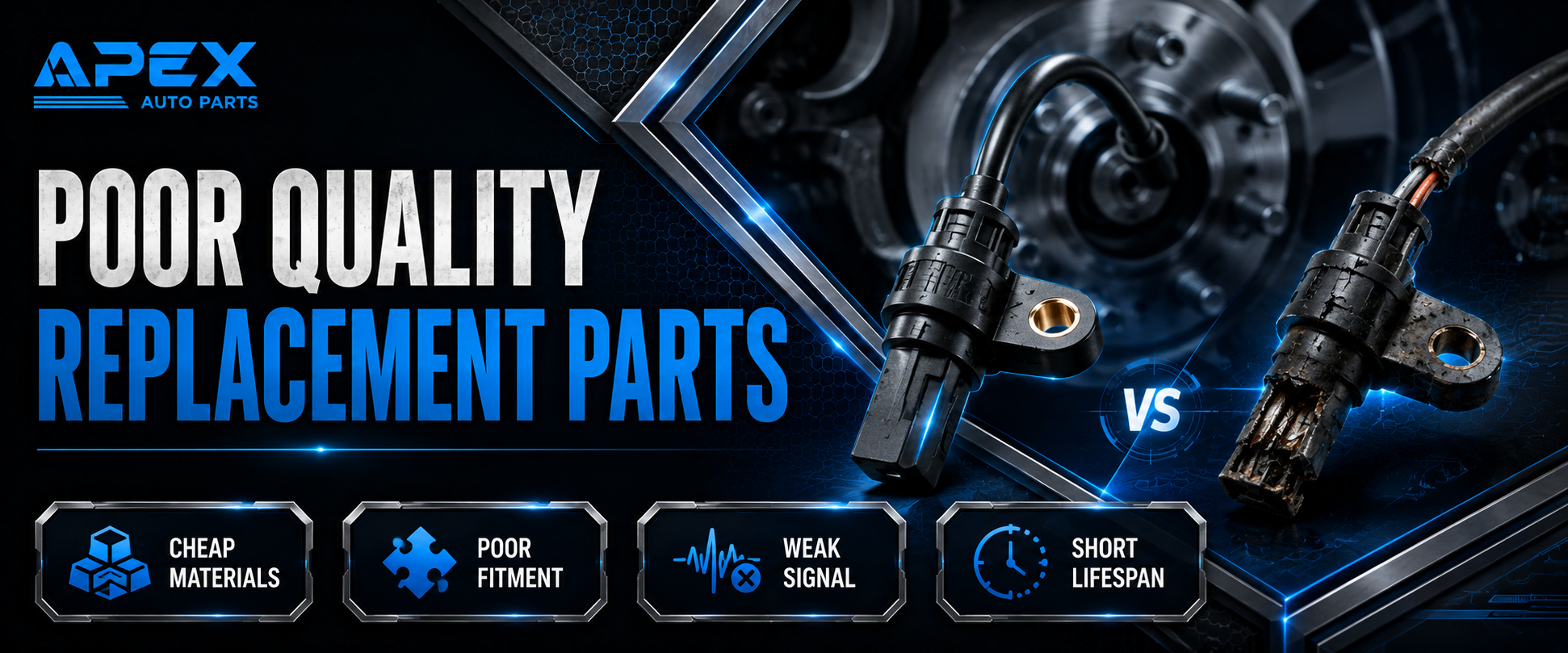
Not all replacement parts are made the same. A low-quality sensor may not seal well against water. The wiring may be thinner. The connector may not fit tightly. The signal may also be less stable.
This is why buying the cheapest Speed Sensors can sometimes end up costing more later. If the sensor fails early, the driver may pay again for fitting, diagnosis, and another replacement part.
A good sensor should properly match the vehicle. The connector, cable length, sensor shape, and signal type must be correct. Even if a part looks almost the same, it may not work correctly on that vehicle.
10. Heat and Vibration
The wheel area is exposed to heat from the brakes and constant road vibration. Over time, heat can harden the sensor wire cover. Vibration can weaken internal parts. This is normal after many years, but it can lead to early failure if the sensor is of poor quality or poorly fitted.
Cars used in city traffic may see more braking heat. Cars used on rough roads may face more vibration. If the wiring is not clipped correctly, vibration can make it rub until the copper wire inside is exposed.
11. Pressure Washing Too Close to the Sensor
Pressure washing around the wheel arch can push water into connectors. It can also disturb weak wiring or old seals. Washing the wheel area is fine, but pointing a high-pressure hose directly at the sensor connectors can cause issues.
This is more likely on older cars where the seals are already weak. If a warning light appears soon after washing, the connector should be checked for water.
12. Accident Damage and Pothole Impact
A hard pothole hit can damage the hub, bearing, sensor wiring, or tone ring. Even if the wheel still looks fine, the sensor signal can be affected. Accident repairs can also disturb wiring routes.
If the ABS light appears after a pothole, tire change, brake job, or suspension repair, the sensor wiring near that wheel should be checked first.
Common Signs of a Bad Wheel Speed Sensor
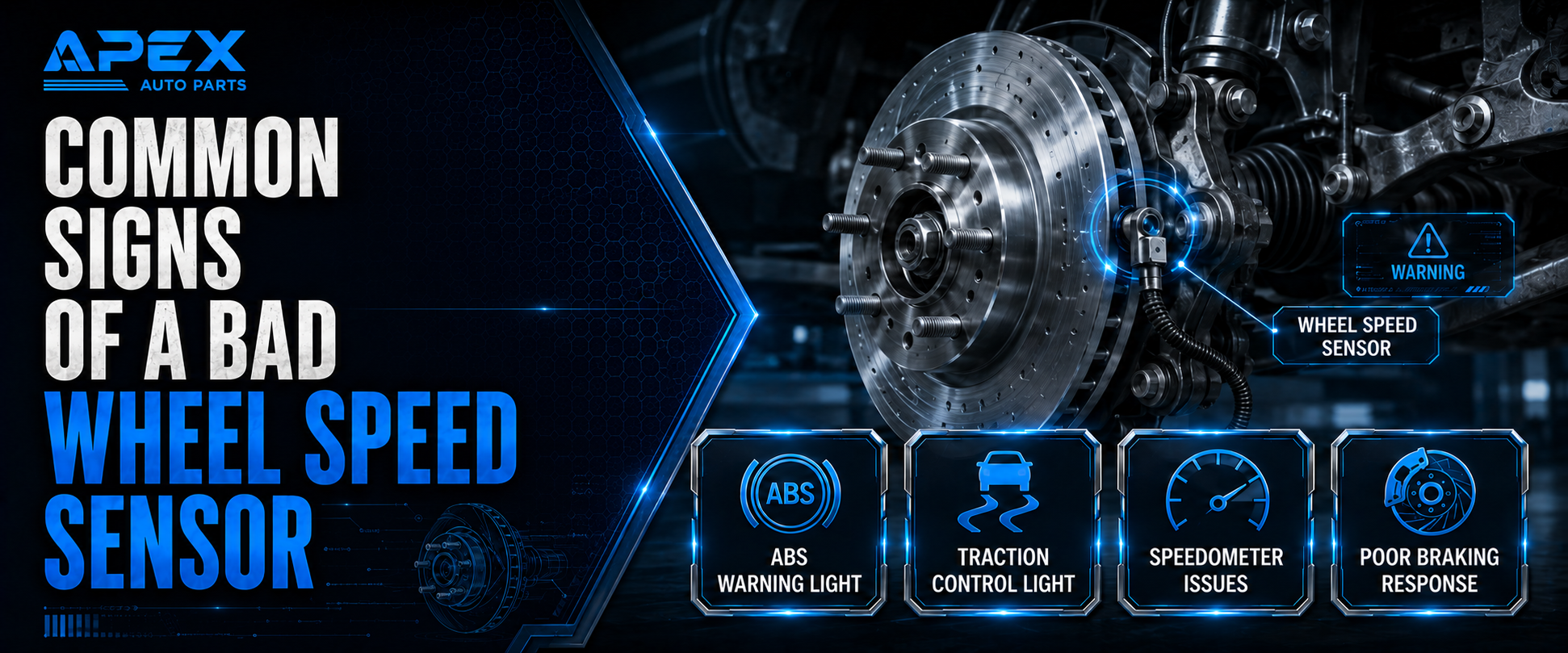
A bad sensor can show several signs. Some are clear, while others feel like normal brake or tire problems. The most common warning is an ABS light on the dashboard.
Common signs include:
- ABS warning light stays on
- Traction control light appears
- Stability control warning appears
- Brake pedal pulses at low speed
- ABS activates when it should not
- Wheels may lock during hard braking
- Cruise control may stop working on some cars
- Fault code appears for one wheel sensor
- Warning light comes back after replacement
- The car feels less stable on wet roads
If the fault returns after fitting a new sensor, the sensor may not be the real problem. The wiring, connector, hub, tone ring, or bearing may need to be checked.
How Many Speed Sensors Does a Car Have?
A common search is how many speed sensors a car has. The simple answer is that most modern cars with ABS have one wheel-speed sensor per wheel, so there are usually four wheel-speed sensors. Some older vehicles may use fewer sensors, while others have additional Speed Sensors for the gearbox or engine management.
So, when someone asks how many speed sensors a car has, the answer depends on the car. For ABS alone, four is common on modern passenger cars. For the entire vehicle, there may be more, as cars can also use transmission speed sensors, engine speed sensors, and other sensors.
In simple words:
- Most modern cars have four wheel speed sensors
- One sensor is usually fitted near each wheel
- Older vehicles may have fewer sensors
- Some cars also have gearbox Speed Sensors
- Engine and transmission systems can use other speed-related sensors
This is why it is important to know which sensor the fault code is pointing to. A wheel speed sensor fault is not the same as a gearbox speed sensor fault.
Why the Fault Code May Not Tell the Full Story?
A scan tool may report a left-front sensor fault or a right-rear sensor signal missing. That is useful, but it does not always prove the sensor is dead. It only tells you which wheel signal is wrong.
The cause may be:
- A broken sensor
- A loose connector
- Water inside the plug
- Rust under the sensor
- A damaged tone ring
- A bad wheel bearing
- A rubbed wire
- Wrong part fitted
- Dirt on the magnetic ring
This is why a proper check is important. Replacing the ABS wheel speed sensor without checking the rest of the area can be a waste of money.
How to Check Before Replacing the Sensor
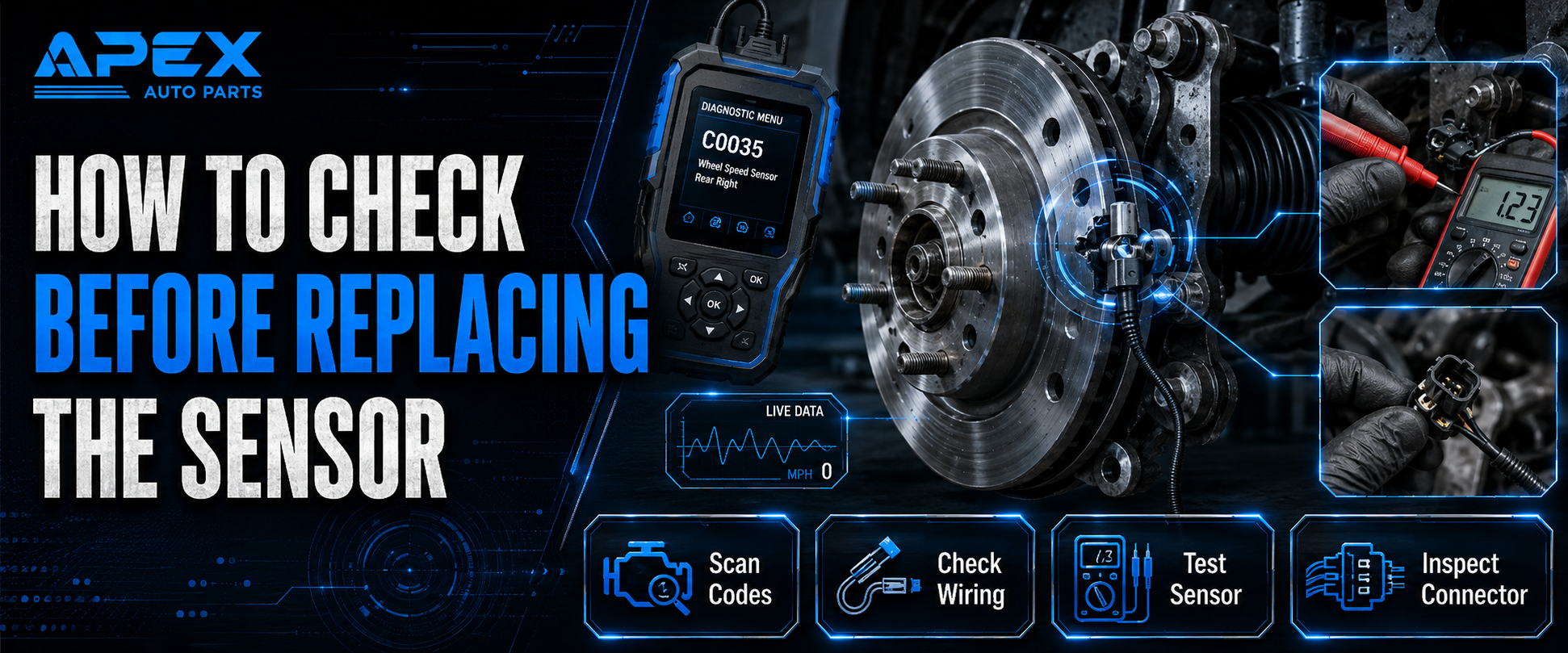
A trained mechanic can check the system using a scan tool, a multimeter, and a visual inspection. For most drivers, the best first step is not to ignore the warning light. ABS and traction control are safety systems, so the car should be checked as soon as possible.
Basic checks include:
- Read the ABS fault codes
- Check which wheel is showing the fault
- Inspect the sensor wire for damage
- Open the connector and check for water or rust
- Clean dirt from the sensor area
- Check the tone ring or magnetic ring
- Check the wheel bearing for play
- Compare live wheel speed readings while the wheels turn
- Make sure the sensor is the correct part for the vehicle
If one wheel reads zero while the others show speed, the problem is likely in that wheel circuit. If the reading fluctuates, the issue may be dirt, ring damage, bearing play, or wiring.
How to Prevent Premature Sensor Failure
You cannot protect the sensor from every bit of water and dirt, but you can reduce the risk of early failure. Good fitting, clean contact points, and proper wiring routes make a big difference.
Use these simple steps:
- Keep wheel arches clean, especially after winter road salt
- Avoid blasting sensor connectors with high-pressure water
- Use good-quality replacement parts
- Make sure the sensor hole is cleaned before fitting
- Do not force the sensor into a rusty mount
- Clip the wiring back in the correct position
- Check wheel bearings when sensor faults keep returning
- Repair damaged connectors instead of ignoring them
- Do not leave loose wires near moving suspension parts
- Use the correct sensor for the exact make and model
A sensor is only as good as the area around it. A new part fitted into a rusty, dirty, or damaged hub may fail again.
When Should a Wheel Speed Sensor Be Replaced?
A sensor should be replaced when it is clearly faulty, physically damaged, or sending no signal. It may also need replacement if the wiring is part of the sensor and the wire is broken.
But if the same sensor fault keeps recurring, do not blindly keep replacing the same part. The root cause may be elsewhere. The hub, tone ring, bearing, connector, and wiring should all be checked.
A quality ABS wheel speed sensor can last a long time when fitted correctly. Early failure usually indicates another cause that needs attention.
Can You Drive With a Bad Wheel Speed Sensor?
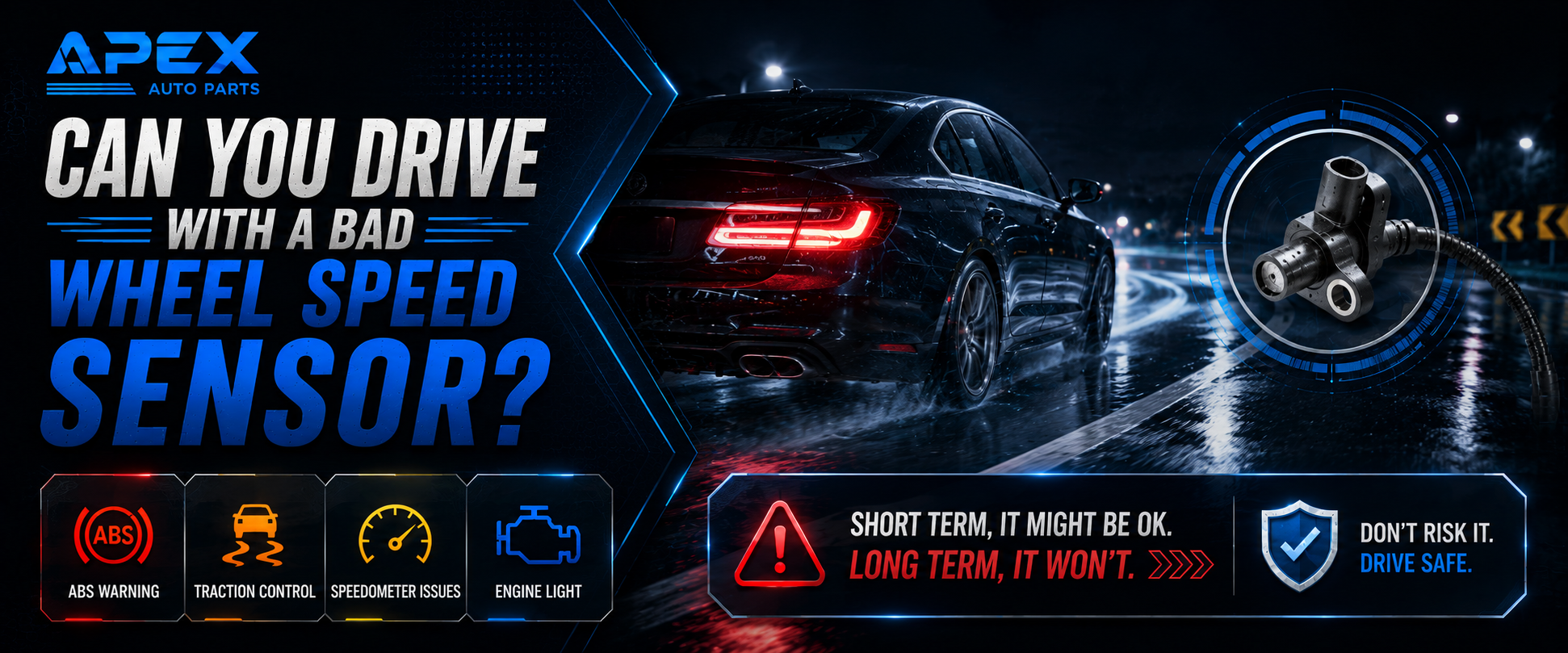
The car may still brake, but the ABS system may not work correctly. Traction control and stability control may also stop working. That means the car can be less safe during hard braking, on wet or icy roads, or during sudden steering.
If the ABS light is on, normal braking may still work, but the extra safety help may be disabled. It is best to have the car checked rather than drive for a long time with warning lights on.
Driving with a bad sensor for too long can also hide other problems. A wheel bearing, a damaged wire, or a tone ring fault may worsen over time. Fixing it early can help avoid more expensive repairs later.
Why Quality Parts and Correct Fitment Matter?
Modern cars depend on clean sensor signals. The sensor, connector, wiring, hub, and control unit all need to work together. A poor-quality sensor may fit in the hole, but still give a weak or wrong signal.
For UK drivers and garages, correct fitment is crucial because many vehicles have different sensor designs within the same model range. The plug, cable length, sensor tip, and signal type must match.
Apex Auto Parts supports UK drivers looking for reliable car engine parts online. While wheel speed sensors are part of the braking and safety system, the same rule applies across the whole vehicle: correct parts, proper fitting, and reliable quality help reduce repeat faults.
Final Thoughts
Wheel speed sensors often fail early because of where they operate. They sit close to water, salt, dirt, heat, brake dust, and road impact. Most failures are not random. They usually come from moisture, rust, damaged wiring, dirty sensor tips, poor connectors, bad bearings, damaged rings, or poor fitting.
Before fitting a new ABS wheel speed sensor, the full area should be checked. A clean connector, a correct wiring route, a sound wheel bearing, and a clean sensor mount can help the new part last longer.
For drivers, the key point is simple. Do not ignore the ABS light. Do not guess. Get the fault checked properly. A small sensor can affect braking, traction, and stability systems, so it is worth fixing the right way the first time.
FAQs - Wheel Speed Sensor
1. What are wheel speed sensors in a car?
Wheel speed sensors are small parts near the wheels that read how fast each wheel is turning. They send this information to the ABS control unit. The car uses this signal to manage ABS, traction control, and stability control. If the signal is wrong, warning lights may appear.
2. What causes wheel speed sensors to fail early?
Wheel speed sensors often fail early because of water, rust, road salt, brake dust, damaged wiring, loose connectors, or a bad wheel bearing. Poor fitting can also cause early failure. If the sensor is replaced without addressing the underlying cause, the same fault may recur.
3. What are the symptoms of a bad ABS wheel speed sensor?
A bad ABS wheel speed sensor can cause the ABS, traction control, or stability warning light to come on. You may also feel an odd brake pulsing at low speed. In some cases, the car may lose ABS support until the fault is repaired.
4. Can a bad ABS wheel speed sensor affect braking?
Yes, a bad ABS wheel speed sensor can affect ABS braking support. Normal brakes may still work, but ABS may not help during hard braking. This can be risky on wet, icy, or loose roads because the wheels may lock more easily without correct sensor data.
5. How many speed sensors does a car have?
Many drivers ask how many speed sensors a car has. Most modern cars with ABS have four wheel speed sensors, one at each wheel. Some cars also have additional Speed Sensors for the gearbox or engine, so the total number depends on the vehicle.
6. Can dirt damage Speed Sensors?
Yes, dirt can affect Speed Sensors, especially near the wheels. Brake dust, metal particles, mud, and road dirt can build up on the sensor tip or ring. This can weaken the signal and trigger ABS faults. Cleaning may help if the sensor itself is not damaged.
7. Is it safe to drive with faulty wheel speed sensors?
You may still be able to drive, but it is not ideal. Faulty wheel speed sensors can disable ABS, traction control, and stability control. This means the car may be harder to control during emergency braking or on slippery roads. It should be checked soon.
8. Can a bad wheel bearing damage wheel speed sensors?
Yes, a bad wheel bearing can affect wheel speed sensors. If the bearing has play, the sensor gap can change while the wheel turns. This may create a weak or uneven signal. On some cars, the sensor ring is built into the bearing, so both may need to be checked.
9. How long should an ABS wheel speed sensor last?
An ABS wheel speed sensor can last many years when fitted correctly and kept away from heavy damage. Its life depends on road conditions, part quality, wiring condition, and moisture exposure. If it fails soon after fitting, the connector, hub, ring, and wiring should be checked.
10. Are cheap Speed Sensors worth buying?
Cheap Speed Sensors may work at first, but some fail sooner because of poor sealing, weak wiring, or poor signal quality. A sensor must be correctly matched to the vehicle. Paying for a better part can save money by preventing repeat faults and reducing extra labor costs.