
 info@apexautoparts.co.uk
 +44 203 915 7535
 Safe & Fast Shipping
 Whish List
 Compare
 Sign In

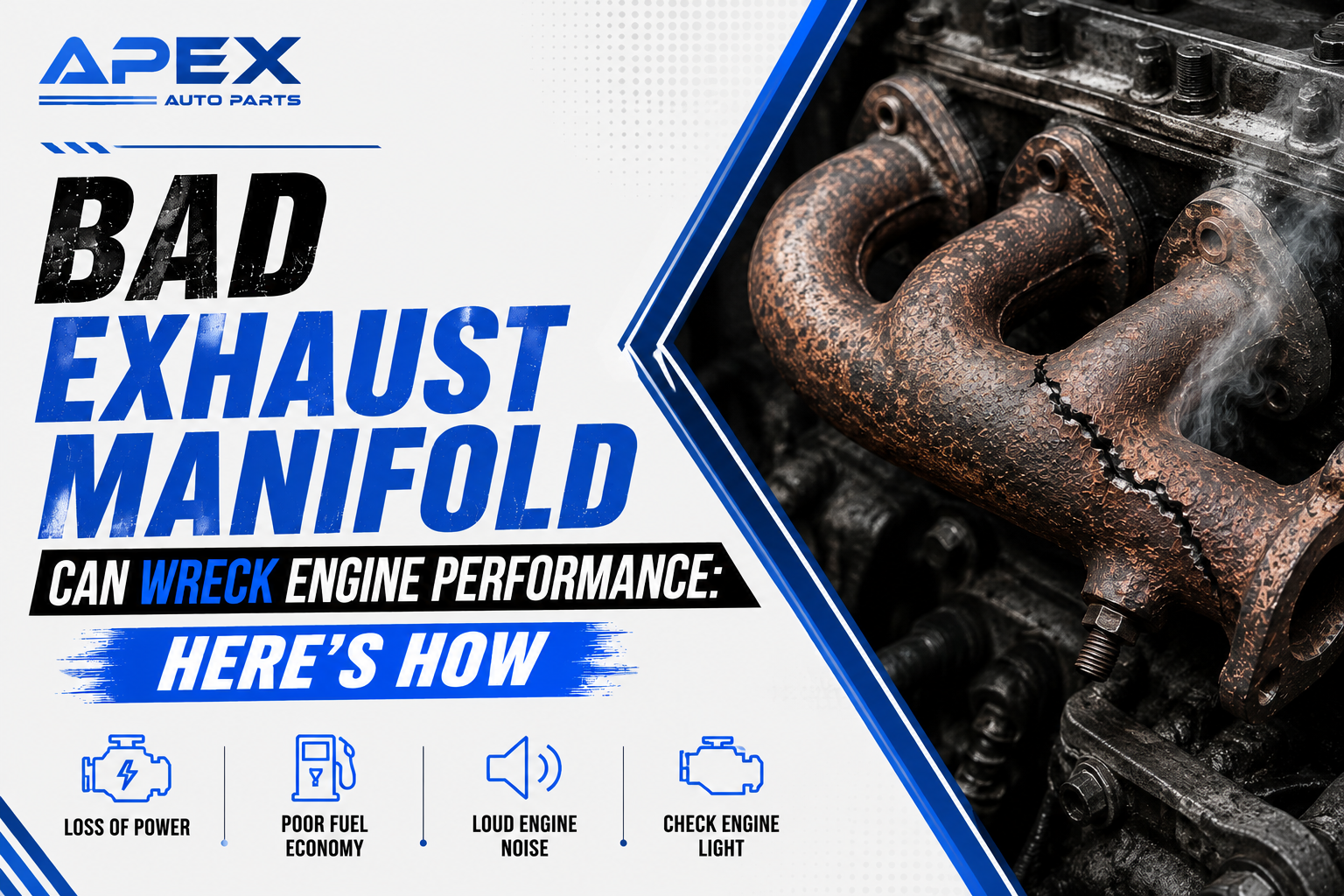
A car engine needs clean airflow to work well. Air goes in, fuel burns, and exhaust gases must leave the engine smoothly. When this process works as it should, the engine feels strong, smooth, and easy to drive. But when the Exhaust Manifold starts to fail, the whole engine can feel weak, noisy, and rough.
Many drivers do not think about the Exhaust Manifold until something goes wrong. It is not a flashy part. You do not see it from outside the car. But it does a very important job. It collects hot gases from the engine cylinders and sends them into the exhaust system. If this part cracks, leaks, or has a bad seal, your car can lose power, burn more fuel, and even sound much louder than normal.
A bad Exhaust Manifold can also confuse engine sensors. This can cause the car to run poorly because the engine control system may read incorrect air and fuel levels. Over time, a small issue can turn into a costly repair if left unchecked.
In this blog, we will explain how a bad Exhaust Manifold affects your car, what signs to watch for, and why fixing the problem early matters. The goal is to keep things simple, clear, and useful for everyday car owners.
What Is an Exhaust Manifold?
The Exhaust Manifold is one of the first parts of the exhaust system. It is bolted directly to the engine. Its main job is to collect exhaust gases from each cylinder and send them into one outlet pipe.
When fuel burns inside the engine, it creates power. It also creates hot gases. These gases need to leave the engine fast. The Exhaust Manifold helps guide them out in the right direction.
Most Exhaust Manifold parts are made from cast iron or stainless steel because they deal with very high heat. Every time you drive, the manifold heats up quickly. When the engine cools down, it shrinks again. This heating and cooling cycle repeats itself again and again.
Over time, this stress can cause damage. The manifold can crack. The bolts can loosen. The seal between the manifold and engine can fail. This seal is called the exhaust manifold gasket.
When the exhaust manifold gasket fails, exhaust gases can escape before they reach the rest of the exhaust system. This is called an exhaust manifold leak.
Why the Exhaust Manifold Matters for Engine Performance?
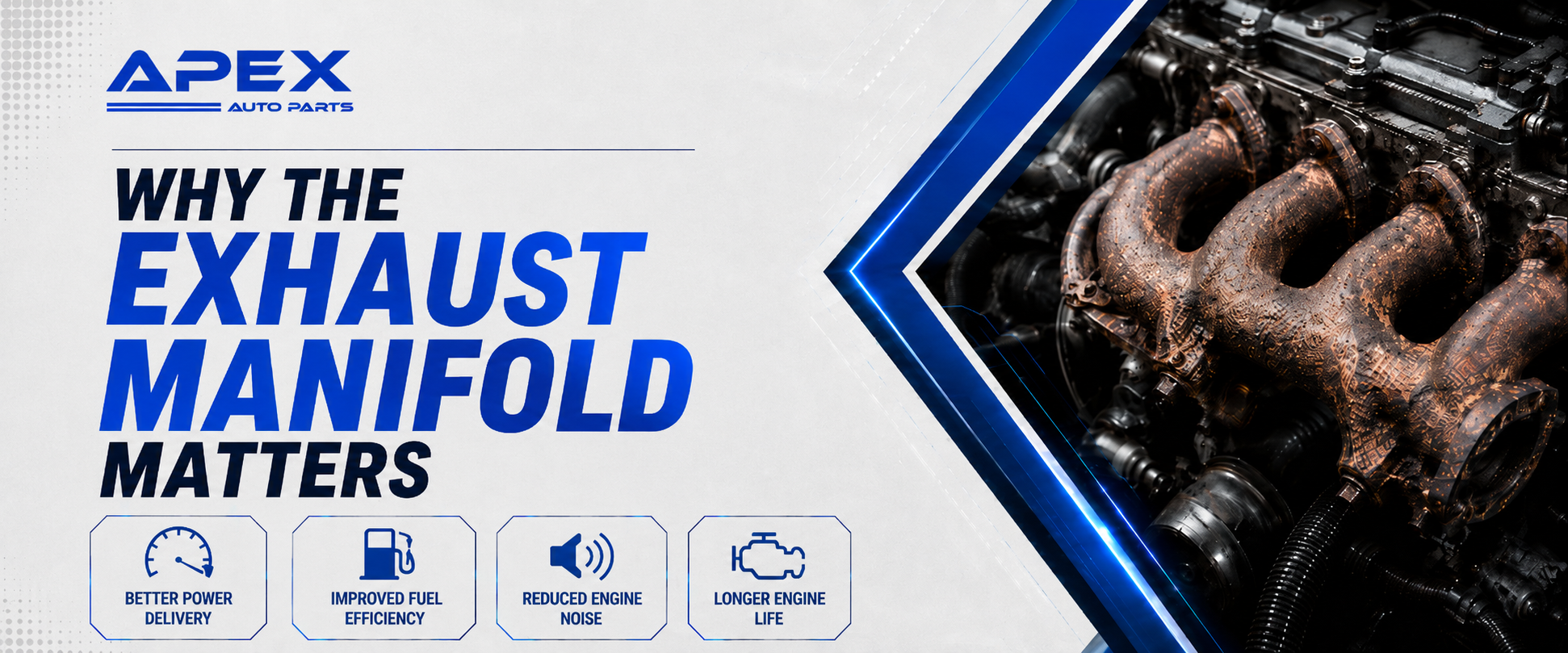
The Exhaust Manifold affects more than just noise. It plays a big role in how well your engine breathes.
An engine is like a pump. It pulls air in and pushes gases out. If exhaust gases cannot leave properly, the engine has to work harder. This can reduce power and make the car feel slow.
A healthy Exhaust Manifold helps with:
- Smooth exhaust gas flow
- Better engine power
- Better fuel use
- Lower engine noise
- Proper sensor readings
- Safer removal of hot gases
- Better engine response
When the Exhaust Manifold is damaged, the engine loses balance. Exhaust gases may escape too early. Fresh air readings may be wrong. The oxygen sensor may send false data to the engine computer. This can lead to poor fuel mixture and weak performance.
That is why a small exhaust manifold leak can cause big driving problems.
How a Bad Exhaust Manifold Wrecks Performance?
A bad exhaust manifold can hurt performance in many ways. Some signs are easy to notice. Others happen slowly and may not seem serious at first.
Loss of Engine Power:
One of the most common problems is power loss. If exhaust gases leak out before reaching the oxygen sensor, the engine computer may think the fuel mixture is too lean. A lean mixture means there is too much air and not enough fuel.
The computer may add more fuel to fix this. But because the reading is wrong, the engine may not run properly.
You may notice:
- Slow pickup
- Weak acceleration
- Poor response when pressing the pedal
- Trouble climbing hills
- Engine feeling lazy
This is one of the main reasons why an exhaust manifold leak should not be ignored.
Poor Fuel Economy
A bad exhaust manifold can also make your car use more fuel. When exhaust gases escape early, the oxygen sensor may send the wrong information. The engine computer may then add extra fuel.
This extra fuel does not always create more power. In many cases, it only wastes fuel.
You may find yourself filling the tank more often than usual. If your driving habits haven't changed but your fuel use has gone up, an exhaust manifold leak could be the cause.
Loud Engine Noise
A damaged Exhaust Manifold often makes the engine sound louder. The sound may be a ticking, tapping, or puffing noise. It is usually louder when the engine is cold.
As the metal heats up, it expands. Sometimes the leak becomes smaller after the engine warms up, so the noise may reduce. But this does not mean the problem is gone.
Common sounds include:
- Ticking from the engine bay
- Tapping when starting the car
- Hissing under acceleration
- Loud exhaust sound near the engine
- Puffing noise while driving
These sounds are common symptoms of an exhaust manifold leak.
Rough Engine Running
A bad Exhaust Manifold can make the engine run rough. The engine may shake more than normal, especially when idling.
This can happen because the fuel-to-air mixture is no longer correct. If the oxygen sensor gets false readings, the engine computer may keep adjusting the mixture in the wrong way.
A rough idle can feel like:
- Engine vibration
- Uneven engine sound
- The car is shaking while stopped.
- RPM moving up and down
- Engine feeling unstable
A failing exhaust manifold gasket can also cause these issues by allowing gases to escape at the joint.
What Causes Exhaust Manifold Problems?
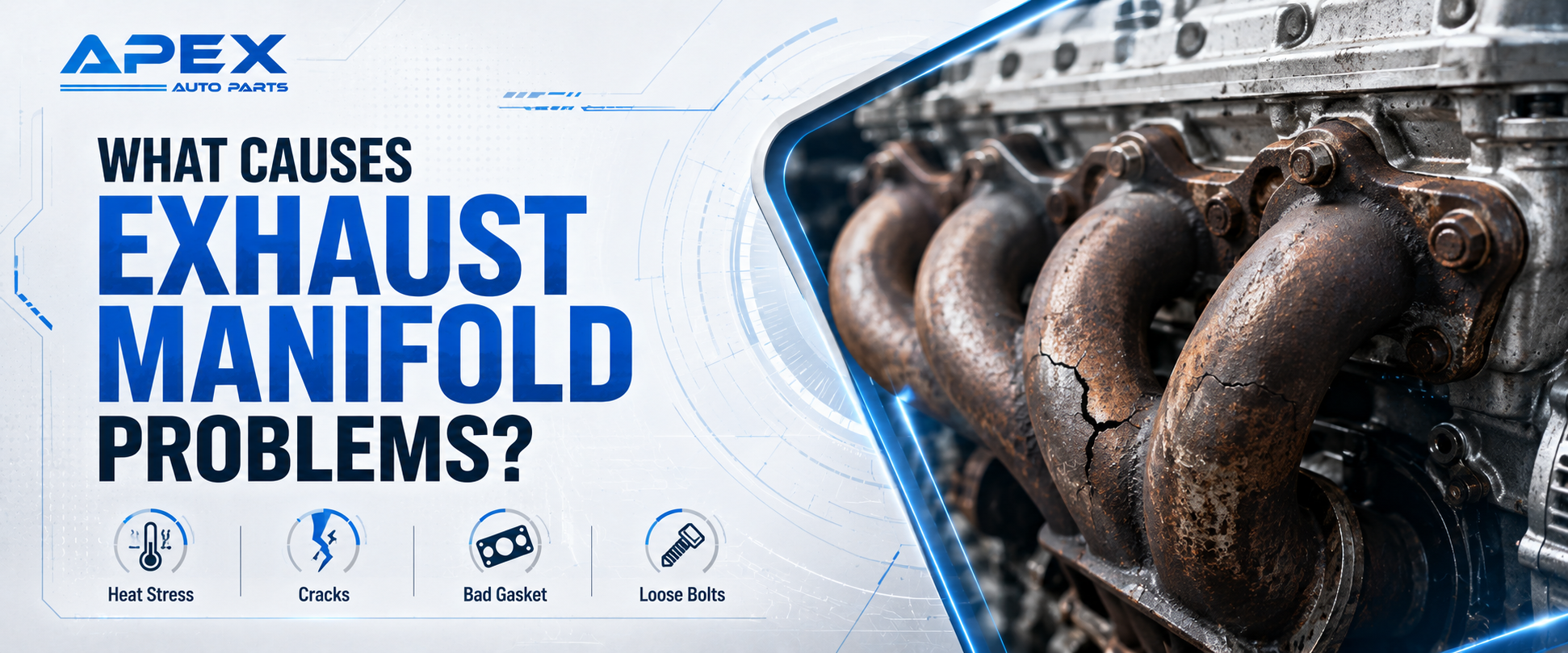
The Exhaust Manifold operates in harsh conditions. It faces extreme heat, engine vibration, pressure, and age. Over time, even strong parts can wear out.
1. Heat Stress:
The manifold gets very hot when the engine runs. When the car cools down, the metal contracts. This cycle happens every time you drive.
Over many years, this can cause cracks.
2. Loose or Broken Bolts:
The Exhaust Manifold is held to the engine with bolts or studs. These can loosen, rust, or break. If this happens, the seal becomes weak.
A weak seal can lead to an exhaust manifold leak.
3. Bad Exhaust Manifold Gasket:
The exhaust manifold gasket sits between the manifold and the engine. Its job is to seal the gap and stop gases from escaping.
When the exhaust manifold gasket burns, cracks, or wears out, exhaust gas can leak. This is one of the most common causes of manifold leaks.
4. Rust and Corrosion:
Rust can weaken the Exhaust Manifold, especially on older vehicles or cars used in wet weather. In the UK, road salt and damp weather can speed up rust.
Rust can damage:
- Manifold body
- Bolts
- Studs
- Gasket area
- Exhaust joints
5. Poor Installation:
If the exhaust manifold or exhaust manifold gasket was fitted badly, problems can appear sooner. Uneven bolt tightening can cause gaps. Cheap parts may not seal well.
This is why quality parts and correct fitting matter.
Common Exhaust Manifold Leak Symptoms
Knowing the common exhaust manifold leak symptoms can help you spot the issue early. The sooner you find the problem, the easier it is to stop more damage.
Here are the signs to look for.
1. Ticking Noise From the Engine
A ticking sound is one of the most common symptoms of an exhaust manifold leak. It often comes from the engine bay and may be louder when the engine is cold.
The sound happens because hot gases are escaping through a small gap.
2. Burning Smell
If hot gases escape near plastic parts, wires, or oil residue, you may smell burning. This can be serious because heat can damage nearby engine parts.
A burning smell should never be ignored.
3. Check Engine Light
An exhaust manifold leak can trigger the check engine light. This may happen because the oxygen sensor is giving incorrect readings.
The fault code may indicate a fuel mixture problem, an oxygen sensor issue, or an emissions problem.
4. Poor Acceleration
If your car feels slow or weak, a damaged Exhaust Manifold could be one reason. Leaking gases can reduce engine efficiency and power.
5. Higher Fuel Use
If fuel costs rise without a clear reason, check for symptoms of an exhaust manifold leak. A leak can cause poor sensor readings and waste fuel.
6. Exhaust Smell Inside the Cabin
This is a serious sign. Exhaust gases can be harmful. If you smell exhaust fumes inside the car, stop driving when it's safe and get the car checked.
7. Engine Bay Smoke
Smoke near the engine can happen if leaking exhaust gases heat up oil, dirt, or nearby materials. This needs quick attention.
8. Failed Emissions Test
A leaking exhaust manifold can affect emissions. If your car fails an emissions test, a leak may be one of the possible causes.
Exhaust Manifold Gasket Problems
The exhaust manifold gasket is a small part, but it has a big job. It seals the space between the engine head and the manifold.
If the gasket fails, gases escape before entering the exhaust system. This creates an exhaust manifold leak.
A bad exhaust manifold gasket may cause:
- Ticking noise
- Exhaust smell
- Poor fuel economy
- Loss of power
- Rough idle
- Check engine light
- Heat damage near the engine
Many people replace the exhaust manifold when the real problem is only the gasket. But in some cases, both parts may be damaged. A cracked manifold and a failed exhaust manifold gasket can occur simultaneously.
A proper check is important before buying parts.
Can You Drive With an Exhaust Manifold Leak?
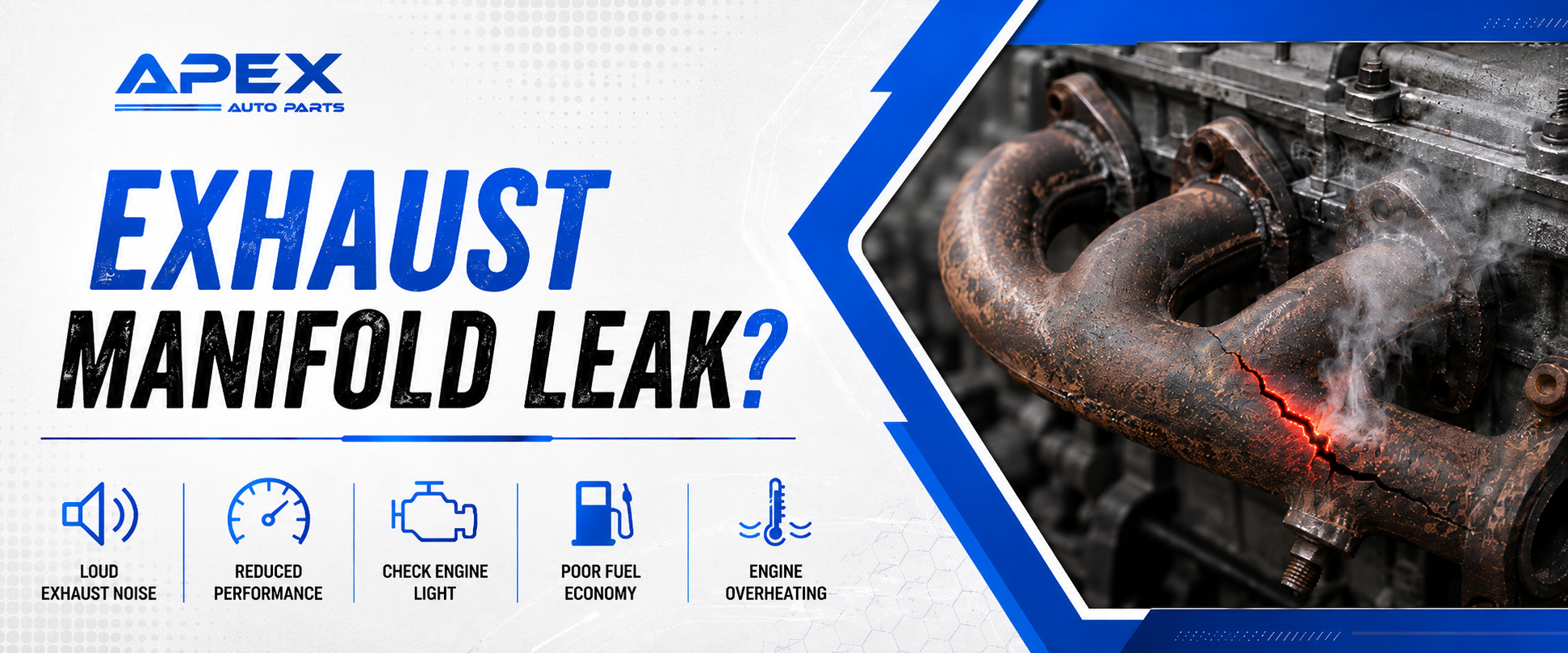
You may be able to drive for a short time with a small exhaust manifold leak, but it is not a good idea to ignore it.
A leak can get worse over time. What starts as a small ticking noise can turn into a bigger crack, broken bolts, or damaged sensors.
Driving with an exhaust manifold leak can lead to:
- More fuel use
- Engine power loss
- Failed emissions test
- Heat damage
- Bad oxygen sensor readings
- Strong exhaust smell
- Possible cabin fumes
The biggest concern is safety. Exhaust gases should exit through the rear exhaust pipe. If they escape near the engine, they may enter the cabin through vents or gaps.
If you smell exhaust inside the car, do not ignore it.
How a Leak Affects Oxygen Sensors?
Modern cars use oxygen sensors to check exhaust gases. These sensors help the engine computer decide how much fuel to use.
If there is an exhaust manifold leak before the oxygen sensor, outside air can enter the exhaust stream. This can make the sensor think the engine is running lean.
The engine computer may then add more fuel. This can cause:
- Poor fuel economy
- Rough running
- Bad emissions
- Black smoke in some cases
- Spark plug fouling
- Catalytic converter stress
This is why an exhaust manifold leak can lead to problems that seem unrelated at first.
Can a Bad Exhaust Manifold Damage Other Parts?
Yes, a bad exhaust manifold can damage other parts if ignored. The escaping gases are very hot. They can burn or weaken nearby parts.
Parts at risk include:
- Wiring
- Rubber hoses
- Plastic covers
- Oxygen sensors
- Catalytic converter
- Engine mounts
- Nearby gaskets
- Heat shields
A small leak can also cause broken manifold bolts. Once bolts break, repair becomes harder and more costly.
If the exhaust manifold gasket leaks for a long time, hot gas can erode the surface of the engine head or the manifold. This can make sealing harder later.
Exhaust Manifold Leak Vs Other Exhaust Problems?
Not every loud exhaust sound comes from the Exhaust Manifold. Other exhaust parts can also leak or fail.
A leak near the rear of the car may come from the silencer or exhaust pipe. A leak under the middle of the car may come from a joint or flex pipe.
An exhaust manifold leak is usually heard near the engine. It often makes a ticking sound, especially during cold starts.
Signs that point more toward the Exhaust Manifold area include:
- Noise from the engine bay
- Ticking when cold
- Smell from the front of the car
- Check engine light
- Power loss
- Heat marks near the manifold
- Failed exhaust manifold gasket
A mechanic can confirm the exact location by checking for soot marks, sound, cracks, and gas escape points.
How Is an Exhaust Manifold Problem Checked?
A proper check starts with looking and listening.
A technician may check:
- Cracks in the Exhaust Manifold
- Black soot around the gasket area
- Loose or broken bolts
- Burn marks near the engine
- Damaged exhaust manifold gasket
- Exhaust smell
- Engine fault codes
- Oxygen sensor readings
Sometimes leaks are easier to find when the engine is cold because the gap is larger before the metal expands.
A smoke test may also be used to find leaks. This helps show where gases are escaping.
Repair Options for a Bad Exhaust Manifold
The right repair depends on what is damaged.
1. Replacing the Exhaust Manifold Gasket
If only the exhaust manifold gasket is bad, replacing the gasket may fix the issue. This can restore the seal and stop the leak.
But the manifold surface must be checked. If it is warped or cracked, a new gasket alone may not be enough to last.
2. Replacing the Exhaust Manifold
If the Exhaust Manifold is cracked, severely rusted, or warped, it may need to be replaced. A cracked manifold usually cannot seal properly for long.
3. Replacing Bolts or Studs
Broken bolts or studs must be removed and replaced. This can take time, especially if they are rusted or snapped inside the engine head.
4. Checking Nearby Parts
After fixing an exhaust manifold leak, it is wise to check oxygen sensors, wiring, and heat shields. These parts may have been exposed to extra heat.
Why Quality Parts Matter?
The Exhaust Manifold deals with high heat and pressure every day. A poor-quality part may not last. A weak exhaust manifold gasket may fail early, leading to the same issue again.
When buying replacement engine parts, quality matters more than saving a few pounds at the start. A poorly fitting part can cause leaks, noise, and repeated repairs.
Apex Auto Parts sells car engine parts in UK, helping drivers and repairers find replacement parts for engine repair needs. When choosing an exhaust manifold or exhaust manifold gasket, always make sure the part matches your vehicle correctly
How to Prevent Exhaust Manifold Problems?
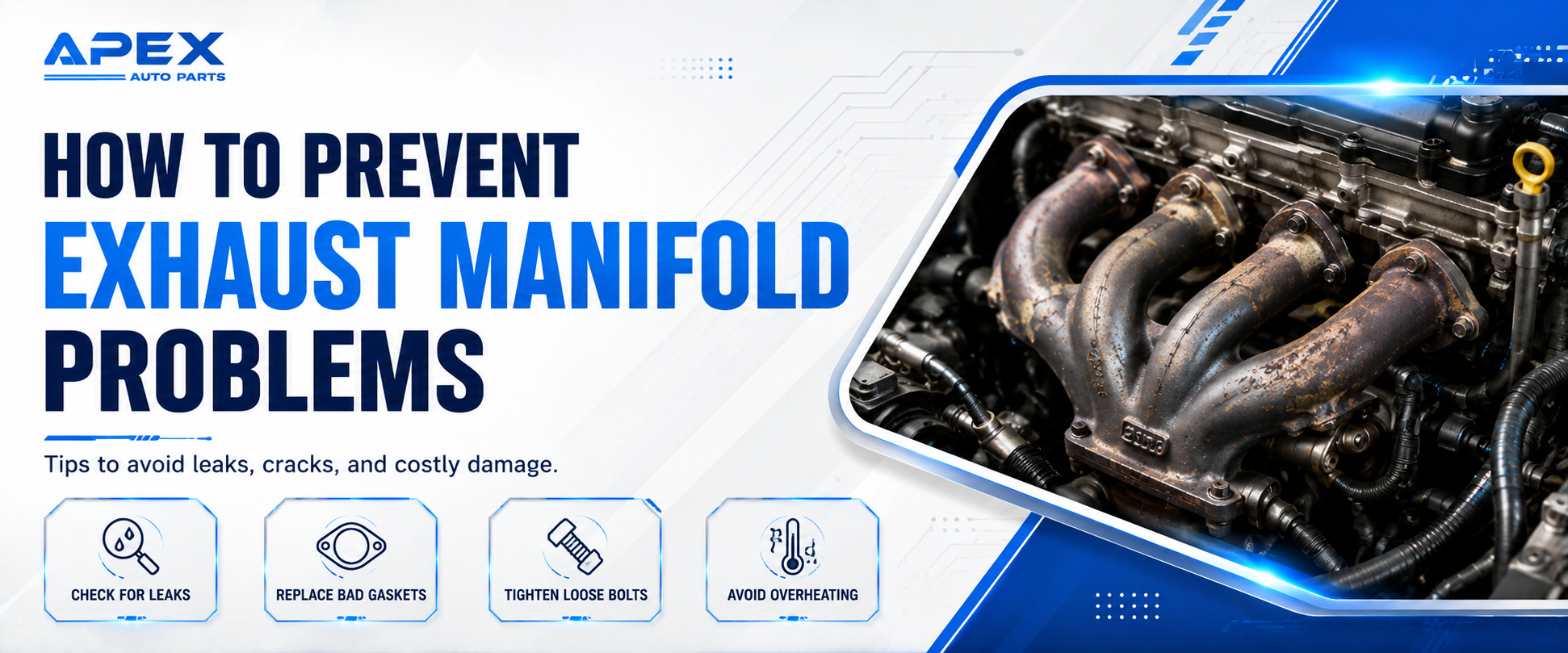
Some wear is normal with age, but you can reduce the chance of serious problems by paying attention early.
Helpful steps include:
- Listen for ticking noises during cold starts.
- Do not ignore exhaust smells.
- Fix small leaks early.
- Use good-quality replacement parts.
- Check manifold bolts during engine work.
- Replace damaged gaskets properly.
- Avoid poorly fitting parts.
- Get warning lights checked early.
Catching exhaust manifold leak symptoms early can save money and protect other engine parts.
When Should You Replace the Exhaust Manifold?
You may need to replace the Exhaust Manifold if it is cracked, warped, badly rusted, or leaking even after a new gasket.
A replacement may also be needed if the mounting points are damaged or the manifold surface no longer seals properly.
Sign replacement may be needed, including:
- Visible crack
- Strong exhaust leak
- Broken mounting area
- Repeated gasket failure
- Heavy rust
- Loud ticking that returns after repair
- Poor fit with the new gasket
A proper check should be done before replacement. Sometimes the issue is only the exhaust manifold gasket, but sometimes the full manifold is the problems.
Why Ignoring the Problem Costs More?
Many drivers ignore early exhaust manifold leak symptoms because the car still runs. But this can be a mistake.
A small leak can lead to:
- Bigger cracks
- Broken bolts
- Sensor damage
- Higher fuel bills
- Failed MOT emissions
- Heat damage
- Poor engine performance
- More costly labor
Fixing the issue early is usually easier than waiting until more parts are damaged.
The Exhaust Manifold may not be the biggest part of the engine, but when it fails, it can affect the whole driving experience.
Final Thoughts
A bad exhaust manifold can cause more than a loud noise. It can reduce power, waste fuel, trigger warning lights, and damage nearby parts. A failed exhaust manifold gasket or an exhaust manifold leak should not be ignored.
The most common exhaust manifold leak symptoms include ticking noise, a burning smell, poor acceleration, a rough idle, increased fuel consumption, and exhaust fumes near the engine. If you notice these signs, it is better to check the problem early.
Your engine needs a smooth path for exhaust gases to leave. When that path leaks, performance suffers. Choosing the right replacement parts and fixing the issue properly can help your car run more smoothly, safely, and reliably.
For UK car owners looking for engine parts online, Apex Auto Parts is a useful place to find replacements that match your repair needs.
FAQs About Exhaust Manifold Problems
1. What are the most common exhaust manifold leak symptoms?
The most common exhaust manifold leak symptoms include a ticking noise from the engine, poor acceleration, a burning smell, a rough idle, increased fuel consumption, and exhaust fumes near the front of the car. The noise is often louder when the engine is cold and may reduce once the engine warms up.
2. Can an exhaust manifold leak cause loss of power?
Yes, an exhaust manifold leak can cause power loss. When gases escape too early, the engine may get wrong oxygen sensor readings. This can affect the fuel mixture, making the car feel weak, slow, or rough when you press the accelerator.
3. Is it safe to drive with a leaking Exhaust Manifold?
Driving with a leaking exhaust manifold is not a good idea. A small leak may seem harmless, but it can grow worse. Exhaust fumes may also enter the cabin, which can be unsafe. It is best to get the leak checked and repaired early.
4. What does a bad exhaust manifold gasket sound like?
A bad exhaust manifold gasket often makes a ticking or tapping noise near the engine. The sound is usually clearer during cold starts. As the engine warms up, the metal expands, so the noise may become quieter, but the leak can still be there.
5. Can a bad exhaust manifold increase fuel use?
Yes, a bad exhaust manifold can increase fuel use. If there is a leak, the oxygen sensor may send false readings to the engine computer. The car may then use more fuel than necessary, which can raise fuel costs over time.
6. What causes an exhaust manifold gasket to fail?
An exhaust manifold gasket can fail due to heat, age, poor fit, loose bolts, or engine vibration. The gasket must withstand very hot gases without burning, cracking, or losing its seal over time. Once it fails, exhaust gases can leak out.
7. Can an exhaust manifold leak trigger the check engine light?
Yes, an exhaust manifold leak can trigger the check engine light. The leak can affect oxygen sensor readings, leading the engine computer to think there is a fuel mixture problem. This may lead to fault codes linked to emissions or sensor readings.
8. How do I know if my Exhaust Manifold is cracked?
A cracked Exhaust Manifold may cause ticking noise, exhaust smell, power loss, and soot marks near the crack. You may also notice a louder engine sound from the front of the car. A proper visual check is needed to confirm the crack.
9. Can a leaking exhaust manifold damage the engine?
A leaking Exhaust Manifold may not destroy the engine right away, but it can damage nearby parts. Hot gases can harm wires, hoses, sensors, and gaskets. It can also cause poor fuel mixture, bad emissions, and extra stress on the exhaust system.
10. Should I replace the exhaust manifold or just the gasket?
It depends on the damage. If only the exhaust manifold gasket has failed, replacing the gasket may be enough. But if the Exhaust Manifold is cracked, warped, or severely rusted, the entire part may need to be replaced to stop the leak properly.