
 info@apexautoparts.co.uk
 +44 203 915 7535
 Safe & Fast Shipping
 Whish List
 Compare
 Sign In

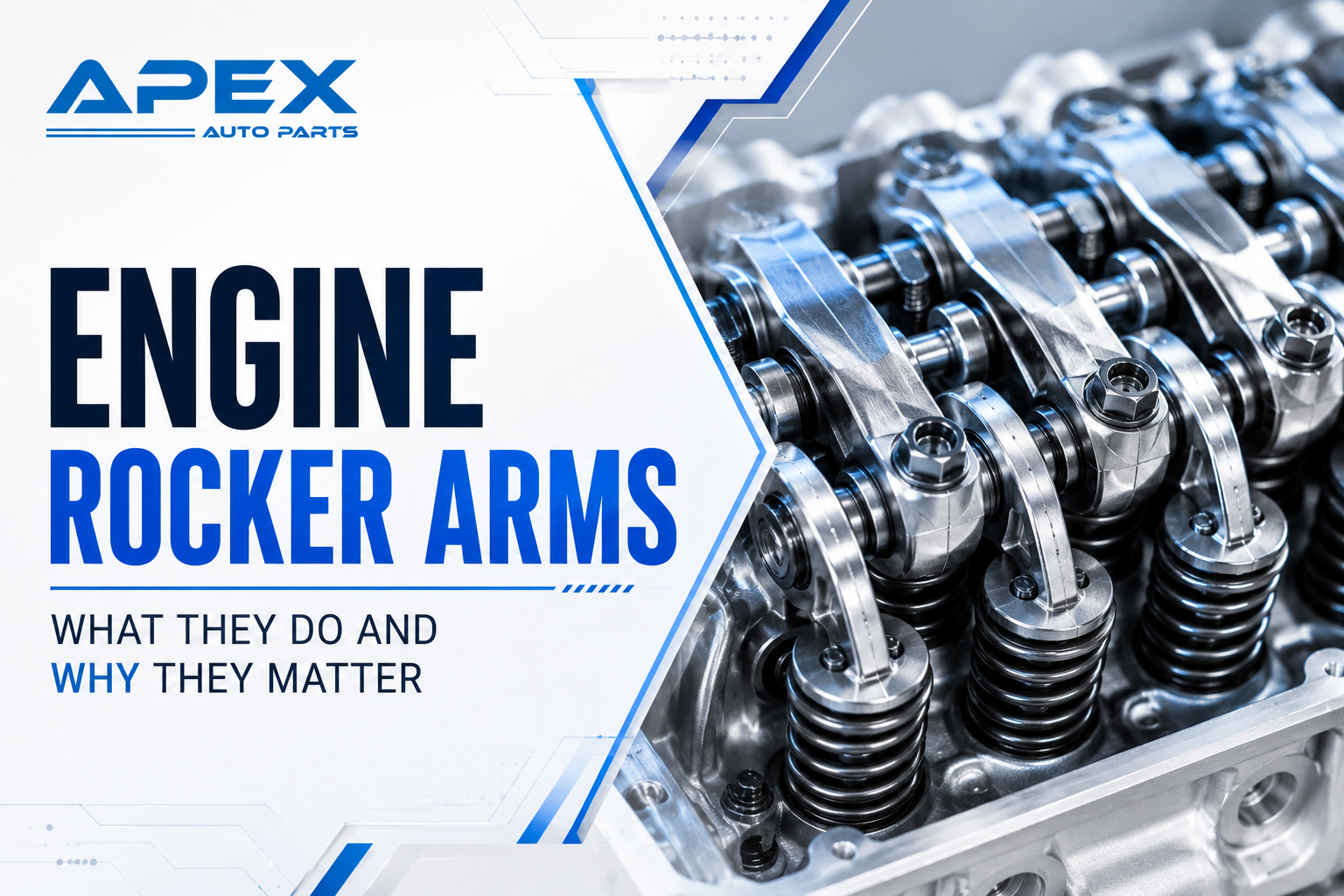
Most drivers do not think about rocker arms until the engine starts making noise. You may hear a ticking sound from the top of the engine. The car may feel weak. The engine may misfire. Sometimes the warning light comes on, and the problem feels serious fast.
A rocker arm is a small engine part, but it has a very important job. It helps open and close the engine valves at the right time. These valves let air and fuel in and let exhaust gases out. If the rocker arm is worn, loose, broken, or not moving properly, the engine cannot breathe the way it should.
That is why engine rocker arm problems should not be ignored.
Many drivers hear rocker arm noise and keep driving because the car still runs. That can be a costly mistake. A small ticking sound can turn into poor engine performance, rough running, valve damage, camshaft wear, or even major engine repair.
Some engines are more known for this issue than others. For example, Audi S5 rocker arm failure is a topic many owners search for because certain Audi V6 engines can suffer from rocker arm wear or failure. If the problem is caught early, the repair may be more controlled. If it is ignored, it can become much more expensive.
This guide explains what rocker arms do, why they matter, common rocker arm failure symptoms, what causes failure, and what you should do if your engine starts making ticking or tapping sounds.
Apex Auto Parts helps UK drivers find suitable car engine parts. When it comes to engine parts, correct fitment and high quality matter. Guessing the wrong part can waste money and make the problem worse.
What is a rocker arm?
A rocker arm is a part located at the top of the engine. It sits between the camshaft system and the engine valves, depending on the engine design.
Its job is to help transfer movement so the valves can open and close. When the camshaft turns, it pushes or acts through other parts. The rocker arm then moves and presses on the valve. This lets the valve open at the right time. When the pressure is released, the valve closes again.
In simple words, the rocker arm helps the engine breathe.
The engine needs air to enter and exhaust gases to leave. This must happen at the right moment. If the rocker arm does not move correctly, the valve timing and valve movement can be affected.
A healthy rocker arm helps with:
- Smooth valve movement
- Proper air and fuel flow
- Clean exhaust gas flow
- Good engine power
- Smooth idle
- Better fuel use
- Lower engine wear
A bad rocker arm can cause the opposite. The engine may tick, misfire, lose power, or run rough.
What does an engine rocker arm do?
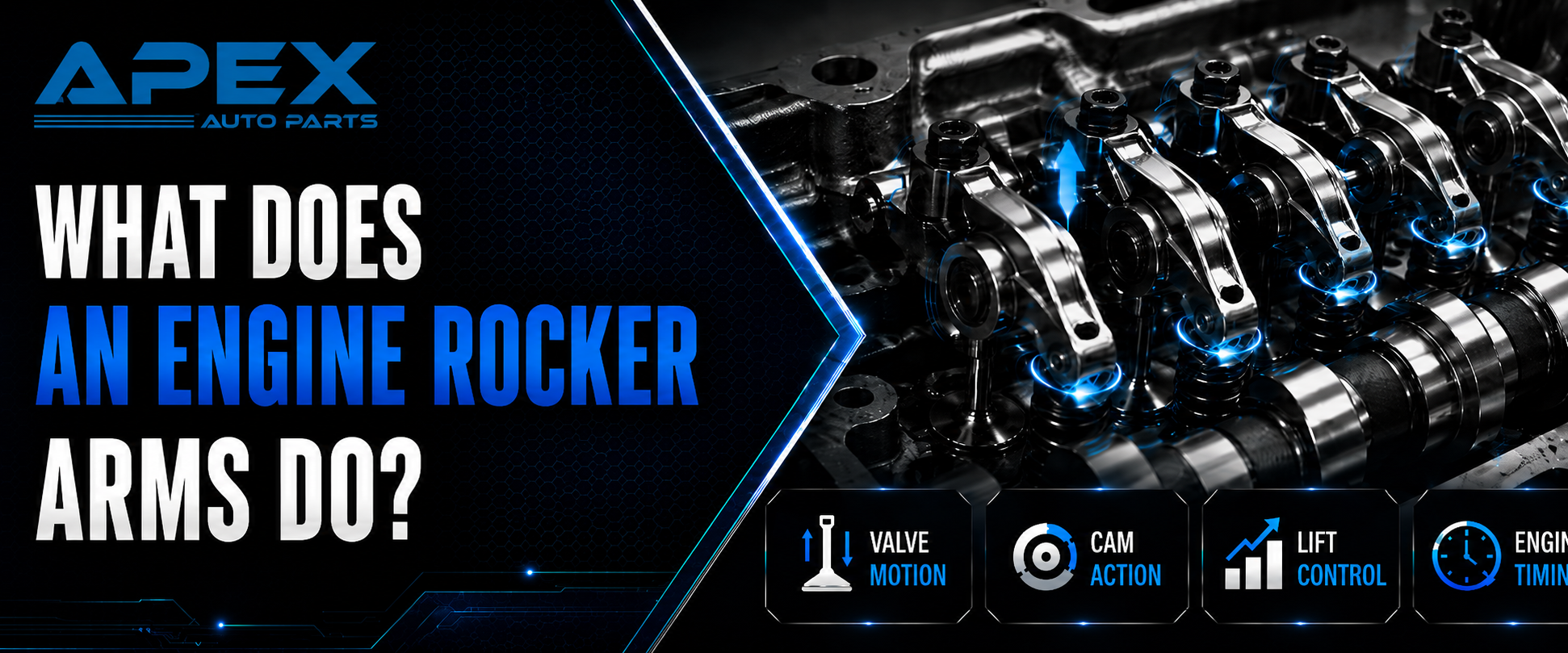
An engine rocker arm works like a small lever. One side receives force from the camshaft or pushrod. The other side opens the valve.
This movement happens very fast. When your engine is running, the rocker arms may move many times per second. They work under heat, pressure, and constant friction.
The job sounds simple, but it must be exact. A small amount of wear can change how the valve opens. Excessive wear can cause noise, poor performance, or damage to related parts.
The engine rocker arm helps control:
- Intake valve opening
- Exhaust valve opening
- Valve lift
- Valve timing support
- Smooth running
- Engine breathing
- Power delivery
If one rocker arm fails, one cylinder may not work properly. If more than one fails, the engine can run very badly.
Why Rocker Arms Matter So Much?
A rocker arm may not look like a big part, but it is part of the engine valve train. The valve train is the system that controls the valves.
If this system is not working properly, the engine cannot run properly.
A worn rocker arm can affect the amount of air entering the cylinder. It can also affect how exhaust gases leave the engine. This can lead to poor combustion, meaning the fuel does not burn as cleanly or as strongly as it should.
That can cause:
- Poor acceleration
- Rough idle
- Engine misfire
- Ticking noise
- Loss of power
- Higher fuel use
- Engine warning light
- Damage to valves or camshaft
- Metal particles in oil if wear is severe
This is why a small sound from the top of the engine should be taken seriously. Rocker arm noise is often a warning that something is loose, worn, dry, or failing.
Common rocker arm noise
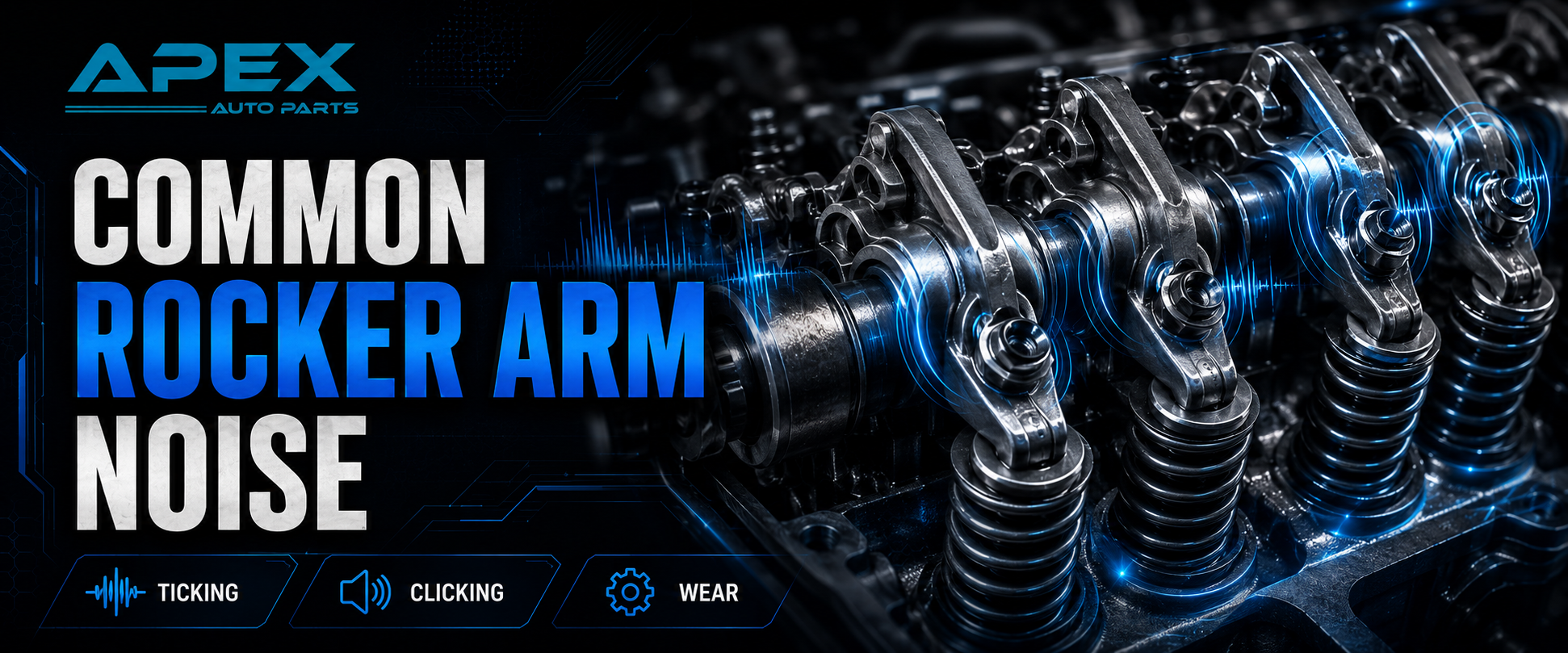
One of the first signs of rocker arm trouble is noise. Many drivers describe rocker arm noise as ticking, tapping, clicking, or rattling from the top of the engine.
The sound may be louder when the engine is cold. It may fade as the engine warms up. In other cases, it may stay constant or get louder when you rev the engine.
Common types of rocker arm noise include:
- Light ticking from the top of the engine
- Fast tapping that follows engine speed
- Metallic clicking under the valve cover
- Rattle during start-up
- Noise that gets worse with higher revs
- Tick that returns after oil level drops
A ticking noise does not always mean the rocker arm itself is bad. It may be caused by low oil, old oil, blocked oil passages, worn lifters, loose valve clearance, camshaft wear, or a failing rocker arm.
That is why diagnosis matters. Do not replace parts based only on sound.
Main rocker arm failure symptoms
The most common rocker arm failure symptoms include noise, poor valve movement, and engine performance problems.
Watch for these signs:
- Ticking or tapping from the engine
- Rough idle
- Engine misfire
- Loss of power
- Poor acceleration
- Engine warning light
- Increased fuel use
- Poor running when cold
- Metallic noise from the valve cover area
- Low oil pressure warning in some cases
- Engine shaking
- Unusual vibration
- Poor emissions
- Metal flakes in oil if wear is serious
If one rocker arm is not working correctly, one valve may not open fully. This can make the cylinder weak. The engine may then misfire or feel uneven.
If the rocker arm is severely damaged, it may stop the valve from moving properly. In serious cases, it can damage the camshaft, valve stem, spring, or other parts in the valve train.
What Causes Rocker Arm Failure?
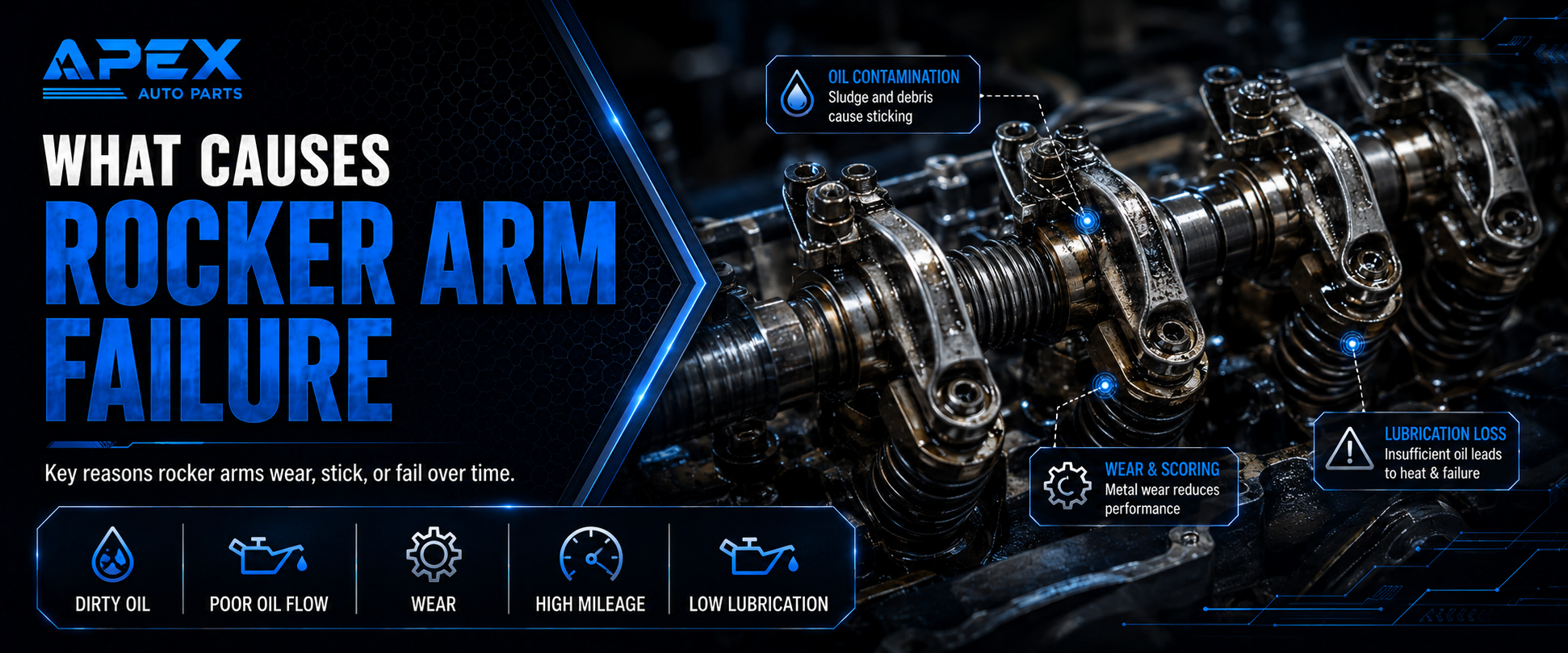
Rocker arms can fail for several reasons. Some failures occur slowly due to wear. Others occur faster due to poor oil flow, incorrect parts, or engine design issues.
Common causes include:
- Low engine oil
- Dirty engine oil
- Wrong oil grade
- Poor oil pressure
- Blocked oil passages
- Worn lifters
- Worn camshaft lobes
- Weak valve springs
- Overheating
- High mileage
- Poor quality replacement parts
- Wrong part fitted
- Lack of regular oil changes
- Engine design weakness in some models
Oil is very important. Rocker arms need proper lubrication because they move constantly. If oil does not reach them properly, friction increases. Heat builds up. Metal parts wear faster.
Old or dirty oil can also cause trouble. If oil breaks down, it cannot protect parts as well. If sludge builds up, it can block small oil paths inside the engine.
This is why regular oil changes matter. A missed oil change can affect small moving parts long before the driver notices a big problem.
Low Oil and Rocker Arm Problems
Low oil is one of the most common reasons valve train parts suffer. The engine rocker arm depends on oil to reduce friction and heat.
If the oil level drops too low, the top of the engine may not get enough lubrication. This can lead to ticking, wear, and damage.
Signs that oil may be part of the issue include:
- Ticking noise after start-up
- Noise gets better after an oil top-up
- Oil warning light
- Oil level below minimum
- Dirty oil on dipstick
- Long time since last service
If you hear rocker arm noise, check the oil level first. Do not keep driving hard with low oil. If the oil level is fine but the noise remains, the engine needs a proper check.
Dirty Oil and Poor Oil Flow
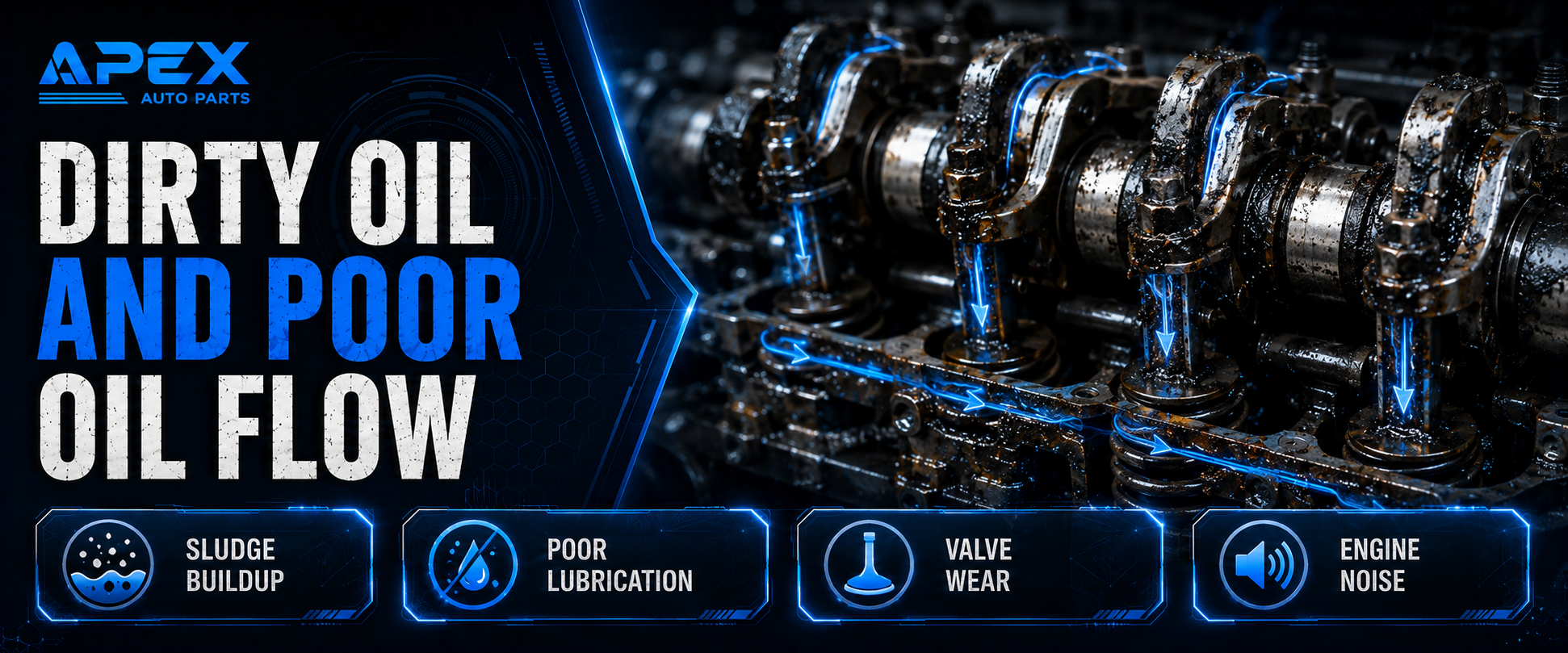
Even if the oil level is correct, dirty oil can still cause problems. Oil carries heat and dirt away from moving parts. Over time, oil becomes dirty and loses strength.
Dirty oil can create sludge. Sludge can block tiny oil passages that feed the rocker arms, lifters, and camshaft area.
Poor oil flow can cause:
- Ticking noise
- Faster rocker arm wear
- Lifter noise
- Camshaft wear
- Rough running
- Poor engine life
A cheap oil change is much cheaper than engine repair. If your car has a history of missed services, do not ignore top-end engine noise.
Worn Lifters and Rocker Arm Noise
A lifter is another part of the valve train. In many engines, lifters help control the movement between the camshaft and rocker arm. If a lifter fails, it can cause noise that sounds like a bad rocker arm.
This is why diagnosis is important.
A worn lifter may cause:
- Ticking at start-up
- Ticking that changes with engine speed
- Rough running
- Misfire
- Poor valve movement
Sometimes the rocker arm is blamed when the lifter is the real cause. Other times, a bad lifter can damage the rocker arm. A mechanic should check both parts before repair.
Camshaft Wear and Rocker Arm Damage
The camshaft works closely with the valve train. If the camshaft lobe wears down, it may not move the rocker arm properly. If the rocker arm roller wears or sticks, it can damage the camshaft.
These parts rely on each other.
Possible signs of camshaft or rocker arm wear include:
- Loud ticking
- Misfire on one cylinder
- Loss of power
- Metal in oil
- Engine warning light
- Poor compression in some cases
If camshaft wear is found, replacing only the rocker arm may not fix the full issue. Related parts should be checked to ensure the same fault does not recur.
Audi S5 rocker arm failure
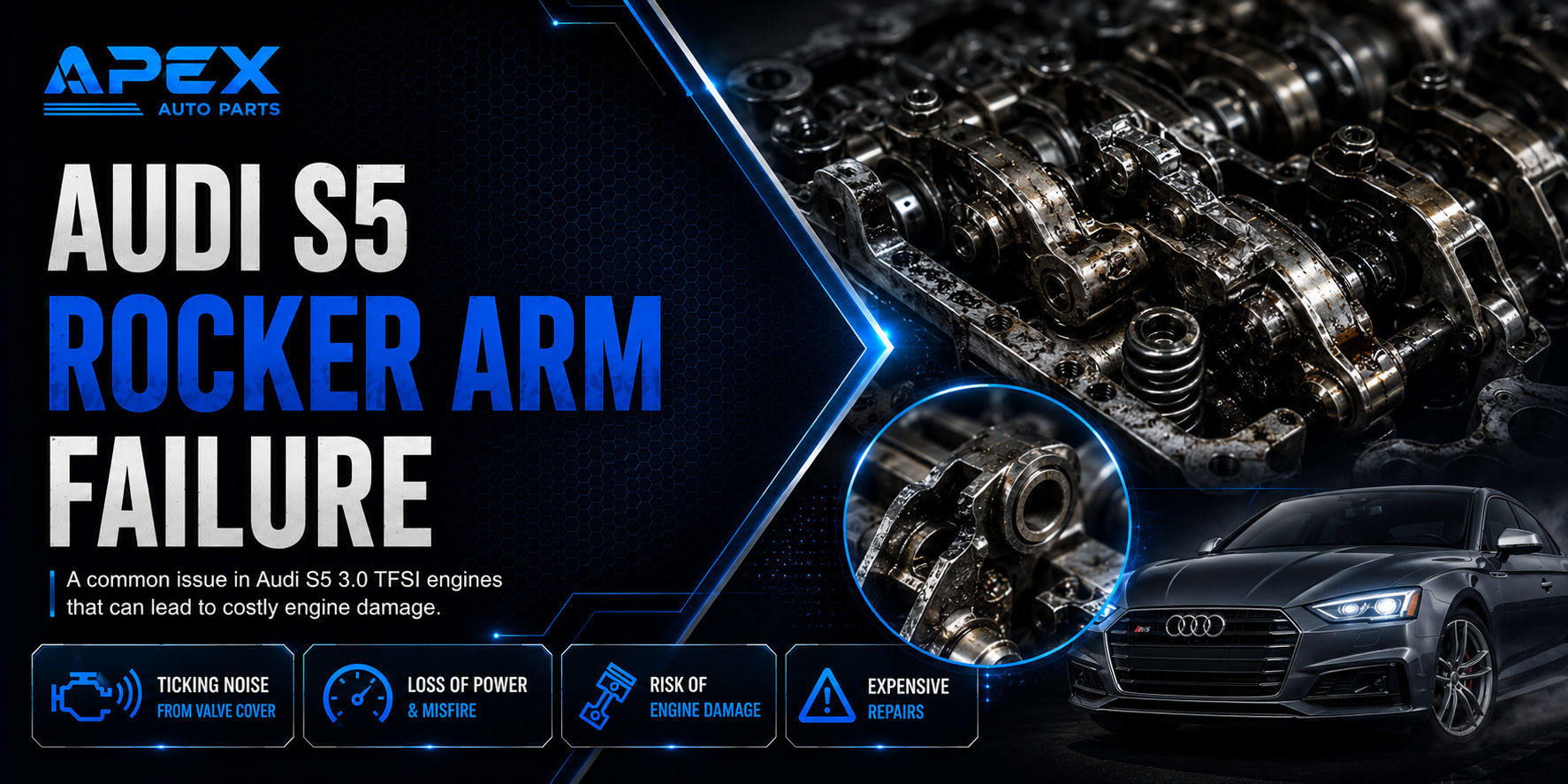
Audi S5 rocker arm failure is a common search topic, as some owners have reported rocker arm wear or failure, especially in certain V6 engines. The issue can show as a ticking noise, misfires, rough running, or metal wear inside the valve train.
For Audi S5 owners, the warning signs should not be ignored. A small tick from the top of the engine may be easy to dismiss, but it can point to valve train wear.
Possible Audi S5 rocker arm failure signs include:
- Ticking noise from the top of the engine
- Misfire fault codes
- Rough idle
- Loss of power
- Engine warning light
- Metal particles in oil
- Noise that gets worse over time
If you suspect a rocker arm failure in an Audi S5, avoid guessing. These engines need careful inspection. A mechanic may need to check the valve cover area, camshaft condition, rocker arms, lifters, and oil condition.
Before buying parts, always confirm the exact Audi model, year, engine code, and part number. Small differences can matter.
Why Should Audi S5 Owners Should Act Early?
If an Audi S5 rocker arm failure is caught early, the repair may be limited to the worn parts and related checks. If left unchecked, the damage may spread to the camshaft or other valve train components.
Audi engines can be expensive to repair when problems are left too long. Labor can also be high because access may be more involved than on simpler engines.
Early action can help reduce:
- Repeat repairs
- Camshaft damage
- Misfire damage
- Poor running
- Higher labor cost
- Risk of deeper engine damage
If your Audi S5 has a top-end ticking sound, do not just turn the radio up. Get it checked before the noise becomes a bigger problem.
Can You Drive With a Bad rocker arm?
You may be able to drive for a short time with a weak or noisy rocker arm, but it is not wise to ignore it. If the part gets worse, it can damage the camshaft, valve, spring, or lifter.
Driving with a bad rocker arm can lead to:
- More noise
- Misfire
- Loss of power
- Engine damage
- Poor fuel use
- Breakdown
- Higher repair cost
If the engine is only making a small tick, drive gently and get it checked soon. If the engine is misfiring, shaking, losing power, or making a loud metallic noise, stop driving and get help.
How Mechanics Check Rocker Arm Problems?
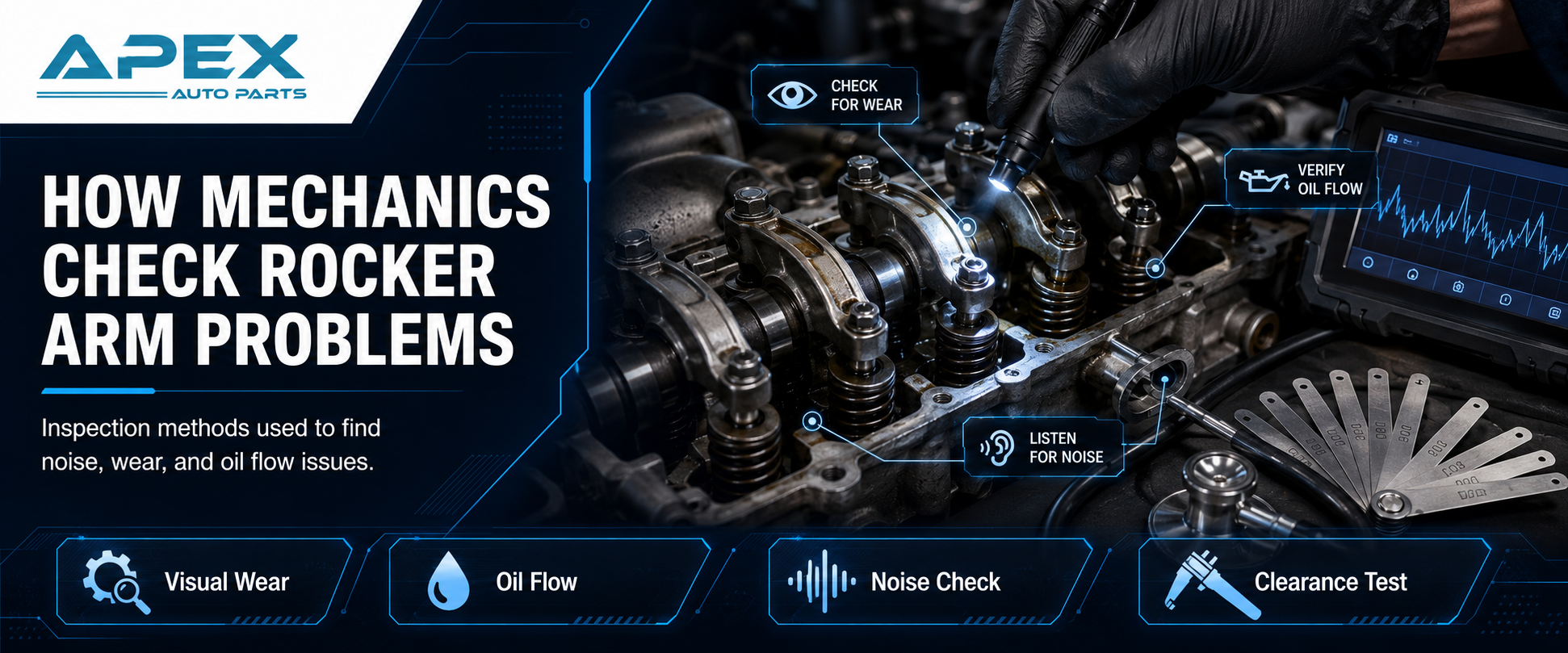
A good mechanic will not just listen and guess. They will check the engine step by step.
Common checks include:
- Listening to the noise location
- Checking oil level
- Checking oil condition
- Scanning for fault codes
- Checking misfire data
- Removing the valve cover if needed
- Inspecting rocker arms
- Checking lifters
- Checking camshaft lobes
- Checking valve springs
- Looking for metal particles in oil
- Checking oil pressure if needed
The goal is to find the real cause. If the oil system caused the wear, replacing only the rocker arm may not be enough. If the camshaft is damaged, that must be handled too.
Why Guessing Can Cost More?
Many drivers hear rocker arm noise and buy parts right away. That can be a mistake.
The noise may be from:
- Low oil
- Old oil
- Hydraulic lifter
- Camshaft wear
- Timing chain issue
- Injector noise
- Exhaust leak
- Loose valve clearance
- Actual rocker arm wear
Some of these problems sound similar. A wrong guess can waste money. It can also delay the real repair.
A proper check saves time and helps avoid replacing good parts.
Replacing an engine rocker arm
Replacing an engine rocker arm can be simple on some engines and more difficult on others. It depends on the engine layout and the amount of access required.
The repair may involve:
- Removing the engine cover
- Removing the valve cover
- Setting the engine position correctly
- Removing related valve train parts
- Replacing the rocker arm
- Checking lifters and camshaft
- Replacing gaskets
- Refilling or checking oil
- Testing the engine after repair
On some engines, timing parts may need to be handled carefully. That means the job should be done by someone who understands the engine.
A bad repair can cause more problems than the original fault.
Should You Replace All Rocker Arms or Only One?
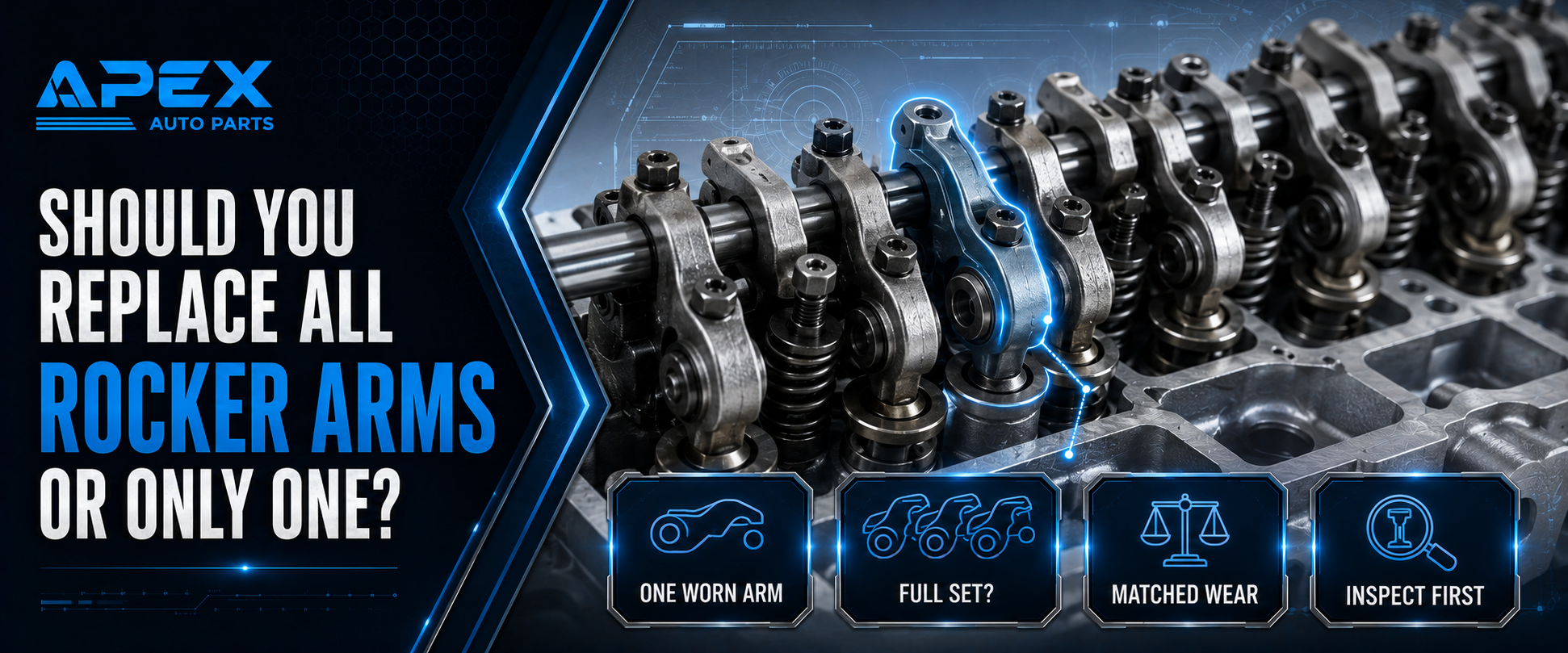
This depends on the engine, mileage, damage level, and mechanic advice.
If one rocker arm is worn but the others are healthy, replacing only one may be enough. But if several are worn or the engine has known failure issues, replacing more parts may be smarter.
Things to consider:
- How many rocker arms are worn
- Mileage of the engine
- Oil service history
- Camshaft condition
- Labor cost
- Known engine issues
- Whether the part design has been updated
If labor is high, some owners choose to replace a full set on that bank or section to avoid paying for the same job again later.
Why Quality Parts Matter?
Rocker arms operate inside the engine under heat, pressure, and high speed. Poor quality parts may not last. A cheap part can wear out quickly and damage other, more expensive parts.
A good rocker arm should:
- Fit correctly
- Move smoothly
- Match the engine design
- Handle heat and pressure
- Work with the camshaft and lifter properly
- Last under normal oil service
When buying an engine rocker arm, check the exact vehicle details. Use the registration, VIN, engine code, or part number where possible.
Apex Auto Parts helps UK drivers source suitable car engine parts. With internal engine parts, correct matching is not optional. It is the difference between a proper repair and a recurring problem.
How To Prevent Rocker Arm Problems
You cannot stop every engine part from wearing out, but good maintenance can lower the risk.
To help protect rocker arms:
- Use the correct engine oil
- Change oil on time
- Do not ignore low oil warnings
- Check oil level often
- Fix oil leaks early
- Let the engine warm up before hard driving
- Do not ignore ticking sounds
- Use quality parts
- Keep service records
- Repair misfires quickly
Oil care is one of the biggest things. Rocker arms need steady oil flow. If the oil is wrong, dirty, or low, wear can occur more quickly.
What To Do If You Hear Rocker Arm Noise
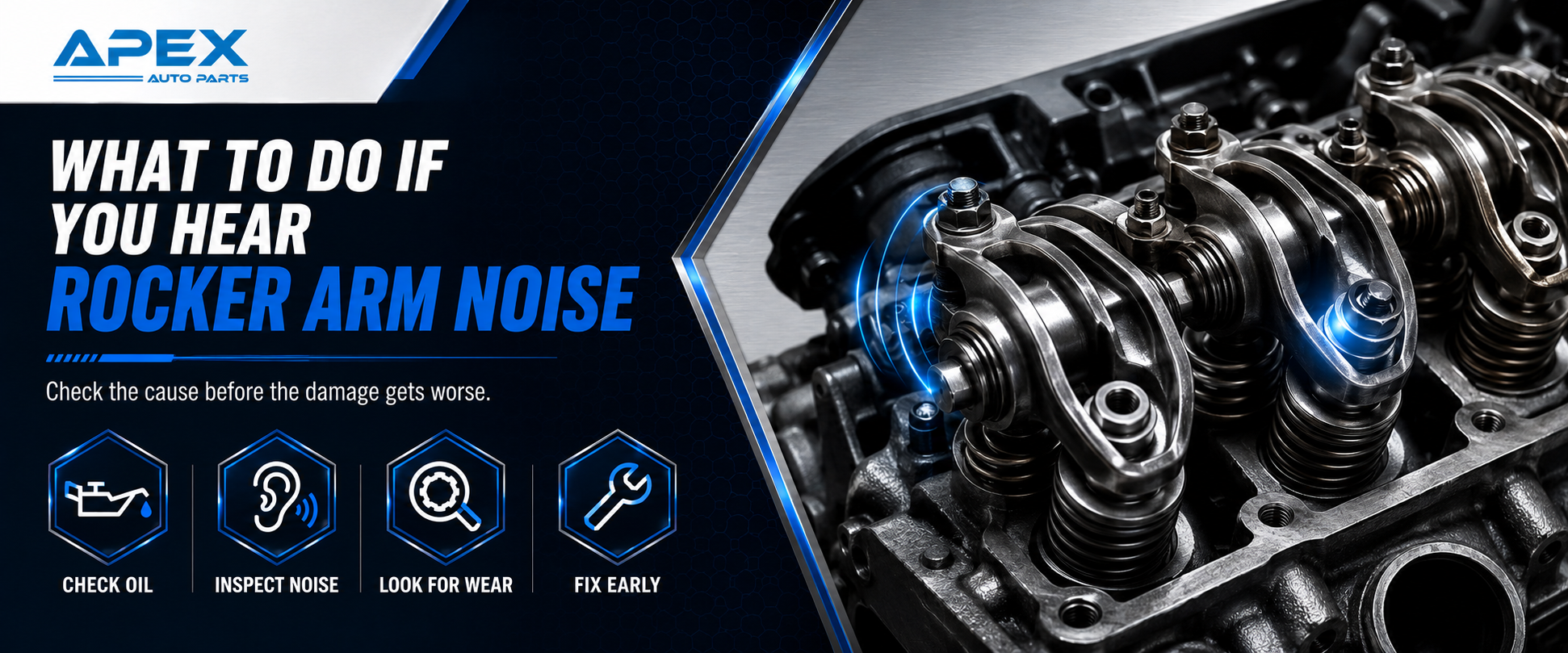
If you hear ticking or tapping from the engine, do not panic, but do not ignore it either.
Do this first:
- Check the oil level
- Check when the noise happens
- Notice if it is louder, colder, or hotter
- Avoid hard driving
- Listen if the noise changes with engine speed
- Check for warning lights
- Book a proper inspection
If the noise is loud, sudden, or accompanied by misfire or loss of power, stop driving and get the car checked. Serious valve train faults can get worse quickly.
Signs You Should Stop Driving
Some signs mean the car needs attention right away.
Stop driving or avoid further use if:
- The engine is misfiring badly
- The oil warning light is on
- The ticking becomes a loud knocking
- The engine loses power suddenly
- There is metal in the oil
- The engine warning light is flashing
- The car shakes heavily
- The noise started suddenly after the low oil
These signs can point to serious engine trouble. Driving more can increase repair costs.
Final Thoughts
A rocker arm is a small part, but it plays a big role in how your engine runs. It helps open and close the valves, allowing the engine to breathe properly. If the rocker arm wears or fails, the engine can become noisy, weak, rough, or unreliable.
Common rocker arm failure symptoms include a ticking noise, rough idle, misfires, loss of power, poor acceleration, and engine warning lights. Rocker arm noise should never be ignored, especially if it gets louder or is accompanied by poor running.
For Audi owners, Audi S5 rocker arm failure is worth taking seriously. If an Audi S5 develops top-end ticking or misfire issues, an early inspection can help prevent more costly valve-train damage.
The best repair starts with a proper check. Do not guess. Check the oil, inspect the valve train, confirm the fault, and use the right parts. A correctly fitted quality engine rocker arm can help restore smooth engine operation and protect related parts.
Apex Auto Parts supports UK drivers looking for suitable engine parts. When dealing with internal engine parts, correct fitment, good quality, and early action matter most.
FAQs About Rocker Arms
1. What does a rocker arm do in an engine?
A rocker arm helps open and close the engine valves. It transfers movement from the camshaft or pushrod to the valve. This lets air enter the engine and exhaust gases leave. If the rocker arm fails, the engine may tick, misfire, lose power, or run rough.
2. What causes rocker arm noise?
Rocker arm noise can be caused by low oil, dirty oil, worn lifters, worn camshaft parts, loose valve clearance, or a damaged rocker arm. The sound is often a ticking or tapping from the top of the engine. A proper inspection is needed before replacing parts.
3. What are common rocker arm failure symptoms?
Common rocker arm failure symptoms include a ticking noise, rough idle, misfires, loss of power, poor acceleration, engine warning light, and unusual vibration. In serious cases, metal particles may appear in the oil. These signs should be checked early to avoid bigger engine damage.
4. Is an Audi S5 rocker arm failure common?
Audi S5 rocker arm failure is a known concern that many owners search for, especially on some V6 engines. Symptoms may include a ticking noise, misfires, rough idle, or power loss. If you own an Audi S5 and hear top-end noise, get it inspected early.
5. Can I drive with a bad engine rocker arm?
Driving with a bad engine rocker arm is risky. The car may still move, but the fault can damage the camshaft, valves, lifters, or other valve train components. If the engine is noisy, misfiring, or losing power, avoid driving and get it checked.
6. How serious is rocker arm noise?
Rocker arm noise can be minor or serious, depending on the cause. Low oil or old oil may create ticking, but worn rocker arms or camshaft damage can become expensive. If the noise continues after checking the oil, the engine should be inspected by a mechanic.
7. How much does a rocker arm replacement cost?
The cost depends on the car, engine design, labor time, and whether other parts are damaged. Some rocker arms are easy to access, while others require more stripping down. If the camshaft, lifters, or gaskets also need replacement, the cost will be higher.
8. Can low oil cause rocker arm failure?
Yes, low oil can cause rocker arm failure. Rocker arms need oil to reduce friction and heat. If the oil level is low or the oil flow is poor, the rocker arm and related parts can wear quickly. Always check the oil level if you hear ticking.
9. Should all rocker arms be replaced together?
Not always. If only one rocker arm is damaged and the others are healthy, it can be replaced. But if several show wear, or labor is high, replacing a full set may make sense. The camshaft, lifters, and oil condition should also be checked.
10. How do I prevent rocker arm problems?
Use the correct oil, change it on time, check oil level often, fix leaks early, and do not ignore ticking sounds. Good oil flow protects the engine's rocker arms and other valve train components. Quality replacement parts also help prevent repeat failure.