
 info@apexautoparts.co.uk
 +44 203 915 7535
 Safe & Fast Shipping
 Whish List
 Compare
 Sign In

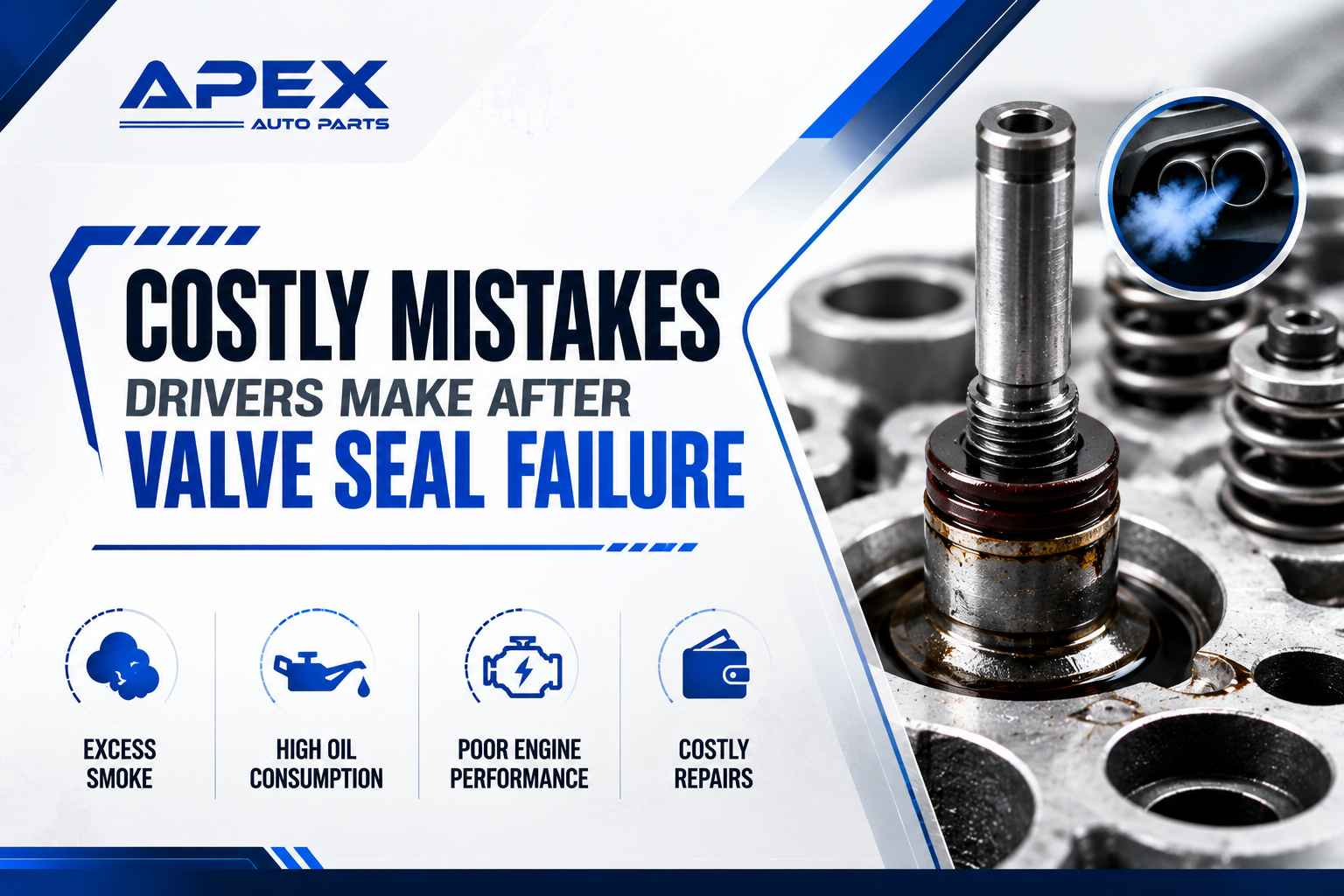
A small seal inside your engine can cause a big problem if it fails. That small part is called a valve stem seal. Many drivers do not think about it until their car starts smoking, using too much oil, or running rough.
Valve stem seals sit around the valve stems inside the engine. Their job is to control how much oil reaches the valve area. The valves need a small amount of oil to move smoothly, but too much oil in the wrong place can cause engine problems
When the seals wear out, oil can slip past them and enter the part of the engine where fuel burns. When engine oil mixes with fuel, it can produce blue smoke in the exhaust. It can also leave dirty carbon inside the engine.
This problem can start slowly. You may only see smoke for a few seconds when you start the car. You may notice the oil level dropping faster than before. You may smell burning oil. Some drivers ignore these early warnings because the car still drives.
That is where the real trouble starts.
If leaking valve stem seals are ignored, they can lead to more oil burning, dirty spark plugs, rough running, poor emissions, and costly damage to exhaust parts. The longer you wait, the more expensive the repair can become.
This guide explains the 7 costly mistakes drivers make after valve seal failure. It also covers common valve stem seal symptoms, clear signs of leaking valve stem seals, and when valve stem seal replacement may be needed.
Apex Auto Parts helps UK drivers find reliable car parts. For engine parts, correct fitment and good quality matter a lot. A small part fitted wrongly or replaced too late can cause a much bigger repair bill.
What are valve stem seals?
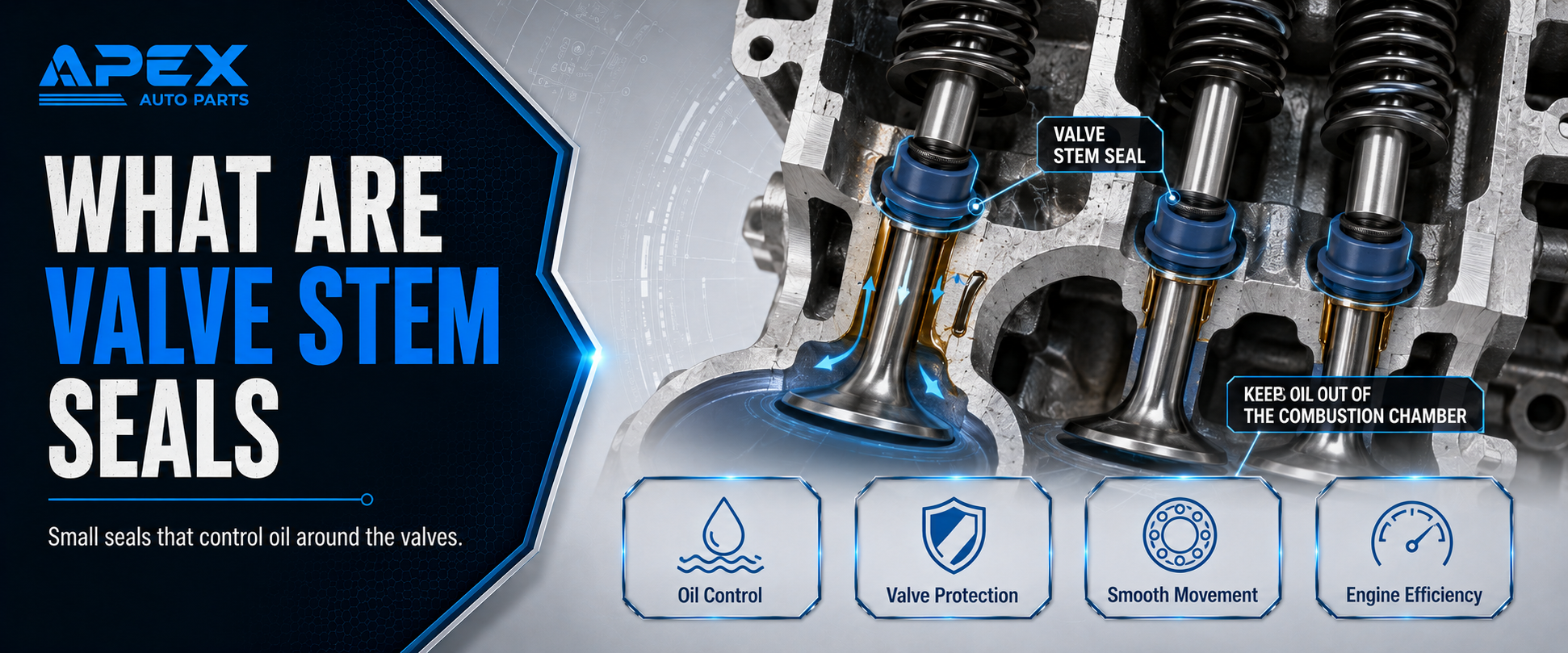
Valve stem seals are small seals fitted inside the engine cylinder head. They sit around the valve stems. The valve stems move up and down while the engine is running.
The seals help control how much oil passes around the valves. This is important because the valve area needs oil, but that oil should not enter the combustion chamber.
The combustion chamber is where fuel and air burn to make power. Engine oil is not supposed to burn there. When oil gets into that area, it can cause smoke, carbon buildup, and poor engine performance.
A healthy seal controls oil flow. A worn seal lets too much oil pass. That is when leaking valve stem seals become a problem.
These seals are small, but they work in a hot and busy part of the engine. Over time, they can become hard, cracked, loose, or worn. Heat, age, poor oil care, and engine wear can all make the seals fail sooner.
Why Valve Seal Failure Is a Serious Problem
Valve seal failure may not cause the car to stop right away. This is why many drivers put it off. The car may still start. It may still drive. It may still feel normal.
But oil burning is not normal.
When oil burns inside the engine, it can leave deposits on parts that should stay clean. These deposits can accumulate on valves, pistons, spark plugs, and exhaust components. The more oil the engine burns, the worse the buildup can become.
Ignoring valve stem seals symptoms can lead to:
- Blue smoke from the exhaust
- High oil use
- Dirty spark plugs
- Rough idle
- Engine misfires
- Poor fuel economy
- Poor emissions
- MOT failure
- Catalytic converter damage
- Oxygen sensor damage
- Loss of engine performance
The first warning may seem small. But if you keep driving without checking it, the problem can spread. A repair that could have been managed early may turn into a much larger job.
Common valve stem seal symptoms.
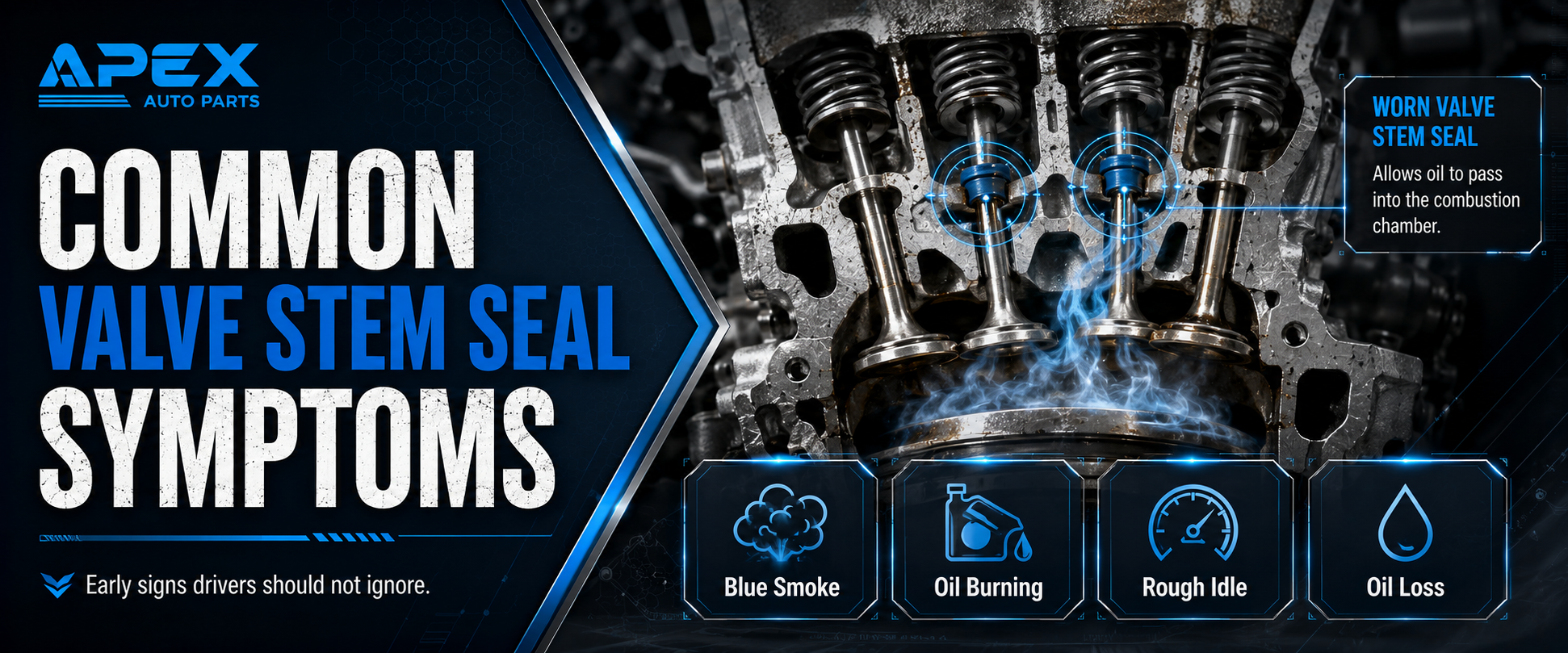
The most common valve stem seal symptoms are linked to oil burning. Some signs are easy to spot. Others may only show at certain times.
Common symptoms include:
- Blue smoke when starting the car
- Blue smoke after the car has been idling
- Smoke when driving away from traffic lights
- Higher oil use than normal
- Burning oil smell from the exhaust
- Rough idle
- Dirty or oily spark plugs
- Engine misfire
- Poor emissions result
- Smoke after going downhill and then pressing the accelerator
- Oil level dropping with no clear external leak
One of the clearest signs of valve stem seals leaking is blue smoke after the car has been parked. Oil can seep past worn seals while the engine is off. When you start the engine, the oil burns and smoke comes out of the exhaust.
Another common sign is smoke after idling. When the engine sits at traffic lights, oil can pass the worn seals. When you drive away, the oil burns and smoke appears.
These signs do not always mean the seals are the only problem. Other faults can also cause smoke. But they are strong signs that the engine needs checking.
Mistake 1: Ignoring Blue Smoke Because the Car Still Drives
The first costly mistake is ignoring blue smoke. Many drivers see smoke once or twice and think it is not a big deal.
They may say:
- The car still drives fine
- The smoke only happens sometimes
- The engine still has power
- There is no warning light
- It will probably clear up on its own
This is risky thinking.
Blue smoke often means the engine is burning oil. If the smoke appears at start-up or after idling, leaking valve stem seals may be the cause.
The car may still feel fine because the problem is still early. But the engine is already burning oil where it should not. If you keep ignoring it, the smoke may become worse. The oil level may drop faster. Spark plugs may become dirty. Exhaust parts may also suffer.
What you should do instead:
- Watch when the smoke appears
- Check if the smoke is blue, white, or black
- Check your engine oil level often
- Look for oil use changes
- Get the car checked early
- Do not wait for the warning light
Blue smoke is not something to ignore. Even if the car still drives, the engine is telling you something is wrong.
Mistake 2: Only Topping Up Oil and Not Fixing the Cause
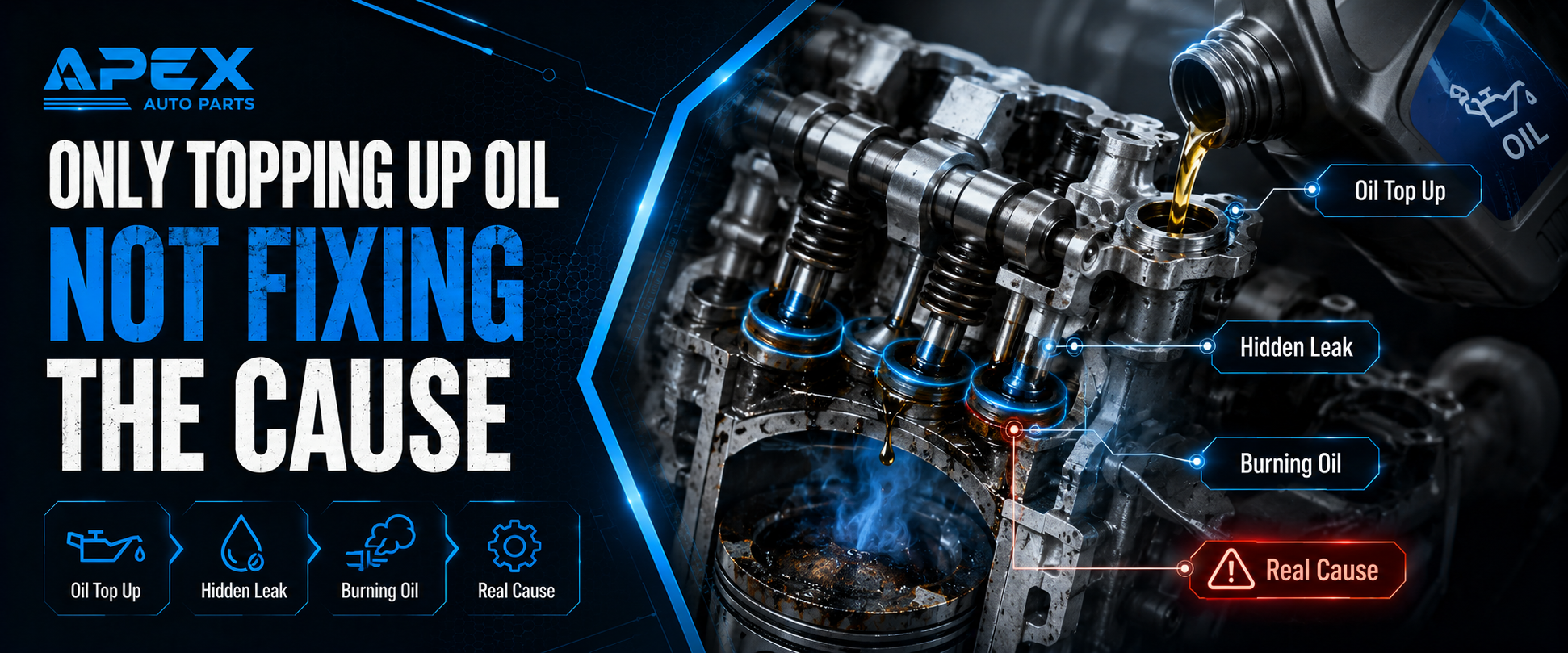
The second mistake is simply adding more oil without ever finding the cause. Some drivers keep a bottle of oil in the boot and top up whenever the level gets low.
This may seem like a cheap fix. But it is not a real fix.
If worn valve stem seals are letting oil into the combustion chamber, the engine will keep burning oil until the seals or the related problem are repaired. Adding oil only keeps the level safe for now. It does not stop the oil from burning.
This mistake can cost more later because:
- Oil use may keep getting worse
- Spark plugs may fail early
- The engine may start misfiring
- The car may fail emissions checks
- Exhaust parts can be damaged
- The real repair is delayed too long
There is another danger too. If you get used to topping up oil, you may forget to do so one day. If the oil level drops too low, the engine can suffer serious damage.
Topping up oil is useful while waiting for repair. But it should not become the long-term plan. If your car is using more oil than normal, the cause needs to be found.
Mistake 3: Replacing Parts Without a Proper Check
The third mistake is guessing. This can waste a lot of money.
A driver sees blue smoke and thinks the valve stem seals are bad. Another driver sees smoke and thinks the piston rings are bad. Someone else may blame the turbo. Some may change spark plugs first and hope the smoke stops.
Guessing is not a good repair plan.
Symptoms of valve stem seals can look similar to other engine faults. Blue smoke can also come from worn piston rings, turbo seal problems, a blocked PCV system, or major engine wear.
Before valve stem seal replacement, the engine should be checked properly.
A good check may include:
- Looking at when the smoke appears
- Checking oil level and oil use
- Checking spark plugs
- Checking for external oil leaks
- Checking the PCV system
- Running a compression test
- Running a leak-down test
- Checking whether the car has a turbo
- Checking valve guides if the cylinder head is being worked on
A proper diagnosis helps confirm if leaking valve stem seals are really the cause.
Replacing parts without checking can lead to repeat repairs. You may spend money and still have the same smoke. Paying for a proper check can save you from buying the wrong parts.
Mistake 4: Using Thick Oil or Additives as a Fake Fix
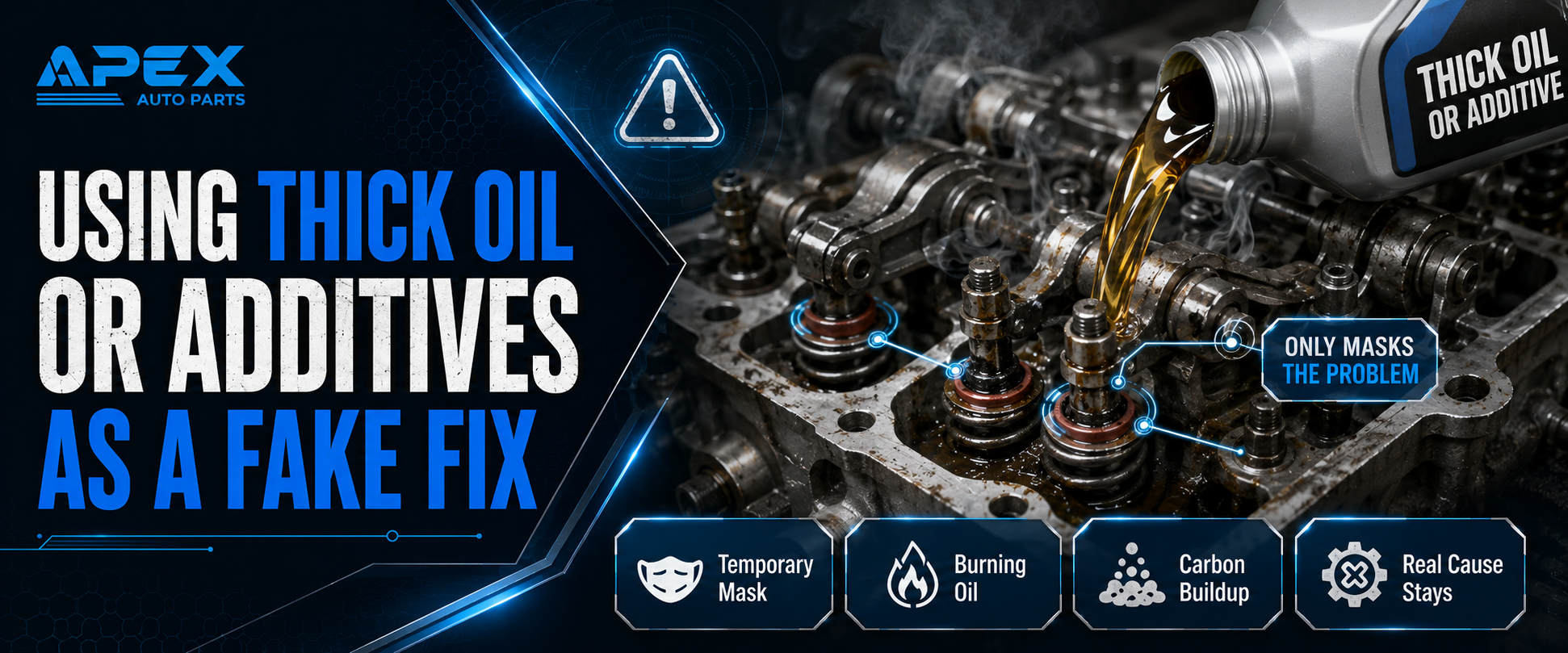
Some drivers try to stop smoking by using thicker oil. Others try oil additives. These may reduce smoke temporarily, but they do not repair worn valve stem seals.
Modern engines are designed to use a certain oil grade. If you use oil that is too thick, it may not flow properly through small oil passages. This can be risky, especially in engines with turbochargers, timing systems, or fine oil control parts.
Oil additives can also be a short-term mask. Some may make rubber seals swell slightly, but they cannot rebuild a worn or cracked seal. If the seal is hard, loose, or damaged, a bottle of additive will not make it new again.
This mistake can cost money because:
- It delays the real repair
- It can hide the problem for a short time
- It may affect proper engine lubrication
- It may create false confidence
- It does not stop the root cause
- The smoke can return later
Use the oil grade recommended for your car. If the engine is burning oil, find out why. Do not rely on a bottle to fix a mechanical fault.
Mistake 5: Waiting Until the Engine Starts Misfiring
A misfire means one or more cylinders are not burning properly. Worn valve stem seals can cause a misfire if oil fouls the spark plugs.
When oil coats the spark plug tip, the spark can become weak. If the spark is weak, the engine may shake, lose power, or run badly.
Some drivers wait until the car starts misfiring before they act. By then, the problem may already have spread.
A misfire can lead to:
- Rough idle
- Poor acceleration
- Higher fuel use
- Engine warning light
- Failed spark plugs
- Unburned fuel entering the exhaust
- Catalytic converter damage
If you noticed signs of valve stem seals leaking before the misfire started, the issue may have been building for a while.
Do not wait until the engine runs badly. If blue smoke and oil use appear early, get the car checked before spark plugs and exhaust parts are affected.
Mistake 6: Doing valve stem seals replacement Without Checking Related Parts
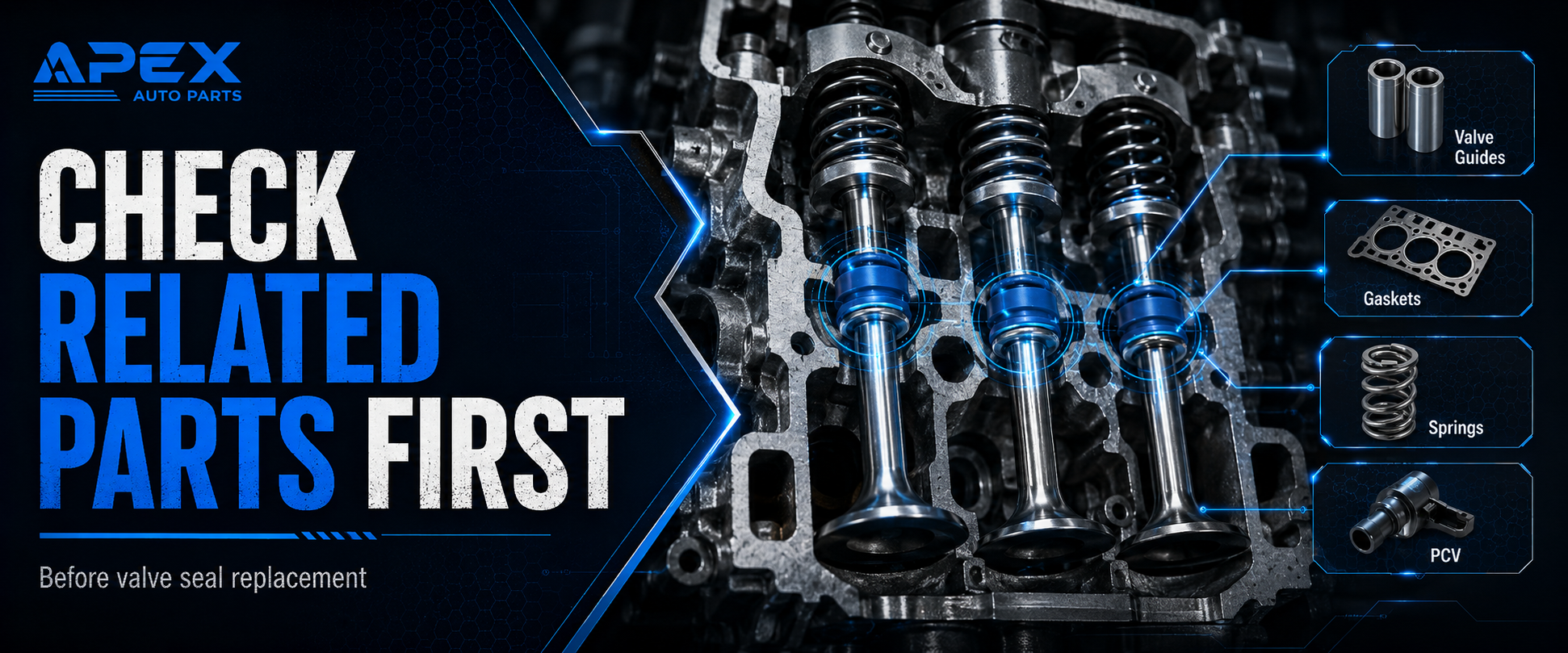
Valve stem seal replacement can be a detailed job. On some engines, it can be done without removing the cylinder head. On others, it may take more labor.
Either way, related parts should be checked.
One costly mistake is replacing only the seals while ignoring other parts that may also be causing the issue. If the valve guides are worn, new seals may not last. If the PCV system is blocked, pressure inside the engine can push oil where it shouldn't. If there are oil leaks, the car may still lose oil after the repair.
During valve stem seals replacement, it is wise to check:
- Valve guide wear
- Valve stem condition
- PCV system
- Spark plugs
- Oil leaks
- Gaskets disturbed during repair
- Timing parts if removed
- Cylinder condition if needed
This matters because leaking valve stem seals may not be the only issue. A proper repair should fix the root cause, not just the part that looks bad.
If related parts are ignored, smoke may return. That means more labor, more cost, and more stress.
Mistake 7: Buying Cheap Seals or the Wrong Parts
The seventh mistake is buying cheap or incorrect seals. Valve stem seals are small parts, but they work in a very harsh area. They face heat, oil, pressure, and constant valve movement.
A poor-quality seal may harden early. It may not fit properly. It may let oil pass too soon. A wrong seal may look similar but fail quickly.
This is especially important when buying parts online. Different engines can use different seal sizes and designs. Even cars from the same brand can have different parts depending on the engine code and year.
Before buying valve stem seals, check:
- Vehicle make and model
- Engine code
- Year of manufacture
- Petrol or diesel engine
- Seal type
- Full kit contents
- Fitment details
- Brand quality
- Warranty
- Other gaskets that may be needed
Apex Auto Parts supports UK drivers looking for reliable car parts. For small-engine parts like seals, proper fitment matters. A small mistake can cause a big engine problem.
Valve Stem Seals Replacement Without Checking Parts
If leaking valve stem seals are ignored for too long, the engine can slowly suffer from oil-burning damage.
At first, the car may only smoke for a few seconds. Later, smoke may appear more often. The oil level may drop faster. The engine may run rough. The car may also fail an emissions test.
Problems that can happen include:
- More blue smoke
- Higher oil use
- Oily spark plugs
- Rough idle
- Misfires
- Carbon build-up
- Poor performance
- Oxygen sensor damage
- Catalytic converter damage
- Failed MOT emissions test
The cost may start with oil top-ups. But if ignored, it can move into spark plugs, sensors, exhaust parts, and engine repairs.
This is why early action matters.
How To Spot signs of valve stem seals leaking.
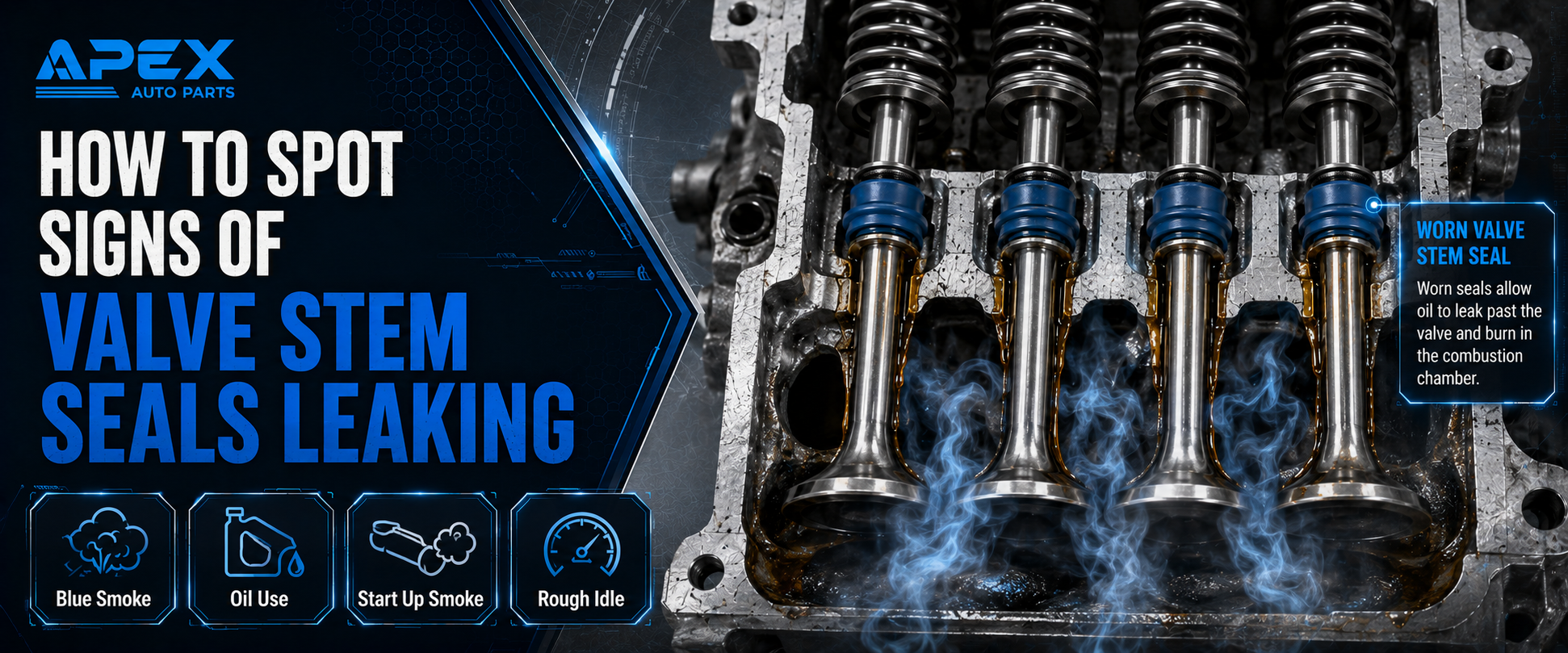
You cannot always confirm worn seals just by looking at the outside of the engine. But there are patterns that help.
The common signs of valve stem seals leaking include:
- Blue smoke after start-up
- Blue smoke after idling
- Smoke when driving away from traffic
- Oil use with no major external leak
- Burning oil smell
- Oily spark plugs
- Poor emissions reading
- Rough idle if the issue gets worse
The timing of the smoke matters.
Smoke at startup can occur when oil slips past the seals while the engine is off. Smoke after idling can happen because oil has time to collect around the valves while the engine is running slowly.
A mechanic can run checks to rule out piston rings, turbo issues, PCV faults, and other engine problems.
Is valve stem seal replacement Worth It?
Valve stem seal replacement can be worth it if the rest of the engine is healthy. If the car has good compression and the smoke pattern points to the seals, replacing them can reduce oil burning and smoke.
But if the engine has worn piston rings, low compression, or major internal wear, changing only the seals may not solve everything.
The repair may be worth doing if:
- The car is otherwise in good condition
- The engine has good compression
- Smoke appears at start-up or after idle
- Oil use is getting worse
- Spark plugs are getting dirty
- You plan to keep the car
- The repair cost makes sense for the car's value
The engine may need deeper checks if:
- Smoke is constant
- Oil use is very heavy
- Compression is low
- The engine has many other faults
- The car has a poor service history
A good repair decision should be based on the engine's overall condition, not just on one symptom.
How To Protect the Engine After Replacement
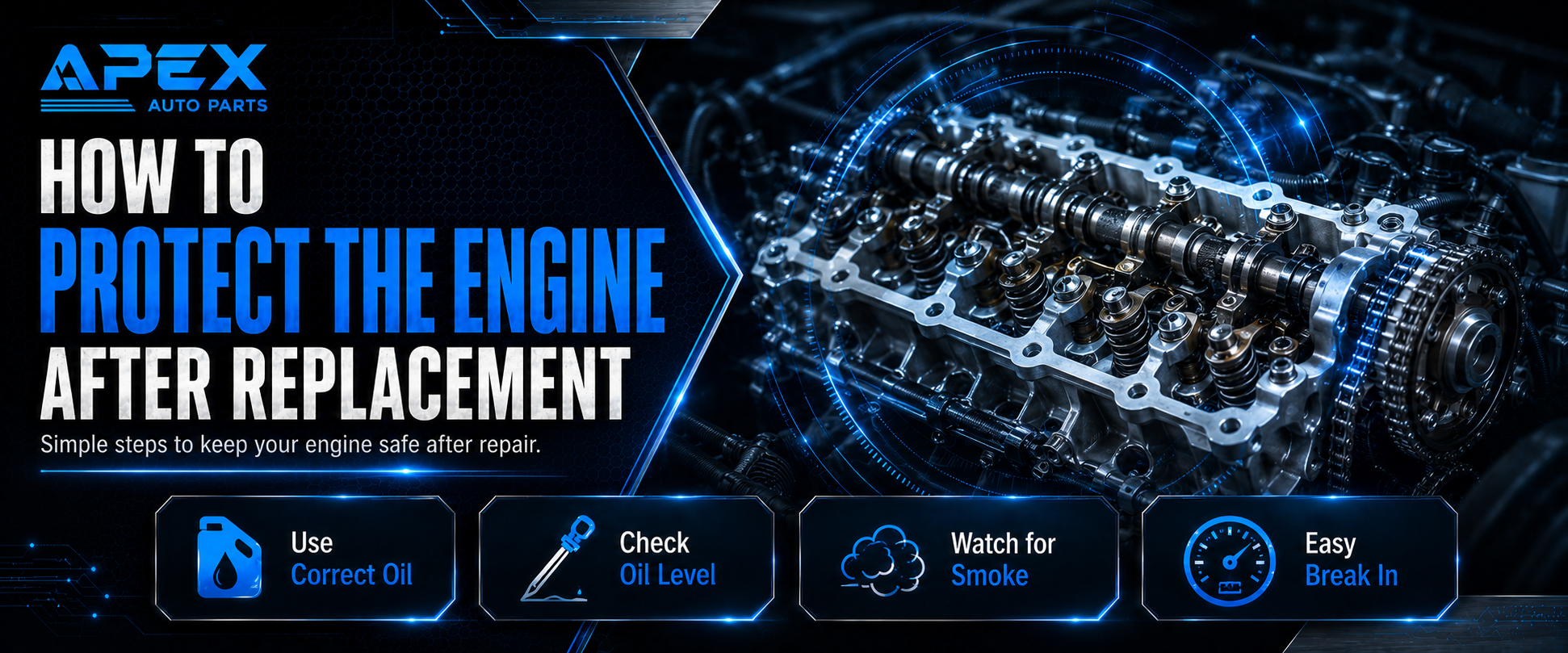
After replacing the valve stem seals, you should take care of the engine so the repair lasts.
Simple habits can help:
- Use the correct oil grade
- Change oil on time
- Keep the PCV system working properly
- Fix oil leaks early
- Do not ignore smoke if it returns
- Check oil level often
- Avoid cheap unknown parts
- Keep service records
- Let the engine warm up before hard driving
- Use quality replacement parts
A new set of valve stem seals should last a long time if the engine is healthy and the right parts are fitted properly.
Why Quality Parts Matter
Small parts can have a big effect inside an engine. Valve stem seals are a good example. They are not large or expensive compared to many engine parts, but poor-quality seals can cause repeated oil burning.
Quality matters because the seals must:
- Fit tightly
- Handle heat
- Control oil flow
- Last under constant movement
- Match the engine design
- Keep oil out of the combustion chamber
Cheap parts can fail early. Wrong parts can fail even faster. If the repair requires significant labor, using low-quality seals is not worth the risk.
Apex Auto Parts helps UK drivers find suitable engine parts. When buying parts for this kind of repair, always check fitment and choose parts made for your exact vehicle.
Final Thoughts
Valve seal failure can start with a small puff of smoke, but it should not be ignored. Valve stem seals are small parts, but they have an important job. They control oil around the valves and help keep oil out of the combustion chamber.
Common valve stem seal symptoms include blue smoke at start-up, smoke after idling, increased oil consumption, dirty spark plugs, a rough idle, and poor emissions. These signs can also look like other engine faults, so proper diagnosis is important.
The biggest mistakes drivers make are simple. They ignore blue smoke. They keep topping up oil. They guess the fault. They use additives instead of repairs. They wait for misfires. They replace seals without checking related parts. They buy cheap or wrong seals.
If you notice signs of leaking valve stem seals, get the car checked early. If valve stem seal replacement is needed, use the correct parts and ensure the engine is properly inspected.
A small problem does not have to become a major repair. Act early, fit the right parts, and do the job properly the first time.
FAQs - Valve Stem Seals
1. What are valve stem seals?
Valve stem seals are small seals inside the cylinder head that control oil around the valve stems. They stop too much oil from entering the combustion chamber. If they fail, the engine may burn oil and produce blue smoke, especially at start-up or after idling.
2. What are common valve stem seal symptoms?
Common valve stem seal symptoms include blue smoke at start-up, smoke after idling, increased oil consumption, rough idle, oily spark plugs, a burning-oil smell, and poor emissions. These signs can get worse over time, so the engine should be checked early.
3. What are the main signs of valve stem seals leaking?
The main signs of valve stem seals leaking are blue smoke after parking, smoke after idling, and oil use without clear external leaks. Oily spark plugs, a rough idle, and a burning oil smell can also appear as the leak worsens.
4. Are leaking valve stem seals serious?
Yes, leaking valve stem seals can become serious if ignored. They may cause oil burning, blue smoke, carbon buildup, spark plug damage, and emissions problems. Over time, they can also damage oxygen sensors and the catalytic converter, increasing repair costs.
5. When is valve stem seal replacement needed?
Valve stem seals need to be replaced when worn, as they allow oil to enter the combustion chamber. It is often considered when blue smoke appears at start-up or after idling, and checks show the engine is healthy enough for the repair to work properly.
6. Can bad valve stem seals cause blue smoke?
Yes, bad valve stem seals can cause blue smoke because oil passes the worn seals and burns inside the engine. This smoke is often most noticeable when starting the car, after long idling, or when driving away from traffic lights.
7. Can I drive with leaking valve stem seals?
You may still be able to drive with leaking valve stem seals, but it is not a good idea to ignore them. Oil burning can worsen and damage spark plugs or exhaust components. Check the oil level regularly and have the fault diagnosed promptly.
8. How much does a valve stem seal replacement cost?
The cost of valve stem seal replacement depends on the car, engine design, labor time, and whether the cylinder head must be removed. Some engines are easier than others. The best way to know the cost is to get a quote for your exact vehicle.
9. Can valve stem seal symptoms look like piston ring problems?
Yes, valve stem seals symptoms can look like piston ring problems because both can cause oil burning and blue smoke. Smoke after start-up or idling often points toward seals, while smoke under heavy acceleration may point elsewhere. Testing is needed to confirm.
10. Can additives fix signs of valve stem seals leaking?
Additives may reduce smoke for a short time, but they do not truly fix signs of valve stem seals leaking. If the seals are worn, hard, or cracked, replacement is usually the proper repair. Correct oil, good diagnosis, and quality parts are better in the long term