 info@apexautoparts.co.uk
 +44 203 915 7535
 Safe & Fast Shipping
 Whish List
 Compare
 Sign In

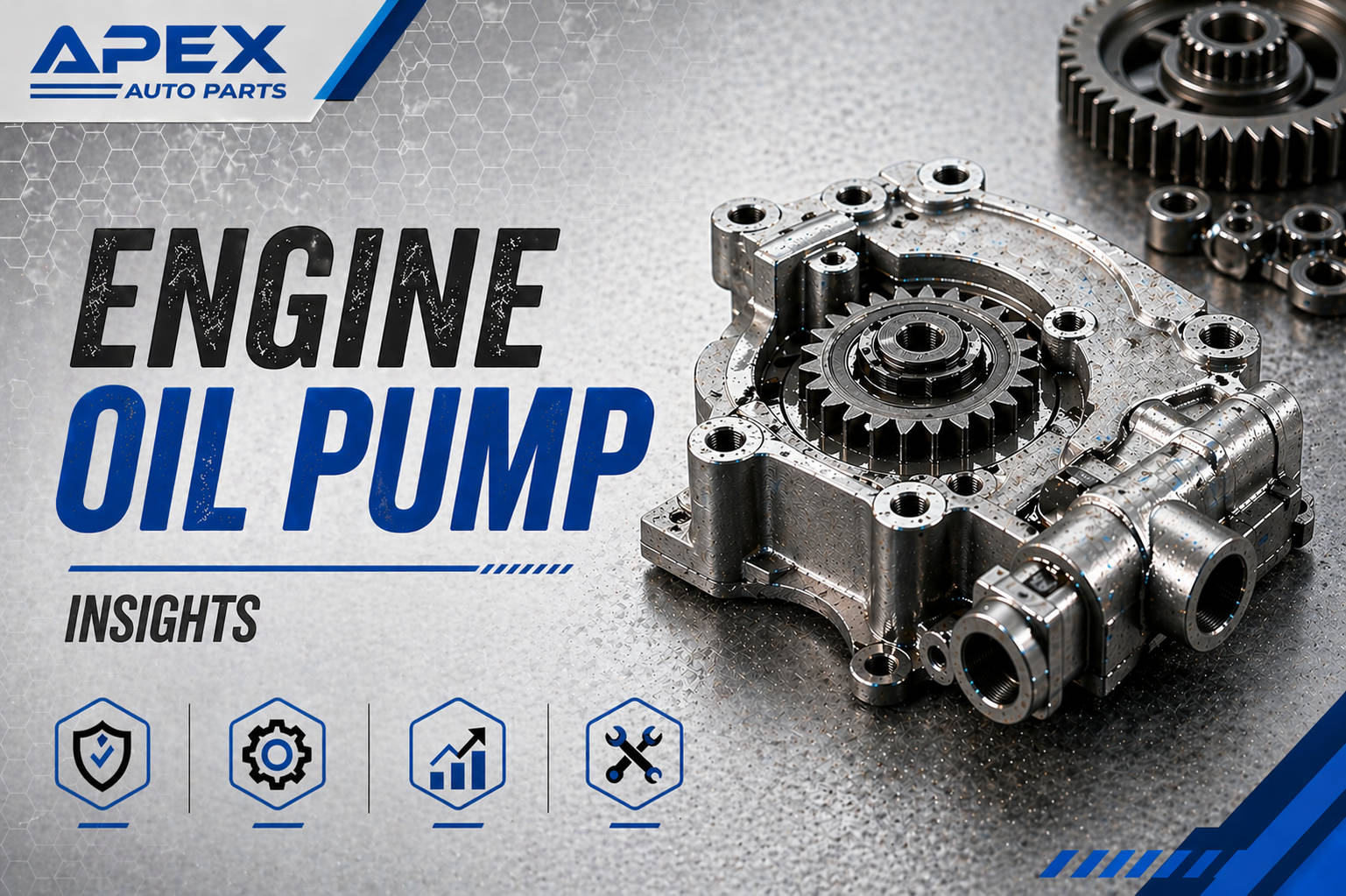
The engine oil pump is easy to forget because it sits out of sight and normally works without making any noise. Yet every time the engine starts, this small component protects some of the vehicle's most expensive parts.
The crankshaft, camshaft, bearings, pistons, timing components, hydraulic lifters, and turbocharger all depend on a steady supply of oil. If that supply weakens or stops completely, metal parts begin to rub against each other. Heat rises, clearances change, and engine damage can happen very quickly.
From a mechanic’s point of view, a red oil pressure warning light is never something to ignore. It does not simply mean the engine is due for an oil change. It may mean that the lubrication system can no longer protect the engine.
This guide explains what an engine oil pump does, how the oil circulation system works, what causes oil pressure problems, how to diagnose a faulty pump, and what to check before buying a replacement.
What Is an Engine Oil Pump?
An engine oil pump is the part responsible for moving engine oil from the sump to the areas that need lubrication.
The oil is stored in the sump, also known as the oil pan, at the bottom of the engine. When the engine starts, the pump draws oil through a pickup pipe and sends it through the oil filter. The filtered oil then travels through internal oil passages to the engine bearings, camshaft, cylinder head, timing system, and other moving parts.
You can compare the pump to the heart of the lubrication system. However, it does more than move oil. It must supply sufficient oil at the correct pressure across a range of engine speeds and temperatures.
Cold oil is thick and harder to move. Hot oil becomes thinner and may escape more easily through worn internal clearances. The engine oil pump must work under both conditions while preventing pressure from becoming too high or too low.
Why Does Internal Engine Lubrication Matter?
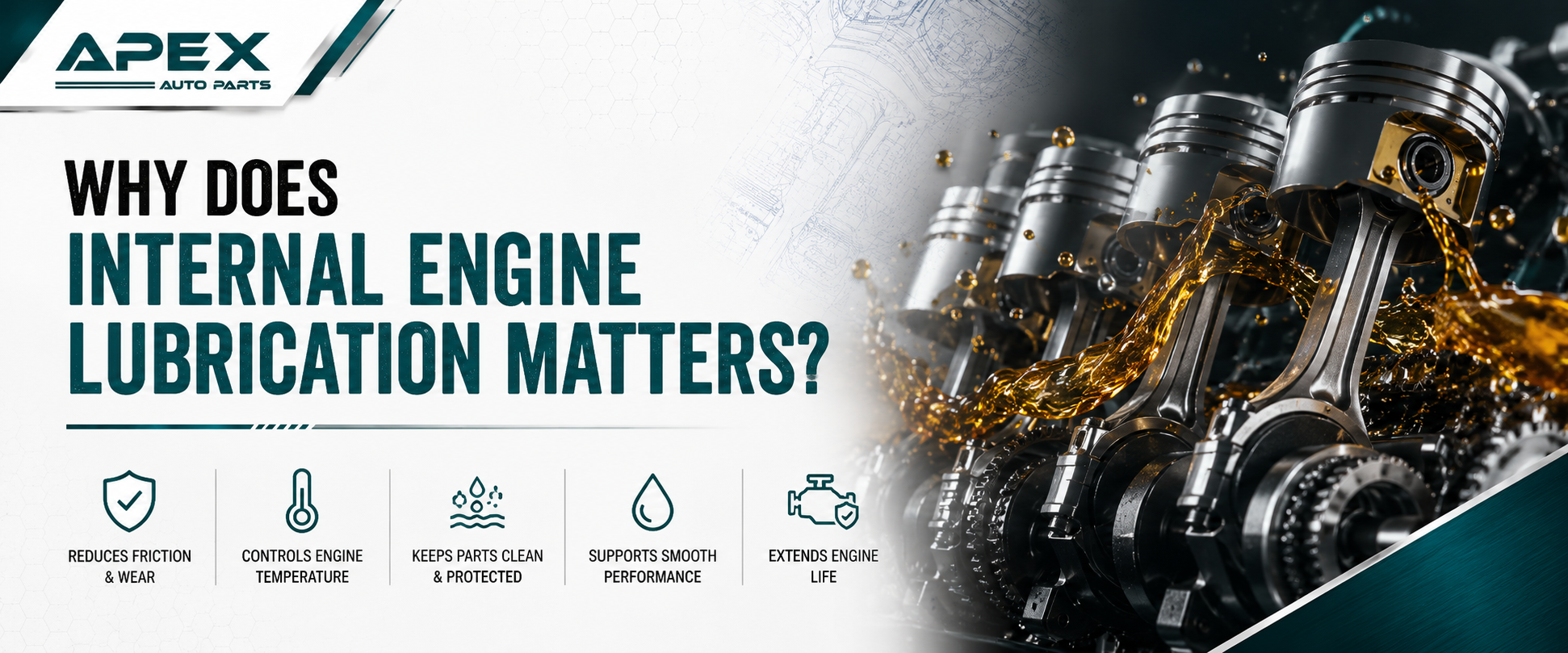
An engine contains many metal parts moving at high speed. The crankshaft rotates thousands of times per minute. Pistons travel up and down inside the cylinders. Camshafts open and close the valves. Bearings support rotating parts while carrying heavy loads.
These components cannot survive direct metal contact.
Engine oil creates a protective film between moving surfaces. This oil film reduces friction and helps prevent parts from touching each other. It also carries heat away from loaded areas, traps small particles, protects against corrosion, and supports hydraulic components inside the engine.
A working oil lubrication system helps to
- Reduce friction between moving parts.
- Protect crankshaft and connecting rod bearings from damage.
- Cool internal engine components
- Remove dirt and fine metal particles.
- Support hydraulic lifters and timing chain tensioners
- Lubricate turbocharger bearings
- Reduce corrosion inside the engine.
Oil can provide these benefits only when it is clean, suitable for the engine, and moving at the correct rate. A Car Engine Oil Pump Works
The oil circulation process begins as soon as the engine starts turning.
Oil sits in the sump while the engine is switched off. When the crankshaft begins to rotate, it drives the engine oil pump directly or through a gear, chain, or drive shaft, depending on the engine design.
The pump then creates suction at the pickup tube.
1. Oil is drawn from the sump
The pickup tube reaches into the oil stored at the bottom of the engine. A mesh screen at the end helps stop larger pieces of dirt, gasket material, carbon, or metal from entering the pump.
If this screen becomes blocked with sludge, sealant, or debris, the pump may not receive enough oil.
2. The pump pressurizes the oil
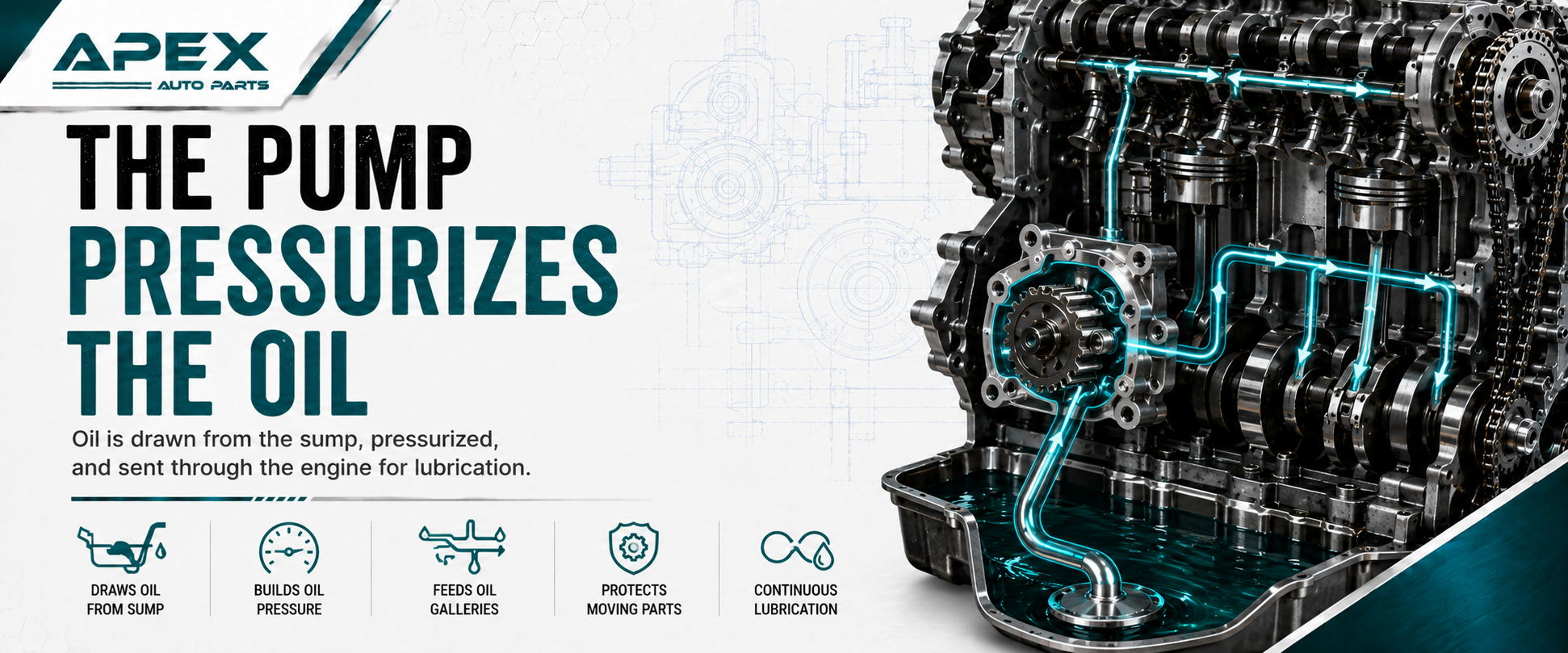
Inside the pump are gears or rotors that trap oil and move it from the inlet to the outlet.
The pump produces oil flow. Pressure develops because the oil must pass through small galleries and bearing clearances. This difference is important because an engine may have a working pump but still show low pressure due to internal wear or a blocked pickup. Oil passes through the filter.
The oil filter removes dirt, carbon, and small metal particles before the oil reaches sensitive engine parts.
A poor-quality, damaged, or blocked filter can affect oil circulation. Most filters include a bypass system that allows oil to continue flowing if the filter becomes heavily restricted, but unfiltered oil may then enter the engine.
4. Oil enters the main galleries
After filtration, oil travels through drilled passages inside the engine block and cylinder head. These passages are known as oil galleries.
The galleries deliver oil to components such as:
- Main crankshaft bearings
- Connecting rod bearings
- Camshaft bearings
- Hydraulic lifters
- Variable valve timing units
- Timing chain tensioners
- Piston cooling jets
- Turbocharger bearings
Once the oil has passed through these areas, gravity allows it to drain back into the sump. The process continues for as long as the engine is running.
Oil Flow and Oil Pressure Are Not the Same
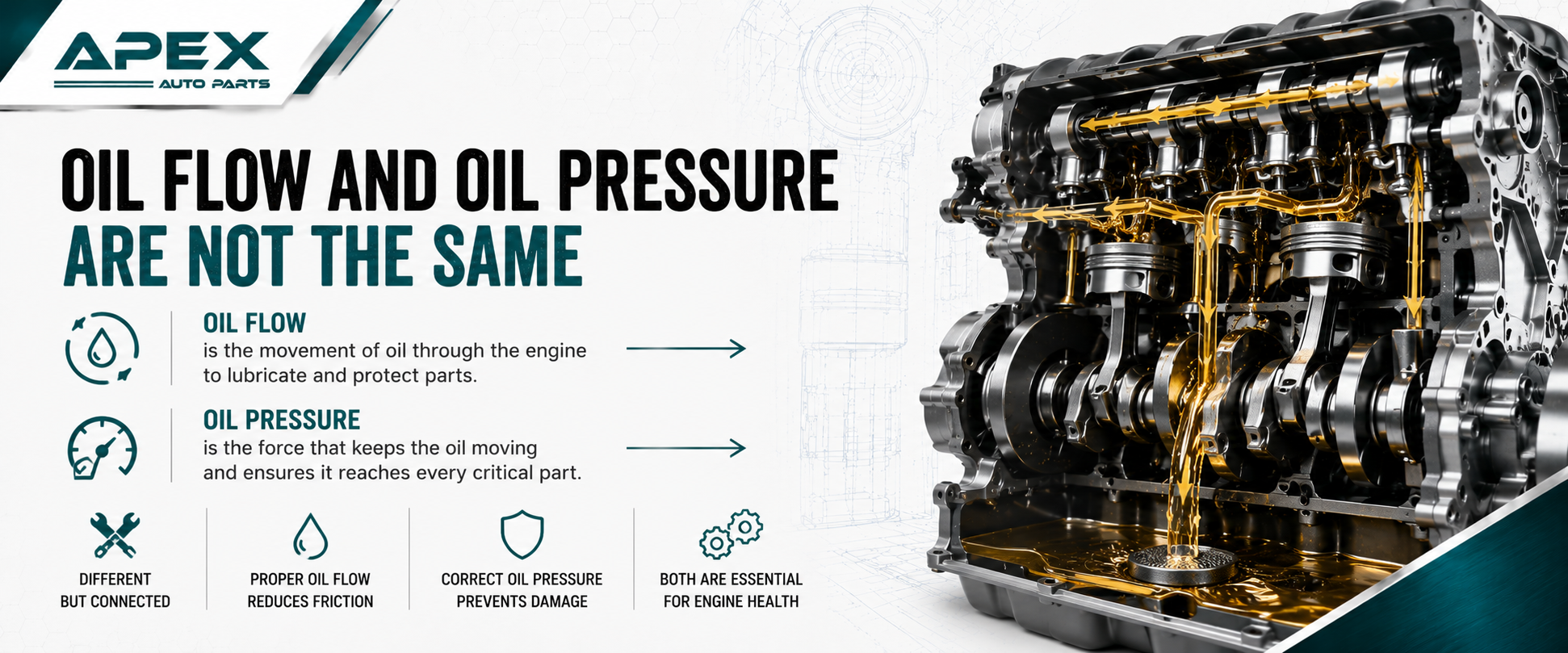
Oil flow is the amount of oil moving through the lubrication system. Oil pressure is the resistance created as the oil passes through galleries, bearings, filters, and small internal clearances.
This is why low oil pressure does not automatically prove that the pump has failed.
For example, a worn crankshaft bearing may create a larger-than-normal gap. Oil escapes through the enlarged clearance too quickly, causing pressure to drop even if the pump is still moving oil.
Low pressure can also be caused by the following:
- A low engine oil level
- Oil that is too thin for the engine
- A blocked pickup screen
- A damaged pickup pipe seal
- Worn crankshaft bearings
- A faulty oil pressure sensor
- A stuck pressure relief valve
- Fuel or coolant mixed with the oil
- A blocked or incorrect oil filter
- Internal engine wear
A mechanic should test the complete lubrication system before deciding that the oil pump needs replacing.
Common Types of Engine Oil Pumps
Oil pumps can vary by engine design, but most passenger vehicles use one of the following systems.
Gear oil pump
A gear pump contains two meshing gears. As the gears rotate, they carry oil around the outer edge of the housing and push it towards the outlet.
Gear pumps are strong, simple, and widely used. However, wear inside the housing or between the gears can reduce their ability to maintain oil pressure.
Gerotor oil pump
A Gerotor pump uses an inner rotor and an outer rotor with different numbers of teeth. The spaces between the rotors increase and decrease as they turn, drawing oil in and pushing it out.
Gerotor pumps are compact and commonly fitted around the front of the crankshaft. Many modern engines use this design.
Variable displacement oil pump
Some newer engines use a variable displacement pump. Instead of supplying the same output all the time, the pump changes its delivery according to engine demand.
This reduces the power required to drive the pump and can improve fuel economy. However, variable pumps may contain control valves, solenoids, or electronic systems that make diagnosis more involved.
Where Is the Oil Pump Located?
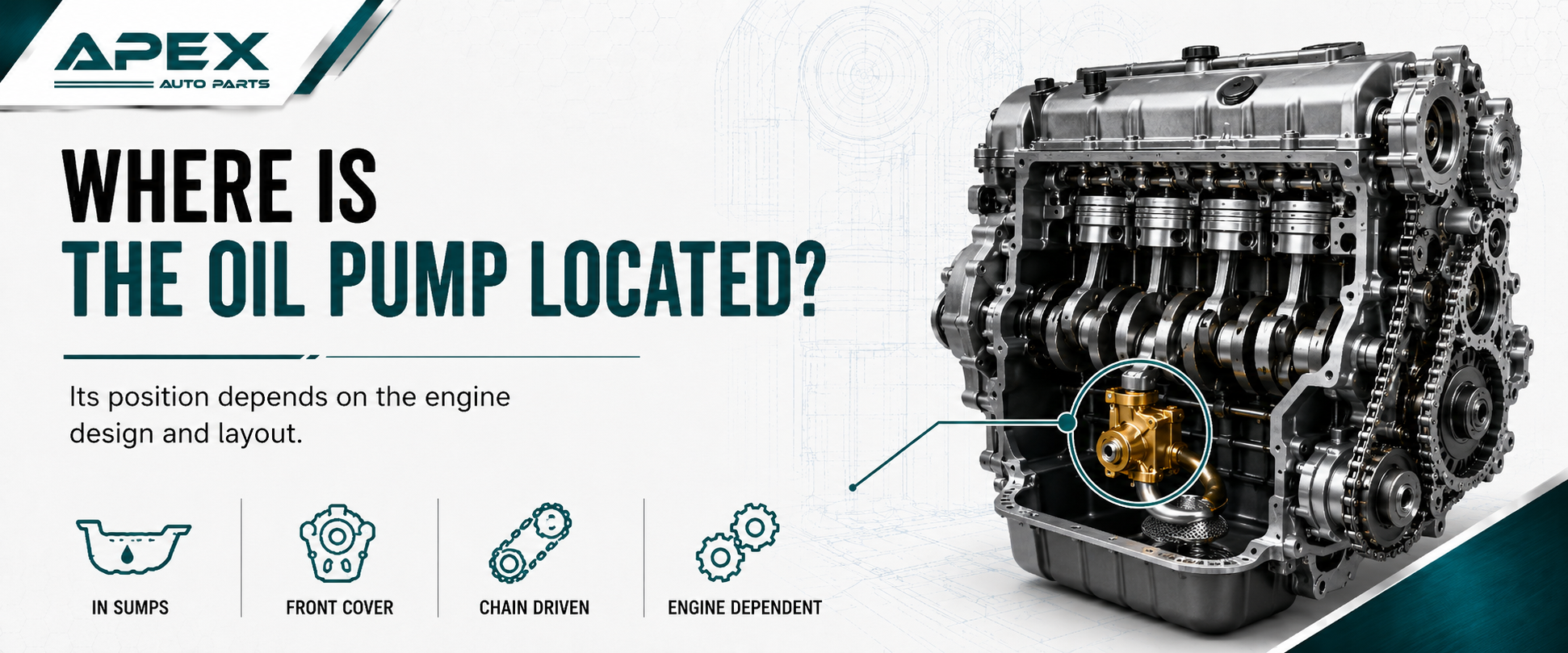
The location of a car engine oil pump depends on the engine.
Some pumps are fitted inside the sump. Others are installed at the front of the engine around the crankshaft. Certain diesel engines may have the pump built into a balance shaft assembly or front timing cover.
Access can therefore range from fairly straightforward to very difficult.
On some vehicles, replacing the pump requires removal of the sump. On others, the timing chain, front cover, subframe, exhaust components, or even the engine may need to be moved.
This is why oil pump replacement costs can vary greatly between vehicles. The pump itself may be reasonably priced, while the labour needed to reach it may be much higher.
Signs of a Failing Engine Oil Pump
A failing pump or lubrication problem can produce several warning signs. These signs should be investigated quickly rather than used as proof that the pump is faulty.
Red oil pressure warning light
The most serious warning is the red oil can symbol on the dashboard.
If this light remains on after the engine starts or comes on while driving, switch the engine off as soon as it is safe to do so. Continuing to run the engine could damage the crankshaft, bearings, camshaft, turbocharger, and timing system.
Do not assume that topping up the oil will solve the problem. Check the level, but arrange a proper diagnosis if the warning remains.
Ticking from the top of the engine
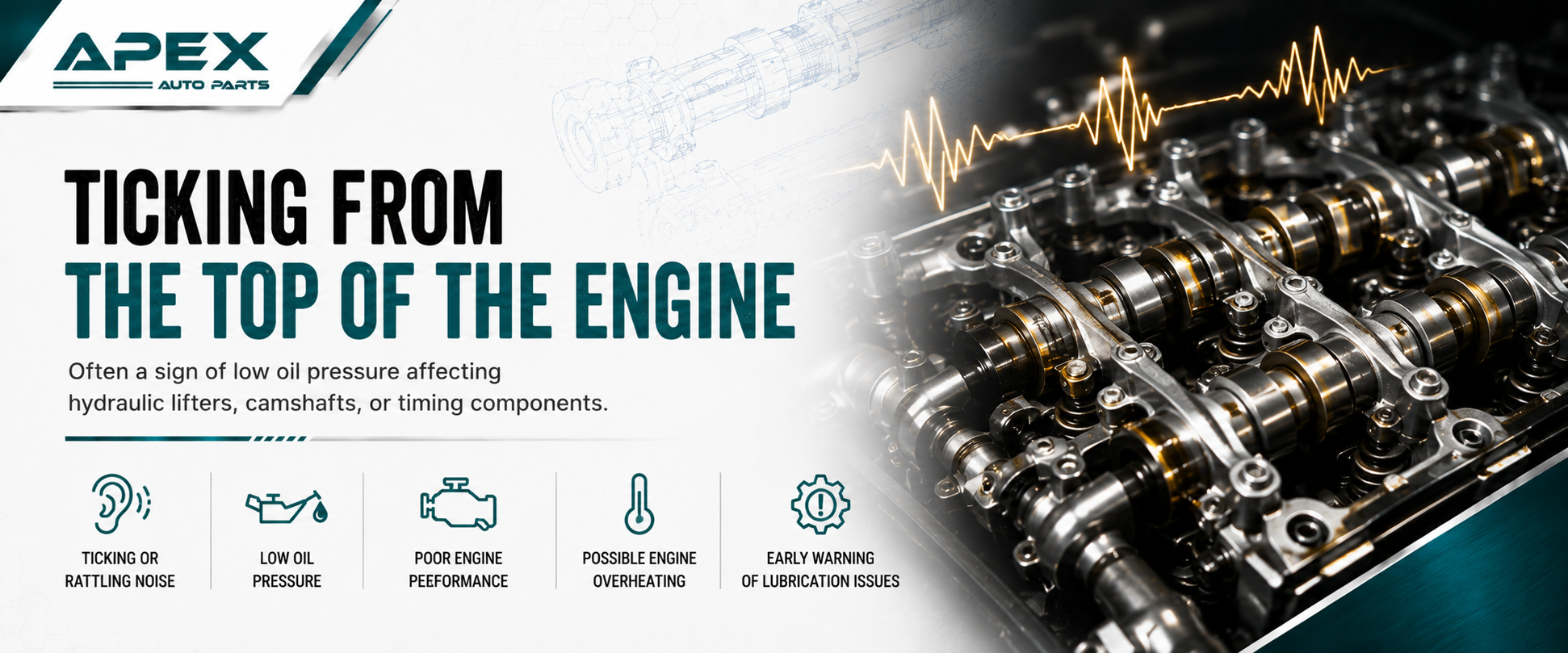
Hydraulic lifters, camshaft components, and timing chain tensioners depend on oil pressure. If the supply is weak, the top of the engine may begin to tick or rattle.
The noise may be more noticeable at idle, during a cold start, or when the engine is hot.
Deep knocking noise
A deeper knock can indicate that the crankshaft or connecting rod bearings are no longer receiving sufficient lubrication.
This is a more serious sign. By the time a heavy bearing knock develops, internal damage may already have occurred.
Engine running hotter than normal.
Oil helps carry heat away from pistons, bearings, and other loaded parts. Poor oil circulation can therefore increase engine temperature.
Overheating can have many causes, so both the cooling and lubrication systems should be checked.
Variable valve timing faults
Many modern engines use pressurized oil to control variable valve timing units. Low oil pressure, dirty oil, or blocked galleries can lead to timing faults, poor idle, warning lights, and loss of performance.
Turbocharger noise or failure
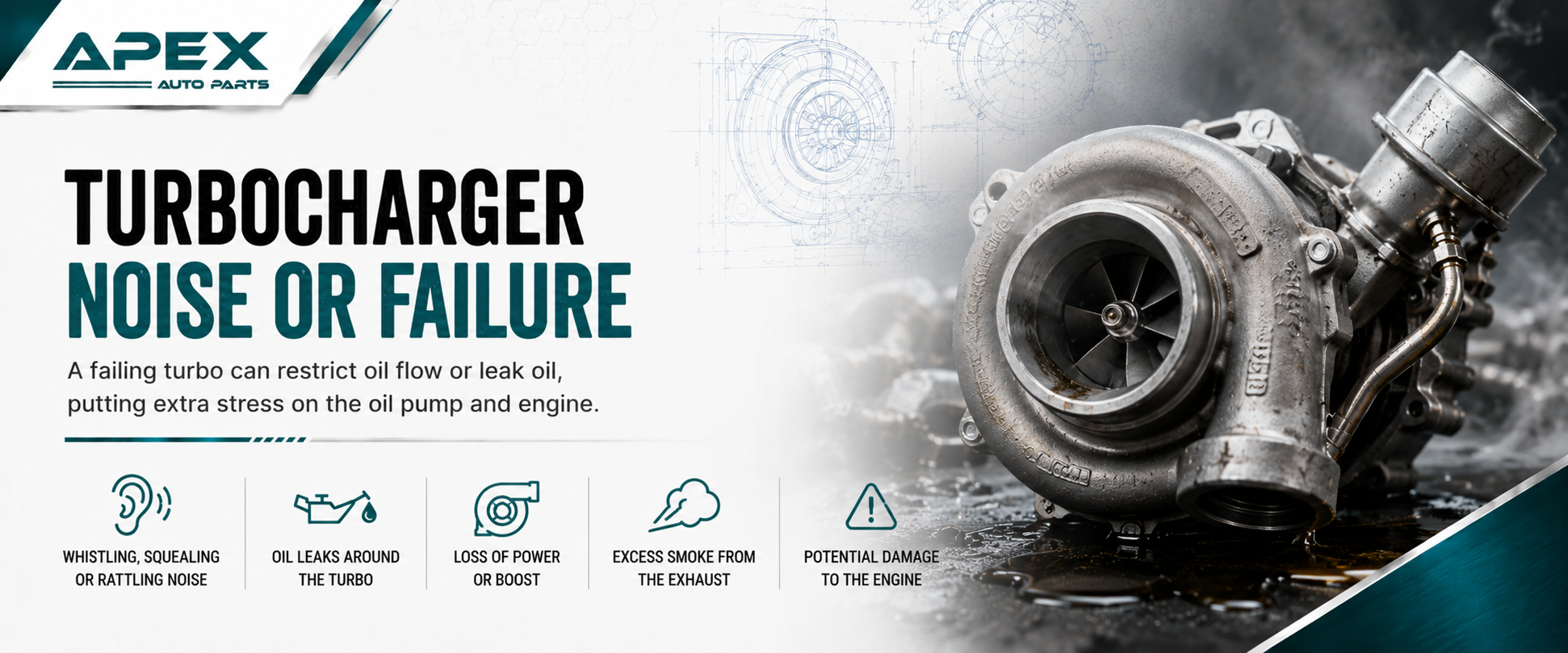
Turbocharger shafts spin at extremely high speed and depend on a clean, steady supply of engine oil.
Poor oil pressure can cause turbo bearing wear, whining noises, smoke, oil leaks, or complete turbocharger failure.
What Causes an Engine Oil Pump to Fail?
Oil pumps are designed to last for many miles, but they are not protected from wear or poor maintenance.
Dirty or overdue engine oil
Old oil can break down and form sludge. Sludge may block the pickup screen, restrict galleries, or increase wear inside the pump.
Skipping oil changes is one of the quickest ways to create lubrication problems.
Low engine oil level
When the oil level is too low, the pickup may draw in air instead of oil, especially during braking, cornering, or acceleration.
Air in the oil supply can cause pressure to drop and reduce lubrication.
Worn pump gears or rotors
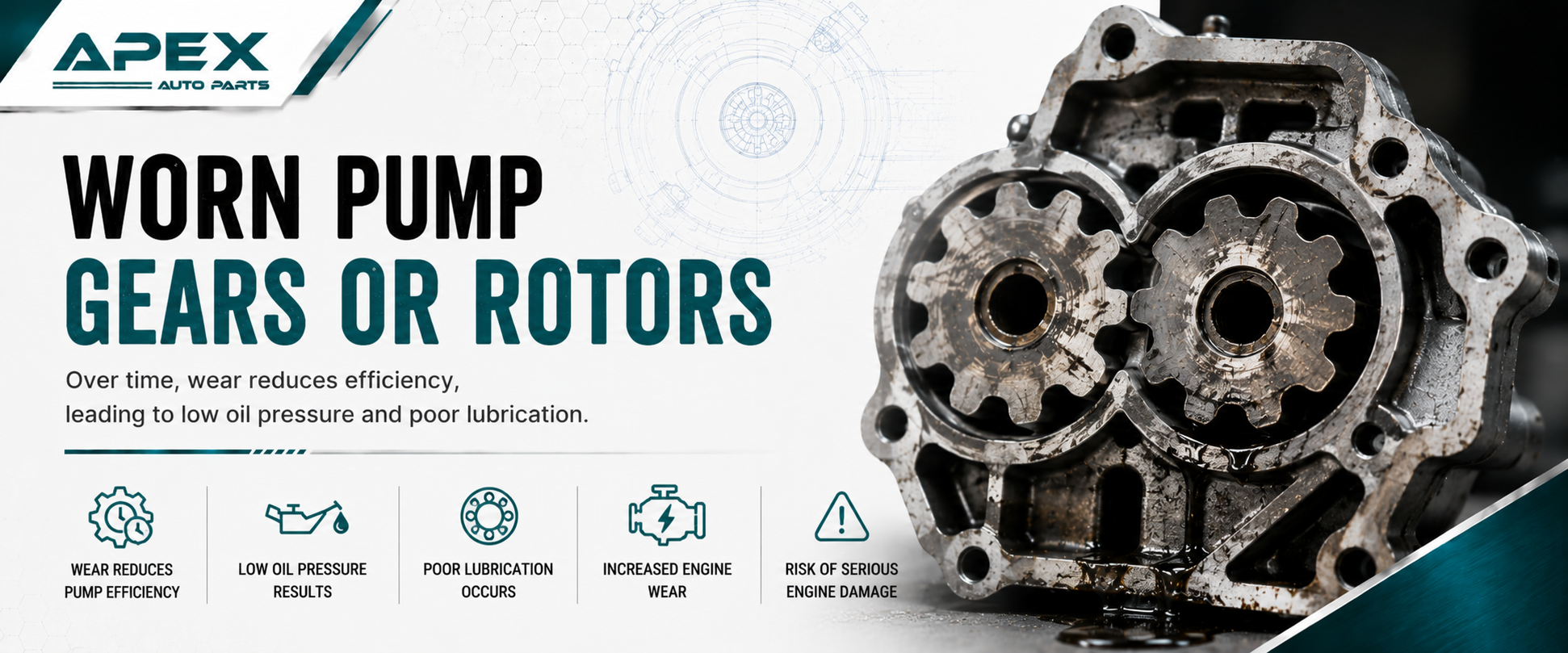
The pump’s internal parts can wear over time. As clearances increase, oil leaks internally from the high-pressure side back to the inlet side.
The pump may still turn, but it may struggle to maintain pressure when the engine is hot.
Blocked pickup screen
Carbon, sludge, broken timing guide material, excess gasket sealant, or internal engine debris can collect around the pickup screen.
A blocked pickup can produce the same symptoms as a failed pump because the pump cannot draw enough oil from the sump.
Damaged pickup pipe seal
Many pickup pipes use an O-ring or a gasket at the pump connection. If this seal hardens, splits, or becomes misaligned, the pump may draw in air.
This can cause delayed oil pressure during start-up and low pressure while driving.
Stuck pressure relief valve
The pressure relief valve prevents excessive oil pressure.
If it sticks open, oil may return to the inlet or sump too easily, causing low pressure. If it sticks closed, pressure may rise too high and damage filters, seals, or gaskets.
Debris after an engine failure
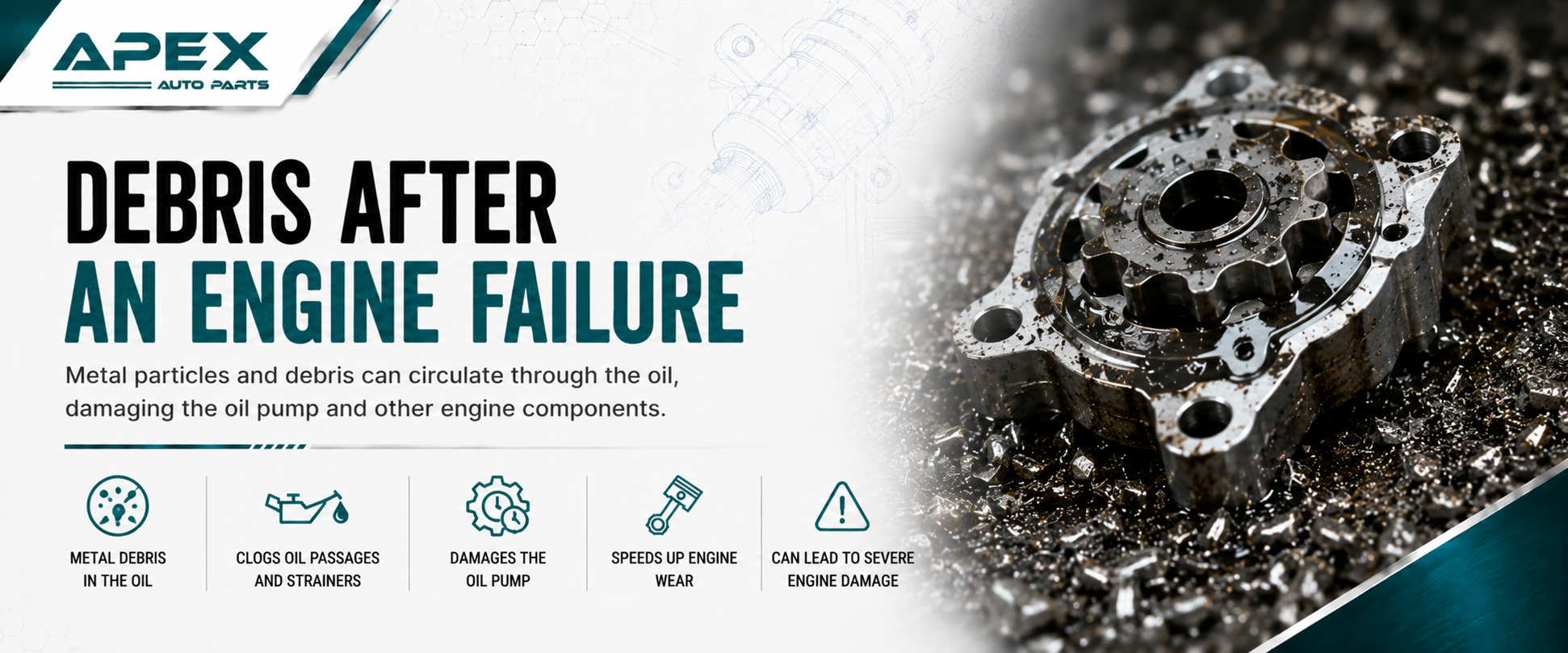
If a bearing, timing component, turbocharger, or piston fails, metal shavings and other debris can enter the oil.
Replacing the failed component without cleaning the sump, pickup, galleries, cooler, and oil system may damage the replacement pump or rebuilt engine.
How a Mechanic Diagnoses Low Oil Pressure
Replacing an engine oil pump without testing the system first can waste both time and money.
A proper diagnosis usually begins with the oil level and condition. The mechanic checks whether the correct oil grade has been used and looks for signs of fuel, coolant, sludge, or metal contamination.
The oil pressure sensor and its wiring should then be inspected. A failed sensor can activate the warning light even when the mechanical pressure is within specification.
The next step is normally to connect a mechanical oil pressure gauge. This gives an actual pressure reading rather than relying only on the dashboard warning.
Pressure should be checked:
- During a cold start
- At normal operating temperature
- At idle
- At a specified engine speed
If the reading is low, the sump may need to be removed to inspect the pickup screen, pickup seal, pump, and internal debris.
On an older or damaged engine, bearing clearances may also need to be checked. Installing a new pump will not permanently solve low pressure if the oil is escaping through heavily worn bearings.
What Happens if the Oil Pump Fails?
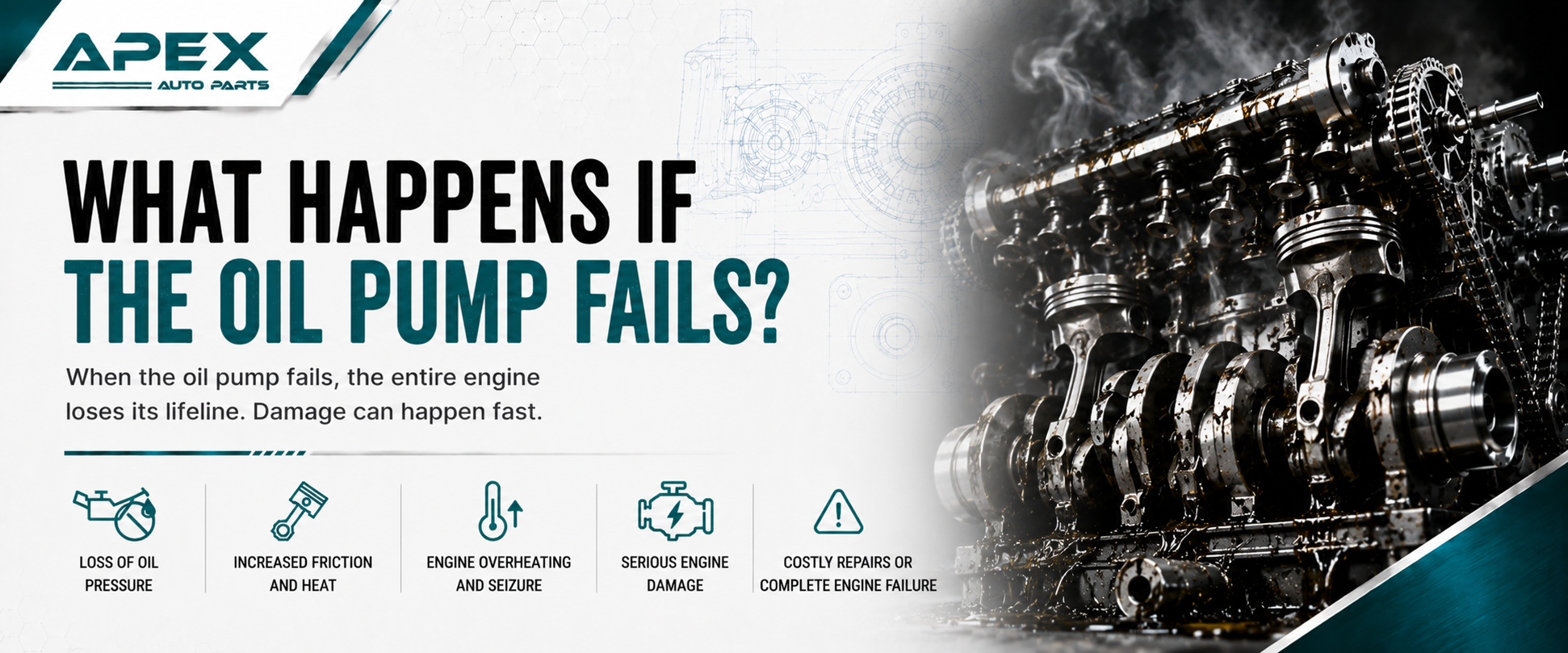
When oil pressure disappears, the thin protective film between metal parts begins to break down.
Crankshaft bearings may overheat and seize. Connecting rod bearings can spin inside their housings. Camshaft surfaces may score. Hydraulic lifters can collapse. Timing chain tensioners may lose pressure, allowing the chain to rattle or jump.
On turbocharged engines, the turbo bearings may fail due to loss of lubrication.
A complete oil pump failure can turn a manageable repair into a full engine rebuild within a very short time. This is why the safest response to a red oil pressure warning is to stop the engine rather than trying to drive home.
Oil Pumps During an Engine Rebuild
The oil pump should always receive close attention during an engine rebuild.
Reusing a weak or contaminated pump can damage new crankshaft bearings, pistons, camshafts, or a replacement cylinder head. Saving money on the pump is not worthwhile if the entire rebuilt engine depends on it.
A rebuild should normally include:
- Inspection or replacement of the oil pump
- Cleaning of the sump and pickup tube
- Replacement of pickup seals and gaskets
- Cleaning of internal oil galleries
- Inspection of piston cooling jets
- Inspection or replacement of the oil cooler
- Use of a suitable new oil filter
- Priming of the lubrication system before starting
- Confirmation of oil pressure after the first start
The pump must be primed correctly. Starting a rebuilt engine with a dry pump can delay oil pressure at the exact moment when new parts need protection most.
Choosing the Right Car Engine Oil Pump
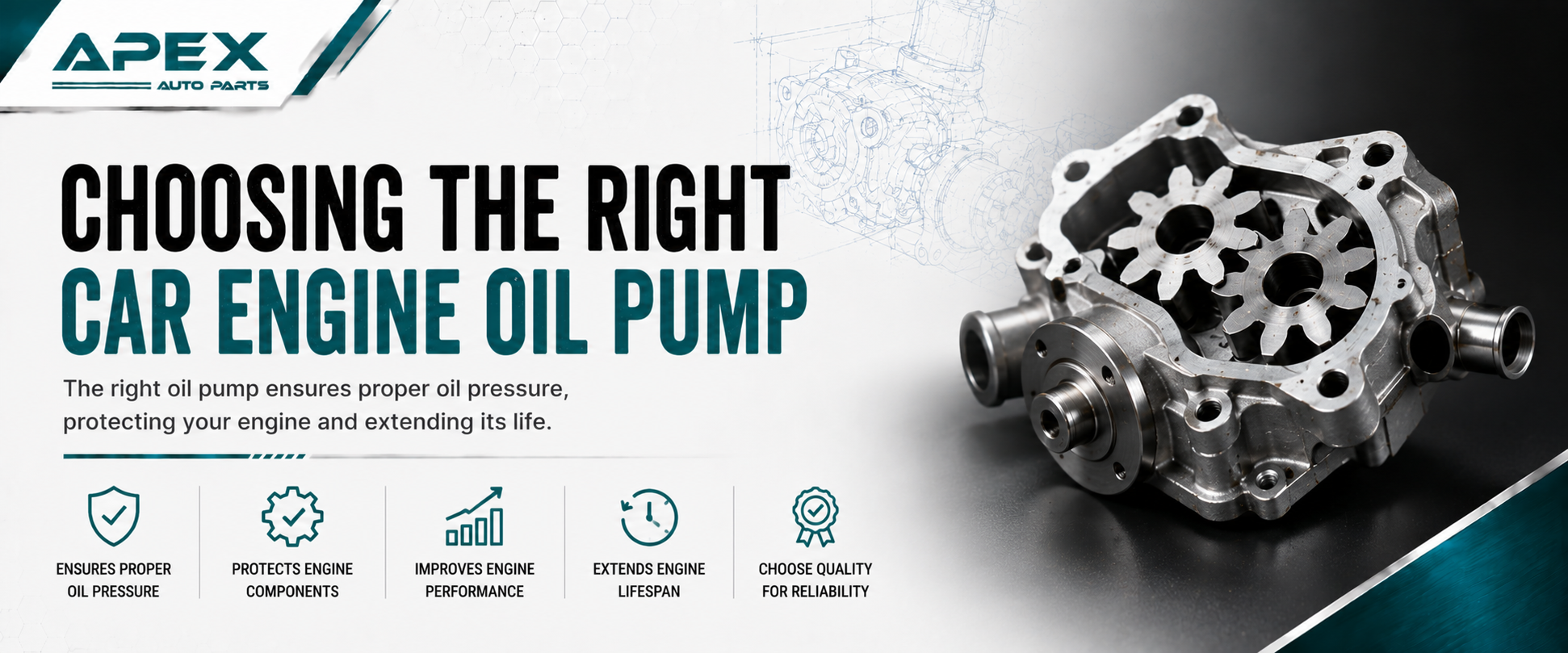
Oil pumps are not universal. Even within the same vehicle model, different engine codes or production years may use different pumps.
Before ordering, check:
- Vehicle registration
- Engine code
- Model year
- Original pump part number
- Pump drive type
- Housing design
- Number and position of mounting holes
- Pressure control system
- Whether seals, gaskets, chains, or sprockets are included
At Apex Auto Parts, we recommend checking the engine code and the original part number rather than selecting a pump based on the vehicle name alone. Two engines may look similar but use different oil pump housings, pickup connections, drive chains, or pressure valves.
A good quality replacement should have accurate internal clearances, a reliable relief valve, strong gears or rotors, and the correct mounting dimensions. A poor-quality pump may cause low pressure, excessive noise, or fitting problems even when it is new.
How to Help Prevent Oil Pump Problems
Most lubrication failures give some warning before the engine fails.
Use the oil grade recommended for the engine. Oil that is too thick may circulate slowly during cold starts, while oil that is too thin may struggle to maintain pressure at high temperatures.
Change the oil and filter at sensible intervals. Engines used for repeated short journeys, heavy loads, long idling, or stop-start driving may need more frequent attention.
Check the oil level regularly and repair leaks instead of repeatedly topping up. A leak may come from the sump, filter housing, crankshaft seal, camshaft seal, timing cover, oil cooler, or rocker cover.
Avoid using excessive gasket sealant during repairs. Excess sealant can break away and block the pickup screen or an oil gallery.
Most importantly, do not ignore warning lights or new engine noises. Early diagnosis is usually far cheaper than repairing a seized or badly worn engine.
Final Thoughts
The engine oil pump is the center of the internal lubrication system. It draws oil from the sump, passes it through the filter, and supplies it to the crankshaft, camshaft, bearings, timing components, turbocharger, and other moving parts.
However, low oil pressure does not always mean the pump itself has failed. Low oil level, a blocked pickup, worn bearings, incorrect oil, a faulty sensor, or a damaged relief valve can produce similar symptoms.
The right approach is to test the system before buying parts.
When a replacement is needed, match the pump using the engine code, original part number, and full vehicle details. A correctly selected, good-quality pump can protect the engine for many miles. The wrong pump, or a new pump fitted without fixing the real cause, can lead to another failure.
Taking care of the lubrication system means protecting the entire engine.
FAQS
1. What does an engine oil pump do?
An engine oil pump draws oil from the sump and sends it through the filter and internal oil galleries. This supplies lubrication to the crankshaft, bearings, camshaft, timing system, pistons, and turbocharger. Without steady oil circulation, friction and heat can quickly damage moving engine components.
2. What are the main signs of a bad oil pump?
Common warning signs include a red oil pressure light, ticking from the cylinder head, timing chain noise, rising engine temperature, poor variable valve timing operation, and deep bearing knocks. These symptoms can also have other causes, so the oil pressure should be measured before replacing the pump.
3. Can I drive with the oil pressure warning light on?
You should not continue driving if the oil pressure warning light is red. Stop the engine as soon as it is safe and check the oil level. If the level is correct or the warning stays on after topping up, arrange recovery and diagnosis. Continued driving can destroy the engine.
4. Does low oil pressure always mean the pump is faulty?
No. Low oil pressure can result from low oil level, incorrect oil viscosity, a blocked pickup, worn crankshaft bearings, a faulty pressure sensor, a damaged filter, a leaking pickup seal, or a stuck relief valve. A mechanical pressure test is needed before blaming the pump.
5. How long does a car engine oil pump last?
There is no fixed replacement interval for most oil pumps. A well-maintained pump may last for the life of the engine. Its lifespan can be shortened by dirty oil, sludge, low oil levels, internal engine debris, poor-quality filters, or wear elsewhere in the lubrication system.
6. Can dirty engine oil damage the oil pump?
Yes. Dirty oil can contain carbon, sludge, and metal particles that wear the pump’s gears, rotors, and housing. Sludge can also block the pickup screen and restrict the oil supply. Regular oil and filter changes are among the best ways to protect the pump.
7. Why is my oil pressure low only when the engine is hot?
Hot engine oil is thinner than cold oil. If the pump, bearings, or internal engine clearances are worn, thin hot oil may escape too quickly, and pressure can fall at idle. The correct oil grade, pump condition, and bearing clearances should all be checked.
8. Should the oil pump be replaced during an engine rebuild?
It should at least be carefully inspected, but replacement is often sensible during a full rebuild. A worn or contaminated pump can damage new bearings and other replacement parts. The pickup, seals, sump, galleries, filter, and oil cooler should also be cleaned or replaced where required.
9. Why is oil pump replacement expensive?
The pump may be located inside the sump, behind the timing cover, around the crankshaft, or within a balance shaft assembly. Reaching it may require removal of the sump, subframe, timing components, exhaust parts, or other equipment. Labor and access often cost more than the pump itself.
10. How do I choose the correct engine oil pump?
Use the vehicle registration, engine code, production year, original part number, and pump design. Check the drive system, mounting points, pickup connection, and pressure control type. When details are unclear, ask the supplier to confirm compatibility before ordering rather than relying only on photographs.
References:
Haynes Manuals
The AA