
 info@apexautoparts.co.uk
 +44 203 915 7535
 Safe & Fast Shipping
 Whish List
 Compare
 Sign In

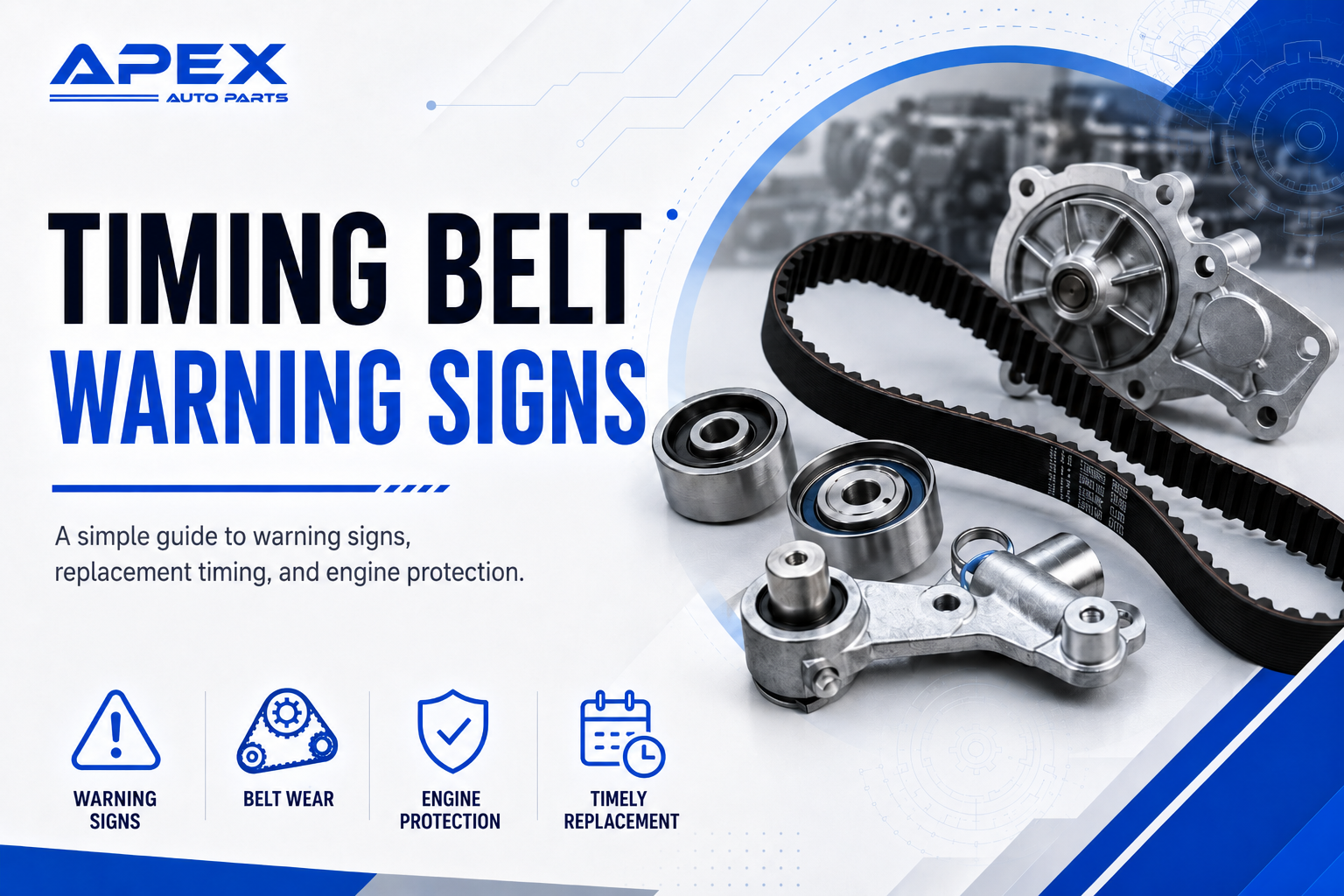
A timing belt can look fine one day and fail the next. That is what makes it one of the most worrying components in an engine.
Unlike worn brakes or tires, a timing belt usually sits hidden behind protective covers. Drivers cannot inspect it during a normal walkaround, and the belt may not make an obvious noise before it breaks. In many cases, the first clear sign of failure is the engine suddenly cutting out or refusing to start.
That failure can be expensive.
On many engines, the pistons and valves share the same space but enter it at different times. The timing belt keeps their movement controlled. If it snaps or jumps out of position, the pistons may strike open valves. The result can include bent valves, damaged pistons, broken rocker arms, cylinder head damage, and a full engine rebuild.
The safest approach is not to wait for a warning. Drivers should know the correct replacement interval, check the vehicle’s service history, and investigate any noise, leak, or running problem that could affect the timing system.
This guide explains what a timing belt does, why it fails, which warning signs matter, when to replace it, and what should be included in a proper timing belt repair. It expands on the points in your original draft while keeping the advice practical for drivers and repair customers.
What Is a Timing Belt?
A timing belt is a reinforced rubber belt that connects the crankshaft to the camshaft or camshafts.
The crankshaft controls the movement of the pistons. The camshaft controls the opening and closing of the engine valves. These parts must remain perfectly timed with each other.
As the crankshaft turns, the timing belt transfers that movement to the camshaft. The belt’s teeth grip the matching sprockets, ensuring the valves open and close at the correct point in each engine cycle.
A timing belt is not the same as the auxiliary belt visible at the front of many engines. The auxiliary belt normally drives parts such as the alternator, air conditioning compressor, or power steering pump. The timing belt controls internal engine timing, which makes its job much more critical.
Most timing belts are made from strong rubber compounds reinforced with fibers. They are designed to resist heat, tension, and repeated movement. However, rubber still ages. Over time, the belt can harden, crack, stretch, lose teeth, or become damaged by oil and coolant.
Why Does the Timing Belt Matters So Much?
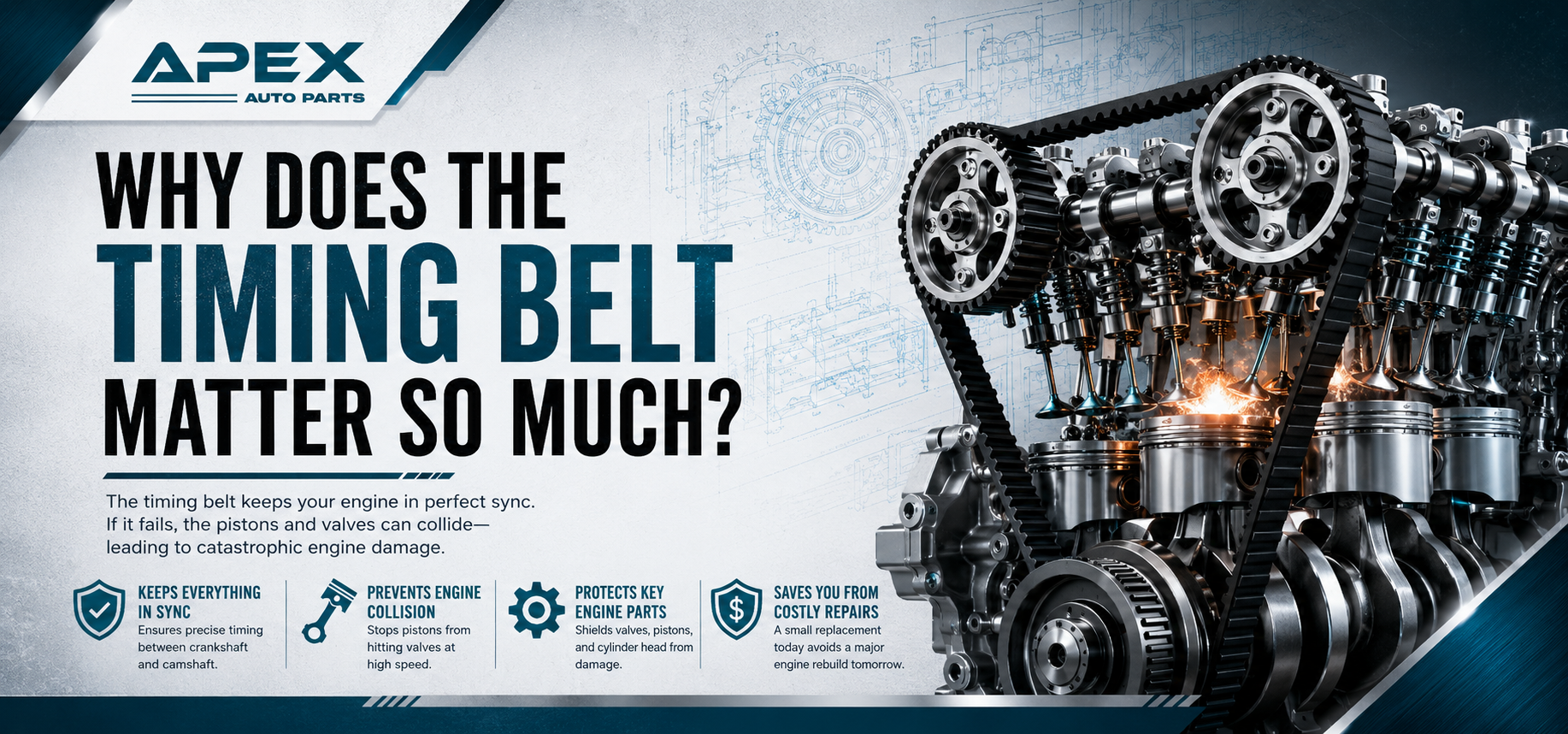
An engine must complete several actions in a precise order.
The piston moves down, drawing air and fuel into the cylinder. It then moves upward to compress the mixture. Combustion pushes the piston down again, and the exhaust gases must leave through the exhaust valves.
For this process to work, the valves must open and close at exactly the right time.
If the timing belt becomes loose or jumps one tooth, the camshaft and crankshaft can move out of position. The engine may still run, but it can suffer from poor starting, rough idle, reduced power, fault codes, and misfires.
If the belt breaks completely, the camshaft stops turning while the crankshaft may continue moving for a short moment. In an interference engine, that is enough for the pistons to hit the valves.
This is why a timing belt is not just another service item. It is a protective part that helps prevent contact between internal engine components.
Can a Timing Belt Really Snap Without Warning?
Yes, it can.
Some belts show signs of wear before they fail, but many do not give the driver a clear final warning. The belt may be cracked on the inside, weakened around the teeth, or damaged by contamination, yet still look acceptable on the visible side.
The belt is also hidden behind covers, so most drivers never see it.
A timing belt may fail suddenly because of:
- Age and rubber deterioration
- Excessive mileage
- Oil contamination
- Coolant contamination
- Incorrect belt tension
- A seized idler pulley
- A failed tensioner
- A seized water pump
- Incorrect installation
- Poor quality replacement parts
- Misalignment between the pulleys
- Debris entering the timing cover.
The belt itself is only one part of the system. A perfectly good belt can still fail if a pulley locks up or the tensioner stops controlling it correctly.
That is why replacing only the belt is often a false economy.
When Should a Timing Belt Be Replaced?
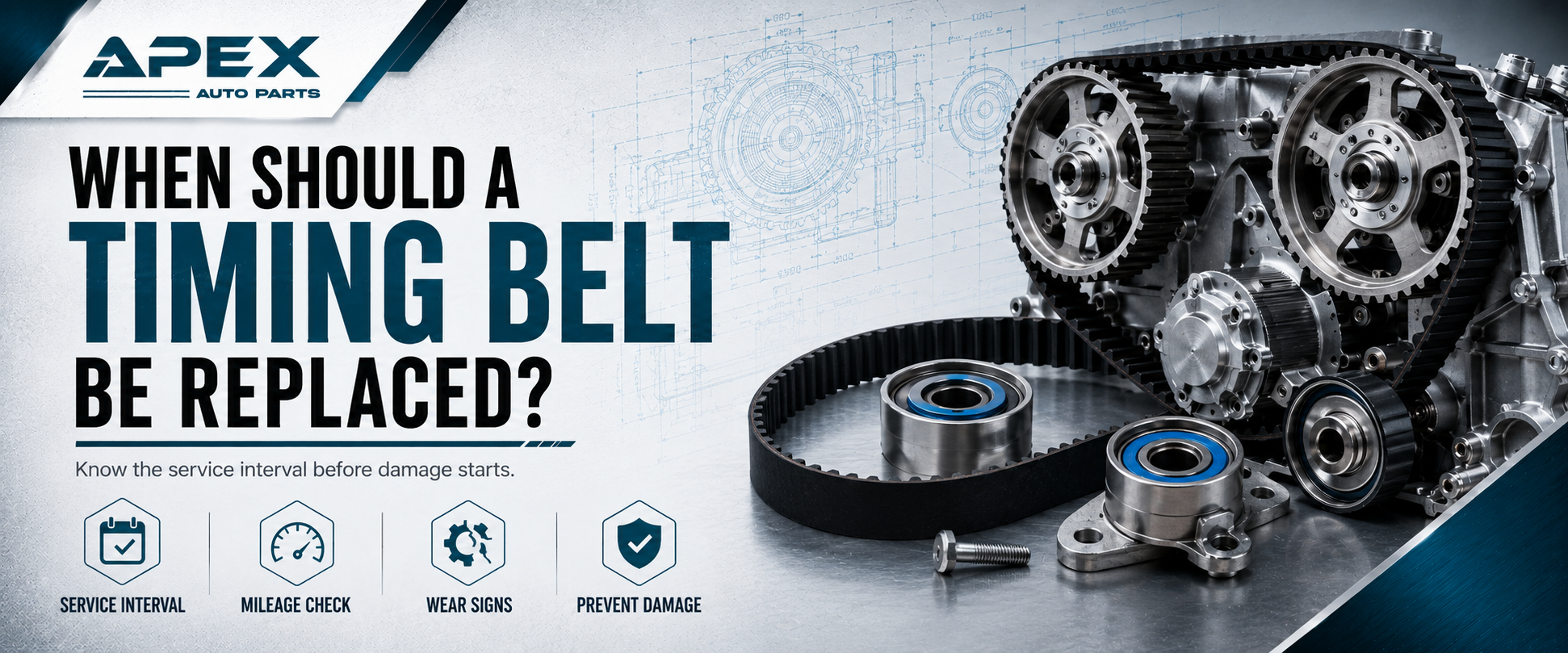
There is no single timing belt interval that applies to every car.
The correct interval depends on the vehicle manufacturer, engine code, belt design, age, mileage, and operating conditions. Some manufacturers specify replacement mainly by mileage, while others give both a mileage limit and a time limit.
The belt should normally be changed when the first limit is reached.
For example, a vehicle may not cover much annual mileage, but its belt can still become brittle with age. A ten-year-old low-mileage belt may be more dangerous than a younger belt fitted to a higher-mileage vehicle.
Always check:
- The owner’s handbook
- The manufacturer’s service schedule
- Previous garage invoices
- The service book
- The engine code
- The date and mileage of the last replacement
Do not rely on a general internet interval for a different engine. Two models sold in the same year may use different engines with different belt schedules.
When the history is unknown, the safest option is usually to treat the belt as overdue.
Why Does Age Matters as Much as Mileage?
Timing belts deteriorate even when the car is not driven very far.
Heat cycles cause the rubber to expand and contract. Cold starts to place sudden load on the belt. Oil vapor, moisture, and engine bay temperature all affect the material over time.
A vehicle used mainly for short trips may also experience repeated starts without covering much distance. Each start places tension on the timing system.
This means a low-mileage car is not automatically safe.
If a vehicle is old and there is no proof of replacement, do not assume the belt has plenty of life left simply because the mileage is low.
Common Signs of Timing Belt Trouble
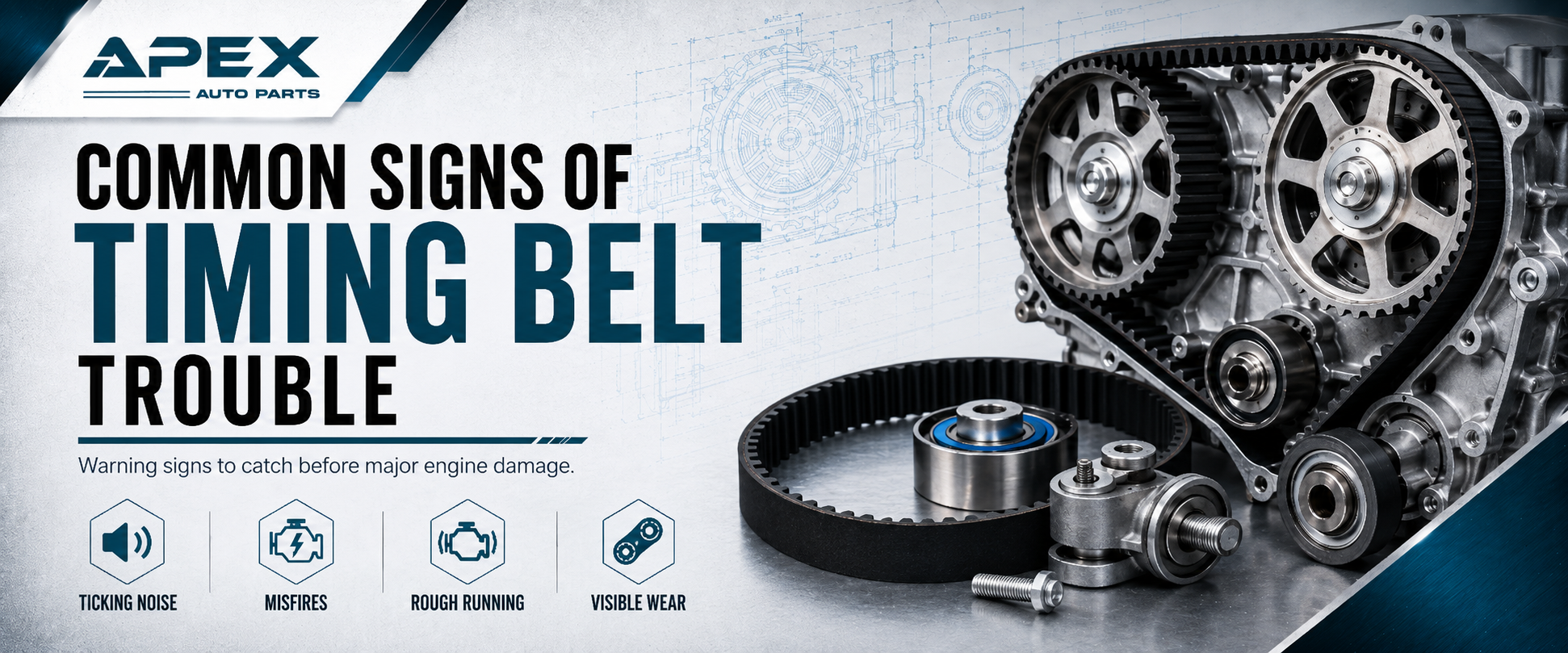
A worn belt does not always produce symptoms. However, certain signs should lead to a prompt inspection, especially when the replacement history is unclear.
Ticking or tapping from the timing area
A ticking sound from the front or side of the engine may come from a worn tensioner, pulley, water pump, or loose timing belt.
The sound may increase with engine speed or be more noticeable at cold start.
Not every ticking noise comes from the timing belt. Low oil pressure, hydraulic lifters, injectors, and valve train parts can create similar sounds. However, a noise near the timing cover should never be ignored when the belt is old or overdue.
Rattling during start-up
A timing belt normally runs quietly. Rattling, slapping, or knocking from behind the cover may indicate that the belt is loose or that the tensioner is no longer holding it properly.
A weak tensioner can allow the belt to move excessively. This increases the risk of it jumping teeth or being damaged by surrounding parts.
Rough idle
If the timing belt slips, the valve timing may be misaligned.
The engine may shake at idle, sound uneven, or struggle to maintain a steady speed. In more serious cases, the engine may stall.
Rough idle can also be caused by ignition, fuel, air intake, or compression problems, so proper diagnosis is needed. A mechanic should compare crankshaft and camshaft position data and check for timing-related fault codes.
Engine misfires
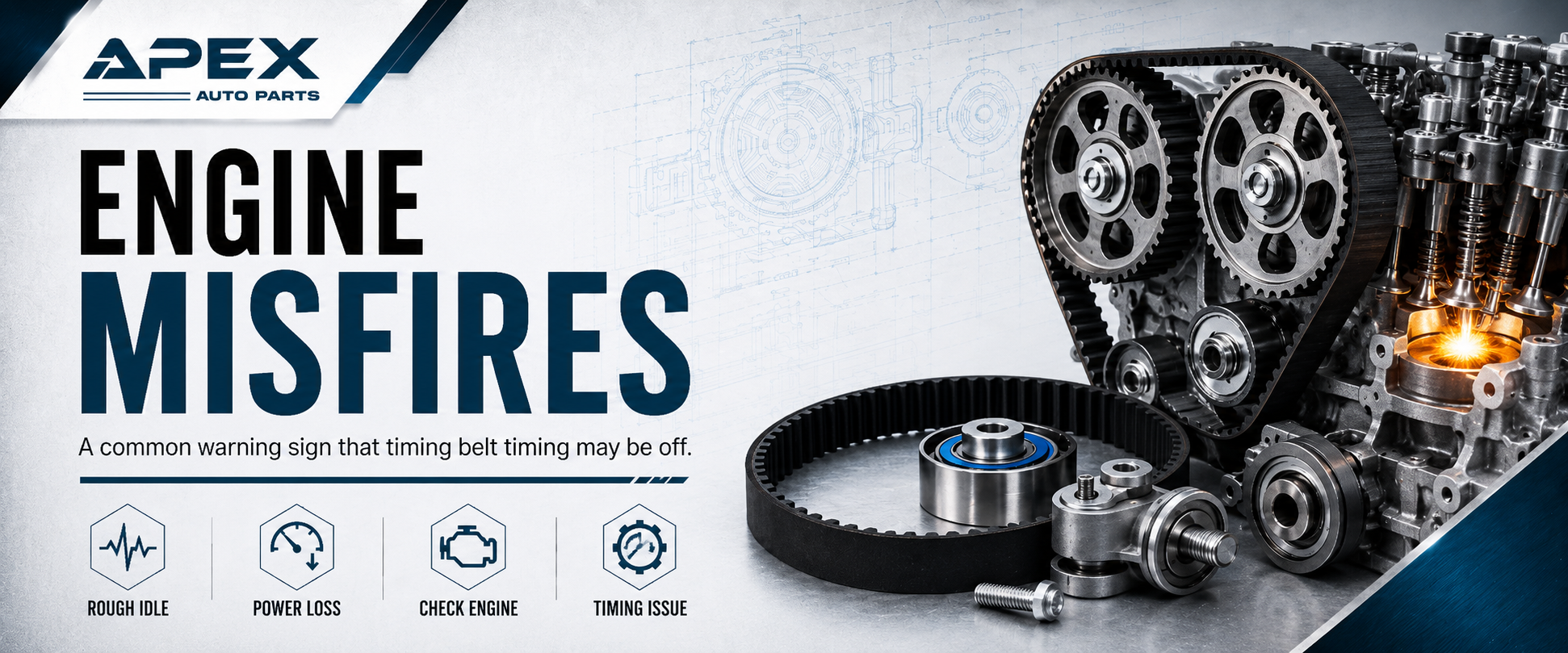
Incorrect timing can prevent the cylinders from filling and burning properly.
The driver may feel hesitation, shaking, poor acceleration, or a sudden loss of smoothness. The engine management light may also come on.
A misfire does not prove that the belt is faulty, but timing problems should be considered when the usual ignition and fuel checks do not explain the fault.
Hard starting
A belt that has stretched or jumped a tooth can make the engine difficult to start.
The engine may crank for longer than usual, start and cut out, or run badly for the first few seconds. If the belt has broken, the starter may turn the engine faster than normal because the camshaft is no longer operating the valves correctly.
When an engine suddenly cranks unusually fast and does not start, stop trying. Repeated cranking will not repair the problem and may add to internal damage.
Loss of power
When valve timing is wrong, the engine cannot breathe properly.
The driver may notice weak acceleration, poor response, reduced pulling power, or difficulty climbing hills. Fuel economy may also worsen because the engine is no longer operating efficiently.
A belt that has moved only one tooth can create a noticeable performance problem without causing complete failure.
Camshaft or crankshaft timing fault codes
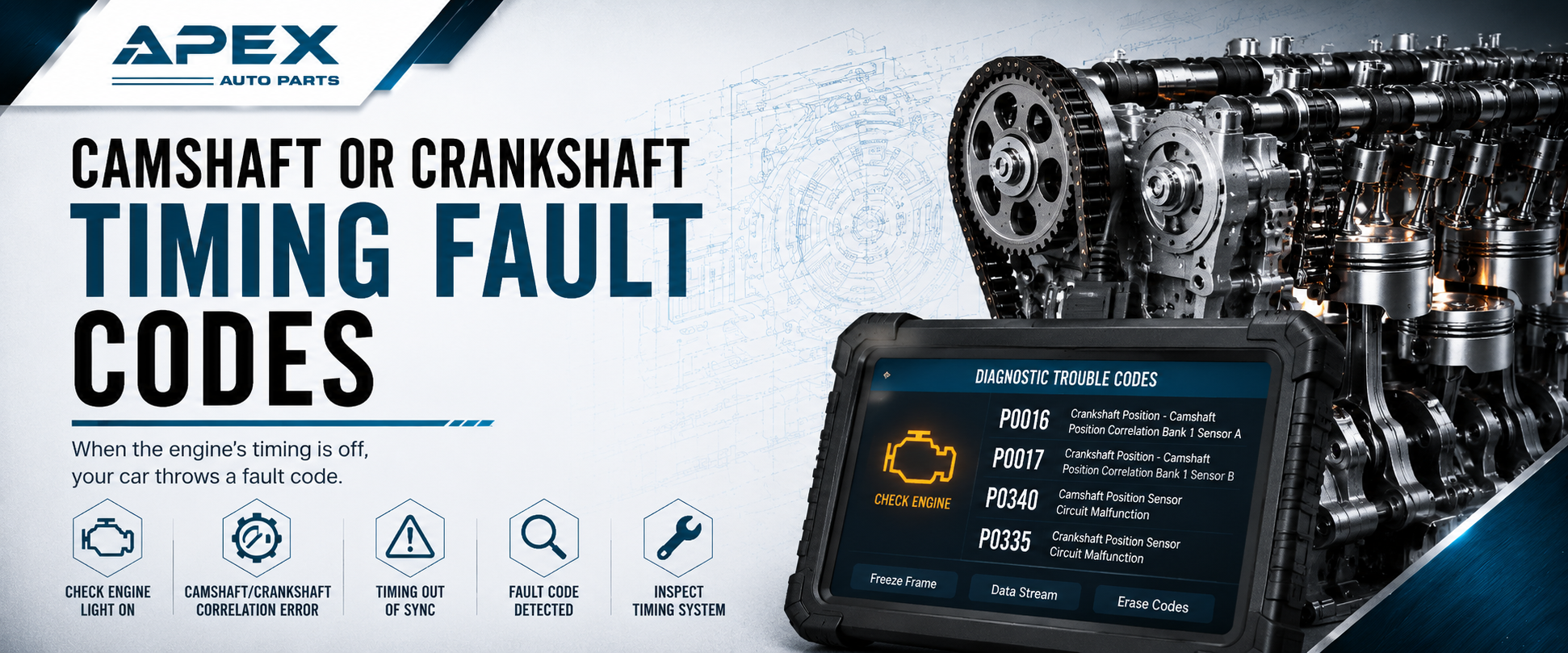
Modern engines use sensors to monitor crankshaft and camshaft position.
If the two signals no longer match, the engine control unit may record correlation fault codes. A warning light may appear, and the engine may enter reduced power mode.
Sensor faults and wiring problems can produce similar codes, so the timing system should be checked rather than replacing sensors blindly.
Oil Leaks Can Destroy a Timing Belt
Oil contamination is one of the most important timing belt risks.
Engine oil can leak from the camshaft seal, crankshaft seal, rocker cover, timing cover, or another nearby gasket. Once oil reaches the belt, it can soften and swell the rubber.
The belt may begin to lose strength, shed material, or damage its teeth.
An oil-contaminated timing belt should not simply be wiped clean. The leak must be repaired, and the belt and related components should be assessed for replacement.
Some modern engines use wet timing belts that run inside the engine oil. These belts require the exact oil specification stated by the manufacturer. Incorrect oil, poor servicing, or contamination can cause the belt material to break down, blocking the oil pickup.
The key point is simple: oil around the timing belt area is never harmless.
Coolant Leaks and Water Pump Failure
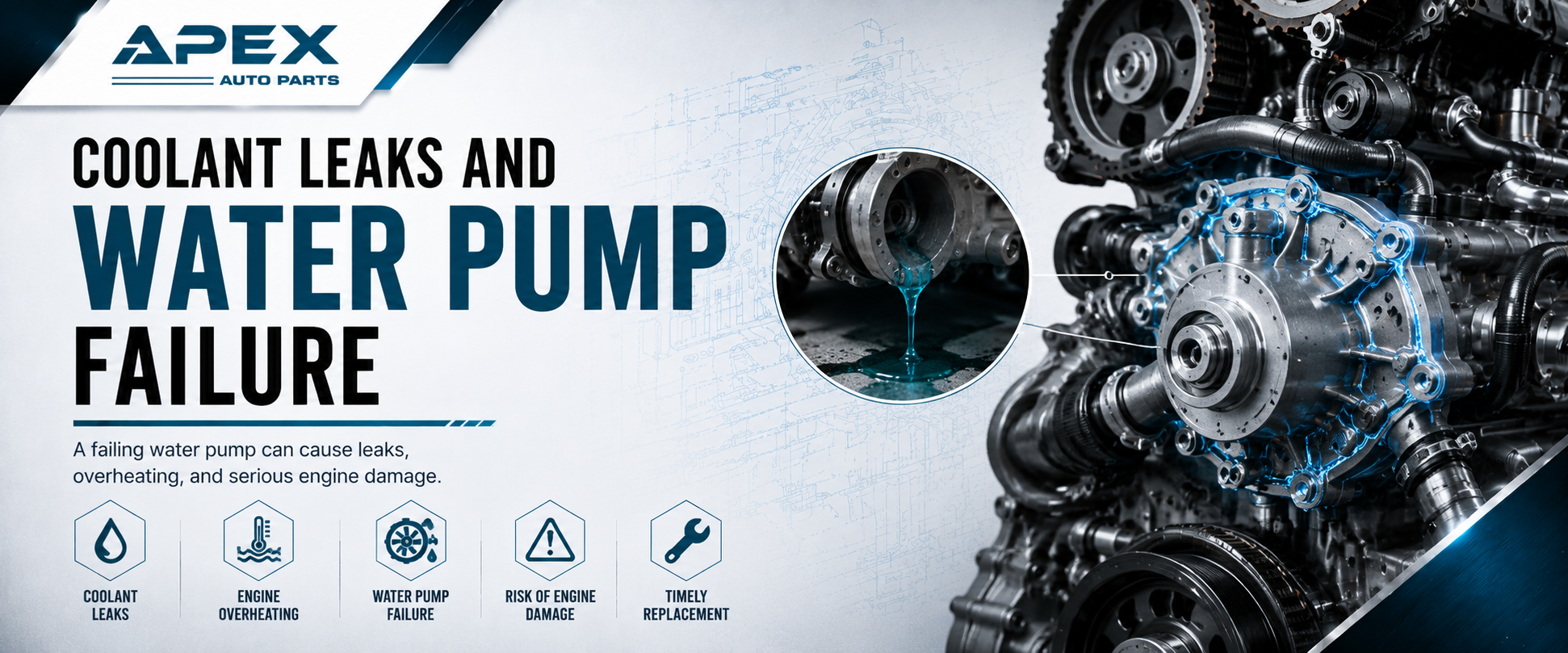
On many engines, the timing belt drives the water pump.
This makes the water pump part of the timing system. If its bearing becomes rough or seizes, it can overload the belt. If the pump leaks, coolant may contaminate the belt, reducing its service life.
Warning signs can include:
- Coolant marks near the timing cover
- Grinding or rumbling noise
- Engine overheating
- Movement in the pump bearing
- Coolant loss without an obvious external leak
Replacing the water pump during the timing belt job often makes sense when it is driven by the belt. The labor needed to access both parts is usually similar, so changing the pump later can mean paying for the same dismantling work twice.
However, the decision should follow the engine design and the vehicle manufacturer’s guidance.
Visible Signs of Belt Wear
When the belt is exposed during inspection, a mechanic may look for:
- Cracks across the belt
- Frayed edges
- Missing or damaged teeth
- Shiny or glazed surfaces
- Oil or coolant contamination
- Rubber dust inside the cover
- Uneven wear
- Separation between belt layers
- Damage caused by misalignment
A belt can still fail without obvious visible damage, so appearance should not replace the scheduled interval.
A clean-looking belt with no record of replacement may still be overdue.
What Happens When a Timing Belt Snaps?
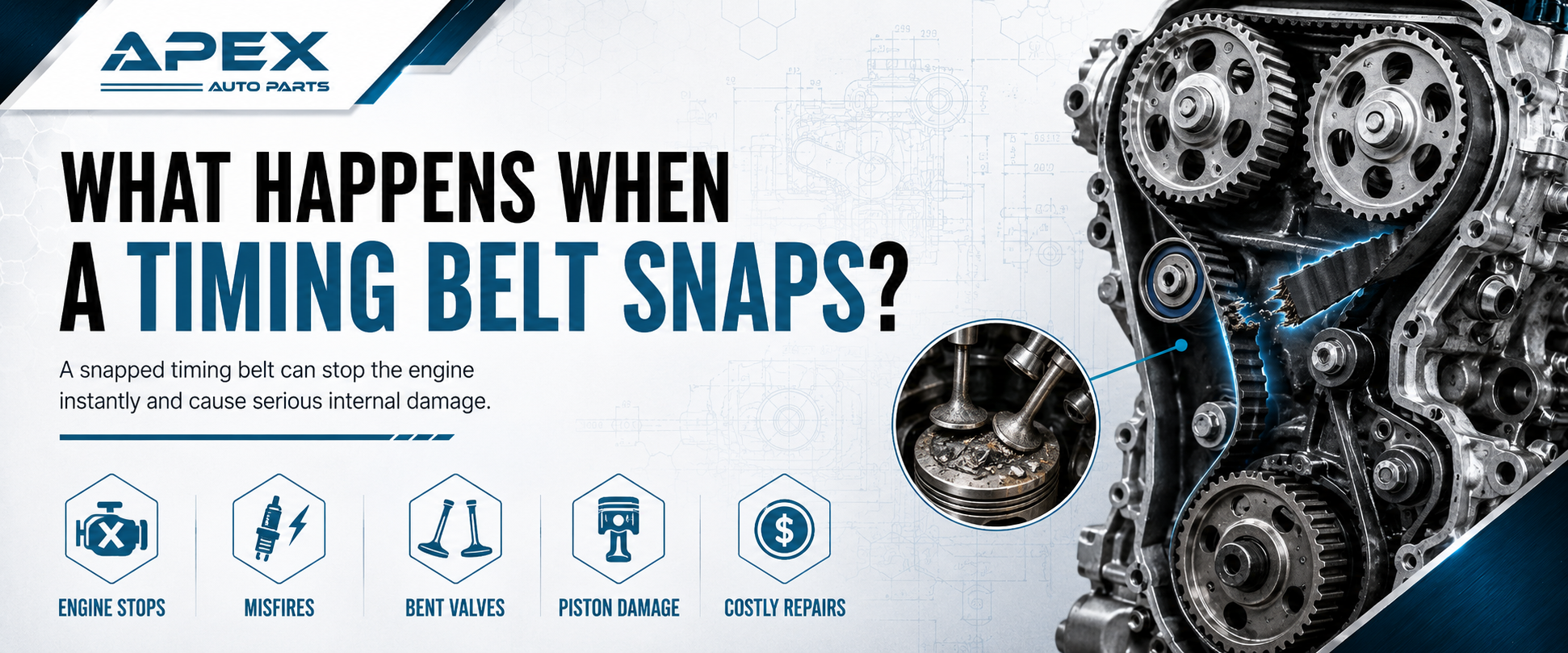
The outcome depends on the engine design and the speed at which the failure happens.
In a non-interference engine, the pistons and valves do not normally enter the same space. The engine will stop, but internal contact may be avoided.
In an interference engine, the pistons and valves can collide.
Possible damage includes:
- Bent inlet or exhaust valves
- Broken valve heads
- Damaged pistons
- Cracked valve guides
- Damaged rocker arms
- Camshaft damage
- Cylinder head damage
- Broken camshaft followers
- Damaged connecting rods in severe cases
A compression test, leak-down test, borescope inspection, or cylinder head removal may be needed to assess the damage.
The repair could range from replacing the timing system to rebuilding the cylinder head or replacing the complete engine.
What Is Included in a Timing Belt Kit?
A timing belt kit usually includes more than the belt itself.
Depending on the vehicle and manufacturer, it may contain:
- Timing belt
- Automatic or manual tensioner
- Idler pulleys
- Guide pulleys
- Tensioner bolts
- Studs or washers
- Water pump
- Water pump gasket
- Crankshaft or camshaft bolts
- Auxiliary belt
- Timing cover seals
Not every kit contains the same components. Always check the contents before ordering.
A full kit is normally the better repair because all the moving parts in the timing system have covered the same mileage. Fitting a new belt over an old, noisy pulley or a weak tensioner leaves a major risk of failure.
Why Does the Tensioner Matters?
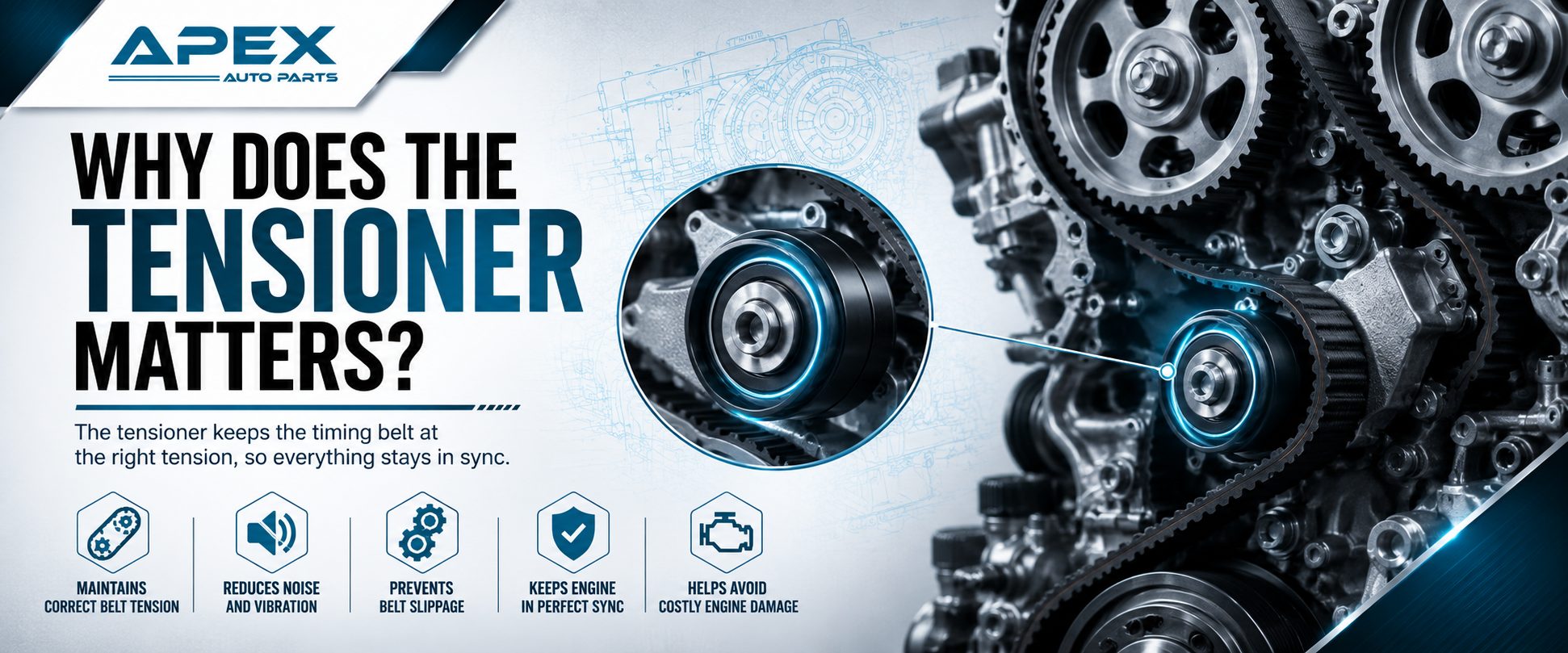
The tensioner keeps the belt tight enough to stay engaged with the sprockets without placing too much load on it.
If the tension is too low, the belt may flap, jump teeth, or wear unevenly.
If the tension is too high, it may damage the belt, water pump, camshaft bearings, or pulley bearings.
Automatic tensioners can weaken, leak, or seize. Manual tensioners can be set incorrectly during installation.
This is one reason timing belt work should be carried out using the correct procedure and tools rather than by estimating the tension.
Why Should Idler Pulleys Be Replaced?
Idler pulleys guide the belt along the correct path.
Their bearings rotate every time the engine runs. As they wear, they may become noisy, loose, rough, or difficult to turn. A seized idler can destroy a new belt within seconds.
Because the timing cover must already be removed to access these parts, replacing old pulleys at the same time is usually sensible.
Should the Water Pump Be Changed When the Timing Belt Is Replaced?
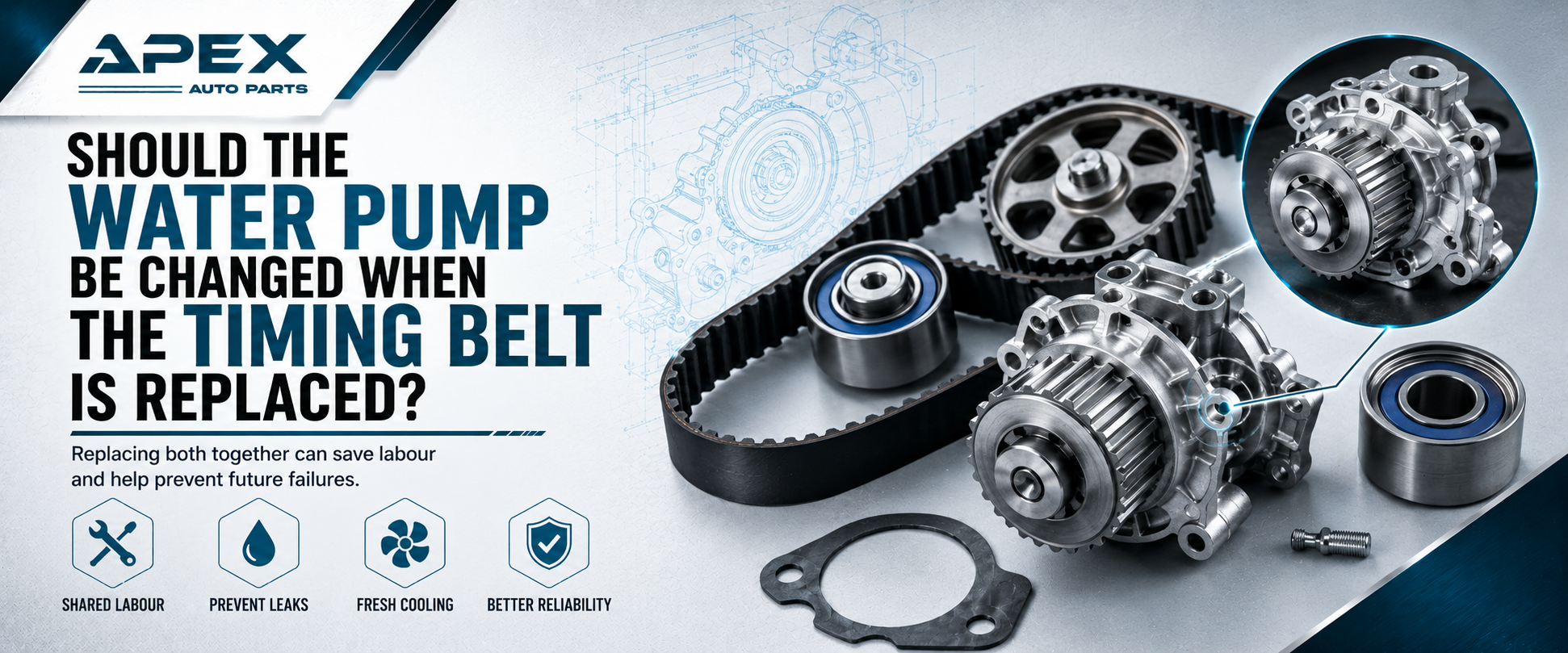
When the water pump is driven by the timing belt, replacement is often recommended during the same job.
There are three main reasons:
First, the pump has usually covered the same mileage as the old belt.
Second, a seized or leaking pump can damage the replacement belt.
Third, replacing it later requires much of the same labor again.
The mechanic should also use the correct coolant and bleed the cooling system properly after the repair. Poor bleeding can cause overheating even when the new pump has been fitted correctly.
What Happens During a Timing Belt Replacement?
A proper replacement involves more than removing one belt and fitting another.
The mechanic normally needs to:
- Confirm the engine code and correct it.
- Disconnect or remove parts blocking access.
- Support the engine if an engine mount must be removed.
- Remove auxiliary belts and timing covers.
- Set the engine to the correct timing position.
- Lock the crankshaft and camshaft where required.
- Remove the old belt, tensioner, and pulleys.
- Inspect for oil or coolant leaks.
- Replace the water pump where required.
- Fit the new components in the correct order.
- Set the correct belt tension.
- Rotate the engine by hand.
- Recheck the timing marks.
- Reassemble the covers and removed parts.
- Start the engine and inspect for noise, leaks, or fault codes.
Some engines require model-specific locking tools. Paint marks and guesswork are not a safe substitute.
Signs of an Incorrectly Fitted Timing Belt
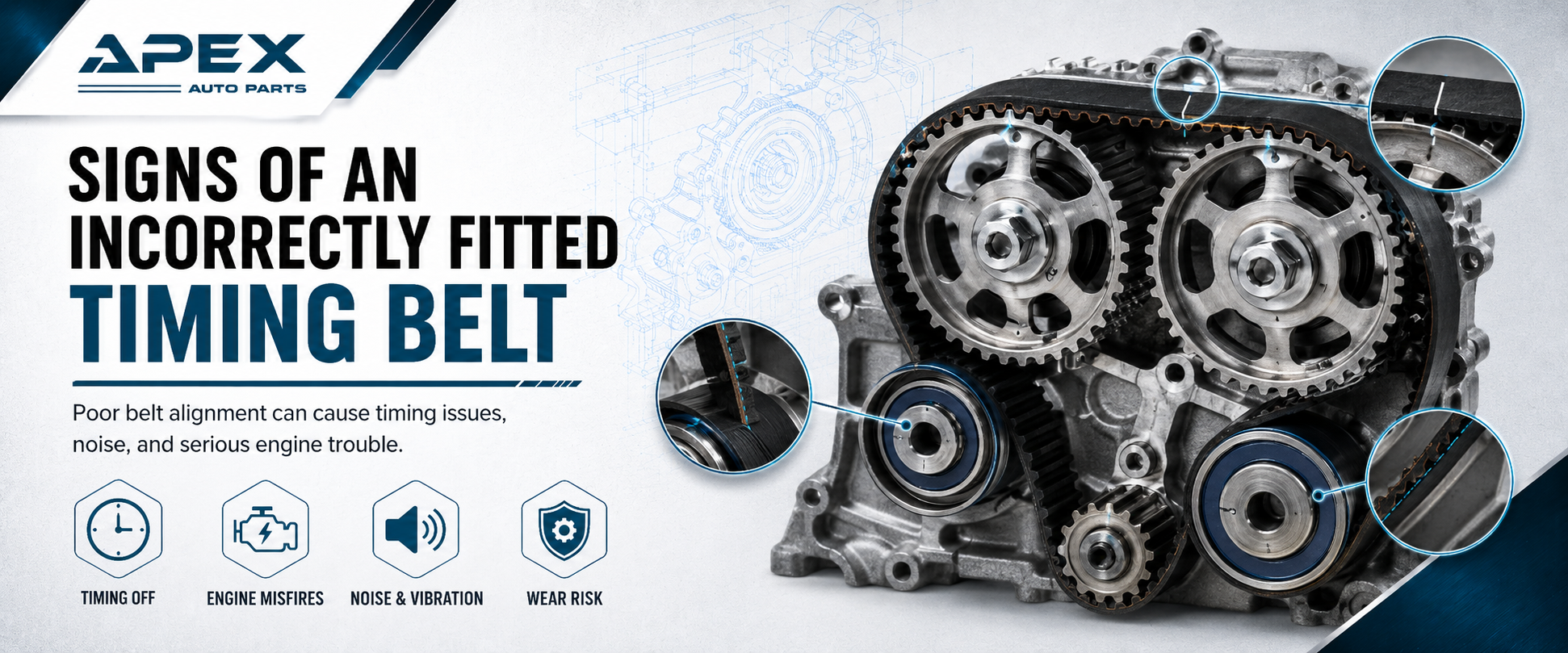
Problems after replacement may include:
- Rough idle
- Hard starting
- Loss of power
- Engine warning light
- Camshaft and crankshaft correlation codes
- Whining or rubbing noise
- Ticking from the timing cover
- Coolant leaks
- Overheating
- Belt tracking towards one side
A whining sound may indicate excessive belt tension. A slapping sound may suggest low tension. Poor performance and fault codes may mean that the belt is one or more teeth out of position.
Any unusual symptom after timing belt work should be checked immediately.
Used Cars and Unknown Timing Belt History
A timing belt should be one of the first items to check when buying a used car.
Ask the seller for proof, not just a verbal claim.
Useful evidence includes:
- A dated garage invoice
- Recorded mileage
- Details of the timing belt kit
- Water pump replacement information
- Garage contact details
- Service book entry
- Parts invoice
A sticker under the bonnet may be helpful, but it is not as reliable as a proper receipt.
When there is no proof, allow for the replacement cost in the purchase price. Treating the belt as overdue may prevent a far larger repair later.
Timing Belt VS Timing Chain
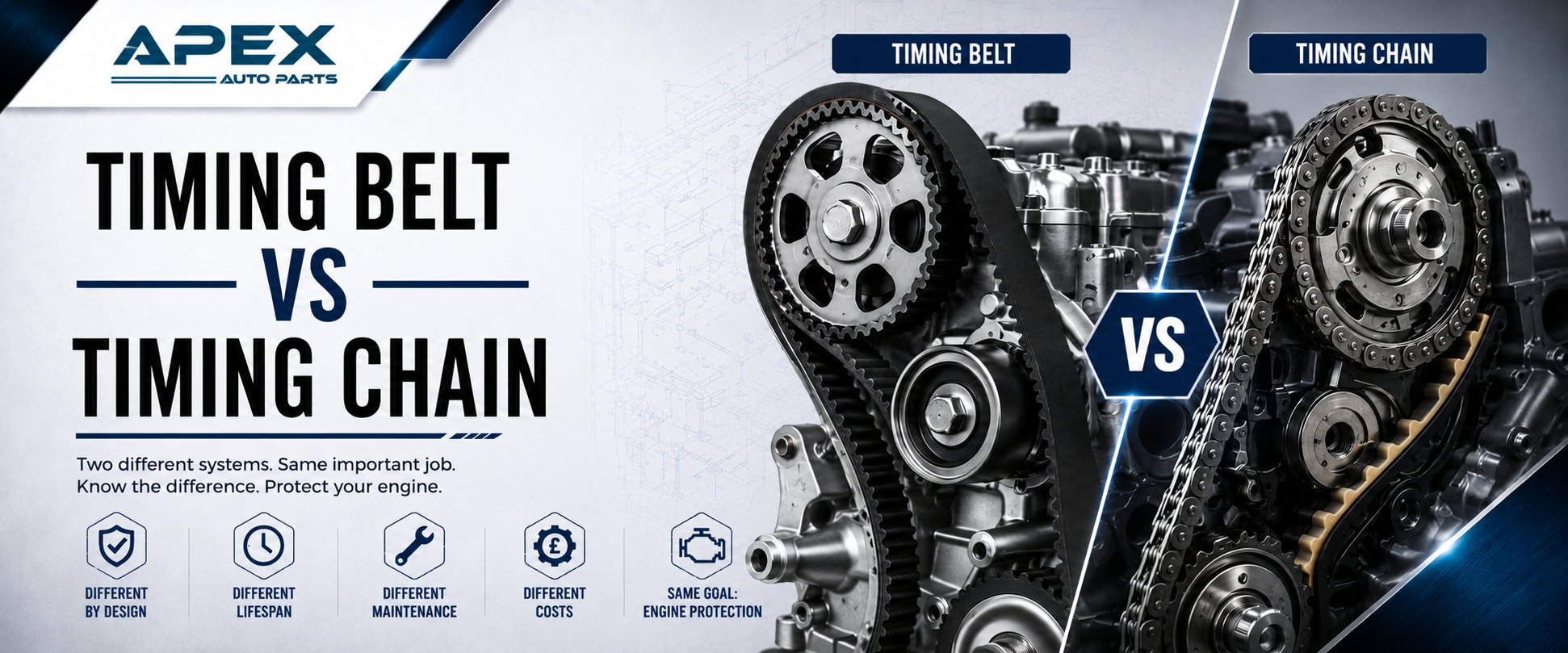
Timing belts and timing chains perform the same basic job, but their construction and service needs differ.
A timing belt is made of reinforced rubber and typically has a scheduled replacement interval.
A timing chain is made of metal and runs in engine oil. It may be designed to last longer, but it can still stretch, wear out, rattle, or fail due to tensioner or guide failure.
Do not assume that a chain is maintenance-free. Poor oil quality, low oil pressure, and long service intervals can shorten its life.
The correct engine code will confirm whether the vehicle uses a timing belt, timing chain, or, in some cases, both.
Choosing the Right Timing Belt Kit
Timing kits are not universal.
Even within one vehicle model, the correct kit may depend on:
- Engine code
- Production date
- Power output
- Number of belt teeth
- Belt width
- Tensioner design
- Water pump type
- Sprocket design
- Original part number
- Vehicle identification number
Buying by model name alone can lead to mistakes.
At Apex Auto Parts, customers should provide their vehicle registration, engine code, VIN (where needed), and any available original part numbers. A proper fitment check is especially important when an engine has several production versions.
The lowest-priced kit is not always the best value. The quality of the belt, tensioner, bearings, seals, and water pump all matters because one weak part can place the whole engine at risk.
How to Help a Timing Belt Last?
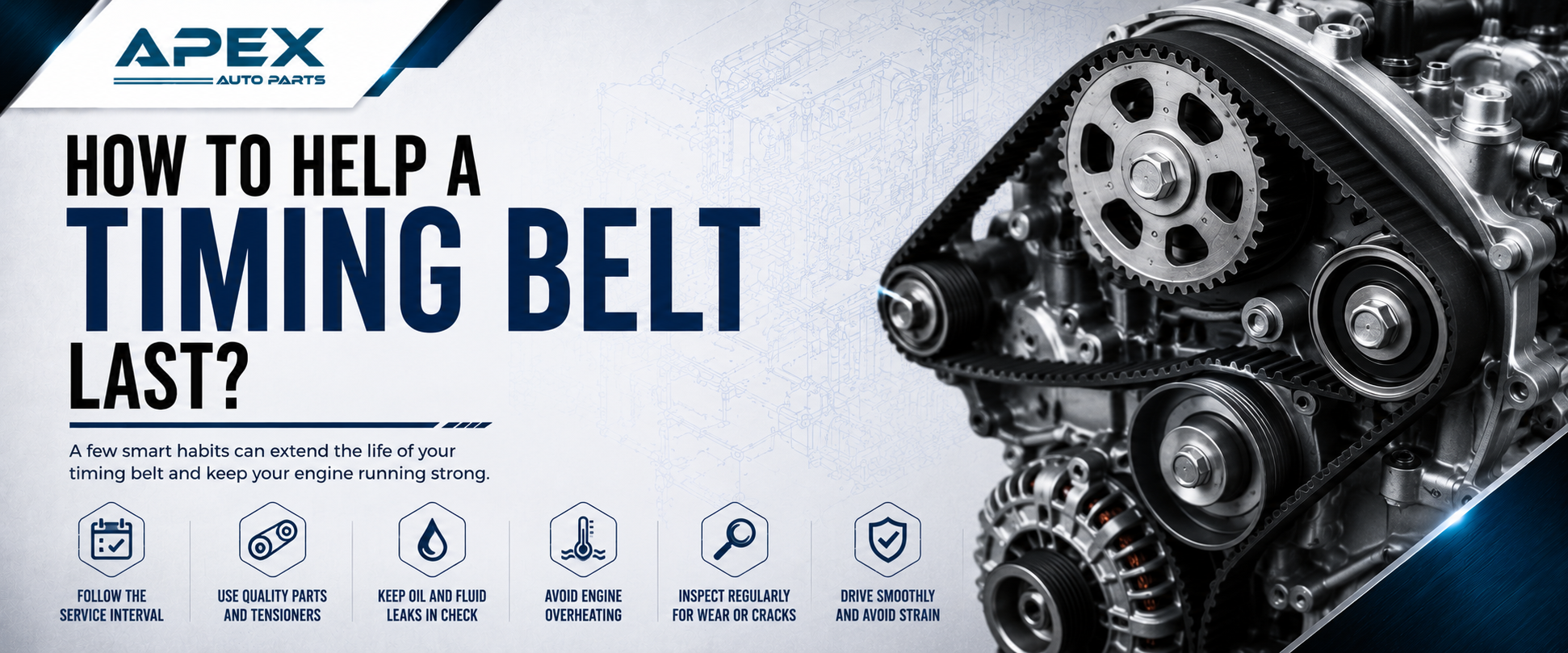
A timing belt still needs replacement at the scheduled time, but good maintenance can reduce the chance of early failure.
Keep the engine free from oil and coolant leaks. Use the correct engine oil and coolant. Investigate unusual noises quickly. Replace related components as part of the full repair. Make sure the timing covers and fasteners are fitted correctly so dirt cannot enter the system.
Most importantly, keep a record of the replacement date, mileage, parts used, and garage details.
A new belt should not become another unknown item for the next owner.
Final Thoughts
A timing belt can fail without a dramatic warning. That is why prevention matters more than waiting for symptoms.
The belt keeps the crankshaft and camshaft synchronized. If that timing is off, the engine may run poorly, refuse to start, or sustain internal damage.
Watch for ticking, rattling, rough running, misfires, hard starting, oil leaks, coolant leaks, and timing-related fault codes. However, remember that a belt can still fail without producing any of these signs.
The most reliable protection is to follow the correct time and mileage interval, confirm the service history, repair leaks, and fit a complete, good-quality timing belt kit when replacement is due.
A planned timing belt change costs far less than bent valves, damaged pistons, or a replacement engine.
Apex Auto Parts supplies timing belt kits and related engine components for a wide range of UK vehicles. Correct fitment should always be checked using the vehicle registration, engine code, production details, and original part number before ordering.
FAQS
1. What does a timing belt do?
A timing belt connects the crankshaft and camshaft so the pistons and valves move in the correct order. Its teeth grip the engine sprockets and maintain accurate valve timing. If the belt slips or snaps, the engine may stop, run badly, or suffer serious internal damage.
2. Can a timing belt snap without making a noise?
Yes. A timing belt can fail without giving the driver a clear final warning. Internal fibers may weaken, teeth can separate, or a tensioner may fail while the belt still looks acceptable. This is why replacement should follow the manufacturer’s time-and-mileage schedule rather than waiting for noise.
3. How do I know when my timing belt was last changed?
Check the service book, garage invoices, repair receipts, or a replacement sticker under the bonnet. The best proof is a dated invoice showing the mileage and parts fitted. If there is no reliable record, it is safer to treat the belt as overdue and arrange an inspection.
4. What are the first signs of a bad timing belt?
Possible signs include ticking or rattling near the timing cover, rough idle, hard starting, loss of power, misfires, warning lights, or camshaft and crankshaft correlation codes. Oil or coolant leaks near the belt are also serious. However, some belts fail without noticeable symptoms.
5. What happens if a timing belt breaks while driving?
The engine will normally stop immediately. In an interference engine, the pistons may strike open valves, causing valve damage, piston damage, rocker arm failure, or cylinder head damage. The vehicle should be recovered rather than restarted until the timing system and the engine's internal condition have been checked.
6. Is replacing only the timing belt enough?
Usually, fitting a full kit is safer. The tensioner, idler pulleys, and other bearings have normally covered the same mileage as the belt. If one of these old parts seizes or becomes loose, it can destroy the new belt and cause the same engine damage the repair was meant to prevent.
7. Should I replace the water pump with the timing belt?
It is often recommended when the timing belt drives the water pump. The pump may fail, leak coolant, or seize, damaging the belt. Replacing it during the same job can also save labor because the timing area is already open. Follow the engine manufacturer’s repair guidance.
8. Can an oil leak damage a timing belt?
Yes. Engine oil can soften, swell, or weaken a conventional rubber timing belt. Oil may also damage the belt teeth, causing it to slip. The source of the leak must be repaired, and any contaminated belt should be replaced rather than simply cleaned and reused.
9. Is a timing chain better than a timing belt?
A timing chain can last longer, but it is not automatically better or maintenance-free. Chains can stretch, guides can break, and tensioners can fail, especially when oil servicing is poor. Belts are quieter and lighter but need planned replacement. Both systems require correct maintenance.
10. How do I choose the correct timing belt kit?
Use the vehicle registration, engine code, production date, VIN where required, and original part number. Check whether the kit includes the correct tensioner, pulleys, and water pump. Do not rely only on the vehicle model or product image, because one model may use several different engines.
References:
The AA
RAC Drive
Continental Engine parts