
 info@apexautoparts.co.uk
 +44 203 915 7535
 Safe & Fast Shipping
 Whish List
 Compare
 Sign In

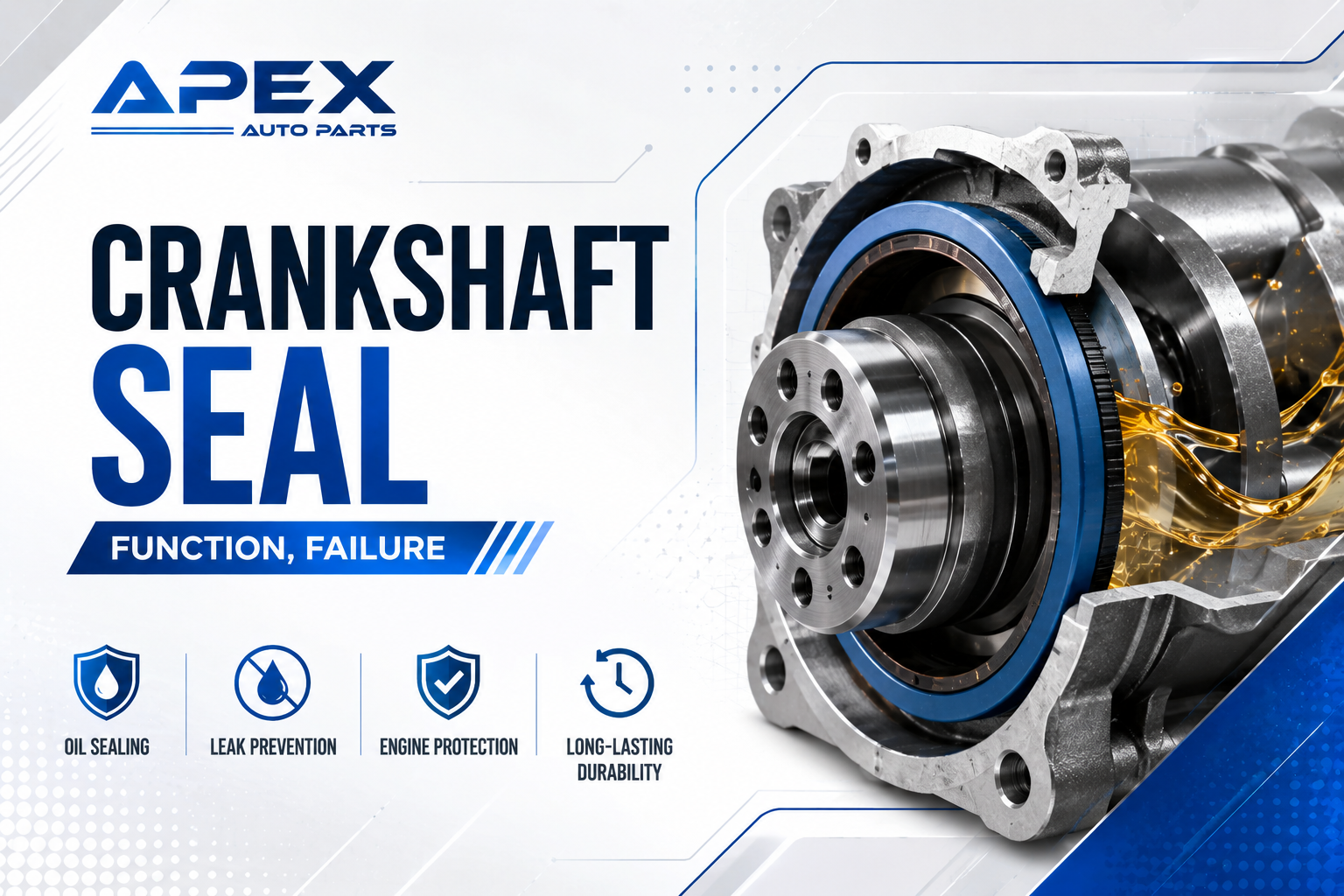
A car engine needs oil to stay alive. Oil moves around the engine and protects metal parts from rubbing against each other. But that oil must stay inside the engine. If oil starts leaking, the engine can lose protection, make a mess, and even sustain major damage. One small part that helps keep oil inside is the crankshaft seal.
The crankshaft seal may not look like an important part, but it has a big job. It seals the area where the crankshaft exits the engine block. The crankshaft is always spinning when the engine is running. The seal must hold oil back while allowing the crankshaft to turn smoothly. That is not an easy job. It deals with heat, oil pressure, engine movement, age, dirt, and constant spinning.
When this seal starts to fail, oil can leak from the front or rear of the engine. A small leak may only leave a few drops on the driveway. A larger leak can cover the bottom of the engine, drip onto other parts, cause a bad smell, and lower the oil level. If ignored, a crankshaft seal leak can lead to bigger problems.
Many drivers only notice the issue when they see oil under the car. Others may smell burning oil. Some may fail an MOT inspection because of an oil leak. In worse cases, the oil level drops too much, and the engine starts to suffer.
This guide explains what a crankshaft seal does, why it fails, the signs to watch for, when replacement is needed, and how to prevent the same leak from recurring. Apex Auto Parts helps UK drivers, mechanics, and garages find engine parts, so choosing the correct seal and related parts matters if you want the repair to last.
What Is a Crankshaft Seal?
A crankshaft seal is a round rubber-and-metal sealing component fitted around the crankshaft. Its job is to stop engine oil from leaking out where the crankshaft exits the engine.
The crankshaft is the main rotating shaft inside the engine. It turns when the pistons move. This turning motion helps send power to the gearbox and wheels. Because the crankshaft passes through the engine block, there must be a seal around it. Without a seal, engine oil would leak out very quickly.
Most engines have two main crankshaft seals. One is at the front of the engine, near the crank pulley. The other is at the rear of the engine, between the engine and gearbox. The rear one is often called the rear crankshaft oil seal or crankshaft rear main seal.
The front seal is usually easier to reach. The rear seal is harder because the gearbox usually needs to be removed. That is why a rear seal leak can cost more in labor, even if the seal itself is not very expensive.
A healthy crankshaft seal keeps oil inside the engine while the crankshaft spins thousands of times per minute. It must seal tightly without creating too much friction. Over time, heat and age can make the seal hard, cracked, or loose.
What Does a Crankshaft Seal Do?
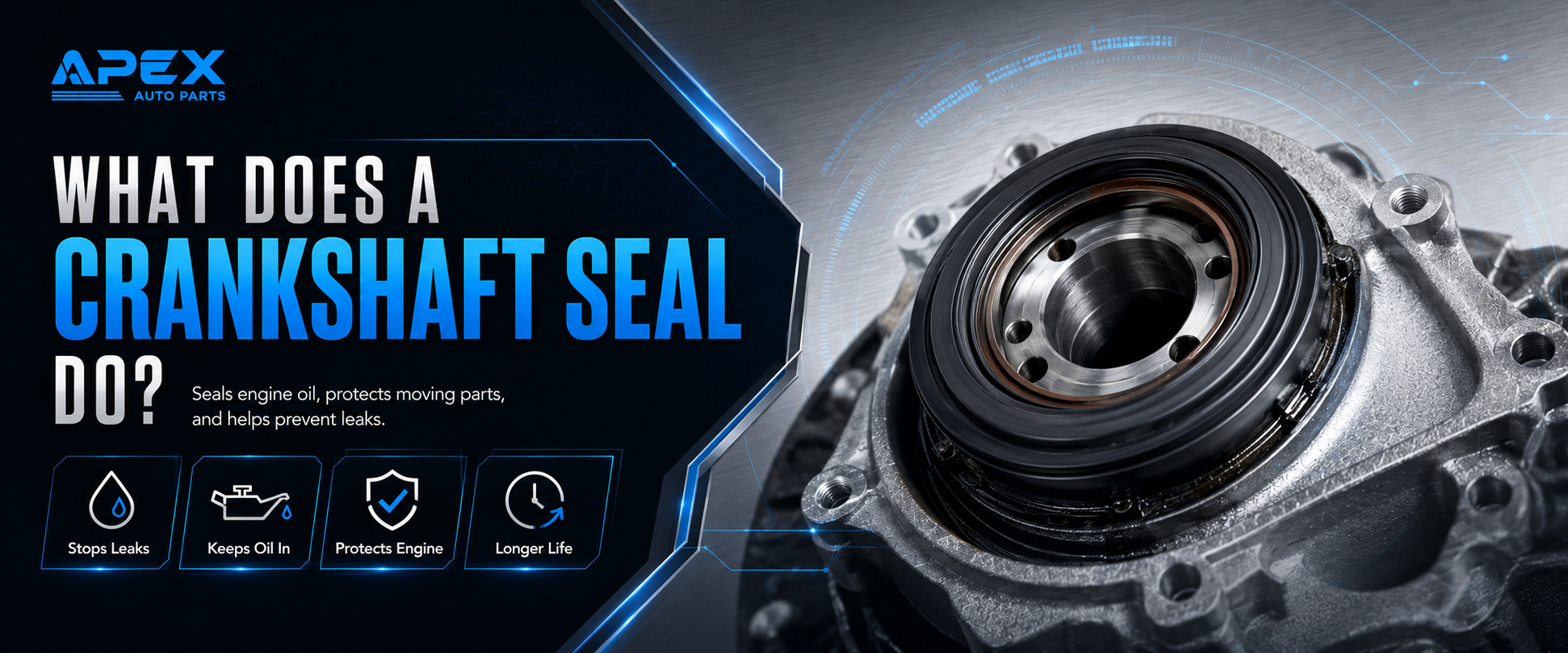 The main job of the crankshaft seal is to keep engine oil from leaking out. It seals the gap between the moving crankshaft and the engine body.
The crankshaft needs oil around its bearings and journals. This oil reduces wear and helps control heat. But oil must stay inside the engine. The crankshaft seal creates a barrier to prevent oil from escaping from the front or rear of the crankshaft.
A good seal also helps keep dirt and road grime from entering the engine. If dirt reaches the sealing surface, it can cause wear and worsen the leak.
In simple words, the crankshaft seal does three important things:
- It keeps engine oil inside the engine
- It helps protect the crankshaft area from dirt
- It allows the crankshaft to spin without oil escaping
If this part fails, the engine may still run, but oil loss can become a serious risk. Oil leaks should never be ignored, especially if they are worsening.
Front Crankshaft Seal vs Rear Crankshaft Seal
The front and rear seals perform the same basic function, but they are located in different places.
The front crankshaft seal is fitted near the crankshaft pulley. This pulley may drive the auxiliary belt, which can drive components such as the alternator, power steering pump, or air conditioning pump. If the front seal leaks, oil may appear around the lower front of the engine. It may also spread onto the belt, pulley, timing cover, or undertray.
The rear seal sits at the back of the engine. It is usually called the rear crankshaft oil seal or crankshaft rear main seal. This seal is fitted between the engine and gearbox area. If it leaks, oil may drip from the bell housing area, which is where the engine and gearbox meet.
A rear seal leak can be harder to confirm because oil from higher parts of the engine can run down and appear to be a rear main seal leak. For example, a rocker cover gasket leak, oil filter housing leak, sump leak, or turbo oil leak may travel down and appear near the gearbox.
This is why proper inspection matters before replacing the crankshaft rear main seal. Replacing the rear seal is a bigger job, so a mechanic should make sure it is really the source of the leak.
What Is a Rear Crankshaft Oil Seal?
The rear crankshaft oil seal is the seal at the back of the engine. It seals the rear end of the crankshaft where it connects near the flywheel or flex plate.
This area is hidden between the engine and gearbox. Because of this, the rear crankshaft oil seal is not easy to see or replace. In most cars, the gearbox needs to be removed to access it. In manual cars, the clutch and flywheel may also need to come off. In automatic cars, components such as the torque converter and flex plate may be involved.
The rear crankshaft oil seal works hard because it sits near a busy part of the engine. It deals with oil, heat, crankshaft movement, and pressure inside the engine. If it starts leaking, oil may drip from the lower rear of the engine. Sometimes it may look like a gearbox leak, but the type of fluid can help tell the difference.
Engine oil is usually brown or black. Gearbox oil can smell different and may appear different colors depending on the vehicle. A mechanic can clean the area and trace the leak to find the real cause.
What Is a Crankshaft Rear Main Seal?
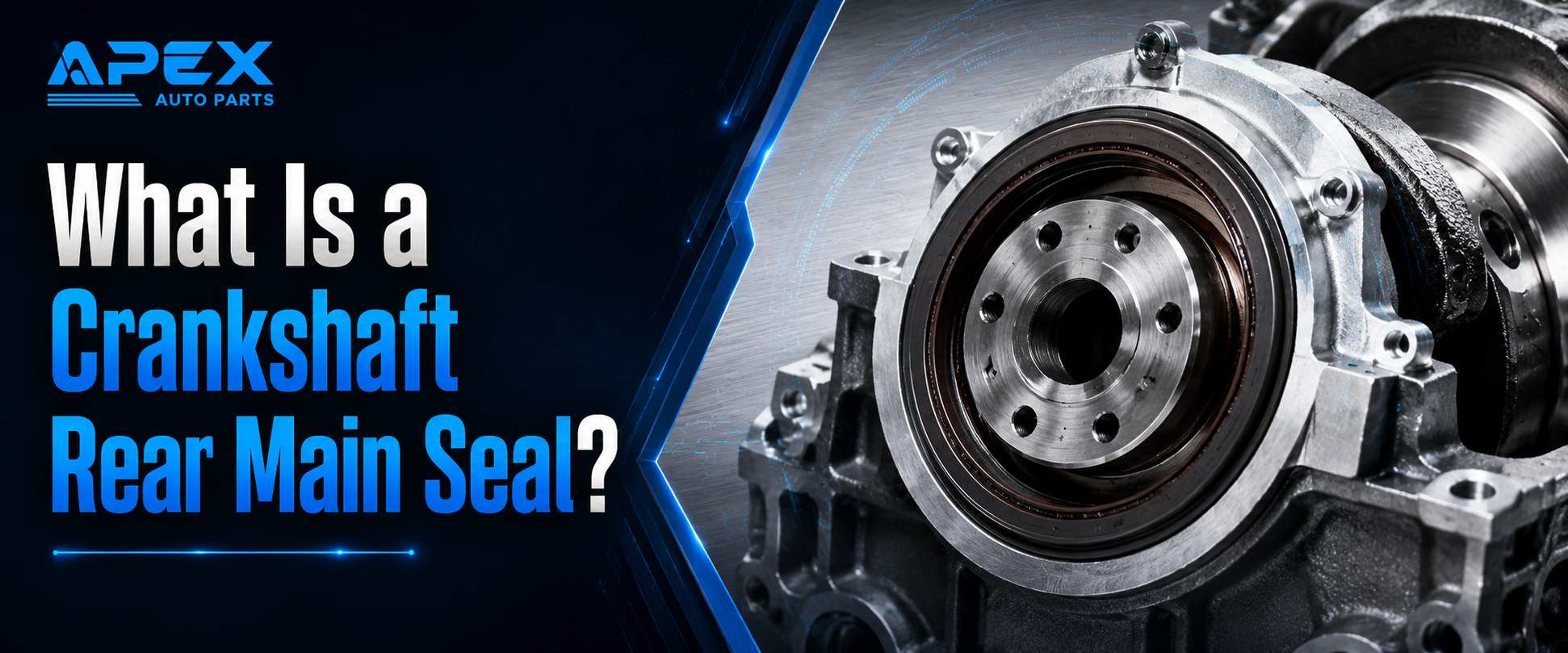
The term "crankshaft rear main seal" is another name for the rear crankshaft oil seal. Many mechanics use both names. It is called a rear main seal because it seals near the rear main bearing area of the crankshaft.
The crankshaft rear main seal is important because it stops oil from leaking out at the back of the engine. If it fails badly, oil can drip between the engine and gearbox. In manual cars, oil may even reach the clutch area. If the clutch gets oil on it, it may slip and need replacement.
This is one reason why a crankshaft rear main seal leak should be checked early. A small leak may only need monitoring for a short time, but a larger leak can damage other parts and raise repair costs.
Because the job can take many hours, some mechanics suggest replacing the rear main seal on the crankshaft when the gearbox or clutch is already removed for another repair. This can save labor later, especially on older cars.
What Causes a Crankshaft Seal Leak?
A crankshaft seal leak can happen for many reasons. Sometimes the seal simply gets old. Rubber parts do not last forever. Heat, oil, pressure, and time can make rubber hard and less flexible.
When the seal loses flexibility, it cannot properly hug the crankshaft. Oil can then pass through the gap. In some cases, the seal lip wears down, creating a small path for oil to escape.
Another common cause is crankcase pressure. The engine has a br00eathing system that helps control pressure inside the crankcase. If the breather system is blocked, pressure can build up and push oil past the seals. If you replace the seal but do not fix the pressure issue, the new seal may start leaking again.
Poor fitting can also cause leaks. If the seal is fitted at an angle, pushed in too far, damaged during installation, or placed on a dirty surface, it may fail early. The crankshaft surface itself must also be clean and smooth. A groove or scratch on the crankshaft can stop the seal from working properly.
Common causes of a crankshaft seal leak include:
- Old and hard rubber
- High engine heat
- Blocked crankcase breather
- Poor seal installation
- Wrong seal fitted
- Dirty sealing surface
- Worn crankshaft surface
- Low-quality replacement part
- Engine vibration
- Too much crankcase pressure
- Oil contamination
- Previous repair damage
Most seal leaks have a reason. A good repair should fix the cause, not just the visible leak.
Common Symptoms of a Crankshaft Seal Leak
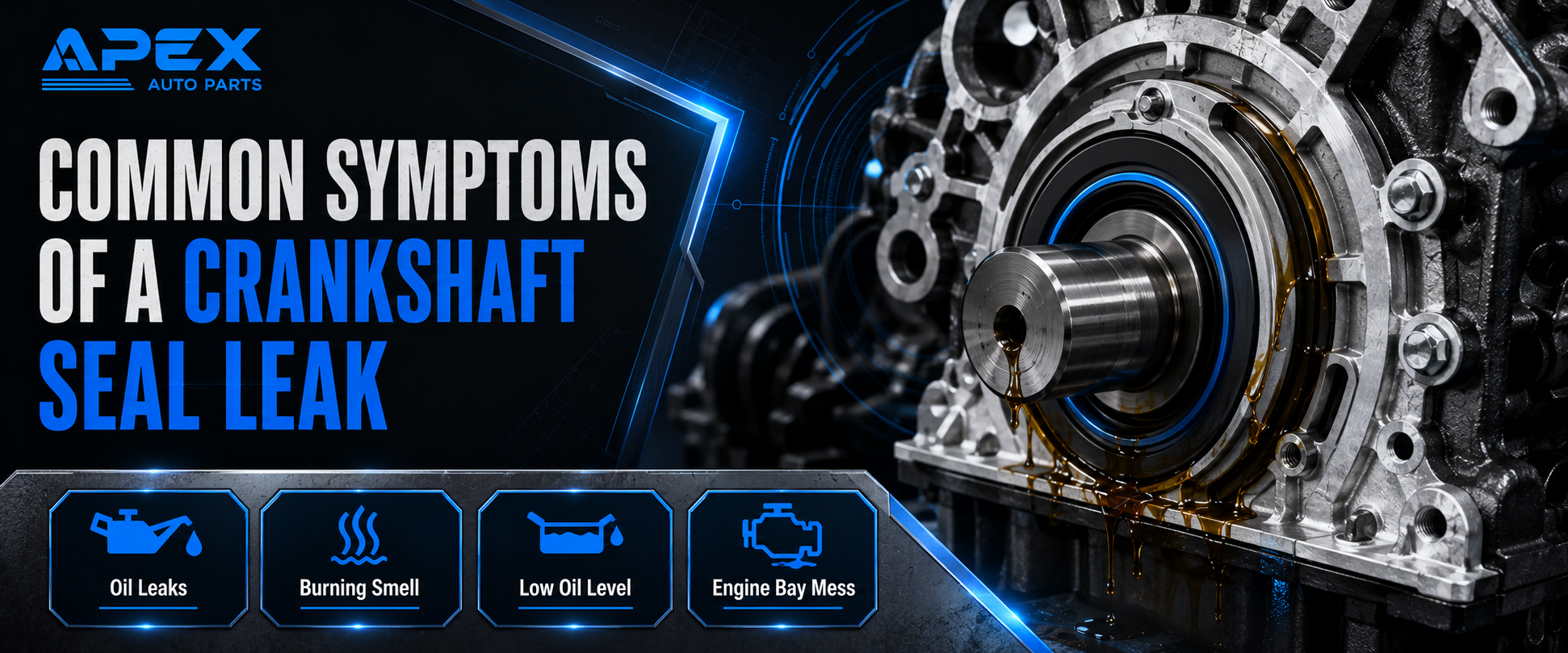
The most common sign of a crankshaft seal leak is oil under the car. You may notice drops on the driveway, garage floor, or parking space. The leak may be small at first, then slowly get worse.
Another sign is oil around the front or rear of the engine. A front seal leak may leave oil near the crank pulley or lower timing cover. A rear leak may leave oil between the engine and gearbox.
You may also smell burning oil if the leaked oil drips onto hot exhaust parts. In some cars, the undertray may catch the oil, so you may not see drops on the ground straight away. Instead, the bottom of the engine may look wet and dirty.
Low oil level is another warning sign. If you keep topping up oil but cannot see a clear leak from the top of the engine, the crankshaft seal should be checked.
Common signs include:
- Oil drops under the engine
- Wet oil around the crank pulley
- Oil between the engine and gearbox
- Burning oil smell
- Low oil level
- Oil on the undertray
- Oil on belts or pulleys
- Clutch slipping in manual cars
- The engine bay is becoming oily and dirty
Any oil leak should be checked, even if the engine still runs well.
How Serious Is a Crankshaft Seal Leak?
A small crankshaft seal leak may not stop the car right away. Many drivers continue to use the vehicle when the leak is minor. But that does not mean it should be ignored.
Oil leaks can get worse over time. If the oil level drops too low, engine parts may not get enough lubrication. Bearings, camshafts, crankshaft journals, timing parts, and other moving parts all need oil. Low oil can lead to engine wear and expensive repairs.
A front seal leak can also affect the belt system. If oil gets onto the auxiliary belt, it may slip, swell, or wear out faster. In some engines, oil can spread near the timing belt areas, which is more serious. Oil can weaken rubber belts and increase the risk.
A rear seal leak can affect the clutch in a manual car. If oil reaches the clutch plate, the clutch may slip. This can lead to poor drive and extra repair costs.
So, while a small leak may not be an emergency, it should be watched and repaired before it becomes serious.
Can You Drive With a Crankshaft Seal Leak?
You may be able to drive with a small crankshaft seal leak, but it depends on how bad the leak is. If the oil loss is slow and the oil level is checked often, the car may still be usable for a short time. But this should not become a long-term habit.
If oil is dripping heavily, the car should not be driven far. Heavy oil loss can damage the engine. If oil reaches the belts, exhaust components, or the clutch, it can cause additional problems.
If the oil warning light comes on, stop the engine as soon as it is safe to do so. Do not keep driving with low oil pressure. An oil warning light can mean the engine is not getting enough oil, and damage can happen fast.
The best advice is simple. Check the oil level. Find the leak source. Repair it before it grows.
How Mechanics Find the Source of the Leak
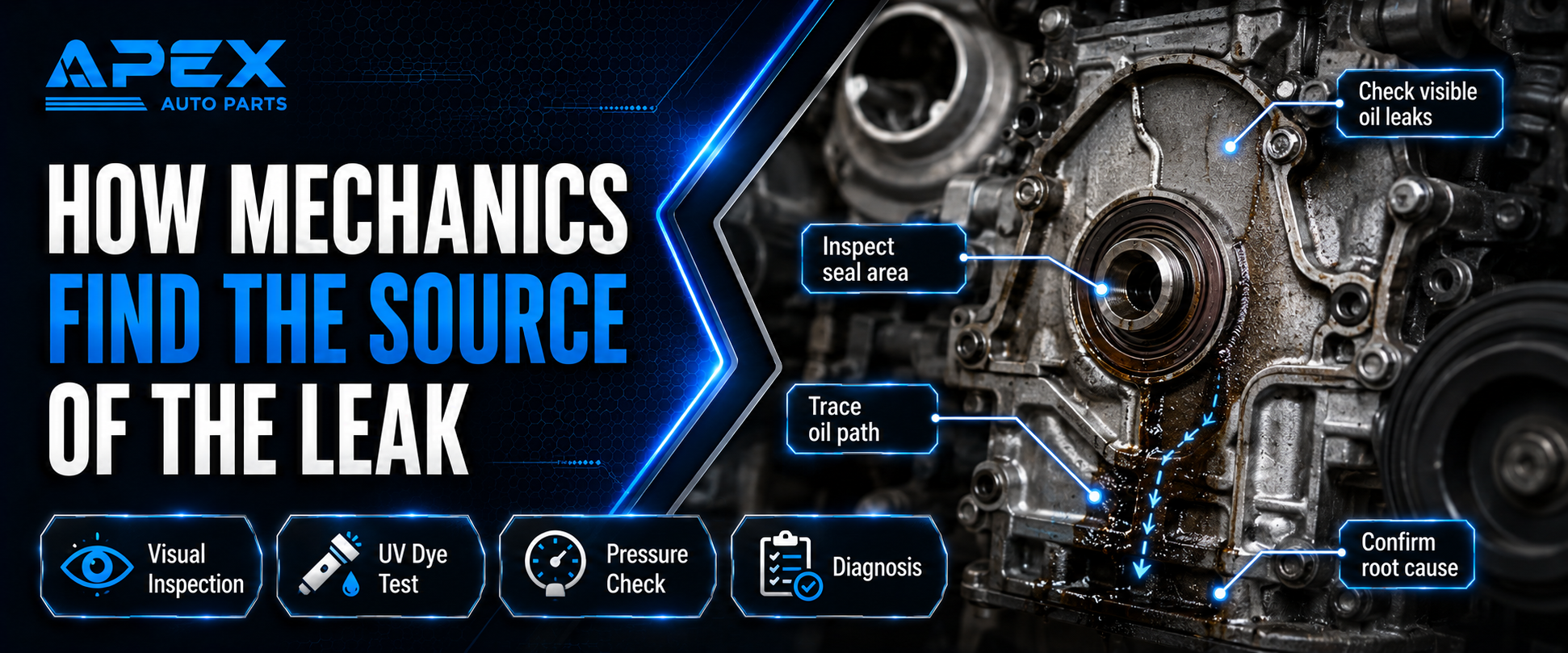 Oil leaks can be tricky because oil tends to run downward and spread while driving. The place where oil drips is not always the place where the leak starts.
A mechanic will usually clean the engine area first. Then they may run the engine and inspect where fresh oil appears. Sometimes they may use a leak-detection dye to trace the source of the oil.
They will check common leak areas such as the rocker cover gasket, oil filter housing, sump gasket, timing cover, turbo oil lines, front crank seal, and rear main seal area. This matters because a leak from above can resemble a rear main seal leak on a crankshaft.
Before replacing the crankshaft seal, the mechanic should confirm the source. This is especially important for the rear seal because the job takes more labor.
A proper check may include:
- Cleaning the engine area
- Checking oil level and oil type
- Inspecting the front pulley area
- Inspecting the engine and gearbox joint
- Checking crankcase breather pressure
- Looking for leaks from higher gaskets
- Checking the undertray for oil spread
- Using leak dye if needed
Good diagnosis saves time, money, and repeat repairs.
When Is Crankshaft Seal Replacement Needed?
Crankshaft seal replacement is needed when the seal is leaking, damaged, hard, cracked, or no longer sealing properly. It may also be needed during certain engine repairs if the old seal is already exposed.
A front seal is often replaced when oil leaks from the crank pulley area. A rear seal is replaced when oil is confirmed to be present between the engine and gearbox, and other leak sources have been ruled out.
Sometimes, crankshaft seal replacement is done as preventive work. For example, if the gearbox is removed for a clutch replacement, the mechanic may suggest replacing the rear crankshaft oil seal at the same time. This can make sense because the seal is easy to reach once the gearbox is out.
But replacing a seal without checking the cause can be a mistake. If crankcase pressure is too high, the new seal may leak again. If the crankshaft surface is damaged, the seal may not last. If the wrong seal is fitted, the leak can return quickly.
Front Crankshaft Seal Replacement
Front crankshaft seal replacement is usually easier than rear seal replacement, but it still needs care. The mechanic may need to remove the auxiliary belt, crank pulley, and covers to reach the seal.
The old seal must be removed without damaging the crankshaft or housing. The new seal must be fitted straight and at the correct depth. The sealing surface should be clean. If there is a groove on the crankshaft pulley or shaft, it may need attention too.
If oil has leaked onto the belt, the belt should be checked. An oil-soaked belt may need replacement. Oil can make rubber weak and slippery.
The engine should be cleaned after the repair so that any new leaks can be spotted easily.
Rear Crankshaft Oil Seal Replacement
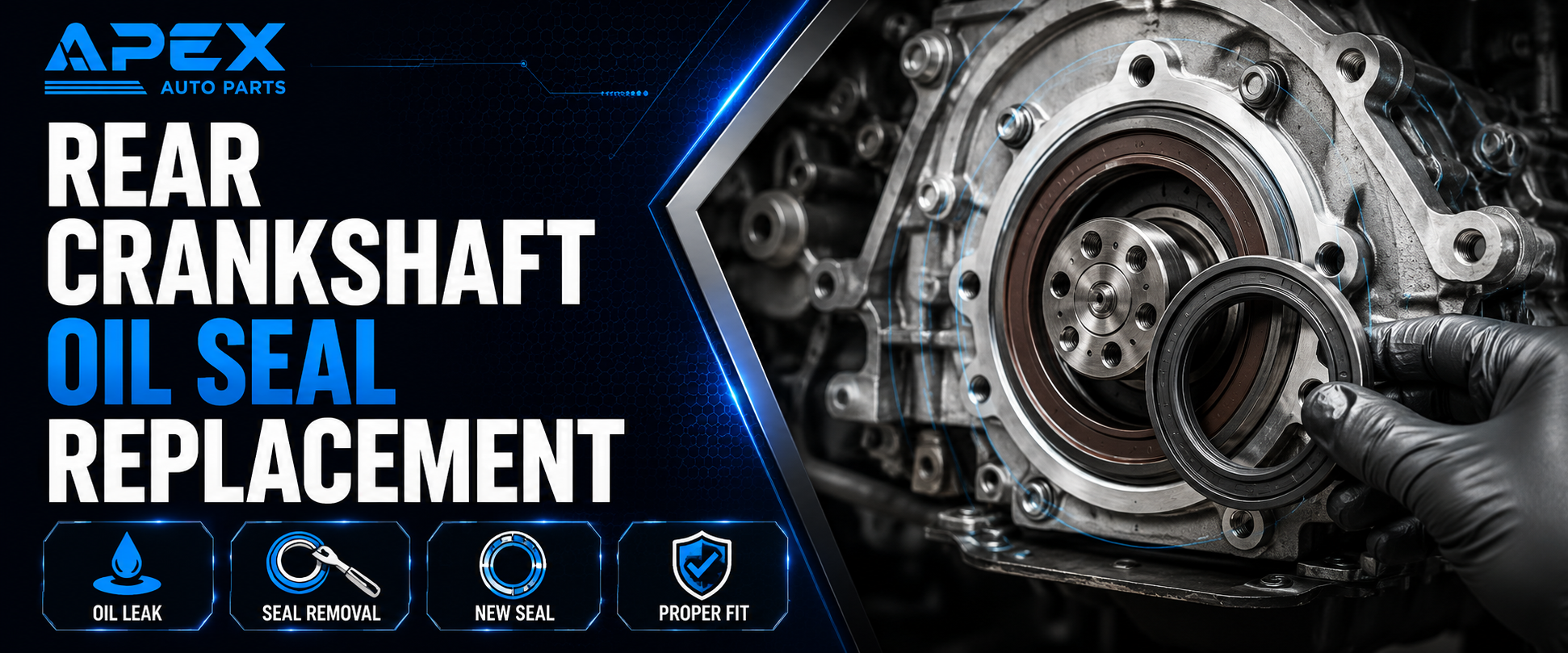
Replacing the crankshaft seal at the rear of the engine is more labor-intensive. The gearbox usually has to come out. On a manual car, the clutch and flywheel may need to be removed. On an automatic car, access can still take time.
Once the seal is reached, the mechanic will remove the old rear crankshaft oil seal and clean the area. Some vehicles use a seal carrier, which may need a gasket or sealant. The new seal must be fitted carefully so it does not fold, twist, or sit unevenly.
If the car has a manual gearbox, this is also a good time to check the clutch, flywheel, release bearing, and gearbox input area. If the clutch has oil on it, replacement may be needed.
Because labor costs are already high, it is important to use a high-quality crankshaft rear main seal. Saving a small amount on a weak part can become expensive if the gearbox has to come out again.
Why Some New Crankshaft Seals Leak Again
A new crankshaft seal should stop the leak, but sometimes the problem returns. This usually means something else is wrong.
One common reason is crankcase pressure. If the breather system is blocked, pressure inside the engine can push oil past the new seal. Another reason is poor fitting. If the seal lip is damaged during installation, it may leak quickly.
The sealing surface may also be worn. A groove on the crankshaft or pulley can stop the seal from making proper contact. Dirt or old sealant can also prevent the seal from seating properly.
Wrong parts are another issue. Some seals look similar but differ in size, lip design, or material. Using the wrong seal can cause repeat leaks.
This is why buying the correct part matters. Apex Auto Parts helps customers check fitment before ordering engine parts, reducing the risk of wrong-part issues during repairs.
How to Prevent Crankshaft Seal Failure
You cannot make a seal last forever, but you can reduce the chance of early failure. The best prevention is good engine care.
Change oil on time. Old oil can carry dirt and sludge that wear seals and engine parts. Use the correct oil grade for the vehicle. Wrong oil can affect pressure, flow, and seal life.
Keep the crankcase breather system working. If pressure builds inside the engine, seals are more likely to leak. If you notice oil leaks from more than one area, the breather system should be checked.
Fix oil leaks early. A small leak can attract dirt and make the engine messy. Dirt around the seal area can speed up wear. Also, do not ignore engine vibration. Worn mounts or pulley problems can add stress to seals.
Simple prevention tips include:
- Change oil and filter on time
- Use the correct oil grade
- Check oil level often
- Keep the breather system clear
- Fix overheating problems
- Repair oil leaks early
- Use good quality seals
- Clean sealing surfaces during repair
- Check crankshaft or pulley wear
- Avoid poor-fitting and cheap parts
Good care helps seals last longer and protects the engine.
Choosing the Right Crankshaft Seal
Choosing the correct crankshaft seal is very important. A seal must match the engine exactly. Size, shape, material, and design all matter.
Before ordering, check the vehicle make, model, year, engine size, fuel type, and engine code. If possible, compare the original part number. This is important because many cars have engine variations even within the same model.
A rear crankshaft oil seal may look simple, but the wrong seal can cause big problems. If it leaks after fitting, the labor to replace it can be costly. This is why part accuracy matters more than guessing by picture.
Apex Auto Parts supplies engine parts for UK drivers, mechanics, garages, and trade buyers. If you are unsure about fitment, it is better to check before buying. Correct parts save time, reduce returns, and help the repair last.
Why Quality Matters With Engine Seals
A cheap seal may look fine when new, but it may not handle heat, oil, and pressure as well as a better part. Low-quality rubber can harden faster. The sealing lip may wear sooner. The seal may not fit as tightly. In some cases, it may leak soon after installation.
This is a bigger issue with the crankshaft rear main seal because replacement takes so much labor. Paying for the job twice is far more expensive than fitting a reliable seal the first time.
Quality also matters with related parts. If a pulley is worn, a bearing is failing, or the breather system is blocked, the seal may fail early even if the seal itself is good.
A lasting repair requires the right part, a clean fit, and the cause of the leak to be fixed.
Final Thoughts
The crankshaft seal is a small part with a big job. It keeps engine oil inside while the crankshaft spins at high speed. When it fails, oil can leak from the front or rear of the engine.
A crankshaft seal leak may start small, but it should not be ignored. Oil loss can lead to low oil level, belt damage, clutch problems, bad smells, messy engine bays, and serious engine wear. The rear crankshaft oil seal, also called the crankshaft rear main seal, can be more costly to replace because it sits between the engine and gearbox.
Good diagnosis matters before crankshaft seal replacement. Oil can travel from other parts of the engine and appear to be a crank seal leak. A mechanic should confirm the source, check crankcase pressure, inspect the sealing surface, and use the correct part.
For drivers, the message is simple. Watch for oil leaks. Check your oil level. Fix small leaks early. Use quality parts. If a seal keeps leaking, find the cause instead of replacing the same part over and over.
A healthy seal helps keep the engine clean, protected, and reliable for longer.
FAQs About Crankshaft Seal Problems
1. What does a crankshaft seal do?
A crankshaft seal stops engine oil from leaking where the crankshaft exits the engine. It seals the gap while the crankshaft spins. Most engines have a front seal and a rear seal. Without this seal, oil can escape, and the engine may lose important lubrication.
2. What are the signs of a crankshaft seal leak?
A crankshaft seal leak can leave oil drops under the car, oil around the crank pulley, or oil between the engine and gearbox. You may smell burning oil or notice the oil level dropping. In manual cars, a rear leak may also cause clutch slipping.
3. Is a rear crankshaft oil seal leak serious?
A rear crankshaft oil seal leak can become serious if ignored. It may start as a small drip, but oil can spread around the gearbox area or reach the clutch. If the engine oil level drops too low, internal engine damage can happen.
4. Is the crankshaft rear main seal the same as the rear crankshaft oil seal?
Yes, the crankshaft rear main seal and rear crankshaft oil seal usually mean the same part. It is the seal at the back of the engine near the flywheel or flex plate. It stops oil from leaking from the rear crankshaft area.
5. Can I drive with a crankshaft seal leak?
You may drive for a short time with a small leak from the crankshaft seal, but you must watch the oil level closely. If the leak is heavy, do not keep driving. Low oil can damage the engine, and oil on belts, exhaust parts, or clutch parts can create more problems.
6. How much work is crankshaft seal replacement?
Crankshaft seal replacement depends on which seal is leaking. The front seal is usually easier to access. The rear seal takes more labor because the gearbox often needs to be removed. That is why rear seal replacement usually costs more in labor.
7. Why does a new crankshaft seal leak again?
A new crankshaft seal may leak again if crankcase pressure is too high, the seal was fitted badly, the crankshaft surface is worn, or the wrong seal was used. Dirt, poor-quality parts, and blocked breathers can also cause recurring leaks after repair.
8. Can a crankshaft seal leak cause engine damage?
Yes, a crankshaft seal leak can cause engine damage if it lowers the oil level too much. The engine needs oil to protect bearings, crankshaft journals, camshafts, and other moving parts. Driving with low engine oil can cause serious internal engine wear.
9. Should I replace the crankshaft rear main seal during clutch replacement?
It can be a good idea to replace the rear main seal on the crankshaft during clutch replacement if the gearbox is already removed and the seal is old or showing signs of leaking. This can save labor later, but the mechanic should inspect it first.
10. How can I prevent crankshaft seal failure?
You can help prevent crankshaft seal failure by changing oil on time, using the correct oil, keeping the breather system clear, fixing overheating, and repairing small leaks early. During crankshaft seal replacement, use the correct part and ensure the sealing surface is clean.