
 info@apexautoparts.co.uk
 +44 203 915 7535
 Safe & Fast Shipping
 Whish List
 Compare
 Sign In


Most drivers only start looking for the VIN when they need to buy a part, check a vehicle history, book a repair, or confirm a car’s identity. It sounds like a small thing, but the VIN is one of the most important numbers on your vehicle.
If you have ever asked, 'Where to find the VIN?', you are not alone. Many UK drivers know their registration number, but they have no idea where the VIN is stamped or printed on the car. The good news is that it is usually easy to find once you know the right places to check.
A VIN is like a car’s fingerprint. No two vehicles should have the same one. It helps identify the exact vehicle, its build details, body type, engine type, model year, and factory information. For garages, parts suppliers, insurers, and vehicle history services, the VIN helps reduce mistakes.
At Apex Auto Parts, we deal with this every day. A customer may ask for an engine part, gasket, timing kit, sensor, seal, or oil pump. The registration number is useful, but sometimes it is not enough. Some cars have different engine codes, production changes, or part number updates. In those cases, the VIN can help confirm fitment before a part is ordered.
This guide explains how to find the VIN on a car, why it matters, where it is usually located, whether the chassis number is the same thing, and how UK drivers can use it when buying engine parts or checking a vehicle.
What is a VIN?
VIN stands for vehicle identification number. It is a unique number given to a vehicle when it is built. Most modern cars use a 17-character VIN. It can include both letters and numbers.
The VIN helps identify the exact vehicle. It is not the same as the registration plate. A registration plate can change if the car gets a private plate or is re-registered. The VIN stays with the vehicle for life.
A VIN can tell useful details, such as:
- Vehicle manufacturer
- Model type
- Body style
- Engine information
- Model year
- Production plant
- Unique vehicle serial number
For normal drivers, the VIN is useful when checking the car’s history, ordering parts, dealing with insurance, or confirming vehicle details. For mechanics and parts suppliers, it can help prevent wrong part orders.
That is why knowing where to find the VIN is important. Can save time and trouble.
Why does the VIN matter?

The VIN matters because many cars look the same from the outside but use different parts underneath. Two vehicles may be the same make, same model, and same engine size, but they may still use different parts because of build date, engine code, trim, gearbox type, or production changes.
This is very common with engine parts. A timing chain kit, oil pump, EGR valve, gasket set, crankshaft seal, water pump, piston ring set, or sensor may change between engine versions. The wrong part can delay a repair and cost more money.
The VIN can also help with:
- Vehicle history checks
- MOT history checks
- Insurance paperwork
- Warranty claims
- Recall checks
- Theft checks
- Correct part matching
- Vehicle identity checks
- Buying used cars
- Repair quotes
If you are ordering parts online, the VIN gives the supplier another way to check fitment. At Apex Auto Parts, this is especially useful for engine parts because guessing by photo alone is risky.
A part may look almost the same but still not fit correctly. The VIN helps reduce that risk.
Where to Find the VIN?
The answer to 'Where to find a VIN?' depends on the vehicle. Most cars have the VIN in more than one place. Some are easy to see. Others are stamped into the body and may be harder to find.
Common VIN locations include:
- Lower corner of the windscreen
- Inside the driver's side door frame
- On the vehicle registration document
- Under the bonnet
- On the chassis or body shell
- Near the engine bay
- In the boot area
- On insurance documents
- On service records
The easiest place to check is often the lower windscreen area on the passenger or driver side, depending on the car. You may see a small metal plate or printed section through the glass.
Another common place is the driver's side door frame. Open the door and look around the door pillar. Many cars have a sticker or plate showing the VIN, weight details, paint code, and other vehicle information.
If you cannot find it outside or around the door, check your V5C logbook. The VIN is usually listed there as the vehicle identification number.
How to Find the VIN on a Car?
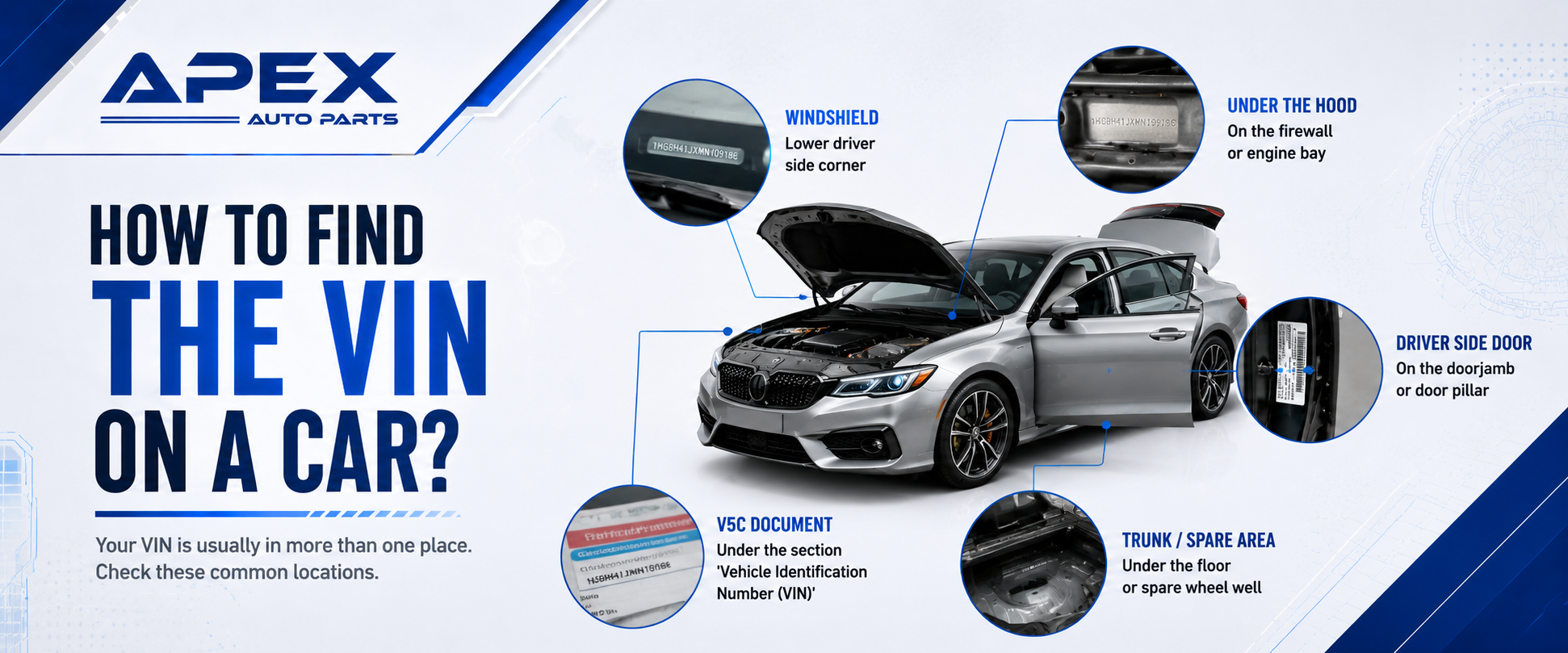
Start with the easiest places first. You do not need tools for most checks.
First, stand outside the car and look through the lower corner of the windscreen. The VIN is often visible on a small plate near the dashboard. Make sure the windscreen is clean and check from different angles.
Next, open the driver's side door. Look at the door frame and the pillar area where the door closes. You may see a manufacturer's label. The VIN may be printed there.
Then open the bonnet. Look around the engine bay, bulkhead, suspension turret, or front panel. Some vehicles have a stamped VIN in these areas.
If you still cannot find it, check the boot floor, spare wheel well, or under carpet panels. Some vehicles have stamped identification points there.
You can also check paperwork. The VIN should appear on:
- V5C logbook
- MOT paperwork
- Service book
- Insurance documents
- Finance paperwork
- Vehicle history reports
If the VIN on the car does not match the VIN on the V5C, do not ignore it. That needs to be checked before buying, selling, or repairing the vehicle.
Is the chassis number the same as the VIN?
A very common question is, 'Is the chassis number the same as the VIN?' In most modern use, yes, drivers often use both terms to mean the same thing. The VIN is the official vehicle identification number, and many people still call it the chassis number.
Older vehicles may have used the term 'chassis number' more often because the number was stamped on the vehicle chassis. On modern cars, the number is still used to identify the vehicle, but it may be called 'VIN' on documents, parts systems, and vehicle checks.
So if a garage asks for your chassis number, they usually mean your VIN. If a parts supplier asks for your VIN, they are asking for the same identification number.
In simple words:
- 'VIN' is the official modern term
- 'Chassis number' is the older common term
- Many people use both words for the same number
- Parts suppliers may ask for either one
- The number should match the vehicle documents
If you are not sure, send the full 17-character VIN from the car or V5C. That is usually the safest option.
How Long Is a VIN?
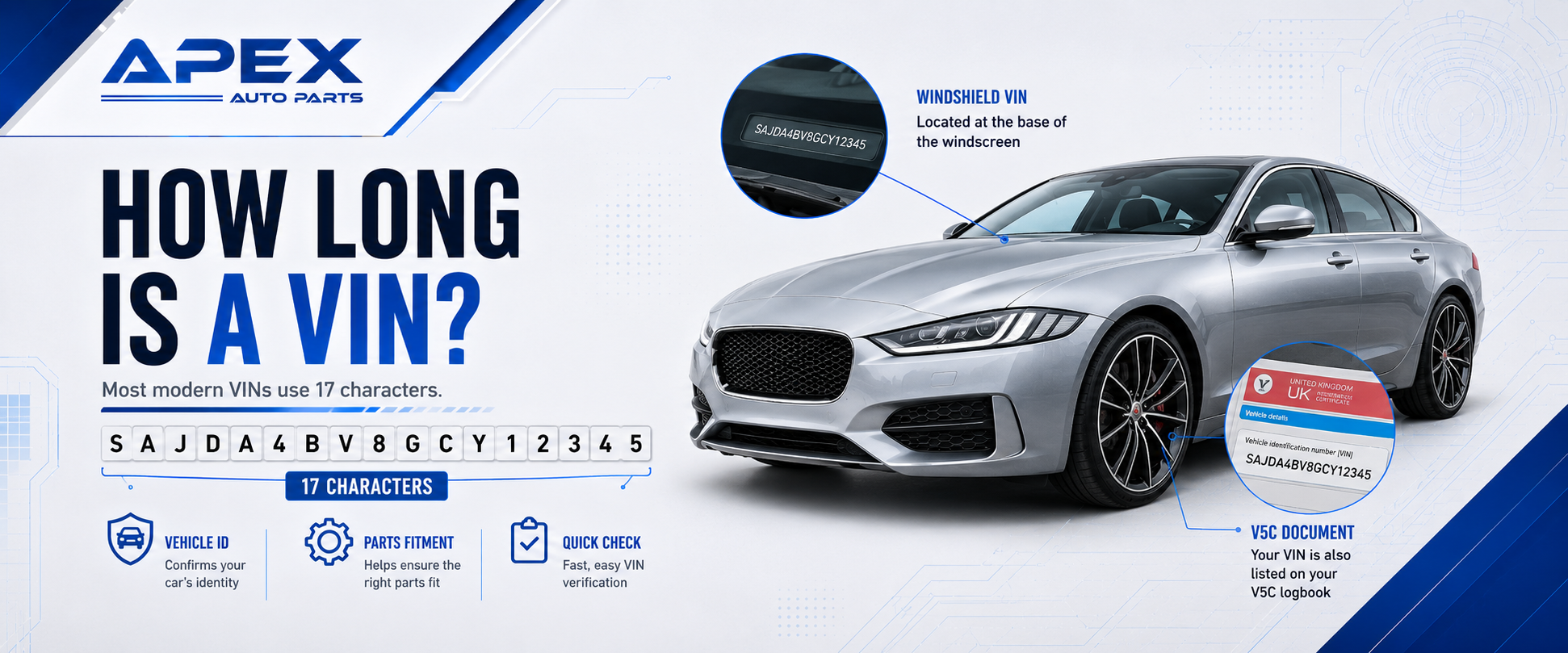
Most modern vehicle VINs have 17 characters. These characters are a mix of letters and numbers. The VIN normally does not use the letters I, O, or Q because they can be confused with numbers.
If the number you found is shorter, you may be looking at a different code, not the full VIN. Some older vehicles may have shorter chassis numbers, but most modern cars follow the 17-character system.
A VIN can look confusing at first, but you do not need to understand every character. For most drivers, the important thing is to copy it correctly.
When sending your VIN to a garage or parts supplier, double-check:
- No missing characters
- No extra spaces
- No wrong letters
- No confusion between zero and O
- No confusion between one and me
- No confusion between five and S
A small mistake can lead to wrong information. If possible, send a clear photo of the VIN plate as well as type it out.
Where is the VIN on the windscreen?
Many UK cars show the VIN through the lower windscreen. Stand outside the vehicle and look at the lower dashboard area through the glass. It is often near one corner of the windscreen.
The VIN may be on a small metal plate or printed panel. It is designed so the number can be checked without opening the vehicle.
This is useful when buying a used car because you can compare the visible VIN with the V5C document. If the windscreen VIN is damaged, hidden, altered, or does not match the paperwork, treat it as a warning sign.
Do not panic if you cannot see the VIN through the windscreen. Some vehicles may place it in a different spot, or the view may be blocked by dirt, trim, or reflection. Check the door frame and documents next.
Where is the VIN inside the door?
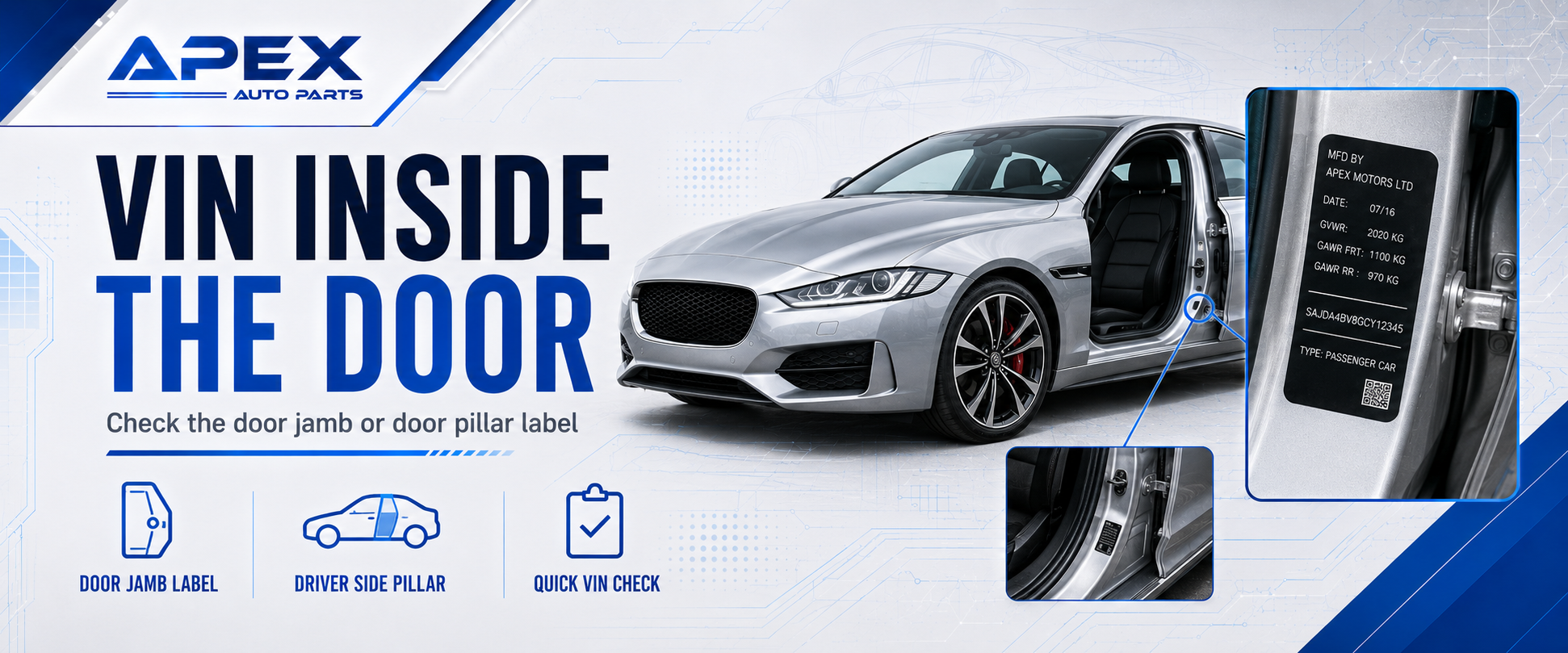
The driver's side door area is another common place to find the VIN. Open the door and look around the door pillar, door shut, or lower frame. You may see a label or metal plate.
This label may include the VIN along with other details such as vehicle weight, paint code, tyre pressure information, or manufacturer data.
If the sticker is missing or damaged, check other locations on the car. Some stickers can wear over time, especially if the vehicle has had body repair work. The stamped VIN is usually more important than a sticker because it is part of the vehicle body.
If you are buying a used car, make sure the door label does not look tampered with. Signs of peeling, unusual glue marks, mismatched labels, or damaged areas should be checked carefully.
Where is the VIN under the bonnet?
Under the bonnet, the VIN may be stamped into the body shell or shown on a plate. Common areas include the bulkhead, inner wing, suspension turret, front slam panel, and engine bay frame.
The stamped VIN may be harder to see because it can be covered by dirt, plastic trims, or engine parts. Do not scrape or damage the area. Clean it gently if needed.
On some cars, the VIN may be near the engine bay but not directly on the engine. This is important because the VIN identifies the vehicle, not just the engine. The engine may also have its own engine number or engine code.
If you are checking parts fitment, the VIN and engine code together can be very useful.
VIN vs Engine Number
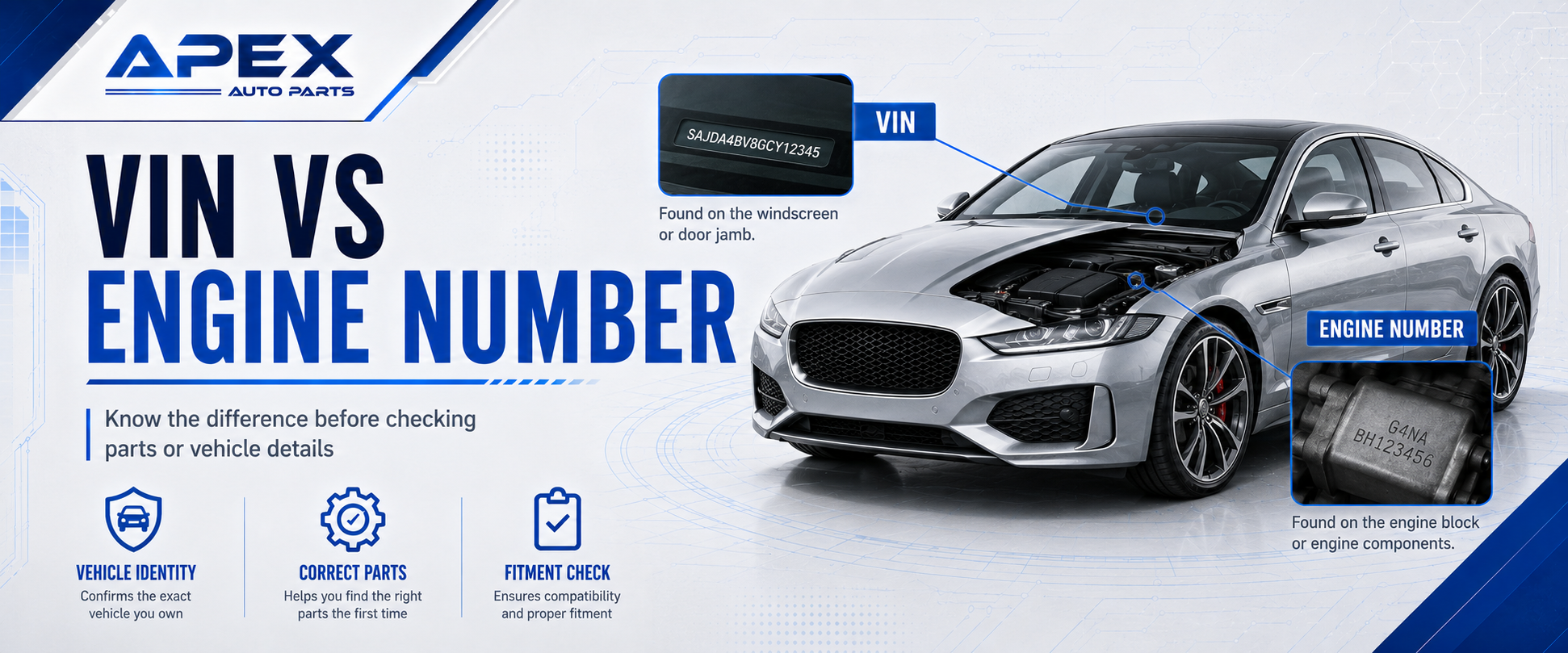
The VIN is not the same as the engine number. The VIN identifies the whole vehicle. The engine number identifies the engine itself.
A car can sometimes have an engine replacement during its life. If that happens, the engine number may change, but the VIN remains the same.
For engine parts, both numbers can be useful. The VIN can help identify the vehicle build. The engine code or engine number can help confirm the exact engine type.
At Apex Auto Parts, customers often provide the registration number first. If more detail is needed, the VIN or engine code may help confirm the correct part.
This is especially important for parts such as:
- Timing chain kits
- Timing belt kits
- Oil pumps
- Water pumps
- Pistons
- Bearings
- Gasket sets
- EGR valves
- Sensors
- Crankshaft seals
- Cylinder heads
- Rocker arms
The more accurate the information, the better the chance of getting the right part the first time.
Why do parts suppliers ask for the VIN?
When a parts supplier asks for your VIN, it is not to make things difficult. It is to avoid mistakes.
Modern vehicles have many versions. A single model may have several engine codes, gearbox types, production changes, and part updates. A registration lookup is helpful, but it may not always show every detail.
The VIN can help confirm the vehicle build. This is useful when choosing parts that must fit exactly. With engine parts, even small differences can matter.
For example, a gasket may have a slightly different shape. A timing kit may use different guides. A sensor may have a different connector. A seal may have a different size. A piston or bearing may have different measurements.
Wrong parts can cause the following:
- Repair delays
- Extra labor time
- Return costs
- Vehicle downtime
- Poor fitment
- Repeat faults
- Customer frustration
This is why VIN checks are important for drivers, garages, and trade buyers.
How to Check if a VIN Looks Correct

A VIN should look clean and consistent and match the documents. If you are buying a used car, take time to check it properly.
Check that:
- The VIN on the car matches the V5C
- The VIN on the windscreen matches the door label
- The stamped VIN does not look altered
- The characters are clear and even
- There are no signs of grinding or welding nearby
- The number has not been covered or replaced
- The V5C details match the car
If something looks wrong, ask questions. A mismatch does not always mean the car is stolen, but it should be checked before money changes hands.
If the seller gives excuses or refuses to show the VIN, walk away.
Can the VIN Help With Vehicle History?
Yes, the VIN can help with vehicle history checks. It can be used to confirm the identity of the car and compare details with official records.
A vehicle history check may show information such as previous write-off status, finance markers, mileage concerns, stolen vehicle records, or imported status. The exact details depend on the service used.
For UK drivers, the registration number is often used first, but the VIN can help confirm that the car being checked is the same vehicle shown in the report.
This is useful when buying a used vehicle. Always check the VIN on the car against the paperwork and history report.
Can the VIN Help With Recalls?
Yes, the VIN can help identify whether a vehicle is affected by a recall or service campaign. Manufacturers use VIN ranges to identify vehicles built during certain production periods.
If a recall applies, the manufacturer or dealer may need the VIN to check whether the car is included.
This is another reason to know how to find the VIN on a car. It can help with safety checks, service updates, and manufacturer records.
What if the VIN is hard to read?
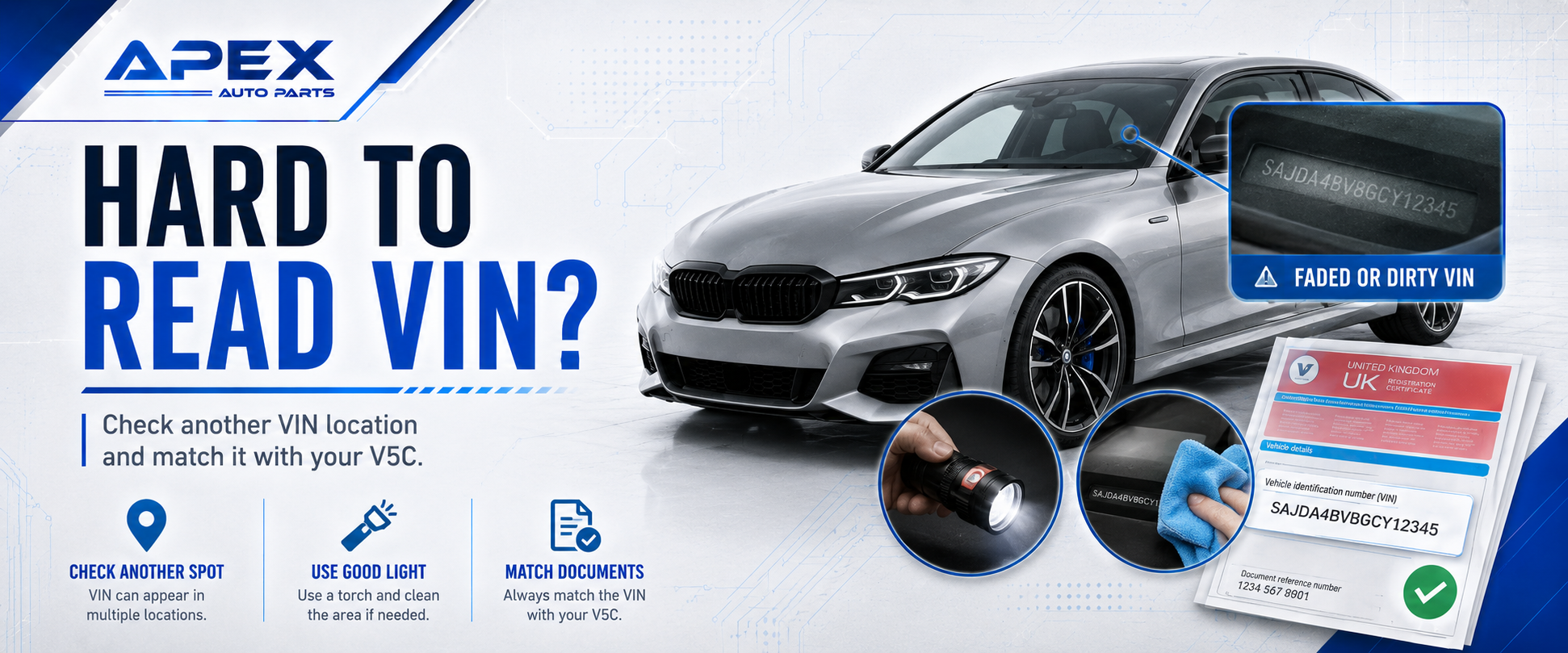
Sometimes the VIN is hard to read because of dirt, age, poor lighting, damaged stickers, or body repairs. If this happens, check another VIN location on the vehicle.
Try these steps:
- Clean the area gently
- Use a torch
- Take a clear photo
- Check the V5C logbook
- Check the door frame label
- Check the windscreen plate
- Ask a mechanic to help
Do not grind, scratch, repaint, or alter the VIN area. A damaged VIN can create serious problems with vehicle checks, MOT inspection, insurance, and resale.
If the stamped VIN is missing or damaged, get professional advice.
How to Send VIN Details for Parts?
When you contact a parts supplier, send the VIN clearly. If possible, send the registration number, VIN, engine code, and part you need.
A good message may include:
- Vehicle registration
- VIN
- Make and model
- Year
- Engine size
- Fuel type
- Engine code, if known
- Part required
- Photo of the old part, if available
This helps the supplier check the part faster.
For Apex Auto Parts customers, this can make a big difference. Engine parts are often specific, and a clear VIN can reduce delays. If the part has an old number printed on it, send that too.
Common Mistakes Drivers Make With VINs

Many drivers make small mistakes when copying the VIN. These mistakes can lead to wrong checks or wrong parts.
Common mistakes include:
- Confusing zero with the letter O
- Confusing one with the letter I
- Missing the last character
- Sending the engine number instead of the VIN
- Sending only part of the VIN
- Reading a sticker that is damaged
- Using a VIN from old paperwork
- Not checking the VIN on the actual car
Always double-check the number before sending it. If in doubt, send a photo of the VIN plate.
How does VIN help garages and trade buyers?
For garages and trade buyers, the VIN is a time saver. A vehicle stuck on a ramp costs time. If the wrong part arrives, the job gets delayed, and the customer may lose trust.
Using the VIN helps garages confirm parts before ordering. This is useful for engine repairs where part accuracy matters.
Trade buyers may use the VIN when ordering multiple parts for the same vehicle. For example, an engine rebuild may need pistons, rings, bearings, seals, gaskets, timing parts, an oil pump, and a water pump. If one part is wrong, the whole job can slow down.
Apex Auto Parts supports drivers, garages, mechanics, and trade buyers with fitment help for engine parts. The VIN is one of the best tools for making that process smoother.
Final Thoughts
A VIN is not just a random code. It is the vehicle’s identity. It helps confirm the car, check history, support insurance, match parts, and reduce repair mistakes.
If you are asking where to find the VIN, start with the windscreen, driver's side door frame, engine bay, and V5C logbook. If you are asking how to find the VIN on a car, check the easy places first, then look for stamped locations if needed.
And if you are wondering, is the chassis number the same as the VIN? The simple answer is that most people use both terms for the same vehicle identification number.
For engine parts, the VIN can save time and money. Whether you are a driver fixing your own car, a garage ordering parts, or a trade buyer handling repairs, the correct VIN helps suppliers like Apex Auto Parts check fitment and guide you toward the right part.
Before ordering engine parts, do not guess by shape or photo alone. Check the registration, VIN, engine code, and old part number where possible. Getting the right information first helps get the right part the first time.
FAQs
1. Where to find the VIN on a UK car?
If you are asking where to find the VIN, check the lower corner of the windscreen, the driver's side door frame, the engine bay, and the V5C logbook. Many cars show the VIN in more than one place. Always compare the number on the car with the vehicle documents.
2. How to find the VIN on a car quickly?
The quickest way to answer How to find the VIN on a car? is to look through the lower windscreen first. If it is not visible, open the driver's side door and check the door pillar label. You can also find it on the V5C logbook.
3. Is the chassis number the same as the VIN?
Many drivers ask, 'Is the chassis number the same as the VIN?' In most modern cases, yes. 'VIN' is the official term, while 'chassis number' is an older, common term. Garages and parts suppliers often use both words to mean the vehicle identification number.
4. Can I find my VIN from my registration plate?
You usually cannot see the full VIN from the registration plate alone. Some vehicle systems can use the registration to find vehicle details, but the VIN should be checked on the car or the V5C. For accurate parts matching, the VIN is often more helpful.
5. Where is the VIN on the V5C logbook?
The VIN is usually listed on the V5C as the vehicle identification number. It should match the number stamped or displayed on the car. If the V5C VIN does not match the vehicle, do not ignore it. This should be checked before buying or repairing the car.
6. Why does Apex Auto Parts ask for a VIN?
Apex Auto Parts may ask for the VIN to help confirm part fitment. Engine parts can vary by engine code, build date, and production change. The VIN helps reduce wrong part orders, especially for timing kits, gaskets, sensors, pumps, seals, and rebuild parts.
7. Is the VIN the same as the engine number?
No, the VIN and engine number are not the same. The VIN identifies the whole vehicle. The engine number identifies the engine. For engine parts, both can be useful. The VIN helps confirm the vehicle, while the engine code helps confirm the exact engine type.
8. What should I do if the VIN is hard to read?
If the VIN is hard to read, check another location such as the windscreen, door frame, engine bay, boot area, or V5C logbook. Use a torch and clean the area gently. Do not scratch or alter the VIN area, as this can create legal and resale issues.
9. Why is VIN important when buying a used car?
The VIN helps confirm the car’s identity. It should match the V5C, windscreen plate, door label, and stamped body number. If numbers do not match, it may point to paperwork errors, past damage, stolen vehicle risk, or identity concerns. Always check before buying.
10. Can VIN help me order the right car parts?
Yes, the VIN can help suppliers find the correct part for your vehicle. This is useful because many cars have different engine versions and part changes. Sending the VIN, registration, engine code, and old part number can help avoid delays and wrong parts.
Reference :
GOV.UK