
 info@apexautoparts.co.uk
 +44 203 915 7535
 Safe & Fast Shipping
 Whish List
 Compare
 Sign In

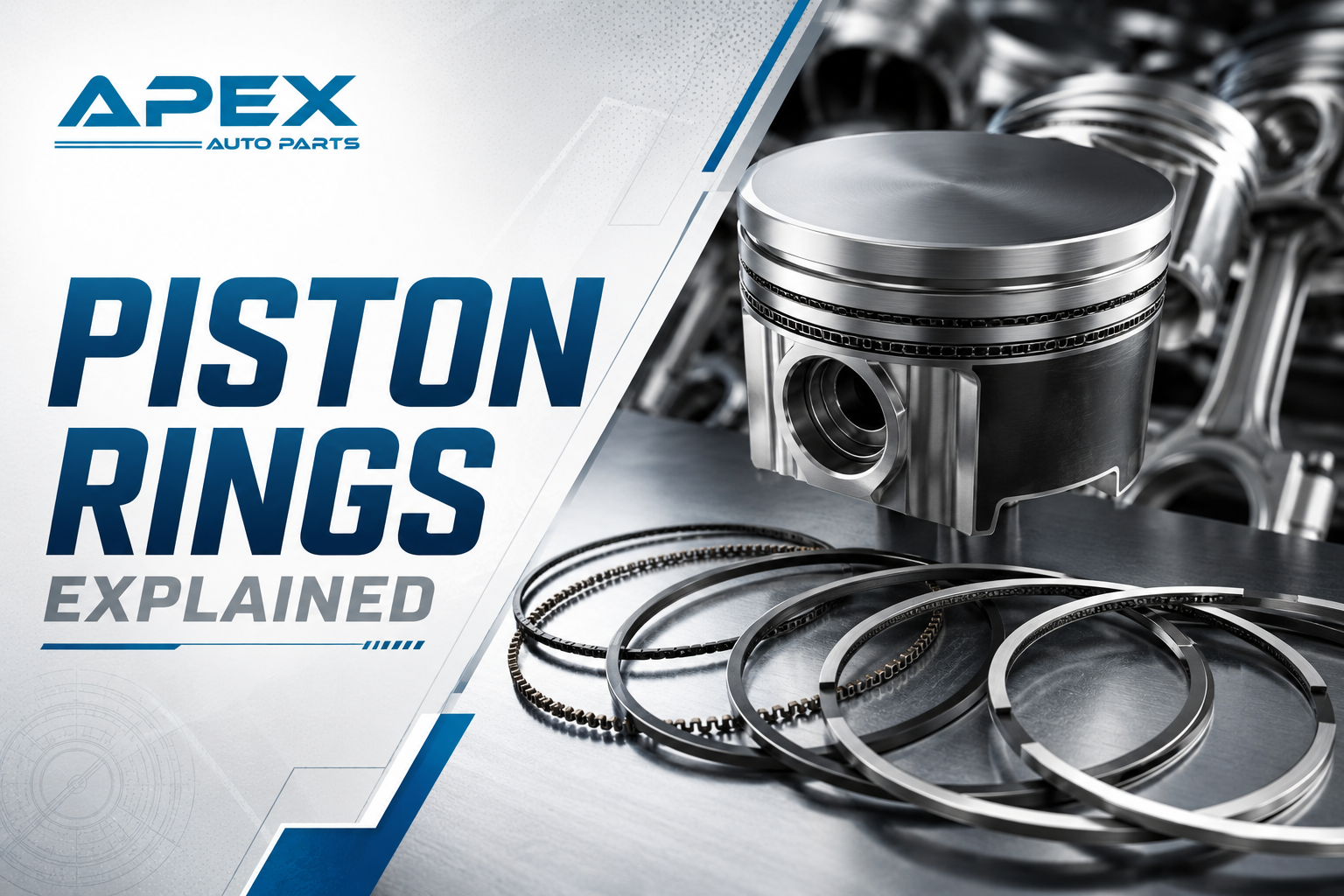
Most drivers never see piston rings, but these small metal rings do some of the hardest work inside an engine. They sit around the piston and move up and down inside the cylinder every time the engine runs. When they are healthy, the engine has good compression, uses less oil, and runs smoothly. When they wear out, the engine can lose power, burn oil, smoke, and become expensive to repair.
The job sounds simple, but it is not. Piston rings have to seal pressure, control oil, handle heat, and keep the piston stable inside the cylinder. They work in a hot, fast-moving, high-pressure area. That is why even a small problem with them can affect the whole engine.
Many drivers only hear about worn piston rings after the engine starts smoking or using too much oil. By that time, the damage may already be serious. A mechanic may perform a compression test, a leak test, or an engine inspection to confirm the fault. In some cases, the repair may need an engine rebuild because piston rings are fitted deep inside the engine.
At Apex Auto Parts, many UK drivers, garages, and trade buyers look for engine parts when dealing with oil burning, low compression, rebuild work, or internal engine wear. Piston rings must match the engine correctly. A wrong-size, poor-quality, or badly fitted ring can cause more trouble later. This is why correct fitment matters before buying engine parts.
This guide explains what piston rings do, the different types, common symptoms of worn piston rings, signs of bad piston rings, and why diesel piston rings need extra care.
What are piston rings?
Piston rings are thin metal rings that fit into grooves around the piston. Most car engines use more than one ring on each piston. These rings press lightly against the cylinder wall as the piston moves up and down.
Their main job is to seal the gap between the piston and the cylinder wall. Without this seal, the pressure from combustion would escape past the piston. That pressure is what helps push the piston down and turn the crankshaft. If pressure escapes, the engine loses power.
Piston rings also control oil. The cylinder wall needs a thin layer of oil so the piston can move smoothly. But too much oil in the combustion chamber is bad. It can burn, create smoke, leave carbon deposits, and increase oil use. The rings help keep the right amount of oil on the cylinder wall.
They also help move heat from the piston into the cylinder wall. This helps control piston temperature. A piston runs very hot, so heat transfer is important for engine life.
In simple words, piston rings help the engine seal, breathe properly, control oil, and stay strong.
What do piston rings Do Inside an Engine?
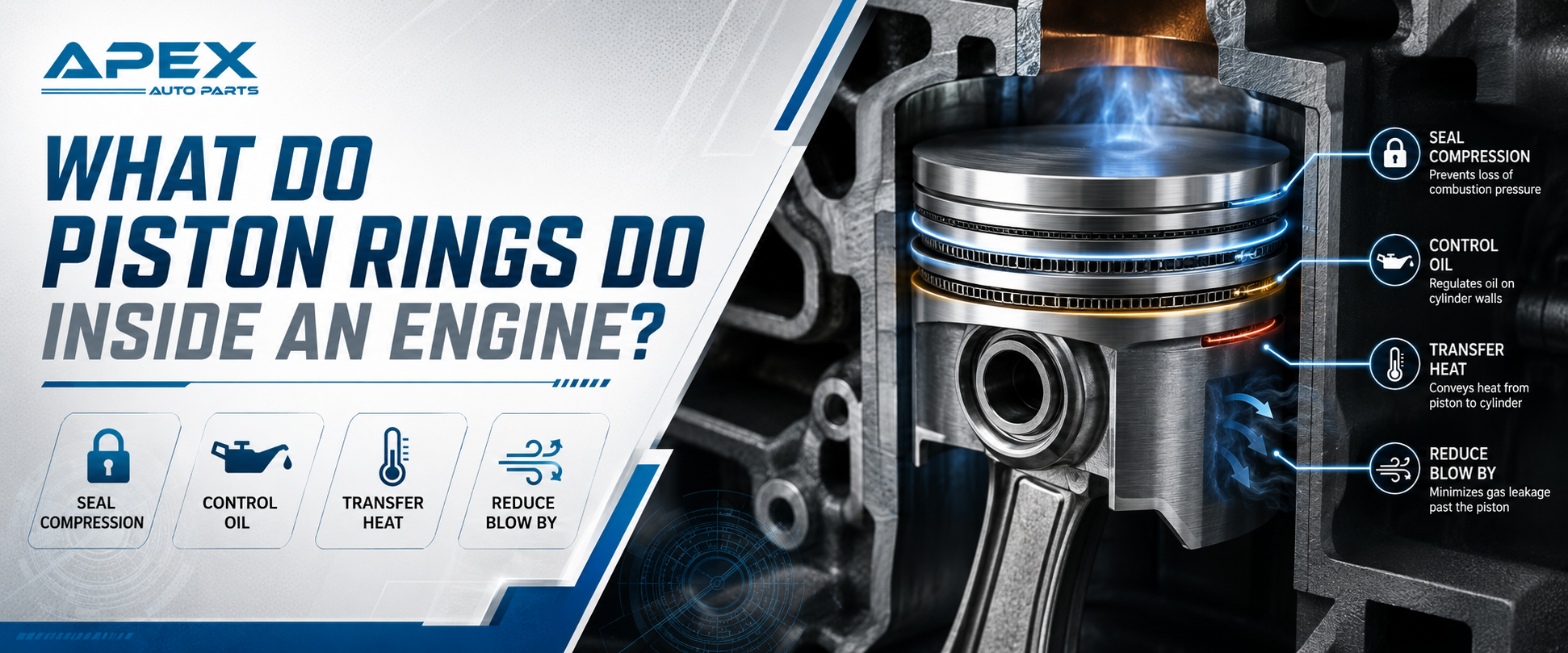
The engine burns fuel and air inside the cylinder. This creates pressure. The piston moves down because of that pressure. For this to happen properly, the pressure must stay above the piston.
This is where piston rings help. They seal the combustion chamber so the engine can build compression. Good compression means easier starting, stronger power, and smoother running.
If the rings do not seal properly, pressure leaks past the piston into the crankcase. This is often called blow by. Too much blow-by can cause poor performance, smoke, oil contamination, and high engine pressure.
Piston rings also scrape extra oil from the cylinder wall. Oil is needed, but only in the right amount. If oil gets past the rings and burns inside the cylinder, the car may produce blue smoke and use oil quickly.
The rings also help keep the piston steady. They reduce piston movement inside the cylinder. If rings wear badly, the engine may become noisy and lose efficiency.
The key jobs of piston rings are:
- Seal combustion pressure
- Control engine oil
- Support heat transfer
- Reduce blow by
- Help maintain compression
- Protect the cylinder wall
- Help the engine run smoothly
These small rings do a lot of work, and they must do it every second the engine runs.
Main Types of Piston Rings
Most engines use three main types of piston rings. Each one has a different job. They work together as a set.
The top ring is usually called the compression ring. It sits closest to the combustion chamber. Its main job is to seal combustion pressure. This ring takes the most heat and pressure because it is closest to the burning fuel and air.
The second ring also helps with compression, but it often has another job too. It helps control oil and supports the top ring. Some second rings are shaped to scrape oil back down the cylinder wall.
The lower ring is called the oil control ring. Its job is to manage oil on the cylinder wall. It lets enough oil remain for lubrication, but removes the excess so it does not burn inside the cylinder.
Each ring has to fit properly. If the ring gap is wrong, the ring may not seal. If the ring is too tight, it may expand with heat and damage the cylinder. If it is too loose, it may allow oil and pressure to pass.
A good ring set is not just about metal rings. It is about the correct size, material, tension, and fit.
Compression Rings
Compression rings are the main sealing rings. They stop combustion pressure from escaping past the piston. If the compression rings wear out, the engine can lose power and become harder to start.
A bad compression ring can cause low compression in one or more cylinders. This may lead to rough idle, poor acceleration, misfires, and higher fuel use. In serious cases, the engine may crank but struggle to start.
Compression rings are exposed to high heat and pressure. They must be strong enough to seal but smooth enough to move without damaging the cylinder wall.
When a mechanic checks for worn piston rings, compression testing is often one of the first steps. If compression is low, the mechanic may add a small amount of oil into the cylinder and test again. If compression improves, ring wear may be the cause.
This is why compression rings are so important. Without them, the engine cannot hold the pressure it needs to make power.
Oil Control Rings
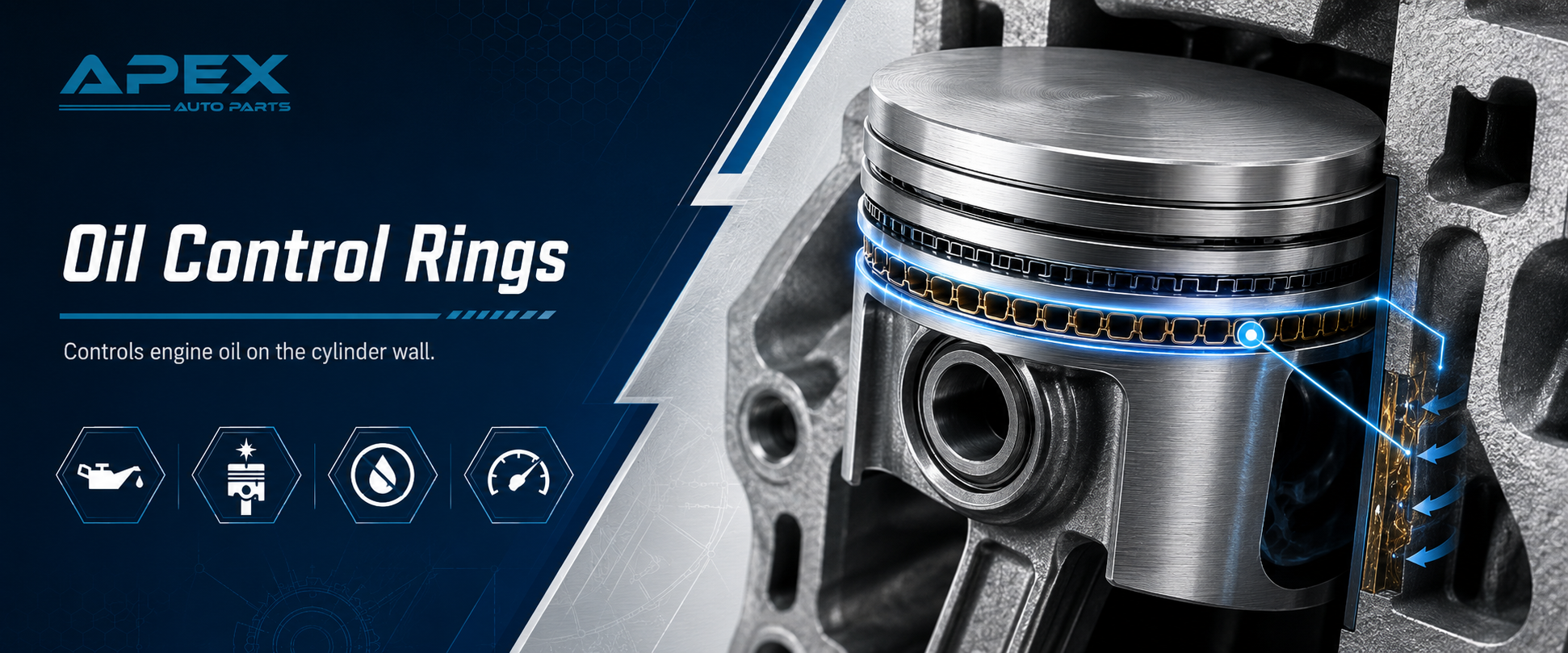
Oil control rings sit lower on the piston. Their job is to manage oil on the cylinder wall. They scrape extra oil back down toward the crankcase while leaving a very thin oil film for lubrication.
If oil control rings fail, oil can pass into the combustion chamber and burn. This often causes blue smoke from the exhaust. The car may also use more oil than normal, even if there is no outside oil leak.
Oil control rings can wear, stick, or clog with carbon. This is common in engines that have missed oil changes or used poor-quality oil. Dirty oil can create sludge and carbon deposits. These deposits can stop the rings from moving freely.
When oil control rings stick, they may not scrape oil properly. The driver may notice smoke after idling, smoke during acceleration, or an oil level.
A mechanic may suspect worn piston rings if oil use is high and no clear leak is found.
Materials Used for Piston Rings
Piston rings are usually made from strong metal because they must handle heat, pressure, and constant movement. Different engines use different ring materials depending on engine design and use.
Cast iron is a common material because it wears well and works nicely against the cylinder wall. It is also good at holding oil on its surface. Many older and standard engines use cast iron rings.
Steel rings are also common, especially in modern engines. Steel can be thinner and stronger, which helps reduce friction. Many modern petrol and diesel engines use steel rings because they need better sealing and lower drag.
Some rings have special coatings. These coatings help reduce wear, improve sealing, and handle heat. Common coatings may include chrome, moly, or other surface treatments.
Performance engines may use stronger ring materials because they face more heat and pressure. Diesel engines also need strong rings because they operate at higher compression ratios.
The right material depends on the engine. A part that works well in one engine may not be right for another. That is why buying piston rings by engine code and part number is important.
Why Diesel Piston Rings Work Harder?
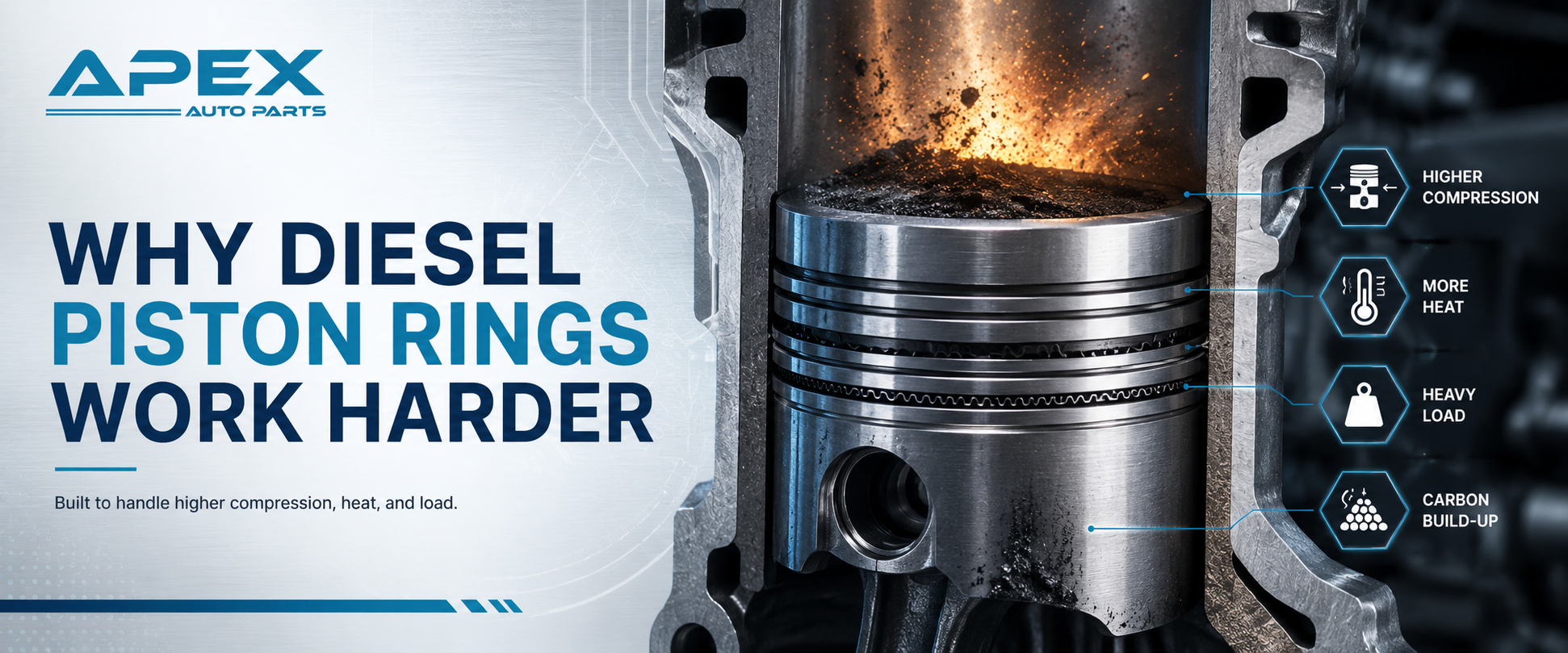
Diesel piston rings have a tough job because diesel engines usually run with higher compression than petrol engines. High compression helps diesel fuel ignite, but it also puts extra pressure on the rings.
Diesel engines also create more soot. Soot can mix with engine oil and cause deposits if oil changes are missed. These deposits can make rings stick or wear faster. That is why clean oil is very important in diesel engines.
Diesel piston rings must withstand high combustion pressures, heat, soot, and long driving hours. Many diesel engines are used for high mileage driving, towing, delivery work, vans, and motorway use. This means the rings may work hard for years.
A diesel engine with bad rings may show hard starting, low compression, smoke, oil burning, and poor power. In some cases, the engine may need a rebuild.
Good diesel piston rings should be correctly matched to the engine. Diesel ring sets are not something to be guessed at. The wrong rings can cause poor sealing, oil burning, or early failure.
What causes worn piston rings?
Worn piston rings can result from many factors. Sometimes it is just age and mileage. Other times, poor care accelerates wear.
Oil quality is one of the biggest causes. The rings rely on clean oil for lubrication. If oil changes are missed, dirty oil can create carbon and wear. Poor oil can also lose strength under heat.
Overheating can also damage rings. When an engine gets too hot, metal parts expand more than normal. Rings can lose tension, stick, or scrape the cylinder wall.
Dust and dirt can also cause ring wear. If the air filter is poor, damaged, or badly fitted, dirt can enter the engine. Dirt acts like fine sandpaper and can wear the rings and cylinder wall.
A bad fuel mixture, injector problems, poor tuning, and engine knocking can also damage the rings. In diesel engines, faulty injectors can over-fuel a cylinder and harm the piston and rings.
Common causes of worn piston rings include:
- Missed oil changes
- Poor quality oil
- Engine overheating
- Dirty air filter
- Poor fuel mixture
- Injector problems
- High mileage
- Carbon build-up
- Bad tuning
- Dust entering the engine
Most ring damage takes time. Good servicing can slow it down.
Common worn piston ring symptoms
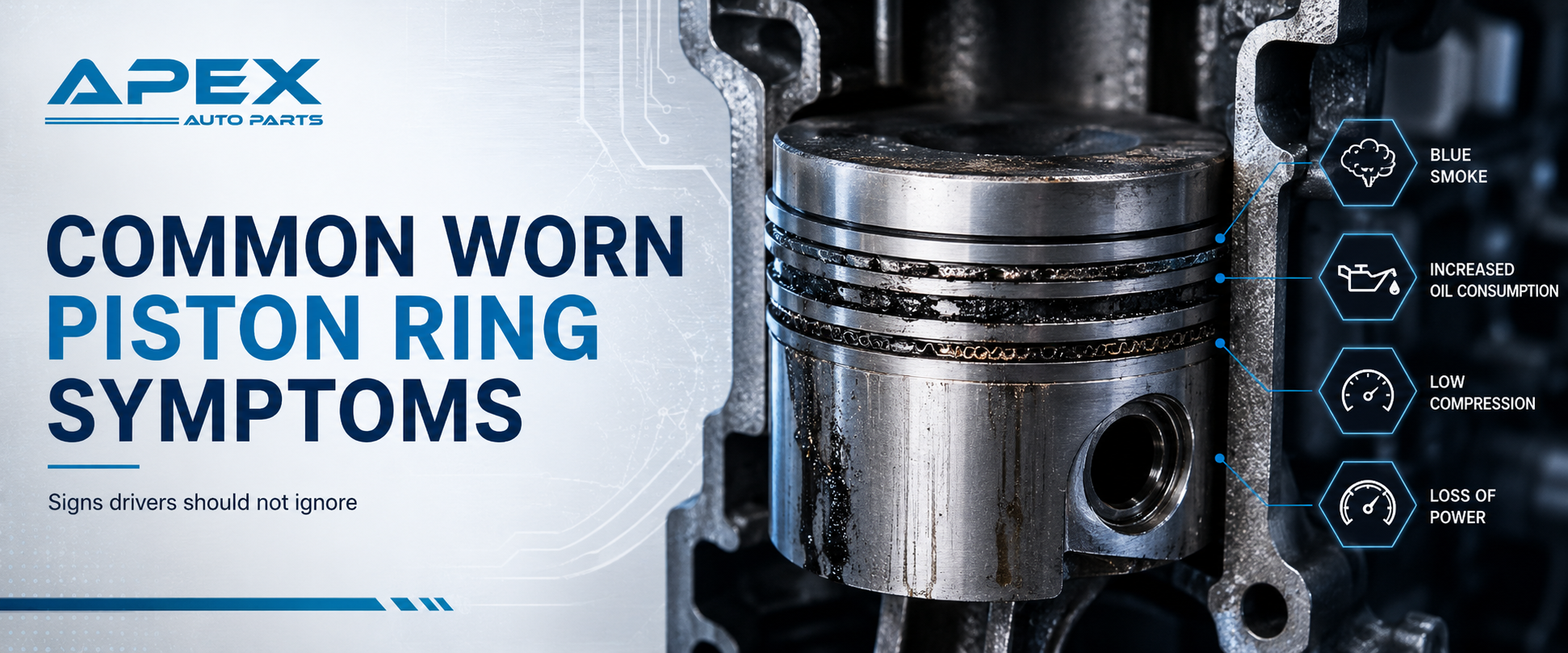
Many drivers do not notice the early symptoms of worn piston rings because the signs can develop slowly. At first, the engine may only use a little extra oil. Later, smoke, low power, and rough running may appear.
One common sign is blue smoke from the exhaust. Blue smoke usually means oil is burning inside the engine. If oil is passing the rings, it can burn with the fuel and air.
Another sign is low compression. The engine may feel weak, hard to start, or rough at idle. You may press the accelerator and feel that the car does not pull like before.
High oil use is another warning. If the oil level keeps dropping and there is no clear external leak, the engine may be burning oil internally.
Other symptoms of worn piston rings can include oil on the spark plugs, poor fuel economy, engine misfires, and pressure at the oil filler cap.
If these signs appear, a mechanic should properly test the engine before blindly replacing parts.
Signs of Bad Piston Rings Drivers Should Not Ignore
The signs of bad piston rings can look like other engine problems, so testing matters. A bad turbo seal, valve stem seal, PCV fault, or head gasket issue can also cause smoke or oil use. That is why guessing is risky.
Still, there are warning signs that should prompt you to act quickly.
The main signs of bad piston rings include blue smoke, low compression, oil burning, poor power, rough idle, and heavy crankcase pressure. If your car has these signs, do not just keep topping up oil and driving.
You should get the engine checked if you notice:
- Blue smoke from the exhaust
- Oil level dropping often
- Low compression
- Poor acceleration
- Rough idle
- Oil on spark plugs
- Heavy fumes from the oil cap
- Engine misfires
- Increased fuel use
- Black oily deposits in the exhaust
The longer you drive with bad rings, the more damage may happen. Oil burning can damage the catalytic converter, DPF, oxygen sensors, spark plugs, and turbo parts.
How Mechanics Check Piston Rings?
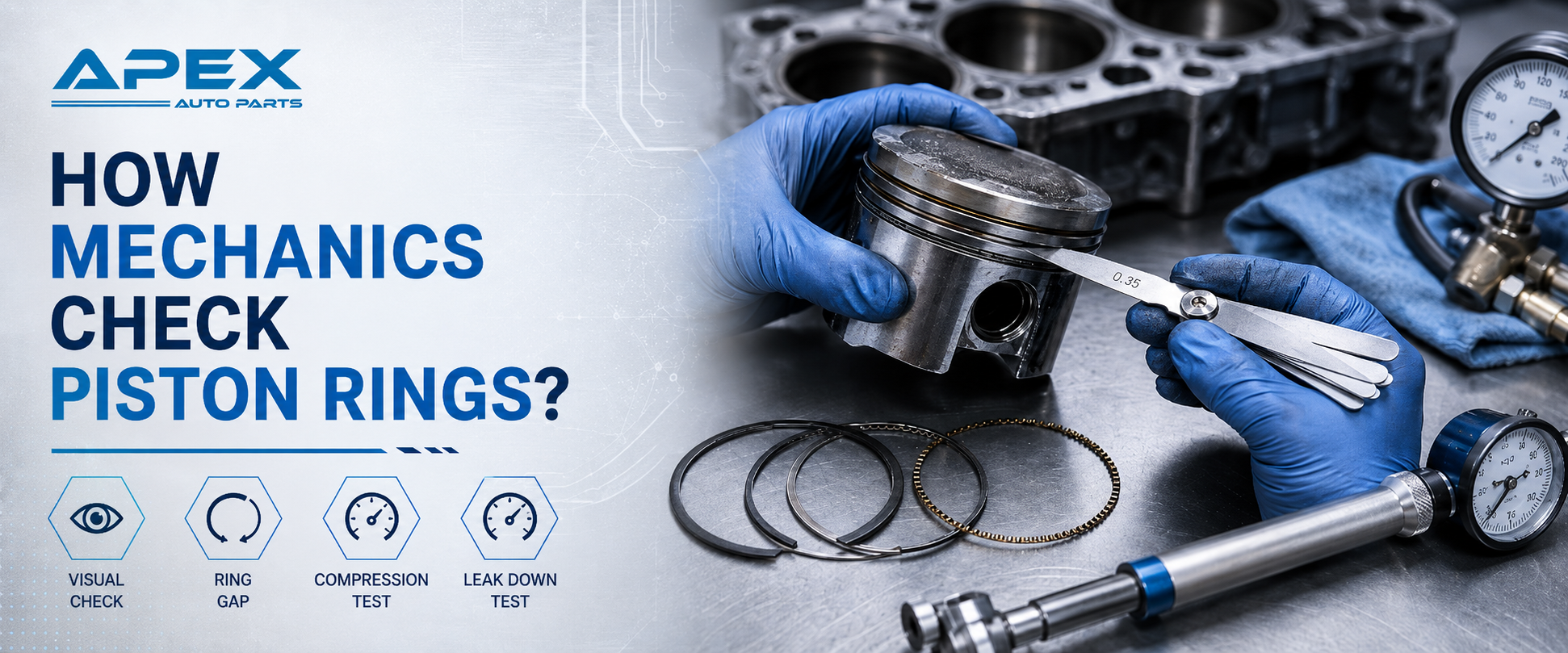
A mechanic will not usually open the hood first. They will test it. Good testing helps confirm whether piston rings are the real problem.
A compression test is common. This checks how much pressure each cylinder can hold. If one cylinder is low, there may be a problem with the ring, valve, or head gasket.
A leak-down test is more detailed. Air is pushed into the cylinder, and the mechanic listens for where it escapes. If air escapes into the crankcase, the rings may be worn. If air escapes from the intake or exhaust, valves may be leaking.
The mechanic may also check spark plugs, exhaust smoke, crankcase pressure, oil use history, and engine fault codes.
Sometimes a camera inspection is used to look inside the cylinder. This can show scoring, carbon, oil wetness, or piston damage.
Testing saves money because smoke does not always mean rings. It could be valve seals, turbo seals, PCV failure, or another issue.
Can You Drive With Worn Piston Rings?
You may be able to drive with mildly worn piston rings for a short time, but ignoring the problem is not a good idea. The engine may keep running, but it can get worse over time.
If the car is burning oil, the oil level may drop too low. Low oil can damage bearings, turbo parts, camshafts, and the crankshaft. Burning oil can also damage exhaust parts.
If compression is low, the engine may misfire and run poorly. Misfires can damage the catalytic converter or DPF. The car may also fail an emissions test if it smokes badly.
If you must drive before repair, check the oil level often and avoid hard driving. But the smart move is to get the engine tested as soon as possible.
Driving for months with worn piston rings can turn a repair into a full engine rebuild.
Can Piston Rings Be Replaced Without Rebuilding the Engine?
In most cases, replacing piston rings is a major job. The engine usually needs to be opened. Pistons must be removed, cylinders checked, and new rings fitted correctly.
Sometimes the engine can stay in the car, but many jobs require it to be removed or partially stripped. It depends on the vehicle and engine design.
It is not enough to fit new rings if the cylinder walls are worn or scored. The cylinders may need honing. If the bores are badly worn, the engine may need machining or larger pistons.
A proper ring repair may include:
- Removing pistons
- Cleaning ring grooves
- Checking cylinder wear
- Honing cylinders
- Fitting new ring sets
- Checking ring gap
- Replacing gaskets
- Changing oil and filter
- Checking bearings if needed
This is why ring jobs can cost more than drivers expect. The parts may look small, but the labor is deep inside the engine.
Piston Rings vs Valve Stem Seals
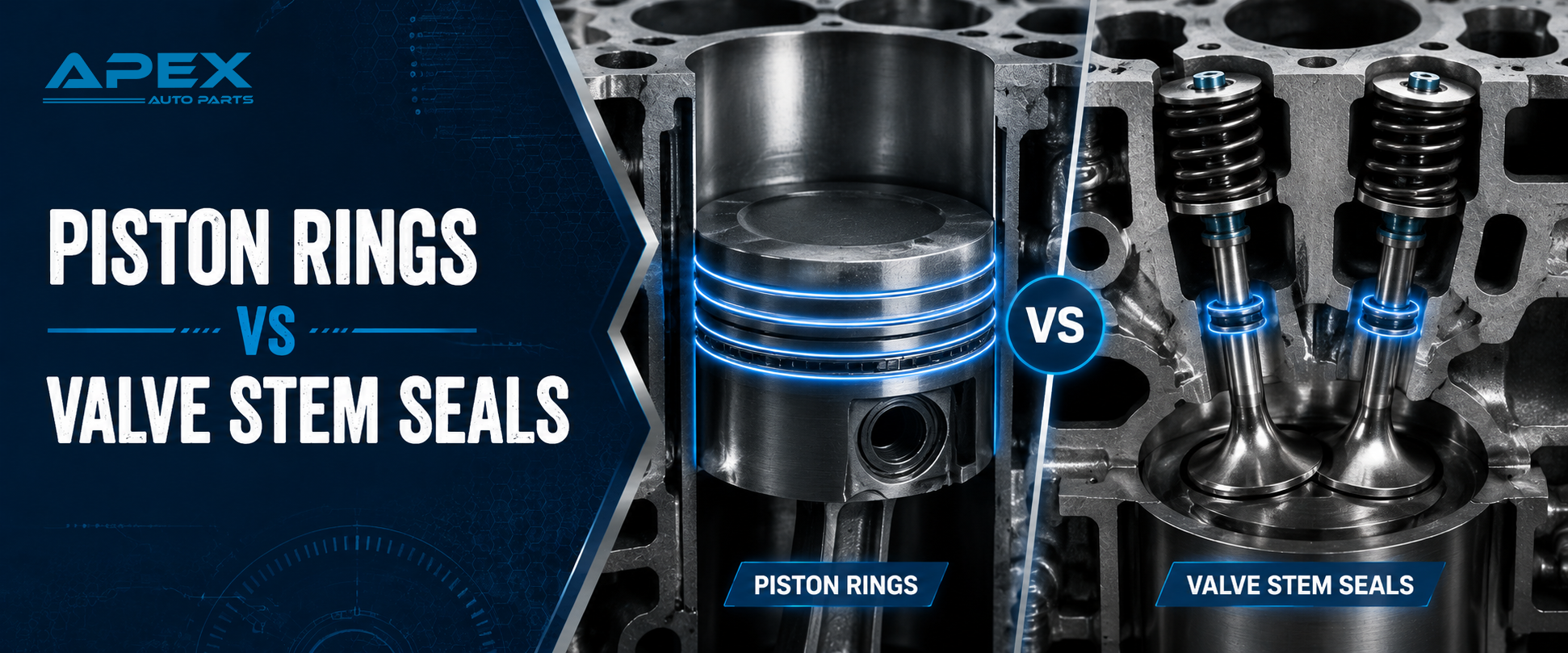
Sometimes oil burning is blamed on piston rings, but valve stem seals can also cause smoke. These are different parts.
Valve stem seals control oil around the valves. If they fail, oil can drip into the combustion chamber from the top of the engine. This can cause smoke, especially after idling or when starting the engine.
Piston rings seal around the piston. If they fail, oil can rise from the cylinder wall and burn. Ring wear often causes low compression and crankcase pressure, too.
A mechanic may use smoke patterns, compression testing, leak-down testing, and inspection to distinguish between them.
Replacing valve stem seals is usually less deep than replacing piston rings, but it still depends on the engine. This is why proper diagnosis matters before spending money.
How Piston Rings Affect Compression?
Compression is the pressure that builds inside the cylinder before combustion. Good compression helps the engine start, idle, and make power.
Piston rings are among the main components that maintain compression. If they are worn, pressure can leak past the piston and enter the crankcase. This reduces engine power.
Low compression can make the engine feel tired. It may crank longer before starting. It may misfire. It may feel weak uphill. It may use more fuel because it is not burning efficiently.
Compression problems are more serious in diesel engines because they rely heavily on high compression to ignite the fuel. Bad diesel piston rings can cause very hard starting, especially when cold.
If a mechanic finds low compression, they will usually test further to see whether the cause is rings, valves, head gasket, or cylinder damage.
How Oil Quality Protects Piston Rings?
Clean oil is one of the best ways to protect piston rings. Oil reduces friction, cools parts, and helps keep the ring area clean.
When oil is old, it can become dirty and thick. It may carry soot, fuel, metal particles, and sludge. This can lead to carbon buildup around the ring grooves.
If rings stick in their grooves, they cannot press properly against the cylinder wall. This can cause oil burning and low compression.
Using the correct oil grade matters too. Oil that is too thin or too thick may not protect the engine properly. Diesel engines also need oil that supports soot control and, where fitted, DPF systems.
Changing oil on time is much cheaper than repairing worn piston rings.
Buying the Right Piston Rings
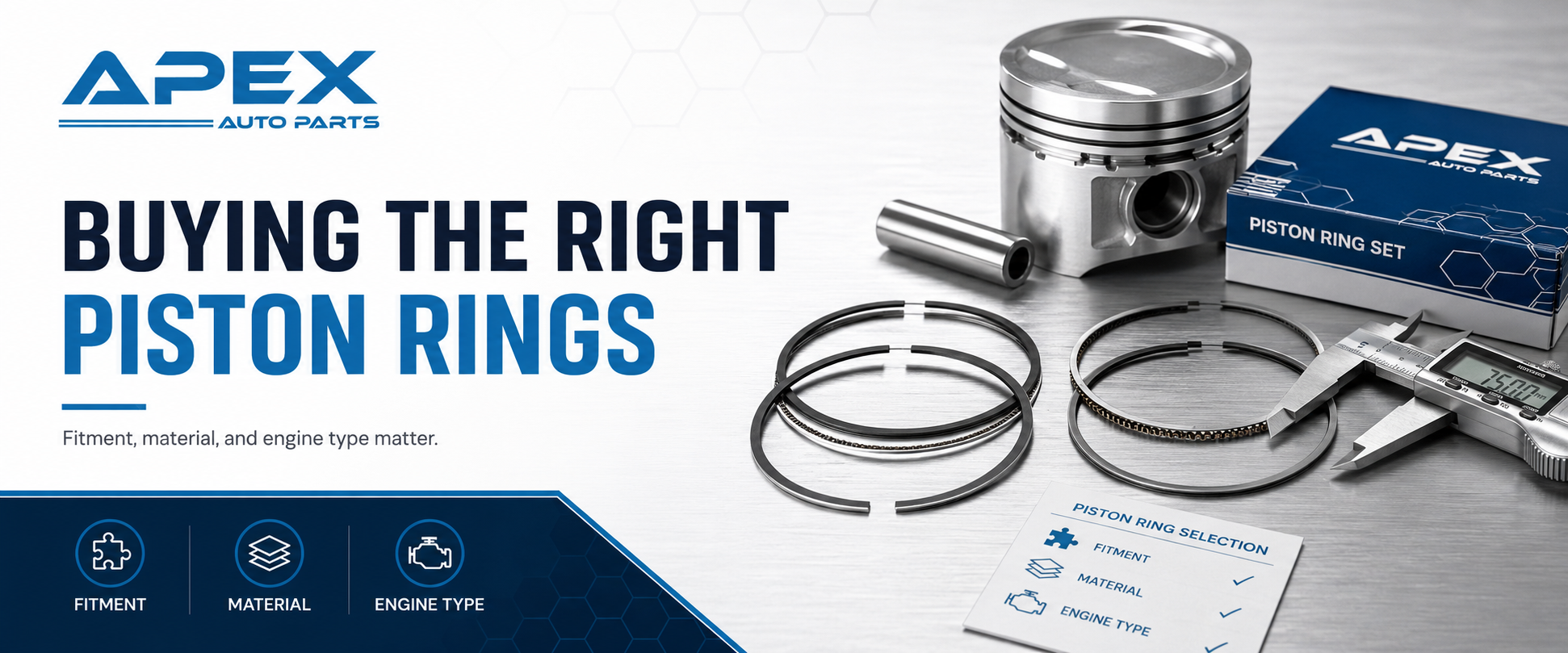
Buying piston rings is not like buying a simple trim part. These rings must match the engine exactly. Size, material, ring thickness, ring tension, and engine type all matter.
Before buying, check the vehicle make, model, year, engine code, bore size, and part number. If the engine has been machined before, standard rings may not fit. Some engines need oversize rings after machining.
For diesel engines, diesel piston rings must be strong enough for higher compression and heat. Do not fit a ring set just because it looks close.
Apex Auto Parts helps UK drivers, garages, mechanics, and trade buyers source engine parts for repair and rebuild work. If you are buying piston rings, pistons, bearings, gasket sets, timing parts, oil pumps, or rebuild parts, checking fitment before ordering helps avoid delays and repeat repairs.
Correct parts save time. Wrong parts cost money.
How to Help Piston Rings Last Longer?
You cannot stop engine wear forever, but you can slow it down. Good care helps piston rings last longer.
Start with oil changes. Use the correct oil and change it at the right time. Do not keep driving if the engine overheats. Replace air filters to prevent dirt from entering the engine. Fix injector problems early, especially on diesel engines.
Also, avoid hard driving when the engine is cold. Metal parts need time to reach working temperature. Heavy throttle on a cold engine can increase wear.
To help protect piston rings:
- Change oil on time
- Use the correct oil grade
- Keep air filters clean
- Fix overheating quickly
- Repair injector faults early
- Avoid poor quality tuning
- Let the engine warm up
- Check oil level often
- Fix PCV problems early
- Use quality engine parts
Small habits can prevent big repair bills.
Final Thoughts
Piston rings are small parts, but they have a big job. They seal compression, control oil, help transfer heat, and protect engine performance. When they fail, the engine can smoke, lose power, burn oil, and become hard to start.
The most common symptoms of worn piston rings include blue smoke, low compression, high oil consumption, poor power, rough idle, and crankcase pressure. These are also common signs of bad piston rings, but they should be tested properly because other faults can look similar.
Diesel piston rings work even harder because diesel engines use higher compression and deal with soot. Clean oil, good filters, healthy injectors, and correct servicing are very important for diesel ring life.
If you suspect worn piston rings, do not guess. Get a compression test or a leak-down test. Find out whether the rings, valves, head gasket, turbo, or PCV system is causing the problem.
If rings need replacing, use the correct parts and proper fitting. A small part that fits badly can cause a large engine problem.
For UK drivers and garages, Apex Auto Parts supports engine repair and rebuild work with parts such as piston rings, pistons, bearings, gaskets, oil pumps, timing parts, and related engine components. With the right parts and proper care, your engine has a much better chance of lasting longer.
FAQs About Piston Rings
1. What do piston rings do?
Piston rings seal the gap between the piston and the cylinder wall. They keep combustion pressure above the piston, control oil on the cylinder wall, and help move heat away from the piston. Without healthy rings, the engine can lose power, burn oil, smoke, and suffer low compression.
2. What are the most common worn piston ring symptoms?
Common symptoms of a worn piston ring include blue smoke, excessive oil consumption, low compression, rough idle, poor acceleration, misfires, and pressure at the oil filler cap. These signs can also indicate other faults, so a mechanic should perform a compression or leak-down test.
3. What are the main signs of bad piston rings?
The main signs of bad piston rings are blue exhaust smoke, oil burning, low engine power, poor starting, low compression, and heavy crankcase pressure. If these signs appear, do not keep driving for long. Testing is needed to confirm whether the rings are the real cause.
4. Can worn piston rings cause blue smoke?
Yes, worn piston rings can cause blue smoke because oil can pass into the combustion chamber and burn with the fuel. Blue smoke is often worse during acceleration or after idling. Other parts can also cause blue smoke, so proper diagnosis is important.
5. Are diesel piston rings different from petrol rings?
Yes, diesel piston rings are often made to handle higher compression, more heat, and more soot than petrol engine rings. Diesel engines operate under higher pressure, so the rings must seal tightly. Always use the correct ring set for the exact diesel engine code.
6. Can I drive with worn piston rings?
You may be able to drive with mildly worn piston rings, but it is not wise to ignore them. Oil burning can lower the oil level, damage exhaust parts, and worsen engine wear. If the car smokes, uses oil, or has low compression, get it checked soon.
7. How does a mechanic test piston rings?
A mechanic may test piston rings using a compression test, a leak-down test, a smoke check, a crankcase pressure check, and a spark plug inspection. If air leaks into the crankcase during a leak-down test, the rings may be worn, or the cylinder wall may be damaged.
8. Can piston rings be replaced without a full engine rebuild?
Sometimes piston rings can be replaced without a full rebuild, but the engine still needs major work. Pistons must be removed, and cylinders checked. If the cylinder walls are worn or scored, honing or machining may be needed. The repair depends on the engine condition.
9. What causes worn piston rings?
Worn piston rings can be caused by high mileage, missed oil changes, poor oil quality, overheating, dirty air filters, carbon build-up, injector faults, poor tuning, or dust entering the engine. Clean oil, good filters, and early repairs help rings last longer.
10. How do I choose the right piston rings?
Choose piston rings by checking the vehicle make, model, year, engine code, bore size, and part number. If the engine has been machined, standard rings may not fit. For diesel engines, use the correct diesel piston rings designed for higher compression and heat.
References: