
 info@apexautoparts.co.uk
 +44 203 915 7535
 Safe & Fast Shipping
 Whish List
 Compare
 Sign In

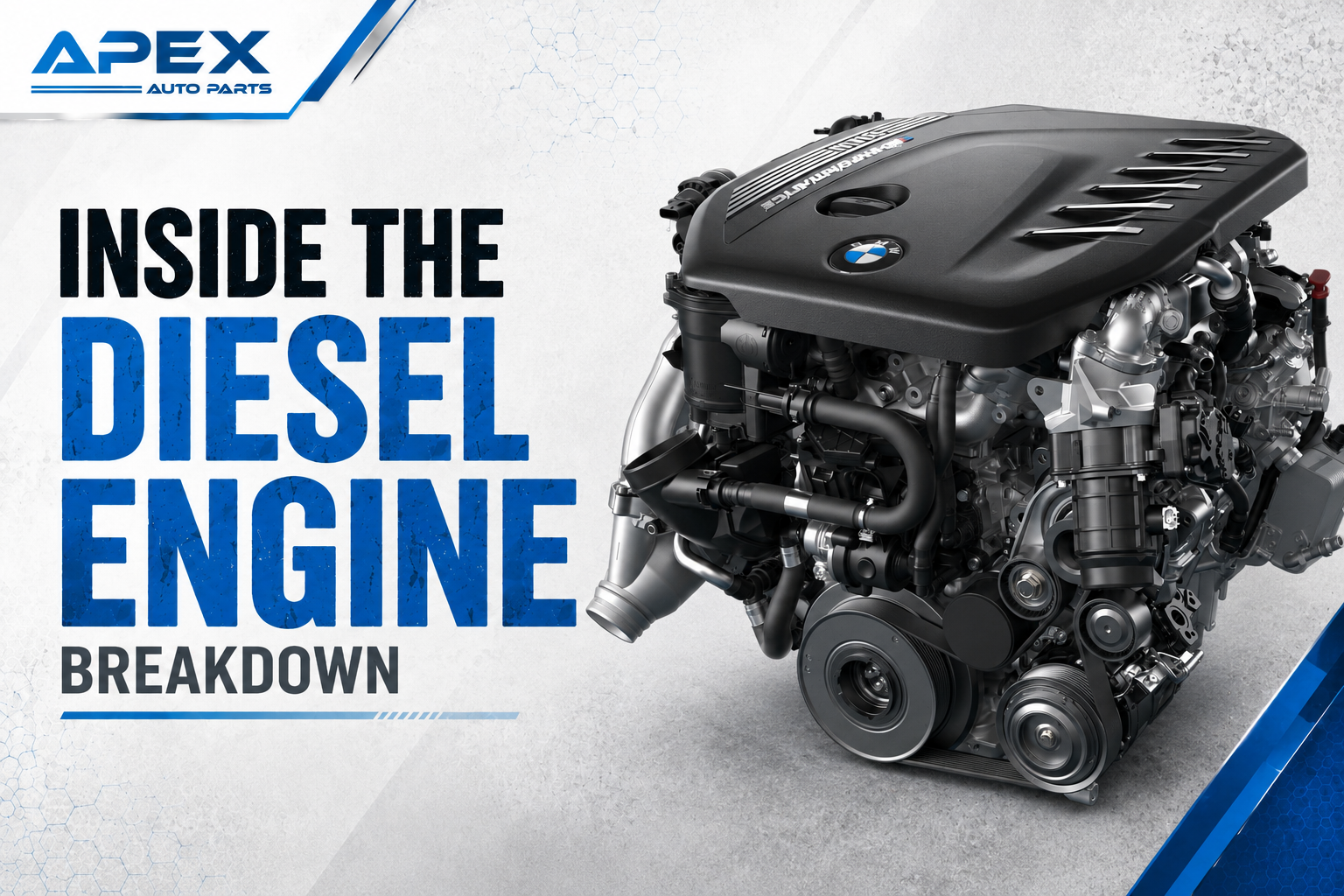
A Diesel Engine is one of the most common engine types used in cars, vans, pickups, SUVs, taxis, and work vehicles. Many drivers like diesel because it delivers strong pulling power, good fuel economy, and long engine life when properly maintained.
Still, many people do not fully understand how a Diesel Engine works. Some drivers only know that diesel cars use diesel fuel and petrol cars use petrol. But when something goes wrong, that basic knowledge is not enough. You may hear knocking sounds, see black smoke, notice poor starting, or worry about what to do after putting the wrong fuel in the car.
This guide explains the Diesel Engine in simple words. You will learn how a diesel engine works, what makes it different from a petrol engine, what happens if you put petrol in a diesel engine, what happens if there is diesel in a petrol engine, and when a diesel engine rebuild may be needed.
Apex Auto Parts helps UK drivers, mechanics, garages, and trade buyers find engine parts. Diesel engines need the right parts, clean oil, good filters, reliable cooling, and proper repairs. A good Diesel Engine can last a long time, but only if it is properly cared for.
What Is a Diesel Engine?
A Diesel Engine is an engine that uses diesel fuel to make power. It burns fuel in the engine cylinders, converting that energy into motion. That movement helps the car drive.
The main difference is how the fuel burns. A petrol engine usually uses a spark plug to ignite the fuel. A Diesel Engine uses high pressure and heat to ignite the fuel. This is called compression ignition.
In simple words, a diesel engine squeezes air very hard until it becomes hot. Then diesel fuel is sprayed into that hot air. The fuel burns, pushing the piston down. This creates power.
Diesel engines are often used in vehicles that need strength. This is why many vans, taxis, pickup trucks, SUVs, and long-distance cars use diesel. Diesel engines are known for torque. Torque is the pulling force that helps a vehicle move easily, especially when carrying weight or driving uphill.
A Diesel Engine may feel different from a petrol engine. It may sound deeper. It may pull strongly at lower engine speed. It may not rev as high as a petrol engine, but it can feel strong without needing to be pushed hard.
How does a diesel engine work?
Many drivers ask how diesel engines work because they can seem confusing. The answer is easier than it sounds.
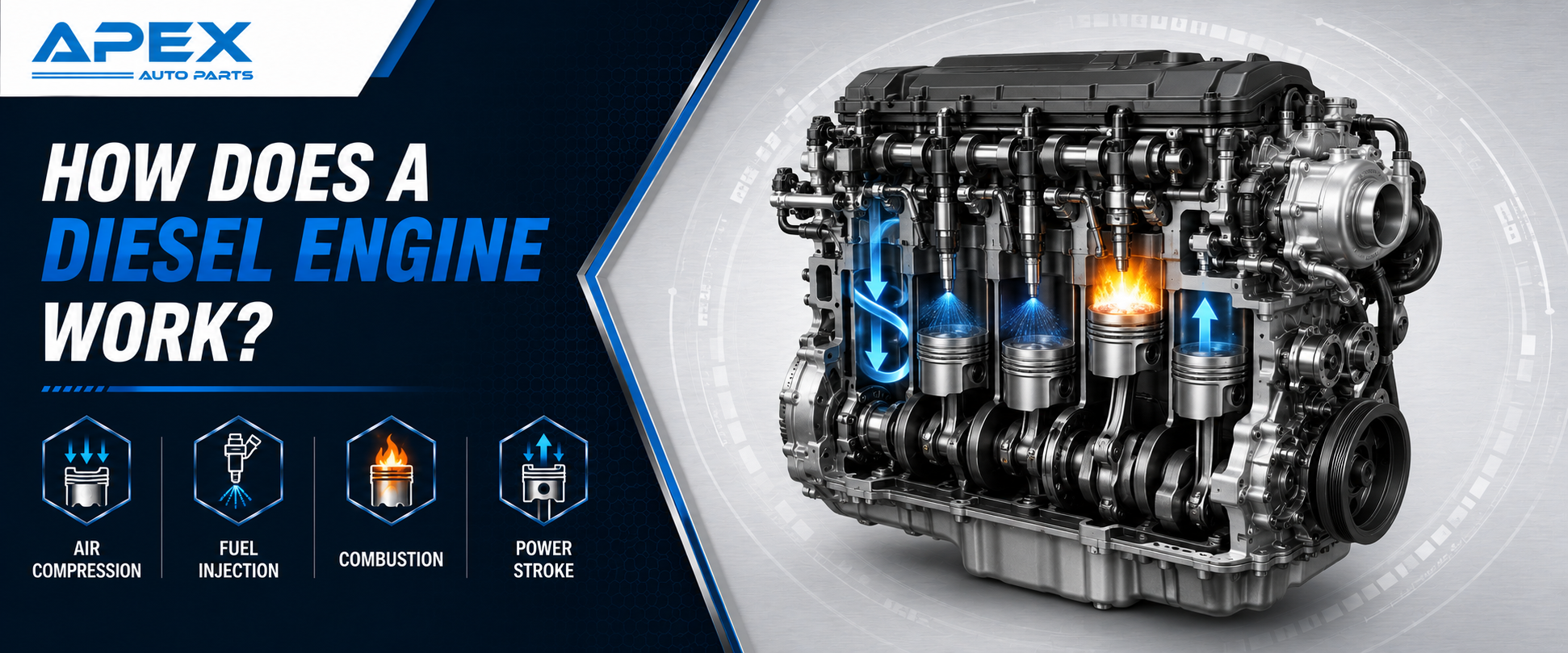
A diesel engine works in four main steps. These steps occur very quickly within each cylinder while the engine is running.
First, the engine pulls in air. Unlike a petrol engine, a diesel engine mostly draws in air first, not a ready air-and-fuel mix.
Second, the piston squeezes that air tightly. This creates heat. The pressure inside a Diesel Engine is usually higher than in a petrol engine.
Third, diesel fuel is injected into the hot compressed air. The heat causes the fuel to burn. No spark plug is needed for the main burn.
Fourth, the burning fuel pushes the piston down. This movement turns the crankshaft, generating the power that drives the vehicle.
So, if someone asks how a diesel engine works, you can explain it like this: it squeezes air until it gets hot, sprays diesel into that hot air, and uses the combustion to push the pistons.
Main Parts Inside a Diesel Engine
A Diesel Engine has many parts working together. Some parts create power. Some control fuel. Some move oil. Some keep the engine cool. If one important part fails, the engine may not run properly.
The main parts include pistons, piston rings, crankshaft, connecting rods, cylinder head, valves, camshaft, injectors, turbocharger, glow plugs, oil pump, water pump, EGR valve, DPF, timing belt or timing chain, and sensors.
Each part has a job. Pistons move up and down. The crankshaft turns that movement into rotation. Injectors spray diesel fuel. The turbo helps push more air into the engine. Glow plugs help with cold starting. The oil pump moves oil around the engine. The water pump keeps coolant moving so the engine does not overheat.
When a diesel engine has problems, a mechanic will usually check more than one part. For example, black smoke may come from injector issues, turbo problems, EGR faults, air leaks, or blocked filters. Poor starting may stem from glow plugs, injectors, a weak battery, low compression, or fuel pressure issues.
This is why guessing is risky. A proper check saves money.
Difference between a petrol and a diesel engine
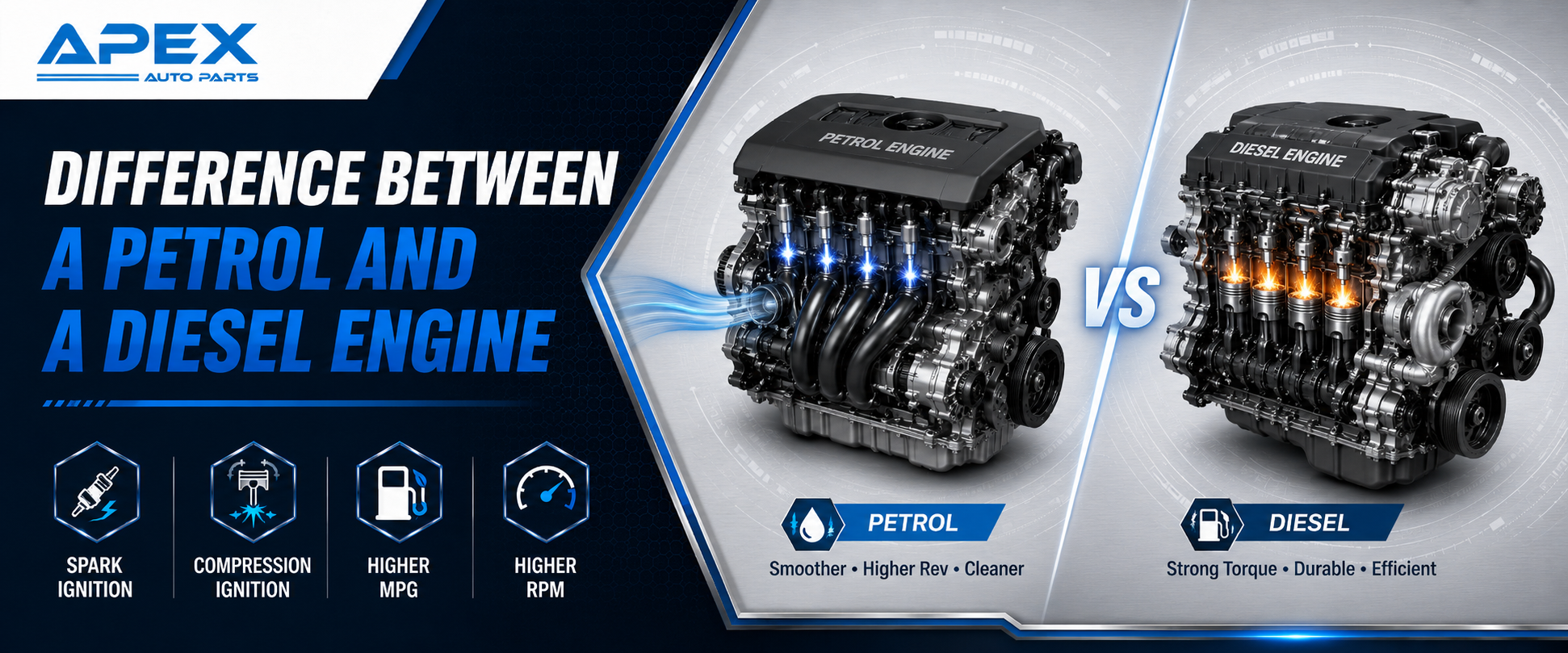
The difference between a petrol and diesel engine starts with how fuel burns inside the cylinder.
A petrol engine usually mixes petrol with air, then uses spark plugs to light the mixture. A Diesel Engine compresses air first, then sprays diesel fuel into the hot air. The fuel burns because of heat and pressure.
This difference affects how the engine feels. Petrol engines are often quieter and can rev higher. Diesel engines usually produce more pulling power at low speed. That is why diesel cars often feel strong on motorways and hills.
Fuel economy is another difference. Diesel engines are often more fuel efficient on long trips. This is one reason many UK drivers use diesel for motorway driving and high-mileage work. But short town driving can be harder on diesel engines, especially because of DPF and EGR systems.
The difference between a petrol and diesel engine also matters during repairs. Diesel engines use components such as high-pressure fuel injectors, glow plugs, DPF systems, and turbo components that require proper care. Petrol engines use spark plugs and ignition coils more heavily.
In simple words, petrol engines are often smoother and lighter for short daily use. Diesel engines are often stronger and more efficient for long-distance driving and heavy use.
Why Are Diesel Engines Good for Long Trips?
A healthy Diesel Engine can be a great choice for long journeys. It works well when it gets warm and runs at a steady speed. This is why diesel cars are often popular with drivers who do a lot of motorway miles.
Long trips help the engine reach the right temperature. They also help the DPF clean itself. The DPF traps soot from the exhaust and needs heat to burn that soot away. If a diesel car only does short trips, the DPF may not get hot enough. This can cause warning lights, poor fuel use, smoke, and limp mode.
Diesel engines also use torque well. You do not always need to press the accelerator hard. The engine can pull smoothly at low revs, which helps on long roads.
For drivers who cover many miles each week, a Diesel Engine can still make sense. But for drivers who only do short school runs or city trips, a petrol or hybrid vehicle may be easier to live with.
Common Diesel Engine Problems
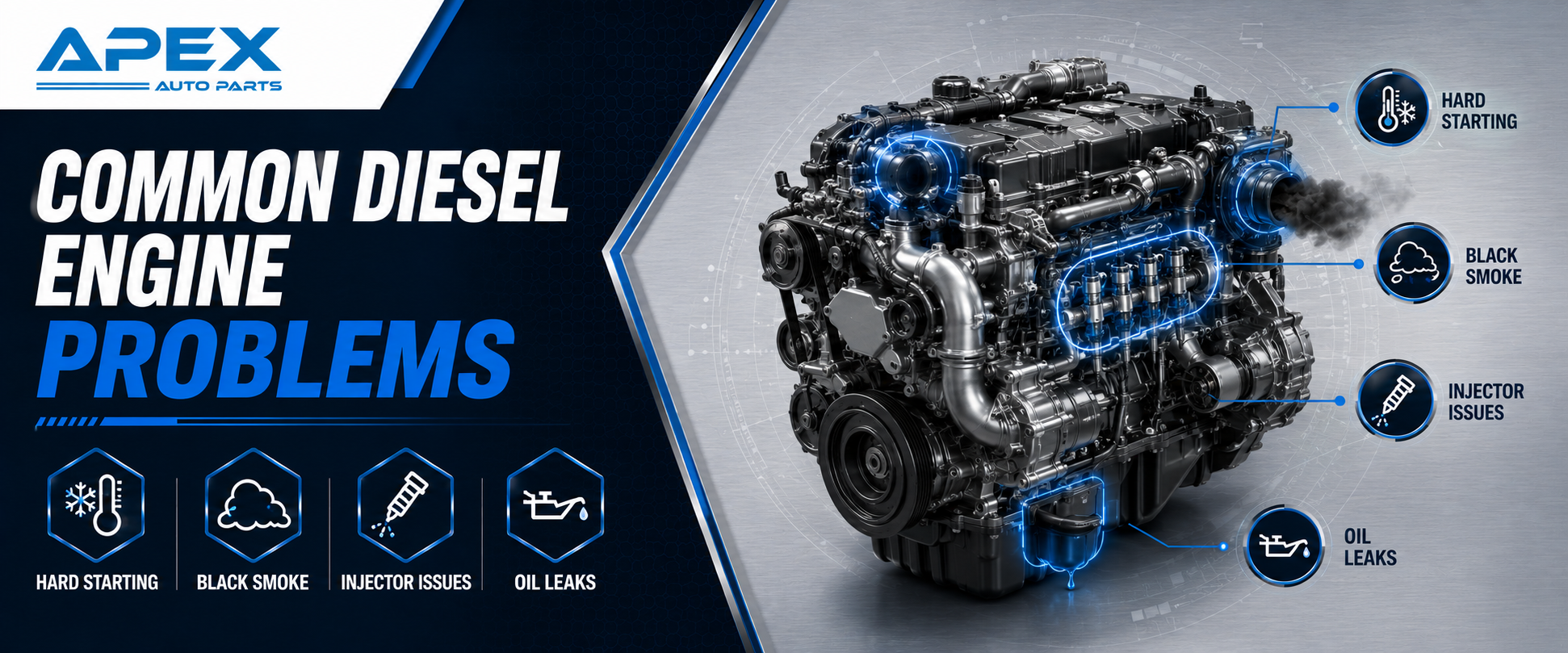
A Diesel Engine can last a long time, but its parts still wear out. Most problems start small. If they are ignored, they can become expensive.
Common diesel problems include hard starting, black smoke, white smoke, rough idle, low power, turbo noise, EGR blockage, DPF blockage, injector faults, glow plug faults, oil leaks, coolant leaks, timing chain wear, and low oil pressure.
Some signs are easy to understand. If the car is hard to start on cold mornings, glow plugs may be weak. If there is black smoke, the engine may have too much fuel or not enough air. If the engine has no power, there may be a boost leak, a turbo fault, an EGR problem, a blocked DPF, or a fuel issue.
A knocking sound should always be checked quickly. Diesel engines can be louder than petrol engines, but a new heavy knock is not normal. It may point to injector problems, bearing wear, timing issues, or internal damage.
The best advice is simple. Do not wait until the car breaks down. If a warning light appears, if the smoke changes, or if the engine starts sounding different, get it checked.
What is the best diesel engine?
Many people search for the best diesel engine, but there is no single answer that fits everyone. The right engine depends on the vehicle, driving style, service history, and repair budget.
For daily long-distance driving, the best diesel engine is usually one that is smooth, efficient, easy to service, and known for lasting well with proper maintenance. For towing, the best engine may be one with strong torque and a strong cooling system. For city driving, a diesel may not always be the best choice because short trips can cause DPF issues.
A good diesel engine should have:
- Strong service history
- Good oil pressure
- No heavy smoke
- No timing chain noise
- Healthy injectors
- Clean coolant
- Good turbo response
- No DPF warning lights
- No major oil leaks
- Correct parts fitted
The best diesel engine is not always the one with the biggest power. Sometimes the best one is the engine that is simple to maintain and has been properly looked after.
What is the most reliable diesel engine?
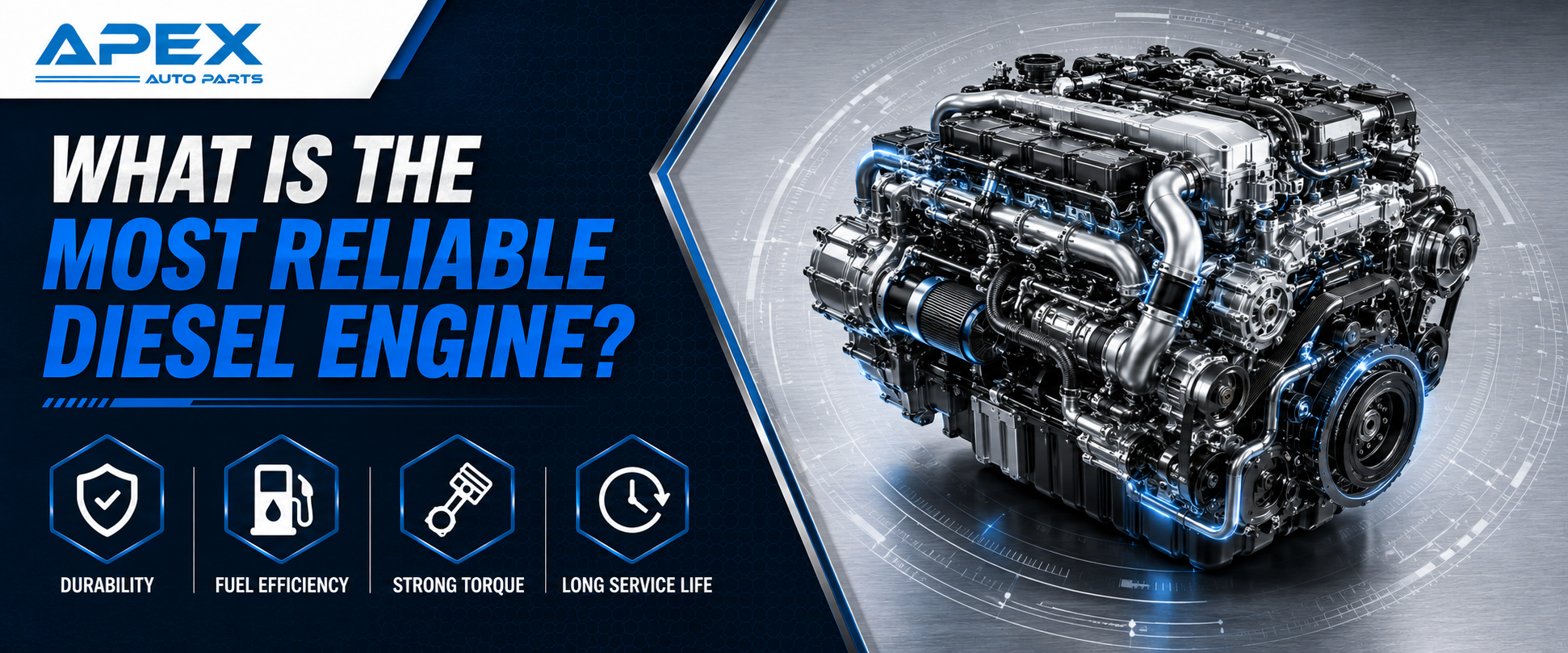
The most reliable diesel engine is usually one that has regular oil changes, clean filters, good cooling, and no ignored faults. Even a strong engine can fail if it is neglected.
People often look for engine names and model codes when searching for the most reliable diesel engine, but condition matters more than reputation. A diesel engine with 150,000 miles and full service history may be better than one with 70,000 miles and no records.
Reliability depends on how the engine has been used. Diesel engines like longer trips. If a car has only done short journeys for years, it may have EGR, DPF, and injector issues even with lower mileage.
If you are buying a used diesel car, check the service history first. Listen for rattles. Look for smoke. Check if the engine reaches temperature. Ask about timing belt or timing chain work. Look for oil leaks and coolant loss.
A reliable diesel engine is usually not a lucky engine. It is an engine that has been serviced properly.
What is the best BMW diesel engine?
Many BMW owners search for the best BMW diesel engine because BMW has made several well-known diesel engines. Some are loved for smooth power. Some are known for fuel economy. Some need careful checks because of timing chain or repair cost concerns.
The best BMW diesel engine for one driver may not be the best for another. If you want economy, a four-cylinder BMW diesel may suit you. If you want smooth power, a six-cylinder diesel may feel better. If you want towing strength, a larger diesel may be the better pick.
When choosing a BMW diesel, do not look only at the badge. Check the engine code, service history, timing chain condition, oil leaks, EGR and DPF health, and the quality of previous repairs.
Apex Auto Parts supplies many BMW engine parts, including timing kits, gaskets, oil pumps, sensors, water pumps, bearings, and engine repair parts. This matters because BMW diesel engines need correct fitment. A part may look similar but still be wrong for the engine.
The best BMW diesel engine is the one that suits your needs and has evidence of proper care.
What Happens If You Put Petrol in a Diesel Engine?
Putting petrol in a diesel engine is a serious mistake. Diesel fuel helps lubricate the fuel system. Petrol does not lubricate the same way. If petrol enters a diesel system, it can damage the fuel pump, injectors, and other fuel parts.
If you realize the mistake before starting the car, do not start the engine. Keep the ignition off and call for help. The fuel tank should be drained and cleaned before the car is used.
If the engine has already been started, the risk is higher. Petrol can move through the fuel lines, pump, and injectors. The engine may run badly, knock, smoke, or stop. The repair cost can rise quickly.
Signs of petrol in a diesel engine may include rough running, knocking, smoke, loss of power, warning lights, and the engine stopping.
The safest rule is simple. If you put petrol in a diesel car, do not drive it. Get it drained properly.
What Happens If There Is Diesel in a Petrol Engine?
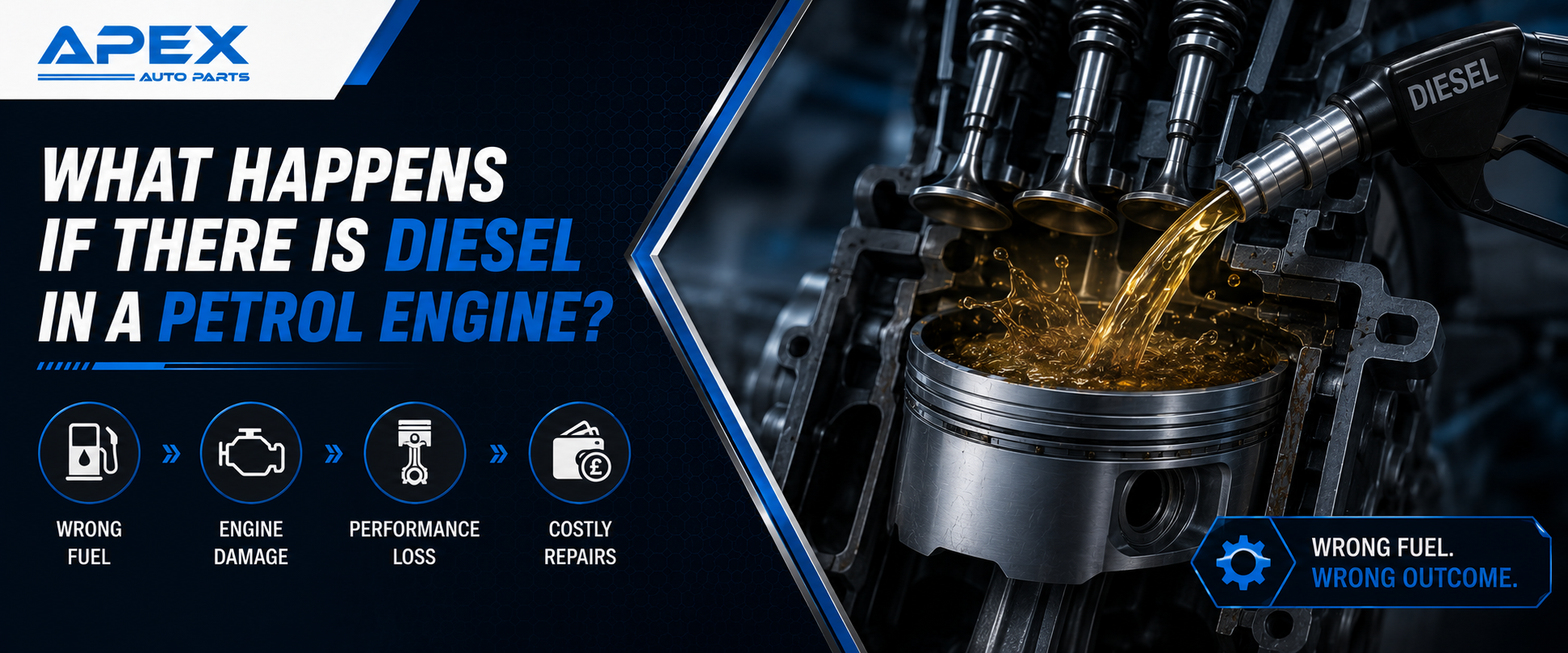
Putting diesel in a petrol engine is also a problem, but it is usually less common because diesel nozzles are often larger and may not fit some petrol filler necks.
If diesel in a petrol engine happens, the engine may struggle to start or run badly. Diesel does not burn the same way petrol does in a petrol engine. It can foul spark plugs, cause smoke, block parts, and make the engine run rough.
If you realize the mistake before starting, do not start the car. The tank should be drained. If you have already started the engine, stop as soon as possible and get help.
Signs may include rough idle, smoke, misfires, poor acceleration, engine warning light, and stalling.
Wrong fuel problems should never be ignored. The longer the engine runs with the wrong fuel, the more damage may occur.
What is a diesel engine rebuild?
A diesel engine rebuild is a comprehensive repair in which the engine is taken apart, inspected, cleaned, and rebuilt with new or repaired parts as needed. It may be needed when the engine has internal damage or heavy wear.
A diesel engine rebuild may include pistons, piston rings, bearings, gaskets, seals, valves, cylinder head work, timing parts, injectors, oil pump, water pump, and turbo checks. The exact parts depend on the fault.
Diesel engines run with high compression, so the rebuild must be done carefully. The mechanic should check why the engine failed. If the cause is not fixed, the rebuilt engine can fail again.
For example, if low oil pressure caused bearing damage, the oil pump and oil passages must be checked. If overheating caused the damage, the cooling system must be fixed. If an injector damages a piston, the injectors must be tested.
A diesel engine rebuild can save a vehicle, but only if it is done properly with the correct parts.
When Does a Diesel Engine Need Rebuilding?
A Diesel Engine may need rebuilding when the internal parts are too worn or damaged for a small repair.
Common signs include low compression, heavy smoke, oil burning, coolant mixing with oil, engine knocking, metal in the oil, repeated overheating, and poor starting even after basic repairs.
Low compression is one of the biggest signs. A diesel engine needs strong compression to start and burn fuel properly. If compression is weak, the engine may crank for a long time, smoke, misfire, or fail to start.
A mechanic may do a compression test or a leak-down test. These tests help show whether the cylinders are sealing properly. If the pistons, rings, valves, or cylinder walls are worn, a rebuild may be needed.
Not every fault needs a full rebuild. Some problems can be fixed with injectors, glow plugs, sensors, timing parts, or gaskets. Testing helps avoid wasting money.
How to Keep a Diesel Engine Healthy?
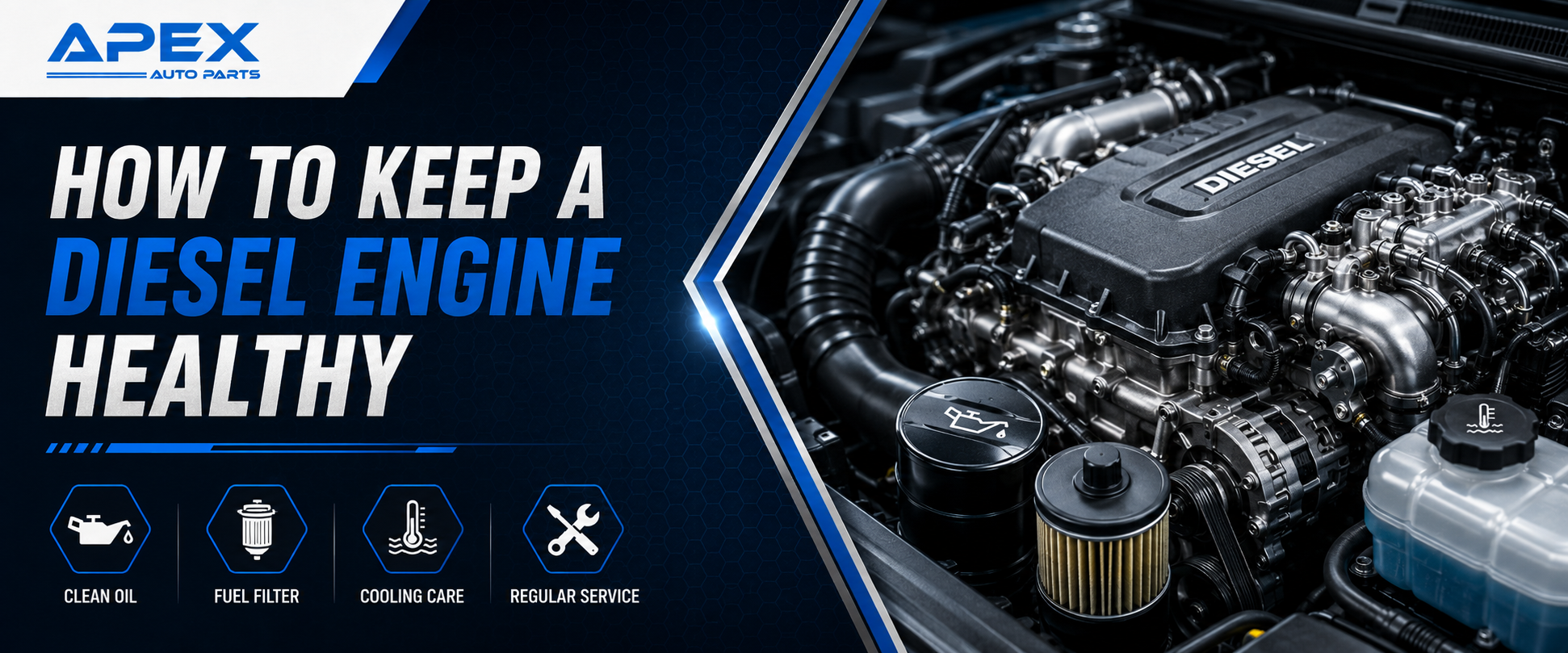
A Diesel Engine can last longer with simple care. Most serious engine damage starts with small problems that were ignored.
Change the oil on time. Use the correct oil grade. Replace fuel filters and air filters when needed. Keep the coolant system healthy. Do not ignore DPF or EGR warning signs. Let the engine warm up before hard driving.
If you mostly drive short trips, give the car a proper longer drive when safe. This helps the engine reach operating temperature and supports DPF cleaning.
You can help protect a diesel engine by:
- Checking oil level often
- Changing oil and filters on time
- Using good quality fuel
- Fixing coolant leaks early
- Not ignoring warning lights
- Letting the engine warm before hard driving
- Checking the timing belt or chain condition
- Repairing boost leaks early
- Using correct engine parts
- Keeping service records safe
Good care is cheaper than a rebuild.
Buying the Right Diesel Engine Parts
Diesel engine parts must match the engine properly. The same vehicle model can have more than one engine version. A sensor, gasket, injector, timing kit, or oil pump may look close but still be the wrong part.
Before buying parts, check the vehicle make, model, year, engine size, fuel type, engine code, and part number. This is especially important for BMW, Mercedes, Audi, Volkswagen, Land Rover, Jaguar, Ford, Peugeot, Vauxhall, and other common diesel vehicles.
Apex Auto Parts helps UK drivers, garages, and trade buyers source engine parts. If you are repairing or rebuilding a diesel engine, correct fitment matters. The wrong part can delay the job and cause repeat problems.
Quality also matters. A cheap gasket, a weak water pump, a poor timing kit, or a low-quality sensor can end up costing more later if it fails early.
Final Thoughts
A Diesel Engine is strong, efficient, and useful when properly maintained. It works differently from a petrol engine because it uses the heat from compression to burn fuel. That is the simple answer to how a diesel engine works.
The difference between petrol and diesel engines matters because diesel engines have different components, repair needs, and driving habits. Diesel is often better for long journeys and pulling power, while petrol can be easier for short town driving.
Wrong fuel mistakes should be handled quickly. Petrol in a diesel engine can damage the fuel system. Diesel in a petrol engine can cause rough running, smoke, and misfires. In both cases, do not keep driving.
The best diesel engine, the most reliable diesel engine, and the best BMW diesel engine all depend on service history, proper use, and quality parts. A well-cared-for engine is usually better than one with a famous name but poor maintenance.
If damage is serious, a diesel engine rebuild may be needed. But before spending money, get proper checks done. Find the real fault, use the correct parts, and fix the cause so the problem does not return.
Apex Auto Parts supports UK drivers and garages with engine parts for repair, maintenance, and rebuild work. With the right care, a diesel engine can stay strong for many years.
FAQs About Diesel Engines
1. What is a Diesel Engine?
A Diesel Engine is an engine that uses diesel fuel and compression heat to make power. It does not use spark plugs for the main combustion like a petrol engine. It compresses air, injects diesel fuel, and uses the fuel burn to push pistons and move the vehicle.
2. How does a diesel engine work in simple words?
How does a diesel engine work? It draws in air, compresses it until it gets hot, then sprays diesel fuel into it. The fuel burns from heat and pressure. This pushes the piston down and turns the crankshaft, thereby moving the car.
3. What is the main difference between a petrol engine and a diesel engine?
The main difference between a petrol and a diesel engine is how the fuel burns. Petrol engines use spark plugs to ignite fuel. Diesel engines use high compression to heat air, then inject diesel fuel. Diesel engines usually give more torque, while petrol engines often rev higher and feel smoother.
4. What happens if you put petrol in a diesel engine?
Putting petrol in a diesel engine can damage the fuel pump and injectors because petrol does not lubricate as well as diesel. If it happens, do not start the car. The tank should be drained. If you already drove it, stop safely and get professional help quickly.
5. What happens if there is diesel in a petrol engine?
If diesel enters a petrol engine, the car may misfire, smoke, run rough, or fail to start. Diesel does not burn correctly in a petrol engine. Do not keep driving. The fuel system should be drained and checked before the engine is used again.
6. What is the best diesel engine?
The best diesel engine depends on your use. For long trips, choose one with a strong service history, good fuel economy, healthy injectors, no smoke, and no timing noise. The best engine is not always the most powerful. It is the one that suits your driving and has been well maintained.
7. What is the most reliable diesel engine?
The most reliable diesel engine is usually one that has regular oil changes, clean filters, good cooling, and no ignored faults. Engine condition matters more than reputation. A high-mileage diesel with a full service history can be better than a low-mileage one with poor care.
8. What is the best BMW diesel engine?
The best BMW diesel engine depends on what you need. Four-cylinder BMW diesels can be economical, while six-cylinder diesels are smoother and stronger. Always check the engine code, timing chain condition, service history, oil leaks, and DPF health before buying.
9. When is a diesel engine rebuild needed?
A diesel engine rebuild may be needed when the engine has low compression, heavy smoke, knocking, oil burning, metal in the oil, repeated overheating, or major internal wear. A mechanic should test the engine first because some faults can be fixed without a full rebuild.
10. How can I make a Diesel Engine last longer?
To make a Diesel Engine last longer, change oil and filters on time, use the correct oil, keep coolant healthy, fix leaks early, and do not ignore warning lights. Longer drives can help the DPF. Proper servicing and the correct parts are key to a long diesel engine life.
References:
engineerfix
theaa
vfidiesel