
 info@apexautoparts.co.uk
 +44 203 915 7535
 Safe & Fast Shipping
 Whish List
 Compare
 Sign In


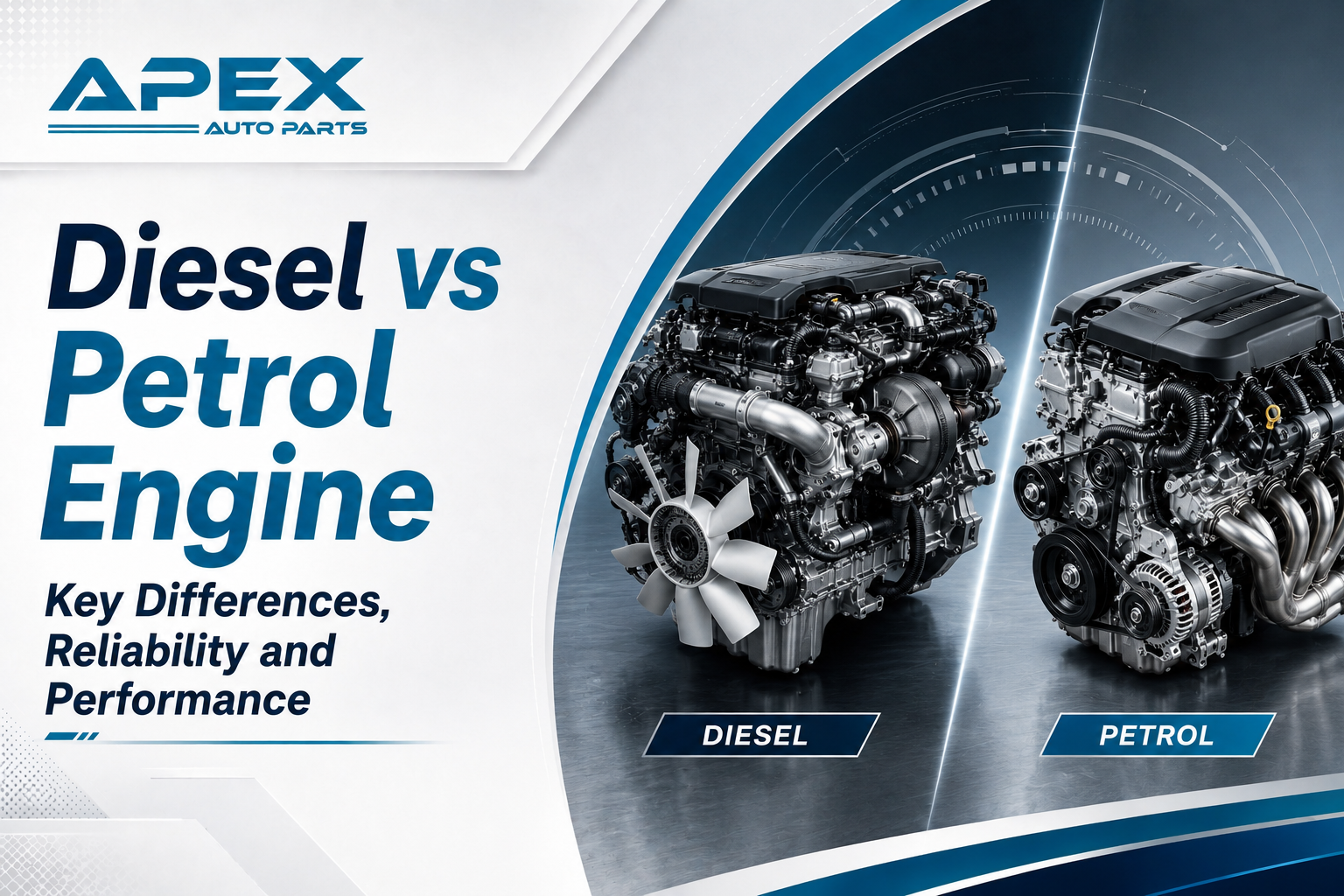
Choosing between a diesel car and a petrol car can feel confusing. Both can be reliable, perform well, and become expensive when not cared for. The right choice depends on how far you drive, where you drive, what you carry, and how long you plan to keep the vehicle.
A Diesel Engine often suits drivers who cover many motorway miles, tow heavy loads, or need strong pulling power. A Petrol Engine often suits drivers who make shorter trips, drive mainly in towns, or want a quieter and smoother feel.
However, there is more to the diesel vs petrol engine choice than fuel economy. Modern engines use turbochargers, sensors, fuel pumps, timing systems, and exhaust-cleaning components. These systems can improve power and reduce emissions, but they also add more parts that may need attention as a car gets older.
This guide explains how both engines work, the main differences in performance, common faults, likely repair costs, and the type of driving that suits each one. It also explains what a mechanic should check before replacing expensive parts.
The Main petrol vs diesel engine difference?
The main difference between petrol and diesel engines is how the fuel ignites in the cylinder.
A petrol unit normally mixes fuel with air and uses a spark plug to start combustion. A diesel unit pulls air into the cylinder, compresses it until it becomes very hot, and then injects diesel fuel into that hot air. The fuel then starts burning without a spark plug.
Both are internal combustion engines. They use pistons moving inside cylinders. The force generated by combustion pushes the pistons, turns the crankshaft, and transmits power through the gearbox to the wheels. Most road car engines use a four-stroke process that includes intake, compression, power, and exhaust.
This different ignition method affects how each engine is built and how it feels on the road. Diesel engines typically use higher compression ratios and stronger internal components. Petrol engines often operate at higher engine speeds and use spark plugs and ignition coils.
Modern technology has reduced some of the old differences. A small turbo petrol car can now produce strong torque, while a modern diesel can feel smooth and quiet. Even so, the basic way each fuel burns remains different.
How Does a Diesel Engine Work?
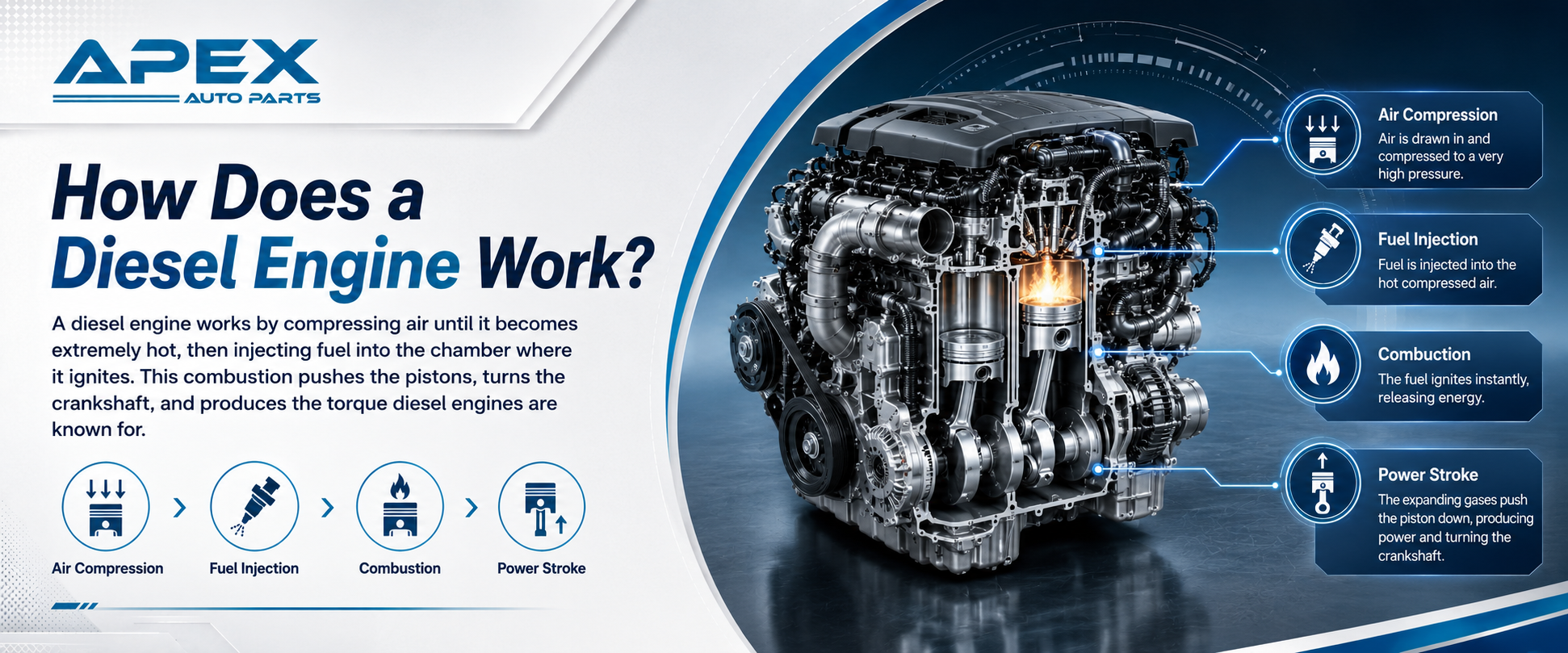
A Diesel Engine draws clean air into the cylinder and compresses it. Compression raises the temperature of the air. The injector then sprays a measured amount of fuel into the hot compressed air, causing it to ignite.
The amount and timing of the injected fuel are carefully controlled. Modern common rail systems operate at high pressure and can inject fuel several times during a single combustion cycle. This helps control noise, fuel use, power, and emissions.
A diesel does not use spark plugs. It may use glow plugs to support cold starting. Glow plugs generate heat near the injected fuel, helping combustion start smoothly when the engine and ambient air are cold. Modern glow systems may also support the engine while it warms and during certain exhaust-cleaning processes.
Most modern diesel cars also use a turbocharger. The turbo pushes more air into the engine, allowing it to make useful power and torque without needing a very large capacity.
How a Petrol Engine Works?
A Petrol Engine normally draws in air and petrol, compresses the mixture, and uses a spark plug to ignite the mixture. The burning mixture creates pressure that pushes the piston down.
Each cylinder has a spark plug. The ignition coil supplies the high voltage needed to create the spark. If a plug or coil fails, the engine may misfire, shake, lose power, or show an engine warning light.
Petrol engines must also control unwanted combustion known as knock. Knocking occurs when the fuel-air mixture ignites prematurely. Modern engines use knock sensors to detect harmful vibration so the engine control unit can adjust ignition timing and protect the engine.
Many modern petrol cars also use direct fuel injection and turbocharging. These systems can improve power and fuel use, but they also make the engine more complex than older petrol designs.
Petrol vs diesel engine performance
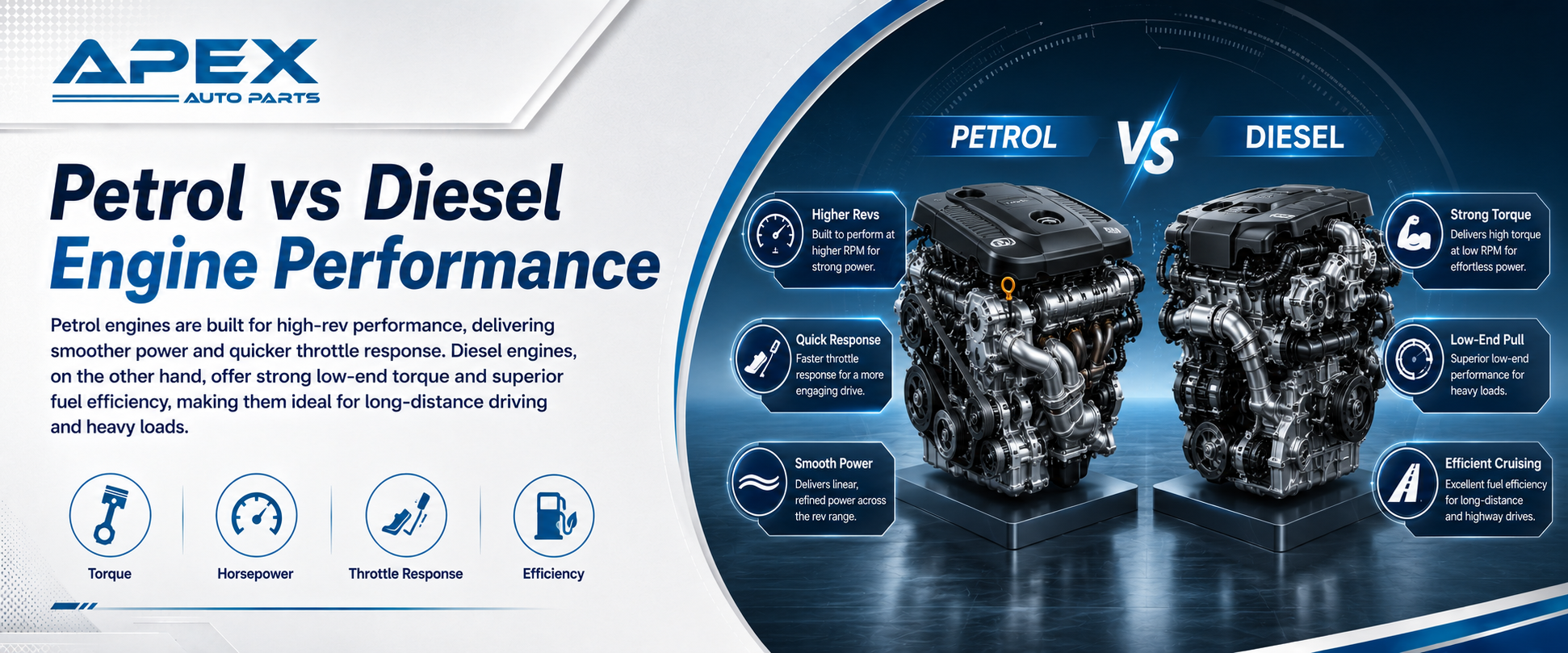
The petrol vs diesel engine performance comparison depends on what the driver expects from the vehicle.
Petrol engines often feel smoother as engine speed rises. They can respond quickly and may continue to raise power in the rev range. This can make a petrol car feel livelier during rapid acceleration.
Diesel engines often produce strong torque at lower engine speeds. Torque is the turning force that helps a vehicle pull away, climb hills, carry weight, and tow. This is one reason diesel power is widely used in vans, larger cars, commercial vehicles, and heavy equipment.
A diesel driver may not need to press the accelerator as hard or use high engine speed to make progress. A petrol driver may enjoy using more of the rev range to reach maximum power.
The gearbox also changes how performance feels. A modern automatic gearbox can keep either engine in its strongest range. Vehicle weight, turbo size, gearing, and engine software can matter as much as fuel type.
For normal road driving, neither option is always faster. A powerful petrol engine may offer stronger top-end performance. A turbo diesel may feel stronger at low speed and under load. Cummins, which builds engines for commercial use, notes that diesel power is often chosen for towing and hauling because of its torque and efficiency.
Understanding efficiency: diesel vs petrol engine Results?
When drivers compare the efficiency of diesel and petrol engines, diesel often has an advantage on steady, longer journeys.
Diesel combustion uses high compression, which can convert more of the fuel's energy into useful work. Diesel fuel also contains more energy by volume than petrol. This can allow a diesel car to travel farther on a liter of fuel.
Fuel economy is not the same as total ownership cost. A diesel may save fuel but cost more to buy or repair. A blocked diesel filter, a failed injector, an EGR fault, or an AdBlue problem can wipe out several years of fuel savings.
A petrol car may use more fuel on a long motorway journey, but it may have fewer diesel exhaust parts to maintain. For a low mileage driver, that simpler ownership pattern can make petrol the cheaper choice overall.
Do not compare cars using official miles-per-gallon figures alone. Look at your own annual mileage, journey type, local fuel prices, servicing costs, and likely repair risks.
Petrol vs Diesel Engine Reliability
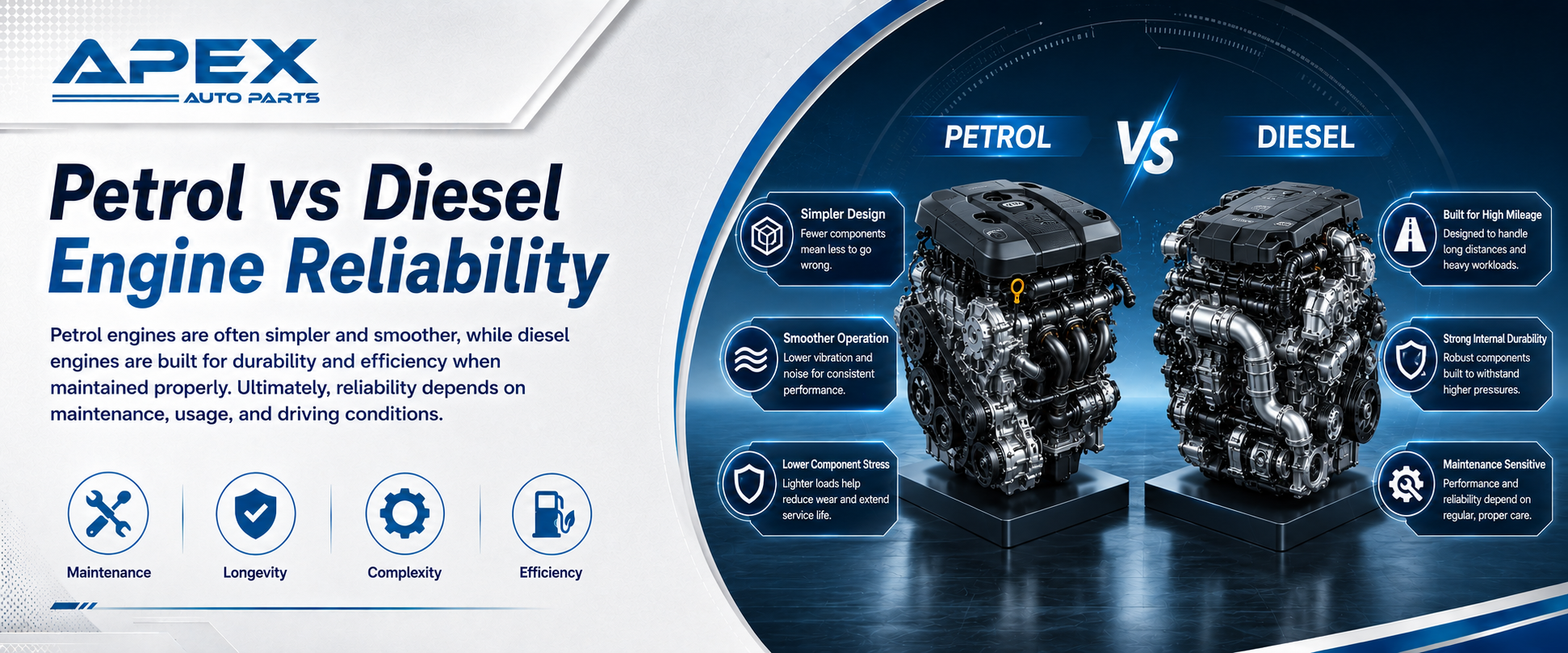
There is no honest winner in every petrol vs diesel engine reliability comparison.
A simple older petrol engine may be very reliable because it has fewer complex exhaust and fuel system parts. A well-cared-for diesel engine may also cover very high mileage because its main internal parts are designed to withstand high compression and regular heavy use.
Modern diesel engines typically have more exhaust-cleaning equipment. Many use a diesel particulate filter, EGR system, pressure sensors, temperature sensors, and sometimes an AdBlue system. These parts reduce harmful exhaust output but can create extra repair needs as the vehicle ages.
Modern petrol engines are not free from complex parts. Turbochargers, direct injection pumps, variable valve timing systems, sensors, and petrol particulate filters can also fail.
The most reliable choice is often the individual car with the best history. A diesel with regular oil changes and mainly motorway use may be safer than a petrol car with missed services and repeated overheating. The same rule works the other way around.
A mechanic should judge the exact engine code, model year, mileage, service record, and current symptoms. Fuel type alone cannot prove whether a vehicle will be dependable.
Petrol vs diesel engine durability
The subject of petrol vs diesel engine durability is often misunderstood.
Diesel engines have traditionally been built with strong blocks, crankshafts, pistons, and bearings because they operate at higher cylinder pressures. This can support a long service life, especially when the engine spends much of its time warm and running at a steady speed.
However, a durable main engine does not mean every part around it will last forever. A diesel may still need injectors, a turbocharger, an EGR valve, a diesel filter, sensors, or an AdBlue repair.
A petrol engine may have lighter internal parts, but it also produces less compression pressure in many designs. A simple petrol unit with regular servicing can cover a very high mileage.
Durability depends on oil quality, cooling, warm-up habits, fuel quality, engine load, and repair history. A badly overheated diesel can fail quickly. A petrol engine run with low oil can suffer bearing or timing damage.
It is therefore better to ask how a specific car has been treated rather than assume that diesel always lasts longer.
Petrol vs Diesel Engine Pros and Cons
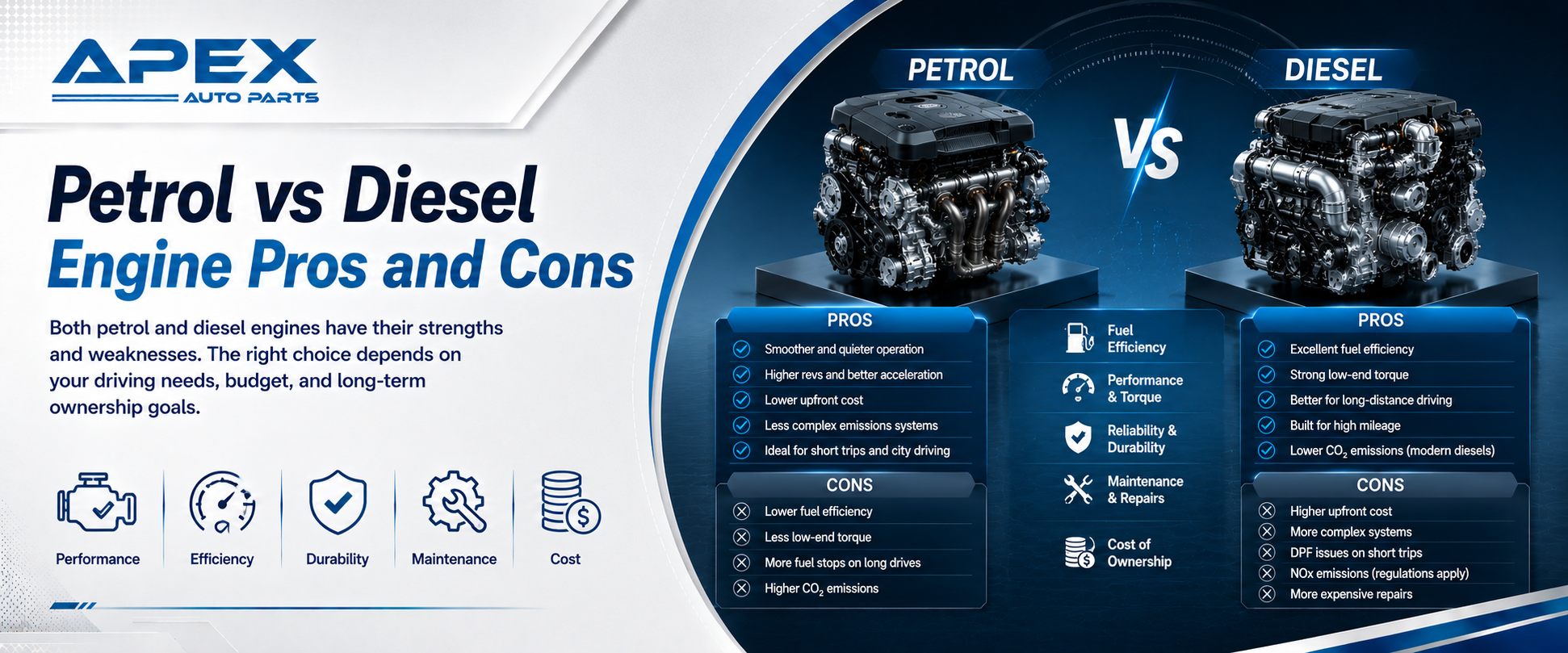
The petrol vs diesel engine pros and cons become clearer when you match them to real driving needs.
A diesel usually makes sense when the car regularly completes longer journeys. It can offer good fuel economy, strong low-speed torque, and relaxed motorway driving. It may also suit towing, carrying weight, or business use.
A petrol car often makes sense when journeys are shorter and annual mileage is lower. It usually avoids diesel filter concerns and may feel smoother and quieter. Petrol models may also cost less to buy when comparing similar used cars.
The main points are:
- Choose diesel for regular motorway travel, higher annual mileage, towing, and heavy loads.
- Choose petrol for short trips, town driving, lower annual mileage, and simpler daily use.
- Do not choose diesel only because its official fuel economy figure is better.
- Do not choose petrol only because somebody says all diesels are unreliable.
- Check local emissions zone rules before buying an older vehicle.
- Compare the condition and service history of the actual cars in front of you.
These are general guides, not strict rules. A modern petrol hybrid may suit town use better than either a normal petrol or diesel car. A small diesel used for long journeys may remain a sensible choice.
Common Diesel Engine Problems
A modern Diesel Engine can develop several faults that need careful testing.
Diesel particulate filter blockage is one of the best-known problems. The filter traps soot from the exhaust. It must regularly raise its temperature and burn that soot during regeneration. If regeneration does not complete, soot can build up, reduce performance, and lead to costly repairs.
Short trips are not the only possible cause of a blocked filter. A faulty thermostat, a damaged pressure sensor, an injector problem, an EGR fault, a boost leak, or a temperature sensor issue may prevent regeneration from working correctly.
The mechanic should read the stored fault codes and check soot level, exhaust pressure, coolant temperature, exhaust temperature, and recent regeneration history. Replacing or cleaning the filter without repairing the original cause may only provide a short break from the problem.
EGR faults are also common on older diesels. The EGR system controls the flow of exhaust gas back into the intake. Soot and oil deposits may restrict movement. Cooling parts linked to the EGR system can also leak on some engines.
Diesel injectors work under very high pressure. Poor starting, rough running, smoke, or knocking may point towards an injector, but testing is required. Fuel correction readings, pressure checks, and injector return tests can help find the actual fault.
Turbo faults may cause power loss, smoke, oil use, or unusual noise. However, a split hose, a blocked filter, a weak actuator, or a sensor fault can cause similar symptoms. Never replace a turbo based only on one fault code.
Glow plug faults may cause difficult cold starting or rough running after start-up. The control unit, wiring, and plugs should also be tested.
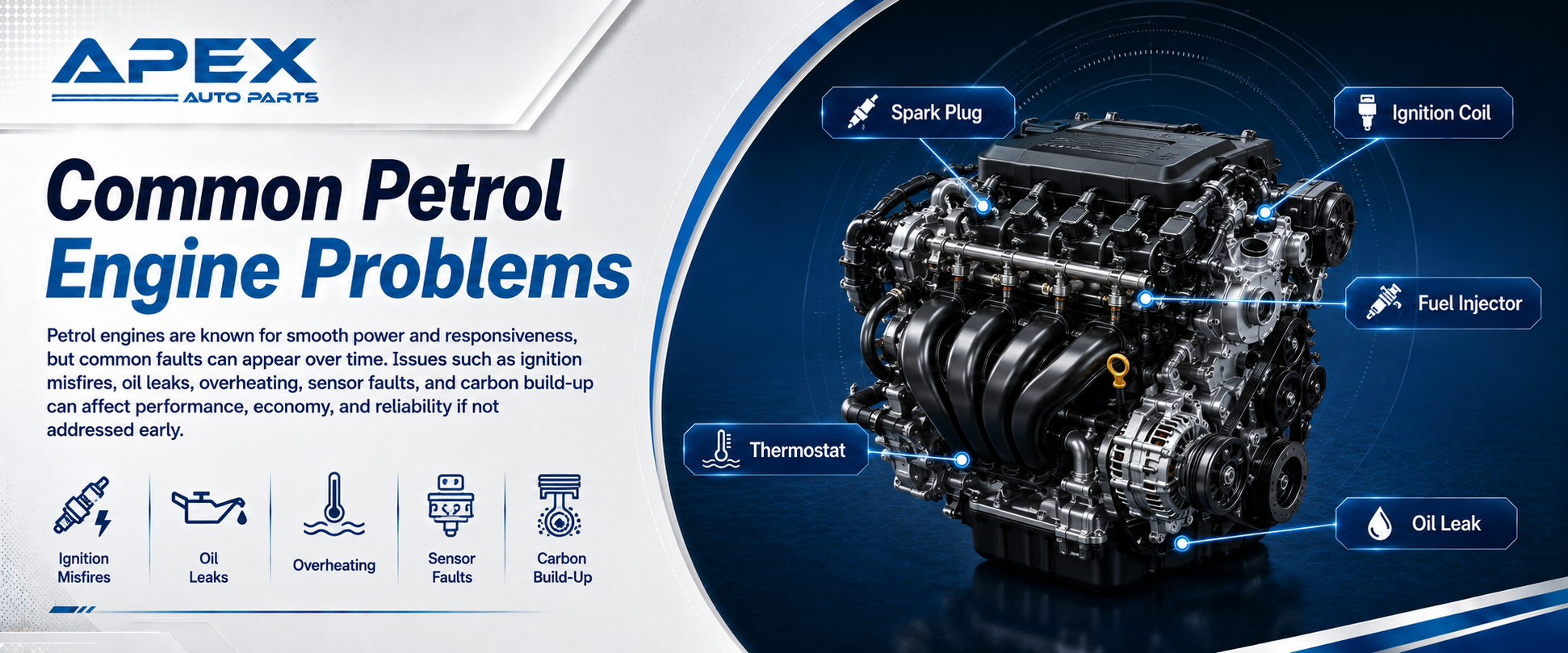
A Petrol Engine has its own set of likely faults.
Spark plugs and ignition coils are common causes of misfires. A failed coil can cause one cylinder to stop burning properly. The engine may shake, lose power, use more fuel, or flash the engine warning light.
A misfire should not be ignored. Unburnt fuel can enter the exhaust and overheat the catalytic converter. The mechanic should identify the affected cylinder and test the plug, coil, injector, wiring, and compression.
Direct-injection petrol engines use high-pressure fuel pumps and injectors. Faults can cause poor starting, hesitation, weak power, or fuel pressure codes. Proper pressure testing is needed before expensive parts are ordered.
Carbon deposits can form around intake valves in some direct-injection designs because petrol is sprayed directly into the cylinder rather than across the back of the valve. The symptoms may include rough idle, reduced airflow, and poor response.
Turbo petrol engines can develop boost leaks, actuator faults, bearing wear, or oil supply problems. As with diesel, low power does not prove that the whole turbo has failed.
Cooling system faults are serious on both fuel types. A leaking water pump, thermostat housing, hose, radiator, or expansion tank can cause overheating. Continuing to drive an overheating engine may damage the cylinder head, gasket, pistons, or bearings.
Timing belts and timing chains also need attention. Some belts have a fixed replacement schedule. Some chains are designed to last longer, but guides, tensioners, and oil-pressure-related parts can still wear out.
Why Short Trips Can Be Hard on Diesel Cars?
A diesel car may be a poor match for a driver who only makes short trips.
The engine may not stay warm for long enough to complete diesel filter regeneration. The exhaust may also remain below the temperature needed for some emissions systems to work properly.
The Government guidance on diesel particulate filters explains that regeneration burns collected soot at a very high temperature. If regeneration does not occur properly, soot can continue to build up until performance declines and repair costs rise.
Repeated cold starts can also affect oil condition, battery charge, fuel use, and moisture inside the engine. This does not mean that one short trip will damage a diesel. The concern is a driving pattern made almost entirely of short journeys.
A petrol car is often easier to live with in this situation because it does not rely on a diesel particulate filter. Some modern petrol cars have their own particulate filters, but their operating needs and fault patterns may differ.
Why Diesel Often Suits Motorway Driving?
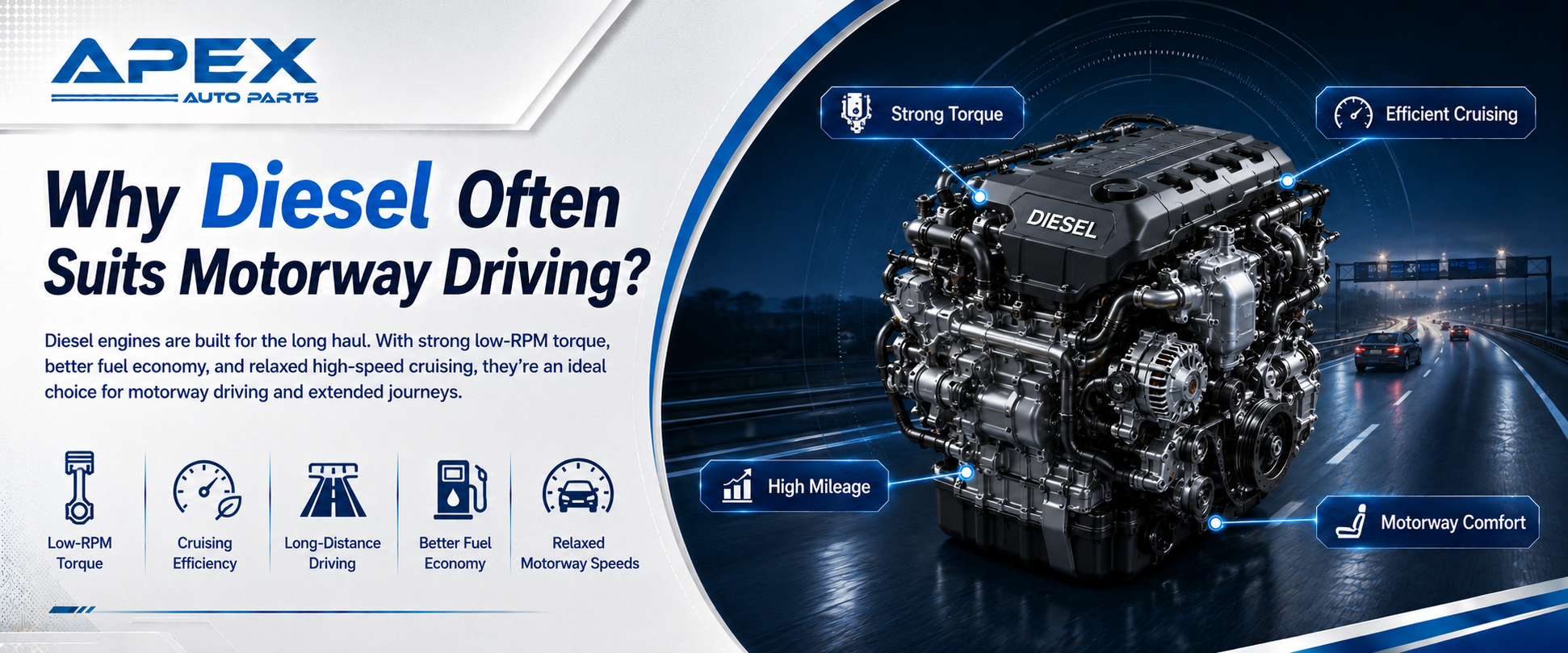
Diesel works well when the engine reaches full temperature and runs for long periods at a steady speed.
The strong low-speed torque helps the car maintain speed without needing high revs. Good fuel economy can reduce the number of fuel stops for drivers covering long distances.
Longer journeys also give the exhaust system more opportunity to reach the temperature needed for diesel filter regeneration. This does not guarantee that the filter will never block, but the driving pattern is usually more suitable.
Motorway use can still create wear. High mileage means more oil changes, filters, tires, and other service work. Yet steady driving can sometimes be easier on an engine than constant cold starts and stop-and-start traffic.
Petrol and Diesel Emissions
Petrol and diesel engines produce different types and amounts of exhaust pollution.
Diesel combustion can produce nitrogen oxides and soot. Modern diesel cars use filters and other treatment systems to reduce these emissions. UK air quality data notes that diesel vehicles can be an important source of direct nitrogen dioxide, although results vary by engine design and emissions system.
Government transport guidance also reports that particulate emissions have traditionally been higher from diesel vehicles than petrol vehicles, which is one reason filters and emissions limits have become important.
Petrol engines can produce higher levels of carbon monoxide and hydrocarbons when combustion is poor. Direct injection petrol engines may also produce fine particles, which is why some newer cars use petrol particulate filters.
A newer, well-maintained vehicle can be much cleaner than an older car with damaged emissions equipment. The condition of the engine, sensors, injectors, filter, and catalyst matters greatly.
Removing a diesel particulate filter is not a proper repair. In the UK, a missing filter where the manufacturer fitted one can cause an MOT failure.
Service and Repair Costs
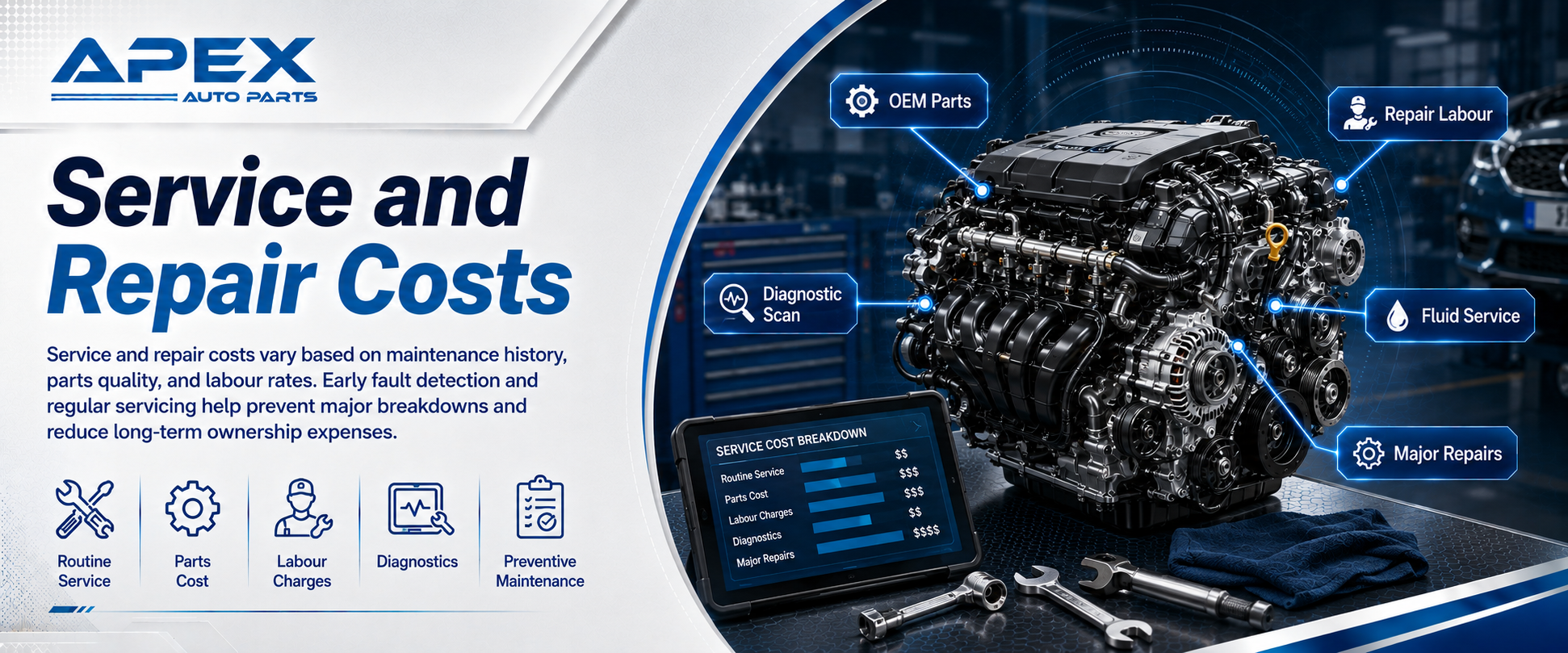
A diesel service may not always cost much more than a petrol service, but major diesel repairs can be expensive.
Common rail injectors, high-pressure pumps, turbochargers, diesel filters, EGR coolers, and AdBlue parts can carry high parts and labor costs. A diesel may save money at the pump but lose those savings when a major system fails.
Petrol engines use spark plugs and ignition parts that diesel engines do not need. These are extra service items, but they are often less costly than a complete diesel fuel system repair.
Modern petrol engines can still produce large bills. A timing chain replacement, turbo failure, direct injection pump, or overheating repair can cost a great deal.
Correct diagnosis is the best way to control costs. A mechanic should test a system before replacing parts. A boost fault may be a damaged hose rather than a turbo. A thermostat may cause a diesel filter warning. A petrol misfire may be one coil rather than an engine rebuild.
Maintenance That Helps Both Engines Last
Both engines need clean oil, correct coolant, good filters, and fast attention when warning lights appear.
Use the exact oil specification stated by the vehicle maker. The correct thickness is only part of the requirement. Oil also requires the proper approvals for the engine, turbocharger, timing system, and emissions equipment.
Check the oil level between services. Do not rely only on the service reminder. Engines can develop leaks or begin using oil before the next planned service.
Check coolant when the engine is cold. A level that keeps falling indicates a fault. Topping it up every week without finding the leak can lead to overheating.
Allow the engine to warm through gentle driving before demanding full power. There is no need to leave it idling for long. Normal light driving warms the engine, gearbox, and other moving parts.
Listen for changes. New rattles, whistles, tapping, rough idle, smoke, or slow starting often provide an early warning.
What to Check When Buying a Used Petrol or Diesel Car?
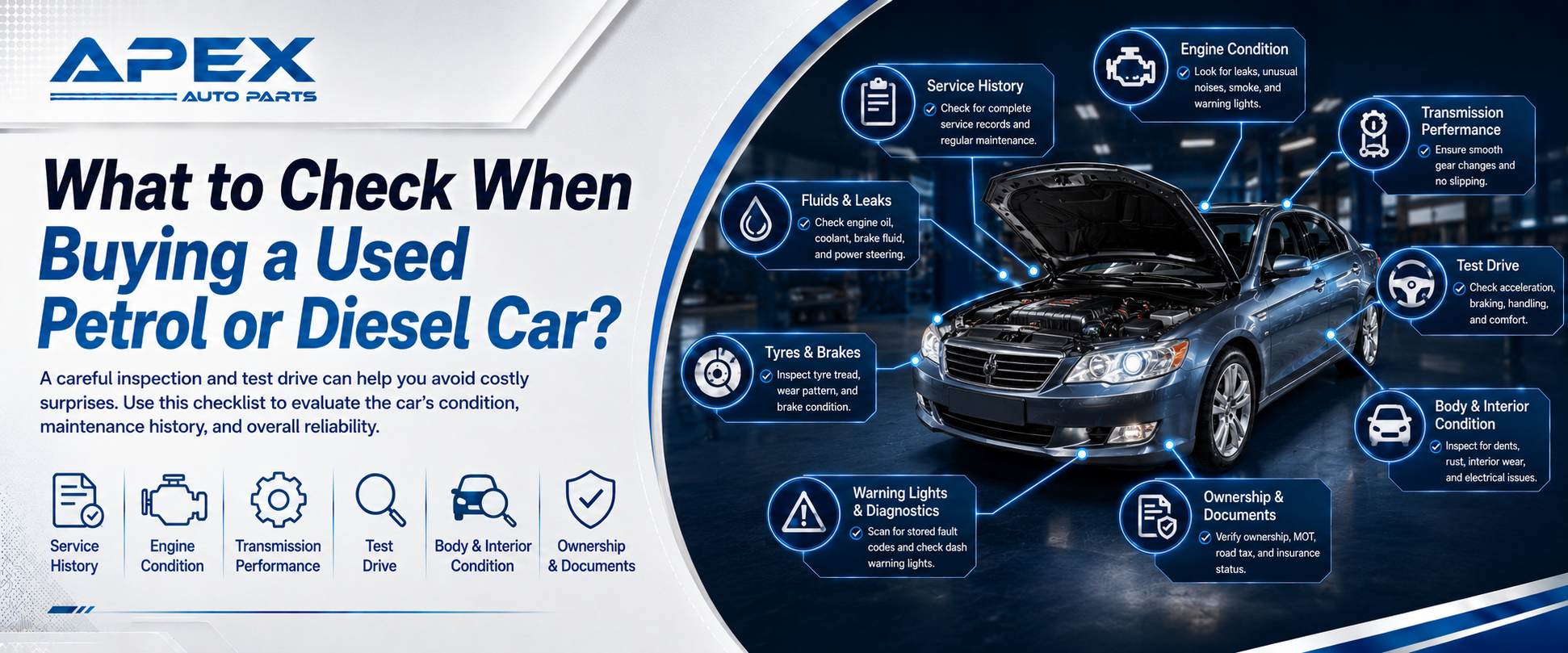
A used car should be inspected from the cold whenever possible.
A warm engine can hide starting problems, timing noise, smoke, or rough running. Ask the seller not to start the vehicle before you arrive.
Look for service invoices rather than relying only on a stamp in a book. Check the correct oil was used and look for evidence of timing work, turbo repairs, injector work, cooling repairs, and emissions system repairs.
A diagnostic scan can reveal stored or pending faults even when no warning light is showing. On a diesel, check filter soot level, regeneration history, EGR codes, and injector readings. On a petrol car, check misfire counts, fuel pressure, timing values, and mixture readings.
During the road test, make sure the engine pulls smoothly. Listen for boost leaks, bearing noise, and timing rattle. Watch the temperature gauge and check for smoke.
After the drive, inspect the engine again. Heat and pressure can make small oil or coolant leaks easier to see.
How a Mechanic Should Compare petrol vs diesel engine reliability?
A mechanic should not begin with the idea that one fuel type is always better.
The first step is identifying the exact engine code and model year. The same car model may use several different petrol and diesel engines during its production life.
The service history should then be checked. Oil changes, timing work, coolant repairs, injector replacement, and turbo work can affect a vehicle's value and risk.
The mechanic should listen for a cold start, scan all control units, inspect fluid levels, and complete a proper road test.
If a fault is present, live data should guide the next step. A code shows where the vehicle detected a problem. It does not always name the failed part.
This method provides a more useful answer on petrol vs diesel engine reliability than simply counting online complaints.
Which Engine Is Better for Towing?

Diesel is often the natural choice for regular towing.
Strong torque at lower engine speeds helps a diesel move a heavy trailer without needing constant high revs. Better fuel economy can also matter when the vehicle is carrying extra weight.
A large turbo petrol engine may tow very well, but it can use much more fuel under heavy load. A smaller petrol unit may need to work harder and change gear more often.
The vehicle's towing limit matters more than engine fuel alone. Check the legal towing weight, gearbox rating, cooling capacity, brakes, and tow bar approval.
A poorly maintained diesel car is no safer to tow than a healthy petrol car. Cooling system condition, oil level, turbo health, and gearbox servicing are very important when a vehicle regularly pulls heavy loads.
Which Engine Is Better for Town Driving?
Petrol is usually the easier choice for drivers who mainly stay in town.
Short journeys, slow traffic, and repeated cold starts may not suit a modern diesel emissions system. A petrol car normally avoids diesel filter regeneration problems and may feel quieter in traffic.
A small turbo petrol engine can also provide useful low-speed torque without needing a large engine.
Fuel economy may be lower, but annual fuel cost may remain sensible when the driver covers a few miles.
Drivers spending most of their time in heavy town traffic should also consider a petrol hybrid. It can reduce fuel consumption by recovering energy during braking and providing electric support at low speeds.
Choosing Parts Through Apex Auto Parts
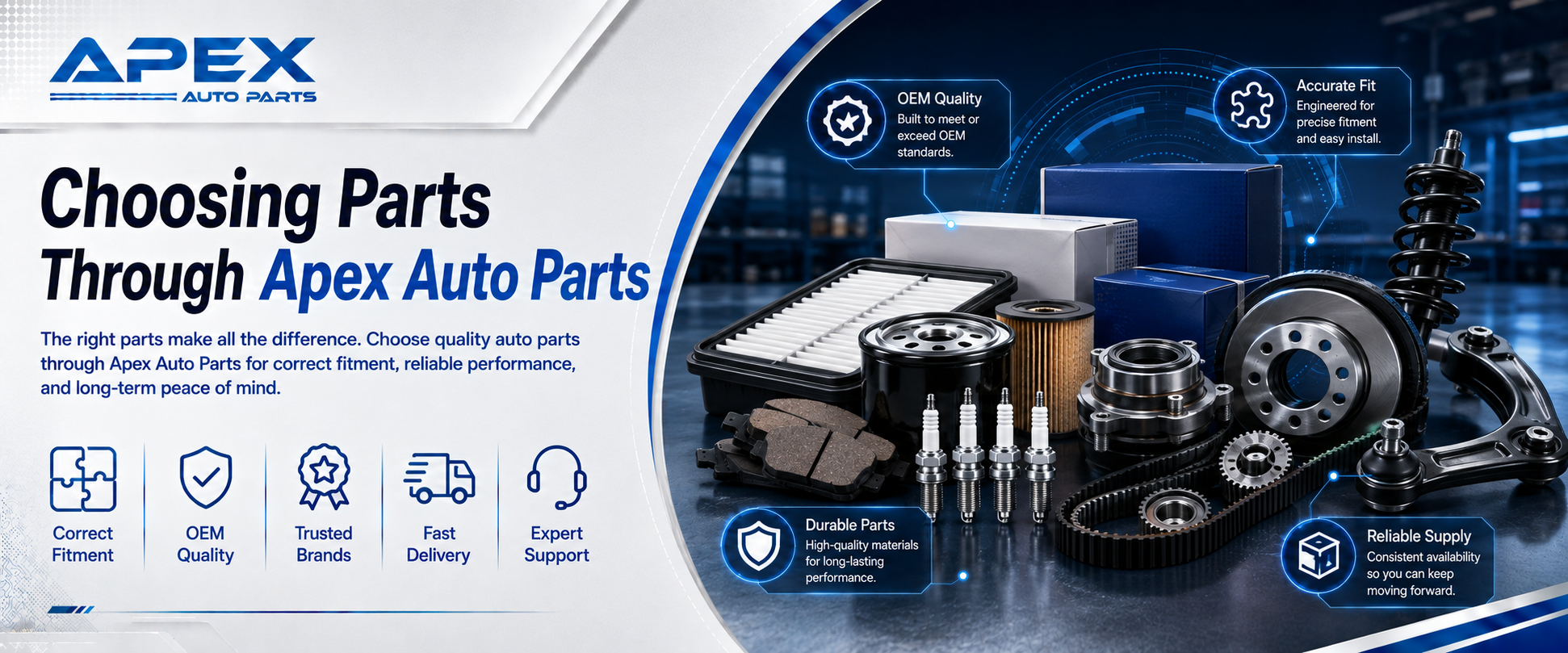
Correct part matching is important for both petrol and diesel vehicles.
A fuel filter, injector, turbo part, sensor, timing kit, water pump, or gasket may change between engines that look almost identical. Ordering only by vehicle model can lead to the wrong part.
When sourcing parts through Apex Auto Parts, provide the vehicle registration, VIN, model year, engine code, and original part number when available. These details help confirm the correct fit.
Quality is especially important when the labor is costly. A cheap seal or timing component may save a small amount at first but could require a large repair if it fails early.
The old part should be compared with the replacement before fitting. Check connectors, mounting points, pipe positions, pulley sizes, and reference numbers.
Final Thoughts
The best diesel vs petrol engine choice depends on your real driving pattern.
Choose diesel when you regularly cover long distances, need strong torque, or tow or carry heavy loads. Its fuel economy can make sense when annual mileage is high.
Choose petrol when most journeys are short, annual mileage is lower, and you want to reduce the risk of diesel emissions system faults.
For petrol vs diesel engine performance, petrol often feels smoother and stronger at higher revs, while diesel normally feels stronger at lower revs.
For petrol vs diesel engine durability, neither fuel wins without good maintenance. A well-cared-for engine can last. A neglected one can fail.
For petrol vs diesel engine reliability, condition and service history matter more than the badge on the fuel cap.
FAQs
1. Which is better, a Diesel Engine or a Petrol Engine?
A Diesel Engine is often better for long journeys, towing, and higher annual mileage. A Petrol Engine is normally suited to short trips, town driving, and lower mileage. The best option depends on your use, service costs, local emissions rules, and the condition of the specific vehicle.
2. What is the main petrol vs diesel engine difference?
The main difference between petrol and diesel engines is ignition. A petrol engine uses spark plugs to ignite the fuel-air mixture. A diesel engine compresses air until it becomes hot, then injects fuel that ignites from the heat. This affects torque, fuel use, noise, internal design, and emissions equipment.
3. Which is more reliable, petrol or diesel?
The answer to petrol vs diesel engine reliability depends on the engine and its maintenance. Petrol cars may have simpler exhaust systems, while diesel engines can have strong internal parts but more costly emissions equipment. Service history, oil care, journey type, and early repairs are more important than fuel alone.
4. Is diesel more fuel efficient than petrol?
Diesel is usually more fuel-efficient on steady, longer journeys. When comparing efficiency, diesel vs petrol engine results show that similar diesel vehicles often travel farther on the same volume of fuel. However, higher purchase and repair costs can reduce the savings, especially for drivers who cover low annual mileage.
5. Which has better performance, petrol or diesel?
The petrol vs diesel engine performance result depends on what you value. Petrol engines often respond smoothly and make power at higher revs. Diesel engines usually provide stronger torque at lower revs, which suits towing and relaxed motorway use. Vehicle weight, turbo design, software, and gearbox choice also affect performance.
6. Does a diesel engine last longer than a petrol engine?
Traditional petrol vs diesel engine durability comparisons often favor diesel engines because they use stronger components to handle high compression. However, modern diesels have more emissions equipment that may need repairs. A well-maintain dwell-maintained petrol engine can also cover high mileage, so maintenance and driving conditions determine the actual lifespan.
7. Why are short journeys bad for diesel cars?
Short journeys may not allow a diesel particulate filter to reach the temperature needed for regeneration. Soot can then continue to build up inside the filter. This may cause warning lights, poor performance, and costly repairs. Other engine faults can also stop regeneration, so proper diagnosis is important.
8. What are the main petrol vs diesel engine pros and cons?
The main pros and cons of petrol vs diesel engines involve fuel economy, torque, journey type, and repair costs. Diesel often saves fuel and pulls strongly but has complex emissions parts. Petrol usually suits shorter journeys and may be simpler to own, though it can use more fuel over long distances.
9. Are diesel cars more expensive to repair?
Diesel cars can be more expensive when injectors, high-pressure pumps, turbochargers, EGR components, diesel filters, or AdBlue systems fail. Normal servicing may not be much more costly. A proper diagnostic test is vital because a sensor, hose, or thermostat can sometimes cause symptoms that look like a major failure.
10. Should I buy petrol or diesel for motorway driving?
Diesel often suits regular motorway driving because it offers good fuel economy and strong low-speed torque. Longer journeys can also support diesel filter regeneration. Petrol may still be better when annual mileage is low. Calculate the total ownership cost rather than relying solely on the expected miles-per-gallon figure.
Reference:
gov uk