 info@apexautoparts.co.uk
 +44 203 915 7535
 Safe & Fast Shipping
 Whish List
 Compare
 Sign In

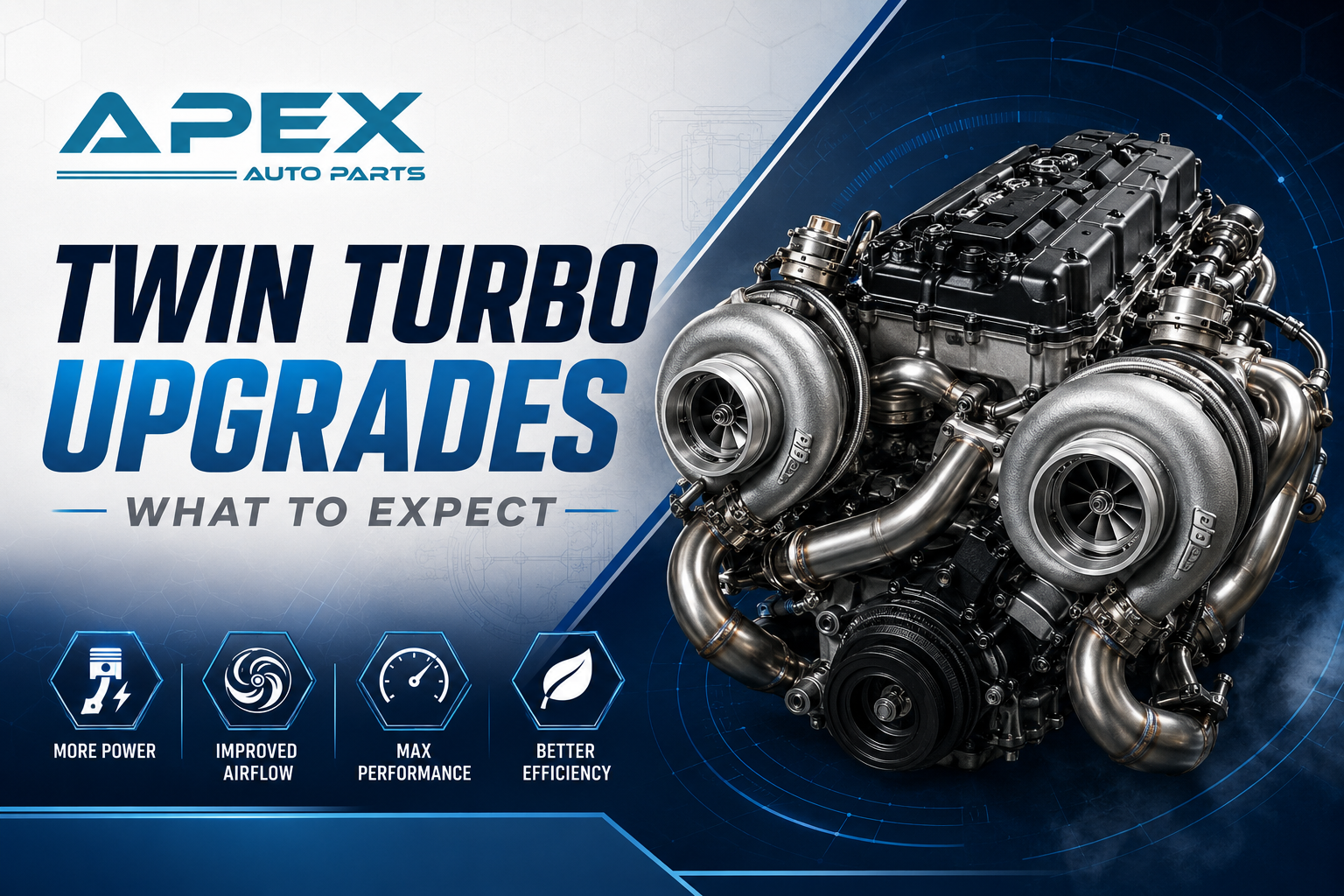
A Twin Turbo upgrade sounds exciting. More power, stronger pull, faster response, and a sharper driving feel are all things drivers think about when they hear the words Twin Turbo. But before spending money, it is important to understand what this upgrade really does, what parts are involved, what can go wrong, and whether it is the right choice for your engine.
A turbocharger helps an engine make more power by pushing extra air into the cylinders. More air allows the engine to burn more fuel and create more force. A Twin Turbo system uses two turbochargers instead of one. This can help the engine build power more smoothly or more strongly, depending on the design.
Some cars come with a twin-turbo setup from the factory. Others are upgraded later by owners who want more power. A twin-turbo engine can be very fast, but it also needs proper care. More boost means more heat, more pressure, and more stress on engine parts. If the setup is not planned properly, the car may become less reliable.
At Apex Auto Parts, many customers look for engine parts after a turbo-related issue, engine wear, an oil leak, or a rebuild job. Turbo engines need strong supporting parts, clean oil, good cooling, correct gaskets, healthy sensors, and proper fitment. A Twin Turbo upgrade is not only about fitting bigger turbos. It is about making the whole engine work safely together.
What Is a Twin Turbo Upgrade?
A Twin Turbo upgrade means fitting or improving a system that uses two turbochargers. In some cars, this may mean replacing the factory turbos with better units. In other cars, it may mean converting a single turbo or naturally aspirated engine to use two turbos. The second option is much more complex and usually costs more.
The goal is simple. A twin-turbo setup helps the engine move more air. More air can help make more power. But the way the power feels depends on the turbo size, engine size, tuning, exhaust flow, fuel system, and how the turbos are arranged.
A smaller turbo can spool quickly, which means boost comes in earlier. A larger turbo can make more power, but it may take longer to respond. With two turbos, the system can be built to improve response, power, or both.
A Twin Turbo upgrade can be used for:
- More engine power
- Better acceleration
- Stronger torque
- Better high-speed pull
- Improved tuning potential
- Sharper performance feel
- Better airflow on larger engines
But it should not be treated as a simple bolt-on fix. A poor setup can lead to boost leaks, overheating, oil problems, engine knock, sensor faults, or turbo failure.
How does a twin-turbo engine work?
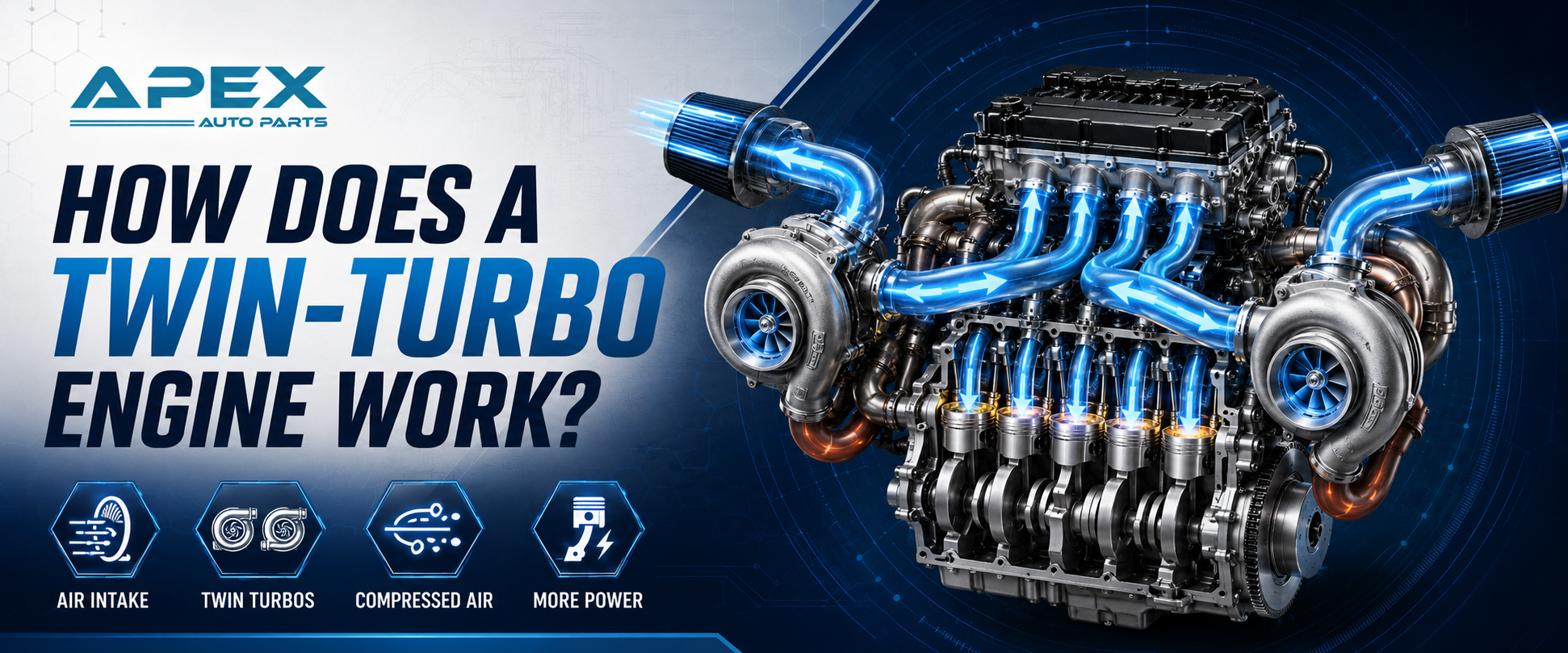
A twin-turbo engine uses two turbochargers to push air into the engine. A turbo has two main sides. One side uses exhaust gas to spin a turbine. The other side uses that spinning movement to compress fresh air and send it into the engine.
In a twin-turbo engine, the two turbos may work together in different ways. Some systems use one turbo for each bank of cylinders. This is common on V engines. Some systems use one smaller turbo at low engine speeds and a larger turbo at higher engine speeds. Some systems use two equal turbos that share the work.
The main idea is to give the engine more air without relying on one turbo to do everything.
A Twin Turbo setup can help reduce power-delivery delays when well-designed. This delay is often called turbo lag. It can also help a large engine make very strong power because each turbo handles part of the airflow.
The key thing to remember is this: a twin-turbo engine is only as good as its full setup. The turbos, intercooler, exhaust, fuel system, oil supply, cooling system, sensors, and tuning all need to match.
Main Benefits of a Twin Turbo Upgrade
The biggest benefit of a Twin Turbo upgrade is power. With more air entering the engine, it can produce more force. That means better acceleration and stronger pulling power.
Another benefit is response. If the system uses smaller turbos or a smart layout, boost can come in quickly. This makes the car feel more alive when you press the accelerator.
A Twin Turbo upgrade can also help spread the workload. Instead of one turbo working very hard, two turbos can share the airflow. This can help on large engines, especially V6 and V8 engines.
Drivers often notice:
- Stronger pull from low or mid engine speed
- Better acceleration
- More power at higher speed
- Better tuning room
- A more exciting engine feel
- Better airflow for larger engines
But benefits depend on the quality of the setup. A badly matched Twin Turbo system can feel slow, rough, or unreliable. Bigger is not always better. The right turbo size matters more than the biggest turbo size.
What does BMW Twin Power Turbo mean?
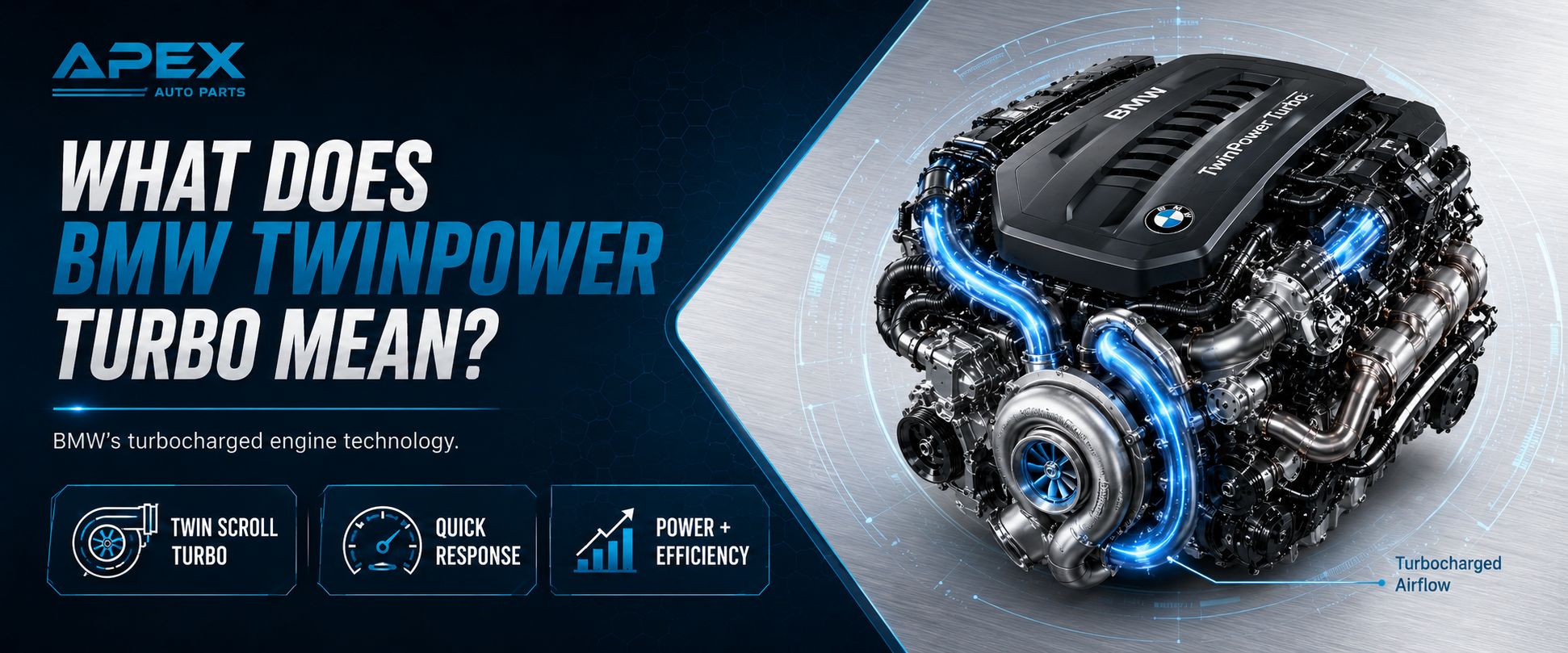
Many BMW owners ask what twin power turbo means because BMW uses the term often. The phrase BMW Twin Power Turbo does not always mean the car has two turbochargers. This is where many drivers get confused.
BMW Twin Power Turbo is a name used for BMW turbo technology. It can refer to different turbo setups depending on the engine. Some BMW engines use a single twin-scroll turbo. Some use two turbos. Some high-performance engines use more advanced turbo systems.
So, what does twin power turbo mean in simple words? It means BMW is using turbo technology designed to improve power, response, and efficiency. It does not always mean there are two turbos under the bonnet.
This is important when buying parts. Do not assume a BMW Twin Power Turbo engine always has a Twin Turbo setup. Check the engine code, model, year, and original part number before ordering turbo parts, gaskets, sensors, oil lines, or boost parts.
Apex Auto Parts helps customers check fitment before buying engine parts, which is especially useful for BMW owners, as a single model range can have several engine versions.
Twin Turbo vs Single Turbo
A single turbo setup uses one turbocharger. A Twin Turbo setup uses two. Both can be good. The right choice depends on the engine and the goal.
A single turbo can be simpler, cheaper, and easier to maintain. It may also be easier to tune some cars. A large single turbo can make a lot of power, but it may have more lag if not matched properly.
A Twin Turbo setup can give better response or more balanced airflow, especially on larger engines. It can also help a V engine because each bank can have its own turbo. But it usually adds more parts, more heat, more pipework, and more cost.
A Twin Turbo upgrade may need:
- Two turbochargers
- Extra oil lines
- Extra coolant lines
- Extra boost pipework
- Stronger intercooling
- Exhaust changes
- ECU tuning
- More careful fault checks
So, while Twin Turbo can be powerful, it is not always the simplest route. For some cars, a good single turbo upgrade is better. For others, Twin Turbo is the right design.
What is a twin-turbo V8?
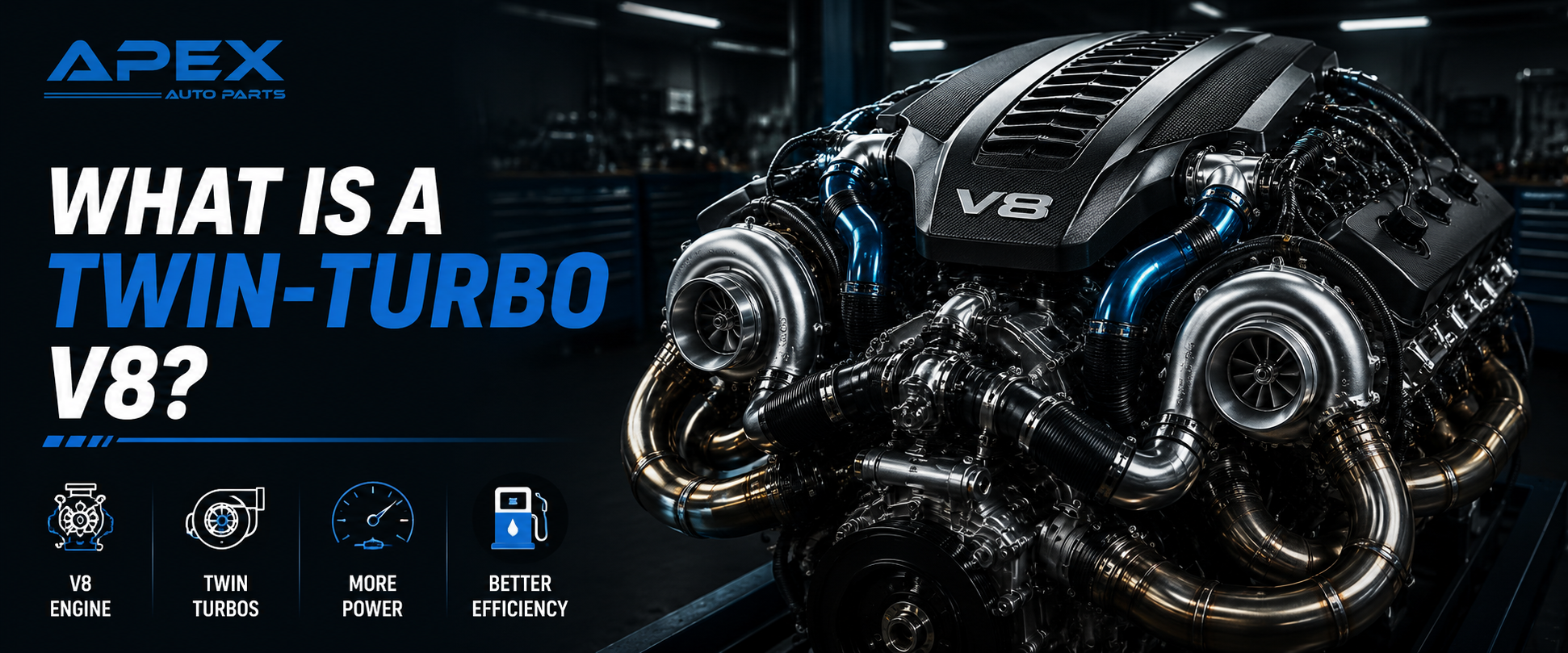
A twin-turbo V8 is a V8 engine with two turbochargers. A V8 engine has two banks of cylinders. A Twin Turbo setup works well here because one turbo can serve each side of the engine.
A twin-turbo V8 can make huge power and strong torque. This is why many high-performance cars use this layout. The engine is large enough to move a lot of exhaust gas, and the two turbos help produce strong boost.
But a twin-turbo V8 also produces a lot of heat. Heat is one of the biggest enemies of turbo engines. If cooling is weak, oil is poor, or the turbos are pushed too hard, problems can appear quickly.
A good twin-turbo V8 setup requires strong oil flow, effective cooling, high-quality gaskets, robust boost pipes, reliable sensors, and careful tuning. It is not the kind of engine that should be repaired with guesswork or poor-quality parts.
Why the BMW M5 Twin Turbo V8 Is So Popular?
The BMW M5 twin-turbo V8 is popular because it offers luxury-car comfort with serious power. The BMW M5 uses a powerful turbocharged V8 setup that delivers strong acceleration, massive torque, and a very fast driving feel.
Drivers like the BMW M5 twin-turbo V8 because it feels strong in almost every situation. It can pull hard at motorway speed, launch quickly, and still feel smooth in normal driving. That mix is one reason the M5 has such a strong reputation among performance car fans.
But the BMW M5 twin-turbo V8 is not cheap to maintain. It needs regular servicing, good oil, strong cooling, careful tuning, and quality parts. Turbo oil lines, coolant components, gaskets, sensors, ignition components, and timing-related parts must be kept in good condition.
If you are buying a used BMW M5 twin-turbo V8, service history matters. Look for oil leaks, coolant leaks, smoke, turbo noise, poor idle, rough gear changes, and signs of bad tuning. A powerful engine can hide problems during a short test drive, so a proper inspection is important.
What is the best twin-turbo engine?
Many people search for the best Twin Turbo engine, but there is no single answer for every driver. The best Twin Turbo engine depends on what you want from the car.
For daily driving, the best setup is usually one that delivers smooth power, quick response, and high reliability. For racing or high-power builds, the best setup may be the one with stronger internal parts and more tuning room. For long-term ownership, the best engine is often the one with good parts support and a strong service history.
A good best Twin Turbo engine choice should have:
- Strong engine design
- Good cooling system
- Strong oiling system
- Reliable turbo parts
- Good parts availability
- Sensible service costs
- Proven tuning support
- No major known weak points when maintained
The best Twin Turbo engine is not always the one with the highest power number. A very powerful engine with poor maintenance can become a money pit. A slightly less powerful engine with strong reliability may be much better for daily use.
What Parts Are Needed for a Twin Turbo Upgrade?
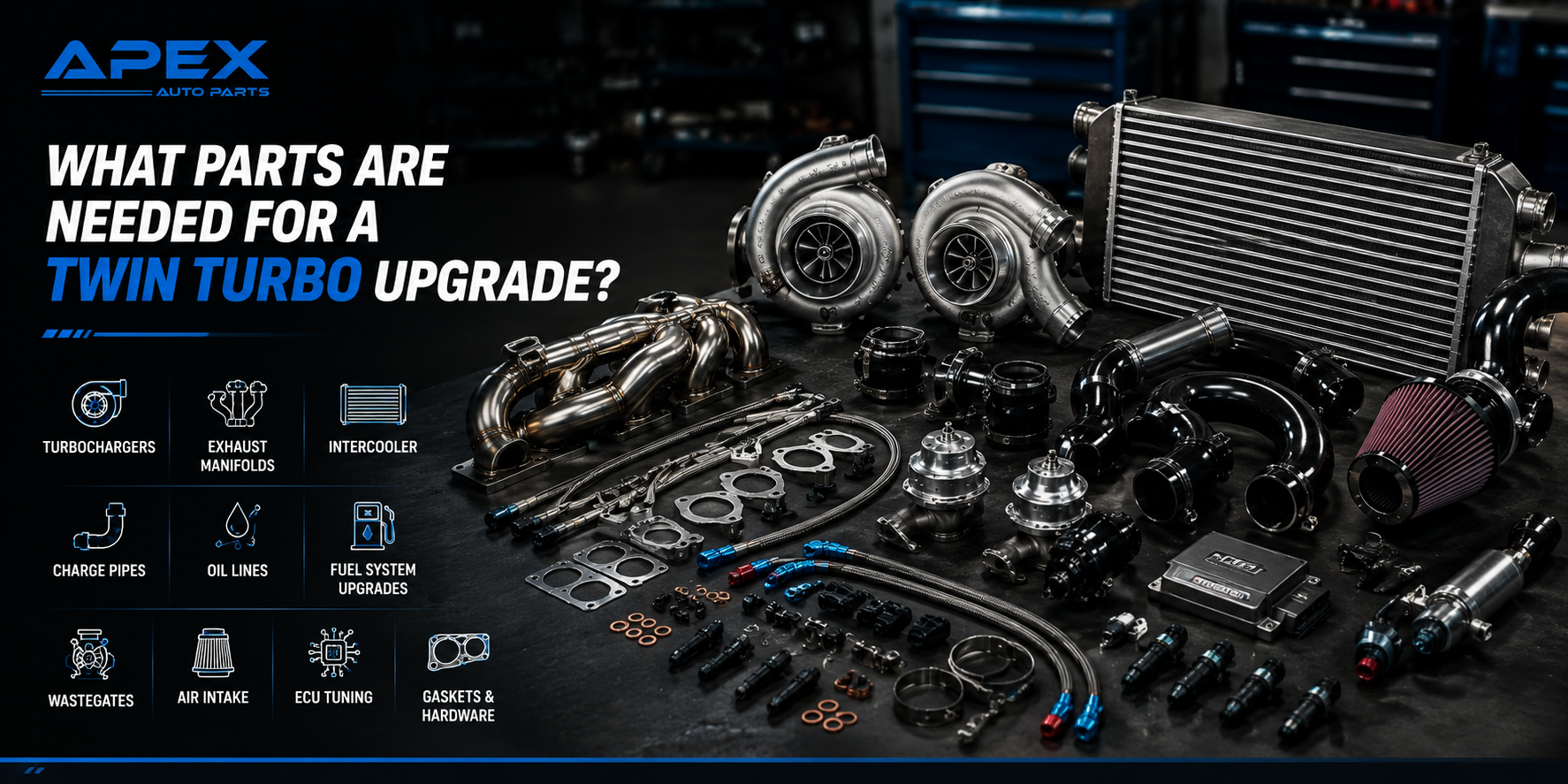
A Twin Turbo upgrade often needs more than the turbochargers themselves. This is where many people make mistakes. They buy the turbos but forget the supporting parts.
Depending on the car, a Twin Turbo upgrade may need turbo manifolds, downpipes, intercoolers, boost pipes, oil feed lines, oil return lines, coolant lines, gaskets, clamps, sensors, fuel injectors, fuel pump upgrades, ECU tuning, exhaust changes, and stronger engine parts.
A basic list may include:
- Turbochargers
- Exhaust manifolds
- Turbo gaskets
- Oil feed and return lines
- Coolant lines if water-cooled turbos are used
- Intercooler or charge cooler
- Boost pipes and clamps
- Wastegates or actuators
- Fuel system upgrades
- ECU tuning
- New spark plugs on petrol engines
- Stronger engine mounts if needed
For engines already built with Twin Turbo, an upgrade may be easier to make. You may replace factory turbos with improved ones. For engines not built for it, the job becomes much more difficult and costly.
How Much Does a Twin Turbo Upgrade Cost?
The cost of a Twin Turbo upgrade depends on the car, engine, turbo type, labor, tuning, and supporting parts. A simple factory turbo replacement upgrade can cost far less than a full custom Twin Turbo conversion.
Costs can rise because two turbos mean more parts. There is more pipework, more oil routing, more heat control, and more time needed for fitting. Tuning is also important. If the engine computer is not set up correctly, the car may run badly or suffer damage.
Main cost factors include:
- Turbo quality
- Labor time
- Engine layout
- Custom fabrication
- Fuel system needs
- Cooling upgrades
- Tuning cost
- Exhaust work
- Sensor and gasket replacement
- Engine condition before upgrade
A Twin Turbo upgrade should never be priced only by the cost of the turbos. The full system must be planned. A cheap setup can become expensive if it causes boost leaks, overheating, engine knock, or turbo failure.
What to Expect After a Twin Turbo Upgrade?
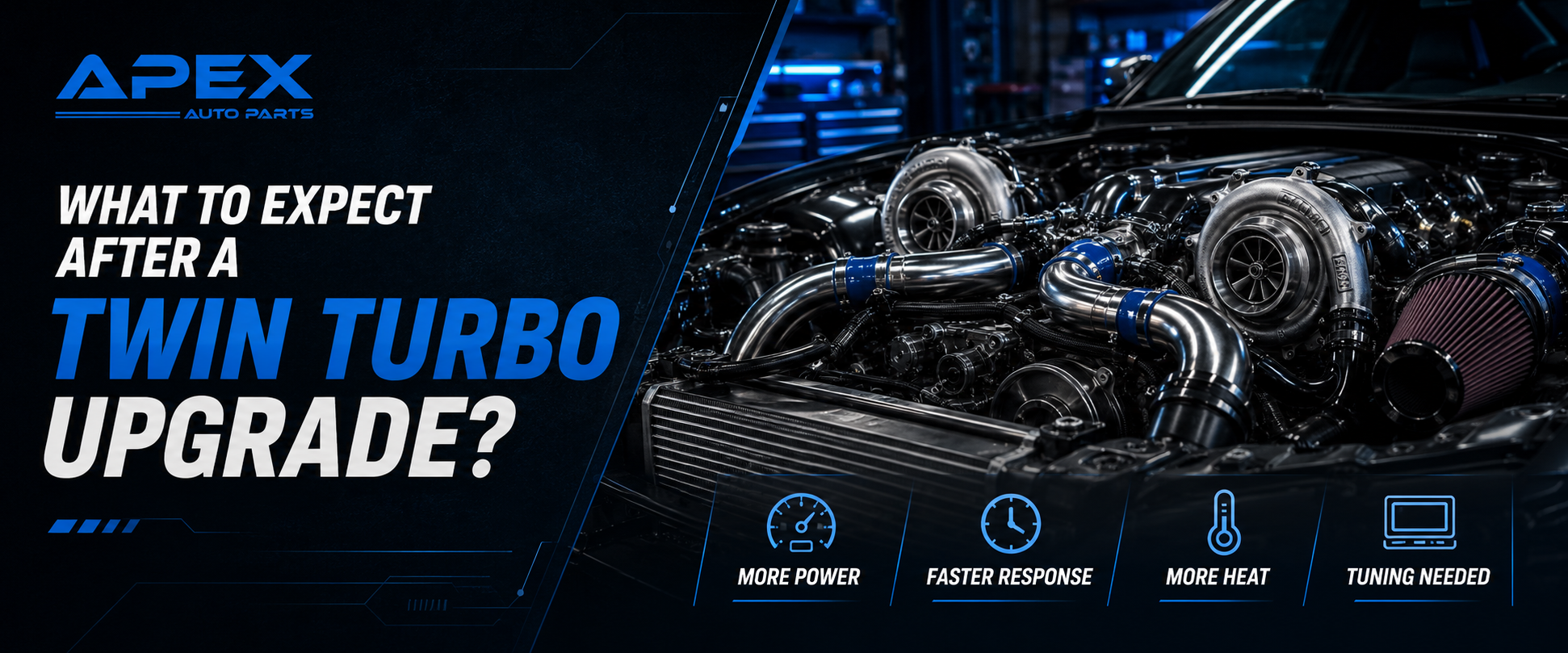
After a Twin Turbo upgrade, the car should feel stronger, faster, and more responsive if the job is done well. You may notice more pull when accelerating and better power at higher speeds.
But there may also be changes you need to accept. The engine may run hotter. Fuel use may increase when driving hard. Service costs may rise. Parts may wear faster if the car is pushed often.
You should expect:
- Stronger acceleration
- More engine heat
- More need for oil care
- More stress on cooling parts
- Possible clutch or gearbox strain
- Higher fuel use when using boost
- More careful maintenance
- More need for proper tuning checks
If your car feels rough, smokes, leaks oil, loses coolant, or shows warning lights after the upgrade, do not ignore it. Turbo problems can become serious fast.
Common Mistakes With Twin Turbo Upgrades
Many Twin Turbo problems happen because the setup is rushed. The owner wants big power quickly, but the engine is not ready for it.
One common mistake is fitting turbos that are too large. Big turbos may make big power, but they can feel lazy at low speed. Another mistake is ignoring the fuel supply. More air needs the right amount of fuel. If the fuel system cannot keep up, the engine can run lean and suffer damage.
Poor oil supply is also a major issue. Turbos spin very fast and need clean oil. Dirty oil, blocked oil lines, or weak oil pressure can destroy a turbo.
Avoid these mistakes:
- Choosing turbos that are too large
- Ignoring fuel system upgrades
- Using cheap gaskets and clamps
- Skipping tuning
- Ignoring cooling upgrades
- Not checking engine health first
- Using poor quality oil
- Ignoring boost leaks
- Not checking exhaust flow
- Chasing power without reliability
A good Twin Turbo build starts with a healthy engine.
Should You Upgrade a Stock Engine to Twin Turbo?
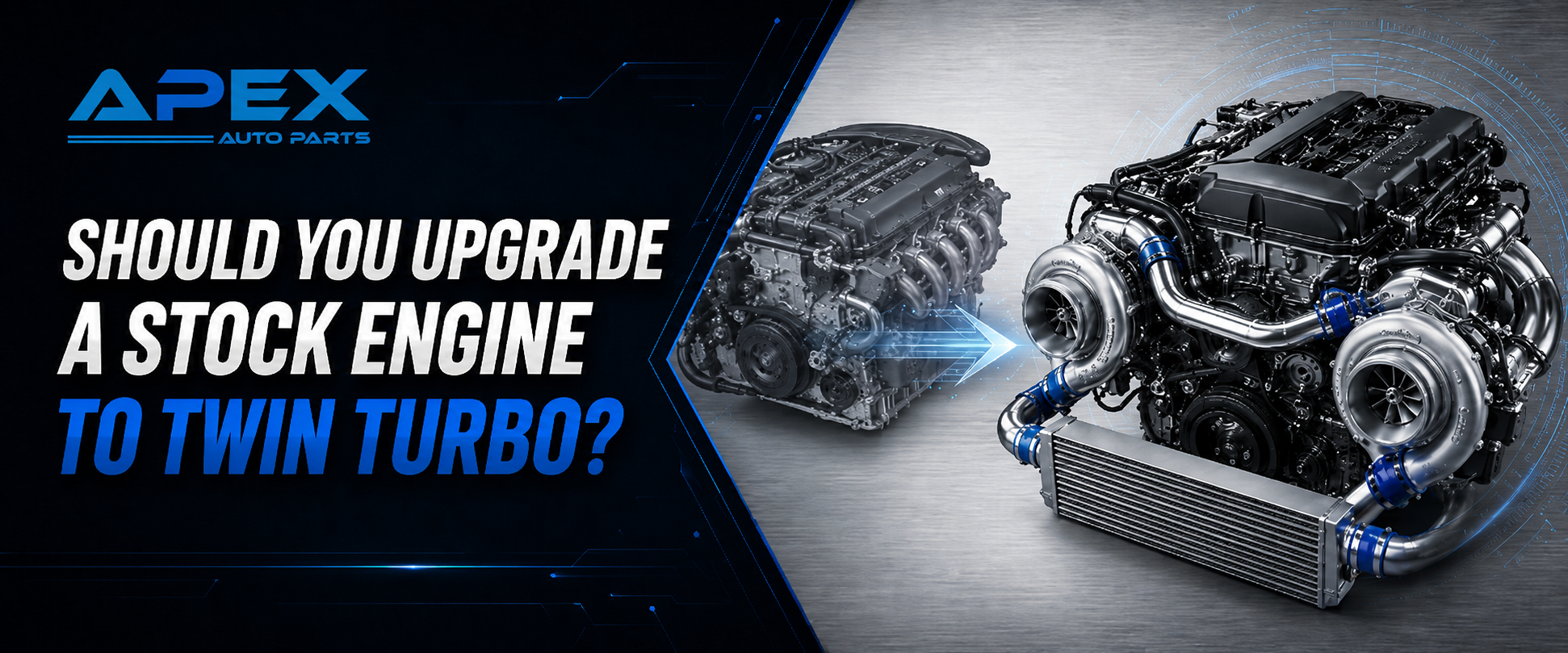
Not every engine should be upgraded to Twin Turbo. Some engines are not built to handle the extra pressure without internal upgrades. Pistons, rods, head gasket, bearings, cooling parts, and oil system strength all matter.
Before a Twin Turbo upgrade, a mechanic should check compression, oil pressure, coolant condition, timing, sensor faults, and leak history. If the engine already has problems, boost will not fix them. It will usually make them worse.
If your engine has high mileage, oil burning, low compression, overheating, or bearing noise, repair those issues first. A Twin Turbo upgrade should be added to a strong base, not used to hide a weak engine.
Maintenance After a Twin Turbo Upgrade
A Twin Turbo setup needs proper maintenance. Turbos depend on clean oil and good cooling. If the oil breaks down, the turbo bearings can wear out. If cooling is weak, heat can damage seals, hoses, and gaskets.
After a Twin Turbo upgrade, oil changes should be done more often, especially if the car is driven hard. Use the correct oil grade. Let the engine warm up before heavy boost. After hard driving, give the engine a short, gentle drive before shutting it off. This helps reduce heat stress.
Good care includes:
- Regular oil changes
- Correct oil grade
- Clean air filters
- Healthy coolant system
- Checking boost pipes
- Inspecting oil lines
- Watching for smoke
- Listening for turbo whistle changes
- Checking for leaks
- Keeping service records
A Twin Turbo engine can be reliable, but only if it is treated properly.
Choosing the Right Twin Turbo Parts
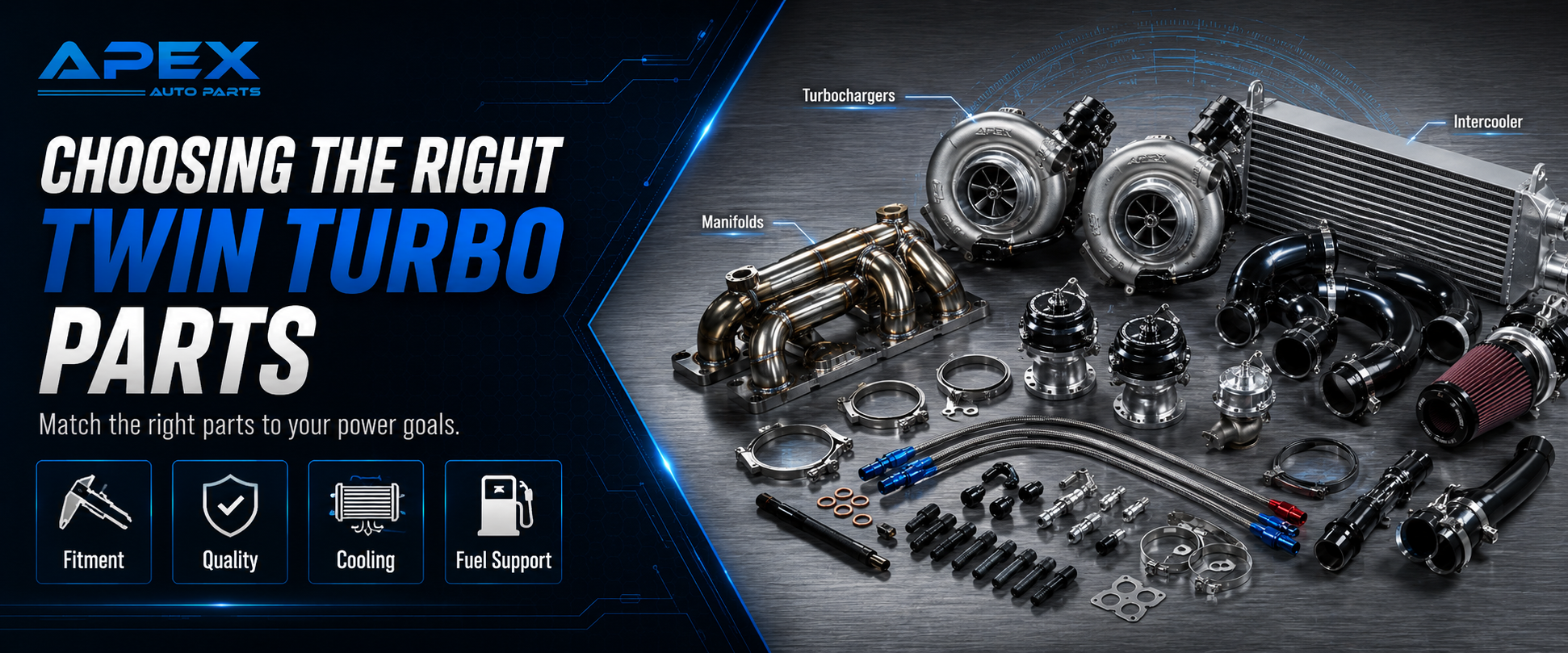
Correct parts matter. Turbo parts must match the engine, vehicle, power goal, and tuning plan. A part that looks close may not fit or perform correctly.
When buying Twin Turbo parts, check the vehicle make, model, year, engine code, turbo part number, gasket type, actuator type, sensor plugs, and oil line layout.
Apex Auto Parts helps UK drivers, garages, and trade buyers source engine parts for repair and rebuild work. For turbo-related repairs, correct fitment is important. The wrong gasket, oil line, sensor, or cooling part can delay the job and create repeat problems.
Quality matters too. A turbo engine works under heat and pressure. Cheap parts may fail early and cost more in labor later.
Final Thoughts
A Twin Turbo upgrade can give strong power, better response, and a more exciting drive. It can turn a good engine into something much faster. But it must be planned properly.
A twin-turbo engine needs clean oil, good cooling, strong fueling, correct tuning, and quality parts. A twin-turbo V8 can make huge power, but it also creates more heat and stress. The BMW M5 twin-turbo V8 is a good example of how powerful and exciting this setup can be, but it also shows why maintenance matters.
If you are asking what twin power turbo means, remember that BMW twin power turbo does not always mean two turbos. Always check the exact engine before buying parts.
The best Twin Turbo engine is not always the most powerful one. It is the one that matches your needs, offers good support, and remains reliable with proper care.
Before upgrading, check engine health, plan the full system, use the right parts, and tune it properly. That is how a Twin Turbo upgrade becomes a smart improvement instead of an expensive problem.
FAQs About Twin Turbo Upgrades
1. What is a Twin Turbo engine?
A twin-turbo engine uses two turbochargers to deliver additional air to the engine. More air helps the engine make more power. Some systems use one turbo per cylinder bank, while others use different turbo sizes for better response. The setup must be properly matched and tuned.
2. Is a Twin Turbo better than a single turbo?
A Twin Turbo can give better response and strong power, especially on larger engines. A single turbo can be simpler and cheaper. The better choice depends on the engine, power goal, budget, and use. A well-planned single turbo can beat a poor twin-turbo setup.
3. What does Twin Power Turbo mean on a BMW?
What does twin power turbo mean? In BMW terms, it means turbo technology designed for power and efficiency. BMW Twin Power Turbo does not always mean two turbochargers. Some BMW engines use a single twin-scroll turbo, while others use two turbos depending on the engine.
4. Is the BMW Twin Power Turbo the same as Twin Turbo?
No, BMW Twin Power Turbo is not always the same as Twin Turbo. It is BMW’s name for turbo technology. Some BMW Twin Power Turbo engines have one turbo, while others have two. Always check the exact engine code before buying turbo parts.
5. What is a twin-turbo V8?
A twin-turbo V8 is a V8 engine with two turbochargers. Usually, each turbo supports one side of the V8 engine. This setup can deliver high torque and power, but it also requires good cooling, clean oil, reliable gaskets, and proper tuning.
6. Is the BMW m5 twin turbo v8 reliable?
The BMW M5 twin-turbo V8 can be powerful when properly serviced, but it is a high-performance engine and can be costly to maintain. Oil care, cooling system health, turbo condition, sensors, gaskets, and service history matter a lot, especially on used cars.
7. What is the best Twin Turbo engine?
The best Twin Turbo engine depends on your needs. For daily use, choose one with good reliability, smooth power, and strong parts support. For performance, choose one with strong internal parts and cooling. The best engine is the one that fits your budget and driving style.
8. How much does a Twin Turbo upgrade cost?
The cost of a Twin Turbo upgrade depends on the car, turbos, labor, tuning, fuel system, cooling parts, and exhaust work. A simple factory turbo upgrade costs less than a custom conversion. Always budget for supporting parts, not just the turbos themselves.
9. Can a stock engine handle a twin-turbo upgrade?
Some stock engines can handle mild Twin Turbo upgrades, but not all. The engine must have good compression, oil pressure, cooling, timing parts, and fuel supply. If the engine is worn or weak, more boost can cause serious damage. Always check engine health first.
10. How do I maintain a twin-turbo engine?
To maintain a twin-turbo engine, change the oil on time, use the correct oil, keep the coolant healthy, check the boost pipes, watch for smoke, and fix leaks early. Let the engine warm before hard driving. Good maintenance helps turbos last longer and protects the engine.
References:
borgwarner
garrettmotion