
 info@apexautoparts.co.uk
 +44 203 915 7535
 Safe & Fast Shipping
 Whish List
 Compare
 Sign In

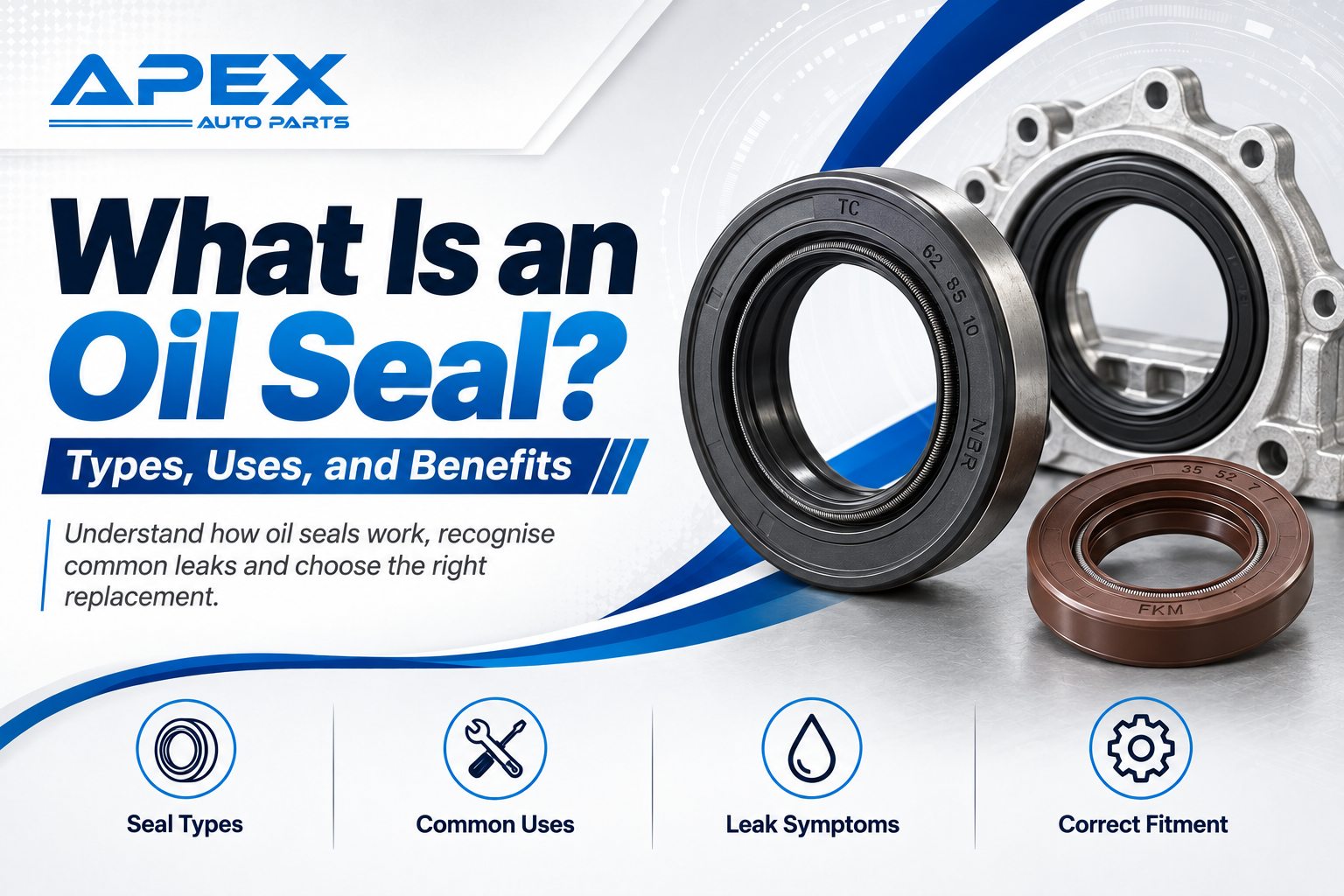
An oil seal helps keep oil inside an engine, gearbox, or other mechanical part while allowing a shaft to move. Depending on its design, it also helps keep dust and dirt away from the sealing area. It may look like a simple ring, but its condition can affect the parts around it.
A small damp patch beneath your car might be the first sign of a leak. However, buying a replacement seal straight away is not always the right answer. Oil can travel down an engine from another source, and a new seal may leak again if the original cause remains.
Understanding how seals work helps you ask better questions, choose suitable replacement parts, and avoid paying for the same repair twice.
What Does an Oil Seal Do?
A typical rotating shaft oil seal sits between a moving shaft and a fixed housing. The housing holds the outside of the seal in place, while its inner edge, called the sealing lip, runs against the shaft.
Many designs contain a metal support, a flexible sealing lip, and a small circular spring. The spring helps maintain contact between the lip and shaft. Other designs use different materials and do not need this spring.
The seal must retain oil without creating too much friction. In a conventional lubricated design, a very thin film of oil helps protect the contact area as the shaft rotates. This is a controlled sealing surface, rather than a rubber ring squeezed as tightly as possible around moving metal. NOK explains this balance between sealing and lubrication.
An oil seal also differs from a typical flat gasket. A gasket usually seals a joint between fixed surfaces, such as a cover and an engine. A shaft seal works around a moving component. Both prevent leaks, but they are not interchangeable.
Where Are Oil Seals Used?
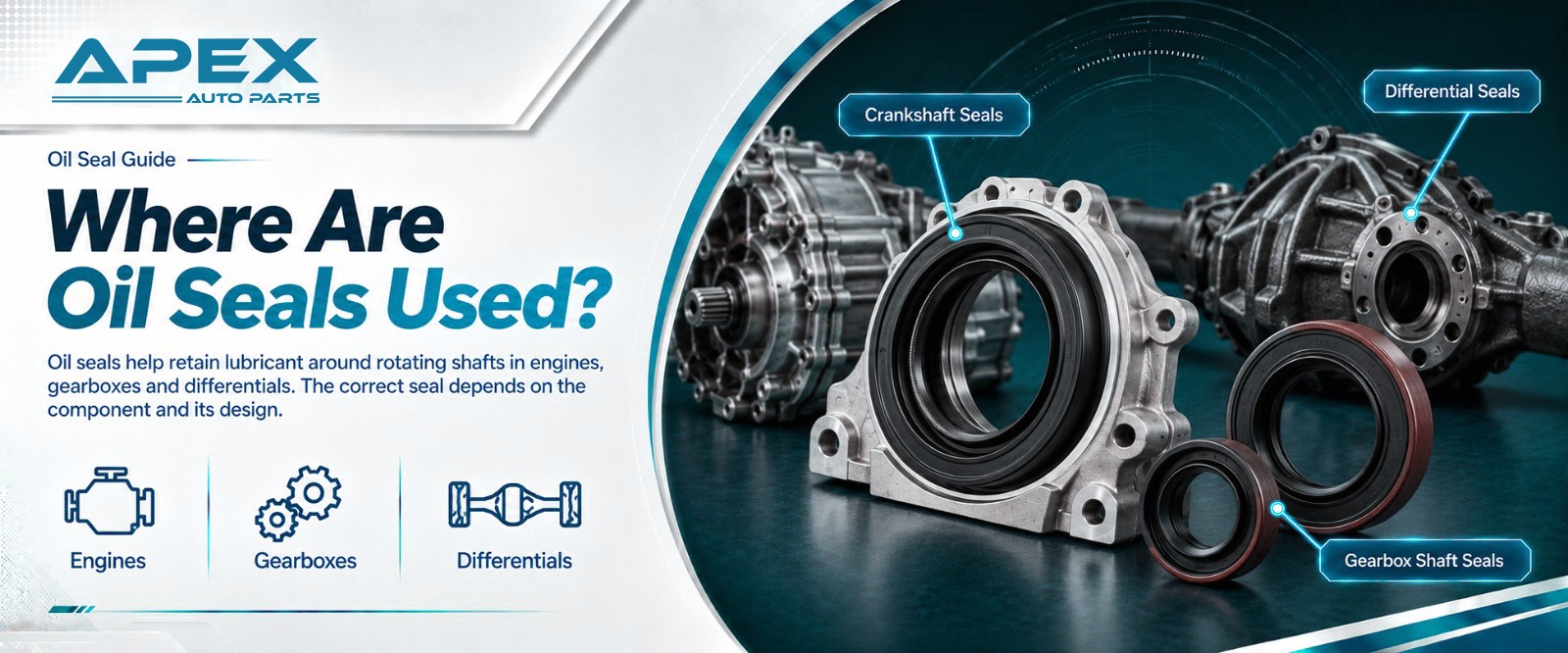
Vehicles use oil seals in several places. Their location determines which fluid they retain, the conditions they face, and how difficult they are to replace.
A crankshaft oil seal keeps engine oil from escaping where the crankshaft passes through the engine housing. Engines commonly have a front seal near the crankshaft pulley and a rear seal near the connection between the engine and gearbox.
Camshaft seals serve a similar purpose where the engine design requires them. Gearboxes and differentials also use shaft seals to retain their own lubricants. A leak from one of these areas should not automatically be treated as an engine oil leak.
Pumps and other machinery may use shaft seals too. However, pump sealing arrangements vary. Some use lip seals, while others use mechanical face seals or different sealing systems. A seal suitable for one pump may be completely unsuitable for another.
For a car owner, the useful starting point is the exact location. “The engine is leaking” is a symptom. “Fresh oil is coming from the front crankshaft sealing area” is a much more useful finding when planning a repair.
Which Type of Oil Seal Is Used?
There is no single type of oil seal that suits every vehicle. Seals differ in their lip design, material, outer construction, and fitting method. Two parts that look almost identical can behave differently once fitted.
The main designs below explain why choosing by appearance alone can lead to trouble.
Single Lip Designs
A single lip oil seal has one main sealing lip that retains lubricant around the shaft. It can be suitable where the surrounding assembly provides enough protection from dirt.
Its performance still depends on the correct dimensions, shaft condition, and operating environment. A single lip design is not necessarily a cheaper or weaker choice.
If it is the specified part for the application, replacing it with something more complicated may offer no benefit.
The right question is whether the seal matches the job, rather than how many features it has.
Double Lip Designs
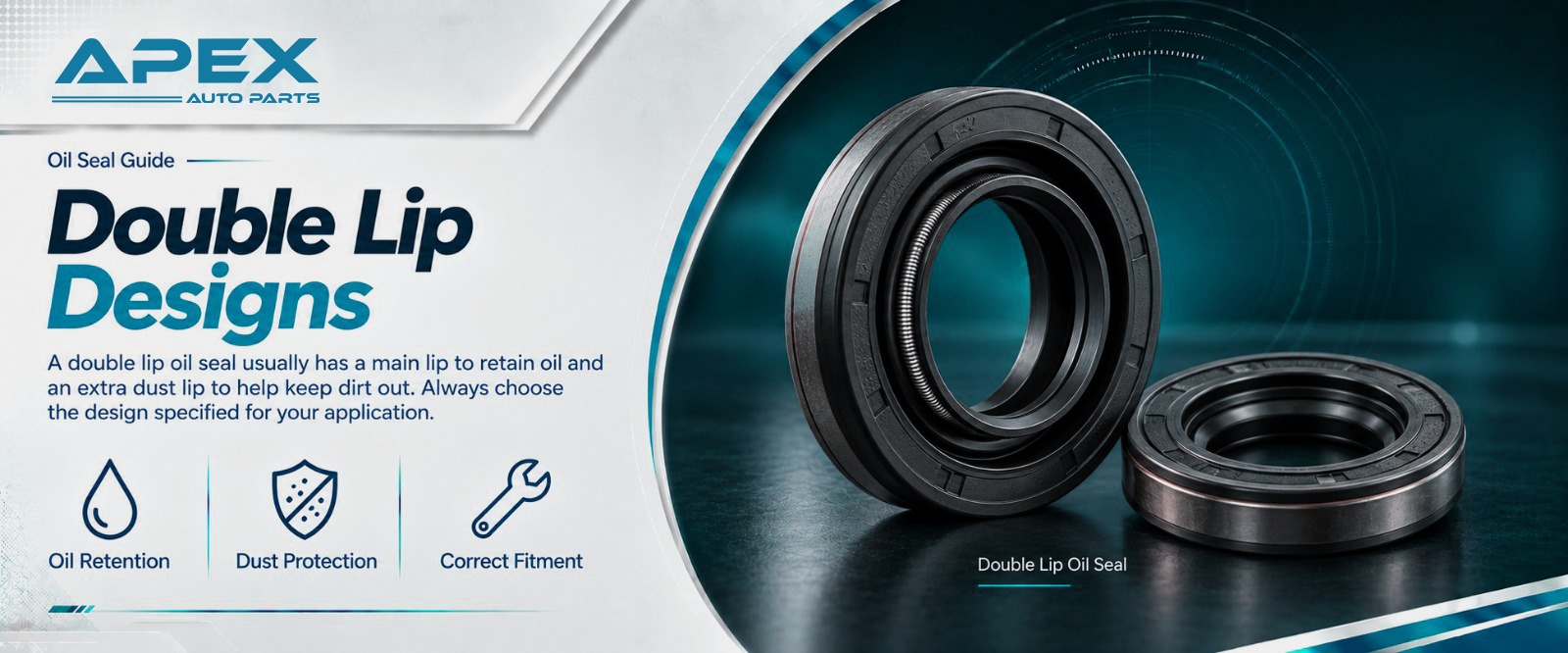
A double lip oil seal usually has a main lip that retains lubricant and an additional lip that helps keep external dirt away. This extra protection can be useful where contamination might otherwise reach the main sealing area.
The second lip should not be understood as a second pressure barrier in every design. Its purpose depends on the seal specification. Manufacturers offer radial shaft seals both with and without an external dust lip. Trelleborg’s radial shaft seal guidance describes these arrangements.
A double lip oil seal should therefore be chosen because it suits the application, not because two lips automatically mean twice the protection.
PTFE Seals
Some modern engines use PTFE seals. PTFE is a specialized plastic used for its sealing properties, including resistance to heat and low friction.
These seals need careful handling. Many require a dry shaft contact surface during installation, which differs from the fitting method used for many rubber seals. Adding oil or grease because that worked on a previous job can cause problems.
Some applications also require a waiting period after fitting before the shaft is turned. The instructions supplied with the exact part should determine the procedure. Elring PTFE fitting guidance explains why preparation and handling matter.
Seals Supplied With a Housing
Some replacements come already fitted into a housing or carrier. This can help position the seal correctly, but the complete assembly still needs to match the engine.
A housing may have its own gasket, alignment requirements, or related components. The fact that the sealing ring looks similar does not prove that the whole unit will fit.
Before ordering, check whether the repair requires the seal alone or the complete assembly. This avoids discovering a missing part after the vehicle has already been taken apart.
What Are the Benefits of a Good Oil Seal?
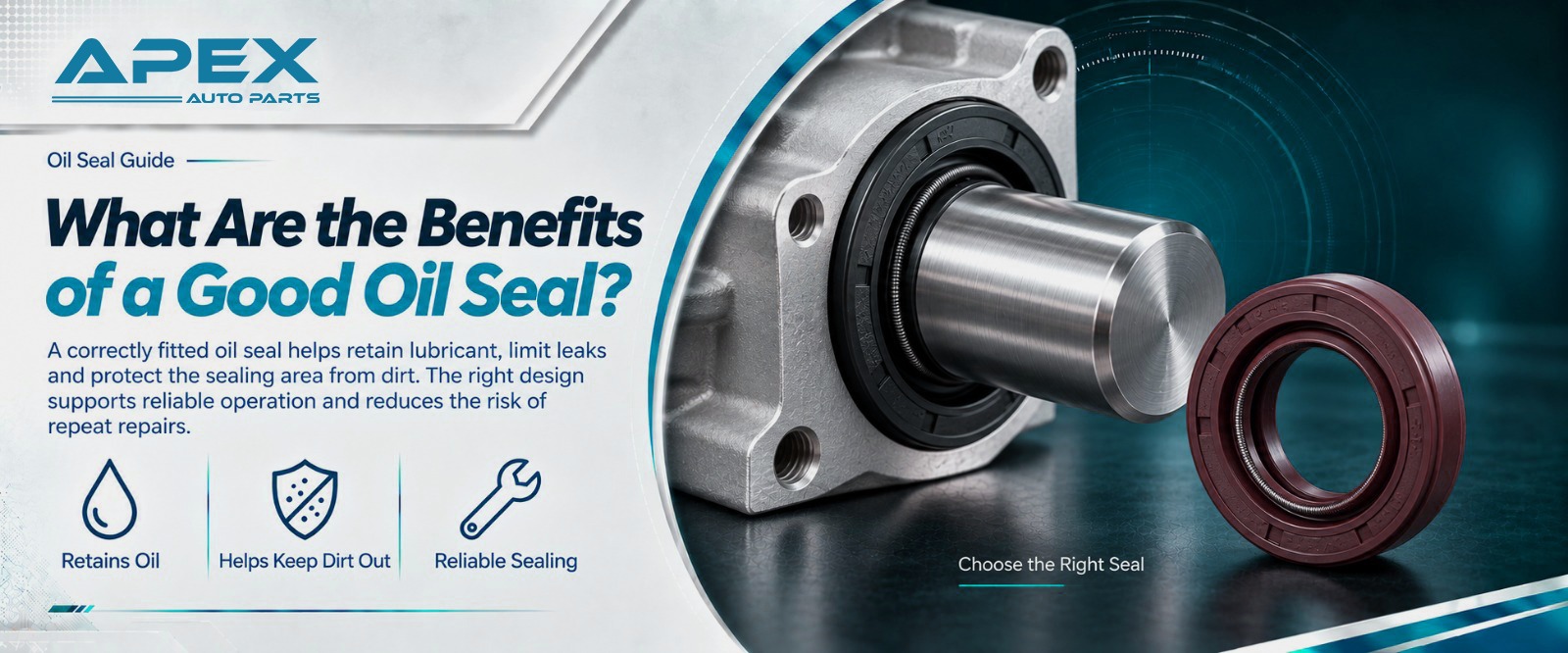
The main benefit is retaining lubricant where it is needed. Bearings, gears, and other moving parts depend on the correct fluid supply. Preventing leaks helps avoid a gradual loss that might otherwise go unnoticed.
Suitable seals also help limit contamination. Dirt around a moving sealing surface can contribute to wear, so keeping it away supports the life of both the seal and the shaft.
There are practical benefits for the owner too. A properly repaired leak means fewer stains on the drive, less oil spread around the engine, and less uncertainty about fluid levels. A clean engine also makes it easier to spot a new problem.
However, a replacement oil seal does not restore worn bearings, fix a damaged shaft, or cure a blocked engine breather. It delivers its benefits when the surrounding parts are healthy, and the correct fitting procedure has been followed.
What Causes Oil Seal Problems?
Many oil seal problems develop gradually. Heat, age, and repeated movement can affect the sealing lip. As the material loses its ability to follow the shaft surface, oil may begin to escape.
The shaft itself can also be responsible. A groove, scratch, or damaged contact surface may prevent even a new seal from working properly. Fitting another ring without inspecting the surface can lead to the same leak returning.
Installation damage is another cause. A seal pressed in unevenly, fitted at the wrong depth, or damaged during assembly may leak soon after the repair. Dirt trapped around the sealing area can also stop it from seating correctly.
Motor service identifies damaged surfaces, contamination, and incorrect sealing practices among the causes of oil loss. Motor service guidance on oil loss.
On engines, the breather system deserves attention as well. It controls gases inside the crankcase. A fault that allows excessive pressure to build can contribute to leakage. This pressure is different from the oil pressure created by the oil pump.
A repeat leak should prompt a fresh inspection of the cause, rather than an assumption that every replacement seal is faulty.
What Are the Common Crankshaft Oil Seal Leak Symptoms?
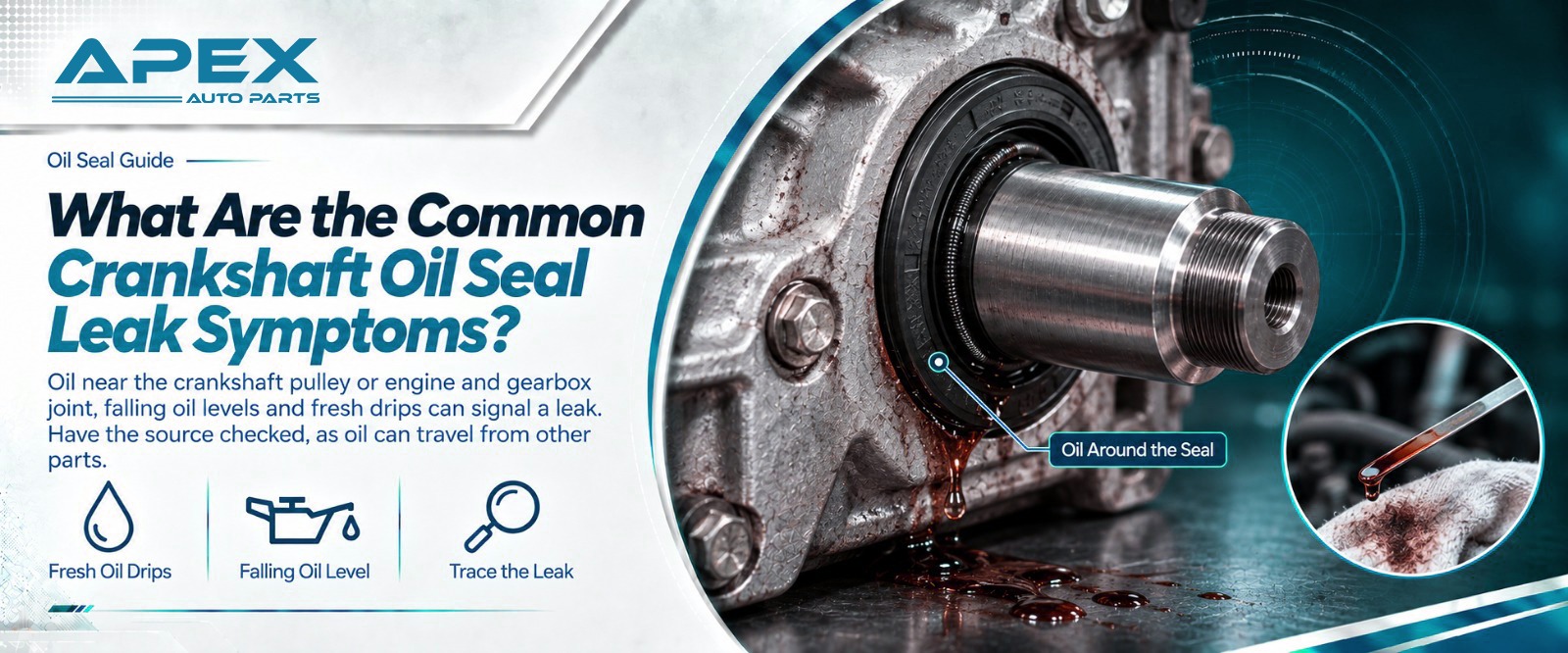
The most useful crankshaft oil seal leak symptoms relate to where fresh oil appears and how the oil level changes. However, none of the signs below proves the diagnosis on its own.
Look for these changes:
- Fresh oil near the crankshaft pulley can suggest a front sealing area leak. A mechanic should also check nearby covers and joints because oil from above can run into the same place.
- Oil appearing around the joint between the engine and gearbox may suggest a rear seal leak. Other engine leaks and gearbox fluid leaks can also leave marks in this area.
- A falling engine oil level may accompany an external leak. Record how often oil is needed, but remember that internal oil consumption can also reduce the level without leaving a puddle.
- A burning smell or smoke from the engine bay may occur if leaked oil reaches hot parts. This needs prompt attention and should not be confused with smoke coming from the exhaust.
- Fresh drips after parking can help show that a leak is active. An undertray may catch oil first, so the absence of marks on the ground does not rule out a problem.
Tell the garage when the signs occur. A leak that appears after a long journey may need different checks from one that leaves a puddle while the vehicle stands overnight.
How Does a Mechanic Find an Oil Seal Leak?
Finding an oil seal leak starts with identifying the fluid and tracing its source. A wet engine does not always reveal where the problem began, especially when airflow has spread oil across nearby surfaces.
A mechanic may clean the affected area, inspect it, and check again under suitable conditions. Where necessary, an approved tracing dye can help locate a difficult leak. The aim is to find where fresh fluid first appears.
For example, oil around the engine and gearbox joint may have travelled down from a leaking cover higher up. Removing the gearbox before checking those areas could create a large bill without fixing anything.
The inspection should also consider related parts. Depending on the symptoms, this may include the breather system, seal housing, shaft surface, or shaft movement.
Visible fluid and low fluid levels are useful starting points, but several engine and drivetrain seals can produce similar signs. Fel-Pro’s leak inspection checklist shows why identifying the affected system matters.
Ask the garage to explain what confirms the diagnosis before approving major dismantling work.
Can You Keep Driving With an Oil Seal Leak?
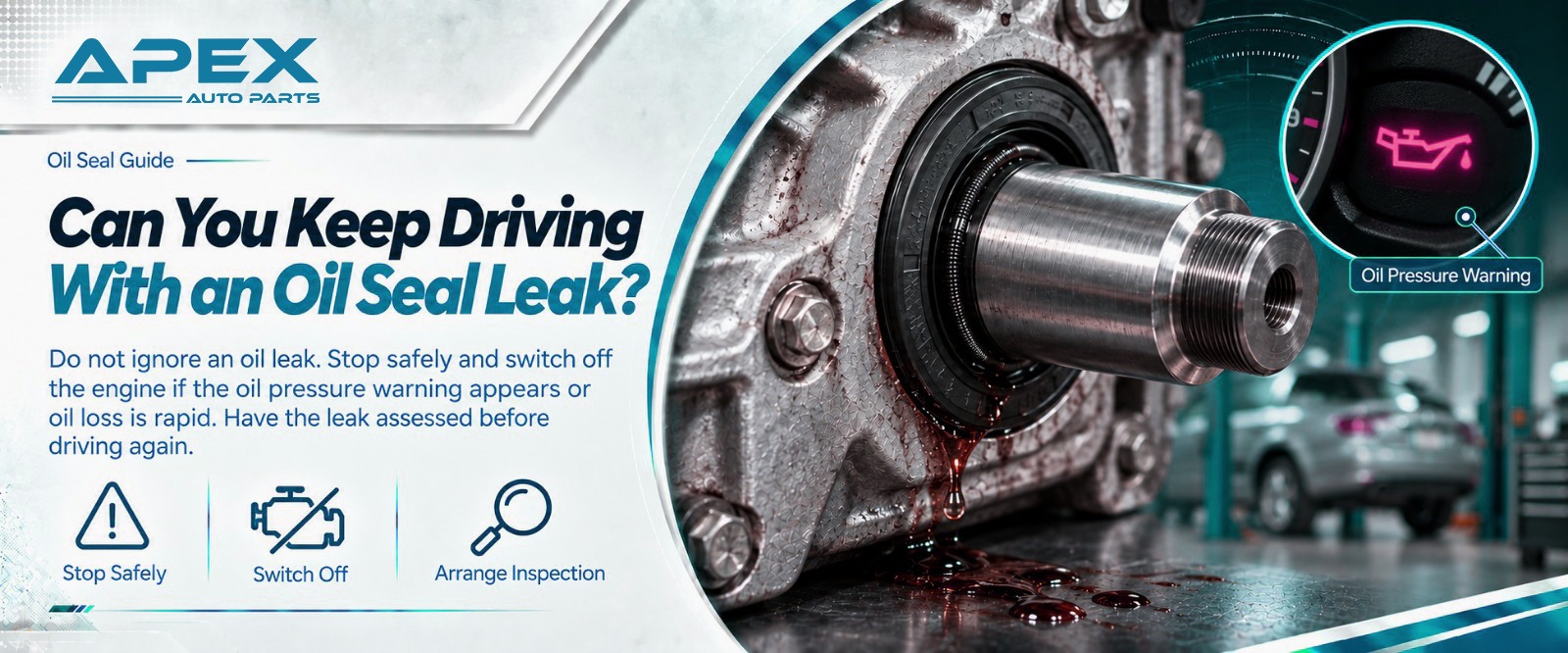
There is no safe driving distance that applies to every oil seal leak. A slight damp patch and a rapid leak are different situations where the oil lands matters as much as how much escapes.
If the oil pressure warning appears while driving, stop safely and switch off the engine. Do not assume that adding oil will solve the problem. Rapid oil loss, oil reaching hot exhaust parts, or contamination of brakes also requires urgent attention.
A minor seep still deserves inspection. It may remain small for a while, but you cannot judge its future behavior from the size of one stain.
Checking and correcting the oil level according to the handbook can help protect the engine while arranging advice. It does not repair the leak, and overfilling creates its own problems.
How Should a Leaking Seal Be Repaired?
A lasting repair needs more than removing the old part and pressing in a new one. The mechanic must confirm the correct replacement, inspect the sealing surfaces, and follow the fitting instructions for that design.
A crankshaft oil seal may require special tools to protect the lip, set the fitting depth, or align its housing. Damage caused during installation may be difficult to see but can still affect sealing.
Rubber and PTFE designs must not be treated as identical. The required preparation can differ, including whether the sealing lip should be lubricated. Fel-Pro also recommends checking the crankshaft surface and engine ventilation system before fitting a replacement rear seal.
Adding extra sealant is not a general cure. Use it only where the repair instructions specify it. The right amount in a specified joint is very different from coating a seal in an attempt to stop every possible leak.
After the work, the repair area should be checked for fresh leakage once the required installation conditions have been met.
Why Can a Small Seal Lead to a Large Repair Bill?
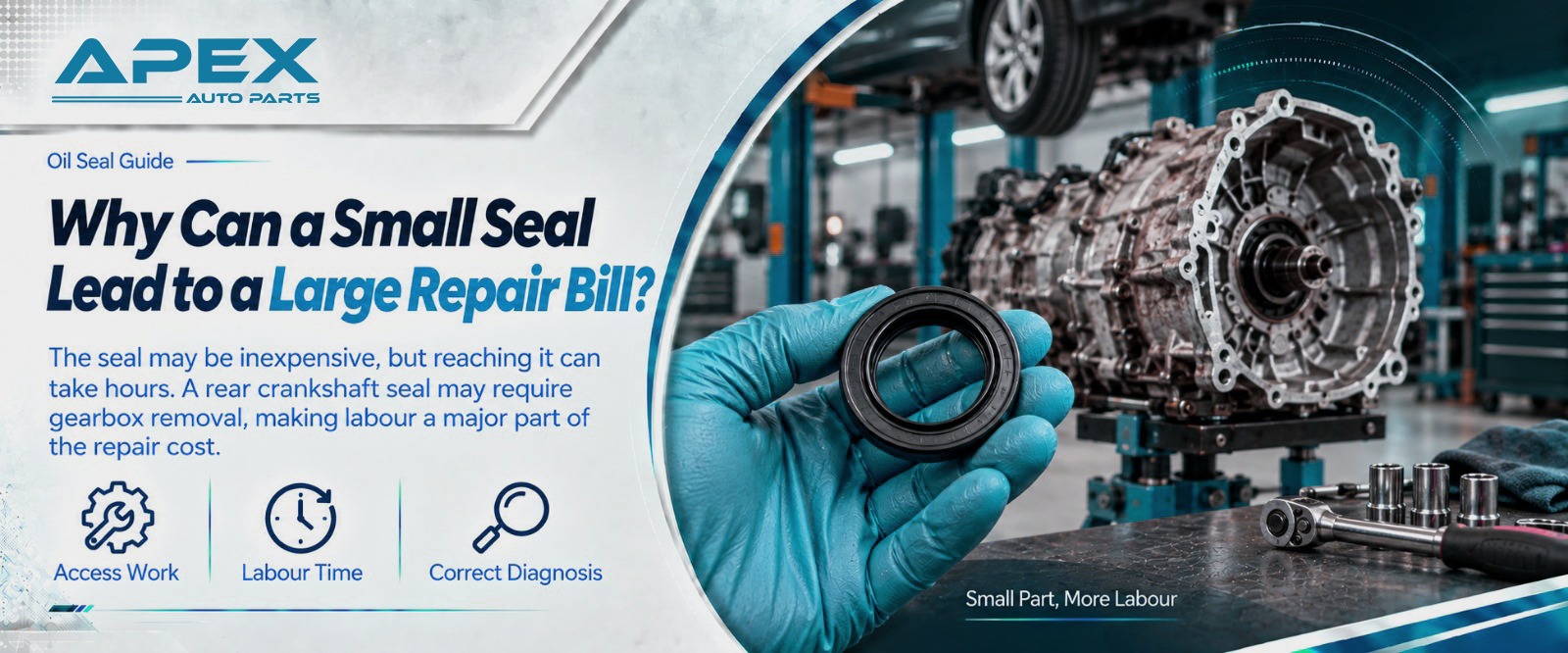
The price of the part is only one part of the job. Access often has a much larger effect on the final bill.
A rear crankshaft oil seal may sit behind the flywheel or drive plate, so reaching it can require gearbox removal. A front seal may be easier to reach on some engines, while others need substantial dismantling.
Ask for a written quote that separates the diagnosis, replacement parts and labour. It should also explain whether related gaskets, fluids or bolts are included.
If the garage finds additional wear after dismantling, ask what has been found and why further work is needed. Photographs can make that discussion much clearer.
The cheapest quote is not always the best value if it covers only the seal and leaves the cause of failure unchecked. Equally, a leak does not automatically justify replacing every nearby component.
How Do You Choose the Correct Replacement?
Choosing the correct type of oil seal starts with the vehicle and component details. The model name alone may not be enough because different engines, gearboxes, and production changes can use different seals.
Before ordering, confirm the following:
- Supply the registration and VIN where required, together with the engine or gearbox code. These details help narrow down the correct application when similar vehicles use different mechanical parts.
- Identify the seal position clearly. A front and rear crankshaft oil seal perform related jobs, but they are different parts and should not be ordered as though they are interchangeable.
- Check the original part number against the replacement catalogue. An old number may have been updated, so confirm any replacement number rather than rejecting it simply because the markings differ.
- Confirm the dimensions and design where needed. Inner diameter, outer diameter and width matter, but matching these measurements alone does not confirm the correct material or sealing lip.
- Check what comes in the package. The job may require a housing, fitting sleeve, or related gasket, and knowing this before dismantling helps avoid delays while the vehicle is off the road.
When buying engine components from Apex Auto Parts, provide the exact vehicle details and confirmed part requirement. Clear information helps make the purchase about the repair your car needs.
How Can You Reduce the Risk of Future Leaks?
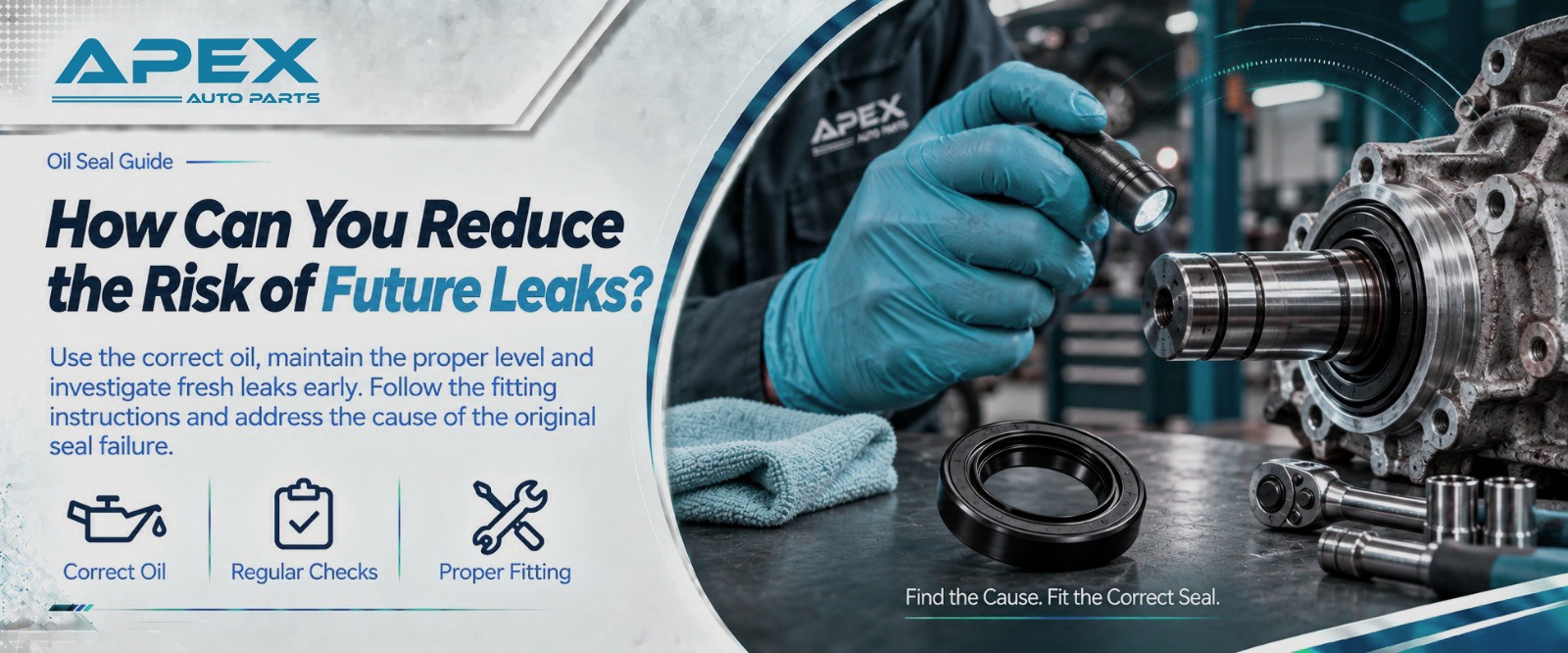
Good care starts with using the specified lubricant and maintaining the correct level. Follow the service schedule for the vehicle rather than choosing a thicker oil to hide a leak.
Pay attention to the engine breather system when faults appear. Repeated leakage from several areas can be a reason to investigate pressure control, rather than replacing each seal without further checks.
Deal with fresh leaks early. A small problem is easier to assess before the engine becomes covered in oil and road dirt. Keep invoices from previous repairs so the next mechanic knows which parts were replaced and when.
There is no universal replacement mileage for every oil seal. Its working conditions, material, installation, and surrounding parts all affect its life. Inspection and the correct repair information are more useful than a blanket rule.
Getting the Repair Right
An oil seal is a small component with a clear job, but its success depends on the whole sealing area. The correct part needs a suitable shaft surface, proper installation, and normal operating conditions.
If you notice a leak, start by finding its source. Then confirm the reason it developed and match the replacement to the exact application. That approach helps protect the engine and avoids spending money on parts that do not solve the problem.
Apex Auto Parts fits naturally into the process once the required component has been identified. Accurate diagnosis and accurate parts information give the repair the best chance of lasting.
FAQS
1. What is an oil seal used for?
An oil seal helps keep lubricant inside a component where a shaft passes through its housing. Depending on its design, it also helps keep dirt out. In vehicles, these seals are used around crankshafts, some camshafts, gearbox shafts, and differential shafts. The correct specification depends on the application.
2. What is the difference between a single lip and double lip oil seal?
A single lip design mainly retains lubricant. A double lip oil seal usually adds a second lip that helps keep dust and dirt away from the main sealing area. It is not automatically better for every job. Always use the design specified for the shaft and housing.
3. What causes an oil seal leak?
An oil seal leak can result from a worn lip, damaged shaft, incorrect fitting, or the wrong replacement part. Excess crankcase pressure can also contribute to engine leaks. Finding the cause matters because replacing the seal alone may leave the fault in place and lead to another leak.
4. What are common crankshaft oil seal leak symptoms?
Common crankshaft oil seal leak symptoms include fresh oil near the crankshaft pulley or the joint between the engine and gearbox, along with a falling oil level. Oil from higher components can collect in these areas too. A mechanic should trace the leak before deciding which part needs replacement.
5. Can I drive with a leaking crankshaft oil seal?
There is no safe distance that applies to every crankshaft oil seal leak. The amount of oil lost and where it lands both matter. Stop safely if the oil pressure warning appears, oil loss is rapid, or oil reaches hot exhaust parts. Arrange inspection rather than relying on repeated top-ups.
6. Which type of oil seal does my car need?
The correct type of oil seal depends on the engine or gearbox, seal position, dimensions, material, and operating conditions. Use the vehicle details and part catalogue to confirm compatibility. Appearance alone is not enough, because two seals with similar sizes can have different lips, materials or fitting instructions.
7. Should an oil seal be fitted dry or lubricated?
Follow the instructions for the exact oil seal. Many rubber sealing lips need suitable lubrication during fitting, while many PTFE crankshaft seals require a dry shaft contact surface. PTFE designs may also require a waiting period before use. Applying the same fitting method to every seal can cause leaks.
8. Why is replacing a rear crankshaft oil seal expensive?
A rear crankshaft oil seal often sits behind the flywheel or drive plate, so reaching it can require gearbox removal. The labour can cost much more than the seal itself. Ask for a written quote showing diagnosis, access work, replacement parts, and any related repairs before approving the job.
9. What does oil seal pumps mean when buying parts?
The phrase oil seal pumps can refer to seals used in pumps, but it does not identify one standard component. Confirm whether you need a pump shaft seal, a housing seal, or the complete oil pump. The pump model, fluid, and part number help identify the correct replacement.
10. How can I prevent oil seal problems returning?
Preventing oil seal problems starts with finding why the original seal failed. Check the shaft surface, housing, and engine breather system where relevant. Fit the correct replacement using its instructions, maintain the proper fluid level, and investigate fresh leaks early. A new seal cannot correct unrelated mechanical wear.
References:
trelleborg
felpro
motor service