
 info@apexautoparts.co.uk
 +44 203 915 7535
 Safe & Fast Shipping
 Whish List
 Compare
 Sign In

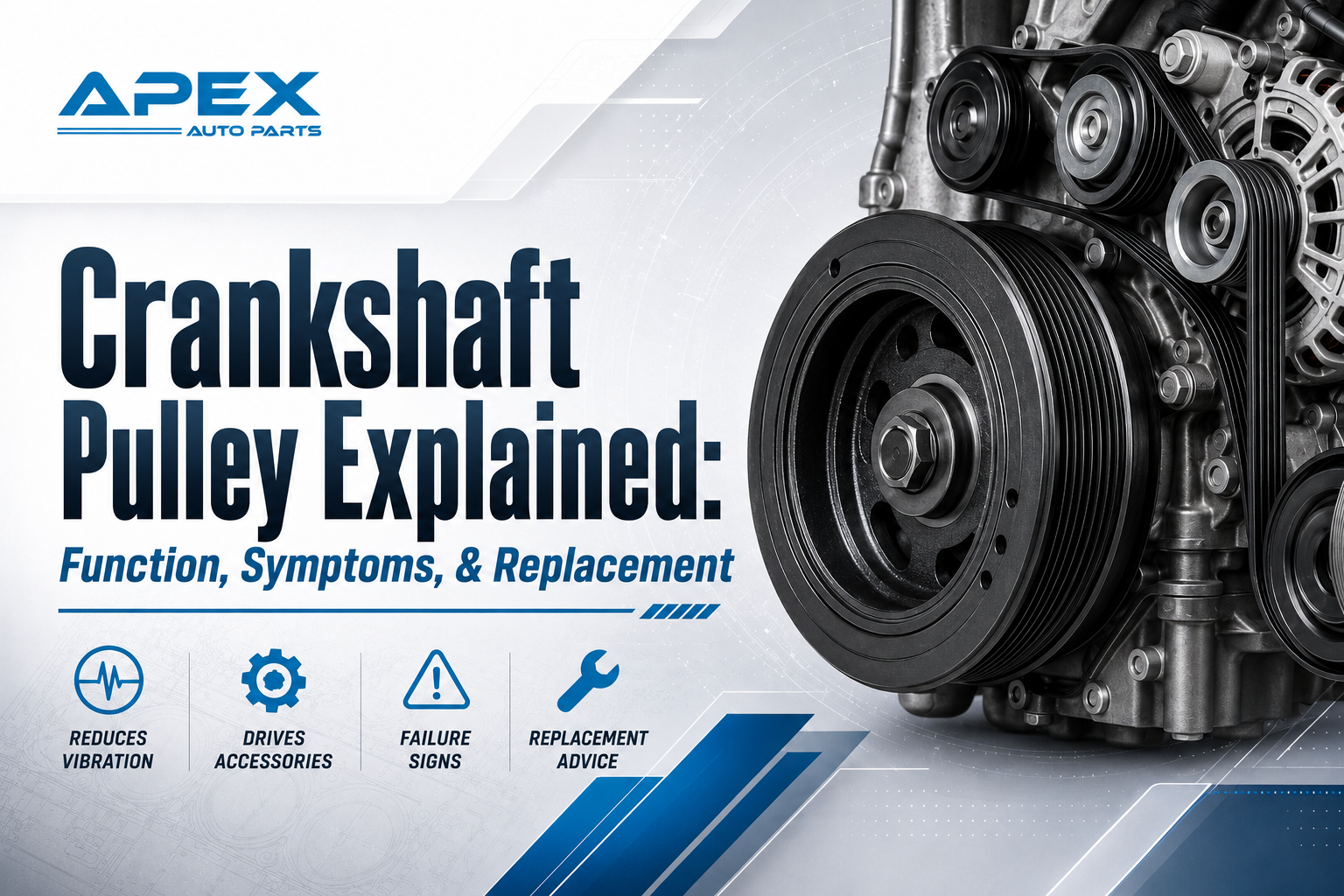
A Crankshaft Pulley is one of those parts many drivers do not think about until it starts causing trouble. It sits at the front of the engine and helps drive important parts like the alternator, power steering pump, air conditioning pump, and sometimes the water pump, depending on the engine layout. It may look like a simple round wheel, but it has a serious job.
When the engine runs, the crankshaft spins. The Crankshaft Pulley is fitted to the end of the crankshaft. It uses a belt to transfer that turning force to other parts of the engine bay. In many cars, this pulley also helps reduce vibration from the crankshaft. That is why it is sometimes called a crankshaft damper or harmonic balancer.
If the Crankshaft Pulley starts to fail, the signs can be easy to miss at first. You may hear a strange noise from the front of the engine. The belt may wobble. The steering may feel heavy. The battery warning light may come on. The engine may vibrate more than normal. If the pulley breaks fully, the car can become unsafe to drive and may even stop charging the battery.
For UK drivers, this part works hard every day. Cold starts, wet roads, stop start traffic, long motorway runs, and age can all wear it down. A worn pulley can also affect other parts around it, so ignoring it can lead to a bigger repair bill.
At Apex Auto Part, we are based in the UK and sell car engine parts online. Our aim is to help drivers and garages find the right parts for the right repair. This guide explains what a Crankshaft Pulley does, why it fails, what symptoms to look for, and when replacement is needed.
What Is a Crankshaft Pulley?
A Crankshaft Pulley is a round metal part fitted to the end of the crankshaft. The crankshaft is one of the main moving parts inside the engine. As the pistons move up and down, they turn the crankshaft. The crankshaft then helps send power through the engine and towards the gearbox.
The pulley sits outside the engine, usually near the bottom front area. A drive belt runs around it. This belt also runs around other pulleys connected to different parts. When the crankshaft turns, the pulley turns the belt, and the belt turns other parts.
In simple words, the Crankshaft Pulley helps share engine power with parts that need to spin.
These parts can include:
- Alternator
- Power steering pump
- Air conditioning compressor
- Water pump on some engines
- Other belt driven parts
Some crankshaft pulleys are solid metal. Others have a rubber layer inside them. That rubber layer helps absorb engine vibration. On many modern cars, this type is more common because engines create twisting forces while running. The rubber helps soften those forces so the belt system runs smoother.
What Does a Crankshaft Pulley Do?
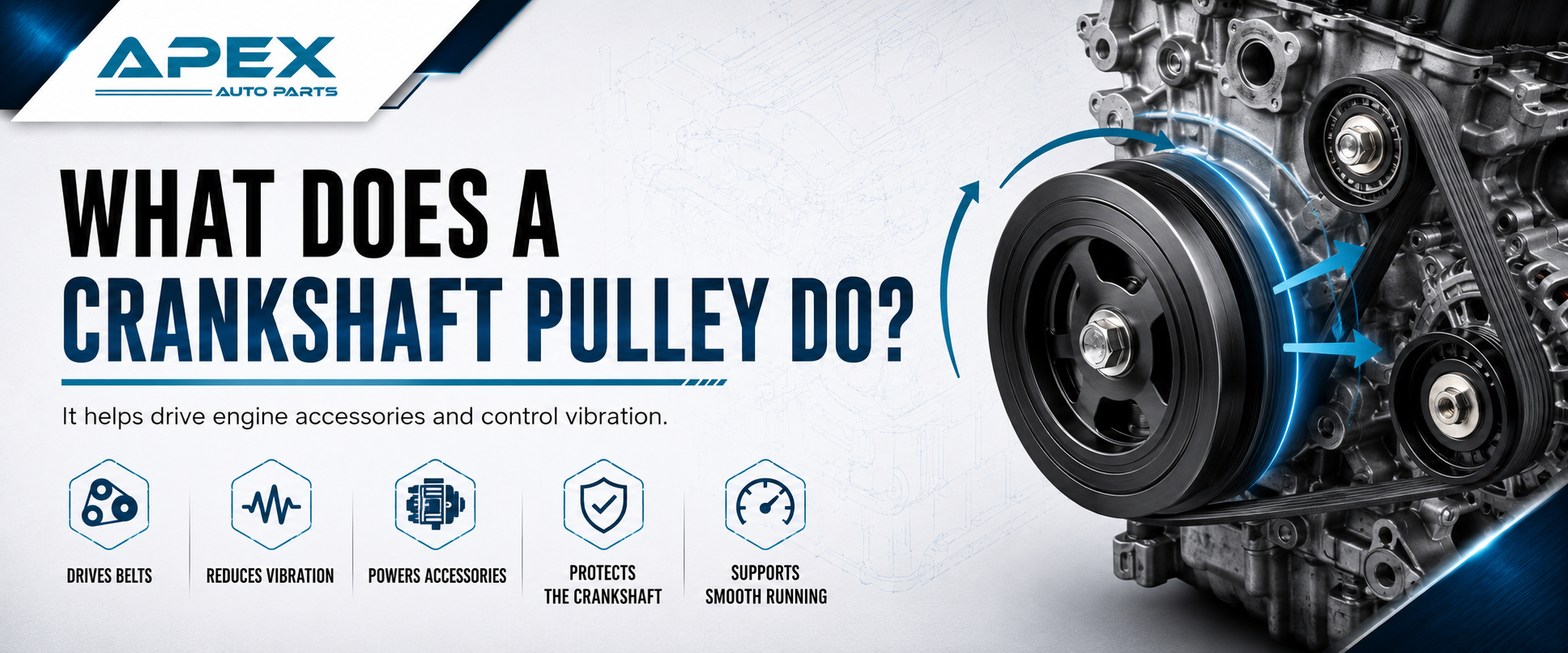
The main job of a Crankshaft Pulley is to drive the auxiliary belt. This belt is also called a drive belt or serpentine belt. Without this belt, several important parts may stop working.
For example, the alternator charges the battery while the engine is running. If the pulley does not turn the belt properly, the alternator may not charge. The battery light may come on, and the car may later fail to start.
If the power steering pump is belt driven, a failing pulley or belt can make the steering heavy. This can be dangerous, especially at low speed when parking or turning.
If the air conditioning compressor is affected, the air con may stop working. That may not seem urgent, but the same belt issue can affect more important parts too.
On some engines, the water pump may also be driven by the same belt. If that stops working, the engine can overheat. Overheating can cause serious engine damage if the car is still driven.
The second job of many crankshaft pulleys is to reduce vibration. The engine does not spin in a perfectly smooth way. Every time a cylinder fires, it adds a small shock through the crankshaft. The pulley helps control this movement. If the rubber inside the pulley wears out, the engine may feel rougher, and the belt may not run straight.
Why Is the Crankshaft Pulley Important?
A Crankshaft Pulley is important because it connects the engine to several parts that keep the car usable. A weak pulley can cause problems that look like other faults. This is why it is sometimes misdiagnosed.
A driver may think the alternator is bad because the battery light is on. Another may think the steering pump is failing because the steering is heavy. Someone else may blame the belt because it keeps wearing out. In some cases, the real issue is the pulley not running true.
A healthy pulley keeps the belt moving smoothly. It helps the alternator charge, helps the steering system work, helps the air con run, and helps reduce stress on nearby parts.
When the pulley is worn, it can damage the belt, belt tensioner, idler pulleys, and other belt driven parts. If the belt comes off, the car may quickly become unsafe or stop running properly.
This is why a Crankshaft Pulley should not be ignored when it starts showing signs of wear.
Common Types of Crankshaft Pulley
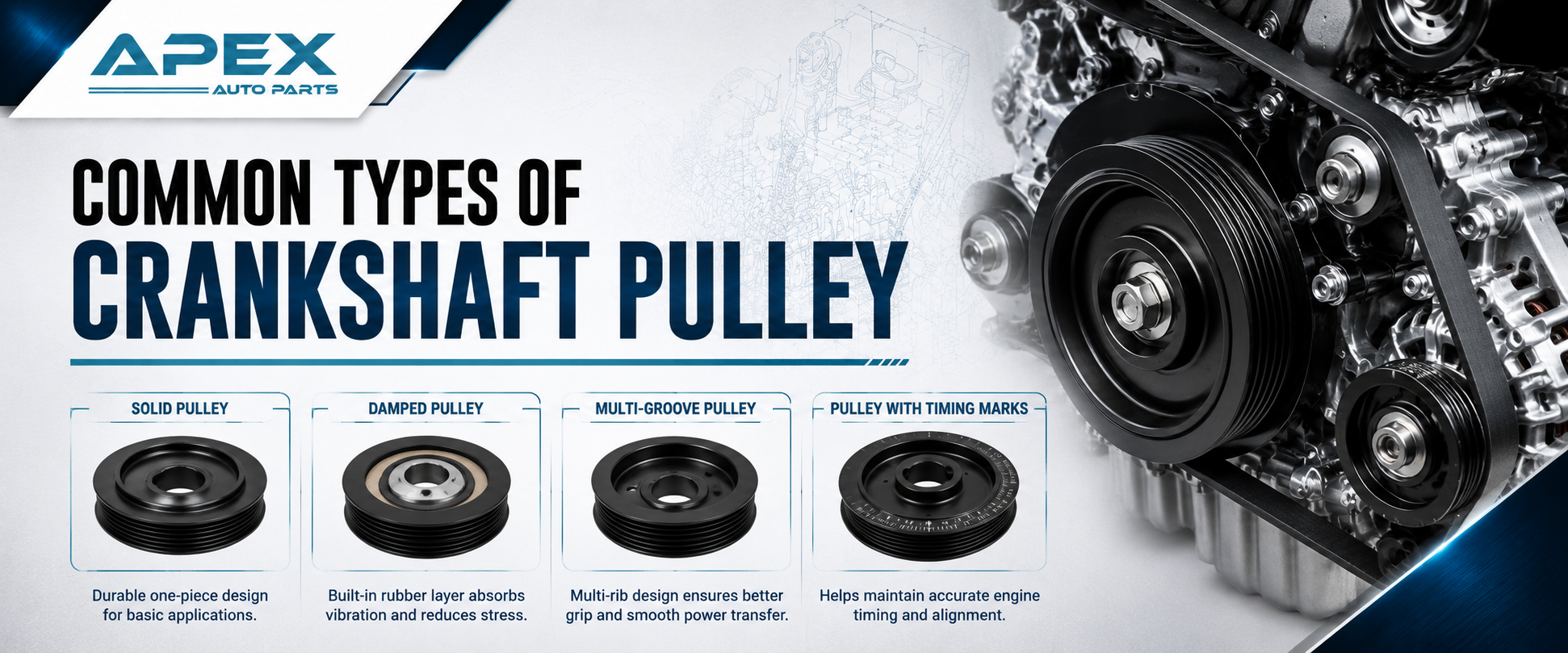
Not every Crankshaft Pulley is built the same. The design depends on the engine, vehicle age, and how much vibration control is needed.
A solid pulley is usually made from metal and has no rubber damper section. It is simple and strong, but it does not absorb vibration in the same way as a damped pulley.
A damped pulley has a rubber section between the inner and outer parts. This rubber helps reduce engine vibration. Many modern petrol and diesel engines use this style because it makes the belt system smoother.
A multi groove pulley has grooves for a ribbed belt. This is common on many modern cars. The belt needs to sit correctly in those grooves. If the grooves are worn, damaged, or dirty, the belt can slip or make noise.
A pulley with timing marks may be used on some engines for timing checks. This depends on the engine design.
For most drivers, the exact type is less important than correct fitment. The pulley must match the engine. A pulley that looks similar may still be wrong if the size, grooves, offset, or bolt pattern is different.
Why Do Crankshaft Pulleys Fail?
A Crankshaft Pulley usually fails because of age, wear, heat, vibration, oil leaks, belt problems, or poor fitting. The part is always moving when the engine runs, so it deals with constant stress.
The rubber section in a damped pulley is a common weak point. Over time, rubber can harden, crack, split, or come away from the metal. When that happens, the outer part of the pulley may wobble or move out of line.
Heat also affects the pulley. The front of the engine can get very hot, especially in traffic. Over many years, heat makes rubber weaker.
Oil leaks can also damage the rubber. If engine oil leaks onto the pulley, it can soften or weaken the rubber section. This can speed up failure.
A worn belt or tensioner can also put extra stress on the pulley. If the belt is too tight, too loose, or not running straight, the pulley has to work harder. This can cause noise, wobble, and early wear.
Poor fitting is another big reason. If the pulley bolt is not tightened correctly, or if the pulley is not seated properly, it can become loose. A loose Crankshaft Pulley is serious because it can damage the crankshaft end or keyway on some engines.
Symptoms of a Bad Crankshaft Pulley
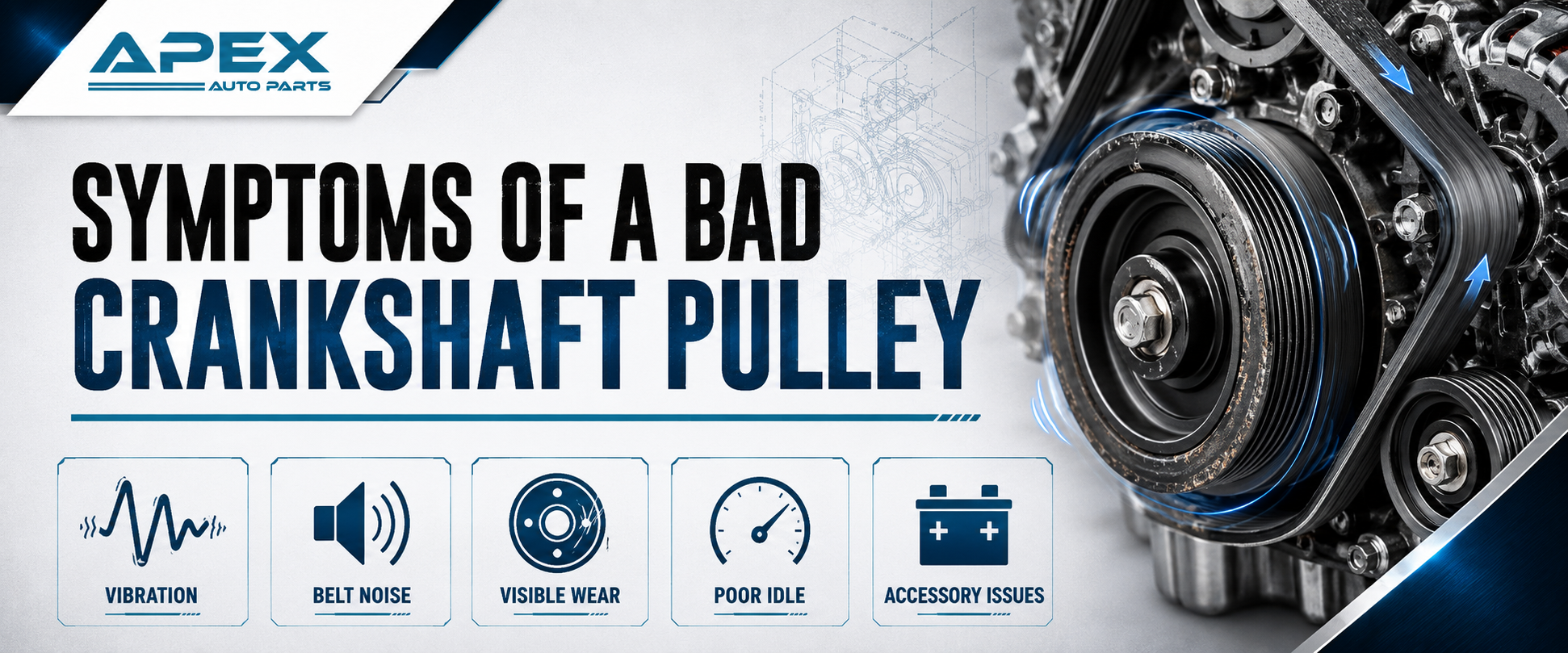
A failing Crankshaft Pulley often gives warning signs before it breaks fully. The problem is that these signs can look like belt, alternator, or tensioner problems. That is why the pulley should be checked when any front engine noise appears.
One of the first signs is a squealing or chirping noise from the belt area. This may happen when starting the engine, turning the steering, or switching on the air con. The noise may come and go at first.
Another sign is visible wobble. If the pulley does not spin straight, it may move side to side while the engine is running. This should be checked carefully by a trained person, as the belt area is dangerous when the engine is running.
A bad pulley can also cause vibration. You may feel extra shaking through the engine bay or cabin. The vibration may be worse at idle or during low speed driving.
Battery warning lights can also appear if the alternator is not being driven properly. If the belt slips or comes off, charging can stop.
Common signs include:
- Squealing noise from the belt area
- Knocking or rattling from the front of the engine
- Belt wobble while the engine runs
- Cracks in the rubber section of the pulley
- Drive belt keeps wearing out
- Burning rubber smell
- Heavy steering on some vehicles
- Battery warning light
- Air con stops working
- Engine vibration feels worse than normal
If you notice any of these signs, it is best to get the car checked soon. A pulley problem can get worse quickly.
What Happens If a Crankshaft Pulley Breaks?
If a Crankshaft Pulley breaks, the drive belt may come off. When that happens, the parts driven by the belt may stop working. The result depends on the engine layout.
If the alternator stops spinning, the battery will not charge. The car may keep running for a short while, but it can cut out once the battery loses power.
If the power steering pump stops working, the steering can become very heavy. This is dangerous, especially when turning at low speed or trying to move the car safely off the road.
If the water pump is driven by the same belt, the engine can overheat. This is one of the most serious risks. Overheating can damage the head gasket, cylinder head, and other engine parts.
A broken pulley can also damage nearby parts. The loose belt can hit hoses, wiring, covers, or pulleys. In some cases, pulley pieces can break away and cause damage.
This is why driving with a known bad Crankshaft Pulley is not a good idea. It may seem like a small noise today, but it can turn into a breakdown.
Can a Bad Crankshaft Pulley Damage the Engine?
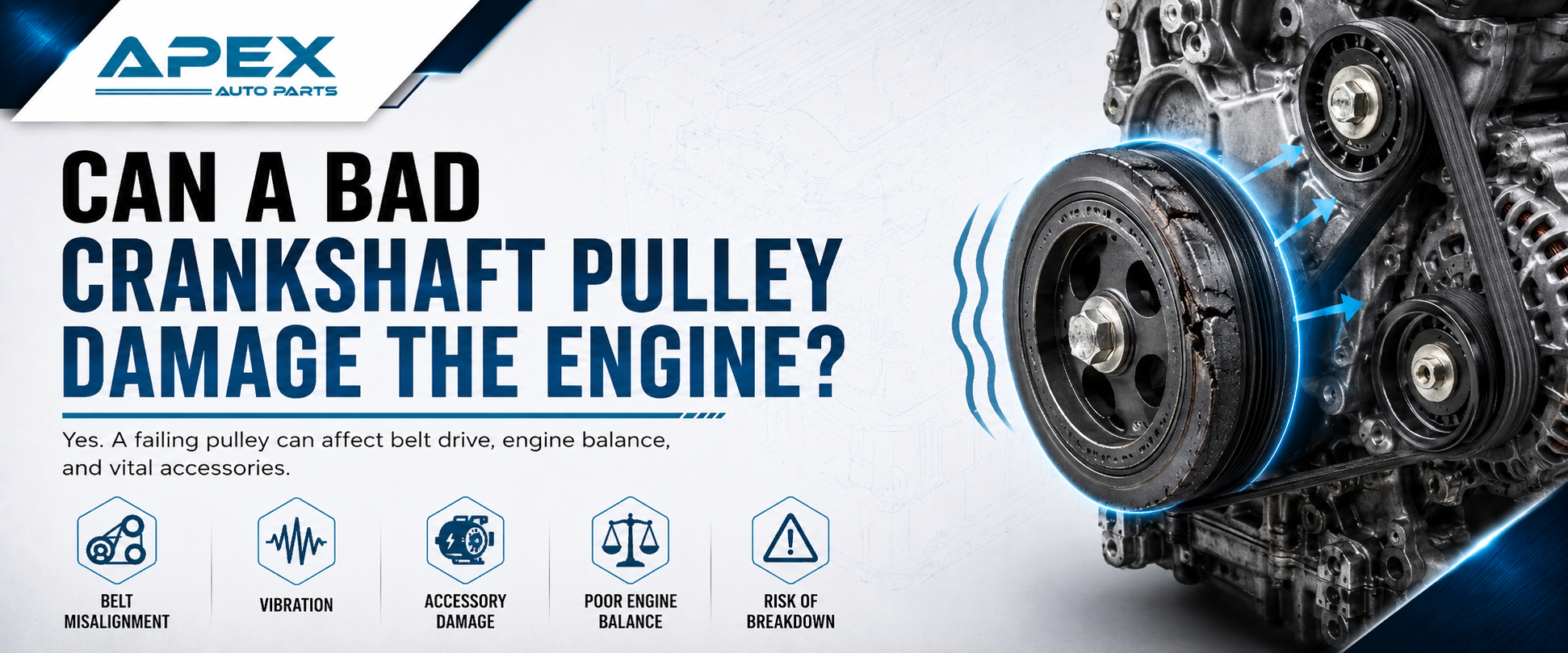
Yes, a bad Crankshaft Pulley can lead to engine damage in some cases. The pulley itself sits outside the engine, but its failure can affect other systems.
If the belt comes off and the engine overheats, serious engine damage can happen. If the pulley becomes loose, it may damage the crankshaft nose or keyway on certain engines. If the belt shreds, bits of belt can sometimes get pulled into areas where they should not be, depending on the engine design.
A failing pulley can also put strain on the belt tensioner, alternator bearing, and other pulleys. This can turn one repair into several repairs.
The best way to avoid damage is to act early. If there is belt noise, pulley wobble, or visible rubber cracking, do not wait too long.
Crankshaft Pulley Noise: What Does It Sound Like?
A bad Crankshaft Pulley can make different noises depending on the fault. The sound may be a squeal, rattle, knock, chirp, or grinding noise.
A squealing noise often points to belt slip. This may happen because the pulley is worn, the belt is loose, or the tensioner is weak.
A rattling noise can happen when the rubber damper section breaks down and the pulley parts move against each other.
A knocking sound from the front lower engine area can be more serious. It may mean the pulley is loose or moving badly.
A chirping noise can happen when the belt is not running straight. This can be caused by pulley misalignment.
Noise can also change when electrical or steering load is added. For example, switching on the air con or turning the steering may make the sound worse because the belt is under more load.
How Mechanics Check a Crankshaft Pulley?
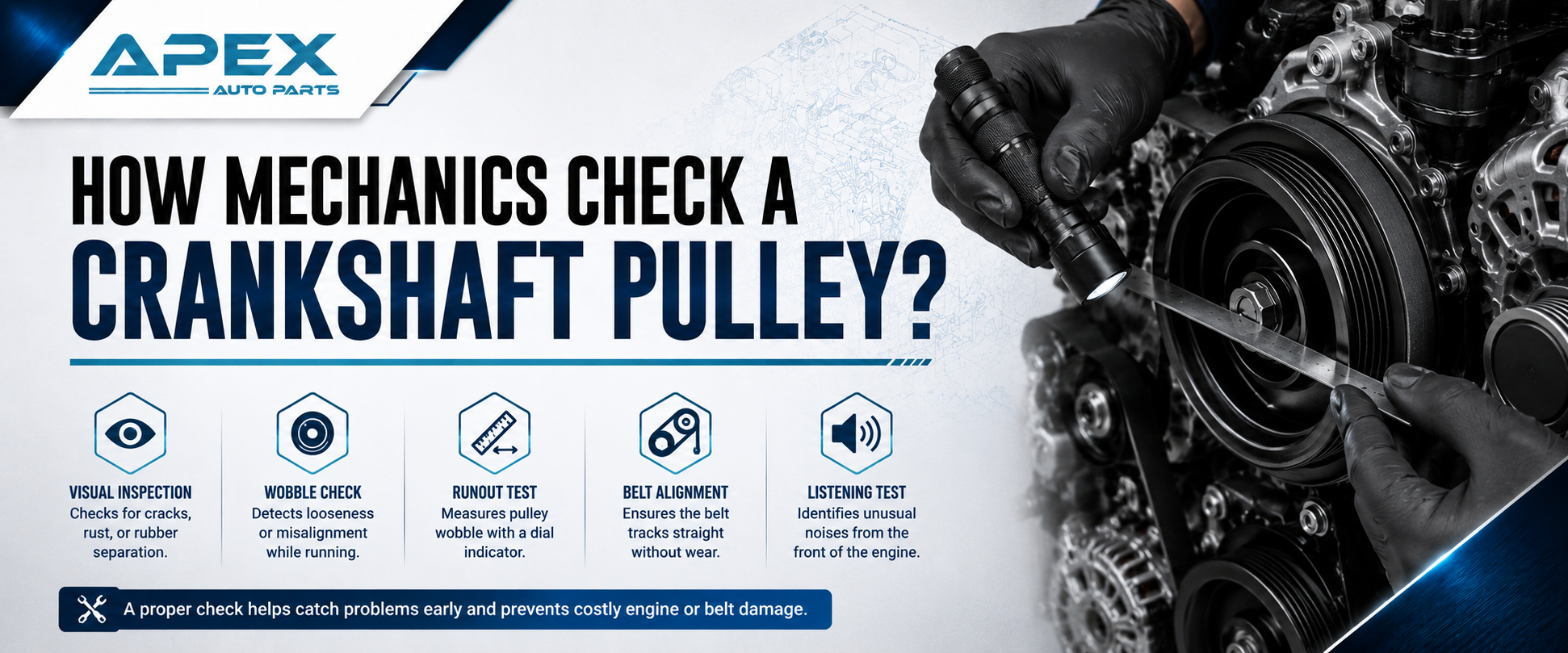
A mechanic will usually start with a visual check. They may look for cracks in the rubber, pulley wobble, belt dust, worn grooves, or missing chunks from the pulley.
They may also check the belt condition. A worn belt can be a sign of pulley trouble. If the belt edge is damaged or the ribs are worn unevenly, something may be out of line.
The tensioner and idler pulleys should also be checked. Sometimes the pulley is blamed when the tensioner is the real fault. Other times, the tensioner has failed because the crankshaft pulley has been wobbling.
A proper check may include:
- Looking for cracks in the rubber damper
- Checking pulley movement while the engine runs
- Inspecting the drive belt
- Checking belt tensioner movement
- Listening for front engine noise
- Checking for oil leaks near the pulley
- Looking for belt dust or rubber smell
- Confirming the correct pulley is fitted
A safe inspection matters. The engine belt area can be dangerous when moving, so it is better to let a trained person check it.
When Should a Crankshaft Pulley Be Replaced?
A Crankshaft Pulley should be replaced if it is cracked, wobbling, loose, noisy, or if the rubber section is separating. It should also be replaced if it has damaged grooves or if the belt is not sitting correctly.
You should not wait until the pulley fully fails. Once the rubber starts to split or the pulley starts to wobble, the part can fail without much warning.
It may also be smart to replace the belt at the same time. If the old pulley has been slipping or wobbling, the belt may already be worn. On some repairs, the tensioner and idler pulleys may also need checking or replacing.
Replacement is not just about stopping noise. It is about protecting the belt system and avoiding a breakdown.
Should the Belt Be Replaced With the Pulley?
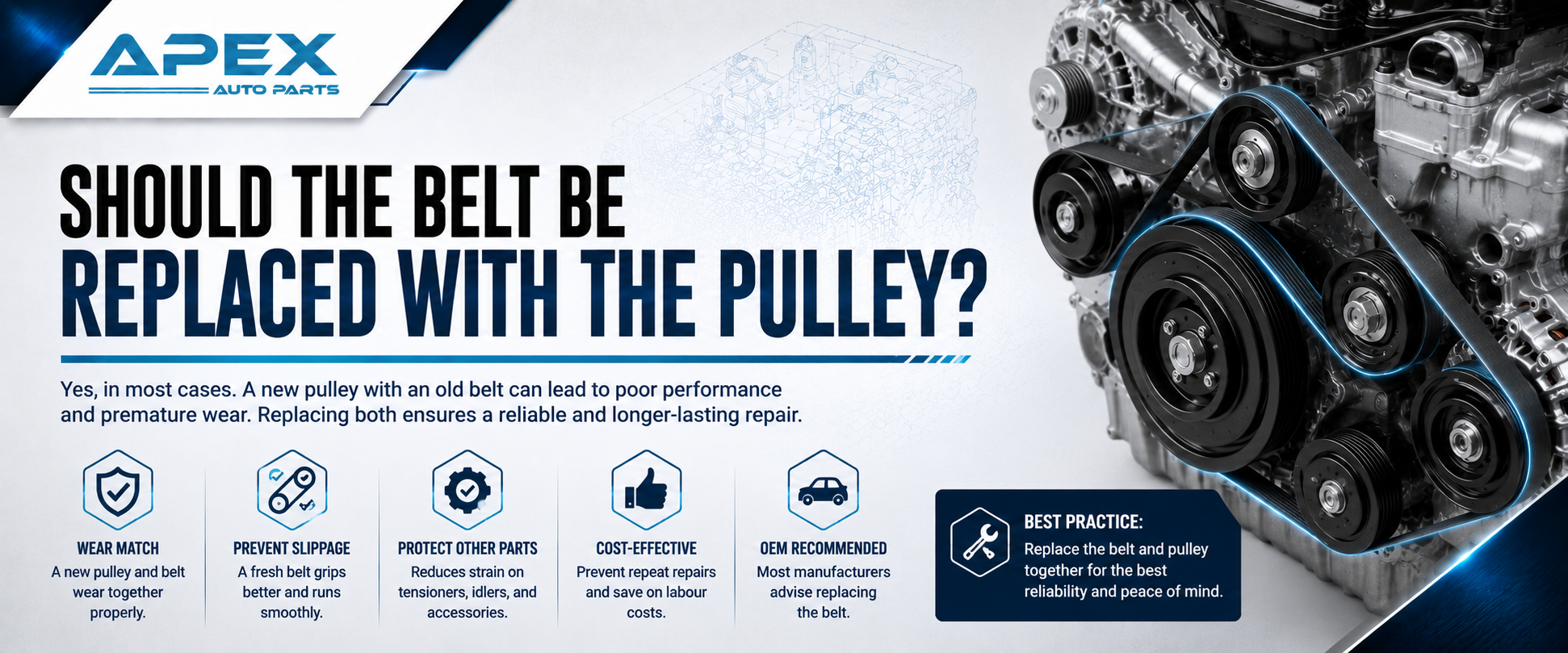
In many cases, yes. If the Crankshaft Pulley has failed, the belt may have been running badly for some time. It may be glazed, cracked, stretched, or damaged on the edges.
Fitting a new pulley with an old weak belt can lead to more noise or another failure. The belt is usually cheaper than the labor involved, so replacing it during the same job often makes sense.
The tensioner should also be checked. A weak tensioner can cause belt slip, noise, and vibration. If the tensioner is bouncing or not holding tension, the new pulley may still not run smoothly.
A good repair means checking the full belt system, not just one part.
Can You Replace a Crankshaft Pulley Yourself?
Some skilled home mechanics can replace a Crankshaft Pulley, but it is not always an easy job. The pulley bolt can be very tight. Access may be poor. Some engines need special tools to hold the crankshaft in place. Some may also need correct torque settings and locking tools.
If the pulley is not fitted correctly, it can become loose or damage other parts. This is why many drivers prefer to let a garage do the job.
If you are not sure, it is better not to guess. A simple fitting mistake can become expensive. The pulley must sit correctly, the bolt must be tightened properly, and the belt must be routed the right way.
How Long Does a Crankshaft Pulley Last?
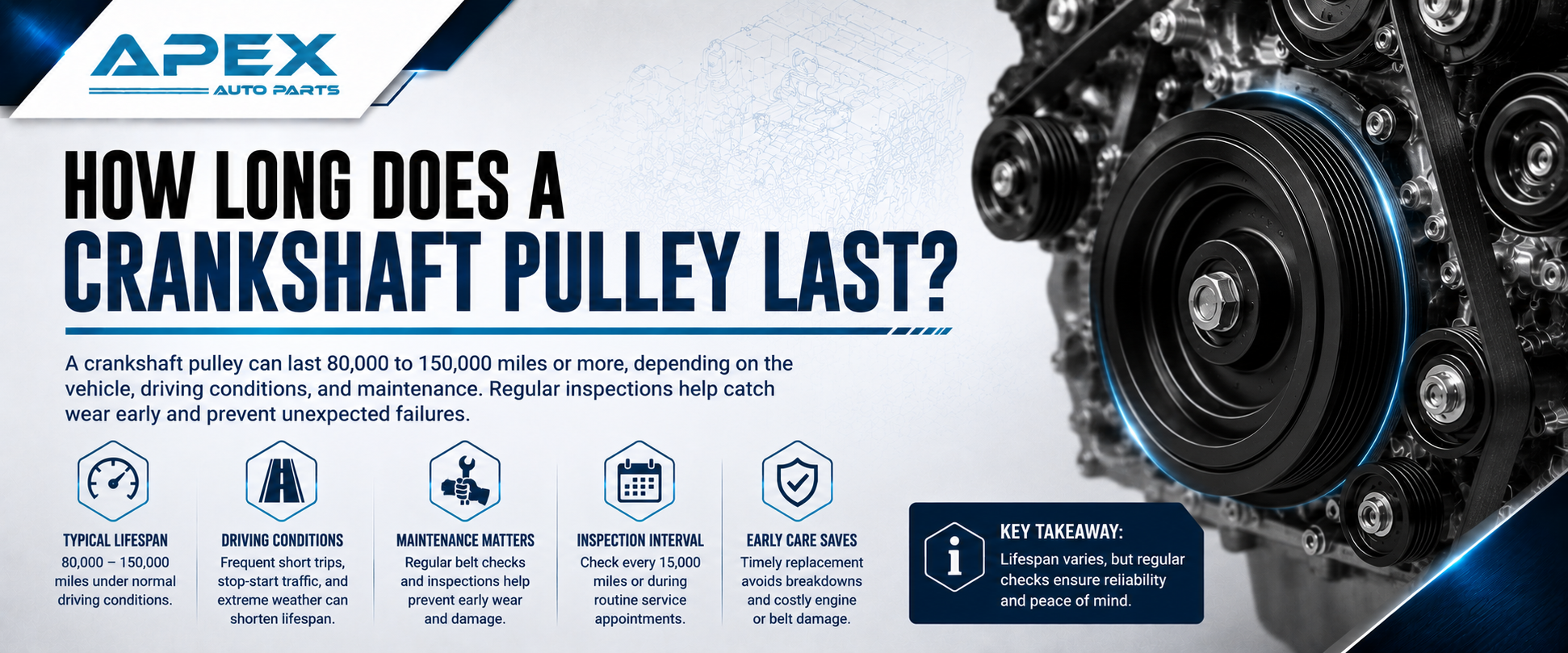
There is no single life span for a Crankshaft Pulley. Some last many years. Others fail earlier because of heat, oil leaks, hard use, poor quality parts, or belt system problems.
Cars used mostly in stop start traffic may put more stress on the belt system. Diesel engines can also put strong vibration through the pulley, especially as parts age. High mileage vehicles are more likely to show pulley wear.
A good rule is to inspect the pulley during belt changes, major services, or when front engine noise appears. If the rubber looks cracked or the pulley is wobbling, it should not be ignored.
What Affects Replacement Cost?
The cost of replacing a Crankshaft Pulley depends on the vehicle, engine layout, part quality, and labor time. Some cars have easy access. Others need more parts removed to reach the pulley.
The part price can also vary. A basic pulley may cost less, while a damped pulley for a larger diesel or premium car may cost more. Labor can sometimes cost more than the part, especially if access is tight.
Other parts may also be needed. The belt may need replacing. The tensioner may be worn. Bolts may need replacing if they are stretch bolts or single use parts on that engine.
The cheapest repair is not always the best repair. A poor quality pulley can fail early and mean paying labor twice.
Why Correct Fitment Matters?
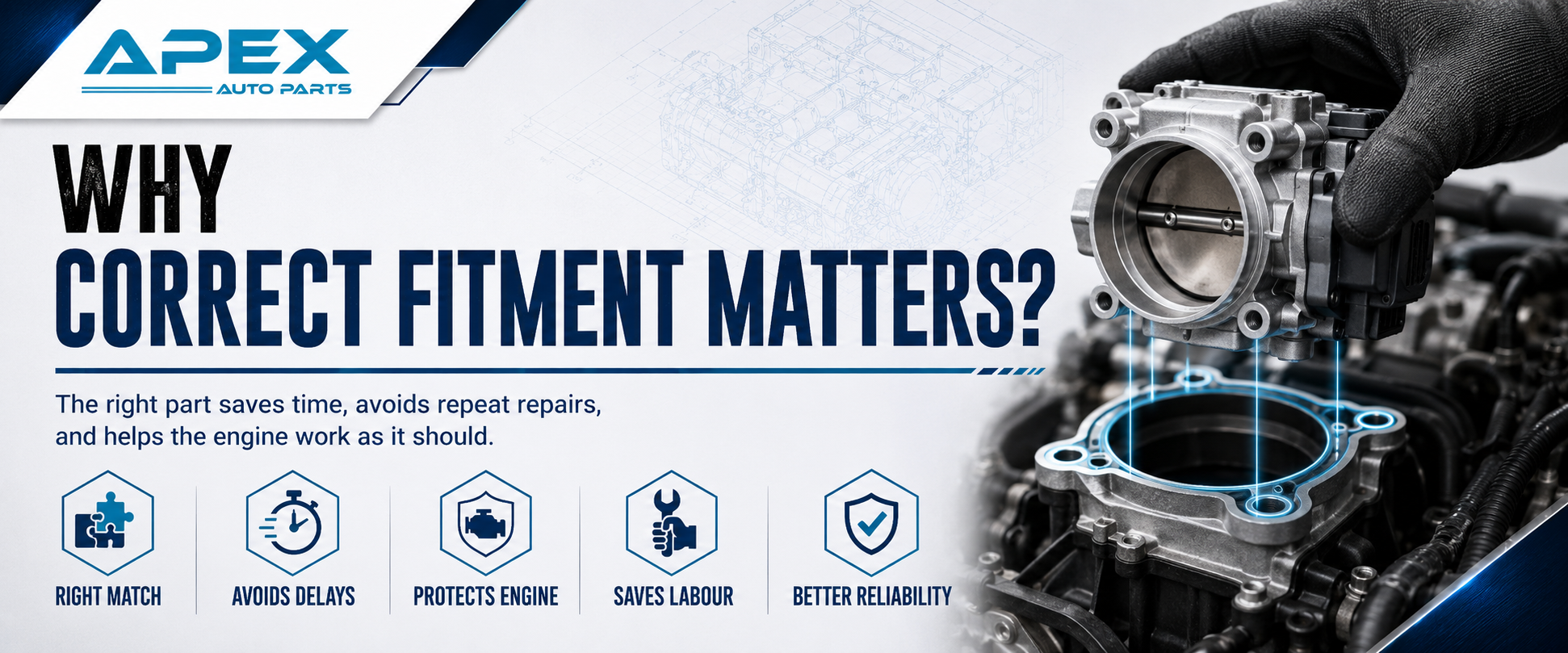
A Crankshaft Pulley must match the engine exactly. The size, groove style, offset, bolt type, and damper design all matter. A part that looks close may still be wrong.
If the pulley is the wrong size, the belt may not run at the right speed. If the offset is wrong, the belt may not line up. If the grooves are wrong, the belt may slip or wear. If the damper design is wrong, vibration may increase.
When buying a pulley, always check the vehicle details. Use the registration number, engine code, or VIN if needed. If you still are not sure, ask before ordering.
At Apex Auto Part, we understand that correct fitment matters. We sell car engine parts online in the UK and aim to support drivers and garages with reliable parts for real repairs.
How to Avoid Crankshaft Pulley Problems?
You cannot stop every part from wearing out, but you can reduce the chance of early failure. The key is to look after the belt system and fix leaks early.
Oil leaks near the front of the engine should not be ignored. Oil can damage rubber parts, including the pulley damper and belt. A small leak can slowly weaken the pulley.
Belt noise should also be checked early. If the belt squeals, slips, or runs unevenly, something is wrong. It may be the belt, tensioner, pulley, or another driven part.
Good habits include:
- Check the belt during servicing
- Replace cracked or worn belts
- Fix oil leaks near the pulley
- Listen for front engine noises
- Do not ignore pulley wobble
- Use good quality replacement parts
- Replace related worn parts at the same time
- Make sure the pulley is fitted with correct torque
- Keep the belt path clean
- Ask for fitment help if unsure
Small checks can prevent bigger problems later.
Is a Crankshaft Pulley the Same as a Harmonic Balancer?
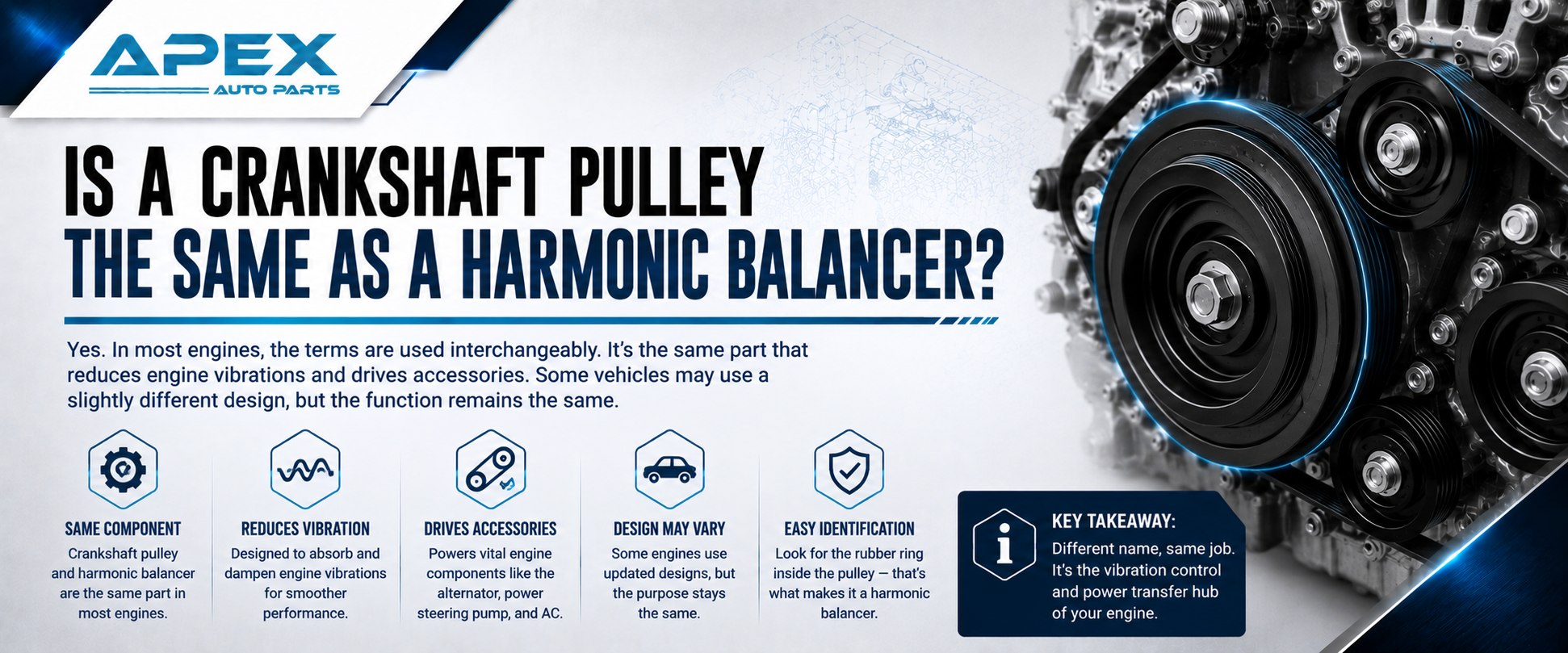
Many people use these names for the same part, but there can be small differences in wording. A Crankshaft Pulley is the pulley attached to the crankshaft that drives the belt. A harmonic balancer usually means a pulley with a rubber damper that helps reduce vibration.
On many modern cars, the crankshaft pulley and harmonic balancer are one part. This is why some sellers may list the same item under different names.
If you are buying one, do not rely only on the name. Check the part shape, fitment, engine details, and part number.
Final Thoughts
The Crankshaft Pulley may not look like the most exciting engine part, but it has a big job. It helps drive the belt system and, on many engines, helps reduce vibration. If it fails, the car can lose charging, steering support, air conditioning, and in some cases cooling.
The main signs of failure are noise, wobble, belt wear, vibration, warning lights, and visible rubber damage. These signs should not be ignored. A pulley that is starting to fail can quickly turn into a breakdown.
Replacement should be done with the correct part, proper fitting, and a full check of the belt system. The belt, tensioner, and idler pulleys may also need attention.
For UK drivers and garages, buying the right part first time saves time and money. Apex Auto Part supplies car engine parts online and supports customers looking for reliable parts for proper repairs. If your Crankshaft Pulley is worn, noisy, or damaged, it is better to deal with it early than wait for it to fail on the road.
FAQs - Crankshaft Pulley
1. What does a Crankshaft Pulley do?
A Crankshaft Pulley is fitted to the end of the crankshaft and helps drive the belt system. It can power parts like the alternator, power steering pump, air conditioning pump, and sometimes the water pump. On many engines, it also helps reduce vibration so the engine runs smoother.
2. What are the symptoms of a bad Crankshaft Pulley?
Common signs of a bad Crankshaft Pulley include belt squeal, rattling noise, pulley wobble, engine vibration, battery warning light, heavy steering, and uneven belt wear. You may also notice a burning rubber smell. If the pulley is damaged, it should be checked before it fails fully.
3. Can I drive with a bad Crankshaft Pulley?
Driving with a bad Crankshaft Pulley is not a good idea. If it fails, the drive belt may come off. This can stop the alternator, power steering, air conditioning, and sometimes the water pump. The car may become unsafe or overheat, depending on the engine layout.
4. Why does a Crankshaft Pulley make noise?
A Crankshaft Pulley can make noise if the rubber damper is cracked, the pulley is loose, the belt is slipping, or the grooves are worn. The sound may be a squeal, chirp, rattle, or knock. Noise from the front of the engine should be checked early.
5. How long does a Crankshaft Pulley last?
A Crankshaft Pulley can last many years, but its life depends on mileage, heat, oil leaks, belt condition, and part quality. High mileage cars and diesel engines may wear the pulley faster. If the rubber is cracked or the pulley wobbles, replacement is usually needed.
6. Is a Crankshaft Pulley expensive to replace?
The cost to replace a Crankshaft Pulley depends on the car, engine access, part type, and labor time. Some are easy to reach, while others take longer. The belt, tensioner, or bolts may also need replacing, so the full belt system should be checked.
7. Can a bad Crankshaft Pulley damage the engine?
Yes, a bad Crankshaft Pulley can lead to engine damage in some cases. If the belt comes off and the water pump stops, the engine may overheat. A loose pulley can also damage nearby parts. Fixing pulley problems early helps avoid bigger repair bills.
8. Should I replace the belt with the Crankshaft Pulley?
It is often a good idea to replace the belt when fitting a new Crankshaft Pulley. If the pulley has been wobbling or slipping, the belt may already be worn or damaged. The tensioner and idler pulleys should also be checked during the same repair.
9. Is a Crankshaft Pulley the same as a harmonic balancer?
On many modern cars, a Crankshaft Pulley and harmonic balancer are the same part. The pulley drives the belt, while the damper section helps reduce vibration. Some people use both names for the same item, so always check fitment and part details before buying.
10. Where can I buy a Crankshaft Pulley in the UK?
You can buy a Crankshaft Pulley online from a UK based supplier like Apex Auto Part. Before ordering, check your VIN, registration number, engine size, and part details. Correct fitment is very important because the pulley must match the engine, belt layout, and vehicle model.
Reference:
Continental Engine Parts
Gates Corporation