
 info@apexautoparts.co.uk
 +44 203 915 7535
 Safe & Fast Shipping
 Whish List
 Compare
 Sign In

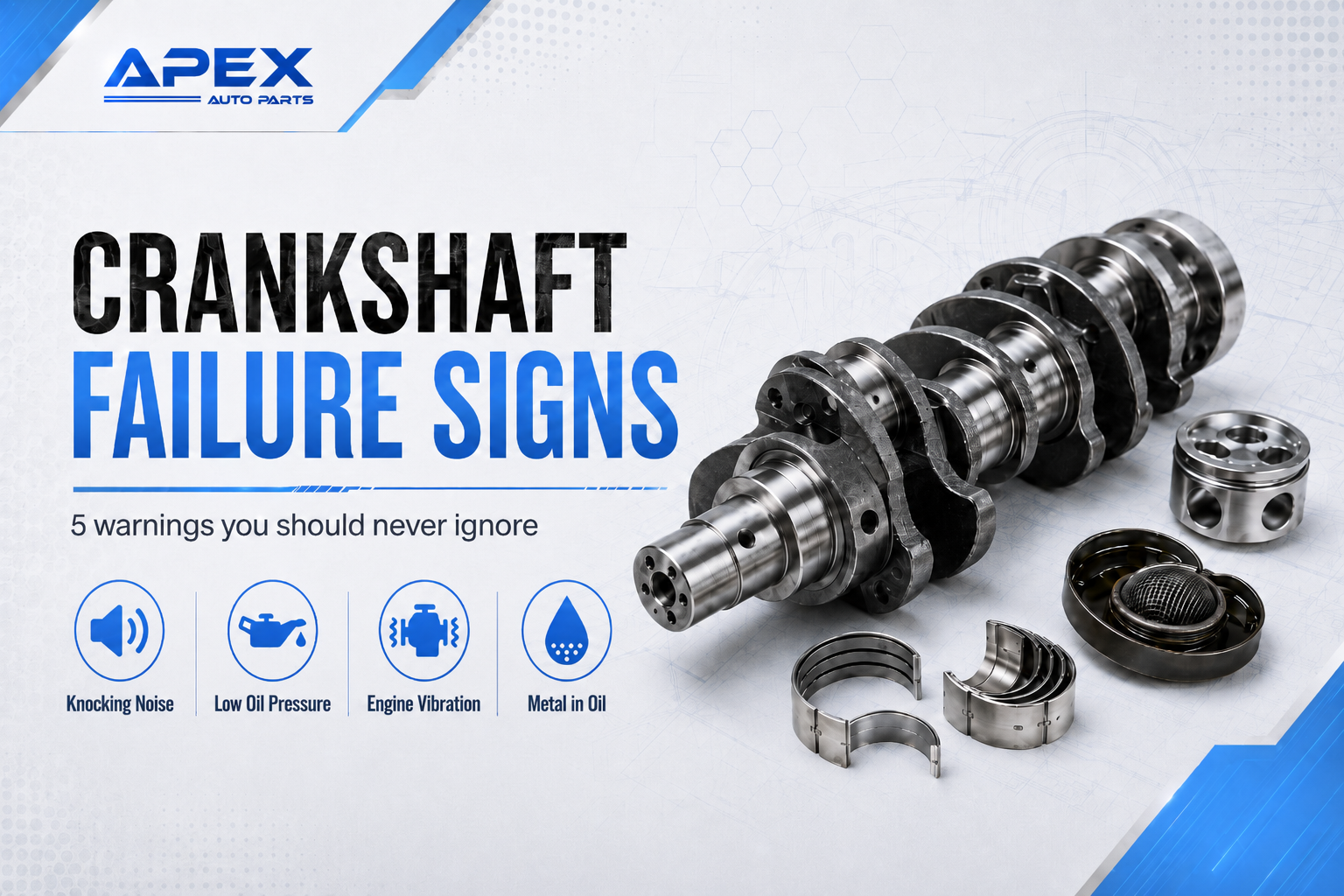
The crankshaft is one of the most important parts inside your engine. It sits deep in the engine block and converts the up-and-down motion of the pistons into rotational power. That power then passes through the gearbox and drives the wheels.
Because the crankshaft operates under heavy loads, heat, oil pressure, and constant movement, even a small problem can lead to serious engine damage if ignored. A worn bearing, low oil pressure, poor lubrication, or metal contamination can all affect the crankshaft and the surrounding parts.
The problem is that crankshaft failure does not always start with a dramatic breakdown. In many cases, the engine gives warning signs first. You may hear a deep knocking noise, see low oil pressure, feel stronger vibration, or notice metal particles in the oil. These signs should never be treated as normal engine wear.
At Apex Auto Parts, we supply crankshafts and related engine components to drivers, garages, mechanics, rebuilders, and trade buyers across the UK. We often see the same issue again and again. The crankshaft gets blamed, but the real cause may be poor oil flow, worn bearings, overheating, or a failed oil pump. That is why proper diagnosis matters before replacing parts.
This guide explains the main signs of crankshaft failure, their causes, and what to check before the damage spreads.
What Does a Crankshaft Do?
The crankshaft is the main rotating shaft inside the engine. It connects to the pistons through connecting rods. When the pistons move up and down, the crankshaft turns that movement into rotation.
That rotation is what helps the vehicle move. Without the crankshaft, the engine cannot send power to the transmission.
A healthy crankshaft needs:
- Clean engine oil
- Correct oil pressure
- Good bearings
- Correct engine balance
- Proper fitting during rebuild work
- Good quality supporting parts
- No overheating or oil starvation
The crankshaft does not work alone. It relies on bearings, oil passages, connecting rods, pistons, seals, and the oil pump. If one of these parts fails, the crankshaft can also be damaged.
That is why crankshaft failure is often not just one part failing. It is usually a sign that something deeper has gone wrong inside the engine.
1. Knocking or Deep Engine Noise
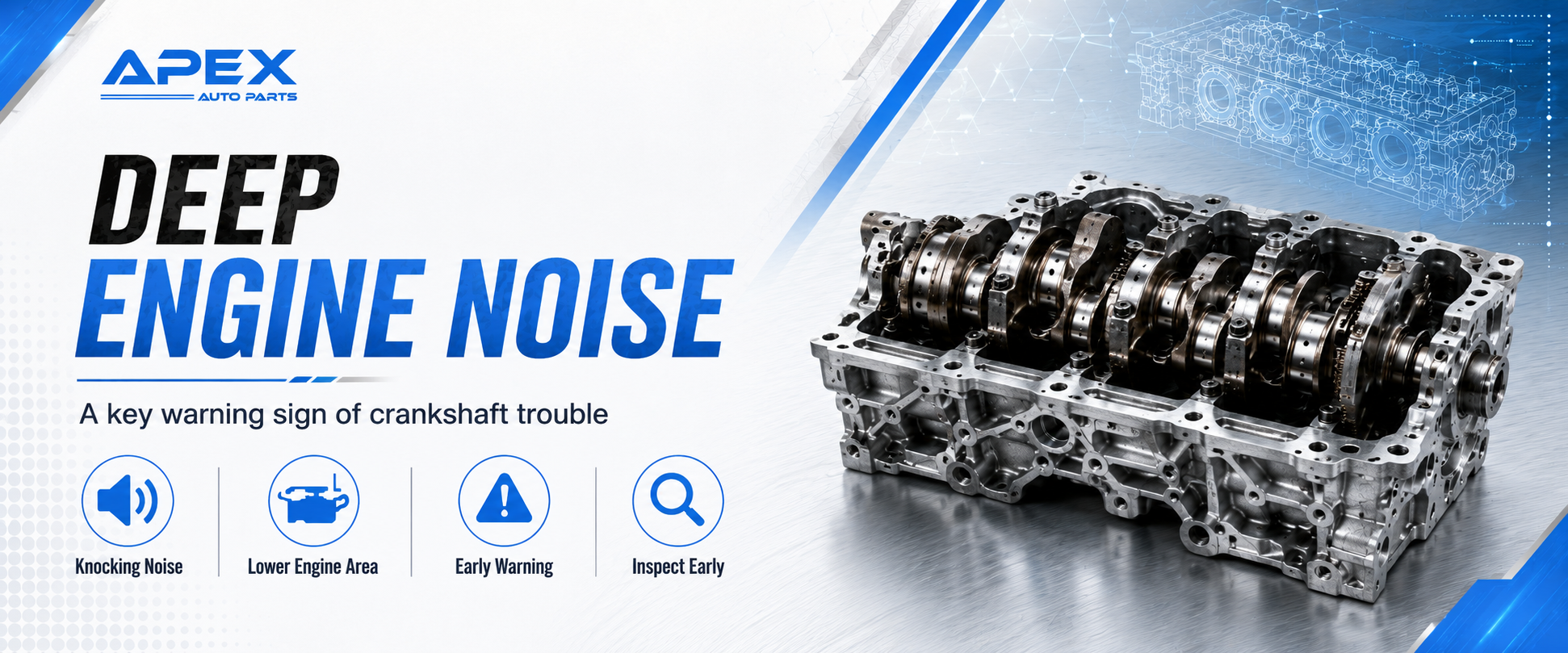
One of the clearest signs of crankshaft trouble is a deep knocking or rumbling noise from the lower part of the engine.
This is different from light ticking at the top of the engine. A crankshaft-related knock often sounds heavier. It may come from the bottom end of the engine and may get louder when you press the accelerator.
This type of noise can be linked to:
- Worn crankshaft bearings
- Damaged crankshaft journals
- Low oil pressure
- Poor lubrication
- Excessive crankshaft movement
- Internal engine wear
The crankshaft journals are the smooth surfaces where the bearings sit. If these surfaces become worn, scored, or damaged, the bearing clearance can become too large. When that happens, the crankshaft may move beyond its normal range, causing a knocking sound.
A deep knocking noise should not be ignored. If the engine is still running, further driving can worsen the damage. What starts as bearing wear can turn into crankshaft scoring, rod damage, oil pressure loss, or full engine failure.
If you hear a heavy knock from the lower engine area, stop guessing and have the engine properly checked.
2. Low Oil Pressure
The crankshaft depends on engine oil. Oil creates a thin protective layer between the crankshaft and bearings. This stops metal parts from rubbing directly against each other.
When oil pressure drops, the crankshaft and bearings may not get enough protection. This can cause heat, friction, wear, and serious damage.
Low oil pressure may be caused by:
- Low oil level
- Old or dirty oil
- Worn crankshaft bearings
- Failed oil pump
- Blocked oil pickup
- Oil contamination
- Internal engine wear
- Wrong oil grade
If the oil pressure warning light comes on, do not treat it as a small warning. It can mean the engine is not getting proper lubrication. Driving with low oil pressure can quickly damage the crankshaft.
Low oil pressure becomes even more serious when accompanied by a knocking noise, vibration, smoke, or poor running. In that case, the crankshaft and bearings should be checked as part of the diagnosis.
A good mechanic may check the oil level, oil condition, oil pressure reading, oil filter, oil pump, and bearing condition before deciding what repair is needed.
3. Excessive Engine Vibration
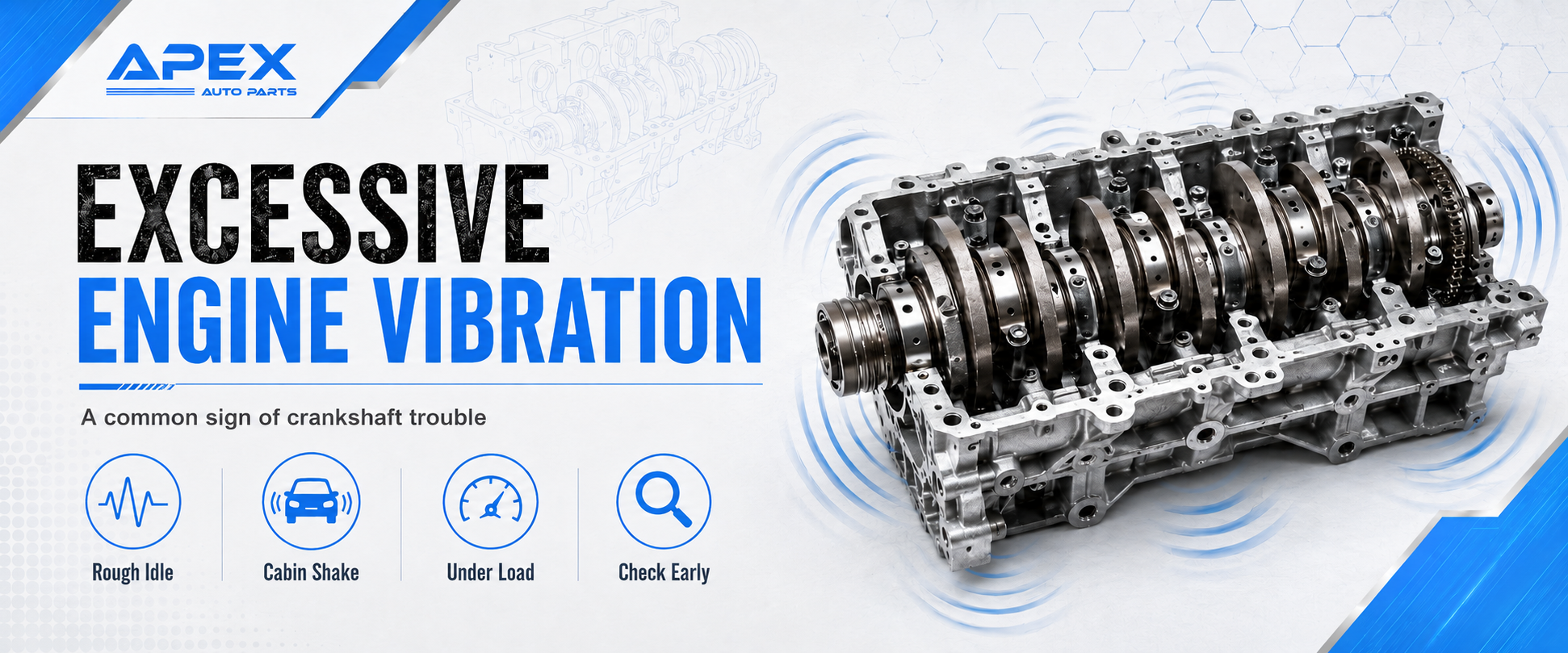
A crankshaft must rotate smoothly. If it becomes bent, worn, cracked, badly balanced, or affected by bearing wear, the engine may start to vibrate more than normal.
You may feel vibration:
- At idle
- When accelerating
- Through the steering wheel
- Through the pedals
- Through the cabin
- When the engine is under load
Some vibration can come from engine mounts, misfires, flywheel problems, or worn pulleys. But if vibration appears with deep knocking, low oil pressure, or metal in the oil, the crankshaft should be checked.
A damaged crankshaft can throw off engine balance. This puts more stress on bearings, connecting rods, pistons, seals, and the engine block. If left too long, the vibration can damage more than just the crankshaft.
This is why vibration should not be ignored, especially if the engine used to run smoothly and now feels rough or unstable.
4. Metal Particles in the Oil
Metal in the oil is one of the most serious warning signs of internal engine wear.
Small metal particles can come from bearings, crankshaft journals, camshaft parts, timing parts, piston rings, or other moving components. If the crankshaft or bearings are wearing, metal debris can move through the oil system and damage other parts.
You may notice metal contamination during:
- Oil change
- Oil filter inspection
- Sump removal
- Engine strip down
- Magnetic drain plug check
- Oil analysis
If metal shavings are found in the oil, the engine should be checked before it is driven further. Metal particles can travel through the oil passages, causing further damage. They can affect the oil pump, bearings, turbocharger, camshaft, timing components, and other moving parts.
A crankshaft with damaged journals may require polishing, grinding, or replacement, depending on the extent of wear. Bearings should also be replaced if they are worn or damaged.
At Apex Auto Parts, customers often contact us for crankshafts, bearings, gaskets, seals, oil pumps, pistons, and rebuild parts after metal has been found in the oil. The important point is to find the cause before rebuilding. If the oil system remains contaminated, new parts can fail prematurely.
5. Sudden Loss of Engine Performance
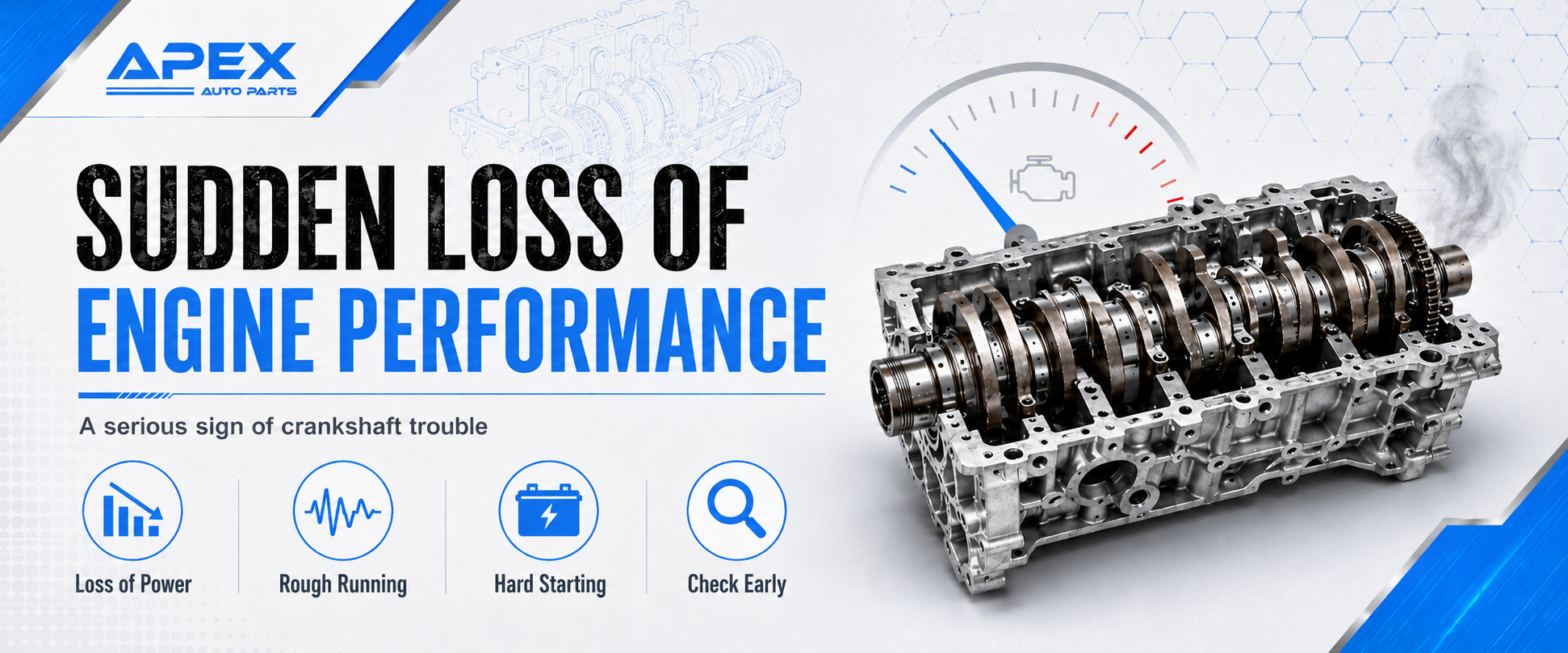
Crankshaft damage can also show as poor engine performance. This usually happens when the problem has moved beyond early wear.
The engine may feel weak, rough, slow to start, or unstable. In more serious cases, it may stop running completely.
Signs can include:
- Loss of power
- Rough running
- Hard starting
- Engine misfire
- Poor acceleration
- Engine cutting out
- Strong vibration
- Full engine seizure
If the crankshaft is badly worn or the bearings have failed, the engine cannot rotate smoothly. This can reduce compression, affect timing, damage connecting rods, and place extra load on many internal parts.
A seized engine is one of the worst outcomes. This can happen when oil starvation or bearing failure becomes severe. At that stage, the repair may need a replacement crankshaft, bearings, rods, pistons, oil pump, seals, and sometimes a full engine rebuild or engine replacement.
This is why early signs matter. A small knock today can become a locked engine tomorrow.
What Causes Crankshaft Failure?
Crankshaft failure usually occurs when something goes wrong with lubrication, heat control, bearing support, or engine assembly.
Common causes include:
- Poor lubrication
- Low oil pressure
- Running the engine low on oil
- Worn crankshaft bearings
- Dirty or contaminated oil
- Blocked oil pickup
- Failed oil pump
- Overheating
- Incorrect bearing clearance
- Poor rebuild work
- Wrong torque settings
- Cheap or poor quality parts
- Severe engine knock
- High mileage wear
- Lack of servicing
A crankshaft is strong, but it is not indestructible. It needs the right support from bearings and oil. If the bearings wear or oil pressure drops, the crankshaft can be damaged quickly.
In rebuild work, correct measurements are very important. Bearing clearances, crankshaft journal condition, torque settings, and oil flow must all be right. If tolerances are wrong, the engine may fail even with new parts fitted.
This is why crankshaft work should not be rushed.
Why Early Diagnosis Matters?
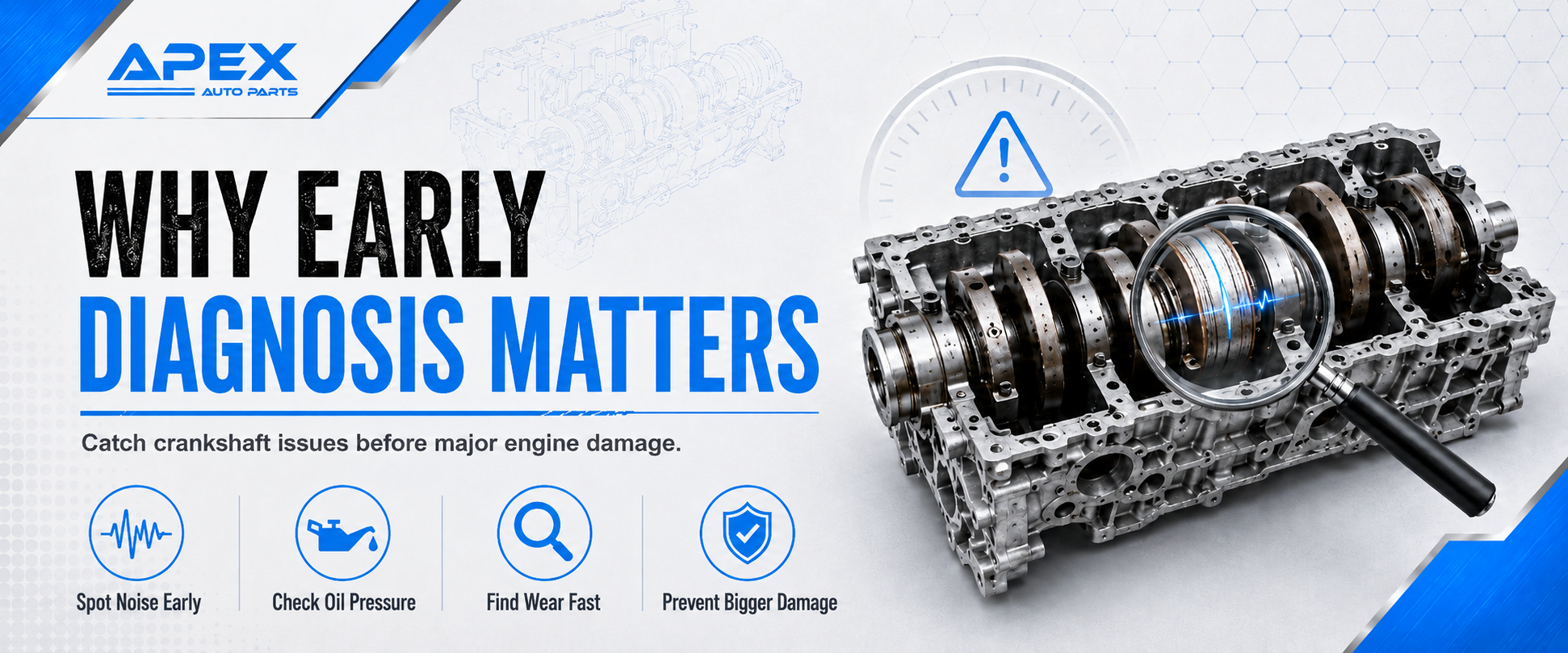
Crankshaft problems rarely fix themselves. Once wear starts, it often gets worse with every mile.
Early diagnosis can help prevent:
- Bearing failure
- Crankshaft scoring
- Connecting rod damage
- Oil starvation
- Engine block damage
- Turbo damage from metal contamination
- Full engine seizure
- Higher repair costs
A mechanic should not replace the crankshaft without checking the reason it failed. If the oil pump is weak, the new crankshaft may suffer the same damage. If the oil pickup is blocked, new bearings can fail again. If metal debris remains in the engine, new parts can be damaged quickly.
A proper check may include:
- Listening for engine noise
- Checking oil pressure
- Inspecting oil condition
- Cutting open the oil filter
- Checking for metal debris
- Removing the sump
- Inspecting bearings
- Measuring crankshaft journals
- Checking the oil pump and pickup
- Inspecting related engine parts
This is the difference between replacing a part and properly fixing the engine.
Can a Crankshaft Be Repaired?
Sometimes a crankshaft can be repaired. Sometimes it must be replaced.
If the crankshaft journals are lightly marked, they may be polished. If they are more worn, they may need grinding and oversized bearings. If the crankshaft is cracked, badly scored, bent, or too far out of tolerance, replacement is usually the better option.
The right choice depends on:
- Level of wear
- Journal condition
- Crankshaft straightness
- Cracks or heat damage
- Engine type
- Availability of bearings
- Cost of machining
- Cost of replacement crankshaft
- Vehicle value
- Repair goal
A forged crankshaft, cast crankshaft, or nitride crankshaft may be used depending on the engine and application. Some vehicles need a direct replacement. Others may need a stronger setup for rebuild or performance use.
At Apex Auto Parts, we supply a wide range of crankshafts and supporting rebuild parts for many engine codes and vehicle makes. This helps garages and rebuilders source the correct part for the job instead of guessing.
Parts Often Needed With Crankshaft Repair
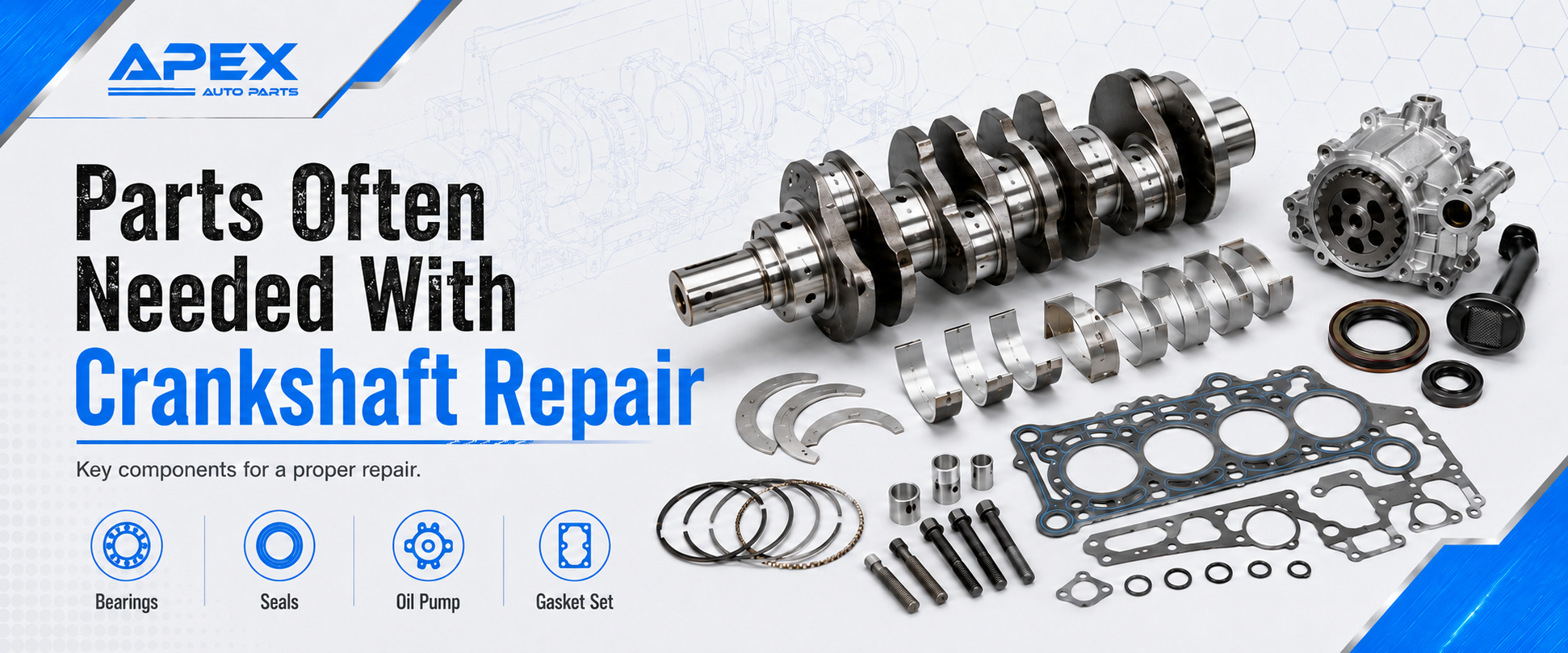
Crankshaft repair is rarely just about the crankshaft. If the crankshaft has failed, related parts should also be checked.
Common supporting parts include:
- Main bearings
- Big end bearings
- Connecting rods
- Pistons
- Piston rings
- Oil pump
- Gasket set
- Crankshaft seals
- Timing chain kit
- Timing belt kit
- Cylinder head bolts
- Sump gasket
- Oil cooler
- Filters and fresh oil
Replacing the crankshaft without checking these parts can lead to repeat failure. For example, if damaged bearings are replaced but the oil pump is weak, oil pressure may still be poor. If metal debris remains inside the oil cooler or oil passages, it may damage new parts.
A good repair plan considers the entire engine system, not just the failed part.
When Should You Stop Driving?
You should stop driving and get the car checked if you notice serious signs such as deep knocking, a low oil pressure warning, metal in the oil, sudden loss of power, or strong vibration.
Driving further can turn repairable damage into full engine failure.
Stop driving if you notice:
- Oil pressure warning light
- Heavy knocking from the engine
- Engine seizure symptoms
- Metal particles in oil
- Strong burning smell
- Sudden rough running
- Severe vibration
- Engine overheating
If the engine is making a heavy bottom end knock, do not keep driving to “see if it clears.” It will not be clear by itself. It will usually get worse.
How Apex Auto Parts UK Can Help?
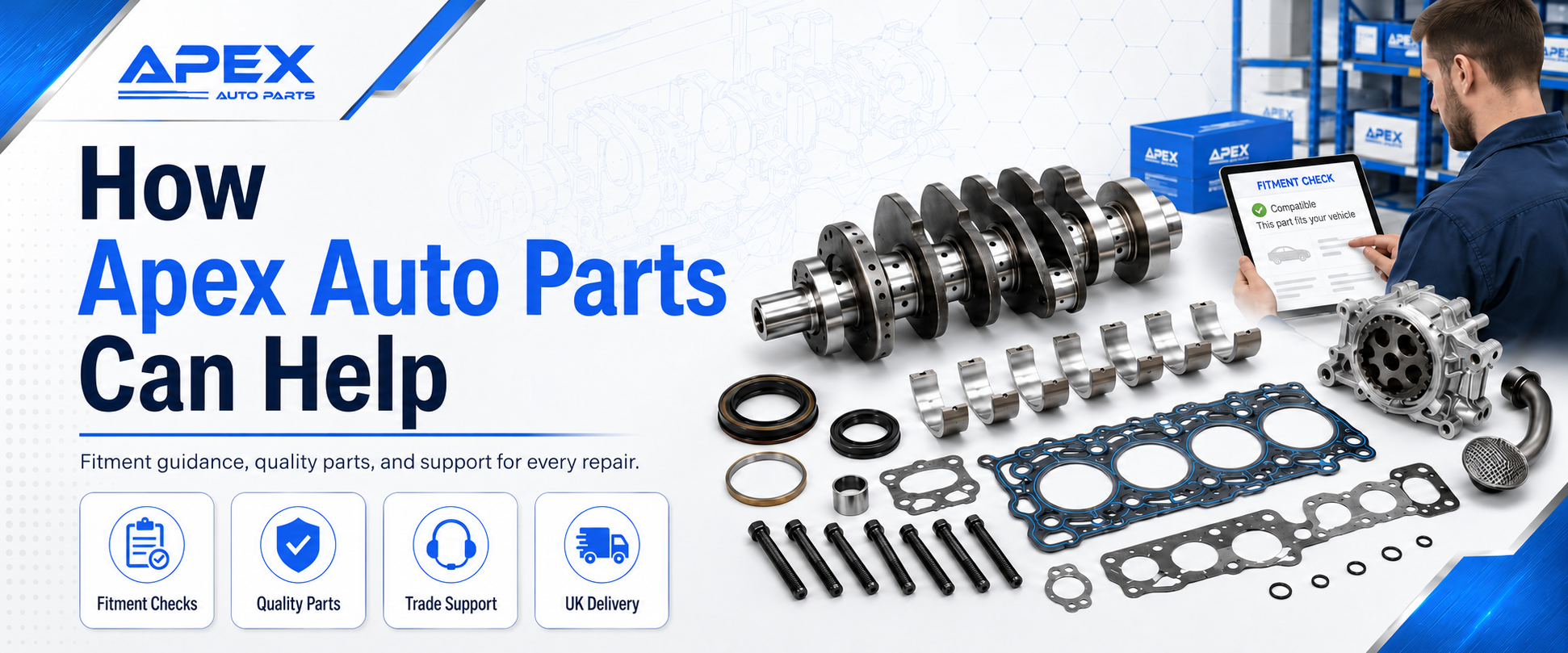
Choosing the right crankshaft and supporting parts can be difficult because engine codes, bearing sizes, crankshaft types, and part numbers can vary.
Apex Auto Parts helps drivers, garages, trade buyers, mechanics, and rebuild specialists source the right engine parts for repairs and rebuilds. Our range includes crankshafts, bearings, pistons, piston rings, oil pumps, gasket sets, timing parts, seals, cylinder heads, valves, rocker arms, lifters, and other engine components.
For crankshaft-related repairs, customers can provide the vehicle registration, VIN, engine code, old part number, or, where possible, photos of the part. This helps confirm fitment and reduce wrong orders.
Whether you need a direct replacement crankshaft, supporting rebuild parts, or help checking what fits your engine, our team can help guide you in the right direction.
Final Thoughts
Crankshaft failure is one of the engine problems you should never ignore. The crankshaft sits at the center of the engine’s movement, so damage can quickly spread to bearings, rods, pistons, the oil pump, seals, and the engine block.
The main warning signs are a deep knocking noise, low oil pressure, excessive vibration, metal shavings in the oil, and a sudden loss of engine performance. These signs may start small, but they can lead to major engine damage if the car is kept running.
The smart repair starts with diagnosis. Find out why the crankshaft failed, check oil pressure, inspect bearings, look for metal contamination, and use quality parts that match the engine correctly.
At Apex Auto Parts, we stock a wide range of crankshafts and supporting engine components for many engine codes, applications, and leading manufacturers. From forged and nitride crankshafts to cast crankshafts and full rebuild support parts, we can supply exactly what is needed for the job.
FAQs
1. What are the first signs of crankshaft failure?
The first signs of crankshaft failure usually include deep knocking noise, low oil pressure, strong engine vibration, metal particles in the oil, and poor engine performance. These symptoms often mean the crankshaft, bearings, or oil system may be wearing badly and should be checked quickly.
2. Can I drive with a bad crankshaft?
You should not keep driving with a bad crankshaft. If the engine makes a knocking noise, has low oil pressure, or shows metal in the oil, further driving can worsen the damage. It can lead to bearing failure, rod damage, engine seizure, or a full rebuild.
3. What causes crankshaft failure?
Crankshaft failure is often caused by poor lubrication, low oil pressure, worn bearings, dirty oil, overheating, poor rebuild work, or wrong bearing clearance. In many cases, the crankshaft is damaged because another engine problem was ignored for too long.
4. What does crankshaft knocking sound like?
Crankshaft knocking usually sounds like a deep, heavy knock from the lower part of the engine. It may get louder when you rev the engine or drive under load. This sound is often linked to worn bearings, damaged journals, or poor oil pressure.
5. Can low oil pressure damage the crankshaft?
Yes, low oil pressure can badly damage the crankshaft. The crankshaft needs clean oil to form a protective layer between it and the bearings. Without enough oil pressure, metal parts can rub together, causing heat, wear, scoring, and serious internal engine damage.
6. Is metal in engine oil a sign of crankshaft damage?
Metal in engine oil can indicate crankshaft, bearing, or other internal engine damage. If metal shavings are found in the oil or oil filter, the engine should be inspected properly. Driving further can spread metal through the oil system and damage more parts.
7. Can a damaged crankshaft be repaired?
A damaged crankshaft can sometimes be repaired if the wear is light. It may be polished or ground with matching bearings. If the crankshaft is cracked, bent, badly scored, or outside safe limits, replacement is usually the better option.
8. What parts should be checked with crankshaft failure?
When crankshaft failure is suspected, the bearings, connecting rods, pistons, oil pump, oil pickup, seals, gaskets, timing parts, and oil filter should be checked. Crankshaft problems are often linked to reduced oil flow or internal engine wear.
9. How do mechanics diagnose crankshaft problems?
A mechanic may check engine noise, oil pressure, oil condition, metal particles, bearing wear, crankshaft journals, oil pump condition, and engine vibration. In some cases, the sump or engine must be opened to properly inspect the crankshaft and bearings.
10. Can Apex Auto Parts UK help with crankshaft replacement parts?
Yes, Apex Auto Parts UK can help supply crankshafts and supporting engine parts for repair and rebuild jobs. This can include bearings, pistons, piston rings, oil pumps, gasket sets, seals, timing parts, and other engine components matched to your vehicle details.
References:
Car.co.uk
Part Catalog