
 info@apexautoparts.co.uk
 +44 203 915 7535
 Safe & Fast Shipping
 Whish List
 Compare
 Sign In

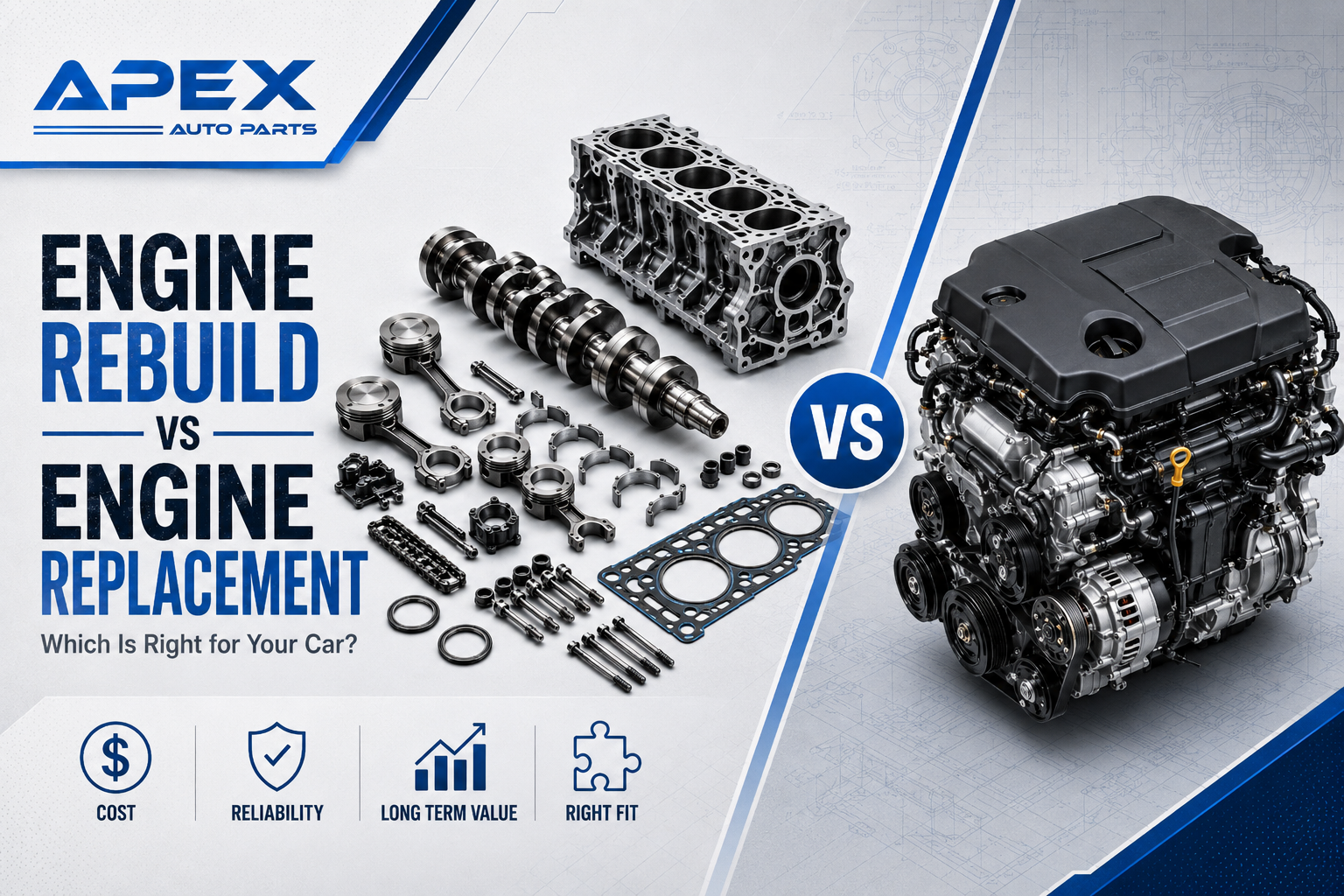
When an engine starts failing, most drivers face one big question. Should you rebuild the engine or replace it?
It is not always an easy choice. Some engines can be saved with a proper engine rebuild. Others are too badly damaged and need a full engine replacement. The right answer depends on the fault, the engine condition, the value of the car, the cost of labour, and how long you want to keep the vehicle.
Many drivers panic when they hear words like low compression, head gasket failure, timing chain damage, oil pressure loss, turbo failure, or engine knocking. These problems can sound serious because they are serious. But serious does not always mean the car is finished.
Sometimes the engine only needs the damaged parts replaced and the worn areas repaired. Other times, replacing the full engine is faster, safer, and better value.
At Apex Auto Parts, we deal with this kind of decision every day. Garages, mechanics, rebuilders, trade buyers, and drivers often need engine parts, gasket sets, pistons, timing kits, oil pumps, bearings, seals, cylinder heads, valves, and full rebuild parts. The main goal is always the same. Find the real fault, choose the right repair route, and avoid wasting money on the wrong fix.
This guide explains engine rebuild VS engine replacement in simple words. It will help you understand what each option means, when each one makes sense, and what to check before spending money.
What Is an Engine Rebuild?
An engine rebuild means the engine is taken apart, checked, cleaned, repaired, and put back together with new or reconditioned parts where needed.
The engine is not simply swapped out. The original engine is repaired from the inside. A mechanic or engine rebuild specialist checks the damaged and worn parts, then rebuilds the engine so it can run properly again.
A rebuild may include replacing parts such as:
- Pistons
- Piston rings
- Bearings
- Gaskets
- Seals
- Timing chain kit
- Timing belt kit
- Oil pump
- Water pump
- Valves
- Lifters
- Rocker arms
- Cylinder head parts
- Connecting rods are damaged
- Crankshaft parts, if worn
The level of work depends on the damage. A light rebuild may only involve the top part of the engine. A full rebuild can involve the cylinder head, block, pistons, crankshaft, bearings, timing system, oil system, and seals.
A proper engine rebuild is not just replacing one broken part. It is about checking why the engine failed and making sure the same problem does not return.
For example, if an engine failed because of low oil pressure, replacing only the damaged bearings may not be enough. The oil pump, oil pickup, oil passages, and service history should also be checked. If the cause is ignored, the rebuilt engine may fail again.
What Is Engine Replacement?
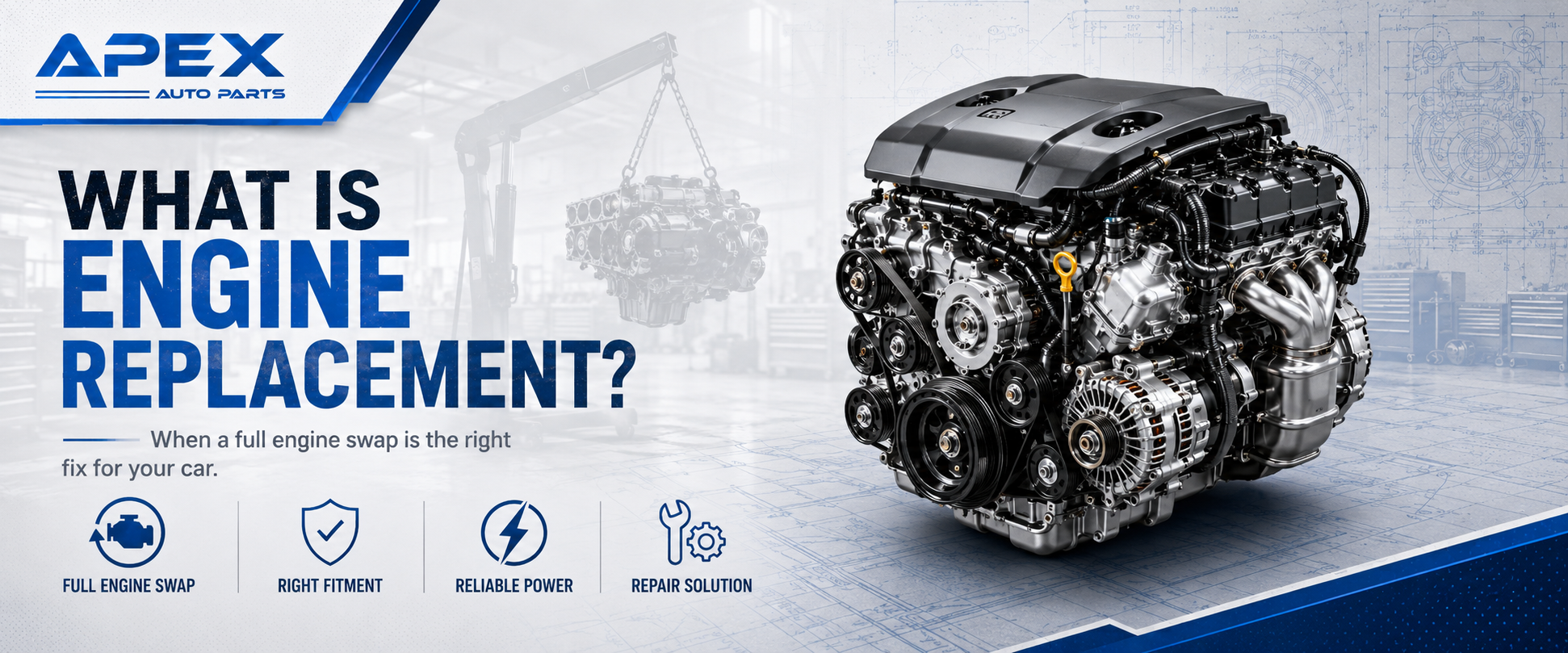
Engine replacement means the damaged engine is removed and another engine is fitted in its place. The replacement engine may be used, reconditioned, rebuilt, or new, depending on the budget and the vehicle.
This option is common when the original engine has severe damage. If the block is cracked, the crankshaft is badly damaged, the engine has seized, or repair costs are too high, replacement may make more sense.
A replacement engine can save time because the garage does not need to rebuild every internal part from scratch. But it still needs care. The replacement engine must match the vehicle correctly. Engine code, fuel type, emissions setup, gearbox type, sensors, mounting points, and wiring can all matter.
This is why fitment checks are important for engine replacement UK jobs. A wrong engine can create major delays, extra labour, and return problems.
A good garage will not just fit any engine that looks similar. They will check the exact engine code and make sure the replacement unit is suitable for the car.
Engine Rebuild vs Engine Replacement in Simple Words
The difference is simple.
An engine rebuild repairs your current engine. An engine replacement removes your current engine and fits another one.
A rebuild is often better when the engine is repairable, the original engine is worth saving, and the vehicle has value. A replacement is often better when the engine damage is too severe, the repair cost is too high, or a good replacement engine is available.
Think of it like this. If a house has a damaged kitchen and bathroom, you repair those areas. If the whole structure is unsafe, you may need a bigger solution. Engines are similar. Some need repair. Some need replacing.
The decision should never be based on guesswork. A mechanic should check compression, oil pressure, timing condition, coolant contamination, engine noise, fault codes, smoke, leaks, and internal damage where possible.
When an Engine Rebuild Makes Sense?
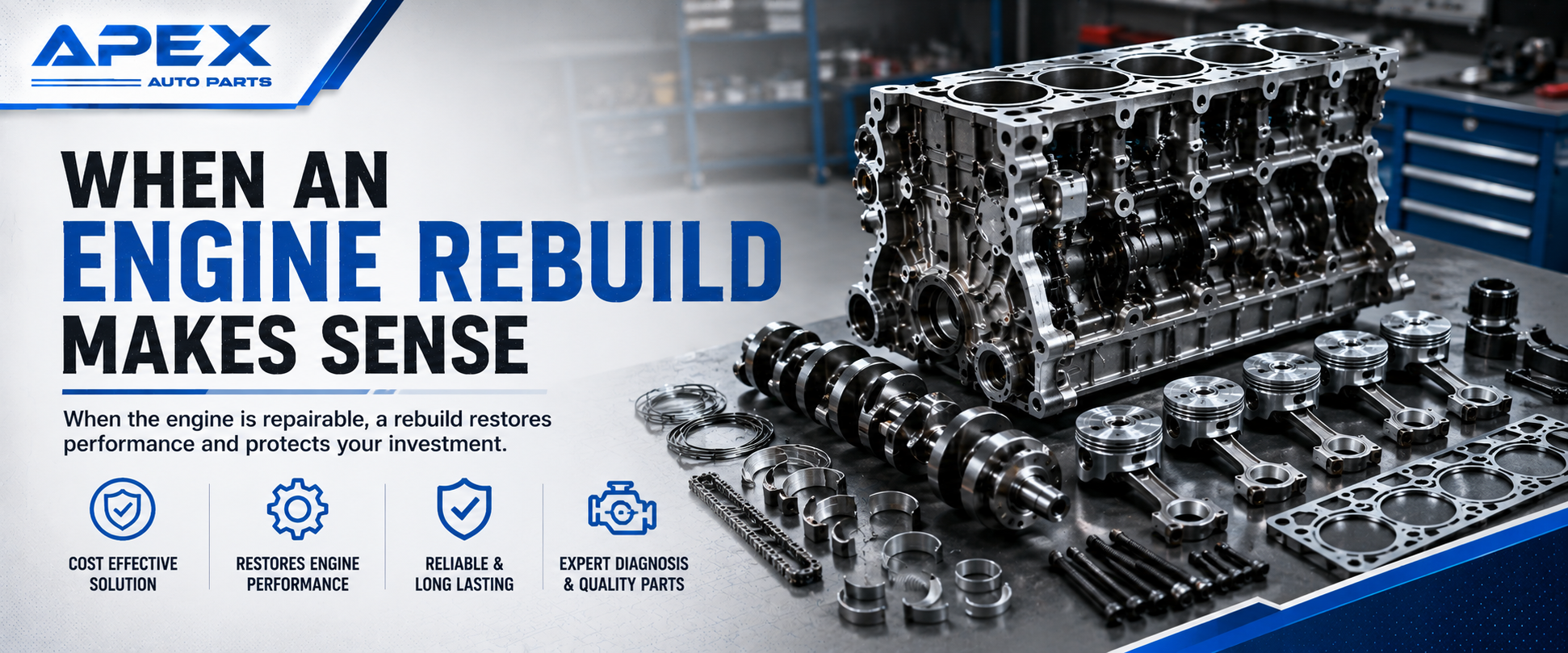
An engine rebuild can be a smart choice when the engine still has a good base. This means the block, crankshaft, and main structure are not beyond repair.
A rebuild may make sense if the problem is caused by worn piston rings, head gasket failure, valve damage, bearing wear, timing chain damage, oil pump failure, or cylinder head issues. These faults can be serious, but they may still be repairable with the right parts and skilled labour.
A rebuild is also worth thinking about when the car is valuable, rare, well-maintained, or expensive to replace. Some owners prefer to keep the original engine because it matches the vehicle’s history. This can matter with certain BMW, Land Rover, classic, or performance cars.
You may choose an engine rebuild when:
- The engine block is still usable
- The crankshaft can be repaired or reused
- Damage is known and repairable
- You want to keep the original engine
- The car is worth saving
- Good-quality rebuild parts are available
- A trusted engine rebuild specialist is doing the work
A rebuild can also give peace of mind because you know what has been replaced inside the engine. With a used replacement engine, you may not always know its full history.
When Engine Replacement Makes Sense?
Engine replacement may be the better choice when the current engine is too badly damaged or too costly to rebuild.
If the engine has seized, thrown a rod, cracked the block, suffered major overheating, or has heavy internal damage, rebuilding may not be worth it. In these cases, replacing the full engine can be quicker and more practical.
Replacement may also make sense when the vehicle is needed quickly. Some garages cannot keep a car stripped for weeks while machine work and rebuild work are being done. If a suitable engine is ready, fitting a replacement can reduce waiting time.
You may choose engine replacement when:
- The engine block is cracked
- The engine has seized
- Repair costs are higher than replacement costs
- Internal damage is too severe
- The vehicle needs to be back on the road quickly
- A good matching engine is available
- The original engine has already had repeated failures
For many UK drivers, engine replacement UK searches happen after a major breakdown. The key is not to rush into the cheapest engine available. Cheap can become expensive if the engine has unknown mileage, poor history, or wrong fitment.
Buying a Used Engine is Often Risky?
Used engines can be attractive because they may cost less than a full rebuild. But they come with risk. You may not know how the engine was driven, serviced, overheated, or stored.
A used engine may run well, but it may also have hidden wear. This is why some garages prefer rebuilt or tested engines when possible.
If you choose a used engine, ask about:
- Mileage
- Engine code
- Warranty
- Compression test
- Service history, if available
- What parts are included
- What parts need swapping
- Whether the engine has been checked
A used engine should not be fitted blindly. At a minimum, service items, seals, belts, gaskets, and fluids should be checked before installation.
Why Diagnosis Comes Before the Decision?
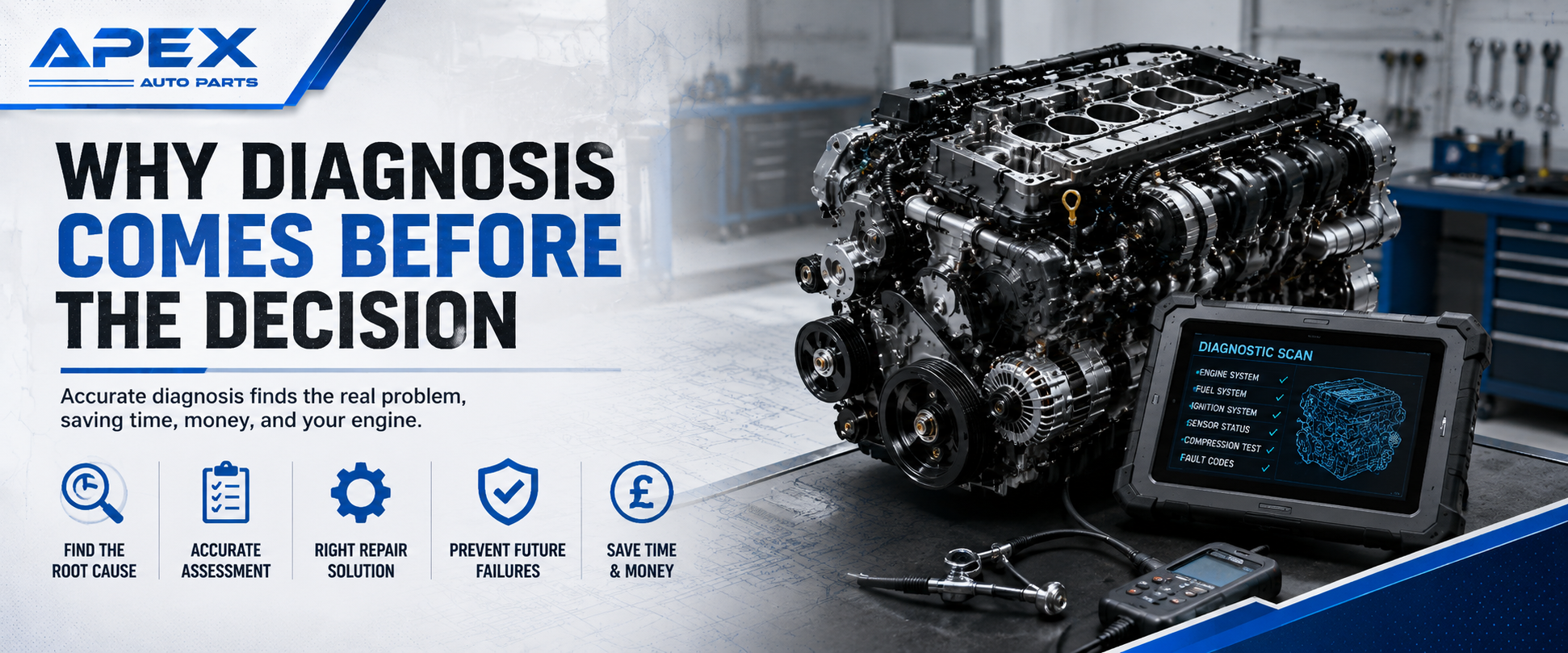
Before choosing to rebuild or replace, you need a diagnosis. Without proper checks, it is easy to spend money in the wrong place.
A car may show smoke, knocking, misfires, coolant loss, oil loss, poor starting, or low power. These signs can point toward engine trouble, but they do not always mean the same repair is needed.
For example, white smoke may be a head gasket issue, but it could also be coolant entering the engine from another cause. Blue smoke may be worn rings, turbo seals, valve stem seals, or breather problems. Knocking may be bearing wear, piston slap, timing noise, or low oil pressure damage.
A good mechanic may check:
- Fault codes
- Compression levels
- Oil pressure
- Coolant condition
- Oil condition
- Smoke colour
- Engine noise location
- Timing system condition
- Cylinder leak down results
- Signs of overheating
- Metal particles in oil
This is where an engine rebuild specialist can help. A specialist does not just change parts. They look for the reason the engine failed.
BMW Engine Rebuild
A BMW engine rebuild is common because many BMW engines are worth saving when repaired properly. BMW engines can deliver strong performance, but they also need correct servicing, clean oil, proper cooling, and quality parts.
Common reasons for a BMW engine rebuild may include timing chain failure, bearing wear, oil pressure problems, head gasket issues, piston ring wear, valve train faults, or overheating damage.
Some BMW engines are sensitive to oil quality and timing system wear. If a timing chain stretches or a guide breaks, the engine can lose timing and suffer serious damage. In other cases, worn bearings can cause knocking from the bottom end.
A rebuild can be a strong option when the engine is still repairable, and the vehicle is worth keeping. But the repair must be done properly. Replacing the visibly damaged part is not enough if the root cause is still there.
For BMW repairs, the engine code matters. A 2.0 diesel, 3.0 diesel, or petrol turbo engine may need different parts. Apex Auto Parts can help garages and drivers check fitment for BMW engine parts before ordering.
TD5 Engine Rebuild
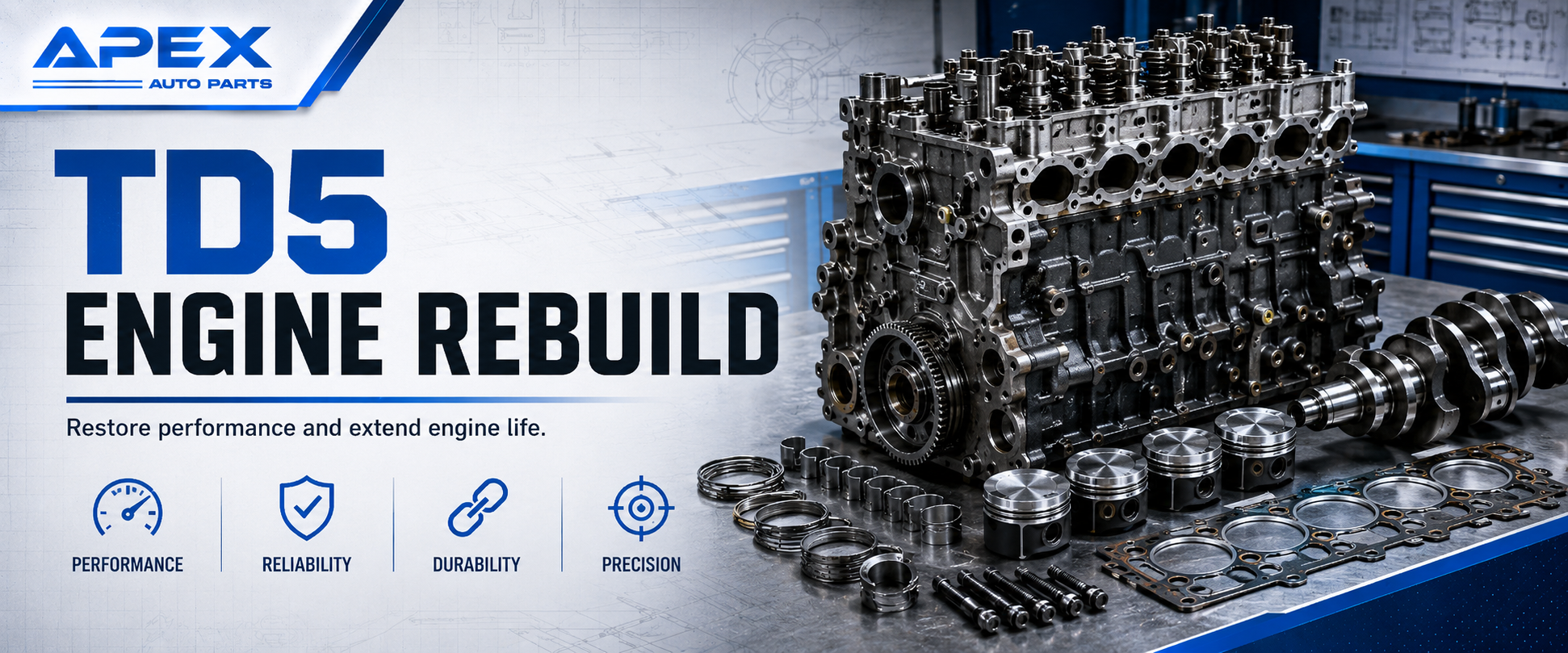
A TD5 engine rebuild is a common topic for Land Rover owners. The TD5 engine is well known in models like the Land Rover Defender and Discovery. Many owners like these vehicles because they are strong, useful, and worth repairing.
A TD5 engine rebuild may be needed because of head gasket failure, worn piston rings, cracked cylinder head, injector issues, oil pump bolt problems, timing wear, or general high mileage wear.
Many TD5 engines have worked hard for years. Some have been used for towing, off-road driving, farm use, or long mileage work. That kind of use can take a toll on internal parts.
A rebuild can make sense when the vehicle is still valuable to the owner. Many Land Rover owners prefer to repair the existing engine rather than give up on the vehicle.
A proper TD5 rebuild should include careful inspection of the cylinder head, block, pistons, rings, bearings, oil system, injectors, gaskets, and seals. Using the right parts matters because Land Rover engines can vary by year and setup.
Land Rover Engine Replacement
Land Rover engine replacement is another common option, especially when the original engine is badly damaged. Land Rover vehicles are often kept for many years, so owners may choose to replace the engine instead of replacing the whole vehicle.
A Land Rover engine replacement may be needed after overheating, turbo failure, timing failure, oil starvation, cracked block, seized engine, or severe bottom-end damage.
This can be a practical repair if a suitable replacement engine is available. But matching is important. Land Rover engines can have different codes, sensors, emission parts, and wiring setups. A wrong engine can slow down the repair and create fitting problems.
Before fitting a replacement engine, related parts should also be checked.
These may include the radiator, water pump, thermostat, turbo, oil cooler, hoses, injectors, and engine mounts. If the old engine failed because of overheating or oil problems, those causes should be fixed before the replacement engine is run.
Ford 1.0 EcoBoost Engine Replacement
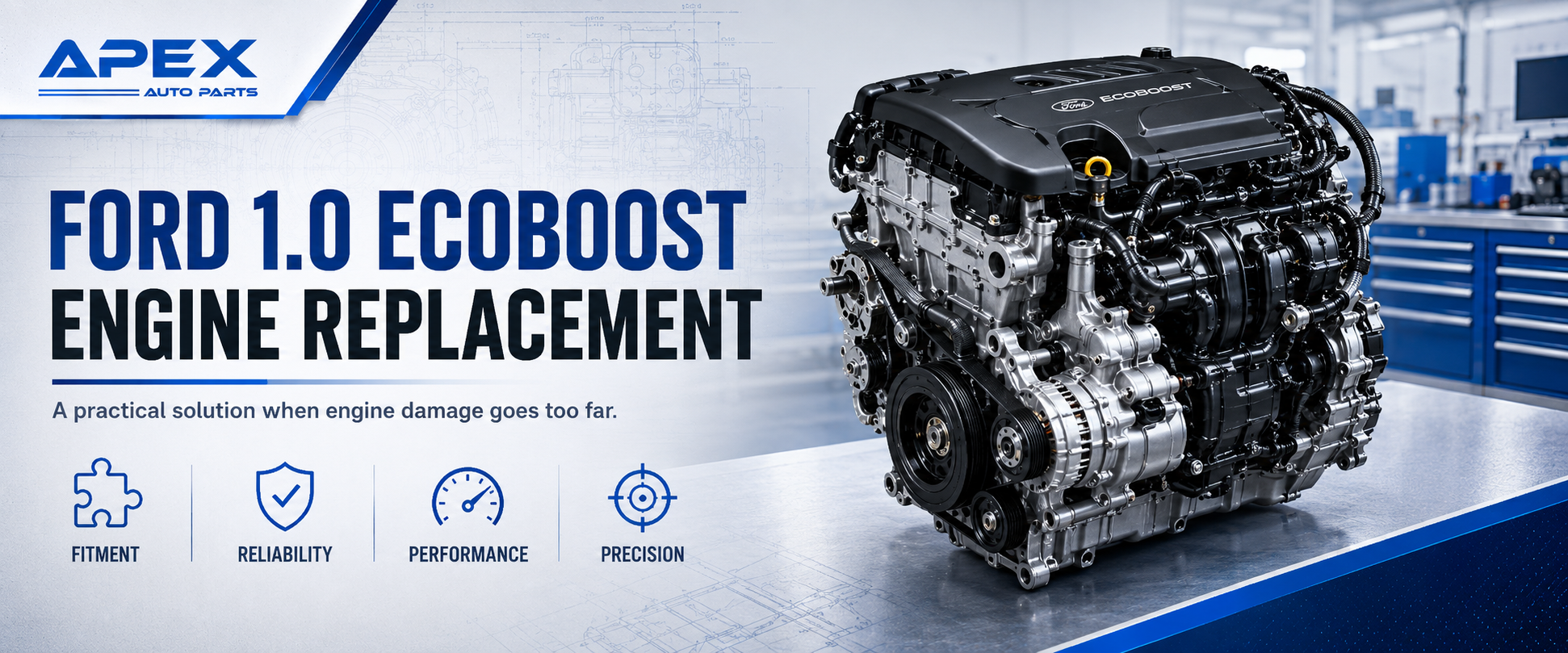
Ford 1.0 Ecoboost engine replacement is often searched because this small turbo petrol engine is popular in many Ford models. It gives good power for its size, but like many modern engines, it needs correct maintenance.
Some 1.0 EcoBoost engines may suffer from overheating, timing belt issues, oil system problems, coolant loss, or turbo-related faults. If the engine has severe damage, a Ford 1.0 Ecoboost engine replacement may be the better option.
The important thing is to find out why the engine failed. If the engine overheated because of a coolant hose, thermostat, water pump, or cooling fault, that problem must be fixed. If the replacement engine is fitted without solving the cause, the same damage can happen again.
For this engine, correct parts and correct fitment are very important. The engine may look small, but it is not simple. It has tight spaces, turbo parts, timing parts, and cooling parts that all need to work properly.
Replacement Diesel Engine
A replacement diesel engine can be a good choice when a diesel engine has suffered major damage. Diesel engines are often used for high mileage, towing, vans, taxis, family cars, and work vehicles. When they fail, downtime can be costly.
A replacement diesel engine may be needed after timing failure, turbo failure, injector damage, overheating, oil starvation, bearing failure, or cracked engine parts.
Diesel engines can be expensive to rebuild, especially if injectors, turbo, high-pressure fuel pump, DPF-related parts, EGR system, and cooling system also need work. Sometimes replacing the engine is quicker and more cost-effective.
But a replacement diesel engine must be checked carefully. Mileage, compression, service history, turbo condition, injector condition, and engine code all matter. If possible, buy from a trusted source and confirm compatibility before fitting.
Cost Factors to Think About
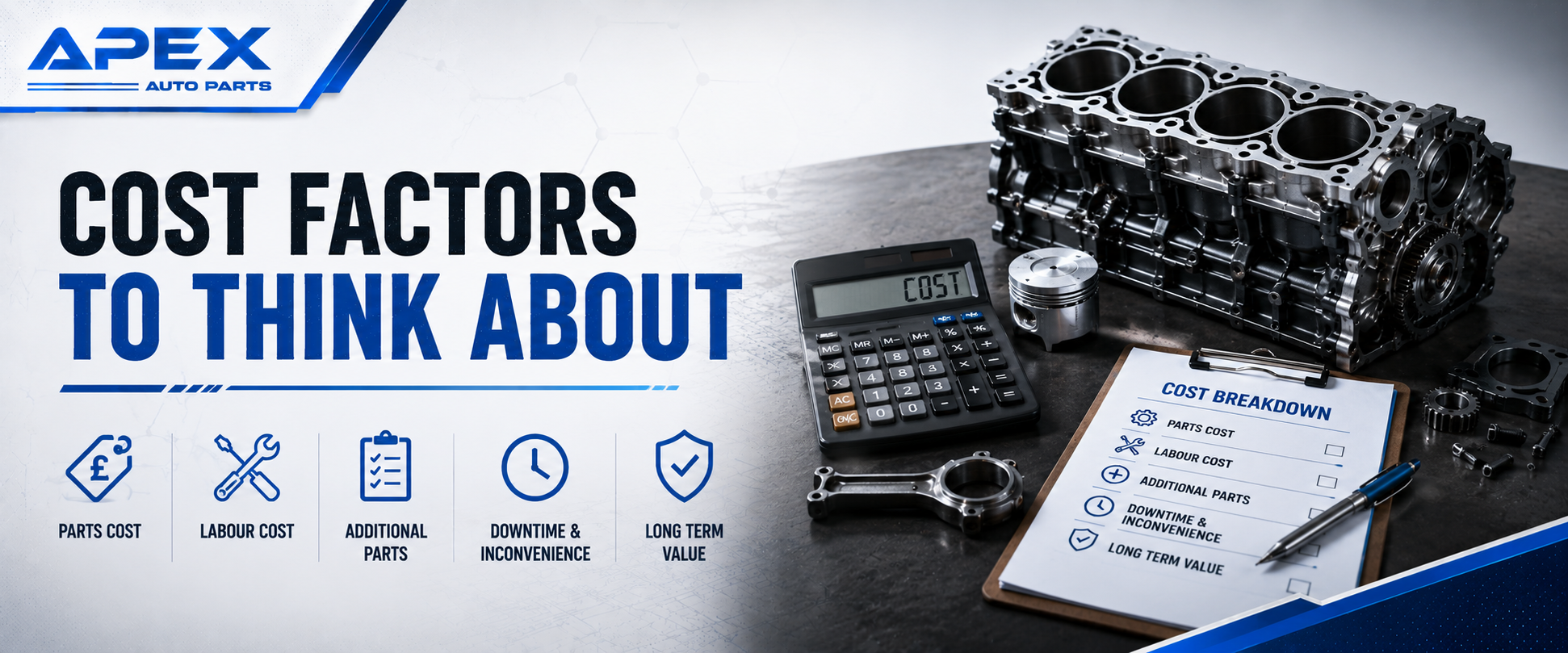
Cost is usually the biggest part of the decision. But the cheapest option is not always the best option.
An engine rebuild can cost more in labour because the engine must be stripped and checked. Machine work may also be needed. Parts can add up if pistons, bearings, gaskets, timing parts, valves, oil pump, and seals are required.
An engine replacement may be faster, but the engine itself can be expensive. You also need labour, fluids, filters, gaskets, belts, sensors, and sometimes coding or extra setup work.
The final cost depends on:
- Vehicle make and model
- Engine type
- Level of damage
- Labour time
- Parts needed
- Machine work needed
- Cost of replacement engine
- Availability of correct parts
- Extra parts needed during fitting
A good repair decision should look at total cost, not just the first quote.
Why Quality Parts Matter?
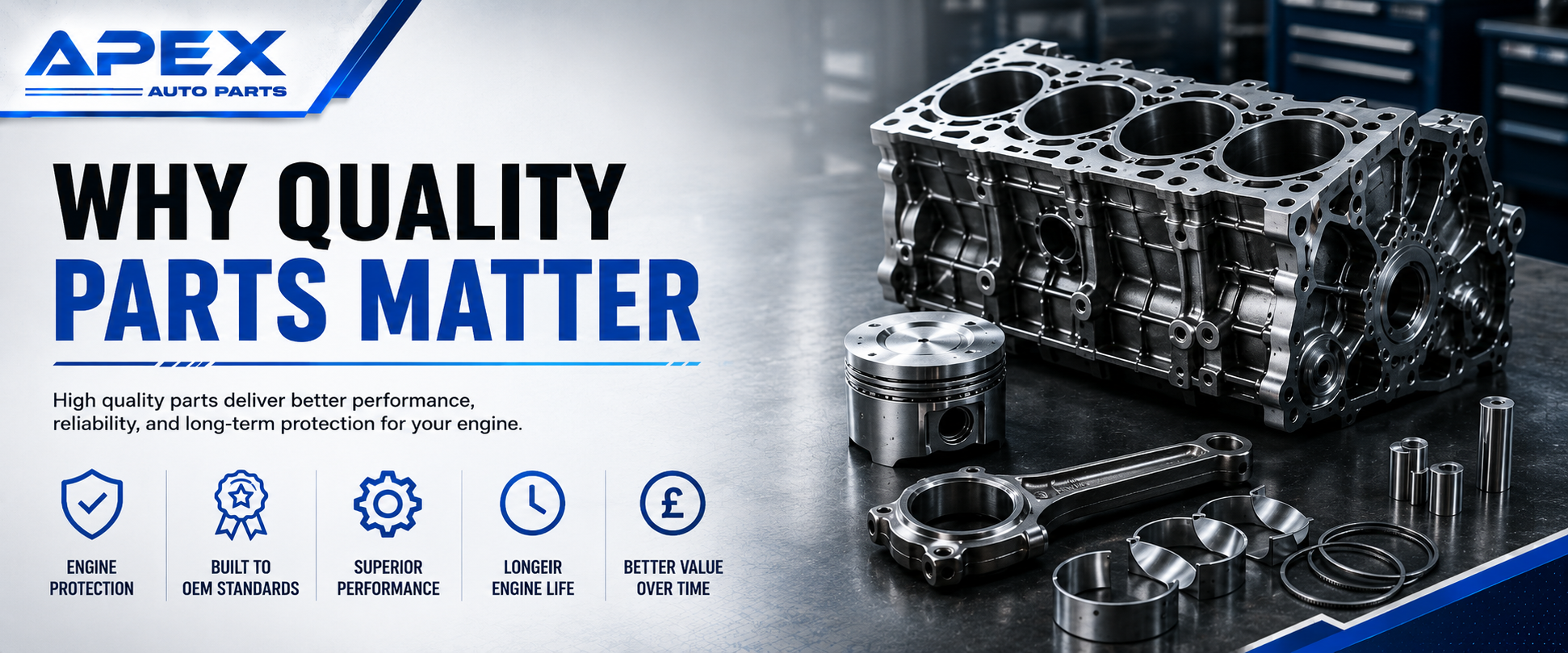
Whether you rebuild or replace, quality parts matter. A rebuilt engine with poor parts can fail early. A replacement engine fitted with weak seals, old belts, or poor gaskets can also cause trouble.
Engine parts work under heat, oil pressure, load, and constant movement. A cheap gasket, bearing, oil pump, timing chain, or seal can lead to repeated failure.
At Apex Auto Parts, the focus is on helping drivers, garages, and trade buyers source the correct engine parts for the job. That includes timing kits, oil pumps, water pumps, gaskets, bearings, pistons, rings, cylinder heads, valves, seals, and rebuild parts.
Correct fitment is just as important as quality. A part that nearly fits is still the wrong part.
How to Choose Between Engine Rebuild and Engine Replacement?
The best choice depends on the car and the fault.
Choose an engine rebuild when the engine is repairable, the vehicle is worth keeping, and you want to keep the original engine. This can be a good choice for valuable cars, loved vehicles, performance cars, Land Rovers, BMWs, or vehicles with known history.
Choose engine replacement when the engine is too badly damaged, the rebuild cost is too high, or a good replacement engine is available. This can be better for severe failures, cracked blocks, seized engines, or vehicles needed back on the road quickly.
Before deciding, ask these questions:
- What caused the engine failure?
- Is the block still usable?
- Is the crankshaft damaged?
- Is the cylinder head repairable?
- How much will parts and labour cost?
- Is a good replacement engine available?
- What is the value of the vehicle?
- How long do I want to keep the car?
- Will the repair come with support or a warranty?
- Are related parts being checked too?
The right answer is the one that gives the best long-term result, not just the lowest starting price.
Mistakes Drivers Should Avoid
Many drivers make the same mistakes when facing engine failure. They rush the decision, choose the cheapest option, or replace parts without finding the cause.
Avoid these mistakes:
- Buying an engine without checking the engine code
- Rebuilding an engine without finding the cause of the failure
- Ignoring oil pressure problems
- Reusing damaged cooling parts
- Fitting a replacement engine with old seals and belts
- Choosing cheap parts for a major repair
- Ignoring turbo, injector, or timing issues
- Not checking warranty terms
- Ordering parts without a VIN or engine code
- Assuming all engines of the same size are the same
These mistakes can turn one repair into two repairs.
How Apex Auto Parts Can Help?
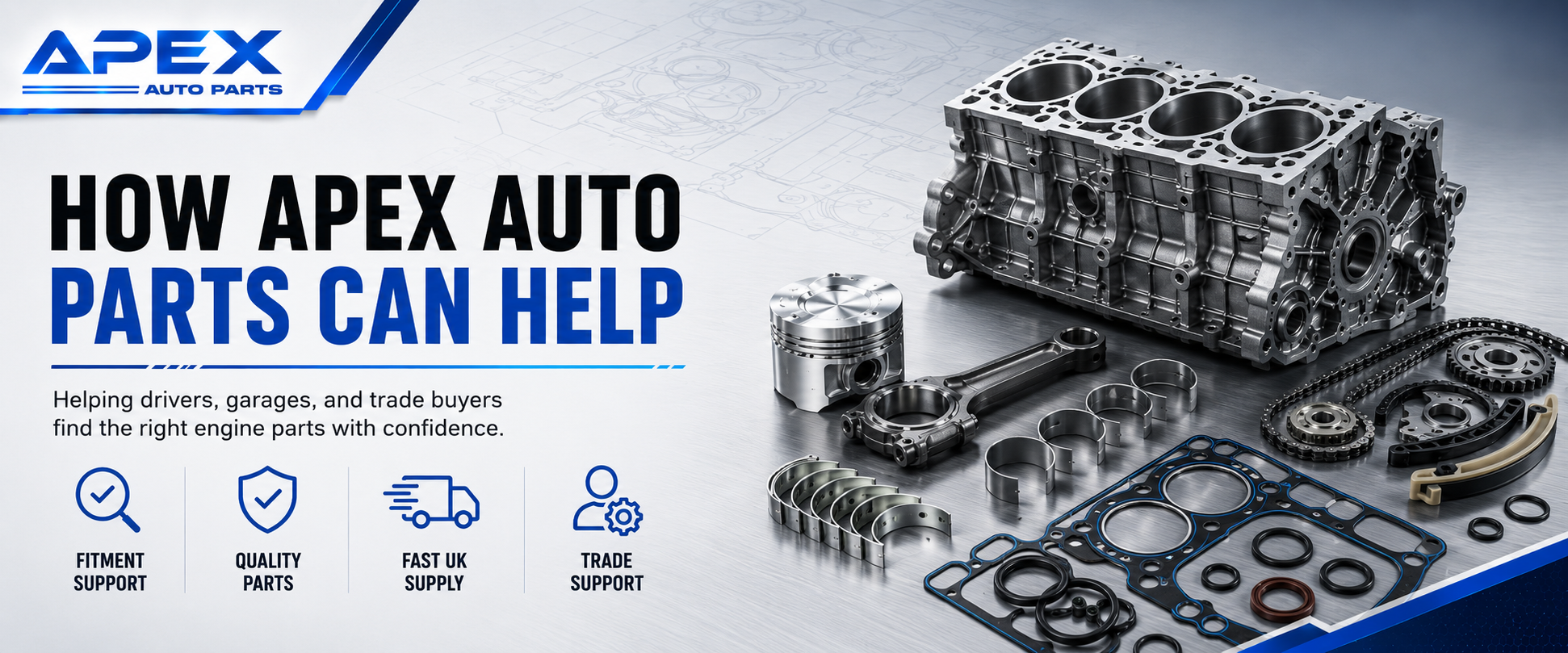
Apex Auto Parts supports UK drivers, garages, mechanics, rebuilders, and trade buyers with engine parts for repair, rebuild, and replacement work.
When dealing with an engine rebuild or engine replacement, the part details matter. A timing kit, gasket set, bearing, piston, seal, oil pump, or water pump must match the engine properly.
Customers can provide the registration number, VIN, engine code, old part number, or part photo where available. This helps check fitment and reduce wrong orders.
Apex Auto Parts supplies parts for many makes, including BMW, Ford, Land Rover, Jaguar, Audi, Mercedes, Volkswagen, Vauxhall, Peugeot, Renault, Toyota, Nissan, MINI, and more.
The goal is simple. Help you get the right engine parts so the repair can move forward with less delay.
Final Thought
Choosing between an engine rebuild and engine replacement is a big decision. Both options can be right, but only when they match the condition of the engine and the needs of the vehicle owner.
A rebuild can be a strong choice when the engine is repairable and worth saving. It allows the damaged parts to be replaced while keeping the original engine. A replacement can be better when the damage is too severe or when speed matters more.
The key is diagnosis. Find the reason the engine failed before spending money. Check oil pressure, compression, timing, cooling system, turbo condition, and internal damage. Then choose the repair route that makes sense.
Whether you need a BMW engine rebuild, TD5 engine rebuild, Land Rover engine replacement, Ford 1.0 Ecoboost engine replacement, or a replacement diesel engine, the same rule applies. Do not guess. Confirm the engine details, use quality parts, and fix the root cause.
With the right parts, the right checks, and the right repair plan, many cars can be put back on the road without wasting money on the wrong solution.
FAQs
1. Is an engine rebuild better than engine replacement?
An engine rebuild is better when the engine is repairable, and the vehicle is worth keeping. Engine replacement is better when the damage is too severe or the repair costs are too high. The right choice depends on diagnosis, engine condition, parts cost, labour, and long-term plans for the car.
2. What is included in an engine rebuild?
An engine rebuild may include pistons, rings, bearings, gaskets, seals, timing parts, oil pump, valves, cylinder head work, and cleaning. The exact work depends on the engine damage. A good engine rebuild specialist will also check why the engine failed before rebuilding it.
3. How do I know if I need engine replacement?
You may need engine replacement if the engine is seized, the block is cracked, the crankshaft is badly damaged, or repair costs are higher than replacing the engine. Heavy knocking, low oil pressure, severe overheating, and major internal damage are signs that replacement may be needed.
4. Is engine replacement a UK-wide service?
Yes, engine replacement UK searches are common because many drivers choose to keep cars longer instead of buying another vehicle. Garages across the UK often replace engines after major failure. The key is matching the correct engine code and fixing the cause of the original failure.
5. Is a BMW engine rebuild worth it?
A BMW engine rebuild can be worth it if the car is in good condition and the engine damage is repairable. BMW engines can be expensive to replace, so rebuilding may make sense. Timing chain issues, bearing wear, oil problems, and head damage should be checked properly first.
6. What is a TD5 engine rebuild?
A TD5 engine rebuild is the repair and rebuild of the Land Rover TD5 engine. It may include cylinder head work, gaskets, pistons, rings, bearings, oil system checks, and timing parts. It is common on older Defender and Discovery models that are still worth repairing.
7. When is a Land Rover engine replacement needed?
Land Rover engine replacement may be needed after severe overheating, cracked block, timing failure, oil starvation, or major bottom-end damage. It can be a good choice when rebuilding is too costly. The replacement engine must match the correct engine code and vehicle setup.
8. Why do Ford 1.0 EcoBoost engines need replacement?
Ford 1.0 Eco boost engine replacement may be needed after serious overheating, timing belt problems, oil system failure, or internal engine damage. Before fitting another engine, the cooling system, oil system, turbo, and related parts should be checked so the same failure does not happen again.
9. Should I buy a replacement diesel engine?
A replacement diesel engine can be a good option when the old diesel engine has severe damage. It may be faster than rebuilding. Check mileage, engine code, compression, warranty, and what parts are included. Diesel engines must be matched carefully to avoid fitment issues
10. What is the main difference between engine rebuild and engine replacement?
Engine rebuild VS engine replacement comes down to repair or swap a rebuild repairs your original engine with new or reconditioned parts. Replacement removes the old engine and fits another unit. A rebuild suits repairable engines, while replacement suits severe damage or faster repair needs.
References:
RAC
Web Rover