 info@apexautoparts.co.uk
 +44 203 915 7535
 Safe & Fast Shipping
 Whish List
 Compare
 Sign In

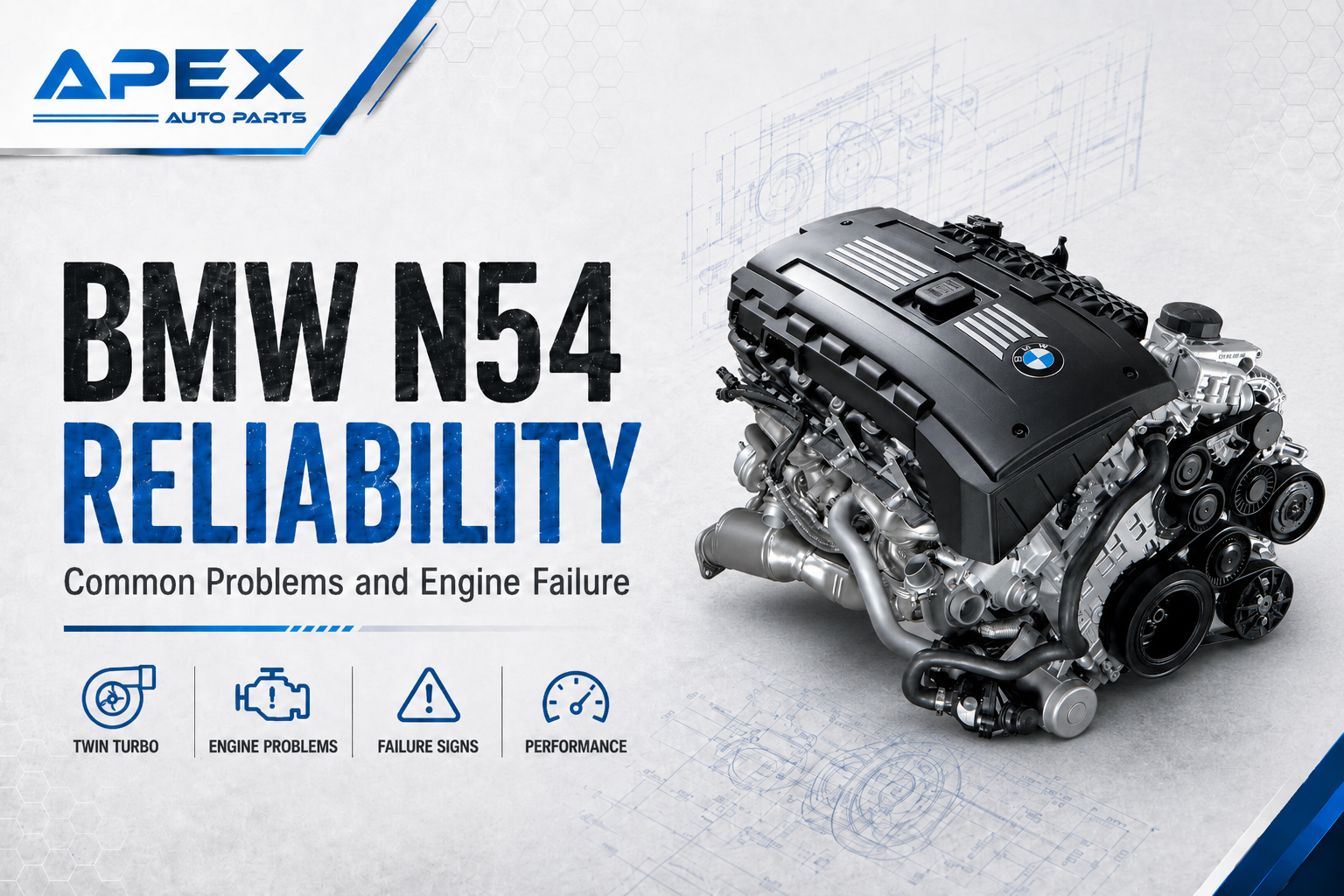
The BMW N54 changed the way many people looked at modern BMW petrol engines. It gave a normal road car the smooth feel of a straight six engine, but added two turbochargers and direct fuel injection for much stronger performance.
BMW introduced it as a 3.0-litre inline six engine with two turbochargers, direct injection, and an aluminum crankcase. In the 335i, it produced around 300 horsepower while still offering smooth power for everyday driving. The engine also won major industry awards soon after its launch.
Years later, the BMW N54 engine is still popular with BMW owners, tuners, garages, and performance car buyers. It can make strong power without changing the full engine, and many replacement and upgrade parts are still available.
However, popularity does not mean perfect reliability. The BMW N54 has several known weak areas, including the high-pressure fuel pump, injectors, turbo wastegates, electric water pump, carbon deposits, oil leaks, VANOS faults, and ignition problems.
Some of these faults are annoying rather than dangerous. Others can lead to serious engine damage if they are ignored. The key is knowing which warning signs matter and diagnosing the real cause before buying parts.
At Apex Auto Parts, we often help drivers, garages, and trade buyers find engine parts for BMW repair and rebuild jobs. With the BMW N54 engine, correct diagnosis and correct fitment are especially important because several different faults can cause the same symptoms.
This guide explains BMW N54 reliability, common faults, signs of engine failure, maintenance needs, tuning risks, and what to inspect before buying an N54-powered BMW.
What Is the BMW N54 Engine?
The BMW N54 is a 3.0-litre inline six petrol engine. Inline six means all six cylinders sit in one straight row. This layout helps the engine run smoothly because the movement of the pistons is naturally well-balanced.
The engine uses two small turbochargers. They work together to move more air into the cylinders. More air allows the engine to burn more fuel when power is needed.
It also uses direct fuel injection. This means petrol is sprayed directly into each cylinder under high pressure instead of being sprayed into the intake manifold. BMW called this system High Precision Injection.
The result was strong pulling power at low engine speed, quick response, and much more performance than many older naturally aspirated BMW engines. BMW described it as the first straight-six engine to combine direct injection with two turbochargers.
The main features include:
- 3.0 liter petrol engine
- Six cylinders in one straight row
- Two turbochargers
- Direct fuel injection
- Double VANOS valve timing
- Aluminum engine block
- Timing chain
- Electronic boost and fuel control
The BMW N54 twin-turbo engine became the base for several fast BMW models. It also created a large tuning market because software and supporting upgrades could release more power from the standard engine.
Inside the BMW N54 Twin Turbo Setup
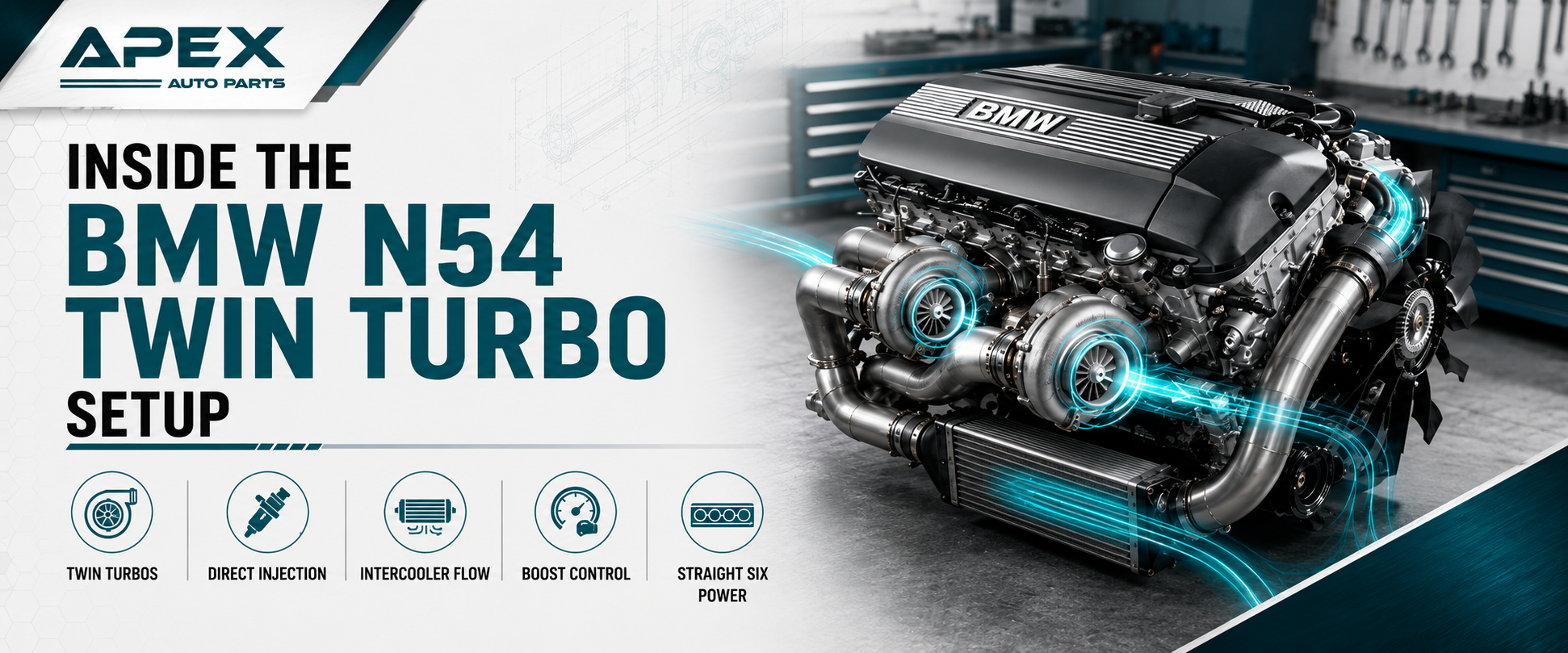
The BMW N54 engine pulls air through the intake system. The two turbochargers compress that air and send it through the intercooler. The intercooler lowers the temperature of the compressed air before it enters the engine.
The high-pressure fuel system then sends petrol to six injectors. Each injector sprays fuel directly into its cylinder. A spark plug lights the air and fuel mixture, creating pressure that pushes the piston down.
The pistons move the connecting rods, which turn the crankshaft. The crankshaft sends power through the gearbox and eventually to the wheels.
Each turbocharger is driven by exhaust gas. As exhaust leaves the engine, it spins the turbine inside the turbo. The turbo then forces more fresh air into the engine.
BMW used two smaller turbochargers instead of one large unit to improve response. This helped reduce the delay between pressing the accelerator and feeling the engine pull.
The engine management system controls fuel pressure, ignition timing, turbo boost, throttle opening, and VANOS operation. Because these systems work together, one weak sensor, injector, pump, valve, or boost pipe can make the car feel as if the entire engine is failing.
That is why fault codes should guide diagnosis, but they should not be treated as proof that the first-named part is bad.
Why Is the BMW N54 Still Popular?
The BMW N54 remains popular because it gives strong performance without losing the smooth feel of a BMW straight six.
It also has large tuning potential. BMW itself produced more powerful versions of this twin-turbo straight-six for the 335is, Z4 sDrive35is, and 1 Series M Coupe. These factory versions made more power while keeping the same basic engine design.
Another reason is parts support. Garages and owners can still find injectors, pumps, turbos, gaskets, seals, cooling parts, ignition parts, pistons, bearings, and engine rebuild components.
The engine is also well understood by BMW specialists. Its common faults are known, and there are clear repair paths for most problems.
The downside is that a cheap N54-powered car can become expensive very quickly. A low purchase price does not help much if the car soon needs six injectors, two turbos, an electric water pump, oil leak repairs, and carbon cleaning.
This is why condition matters more than appearance or advertised power.
BMW N54 Reliability in Real Life
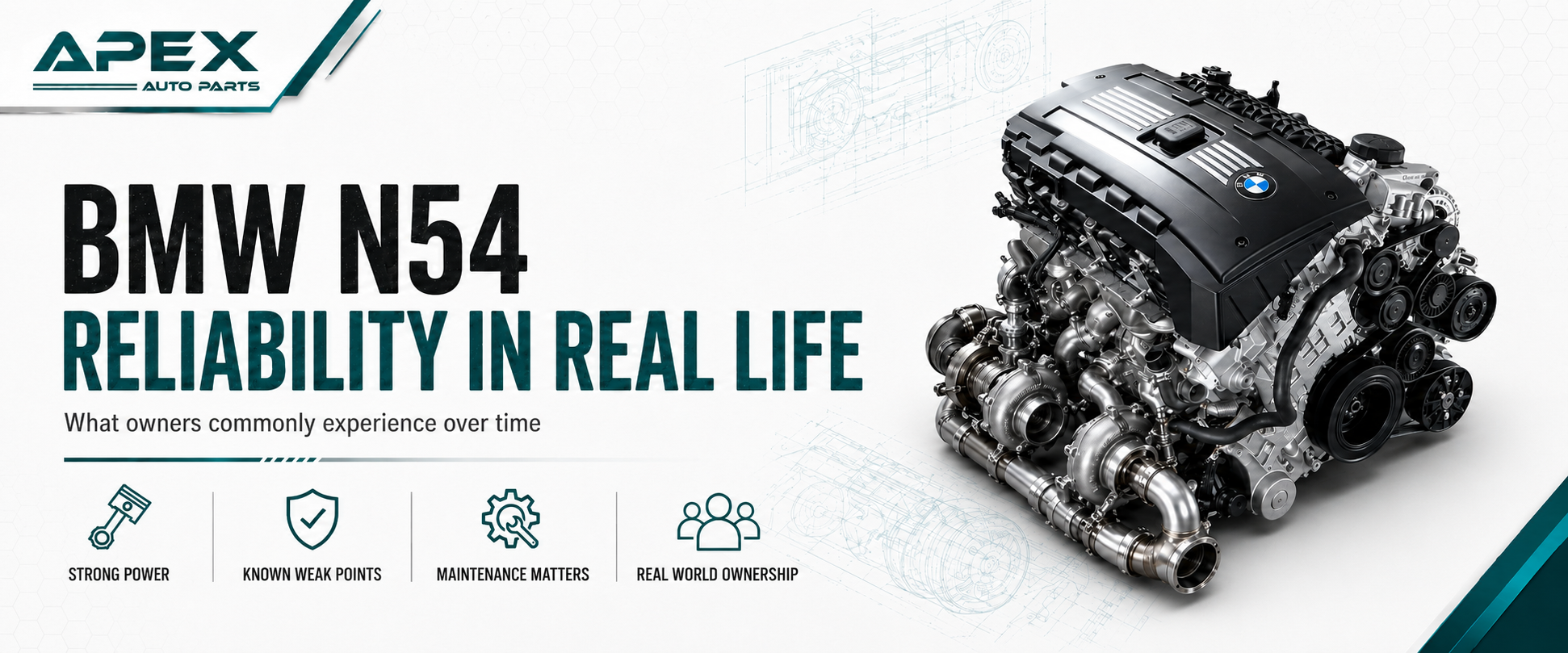
BMW N54 reliability is best described as mixed.
The main engine structure can be strong when the car has been serviced correctly. The block, crankshaft, rods, and cylinder head can last well in a standard or sensible setup.
Most ownership problems come from the systems fitted around the engine. The fuel system, cooling system, turbo controls, crankcase ventilation, ignition parts, and oil seals can all need attention as the car ages.
BMW issued technical actions, recalls, or warranty extensions for several N54-related parts, including high-pressure fuel pumps, injectors, turbo wastegate concerns, and electric coolant pumps. These historical documents show that the faults were recognized, but they do not mean a car in the UK has current warranty cover.
A well-maintained car with repair records can be dependable. A neglected example with an aggressive tune can be unreliable even at much lower mileage.
Good BMW N54 reliability usually depends on:
- Regular oil and filter changes
- A healthy cooling system
- Correct fuel pressure
- Good injectors
- No serious boost leaks
- Clean intake valves
- Healthy spark plugs and coils
- Sensible engine software
- Fast repair of oil and coolant leaks
The safest approach is to treat small faults early. Waiting for several problems to appear at once normally makes the repair more expensive.
Common BMW N54 Engine Problems
The most common BMW N54 engine problems include:
- High-pressure fuel pump failure
- Fuel injector faults
- Turbo wastegate rattle
- Turbo wear and boost loss
- Carbon deposits on intake valves
- Electric water pump failure
- Thermostat problems
- Valve cover and oil filter housing leaks
- Crankcase ventilation faults
- VANOS solenoid problems
- Ignition coil and spark plug failure
- Cracked boost pipes or loose connections
Not every car will have every fault. Some examples run for years with normal servicing. Others suffer several issues close together because of age, heat, poor maintenance, or previous tuning.
The important step is to separate a normal repair from signs of deeper engine damage.
High-Pressure Fuel Pump Failure
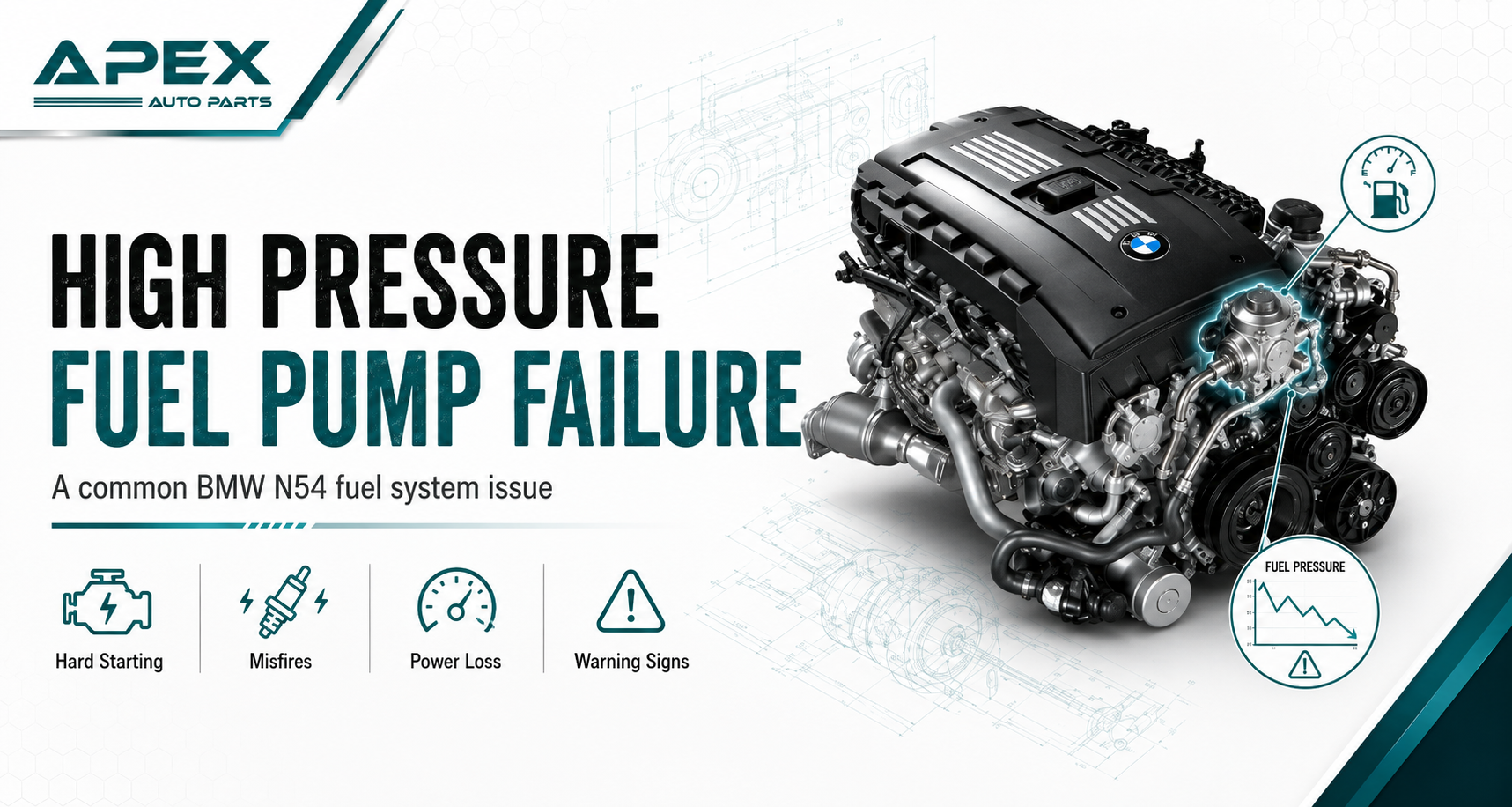
The high-pressure fuel pump is one of the best-known N54 problems. Its job is to raise the petrol pressure before the fuel reaches the direct injectors.
When the pump starts failing, the engine may take longer to start. The driver may also notice reduced power, uneven acceleration, limp mode, or fuel pressure fault codes.
Common warning signs include:
- Long cranking before the engine starts
- Sudden loss of power
- Engine warning light
- Limp mode
- Hesitation under acceleration
- Fuel pressure faults
- Engine cutting out in serious cases
Do not replace the pump based only on one code. Low-pressure fuel supply, wiring, sensors, or an in-tank pump can cause similar symptoms.
A mechanic should compare the requested and actual fuel pressure while checking the low-pressure and high-pressure sides of the system.
Fuel Injector Problems
The BMW N54 engine uses six high-pressure direct injectors. These injectors must deliver the correct amount of fuel at the right moment.
A faulty injector can stick, leak, or spray fuel badly. This can cause rough running, cold start misfires, a fuel smell, smoke, poor fuel economy, or wet spark plugs.
BMW issued an emissions recall for certain early N54 vehicles because some piezo injectors could cause misfires and erratic running. .
Injector replacement is not always as simple as fitting one part. Injector index numbers, calibration values, and cylinder coding matter. BMW technical information states that injectors from certain older and newer index groups should not be mixed in the same engine.
Signs of injector trouble include:
- Shaking after a cold start
- Misfire on one or more cylinders
- Strong petrol smell
- Black smoke
- Wet spark plug
- Poor fuel economy
- Difficult starting
- Fuel mixture faults
A badly leaking injector should be repaired quickly. Too much fuel in a cylinder can contaminate the engine oil and reduce lubrication.
Turbo Wastegate Rattle
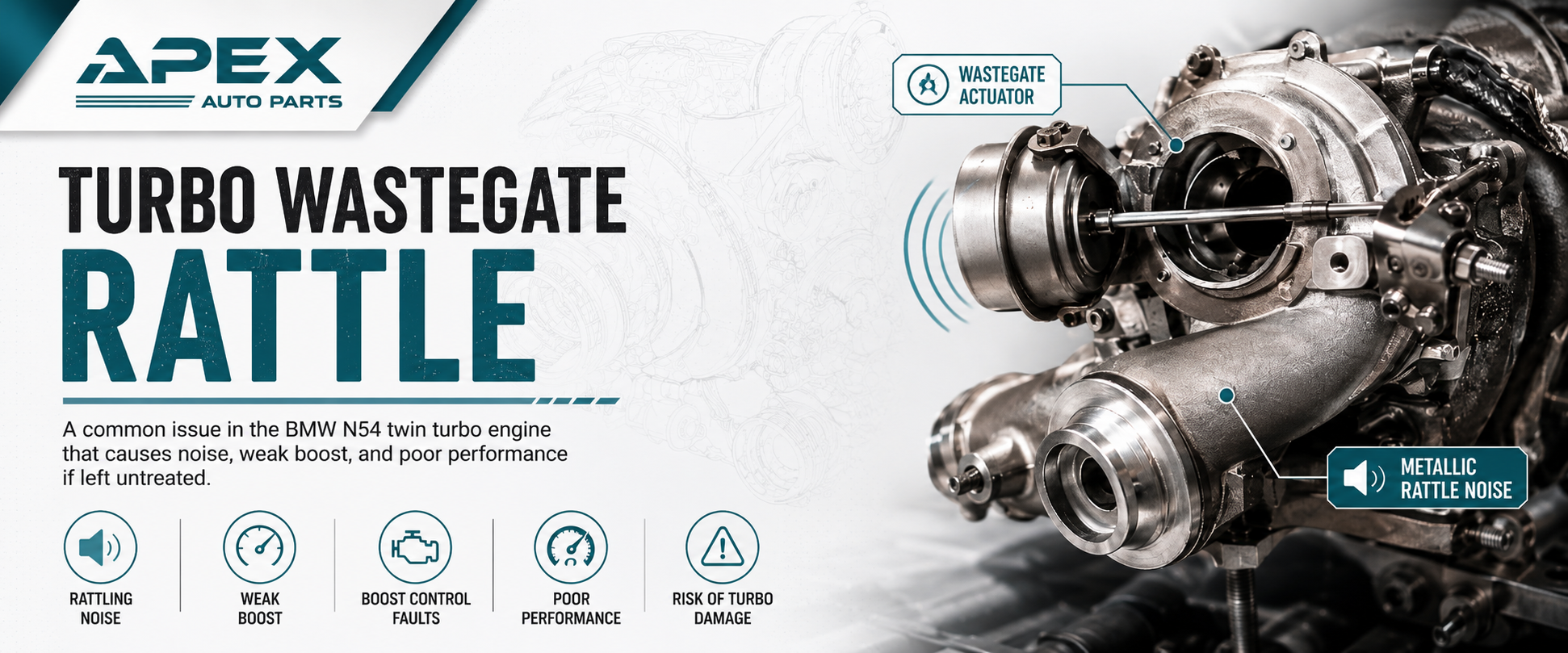
The BMW N54 twin-turbo engine uses wastegates to control turbo boost. A wastegate opens when extra exhaust flow needs to bypass the turbo turbine.
Over time, parts of the wastegate system can wear and begin to rattle. The noise is often heard during light acceleration, when lifting off the throttle, or at certain engine speeds.
BMW issued technical guidance for a distinct clanking noise from the N54 turbo area and described a diagnosis involving software checks and wastegate actuators on certain vehicles.
Wastegate wear can cause more than noise. If control becomes poor, the vehicle may struggle to reach the requested boost pressure.
Possible signs include:
- Metallic rattle from the turbo area
- Slow boost response
- Reduced engine power
- Boost control faults
- Limp mode
- Poor acceleration
Do not assume every turbo rattle means both turbochargers need replacement. Actuators, vacuum lines, control valves, software, and linkage conditions should be checked first.
Turbocharger Wear
The two turbochargers work under high heat and speed. They depend on clean oil and correct oil flow.
A worn turbo may create smoke, unusual whining, oil use, or weak boost. However, oil in a boost hose does not prove the turbo is bad. Some oil vapor can enter through the crankcase ventilation system.
BMW technical guidance explains that crankcase ventilation faults can increase oil use and leave excessive oil in the intake pipes or intercooler, which can be mistaken for turbo failure.
Before replacing a turbo, a mechanic should check:
- Shaft movement
- Oil feed and return lines
- Crankcase pressure
- Boost pipes and clamps
- Vacuum control
- Wastegate movement
- Intercooler condition
- Fault codes and live boost data
Replacing the turbo without fixing the poor oil supply or high crankcase pressure can cause the new unit to fail again.
Carbon Buildup on Intake Valves
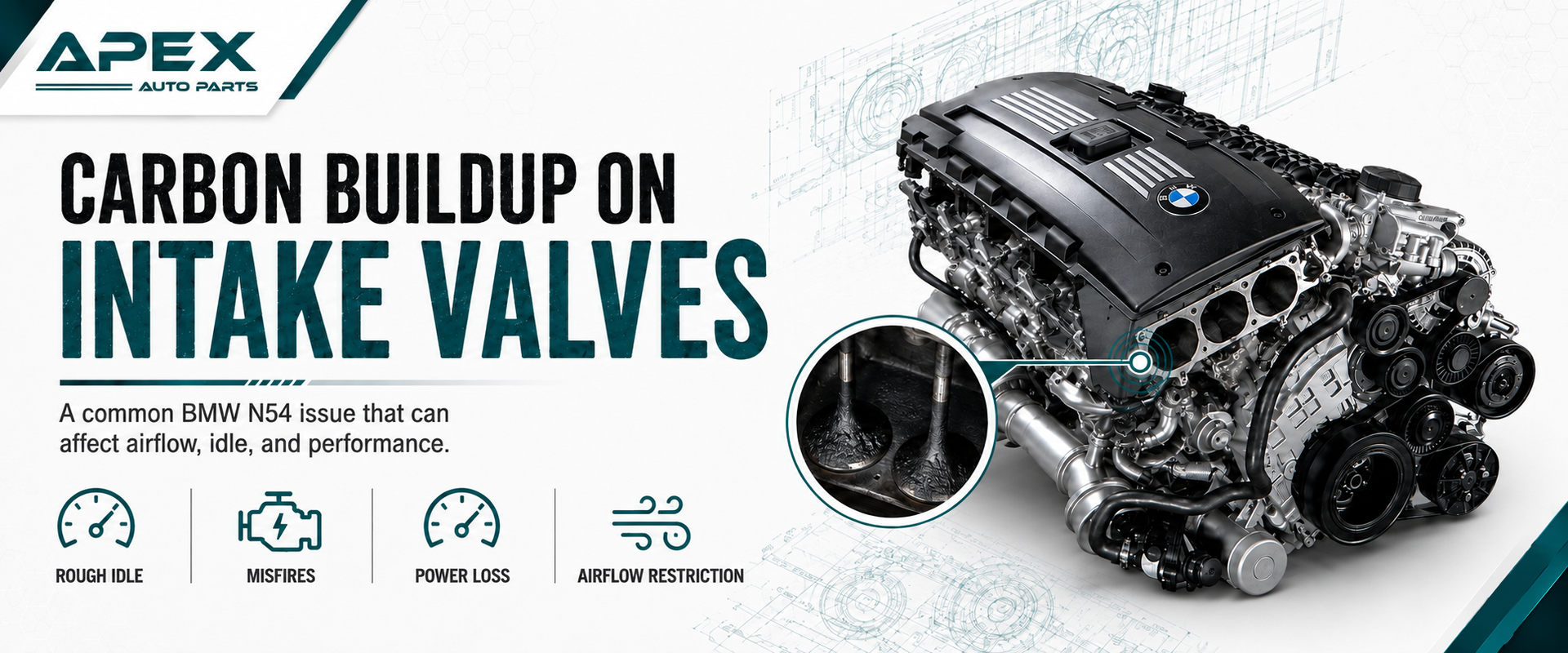
Direct injection gives the BMW N54 strong fuel control, but it also allows carbon to collect on the intake valves.
In an older port injection engine, fuel passes over the intake valves and helps wash them. In the N54, fuel is sprayed directly into the cylinders, so the intake valves do not receive that same cleaning effect.
Oil vapor and deposits can slowly build up around the valves and intake ports. BMW service information states that intake valve and port deposits can cause misfires and other drivability complaints, and it describes a cleaning process using BMW equipment.
Common symptoms include:
- Rough idle
- Hesitation
- Weak response
- Misfires
- Poor fuel economy
- Uneven power delivery
Cleaning may be needed when the diagnosis confirms heavy deposits. It should not be sold automatically to every owner without checking symptoms, fault data, and intake condition.
Electric Water Pump and Thermostat Problems
The BMW N54 engine uses an electric coolant pump. Unlike a traditional pump driven by a belt, this pump is controlled electronically.
When it starts failing, the engine can overheat quickly. The cooling fan may run very fast, a temperature warning may appear, or the car may enter reduced power mode.
BMW North America documents related to N54, N54T, and N55 electric coolant pumps included a component warranty settlement for eligible United States vehicles. Again, this does not mean current UK cover, but it confirms the pump as an important repair area.
Signs of a weak pump can include:
- Rising engine temperature
- Cooling fan running loudly
- Coolant pump fault codes
- Reduced power warning
- Poor heater output
- Overheating after normal driving
Never continue driving an overheating N54. The cost of a water pump is small compared with cylinder head, head gasket, piston, or block damage.
When replacing the pump, the thermostat and cooling system condition should also be checked.
Oil Leaks and Crankcase Ventilation
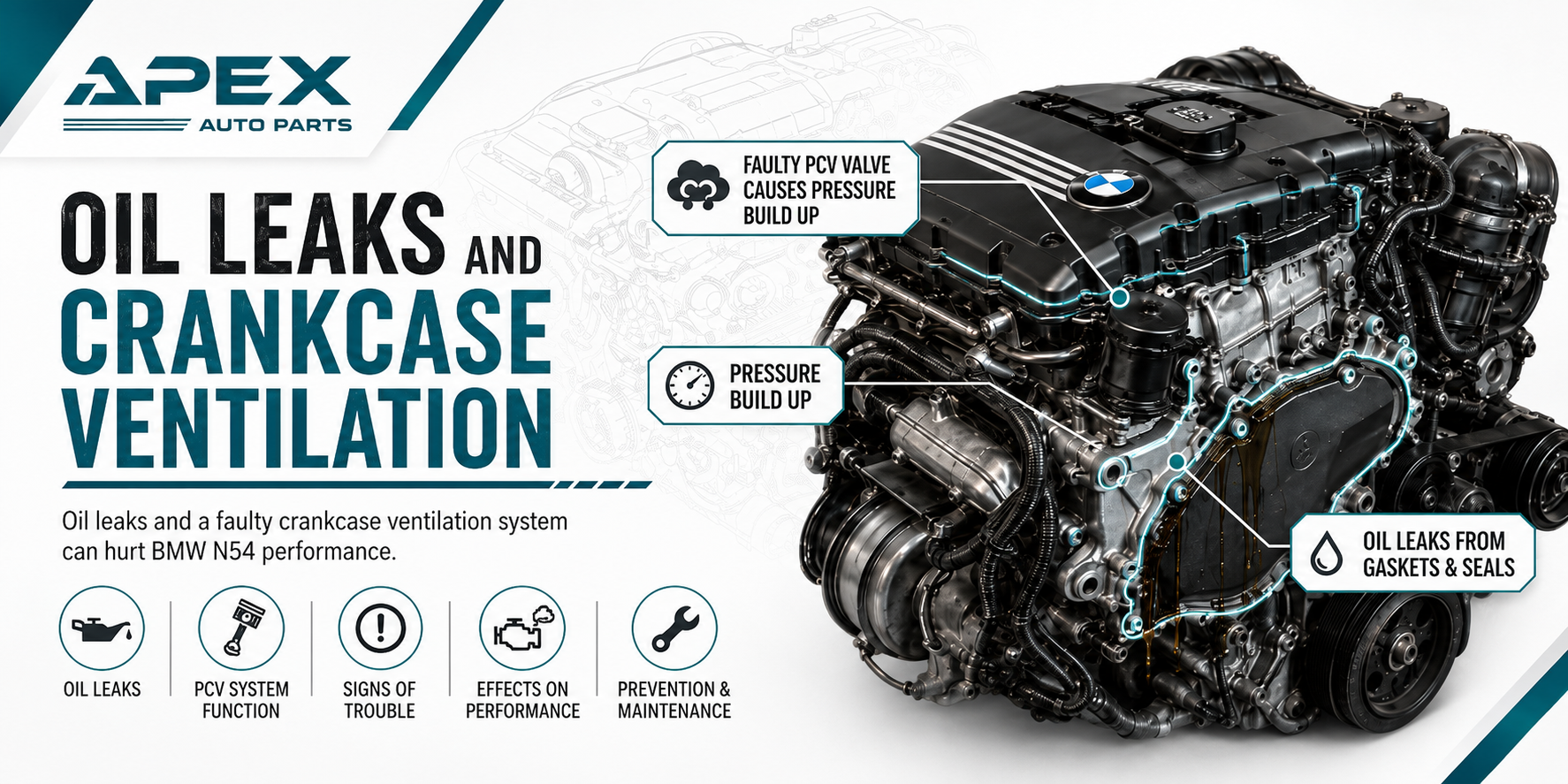
Oil leaks become common as an N54 gets older. The valve cover gasket, oil filter housing area, oil pan, vacuum pump area, and turbo oil lines are all worth inspecting.
A small seep is different from an active leak. BMW repair guidance tells technicians to identify whether oil is merely seeping or is leaking enough to require repair.
Crankcase ventilation should also be checked. The system keeps a controlled vacuum inside the engine. If pressure becomes too high, it can damage seals, increase oil use, and push oil into the intake system.
Oil leaks matter because they can:
- Lower the engine oil level
- Damage rubber hoses and belts
- Create a burning smell
- Hide other faults
- Contaminate nearby components
- Increase the risk of internal wear
Cleaning the engine before diagnosis can help show the true leak source.
VANOS Solenoid Problems
VANOS controls camshaft timing. It helps the engine make smooth torque at lower speeds and strong power at higher speeds.
Dirty oil, poor oil flow, or worn solenoids can cause VANOS faults. Symptoms may include reduced power, uneven running, hesitation, or an engine warning light.
BMW technical guidance for VANOS faults describes checking the oil supply and, where needed, replacing both VANOS solenoids along with the engine oil and filter. It also warns that a missing oil filter cap insert can allow unfiltered oil to damage or block the solenoids.
VANOS codes should not lead straight to camshaft replacement. Oil condition, filter parts, solenoids, wiring, and oil pressure should be checked first.
Spark Plugs, Coils, and Misfires
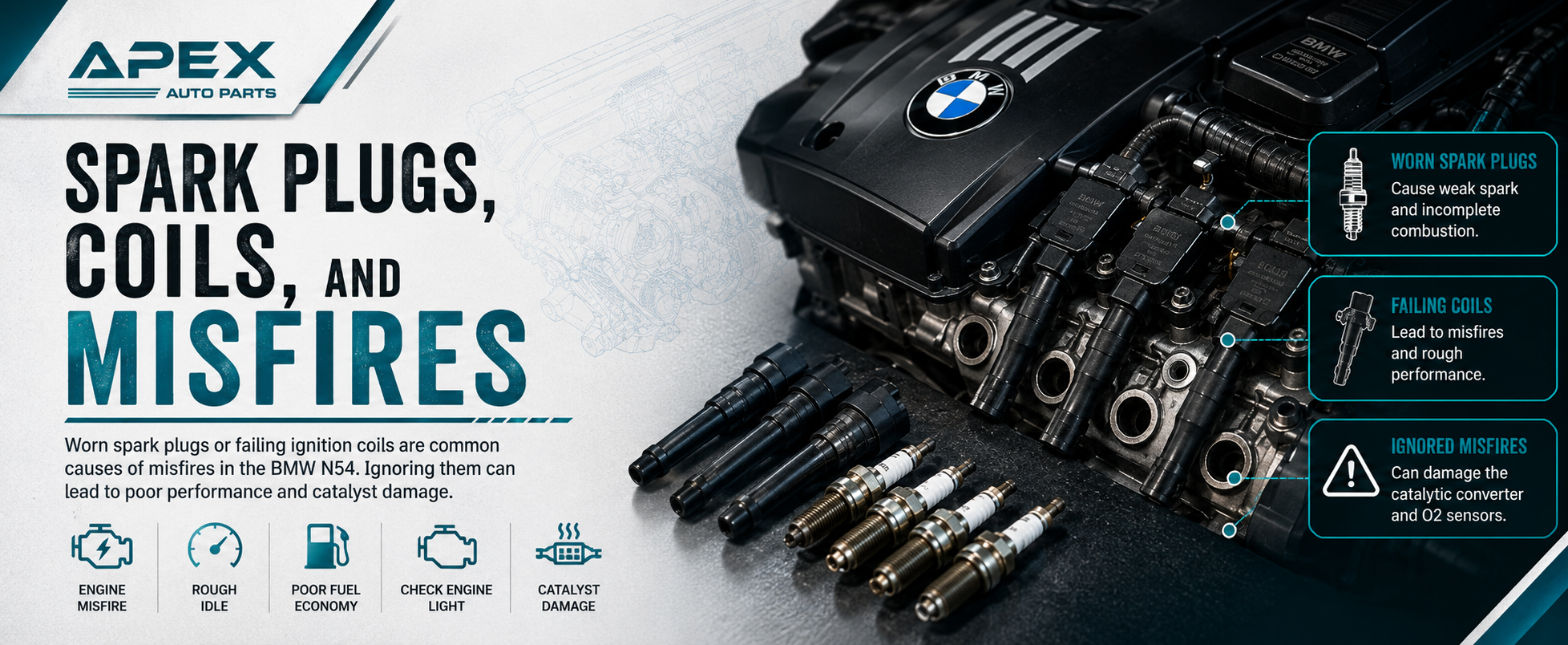
Turbocharged engines put greater demand on spark plugs and ignition coils.
Worn plugs may misfire under boost even if the engine feels normal during gentle driving. Weak coils can cause shaking, poor acceleration, and a flashing engine warning light.
Injector faults, carbon buildup, fuel pressure problems, and VANOS faults can also cause misfires. This is why replacing all coils without testing may not solve the issue.
A sensible diagnosis includes:
- Reading fault codes
- Checking which cylinder misfires
- Inspecting spark plugs
- Moving coils between cylinders
- Checking injector data
- Looking at fuel pressure
- Checking for intake deposits
- Running compression tests if needed
A flashing engine warning light usually means an active misfire. Hard driving should be avoided because unburned fuel can damage the catalytic converters.
Boost Leaks and Charge Pipes
A boost leak allows compressed air to escape before it reaches the engine.
This can happen through a cracked charge pipe, split hose, loose clamp, damaged intercooler, or poor seal. The car may feel slow even though the turbochargers are working.
Common signs include a hissing sound, slow boost, reduced power, limp mode, and boost pressure faults.
The repair should begin with a smoke or pressure test rather than replacing turbochargers. A small air leak can make the car feel as if the turbos have failed.
Modified cars should be checked carefully because poorly fitted aftermarket pipes, valves, and intercoolers can also leak.
What Causes BMW N54 Engine Failure?
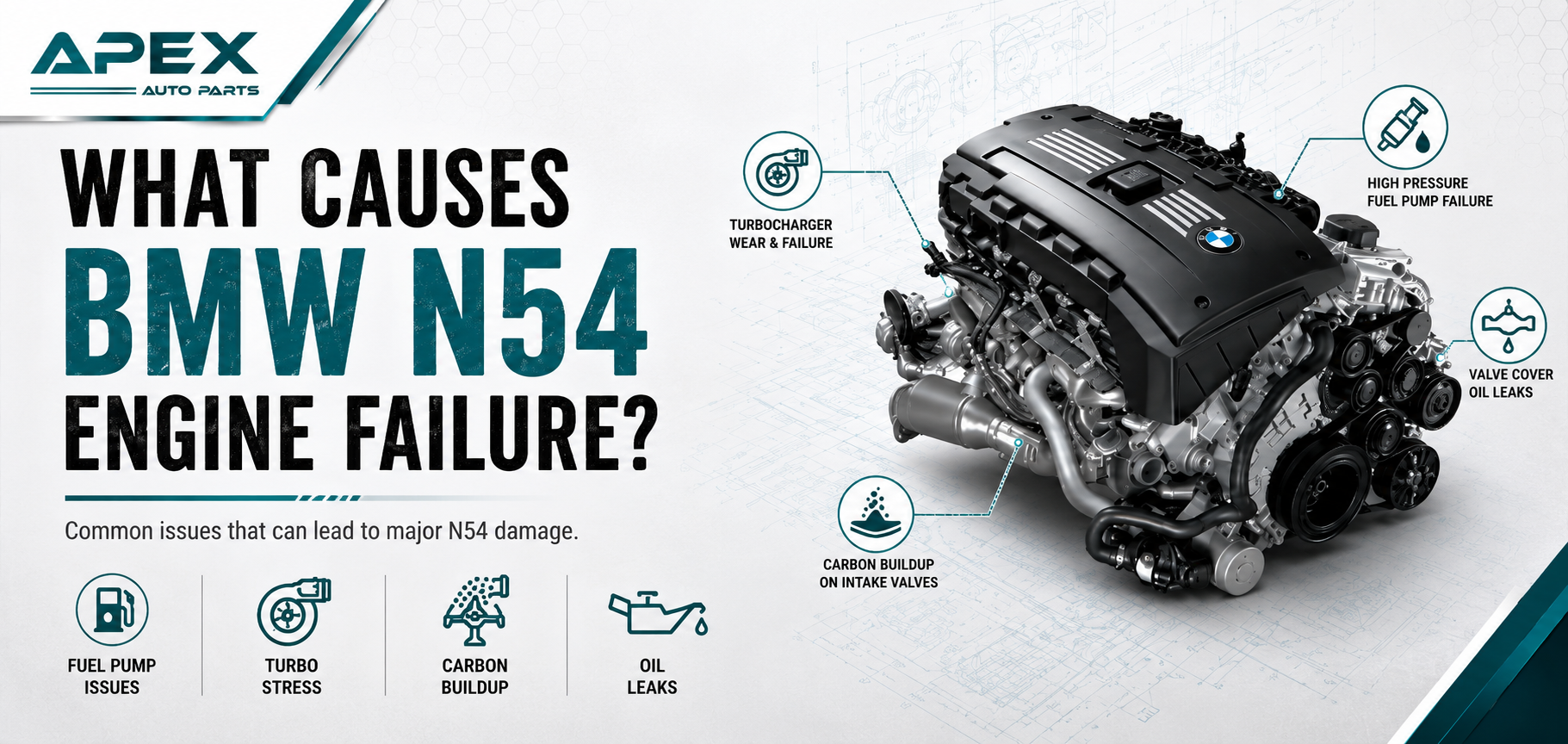
Most BMW N54 engine problems do not destroy the engine by themselves. Engine failure usually happens when a serious fault is ignored or when several problems occur together.
Overheating is one major cause. A failed electric water pump can cause the engine temperature to rise quickly. Continuing to drive may damage the cylinder head, gasket, pistons, or block.
Low oil is another cause. Oil leaks, high oil use, turbo problems, or poor servicing can reduce lubrication. Bearings, camshafts, turbochargers, and timing parts all need clean oil.
A leaking injector can also become dangerous. Too much fuel can wash oil from the cylinder wall and dilute the oil in the sump. This raises wear and can damage internal parts.
Poor tuning is another risk. More boost creates more heat and cylinder pressure. An aggressive map, poor-quality fuel, weak injectors, bad ignition parts, or an incorrect air and fuel mixture can lead to knock, cracked pistons, damaged rings, or connecting rod problems.
Common causes of serious engine failure include:
- Severe overheating
- Low oil pressure
- Running with very low oil
- Heavy detonation
- Poor engine tuning
- Leaking injectors
- Continued driving with major misfires
- Turbo failure that sends oil into the engine
- Incorrect engine rebuild work
- Metal contamination in the oil
A tuned car should be monitored more closely than a standard one.
Warning Signs of Possible Engine Failure
Stop treating the problem as a minor service issue if you notice:
- Deep knocking from the lower engine
- Low oil pressure warning
- Heavy blue or white smoke
- Metal particles in the oil
- Severe overheating
- Very low compression
- Coolant and oil mixing
- Sudden loss of power with loud engine noise
- One cylinder filled with fuel
- Engine seizure or failure to turn
These signs need proper inspection. Continuing to drive may turn a repairable engine into a replacement engine job.
Why Does Diagnosis Come Before Buying Parts?
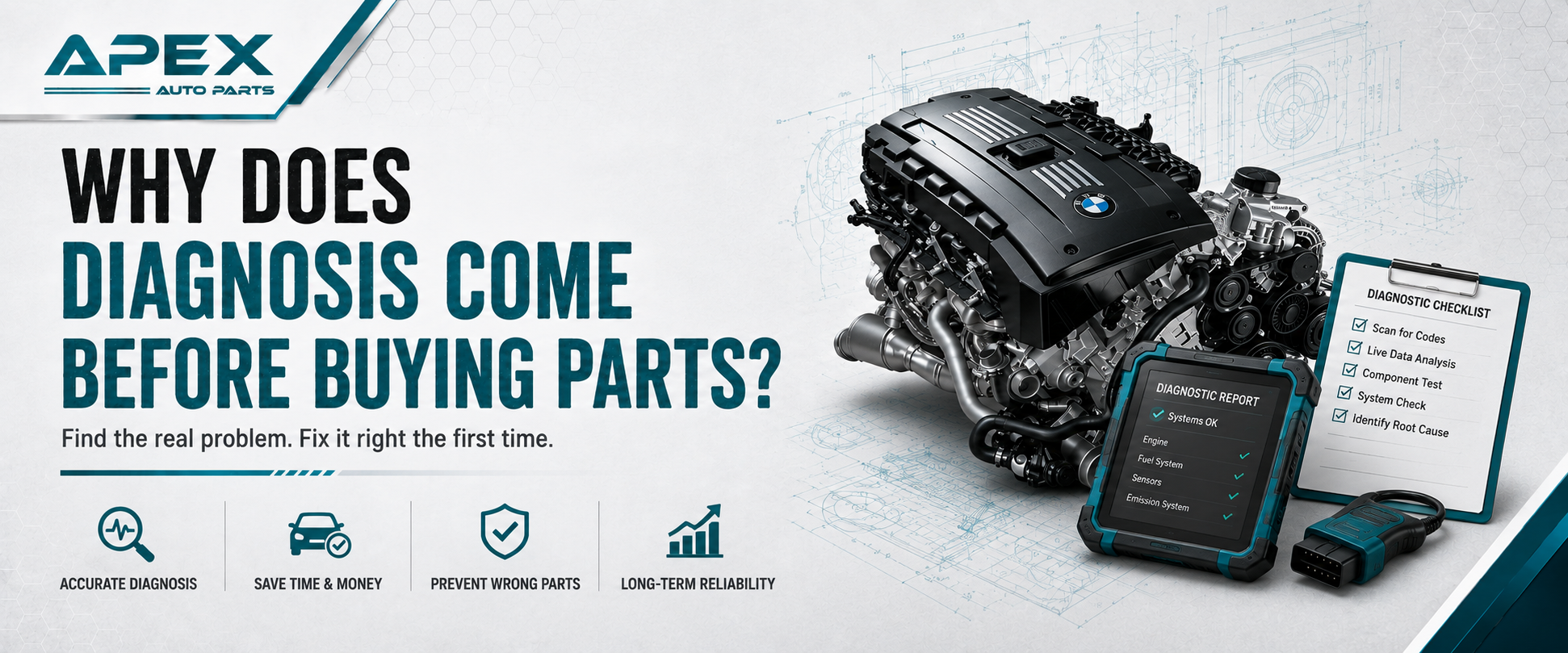
Several N54 faults copy each other.
A long crank may come from the high-pressure pump, low-pressure pump, leaking injectors, a weak battery, or a sensor fault.
A misfire may come from a plug, coil, injector, carbon deposit, low compression, fuel pressure problem, or VANOS fault.
Low boost may come from a wastegate, vacuum line, boost pipe, control valve, turbocharger, or software issue.
A problem-solving mechanic should begin with the symptom and test the system. They should not begin by ordering the most expensive part.
Useful checks include:
- Full fault code scan
- Live fuel pressure readings
- Boost pressure test
- Smoke test for air leaks
- Injector balance and calibration check
- Compression test
- Cooling system check
- Oil pressure test
- Spark plug inspection
- Crankcase pressure test
This process saves money and reduces repeat repairs.
What BMWs have the N54 Engine?
People searching for what BMW has with the N54 engine should remember that BMW changed engines during some model runs. A badge alone is not always enough to confirm the engine.
Common N54-powered models include:
- BMW 135i Coupe and Convertible
- BMW 335i Saloon, Coupe, Convertible, and Touring in some markets
- BMW 335xi and later 335i drive versions
- BMW 535i and 535xi
- BMW X6 xDrive35i
- BMW Z4 sDrive35i
- BMW 740i and 740Li in certain markets
- BMW 335is
- BMW Z4 sDrive35is
- BMW 1 Series M Coupe
BMW warranty documents list N54 applications across the E60, E61, E71, E82, E88, E89, E90, E92, E93, F01, and F02 model families. BMW also confirmed tuned twin-turbo straight-six versions in the 335is, Z4 sDrive35is, and 1 Series M Coupe.
Always confirm the engine with the VIN, production date, engine code, or original part information before ordering.
How to Improve BMW N54 Reliability?
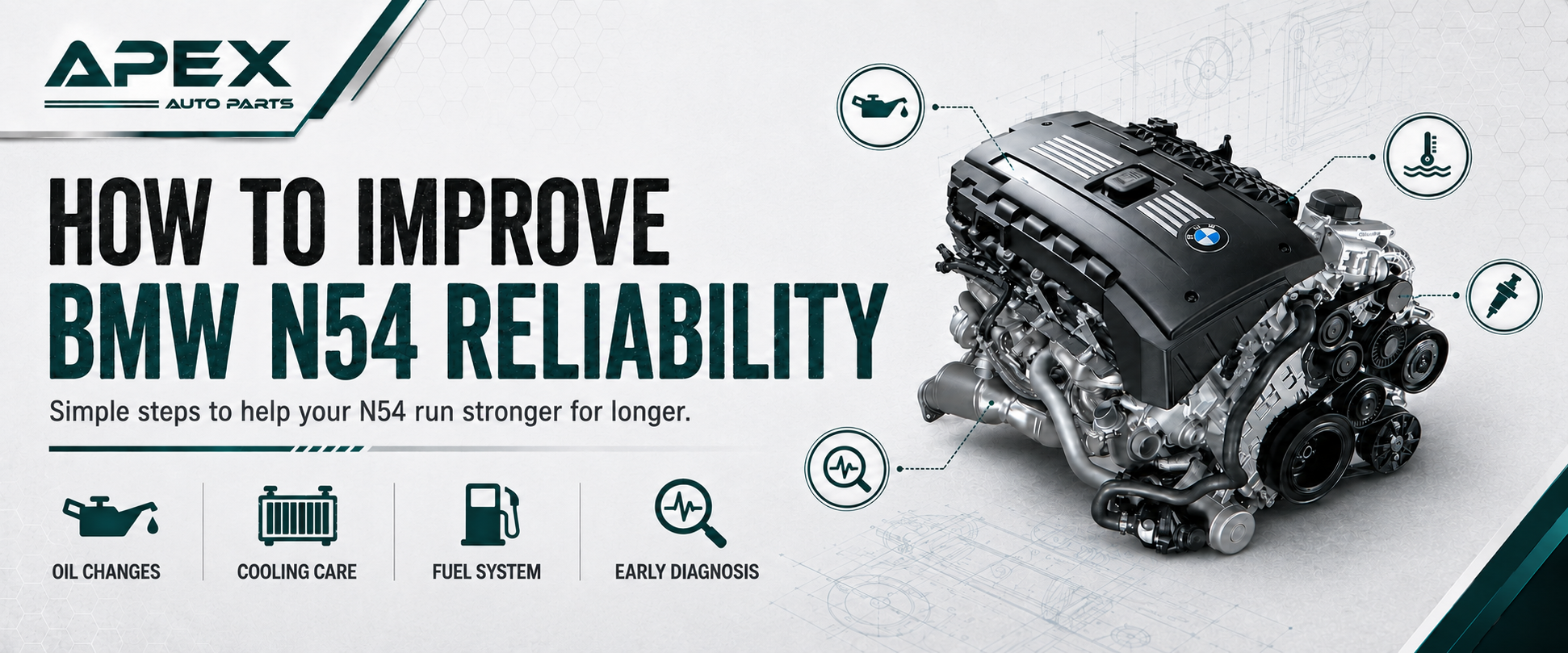
The best way to improve BMW N54 reliability is to start with preventive maintenance, not performance upgrades.
Change the oil and filter regularly using the correct specification. Check the oil level often, especially on a tuned car.
Inspect the cooling system. If the electric water pump has an unknown history and the car has high mileage, watch for stored pump faults and unusual fan operation.
Check spark plugs more often on cars running a bigger boost. A plug that works on a standard engine may struggle under extra cylinder pressure.
Do not ignore injector misfires or long starting times. Fuel system problems rarely fix themselves.
Useful maintenance steps include:
- Change oil and filter on time
- Keep the coolant level correct
- Check the electric water pump
- Replace worn spark plugs
- Test weak ignition coils
- Repair oil leaks early
- Check crankcase ventilation
- Clean intake valves when diagnosis shows buildup
- Test boost hoses for leaks
- Use the correct fuel for the engine map
- Avoid full power before the oil is warm
- Scan fault codes before they multiply
Maintenance is cheaper than rebuilding an overheated or oil-starved engine.
BMW N54 Tuning and Reliability
Tuning is one of the main reasons the BMW N54 remains popular.
Software can boost and change fuel and ignition settings. Supporting upgrades may include an intercooler, charge pipe, intake parts, exhaust parts, fuel system components, and better cooling.
BMW produced stronger factory versions of the engine in cars such as the 335is, Z4 sDrive35is, and 1 Series M Coupe. This shows the basic design had room for more performance, but it does not mean every old N54 is ready for more boost.
Before tuning, check:
- Compression
- Fuel pressure
- Injector condition
- Spark plugs and coils
- Turbo wastegates
- Cooling system
- Oil pressure
- Boost leaks
- Crankcase ventilation
- Existing fault codes
A healthy standard engine is a better starting point than a damaged engine with performance parts.
The safest tune is one that matches the fuel quality, hardware, cooling ability, and condition of the engine.
What to Check Before Buying an N54 BMW?
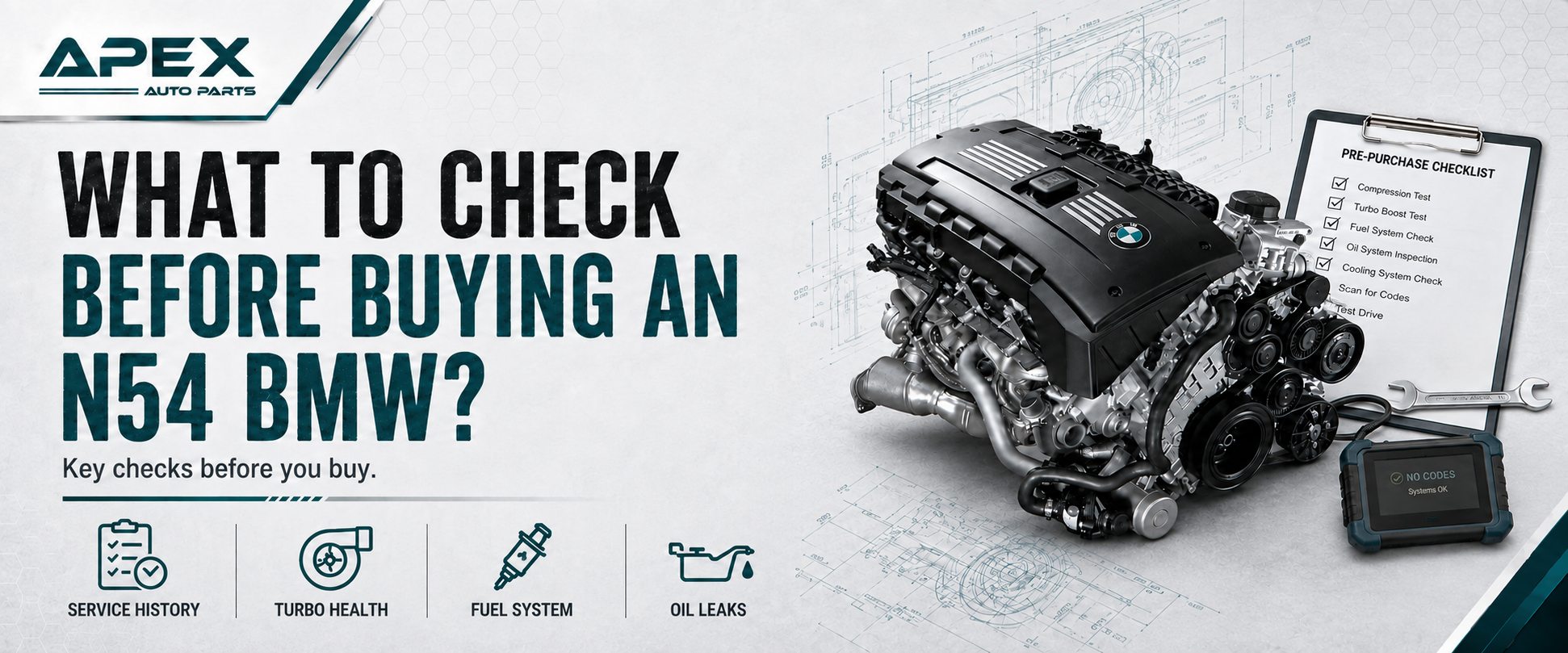
A cheap N54 BMW may look attractive, but repair history matters more than paintwork or wheels.
Start the engine when it is cold. Listen for wastegate rattle, rough running, or a long crank. Watch the exhaust for smoke.
Drive the car under gentle and stronger acceleration. Power should build smoothly without warning lights or limp mode.
Ask for records showing injector, fuel pump, turbo, water pump, thermostat, carbon cleaning, and oil leak repairs.
Check:
- Cold starting time
- Injector index and replacement history
- Turbo noise
- Boost pressure
- Electric water pump history
- Oil and coolant leaks
- Misfire codes
- Oil condition
- Smoke from the exhaust
- Evidence of tuning
- Quality of fitted modifications
- Service records
A standard car with good records may be a safer purchase than a highly tuned car with no proof of maintenance.
How Apex Auto Parts Can Help
Apex Auto Parts supports drivers, garages, mechanics, rebuilders, and trade buyers with engine parts for repair and rebuild work.
For the BMW N54 engine, this may include gaskets, seals, timing parts, bearings, pistons, rings, oil system parts, cooling parts, sensors, ignition parts, and related repair components.
Part matching matters because BMW made production changes, and some parts vary by model, year, and engine version. Injector index differences are one clear example.
Providing the registration, VIN, engine code, old part number, and clear photos can help reduce wrong orders.
The aim is not to replace parts at random. It is to identify the real fault, choose the correct components, and help the repair last.
Final Thoughts
The BMW N54 is powerful, smooth, tunable, and still exciting to drive. It also needs more care than a simple naturally aspirated petrol engine.
The main BMW N54 engine problems involve the fuel pump, injectors, turbo wastegates, carbon buildup, cooling system, oil leaks, VANOS system, and ignition parts.
These faults do not automatically make the engine bad. Many can be repaired successfully when diagnosed early.
Good BMW N54 reliability comes from strong service history, sensible tuning, a healthy cooling system, clean oil, correct fuel pressure, and fast attention to warning signs.
The worst approach is buying parts based on guesses or continuing to drive through overheating, low oil pressure, heavy misfires, or serious engine noise.
Treat the engine properly, use parts that fit, and repair the cause rather than only the symptom. That is the best way to keep an N54-powered BMW running well.
FAQs
1. Is the BMW N54 engine reliable?
The BMW N54 engine can be reliable when it receives regular servicing and early repairs. The main engine is strong, but fuel pumps, injectors, turbos, cooling parts, seals, and ignition parts may fail with age. Maintenance history matters more than mileage alone when judging an N54.
2. What are the most common BMW N54 engine problems?
Common BMW N54 engine problems include high-pressure fuel pump failure, leaking injectors, turbo wastegate rattle, carbon buildup, electric water pump failure, oil leaks, VANOS faults, bad spark plugs, weak ignition coils, and boost leaks. Proper testing is needed because several faults can cause similar symptoms.
3. Which BMW has the N54 engine?
Drivers asking what BMW has the n54 engine should look at models such as the 135i, 335i, 535i, X6 xDrive35i, Z4 sDrive35i, 740i, 335is, Z4 sDrive35is, and 1 Series M Coupe. Exact use depends on model year and market.
4. Why does the BMW N54 have fuel pump problems?
The BMW N54 uses a high-pressure fuel pump for its direct injection system. A weak pump can cause long starting times, reduced power, hesitation, limp mode, and fuel pressure codes. The low-pressure supply and sensors should also be tested before the high pressure pump is replaced.
5. How do I know if BMW N54 injectors are failing?
Faulty injectors may cause cold start shaking, misfires, fuel smell, smoke, poor economy, or wet spark plugs. On the BMW N54 engine, injector index and coding matter during replacement. A leaking injector should be repaired quickly because excess fuel can contaminate the engine oil.
6. Is the turbo wastegate rattle serious on a BMW N54?
A wastegate rattle does not always mean immediate engine failure, but it should be checked. On the BMW N54 twin-turbo engine, worn wastegate parts can cause noise, weak boost, and control faults. Diagnosis should include actuators, vacuum lines, software, linkage, and turbo condition before replacement.
7. Can carbon buildup cause BMW N54 misfires?
Yes. Carbon can collect on the intake valves because the BMW N54 uses direct injection. Heavy deposits may restrict airflow and cause rough idle, hesitation, weak performance, and misfires. Cleaning should be carried out after diagnosis confirms the buildup rather than being treated as an automatic repair.
8. What causes complete BMW N54 engine failure?
Serious BMW N54 engine failure can result from overheating, low oil pressure, oil starvation, severe detonation, leaking injectors, poor tuning, turbo failure, or continued driving with heavy misfires. Stopping early when warning signs appear can prevent a repairable problem from becoming a full engine replacement.
9. Is the BMW N54 good for tuning?
The BMW N54 has strong tuning potential because its twin-turbo setup responds well to software and supporting upgrades. However, the fuel system, cooling system, injectors, ignition parts, turbochargers, and engine compression should be checked first. Tuning a weak engine usually makes existing problems appear faster.
10. How can I improve BMW N54 reliability?
To improve BMW N54 reliability, change oil regularly, maintain the cooling system, repair leaks early, use healthy injectors, replace worn plugs, test weak coils, check boost pipes, and avoid poor-quality tuning. Fault codes and warning signs should be investigated before the car is driven hard.
References :
BMW Group Press Club
BMW Technical Bulletin