
 info@apexautoparts.co.uk
 +44 203 915 7535
 Safe & Fast Shipping
 Whish List
 Compare
 Sign In



The Land Rover Discovery 2 remains one of the most recognized older Land Rover models, especially among drivers who want a strong four-wheel-drive vehicle with proper off-road ability, useful towing strength and a practical cabin. It also has the kind of simple, tough character that many modern SUVs no longer offer. However, anyone thinking about buying one today needs to pay very close attention to the engine, because the condition of the engine can make the difference between owning a dependable classic and taking on an expensive repair project.
The Land Rover Discovery Series 2 was offered with both diesel and petrol engines, and the best option depends on how you plan to use the vehicle. In the UK, the Td5 diesel became the most common and most familiar engine choice, while V8 petrol versions were also available for drivers who wanted smoother power and a more traditional petrol driving feel. Both can be enjoyable when they are maintained properly, but both also have known faults that should be checked before purchase.
A good Land Rover Discovery 2 engine can cover high mileage and continue working well for many years, but that depends heavily on regular servicing, correct oil, proper cooling system care and good quality replacement parts. If maintenance has been ignored, even a vehicle that looks clean from the outside can hide serious mechanical problems underneath. This guide explains the main engine options, the common Land Rover Discovery 2 engine problems, what to inspect before buying, and how to approach repairs without wasting money on unnecessary parts.
Understanding the Land Rover Discovery 2
The Land Rover Discovery 2 was developed as the next step after the original Discovery, but it was more than just a small update. Although the overall shape remained familiar, Land Rover changed many areas of the vehicle, including the suspension, electronics, braking systems, and engine management. The result was a more refined vehicle that still kept the strong four-wheel-drive ability that Discovery owners expected.
For many buyers today, the Discovery 2 offers a lot of vehicles for the money. It has a spacious cabin, good visibility, strong towing ability and enough off-road performance for farm use, countryside driving, green lanes and more serious off-road work. The problem is that age now plays a bigger role than the original design. Even a well-kept example may need work on hoses, seals, sensors, wiring, cooling parts and other components that naturally wear with time.
This is why the engine choice should never be judged only by fuel economy or performance. A well-maintained engine with good service history is usually a better choice than the supposedly better engine that has been neglected. Condition, maintenance records and evidence of proper repairs should always come before the badge, mileage or seller claims.
What Engine Options Were Available?
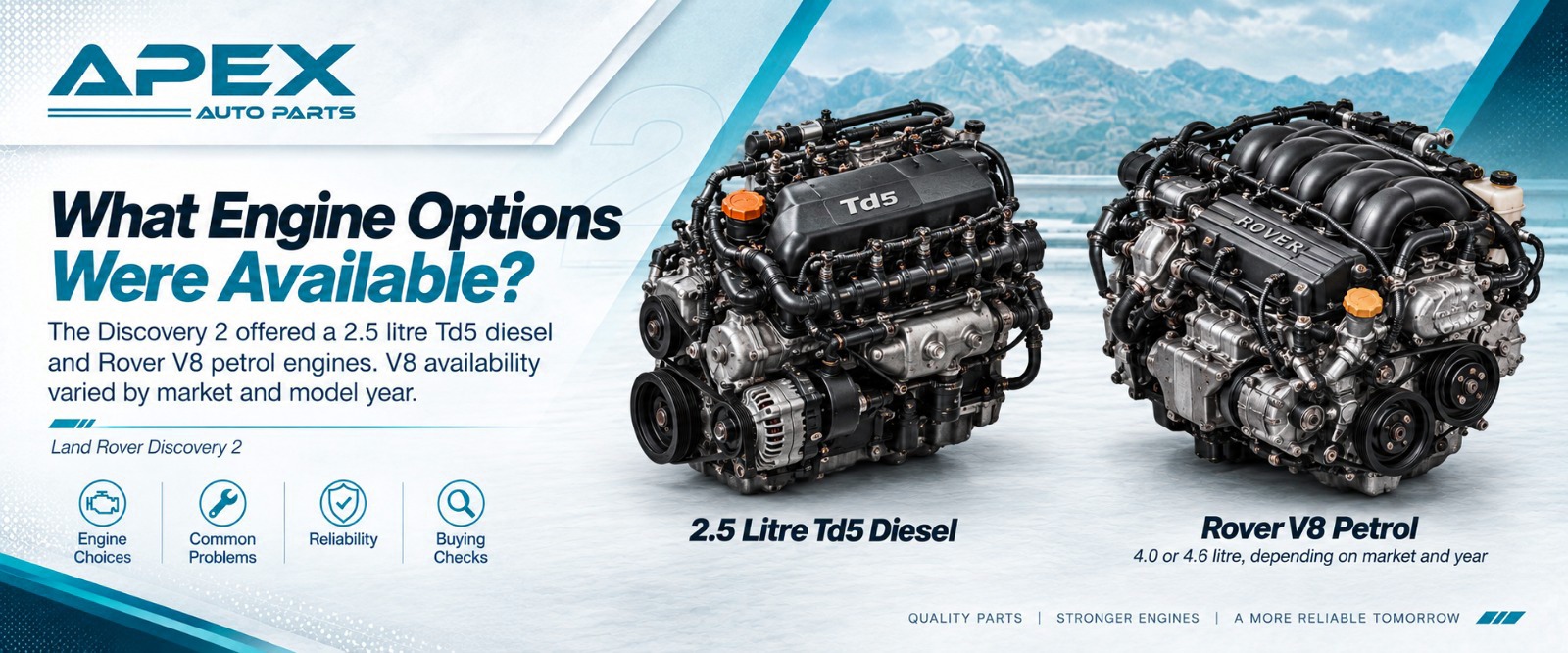
The two main engines most people associate with the Land Rover Discovery 2 are the 2.5 litre Td5 turbo diesel and the Rover V8 petrol engine. The Td5 became especially popular in the UK because it offered useful pulling power, reasonable fuel economy for a large four-wheel-drive vehicle, and a design that many Land Rover specialists know well.
Petrol versions used V8 engines, with 4.0-litre and 4.6-litre versions available depending on market and model year. These engines give the vehicle a very different character. They are smoother, quieter and more relaxed than the diesel, but they also use much more fuel, particularly during town driving, short trips or towing.
No engine is automatically right for every buyer. The Td5 is often the practical choice, while the V8 appeals more to drivers who enjoy smooth petrol power and are less worried about fuel costs. In both cases, the most important question is whether the engine has been looked after properly.
The Td5 Diesel Engine Explained
The Td5 is a 2.5 litre five-cylinder turbo diesel engine and is probably the most common Land Rover Discovery 2 engine found in the UK. It was designed to provide strong low-speed pulling power, which suits a large and heavy four-wheel-drive vehicle very well. This makes it useful for towing caravans, trailers and horse boxes while also giving good control during off-road driving.
One of the main reasons owners like the Td5 is that it can cover high mileage when serviced correctly. It is not unusual to find engines that have completed well over 100,000 miles and continue to run reliably. However, high mileage is not something to fear on its own. A high-mileage Td5 with regular oil changes and good service history can be a far better buy than a lower-mileage example that has missed services and suffered repeated overheating.
The engine should be given the correct oil and filters, and service intervals should not be stretched too far. The turbo, internal bearings and lubrication system all depend on clean oil. Cooling system maintenance is just as important, because overheating can quickly turn a manageable repair into a major engine problem.
How Should the Td5 Feel on the Road?
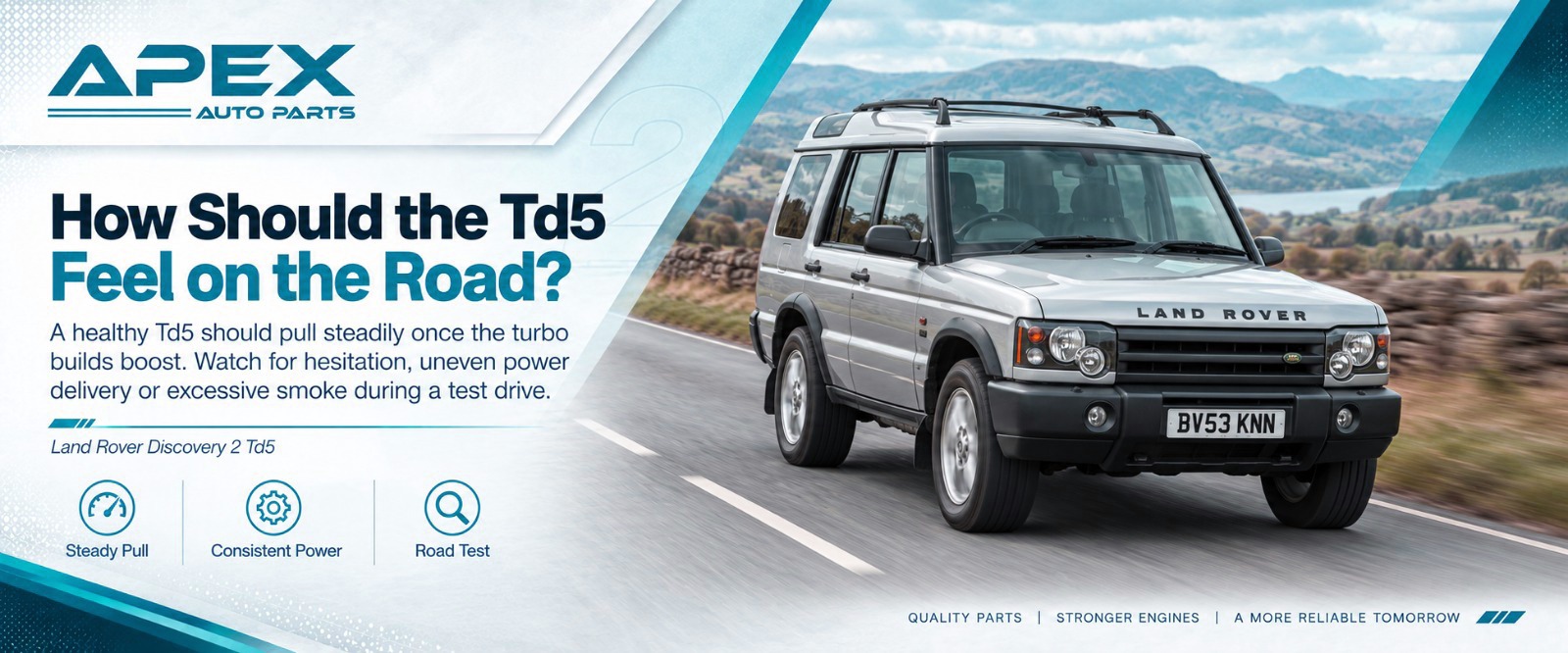
A healthy Td5 should feel strong and steady rather than fast. The Discovery 2 is a heavy vehicle, so you should not expect sharp acceleration like a modern SUV. What you should expect is smooth power delivery, good pulling strength and a clear increase in power once the turbo begins to work.
If the vehicle feels unusually slow, struggles on hills, or produces heavy smoke under normal acceleration, it needs further inspection. Loss of power can come from split turbo hoses, fuel supply problems, airflow sensor faults, boost control issues, or electrical problems. It is important not to assume that the engine itself is worn out without proper testing.
A good mechanic will check the whole system before replacing parts. This is especially important on older vehicles because several smaller faults can produce similar symptoms. Replacing expensive parts without testing often wastes money and may leave the original problem unchanged.
Common Land Rover Discovery 2 Engine Problems on the Td5
The Td5 has several known issues that buyers should understand, but many of them are manageable when they are found early. One of the most common problems is oil contamination in the injector wiring loom. Engine oil can travel through the loom and reach the electrical connection near the engine control unit, which may cause poor running, misfires or other electrical faults.
Cooling system problems are another important area. Old hoses, weak connections, leaking radiators and tired expansion tanks can all lead to coolant loss. A small leak may not look serious at first, but if the engine is repeatedly driven with low coolant, the risk of overheating becomes much higher.
Fuel delivery problems can also affect starting and performance. A TD5 that takes a long time to start, cuts out, or feels weak may have an issue with fuel pressure, the fuel pump, injectors, or related electrical parts. The correct approach is to test fuel pressure and inspect the system before ordering expensive components.
Turbo and air intake problems are also common on older vehicles. Rubber hoses can soften, split, or become damaged internally. This can cause poor boost pressure and make the engine feel slow. A proper inspection should include all major air hoses, turbo connections, and visible intake pipes.
Td5 Fuel System Problems
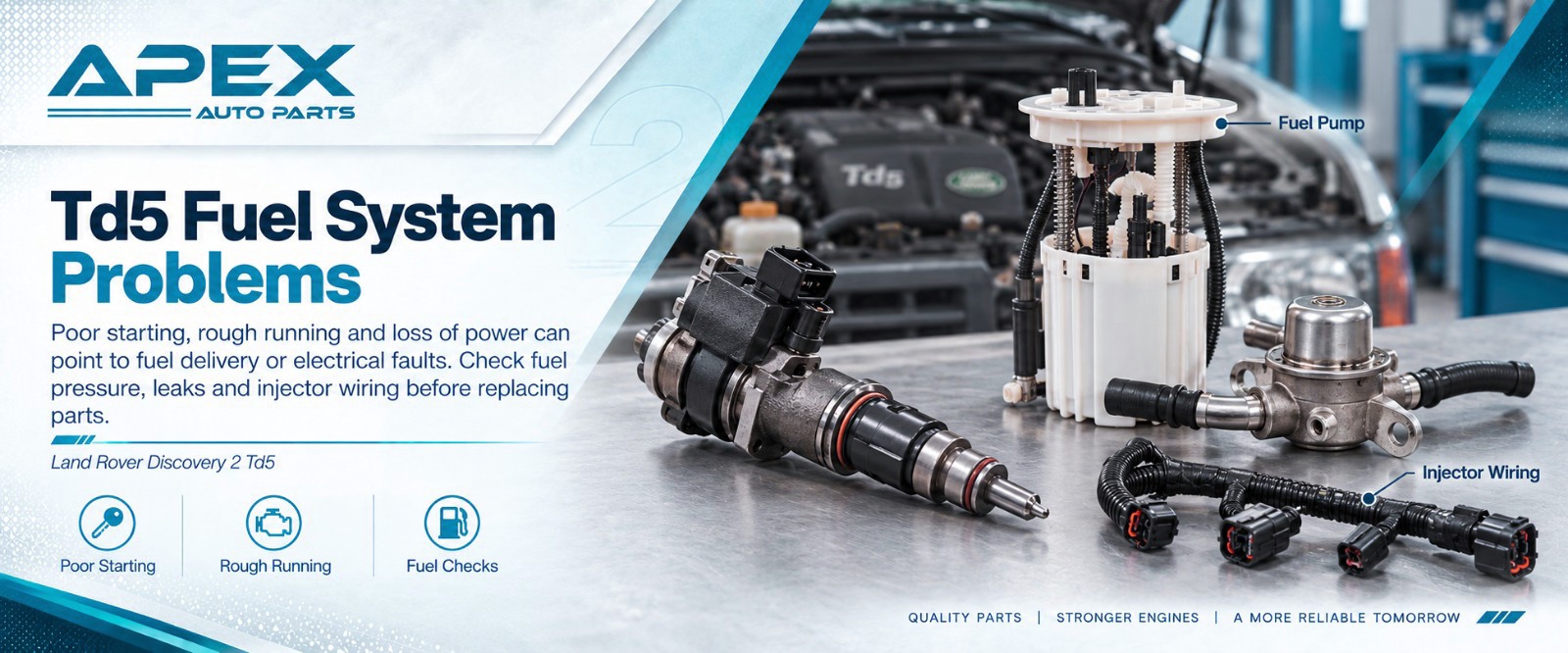
The Td5 uses an electronically controlled diesel fuel system, and this means a fault can come from either the fuel side or the electrical side. When everything is working correctly, the engine should start cleanly and deliver steady power. When there is a fault, symptoms may include rough running, poor starting, hesitation, or a clear drop in performance.
The mistake many owners make is replacing injectors too early. Injectors are important, but they are not the only reason a Td5 may run badly. A weak fuel pump, wiring problem, pressure fault, or sensor issue can create similar symptoms. That is why proper diagnosis matters so much.
At Apex Auto Parts, the best approach is to match replacement components to the exact engine and vehicle details before ordering. This becomes especially important with Land Rover Discovery 2 engine parts because different specifications may have been used across model years. Correct identification reduces the risk of fitting the wrong component and saves both workshop time and money.
Td5 Turbo and Intake Problems
The turbo system is a major part of how the Td5 produces usable power. If the turbo is not receiving or delivering air correctly, the Discovery can feel extremely slow. This does not always mean the turbocharger itself has failed.
The first step should be checking hoses and connections. Older rubber hoses can become soft with age, and some may collapse internally even when they look acceptable from the outside. Split hoses can also leak boost pressure, which reduces performance and may increase smoke.
A mechanic should also check the airflow sensor, boost control system, and intake pipes. Replacing the turbo before these basic checks is a common and expensive mistake. A good diagnosis should always come before major parts replacement.
Cooling System Problems on the Td5
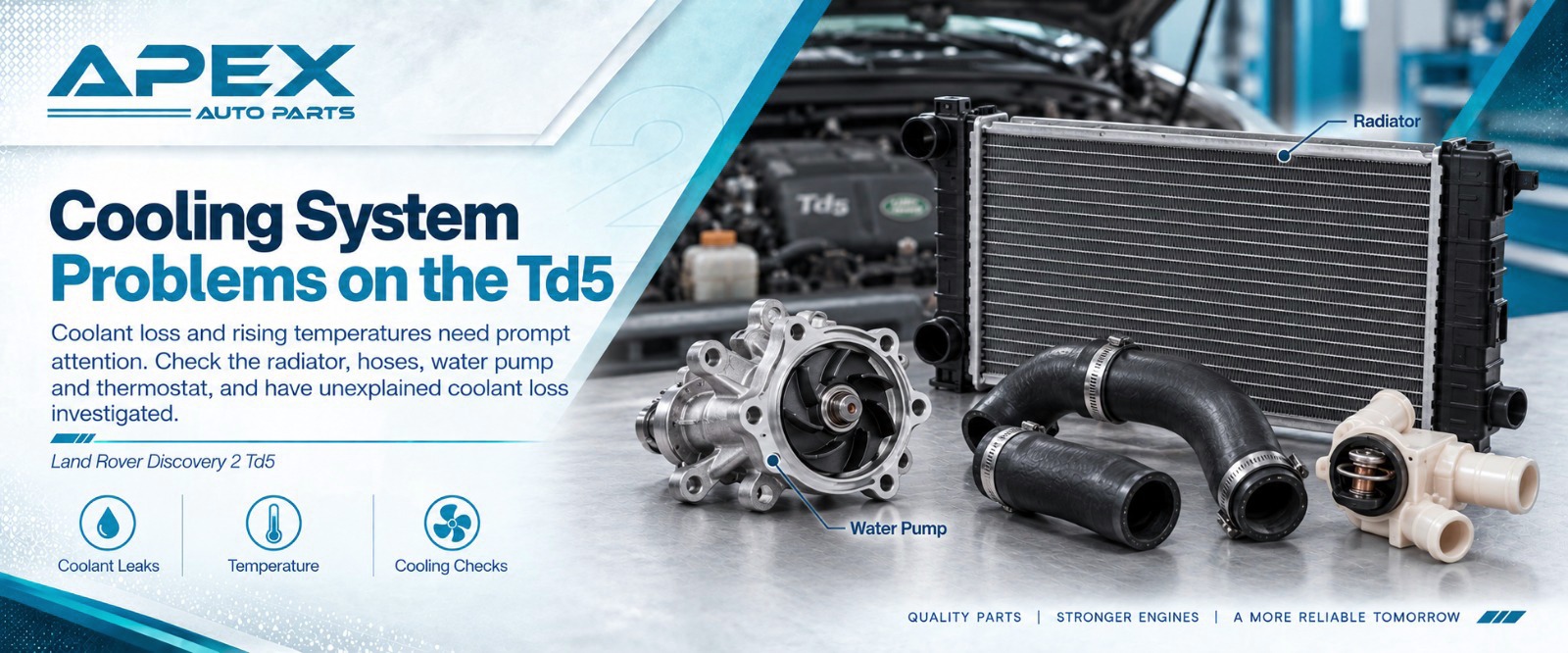
Cooling system conditions should be treated as one of the most important checks on any Discovery 2. The engine relies on the cooling system to control temperature, and repeated overheating can cause serious damage.
When inspecting a vehicle, check the coolant level only when the engine is cold. Look around the expansion tank, radiator, hoses and connections for dried coolant marks or signs of recent leaks. If the seller says the coolant needs topping up regularly, do not accept that as normal. Coolant should not disappear without a reason.
During the test drive, keep an eye on the temperature gauge. The engine should warm up normally and then remain stable. If the temperature starts rising, stop and investigate rather than continuing to drive. Overheating is not something to ignore on an older Land Rover.
The V8 Petrol Engine Explained
The V8 petrol engine gives the Land Rover Discovery 2 a completely different driving feel. It is smoother than the Td5, quieter at idle, and produces a more relaxed type of power. For many owners, the sound and feel of the V8 are a major part of the appeal.
The main disadvantage is fuel consumption. A large petrol V8 in a heavy four-wheel drive vehicle can use a lot of fuel, especially around town or during short journeys. This can make it expensive for daily commuting, although fuel use may be less important for someone who only uses the vehicle at weekends.
A well-maintained V8 can still be a very enjoyable choice, but buyers should pay close attention to cooling system condition, oil pressure, engine noise and service history. These engines do not respond well to repeated overheating, so any sign of coolant loss should be taken seriously.
The 4.0 Litre V8
The 4.0 litre Rover V8 was fitted to many Discovery 2 petrol models and is known for smooth power delivery and a strong engine note. The design was already familiar across several Land Rover and Rover vehicles, which means there is still plenty of repair knowledge and parts support available.
When inspecting one, pay particular attention to the cooling system. The engine should reach normal operating temperature without becoming too hot, and the coolant level should remain stable. Repeated coolant loss, pressure in the cooling system, or overheating should never be ignored.
Oil leaks are also worth checking carefully. Older V8 engines can develop leaks around seals and gaskets. A light oil mist is very different from a serious leak that leaves oil running down the engine or dripping onto the ground.
The 4.6 Litre V8
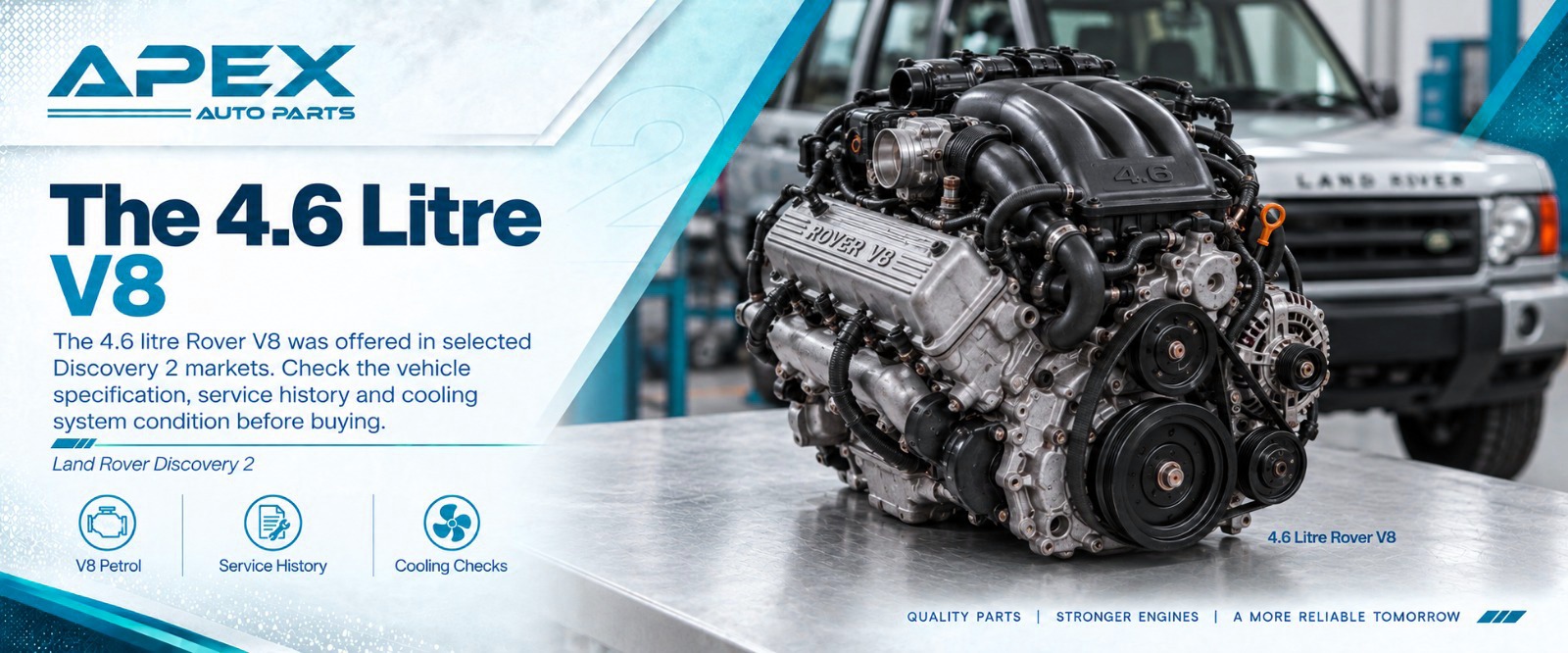
The 4.6 litre V8 was fitted to certain Discovery 2 models and markets. It offers more engine capacity than the 4.0-litre version and can provide stronger performance, particularly in a heavy vehicle.
The same basic checks still apply. You need to look at coolant condition, oil level, engine noise, idle quality and service history. If the engine has already been rebuilt, ask for invoices and details of the work carried out.
A rebuilt engine should not automatically be seen as a bad thing. If the work was completed properly using good parts, it may actually be a stronger option than an untouched engine with unknown internal wear. The important point is having proof of what was done.
Common V8 Engine Problems
Land Rover Discovery 2 engine problems on V8 models often involve oil leaks, coolant loss, overheating, rough running, and ignition faults. Some engines may also develop internal wear if they have been overheated or poorly serviced.
A rough idle does not always mean the engine needs rebuilding. It could be caused by spark plugs, ignition leads, sensors, or another smaller fault. On the other hand, a heavy knocking noise, major coolant loss or repeated overheating can point towards a more serious problem.
This is why a full inspection is worth the money. A proper mechanic will look at the engine as a complete system rather than guessing from one symptom.
Why Is Overheating Such a Serious Warning Sign?
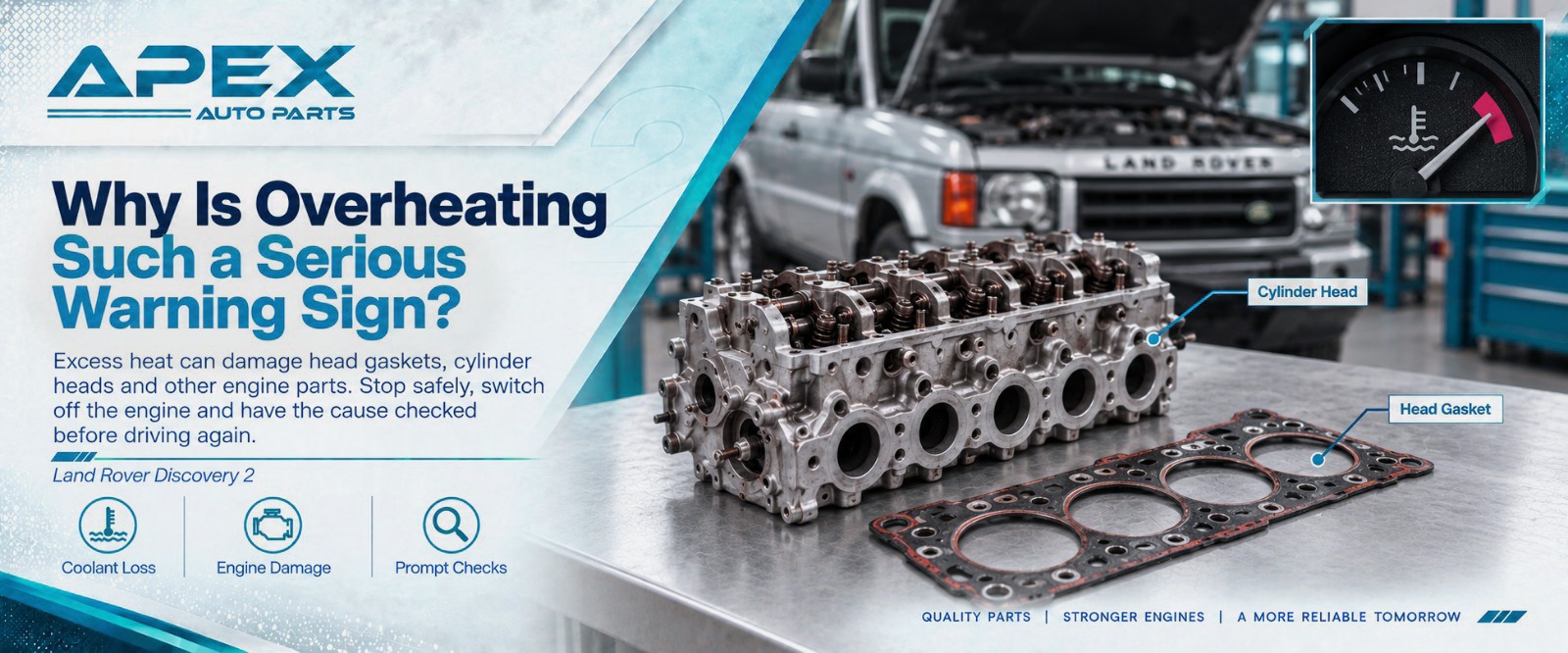
Overheating is one of the most important warning signs on any Land Rover Discovery 2 engine. A small cooling system fault can become a major repair if the vehicle continues to be driven while hot.
The problem may begin with something simple such as a weak hose, leaking radiator, damaged expansion tank, or faulty thermostat. If it is ignored, the engine can suffer much more expensive damage.
When buying a Discovery 2, always ask whether it has ever overheated. Check the coolant when cold, watch the temperature during the test drive, and inspect for fresh leaks afterwards. If the seller says the vehicle uses coolant but does not know why, treat that as a problem that needs proper diagnosis before purchase.
Which Engine Is Better for Towing?
The Td5 is usually the more practical choice for towing because it produces useful low-speed pulling power and normally uses less fuel than the V8. This makes it suitable for caravans, trailers and other loads where the vehicle may spend long periods working under extra strain.
The V8 is also capable of towing and can feel smooth under load, but fuel use can increase heavily. For someone towing long distances on a regular basis, this can make a noticeable difference to running costs.
No matter which engine you choose, the rest of the drivetrain must also be checked. A strong engine is not much use if the gearbox, transfer box, clutch or cooling system is already worn.
Which Engine Is Better for Daily Driving?
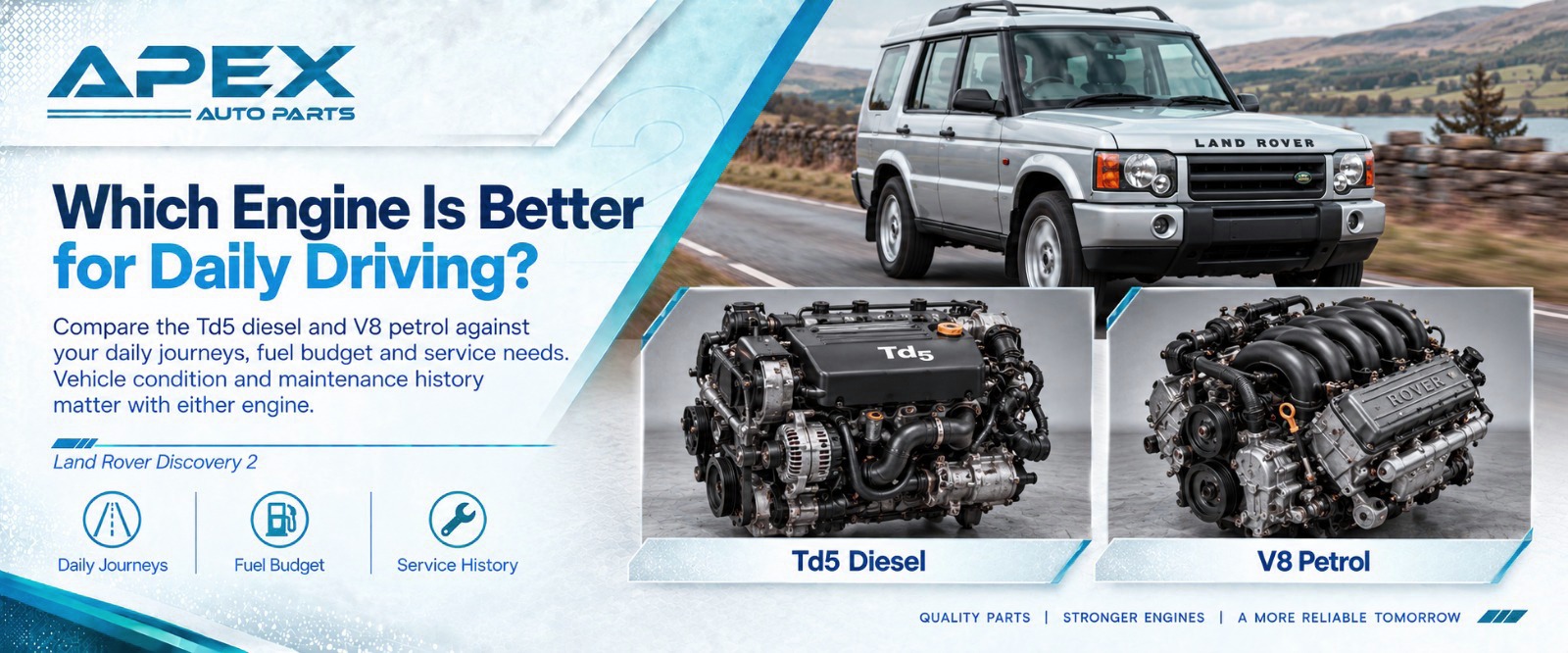
For most UK drivers, the Td5 is usually the more sensible daily option because fuel costs are lower and the engine suits the weight of the Discovery well. It still provides enough power for motorway driving, towing and normal use.
The V8 can be more enjoyable if you prefer smooth petrol power and do not cover many miles. It may suit someone who uses the vehicle mainly at weekends or keeps it as a second car.
The best engine is still the one with a better maintenance history. A neglected Td5 can easily cost more to repair than a well-looked-after V8.
What to Check Before Buying?
Before buying a Land Rover Discovery 2, try to inspect the engine when it is completely cold. Cold starting can reveal problems that may be hidden after the engine has already been warmed up.
Check the oil level, coolant level, hoses and visible leaks before starting. Once the engine is running, listen for knocking, tapping or uneven idle. Look at the exhaust and watch for excessive smoke.
Take the vehicle on a proper test drive and allow it to reach full operating temperature. Check acceleration, temperature, gearbox behavior and any warning lights. After the drive, inspect the engine bay again for fresh leaks or unusual smells.
If anything feels wrong, do not rely on the seller's explanation. Have the vehicle inspected by someone who understands older Land Rovers.
Engine Oil and Service History
Engine oil condition can tell you a lot about how the vehicle has been maintained. Diesel oil can become dark quite quickly, so color alone is not enough to judge the condition. What matters more is whether the level is correct, whether the oil contains contamination, and whether the owner can show evidence of regular oil changes.
Milky oil may suggest coolant contamination, while heavy sludge can point towards poor servicing. Ask when the oil and filters were last changed and look for invoices if they are available.
A clear service history gives you much more confidence when buying an older vehicle. It also helps you understand what work may be needed next.
Buying Land Rover Discovery 2 Engine Parts
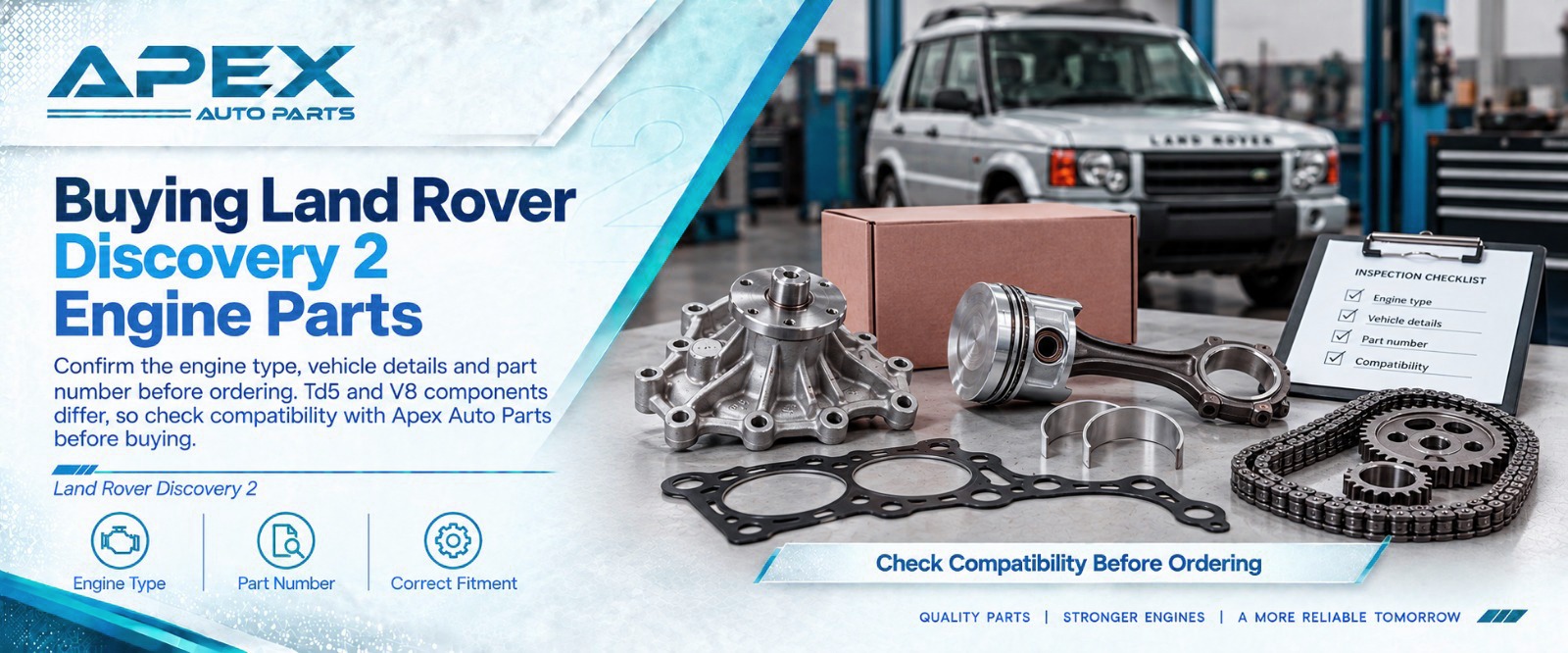
Buying the correct Land Rover Discovery 2 engine parts starts with identifying the exact engine fitted to the vehicle. You should never order based only on the model name because different engines and different specifications were used.
Before ordering, check the model year, engine type, engine number where needed, and the part number of the existing component. This reduces the risk of receiving the wrong part.
Apex Auto Parts can help with engine components when the correct vehicle information is supplied. For older Land Rovers, this is especially useful because previous owners may have changed parts or fitted updated components over the years.
Using the right part also helps avoid repeat repairs. Cheap or badly matched parts may save money at the time of purchase but can create more workshop costs later.
Why Proper Diagnosis Saves Money?
One of the biggest mistakes Discovery 2 owners make is replacing parts based on guesswork. A vehicle may lose power, and the turbo is blamed immediately. The turbo is replaced, but the problem remains because the real issue was a damaged hose or sensor.
The same can happen with injectors, fuel pumps, and electrical parts. Fault codes can help guide diagnosis, but they should not be treated as a complete answer.
A good mechanic will test the system, check the basic components, and confirm the fault before ordering expensive Land Rover Discovery 2 engine parts. This approach is slower than guessing, but it usually saves money in the long run.
Is a high-mileage Discovery 2 worth buying?
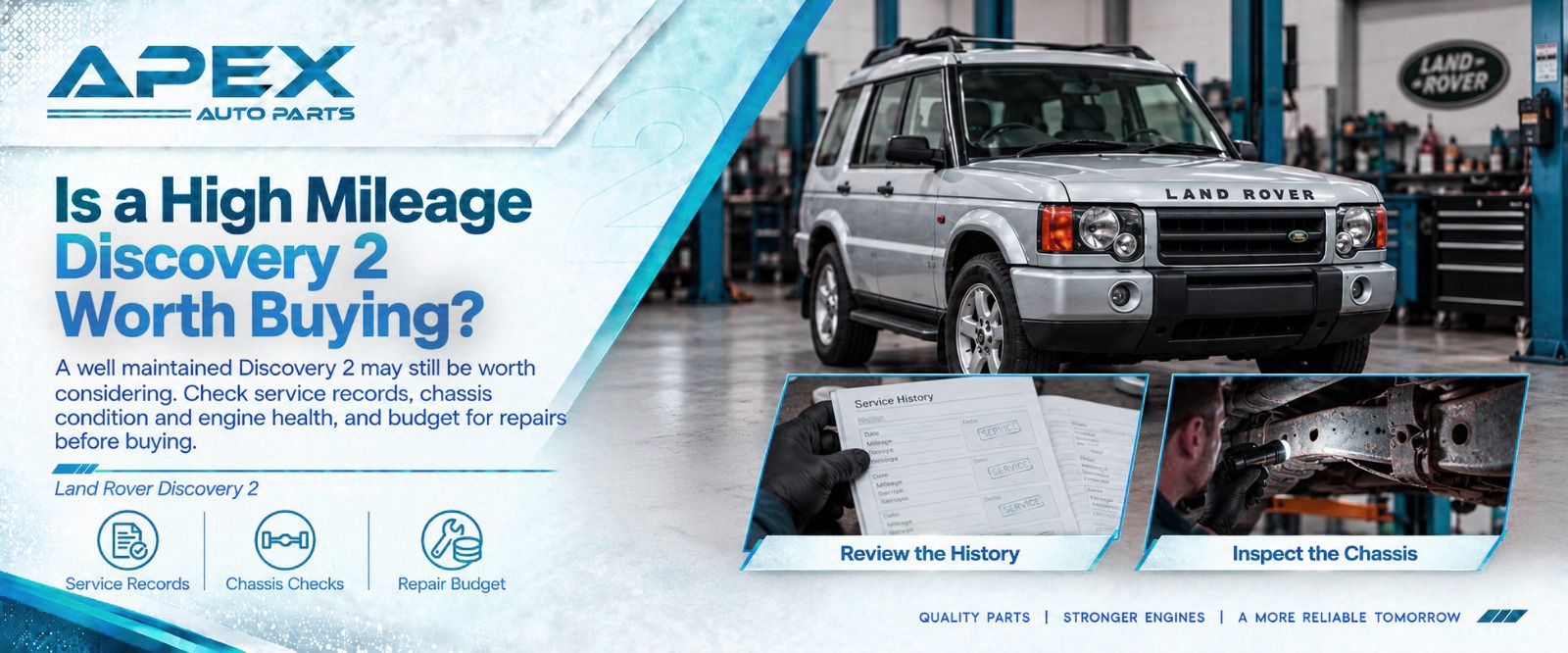
A high-mileage Discovery 2 can still be a good purchase if it has been maintained properly. Mileage alone does not tell you how healthy the engine is.
A vehicle with 150,000 miles and a strong service history may be in better condition than one with 80,000 miles that has missed oil changes and suffered overheating. The way the vehicle has been used also matters.
Look at the full picture, including engine condition, cooling system health, gearbox operation, chassis condition and previous repairs. Good history is often more valuable than a low number on the dashboard.
Final Thoughts
The Land Rover Discovery 2 is still a very capable and enjoyable vehicle when you find the right example. The Td5 diesel is usually the practical choice for regular use, towing and drivers who want lower fuel costs, while the V8 petrol engine offers smoother power and a more relaxed driving feel.
Neither option should be bought without a proper inspection. Cooling system condition, oil leaks, engine noise, service history and starting behavior all need to be checked carefully.
If Land Rover Discovery 2 engine problems are found, diagnose them properly before ordering parts. Good diagnosis and correct parts matching are the best ways to keep repair costs under control.
When you need Land Rover Discovery 2 engine parts, using the correct specification and buying from a trusted supplier such as Apex Auto Parts can help you avoid fitting problems and repeat repairs.
A Discovery 2 can still be a strong purchase today, but the best one is not always the cheapest or lowest mileage example. The best one is usually the vehicle that has been serviced regularly, repaired properly and cared for by previous owners.
FAQS
1. What engine is in the Land Rover Discovery 2?
The Land Rover Discovery 2 was mainly available with the 2.5 litre Td5 turbo diesel and Rover V8 petrol engines. Many petrol models used the 4.0 litre V8, while some markets also received a 4.6 litre version. The exact engine depends on model year, market and vehicle specification.
2. Is the Land Rover Discovery 2 Td5 engine reliable?
A properly maintained TD5 can be a reliable engine, and many examples have covered high mileage. Regular oil changes, cooling system care and early repair of fuel or wiring problems are very important. Buyers should always check cold starting, smoke, coolant condition, oil leaks and service history before purchasing.
3. What are common Land Rover Discovery 2 engine problems?
Common Land Rover Discovery 2 engine problems include coolant leaks, oil leaks, overheating, poor starting, loss of power, and fuel system faults. Td5 engines can also suffer from injector loom issues, while V8 models need careful cooling system checks. Proper diagnosis is important before replacing expensive engine parts.
4. Is the TD5 or V8 Discovery 2 better?
The TD5 usually suits drivers who want better fuel economy, strong pulling power and regular daily use. The V8 offers smoother performance and a more enjoyable petrol engine sound, but fuel costs are higher. In most cases, the better choice is the engine with the strongest maintenance history.
5. How long can a Land Rover Discovery 2 engine last?
There is no fixed mileage limit for a Land Rover Discovery 2 engine. A well-serviced engine can cover very high mileage, while a neglected engine may fail much earlier. Regular oil changes, cooling system maintenance and quick repair of leaks or overheating problems can greatly improve engine life.
6. What should I check before buying a Discovery 2 engine?
Start the engine from cold and listen for unusual noises, rough running or difficult starting. Check the oil, coolant, visible hoses and leaks before driving. During the test drive, watch the temperature gauge and check power delivery. A mechanic's inspection is highly recommended before buying an older Discovery 2.
7. Are Land Rover Discovery 2 engine parts easy to find?
Many Land Rover Discovery 2 engine parts are still available because the vehicle has a large owner and repair market. Filters, gaskets, sensors, cooling parts, fuel system items, and internal engine components can still be sourced. Always check the exact engine type and part number before ordering replacements.
8. Why does my Land Rover Discovery 2 Td5 lose power?
A Td5 may lose power because of split turbo hoses, airflow sensor faults, fuel pressure problems, boost control issues, or electrical faults. The turbo should not be replaced without testing first. A mechanic should inspect hoses, fuel pressure, wiring, and fault information before deciding which part is actually faulty.
9. Is a high-mileage Land Rover Discovery 2 worth buying?
A high-mileage Land Rover Discovery 2 can still be worth buying if it has been serviced properly and has a good repair history. Mileage should not be judged on its own. Engine condition, cooling system health, chassis condition, gearbox operation and previous maintenance are much more important when judging overall value.
10. Where can I buy Land Rover Discovery 2 engine parts?
You can buy Land Rover Discovery 2 engine parts from specialist suppliers such as Apex Auto Parts. Before ordering, confirm whether the vehicle uses a Td5 or V8 engine and check the exact part specification. Correct matching helps prevent fitting problems, wasted labour and unnecessary returns.
References:
topix land rover