
 info@apexautoparts.co.uk
 +44 203 915 7535
 Safe & Fast Shipping
 Whish List
 Compare
 Sign In


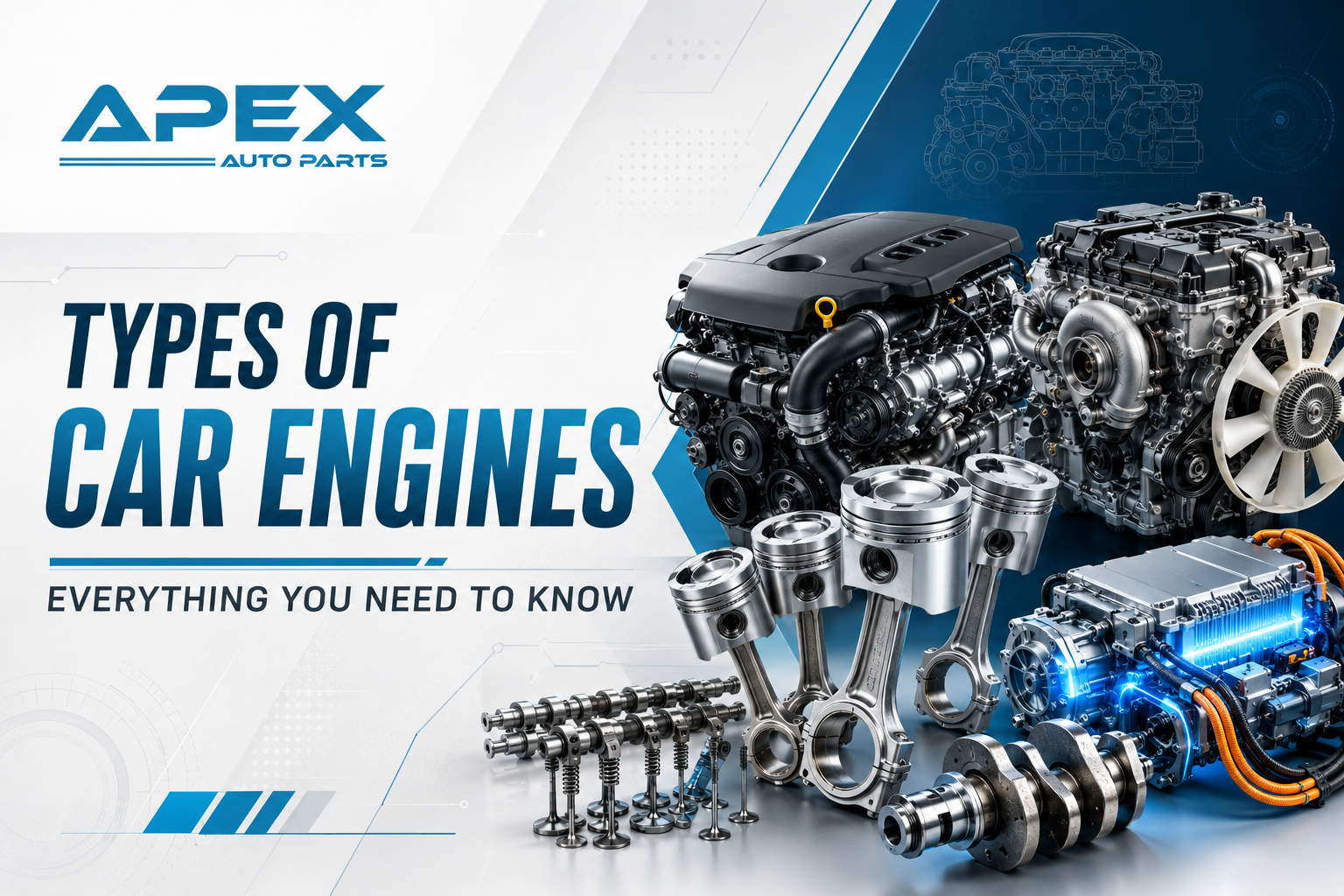
The engine is the heart of a traditional car. It produces the power needed to move the vehicle, run key systems, and keep everything working smoothly. Yet not every engine works in the same way. Some use petrol, some use diesel, and others combine petrol or diesel with electric power.
Engine design also changes from one vehicle to another. One car may have a small three-cylinder petrol engine, while another may use a large V8. A family hatchback may have a hybrid system, while a sports car could use a turbocharged straight-six engine. Even cars with the same badge and engine size can use different engine codes, parts and layouts.
Understanding the different types of car engines can help you choose a suitable vehicle, spot problems earlier and avoid ordering the wrong replacement parts. It also helps when comparing repair costs, fuel use, performance and expected engine life.
This guide explains the main engine designs in simple language. It also covers reliability, engine lifespan, replacement options and the checks a mechanic should complete before recommending a repair.
How do car engines work in simple terms?
A petrol or diesel engine produces power by burning a mixture of fuel and air inside its cylinders. Air enters the engine, and fuel is added. The mixture is compressed before it burns. The force produced by the burning mixture pushes the pistons down.
The pistons are connected to the crankshaft through connecting rods. As the pistons move up and down, the crankshaft turns. That turning force travels through the gearbox and drivetrain before reaching the wheels. This is how the movement inside an engine becomes movement on the road.
Most modern petrol and diesel engines use a four-stage cycle. The engine draws air in, compresses it, produces power, and then pushes the burnt gases out through the exhaust. These stages repeat many times every second while the engine is running. The Department of Energy explains that petrol engines normally use a spark to ignite the mixture. In contrast, diesel engines ignite fuel with the heat generated by highly compressed air.
Several supporting systems must work correctly at the same time. Engine oil reduces friction between moving metal parts. Coolant controls temperature. The timing belt or timing chain keeps the crankshaft and camshaft moving together. The fuel system delivers the right amount of fuel, while the air system helps the engine breathe.
A fault in any one of these systems can make a healthy engine seem badly damaged. For example, poor compression may result from worn piston rings, damaged valves, or incorrect timing. Low oil pressure may come from a worn oil pump rather than a failed crankshaft. This is why proper testing should always come before buying an engine.
Petrol Engines
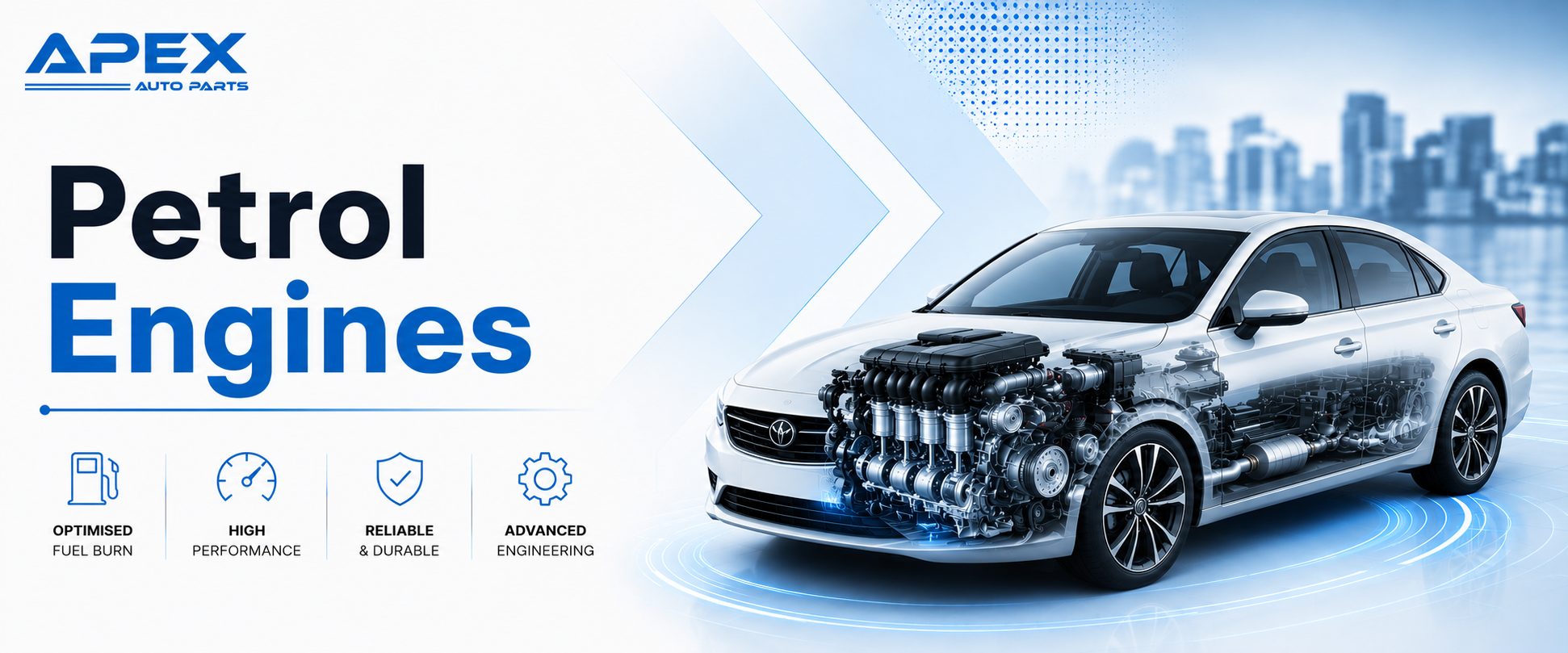
A petrol engine mixes petrol with air and uses spark plugs to ignite the mixture. Petrol engines usually run more quietly than diesel engines and can respond quickly when the accelerator is pressed. They are common in small cars, family vehicles, performance models and vehicles that complete shorter journeys.
Older petrol engines were often simple and easy to repair. Many had basic fuel injection, no turbocharger, and fewer exhaust-control parts. Modern petrol engines can be more advanced. They may use direct fuel injection, variable valve timing, turbochargers and computer-controlled cooling systems.
These features can improve power and fuel use, but they also add more parts that may need attention. Carbon deposits, ignition coil faults, injector problems, oil leaks and cooling issues can all affect a modern petrol engine.
A petrol engine often makes sense for a driver who completes short or mixed journeys. It warms up faster than many diesel engines and does not depend on a diesel particulate filter. However, the correct choice still depends on the vehicle, engine code, annual mileage and service history.
Diesel Engines
A diesel engine compresses air until it becomes very hot. Fuel is then injected into the cylinder, where it ignites from the heat. Diesel engines do not normally use spark plugs for combustion, although many use glow plugs to help with cold starting.
Diesel engines are known for strong pulling power at low engine speeds. This makes them suitable for larger cars, vans, towing and regular motorway driving. They can also use less fuel than a similar petrol engine during longer journeys.
Modern diesel engines often include a turbocharger, high-pressure injectors, an exhaust gas recirculation valve and a diesel particulate filter. These systems help with power, fuel use and exhaust emissions, but they need the correct driving conditions and maintenance.
A diesel vehicle that only completes very short trips may not reach a suitable temperature for its exhaust cleaning system to work properly. This can lead to blocked filters, warning lights and poor performance. Before buying a diesel car, consider how far you normally drive and whether the engine will regularly reach full operating temperature.
Hybrid Engines
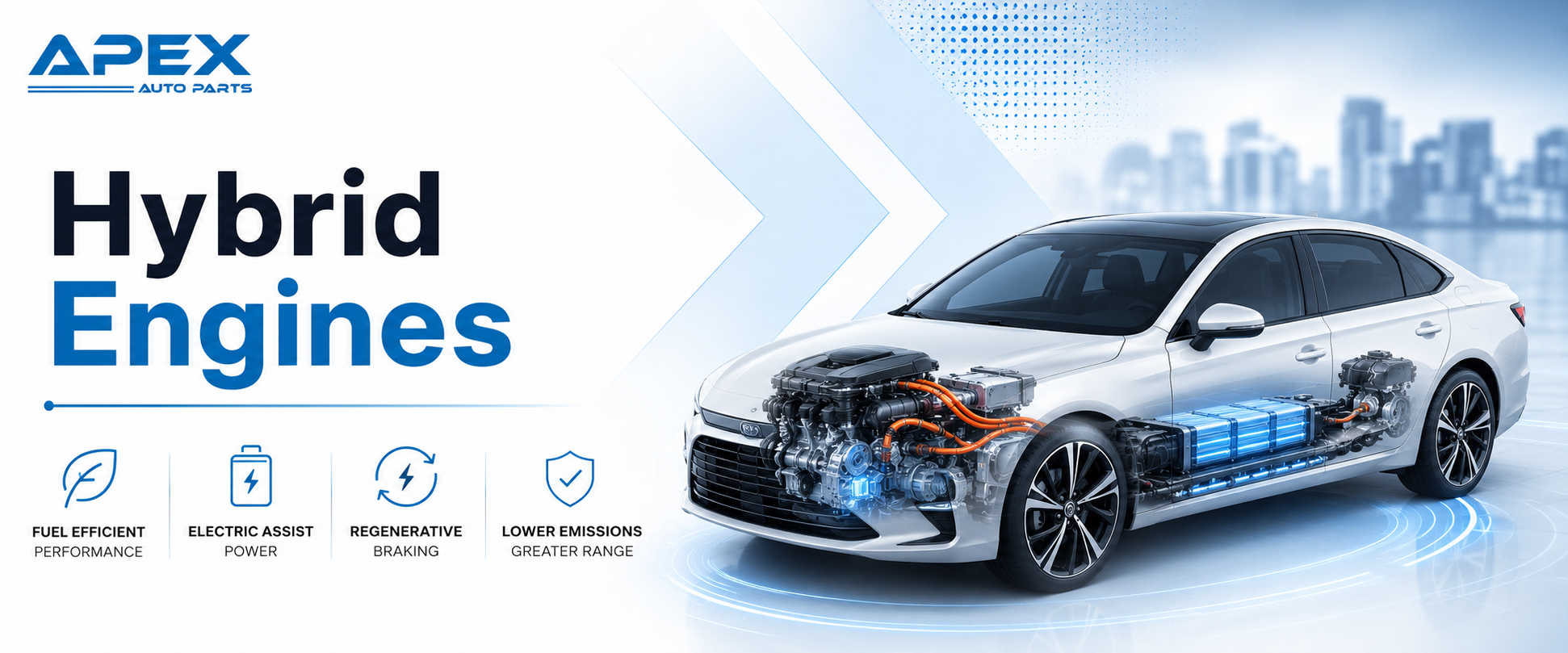
A hybrid vehicle combines an internal combustion engine with one or more electric motors. The electric motor can help the petrol engine during acceleration, move the vehicle at low speed, or reduce the amount of time the petrol engine runs.
Hybrid systems can also recover energy during braking. Instead of losing all braking energy as heat, the electric motor acts as a generator and sends electricity back to the battery. This process is known as regenerative braking.
There are mild hybrids and full hybrids. A mild hybrid motor supports the combustion engine but does not normally drive the car by itself. A full hybrid can often move for short periods using electric power alone. Hybrid systems may use either the engine, the electric motor, or both, depending on speed, battery charge, and power demand.
Hybrid cars can work well in towns because regular stopping and starting gives the system more chances to recover energy. However, buyers should still check the condition of the petrol engine, cooling system, hybrid battery and control electronics.
Plug-in hybrid Engines
A plug-in hybrid has a combustion engine, an electric motor and a larger battery than a normal hybrid. The battery can be charged through an external charging point.
When the battery has enough charge, the car may complete shorter journeys using electric power. When more range or power is needed, the petrol engine can start. This gives the driver electric travel for local trips while keeping a fuel engine for longer distances.
A plug-in hybrid offers its best fuel savings when it is charged regularly. A driver who rarely charges the battery may carry the extra weight of the hybrid system without gaining its full benefit.
Electric Motors
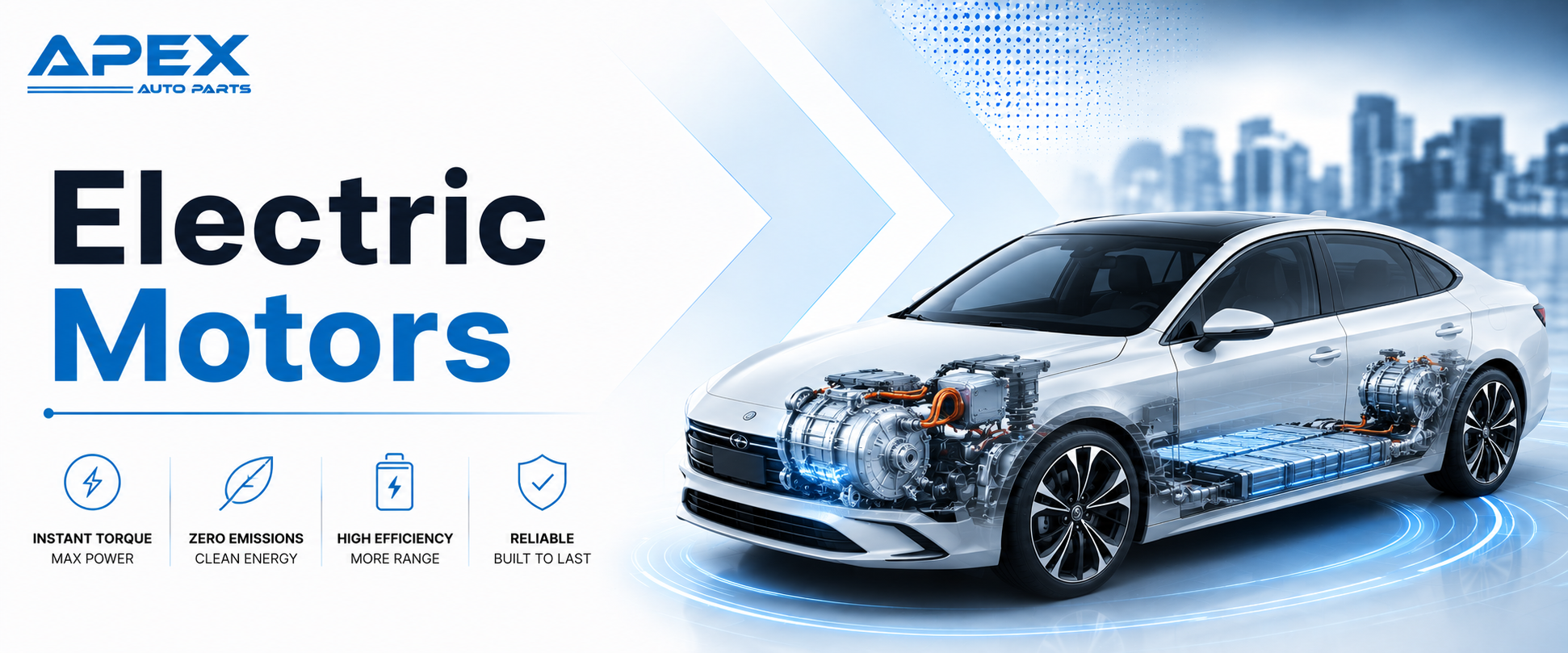
A fully electric car does not contain a normal combustion engine. It uses one or more electric motors powered by a large battery. Many people still use the phrase "electric engine", but "electric motor" is the more accurate term.
The battery sends electricity through power control equipment to the motor. The motor turns and sends power to the wheels. Electric motors can provide strong pulling force as soon as they begin turning, which is why many electric cars feel quick from a standstill.
Electric vehicles have no spark plugs, fuel injectors, timing belts, engine oil or exhaust system. They still contain important parts that can be costly to repair, including the battery, cooling system, charging equipment, control units and power electronics.
Inline Engines
An inline engine places all its cylinders in one straight row. Inline three and inline four engines are common in smaller cars because they fit easily across the engine bay. Inline-six engines are longer and are often fitted from the front towards the rear of the vehicle.
An inline-four engine normally offers a useful balance of size, power, fuel consumption, and production cost. This is why it appears in many hatchbacks, saloons, crossovers and vans.
Inline-six engines are known for smooth power delivery. Their layout can naturally balance much of the movement created by the pistons. BMW has a long history of producing inline six petrol and diesel engines, using the design in family cars, luxury vehicles and performance models.
The main disadvantage of an inline six is its length. It needs more room in the engine bay than a V6. Access to parts can also depend on whether the engine is mounted across the car or from front to rear.
V-shaped Engines
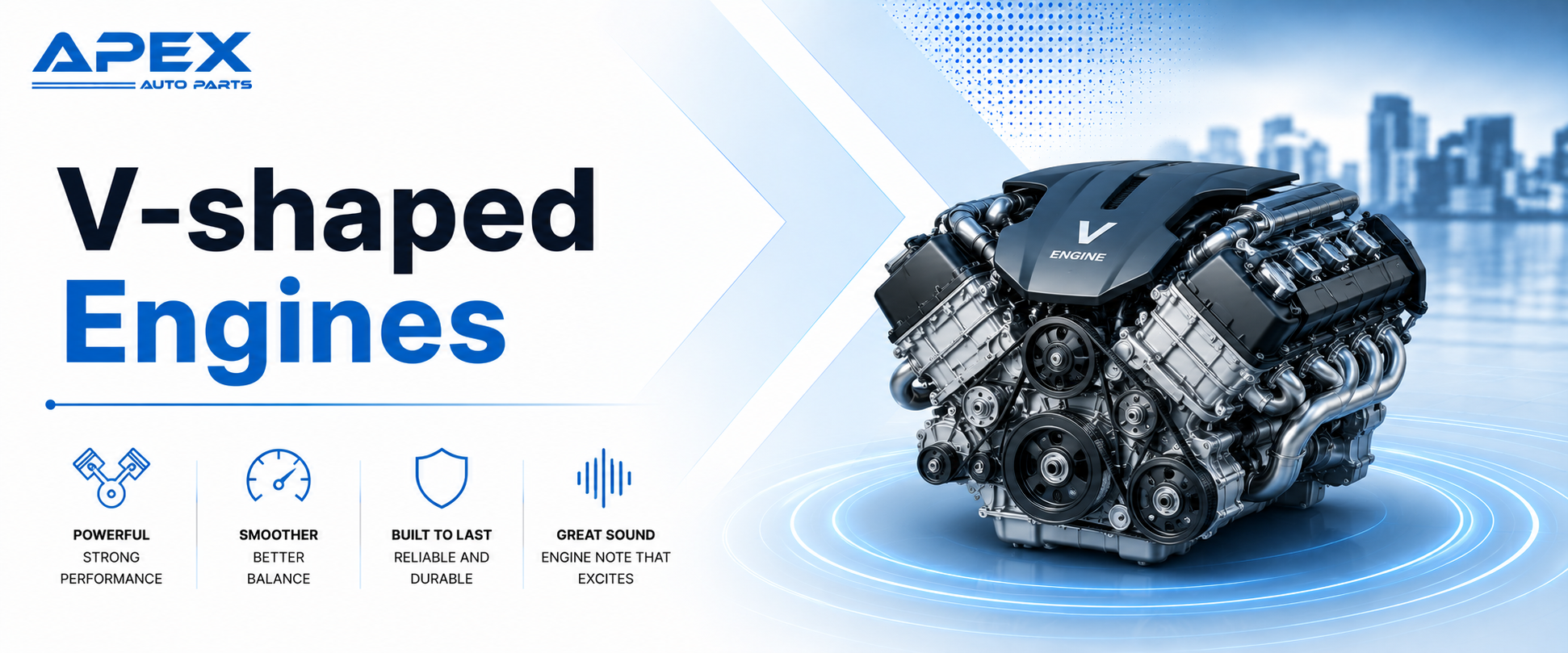
A V-shaped engine separates its cylinders into two banks. When viewed from the front, the banks form a V shape. Common examples include the V6, V8, V10 and V12.
This layout makes it possible to fit more cylinders into a shorter space. A V6 is usually shorter than an inline six, while a V8 can produce strong power without needing an extremely long engine bay.
V engines can have more cylinder heads, camshafts, timing parts, and gaskets than a simple inline engine. This can make some repairs more expensive. Access can also be difficult when the engine is tightly fitted between the vehicle body and suspension.
A V engine is not automatically unreliable or expensive to own. The actual result depends on the exact design, available space, service history and quality of previous repairs.
Boxer Engines
A boxer engine places its cylinders flat on opposite sides of the crankshaft. The pistons move towards and away from each other in a horizontal direction.
This design allows the engine to sit lower in the vehicle. A lower engine position can help reduce the car’s center of gravity and improve balance. The opposing piston movement can also reduce vibration.
Subaru is strongly linked with the boxer layout. The company explains that the flat design supports a lower center of gravity and balanced engine movement.
Boxer engines are wider than inline engines. Some jobs, such as spark plug replacement, gasket work, or cylinder head repairs, may take longer because the engine sides are close to the vehicle body.
Rotary Engines
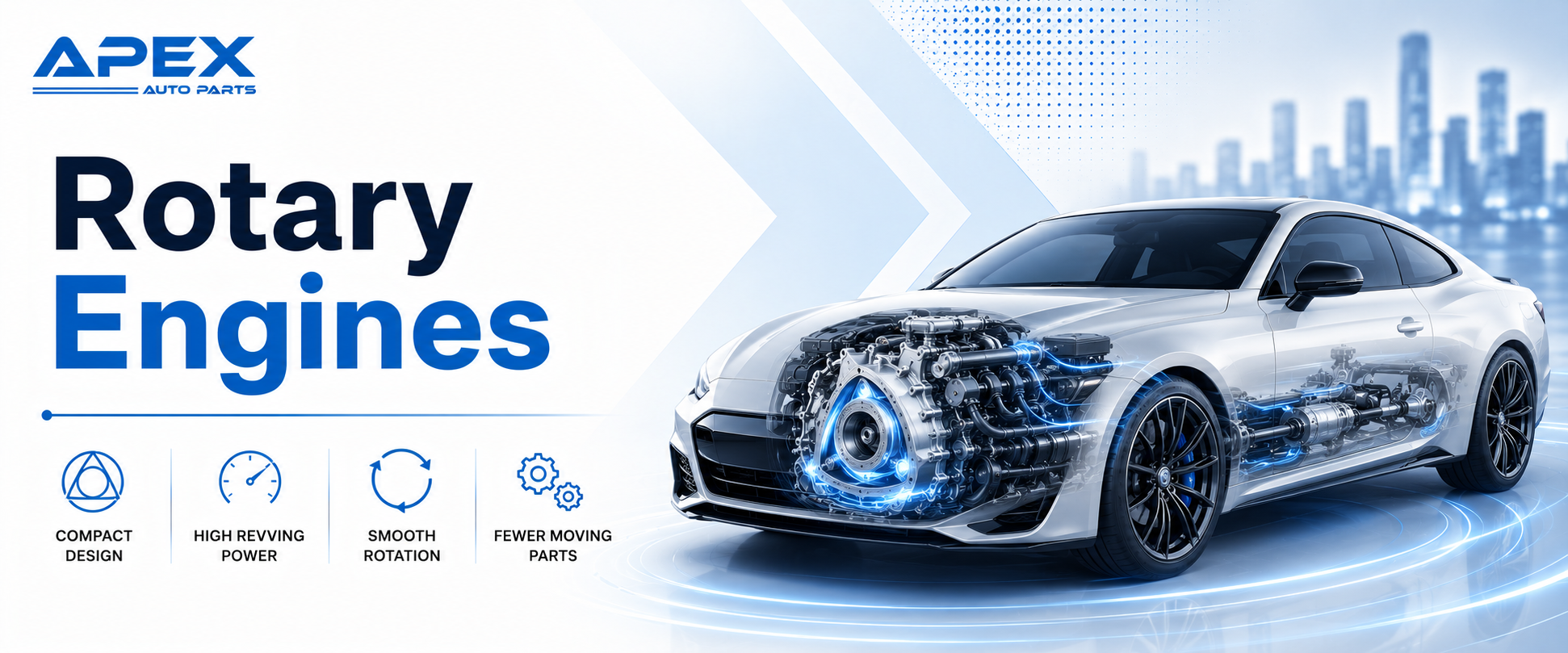
A rotary engine does not use normal pistons moving inside cylinders. It uses a turning rotor inside a specially shaped housing. As the rotor moves, it creates separate spaces for intake, compression, combustion, and exhaust.
Rotary engines are compact and can produce strong power for their size. They can also feel smooth because their main internal movement is rotational rather than a group of pistons repeatedly changing direction.
Mazda became the manufacturer most closely linked with the rotary engine. Its development work led to road cars such as the Cosmo, RX7 and RX8, as well as successful racing engines. Mazda’s own technical history describes the rotary engine as light, compact and capable of strong power.
Rotary engines need informed maintenance. Oil use, cooling, ignition condition, compression, and rotor seal health should all be checked. An incorrect diagnosis can lead to an unnecessary engine replacement.
Naturally Aspirated Engines
A naturally aspirated engine draws air in without using a turbocharger or supercharger. Atmospheric pressure and piston movement help fill the cylinders.
These engines often provide smooth and predictable throttle response. They can also have fewer boost-related parts, which may reduce the number of possible faults. There is no turbocharger, boost control valve or intercooler to inspect.
The downside is that a naturally aspirated engine may need a larger capacity or higher engine speed to produce the same power as a smaller turbocharged engine.
Naturally aspirated engines are still popular with buyers who value simple operation and steady power delivery. However, modern examples can still include direct injection, variable valve timing, and advanced electronic controls.
Turbocharged Engines
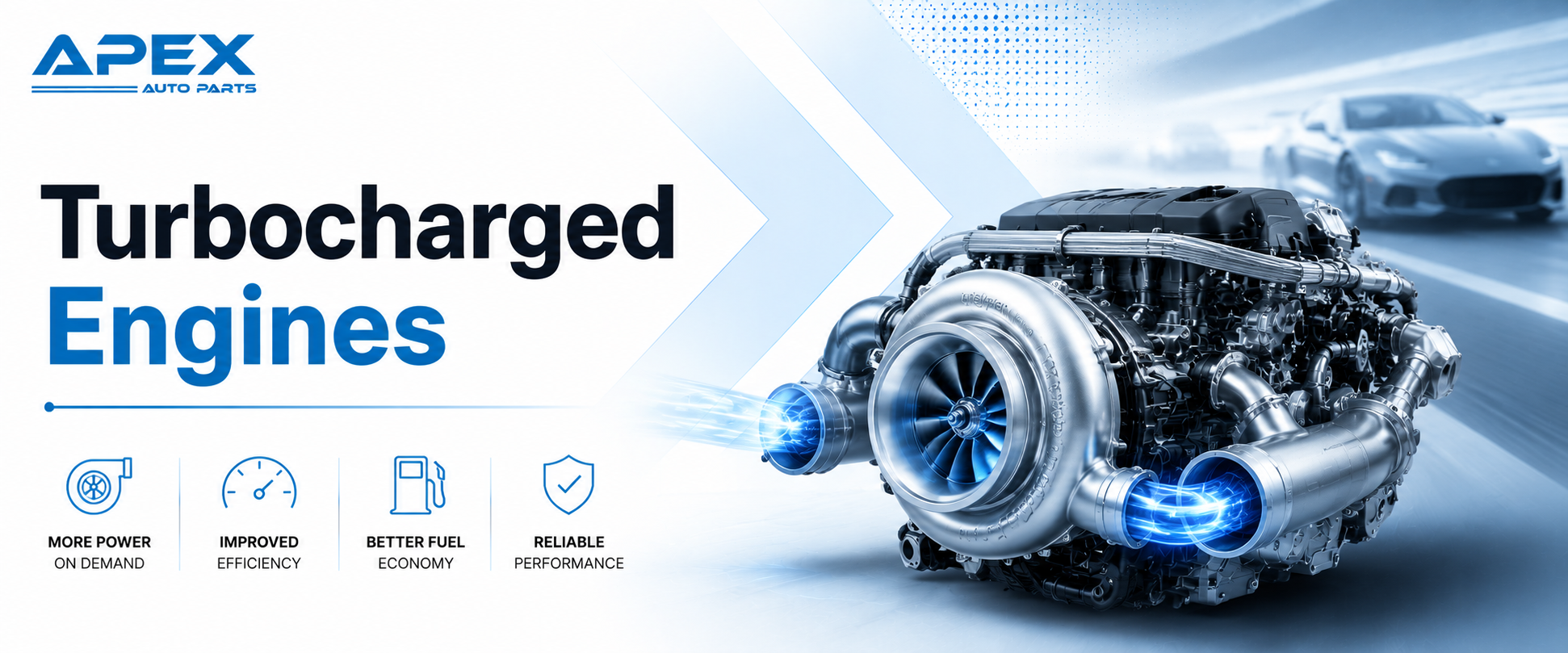
A turbocharger uses energy from the exhaust gases to turn a turbine. The turbine is connected to a compressor that pushes more air into the engine.
Extra air allows the engine to burn more fuel and produce more power. This means a smaller engine can provide performance that once required a larger engine. Garrett Motion explains that the turbo compresses the incoming air, allowing a greater mass of air and fuel to enter each cylinder.
Turbochargers depend heavily on clean oil, correct oil pressure, and controlled temperature. Missed oil changes can damage the turbo bearings. A blocked oil feed, leaking hose, failed control valve, or worn turbo seal can cause smoke, poor performance, and unusual noise.
A failed turbo should not be replaced until the reason for the failure is found. Fitting a new unit without correcting low oil pressure, blocked pipework, or contamination may cause the replacement to fail quickly.
Supercharged Engines
A supercharger also pushes extra air into the engine, but it is normally driven directly by the engine rather than by exhaust gases.
Because the supercharger responds with engine speed, it can provide quick power delivery. This suits performance vehicles where immediate response is important. The trade-off is that the engine must use some of its own power to drive the supercharger.
Eaton explains that a supercharger supplies controlled air without depending on exhaust energy. Its technology has been used across a wide range of engine sizes and performance applications.
Supercharger belts, pulleys, bearings, couplings and cooling systems need inspection. Noise from the front of the engine should not be ignored because it may come from a worn pulley rather than the supercharger itself.
Does cylinder count decide how good an engine is?
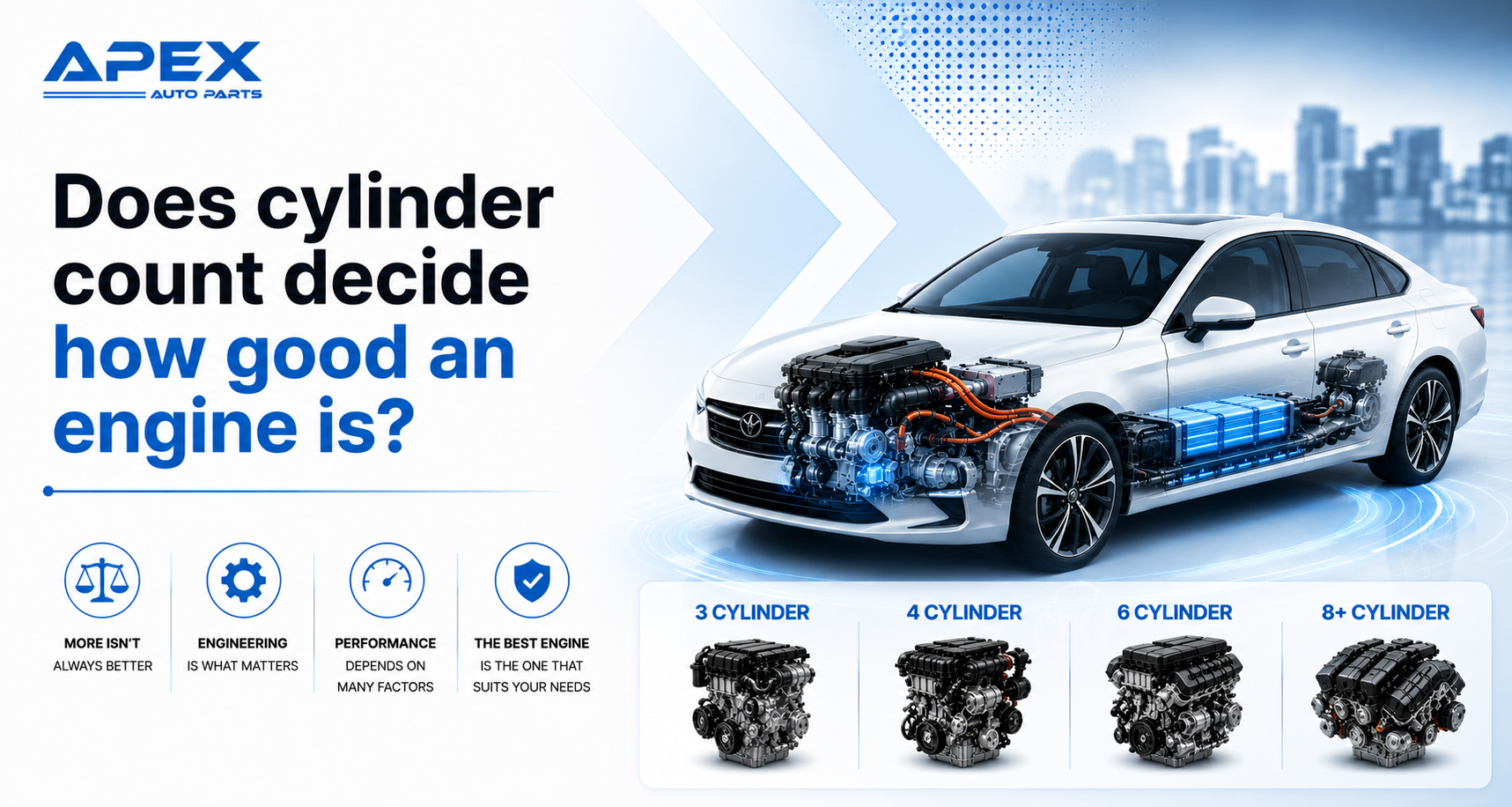
Cylinder count affects smoothness, size, sound, weight and power delivery, but it does not decide whether an engine is good or bad.
A modern three-cylinder turbo engine can produce enough power for a family car. A four-cylinder engine can offer low running costs and easy access to parts. A six-cylinder engine may feel smoother, while a V8 can deliver strong power and a distinctive sound.
More cylinders usually mean more pistons, valves, injectors, spark plugs and related parts. This can increase repair costs. However, fewer cylinders do not always mean fewer problems because a small engine may work hard and use advanced boost or emissions systems.
The best engine is the one that suits the vehicle and its use. A large engine may be unnecessary for town driving, while a very small engine may feel strained when regularly towing or carrying heavy loads.
What are the most reliable car engines?
There is no single engine that is guaranteed to be the most reliable. Reliability depends on the engine family, production version, maintenance, driving style, and repair quality.
A simple petrol engine with regular oil changes can last longer than an advanced engine that has been neglected. In the same way, a diesel engine designed for long journeys may suffer when it spends years making short, cold trips.
Engines with a good reputation usually share several qualities. They have effective cooling, steady oil pressure, strong internal parts and sensible power output. Replacement parts are normally available, and mechanics understand common faults.
The service record matters more than a badge. Check whether the correct oil was used, whether overheating was repaired properly, and whether timing parts were replaced when needed. Look for signs of oil burning, coolant loss, sludge, low pressure, and poor previous work.
Some Toyota and Honda petrol engines have developed strong reputations for long service. Certain Mercedes diesel and BMW straight-six engines are also known for covering high mileage when cared for properly. However, no manufacturer produces a perfect engine, and even a respected design can fail after poor maintenance.
What are the greatest car engines ever?
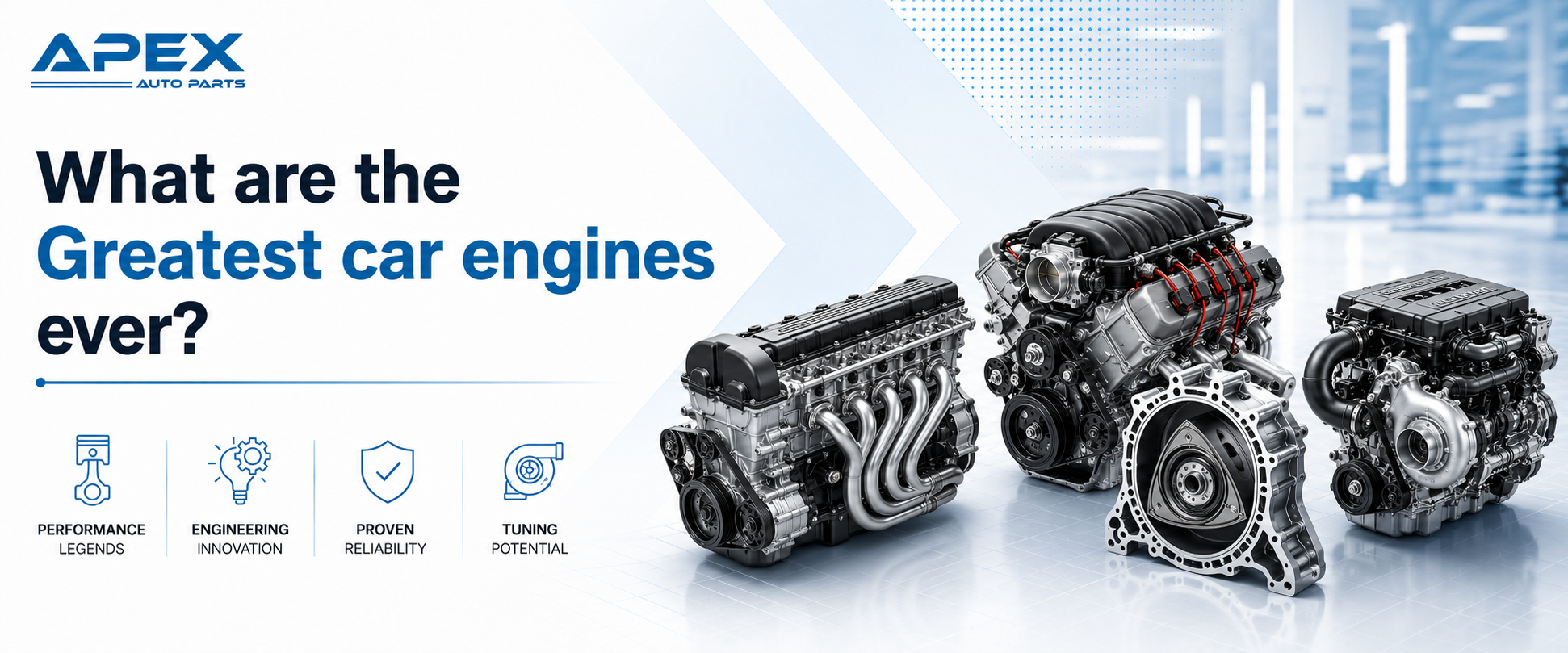
The answer depends on what makes an engine great. One person may value long life, while another wants racing history, tuning potential, smooth power, or a memorable sound.
Enthusiasts often mention the Toyota 2JZ because of its strong design and tuning potential. The Honda K series is praised for its responsive nature and wide use. Nissan’s RB26 became closely linked with performance cars and motorsport.
BMW straight-six engines are known for smooth operation and balanced power delivery. Mercedes diesel engines such as the OM606 gained a following among drivers who value mechanical strength. The Chevrolet LS family became popular for offering strong V8 power in a compact package.
Mazda’s rotary engines earned their place through unusual engineering and racing history. Mazda continued developing the rotary layout for decades and used it successfully in road cars and motorsport.
The important point is that greatness does not always mean easy ownership. Some iconic engines are expensive to maintain, difficult to find, or sensitive to poor servicing.
Are Japanese car engines always more reliable?
Many Japanese car engines have a strong reputation for reliability, but it is not safe to judge an engine only by its country of origin.
Toyota, Honda, Nissan, Mazda, Subaru and Mitsubishi have produced very different engines. Some are simple naturally aspirated units, while others use turbochargers, direct injection, hybrid systems or rotary designs.
Certain Japanese engines can cover very high mileages with regular servicing. Toyota has documented exceptional vehicles that reached nearly one million kilometers or even one million miles, although these are unusual cases and should not be treated as a normal guarantee.
Japanese engines can still develop timing problems, oil use, head gasket failure, blocked oil passages, worn turbochargers and cooling faults. Always research the exact engine code rather than relying on the manufacturer’s general reputation.
What should buyers know about BMW car engines?
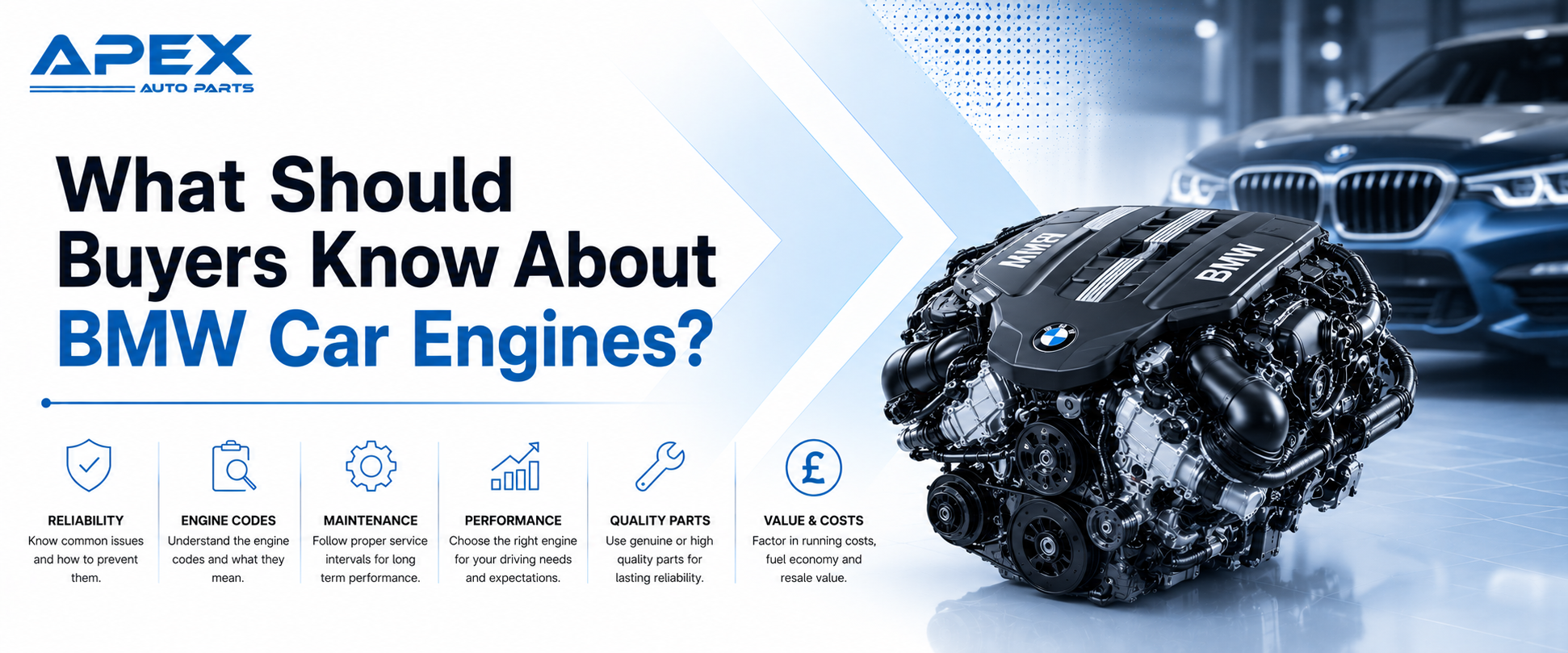
BMW car engines include small petrol units, large diesel engines, hybrid systems and powerful straight-six designs. The company has a long history of developing smooth inline six-cylinder engines and now combines combustion engines with turbocharging, variable valve control, and mild-hybrid technology.
Well-known BMW engine families include the M54 petrol, M57 diesel, N47 diesel, N57 diesel, B48 petrol and B58 petrol. Each family has different strengths, service needs and known repair areas.
The engine code is more useful than the badge on the boot. Two BMW vehicles marked 320i may use different engines depending on the year and market. Their timing parts, pistons, oil pumps, gaskets and sensors may not match.
Before ordering parts for a BMW, confirm the engine code through the vehicle record, identification plate or registration information. It is also sensible to compare original part numbers and check whether the engine has been replaced in the past.
Should you buy used car engines?
Used car engines normally come from vehicles that have been damaged, dismantled or taken off the road. They can offer a lower purchase price and may allow a vehicle to return to the road quickly.
The main risk is limited history. A seller may know the mileage but not how often the oil was changed, whether the engine overheated, or how long it was stored. An engine can look clean on the outside while having low compression, worn bearings, or heavy sludge inside.
Ask for the exact engine code, donor mileage, reason for removal, and any available test results. A compression test can show whether the cylinders produce similar pressure. An oil pressure test can help check the lubrication system. Video evidence of the engine running can also be useful, although it does not replace proper testing.
Find out what is included. Some engines are sold as bare units, while others include the turbocharger, injectors, fuel pump, wiring, sensors and intake system. The cheapest listing may become expensive when missing parts, fluids, seals, timing components and labor are added.
Warranty terms are also important. Check the length of cover, the evidence required for a claim, and whether a qualified workshop must complete the fitting.
What are reconditioned car engines?
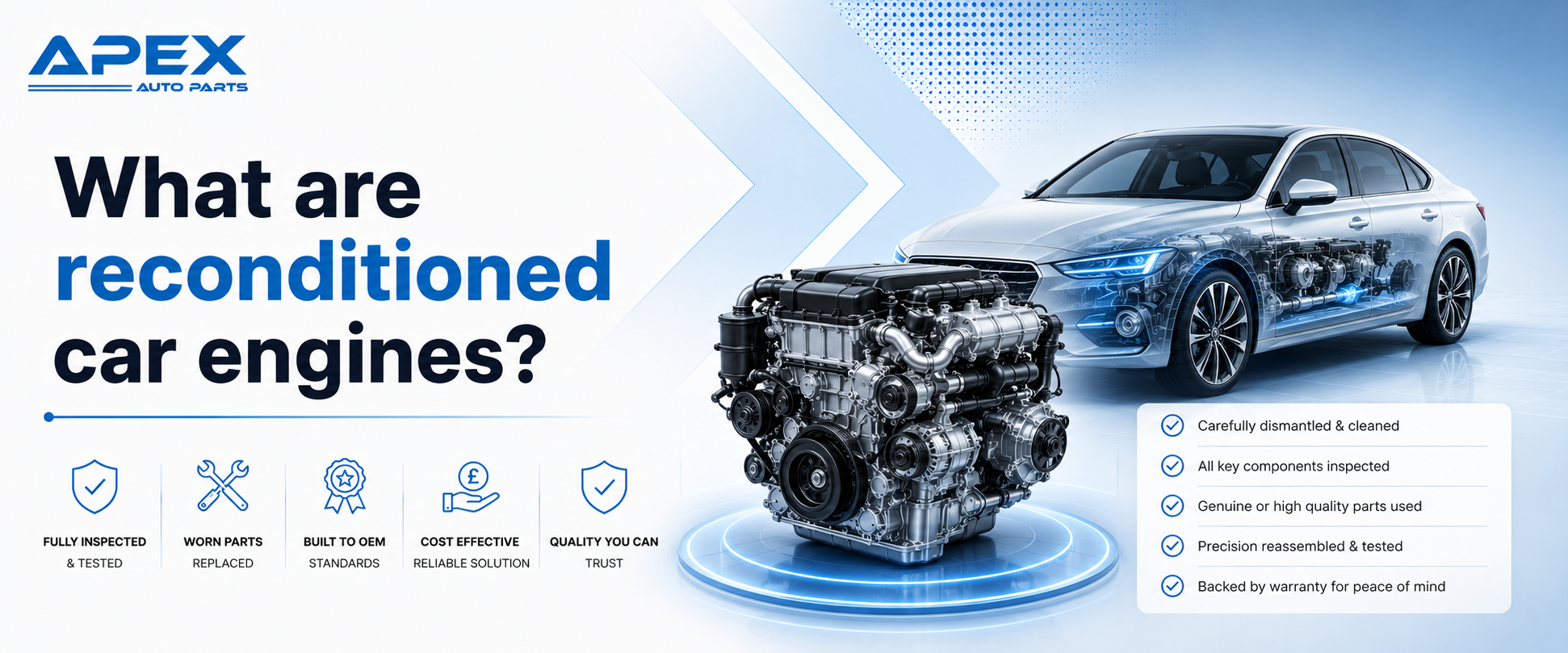
Reconditioned car engines are used engines that have undergone repairs and inspections before being sold. The engine may be stripped, cleaned, and measured. Worn or damaged parts may then be repaired or replaced.
The word 'reconditioned' does not always mean the same thing. One supplier may complete full machining and replace bearings, piston rings, seals and timing parts. Another may only repair the failed area and clean the outside.
Ask for a written build list. It should explain which parts were measured, machined, reused and replaced. Check whether the cylinder head was pressure tested, whether the crankshaft was measured, and whether the oil pump and timing system were inspected.
A properly rebuilt engine can be a sensible choice when the vehicle is valuable, the engine is difficult to find, or the owner plans to keep the car. However, the quality depends on the parts, measurements, cleaning, and the builder's skill.
Used car engines or reconditioned car engines: Which is better?
A used engine may suit a lower-value vehicle when a tested donor unit is available at a fair price. It normally costs less at the start, but there is more uncertainty about internal wear.
A reconditioned engine may cost more, but important wear areas should have been checked. It can offer better peace of mind when the repair work is clearly documented and supported by a useful warranty.
Do not compare purchase price alone. Include fitting labor, oil, coolant, filters, seals, timing parts, turbo checks and possible coding. Removing and fitting an engine is a major job, so saving a small amount on an uncertain unit can lead to paying for the same labor twice.
How long do car engines last?
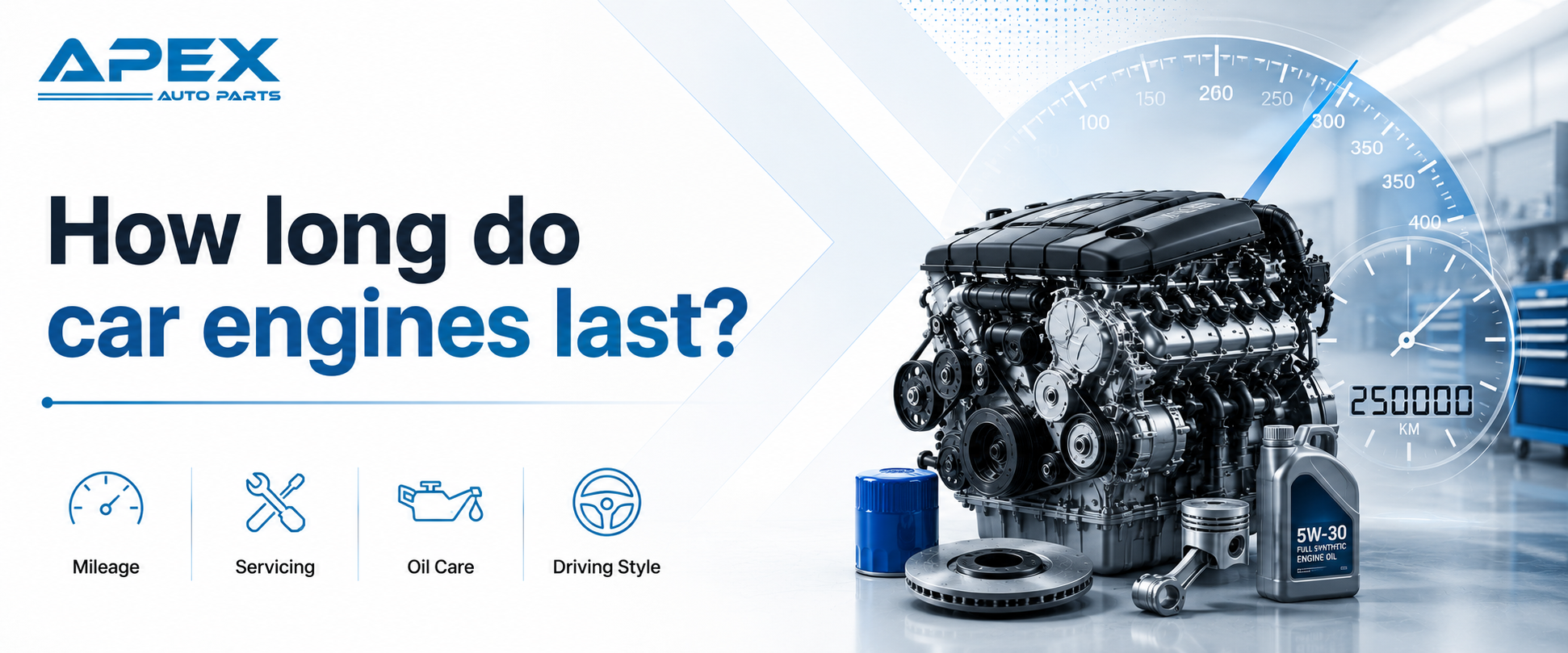
There is no fixed answer to how long car engines last. Many well-cared-for engines can cover 150,000 to 200,000 miles, while some go much further. Others fail much earlier because of overheating, low oil pressure, missed servicing, or a design fault that was not repaired in time.
Mileage alone does not show engine health. A vehicle with 80,000 miles and poor maintenance may be in worse condition than one with 160,000 miles and a complete service record.
Motorway mileage can be easier on an engine because it spends more time at a steady temperature. Repeated short journeys can create more cold starts, moisture and incomplete warm-up cycles. Severe overheating, however, can damage an engine in a single journey.
Regular oil changes, a healthy cooling system and early repairs can add years to engine life. Warning lights, smoke, knocking, coolant loss and low oil pressure should always be investigated quickly.
How does a mechanic choose the right solution?
A good mechanic does not recommend an engine replacement simply because the car has smoke, noise or poor performance. Many faults can create similar symptoms.
Blue smoke may come from a turbocharger, valve stem seals or piston rings. White smoke may point towards coolant entering the cylinders, but it can also be normal condensation during a cold start. Knocking may come from internal engine wear, incorrect timing, an injector or a loose external component.
Before ordering an engine or rebuild kit, the workshop should follow a clear process:
- Confirm the registration number, vehicle identification number and exact engine code.
- Read stored fault codes and check live sensor readings.
- Test compression, oil pressure and cooling system pressure.
- Inspect the oil for sludge, fuel contamination or metal debris.
- Check the timing system, turbocharger, injectors and oil pump.
- Calculate the full cost of parts, labour, fluids and related repairs.
- Compare repair, rebuild and replacement options before making a decision.
This process helps prevent the wrong part being fitted. It can also reveal the original cause of the damage. For example, fitting another engine without repairing a blocked radiator or failed oil cooler can damage the replacement.
Choosing the right engine for your driving
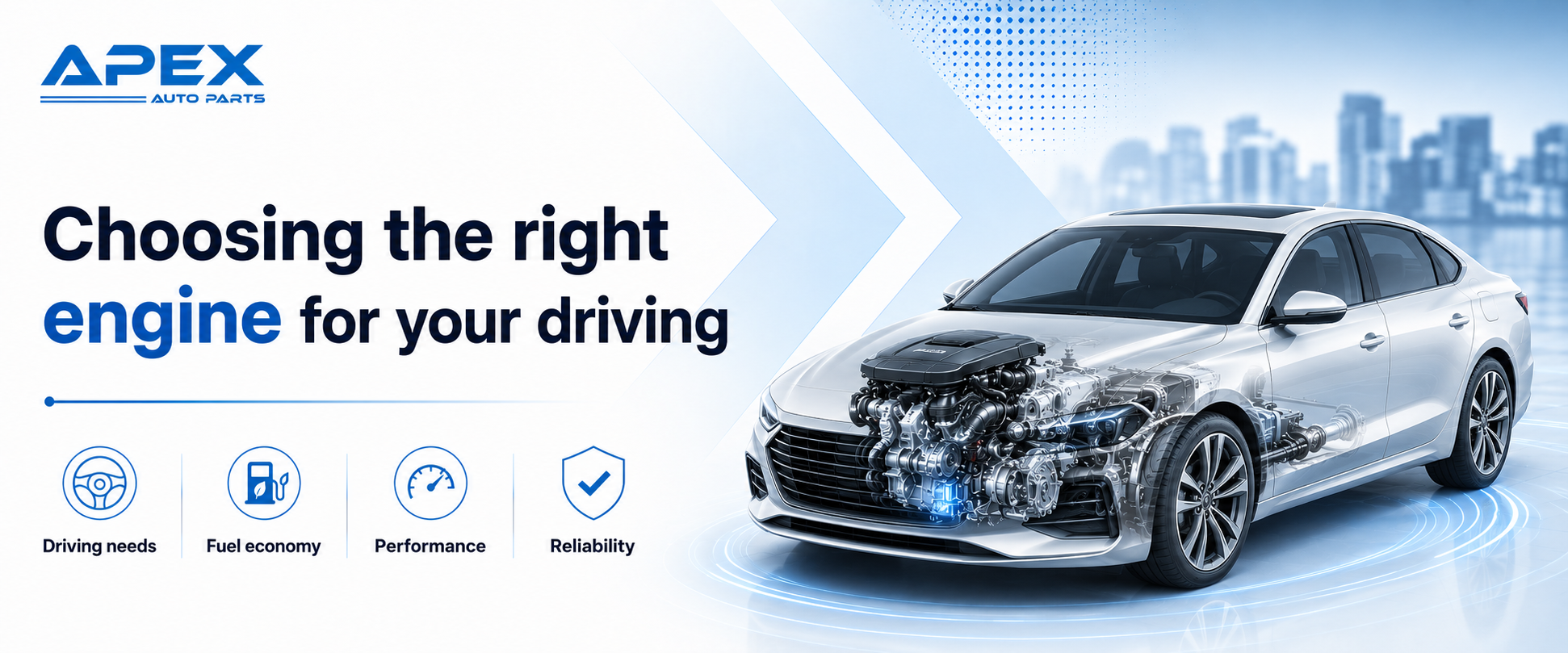
For short local trips, a petrol or full hybrid vehicle may be easier to live with than a modern diesel. For regular motorway journeys, a diesel can provide strong pulling power and sensible fuel use.
Drivers who can charge at home may benefit from an electric car or plug-in hybrid. However, the vehicle's cost, battery condition, charging access, and typical journey length should be considered.
Performance buyers should look beyond power figures. Cooling, oil supply, transmission strength, and previous modifications are equally important. A modified engine may produce more power while having a shorter service life if the work was not completed correctly.
For a used vehicle, choose the cleanest example with the best history rather than selecting an engine only because it has a famous name.
Where can Apex Auto Parts help?
Apex Auto Parts supplies engine components for many leading vehicle brands, including BMW, Mercedes-Benz, Land Rover, Ford, Audi, Volkswagen, Toyota and others. Available categories include crankshafts, timing chain kits, oil pumps, pistons, bearings, gaskets and rebuild kits.
Choosing the correct part starts with accurate vehicle information. The Apex Auto Parts website allows customers to search by vehicle, while the support team can help when a buyer provides a registration number or vehicle identification number.
This support can be useful because the same car model may have several engine codes. Confirming fitment before ordering reduces delays, return costs and the risk of dismantling an engine for the wrong component.
Apex Auto Parts has operated as a family-run London business since 2018, supplying engine components to drivers, mechanics, workshops and trade customers.
Final thoughts
Learning about the different types of car engines makes it easier to choose a vehicle and understand repair advice. Petrol, diesel, hybrid and electric systems each suit different drivers. Engine layout, cylinder count and turbocharging also affect performance, access and maintenance costs.
Do not choose an engine by badge, size or mileage alone. Check the exact engine code, service history, oil condition, cooling system and test results.
When an engine develops a problem, proper diagnosis should come first. The right test may show that the engine can be repaired without a complete replacement. When major work is needed, compare the full cost and risk of used, rebuilt, and replacement options before spending money.
FAQs
1. What are the main types of car engines?
The main options are petrol, diesel, hybrid, plug-in hybrid, and electric power. Engines are also grouped by layout, such as inline, V-shaped, boxer, and rotary. The right choice depends on your mileage, driving route, fuel budget, repair costs, and the type of vehicle you own.
2. How do car engines work?
A combustion engine mixes air with fuel and releases energy inside its cylinders. This force moves the pistons, turns the crankshaft, and sends power through the gearbox to the wheels. Petrol engines use spark plugs, while diesel engines ignite fuel through heat created by strong air compression.
3. Which are the most reliable car engines?
There is no single winner because reliability changes by engine code, model year, servicing, and use. Simple petrol engines from Toyota and Honda often have strong reputations, while some BMW and Mercedes diesel engines can cover high mileage when maintained correctly. Service history matters more than the badge alone.
4. How long do car engines last?
A well-maintained engine can often cover 150,000 to 200,000 miles, and some go much further. Poor oil changes, overheating, low oil pressure, timing faults, and hard driving can shorten its life. Judge an engine by its condition, service records, test results, and known design weaknesses.
5. Is a diesel engine better than a petrol engine?
Diesel engines can suit drivers who cover long motorway distances because they provide strong low-speed pulling power and good fuel use. Petrol engines are often better for short trips and lower annual mileage. Modern diesels also have emissions systems that may suffer when the car mainly makes brief journeys.
6. Are used car engines worth buying?
They can be worth buying when the engine code is correct, the mileage is supported, and useful test results are available. Ask about compression, oil pressure, storage, donor vehicle damage, and warranty cover. A cheap engine with no history can become expensive once labor, fluids, seals, and timing parts are added.
7. What are reconditioned car engines?
Reconditioned engines are used units that have been stripped, cleaned, inspected, and repaired before being sold. The exact work can vary greatly. Some receive machining and many new internal parts, while others receive limited repairs. Always request a written list of work, fitted parts, measurements, testing, and warranty terms.
8. Are Japanese car engines more reliable?
Many Japanese engines have earned a good name for simple design, sensible power output, and long service life. However, country of origin does not guarantee reliability. Some engines have oil use, cooling, timing, or turbo problems. Check the exact engine family, maintenance history, and parts availability before buying.
9. Which BMW car engines are best?
Popular choices include the M54 petrol, M57 diesel, B48 petrol, and B58 petrol, but the best option depends on the vehicle and its history. Every family has different service needs. Confirm the exact engine code, check cooling and lubrication, and inspect the timing, turbo, injectors, and oil leaks before purchase.
10. What are the greatest car engines ever?
The answer is partly personal. Enthusiasts often mention the Toyota 2JZ, Honda K-series, Nissan RB26, BMW straight-six engines, Mercedes OM606, Chevrolet LS, and Mazda rotary engines. They became famous for different reasons, including strength, smoothness, tuning ability, racing success, character, or clever engineering.
References:
Energy Gov
Afdc Energy Gov
Press BMW Group