
 info@apexautoparts.co.uk
 +44 203 915 7535
 Safe & Fast Shipping
 Whish List
 Compare
 Sign In



BMW engine parts work together to turn fuel into the power that moves your car. Some parts control air and fuel. Others manage heat, move oil, or keep moving parts in time. Understanding these jobs makes servicing easier and helps you spot problems before they become expensive.
You do not need to know every nut and bolt. However, learning about the main BMW engine components can help you describe a fault clearly. It also helps you make better choices when arranging BMW parts replacement.
The right repair starts with knowing which engine your car has. Two BMWs with the same model badge may use different engines. Their pumps, seals, sensors, and timing parts may also differ.
This guide explains the main parts, what they do, and how to maintain them. It also covers warning signs and the checks to make before buying replacements.
Why Does Your BMW Engine Type Matters?
BMW has used many petrol and diesel engines across its model range. These engines differ in size, layout and design. Some have three or four cylinders, while others have six-cylinder engines or eight-cylinder engines. A cylinder is the chamber where a piston moves and fuel burns.
The model badge alone does not give you every detail. For example, a BMW 320d can have different engine designs depending on its production date. Parts that fit one version may not fit another.
An engine code identifies the engine family more precisely. You may see codes such as N47, B47, or B58 when searching for BMW engine parts. Even within one family, some parts change as the design develops.
First, confirm the engine code and vehicle details. Next, check the production date and the required part number. This reduces the chance of ordering something that looks right but does not fit.
Main Types of BMW Engine Parts
It helps to group BMW engine components by their jobs. The main groups include the parts that create movement, control timing, supply fuel, and manage temperature. Seals, sensors, and filters support these systems.
The table below gives a quick overview before we look at each group.
These signs are starting points for checks. They do not prove that the listed part has failed. Several faults can produce similar symptoms.
Engine Block, Pistons and Piston Rings
Engine Block
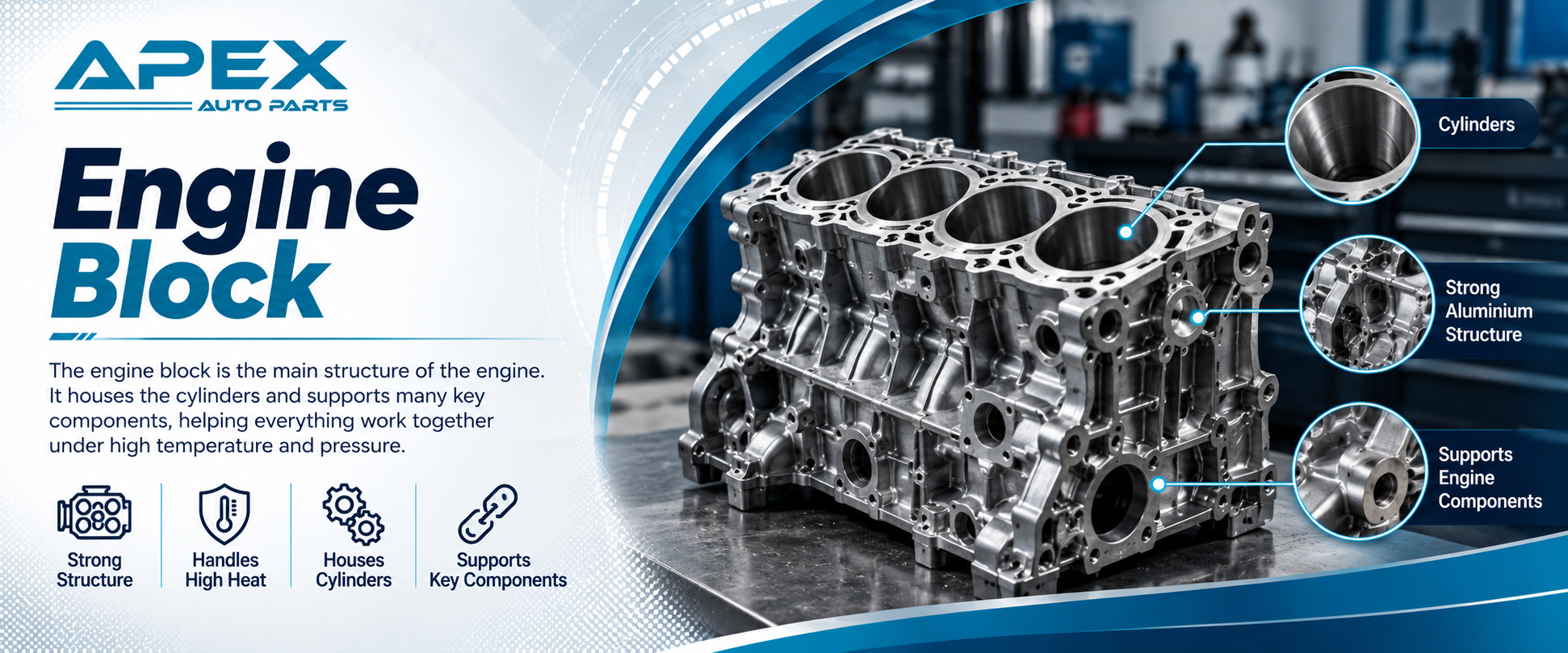
The engine block forms the engine's main body. It supports the cylinders and contains passages for oil and coolant. Coolant is the liquid that carries heat away from hot engine parts.
The block must keep its shape while handling heat and pressure. Serious overheating or internal damage can affect it. However, most routine service work does not involve replacing the engine block.
Good oil supply and proper cooling help protect this expensive component. Repeated overheating should always receive attention before the car returns to normal use.
Pistons
Pistons move up and down inside the cylinders. When fuel burns, expanding gases push each piston down. That movement provides the force needed to turn the engine.
Pistons face high temperatures and strong pressure during every journey. They need the correct fit and enough oil to work properly. Poor oil supply, excess heat, or fuel system faults can damage them.
Replacing a piston requires more than choosing the right diameter. The workshop must inspect the cylinder and check the correct clearances. Clearance means the small working gap between parts.
Piston Rings
Piston rings sit in grooves around each piston. They help hold pressure inside the cylinder and control oil on its walls. They also help transfer heat from the piston to the cylinder.
Worn or stuck rings can contribute to oil burning and reduced engine power. However, blue exhaust smoke does not automatically mean the rings have failed. Other faults can also allow oil into the engine’s air or combustion spaces.
Pistons, rings and cylinder surfaces must work as a matched system. Correct sizing and fitting matter during an engine rebuild.
Connecting Rods, Crankshaft and Bearings
Connecting Rods
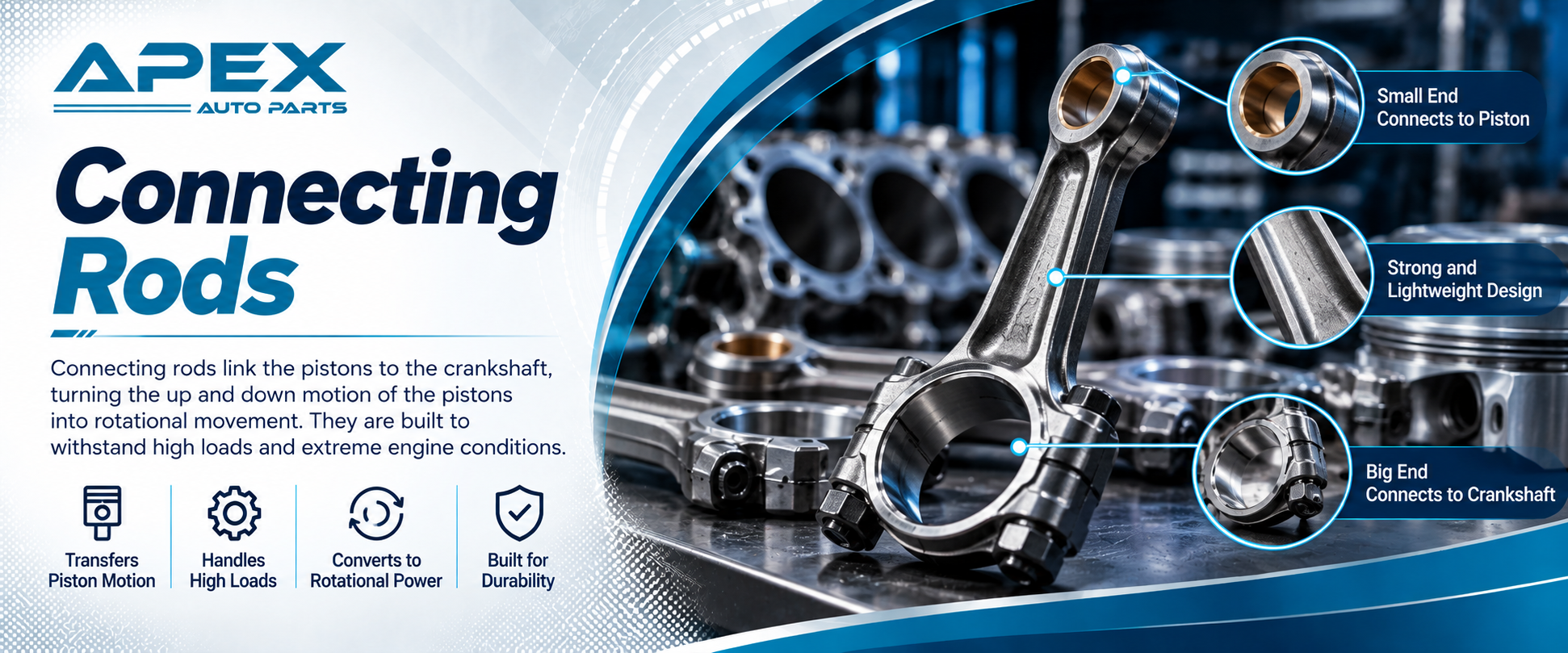
A connecting rod joins each piston to the crankshaft. It carries the force created when fuel burns. The rod must handle this load many times every second.
Connecting rods are not normal service items. A mechanic usually inspects or replaces them during major engine repairs. Damage can follow serious internal failure or liquid entering a cylinder.
During a rebuild, the workshop checks each rod carefully. Reusing a bent or damaged rod can undermine the whole repair.
Crankshaft
The crankshaft turns the pistons’ up-and-down movement into rotation. That turning force eventually reaches the wheels through the gearbox and drivetrain.
The crankshaft needs firm support and a steady oil supply. Damage to its working surfaces can affect the bearings around it. Repair decisions depend on careful measurements, not appearance alone.
A deep knocking sound needs prompt investigation. Continuing to run an engine with internal knocking can increase the damage. The noise may have several causes, so proper diagnosis comes first.
Engine Bearings
Engine bearings support moving shafts and connecting rods. A thin film of oil keeps their working surfaces apart. This allows parts to move with less friction, which is resistance between surfaces.
Low oil pressure or contaminated oil can damage this protective film. Once metal surfaces begin touching, wear can develop quickly.
Replacing worn bearings without finding the cause is risky. The workshop should also check oil supply, shaft condition, and working clearances.
Cylinder Head, Valves and Head Gasket
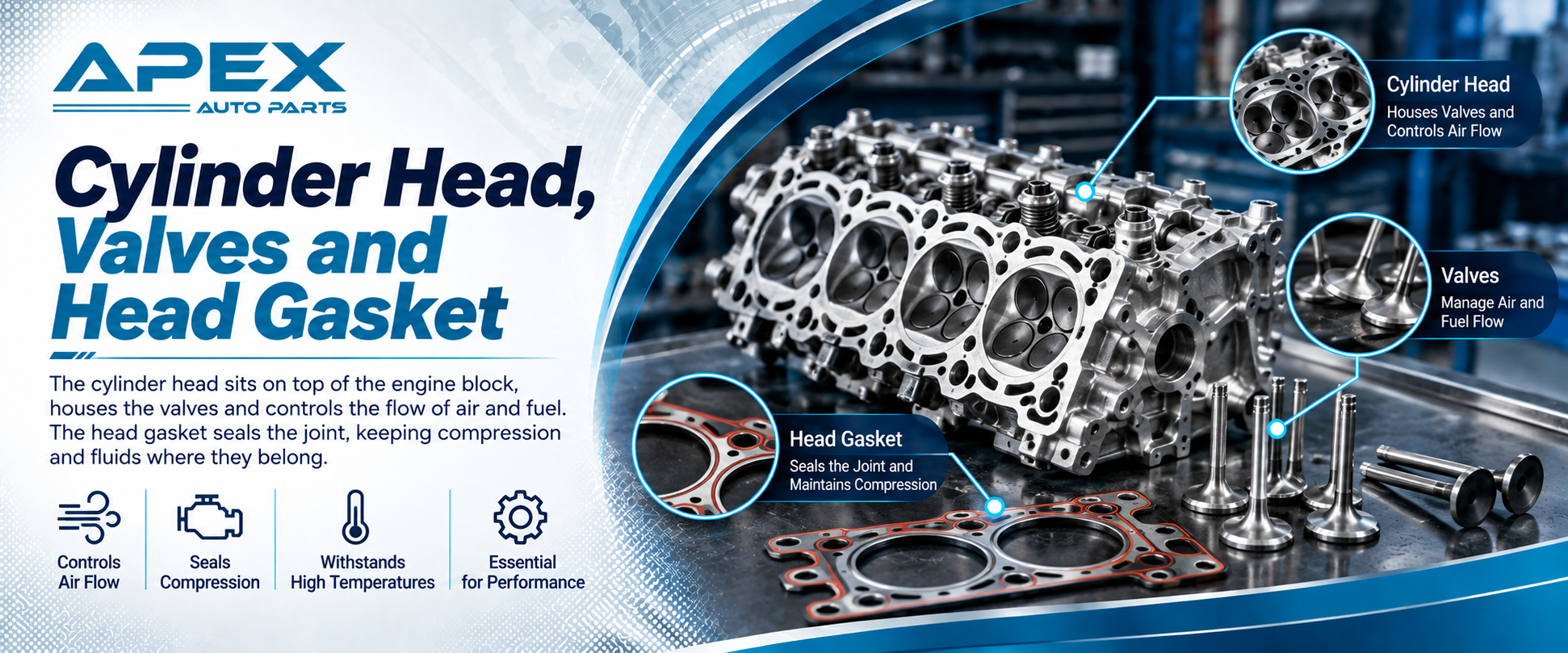
The cylinder head sits above the engine block. It contains valves that control gases entering and leaving the cylinders. Depending on the engine, it also houses camshafts and other control parts.
Inlet valves let air or the air-fuel mixture enter. Exhaust valves let burnt gases leave. These valves must open at the correct time and close properly.
The head gasket seals the joint between the cylinder head and block. It helps keep cylinder pressure, oil, and coolant in their correct places. A failure can cause coolant loss, overheating, or fluid mixing.
However, white exhaust vapour alone does not confirm a failed head gasket. Cold weather can produce normal condensation. A garage should investigate persistent smoke, coolant loss and overheating together.
If the engine has overheated badly, fitting a new gasket may not be enough. The workshop must check the head and block surfaces for damage.
Timing Chains, Guides and Tensioners
Many BMW engines use a timing chain to link the crankshaft and camshafts. A camshaft is a shaft that controls when valves open. The chain keeps these movements correctly timed.
Guides support the chain along its path. A tensioner keeps the correct pressure on it. Some tensioners rely on engine oil pressure as part of their operation.
Wear can affect the chain, guides, tensioner, or related gears. Possible warning signs include rattling, rough running, or timing fault codes. A fault code is a message stored by the car’s control system.
Not every rattle comes from the timing chain. Belts, pulleys, and other components can create similar sounds. A mechanic should locate the noise before recommending BMW parts replacement.
There is no single timing chain replacement mileage for every BMW engine. Follow the guidance for the exact engine and investigate new noises promptly. Clean oil of the correct specification helps support parts that depend on lubrication.
BMW VANOS and Valvetronic
What Does VANOS Do?
VANOS is BMW’s system for adjusting camshaft timing. In simple terms, it changes when valves open and close. This helps the engine respond to different speeds and loads.
On engines with Double VANOS, the system adjusts both inlet and exhaust camshaft timing. The exact parts and control methods depend on the engine.
Poor running or timing faults can involve VANOS, but other causes remain possible. Oil supply, wiring, and mechanical timing may all need checking.
What Does Valvetronic Do?
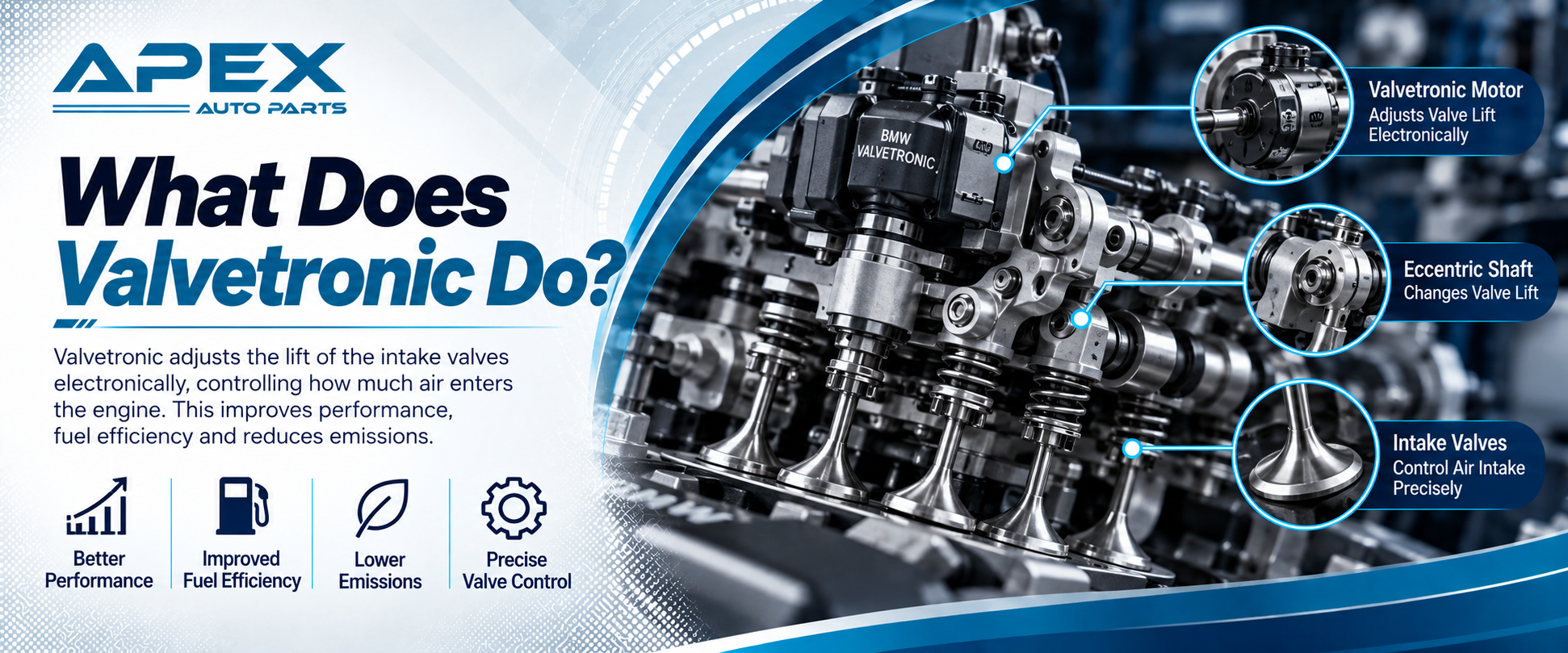
Valvetronic changes how far the inlet valves open on engines fitted with it. This helps control the amount of air entering the engine. It works alongside other engine control systems.
VANOS controls valve timing, while Valvetronic controls valve lift. Valve lift means how far a valve opens. BMW uses these technologies together on many petrol engines, although equipment varies by engine.
Because these systems include mechanical and electrical parts, diagnosis needs care. A warning message does not identify one failed component on its own.
Oil Pumps, Filters and Engine Lubrication
The oil pump moves oil through the engine. Oil reaches bearings, camshafts, and other working parts through small passages. It reduces friction and helps carry heat away.
The oil filter traps particles that could harm these surfaces. Its housing holds the filter and connects it to the oil circuit. Seals around the housing keep oil inside the system.
Using the correct oil matters as much as keeping the level right. Oil thickness alone does not confirm suitability. The oil must also meet the required BMW approval for that engine.
An oil pressure warning needs immediate attention. Stop safely and switch off the engine rather than assuming it only needs topping up. Oil level and oil pressure are different things.
If a pump needs replacement, the cause should be investigated. Blocked oil passages, debris, or internal wear may also require repair. A new pump cannot correct every reason for low pressure.
Water Pumps, Thermostats and Cooling Parts
The water pump moves coolant around the engine and cooling system. The thermostat is a valve that helps manage coolant flow as temperature changes. Together, they help the engine reach and maintain its working temperature.
BMW cooling layouts vary. Some engines use mechanical pumps, while others use electric pumps. Certain vehicles also have extra pumps for separate cooling tasks.
The radiator releases heat into passing air. Hoses carry coolant between parts, and the expansion tank allows space for changes in coolant volume. Every connection and seal must remain sound.
Coolant loss, rising temperatures, or weak cabin heating can suggest a cooling problem. However, these signs do not identify the pump alone.
Use coolant that meets the vehicle’s requirements. Poor coolant condition can damage pump surfaces and seals, so replacement work may also require cleaning the system.
Check coolant only when the engine is cold. Never remove the cap from a hot cooling system.
Spark Plugs, Ignition Coils and Glow Plugs
Spark Plugs and Ignition Coils
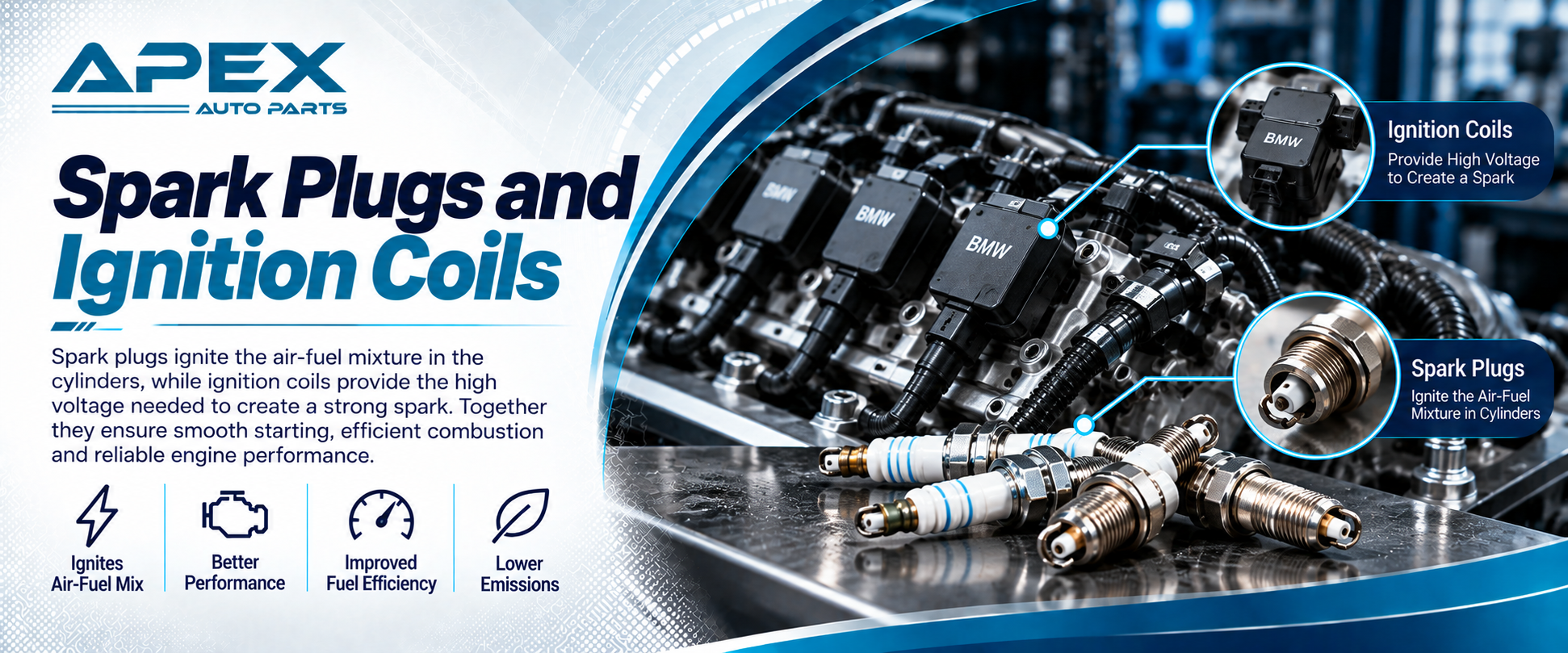
Petrol engines use spark plugs to ignite the air and fuel mixture. Ignition coils provide the high voltage needed to create that spark.
A weak coil or worn plug can cause a misfire. A misfire means a cylinder does not burn its fuel properly. You may notice shaking, poor acceleration, or difficult starting.
These symptoms can also come from fuel, air, or mechanical faults. Testing helps avoid replacing every coil when only one part needs attention. Ignition component guidance identifies rough idle, misfires, and reduced power as possible coil fault symptoms.
Glow Plugs
Diesel engines do not use spark plugs to ignite fuel. They create heat by squeezing air inside the cylinders. Glow plugs provide extra heat to support starting and other operating needs.
A glow plug fault may affect cold starting, but battery and fuel problems can do the same. The plugs and their control system should be checked together.
Fuel Pumps and Injectors
Fuel pumps move fuel from the tank towards the engine. Some systems then raise it to much higher pressure before injection. The exact layout depends on the engine.
Injectors deliver measured amounts of fuel at the required time. Their spray pattern helps fuel burn properly. A leaking or poorly working injector can affect power, starting, and fuel use.
Some replacement injectors require coding or adjustment through diagnostic equipment. This means entering information that helps the engine control unit operate them correctly. The required process depends on the system.
Fuel system work needs suitable tools and care. High-pressure fuel can cause injury, so do not loosen pipes to check for flow. A qualified workshop should test pressure and injector operation safely.
Air Filters, Intake Parts and Turbochargers
Air Filters and Intake Pipes
The air filter helps stop dirt from entering the engine. Intake pipes then carry air towards the cylinders. A blocked filter or damaged pipe can affect airflow.
Leaks after the airflow measuring point can upset the engine’s calculations. On turbocharged engines, split pressure pipes can also allow compressed air to escape. This may cause reduced power without a failed turbocharger.
Check pipe joints and seals before replacing expensive parts. A small leak can create symptoms that seem much more serious.
Turbochargers
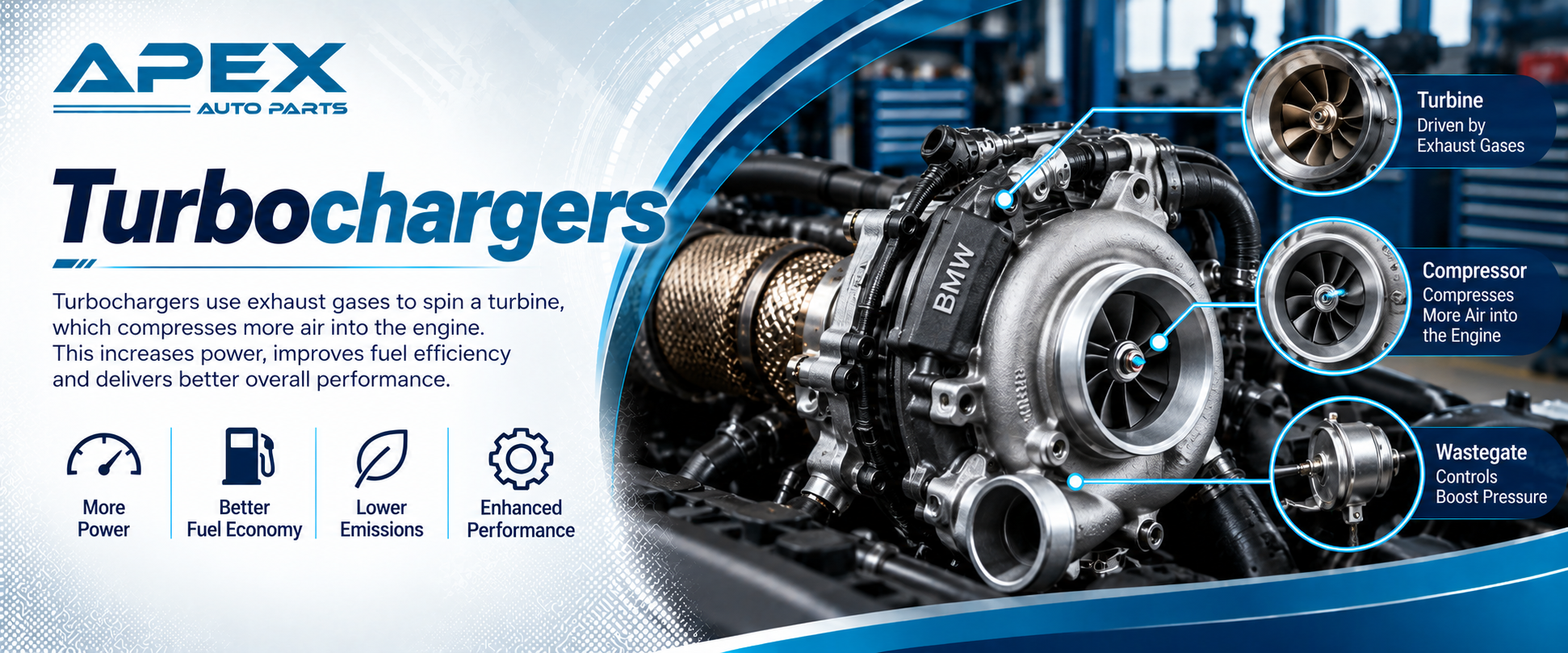
A turbocharger uses exhaust gas to drive a wheel that compresses incoming air. This allows the engine to take in more air when required.
Many turbochargers depend on engine oil for lubrication. Problems with oil supply or drainage can damage them or cause smoke. The original cause must be corrected when fitting a replacement.
BMW’s TwinPower Turbo name does not automatically mean two turbochargers. BMW has used the name for technology packages that include a single turbocharger. Always check the exact engine design.
Gaskets, Oil Seals and Engine Breathers
Gaskets seal joints between fixed parts. Oil seals help stop oil escaping around moving shafts. Both may seem small, but their failure can create larger problems.
Leaks can develop around covers, housings, and shaft seals. Oil may travel across the engine before dripping onto the ground. Because of this, the lowest wet point is not always the source.
The engine breather system also matters. It manages gases inside the crankcase, which is the lower engine area around the crankshaft. A fault can affect pressure and contribute to leaks or poor running.
Before replacing a seal, check why it failed. Surface damage, pressure problems, or incorrect fitting can make a new seal leak again.
Sensors and the Engine Control Unit
Engine sensors measure conditions such as temperature, air pressure, and shaft position. The engine control unit uses this information to manage fuel, ignition, and other functions.
A sensor fault can trigger a warning light or affect performance. However, a fault code naming a sensor does not always mean the sensor itself is broken.
Damaged wiring, poor connections, or another system fault may cause an unusual reading. A mechanic should compare the reading with actual engine conditions before ordering parts.
This approach makes BMW parts replacement more accurate. It also reduces unnecessary costs and repeat visits.
How to Choose the Correct BMW Engine Parts?
Confirm the Vehicle and Engine Details
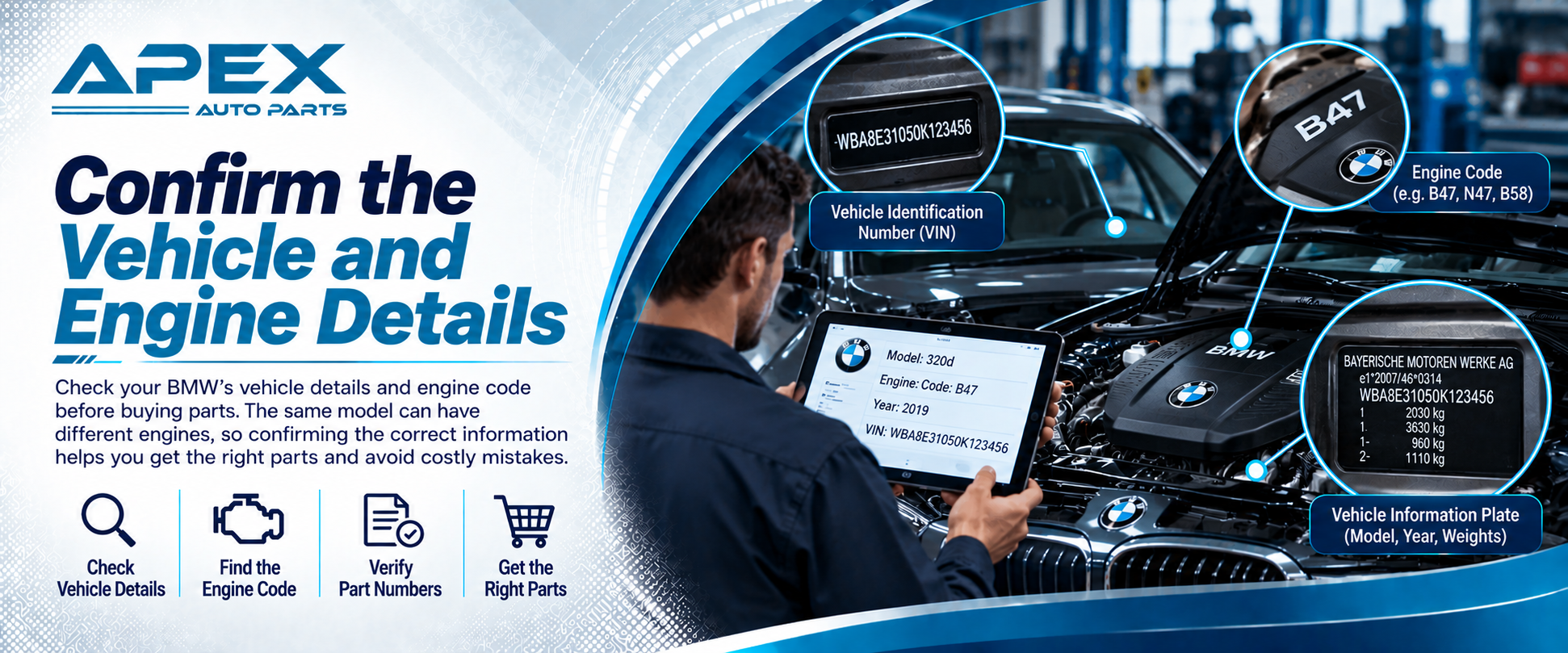
Start with the registration and VIN, which is the vehicle identification number. Then confirm the engine code, fuel type, and production date.
These details help narrow down the correct part. They matter especially when BMW changed a component during a model’s production run. A registration search is useful, but further checks may still be needed.
Compare Part Numbers
Check the number on the original part where possible. Compare it with the replacement listing and confirm whether an updated number applies.
Do not rely only on a product photograph. Two housings may look similar while using different connectors or internal designs. Ask the supplier to confirm fitment before ordering.
Understand Genuine and Aftermarket Options
Genuine BMW parts come through BMW’s branded supply channels. Aftermarket parts come from other brands offering replacement components. Quality and suitability vary, so neither price nor packaging should be the only deciding factor.
Look for clear fitment details, a known manufacturer, and useful warranty terms. Also ask whether the part includes the required seals or fitting hardware.
For major internal repairs, the engine’s measured condition matters too. Bearings and pistons may require sizes chosen after inspection.
BMW Engine Maintenance That Makes a Difference
Follow the Correct Service Schedule
Many BMWs use Condition Based Service, which tracks when certain maintenance tasks are due. The dashboard or service menu shows the relevant reminders.
Use these reminders alongside the vehicle’s maintenance instructions. Keep records of completed work and investigate faults between services. A service reminder does not mean every engine component remains healthy until that date.
Change Oil and Filters Correctly
Use the specified oil and a suitable filter. Follow the correct filling and level-checking procedure for the engine. Some BMWs use an electronic oil level display rather than a traditional dipstick.
Avoid overfilling as well as running low. Ask the workshop to record the oil specification on the invoice. This makes future maintenance easier to track.
Check Fluids and Leaks
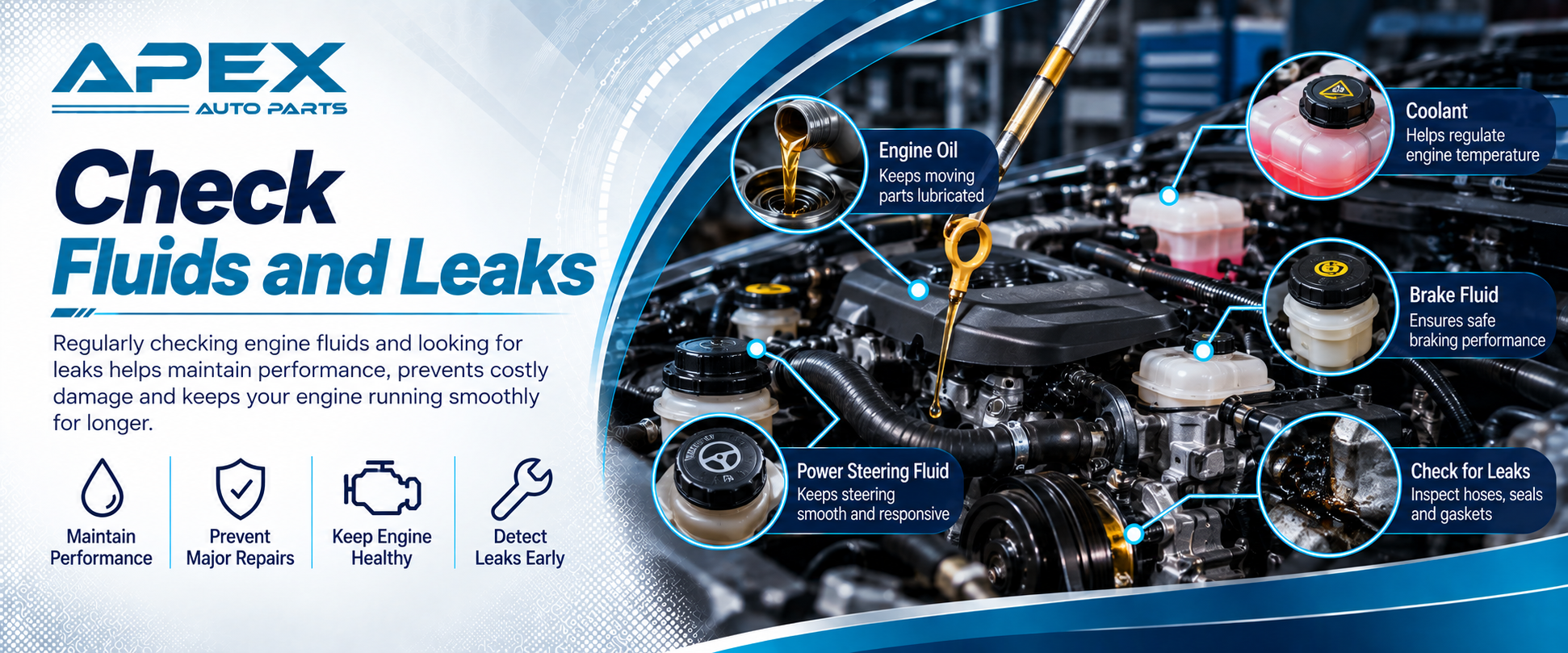
Watch for repeated oil or coolant loss. A small leak can become worse as seals age or operating pressure rises.
Check beneath the car and around accessible areas when the engine is cool. Keep hands clear of hot surfaces and moving parts. If the source is unclear, arrange an inspection.
Replace Service Items When Due
Filters and spark plugs have different service needs from major internal parts. Follow the schedule for the specific vehicle rather than replacing everything at one fixed mileage.
BMW’s servicing guidance distinguishes items such as petrol spark plugs and diesel fuel filters. This reflects the different needs of the engine types.
Diagnose the Fault Before BMW Parts Replacement
Good diagnosis starts with the driver’s description. Tell the mechanic when the problem happens, whether the engine is cold or warm, and what changed recently.
Next, the workshop can inspect the engine and read stored fault information. Further checks may include pressure tests, electrical checks, or measurements of engine condition. The tests should match the symptoms.
For example, rough running does not automatically mean faulty ignition coils. Fuel delivery, air leaks, or low cylinder pressure may also cause it. Finding the cause first protects your repair budget.
After fitting parts, the workshop should confirm that the fault has cleared. Some repairs also require coding, adjustment, or a specific filling procedure. A road test or final leak check may be needed.
FAQS
1. Are BMW Engine Parts the Same Across Different Models?
Some models share parts, but this does not guarantee compatibility. Engine code, production date, and equipment can affect fitment. Check the VIN and part number before ordering, even when two cars have similar badges.
2. Which BMW Engine Components Need Regular Replacement?
Service items such as oil filters, air filters, and petrol spark plugs need scheduled attention. Other components usually need replacement based on diagnosis or specific service instructions. Pistons, crankshafts, and cylinder heads are not routine service items.
3. How Do I Find the Correct BMW Engine Code?
Check the vehicle’s records or ask a parts supplier or workshop to identify it using the VIN. Do not rely on engine size alone. Several engine families can share the same stated capacity.
4. Can I Use Aftermarket BMW Engine Parts?
Yes, provided the parts meet the requirements of the exact engine. Choose a reputable manufacturer and confirm fitment carefully. The right design, materials, and installation matter more than a low price alone.
5. Should I Replace a BMW Timing Chain at a Fixed Mileage?
There is no single interval covering every BMW timing chain. Follow engine-specific guidance and investigate unusual rattling or timing faults. A mechanic should confirm the problem before recommending replacement.
6. Does an Engine Warning Light Mean a Part Has Failed?
Not necessarily. A warning light shows that the control system has detected a problem. Wiring, air leaks, or operating conditions can cause faults too. Read the stored information and test the system before buying parts.
7. Why Does My BMW Keep Losing Engine Oil?
Oil may escape through an external leak or burn inside the engine. Seals, breather faults, and internal wear are possible causes. Track the amount used and have the source checked rather than repeatedly topping up without diagnosis.
8. Should Related Parts Be Replaced Together?
Sometimes. A repair may require new seals, bolts, or other fitting parts. Related worn components may also deserve replacement while access is available. Ask the mechanic to explain what is essential and what is optional.
9. Can I Replace BMW Engine Parts Myself?
Simple maintenance may suit an experienced owner with the correct tools. Timing, fuel systems, and internal engine repairs need greater skill and specialist equipment. Check the required procedure before starting any work.
10. What Is the Best Way to Make BMW Engine Parts Last?
Use the correct fluids, follow servicing requirements, and investigate changes early. Avoid ignoring overheating, oil pressure warnings, or new mechanical noises. Correct diagnosis and careful fitting help protect both existing and replacement components.