
 info@apexautoparts.co.uk
 +44 203 915 7535
 Safe & Fast Shipping
 Whish List
 Compare
 Sign In

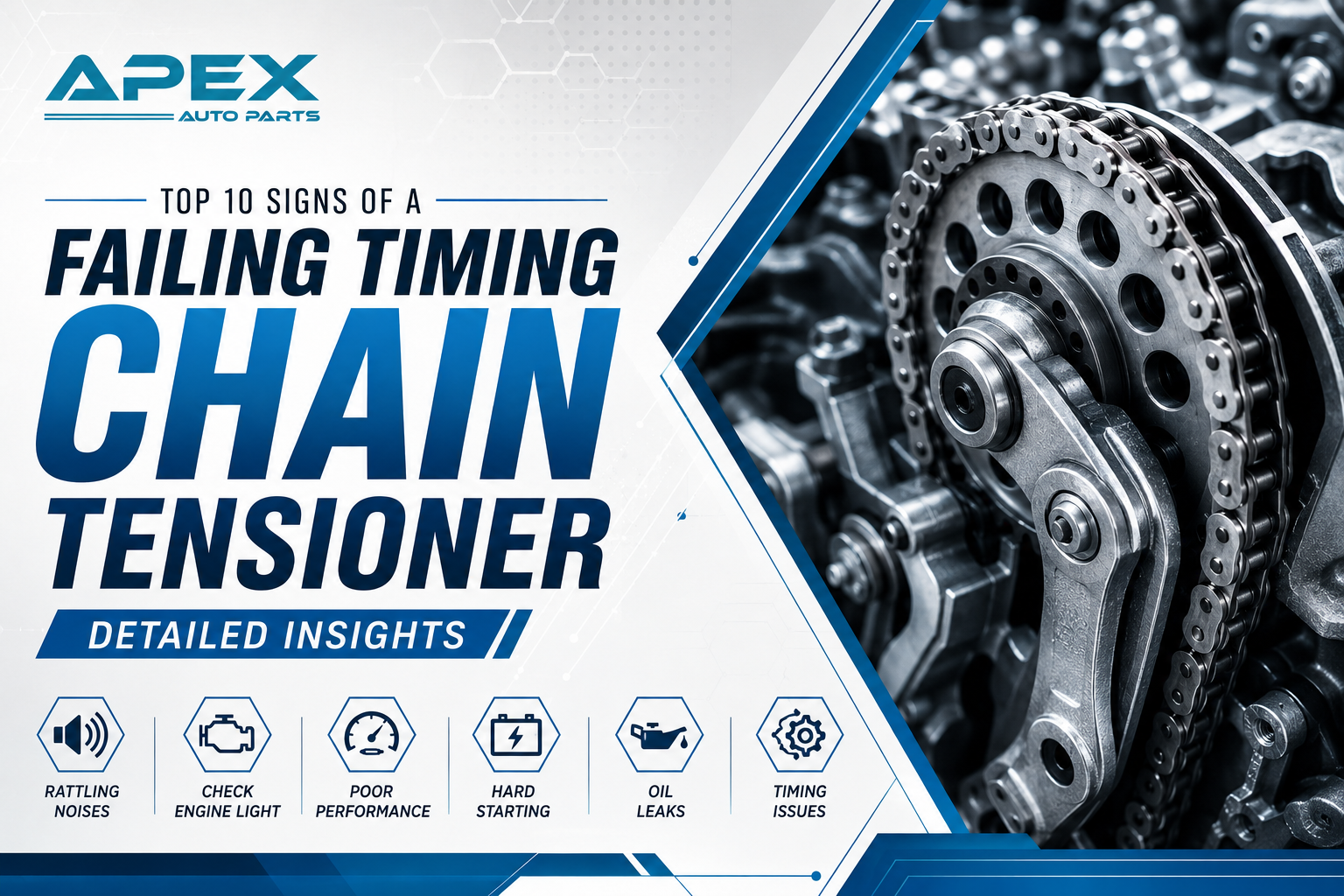
A timing chain problem rarely starts with a dramatic bang. In many cases, the first warning is a light rattle when the engine starts, a rough idle that comes and goes, or a warning light that appears without a clear reason. These early signs are easy to ignore, especially when the car still drives normally.
That is where drivers often get caught out. A small tension problem can allow the chain to move more than it should. The chain can then strike the guides, wear the sprockets, or let the valve timing move out of position. If the chain jumps far enough, the engine may stop running, and serious internal damage can follow. The timing system keeps the camshaft and crankshaft working together, so a fault in one part can affect the whole engine.
The Timing Chain Tensioner keeps the chain held at the correct tension while the engine runs. Some designs use a spring, while many modern units also use engine oil pressure. The tensioner pushes against a guide, and the guide controls the chain. When the tensioner becomes weak, blocked, worn, or starved of oil, the chain may become loose. Hydraulic tensioners depend on proper oil flow to maintain the correct chain tension.
This guide explains the ten main Bad timing chain tensioner symptoms, what each sign can mean, and how a mechanic would check the fault. It also covers Timing chain tensioner replacement, common causes of Timing chain tensioner failure, and how to recognize a Bad timing chain tensioner sound before the repair becomes much larger.
What Does the Timing Chain Tensioner Do?
The timing chain links the crankshaft to one or more camshafts. The crankshaft follows the pistons' movement, while the camshaft controls when the engine valves open and close. Both parts must stay in the correct position. Even a small timing error can affect starting, idle quality, power, fuel use, and engine noise.
The tensioner does not pull the chain like a hand pulling a rope. It presses against a chain guide. That guide takes up spare movement and keeps the chain running in a controlled path. A healthy system should keep the chain stable through cold starts, warm running, changes in engine speed, and normal wear.
Many engines use a hydraulic tensioner. Engine oil enters the tensioner and helps it hold pressure against the guide. This is why the correct oil level, oil grade, filter, and service routine matter. Dirty oil can block small oil passages, while low oil pressure may stop the tensioner from working as designed. Poor lubrication can damage timing parts and lead to extra movement and wear.
Why Timing Chain Tensioner Failure Can Become Serious?
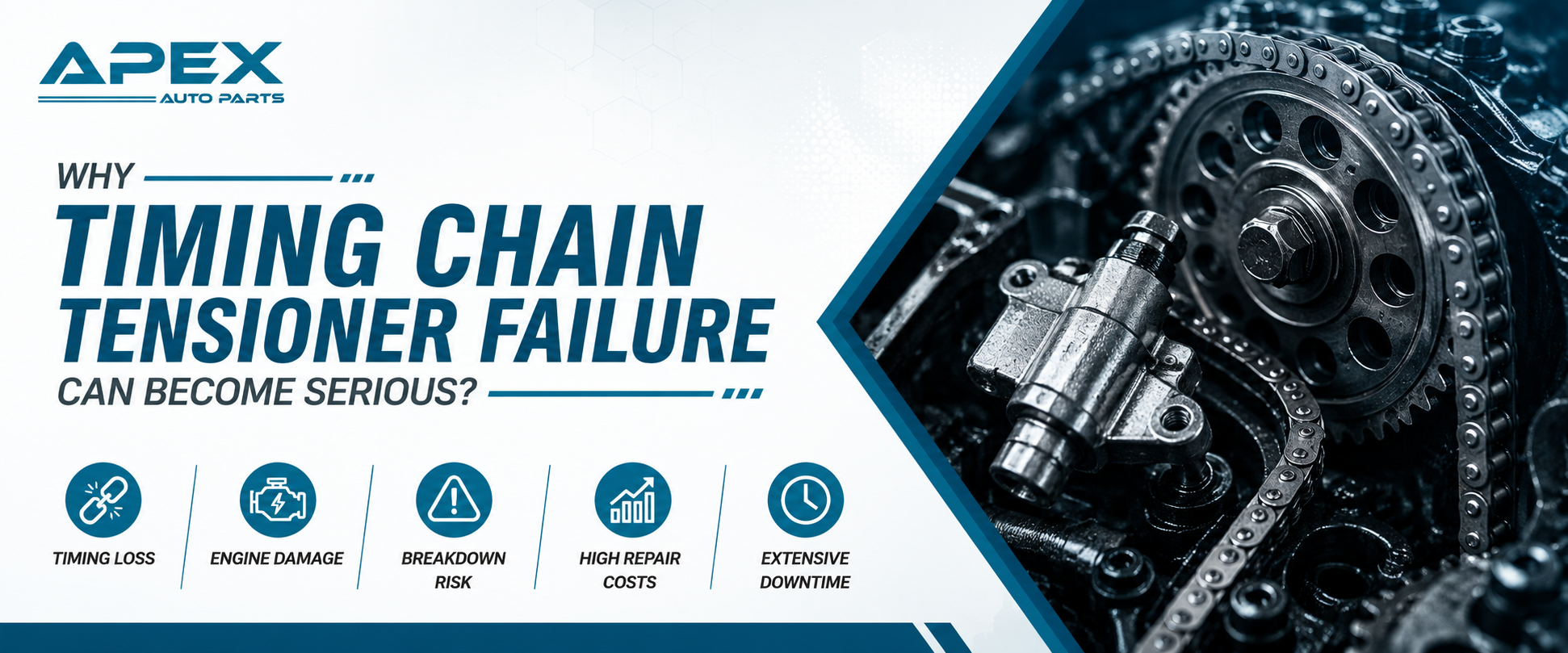
A loose chain does more than make noise. It can hit the plastic or metal guides, which may wear or break. The chain can also wear the teeth on the camshaft and crankshaft sprockets. Once wear spreads through the system, fitting one new part may not solve the problem.
The greater risk is a change in valve timing. If the chain jumps one or more teeth, the camshaft may no longer match the crankshaft. The engine may run badly, refuse to start, or stop while driving. If the timing moves too far, major internal engine damage can follow.
Rattling or clattering at cold start should be checked quickly, as a timing chain defect can lead to serious further damage. When chain damage is confirmed, the complete chain drive often needs attention because all its parts must work together correctly.
1. Rattling for a Few Seconds After a Cold Start
One of the most common early warnings is a metallic rattle just after the engine starts. It may last for one second, several seconds, or until oil pressure builds. Drivers often describe it as a chain dragging, a light clatter, or metal tapping inside the front or rear area of the engine.
This can happen when a hydraulic tensioner loses pressure while the car is parked. When the engine starts, the chain remains loose for a short time until oil reaches the tensioner. A worn internal valve, weak spring, blocked oil passage, poor oil filter, or low oil level can make this worse.
A cold start rattle is one of the clearest examples of a Bad timing chain tensioner sound, but it is not proof on its own. Variable valve timing parts, heat shields, injectors, starter parts, and other engine components can also make short noises. A mechanic should hear the engine from cold and identify where the sound begins before any parts are ordered.
Rattling or clattering during a cold start is recognized as a common warning of timing chain trouble and should lead to a workshop inspection.
2. A Rattle That Continues After the Engine Warms Up
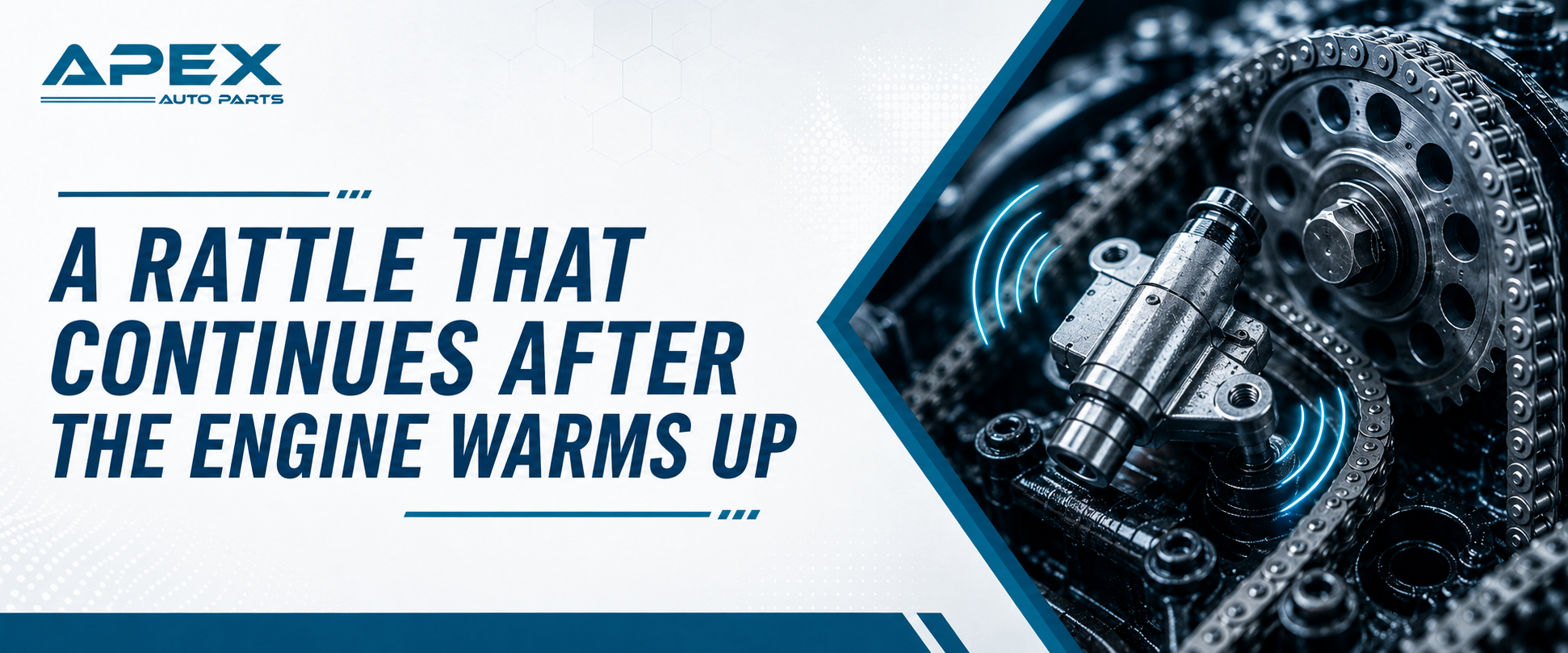
A noise that continues after the first few seconds is more worrying. The sound may stay at idle, rise with engine speed, or become clearer when the throttle is lightly pressed. It often comes from the timing cover area, although sound can travel through the engine and make the source hard to judge.
A weak tensioner may fail to control chain movement at all engine speeds. A stretched chain, worn guide, damaged sprocket, or poor oil pressure can create the same type of noise. This is why the repair should not be based solely on the tensioner. The whole timing drive needs checking.
Do not keep revving the engine to test the sound. Extra engine speed can make a loose chain strike the guides more strongly. If the rattle is loud, constant, or joined by poor running, switch the engine off and arrange an inspection. Low tension can cause noise and uneven wear, while poor lubrication can increase movement and damage.
3. The Engine Warning Light Comes On
A loose timing chain can change the relationship between the camshaft and crankshaft. The engine control unit watches these positions through sensors. If the readings no longer match what the engine expects, it may store a timing-related fault and switch on the engine warning light.
The car may still drive, but it may enter reduced-power mode. Some drivers clear the fault and continue driving because the light goes out for a while. That does not fix the cause. If the chain movement returns, the warning will often come back.
A scan result must be read with care. A camshaft position sensor, crankshaft position sensor, wiring fault, oil control valve, or variable timing unit can cause similar signs. Camshaft and crankshaft signals help the control unit manage injection and ignition timing. Sensor faults can also cause starting trouble, warning lights, stored codes, and engine stoppage. A proper check must separate an electrical fault from a mechanical timing fault.
4. Rough Idle and Engine Shaking
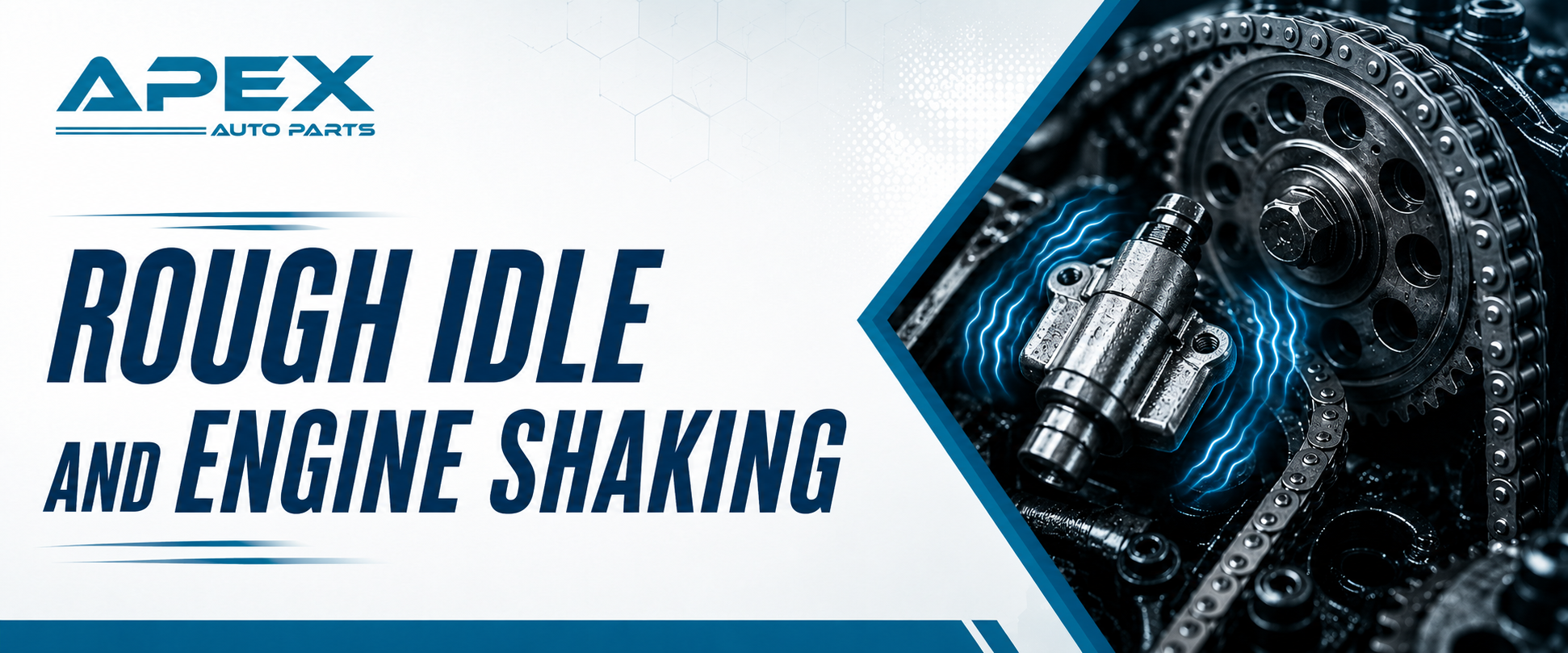
A healthy engine should settle into a steady idle once it starts. When the chain becomes loose and the timing begins to move, the engine may idle unevenly. The rev counter may rise and fall, the body may shake, or the exhaust note may sound uneven.
This happens because the valves may not open and close at the correct point. The engine then struggles to move air in and out of the cylinders in a smooth way. The effect may be worse when the engine is cold, when the air conditioning is on, or when the car is placed in drive.
A rough idle can have many possible causes, including worn spark plugs, weak coils, air leaks, injector trouble, dirty throttle components, and engine mount wear. It should be treated as part of a pattern. A rough idle, a cold-start rattle, a timing fault, and poor power give a mechanic a stronger reason to inspect the chain system. The timing system controls the matched rotation of the camshaft and crankshaft, so faults in it can prevent the engine from operating correctly.
5. Misfires, Hesitation, or Jerking
A misfire means one or more cylinders are not producing power in the normal way. The car may hesitate when pulling away, jerk under load, or feel as though the engine is missing a beat. The warning light may flash if the misfire becomes severe.
When valve timing moves out of position, cylinder filling and combustion can become uneven. That can create misfire-like behavior even when the spark plugs and injectors are working. The problem may appear only at certain engine speeds because chain movement can change with load and oil pressure.
A mechanic should still check the basic causes first. ignition parts, fuel delivery, compression, air leaks, and sensors can all cause similar signs. Replacing a chain kit without testing these areas can be a waste of money. The correct approach is to compare the noise, scan data, oil condition, mechanical timing, and cylinder performance before deciding on the repair. Correct camshaft and crankshaft timing is essential for the engine valves to work at the right point.
6. Loss of Power and Slow Throttle Response
A failing tensioner can allow the valve timing to drift. When the valves open too early or too late, the engine may not breathe properly. The car can feel heavy, slow to respond, or weak during overtaking. Turbocharged engines may feel as though boost has disappeared, even when the turbo itself is healthy.
The loss of power may be steady or may come and go. In some cases, the engine control unit limits performance after it detects a timing fault. This is designed to reduce risk, but it does not mean the problem is safe to ignore.
Loss of power alone does not confirm Timing Chain Tensioner failure. Boost leaks, blocked filters, fuel pressure problems, exhaust restrictions, and sensor faults are also common. The key is to look for several connected signs, especially timing noise, rough running, stored faults, and a poor service history. Accurate camshaft and crankshaft position information is required for proper injection and ignition control.
7. Hard Starting or a No Start Condition
A loose chain may make the engine take longer to start. The starter motor may turn normally, but the engine may need several attempts to start. The problem can be worse after the car has been parked overnight, or it may appear when the engine is hot.
If the chain has jumped, the engine may not start at all. Continuing to crank it can increase the chance of further damage. A loud mechanical noise while cranking is a strong reason to stop rather than continuing to turn the engine.
Starting trouble can also come from a weak battery, starter motor, fuel supply, glow plugs, spark plugs, immobilizer, or position sensors. Camshaft and crankshaft position faults can both cause starting difficulties and stored fault codes. Mechanical timing should be checked when starting trouble appears, such as chain noise or timing-related codes.
8. The Engine Stalls or Cuts Out
A badly worn timing system may allow the engine to stall at idle or cut out while driving. The tensioner does not always cause this, but it becomes a serious warning when it follows rattling, rough running, or a timing fault.
If the chain moves far enough, the control unit may lose a usable relationship between the crankshaft and camshaft. The engine can stop because injection, ignition, and valve movement are no longer working together correctly. In a severe case, the chain may jump or break.
Stalling also has many electrical and fuel-related causes. A mechanic should check the fault memory, battery voltage, crankshaft and camshaft signals, fuel pressure, and mechanical timing. Crankshaft position faults can also cause stalling, starting trouble, and stored fault codes, so the sensors and wiring must be tested before the timing system is opened.
9. Metal or Plastic Debris in the Oil
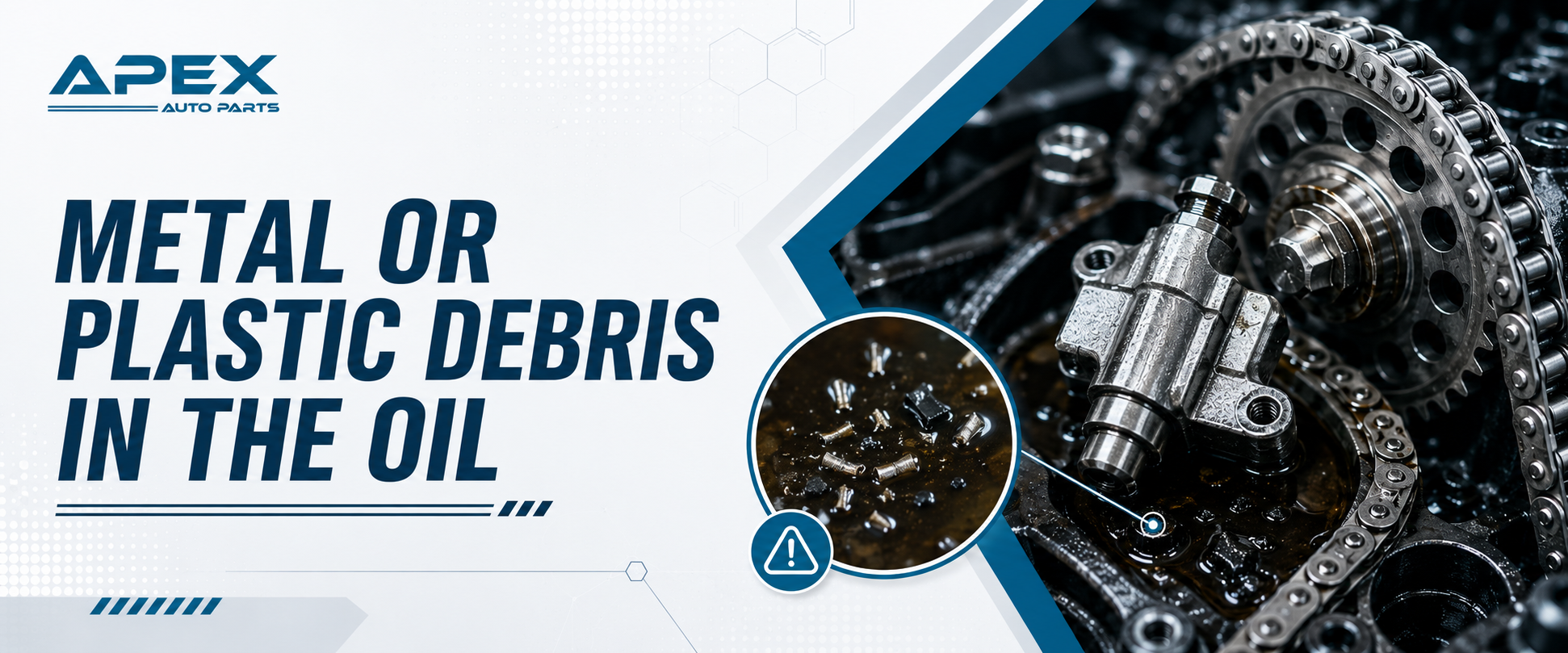
A loose chain can strike and wear the guides. Small pieces of guide material may fall into the sump, while metal wear can collect in the oil or filter. The oil may show a metallic shine, or a mechanic may find particles when the filter is opened during diagnosis.
Debris is a serious sign because it suggests the problem has moved beyond a weak tensioner. The chain, guides, sprockets, oil pump pickup, and oil passages may all need inspection. Simply fitting a new tensioner may leave worn parts inside the engine.
Not every metal particle comes from the timing system. Bearings, camshafts, turbo parts, and other moving parts can also be worn. The shape, color, and material of the debris can help guide the inspection, but the source must be confirmed. Damaged timing components can affect other parts in the system, which is why the full drive should be inspected rather than one item in isolation.
10. Low Oil Pressure or Poor Oil Service Alongside Timing Noise
Low oil level, the wrong oil grade, a blocked filter, dirty oil, or low oil pressure can stop a hydraulic tensioner from working properly. The warning may begin as a rattle after start-up and become more frequent as wear increases.
An oil pressure warning light is not a normal service reminder. If it stays on while the engine runs, switch the engine off as soon as it is safe. Continuing to drive can harm the timing system and other parts that depend on a steady oil supply.
A poor service record is not a symptom by itself, but it raises concern when timing noise is present. Engine oil lubricates both the chain and the tensioner that acts on the guide. Dirty or inadequate oil can damage parts and cause extra movement and wear.
How a Mechanic Checks the Problem?
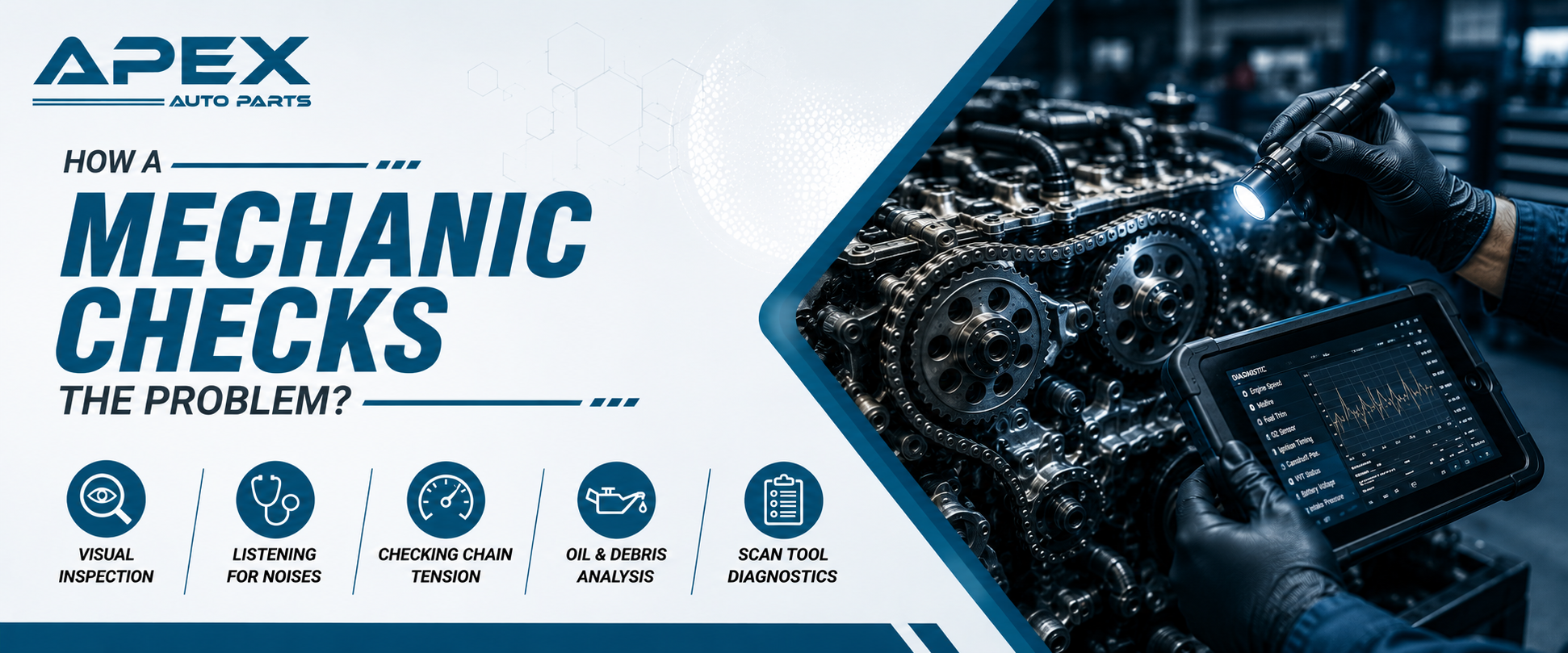
A good diagnosis starts before anything is removed. The mechanic should ask when the noise happens, how long it lasts, whether the engine is hot or cold, and whether any oil or warning light problems have appeared. A cold start video from the owner can help if the noise does not happen at the garage.
The normal checks may include:
- Listening to the engine from a true cold start
- Scanning the engine control unit for stored and pending faults
- Checking the oil level, oil condition, correct grade, filter, and oil pressure
- Inspecting the oil and filter for metal or guide material
- Comparing camshaft and crankshaft data where the vehicle allows it
- Checking chain movement, guides, sprockets, and mechanical timing using the correct workshop method
The exact test depends on the engine. Some tensioners can be reached from outside the main cover, while others sit deep inside the engine. Some engines need locking tools to hold the crankshaft and camshafts in place. The vehicle maker’s repair steps and torque settings should always be followed.
Do not diagnose the fault from sound alone. A scan, oil pressure test, and physical timing check can prevent an expensive wrong repair. Accurate alignment, oil supply, and fault memory checks are all important parts of timing and position diagnosis.
Can You Drive With These Symptoms?
A light rattle that lasts less than a second still needs checking, but a loud or growing rattle should be treated more seriously. There is no reliable mileage estimate because the fault can worsen without warning.
Stop driving and arrange recovery when any of these signs appear together:
- Loud and continuous chain noise
- Oil pressure warning while the engine is running
- Flashing engine warning light with heavy misfire
- Engine stalling, severe shaking, or failure to start
- Metal debris in the oil or filter
The cost of recovery is usually far lower than the cost of damage to the cylinder head or a complete engine. Prompt workshop inspection is recommended when cold start rattling or clattering suggests a timing chain problem.
Timing Chain Tensioner Replacement: Tensioner Only or Full Kit?
A tensioner-only repair can make sense in limited cases. The chain must be within specification, the guides and sprockets must be undamaged, oil pressure must be correct, and the engine maker must allow that repair. This is more likely when a known tensioner design has failed early, but the rest of the system remains healthy.
In many real repairs, the safer choice is a full timing chain kit. The chain, guides, tensioner, seals, and sometimes sprockets or bolts have worked for the same mileage. If one part is badly worn, the others may be close behind. Fitting a new tensioner against a stretched chain can hide the noise for a short time without fixing the main problem.
Complete kits are designed to include the parts needed for a full repair, and damaged timing components can affect other items in the system. Schaeffler also advises replacing the complete chain drive when timing chain damage is confirmed.
Correct fitment matters. Two cars with the same model name and engine size can use different chains, guides, or tensioners. At Apex Auto Parts, the registration number, VIN, engine code, and original part number can help match the correct components before the repair begins.
What Affects the Cost of the Repair?
The part price is only one part of the bill. Labor can be the higher cost because the timing system may sit behind covers, mounts, cooling parts, or gearbox side components. Some engines need the engine or gearbox supported, and some need special locking tools.
Cost also changes depending on what the inspection finds. A basic tensioner repair is very different from a full chain kit, damaged sprockets, broken guides, low oil pressure, bent valves, or cylinder head work. It is better to pay for a correct diagnosis first than to buy a cheap part and repeat the labor.
When asking for a quote, provide the registration, engine code, mileage, symptoms, fault codes, and service history. This gives the garage and parts supplier a clearer picture and reduces delays. Full-timing kits can include chains, guides, tensioners, seals, bolts, and sprockets, depending on the application.
Common Causes of Timing Chain Tensioner Failure
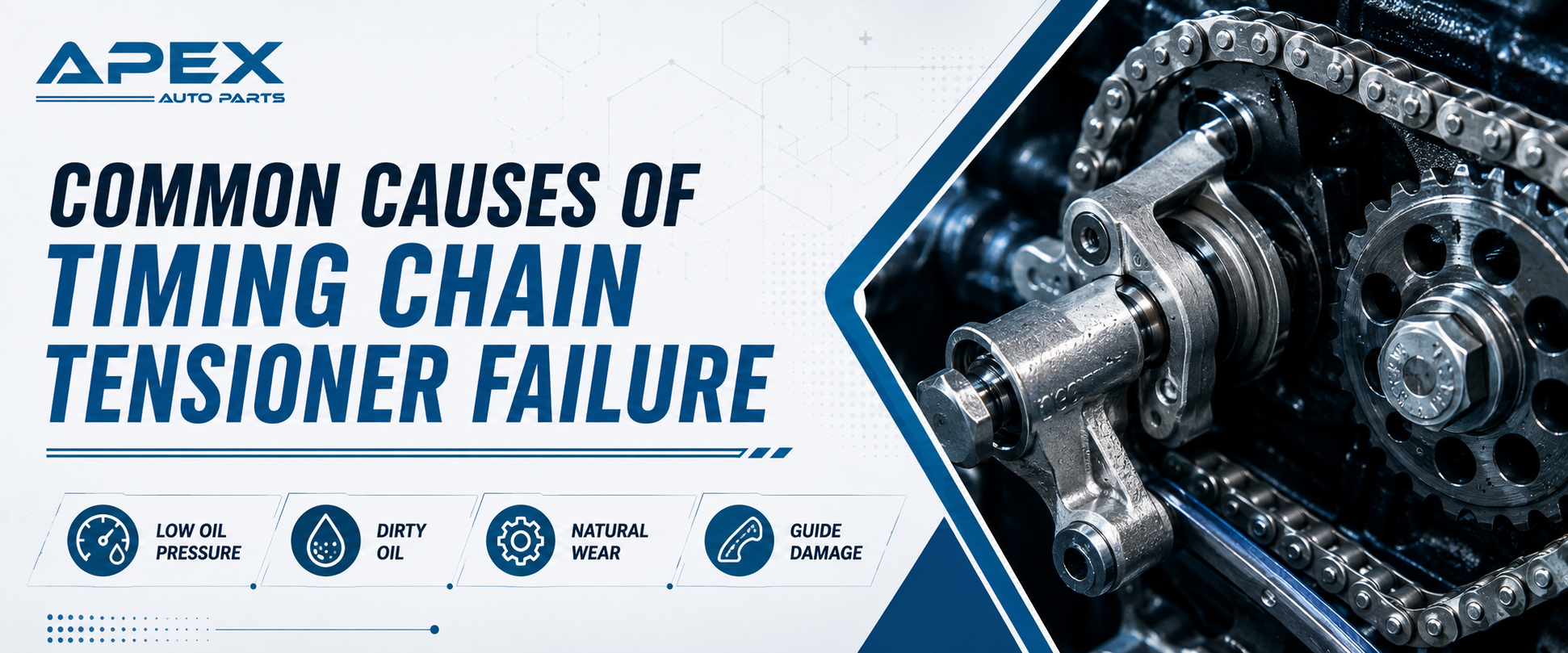
Wear is one cause, but it is not the only one. Hydraulic tensioners depend on clean oil and reliable oil pressure. Long service gaps, low oil level, poor filters, sludge, blocked oil passages, or an unsuitable oil grade can reduce how well the unit works.
Installation mistakes can also create trouble. Incorrect timing marks, poor sprocket alignment, reused bolts where new ones are required, missing seals, and wrong torque settings can damage a new system. Poor lubrication and gear misalignment are recognized causes of timing system problems.
The main causes include:
- Normal wear after high mileage or long use
- Dirty oil or missed oil services
- Low oil level or low oil pressure
- A blocked oil feed to the hydraulic tensioner
- A stretched chain or worn guide overloading the tensioner
- Incorrect installation or the wrong part
- A weak spring or worn internal valve inside the tensioner
How to Reduce the Risk of Future Problems?
Use the oil grade listed for the engine and keep the level correct. Do not wait for the oil warning light before checking it. An engine that uses oil may need regular top-ups between services, but unexplained oil loss should also be investigated.
Change the oil and filter at sensible intervals based on how the car is used. Short trips, heavy traffic, frequent cold starts, towing, and hard driving can place extra demand on the oil. A suitable filter also matters because the tensioner needs reliable oil flow after the engine starts.
Pay attention to a new rattle. Record it from a cold start and book a check rather than waiting for it to become constant. Early diagnosis may save the guides, sprockets, cylinder head, and engine. Proper lubrication is vital for the service life of the chain and tensioner.
After replacing the Timing Chain Tensioner, follow the fitting instructions and oil priming steps for that engine. Make sure any required single-use bolts, seals, guides, and sprockets are included. The first start after repair should be handled exactly as the workshop procedure states.
How Apex Auto Parts Can Help?
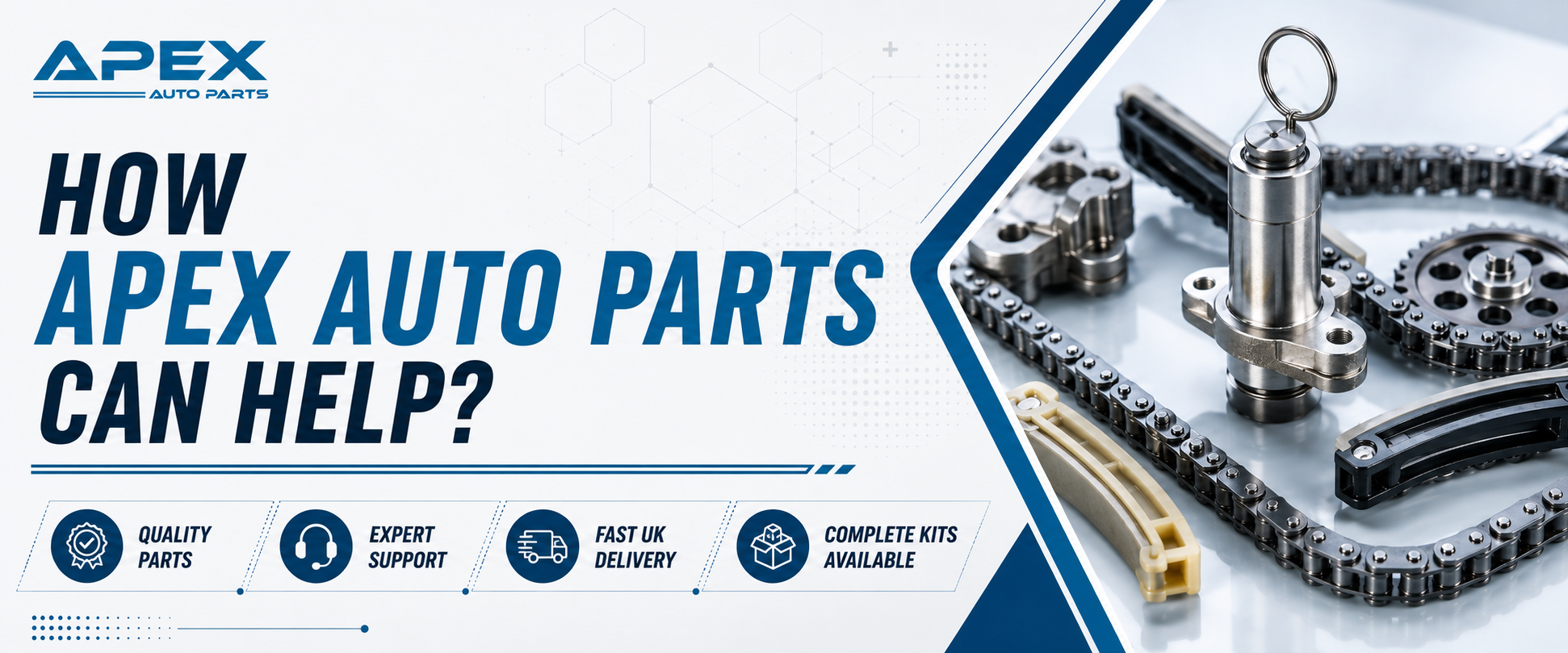
Apex Auto Parts supplies engine parts for drivers, garages, mechanics, and engine rebuilders across the UK. Timing parts can look similar in photographs, but small changes in chain length, guide shape, tensioner design, and bolt size can decide whether a part fits.
Before ordering, share the vehicle registration and any available engine code or original part number. A proper fitment check can help identify the correct tensioner, timing chain kit, guides, seals, and related parts.
The aim is not to guess at the repair. It is to help the mechanic start with the correct components after the fault has been confirmed. This reduces the risk of delays, repeat labor, and unsuitable parts being fitted.
Final Thoughts
The main warning signs are noise, timing faults, rough running, hard starting, loss of power, stalling, debris, and oil pressure trouble. None of these proves the tensioner is faulty on its own. The strongest diagnosis comes from several signs that point in the same direction.
Do not ignore a Bad timing chain tensioner sound, especially when it occurs on a cold start or persists after the engine warms up. Early inspection can be the difference between a timing kit repair and major engine damage. Cold start rattling and clattering should be checked promptly.
Find the cause first, check the whole timing system, and use correctly matched parts for the repair.
Frequently Asked Questions
1. What are the most common Bad timing chain tensioner symptoms?
The most common signs are a rattle on cold start, constant chain noise, rough idle, misfires, slow starting, loss of power, an engine warning light, and timing-related fault codes. Metal or plastic debris in the oil can also appear when a loose chain damages its guides.
2. What does a Bad timing chain tensioner sound like?
A Bad timing chain tensioner sound is usually a metallic rattle, clatter, or chain-dragging noise from the timing cover area. It may last only a few seconds after a cold start or continue when warm. Other engine parts can sound similar, so a mechanic should confirm the source.
3. Can I drive with a failing Timing Chain Tensioner?
Driving is risky because a loose chain can jump and move the valve timing. Stop using the car if the noise is loud, the oil pressure light is on, the engine misfires badly, or it stalls. A short recovery journey can cost far less than repairing damaged valves or pistons.
4. Can a timing chain tensioner failure switch on the engine warning light?
Yes. A loose chain can change the relationship between the camshaft and crankshaft. The engine control unit may detect that difference and store a timing fault. Sensor, wiring, oil control, and variable timing faults can produce similar codes, so the mechanical timing still needs to be checked properly.
5. What causes Timing chain tensioner failure?
Common causes include normal wear, dirty oil, low oil level, weak oil pressure, blocked oil passages, a poor filter, a stretched chain, damaged guides, or incorrect fitting. Hydraulic tensioners need clean oil flow. Finding the cause matters because a new tensioner may fail again if the oil problem remains.
6. How long does timing chain tensioner replacement take?
Repair time depends on the engine layout and access. Some tensioners are reached through a small external opening, while others sit behind major covers and require locking tools. A full chain kit takes longer than a tensioner-only repair. The garage should inspect the complete system before giving a firm time.
7. Should I replace only the tensioner or the full timing chain kit?
A tensioner-only repair may work when the chain, guides, sprockets, and oil pressure test well. If the chain is stretched or the guides are worn, a full kit is usually the better repair. Replacing one part in a worn system can lead to repeat noise and repeat labor costs.
8. Can an oil change fix Bad timing chain tensioner symptoms?
Fresh oil may reduce noise when the old oil is dirty or the wrong grade, but it cannot repair a worn tensioner, stretched chain, broken guide, or damaged sprocket. Do not use thicker oil to hide the sound. Check oil pressure and the timing system before deciding that a service has solved it.
9. Can a bad tensioner cause misfires and rough idle?
Yes. If the chain becomes loose enough to move valve timing, the engine may idle roughly, hesitate, or misfire. However, plugs, coils, injectors, air leaks, compression problems, and sensors can cause the same signs. A scan and mechanical timing check are needed before replacing parts.
10. How much does a timing chain tensioner replacement cost in the UK?
The cost depends on the vehicle, engine position, labor time, parts needed, and whether internal damage has occurred. A tensioner-only repair costs less than a full kit, but it is not always suitable. Ask for a diagnosis first and provide the registration, engine code, and service history for an accurate quote.
Reference:
automotive skf