
 info@apexautoparts.co.uk
 +44 203 915 7535
 Safe & Fast Shipping
 Whish List
 Compare
 Sign In

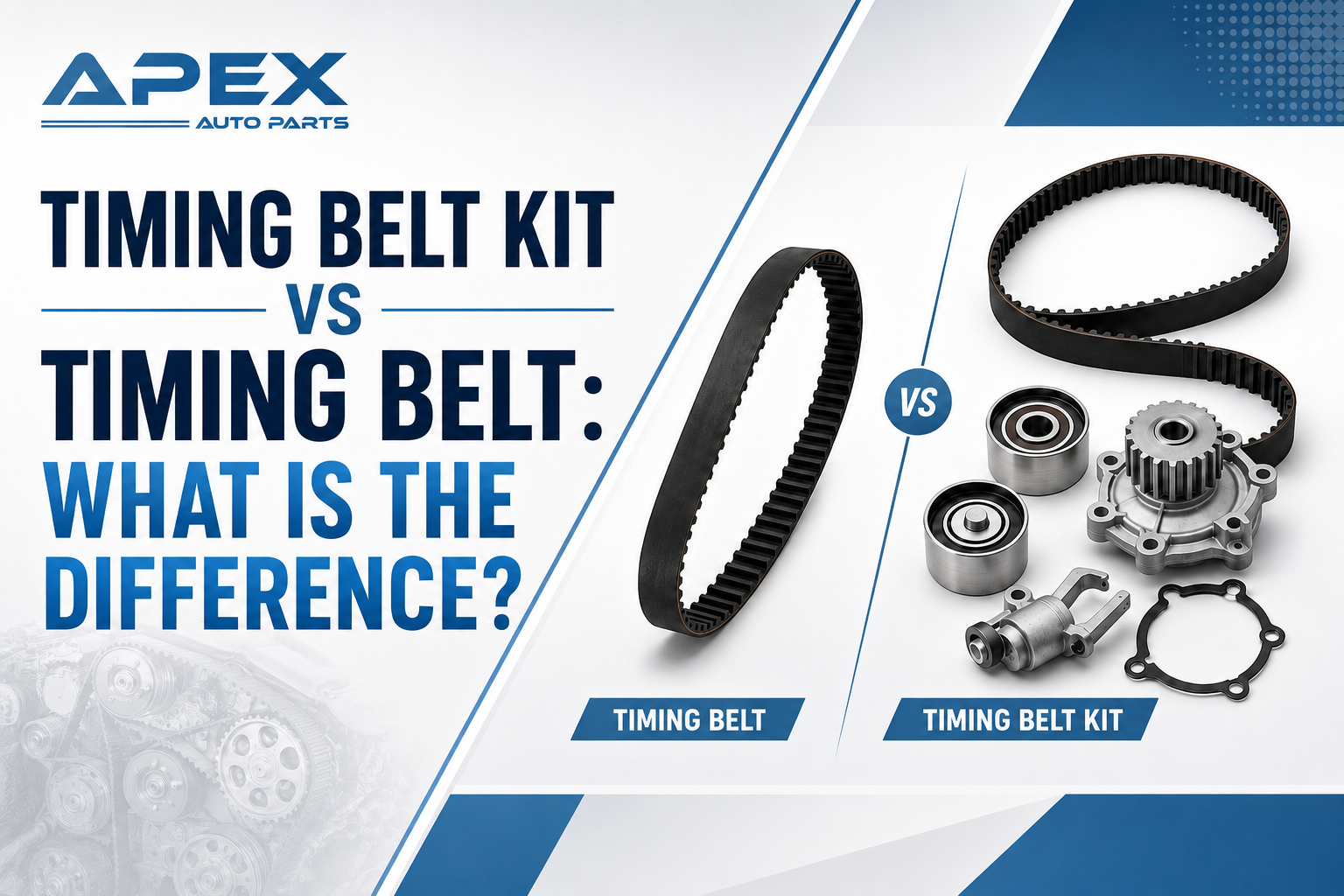
A Timing Belt and a Timing Belt Kit may sound like the same thing, but they are not. The belt is one part of the engine timing system. The kit contains the belt and other parts that guide it, hold it at the correct tension, and help it turn smoothly.
This difference matters when planning a timing belt replacement. Replacing only the belt may appear cheaper, but the old tensioner or idler pulley could fail later. If that happens, the new belt may slip, lose teeth, or break. The engine may then stop running and could suffer serious internal damage.
A complete kit typically provides a mechanic with the key components needed to renew the system properly. Depending on the vehicle, it may contain tensioners, idler pulleys, bolts, springs, seals, and a water pump. The exact contents vary, so the vehicle registration, VIN, engine code, and old part number should always be checked before ordering.
This guide explains the difference between the two options, how the system works, common warning signs, and when to replace timing belt components. It also covers the growing use of wet timing belts and explains why the correct oil is so important.
What is a timing belt?
Drivers searching for what a timing belt is often find themselves surprised by how important this part is. It is a strong toothed belt fitted inside or near the front of the engine. Its teeth fit into toothed wheels on the crankshaft and camshaft.
The crankshaft moves as the pistons travel up and down. The camshaft controls the opening and closing of the engine valves. These two parts must remain in the correct position relative to each other.
The belt transfers movement from the crankshaft to the camshaft. Because the teeth fit into matching grooves, the parts can turn together without slipping during normal operation.
Some engines also use the belt to drive a fuel pump, balance shaft, or water pump. The exact design depends on the engine. Continental explains that these belts can drive camshafts and other engine components while ensuring the movement occurs in the correct order.
The belt is usually made from strong rubber compounds with internal cords that help it hold its shape. A fabric layer protects the teeth from wear. Although it feels flexible, it is built to work under heat, pressure, and constant movement.
It is often hidden behind protective covers. This keeps dirt away from the system, but it also means the condition cannot always be checked during a quick look under the bonnet.
What does a timing belt do inside the engine?
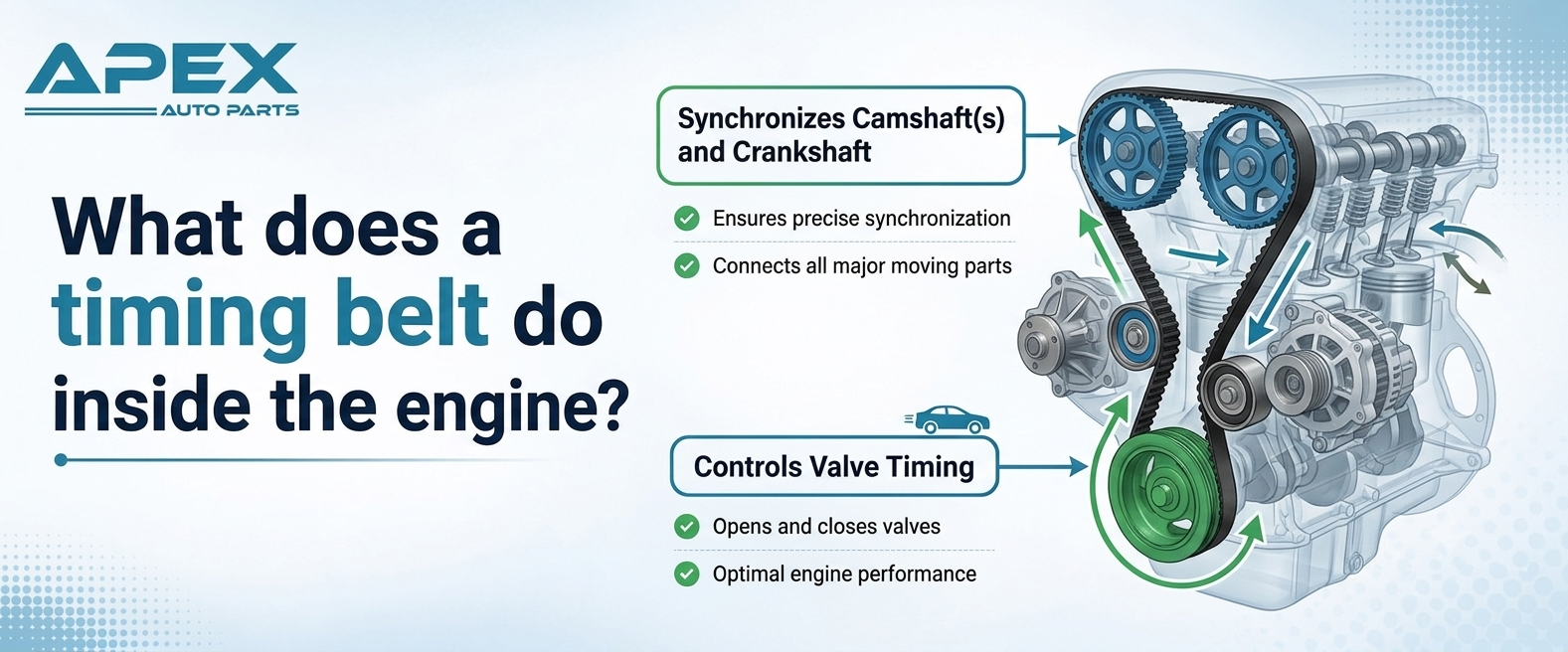
The answer to what a timing belt does starts with valve timing. The engine must draw in air, compress it, burn fuel, and expel exhaust gas. The valves need to open and close at the right moment during this process.
The belt keeps the crankshaft and camshaft working together. As the crankshaft turns, the belt moves the camshaft. The camshaft then controls the valves.
If this movement stays correct, the pistons and valves follow their planned paths. The engine can start, idle, and produce power normally.
If the belt slips by one or more teeth, the camshaft may move out of position. The engine may become difficult to start, run roughly, lose power, or bring on an engine warning light. In a more serious case, the pistons and valves may meet inside the cylinder.
Many modern engines are designed with very little space between these moving parts. The piston and an open valve may use the same area at different times. When the timing is off, they can collide, causing bent valves, piston damage, cylinder head damage, or complete engine failure.
This is why the belt should not be treated like a simple rubber part. It controls one of the most important systems inside the engine.
What Is the Main Difference Between a Timing Belt and a Timing Belt Kit?
A Timing Belt is the toothed belt itself. Buying one means you receive only the main component, unless the product listing clearly states that other parts are included.
A Timing Belt Kit is a group of matched parts for the timing drive. It usually includes the belt, tensioner, and one or more idler pulleys. Some kits also contain bolts, washers, springs, seals, and other fitting parts.
There are also kits with a water pump. These are designed for engines where the pump is behind the same covers or is driven by the belt. The kit contents must always be checked because not every engine uses the same layout.
The simple difference is that one option replaces the belt, while the other renews more of the surrounding system. Continental states that its kits include the belt and related wear parts required for a professional replacement. Gates kits can include the belt, idlers, tensioners, springs, fitting parts, and instructions.
From a mechanic’s perspective, the kit often makes more sense because the belt does not work on its own. It depends on every pulley and tensioning part around it.
What Is Normally Included in a Timing Belt Kit?
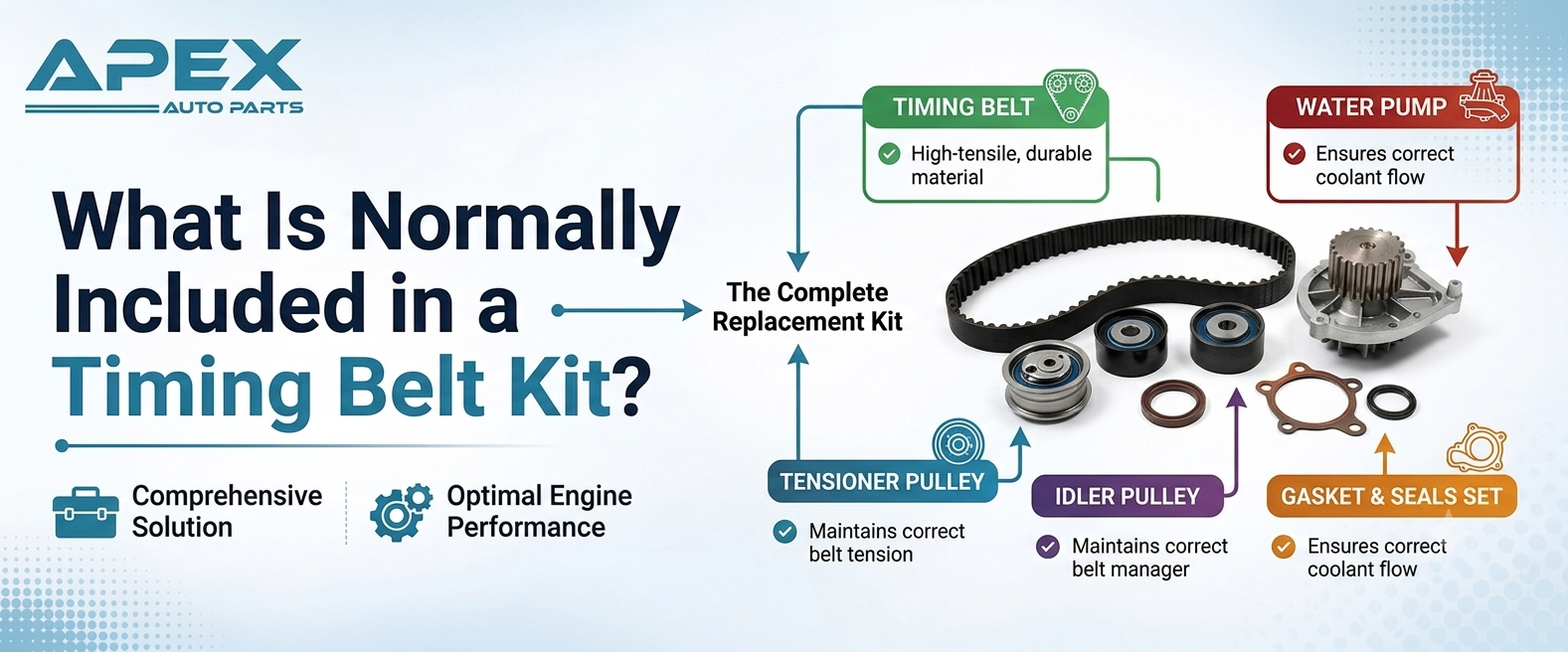
The contents depend on the vehicle and kit type. A basic Timing Belt Kit may contain three parts, while a larger one may include the water pump and several small fitting items.
A typical kit may include:
- A new Timing Belt
- A manual or automatic tensioner
- One or more idler or guide pulleys
- New bolts, nuts, springs, or washers
- Seals or gaskets where needed
- A replacement water pump in a pump kit
- A service sticker for recording the date and mileage
The tensioner keeps the belt tight enough to stay on its correct path. If the tension is too low, the belt may flap or jump teeth. If it is too high, it may place extra stress on the belt and pulley bearings.
Idler pulleys guide the belt around the engine. Their bearings must turn freely and quietly. A worn bearing can become noisy, develop movement, or seize.
Small bolts and washers may not look important, but some are designed for one use. Reusing the wrong bolt may affect the clamping force or alignment. A vehicle-specific kit helps the mechanic receive parts matched to the application.
Continental lists tensioning pulleys, guide pulleys, dampers, screws, nuts, springs, and washers among the possible contents of its kits. The company also notes that the exact contents depend on the vehicle.
Why Do Mechanics Usually Recommend the Full Kit?
When a belt reaches its replacement age or mileage, the parts around it have covered the same distance. The tensioner and idler bearings may still turn, but that does not mean they have another full service life left.
A pulley bearing may feel acceptable during a quick check and then become noisy several months later. It may also seize without much warning. If it stops turning, the belt can be dragged across the pulley, causing overheating, damage, or throwing it out of position.
Fitting a new belt onto old pulleys can therefore leave a weak point in the renewed system. The owner may then pay for the same labor again when the pulley fails.
Access is another major reason. On many engines, the mechanic must remove covers, an engine mount, auxiliary parts, and other components before reaching the timing drive. Much of this work is needed whether one part or the full kit is being replaced.
The extra part cost of a complete kit is often lower than the labor cost of reopening the same area. It also reduces the chance of a new belt being damaged by an old tensioner or idler.
Both Continental and Gates recommend replacing the related wear parts during belt service rather than treating the belt as an isolated component.
Is Replacing Only the Timing Belt Ever Acceptable?
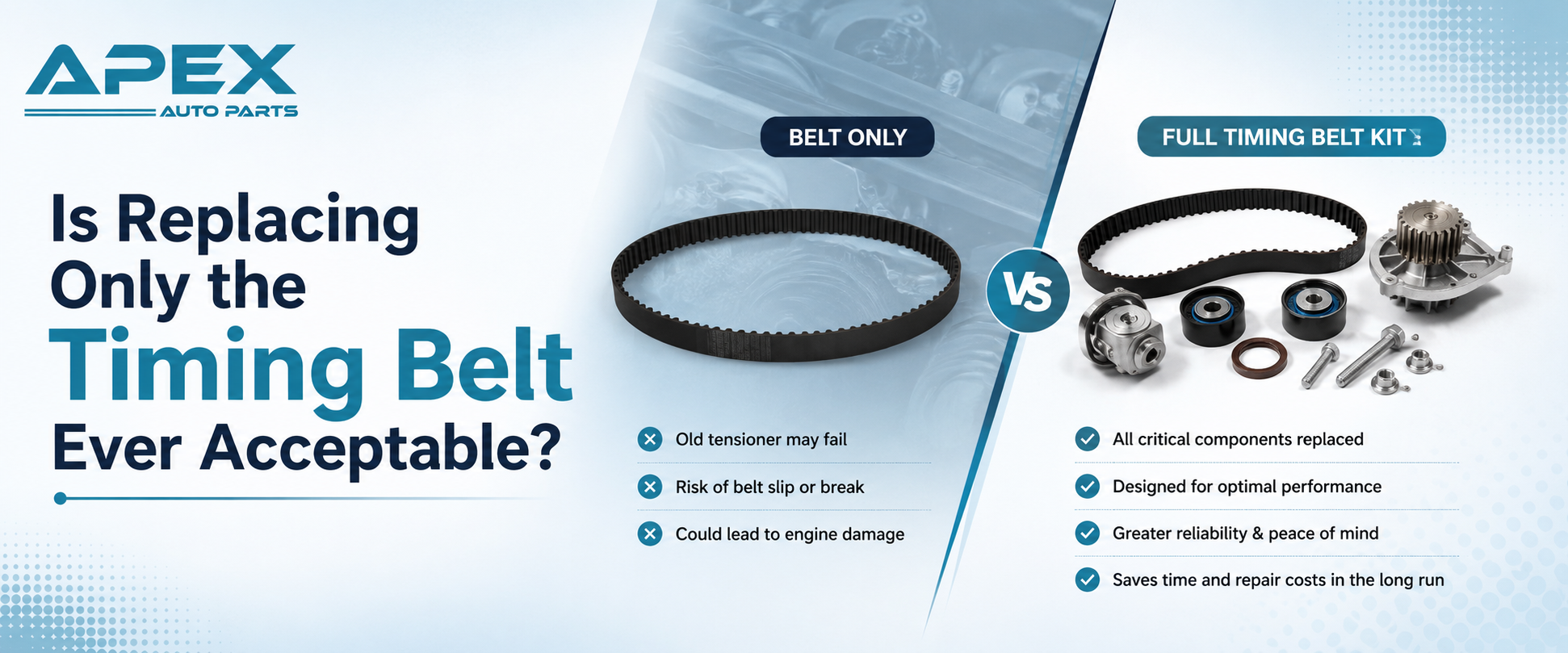
There can be rare cases where replacing only the Timing Belt is reasonable. For example, a nearly new belt may have become contaminated during another repair, even though the tensioners and pulleys were recently replaced.
Even then, the mechanic should confirm the age and condition of every part. The cause of the contamination must also be repaired. Fitting another belt while leaving an oil or coolant leak will not solve the problem.
A single belt may also be supplied when a workshop has already sourced the remaining components separately. In that case, it is not truly a belt-only repair, as the entire system is still being renewed.
For a normal scheduled service on an older vehicle, fitting only the belt is rarely the strongest choice. The cost saving is often small compared with the possible cost of repeating the labour or repairing engine damage.
The correct decision should be based on the engine design, the manufacturer's instructions, the service history, and the condition of the entire system. A low price should not be the only reason for leaving old wear parts in place.
When to change timing belt parts?
There is no single answer to when to change timing belt parts because different engines use different schedules. The correct interval may be based on mileage, age, or both.
Always begin with the vehicle handbook or trusted service data for the exact engine. Do not assume that every engine in the same model uses the same interval. A car may be sold with several petrol and diesel engines, and each one can have different service needs.
Age matters even when the vehicle has covered low mileage. Rubber materials can weaken over time. Heat cycles, moisture, oil vapor, and long periods without use can all affect the system.
Mileage also matters because the belt, pulleys, and tensioner move whenever the engine runs. A car used for delivery work or city driving may experience many starts and heat cycles even if each journey is short.
Continental advises following the vehicle manufacturer's checking and replacement schedule. It also notes that the belt and related parts are affected by ageing and wear.
The following questions can help when reviewing the service history:
- Is there an invoice proving the last replacement?
- Does the invoice list the kit and water pump?
- Is the mileage at replacement clearly shown?
- Was the correct engine code used when ordering parts?
- Has the engine suffered an oil or coolant leak?
- Is the current belt already beyond its age limit?
If there is no proof, do not rely only on what a previous owner said. A service stamp may show that general maintenance was carried out, but it may not confirm that the timing system was renewed.
Why Is Mileage Alone Not Enough?
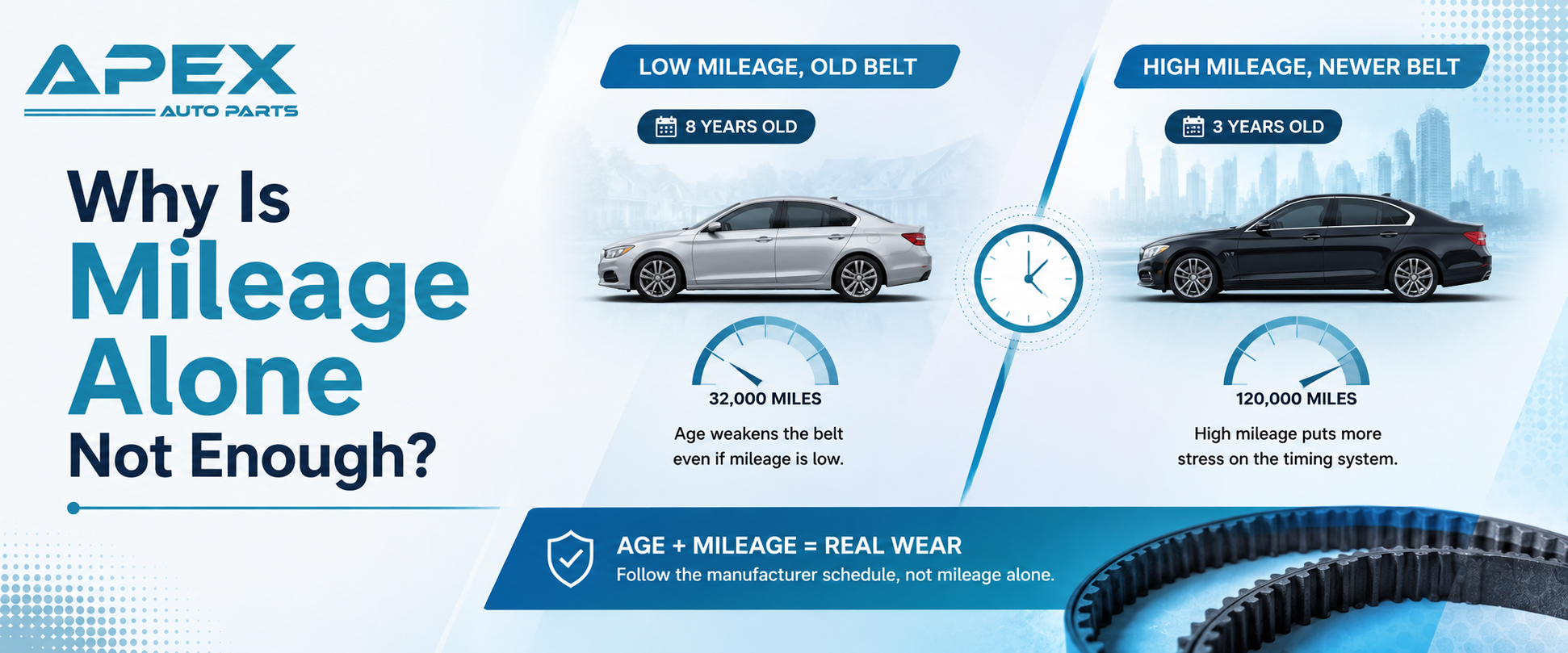
A car with low mileage can still have an old belt. For example, a vehicle used only at weekends may cover a few miles but keep the same belt for many years.
The opposite can also happen. A high-mileage motorway car may reach its distance limit before its age limit. The replacement becomes due as soon as either limit in the manufacturer's schedule is reached.
Engine repairs can also change the decision. Oil leaks, coolant leaks, overheating, or incorrect belt tension may reduce the expected life. A mechanic may recommend early replacement when contamination or damage is found.
An unknown service history is another reason to act carefully. If the belt fails, it is usually impossible to go back and prove when it should have been changed.
Preventive replacement is far cheaper than waiting for a failure on an engine where the pistons and valves can collide.
Common timing belt symptoms
Possible timing belt symptoms depend on whether the belt is worn, loose, damaged, or already out of position. Some problems come from the tensioner or pulleys rather than the belt itself.
The engine may become slow to start if the valve timing has moved. It may idle unevenly, misfire, or feel weak under acceleration. A scan tool may show a fault relating to the position of the crankshaft and camshaft.
Noise can also come from the timing area. A worn tensioner or idler bearing may produce a hum, rattle, clicking sound, or rough bearing noise. Dayco lists starting trouble and unusual noises among possible signs that the timing system needs attention.
These symptoms should not be used to order parts without diagnosis. Similar problems can come from spark plugs, ignition coils, injectors, sensors, low compression, or fuel pressure faults.
A mechanic should confirm the source of the noise, check fault codes, review live engine data, and, where possible, inspect the covered system.
Important timing belt warning signs
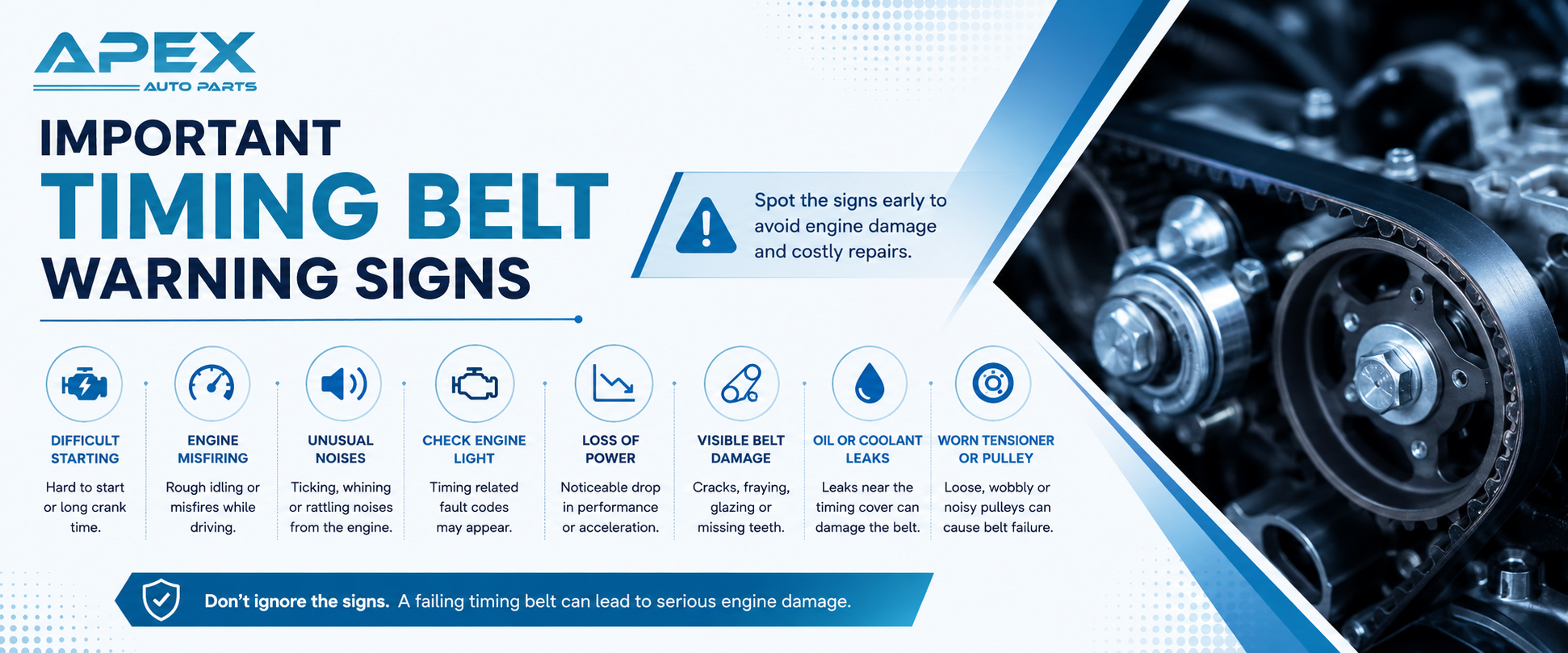
Some timing belt warning signs are visible during an inspection, while others are noticed when the engine is running.
Points that deserve attention include:
- Cracks, frayed edges, or missing tooth material
- Oil or coolant inside the timing cover
- A loose belt or incorrect tension
- Noise from a tensioner or idler pulley
- Rough running or hard starting
- A timing-related engine fault code
- Unknown replacement history
- Belt material found in engine oil on a wet timing belt system
A belt contaminated by oil or coolant should not simply be wiped clean and reused. The leak must be located and repaired. The surrounding pulleys and covers also need to be cleaned properly.
A damaged outer surface may not show the full condition of the internal cords. The belt should also never be sharply bent or folded during handling because this can damage the internal strength members. Continental warns that creasing can weaken these fibers and may lead to failure.
It is also important to understand that some belts fail with little warning to the driver. Waiting for noise or poor running is not a safe replacement plan. The service schedule remains the main guide.
What Happens if the Belt Breaks?
If the belt breaks, the camshaft can stop turning while the crankshaft and pistons are still moving. The engine will usually stop immediately and will not restart.
On some engine designs, the pistons may hit open valves. This can bend valves, damage valve guides, mark pistons, break rocker parts, or damage the cylinder head.
The final repair may involve removing and rebuilding the cylinder head. In a severe case, a replacement engine may be more practical than repairing all the damaged parts.
Even on an engine where the pistons and valves do not collide, a broken belt still leaves the driver stranded. Recovery, labour, and replacement parts will still be needed.
Continental explains that loss of crankshaft and camshaft timing can allow the valves and pistons to collide, leading to engine failure.
Do not repeatedly try to restart an engine that stopped suddenly with a suspected timing fault. More cranking may cause further internal contact.
What Is a Wet Timing Belt?
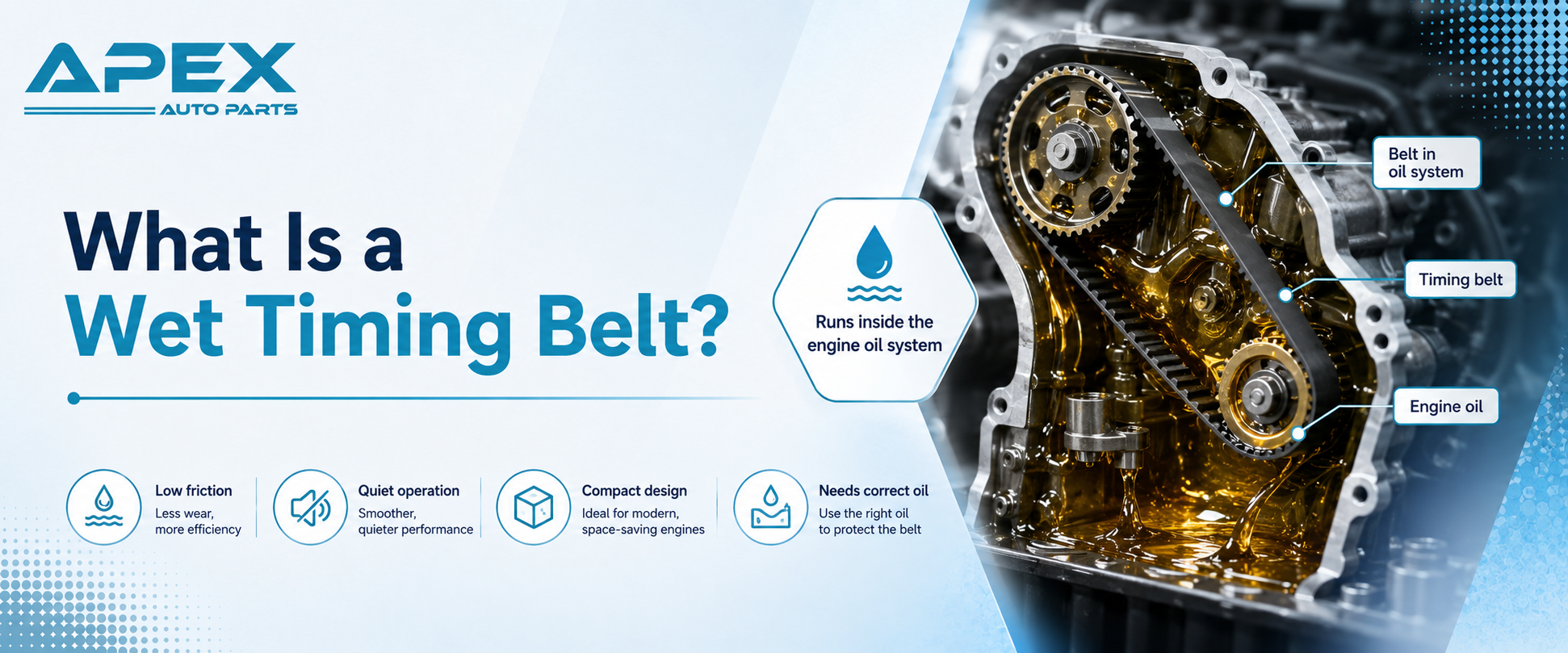
A wet timing belt runs inside the engine where it is exposed to engine oil. It is also known as a belt-in-oil system.
A traditional dry belt works behind covers but is kept away from engine oil. The wet design uses special belt materials made to operate in an oil bath.
This design can reduce friction and engine noise. It also allows manufacturers to build compact timing systems. Dayco and Continental describe belt-in-oil technology as a way to provide precise timing, quieter operation, and lower friction.
However, a wet system places great importance on oil quality. The belt must remain compatible with the oil throughout its working life.
Using an oil that has the right thickness but lacks the correct manufacturer approval may damage the belt. Fuel dilution, dirt, soot, poor servicing, or chemical additives may also affect its surface.
As the material weakens, the belt may swell, crack, lose surface material, or become wider. Small particles may pass through engine oil and collect around filters, strainers, control valves, or oil passages.
Continental has developed a workshop tool to measure the width of certain wet belts, as visual inspection alone may not reveal their true condition. A belt outside the maker’s width limit needs replacement.
Why Correct Oil Matters With a Wet Timing Belt?
Oil is not only a lubricant in these engines. It is part of the environment in which the belt operates.
The oil must meet the exact approval required for the engine. Choosing oil only by a grade such as 5W30 is not enough because different products with the same grade can have different chemical properties and approvals.
Late oil changes can also cause trouble. Old oil may contain fuel, soot, moisture, and combustion deposits. These materials can attack the belt or affect the oil system.
Short journeys may increase fuel and moisture in the oil because the engine may not stay hot long enough to burn them off. This makes correct service intervals especially important.
Continental notes that unsuitable oil and fuel dilution can damage a belt in the oil system. Dayco also warns that belt material can enter the oil and may restrict the oil pump strainer in affected applications.
When a degraded belt is found, fitting a new one may not be enough. The mechanic may also need to inspect and clean the oil pickup, filters, control valves, and other oil passages according to the manufacturer repair procedure.
The oil and filter should be renewed with the correct approved product. The cause of the belt damage must be identified before the engine returns to the road.
Should the Water Pump Be Changed at the Same Time?
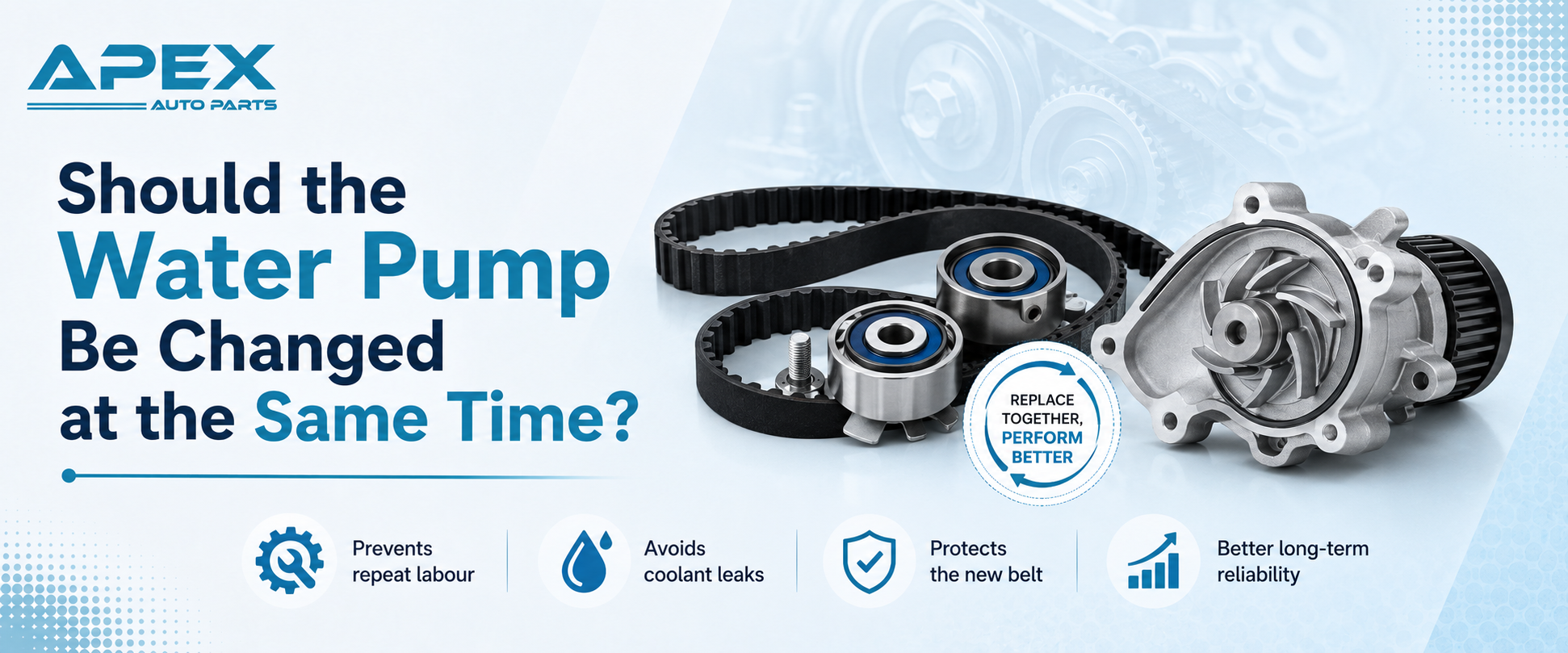
The water pump should usually be considered during timing belt replacement, especially when it is driven by the belt or fitted behind the same covers.
A worn pump bearing can become noisy or seize. A coolant leak can contaminate the new belt. Either fault can shorten the life of the replacement parts.
Replacing the pump while the timing area is open can also save labour later. If the old pump begins leaking several months after the belt service, much of the same strip-down work may need to be repeated.
Gates and Continental both provide kits that include a water pump, belt, tensioners, idlers, seals, and fitting parts. They recommend replacing a pump driven by the timing system during the same repair.
This does not mean every engine needs a water pump in every kit. Some pumps are driven by a separate belt or are positioned elsewhere. The correct repair method depends on the engine design.
How a Mechanic Checks the Timing System
A good inspection starts with the service history. The mechanic checks the vehicle's age, mileage, engine code, and any evidence of prior replacement.
The engine is then listened to from cold and warm where safe. Noise from the front or side of the engine may point towards a pulley or tensioner, but other parts must be ruled out.
Fault codes can help when the engine is difficult to start or runs roughly. A camshaft and crankshaft position fault may suggest that the timing has moved, but sensors, wiring, and other faults should also be checked.
Where access allows, the covers are removed, and the belt is inspected for edge wear, tooth damage, contamination, and incorrect tension. The pulleys are checked for rough movement, noise, leakage, or play.
On a wet-timing-belt engine, the mechanic may need an approved measuring tool and an engine-specific inspection method. The condition of the oil and oil pickup system may also need checking.
Diagnosis should come before ordering. A noise near the cover does not automatically prove that the belt is faulty. An auxiliary belt, alternator pulley, water pump, or other engine part may create a similar sound.
What Happens During Timing Belt Replacement?
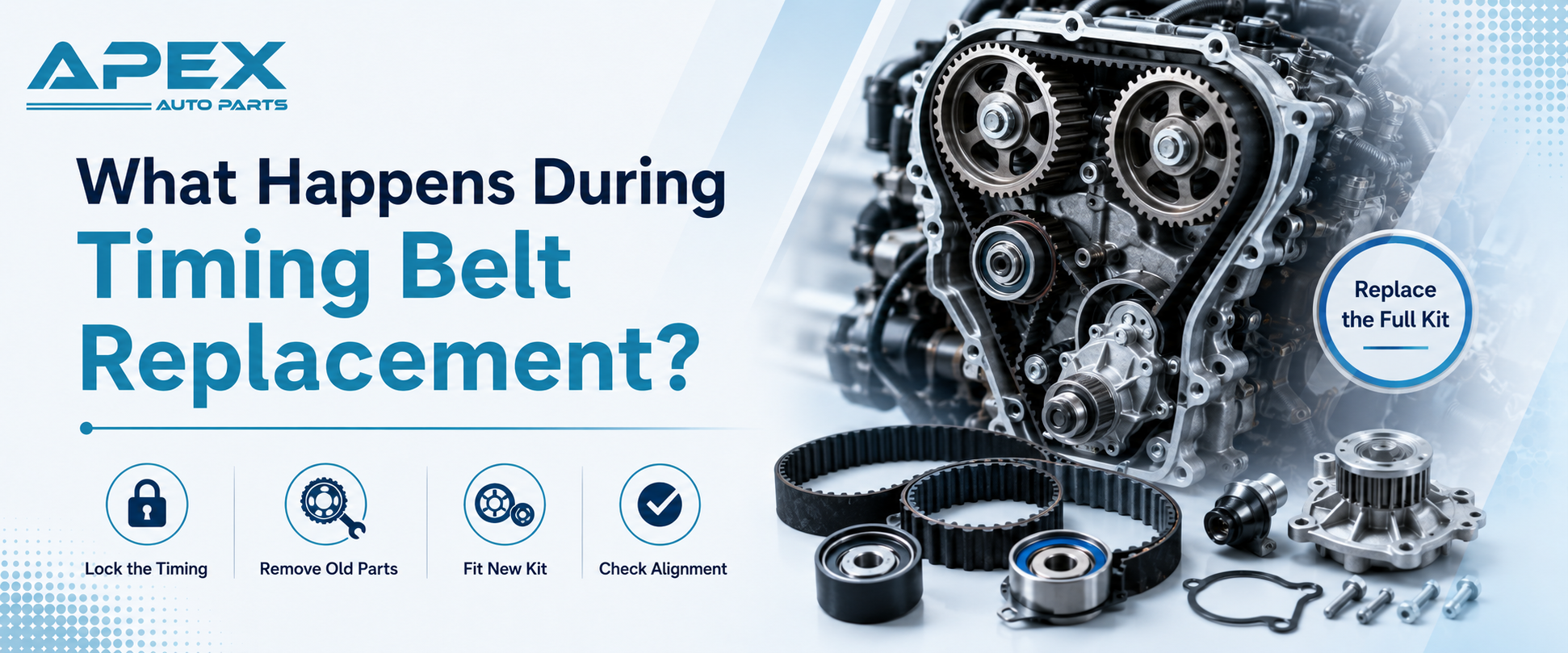
A professional timing belt replacement is precision work. The crankshaft and camshaft must be positioned correctly before the old parts are removed.
Many engines require special locking tools. These hold the shafts in place while the belt is off. Paint marks alone are not a safe replacement for the proper procedure.
The mechanic removes the covers and any parts blocking access. Depending on the vehicle, this may include an engine mount, auxiliary belt, pulley, air intake parts, or coolant hoses.
The old belt, tensioner, and idlers are removed. If the water pump is part of the job, the cooling system is drained, and the pump is replaced.
Oil or coolant leaks must be repaired before the new components are fitted. The mounting surfaces are cleaned, and new bolts or seals are used where required.
The new belt is routed in the correct direction and order. The tensioner is then set according to the manufacturer's method.
Before starting the engine, the crankshaft is usually turned by hand through the required number of rotations. The locking positions and tension are then checked again. This helps confirm that the valves and pistons can move without contact.
Continental provides vehicle-specific fitting information and special tools because belt position, tension, bolt settings, and replacement steps vary between engines.
Common Mistakes During Replacement
One common mistake is ordering parts only by vehicle model and year. The same model may use several engines, each with a different belt width, tooth count, tensioner, or water pump.
Another mistake is fitting the new belt while leaving oil or coolant leaks unfixed. Contamination can quickly damage the replacement.
Incorrect tension is also dangerous. A loose belt may jump teeth, while an overtightened one can damage bearings and place extra strain on the system.
Reusing bolts designed for one-time use may affect how the parts are held. Skipping locking tools can also allow the timing position to move during fitting.
The belt must not be forced over a pulley, folded tightly, or twisted beyond the allowed limit. Internal cord damage may not be visible after poor handling.
Finally, the engine should not be started until the timing has been checked by hand. A fitting error can cause damage as soon as the starter motor turns.
How to Choose the Correct Timing Belt Kit?
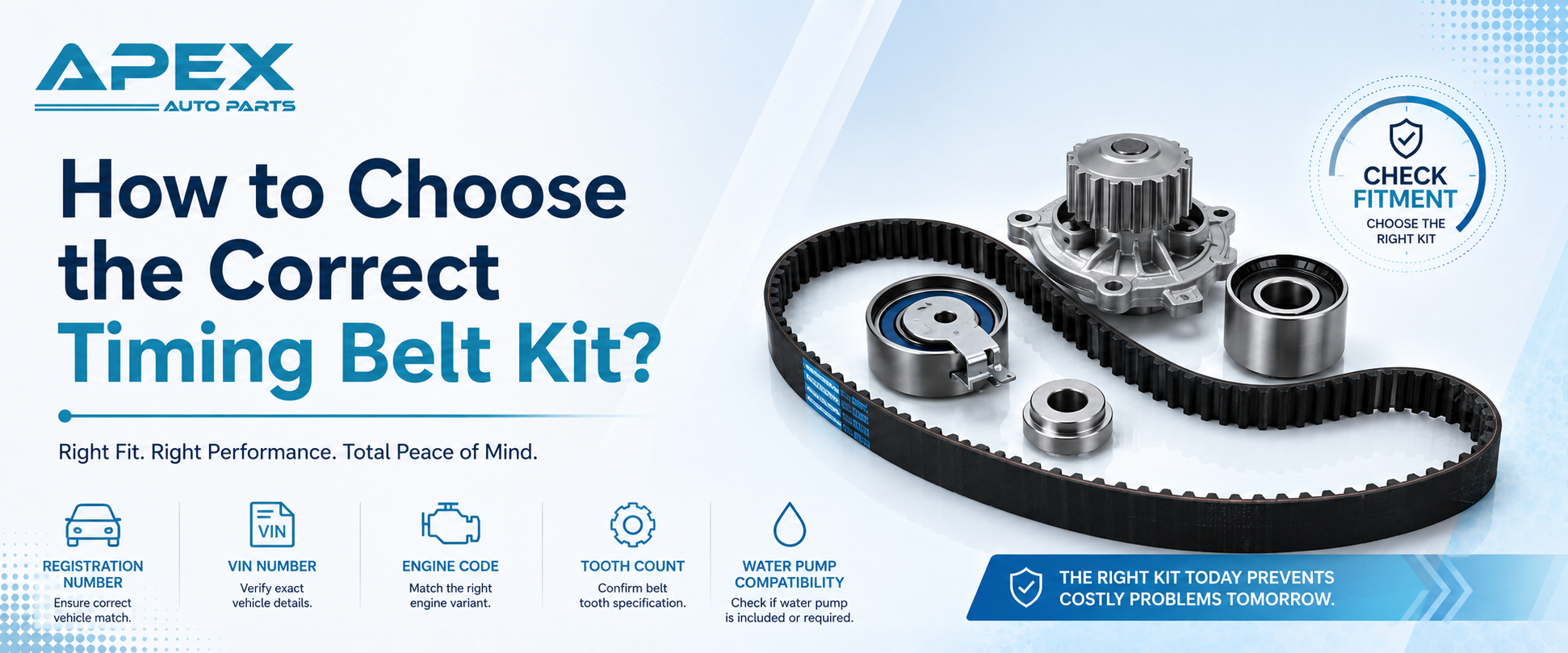
The correct Timing Belt Kit must match the exact engine, not just the badge on the bonnet.
Useful identification details include:
- Vehicle registration number
- VIN
- Engine code
- Production date
- Number from the old belt or tensioner
- Whether the belt drives the water pump
- Whether the engine uses a dry or wet timing belt
The tooth count, width, length, pulley design, and tensioner type must all be correct. A part that looks similar may not fit or operate safely.
The kit contents should also be checked before installation. Do not assume every box includes a pump, seals, or new bolts.
At Apex Auto Parts, drivers, garages, mechanics, engine builders, and trade buyers can provide vehicle details when searching for engine parts. This helps the team check fitment and reduces the risk of receiving a kit for a different engine version.
Correct parts matching does not replace diagnosis, but it makes the repair smoother once the fault and service needs are known.
Is a Timing Belt Kit More Expensive?
A Timing Belt Kit costs more than a belt on its own because it includes additional components. However, the cheapest box is not always the cheapest repair.
Labour forms a large part of the final bill. If an old pulley fails after a belt-only repair, the owner may have to pay for the same access work again.
There is also the risk of engine damage. Saving a small amount on the tensioner or idlers makes little sense if one of those parts can damage the new belt.
A pump kit may cost more again, but it can reduce the chance of a coolant leak or pump bearing fault after the service.
The right comparison is not simply belt price against kit price. It is the cost of doing the job once against the possible cost of doing it twice.
Final Thoughts
A Timing Belt is one vital part of the engine timing system. A Timing Belt Kit renews the belt along with the parts that guide and control it.
For most scheduled repairs, the complete kit is the safer and more sensible choice. The tensioner, idlers, and water pump may have been replaced at the same age and mileage as the old belt. Leaving them in place can put the new part at risk.
The correct interval must come from the vehicle manufacturer. Do not wait for obvious timing belt symptoms, because some failures happen with little warning.
Owners of cars with a wet timing belt also need to pay close attention to oil quality, oil approval, and service history. The wrong oil or long service gaps may affect both the belt and the engine oil system.
Good identification, correct parts, proper tools, and careful fitting are what protect the engine. A well-planned replacement costs far less than repairing bent valves, damaged pistons, or a failed cylinder head.
FAQS
1. What Is the Difference Between a Timing Belt and a Timing Belt Kit?
A Timing Belt is the toothed belt that keeps the crankshaft and camshaft moving together. A Timing Belt Kit normally includes that belt, tensioners, idler pulleys, and fitting parts. Some kits also include a water pump. The kit replaces more of the working system, not only one worn part.
2. What is a timing belt in a car?
A Timing Belt is a strong toothed belt inside the engine timing system. It links the crankshaft to the camshaft so the valves open and close at the right moment. Many UK drivers also call it a cam belt. Some engines use it to drive other parts as well.
3. What does a timing belt do?
The answer to the question of what a timing belt does is simple. It keeps the pistons and valves moving in the correct order by linking the crankshaft and camshaft. If that timing is lost, the engine may stop, run badly, or suffer serious internal damage.
4. When to change timing belt parts?
The answer to when to change timing belt parts depends on the exact vehicle, engine code, age, mileage, and maker schedule. Do not rely on a single interval found online. Check the handbook or service data, and replace it sooner when oil, coolant, damage, or an unknown history creates concern.
5. What Are the Main Timing Belt Warning Signs?
Common timing belt warning signs can include unusual ticking, rough running, hard starting, loss of power, visible belt damage, oil near the cover, or a camshaft and crankshaft timing fault. However, many belts give little warning before failure, so the correct service interval remains the safest guide.
6. What Are Common Timing Belt Symptoms?
Possible timing belt symptoms include poor starting, uneven running, misfires, reduced power, and an engine warning light if the valve timing has moved. These signs can also come from ignition, fuel, sensor, or compression faults. A mechanic should test the engine rather than order parts based on symptoms alone.
7. Is a Timing Belt Kit Worth Buying?
A Timing Belt Kit is usually worth fitting because the tensioners and idler pulleys have worked for the same age and mileage as the old belt. Reusing them can leave a worn bearing inside the system. Since access takes much of the labour, replacing the related parts together often makes better financial sense.
8. Should the Water Pump Be Replaced During Timing Belt Replacement?
The water pump should usually be replaced during a timing belt replacement, when the belt drives it, and the maker or kit instructions recommend it. A worn pump can leak, seize, or damage the new belt. Replacing it while access is already open may prevent having to pay for similar labour again later.
9. What Is a Wet Timing Belt?
A wet timing belt runs inside the engine in oil rather than behind a dry outer cover. It is made from special materials that can handle that environment. Correct approved oil is vital because contamination, fuel dilution, or the wrong oil may cause swelling, surface damage, or belt material to break away.
10. Can You Drive With Timing Belt Warning Signs?
Do not keep driving if timing belt warning signs include strong mechanical noise, poor starting, sudden rough running, or a timing-related fault. Stop and arrange a proper inspection, especially when the service history is unknown. Continuing to drive after the belt slips may turn a planned repair into major engine work.
References:
continental engine parts
gates