
 info@apexautoparts.co.uk
 +44 203 915 7535
 Safe & Fast Shipping
 Whish List
 Compare
 Sign In


Finding the Best diesel engine is not as simple as choosing the engine with the most power or the biggest capacity. A good diesel engine needs to start well, deliver strong torque, use fuel sensibly, and survive high mileage without turning every service into an expensive repair.
Modern diesel engines can do all of these things very well. They are especially useful for motorway driving, towing, driving larger cars and SUVs, and drivers who cover many miles each year. The problem is that modern diesel engines are also far more complex than older ones.
A diesel built today may have one or more turbochargers, a high-pressure fuel system, an EGR system, a diesel particulate filter, AdBlue equipment, many sensors, and advanced engine software. These systems help with power, fuel use, and emissions, but they also create more possible repair points.
This is why diesel engine reliability should never be judged by the main engine block alone. A crankshaft may last for years, while a turbo actuator, injector, sensor, EGR cooler, or diesel filter can require a costly repair.
For buyers considering BMW, Mercedes, and Audi models, there are several strong options. BMW's B57 six-cylinder diesel, Mercedes-Benz's OM656 family, and Audi's modern 3.0 TDI V6 are all strong examples of how far diesel technology has advanced. Each has different strengths, and each still needs proper care.
This guide explains what makes a diesel engine good, the main diesel engine problems to watch for, and which modern BMW, Mercedes, and Audi diesel engines stand out for performance and everyday use.
What Makes the Best Diesel Engine?
The Best diesel engine should offer more than impressive power figures.
From a mechanic's point of view, a good diesel needs a strong base engine, an effective cooling system, a dependable oil supply, a healthy turbo setup, and a fuel system that can deliver the correct amount of diesel under very high pressure.
It should also produce useful torque at low engine speeds. Torque is the pulling force that helps a car move without needing high revs. This is one of the reasons diesel engines work so well in larger saloons, SUVs, vans, and vehicles used for towing.
Fuel use matters too. A good diesel should be able to cover long distances without using too much fuel. However, fuel economy should never be considered in isolation. Saving money at the pump does not help if a poorly maintained car later needs a diesel filter, turbocharger, or full fuel system replacement.
Another important point is how easy the engine is to diagnose and repair. Some engines have excellent internal strength but difficult access around them. Labour time can make what looks like a small problem very expensive.
The best choice therefore depends on what you need from the car.
Understanding diesel engine reliability
Diesel engine reliability depends heavily on maintenance.
Diesel engines work with high cylinder pressure. Their fuel systems also operate at very high pressure, and their turbochargers can spin at extremely high speed. The engine oil must protect all these moving parts from heat and contamination.
This makes oil servicing one of the most important things an owner can control.
Leaving old oil in the engine for too long can increase wear inside the turbo, timing system, bearings, and camshaft area. The correct oil specification is also important. Choosing oil only because it has the right thickness written on the bottle is not enough.
Cooling system care is just as important.
A strong diesel engine can still suffer serious damage if it overheats. Coolant leaks, weak water pumps, damaged thermostats, faulty hoses, or cooling fans that do not work properly can all cause problems.
Modern emissions systems add another part to the reliability picture. Diesel particulate filters need to clear collected soot through regeneration. UK Government guidance explains that poor regeneration can allow soot to build up, reduce performance, and eventually result in expensive repairs.
For this reason, diesel engine reliability is often better in vehicles that regularly make longer journeys than in cars that spend most of their lives making very short trips.
The BMW B57: A Strong Choice for the Best BMW Diesel Engine
When people ask about the best BMW diesel engine among newer BMW models, the B57 deserves serious attention.
The B57 is a 3.0-litre straight-six diesel engine used in several BMW models. A straight-six design places all six cylinders in a single line, which helps the engine run more smoothly.
One well-known B57 application is the BMW 530d. BMW listed the 530d with a 2,993 cc six-cylinder diesel producing 286 hp and 650 Nm of torque. The stronger 540d version produced 340 hp and 700 Nm of torque.
These figures show why the B57 works so well in larger BMW models. It delivers strong torque from low engine speeds while still giving the car serious acceleration.
From an ownership standpoint, the engine is also attractive because it does not require high revs to make progress. On a motorway, a B57-powered car can feel relaxed even when overtaking or climbing a hill.
That does not make it fault-free.
B57-equipped vehicles still use modern EGR equipment, a diesel particulate filter, AdBlue components on many versions, turbo controls, high-pressure injectors, and several exhaust sensors. Problems in these systems can produce warning lights or reduced performance even when the main engine remains mechanically healthy.
For someone looking for the best BMW diesel engine, the B57 is one of the strongest modern choices when the car has a proper service history.
Why BMW B57 Performance Stands Out?
The B57 is a good example of why six-cylinder diesels remain attractive despite the rise of electric and hybrid cars.
BMW's 530d produces 650 Nm of torque between 1,500 and 2,500 rpm. The 540d increases that to 700 Nm. That means the driver does not need to push the engine hard to access strong pulling power.
The 530d can also combine this power with strong fuel economy for a car of its size. BMW's official figures for that generation listed combined fuel use as low as around 4.5 liters per 100 kilometers in some versions under the applicable test procedure. Real driving results depend on speed, traffic, weather, wheels, and driving style.
The important point is the balance.
The B57 is not simply a performance engine. It can work as a long-distance engine while still keeping enough torque to move a large saloon or SUV quickly.
Common Problems to Check on a BMW B57
The B57's main concerns often involve supporting systems rather than the basic six-cylinder block.
The health of the EGR cooler should be checked on vehicles subject to a recall or technical action. The condition of the diesel filter is also important, especially when a vehicle has spent most of its life travelling short distances.
Turbo-related problems need careful diagnosis. A low boost code may come from an air leak, a damaged hose, an actuator fault, a sensor issue, or an exhaust restriction rather than the turbo itself.
The oil level should also be watched. A level that rises rather than falls can indicate fuel entering the oil on some diesel vehicles. Oil diluted with diesel cannot protect moving parts as effectively.
For a used B57, a mechanic should check service records, fault codes, coolant level, boost values, diesel filter data, and evidence of previous emissions system repairs before deciding whether the car is a good buy.
Mercedes OM656: A Strong Candidate for the Best Mercedes Diesel Engine

For buyers looking for the best Mercedes diesel engine in a modern Mercedes, the OM656 six-cylinder diesel is one of the most interesting choices.
The OM656 is a straight-six diesel engine used in higher-end Mercedes models. Earlier versions were offered in models such as the S-Class, GLE, and GLS.
Mercedes listed engine versions producing up to 330 PS and 700 Nm of torque. It uses two-stage turbocharging and advanced exhaust treatment to combine strong performance with modern emissions requirements.
Mercedes has continued developing this engine family. The 2026 S-Class uses a newer OM656 Evo. Mercedes says this version received improvements to the EGR system, cooling, and crankcase ventilation to improve durability and efficiency.
That is particularly useful information for anyone considering a modern Mercedes diesel. Instead of simply increasing power, Mercedes has also worked on systems that can affect engine life and emissions reliability.
For drivers who want a refined six-cylinder diesel for long journeys, the OM656 family deserves a place near the top of the list.
What Makes the OM656 Good to Drive?
The main advantage is torque.
Mercedes listed the S400d version of the OM656 with 700 Nm, while the S350d produced 600 Nm. This torque is available at fairly low engine speeds, which suits a heavy luxury car very well.
The engine also uses two-stage turbocharging. In simple terms, this helps the engine respond well across a range of speeds rather than relying on a single large turbocharger to do everything.
Mercedes places much of the exhaust treatment equipment close to the engine. Keeping these parts warm helps them work more effectively after the vehicle starts. The OM656 uses systems such as a diesel filter, EGR, SCR, and AdBlue dosing.
The downside is clear. More equipment means more components that need correct diagnosis as the vehicle ages.
The engine may be mechanically sound, yet a sensor or emissions component triggers a warning message.
What About the Mercedes OM654?

Not every Mercedes diesel buyer needs six cylinders.
For drivers interested in fuel economy and normal use, the OM654 four-cylinder diesel is another strong option.
Mercedes introduced the OM654 as the newer replacement for the OM651 in several models. It uses an aluminum block, steel pistons, common-rail injection, and close-mounted exhaust treatment. Mercedes designed the engine with lower friction and improved efficiency in mind.
Later OM654 M versions became more advanced. Mercedes increased the injection pressure and added updated turbo technology and 48-volt electrical support.
The OM654 therefore makes more sense for someone who wants lower fuel consumption and does not need the OM656's power.
For the best Mercedes diesel engine, the choice ultimately depends on the driver. OM656 makes a strong case for smooth performance, while OM654 may suit buyers who priorities economy.
Audi 3.0 TDI: A Strong Choice for the Best Audi Diesel Engine
For anyone researching the best Audi diesel engine, the 3.0 TDI V6 is difficult to ignore.
Audi has used the V6 TDI in several larger vehicles, including versions of the A6, A7, Q5, and Q7, as well as other models.
The previous A6 50 TDI used a 2,967 cc V6 diesel producing 286 PS and 620 Nm of torque. Audi paired it with quattro drive and a 48-volt mild hybrid system.
Audi has since introduced a newer version of its V6 diesel. In late 2025, Audi announced the EA897evo4 for the A6 and Q5. It produces 299 PS and 580 Nm, combining a diesel engine with mild-hybrid technology and an electrically powered compressor.
The electrically powered compressor helps build boost before the normal turbocharger is fully working. This is designed to reduce the delay that drivers sometimes feel when pressing the accelerator on a turbocharged engine. Audi also states that the updated system was designed to improve response, efficiency, and durability.
For drivers who want strong motorway performance and quattro traction, this modern V6 is a strong candidate for the best Audi diesel engine.
Is the Newest Diesel Always the Best?

Not necessarily.
A new diesel can offer better fuel control, stronger performance, and cleaner exhaust output. It can also have more parts.
For example, Audi's latest V6 diesel uses a normal turbocharger, an electrically powered compressor, a powertrain generator, a starter system, a 48 volt battery, and modern exhaust equipment.
Mercedes' current OM656 Evo also uses advanced exhaust treatment and electrical systems.
These systems are impressive, but a used-car buyer should remember that extra equipment may lead to higher repair costs once the vehicle is out of warranty.
An older engine with fewer systems may be easier to maintain, but it may also have much higher mileage and years of wear.
The better question is not whether old or new is best. Ask whether the vehicle has been properly maintained.
The Most Common Diesel Engine Problems
Most diesel engine problems can be grouped into a few main areas.
Diesel filter issues are common when regeneration cannot complete. Government guidance confirms that soot must be removed regularly through regeneration and that failure to do this can eventually affect performance and lead to expensive repair work.
EGR systems can also cause problems. Soot passes through the system and can mix with oil vapor. Over time, deposits may affect airflow or the movement of an EGR valve. EGR coolers can also leak on some engine families.
Turbochargers are another major area. Poor oil supply, old oil, damaged air pipes, faulty actuators, and intake leaks can all cause turbo-related symptoms.
Fuel injectors work at very high pressure and must deliver extremely small, accurate amounts of diesel. Poor starting, smoke, rough idle, or uneven power can lead a mechanic towards the fuel system, but injectors should be tested before replacement.
AdBlue and exhaust sensors are increasingly important on newer diesels. A warning may come from the pump, injector, heater, level sensor, NOx sensor, wiring, or software. Simply adding more AdBlue will not repair a failed part.
How a Mechanic Should Diagnose Diesel Engine Problems?
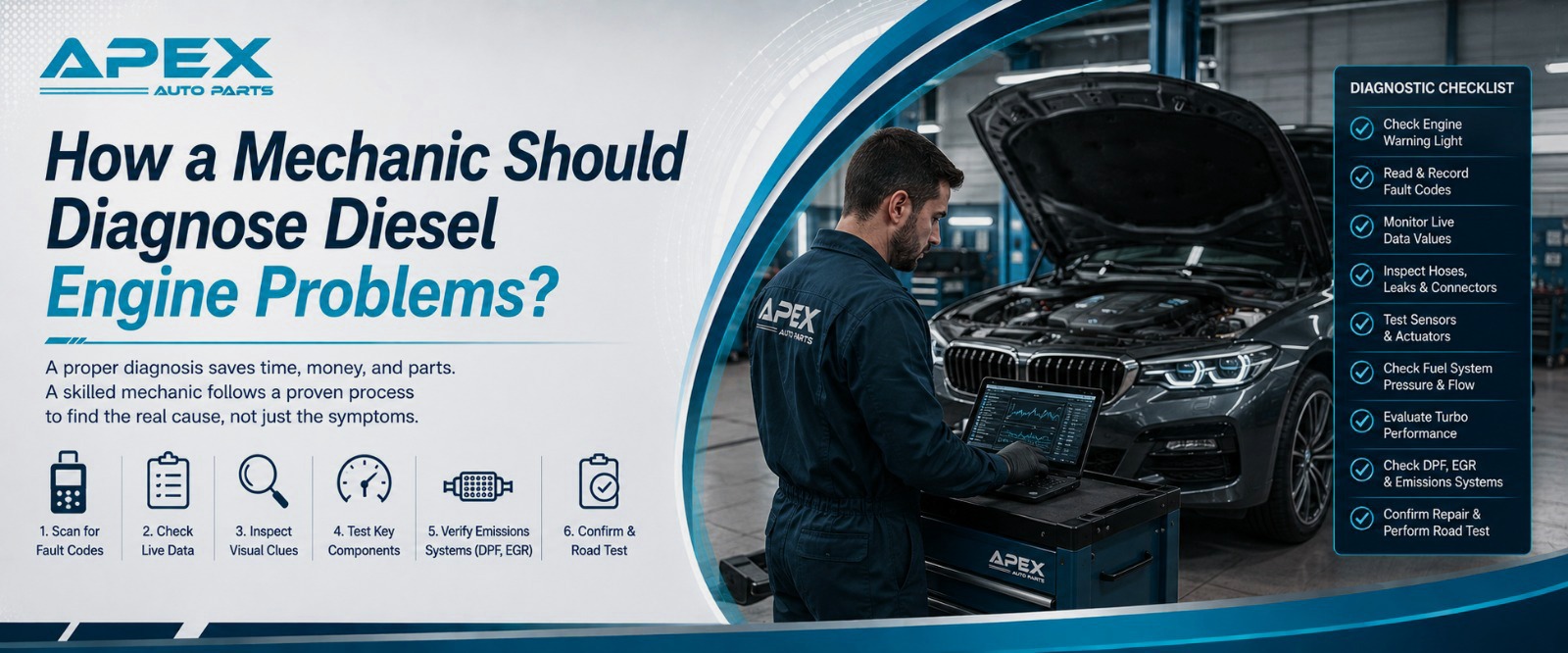
Good diesel repair begins with diagnosis, not a parts catalogue.
If a customer says the car has lost power, a mechanic should first ask when the problem happens.
Does the vehicle lose power only under hard acceleration? Is the engine cold or hot? Does a warning light appear? Has the car recently had work completed?
Next comes a physical inspection.
Oil level, coolant, intake pipes, turbo hoses, electrical connectors, fuel leaks, and visible damage should all be checked.
The vehicle should then be scanned for stored faults. Live data can show what the engine is actually doing.
Boost pressure can be compared with the pressure requested by the engine computer.
Fuel rail pressure can be checked during starting and acceleration.
Diesel filter pressure can show whether the exhaust is restricted.
Coolant temperature can indicate whether the engine is reaching the conditions required for regeneration.
A fault code should point the mechanic towards a system. It should not automatically decide which part gets replaced.
Why Are DPF Problems Often Misdiagnosed?
A diesel particulate filter warning does not always mean the filter itself has failed.
The filter may be full of soot because another engine problem prevented regeneration.
UK Government guidance states that a DPF must be regularly regenerated to remove trapped soot. If this process does not happen properly, soot can build up and affect vehicle performance.
A mechanic therefore needs to ask why regeneration failed.
Maybe the engine thermostat is weak, and the coolant never reaches the expected temperature.
Maybe an exhaust temperature sensor is giving the wrong reading.
Maybe an injector is creating excessive soot.
Maybe a boost leak is causing poor combustion.
Cleaning a filter without repairing the cause can result in the same warning returning.
Removing a factory-fitted DPF is also not a proper solution in the UK. Government guidance states that a missing DPF, where one was fitted when the vehicle was built, will result in an MOT failure and can render the vehicle illegal for road use.
Turbocharger Problems Do Not Always Mean Turbo Failure?
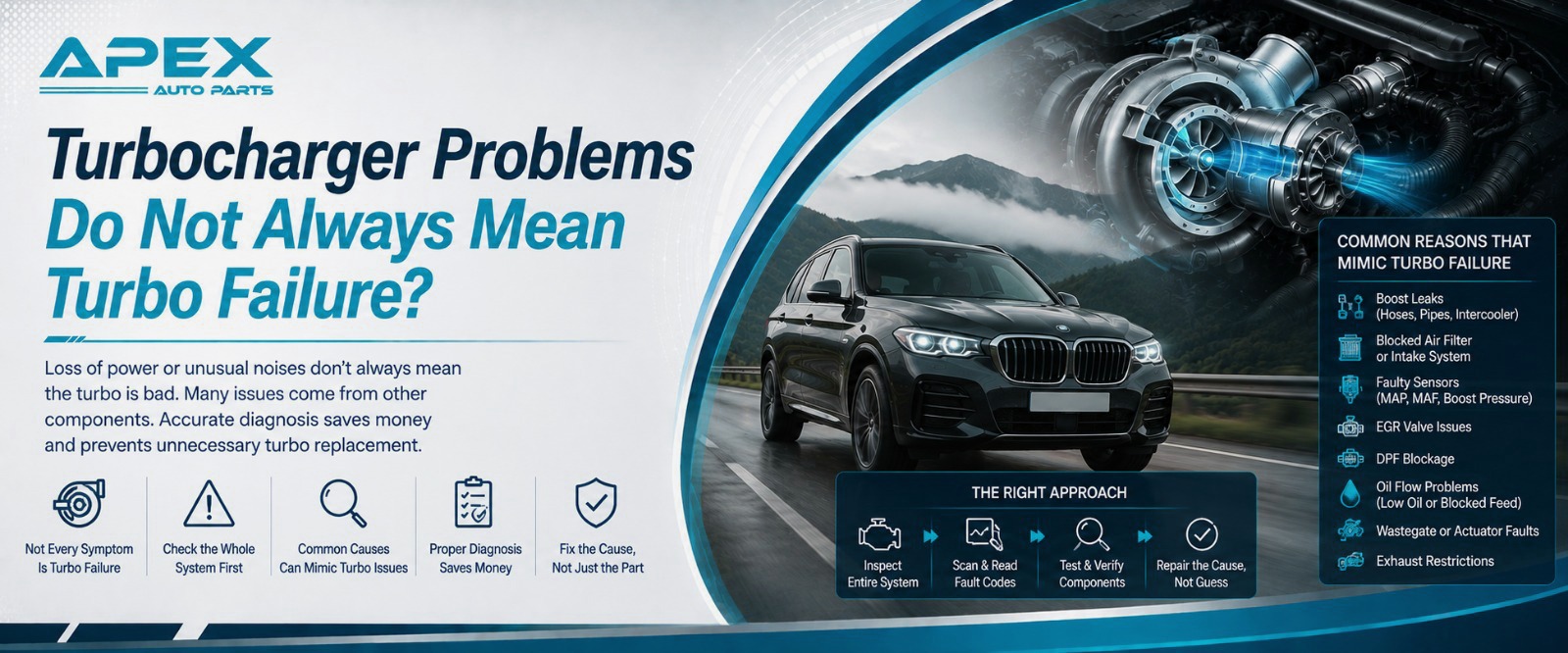
This is one of the most expensive mistakes in diesel diagnostics.
A driver feels poor acceleration and assumes the turbo has failed.
The real problem may be a split hose costing far less.
Modern diesel turbo systems depend on air pipes, intercoolers, sensors, electronic or vacuum controls, and exhaust flow. A failure anywhere in this system can reduce boost.
A mechanic should inspect all of these parts before replacing the turbocharger.
When the turbo itself is damaged, the cause still needs to be found.
A blocked oil feed, dirty oil, intake damage, or foreign material can destroy a replacement turbo if left in the system.
This is why a proper turbo replacement involves more than removing one unit and fitting another.
How Does Driving Style Affect Diesel Engine Reliability?
A diesel normally suits longer journeys better than repeated very short trips.
This does not mean a diesel must be driven on a motorway every day.
It means the engine needs regular opportunities to reach normal operating temperature and to run long enough for its systems to work correctly.
DPF regeneration is a good example. The filter requires a sufficiently high exhaust temperature to burn the collected soot.
A vehicle that repeatedly starts, travels a mile or two, and shuts down may have fewer chances to complete this process.
Long motorway journeys are not completely free from wear. High mileage still wears bearings, injectors, turbos, pumps, and other parts.
However, steady long-distance running can be easier on a diesel than years of cold starts and very short journeys.
What to Check Before Buying a Used Diesel?

A good inspection should tell you far more than the mileage number.
The most useful checks are:
- Start the engine completely cold and listen for rattles, knocking, and slow starting.
- Check engine oil and coolant before the test drive.
- Scan for stored faults even if no warning light is showing.
- Check diesel filter pressure and regeneration history.
- Inspect turbo hoses and the intake system for leaks.
- Check EGR and AdBlue-related fault history.
- Ask for proper service invoices rather than relying only on a stamped book.
- Check whether manufacturer recalls or technical actions have been completed.
- Test the car under normal acceleration and make sure power arrives smoothly.
- Check again for oil or coolant leaks after the engine is fully warm.
A low-mileage car with no records can be a greater risk than a high-mileage vehicle with a clear maintenance history.
Which Diesel Engine Is Best for Long Motorway Journeys?
Six-cylinder diesels are especially good at long-distance work.
BMW's B57, Mercedes' OM656, and Audi's 3.0 TDI all provide strong torque without needing high engine speeds.
The BMW 530d's B57 produces 650 Nm, Mercedes has offered the OM656 with up to 700 Nm, and Audi's previous A6 50 TDI produces 620 Nm.
That makes them well suited to large saloons, estates, and SUVs.
A four-cylinder diesel can still be excellent for motorway work and usually uses less fuel. The trade-off is that it may not feel as smooth or effortless as a good six-cylinder engine.
Which Diesel Is Better for High Mileage Ownership?
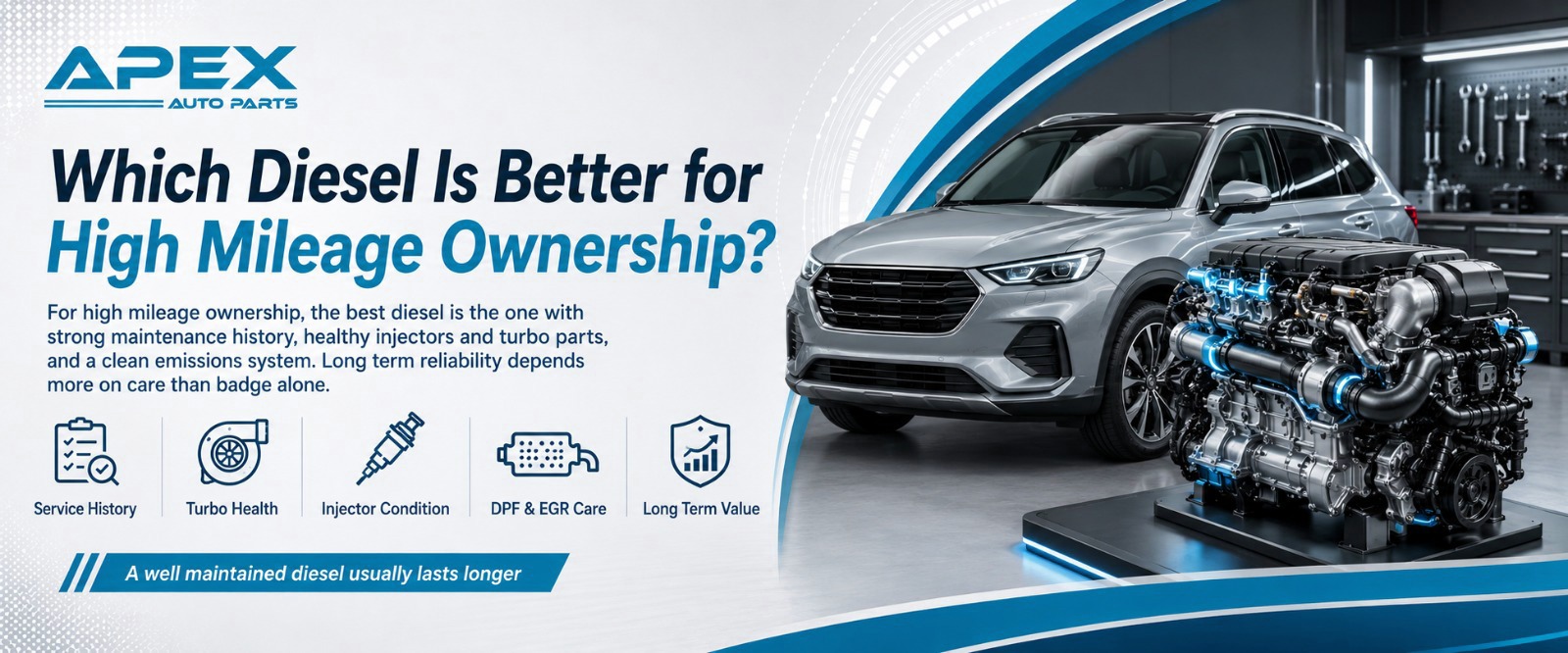
For high-mileage ownership, I would choose condition and maintenance history over the engine badge.
Among modern premium diesels, the BMW B57 is a very strong choice because it combines good performance with a relatively relaxed power delivery.
The Mercedes OM656 also deserves attention, especially the newer Evo version, where Mercedes specifically states that changes were made to improve durability in areas such as cooling and EGR.
Audi's 3.0 TDI can also be a good long-distance engine, but buyers should remember that the newest EA897evo4 adds more electrical and boost technology than previous versions.
More technology is not necessarily bad. It simply means there is more to inspect.
How to Improve diesel engine reliability?
The best way to protect diesel engine reliability is to deal with basic maintenance before the car starts giving trouble.
Use the exact oil specification required by the manufacturer.
Check the oil level between services.
Investigate a rising oil level as well as a falling one.
Do not ignore coolant loss.
Allow the engine to warm through normal gentle driving before using full power.
Give the vehicle regular longer runs if most normal journeys are short.
Do not continue driving if a serious boost, oil pressure, or temperature warning appears.
Most importantly, repair the cause of the fault rather than only clearing the warning message.
Choosing Diesel Engine Parts Through Apex Auto Parts
Correct part matching matters more than many owners realize.
A BMW 530d and 540d may both use engines from the B57 family but have different turbo or engine management components.
A Mercedes OM654 and OM656 are completely different engines even though both may appear in similar Mercedes model ranges.
Audi has also continued to develop its V6 TDI, with the latest EA897evo4 adding new electrical boost and mild-hybrid equipment.
When sourcing parts through Apex Auto Parts, provide the vehicle registration, VIN, model year, engine code, and original part number wherever possible.
This can help avoid incorrect turbo parts, sensors, gaskets, injectors, pumps, filters, cooling parts, and exhaust components.
Getting the correct part first time can save both labour and vehicle downtime.
So, What Is the Best Diesel Engine?
There is no single winner for every driver.
If you want a modern BMW diesel that balances performance, refinement, and long-distance ability, the B57 is one of the strongest options. BMW's own figures show the performance on offer: 286 hp and 650 Nm in the 530d, and 340 hp and 700 Nm in the 540d.
If you want the best Mercedes diesel engine for strong six-cylinder performance, the OM656 is a serious choice. The newer OM656 Evo is especially interesting because Mercedes has continued improving durability-related systems.
If you are searching for the best Audi diesel engine, Audi's 3.0 TDI V6 family is worth considering. The previous 50 TDI combines 286 PS with 620 Nm, while the newer EA897evo4 adds an electric compressor and produces 299 PS.
The final choice should still come down to the actual car.
A great engine inside a badly maintained vehicle is not a great purchase.
Final Thoughts
The Best diesel engine is the one that matches your driving style and comes with a strong maintenance history.
BMW's B57 stands out for smooth six-cylinder performance and strong torque. Mercedes' OM656 offers similar refinement and continues to receive engineering updates. Audi's 3.0 TDI V6 remains a strong option for drivers who want power, quattro capability, and long-distance performance.
None of them can escape the common diesel engine problems associated with modern emissions and turbo systems.
DPF condition, EGR operation, injectors, turbo controls, AdBlue equipment, coolant, and oil all need attention.
For the best diesel engine reliability, service the car properly, choose an engine that suits your driving pattern, and address small faults before they lead to expensive repairs.
A mechanic should always test first and replace parts second.
FAQS
1. What is the best diesel engine for reliability?
There is no single Best diesel engine for every driver. BMW's B57, Mercedes OM656, and Audi 3.0 TDI are all strong modern options. The safest choice is usually the engine with a full service history, correct oil use, healthy cooling, and properly maintained emissions systems.
2. Which is the best BMW diesel engine?
The BMW B57 is one of the strongest choices for the best BMW diesel engine. It is a 3.0 litre straight six diesel known for strong torque, smooth motorway performance, and good long distance ability. The 530d version produces 286 hp and 650 Nm of torque.
3. What is the best Mercedes diesel engine?
The OM656 is a strong candidate for the best Mercedes diesel engine. It is a smooth six cylinder diesel used in higher end Mercedes models and has been offered with up to 700 Nm of torque. The newer OM656 Evo also includes updates aimed at improving durability and efficiency.
4. What is the best Audi diesel engine?
The Audi 3.0 TDI V6 is one of the strongest choices for the best Audi diesel engine. Previous versions produced 286 PS and 620 Nm, while the newer EA897evo4 produces 299 PS and uses mild hybrid technology plus an electric compressor to improve response.
5. What are the most common diesel engine problems?
Common diesel engine problems include DPF blockage, EGR faults, turbo issues, injector wear, AdBlue faults, coolant leaks, and failed exhaust sensors. Many of these problems can cause similar symptoms, so proper testing is important before replacing expensive parts such as turbos, injectors, or filters.
6. How good is diesel engine reliability?
Diesel engine reliability can be very good when the engine receives regular oil changes, correct coolant, and suitable driving. Modern diesels are strong, but their turbo, EGR, DPF, fuel, and emissions systems also need care. Longer journeys can also help the DPF complete regeneration properly.
7. Which diesel engine is best for long motorway journeys?
Six cylinder diesels are excellent for motorway driving because they deliver strong torque without needing high engine speeds. BMW's B57, Mercedes OM656, and Audi 3.0 TDI are all strong choices. They suit large saloons, estates, SUVs, and drivers who regularly cover long distances.
8. Are diesel engines good for short journeys?
Diesel engines can handle short trips, but repeated very short journeys are not ideal. The engine may not reach full operating temperature, which can make DPF regeneration harder. A diesel usually suits drivers who regularly complete longer journeys and give the engine enough time to warm properly.
9. What should I check before buying a used diesel car?
Before buying a used diesel, check the cold start, engine oil, coolant, service history, turbo hoses, DPF data, EGR faults, AdBlue warnings, and stored diagnostic codes. Make sure the car accelerates smoothly and check for oil or coolant leaks once the engine is fully warm.
10. Which diesel engine is best for high mileage ownership?
For high mileage use, maintenance history matters more than the badge. The BMW B57, Mercedes OM656, and Audi 3.0 TDI are all strong options when properly serviced. A well maintained high mileage diesel can be a safer buy than a lower mileage vehicle with poor service records.
References:
BMW group
Media Mercedes Benz
Audi