
 info@apexautoparts.co.uk
 +44 203 915 7535
 Safe & Fast Shipping
 Whish List
 Compare
 Sign In

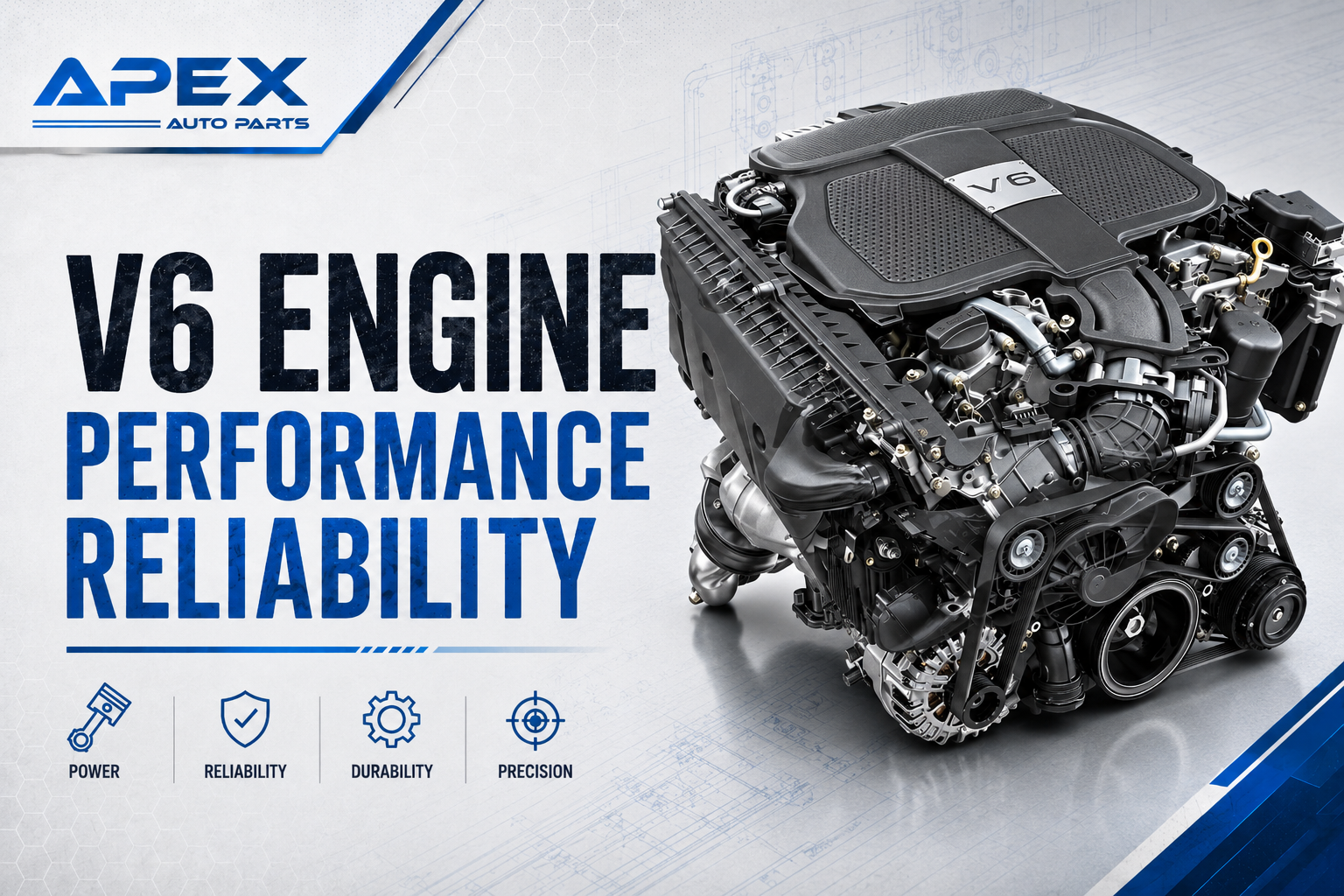
A V6 Engine is one of the most common engine layouts used in modern cars, SUVs, vans, and performance vehicles. Many drivers like it because it gives a good mix of power, smooth driving, and usable size. It is stronger than many four-cylinder engines, but usually smaller and lighter than a V8.
A V6 Engine has six cylinders arranged in two banks. These two banks form a V shape when viewed from the front of the engine. This design helps the engine fit in many vehicles without taking up as much space as a straight-six engine. That is one reason many car makers use V6 engines in Front Wheel Drive cars, Rear Wheel Drive cars, SUVs, and larger family vehicles.
Drivers often search for the best V6 engine because they want something powerful, reliable, and not too costly to maintain. Some V6 engines are known for smooth daily driving. Some are known for towing. Some are used in sports cars. Some are diesel engines built for strong torque and long trips.
But like any engine, a V6 can have problems. Oil leaks, timing chain wear, injector faults, cooling issues, turbo problems, and carbon buildup can all happen depending on the engine design. Diesel V6 engines can also suffer from DPF, EGR, and fuel system issues if not properly cared for.
This guide explains how a V6 Engine works, why drivers like it, common problems to watch for, and what owners should know about the Audi V6 engine, Ford V6 engine, Jaguar V6 engine, and the common search term BMW V6 engine.
Apex Auto Parts helps UK drivers, garages, mechanics, and trade buyers source engine parts for repair, servicing, and rebuilding. With V6 engines, correct fitment matters because parts can vary by engine code, year, fuel type, and model version.
What Is a V6 Engine?
A V6 Engine is an engine with six cylinders arranged in two rows of three. These two rows sit at an angle, creating a V shape. The pistons move inside the cylinders, and the engine burns fuel and air to create power.
The V-shape makes the engine shorter than a straight-six. This helps car makers fit a six-cylinder engine into smaller engine bays. A V6 can be used across many vehicle types, from family saloons to SUVs and sports cars.
A V6 Engine can be petrol or diesel. It can be naturally aspirated, turbocharged, or supercharged depending on the design. A naturally aspirated engine makes power without forced air. A turbocharged engine uses exhaust gas to spin a turbo and push more air into the engine. More air helps make more power.
In simple terms, a V6 engine offers drivers a middle ground. It offers more power and smoothness than many four-cylinder engines, but without the size and fuel use of many V8 engines.
Why Do Drivers Like a V6 Engine?
Drivers like a V6 Engine because it often feels stronger and smoother than a smaller engine. It can pull well from low speed and still feel comfortable on the motorway. Many V6 cars also feel more relaxed because the engine does not need to work as hard as a smaller engine does.
A good V6 can suit many types of driving. It can be used in a family SUV, a luxury saloon, a performance coupe, or a diesel touring car. That flexibility is one reason the V6 layout has stayed popular for so long.
A V6 Engine often gives:
- Stronger acceleration than many four-cylinder engines
- Good pulling power
- Smooth motorway driving
- Better size than a straight six for some vehicles
- More refined feel in larger cars
- Good towing ability in some models
- Strong performance when turbocharged
But the engine must be maintained properly. A V6 usually has more parts than a four-cylinder engine. That can mean more labor and higher repair costs when things go wrong.
How Does a V6 Engine Perform?
A V6 Engine can perform very differently depending on the car and engine design. Some are built for comfort. Some are built for diesel torque. Some are made for high performance.
A petrol V6 can feel smooth and quick. It may rev nicely and give strong acceleration. A turbo petrol V6 can feel even stronger because the turbo boosts torque.
A diesel V6 usually focuses on pulling power. It may not rev as high as a petrol V6, but it can feel strong at low speed. This is useful in SUVs, towing vehicles, and long-distance cars.
A performance V6 can also be very fast. Some sports cars use turbocharged V6 engines because they can make strong power while staying lighter than a V8. A well-designed V6 can offer a strong balance between speed, weight, and daily use.
Is V6 Engine Reliable?
A V6 Engine can be reliable, but it depends on the design and how it has been maintained. The engine layout itself is not the problem. The real issue is service history, oil care, cooling system health, and whether common faults have been repaired early.
Some V6 engines can cover high mileage with basic servicing. Others need more attention because they have complex timing chains, turbochargers, diesel emissions systems, or known weak points.
A reliable V6 Engine usually has:
- Regular oil changes
- Correct oil grade
- Clean filters
- Good coolant condition
- No overheating history
- No ignored warning lights
- Healthy timing chain or belt
- No heavy smoke
- No major oil leaks
- Correct replacement parts
If you are buying a used V6 car, do not judge by mileage only. A high-mileage car with strong service records may be better than a lower-mileage car with no history.
Common V6 Engine Problems
A V6 Engine can develop several issues as it gets older. Many of these problems start small. If they are ignored, they can become expensive.
Oil leaks are common on older V6 engines. Gaskets and seals can harden with heat and age. A small oil leak around a rocker cover, oil cooler, sump, or timing cover should be checked before it spreads.
Cooling problems are also important. A V6 can create a lot of heat, especially if turbocharged or fitted in a tight engine bay. A weak water pump, a leaking hose, a blocked radiator, or a faulty thermostat can lead to overheating. Overheating can damage gaskets, cylinder heads, and internal parts.
Timing chain or timing belt issues can also occur. Some V6 engines use chains, while others use belts. If a timing belt is not replaced when it should be, it can fail. If a timing chain stretches or guides wear out, the engine may rattle and run badly.
Other common problems include:
- Misfires
- Coil pack faults
- Injector issues
- Carbon buildup
- Sensor faults
- Turbo wear on turbo models
- PCV system problems
- Fuel pressure issues
- Rough idle
- Poor fuel economy
A proper diagnosis matters because the same symptom can have many causes.
V6 Diesel Engine Problems
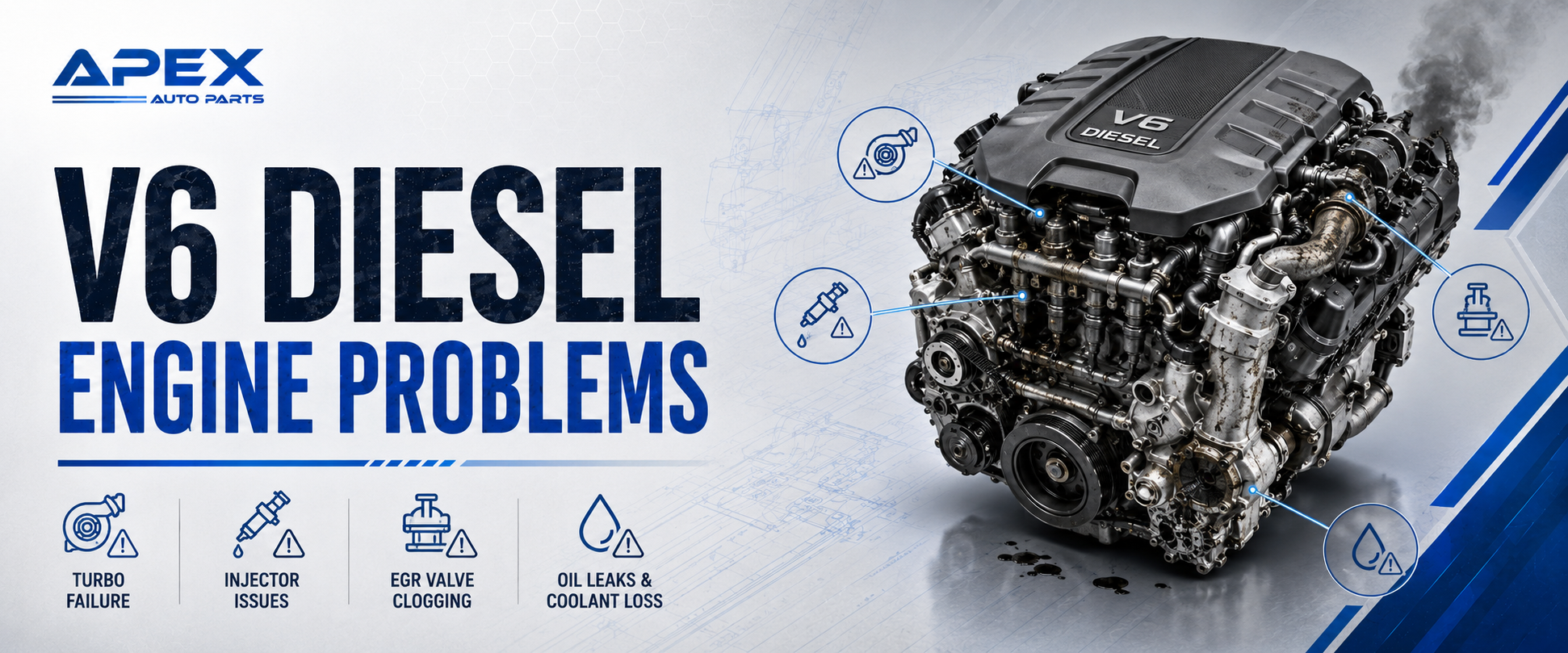
Diesel V6 engines are often used in larger cars and SUVs because they give strong torque and good fuel economy on long trips. But V6 diesel engine problems can become costly if ignored.
Common V6 diesel engine problems include EGR faults, DPF blockage, turbo wear, injector problems, glow plug issues, oil leaks, timing chain wear, carbon buildup, and coolant leaks.
Diesel engines create soot. That soot can build up in the EGR system and intake. If the car is mainly used for short trips, the DPF may not get hot enough to clean itself. This can cause warning lights, limp mode, poor power, and high fuel use.
A diesel V6 also depends on good oil. Dirty oil can damage turbos, timing chains, bearings, and valve train parts. Fuel quality also matters because injectors work under high pressure.
Signs of V6 diesel engine problems can include:
- Black smoke
- White smoke
- Hard starting
- Rough idle
- Engine warning light
- Low power
- Limp mode
- Diesel knock
- High fuel use
- Oil level dropping
If a diesel V6 starts showing these signs, do not keep driving and hoping it clears. Get it checked before the fault spreads.
Audi V6 engine
The Audi V6 engine range includes several well-known petrol and diesel engines. Audi has used V6 engines in many models, including the A4, A5, A6, A7, A8, Q5, Q7, and some S and performance models.
An Audi V6 engine can feel smooth, refined, and strong. Audi diesel V6 engines are especially popular in larger cars and SUVs because they offer strong torque and motorway comfort. Petrol V6 engines can also feel quick and smooth, especially in turbocharged or supercharged versions.
But Audi V6 engines need proper care. Some can suffer from timing chain issues, oil leaks, coolant leaks, carbon buildup, injector faults, turbo problems, and EGR or DPF issues on diesel models.
Owners should pay attention to service history. Some Audi V6 engines have timing chains at the rear of the engine, which can make repairs labor-heavy. If there is a rattle on startup, it should be checked early.
If buying parts for an Audi V6 engine, always check the engine code. Audi engines can vary by year, power output, and fuel type. A part that fits one version may not fit another.
BMW V6 engine
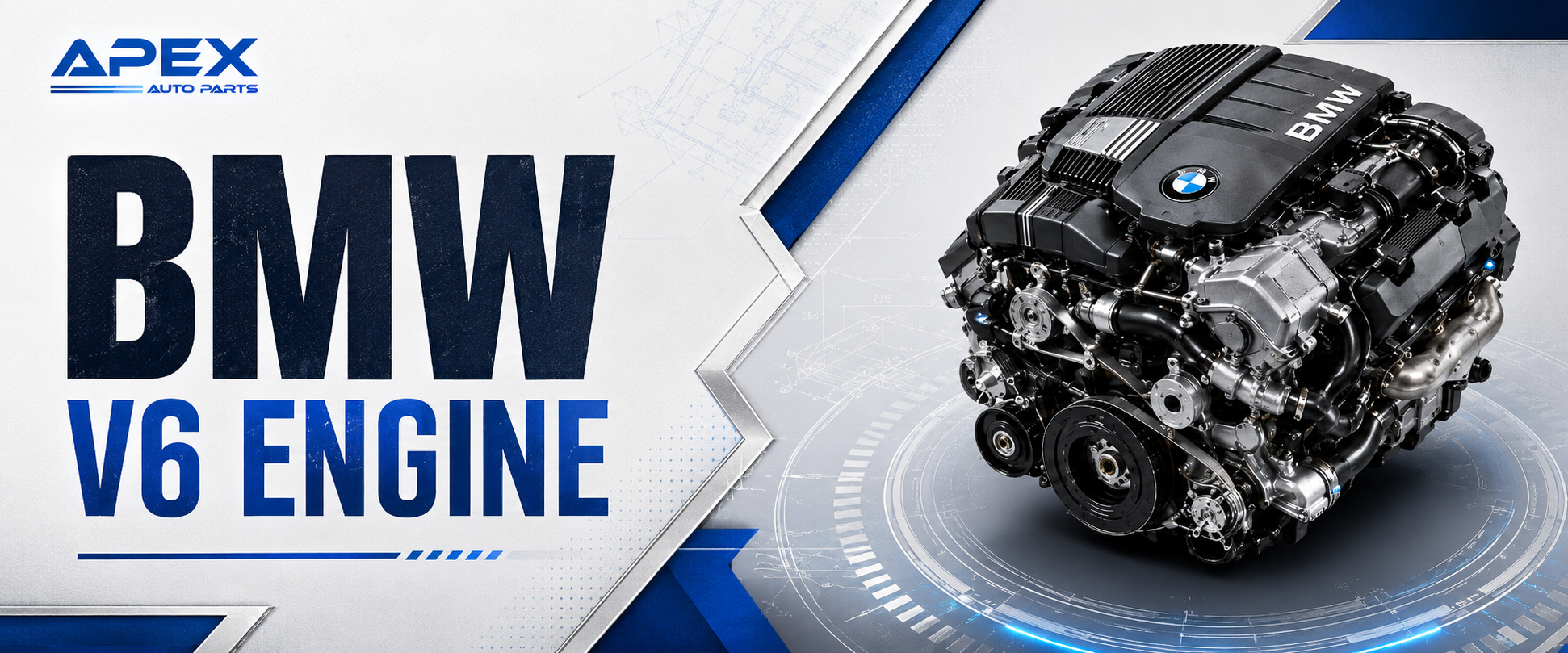
Many people search for BMW v6 engines, but BMW is mostly known for straight six engines rather than V6 engines. This is an important point. BMW has built a strong reputation for its inline-six engines, especially in petrol and diesel models.
A straight six has six cylinders in one line. A V6 has two banks of three cylinders. Both have six cylinders, but they are not the same layout.
So, when people search for a BMW V6 engine, they often mean a BMW six-cylinder engine. They may be looking for engines like BMW B58, N57, M57, B57, N55, or older straight six engines.
BMW straight-six engines are loved for their smoothness and balance. Some are petrol engines known for their power and tuning potential. Others are diesel engines known for torque and long-distance driving.
If you own a BMW and are buying parts, do not search only for “BMW V6.” Use the exact engine code. Apex Auto Parts can help UK buyers find suitable engine parts by checking vehicle details, engine code, and part type.
Ford V6 engine
The Ford V6 engine has been used in many cars, vans, pickups, and SUVs over the years. Ford has built petrol and diesel V6 engines for different markets and vehicle types.
A Ford V6 engine can be found in models like the Mondeo, Mustang, Ranger, Explorer, F150, and other vehicles depending on country and year. Some Ford V6 engines are built for daily driving. Some are built for towing. Some performance versions use turbocharging.
Ford’s EcoBoost V6 engines are known for delivering strong power in a compact package. These engines use turbochargers to create strong torque and good performance. But turbocharged V6 engines need good oil care, cooling care, and regular maintenance.
Common Ford V6 engine problems can include timing chain wear, coolant leaks, turbo issues, carbon buildup, coil pack faults, injector issues, and oil leaks.
Ford V6 diesel engines can also suffer from faults in the EGR, DPF, injectors, and turbo. As with any diesel, short trips and poor servicing can make problems worse.
The key with any Ford V6 engine is early diagnosis. A small rattle, slight misfire, or small coolant leak can become a bigger repair if ignored.
Jaguar V6 engine
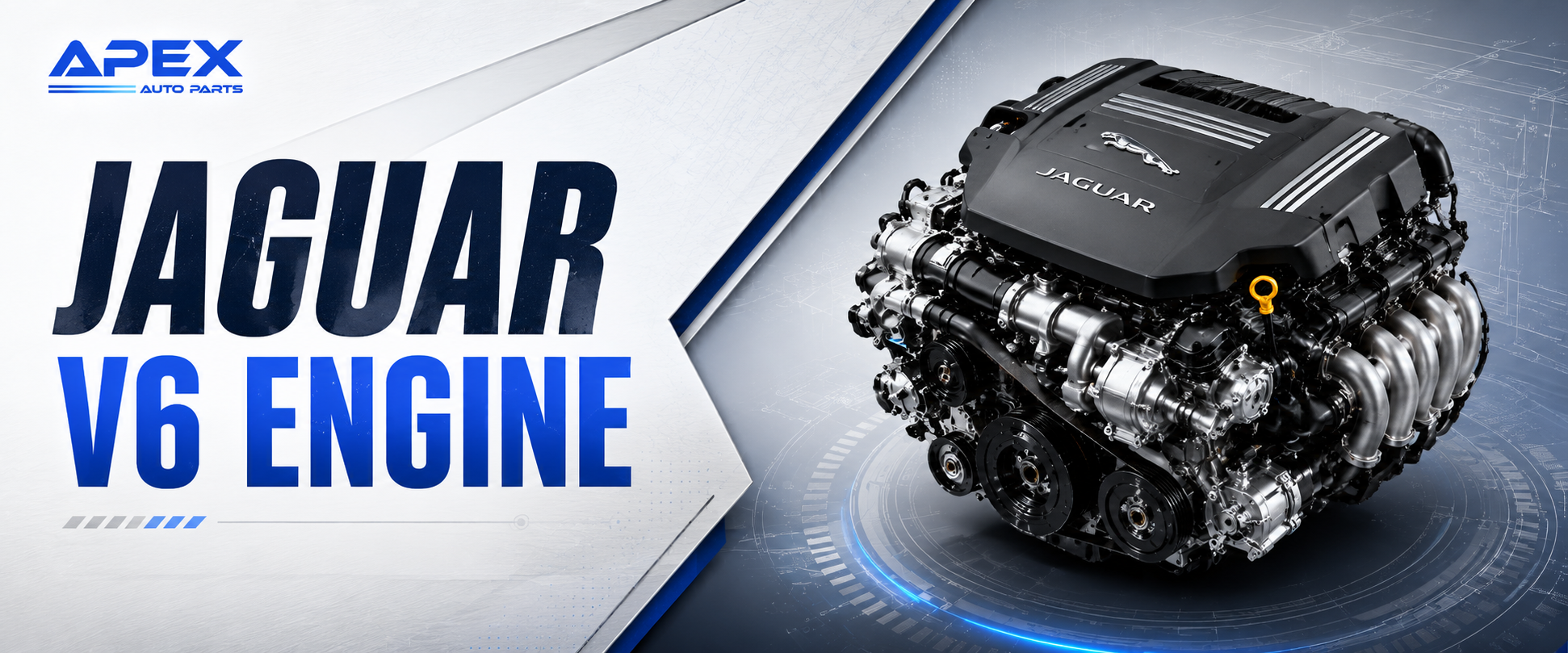
The Jaguar V6 engine has been used in several Jaguar models, including saloons, sports cars, and SUVs. Jaguar has offered petrol V6 and diesel V6 engines depending on model and year.
A Jaguar V6 engine can feel smooth and premium. Petrol V6 models often focus on performance and refinement. Diesel V6 models offer strong torque and long-distance comfort.
Jaguar V6 diesel engines are often linked with Land Rover engines, especially in larger models. These engines can drive very well, but they need careful servicing. Oil quality, timing system health, cooling system care, turbo condition, and EGR or DPF health all matter.
Common Jaguar V6 engine concerns can include oil leaks, timing issues, turbo problems, injector faults, DPF issues, EGR faults, coolant leaks, and crankshaft or bearing concerns in some diesel versions.
If buying a used Jaguar V6, check service history carefully. Listen for engine noise. Watch for smoke. Check for warning lights. A luxury car with a V6 can be enjoyable, but repairs can be costly if the engine has been neglected.
What is the Best V6 Engine?
Many drivers ask what the best V6 engine is. The answer depends on what you need.
The best V6 engine for a family SUV may not be the same as the best engine for a sports car. A towing vehicle needs torque and cooling strength. A performance car needs response and power. A long-distance diesel car needs fuel economy and durability.
A good V6 engine choice should have a strong service history, good parts support, proven reliability, smooth power, and no major ignored faults.
When looking for the best V6 engine, think about:
- What vehicle it is fitted in
- Petrol or diesel use
- Service history
- Timing system condition
- Cooling system strength
- Parts availability
- Repair cost
- Known engine faults
- Driving style
- Fuel economy needs
The best engine is not always the most powerful. It is the one that suits your driving style and has been well maintained.
V6 Petrol vs V6 Diesel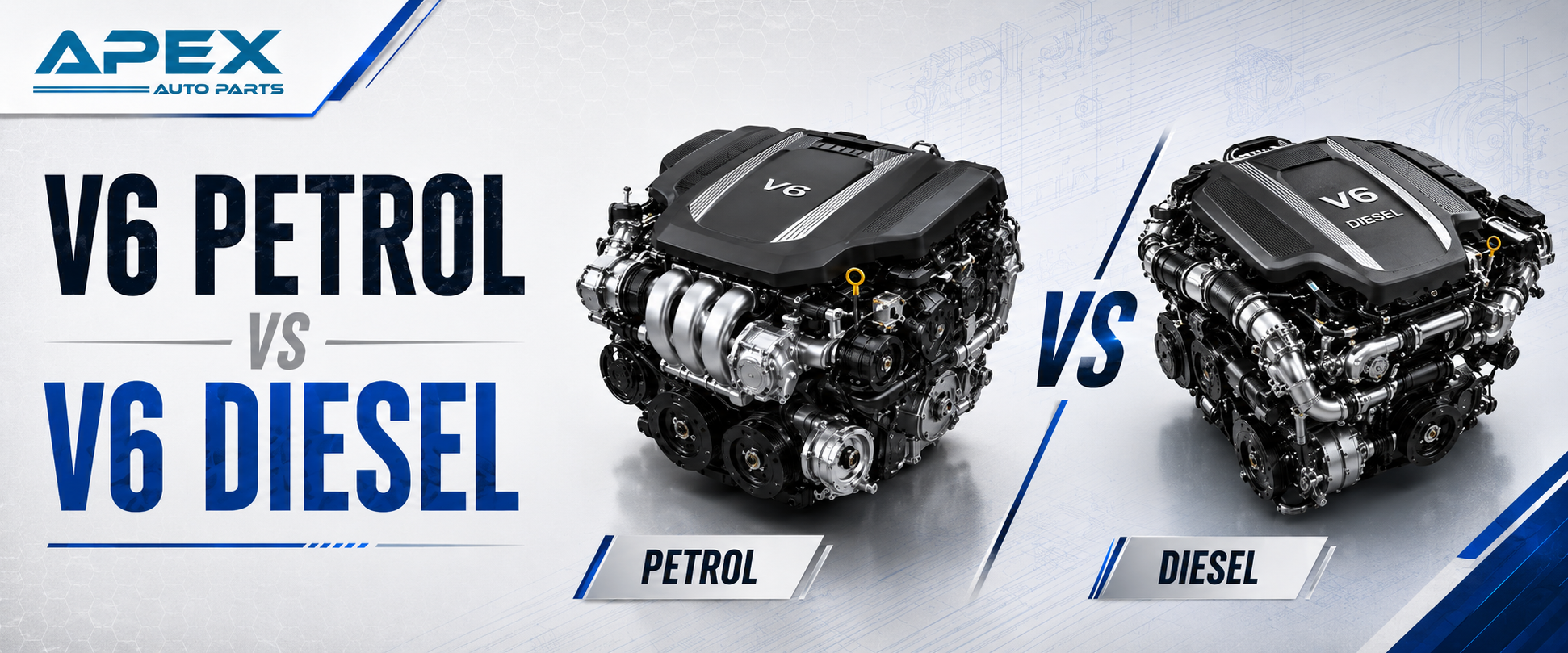
A petrol V6 and diesel V6 can feel very different. A petrol V6 usually feels smoother, quieter, and more willing to rev. It can be better for drivers who do shorter trips or want a more responsive engine.
A diesel V6 usually gives stronger low-speed torque and better fuel economy on long trips. It can be better for motorway driving, towing, and larger SUVs.
But diesel engines can be more sensitive to short trips because of DPF and EGR systems. Petrol engines can have ignition system issues, coil pack faults, spark plug wear, and carbon buildup depending on design.
The right choice depends on how you drive. If you mostly do short city trips, petrol may be easier. If you do long motorway trips, diesel may make more sense.
How to Keep a V6 Engine Reliable?
A V6 Engine can last well if it is maintained properly. Most major failures start with small problems that were ignored.
Oil changes are one of the most important things. Use the correct oil grade and do not stretch service intervals too far. A V6 engine may have more heat and more moving parts than a smaller engine, so oil quality matters.
Cooling system care is also important. Replace weak hoses, faulty thermostats, leaking radiators, and worn water pumps before overheating happens.
Listen for timing chain noise or signs of belt wear. Check for oil leaks. Fix misfires early. Do not ignore warning lights.
Good habits include:
- Change oil on time
- Use correct oil and filters
- Check coolant often
- Fix leaks early
- Replace spark plugs when due
- Keep air filters clean
- Do not ignore timing noise
- Use quality parts
- Keep service records
- Get faults checked early
These basics can save a lot of money.
Buying Parts for a V6 Engine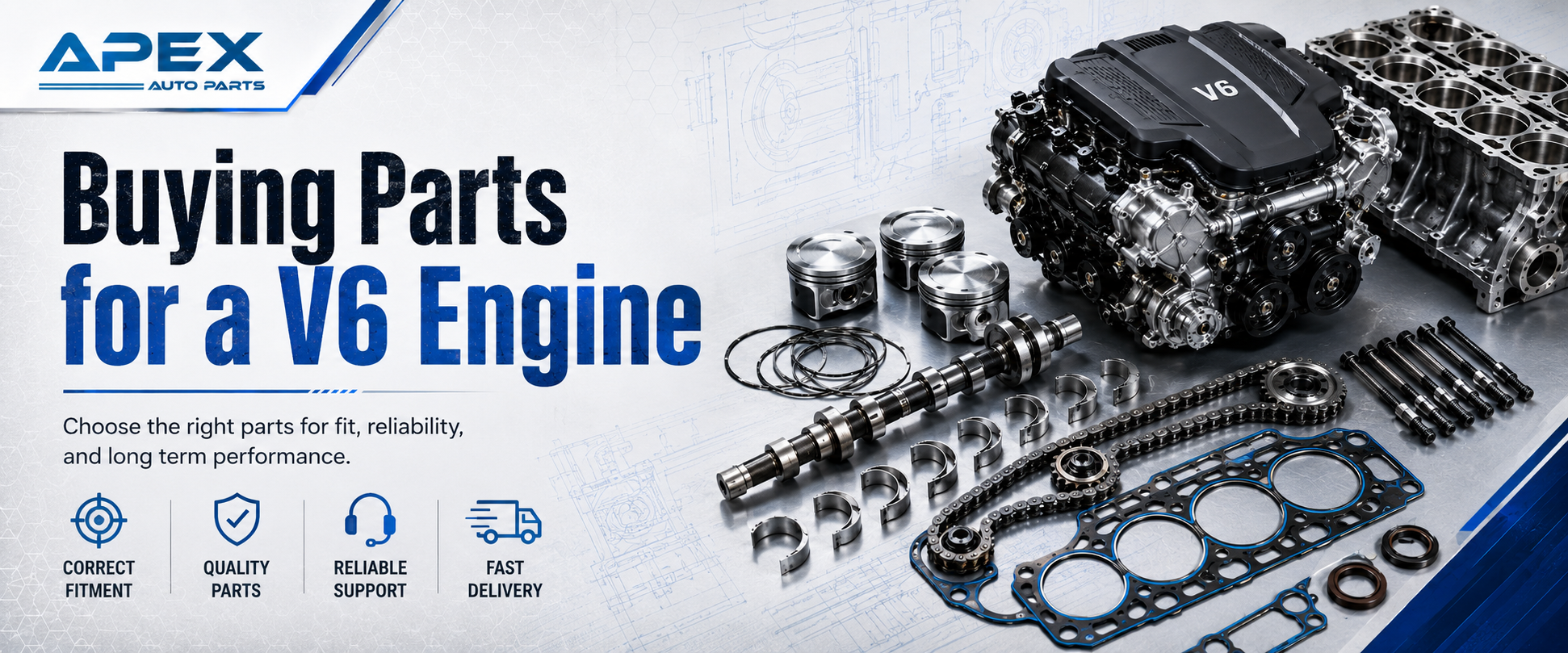
Buying parts for a V6 Engine needs care. The same model can have more than one engine code. Petrol and diesel parts are different. Turbo and non-turbo versions can use different gaskets, sensors, pipes, and cooling parts.
Before buying parts, check the vehicle's make, model, year, fuel type, engine size, engine code, and, if possible, part number.
This is important for the Audi V6 engine, Ford V6 engine, Jaguar V6 engine, and any searched BMW V6 engine-related part. Correct fitment prevents delays and repeat repairs.
Apex Auto Parts supports drivers, garages, and trade buyers with engine parts for repair and rebuild work. For V6 engines, parts such as timing kits, water pumps, oil pumps, gaskets, sensors, pistons, bearings, valves, and seals should always be properly matched.
Wrong parts cost time. Correct parts help the repair last.
Used V6 Car Buying Advice
A used V6 car can be a good buy, but only if it has been cared for. Bigger engines can be more expensive to repair, so check carefully before buying.
Start with service history. Look for oil changes, coolant repairs, timing belt or chain work, turbo work, injector repairs, and gasket replacement. Missing history is a warning sign.
Start the engine from cold if possible. Listen for rattles, knocks, rough idle, or uneven running. Watch for smoke. Check coolant level and oil level. Look for leaks around the engine.
During the test drive, the engine should pull smoothly. It should not hesitate, misfire, overheat, or show warning lights.
A cheap V6 car can become expensive quickly if it has hidden engine problems. A clean, well-serviced example is usually the safer choice.
Final Thoughts
A V6 Engine can be a great choice for drivers who want a strong balance of power, smoothness, and daily usability. It is more powerful than many smaller engines and often more practical than a V8.
The Audi V6 engine, Ford V6 engine, and Jaguar V6 engine are all strong examples, but each requires proper maintenance. The term BMW V6 engine is commonly searched, but BMW is mainly known for straight-six engines, so checking the engine code is very important.
Common issues include oil leaks, coolant leaks, timing wear, misfires, sensor faults, turbo problems, and diesel emissions issues. V6 diesel engine problems can include EGR faults, DPF blockage, injector faults, glow plug faults, and turbo wear.
If you are looking for the best V6 engine, do not choose by name alone. Choose by service history, condition, parts support, and how the engine suits your driving.
A well-cared-for V6 can last a long time. A neglected one can become costly. The best protection is simple: regular servicing, early diagnosis, correct parts, and good repair work.
FAQs About V6 Engines
1. What is a V6 Engine?
A V6 Engine has six cylinders arranged in two banks that form a V shape. It is shorter than a straight six engine and often fits better in many cars and SUVs. It gives a good mix of power, smooth driving, and usable size.
2. Is a V6 Engine reliable?
A V6 Engine can be reliable when serviced properly. Reliability depends on oil changes, cooling system care, timing belt or chain condition, and repair history. A well-maintained V6 can last many miles, while a neglected one can suffer leaks, misfires, overheating, or timing problems.
3. What are common V6 diesel engine problems?
Common V6 diesel engine problems include EGR faults, DPF blockage, injector issues, glow plug faults, turbo wear, carbon buildup, oil leaks, coolant leaks, and timing chain wear. These problems are often worse in cars used only for short trips or with a poor service history.
4. Is an Audi V6 engine good?
An Audi V6 engine can be very good, especially when serviced well. Audi V6 engines can feel smooth and strong, but some may experience timing chain wear, oil leaks, carbon buildup, EGR issues, DPF faults, or turbo problems, depending on the fuel type and engine version.
5. Does BMW make a BMW V6 engine?
Many people search for BMW v6 engines, but BMW is mainly known for straight six engines, not V6 engines. A straight six has six cylinders in one line, while a V6 has two banks. Always check the exact BMW engine code before buying parts.
6. Is a Ford V6 engine reliable?
A Ford V6 engine can be reliable with good servicing. Ford has used many V6 engines, including petrol, diesel, and turbocharged EcoBoost versions. Common issues can include timing chain wear, coolant leaks, turbo faults, injector issues, coil pack faults, and carbon buildup.
7. Is a Jaguar V6 engine expensive to maintain?
A Jaguar V6 engine can cost more to maintain than a small engine because parts and labor may be higher. Diesel versions require careful checks of the EGR, DPF, turbo, timing, oil leaks, and injector faults. A strong service history is very important before buying.
8. What is the best V6 engine?
The best V6 engine depends on your needs. For long trips, a reliable diesel V6 may suit you. For performance, a petrol or turbo V6 may be better. The best choice has a strong service history, good parts support, known reliability, and suits your driving style.
9. Is a V6 better than a four-cylinder engine?
A V6 usually gives more power and smoother driving than many four-cylinder engines. It can be better for towing, larger cars, and motorway use. A four-cylinder engine may be cheaper to run and repair. The better choice depends on your driving and budget.
10. How do I make a V6 Engine last longer?
To make a V6 Engine last longer, change oil on time, use the correct oil, keep coolant healthy, replace filters, fix leaks early, and do not ignore warning lights. Check the timing belt or chain condition and use high-quality parts that match the engine exactly.
References:
Wikipedia
Bimmerly
DMR Diesel