
 info@apexautoparts.co.uk
 +44 203 915 7535
 Safe & Fast Shipping
 Whish List
 Compare
 Sign In

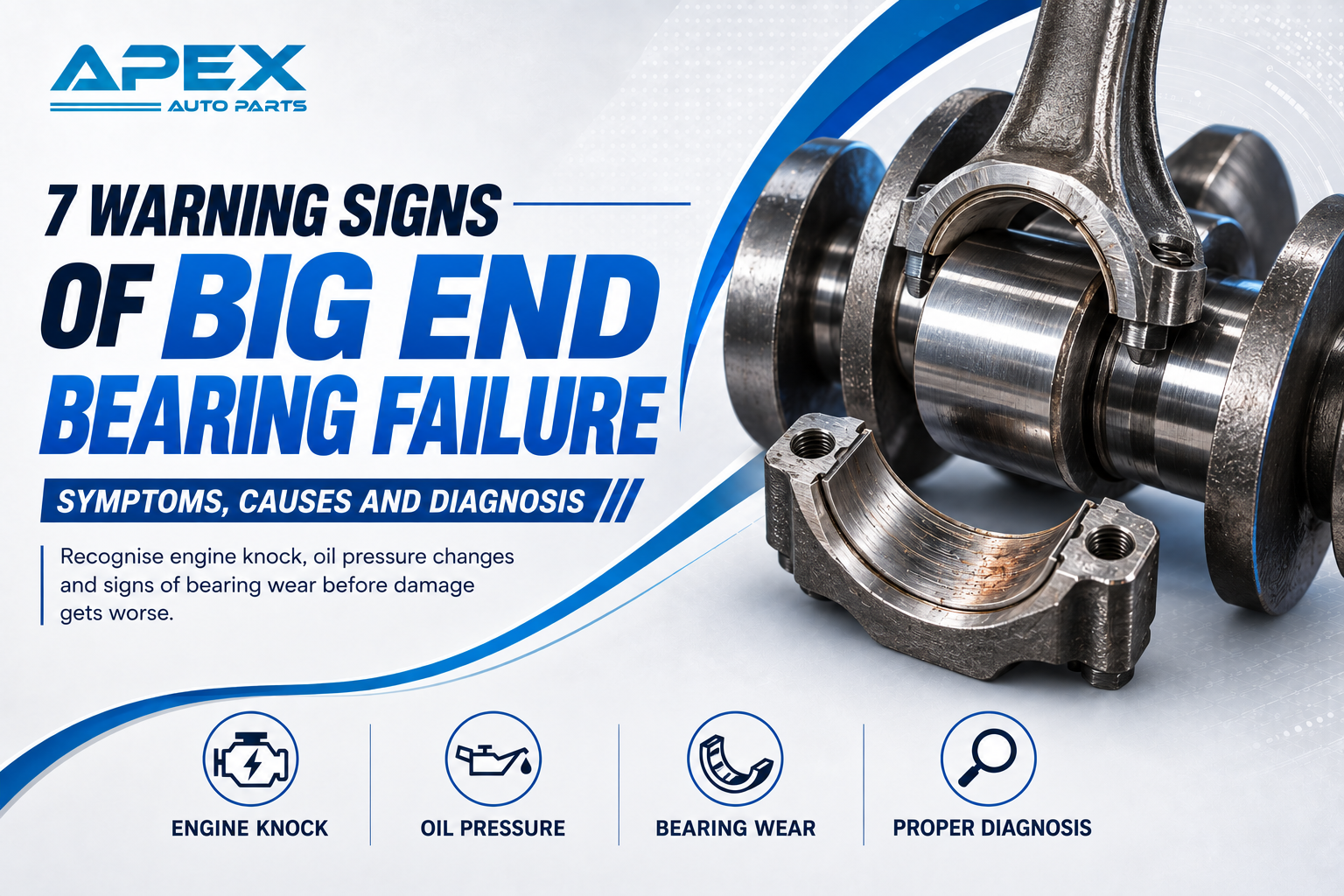
A knocking engine is a sound most drivers hope they never hear. Sometimes the cause is a loose part or another fault outside the engine. In other cases, the noise comes from deep inside, where a worn big-end bearing can put the crankshaft and connecting rod at risk.
The difficult part is knowing what the warning actually means. A noise recording, an oil warning light, or a few shiny particles cannot confirm the exact fault on their own. Good diagnosis brings these clues together before anyone recommends taking the engine apart.
This guide explains seven warning signs and inspection findings linked with big-end bearing failure, what else could cause them, and what a mechanic should check next. Some you can notice from the driver's seat. Others need oil testing or an internal inspection. Not every damaged engine goes through seven stages.
If a new heavy knock appears with an oil pressure warning, pull over safely, switch off, and arrange recovery. Running the engine again to hear the noise more clearly can increase the damage.
What Does a Big End Bearing Do?
Inside the engine, each piston connects to a metal connecting rod. The larger end of that rod fits around a rounded section of the crankshaft called the crankpin.
The big end bearing sits between these parts and lets the rod rotate around the crankpin while carrying the force created by combustion.
In most car engines, this bearing consists of two curved shells rather than balls or rollers. During normal running, a very thin film of oil separates the moving surfaces. The gap size around the crankpin matters because the bearing needs the right clearance to work properly.
The main bearings do a different job. They support the crankshaft in the engine block. Both types depend on lubrication, and damage to either can cause serious trouble, which is why a noise from the lower engine does not automatically indicate connecting rod bearing failure.
1. A Deep Metallic Knock From the Lower Engine
A repeated metallic knock is one of the most concerning symptoms of big-end bearing failure. It may sound as though someone is tapping the lower engine with a small hammer.
The rhythm normally follows engine speed, although the way sound travels through the block can make its source difficult to locate.
This sound is often called rod knock. It can develop when wear and damage leave too much movement between the rod bearing and crankpin.
However, a loose flywheel, a damaged main bearing, or another mechanical fault can produce a similar complaint. A deep sound is a reason to investigate, not permission to order a bearing set immediately.
Note when the noise first appeared and whether an oil warning came on at the same time. That history helps the workshop. Avoid repeated starts or hard revving while recording, especially if the knock is strong or getting worse.
2. Knocking That Changes With Engine Load or Temperature
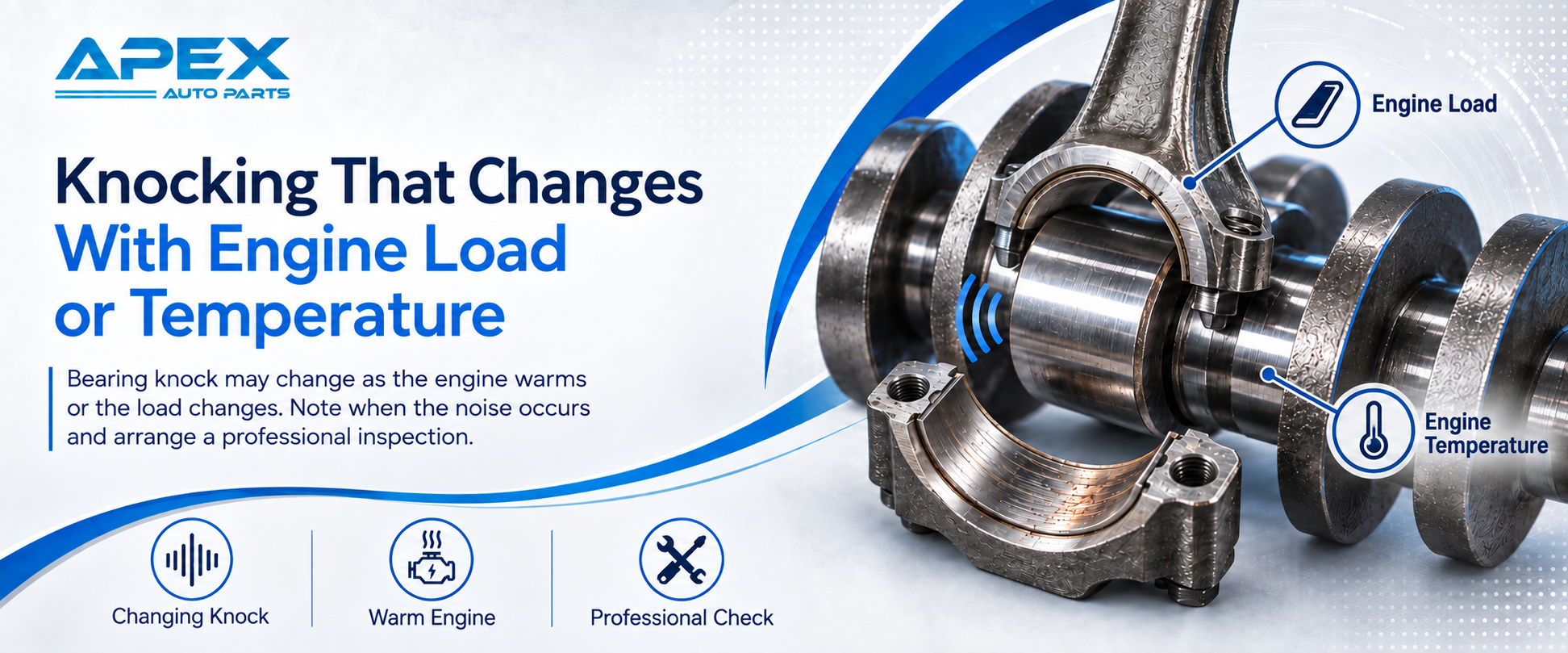
Another useful clue is how the sound changes. A worn bearing may become more noticeable when the engine is warm or when the load changes during ordinary driving.
This is a pattern of the knocking described above, not separate proof of damage.
Oil becomes less viscous as it warms, and the forces through a connecting rod change as the engine works harder. These changes can affect how an existing fault sounds. But there is no rule that every damaged bearing becomes louder when hot or that a noise which disappears at idle is harmless.
For big-end bearing noise diagnosis, describe what you already noticed rather than carrying out your own driving test. Tell the mechanic whether the noise appeared on a hill, after a long journey, or immediately after starting.
Other faults, including combustion knock and piston noise, can also change with temperature or load. Check the sound alongside the other evidence.
3. Low Oil Pressure or an Oil Pressure Warning
An oil pressure warning with a new engine knock needs prompt attention. Oil level and oil pressure are different. An engine can have the correct amount of oil but still struggle to deliver it to the parts that need it.
Excessive bearing clearance can contribute to low pressure, but low pressure can also damage bearings. The workshop may need to investigate the Oil pump, oil pickup, pressure control system, and other worn bearings. A faulty pressure sensor is another possibility, so the dashboard warning alone cannot identify the failed component.
Ask for the measured pressure and the manufacturer's specification where a running test is considered safe. A normal reading does not completely rule out local bearing damage.
Equally, topping up a low oil level does not repair a bearing that has already been damaged. Do not restart a heavily knocking engine simply because the dipstick now shows the correct level.
4. Metal Particles in the Oil or Filter
Visible metal in drained oil, the sump, or the filter is another reason to investigate big-end bearing problems. A workshop may find fine glitter, flakes, or larger fragments.
These particles can come from several engine parts, so their presence shows that something needs attention without immediately proving where it came from.
Bearing materials vary. Some damaged shells can expose a copper color layer, while others use different materials. A magnet will not collect all bearing debris.
Finding no particles on a magnetic drain plug therefore does not guarantee that the bearings are healthy.
The oil filter can preserve useful evidence that is easy to miss in a drain tray. A mechanic should use a suitable filter cutting tool when needed, because a saw can add fresh metal particles and confuse the inspection.
Keep the old filter and any recovered fragments until the workshop has finished investigating the source.
5. An Unusual Increase in Wear Metals in an Oil Test

Laboratory oil testing can sometimes reveal abnormal wear before a driver notices a clear change in performance.
Results may show increased amounts of metals associated with bearings or other engine components. For an owner already tracking engine condition, a change across several samples can be more useful than a single reading.
This is a workshop clue rather than a visible dashboard warning. The result needs context, including the engine design, bearing materials, oil mileage, and whether recent repair work has taken place. One raised metal level does not indicate a fault on its own, and routine oil analysis may miss larger debris.
When reviewing possible big-end bearing wear symptoms, treat the laboratory report as supporting evidence. It can help a specialist decide what to inspect next.
It cannot certify that a loudly knocking engine is safe to keep running, even if an earlier oil sample looked normal.
6. New Vibration or Loss of Power Alongside a Heavy Knock
Vibration and poor performance are not reliable early signs of bearing wear on their own. Misfires, damaged engine mounts, fuel faults, and many other problems can cause them.
A car that feels rough at idle does not automatically need an engine rebuild.
The concern grows when these changes come with a deep knock, an oil warning, or evidence of metal contamination. Advanced internal damage can affect how freely and smoothly the engine runs.
At that point, continuing the journey may turn a repairable fault into something much more serious.
Explain the combination of symptoms to the workshop rather than choosing one as the diagnosis. For example, mention that the vibration started at the same time as the knock. If the engine stops and then will not turn over, don't repeatedly use the starter. A technician needs to establish whether the problem is electrical, mechanical, or caused by something else.
7. Damaged Bearing Shells or Excessive Clearance Found During Inspection
The strongest evidence often appears after opening the engine. A mechanic may find a damaged shell surface, a worn crankpin, or clearance outside the manufacturer's limits. These are inspection findings, so an owner cannot safely confirm them by listening through the bonnet.
Scratches, flaking, heat damage, and uneven wear tell part of the story, but similar damage patterns can have multiple causes.
King Engine Bearings explains how different surface patterns can be linked to contamination, lubrication problems, component shape, and overloading. The condition of the matching crankpin and connecting rod matters too.
Ask the workshop to show you the findings and explain the measurements. This is much more useful than being told the shells look worn.
It also helps establish whether new bearings are enough or whether the crankshaft, rod and oil system need further work.
What Causes Big End Bearing Knock?
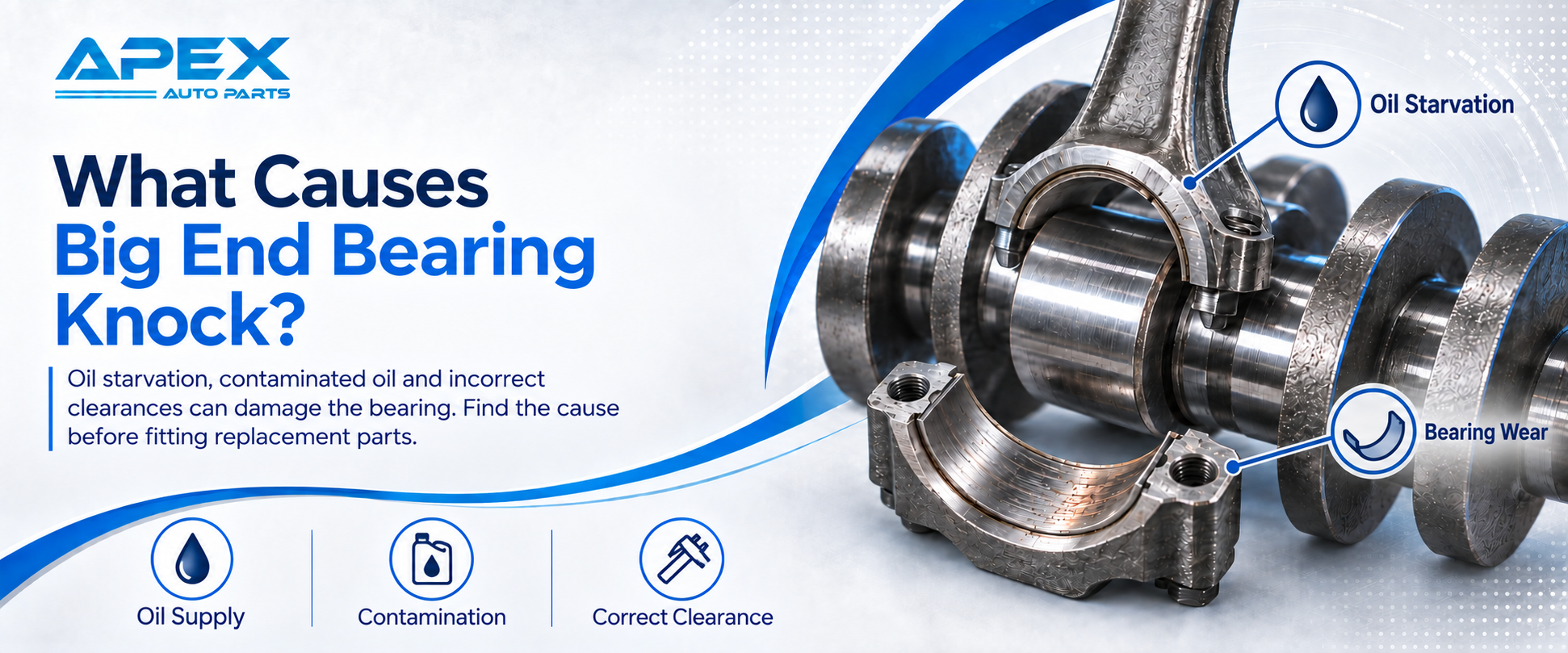
Understanding what causes a big end bearing to knock starts with the conditions that allow the bearing to work. It needs a suitable oil supply, clean surfaces, correct clearances, and properly assembled parts.
A problem in any of these areas can cause damage that worsens as the engine keeps running.
An oil shortage is one possible cause, but a full sump does not guarantee a healthy oil supply.
A restricted pickup or oil passage can still cause trouble. Dirty oil, incorrect assembly, and damaged component surfaces are other areas to investigate.
The vehicle's recent history helps narrow the search. A knock after an oil loss needs a different starting point from a knock soon after an engine rebuild.
Tell the mechanic about previous overheating, missed services, oil warnings, engine modifications, and recent repairs. Leaving out an earlier problem can make the investigation longer and less accurate.
What Should You Do When You Suspect Bearing Damage?
Your first job is to avoid making the fault worse. You do not need to prove the diagnosis at the roadside. The workshop can inspect the engine under controlled conditions, while repeated starts or a drive home may destroy useful evidence and damage more parts.
- Pull over somewhere safe and switch off if a heavy knock develops, particularly when an oil pressure warning appears at the same time. Arrange recovery rather than testing whether the car will reach the garage.
- Record when the trouble began and which warning lights appeared. Include any recent oil change, leak, overheating event or repair, because the order of events can help the mechanic find the cause.
- Keep invoices for recent servicing and note the oil specification used if you know it. Have the workshop inspect the old oil and filter before discarding them, as both may contain useful evidence.
- Avoid additives, thicker oil, and repeated starts as a temporary solution. A quieter sound does not show that the damaged surfaces have recovered or that the engine is safe to drive.
These steps give the mechanic a better starting point. They also keep the repair decision based on what has actually failed, rather than a guess made from a short video or a description over the phone.
How Does a Mechanic Confirm the Fault?
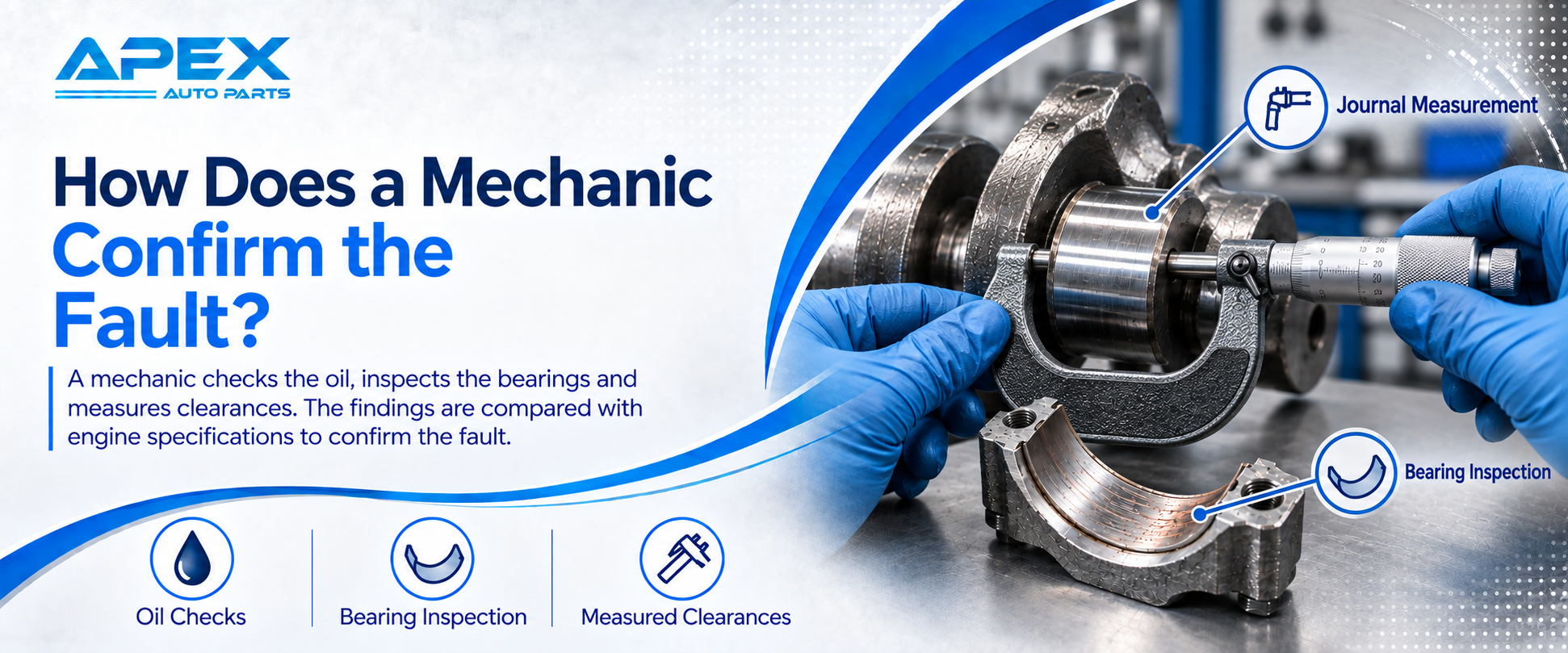
Proper big-end bearing noise diagnosis begins with the complaint and service history. The mechanic considers other possible sources before deciding whether a brief running check is appropriate.
If the engine already has a severe knock and obvious metal contamination, further running may add risk without providing useful information.
Oil pressure testing, oil and filter inspection, and checks of external components can help guide the next step.
A diagnostic scan may reveal related faults, but no universal fault code confirms a worn connecting rod bearing. An empty fault memory does not mean the lower engine is healthy.
If internal inspection is needed, the workshop should compare measurements with the correct engine data. Motor service describes calibrated plastic gauge strips as one way to check bearing clearance.
This check does not replace measuring the crankpin for wear or checking the connecting rod, which Motor service requires.
Why Failure Analysis Matters Before Fitting New Parts?
Good big-end bearing failure analysis answers two questions: what is damaged, and why did it become damaged? Replacing the shells only answers the first part. If an oil supply problem or incorrect component size remains, the replacement bearings may suffer the same fate.
Ask for a clear explanation of the failed parts, the likely cause, and the checks used to support that conclusion. Where the cause remains uncertain, the estimate should say so. A useful diagnosis separates measured faults from possible causes that still need investigating.
Photographs of the shells, crankshaft, and recovered debris can help you understand the proposal. The workshop should also explain how it will deal with contamination elsewhere in the lubrication system. Cleaning requirements and any parts that cannot be reliably cleaned depend on the engine and the extent of the failure.
Can the Engine Be Repaired Without Replacing It?
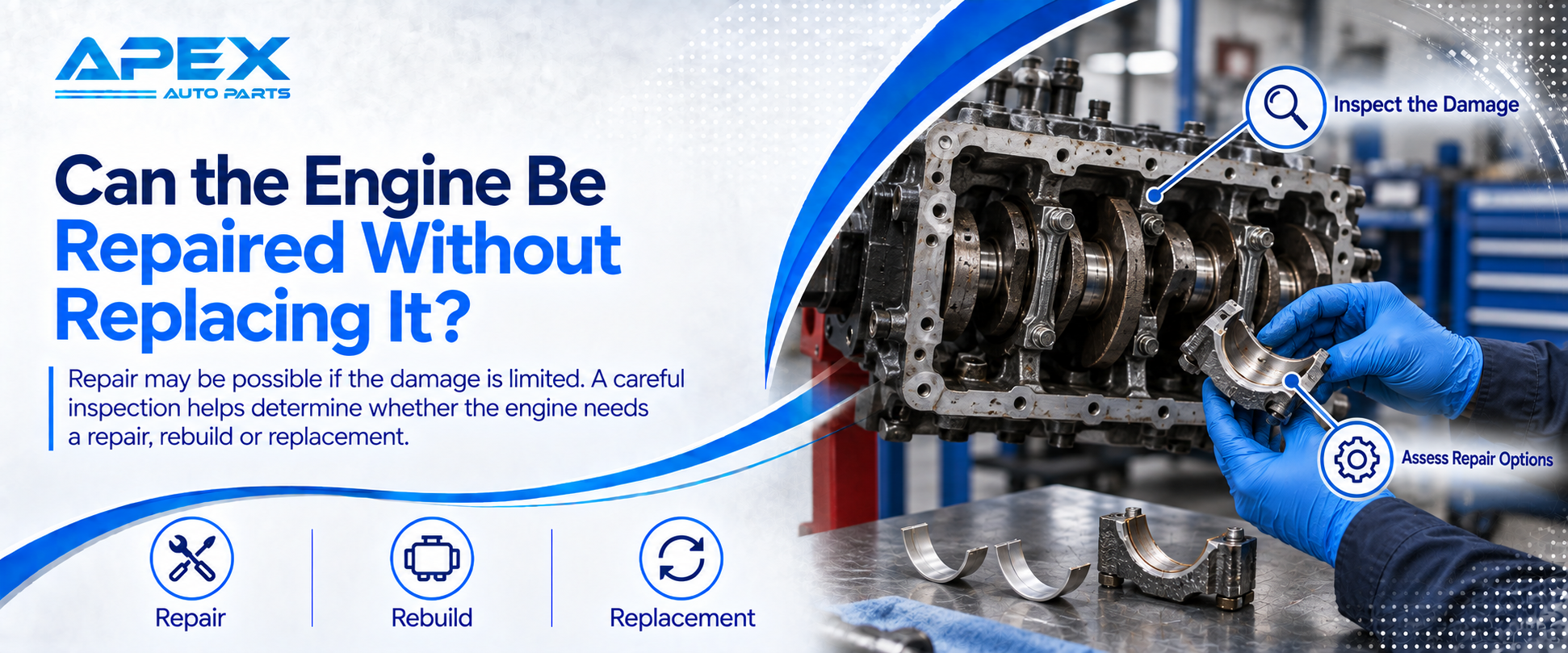
Sometimes it can, but the answer depends on the inspection. If damage is limited and the related components remain suitable for use, a repair may be possible. If the crankshaft, connecting rod, or other parts are badly affected, the work can grow into a larger rebuild. A replacement engine may then be another option to compare.
There is no useful universal price for big-end bearing failure repair. Access varies greatly between vehicles, and removing an engine can be a large part of the job. An estimate given before inspection should explain what is included and what could change after dismantling.
Before approving the repair, ask these practical questions:
Ask these practical questions:
- Does the quote include the checks needed to find the original cause, or only replacing the bearings? Ask how additional work will be discussed if damage is discovered after the engine is opened.
- What do the crankshaft and connecting rod measurements show? Request an explanation of whether parts can be reused, need specialist work, or must be replaced before the engine goes back together.
- How will the workshop deal with metal contamination and verify the oil supply after repair? Ask which checks will be recorded before the car is returned and what follow-up servicing is required.
- If a replacement engine is proposed, what is known about its condition and history? Compare the complete fitted cost and written warranty terms with the rebuild option rather than comparing the engine price alone.
Choosing the Correct Replacement Engine Parts
A bearing set must match the engine and the measured crankshaft. Vehicle registration details are a useful starting point, but previous machining or an engine change can change what you need.
A part that looks right in a photograph may still give the wrong clearance.
Have the mechanic confirm the engine code, bearing grade or repair size where relevant, and any related parts needed before placing an order.
Do not assume standard-size shells will suit a crankshaft that has already been repaired. The workshop should make that decision from the engine data and measurements.
Apex Auto Parts supplies engine components online for UK customers. Once the fault has been diagnosed, you can use the confirmed vehicle and part details to check the components needed for the repair. Matching the specification first helps avoid unnecessary returns and delays while the engine is apart.
How to Reduce the Risk of Future Bearing Trouble?
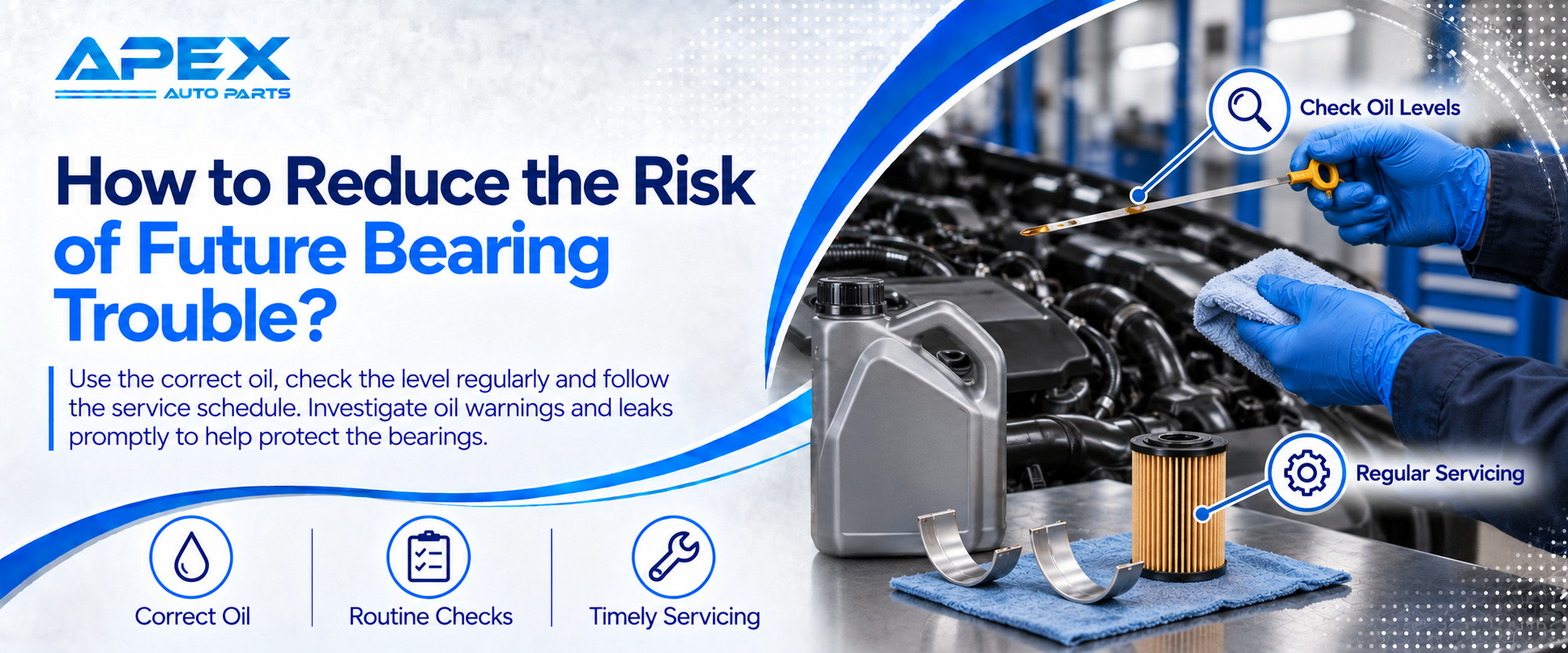
Routine care cannot prevent every failure, but it helps you notice problems before they grow. Use oil that meets the vehicle manufacturer's required specification and follow the appropriate service schedule. Check the level using the method in the owner's handbook, particularly if the engine uses oil between services.
Investigate repeated oil loss, unexplained changes in oil level, and warning lights instead of treating them as normal behavior. Keep service records and tell the garage when the car's use changes, such as frequent short journeys or heavier towing. That information can help it advise on suitable maintenance for the vehicle.
After major engine work, follow the rebuild specialist's starting, running and servicing instructions. The aim is to return a properly measured and checked engine to use. Fresh oil and new shells cannot fix an unresolved fault elsewhere.
FAQS
1. What are the first signs of bearing failure?
Possible early big-end bearing failure symptoms include a new metallic knock, an oil pressure warning, or unusual metal debris found during servicing. Some engines show few obvious warnings before damage becomes serious. None of these clues confirms the bearing alone, so prompt inspection is more useful than guessing from the sound.
2. What does a damaged big end bearing sound like?
A damaged big end bearing may produce a repeated metallic knock from the lower engine that changes with engine speed or load. Sound varies between engines, and flywheel, piston, or main bearing faults can be confused with it. A recording can help describe the complaint, but it cannot confirm the diagnosis.
3. Can I drive with a knocking bearing?
Do not keep driving if you suspect big end bearing failure, especially if a heavy knock appears with an oil pressure warning. Stop safely, switch off, and arrange recovery. Continuing to run may damage the crankshaft and connecting rod or cause a much larger failure. There is no dependable safe distance.
4. What causes a big end bearing knock?
To understand what causes a big end bearing knock, check lubrication, clearances, and component condition. Possible causes include oil supply faults, contamination, wear, and assembly errors. The knock describes the symptom rather than identifying the original problem. A mechanic should inspect the related parts before recommending new bearings or a larger repair.
5. Can an oil change fix bearing wear?
An oil change cannot repair worn bearing surfaces or restore the correct clearance. Fresh oil may change how the engine sounds, but that doesn't prove the fault is gone. If you have symptoms of big-end bearing wear, save the old oil, filter it for inspection, and arrange a proper diagnosis.
6. How is big-end bearing noise diagnosis carried out?
Proper big-end bearing noise diagnosis combines the service history, sound location, oil condition, and pressure checks where running is safe. The mechanic also considers other sources of knocking. Confirming the damage may require sump removal, bearing inspection, and measurements against the manufacturer's limits. A fault code scan alone is not enough.
7. Will bearing problems always cause low oil pressure?
No. Big-end bearing problems can exist without a dashboard oil pressure warning, especially when the damage is localized or hasn't significantly affected overall pressure. Low pressure can also have other causes. A normal warning light or gauge reading therefore cannot rule out bearing damage when other worrying symptoms are present.
8. What is included in big-end bearing failure analysis?
Effective big-end bearing failure analysis examines the shells, crankshaft, connecting rods, oil supply, and evidence of contamination. The workshop compares measurements and damage patterns with the engine's requirements and repair history. It aims to find the original cause, establish the repair scope, and reduce the chance of the replacement parts failing.
9. Do I need a replacement engine after bearing failure?
Not always. Whether big-end bearing failure needs a repair, rebuild, or replacement engine depends on the damage and the total cost of each option. Assess the crankshaft, rods, and lubrication system. Ask for a written estimate after inspection, including the work required to address the original cause and contamination.
10. How do I choose the correct replacement bearing?
Choose a big end bearing using the confirmed engine specification and the mechanic's measurements, including any previous crankshaft machining. Registration details alone may not identify the required repair size. Once you have those details, ask Apex Auto Parts about suitable engine components, and confirm the specification before the workshop begins assembly.
Reference:
Mahle Aftermarket
King bearings