
 info@apexautoparts.co.uk
 +44 203 915 7535
 Safe & Fast Shipping
 Whish List
 Compare
 Sign In

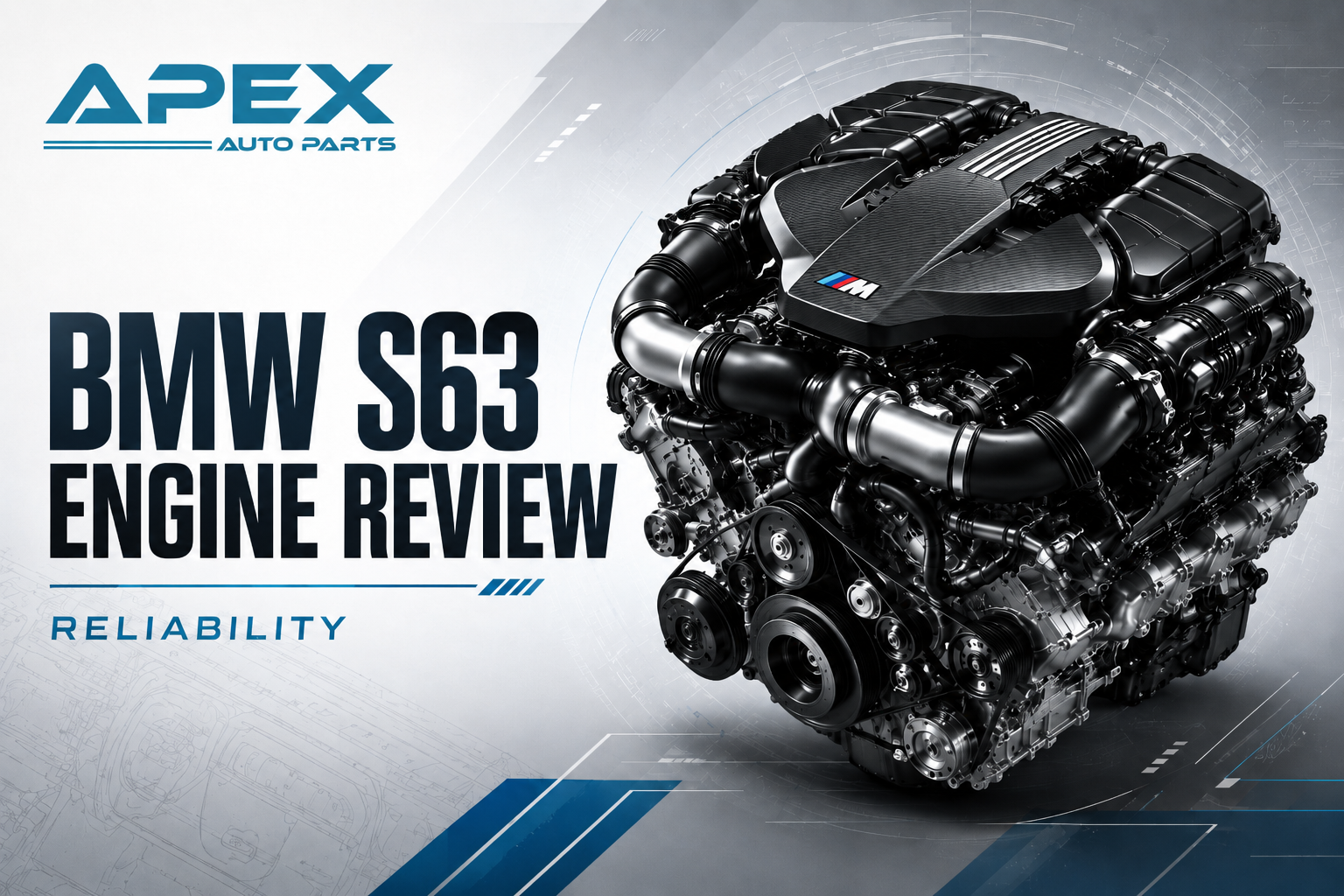
The BMW S63 is one of BMW M’s most powerful modern engines. It is a 4.4-liter twin-turbo V8 built for serious performance cars like the M5, M6, M8, X5 M, and X6 M. It is fast, strong, and exciting, but it also requires proper care.
This is not an engine you can ignore until something breaks. It runs hot, makes a lot of power, and has many parts working under pressure. When serviced well, the BMW S63 can feel amazing. When neglected, repair bills can become painful very quickly.
Many drivers search for BMW S63 reliability because they want to know if this engine is safe to own. The honest answer is this: the S63 can be reliable for a high-performance V8, but it is not a cheap engine to maintain. It needs good oil, strong cooling, healthy turbos, correct spark plugs, careful tuning, and quality repair parts.
At Apex Auto Parts, BMW owners, garages, and trade buyers often look for engine parts related to oil leaks, gasket work, timing issues, pistons, bearings, turbo faults, sensors, and engine rebuilds. For an engine like the BMW S63, correct fitment matters. The wrong gasket, a weak sensor, a poor-quality oil line, or a cheap internal part can create bigger problems later.
This guide explains the BMW S63, common BMW S63 engine problems, common BMW S63 engine issues, fuel use, tuning options, BMW S63 rod bearings, BMW S63 turbos, BMW S63 pistons, and the answer to which BMW has the S63 engine.
What Is the BMW S63 Engine?
The BMW S63 is a high-performance V8 petrol engine made by BMW M. It uses two turbochargers to create strong power and fast acceleration. It is based on BMW’s 4.4 liter V8 engine family, but the S63 is the M version, meaning it is built for more power, harder driving, and stronger performance.
The engine uses a hot V layout. This means the turbochargers sit inside the V section of the engine. This design helps the response because exhaust gases reach the turbos quickly. The car feels sharper when you press the accelerator. But this layout also creates a lot of heat in a tight space.
That heat is one reason the BMW S63 needs careful maintenance. Heat can affect oil seals, coolant lines, gaskets, plastic parts, sensors, turbo parts, and wiring. If the engine is pushed hard often and not serviced properly, small problems can turn into expensive repairs.
The BMW S63 is not a normal daily engine like a small four-cylinder petrol engine. It is a performance engine. It rewards proper care and punishes poor maintenance.
Which BMW has the S63 engine?
Many buyers ask which BMW has the S63 engine because it is used in some of the fastest BMW M cars. The S63 has appeared in several high-performance BMW models over the years.
You can find the BMW S63 in models such as:
- BMW X5 M
- BMW X6 M
- BMW M5
- BMW M6
- BMW M8
- BMW M5 Competition
- BMW M8 Competition
- BMW M5 CS
Some special M performance variants depending on year and market
The exact version of the BMW S63 can change by model and year. An early X5 M engine is not the same as a later M5 Competition engine. BMW improved the engine over time with updates to power, cooling, turbocharger design, fuel delivery, and internal strength.
So, when asking which BMW has the S63 engine, do not stop at the model name. Also check the year, engine code, service history, and exact version. This is very important if you are buying parts or planning repairs.
Why Do Drivers Love the BMW S63?
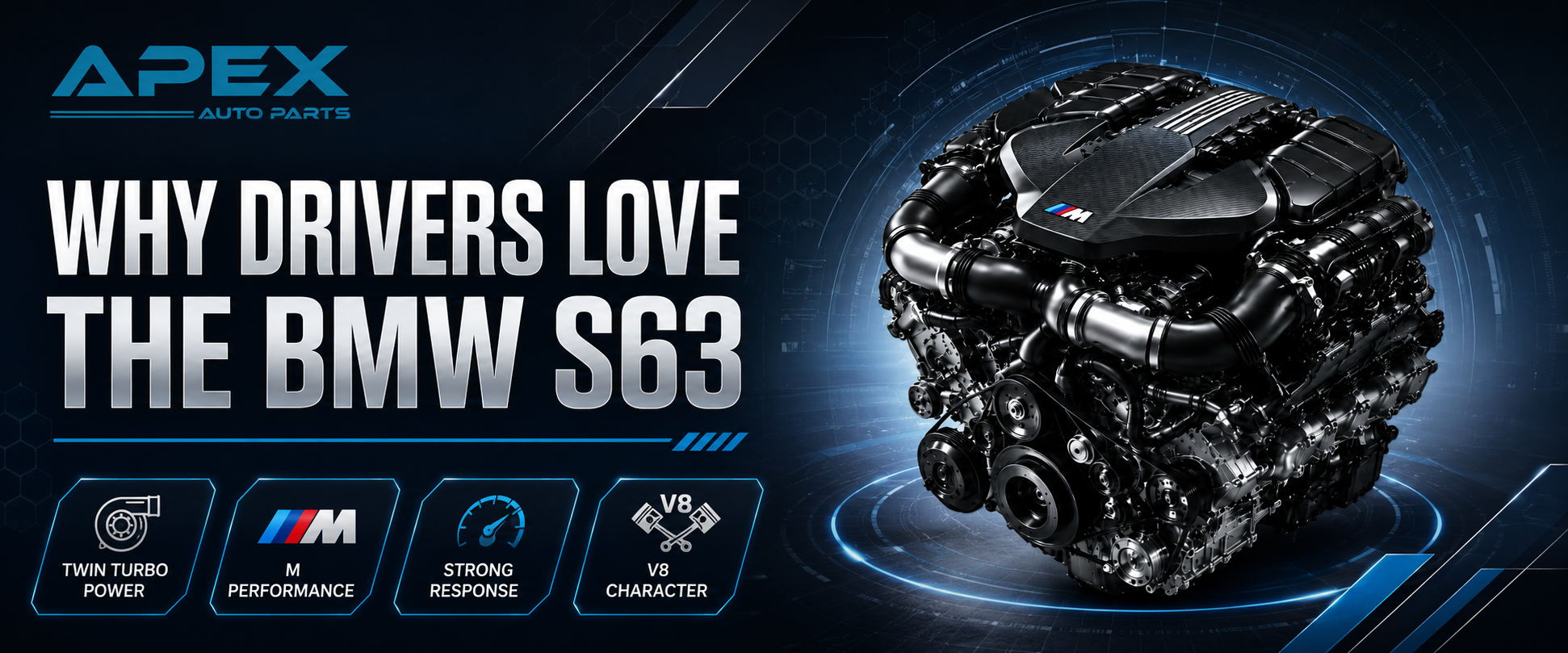
The main reason drivers love the BMW S63 is power. This engine can make a large BMW feel much smaller than it is. In cars like the M5 and M8, the engine delivers a strong low-speed pull and maintains strong performance at higher speeds.
It does not feel lazy. The turbos help the engine build boost quickly. When everything is healthy, the car feels sharp, smooth, and very strong.
Another reason people like the BMW S63 is its tuning potential. This engine can gain significant power with software tuning and supporting parts. Many owners tune the S63 because the engine responds well to changes.
But power is only one side of the story. More power also means more heat, more pressure, and more stress. If you want the engine to stay healthy, you must care for it like a performance engine, not like a basic commuter car.
BMW S63 Reliability: Is It a Reliable Engine?
BMW S63 reliability depends heavily on service history, driving style, and repair quality. This engine can last well when it is looked after, but it can also become costly if ignored.
A well-cared-for S63 usually has regular oil changes, clean coolant, healthy spark plugs, no long-term oil leaks, no ignored warning lights, and no history of poor tuning. A poorly cared-for S63 may show smoke, rough idle, oil burning, coolant loss, turbo noise, or knocking.
The S63 is not unreliable because it is weak. It is demanding because it is powerful and complex. It works under high heat and pressure, so servicing becomes more important as performance increases.
For good BMW S63 reliability, owners should:
- Change oil on time
- Use the correct oil grade
- Keep coolant system healthy
- Fix oil leaks early
- Check turbo oil and coolant lines
- Replace spark plugs when needed
- Avoid poor quality tuning
- Warm the engine before hard driving
- Watch for smoke or odd noises
- Use proper parts during repairs
If you want a low-cost engine with simple repair needs, the S63 may not be the right choice. If you understand performance maintenance, it can be a very rewarding experience.
Common BMW S63 engine problems
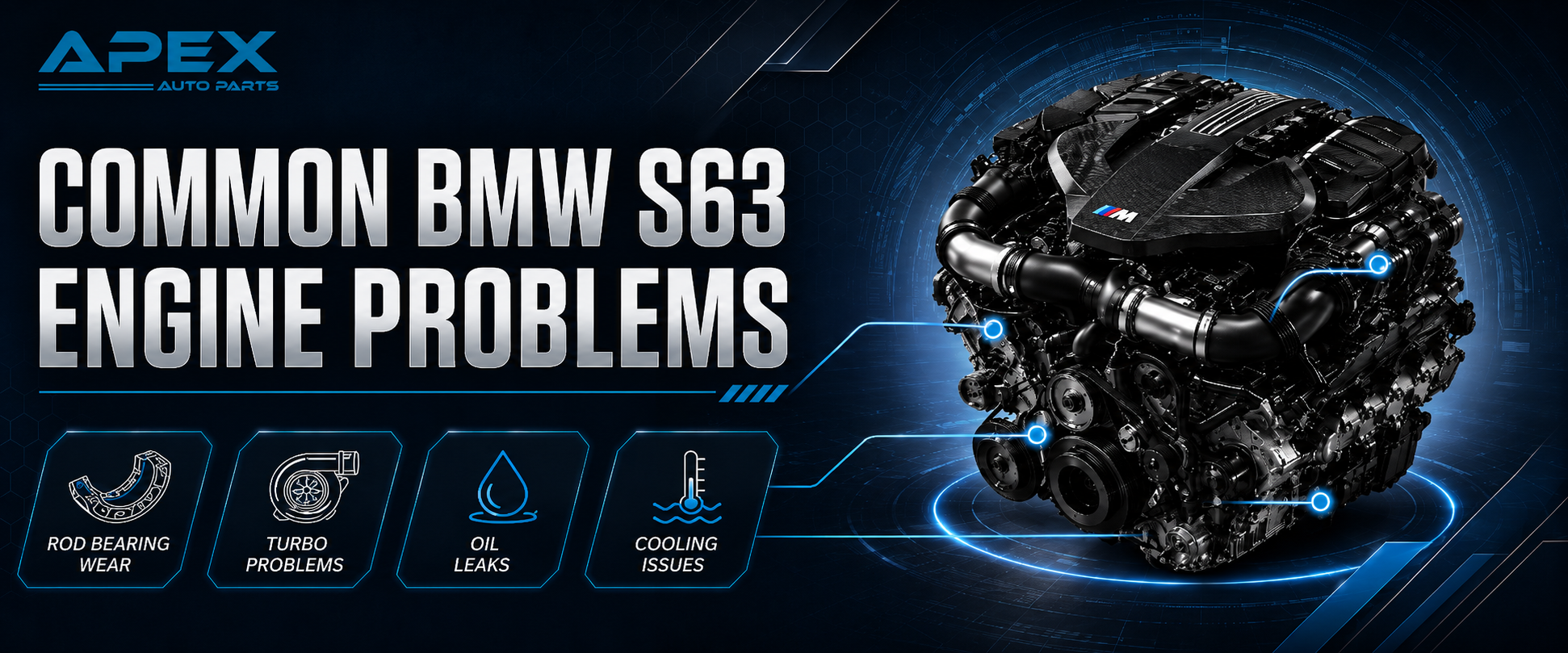
Like many high-performance turbo engines, the S63 has a few common areas that owners should watch. Not every engine will suffer from all of these problems, but these are the areas mechanics often check.
Common BMW S63 engine problems can include oil leaks, coolant leaks, turbo wear, injector issues, ignition coil problems, spark plug wear, valve stem seal problems, fuel system faults, crankcase ventilation issues, and heat-related wear.
Some problems start small. A small oil leak may only smell bad at first. Later, it can drip onto hot parts, smoke, damage rubber parts, or lower the oil level. A weak coolant line may seem minor, but if the engine overheats, repair costs can rise fast.
One of the biggest mistakes owners make is ignoring early symptoms. A BMW S63 should not be driven for weeks with warning lights, smoke, heavy oil use, or strange noises. A small fault can become an engine rebuild job if left too long.
Common BMW S63 Engine Issues You Should Not Ignore
Some BMW S63 engine issues need quick attention. These are not the kind of signs you should leave for the next service.
A heavy knocking sound from the engine can point to serious internal wear. Blue smoke can mean oil is being burned. White smoke may mean coolant is entering places it should not. Black smoke can indicate fuel or airflow issues. A loud turbo whistle, rough idle, misfires, or sudden power loss should also be checked quickly.
You should get the engine inspected if you notice:
- Oil smell after driving
- Smoke from the exhaust
- Smoke from the engine bay
- Coolant level dropping
- Oil level dropping quickly
- Rough idle
- Misfires under boost
- Turbo noise
- Knocking or tapping sounds
- Loss of power
- Engine warning light
- Overheating
Many BMW S63 engine issues are easier to fix when found early. Waiting usually makes them worse.
BMW S63 Rod Bearings: Why They Matter?
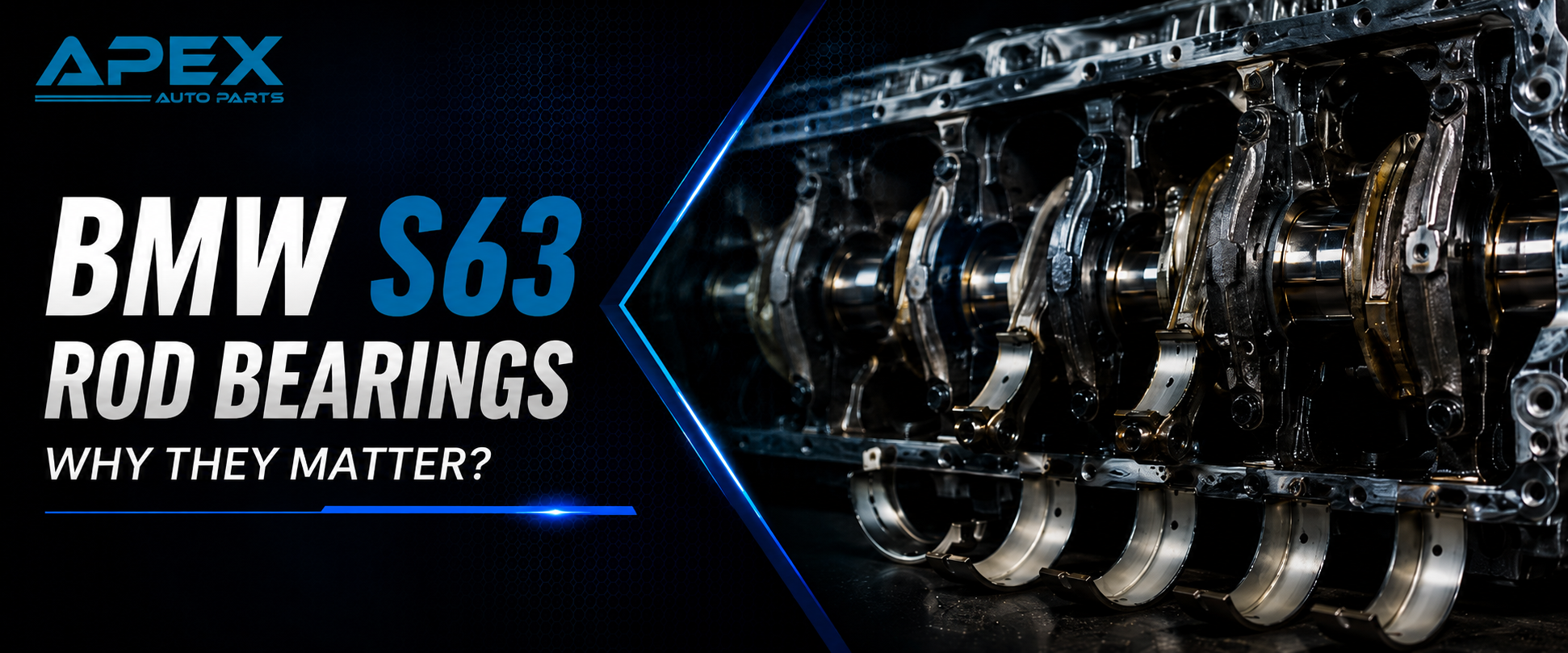
BMW S63 rod bearings are important because they support the connection between the connecting rods and the crankshaft. In simple words, they help the moving parts rotate smoothly without metal rubbing hard against metal.
Rod bearings need clean oil and good oil pressure. If the oil is dirty, too thin, too old, or not flowing properly, the bearings can wear. If the engine is tuned hard or driven aggressively, bearing load increases.
Not every BMW S63 will have rod bearing failure, but BMW S63 rod bearings are still something buyers and owners should understand. A deep knocking sound from the lower engine area can be a serious warning sign. Metal flakes in the oil can also point to internal wear.
Rod bearing work is not a small job. It needs proper inspection, correct bearing sizing, clean fitting, and careful torque settings. This is not an area where cheap parts or poor workmanship should be used.
If you own a high-mileage S63 or a tuned S63, ask a BMW specialist whether the bearings should be inspected.
BMW S63 Turbos: Power and Problems
The BMW S63 turbos play a big part in why this engine feels so strong. They push extra air into the engine, helping create more power. Because the S63 is a twin-turbo V8, they work hard and sit in a very hot area.
Healthy BMW S63 turbos should build boost smoothly and not smoke heavily. A little turbo noise can be normal, but loud whining, siren sounds, smoke, boost loss, or oil leaks should be checked.
Common turbo-related issues can include worn seals, oil line problems, coolant line leaks, wastegate wear, actuator issues, boost leaks, and heat damage.
Turbo life depends on oil care. Dirty oil can damage turbo bearings. Poor oil flow can quickly wear out the turbo. Shutting the engine off right after hard driving can also trap heat around the turbos.
To protect BMW S63 turbos, owners should use high-quality oil, change the oil on time, let the engine warm up, avoid hard driving when cold, and check for leaks early.
BMW S63 pistons and Internal Strength
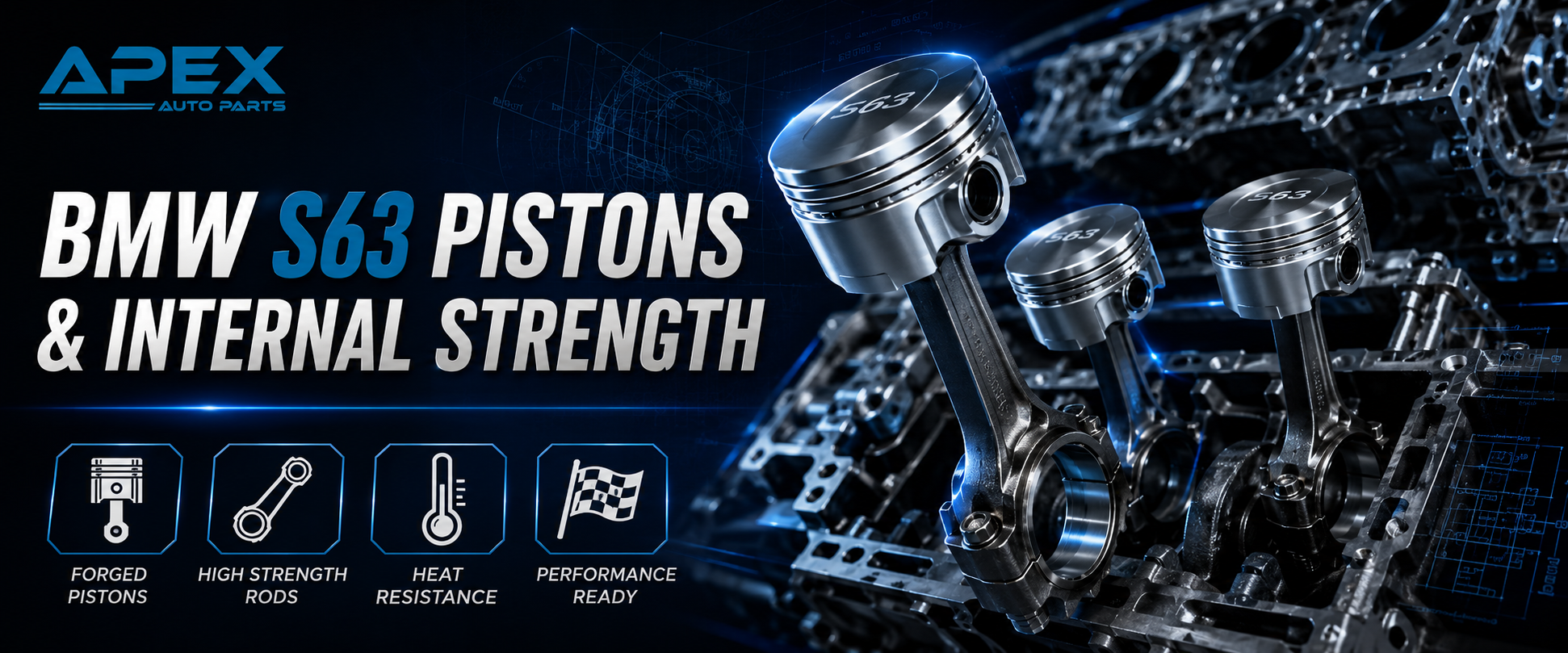
BMW S63 pistons are built to handle serious power, but they still have limits. Pistons take the force of combustion every time the engine fires. In a turbocharged V8, they deal with high heat and pressure.
If the engine is tuned poorly, runs too lean, overheats, or suffers from detonation, the pistons can be damaged. Detonation occurs when fuel burns in an uncontrolled manner. It can break ring lands, damage piston crowns, and hurt cylinder walls.
For normal power levels, healthy BMW S63 pistons can be strong. For high-power builds, some owners upgrade to forged pistons and stronger internal components. This is usually done when chasing high power beyond what simple software tuning can provide.
If you are planning a serious build, do not only upgrade turbos. The engine internals, fueling, cooling, gearbox, and tuning must all work together.
Fuel Efficiency: Is the BMW S63 Good on Fuel?
The BMW S63 is not built to be a fuel-saving engine. It is a twin-turbo V8 made for performance. In normal driving, fuel use can be reasonable for the power it makes, but it will never feel like a small diesel or a four-cylinder petrol engine.
Fuel use depends on the car, traffic, driving style, tune, tire size, road type, and maintenance. In city driving, the S63 can use a lot of fuel. On a steady motorway drive, it can be better, but it is still a large performance engine.
If the engine has misfires, boost leaks, injector problems, faulty sensors, or old spark plugs, fuel consumption can worsen. A tuned engine may also use more fuel, especially when driven hard.
To keep fuel use under control:
- Keep tires inflated properly
- Fix misfires early
- Use correct spark plugs
- Keep air filters clean
- Repair boost leaks
- Use good fuel
- Avoid poor tuning
- Keep servicing on time
Fuel efficiency is not the main reason to buy an S63. Power and driving feel are.
Tuning Options for the BMW S63
The BMW S63 is popular for tuning because it can be tuned to gain power quickly. Many owners start with a stage 1 tune. This usually means software only, with no major hardware changes. It can improve power and response.
A stage 2 setup may include downpipes, intake upgrades, exhaust changes, stronger cooling, and better spark plugs. More serious builds may include upgraded BMW S63 turbos, fueling upgrades, forged BMW S63 pistons, stronger rods, upgraded cooling, and gearbox tuning.
Common tuning options include:
- ECU remap
- Gearbox tune
- Downpipes
- Intake upgrades
- Charge pipe upgrades
- Intercooler or charge cooler upgrades
- Spark plug upgrades
- Fuel system upgrades
- Upgraded turbos
- Forged internal parts for big power
The key is balance. A tune should match the engine health and supporting parts. Chasing big numbers on a weak engine is a bad idea.
Before tuning, check compression, oil leaks, the coolant system, the ignition system, the fuel system, and the turbo condition.
What about BMW S63 single turbo builds?
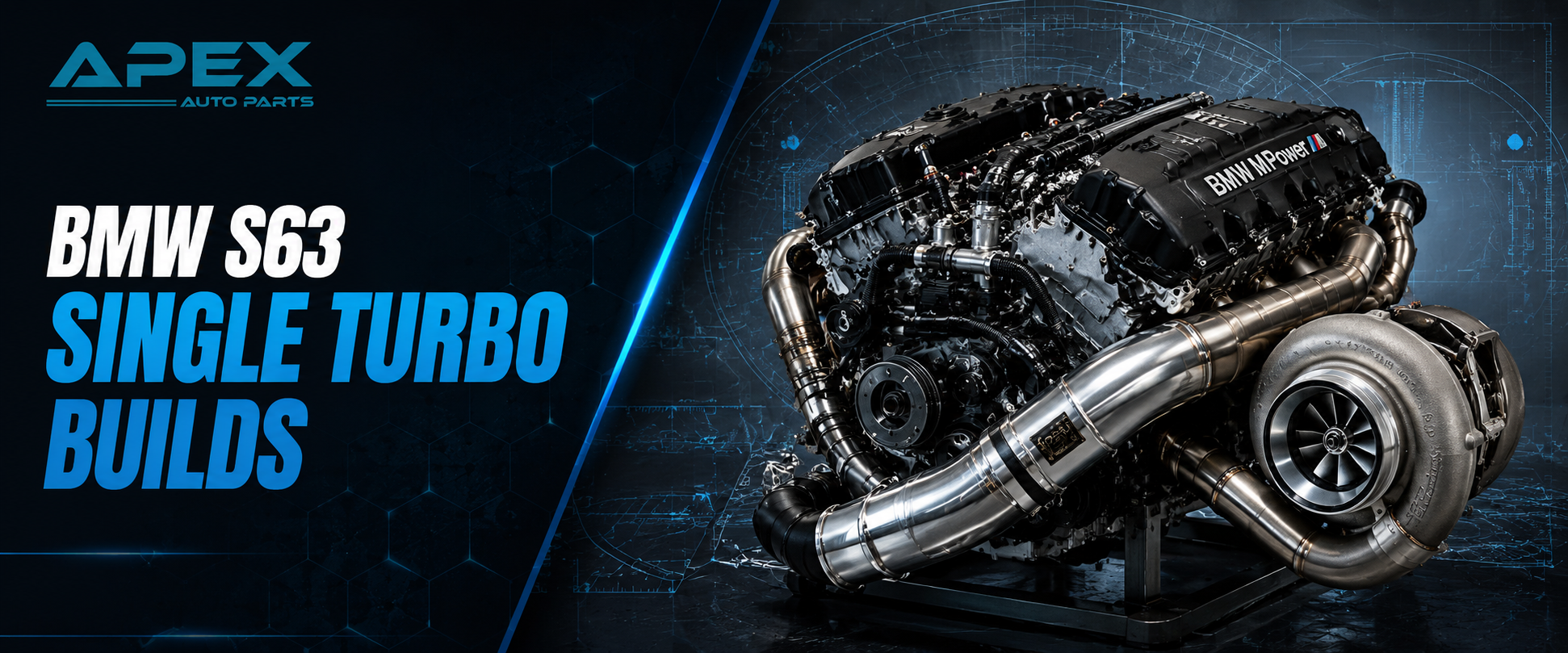
Some people search for the BMW S63 single-turbo because they want to know whether the twin-turbo S63 can be converted to a single turbo. In theory, a BMW S63 single turbo setup is possible with custom work. In real life, it is uncommon and not the best choice for most owners.
The S63 was designed as a twin-turbo V8. The factory layout is tight, complex, and already built for strong performance. A BMW S63 single-turbo conversion would require custom manifolds, pipework, oil lines, cooling changes, tuning, exhaust work, and extensive fabrication.
For most road cars, upgraded twin turbos make more sense than a BMW S63 single turbo conversion. Twin turbos keep the engine closer to its original design while still making huge power.
A single-turbo setup may suit a very specific race build, but it is not a simple or cheap route.
Buying a Used BMW With the BMW S63
Buying a used S63-powered BMW can be exciting, but you must inspect it carefully. A cheap M5, M6, M8, X5 M, or X6 M can become very expensive if it has hidden engine problems.
Before buying, check the service history. Look for regular oil changes, coolant repairs, spark plug changes, turbo work, and any tuning records. Ask if the car was mapped. Ask if the turbos were upgraded. Ask if the engine has ever overheated.
During a test drive, listen for rattles, knocking, turbo whine, rough idle, misfires, smoke, and hesitation. Check for an oil smell after driving. Look under the bonnet for leaks. Check coolant level and oil level.
A pre-purchase inspection by a BMW specialist is highly recommended. It may cost money, but it can save you from a huge repair bill.
Maintenance Tips for Better BMW S63 Reliability
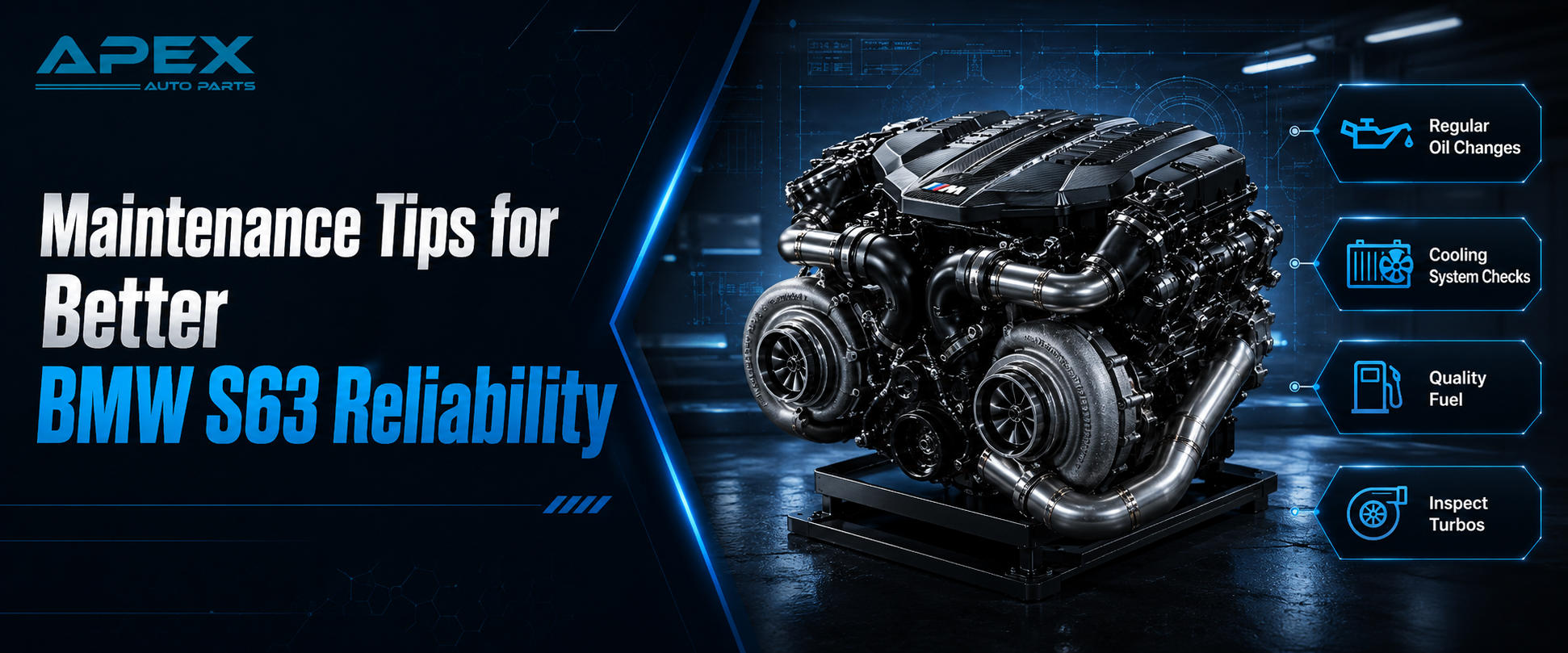
If you already own a BMW S63, good maintenance is the best way to protect it. This engine needs more attention than a basic engine.
Use quality oil and do not stretch oil changes too far. Keep the cooling system in good condition. Replace old spark plugs. Watch for oil leaks. Repair coolant leaks quickly. Do not ignore rough idle or misfires.
A few habits can help:
- Warm the engine before hard driving
- Let the engine cool after heavy use
- Check oil level often
- Check coolant level often
- Use proper parts
- Avoid cheap tuning
- Fix warning lights early
- Keep service records
- Inspect turbo lines
- Check for smoke
Good care makes a huge difference to BMW S63 reliability.
Choosing Parts for the BMW S63
The BMW S63 needs parts that fit correctly. BMW engines can have different versions, model years, and part updates. A gasket, sensor, oil line, piston, bearing, or turbo part may look similar but still be the wrong part.
When buying parts, always check the exact vehicle, engine code, year, and part number. This matters even more for performance engines.
Apex Auto Parts helps UK drivers, garages, mechanics, and trade buyers find engine parts for repair and rebuild work. For S63 owners, parts such as gaskets, bearings, pistons, timing components, oil pumps, sensors, water pumps, seals, and rebuild components must be chosen carefully.
A cheap part can become expensive if it fails early. On an engine like the BMW S63, quality and fitment should come first.
Final Thoughts
The BMW S63 is a powerful and exciting engine. It gives huge performance, strong tuning potential, and a proper BMW M driving feel. It is used in some of BMW’s most serious performance cars, which is why many drivers ask which BMW has the S63 engine before buying.
But this engine is not for careless ownership. BMW S63 reliability depends on maintenance, cooling, oil quality, tuning quality, and repair history. Common BMW S63 engine problems and BMW S63 engine issues should be checked early, especially oil leaks, coolant leaks, turbo wear, misfires, and internal noises.
Parts like BMW S63 rod bearings, BMW S63 turbos, and BMW S63 pistons are important because they handle serious loads. If they fail, repair costs can be high.
A BMW S63 single-turbo setup is only possible as a custom project, but most owners are better served by properly maintained or upgraded twin turbos.
If you want an S63-powered BMW, buy the best-maintained car you can find. If you already own one, service it properly and fix small problems early. That is the best way to enjoy the power without turning ownership into a source of stress.
FAQs About the BMW S63
1. Is the BMW S63 a reliable engine?
The BMW S63 can be reliable when properly serviced, but it is a high-performance twin-turbo V8 and requires careful maintenance. Oil changes, cooling system care, spark plugs, turbo health, and early leak repairs matter a lot. A neglected S63 can become very expensive to fix.
2. What are common BMW S63 engine problems?
Common BMW S63 engine problems include oil leaks, coolant leaks, turbo wear, injector faults, ignition coil problems, spark plug wear, valve stem seal issues, and heat-related failures. Not every engine has these problems, but owners should check for them early before they lead to major repairs.
3. What are common BMW S63 engine issues at high mileage?
High-mileage BMW S63 engine issues can include turbo wear, oil burning, gasket leaks, coolant hose leaks, rough idle, misfires, timing-related wear, and possible internal bearing concerns. A strong service history is very important when buying a used S63-powered BMW.
4. Do BMW S63 rod bearings fail?
BMW S63 rod bearings can wear if oil care is poor, the engine is tuned hard, or the car has high mileage and heavy use. It is not guaranteed on every engine, but knocking sounds or metal in the oil should be checked quickly by a BMW specialist.
5. Are BMW S63 turbos expensive to replace?
Yes, BMW S63 turbos can be expensive to replace because the engine layout is tight and labor can be high. Turbo condition depends on oil care, heat control, and boost pressure. Smoke, whining sounds, boost loss, or oil leaks can point to turbo problems.
6. Are BMW S63 pistons strong enough for tuning?
Factory BMW S63 pistons are strong for normal and mildly tuned use, but very high-power builds may require forged pistons and stronger internal components. Poor tuning, overheating, or detonation can damage pistons. Big power should always be planned with fueling and cooling upgrades.
7. Can you build a BMW s63 single turbo setup?
A BMW S63 single turbo setup is possible as a custom build, but it is rare and costly. The engine was designed as a twin-turbo V8. Most owners are better off maintaining or upgrading the factory twin-turbo setup rather than converting to a single large turbo.
8. Which BMW has the S63 engine?
Which BMW has the S63 engine? The BMW S63 is found in models such as the BMW M5, M6, M8, X5 M, and X6 M, depending on year and version. Always check the exact model year and engine code because the S63 has several updated versions.
9. Is the BMW S63 good for daily driving?
The BMW S63 can be used daily, especially in cars like the M5 or X5 M, but running costs are high. Fuel use, tires, brakes, oil changes, and repair parts cost more than normal BMW models. It suits drivers who accept the maintenance required for performance cars.
10. How can I improve BMW S63 reliability?
To improve BMW S63 reliability, change the oil on time, use the correct oil, keep the coolant healthy, fix leaks early, replace spark plugs, check the turbos, avoid poor tuning, and let the engine warm up before hard driving. Good parts and early repairs are key to long engine life.
References: