
 info@apexautoparts.co.uk
 +44 203 915 7535
 Safe & Fast Shipping
 Whish List
 Compare
 Sign In


The BMW 1 Series has used a wide range of petrol and diesel engines since the first generation arrived. Some are built for low running costs, some focus on smooth power, and others turn the small hatchback into a serious performance car.
Choosing the right engine is not simply about buying the model with the highest power figure. A strong engine can still become expensive when it has missed oil changes, suffered overheating, or been driven for years with warning lights on. A lower-powered engine with clear maintenance records may be a much safer purchase.
The best choice also depends on how the car will be used. A diesel may suit a driver covering long motorway journeys. A small petrol engine can make more sense for short trips and city driving. A six-cylinder engine is better for performance, but fuel, tires, brakes, cooling parts, and servicing will normally cost more.
This guide compares the main engine choices across different generations. It explains the strongest petrol and diesel options, the engines that need extra care, common BMW 1 Series Engine problems, sensible BMW 1 Series Engine tuning, and what owners should know before considering a BMW 1 Series Engine replacement.
Understanding the Main BMW 1 Series Generations
The first generation included the E81, E82, E87, and E88 models. These cars were sold as three-door and five-door hatchbacks, a coupé, and a convertible. Most versions used Rear Wheel Drive, which helped give the car a more traditional BMW feel.
The early range included small four-cylinder petrol engines, four-cylinder diesels, and the naturally aspirated straight-six used in the 130i. BMW rated the 130i at 258 hp from its 3.0-litre six-cylinder engine. It used Valve tronic and Double VANOS rather than a turbocharger.
The second generation F20 and F21 arrived in 2011. It kept the Rear Wheel Drive layout and introduced more turbocharged petrol engines. Diesel options included the 116d, 118d, 120d, and 125d. BMW launched the generation in the UK with two petrol and three diesel choices.
The third generation F40 arrived in 2019. It changed to a Front Wheel Drive-based platform, with some models using X Drive. The 118i used a 1.5-litre three-cylinder petrol engine, while the 120d used a 2.0-litre four-cylinder diesel engine.
The fourth generation entered UK production for the 2024 model year. BMW introduced updated petrol and diesel engines for the 120, including mild-hybrid support. The range also included the 118d and the higher performance M135 X Drive.
This wide model history is why buyers must check the VIN, production date, model badge, and engine code. Two cars carrying the same 118i or 120d badge can use very different engines.
What Makes the Best BMW 1 Series Engine?
The best BMW 1 Series engine should suit the driver rather than produce the most power.
A reliable daily engine should start easily, hold a stable temperature, use a reasonable amount of oil, and run without repeated warning lights. Parts should also be available at a fair price.
Performance buyers may accept higher fuel and servicing costs for stronger acceleration. Long-distance drivers may prefer diesel torque and better fuel use. Drivers making short trips should usually consider petrol because a diesel particle filter may not receive enough heat to clean itself properly.
A mechanic will normally consider five areas before recommending an engine:
- Service history and oil change records
- Cooling system condition
- Timing belt or timing chain condition
- Turbocharger and fuel system health
- How the car will be driven each week
No engine is perfect in every situation. The strongest choice is the one that matches the owner’s needs and has been properly cared for.
Best Overall Petrol Choice: The B48 2.0 Litre Engine
For many drivers, the later 2.0 liter modular petrol engine used in models such as the 120i and 125i offers the best balance.
It provides stronger performance than the small three-cylinder petrol while remaining easier to live with than the six-cylinder M140i. It uses a turbocharger, direct fuel injection, Valve tronic, and Double VANOS.
BMW introduced updated modular 2.0 liter petrol engines across the later F20 range for the 2017 model year. The company stated that these engines used a twin-scroll turbocharger, direct injection, Valve tronic, and Double VANOS.
In normal use, a healthy B48 feels smooth and flexible. It produces useful torque without needing to be worked hard. This makes it suitable for city use, motorway driving, and occasional fast road driving.
From a mechanic’s view, it is one of the better later BMW 1 Series Petrol engines. However, the cooling system, oil filter housing, engine mounts, ignition coils, spark plugs, and turbo pipes still need to be inspected.
BMW service information has covered coolant leaks from oil filter housing components on some engines in the B38 and B48 families. This does not mean every engine will fail, but it shows why coolant loss should never be ignored.
A B48 should start smoothly from cold and settle into an even idle. There should be no strong coolant smell, repeated low-coolant warnings, blue exhaust smoke, or heavy vibration.
For most buyers seeking modern performance without the running costs of an M140i, the B48-powered 120i is a very sensible choice.
Most Reliable Older Petrol Choice: The N52 3.0 Litre 130i
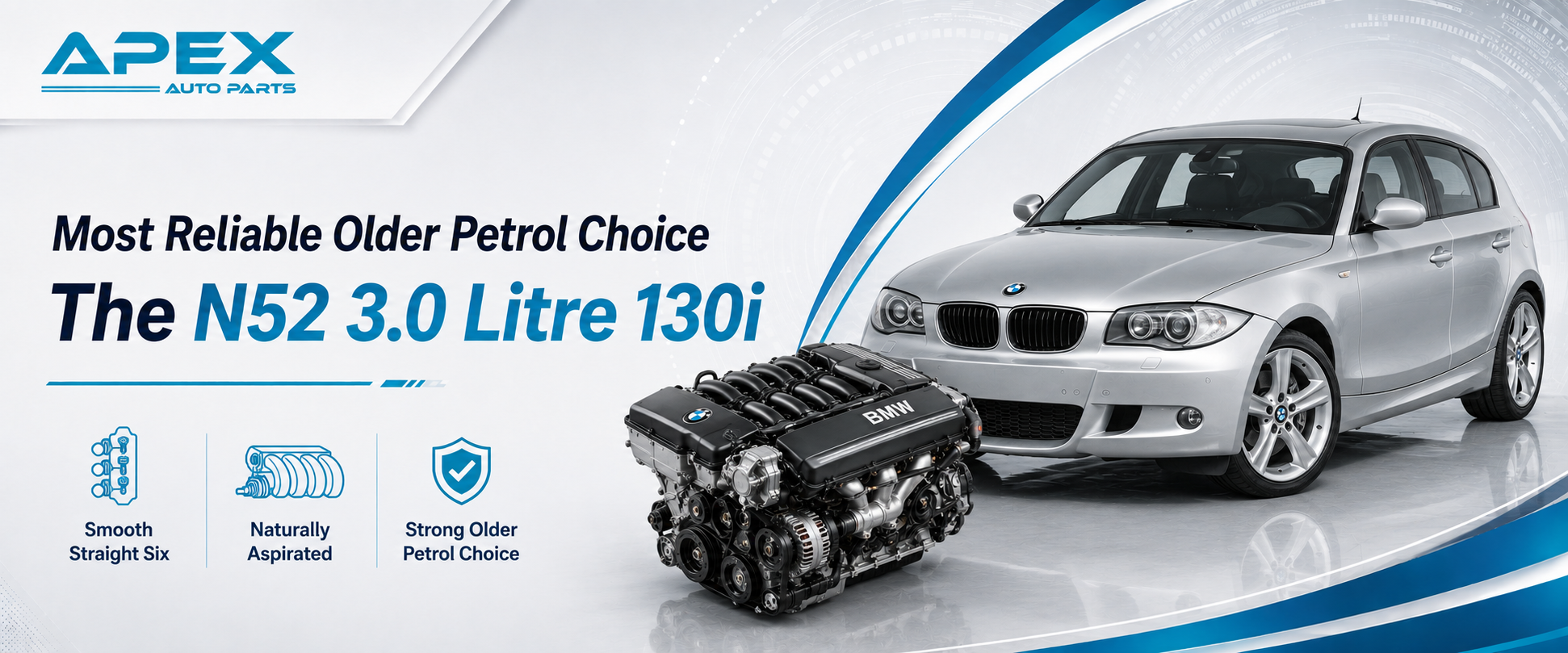
The N52 straight six used in the 130i is a strong option for drivers who prefer an older, naturally aspirated BMW.
It avoids a turbocharger and does not rely on the same level of boost control hardware found on newer engines. Power builds smoothly as engine speed rises, and the straight six layout gives the car a refined sound and feel.
BMW listed the 130i with a 2,996 cc straight six producing 258 hp and 310 Nm. It used Valve tronic and Double VANOS.
The N52 is often considered one of the better options in the search for the most reliable BMW 1 Series engine, but this does not mean it is maintenance-free.
Cooling system parts can age. Electric water pumps, thermostats, hoses, seals, rocker cover parts, and oil filter housing gaskets can all require attention. Ignoring a coolant warning can turn a simple repair into cylinder head damage.
Oil leaks should be properly cleaned and traced. Oil can move across the engine, so the lowest wet point is not always the true source.
A well-maintained 130i can be a rewarding car. However, poor fuel economy, higher taxes on some versions, expensive cooling components, and the vehicle's age must be considered.
The N52 is best for someone who values smooth power and classic BMW character more than low running costs.
Best Performance Engine: The B58 in the M140i
For outright performance, the M140i is the clear winner among widely available used models.
Its 3.0-litre turbocharged straight-six produced 340 hp and 500 Nm in BMW’s 2017 model-year specification. The automatic version could reach 62 mph in 4.6 seconds.
The B58 engine delivers strong power at low engine speeds while remaining smooth near the top of the rev range. It is also one of the most popular BMW engines for tuning.
A standard car already has more than enough performance for UK roads. Before buying a modified example, check who carried out the work, which software was used, and whether the gearbox, cooling system, fuel system, brakes, and tires were upgraded or maintained.
Some sellers remove tuning software before selling the vehicle. A standard-looking car may still have been driven at a bigger boost for several years.
A mechanic should check for coolant loss, oil leaks, boost leaks, ignition misfires, unusual turbo noise, and previous overheating. Compression and diagnostic data become more important when the car has been heavily modified.
In terms of performance, the B58 is likely the best BMW 1 Series engine. For low cost ownership, it is not. Fuel, insurance, tires, brakes, and servicing will all be higher than on a 118i or 120i.
Best Small Petrol Engine: The B38 1.5 Litre
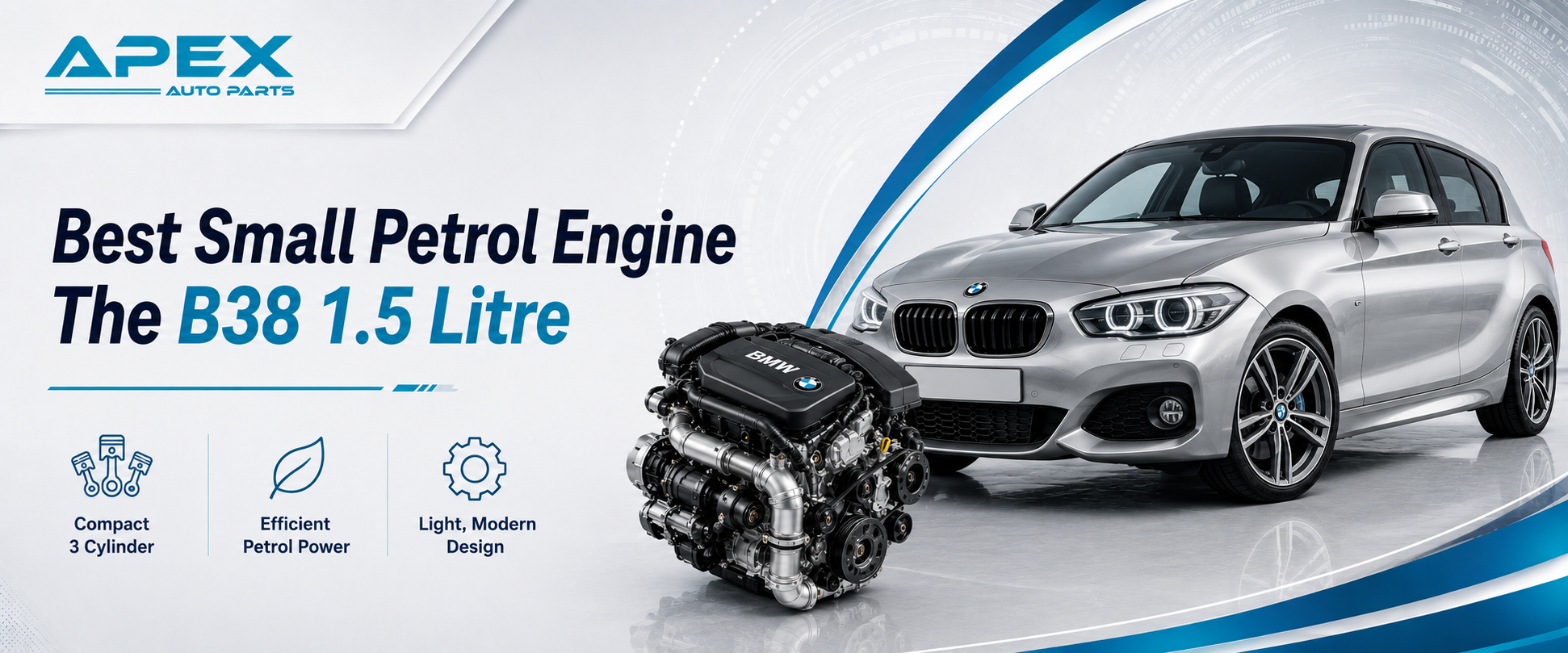
The three-cylinder B38 is found in several 116i and 118i models. It is compact, light, and designed to provide useful performance with reasonable fuel use.
The third-generation 118i used a 1.5-litre three-cylinder petrol engine. BMW’s technical data confirms the three-cylinder layout and the use of turbocharged engine technology.
The latest 116 also uses a 1,499 cc three-cylinder petrol engine, producing 122 hp and 230 Nm, according to BMW’s November 2024 technical specification.
This engine suits drivers who mainly use the car for commuting, shopping, school runs, and occasional motorway journeys. It is usually cheaper to fuel than the six-cylinder options.
It does not feel as smooth as a four- or six-cylinder engine, especially at idle. Some vibration is part of the three-cylinder character, but severe shaking may point to worn mounts, an ignition problem, or poor compression.
Cooling leaks, oil leaks, ignition coils, spark plugs, turbo control parts, and engine mounts should be checked. BMW issued a service action for an oil filter housing concern in some early B38 applications, as coolant leakage could cause overheating and loss of power.
The B38 is a good small engine when its maintenance has been kept up. It is not the first choice for major performance tuning.
Best Diesel Choice: The B47 2.0 Litre
Among later BMW 1 Series diesel engines, the B47-powered 118d and 120d are usually the strongest all-round choices.
The engine offers good motorway fuel economy, strong low-speed torque, and enough power for overtaking. BMW’s 2015 118d specification listed 150 hp and 320 Nm from its 1,995 cc four-cylinder diesel.
The F40 120d produced 190 hp and 400 Nm. BMW used common-rail injection and variable-turbo technology.
The B47 is better suited to regular long journeys than repeated short trips. A diesel particle filter needs heat to burn stored soot. If the vehicle is driven only a few miles at a time, the filter may become restricted.
EGR parts, injectors, turbo hoses, glow plugs, sensors, and the particle filter can all cause warning lights. These faults do not automatically mean the main engine is damaged.
Before ordering parts, a mechanic should read the stored fault codes, check exhaust pressure, review the regeneration history, inspect the boost hoses, and test the injector correction values.
For a driver covering high yearly mileage, the 118d may offer the best mix of economy and useful performance. The 120d is stronger but may cost more to insure and buy.
Is the BMW 1 Series N47 Engine Reliable?
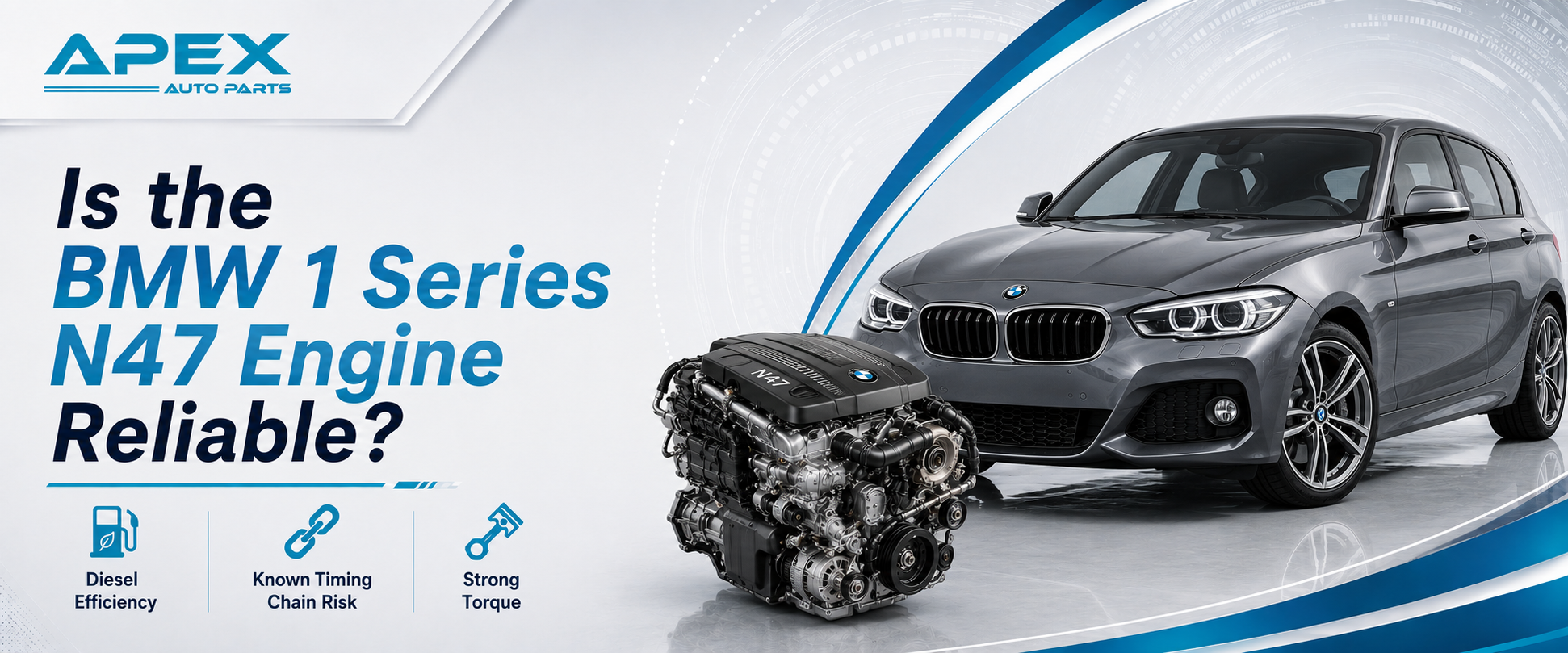
The BMW N47 engine was used in several first- and second-generation diesel models, including versions of the 116d, 118d, 120d, and 123d.
The engine can provide excellent fuel economy and strong torque. BMW listed the 123d with 204 hp and 400 Nm, while the 120d produced 177 hp in the 2011 coupé range.
The main concern for buyers is timing chain wear. BMW later published information about extended timing chain warranty support for selected models, which is why proof of timing work matters when inspecting an older diesel.
Do not assume that every N47 will fail. Many are still running at high mileage. However, buying one without service records or evidence of timing repairs carries more risk.
Listen for a cold scraping or metallic rattling sound. A BMW diesel specialist should check the sound. Do not rely on a seller saying that all diesels sound rough.
The fuel system also deserves attention. BMW service information for N47T applications included extended coverage for high-pressure fuel pump faults on selected vehicles in certain markets.
The following points should be checked before buying:
- Evidence of timing chain inspection or replacement
- Regular oil and filter services
- Cold starting noise
- Diesel particle filter condition
- Injector and fuel pressure data
- Turbo boost and hose condition
- EGR and intake contamination
- Stored engine fault codes
A carefully maintained N47 can still be a useful engine. However, a B47 diesel is normally the safer choice when the price difference is reasonable.
Older M47 Diesel Engines
Some early first-generation cars used the older M47 diesel before the N47 became common.
The M47 is simpler in several areas and does not have the same timing chain reputation as the N47. However, these cars are now old, so condition matters more than the engine’s original design.
Turbo wear, crankcase breathing faults, injectors, glow plugs, EGR contamination, vacuum hoses, and cooling parts may all need attention.
An older diesel may appear cheap, but worn suspension, clutch, flywheel, gearbox, brakes, and electrical parts can make the complete car expensive to restore.
The M47 suits a buyer who understands older diesel maintenance and can inspect the whole vehicle rather than focusing only on the engine.
BMW 1 Series Petrol Engines or Diesel Engines?
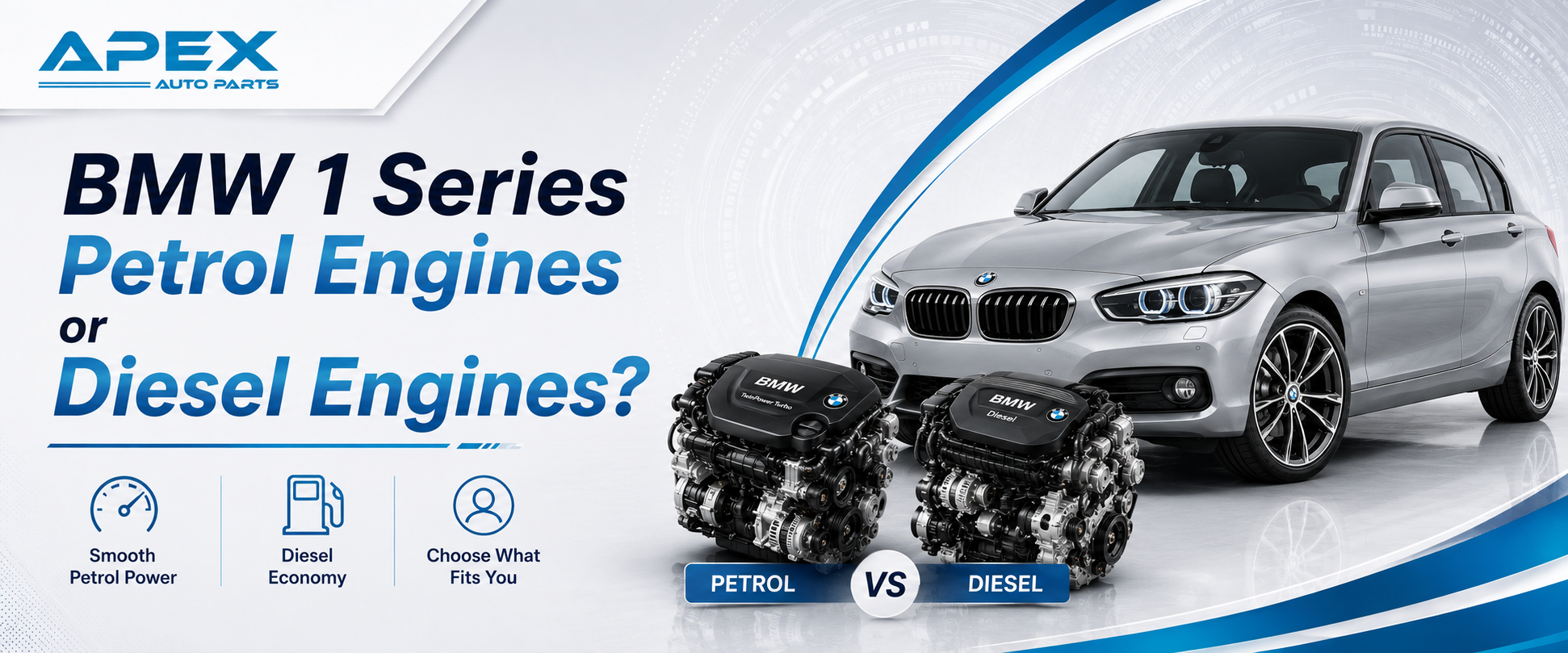
The decision between BMW 1 Series petrol and diesel engines depends mainly on the type of journey.
Petrol is usually better for short journeys. It warms more quickly and does not rely on a diesel particle filter regeneration process. Small petrol engines are also quieter during cold starts.
Diesel is better suited to regular motorway driving. Its high torque enables relaxed progress without high engine speed.
A diesel may save fuel, but this saving can disappear when the EGR valve, particulate filter, injectors, turbocharger, or high-pressure fuel system needs repair.
A petrol engine may use more fuel, but it can be the lower-risk choice for a driver covering only 5,000 or 6,000 miles per year.
For town use, consider the 118i. For mixed driving, the B48 120i is a strong option. For high motorway mileage, consider a B47 118d or 120d. For performance, the M140i remains the standout choice.
Common BMW 1 Series Engine Problems
Different generations have different faults, but several BMW 1 Series Engine problems appear often enough to deserve attention.
Cooling loss is one of the most dangerous. A leaking hose, thermostat housing, water pump, expansion tank, or oil filter housing may cause overheating. Continuing to drive can damage the cylinder head, head gasket, pistons, or block.
Oil leaks can come from rocker cover seals, oil filter housings, sump gaskets, turbo oil lines, or crank seals. Clean the engine before deciding where the leak starts.
Turbocharged petrol engines may develop ignition coil or spark plug faults. The driver may notice rough idle, hesitation, loss of power, or an engine warning light.
Diesel engines may suffer from EGR blockage, particle filter restriction, glow plug faults, boost leaks, or injector trouble. BMW has issued service information regarding particle sensor and high-pressure fuel pump concerns on selected N47 applications in certain markets.
Timing noise must always be investigated. A loose chain, a worn tensioner, or a damaged guide can cause major internal damage if the timing is off.
The correct repair starts with diagnosis. A fault code tells the mechanic which system needs checking. It does not always identify the failed part.
How to Improve Engine Reliability?
Regular servicing is the best way to protect any BMW 1 Series Engine.
Use oil that meets the correct BMW approval for the exact engine. Do not choose oil only by thickness. Two oils with the same grade may meet different manufacturer standards.
Check the coolant level only when the engine is cold. Any repeated loss needs a pressure test. Constantly topping up the tank does not repair the leak.
Allow the engine to warm before using full power. This is especially important for turbocharged engines because cold oil does not flow in the same way as hot oil.
After hard driving, give the car a short period of gentle driving before switching it off. This helps reduce heat around the turbo.
Short service intervals can be sensible on older, modified, or heavily used cars. The correct interval depends on engine condition, driving style, oil type, and journey length.
Is BMW 1 Series Engine Tuning Worth It?
Careful BMW 1 Series Engine tuning can improve power and throttle response, but the engine should be healthy first.
A remap cannot repair poor compression, a weak turbo, blocked injectors, old spark plugs, or a restricted particle filter. It often places more pressure on parts that are already worn.
The B58 in the M140i has the greatest tuning potential. The B48 can also produce useful gains with suitable software and supporting parts. The small B38 can be tuned, but aggressive power increases may reduce the safety margin.
Diesel tuning can increase torque quickly. This may place extra strain on the clutch, flywheel, automatic gearbox, turbocharger, and particle filter.
Before tuning, check:
- Compression where needed
- Cooling pressure
- Oil leaks and oil pressure
- Turbo and boost control
- Fuel pressure
- Spark plugs and coils
- Gearbox condition
- Stored fault codes
Use a tuner who can explain the target boost, fuel changes, torque limits, and safety settings. Avoid software that promises the biggest number.
What to Check Before Buying a Used BMW 1 Series?
Always inspect the car from the cold. A warm engine can hide chain noise, starting trouble, smoke, and rough idle.
Check the coolant before starting. Look for dried coolant marks, oil around gaskets, damaged hoses, and loose intake pipes.
During the test drive, the engine should pull evenly. Hesitation, warning lights, smoke, or sudden loss of power needs investigation.
Check the service history for actual invoices. A digital service record may confirm that work was booked, but invoices show which oil, parts, and repairs were used.
Scan all control units. Some engine faults may be stored even when the dashboard light is off.
A pre-purchase inspection costs far less than a timing chain, turbocharger, fuel pump, or a complete engine.
When Is a BMW 1 Series Engine Replacement Needed?
A BMW 1 Series engine replacement may be considered after severe overheating, timing chain failure, oil starvation, broken internal parts, low compression, or major cylinder damage.
Do not replace the engine before proper tests are completed. A rough-running engine may only need coil or injector replacements, vacuum repairs, or timing adjustments.
A mechanic should check compression, cylinder leakage, oil pressure, coolant pressure, fault codes, and oil condition. Metal inside the oil filter can point towards serious internal wear.
When replacement is needed, identify the engine using the VIN and full engine code. Matching only the capacity or model badge is not enough.
A replacement unit may require parts to be transferred from the original engine. These can include the intake, turbocharger, injectors, sensors, wiring, sump, mounts, and flywheel.
At Apex Auto Parts, drivers, garages, rebuilders, and trade buyers can provide the registration, VIN, engine code, and old part numbers when searching for suitable BMW engine components. Accurate details reduce the risk of ordering parts for the wrong engine version.
The cause of the original failure must also be repaired. A replacement engine can be damaged again when the old cooling, oil, fuel, or turbo fault remains.
Which Engine Should You Choose?
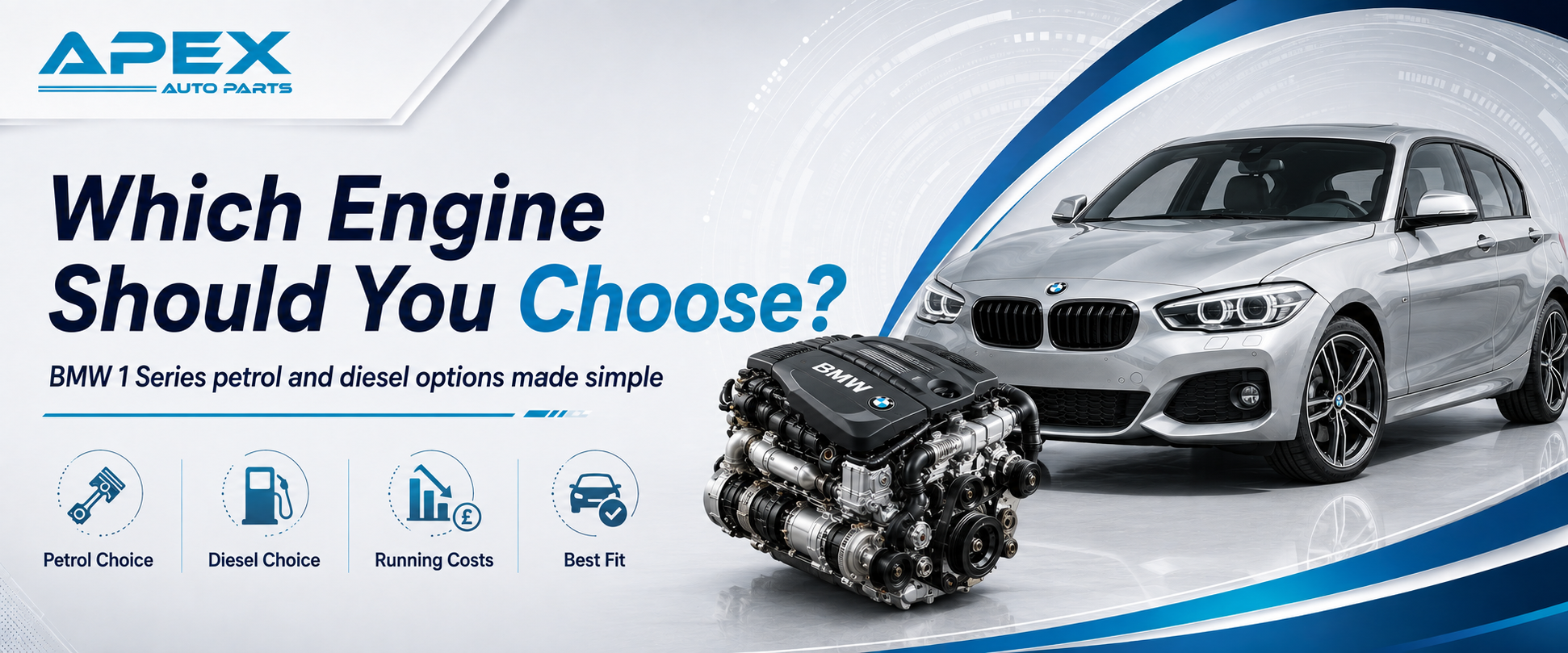
For most petrol buyers, the B48 120i offers the strongest balance of performance, fuel use, and repair risk.
For older, naturally aspirated driving, the 130i with the N52 is a particularly good choice. It is smooth and enjoyable, but age-related cooling issues and oil leaks are to be expected.
In terms of performance, the M140i and its B58 engine are difficult to beat. It provides six-cylinder power in a compact hatchback, though running costs are much higher.
For diesel buyers, the B47 118d is a sensible all-round engine. The 120d adds stronger performance while still returning good motorway economy.
The N47 can still be worth buying when it has a strong service history and clear timing chain evidence. Without that evidence, the purchase price should reflect the risk.
Final Thoughts
There is no single engine that suits every BMW 1 Series buyer.
The B48 120i is one of the best modern all-round petrol choices. The N52 130i provides classic straight six character. The B58 M140i leads in performance, while the B47 118d and 120d make sense for long-distance drivers.
Engine condition is more important than the badge. A well-maintained 118i may be safer than a neglected M140i. A high-mileage diesel with clear records may be better than a low-mileage car used only for short trips.
Check the engine from cold, read the fault codes, inspect the cooling system, review the invoices, and confirm the exact engine code before ordering parts.
The right engine should fit your journey, budget, and maintenance plans. Buying carefully is cheaper than repairing the wrong car later.
FAQS
1. What is the best BMW 1 Series engine overall?
The B48 2.0-litre petrol engine used in later 120i models is one of the best overall choices. It offers strong everyday performance, reasonable fuel use, and good tuning support. Buyers should still check the cooling system, oil leaks, service history, ignition parts, and turbo operation before purchasing.
2. What is the most reliable BMW 1 series engine?
The N52 3.0-litre petrol in the 130i is often a strong, older choice because it avoids turbocharging. For a newer car, the B48 2.0 petrol is a sensible option. Reliability still depends on correct oil, cooling care, service history, and early repair of leaks.
3. Which BMW 1 Series diesel engines are best?
The later B47 118d and 120d are usually the best diesel choices. They provide strong torque and good motorway fuel economy. Check the EGR system, diesel particulate filter, injectors, turbocharger pipes, glow plugs, timing system, and service records before buying any used diesel vehicle.
4. Is the BMW 1 Series N47 engine worth buying?
The BMW 1 Series N47 engine can be worth buying when there is clear evidence of servicing and a timing chain replacement. Avoid cars with cold start rattles, missing records, warning lights, or poor oil history. A proper inspection by a BMW diesel specialist is strongly advised before purchase.
5. Which BMW 1 Series Petrol engines are best for town driving?
The B38 1.5 liter engine in the 118i suits town driving because it is compact and economical. The B48 120i offers smoother and stronger performance for mixed use. Petrol is usually more suitable than diesel for repeated short journeys because it does not depend on particle filter regeneration.
6. What are common BMW 1 Series Engine problems?
Common BMW 1 Series Engine problems include coolant leaks, oil leaks, timing chain wear, ignition misfires, turbo hose failure, injector trouble, EGR blockage, and diesel particle filter restriction. The exact risks depend on the engine code. Diagnosis should always come before ordering replacement parts.
7. Is BMW 1 Series Engine tuning safe?
Careful BMW 1 Series Engine tuning can be safe when the engine, cooling system, fuel system, turbo, and gearbox are healthy. The B58 and B48 respond well to sensible tuning. Aggressive software can increase heat, boost pressure, and gearbox stress, so the largest power figure is not always best.
8. How long can a BMW 1 Series Engine last?
A BMW 1 Series Engine can handle high mileage with the right oil, regular servicing, stable cooling, and timely repairs. There is no fixed lifespan. A neglected, low-mileage engine may fail sooner than a well-maintained, high-mileage one with clear invoices and careful ownership.
9. When is a BMW 1 Series engine replacement necessary?
A BMW 1 Series engine replacement may be needed after serious overheating, oil starvation, timing failure, broken internal parts, or severe compression loss. Compression, cylinder leakage, oil pressure, coolant pressure, and diagnostic tests should be completed first because many running faults can be repaired without replacing the engine.
10. Is the M140i the best performance BMW 1 Series?
Yes, the M140i is one of the strongest performance versions thanks to its 3.0-litre turbocharged straight-six. It produces powerful acceleration and has excellent tuning potential. Buyers should check modification history, cooling, turbo operation, ignition parts, gearbox servicing, tires, and brakes before purchasing one.
References:
press BMW group
static nhtsa gov