
 info@apexautoparts.co.uk
 +44 203 915 7535
 Safe & Fast Shipping
 Whish List
 Compare
 Sign In

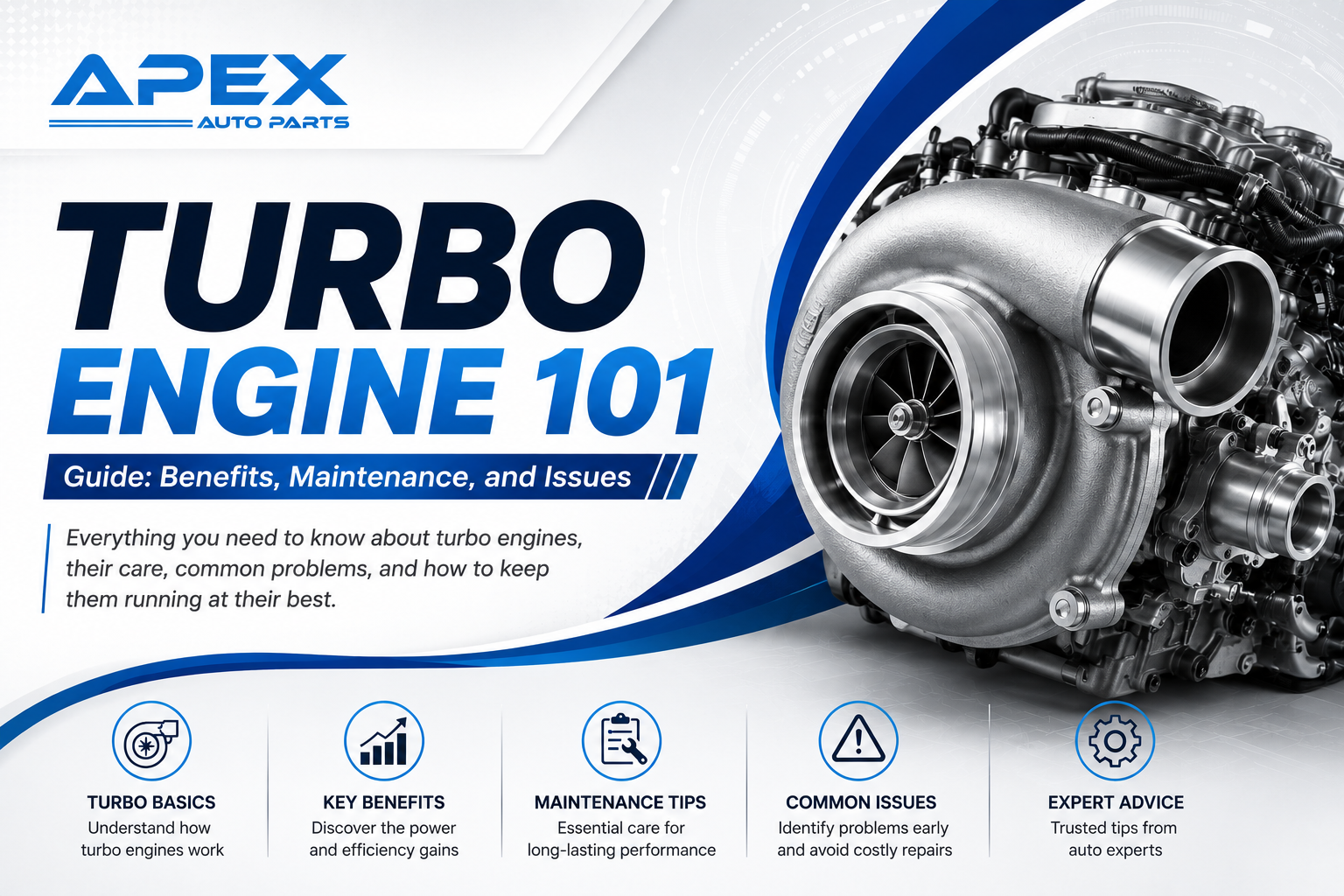
A Turbo Engine can produce high power without requiring a large, heavy engine. This is why turbochargers are now fitted to many petrol and diesel cars in the UK. You will find them in small family cars, large SUVs, vans, performance cars, and vehicles used for towing.
A turbocharger helps an engine pull in more air. This allows the engine to burn more fuel when extra power is needed. The result is better acceleration, stronger pulling power, and improved performance from a smaller engine.
However, a turbocharger does not work alone. It relies on clean engine oil, steady oil pressure, correct airflow, working sensors, clear exhaust flow, and a healthy engine. A fault in any of these areas can make the car feel as though the turbo has failed.
This is where many drivers spend money on the wrong part. A weak car may have a split boost hose rather than a broken turbo. Blue smoke may be caused by poor crankcase breathing. Low boost may be due to a blocked diesel particulate filter (DPF). A warning light may be linked to a sensor or fuel issue.
This guide explains how a turbo works, why turbo engines are popular, what can go wrong, and how to maintain the system. It also looks at common concerns surrounding Peugeot and Vauxhall engines.
What Is a Turbo Engine?
A Turbo Engine is an engine fitted with a turbocharger. The turbocharger uses energy from the exhaust gas that would otherwise leave through the exhaust pipe.
As exhaust gas leaves the engine, it passes through the turbine side of the turbocharger. The moving gas spins a small turbine wheel. This wheel is connected to another wheel, called the compressor wheel, by a shaft.
The compressor wheel pulls fresh air through the air filter. It then pushes that air towards the engine under pressure. This pressure is commonly called boost.
More air means more oxygen is entering the cylinders. The engine control unit can then add the correct amount of fuel. Burning more air and fuel allows the engine to produce more power from the same engine size.
Many turbo systems also use an intercooler. Compressing air makes it hotter. The intercooler cools the air before it enters the engine. Cooler air is denser, so it can carry more oxygen. Garrett explains that this increased airflow allows an engine to produce more power from a given engine size.
What Parts Make Up a Turbo System?
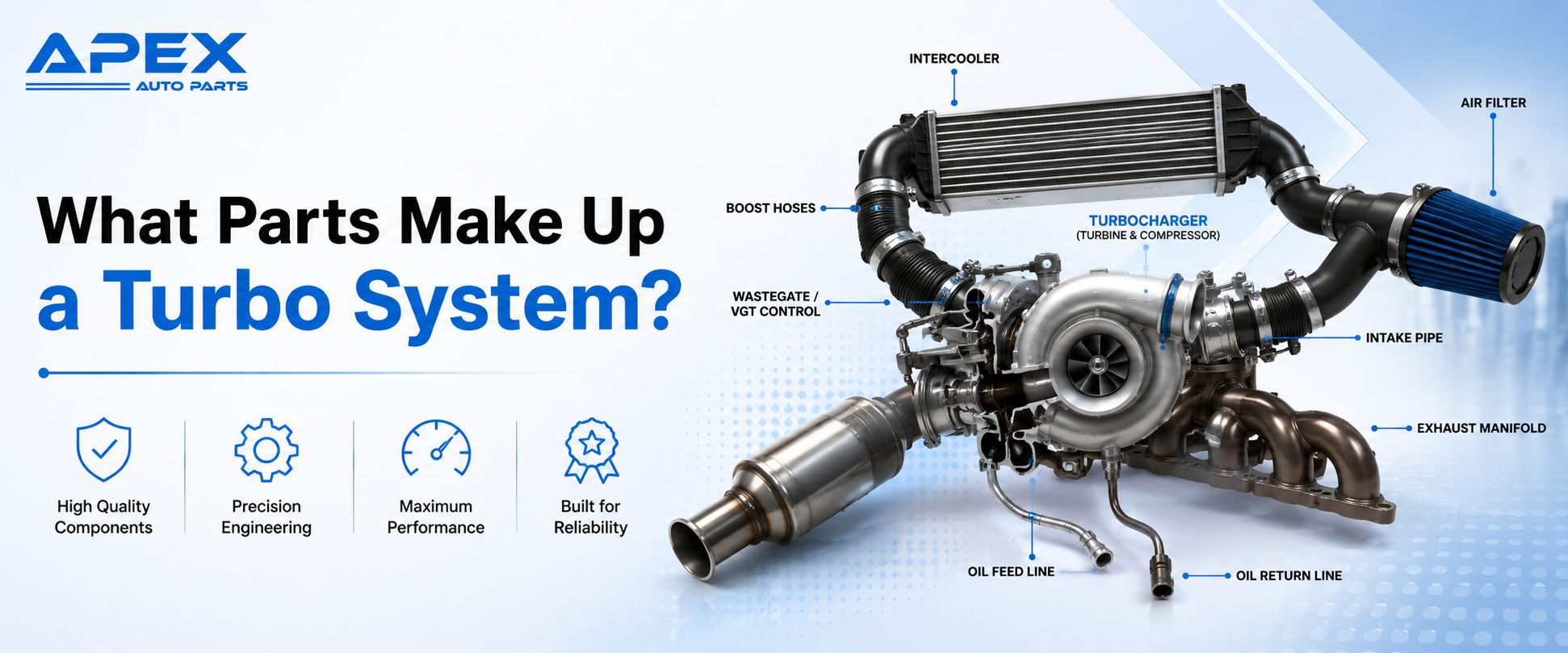
The turbocharger is only one part of the full boost system. A car can lose power even when the turbocharger itself is still in good condition.
The main parts normally include:
- The turbocharger turbine and compressor wheels
- The air filter and intake pipes
- The intercooler and boost hoses
- The oil feed and oil return pipes
- A wastegate or variable vane control system
- Air pressure and airflow sensors
- The exhaust manifold and exhaust system
- The engine control unit
Every part has a job. The air filter keeps dirt away from the compressor wheel. The oil pipes protect the fast-moving shaft and bearings. The intercooler controls air temperature. The sensors tell the engine computer how much air is entering the engine.
A loose pipe, a worn seal, a blocked filter, or a faulty sensor can upset the whole system. This is why a proper inspection should take place before a turbocharger is replaced.
What Are the Benefits of a Turbo Engine?
The main benefit of a Turbo Engine is that it can make more power from a smaller engine. A 1.2 litre turbo petrol engine may offer the pulling power that once required a much larger engine.
A smaller engine may weigh less and use less fuel during gentle driving. This can be useful in town, where the engine is not always working at full power. The turbo only produces a stronger boost when the driver asks for it.
Turbo engines also produce useful pulling power at lower engine speeds. This means the driver may not need to change gear as often when climbing hills or joining a motorway.
Diesel turbo engines are especially good at producing strong pulling force. This is one reason they have been widely used in vans, large family cars, and vehicles that carry heavy loads.
A turbo does not create free power. Hard acceleration still needs more fuel. A driver who constantly uses full boost may not see much fuel saving. The best results come from smooth driving, correct gear choice, and regular servicing.
Another benefit is flexibility. The engine can remain calm during normal driving but provide more power when overtaking or climbing a steep road.
Turbo Engine vs Normal Engine
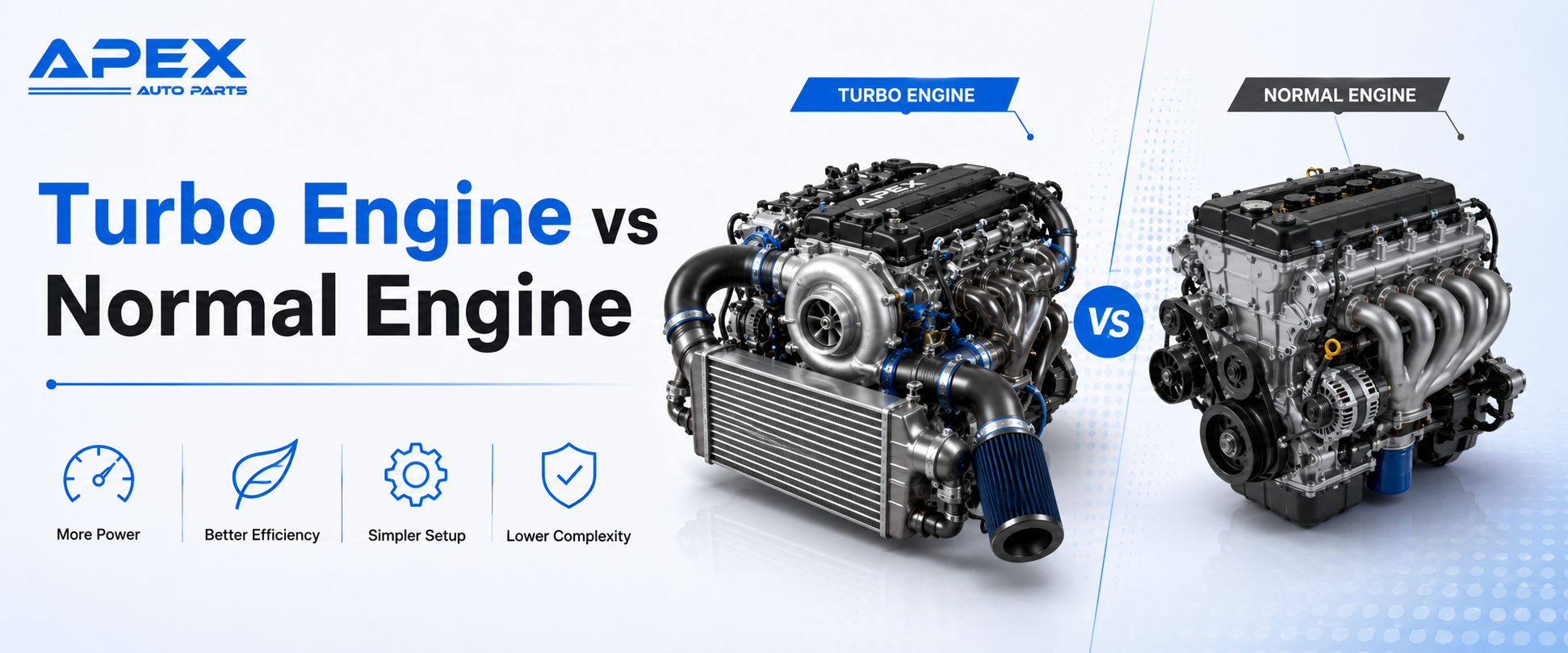
The turbo engine vs normal engine comparison usually means comparing a turbocharged engine with a naturally aspirated engine.
A naturally aspirated engine pulls air into the cylinders without using a turbocharger. It may have fewer boost-related pipes, controls, and sensors. This can make the system simpler and may reduce the number of possible faults.
A turbocharged engine forces more air into the cylinders. It can therefore produce more power from a smaller size. This often gives better low-speed pulling power and easier acceleration.
A normal engine may feel smoother because its power builds steadily. A turbo engine may have a small delay between pressing the accelerator and feeling full power. This delay is often called turbo lag, although it is much less noticeable in many modern cars.
Repair costs can also differ. A naturally aspirated engine does not have a turbocharger, intercooler, wastegate, or turbo oil pipes. A turbo engine adds these parts, so more areas may need attention as the vehicle gets older.
Neither engine type is automatically better. The right choice depends on how the car will be used. A simple petrol engine may suit a driver who covers short local journeys. A turbo petrol or diesel engine may suit someone who needs stronger motorway performance, towing ability, or better pulling power.
Service history matters more than engine size alone. A properly maintained turbo engine may be a better purchase than a poorly maintained normal engine.
What Is a Twin Turbo Engine?
A twin turbo engine uses two turbochargers instead of one. The way these turbos work depends on the engine design.
Some engines use one turbo for each side of the engine. This layout is common on certain V-shaped engines. Each turbo receives exhaust gas from one group of cylinders.
Other engines use two different-sized turbochargers. The smaller turbo responds quickly at low engine speed. The larger turbo helps when the engine needs more airflow and power.
Some systems allow both turbos to work together. Others move from one turbo to the second as engine speed rises. Control valves guide the exhaust gas and compressed air through the correct path.
The benefit is a wider spread of power. The engine responds well at low speeds while still producing strong power at higher revs. Garrett describes two-stage systems in which two turbos operate in sequence to improve torque, acceleration, and engine response.
The downside is added complexity. A twin turbo engine has more pipes, valves, controls, seals, and moving parts. A low boost fault does not always mean one of the turbochargers has failed. A control valve, actuator, hose, or sensor may be the real cause.
Petrol Turbo Engines and Diesel Turbo Engines
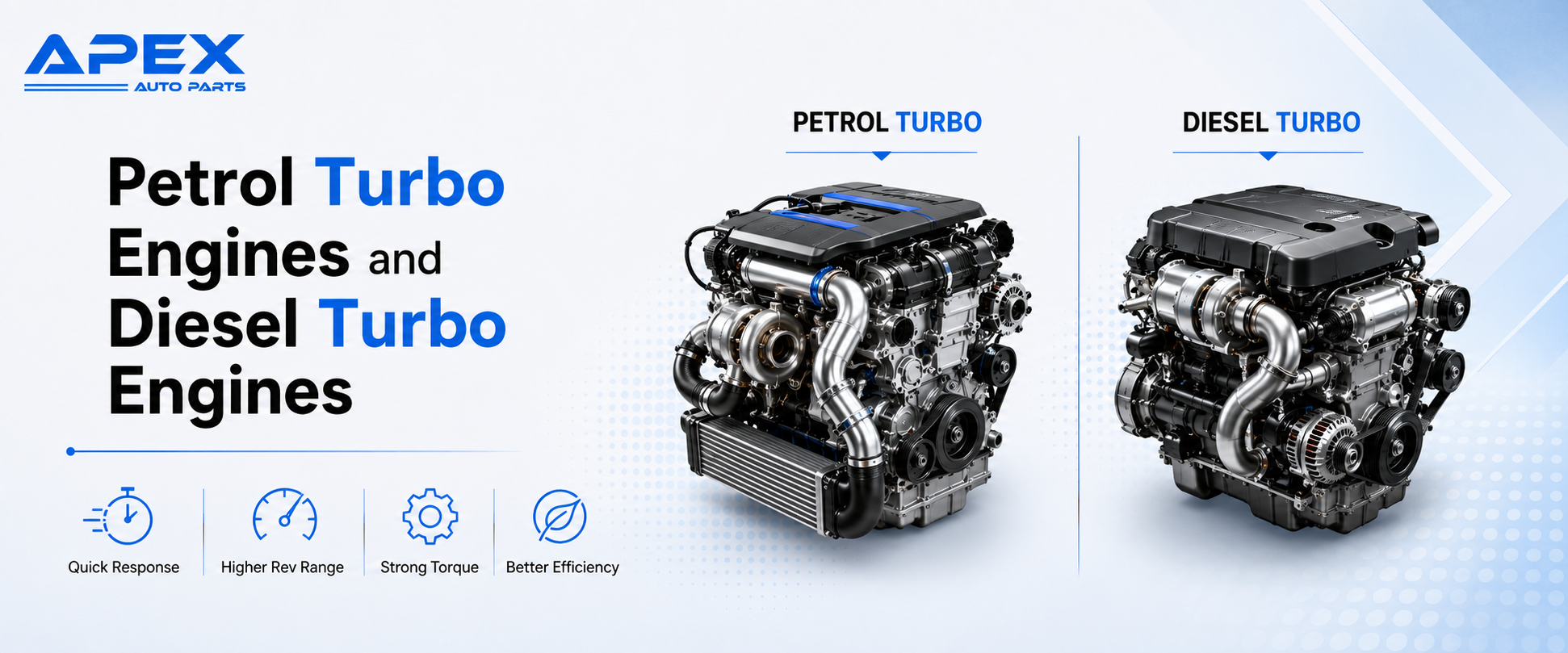
Petrol and diesel turbo engines operate on the same basic principle, but under different conditions.
A petrol engine usually runs at higher engine speeds and produces very hot exhaust gas. The turbocharger must handle this heat while still receiving a steady supply of clean oil.
A diesel engine turbo is important for both power and clean combustion. Diesel engines need enough air to burn fuel correctly. If boost pressure is too low, the car may feel weak and produce black smoke.
Many modern diesel engines use a variable geometry turbocharger. Inside this type of turbo are small movable vanes. The vanes change position to control exhaust flow.
At low engine speed, the vanes close to make the exhaust gas move faster across the turbine. This helps the turbo produce boost sooner. At higher engine speed, the vanes open to control pressure and stop the turbo from spinning too fast.
Soot can sometimes affect the movement of these vanes. However, a mechanic should not assume that the turbo is dirty or damaged without testing it. A blocked DPF, a faulty EGR valve, an injector problem, or an exhaust leak can cause similar symptoms.
Common Signs of Turbo Problems
Turbo faults can appear slowly or suddenly. A small leak may cause a gradual drop in power. A split hose may cause an immediate loss of boost.
One common sign is weak acceleration. The engine may run normally at idle but struggle when the driver presses the accelerator. It may feel especially weak when climbing a hill or joining fast traffic.
A new or unusually loud whistle can also point towards a problem. Some turbo noise is normal, but a loud siren sound, scraping noise, or grinding sound needs attention.
Smoke color can provide useful clues. Blue or grey smoke may mean engine oil is being burned. Black smoke can mean the engine is receiving too much fuel or not enough air. White smoke can have several causes, including fuel, coolant, or combustion issues.
An engine warning light may appear if the control unit sees boost pressure that is too high or too low. The car may then enter reduced power mode to protect the engine.
Other warning signs include:
- Rising engine oil use
- Oil collecting inside boost hoses.
- A sudden change in turbo sound
- Slow acceleration
- Black, blue, or grey exhaust smoke
- Reduced power mode
- Boost-related fault codes.
- Loose or damaged intake pipes
These symptoms do not prove the turbocharger is faulty. BorgWarner lists air restrictions, damaged pipes, fuel system faults, exhaust restrictions, poor oil supply, and worn engine parts among the possible causes of smoke, low boost, and oil use.
Why Are Turbo Problems Often Misdiagnosed?
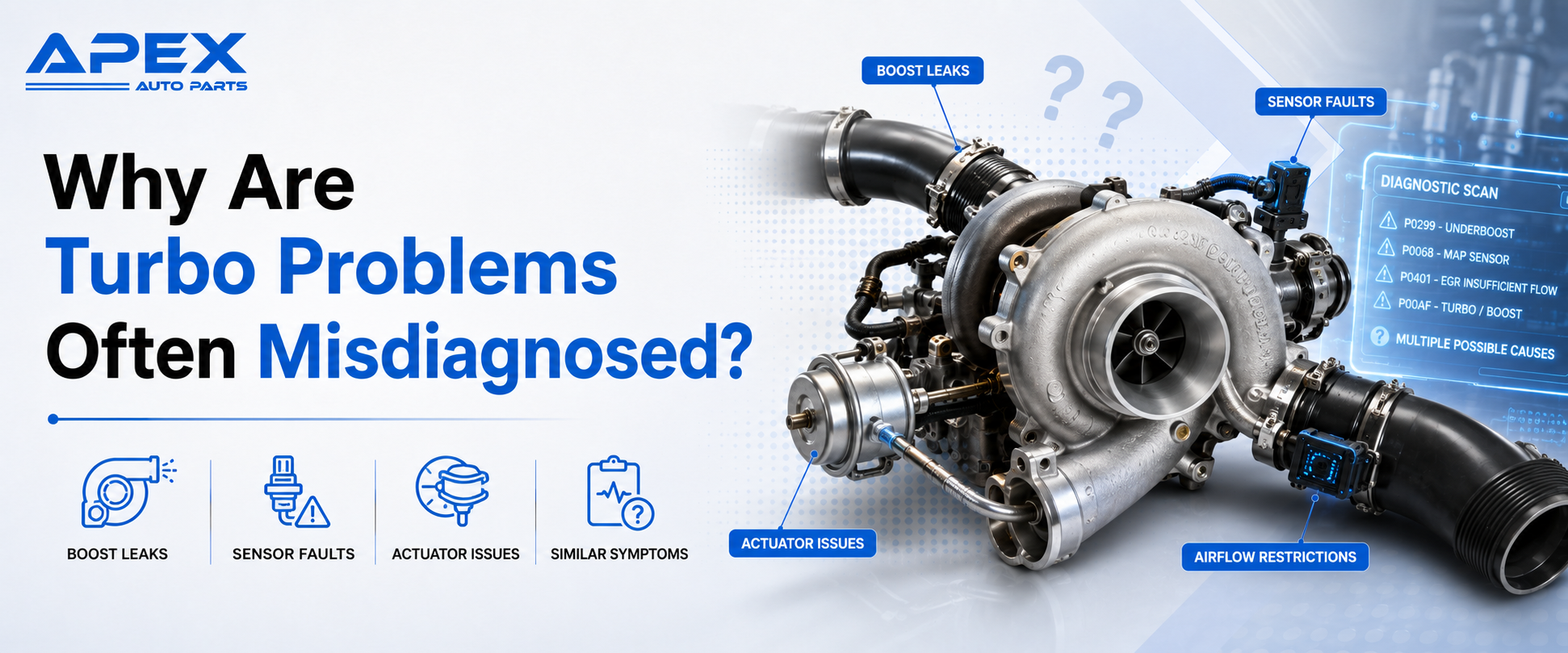
A fault code only tells the mechanic what the engine computer has noticed. It does not always identify the failed part.
For example, an under boost code means the engine is not receiving the boost pressure it expected. A worn turbocharger could cause this, but it could also be due to a split hose, a leaking intercooler, a weak actuator, a faulty pressure sensor, a blocked DPF, or a damaged exhaust system.
Oil around the turbo does not always mean the internal turbo seals have failed. A blocked oil return pipe can prevent oil from leaving the turbo properly. High pressure inside the engine can also push oil towards the intake or exhaust.
BorgWarner advises checking the oil drain path and crankcase pressure when investigating turbo oil leakage. A restricted drain or excessive pressure can cause oil to escape from a turbo that may otherwise still be working.
A good mechanic tests the whole system. Replacing the most expensive part first is not proper fault finding.
What Causes Turbo Failure in Diesel Engine Systems?
Drivers often ask what causes turbo failure in diesel engine systems. There is rarely a single answer that applies to every car, but oil problems are among the most common causes.
The turbocharger shaft spins very quickly. It requires a continuous supply of clean oil to protect its bearings. If the oil level is low, the feed pipe is blocked, or oil pressure is weak, the bearings may wear.
Dirty oil is another serious risk. Old oil can carry soot, carbon, and tiny metal particles. These materials may scratch the shaft and bearing surfaces. They can also restrict the narrow oil passages inside the turbocharger.
Using the wrong oil can cause similar trouble. Two oils may show the same basic grade on the bottle but have different manufacturer approvals. The wrong oil may not protect the turbo, timing system, or emissions equipment correctly.
Foreign object damage is another cause. Dirt can enter through a damaged air filter or loose intake pipe. A small object hitting the compressor wheel can damage its blades and upset its balance.
Damage can also happen on the exhaust side. Pieces from an engine fault, damaged valve, or exhaust part may strike the turbine wheel.
A blocked oil return pipe can force oil to build up inside the turbocharger. The oil may then move into the intake or exhaust, causing smoke and oil loss.
Poor crankcase breathing is another issue. Pressure inside the engine must be controlled. A blocked breather or worn internal engine components can build up excessive pressure. This can prevent oil from draining from the turbo properly.
A restricted DPF may also increase exhaust pressure. Injector faults can raise exhaust temperature. Air leaks can make the turbo work harder to reach the requested pressure.
Garrett identifies oil starvation, oil contamination, and foreign object damage as major causes of turbocharger failure. It also advises checking the full air, oil, fuel, cooling, and exhaust systems before replacing a turbo.
Can Turbo Failure Cause Engine Damage?
A common and important question is, can turbo failure cause engine damage? The answer is yes, especially when serious warning signs are ignored.
A damaged turbocharger may allow engine oil to enter the intake or exhaust. If the oil level drops too low, the main engine bearings, camshaft, timing components, and other moving parts may lose lubrication.
A badly worn turbo shaft can allow the compressor or turbine wheel to touch its housing. This may break pieces from the wheel. Metal debris on the intake side can travel towards the intercooler and engine.
A large amount of oil entering a diesel engine intake can create a dangerous situation. The engine may start burning its own oil as fuel. It can then rev without normal accelerator control.
This is uncommon but serious. A driver should stop safely and switch off the engine if possible. The vehicle should not be driven if there is heavy smoke, rapid oil loss, loud mechanical noise, or uncontrolled engine speed.
Turbo failure can also result from existing engine damage. Low oil pressure, worn piston rings, blocked breathing, injector faults, or a restricted exhaust may damage the turbocharger first.
That is why the cause must be found before a replacement turbo is fitted. Otherwise, the new turbo may fail in the same way.
Common Peugeot Turbo Engine Concerns
A Peugeot turbo engine may be petrol or diesel. The correct diagnosis depends on the model, engine code, production date, mileage, and service history.
Common turbo-related complaints include low power, boost leaks, warning lights, smoke, increased oil consumption, and unusual noise. However, these symptoms may come from other parts of the engine.
On a diesel Peugeot, a mechanic may need to inspect the DPF, EGR valve, injectors, airflow sensor, boost pressure sensor, vacuum pipes, and turbo actuator.
On a petrol Peugeot, ignition coils, spark plugs, fuel pressure, air leaks, and wastegate control may need to be checked. A misfiring engine may not produce enough exhaust energy to operate the turbo correctly.
Some earlier 1.0 and 1.2 Pure Tech engines also require attention to timing belt condition and oil use. Peugeot has an official support program for certain previous-generation engines affected by oil pressure problems linked to premature timing belt degradation or excessive oil consumption. The support is subject to specific conditions.
This timing belt issue is not the same as turbo failure. However, the belt material may affect the oil system, and low oil pressure can put the turbocharger and engine at risk.
A mechanic checking a Peugeot turbo engine should confirm the correct oil specification, inspect the service record, check the belt where relevant, and test oil pressure if warning signs are present.
Replacing the turbo without checking the lubrication system may leave the real fault inside the engine.
Common Vauxhall 1.2 Turbo Engine Concerns
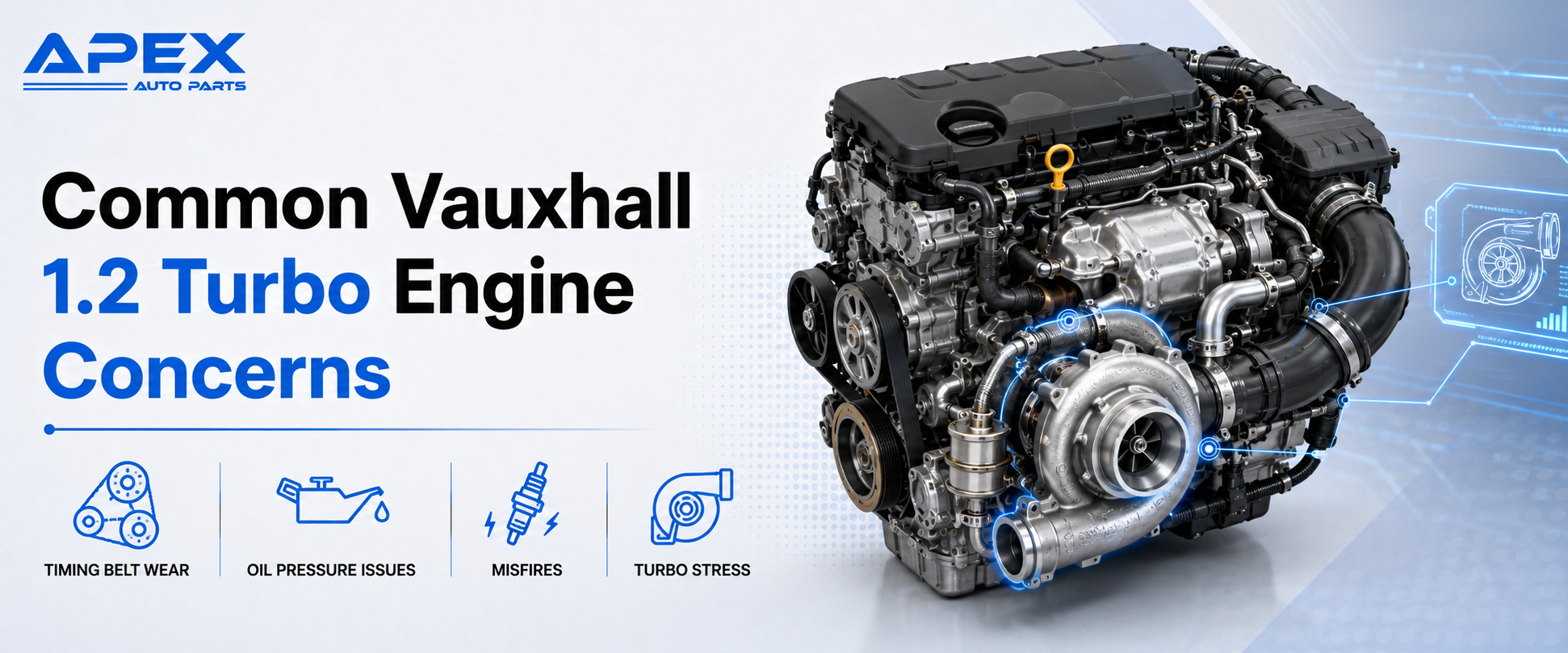
The Vauxhall 1.2 turbo engine is used in several models and versions. The engine fitted to one vehicle may not be the same as the engine fitted to another model or production year.
These engines can provide useful pulling power and good everyday performance. As with any small turbo petrol engine, correct servicing is important.
A rough idle or loss of power may be caused by spark plugs, ignition coils, fuel pressure, air leaks, sensors, or boost control. A turbocharger should not be ordered until these areas have been tested.
Oil condition is also important. The correct manufacturer-approved oil should be used. Choosing oil only by its basic grade is not enough.
Some previous-generation Pure Tech 1.0 and 1.2 engines are covered by a Vauxhall support program for premature timing belt degradation, oil pressure issues, and excessive oil consumption. Vauxhall states that extended coverage may apply for up to 10 years or 112,000 miles under set conditions.
This does not mean every Vauxhall 1.2 turbo engine has the problem. The registration, VIN, engine code, service history, and official campaign information should be checked.
When looking at a used vehicle, ask for detailed service invoices. Listen to the engine when cold, check the oil level, look for warning lights, and confirm the correct oil has been used.
A stamped service book is helpful, but invoices often provide more detail about the oil, filters, timing work, and previous repairs.
Understanding Vauxhall 1.5 Turbo Diesel Engine Problems
Searches for Vauxhall 1.5 turbo diesel engine problems often place several different faults under the same label.
A split boost hose may cause a loss of power, a blocked DPF, a dirty EGR valve, a faulty pressure sensor, an injector issue, or a turbo actuator problem. The turbocharger may be working correctly but unable to reach the expected pressure because air or exhaust gas is escaping.
Black smoke may point towards poor airflow or excess fuel. Blue smoke may involve engine oil. A rattling noise may come from the timing system rather than the turbocharger.
Some Vauxhall vehicles fitted with the 1.5 Blue HDi diesel engine are also linked to an official campaign concerning premature camshaft chain wear. Vauxhall says warning signs may include unusual engine noise or vibration. In rare cases, chain failure can lead to loss of power and engine damage.
Vauxhall states that the recall is being handled in batches. A VIN that is not included at one point may be added later. The company also offers special coverage for qualifying camshaft chain issues for up to 10 years or 150,000 miles, subject to its conditions.
The chain concern is separate from the turbocharger. A chain noise should not be treated as turbo noise, and a low boost fault should not automatically be blamed on the chain.
Owners can use the official UK recall service to check for outstanding safety recalls using a vehicle registration number. They can also speak to Vauxhall for campaign information linked to the VIN.
How a Mechanic Checks a Turbo Problem?
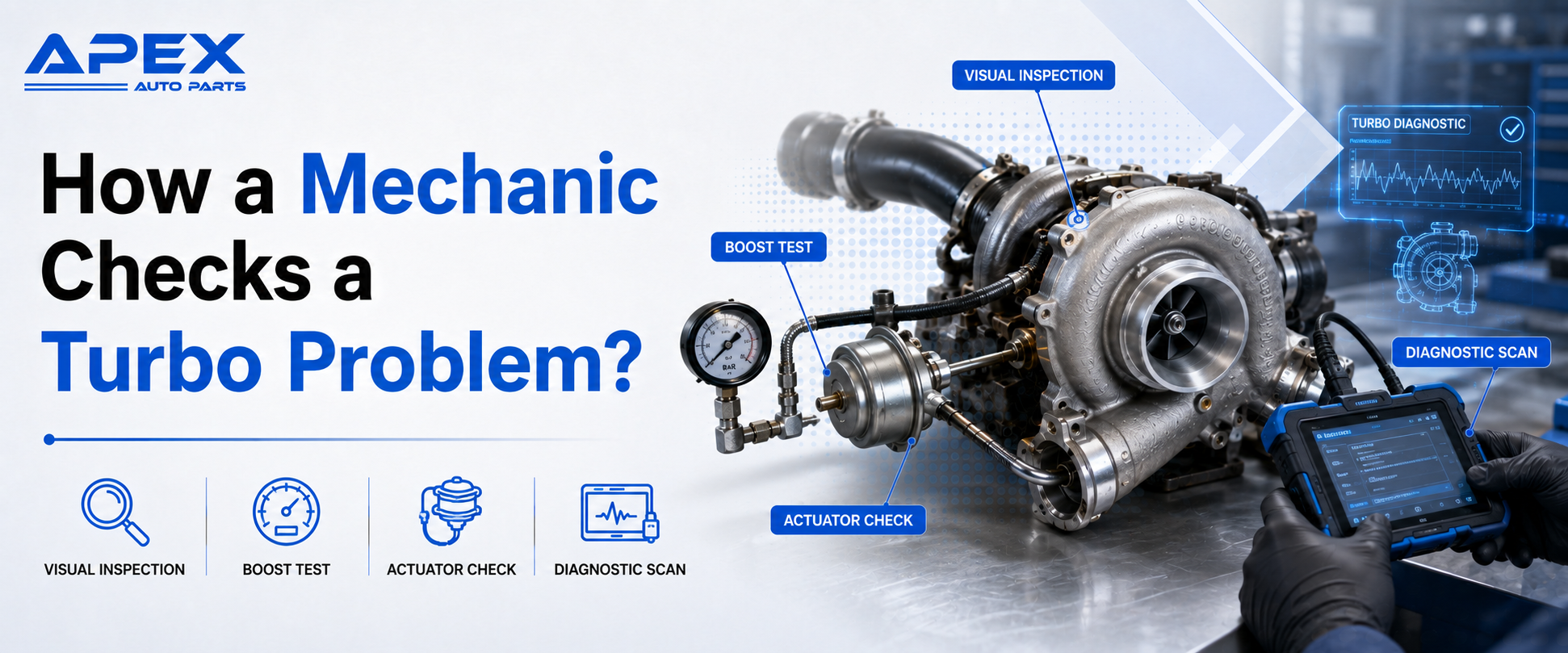
A good diagnosis starts by confirming the driver’s complaint. The mechanic needs to know when the problem happens, whether the engine is hot or cold, and whether smoke, noise, or warning lights are present.
The vehicle should then be scanned for fault codes. Live readings are often more helpful than the code alone. Requested boost pressure should be compared with actual boost pressure while the engine is under load.
The intake system should be checked for loose clips, split hoses, damaged seals, and intercooler leaks. A smoke test can reveal small leaks that are hard to see.
The air filter must be inspected. A badly restricted filter can reduce airflow. Damage around the filter box may also allow dirt to reach the compressor wheel.
The mechanic should check the turbo actuator or wastegate movement. On a variable-geometry turbo, the vane control system must operate correctly.
Oil supply is just as important. The oil level, condition, pressure, and the feed and return pipes should be checked. The crankcase breathing system should also be inspected.
On a diesel, further checks may include DPF pressure, EGR operation, injector correction readings, exhaust leaks, and airflow sensor data.
On a petrol engine, the mechanic may check spark plugs, ignition coils, fuel pressure, misfire readings, and wastegate control.
Only after these checks should the turbocharger itself be judged. The compressor blades, turbine blades, shaft movement, oil leakage, and housing condition can then be inspected.
How to Maintain a Turbo Engine?
Good turbo maintenance starts with engine oil. The turbocharger depends on oil every time the engine runs.
Use the exact oil specification required by the vehicle manufacturer. The correct specification may change between engine versions, so the registration or VIN should be checked.
The oil filter should also be replaced at the correct time. A cheap or blocked filter may affect oil flow and allow dirt to circulate.
Check the oil level regularly, especially before a long journey. Do not wait for a warning light. Some warning lights indicate oil pressure rather than oil level, which means damage may already be underway.
Avoid hard acceleration immediately after a cold start. The oil needs time to circulate and warm up. Gentle driving during the first part of the journey helps protect the engine and turbocharger.
After a hard motorway run, towing, or steep climb, drive gently before switching the engine off. This helps reduce heat around the turbo and allows the system to settle.
Other useful maintenance habits include:
- Replace the air filter at the correct interval.
- Repair split boost hoses quickly.
- Investigate oil leaks and oil use.
- Use good quality filters and seals.
- Keep the DPF and EGR system working correctly.
- Do not ignore warning lights.
- Avoid untested engine tuning.
- Check unusual smoke or noise early.
Garrett warns that hard acceleration from cold and shutting down an extremely hot engine can contribute to turbo damage. Clean oil, clear pipes, and correct fitting remain central to turbo life.
What Must Be Checked When Replacing a Turbo?
Replacing a turbocharger is not simply a matter of removing one unit and fitting another.
The first step is to find out why the old turbo failed. If the cause was poor oil supply, the feed system must be repaired. If the compressor wheel was damaged by dirt, the intake system must be cleaned, and the entry point identified.
The intercooler and boost pipes may contain oil or metal debris after a serious failure. Starting the engine without cleaning these parts may damage the replacement turbo or engine.
Depending on the vehicle, the repair may also require new oil, an oil filter, an air filter, oil pipes, seals, gaskets, coolant, and intake parts.
The replacement turbo should be primed with oil according to the fitting instructions. The engine may need to be turned over without starting to ensure oil reaches the turbo bearings.
Liquid sealant should never be allowed to block an oil hole. Even a small piece can restrict oil flow.
After fitting, the mechanic should check for leaks, warning lights, smoke, unusual noise, and correct boost pressure. A road test should only take place after the basic checks have passed.
What to Check Before Buying a Used Turbo Car?
A used turbo car should be judged by its condition and history, not just by its mileage.
Start the engine from cold. Listen for rattles, scraping sounds, or a loud siren noise. Check whether the engine idles smoothly and whether any warning lights remain on.
Look at the exhaust when the engine starts and when it is gently accelerated. A small amount of vapor on a cold day may be normal. Thick blue, grey, or black smoke needs further checks.
Test the car under load where it is safe and legal. The power should build smoothly. Sudden hesitation, reduced power mode, or a loud air leak may point towards a boost problem.
Check the oil level before the test drive and look for oil around the turbo pipes. Ask how often the oil was changed and which oil was used.
Service invoices are important. They may show previous turbo work, DPF cleaning, timing repairs, oil pressure faults, or repeated oil top-ups.
For Peugeot and Vauxhall vehicles, check the exact engine code and any official support or recall information linked to the VIN.
Choosing the Correct Turbo and Engine Parts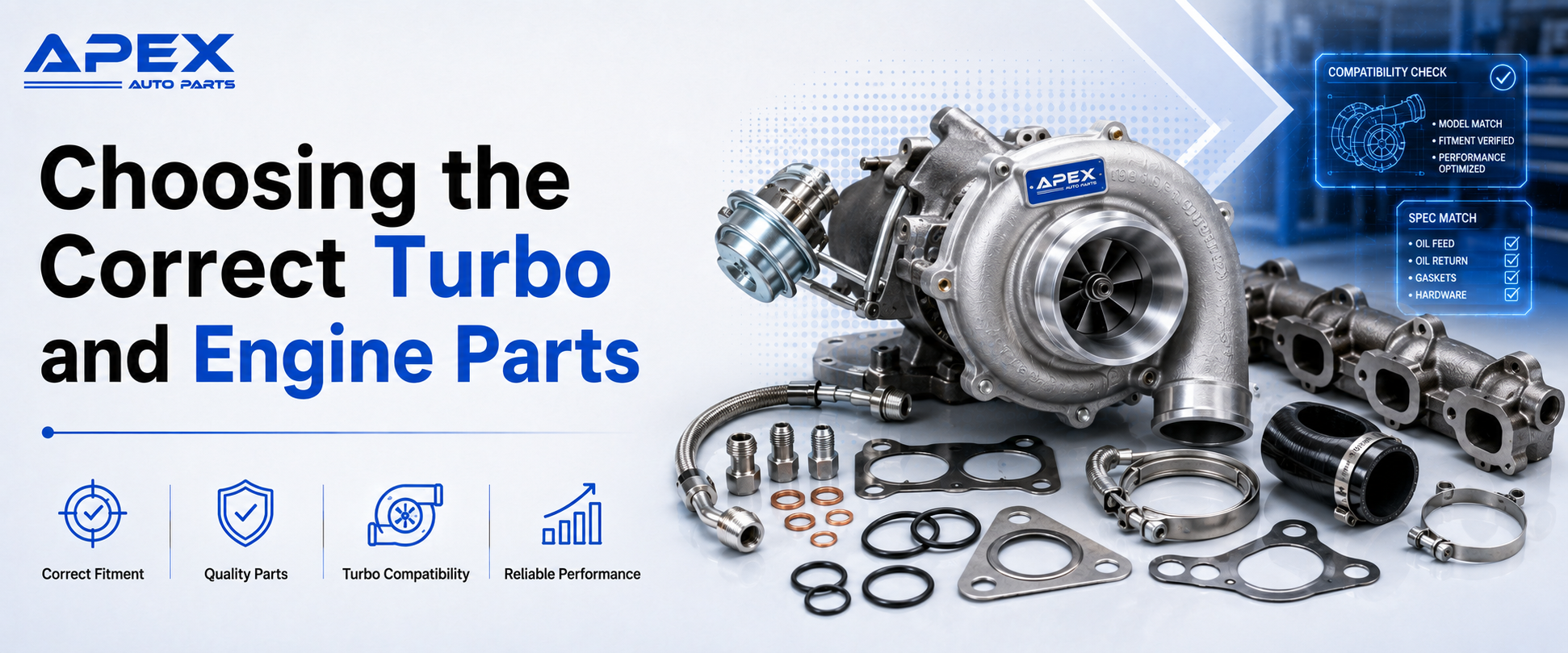
Turbochargers and related parts can look very similar while having different specifications. The housing, actuator, oil connections, sensors, and boost settings may vary between engines.
Ordering only by the model name or registration year may lead to the wrong part. The registration number, VIN, engine code, and old part number can help confirm fitment.
At Apex Auto Parts, drivers, garages, mechanics, and engine rebuilders can provide their vehicle details when searching for engine parts. This helps reduce incorrect orders and saves time during a repair.
A clear description of the problem is also useful. State whether the vehicle has low power, smoke, oil loss, unusual noise, or a boost fault code.
Parts matching does not replace diagnosis, but it helps make sure the correct components are supplied once the fault has been found.
Final Thoughts
A Turbo Engine can deliver strong power, good fuel economy, and reliable everyday performance. It can also last well when the oil, cooling, intake, and exhaust systems are maintained correctly.
The key lesson is not to blame the turbo too quickly. Low power, smoke, oil use, and warning lights can come from many different parts.
A mechanic should check oil flow, boost pipes, sensors, fuel delivery, DPF condition, crankcase breathing, and engine health before replacing a turbocharger.
Early diagnosis can prevent a small fault from becoming serious engine damage. Correct maintenance, careful fault finding, and the right replacement parts give a turbo engine the best chance of a long working life.
FAQS
1. How Does a Turbo Engine Work?
A Turbo Engine uses exhaust gas to spin a turbine connected to a compressor. The compressor pushes more air into the cylinders, so the engine can burn the right amount of extra fuel and make more power. The intercooler cools the compressed air before it enters the engine.
2. What Is the Difference Between a Turbo Engine vs Normal Engine?
In a turbo engine vs. normal engine comparison, a turbo engine often delivers greater pulling power and better performance from a smaller engine. A normal engine may feel smoother and simpler because it has fewer boost-related parts. The best choice depends on service history, driving style, repair budget, vehicle weight, and use.
3. What Are the Main Signs of Turbo Failure?
Common warning signs include poor acceleration, a louder whistle, blue or grey smoke, increased oil consumption, an engine warning light, and reduced power. These signs do not prove the turbo has failed. Split hoses, blocked filters, sensor faults, injector issues, and exhaust restrictions can cause similar symptoms.
4. Can Turbo Failure Cause Engine Damage?
Yes, a badly damaged turbo can send oil or broken metal into the intake and can also cause a serious drop in engine oil level. This may damage bearings, pistons, valves, or other internal parts. Heavy smoke, rapid oil loss, loud noise, or uncontrolled revving needs urgent attention.
5. What Causes Turbo Failure in Diesel Engine Systems?
The most common causes are dirty oil, low oil pressure, blocked oil feed pipes, restricted oil return, foreign object damage, and excessive exhaust heat. DPF restriction, injector faults, poor crankcase breathing, and incorrect fitting can also play a part. The original cause must be repaired before a new diesel engine turbo is fitted.
6. What Are Common Peugeot Turbo Engine Problems?
Common Peugeot turbo engine concerns include boost leaks, sensor faults, oil supply problems, blocked diesel filters, ignition faults, and worn turbo controls. Some earlier Peugeot Pure Tech engines also need checks of the timing belt condition and oil consumption. The engine code, service record, oil specification, and fault readings should guide diagnosis.
7. Is the Vauxhall 1.2 Turbo Engine Reliable?
A Vauxhall 1.2 turbo engine can give good performance when it receives the correct oil and regular servicing. Some previous Pure Tech versions have official support for premature timing belt degradation, oil pressure issues, or excessive oil consumption. Not every engine is affected, so identification by VIN and engine code is important.
8. What Are the Main Vauxhall 1.5 Turbo Diesel Engine Problems?
Common Vauxhall 1.5 turbo diesel engine problems include boost leaks, DPF restriction, EGR faults, injector issues, sensor problems, and turbo control faults. Some 1.5 Blue HDI engines also have an official campaign relating to camshaft chain wear. A mechanic should separate chain noise from turbo noise before ordering parts.
9. What Is a Twin Turbo Engine?
A twin turbo engine uses two turbochargers to provide useful boost across a wider engine speed range. Some systems use a smaller turbo at low speed and a larger turbo as demand rises. This can improve response and pulling power, but it adds more valves, pipes, actuators, and possible fault points.
10. How Long Does a Turbocharger Usually Last?
A turbo may last for much of the engine’s life when clean oil, correct filters, good cooling, and sound boost pipes are maintained. There is no fixed lifespan. Poor service history, incorrect oil, repeated cold starts, blocked pipes, and an unfixed engine fault can greatly shorten its working life.
References:
Garrett motion
Borg warner