
 info@apexautoparts.co.uk
 +44 203 915 7535
 Safe & Fast Shipping
 Whish List
 Compare
 Sign In


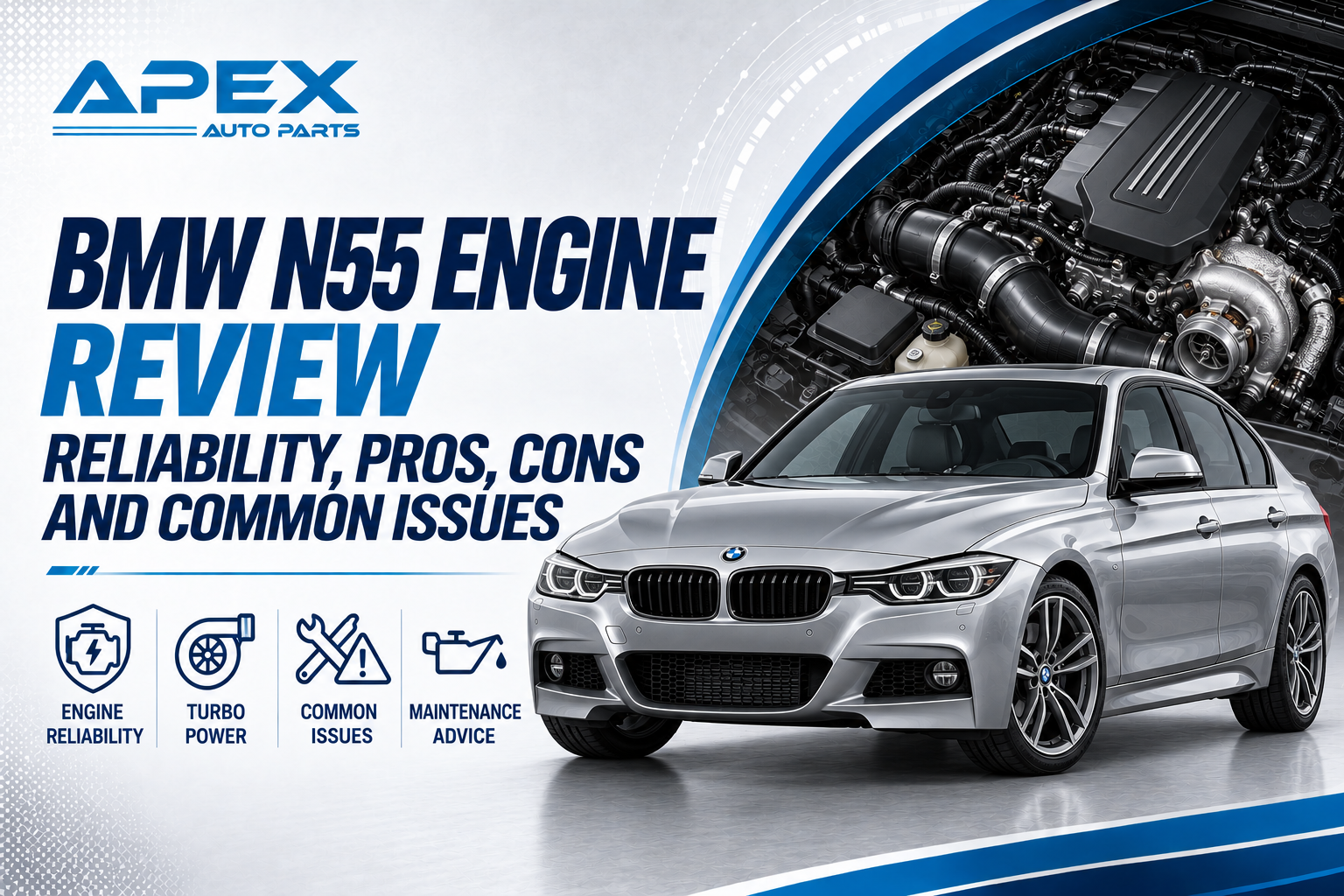
The BMW N55 engine is one of BMW’s best-known petrol engines. It offers strong power, smooth acceleration, and the familiar sound of a straight six. BMW used it in many cars, from the 1 Series and 3 Series to larger models such as the X5 and 7 Series.
It arrived as the replacement for the older N54. BMW changed the turbo setup, added Valvetronic, and made several updates to improve fuel use and everyday driving. The result was an engine that felt quick without being difficult to drive in traffic.
However, age, mileage, and poor servicing can cause trouble. Cooling faults, oil leaks, cracked charge pipes, and worn ignition parts are among the main BMW N55 common issues. Some faults are simple to repair, while others can become expensive if ignored.
This guide explains how the engine works, BMW N55 engine reliability, its main benefits, common faults, and what owners should check before buying parts or a used BMW.
What Is the BMW N55 Engine?
The BMW N55 engine is a 3.0 litre turbocharged petrol engine with six cylinders arranged in a straight line. It entered production around 2009 and started appearing in BMW models from the 2010 model year.
Unlike the N54, which used two small turbochargers, the N55 normally uses one twin-scroll turbocharger.
This design separates the exhaust pulses from different cylinders before they reach the turbo. It helps the turbo respond quickly while keeping the engine layout simpler.
The engine also uses direct fuel injection, Double VANOS variable camshaft timing, and Valvetronic variable valve lift. BMW described this combination as TwinPower Turbo technology, pairing a twin-scroll turbo with direct injection and Valvetronic.
Most versions produced around 300 bhp, although output varies by model, year and software. Higher performance versions used in cars such as the BMW M135i, M235i and original M2 produced more power.
The basic design made the N55 flexible. It could deliver smooth power in a luxury saloon, strong low-speed pulling power in an SUV, and lively performance in a smaller coupe.
How Does the BMW N55 Turbo Engine Work?
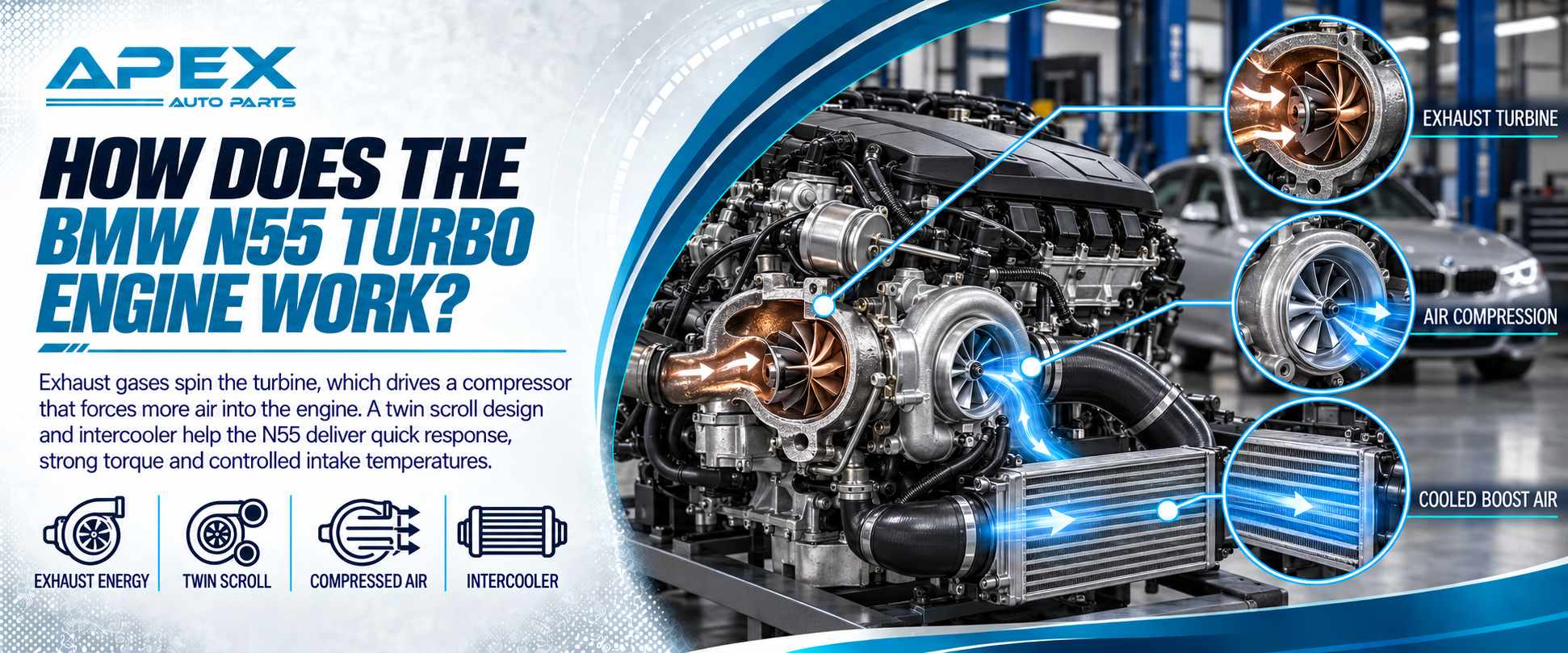
The BMW N55 turbo engine uses exhaust gas to spin a turbine. That turbine is connected to a compressor wheel, which forces more air into the engine. More air allows the engine to burn more fuel and create more power.
The twin scroll design helps the turbo build pressure without a long delay. When the driver presses the accelerator, the engine usually responds smoothly and quickly. This makes the N55 feel powerful during overtaking without needing very high engine speed.
An intercooler cools the compressed air before it enters the engine. Cooler air is denser and can help the engine produce power more safely.
A charge pipe carries this pressurised air between the turbo system, intercooler and throttle body.
The engine control unit monitors boost pressure, fuel delivery, ignition timing and airflow. If a sensor reports a problem, the system may reduce power to protect the engine. This is why proper diagnosis is important when an N55 develops a warning light or loses performance.
Which BMW Has N55 Engine Options?
Drivers often ask, Which BMW has N55 engine options? The answer covers a wide range of vehicles. The engine was used in smaller performance cars, family saloons, coupes, convertibles, and SUVs.
Common examples include:
- BMW 135i
- BMW M135i
- BMW M235i
- BMW 335i
- BMW 435i
- BMW 535i
- BMW 640i
- BMW 740i
- BMW X1 xDrive35i
- BMW X3 xDrive35i
- BMW X4 xDrive35i
- BMW X5 xDrive35i
- BMW X6 xDrive35i
- BMW M2
BMW also used different versions of the engine across different countries and production years. A badge alone does not always confirm the engine. Two cars with similar model names may use different engines depending on when and where they were built.
Before buying engine parts, check the vehicle identification number, engine code, and production date. Apex Auto Parts can help customers match components to the correct vehicle details, reducing the chance of ordering a part designed for another N55 version.
BMW N55 Engine Reliability
Overall, BMW N55 engine reliability is reasonably good when the engine receives regular servicing and faults are repaired early. Many well-maintained examples can cover high mileage without internal engine failure.
The main concern is often not the basic engine block. Problems are more likely to develop in the cooling system, gaskets, plastic air pipes, sensors and ignition parts. These components work under heat and pressure, so age can affect them even when the vehicle has low mileage.
A complete service record is more useful than the mileage figure alone. A higher mileage car with regular oil changes may be a safer purchase than a low mileage car that has missed services or spent long periods unused.
Driving style also matters. Repeated short journeys can prevent the oil from reaching full operating temperature. Constant hard acceleration from a cold start can increase wear. Modified engines may also place more stress on the turbo, cooling system, and ignition parts.
The N55 should not be judged as completely reliable or unreliable. Its condition depends heavily on its history, maintenance, and previous repairs.
Main Benefits of the BMW N55 Engine
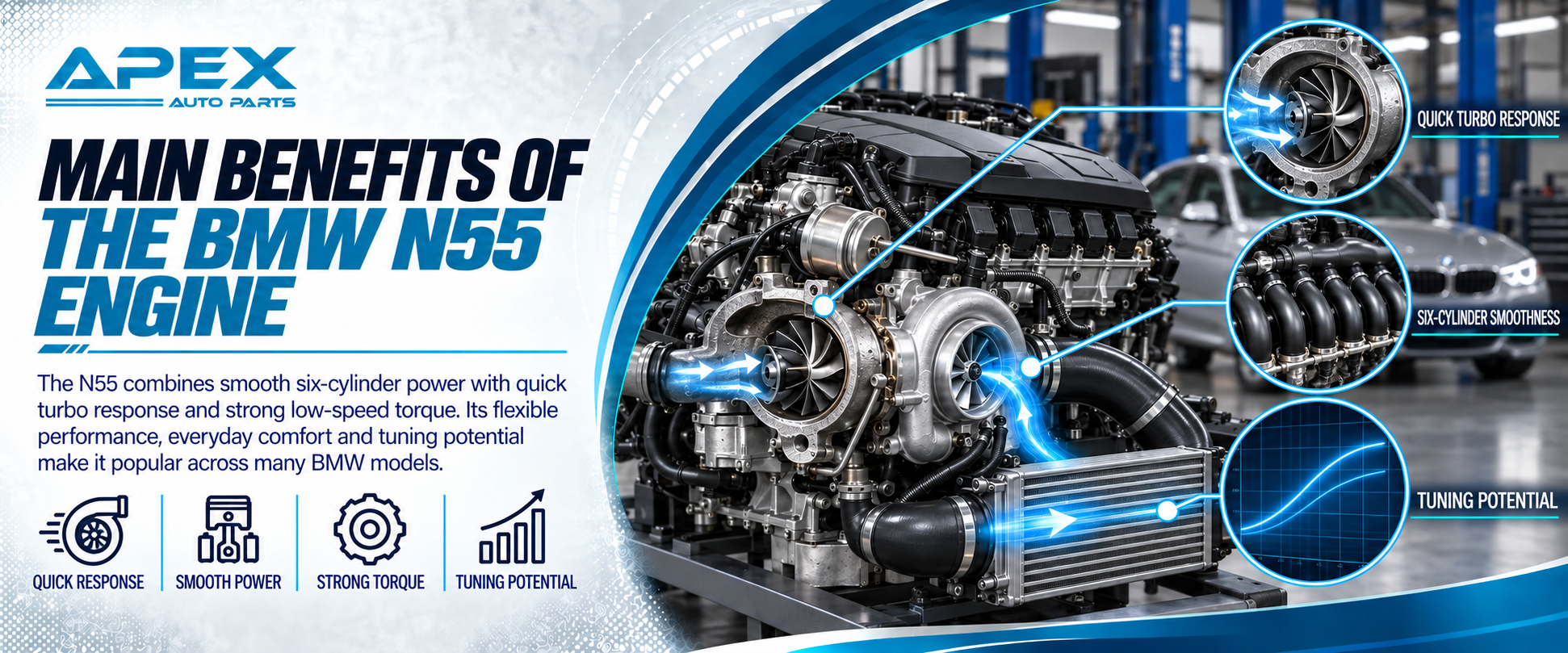
The N55 became popular because it offers a good mix of performance and daily comfort. It produces useful power at low engine speed, yet remains smooth during normal driving.
Its main benefits include:
- Strong acceleration without needing very high engine speed
- Smooth six-cylinder power delivery
- Good tuning potential when the engine is healthy
- A simpler turbo layout than the twin-turbo N54
- Wide parts and specialist support
- Use across many BMW models
The engine can feel calm in traffic but much faster when the driver uses more throttle. This broad ability is one reason why N55-powered BMWs remain popular on the used market.
The single twin-scroll turbo setup also means there are fewer turbochargers and related pipes than on the N54. That does not make the system fault-free, but it can make inspection and repair less complicated.
Main Disadvantages of the BMW N55 Engine
The N55 is not a cheap engine to neglect. Many parts sit tightly together, so labour time can increase even when the replacement component is not especially expensive.
Oil leaks are common as seals and plastic housings age. The electric cooling system can also fail without much warning. Plastic charge pipes may crack under boost, especially on tuned cars.
Direct injection brings strong performance, but it can also allow carbon deposits to collect around the intake valves. Ignition coils and spark plugs may wear more quickly when the engine is modified.
A poorly maintained car may need several repairs close together. An owner might fix an oil leak and then face a water pump, charge pipe, or ignition fault soon afterwards. A proper inspection helps reveal the total condition before money is spent.
BMW N55 Engine Problems Owners Should Know
Most BMW N55 engine problems begin with small warning signs. A faint coolant smell, slight hesitation, or a small oil leak may not seem urgent. Ignoring these signs can allow a manageable repair to become a breakdown.
The most important areas to watch are the cooling system, oil seals, charge pipe, ignition system, fuel system, crankcase ventilation, and turbo controls.
A warning light does not identify the failed part by itself. The engine control unit records fault codes, but those codes must be tested and understood. Replacing the first part mentioned by a basic scanner can waste money.
A mechanic should check live data, boost pressure, fuel pressure, smoke behaviour, coolant condition, and air leaks before recommending major parts.
BMW N55 Water Pump Failure
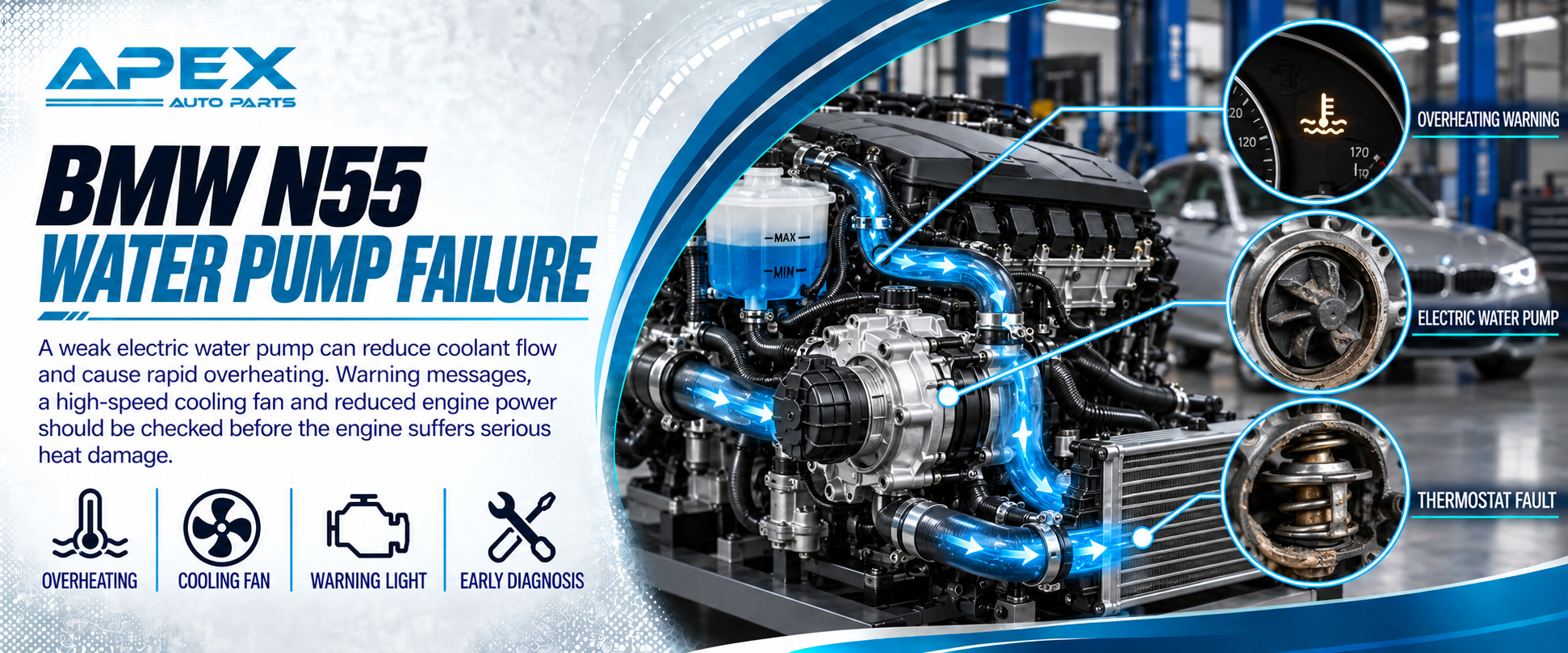
The BMW N55 water pump is electrically controlled. It circulates coolant through the engine and helps control temperature under different driving conditions.
When the pump weakens or stops, coolant flow drops. The engine may overheat, the cooling fan may run at high speed, or the car may enter a reduced power mode. Some drivers also notice warning messages or rapidly rising coolant temperature.
A failing thermostat can cause similar symptoms. For this reason, the pump should not be replaced based only on a warning light. A diagnostic scan can check pump speed, operating commands, and stored cooling faults.
When a failed BMW N55 water pump is confirmed, the thermostat is often inspected at the same time. The coolant must be filled correctly, and the electric bleeding process must be completed. Air trapped in the system can cause poor circulation and overheating.
Never continue driving an overheating N55. Excess heat can damage seals, warp metal parts, and turn a cooling repair into an engine repair.
Oil Filter Housing Gasket Leaks
The oil filter housing gasket seals the housing against the engine. As the gasket becomes hard, oil may begin to escape around the front or side of the engine.
Fresh oil around the housing is an early warning. If the leak becomes worse, oil may reach the drive belt. A contaminated belt can swell, slip, or break. In serious cases, belt material can be pulled past the front crankshaft seal and enter the engine.
This is why an oil filter housing leak should not be treated as harmless dirt. The leaking area should be cleaned and inspected so the source can be confirmed.
After repair, the belt and tensioner should be checked carefully. If the belt is oily, cracked, or swollen, replacement is usually safer than cleaning it.
Valve Cover and Crankcase Ventilation Problems
The N55 valve cover contains part of the crankcase ventilation system. Heat can cause the plastic cover to distort, while the gasket may become hard and leak.
Common signs include a burning oil smell, smoke near the exhaust side of the engine, and visible oil around the top of the cylinder head. A failed ventilation diaphragm may also cause whistling, rough idle, increased oil use, or unusual pressure inside the engine.
A gasket alone may not solve the problem if the cover is cracked or warped. The full cover should be inspected before parts are ordered.
Crankcase pressure should also be tested. Too much pressure can force oil past seals and create several leaks at once.
Charge Pipe Failure and Boost Leaks
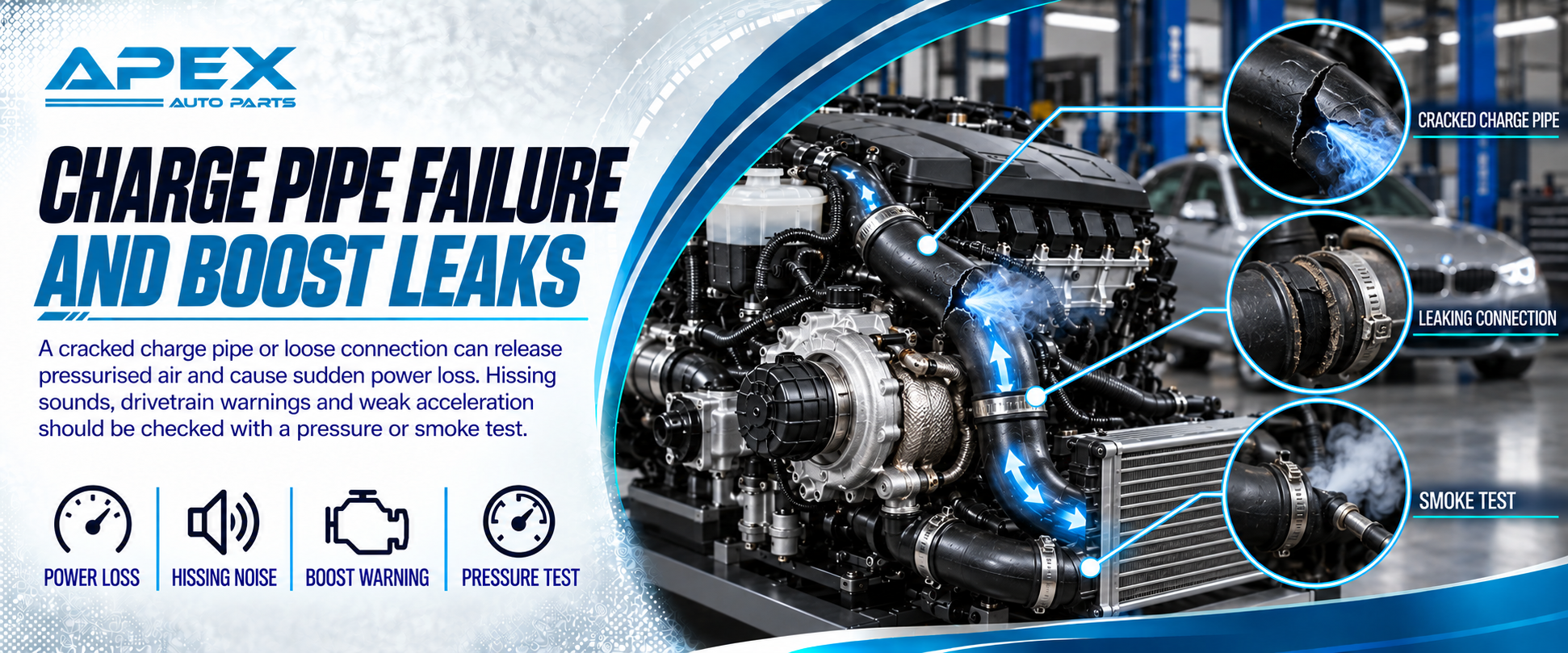
The original charge pipe is often made from plastic. Heat, age, and boost pressure can weaken it. A crack may appear near a joint or around the throttle body connection.
When the pipe splits, the engine may lose boost suddenly. The driver may hear a loud pop, notice poor acceleration, or receive a drivetrain warning. The engine may continue running, but performance can drop sharply.
A smoke test can help locate smaller leaks. The mechanic should also inspect intercooler connections, rubber hoses, clamps, and seals.
Upgraded metal charge pipes are popular, especially on tuned cars. However, the replacement pipe must fit correctly and should not place strain on nearby hoses or sensors.
Ignition Coil and Spark Plug Faults
Ignition coils and spark plugs are common service items on turbocharged petrol engines. They work harder when boost pressure rises, particularly if the engine has been tuned.
Worn plugs may cause hesitation, rough running, or a misfire under hard acceleration. A weak coil may cause similar symptoms. The engine warning light may flash if the misfire is severe.
A diagnostic scan can show which cylinder is misfiring, but testing should continue before parts are ordered. Swapping a coil between cylinders can help determine whether the fault follows the coil.
The correct spark plug type and gap are important. Fitting unsuitable plugs can create poor running even when the parts are new.
Fuel Pump and Injector Problems
The direct injection system uses a high-pressure fuel pump and precision injectors. If fuel pressure drops, the engine may take longer to start, hesitate under load, or enter reduced power mode.
Injectors can also develop flow or sealing problems. Possible signs include rough idle, petrol smell, poor fuel economy, misfires, and difficult starting.
These symptoms can also be caused by ignition parts, air leaks, or sensor faults. Fuel pressure should be measured under the conditions in which the problem occurs.
Replacing all injectors without testing can be expensive. Injector corrections, spark plug condition, and cylinder behaviour should be checked first.
Carbon Build-Up on Intake Valves

Because the N55 uses direct injection, fuel is delivered directly into the combustion chamber. It does not wash over the backs of the intake valves in the way that fuel does in some older engines.
Oil vapour from the crankcase ventilation system can settle on the valves. Over time, this may form carbon deposits that restrict airflow.
Possible symptoms include uneven idle, hesitation, reduced performance, and misfire faults. Carbon cleaning may help when deposits are confirmed, but it should not be used as a guess.
A specialist can inspect the intake ports using a small camera. Walnut shell cleaning is one common repair method because it can remove deposits without damaging the metal valve surfaces when performed correctly.
VANOS Solenoid and Sensor Faults
The VANOS system adjusts camshaft timing. If its solenoids become dirty or weak, the engine may run unevenly, lose power, or store timing-related faults.
Dirty oil can affect small oil passages within the system. This makes correct oil quality and regular servicing important.
Before replacing a VANOS unit, a mechanic should inspect oil condition, oil pressure, electrical connections, and the solenoids. In some cases, cleaning or replacing a solenoid may solve the fault. In other cases, the problem may be linked to a sensor, wiring, or mechanical timing issue.
Correct diagnosis is essential because several faults can create similar warning codes.
Turbocharger and Wastegate Problems
The turbocharger is generally durable when supplied with clean oil and allowed to operate at safe temperatures. Problems can still develop with age or poor servicing.
A worn wastegate mechanism may create a rattle or prevent boost pressure from being controlled correctly. Oil seal wear can contribute to smoke, although smoke does not always mean the turbo has failed.
Split hoses, faulty pressure sensors, and vacuum problems can also cause boost faults. The full system should be pressure tested before the turbocharger is replaced.
If the turbo has failed, its oil supply and return lines must be inspected. Installing a new turbo without correcting an oil restriction can damage the replacement.
How to Improve BMW N55 Engine Reliability?
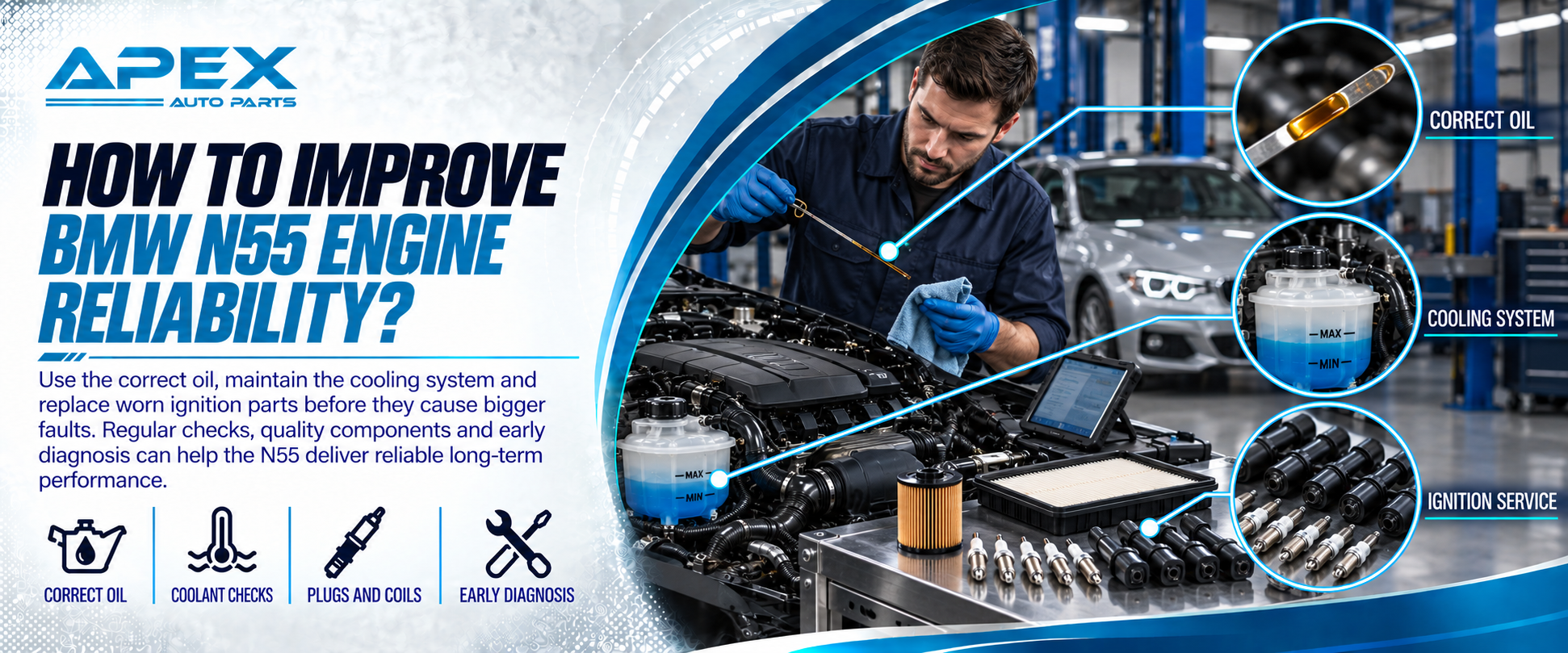
Good maintenance has a major effect on BMW N55 engine reliability. The engine should receive the correct oil and filter at sensible intervals. Cars used for short journeys, heavy traffic, or tuned driving may benefit from more frequent servicing than the maximum interval shown by the vehicle.
The coolant level should be checked when the engine is cold. Any unexplained coolant loss needs investigation. Waiting for an overheating warning is risky because the electric pump may deteriorate before it fails.
Owners should also respond quickly to oil smells, misfires, boost leaks and unusual fan activity. Early testing is normally cheaper than continuing to drive until another part is damaged.
A sensible maintenance plan includes:
- Use oil that meets the correct BMW specification
- Replace spark plugs and filters at suitable intervals
- Repair oil and coolant leaks promptly
- Allow the engine to warm before hard acceleration
- Scan warning lights before buying parts
- Inspect belts whenever oil leaks are found
- Check the cooling system before long journeys
- Use quality replacement parts from a trusted supplier
Apex Auto Parts can help match cooling, sealing, ignition, and engine components using the registration or vehicle details. Correct matching matters because N55 parts can differ by production date and model.
Is Tuning Safe for the BMW N55?
The N55 responds well to software tuning. A healthy engine can often gain noticeable power from a suitable remap, especially when supported by improved cooling and airflow.
However, BMW N55 engine reliability should come before power. Tuning an engine with weak coils, old spark plugs, coolant loss, or boost leaks can expose those faults quickly.
The gearbox, fuel quality, tyre condition and cooling system must also be considered. A high power figure is not useful if the car cannot deliver it safely or repeatedly.
Before tuning, arrange a diagnostic scan, pressure test and cooling system check. Replace worn parts first. Use a tuner who understands the exact engine version and does not hide warning codes.
What to Check Before Buying an N55 BMW?
Start the engine from cold. Listen for unusual rattles and watch the exhaust after the first few seconds. A small amount of water vapour can be normal in cold weather, but ongoing blue smoke or heavy white smoke needs investigation.
Check around the oil filter housing, valve cover, and lower engine area for leaks. Look at the drive belt for oil contamination.
During the test drive, acceleration should be smooth. Hesitation, drivetrain warnings or a sudden loss of power may point to ignition or boost problems.
Review the service history carefully. Evidence of cooling system repairs, regular oil changes, and quality parts can add value. A pre-purchase inspection by a BMW specialist is strongly recommended.
Is the BMW N55 Engine Worth Buying?
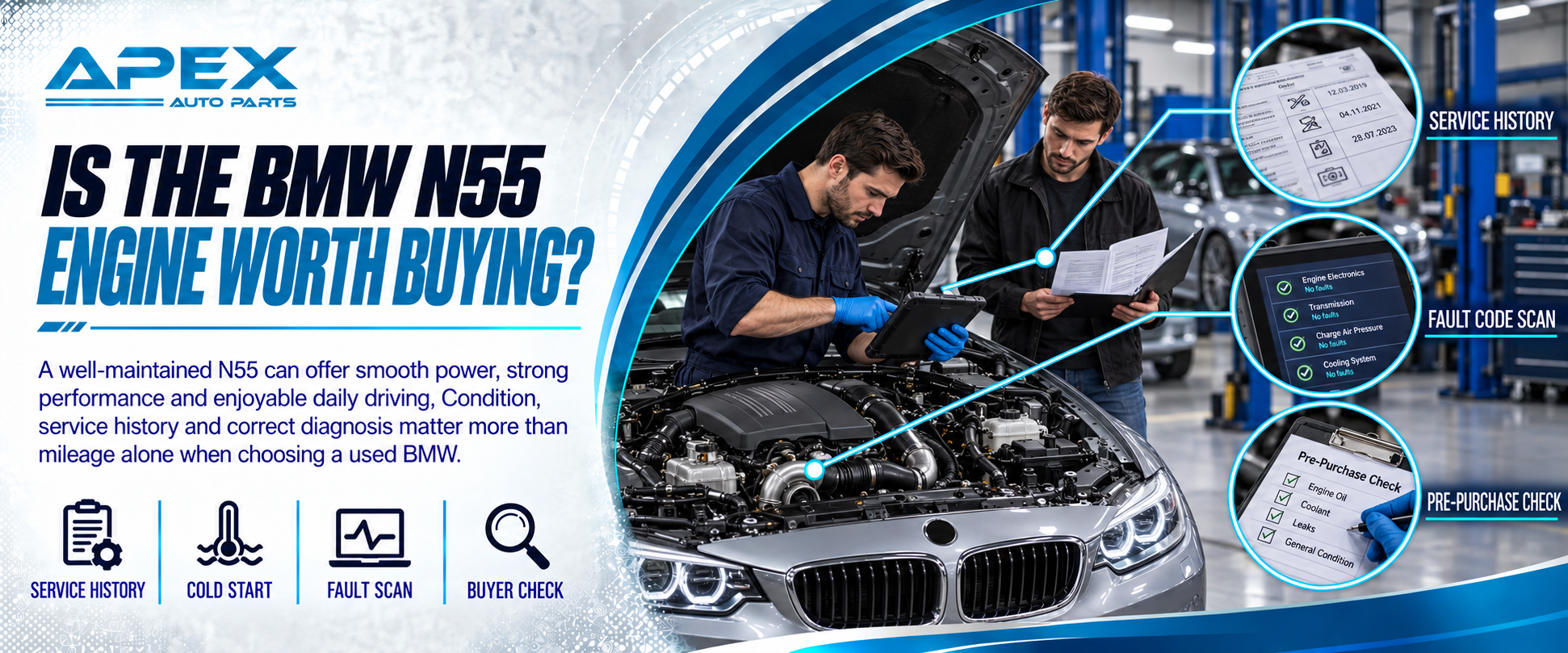
A well-maintained BMW N55 engine can be an excellent choice. It offers strong power, smooth running and a large supply of specialist knowledge and replacement parts.
Its weaknesses are usually known and repairable. The greatest risk comes from buying a neglected car with several hidden faults rather than from the engine design alone.
Choose condition and service history over colour, trim or low mileage. A properly inspected car with proof of maintenance is usually worth paying more for.
For drivers who want a smooth turbocharged BMW with useful tuning potential, the N55 still makes a strong case. Just remember that preventative maintenance is part of ownership.
FAQS
1. Is the BMW N55 engine reliable?
BMW N55 engine reliability is generally good when the engine receives regular oil changes, cooling system care, and early repairs. Common faults usually affect gaskets, the electric water pump, charge pipes, and ignition parts rather than the main engine block. Service history and current condition remain more important than mileage alone.
2. What are the most common BMW N55 engine problems?
The main BMW N55 engine problems include oil filter housing leaks, valve cover leaks, electric water pump failure, cracked charge pipes, ignition coil faults, and carbon deposits. Some cars may also develop fuel pressure or turbo control problems. Proper testing should identify the actual cause before replacement parts are purchased.
3. Which BMW has N55 engine options?
Drivers asking which BMW has N55 engine options should look at selected 135i, M135i, M235i, 335i, 435i, 535i, 640i, 740i, X3, X4, X5 and X6 models. The original BMW M2 also used an N55 version. Availability depends on production year and market.
4. How long can a BMW N55 engine last?
A maintained BMW N55 engine can cover well beyond 100,000 miles, and many examples travel much farther. There is no fixed lifespan because service quality, driving habits, and previous repairs all matter. Regular oil changes, cooling checks, and prompt leak repairs can greatly improve its useful life.
5. What are the signs of BMW N55 water pump failure?
Common signs of BMW N55 water pump failure include overheating warnings, a cooling fan running at high speed, reduced engine power, and coolant temperature rising quickly. The thermostat or another cooling fault can create similar symptoms, so diagnostic testing should confirm pump operation before a replacement is fitted.
6. Is the BMW N55 turbo engine good for tuning?
The BMW N55 turbo engine responds well to sensible tuning when it is healthy. A remap can increase torque and power, but the cooling system, spark plugs, coils, charge pipe, and fuel system should be checked first. Aggressive tuning on a neglected engine can quickly expose weak components.
7. Does the BMW N55 have timing chain problems?
Timing chain failure is not usually listed among the leading BMW N55 common issues, but wear can still occur. Unusual rattling, timing faults, or metal in the oil need investigation. Correct oil and sensible service intervals help protect the chain, guides, tensioner, and variable timing system.
8. Why does an N55 engine misfire under acceleration?
An N55 may misfire under acceleration because boost increases pressure inside the cylinders. Worn spark plugs or weak ignition coils may then struggle to ignite the mixture. Injector faults, boost leaks, and fuel pressure problems can cause similar symptoms, so fault codes and live data should be checked before parts are replaced.
9. Is the N55 better than the N54?
The N55 normally offers a simpler single turbo layout, smooth power delivery, and improved everyday efficiency. The N54 may support higher tuning levels with standard turbo hardware, but it can bring more fuel system and turbo-related concerns. The better choice depends on condition, maintenance history, and the owner’s power goals.
10. Should I buy a high mileage BMW with an N55 engine?
A high-mileage BMW N55 engine can be worth buying if it starts cleanly, runs smoothly, and has strong service records. Check for coolant loss, oil leaks, boost faults, and past cooling repairs. A specialist inspection is more useful than judging the car by mileage alone, especially before an expensive purchase.
References:
press bmw group
bmw group