
 info@apexautoparts.co.uk
 +44 203 915 7535
 Safe & Fast Shipping
 Whish List
 Compare
 Sign In


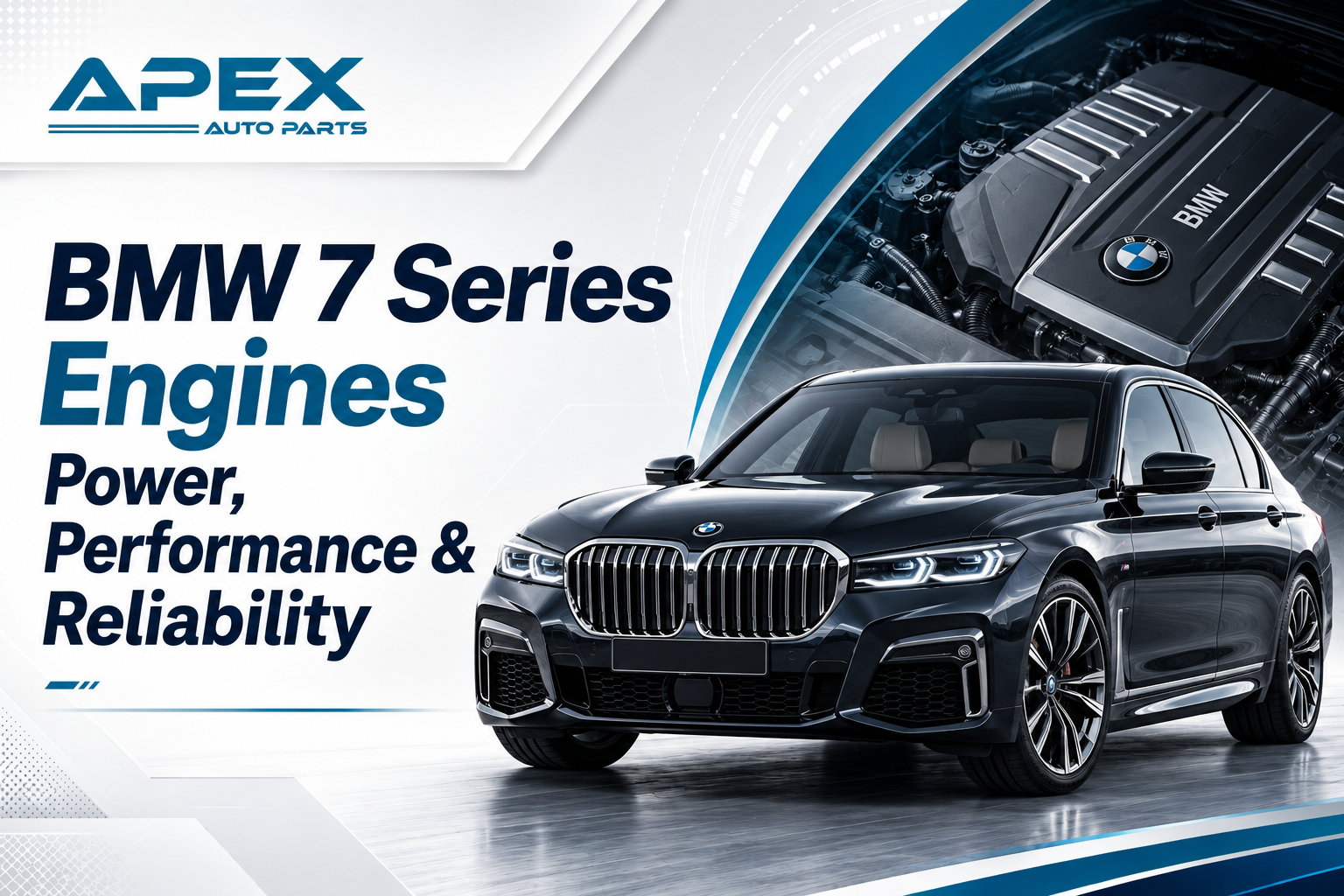
The BMW 7 Series has always been the car BMW uses to show what its biggest luxury saloon can do. Since the first generation arrived in 1977, the 7 Series has used everything from simple straight-six petrol engines to V8s, V12s, turbo diesels, plug-in hybrids and fully electric power. That huge engine range is one of the reasons buying a used 7 Series needs more thought than simply choosing the model with the biggest number on the boot.
A BMW 730d, 740i, 750i and 760i may all sit within the same model family, but the engines underneath can be completely different. Their maintenance needs, fuel use, repair costs and common faults also vary considerably. This is why BMW 7 Series engine reliability should always be judged according to the exact generation and engine rather than treating every 7 Series as one car.
The first E23 generation started with naturally aspirated straight-six petrol engines. BMW later added the turbocharged 745i, which produced 252 hp and was very powerful for a luxury saloon of its time. The following generations expanded into V8, V12 and diesel power before BMW moved heavily towards turbocharging. Today, the latest 7 Series also includes plug-in hybrid and fully electric options.
That development has improved performance, economy and comfort, but it has also made diagnosis more important. An old E32 may need a mechanic to look for vacuum leaks, worn cooling parts or ageing ignition components. A newer plug-in hybrid 7 Series may need checks on a petrol engine, electric motor, high-voltage battery and several electronic control systems before the real fault is found.
This guide explains the major BMW 7 Series engine types, the common BMW 7 Series engine problems owners should know about, and what can be done to improve reliability. It also covers the importance of correctly matching BMW 7 Series engine parts before a repair begins.
Understanding the BMW 7 Series Engine History
The first BMW 7 Series was the E23, introduced in 1977. BMW initially offered 2.8 litre, 3.0 litre and 3.2 litre straight-six engines. The later 745i became the performance flagship and used a turbocharged six-cylinder engine producing 252 hp.
The E32 followed in 1986 and pushed the 7 Series further into luxury car territory. It became particularly important because BMW added larger engines, including V8 and V12 power during the generation. The 7 Series was becoming less about simply offering a large six-cylinder saloon and more about competing directly with the most advanced luxury cars in the world.
The E38 arrived in 1994 and broadened the engine range further. BMW offered six-cylinder petrol engines, V8 petrol engines and V12 power, while diesel engines also appeared in the flagship range. BMW's own archive confirms that both six-cylinder and eight-cylinder diesel engines were available during the E38 generation.
The E65 generation launched in 2001 with models including the 735i and 745i. Diesel versions such as the 730d and 740d followed. This generation also introduced much more electronic control, making diagnosis more complicated than on the earlier E38.
Later F01 and G11 generations moved more heavily towards turbocharging. Four-cylinder, six-cylinder and V8 turbo engines became increasingly common, while hybrid power gradually joined the range.
The current 7 Series takes another major step. BMW now offers plug-in hybrid and fully electric models alongside more traditional powertrains in global markets. The latest UK information includes the 750e xDrive plug-in hybrid, while the i7 represents the fully electric side of the range.
Straight Six Petrol Engines
Straight-six engines have always been an important part of BMW's identity, and the 7 Series has used them from the beginning.
Older naturally aspirated six-cylinder engines can feel simple compared with modern BMW units. They have fewer turbo-related systems and less complicated electronic management. This can make them easier to understand and repair, especially for enthusiasts who enjoy working on older cars.
However, simplicity does not automatically mean perfect BMW 7 Series engine reliability.
Older engines are now affected by age. Rubber hoses can become brittle, vacuum pipes can crack, gaskets can leak, and cooling systems can become weak. Ignition parts and fuel systems may also need attention simply because the vehicle has been on the road for several decades.
Later straight-six petrol engines moved towards turbocharging.
Modern units such as BMW's B58 family have a strong reputation compared with some older turbo engines, but they still rely heavily on clean oil, good coolant circulation and healthy electronic controls.
Turbocharged engines produce much more power from a relatively small capacity, which is excellent for performance and fuel efficiency. The trade-off is that more heat and pressure are created, so maintenance becomes even more important.
V8 Engines and the Appeal of the 750i
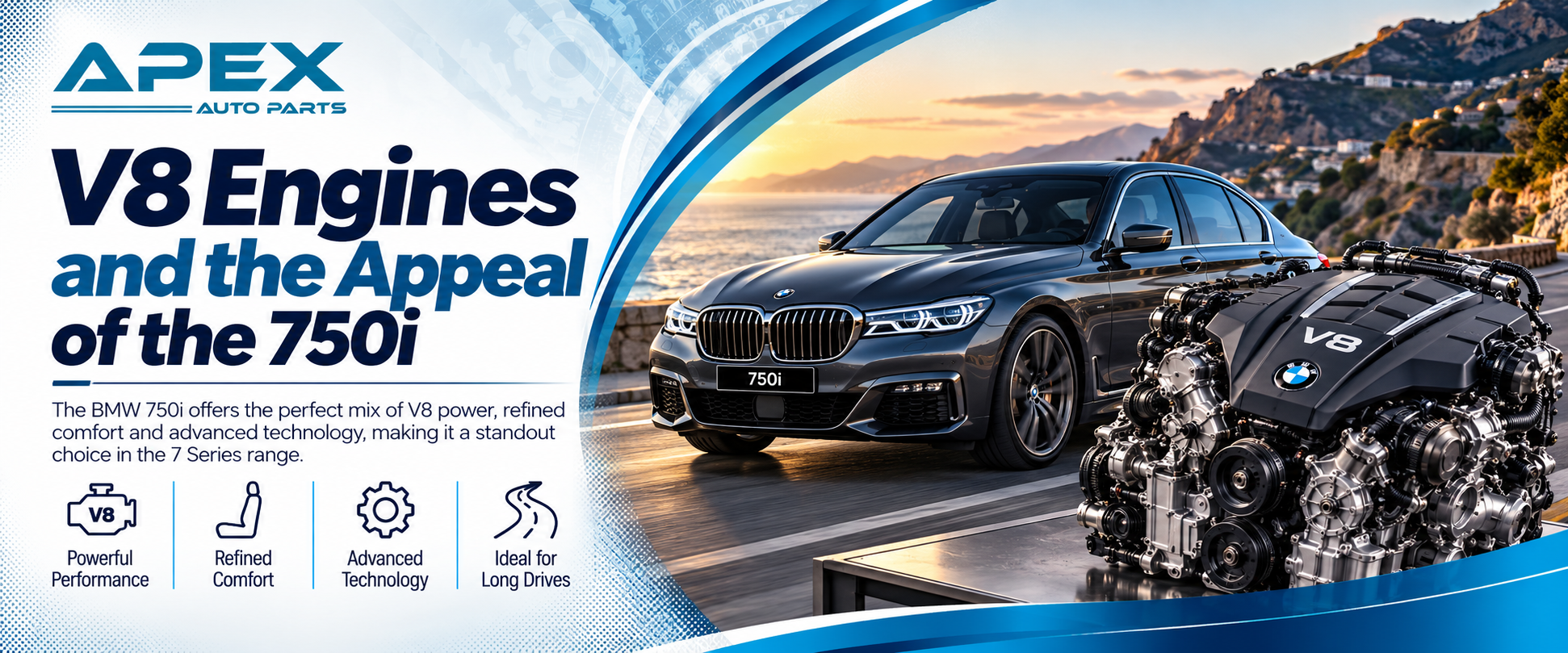
For many buyers, the V8-powered 7 Series is the version that best represents the traditional luxury BMW experience.
Cars such as the 750i combine strong acceleration with smooth power delivery, which suits a large luxury saloon very well. You do not need to rev the engine hard to make quick progress, and the large amount of torque gives the car a relaxed feel on motorways.
Older naturally aspirated V8 engines can be very enjoyable, but they can also develop oil leaks, cooling system faults and seal problems as they age.
Later BMW 750i models used the N63 twin-turbo V8.
This engine produces excellent performance but needs more careful ownership, especially in early versions. BMW specialist sources commonly report excessive oil consumption, timing chain wear, injector problems, valve stem seal faults, and turbo-related issues on early N63 engines.
Later versions were updated significantly, but service history remains very important.
If you are considering a used 750i, look for detailed invoices showing what has already been replaced. A well-maintained example with major known issues already repaired can be a much better purchase than a cheap car with no maintenance records.
N63 V8 Engine Problems
The N63 deserves special attention because it is one of the most powerful and most discussed BMW engines fitted to later 7 Series models.
The engine uses twin turbochargers and places them between the cylinder banks. This design helps improve response, but it also creates a large amount of heat in a compact space.
Early N63 versions are known for several problems. Oil consumption can become high, and leaking valve stem seals can allow oil into the combustion chambers. Timing chain wear has also been reported, along with injector failure, coolant leaks, and turbocharger problems.
These are not minor issues if several appear at once.
A 750i can become very expensive if previous owners have delayed repairs or relied on cheap replacement parts.
When viewing one, start the engine from cold if possible. Listen for rattling noises and watch the exhaust after the engine has been idling. Heavy blue smoke can suggest oil burning and deserves proper investigation.
Also ask how often the engine needs oil added.
If the owner keeps a bottle of engine oil permanently in the boot and cannot explain how much the engine uses, that is something to investigate before buying.
V12 Engines and the 760 Models
For many years, the V12 sat at the top of the 7 Series range.
These engines were designed for smoothness more than anything else. A V12 can deliver large amounts of power with very little vibration, which suits a flagship luxury saloon.
The problem is complexity.
A V12 effectively has two banks of six cylinders, meaning more ignition parts, more fuel system components, more sensors and more components overall than a smaller engine.
When everything works properly, the driving experience can be exceptional.
When maintenance has been ignored, repair costs can be serious.
Older V12 models also suffer from age-related issues such as cooling system deterioration, oil leaks and electrical faults.
For anyone considering an older 760 or V12-powered 7 Series, buying the cheapest car available is rarely a sensible strategy. The purchase price may have fallen dramatically since the car was new, but parts and labour costs have not fallen in the same way.
A full inspection by someone familiar with BMW V12 engines is strongly recommended.
Diesel Engines and the 7 Series
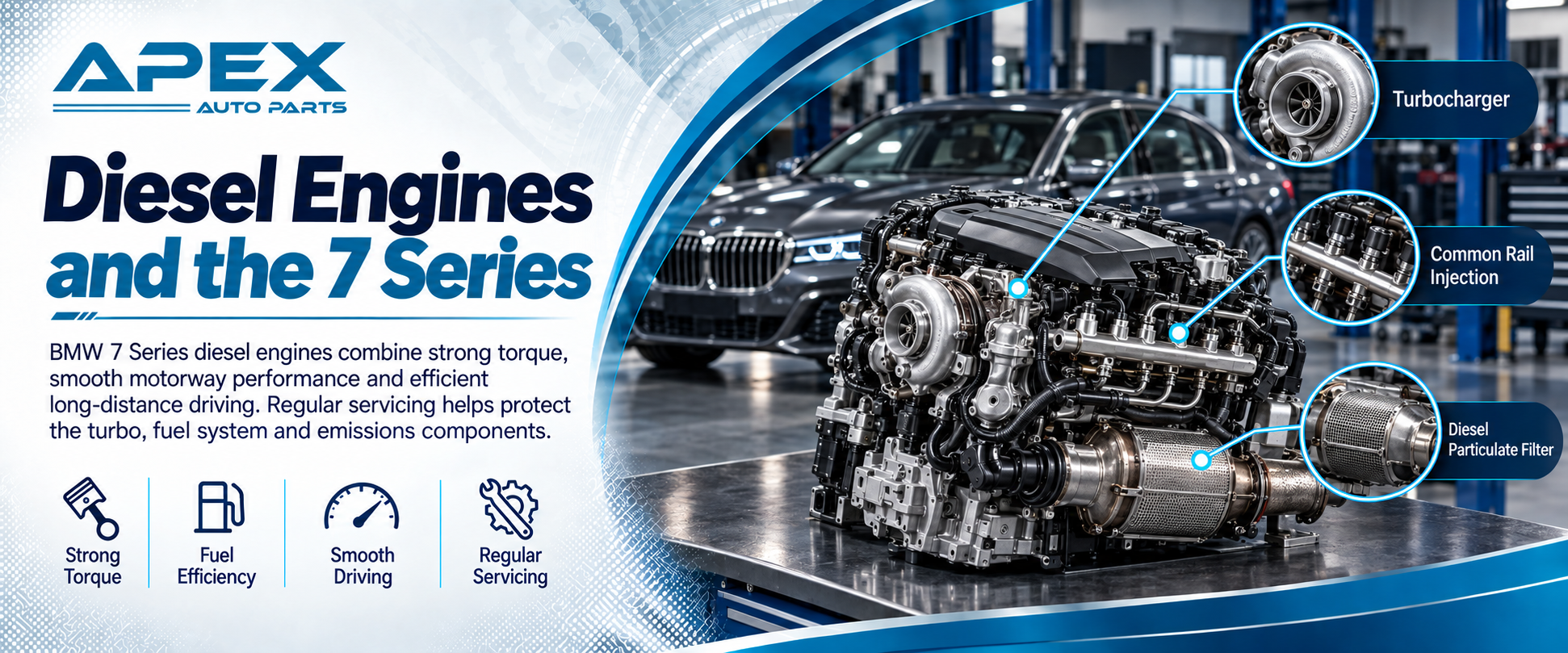
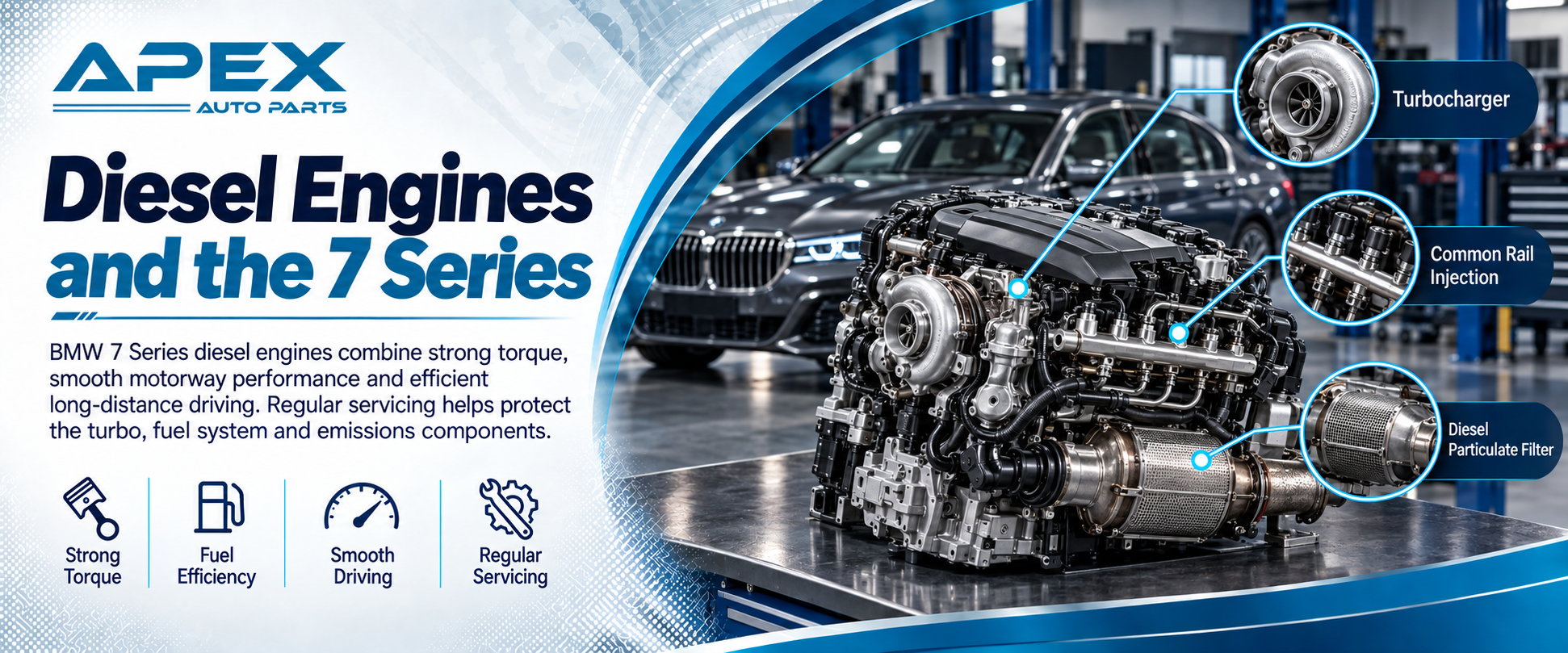
Diesel power became increasingly important in the 7 Series because it suits long-distance luxury driving very well.
A large diesel engine produces strong torque at low engine speed, which means the car can accelerate smoothly without needing high revs. Fuel economy can also be much better than a large petrol V8.
Models such as the 730d became popular with drivers covering large motorway distances.
Six-cylinder BMW diesel engines can be strong and long-lasting when they receive regular servicing, but modern diesel engines include far more than the engine itself.
The turbocharger, EGR system, diesel particulate filter, injectors and high-pressure fuel system all need to work correctly.
BMW 7 series engine problems on a diesel may therefore begin outside the main engine block.
A car may lose power because of an air leak, EGR issue or DPF restriction rather than internal engine failure.
Proper diagnosis becomes extremely important because guessing at diesel problems can quickly become expensive.
Diesel Particulate Filter Problems
The diesel particulate filter is designed to trap soot from the exhaust.
The engine management system periodically raises exhaust temperature so that much of this soot can be burned away.
The problem is that the vehicle needs suitable driving conditions for this cleaning process to work properly.
A 730d that regularly travels long motorway distances may suit the system very well.
A diesel 7 Series used almost entirely for short city journeys may have a harder time completing regeneration.
If soot builds up faster than the system can remove it, warning lights and reduced performance may appear.
Do not assume the filter itself is always faulty.
A thermostat problem, sensor fault, or EGR issue can prevent regeneration from completing correctly.
A mechanic should investigate the whole system before recommending an expensive DPF replacement.
EGR Problems on Diesel Engines
The EGR system helps reduce emissions by sending a controlled amount of exhaust gas back through the engine intake.
Over time, carbon deposits can build up inside the system.
A restricted EGR valve can contribute to poor acceleration, hesitation, rough running, or warning lights.
These symptoms can also overlap with turbo or intake problems, which makes correct testing important.
If a diesel 7 Series feels weak, the mechanic should not immediately order a turbocharger or injectors.
The intake system, EGR system, and boost pressure should be checked first.
Good diagnosis can turn what looks like a major BMW 7 Series engine problem into a much smaller repair.
Turbocharger Problems
Turbochargers are now used across many BMW petrol and diesel engines.
They help produce more power without needing a much larger engine, but they work under intense heat and speed.
Oil condition is extremely important.
Turbo bearings depend on clean oil, so neglected oil servicing can shorten turbocharger life.
Possible warning signs include unusual whistling, reduced power, smoke or increased oil consumption.
However, a loss of boost does not automatically mean the turbo has failed.
A damaged hose, loose pipe or faulty sensor can create very similar symptoms.
The complete air and boost system should be checked before replacement.
A turbocharger can be one of the more expensive BMW 7 Series engine parts, so guessing is particularly costly here.
Oil Leaks
Oil leaks are common on many older luxury cars because seals and gaskets naturally deteriorate with age.
BMW engines are no exception.
A small leak may begin around a rocker cover, oil filter housing, or another sealing area.
At first it may only create a damp patch.
Eventually, however, the leak can become large enough to lower the oil level or spread oil onto other components.
V8 engines deserve particular attention because access can make even a simple gasket job expensive.
The labour involved in reaching a leaking part may cost much more than the gasket itself.
This is why using a good quality replacement component matters.
A cheap gasket that starts leaking again can result in paying the same labour twice.
Check the oil level regularly and investigate leaks early rather than simply topping up the engine for months.
Cooling System Problems
Cooling system health is critical for BMW 7 Series engine reliability.
Large engines generate significant heat, especially when turbochargers are involved.
The cooling system needs to control that temperature during slow city traffic, motorway driving and strong acceleration.
Common cooling faults can involve water pumps, thermostats, expansion tanks, hoses, radiators and smaller plastic fittings.
A small coolant leak may not immediately affect how the car drives.
That does not mean it should be ignored.
If coolant keeps disappearing, there is a fault.
Continuing to drive with low coolant can eventually lead to overheating.
Once an engine seriously overheats, the repair can become far more expensive than replacing the original leaking component.
Check coolant only when the engine is cold, and never remove the expansion cap from a hot pressurised system.
Water Pump Problems
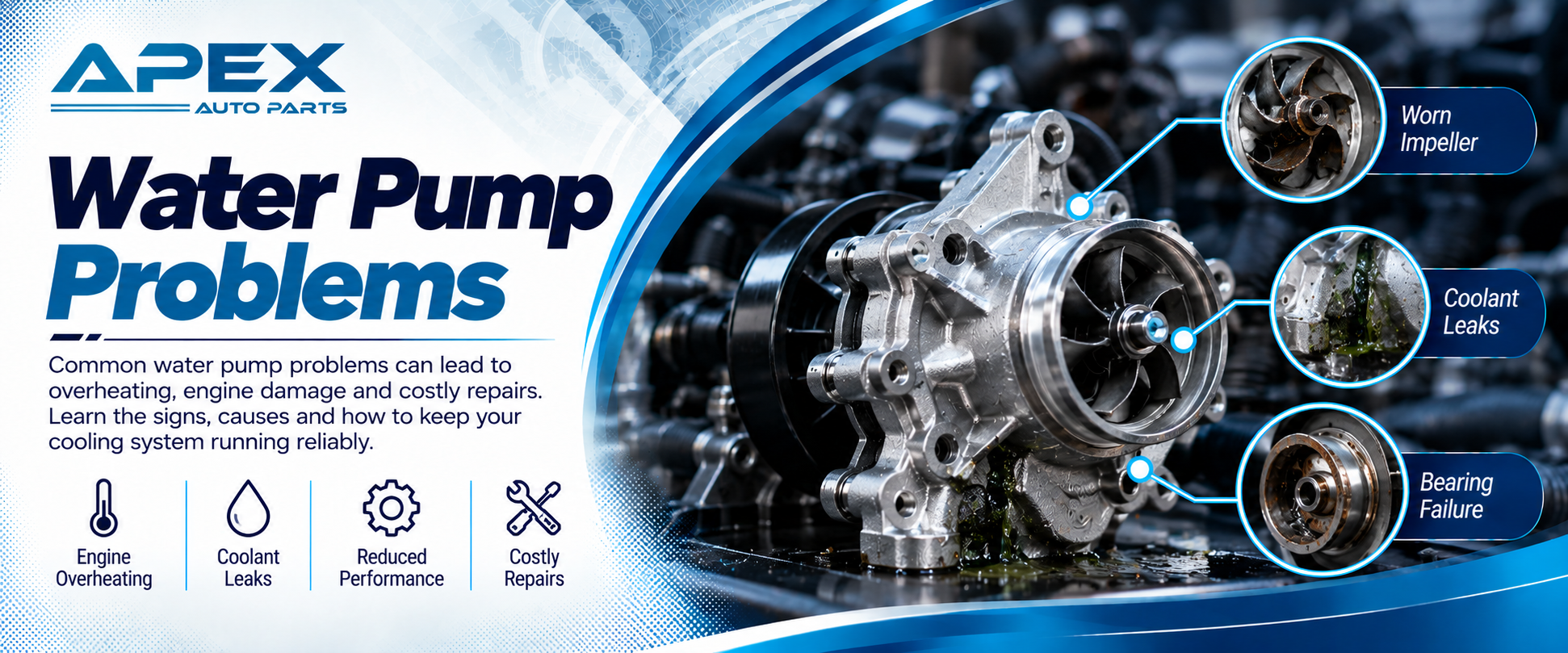
The water pump keeps coolant moving through the engine.
If it stops working correctly, engine temperature can rise quickly.
Some modern BMW engines use electrically controlled water pumps rather than simple belt-driven designs.
This gives the engine management system more control over cooling, but it also means failure may appear through warning messages rather than a simple mechanical noise.
If an overheating warning appears, stop driving as soon as it is safe.
Do not try to reach home because it is only another ten miles away.
Ten miles of overheating can turn a cooling problem into serious cylinder head or engine damage.
If a water pump is replaced, the thermostat and condition of the surrounding cooling system should also be considered depending on age and mileage.
Ignition Coils and Spark Plugs
Petrol BMW engines rely on individual ignition coils and spark plugs.
These components wear over time.
A weak coil may cause the engine to shake, hesitate or misfire.
A worn spark plug can create similar symptoms.
This is one of the situations where a BMW can feel much more seriously damaged than it actually is.
A strong misfire can make a large six-cylinder or V8 engine feel very rough.
The correct approach is to identify which cylinder has the problem and test the ignition and fuel components around it.
Do not immediately replace injectors simply because one cylinder is misfiring.
The issue may be a much cheaper coil or spark plug.
Driving for long periods with a serious misfire should also be avoided because unburned fuel can damage expensive exhaust components.
Fuel Injector Problems
Direct injection is used on many modern BMW petrol engines.
It allows very accurate fuel control and helps improve performance and economy.
However, high-pressure fuel injectors can become expensive when they fail.
Symptoms may include difficult starting, rough idle, misfires, and poor fuel economy.
Early N63 V8 engines are particularly known for injector-related problems.
The important point is that symptoms alone do not prove the injector is bad.
Ignition coils, spark plugs, air leaks, and fuel pressure problems can create similar behaviour.
A mechanic should use fault information and proper testing before replacement.
BMW 7 Series engine parts can be costly, and changing several injectors unnecessarily is an expensive way to diagnose a car.
Timing Chain Wear
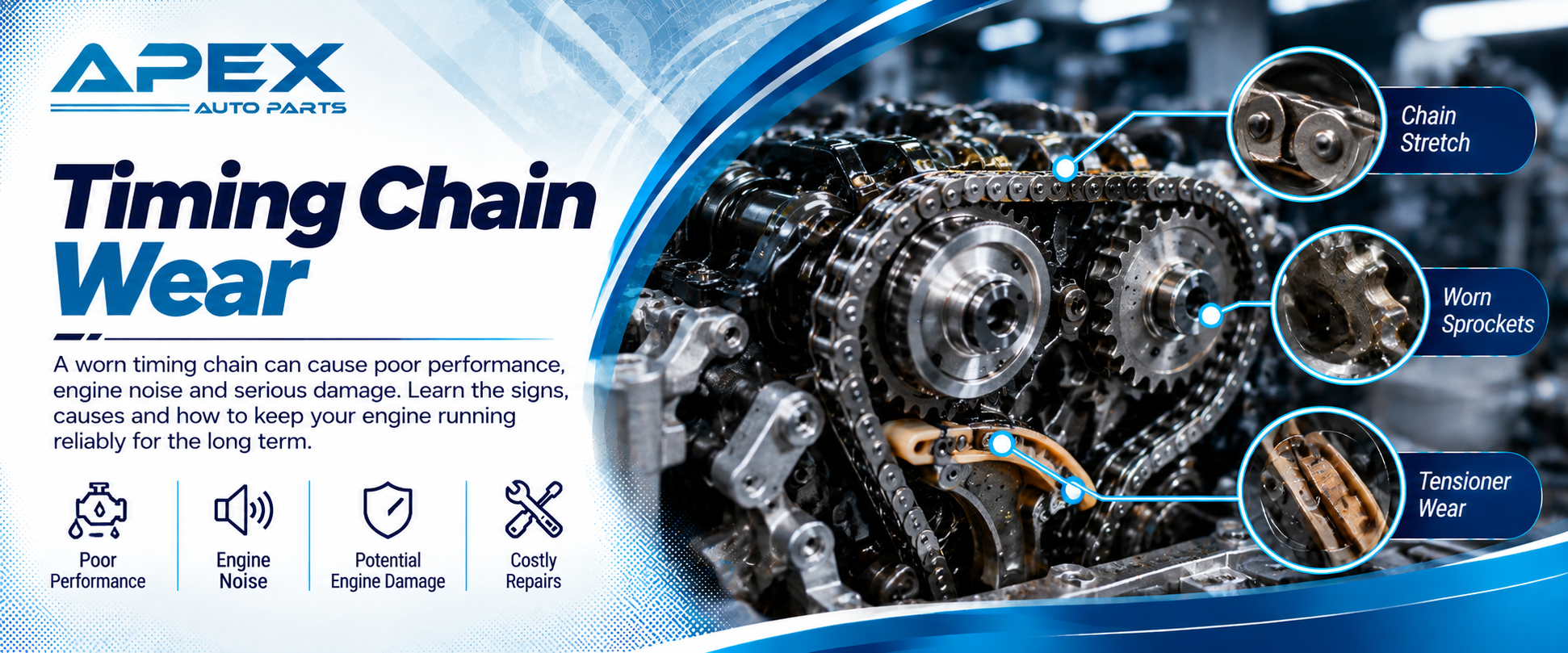
Timing chains keep the crankshaft and camshafts working in the correct relationship.
Major chain failure can cause serious internal engine damage.
Some BMW engines have stronger timing systems than others, so this is not a problem that should be applied to every 7 Series.
The early N63 V8 is one of the engines associated with timing chain wear.
Possible warning signs can include rattling noises or timing-related diagnostic faults.
Oil quality also matters because chains and tensioners depend on lubrication.
If a strong mechanical rattle develops during cold starting, do not simply accept it as normal BMW noise.
Have the engine checked.
Early investigation can be much cheaper than waiting for the timing system to fail.
Crankcase Ventilation Problems
The crankcase ventilation system controls pressure and oil vapour inside the engine.
If it stops working properly, pressure can build up inside the crankcase.
This can contribute to oil leaks and increased oil consumption.
The engine may also begin idling poorly if the ventilation system creates an unwanted air leak.
On older vehicles, hoses, and rubber parts can become brittle.
If several oil leaks appear around the engine, it is worth checking whether crankcase pressure is part of the reason rather than simply replacing each gasket.
This is another example of why repairing the cause is better than repeatedly repairing the symptom.
Sensor and Engine Management Faults
Modern 7 Series engines use a large network of sensors.
They monitor airflow, pressure, engine temperature, fuel pressure, exhaust conditions, and many other values.
A faulty sensor can cause reduced power, poor fuel economy, or warning lights even when the mechanical engine itself is healthy.
The danger is treating a fault code as proof that the sensor named in the code is broken.
A code tells the mechanic where an unusual reading has been detected.
It does not always tell you why.
A split hose, damaged wire, or another mechanical fault may cause a perfectly healthy sensor to report a problem.
Live data and proper physical checks should be used before expensive components are replaced.
The G11 7 Series and Modern Engine Reliability
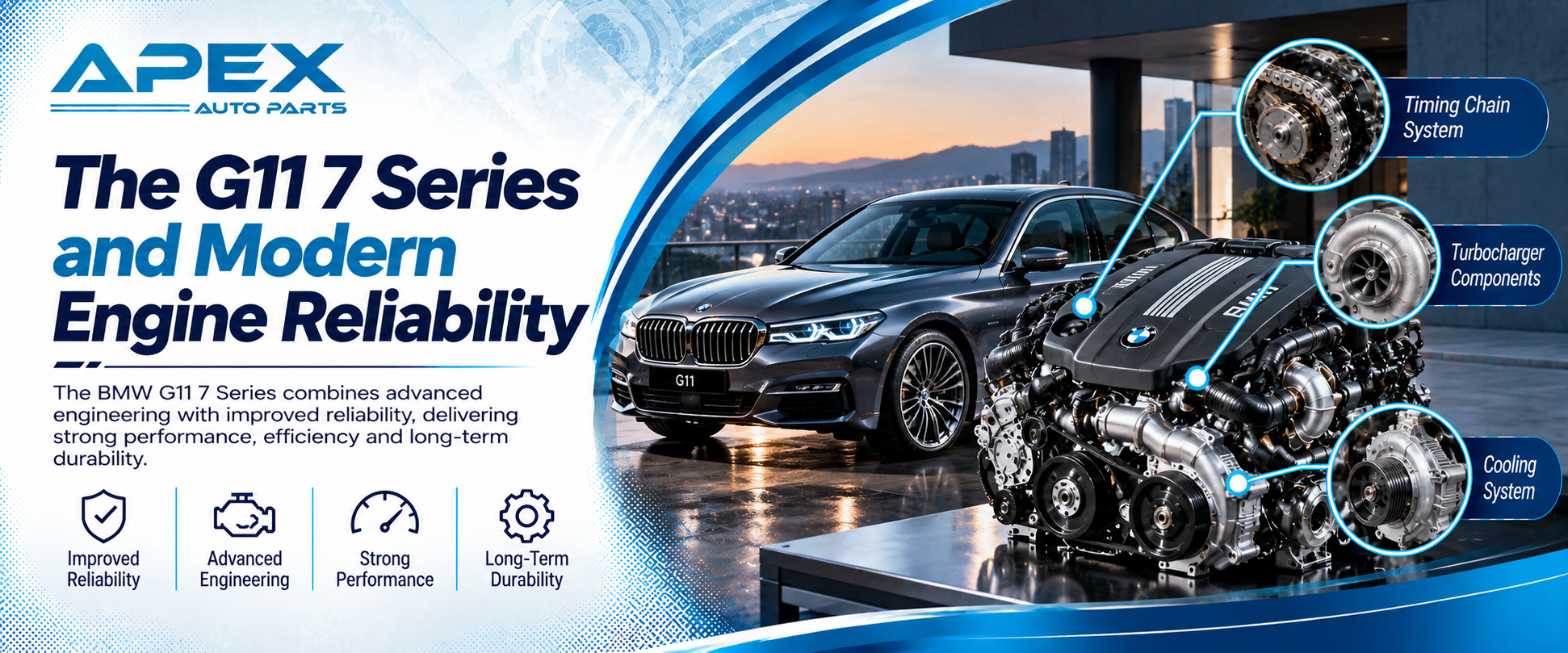
The G11 generation moved the 7 Series into a much more modern engine era.
Six-cylinder petrol and diesel engines became important, while V8 and plug-in hybrid versions were also available.
For many buyers, six-cylinder engines offer a good balance between performance and running costs.
Modern BMW six-cylinder units can be very strong when maintained correctly.
However, supporting systems such as cooling, sensors and turbocharging still need attention.
The V8-powered 750i provides much more performance but also increases complexity and repair cost.
Later versions of the N63 received several technical updates compared with the earliest engines. BMW specialist sources describe multiple N63 revisions over the years, including updated versions used in later G11 and G12 750i models.
This is why it is important not to assume every N63 is identical.
Production year and exact engine version matter.
The Latest 7 Series and Plug-In Hybrid Power
The current 7 Series takes a very different approach from older generations.
BMW's latest UK information includes the 750e xDrive plug-in hybrid. It combines a 2,998 cc six-cylinder petrol engine with an electric motor. BMW lists total system output at 489 hp and 700 Nm for the current specification.
This is an impressive amount of performance for a large luxury saloon.
BMW states that the current 750e xDrive can accelerate from 0 to 62 mph in 4.8 seconds. It also offers an electric driving range of around 50 miles under the quoted WLTP specification.
From a reliability point of view, however, a plug-in hybrid changes the repair process.
The vehicle now has a petrol engine, electric motor, high-voltage battery, charging equipment and additional electronic controls working together.
A loss of performance may not be an engine problem at all.
It could involve the battery, electric motor or control system.
Workshops therefore need appropriate training and diagnostic equipment before replacing parts.
Fully Electric i7 and the End of the Traditional Engine
The latest 7 Series family also includes the fully electric BMW i7.
This changes the meaning of BMW 7 Series engine parts completely because the i7 has no petrol or diesel engine.
There are no spark plugs, traditional engine oil filters, injectors or turbochargers.
Instead, the vehicle uses electric motors, a high-voltage battery, charging equipment and thermal management systems.
BMW's current 2026 UK information lists fully electric variants alongside the plug-in hybrid 7 Series and continues to position the i7 as the electric flagship of the range.
For workshops and parts suppliers, accurate vehicle identification therefore matters more than ever.
The words "BMW 7 Series" now describe cars that may have completely different forms of propulsion.
BMW 7 Series Engine Reliability
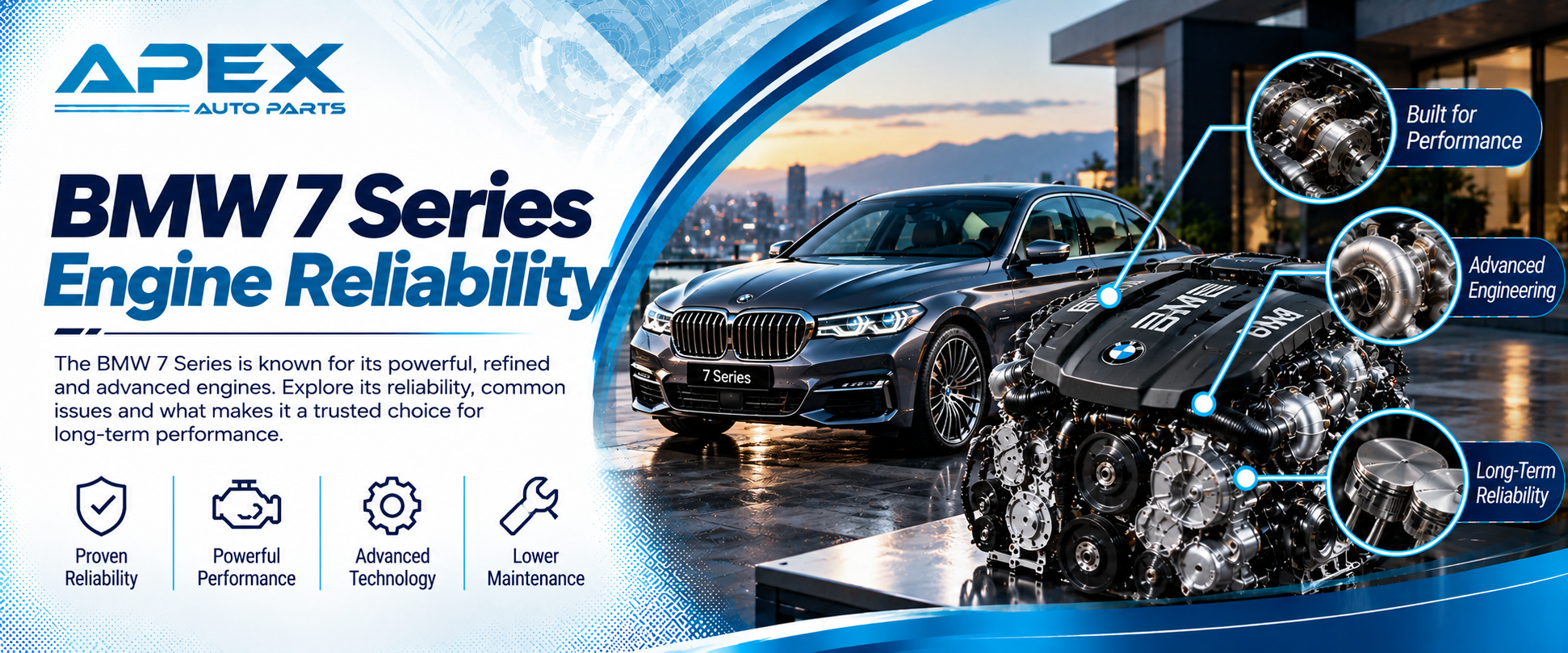
There is no single answer to whether the BMW 7 Series engine reliability is good.
Some engines can be very strong.
Others require more careful ownership.
The six-cylinder engines are often attractive because they provide enough power for the large body without the added complexity and heat of some V8 engines.
A diesel 730d can also suit high-mileage drivers very well when it regularly completes long journeys.
The early N63-powered 750i deserves more caution because of its known oil consumption, timing chain, injector and turbo issues. Later versions improved several areas, but maintenance history should still be checked closely.
V12 models can be mechanically impressive but are expensive to repair because there are more components and limited working space.
Hybrid models are too different to judge using the same rules as older petrol cars.
The best BMW 7 Series is usually the one with the strongest maintenance history rather than simply the biggest engine.
What Affects BMW 7 Series Engine Reliability Most?
Maintenance quality matters more than most buyers realise.
A BMW engine that has received regular oil changes, correct coolant and early repairs can remain healthy for a long time.
A vehicle with neglected oil servicing and repeated overheating can develop expensive problems much earlier.
Driving conditions also matter.
A diesel used for long motorway journeys may suit its emissions equipment better than one driven only a few miles each day.
Modifications should also be considered.
Increasing boost or engine power adds stress to the cooling, ignition and fuel systems.
A tuned vehicle should have evidence that maintenance has been increased to match the extra performance.
The quality of previous repairs matters as well.
A properly fitted quality component can last for years.
A cheap part installed badly can create another problem very quickly.
How to Improve BMW 7 Series Engine Reliability
The best way to improve reliability is to deal with basic maintenance before there is a problem.
Keep the engine oil at the correct level and use oil that meets the correct specification.
Check coolant regularly.
Repair leaks rather than continuing to top up fluids.
If the car begins making a new noise, investigate it.
Do not wait until the noise becomes much louder.
A sensible maintenance routine includes:
- Regular engine oil checks
- Correct oil and filter servicing
- Coolant level checks when cold
- Early repair of oil and coolant leaks
- Spark plug servicing on petrol models
- Fuel system maintenance on diesel models
- Investigation of warning lights
- Proper turbo and boost system checks
- Correct battery maintenance
- VIN-based parts identification
Preventive maintenance may cost money, but it normally costs much less than repairing an engine after lubrication or overheating damage.
What to Check Before Buying a Used BMW 7 Series?
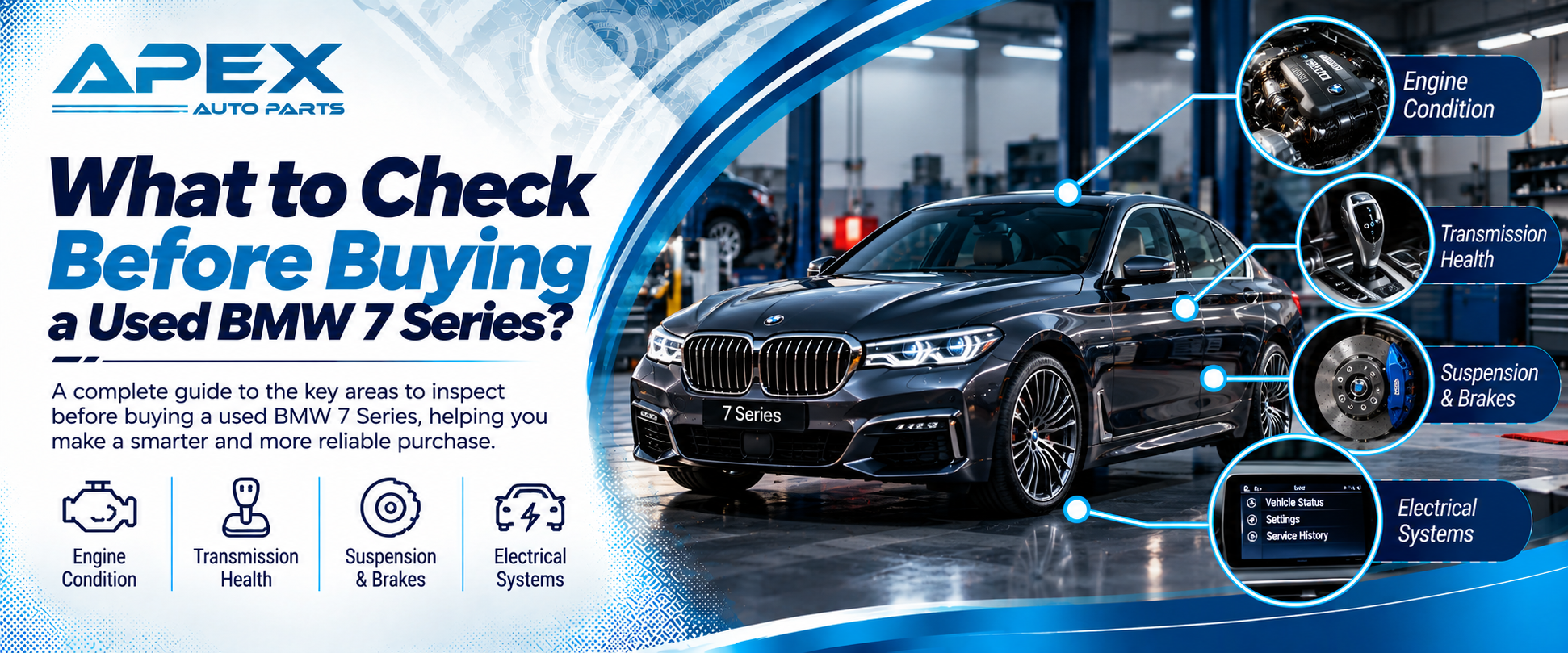
A used 7 Series should never be bought purely because it looks luxurious and the price seems low.
These cars become much cheaper as they age, but the cost of repairing their engines and electronics does not fall at the same rate.
Start with service history.
Look for evidence of regular oil changes, cooling system repairs and any major engine work.
Try to inspect the car when the engine is cold.
Check the oil and coolant before starting.
Listen carefully during the first few seconds after startup.
Strong rattling, knocking, or heavy smoke should be investigated.
Take the vehicle on a proper test drive and allow everything to reach working temperature.
Check acceleration, gear changes, temperature and warning messages.
After the drive, inspect underneath for fresh oil or coolant.
A pre-purchase inspection from a BMW specialist is especially worthwhile on V8 and V12 cars.
Is a High-Mileage BMW 7 Series Worth Buying?
High mileage does not automatically make a 7 Series a bad purchase.
These cars are designed for long-distance travel, so many have spent years covering motorway mileage.
A 730d with 120,000 miles and an excellent service history may be a much safer purchase than a 60,000-mile car that has missed services and completed only short journeys.
Look at how the miles were covered.
Check whether major maintenance has already been completed.
A high-mileage car that has already received cooling, suspension and engine repairs may actually save you money compared with a lower-mileage example where everything is still original and approaching the end of its life.
Mileage should be part of the decision.
It should not be the whole decision.
Buying BMW 7 Series Engine Parts
Correct identification is critical when ordering BMW 7 Series engine parts.
Across its history, the 7 Series has used naturally aspirated straight-six engines, turbocharged six cylinders, V8s, V12s, diesels and plug-in hybrids.
The same model badge can also mean different engines depending on production year.
Before ordering replacement components, check:
- VIN
- Model year
- Exact engine code
- Fuel type
- Production date
- Existing part number where possible
- Whether the vehicle is hybrid
At Apex Auto Parts, accurate vehicle information helps make sure the component supplied matches the exact application.
This can prevent fitting problems, unnecessary returns and wasted workshop time.
Correct matching matters particularly with sensors, crankshafts, cylinder heads, gaskets, cooling components, turbochargers, and internal engine parts.
Why Quality BMW 7 Series Engine Parts Matter?
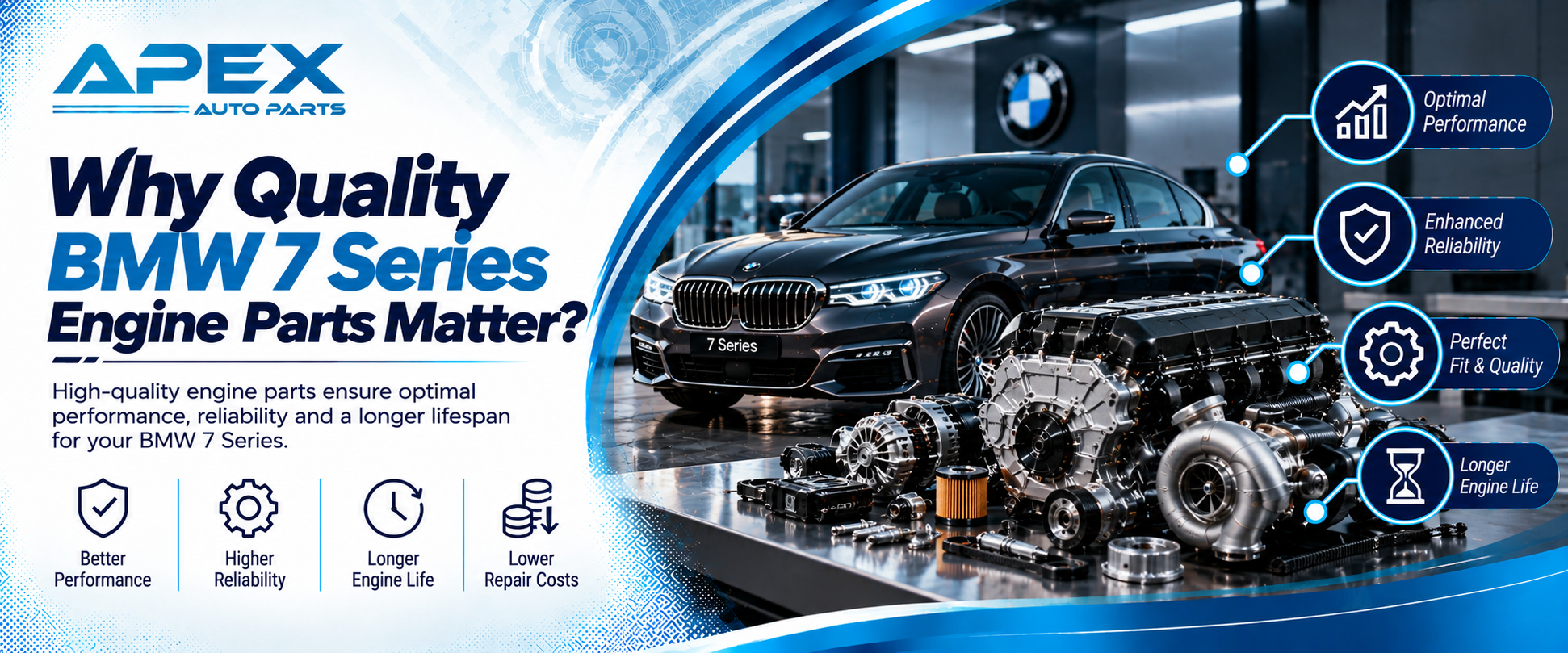
A 7 Series can be expensive to work on because many components are difficult to access.
That means the labour charge can sometimes be higher than the cost of the replacement part.
Fitting a poor-quality gasket or sensor, therefore, makes little financial sense.
If the part fails again, the workshop may need to repeat several hours of labour.
A quality cooling component is especially important because failure can put the entire engine at risk.
The goal should not be to buy the most expensive part automatically.
The goal should be to buy a correctly specified part from a reliable supplier.
Cheap parts are only cheap when they work properly.
Why Should Diagnosis Come Before Buying Parts?
Modern BMW 7 Series cars can store a large amount of diagnostic information.
That does not mean a fault code should be treated as a direct instruction to replace something.
Suppose a 750i loses power and shows a boost-related code.
The turbocharger could be faulty.
The problem could also be a boost leak, hose, sensor, or wiring fault.
If the turbo is replaced without testing, thousands of pounds can be spent without fixing the vehicle.
The same applies to injector faults and misfires.
Diagnosis should come first.
A mechanic should check live values, physical condition, and relevant pressures before ordering major BMW 7 Series engine parts.
At Apex Auto Parts, a confirmed diagnosis and correct vehicle details also make it much easier to identify the component actually required.
Which BMW 7 Series Engine Is the Best Choice?
The answer depends on what you want from the car.
A six-cylinder petrol model can provide a good mix of performance and smoothness without the same level of V8 complexity.
A six-cylinder diesel, such as a 730d, can suit drivers covering large motorway distances.
A V8 750i provides much stronger performance but can be more expensive to maintain, particularly if you are considering an early N63-powered example.
A V12 offers the smoothest traditional flagship experience but should only be considered if you are prepared for the maintenance costs.
Newer plug-in hybrid models provide impressive power and the ability to complete some journeys using electricity, but they add high-voltage systems to the ownership picture.
There is no universal best engine.
There is only the engine that best suits your driving, budget and willingness to maintain it properly.
Final Thoughts
The BMW 7 Series has used some of the most interesting engines BMW has produced.
The original E23 began with straight-six petrol engines and later added the turbocharged 745i. Later generations introduced V8 and V12 power, followed by diesel engines and increasingly advanced turbocharging. Today, the current 7 Series combines six-cylinder petrol power with plug-in hybrid technology, while the i7 represents the fully electric side of BMW's flagship saloon range.
The BMW 7 Series engine reliability varies greatly between these engines.
Six-cylinder versions can offer a strong balance between performance and ownership cost. Diesel models can be excellent for long-distance driving. V8 and V12 versions provide much more performance and character but also increase complexity.
Early N63-powered 750i models need particular care because oil consumption, timing chain wear, injector problems, and turbo-related faults are widely documented.
BMW 7 Series engine problems should always be diagnosed before replacement parts are ordered.
A loss of power does not automatically mean the turbo has failed. Rough running does not automatically mean the injectors need replacing. Coolant loss should not be ignored until the engine overheats.
When BMW 7 Series engine parts are required, accurate matching is essential because the range has used so many different engines.
Apex Auto Parts can help with identifying the correct replacement components when the VIN, engine information and part details are supplied.
The BMW 7 Series can be a rewarding car to own, but the cheapest example is rarely the smartest purchase. Buy based on engine condition, maintenance history and repair quality. A well-cared-for 7 Series will nearly always make more sense than a neglected flagship that looks like a bargain.
FAQS
1. Is the BMW 7 Series engine reliable?
The BMW 7 Series engine reliability depends on the exact engine and service history. Six-cylinder petrol and diesel versions can provide strong reliability when properly maintained, while some V8 engines require more attention. Regular oil servicing, cooling system maintenance and early diagnosis of warning signs can make a major difference.
2. What are the most common BMW 7 Series engine problems?
BMW 7 Series engine problems can include oil leaks, coolant loss, turbo faults, ignition problems, injector issues and timing-related wear. Diesel versions may also experience EGR and DPF problems. Early N63 V8 engines deserve particular attention because several oil, timing, injector and turbo issues are well documented.
3. Is the BMW 750i engine reliable?
A BMW 750i can be reliable when maintained properly, but early N63-powered versions need careful inspection. Known concerns include excessive oil consumption, valve stem seal wear, injector problems, timing chain issues, and turbo faults. Later N63 versions received updates, so engine version and service history matter greatly.
4. Is the BMW 730d reliable?
A well-maintained 730d can be a strong long-distance luxury car because BMW's six-cylinder diesel engines provide good torque and fuel economy. Buyers should still check the turbo, injectors, EGR system and DPF. Regular motorway driving generally suits modern diesel emissions equipment better than repeated short urban journeys.
5. Why does my BMW 7 Series lose coolant?
Coolant loss can come from hoses, water pumps, thermostats, radiators, expansion tanks or other cooling system connections. Regular coolant loss is not normal and should be investigated. Continuing to drive with a low coolant level can cause overheating and turn a relatively small cooling fault into serious engine damage.
6. Why is my BMW 7 Series burning oil?
Oil burning can be caused by internal wear, valve stem seal problems, turbo faults or other engine issues. Early N63 V8 engines are particularly known for excessive oil consumption. If oil use increases significantly or blue smoke appears, the engine should be diagnosed rather than simply topped up repeatedly.
7. Are BMW 7 Series engine parts expensive?
BMW 7 Series engine parts range from affordable service components to very expensive turbo, V8, V12, and internal engine parts. Labour can also be high because some components are difficult to reach. Correct diagnosis and accurate parts matching help prevent money being wasted on parts that do not need replacing.
8. Is a high-mileage BMW 7 Series worth buying?
A high-mileage 7 Series can be worth buying if it has strong maintenance records and has been serviced correctly. Long motorway mileage is not automatically bad for these cars. Check engine condition, cooling system health, gearbox behaviour and previous repairs rather than deciding only from the mileage shown on the dashboard.
9. Which BMW 7 Series engine is best?
For many owners, a six-cylinder petrol or diesel engine provides the best balance between performance and running costs. V8 models offer much stronger performance but can be more expensive to maintain. The best engine depends on how the vehicle will be used and how well the specific car has been maintained.
10. Where can I buy BMW 7 Series engine parts?
BMW 7 Series engine parts can be sourced through specialist suppliers such as Apex Auto Parts. Before ordering, provide the VIN, exact engine, model year, and existing part number where possible. Correct identification is especially important because the 7 Series has used six-cylinder, V8, V12, diesel, and hybrid powertrains.
References:
bmw group