 info@apexautoparts.co.uk
 +44 203 915 7535
 Safe & Fast Shipping
 Whish List
 Compare
 Sign In

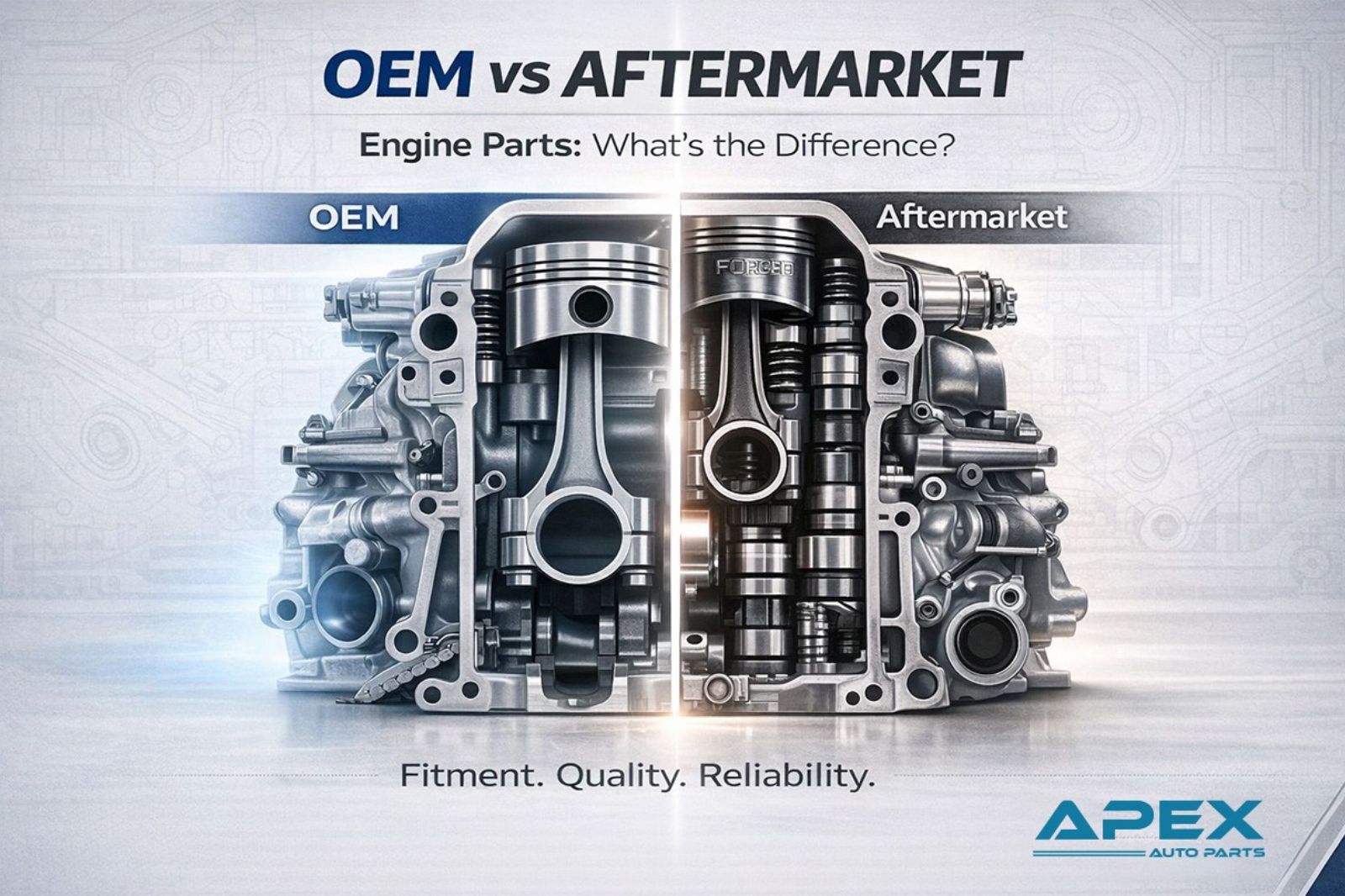
When an engine starts giving trouble, most people do not walk into the parts decision with confidence. They walk in with a problem. The car is smoking, losing power, overheating, rattling, leaking oil, or sitting dead on the drive. The garage says a part needs replacing, and then comes the question that can change the whole repair bill.
Do you buy OEM parts or go for aftermarket engine parts?
That choice sounds simple until money, time, reliability, and fitment all get involved. One part might cost twice as much as another. One might come in a plain box but be made by the same kind of supplier that makes parts for the car brands. Another might look cheap for a reason. A garage may prefer one route. A driver may prefer another. If you are rebuilding an engine, replacing a timing kit, buying a gasket set, fitting bearings, sorting a turbo issue, or dealing with a diesel engine fault, the wrong choice can turn a normal repair into another breakdown.
I have seen people spend good money on parts that were never right for the job. I have also seen people overpay for a badge on a box when a proper aftermarket part would have done the same work without any issue. That is why the whole OEM vs Aftermarket debate needs a bit of plain talk.
The best choice is not always the most expensive one. It is also not always the cheapest one. The best choice is the part that fits properly, works properly, lasts properly, and makes sense for the job in front of you.
What Do OEM Parts Actually Mean?
OEM stands for Original Equipment Manufacturer. In simple terms, OEM parts are made to match the parts fitted to the vehicle when it was built. These parts are either made by the vehicle maker itself or by a supplier that makes parts for that vehicle maker.
That last bit matters. A lot of drivers think every part in a car comes directly from BMW, Mercedes, Ford, Jaguar, Land Rover, Audi, Volkswagen, Toyota, or any other car maker. That is not how the parts world works. Car makers build the vehicle and control the standards, but many parts are made by outside manufacturers. The same company that supplies a part to a car maker may also sell parts under its own brand.
So when someone says OEM parts are better, what they usually mean is that the part is built to match the original spec. It should fit the same way, connect the same way, and perform the same job with the same expected standard.
That makes OEM parts a safe choice in many engine jobs. If a vehicle has a sensitive part, a part that controls oil pressure, timing, fuel delivery, emissions, or cooling, OEM can be a good route because the tolerances are tight. Engines do not forgive bad fitment. A small difference in a seal, bearing, valve, sensor, pump, or gasket can cause a big problem later.
But OEM does not always mean perfect. It does not always mean better value either. Sometimes the original part had a known weakness. Sometimes the OEM boxed part costs far more than a high-quality aftermarket option that comes from a trusted engine parts brand. Sometimes availability is poor, and the car sits off the road while everyone waits for one part with the right badge on the box.
That is where proper judgement comes in.
What do aftermarket engine parts mean?
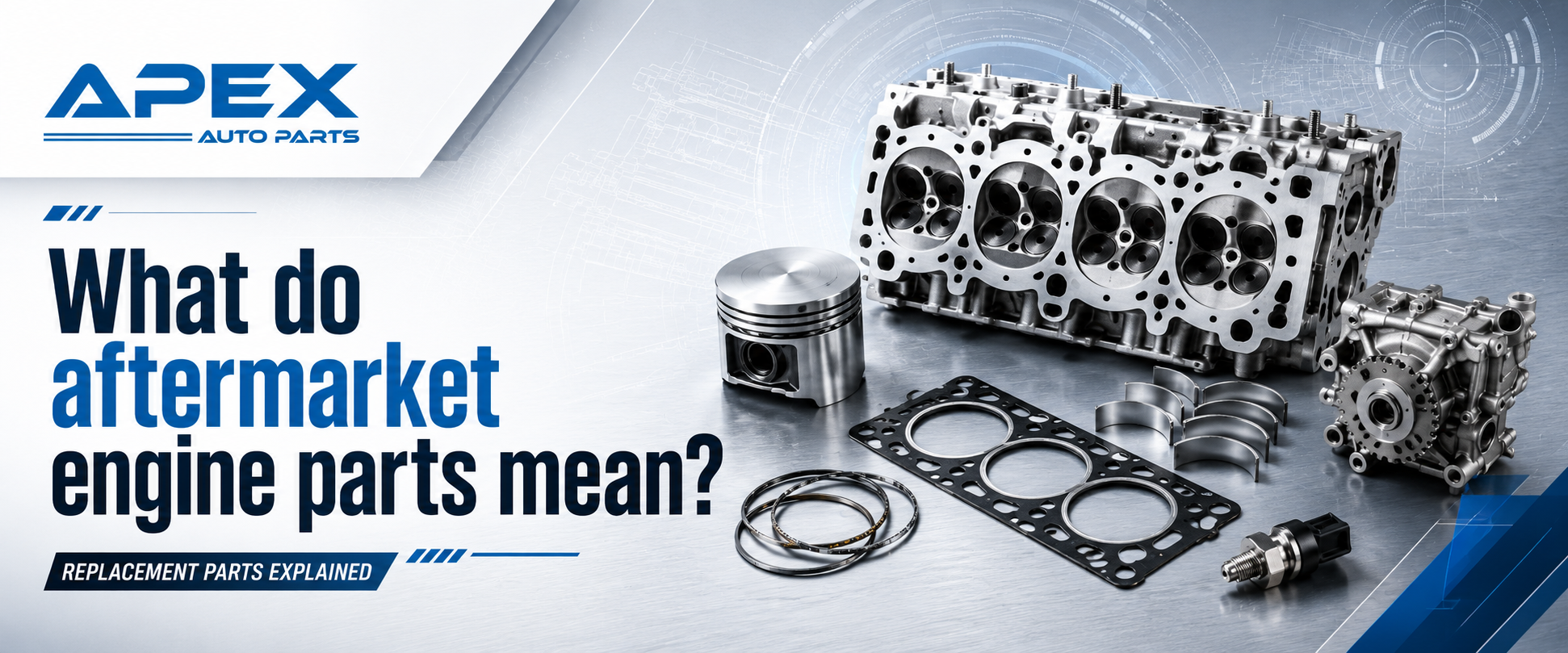
Aftermarket engine parts are replacement parts made for vehicles after they have left the factory. They are not usually sold in the vehicle maker's box, but they are made to fit and work with the same engine.
This covers a wide range. Some aftermarket parts are excellent. Some are average. Some should never go near your engine. That is the part people often miss. Aftermarket is not one single quality level. It can mean anything from a well-known brand that supplies garages every day to a no-name part that looks right in a picture but fails after a few weeks.
Good aftermarket engine parts can be a very smart buy. Many are made by brands that know engines inside out. These parts can offer strong value, good availability, and, in some cases, improved design. If an original part has a common weak point, a good aftermarket brand may update the design to reduce repeat failure.
Poor aftermarket parts are where the risk comes in. Cheap metal, weak seals, bad machining, poor casting, loose tolerances, and low-grade rubber can all cause trouble. A bad part may fit at first, but fitting is not the same as lasting. I have seen cheap gaskets crush badly, oil pumps struggle with pressure, timing parts wear too quickly, and sensors give false readings straight out of the box.
That is why the real question is not simply OEM vs Aftermarket. The real question is which OEM part, which aftermarket brand, which engine, and what repair are we doing?
Why The Cheapest Engine Part Can Become The Most Expensive One?
Engines are not like trim pieces or small body parts, where a mistake is annoying but usually not serious. Engine parts work under heat, pressure, friction, oil flow, fuel pressure, vibration, and tight timing. A poor part can damage other parts around it.
A cheap oil pump can cause low oil pressure. Low oil pressure can ruin bearings, turbochargers, camshafts, and crankshafts. A cheap timing kit can jump timing and bend valves. A poor-quality head gasket can fail again and send coolant into places it should never go. A weak bearing set can turn a fresh rebuild into a knocking engine. A poor seal can leak oil onto belts and pulleys.
The customer often sees the part price first. A mechanic sees the labor, the risk, and the cost if that part fails. That is why a good garage will not always fit the cheapest option. It is not because they want to spend your money for fun. It is because they know the second repair is usually worse than the first one.
If you are paying labor to strip an engine, the part needs to justify the labor. There is no sense in saving a small amount on a hidden engine part if the job takes hours to redo. A low-cost part only makes sense when the quality is still right for the work.
When Do OEM Parts Make the Most Sense?
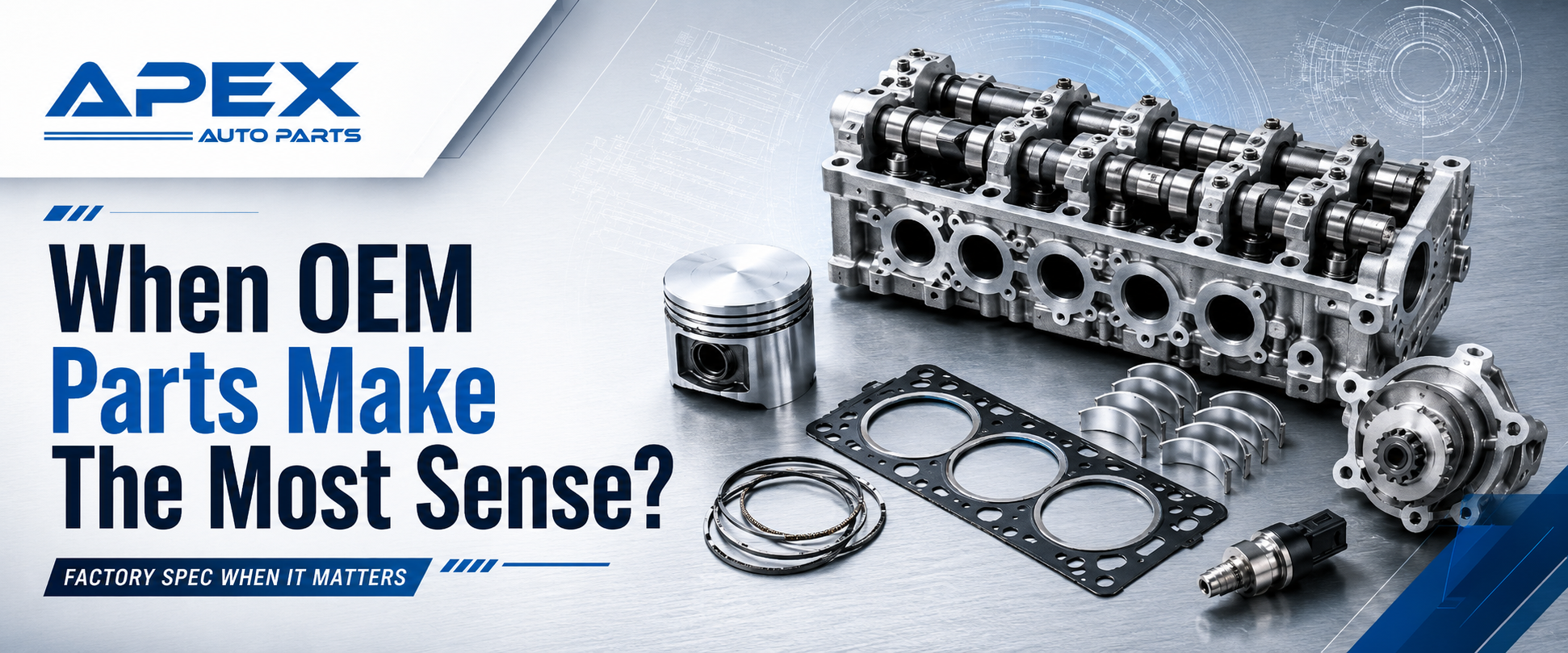
OEM parts are often the safest choice when the part is highly specific to that engine or when the engine is known to be sensitive. This can include some sensors, electronic parts, certain pumps, injectors, timing parts, oil control parts, and parts that affect emissions systems.
OEM can also make sense when the vehicle is still under warranty or when the customer wants to keep everything as close to factory spec as possible. Some owners of newer vehicles, high-value cars, or performance models prefer OEM because they want no questions about fitment or spec.
If the engine has had repeat faults, the OEM may also help remove doubt. For example, if a vehicle has already had two poor-quality sensors fitted and still has running issues, fitting a correct-spec part can stop the guessing game. Sometimes the part itself is not the only issue, but using a known quality part makes diagnosis cleaner.
OEM parts are also useful when the aftermarket choice is weak or unclear. If there are no trusted aftermarket brands available for the part, or if the aftermarket listings are full of mixed fitment information, OEM can save hassle.
That does not mean OEM is always the only right answer. It means OEM is often the lower-risk answer when the repair has no room for guesswork.
When Are Aftermarket Parts The Smarter Choice?
Aftermarket can be the smarter choice when the brand is trusted, the part is well made, and the savings are sensible. Many garages fit aftermarket engine parts every day with good results. The key is choosing proper parts, not random parts.
A good aftermarket option is often ideal for older vehicles where the customer wants a reliable repair without spending more than the car is worth. It can also be a strong choice for common service-related engine parts, gaskets, bearings, seals, filters, pumps, timing components, and rebuild parts when supplied by a known brand.
Aftermarket can also be better when availability matters. If an OEM part is on back order and the vehicle is stuck, a trusted aftermarket part can get the job moving. For garages, this matters a lot. A car on the ramp waiting for one part slows everything down.
There are also cases where aftermarket brands solve problems that the original design suffered from. Some parts are improved over time because the market learns where failures happen. A good aftermarket maker may use better materials, updated seals, stronger casting, or a revised design.
This is why a blanket answer never works. Saying OEM is always best is too simple. Saying aftermarket is always a better value is also too simple. The engine decides. The job decides. The brand decides.
OEM Vs ODM And Why People Mix Them Up
OEM vs ODM comes up in parts conversations, but the two terms are not the same. OEM means a part is made to the original equipment standard or supplied for original equipment use. ODM means Original Design Manufacturer. An ODM company designs and makes a product that another company may sell under its own name.
In the engine parts world, OEM vs ODM can confuse buyers because boxes, brands, suppliers, and factories are all involved. A part may be made by one company, boxed by another, sold by another, and fitted by a garage. That does not automatically make it good or bad.
What matters to the person repairing the car is not just who boxed it. The important things are the spec, the material, the fitment, the quality control, the warranty, and whether the supplier actually knows what fits your engine code.
For Apex Auto Parts, this is where engine knowledge matters. A customer may ask for a part by vehicle model, but the safe way is to check the engine code, registration, year, fuel type, part number, and any build differences. Two cars with the same badge can have different engines. Two engines with similar names can use different parts.
Fitment Is Where Many Mistakes Happen
A part that looks close is not good enough. Engines can have small changes between years, power outputs, emission levels, and vehicle models. One gasket may have a different oil hole. One sensor may use a different plug. One timing kit may suit one engine code but not another. One piston or bearing may need the correct size grade. One diesel engine may have more than one version of an EGR cooler, oil pump, or injector setup.
This is why buying parts by picture is risky. Photos help, but they do not tell the full story. The listing title may say it fits your vehicle, but the engine code may say otherwise.
A good supplier will ask questions before sending a part. That is not a delay. That is protection. If a customer sends a registration number, VIN, old part number, or engine code, the chance of getting the right part rises a lot.
Most problems are not because the customer is careless. They happen because modern vehicles are full of small variations. A 2.0 diesel is not just a 2.0 diesel. A BMW N47, B47, Mercedes OM654, Ford Eco Blue, Jaguar Land Rover Ingenium, or PSA Blue HDI engine can have different versions and build changes. If the part is wrong, the repair slows down, and the customer loses time.
The right fit the first time matters more than the box name.
Diesel Engines Need Extra Care With Parts
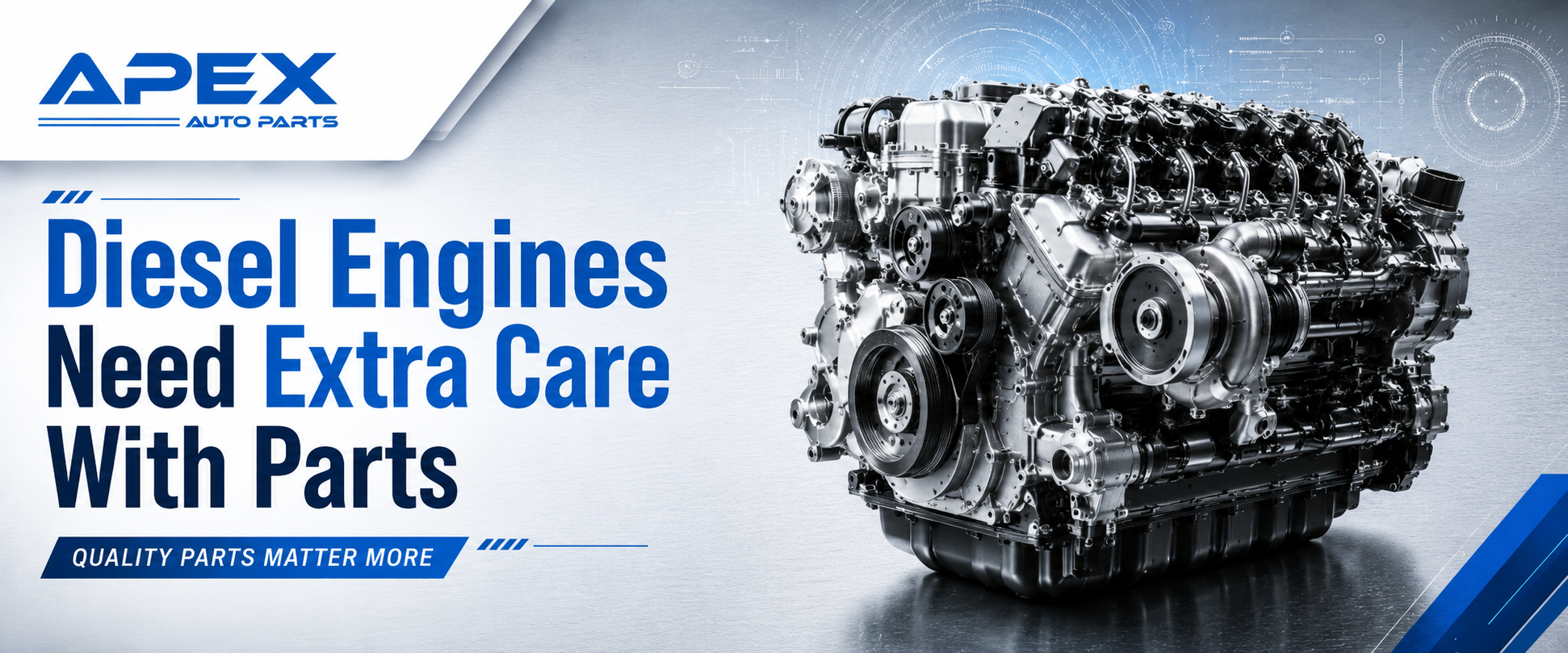
Diesel engines put a lot of stress on parts. They run with high compression, heavy torque, strong vibration, and sensitive fuel and emissions systems. That is why Aftermarket diesel engine parts need to be chosen carefully.
Diesel parts such as injectors, glow plugs, EGR parts, turbo-related parts, oil pumps, timing chains, bearings, gaskets, and cooling parts all need proper quality. Cheap diesel parts can cause rough running, smoke, poor starting, limp mode, oil pressure trouble, and repeat failure.
A diesel engine can also hide problems. For example, a turbo failure might not only be a turbo problem. It could come from oil feed restriction, poor oil pressure, blocked breathers, dirty oil, or worn engine internals. Replacing one part without checking the cause can waste money.
This is where the aftermarket is not the enemy. Poor quality is the enemy. Good aftermarket diesel parts from trusted brands can be the right answer, especially for common diesel repairs. The supplier needs to know the difference between a cheap part and a good value part.
Engine Rebuilds Need A Different Way Of Thinking
When an engine is being rebuilt, the parts decision becomes even more serious. A rebuild may involve bearings, piston rings, pistons, gaskets, timing parts, oil pump, seals, valves, guides, bolts, and sometimes crankshaft or cylinder head work. One weak part can spoil the whole job.
In a rebuild, you should not only ask whether a part is OEM or aftermarket. You should ask whether the part suits the engine condition. Has the crankshaft been measured? Are the bearings standard size or oversize? Has the cylinder head been pressure tested? Are the head bolts stretch bolts that need replacing? Is the oil pump clean and within spec? Are the timing components fresh? Has the cause of the original failure been found?
A rebuild is not just a parts shopping list. It is a chain. Every part affects the next one. If the engine fails because of oil starvation and someone rebuilds it without sorting the oil system, the new parts will be walking into the same problem.
For rebuild work, good aftermarket engine parts can be a strong choice when they come from brands that know engine internals. In some cases, OEM may be best for certain critical pieces. In other cases, aftermarket rebuild kits offer better value and good reliability. The right answer depends on the engine and the job.
Warranty Matters, But It Is Not The Whole Story
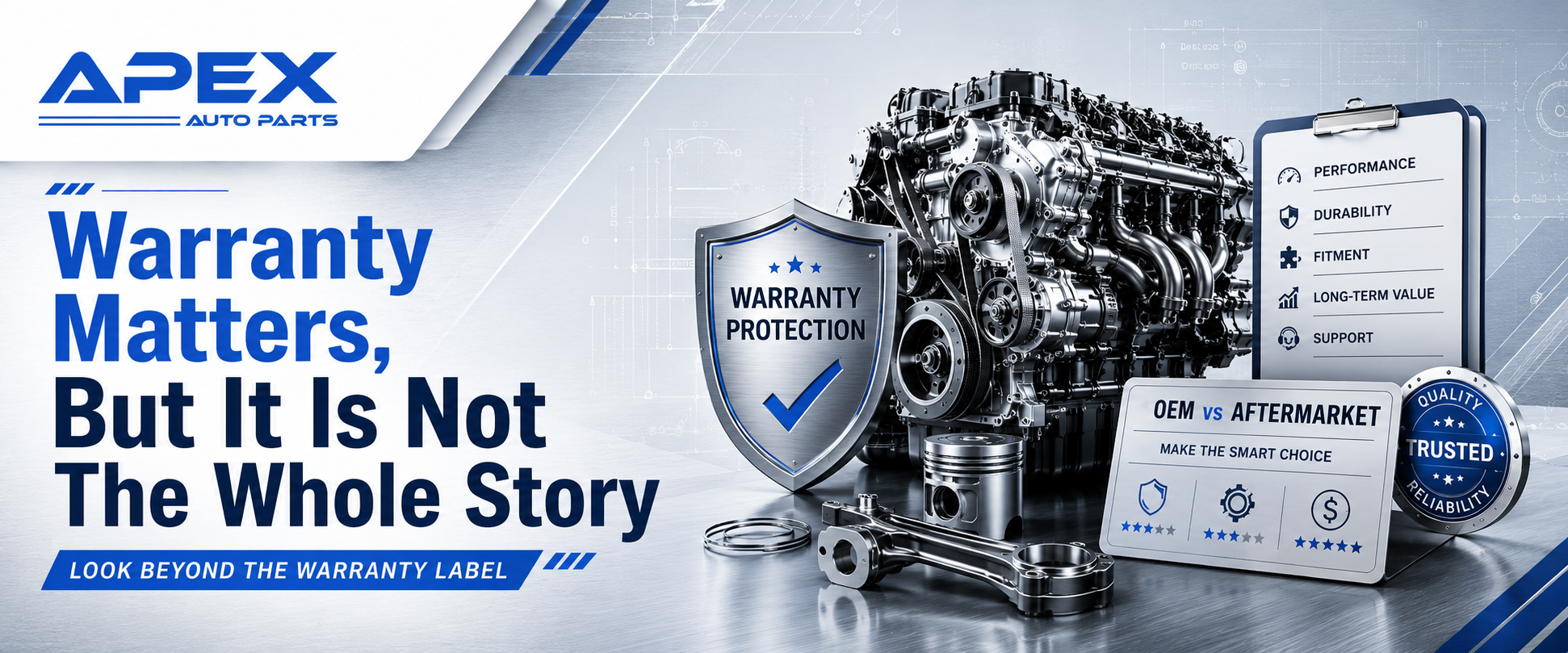
A long warranty sounds good, but the warranty is only useful if the part is correct, properly fitted, and backed by a supplier that will help if there is a problem. Some cheap parts come with bold warranty claims, but when the part fails, the support is poor, or the fitting conditions are impossible to prove.
With engine parts, warranty claims can be tricky because a part can fail due to another issue in the engine. A turbo can fail because of bad oil feed. A gasket can fail because the head was warped. Bearings can fail because of low oil pressure. A timing chain can fail because of poor installation or a blocked oil feed to the tensioner.
That is why a trusted supplier matters. You want someone who can help check fitment, advise on related parts, and explain what should be replaced together. Buying from the cheapest unknown source may save money on the day, but it leaves you on your own if things go wrong.
A warranty should support a good part. It should not be the only reason you buy it.
The Badge On The Box Is Not The Full Story
Some buyers get too focused on the box. They believe the branded box always means quality, and the plain box always means trouble. That is not always true.
There are excellent brands in the aftermarket world. There are also parts sold at high prices that do not always give better value for the repair. What matters is the maker, the spec, and the trust behind the supply.
A proper engine parts supplier will know which brands are worth fitting and which ones cause returns. Garages learn this through experience. If a certain gasket set seals well, they remember it. If a certain oil pump causes pressure issues, they remember that too. If a certain timing kit has weak tensioners, it gets avoided.
Parts' reputation is built in workshops, not in adverts.
How To Judge A Good Aftermarket Part?
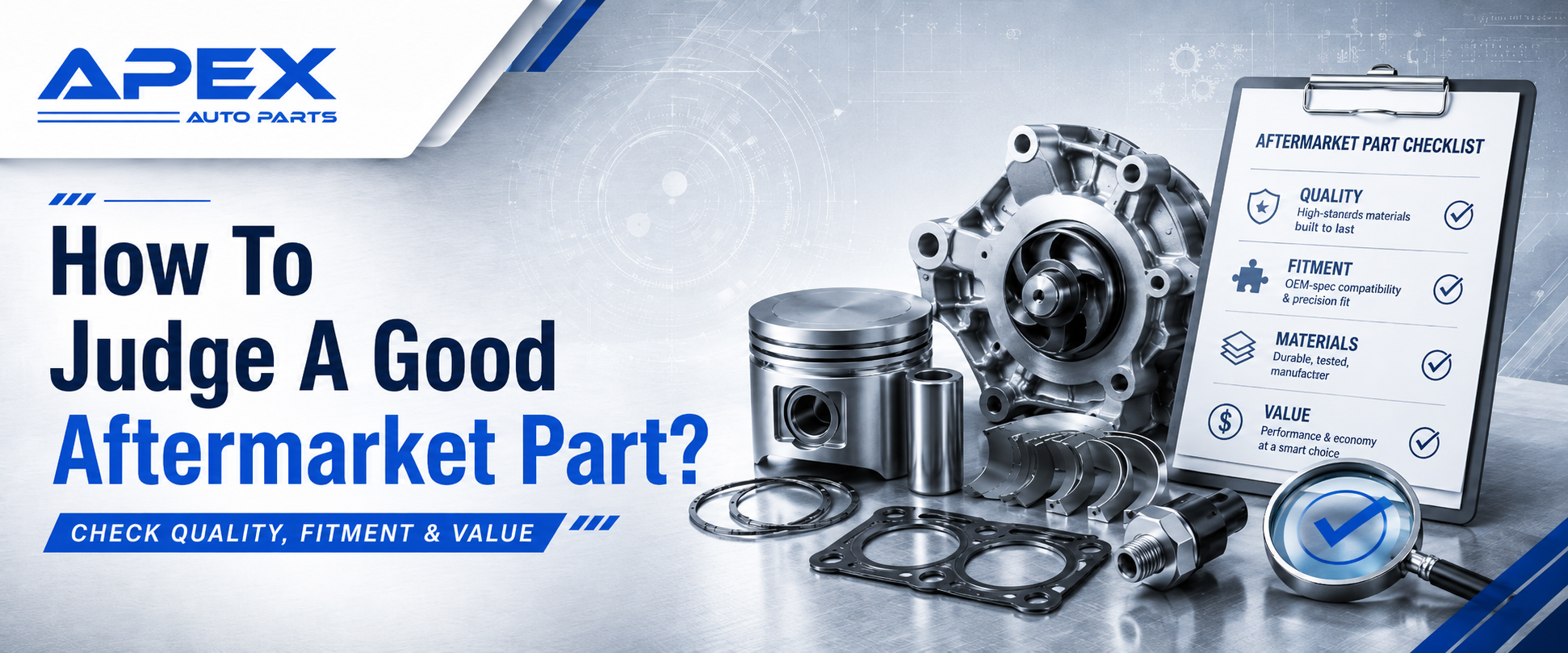
A driver does not need to become a parts expert, but there are a few signs that help. A good aftermarket part usually comes from a recognised brand, has clear fitment data, matches the correct engine code, and is supplied with proper support.
The Party should not rely on vague promises. It should be clear what vehicle and engine it fits. If there are part numbers, they should cross-reference properly. If there are different versions, the supplier should help choose the right one.
A few simple checks can save trouble:
- Ask for fitment by registration or VIN when possible.
- Match the engine code, not only the car model.
- Compare the old part number if it is available.
- Use trusted brands for parts buried deep inside the engine.
- Do not choose the cheapest part for a labor-heavy job.
These points sound basic, but they prevent a lot of wrong orders.
When Not to Gamble?
There are parts where gambling makes no sense. Anything that can destroy the engine if it fails should be treated carefully. Timing parts, oil pumps, bearings, head gaskets, pistons, valves, injectors, and critical sensors need proper quality.
If the labor is high, it does not fit a questionable part. If the engine is known for a certain weak area, do not ignore it. If the old part failed due to another issue, fix the cause before fitting the new one. If the part listing is unclear, ask before buying.
Saving money is fine. Cutting corners is different. A smart saving is choosing a good-value part that works. A bad save is choosing a weak part and hoping the engine forgives it. Engines do not forgive much.
Why does advice from the parts counter matter?
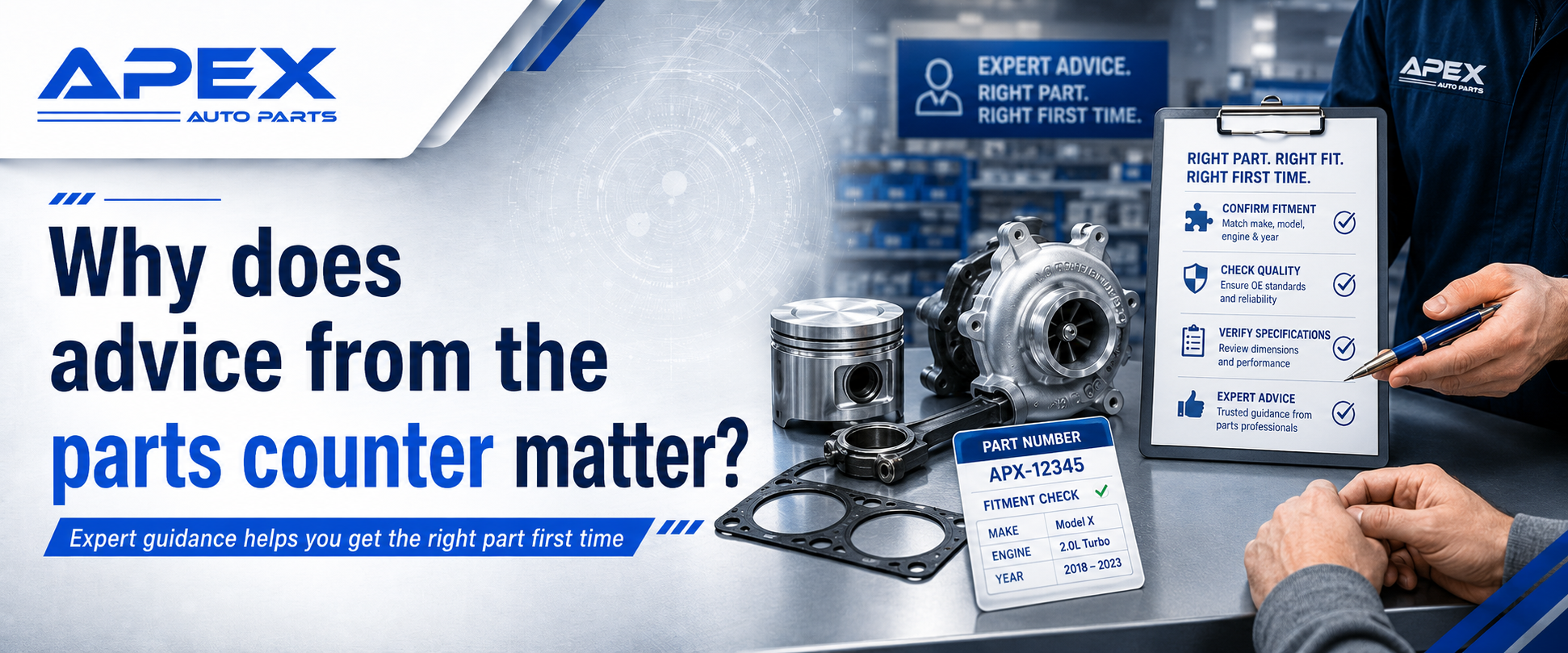
A good parts supplier does more than send boxes. The best suppliers help you avoid the wrong box in the first place. They know that one model can have several engine codes. They know that a diesel engine may have different parts depending on emissions spec. They know that some repairs need related parts at the same time.
This matters for both trade and retail customers. A garage wants parts that fit and arrive on time. A driver wants the car fixed without repeated bills. Both need the same thing: correct parts, fair advice, and a supplier that understands engines.
At Apex Auto Parts, the goal is not to push OEM or aftermarket every time. The goal is to help you choose what makes sense for the repair. Sometimes that means OEM parts. Sometimes that means trusted aftermarket engine parts. Sometimes it means checking the engine code first because the first part you asked for may not be the right one.
What Should You Choose In Real Life?
If you have a newer car, a high-value vehicle, a sensitive electronic part, or a repair where factory spec is important, OEM is often a strong option. It gives peace of mind and reduces fitment doubt.
If you have an older vehicle, a common engine repair, a known trusted aftermarket brand available, or a budget that needs to stay sensible, aftermarket can be the better choice. It can deliver the same job at a fairer price when chosen properly.
If you are rebuilding an engine, mixing both routes may be the smartest plan. Use OEM where exact spec matters most, and use high-quality aftermarket where the brand is proven and the value is better.
The wrong way is to pick only by price. The other wrong way is to pick only by badge. The right way is to pick by engine, repair type, brand quality, fitment, and long-term reliability.
Final Word From The Parts Side Of The Counter
The OEM or aftermarket decision should not feel like a gamble. It should feel like a repair plan. If the part needs factory specs, choose OEM. If a trusted aftermarket brand gives the right quality and better value, that can be the smarter buy. If the engine is sensitive, expensive to strip, or already failed once, slow down and check everything before ordering.
At Apex Auto Parts, we deal with these choices every day. We know that customers do not just want a part. They want the correct part, at the right price, with advice that saves them from doing the job twice. Whether you need OEM parts, aftermarket engine parts, or advice on Aftermarket diesel engine parts, the right answer starts with the engine in front of you.
Send us your registration, engine code, or part number, and we will help you work out which option actually makes sense.
FAQs
1. Are OEM parts always better than aftermarket parts?
No, OEM parts are not always better. They are often a safe choice because they are made to match the original spec, but many aftermarket engine parts from trusted brands can perform very well. The better choice depends on the part, the engine, the brand, and how much risk the repair allows.
2. Is the aftermarket bad for engine parts?
The aftermarket is not bad by itself. Poor-quality aftermarket is bad. Good aftermarket parts are fitted by garages every day. The key is to avoid unknown brands for critical engine work and to buy from a supplier that checks fitment properly.
3. What is the main difference between OEM and aftermarket parts?
The main difference between OEM and aftermarket parts is how they are supplied and branded. OEM parts match the original equipment spec and are often linked to the vehicle maker. Aftermarket parts are made for replacement use after the car has been built. Some aftermarket parts are excellent, while others are built mainly to be cheap.
4. Should I use OEM parts for a timing chain or timing belt job?
For timing work, quality matters more than saving a little money. OEM can be a safe choice, but a trusted aftermarket timing kit can also be reliable. The important thing is to use a complete, correct kit from a proven brand and fit it properly. A poorly timed part can damage the engine badly.
5. Are aftermarket diesel engine parts reliable?
Yes, aftermarket diesel engine parts can be reliable when they come from trusted brands and match the correct engine code. Diesel engines are hard on parts, so cheap, unknown parts are risky. Oil system parts, fuel parts, turbo-related parts, timing parts, and gaskets need careful selection.
6. Why are OEM parts more expensive?
OEM parts often cost more because of branding, supply chain costs, dealer pricing, and the original equipment standard behind them. Sometimes the extra cost is worth it. Sometimes a trusted aftermarket part gives better value. Price alone does not prove quality either way.
7. Can aftermarket parts affect my engine warranty?
They can, depending on the vehicle warranty terms and the part used. If your car is still under the manufacturer's warranty, you should be careful and check the warranty rules before fitting any part. For older vehicles outside warranty, the main concern is quality, fitment, and support from the supplier.
8. What do OEM and ODM mean in car parts?
OEM vs ODM can be confusing. 'OEM' means 'Original Equipment Manufacturer', which relates to parts made to original equipment standards. 'ODM' means 'Original Design Manufacturer', where a company designs and makes a product that may be sold by another brand. For car owners, the more useful question is whether the part is correct, well made, and suitable for the engine.
9. Is it safe to mix OEM and aftermarket parts in one repair?
Yes, it can be safe when done properly. Many engine repairs use a mix of OEM parts and quality aftermarket parts. The important thing is to choose the right quality level for each part. For example, you might use an OEM sensor but a trusted aftermarket gasket set or bearing kit.
10. How do I know which engine part to buy?
The best way is to check the vehicle registration, VIN, engine code, old part number, and vehicle details before ordering. Do not rely only on the model name or a picture. Apex Auto Parts can help check the right option so you are not guessing between OEM parts and aftermarket engine parts.
Sources: