
 info@apexautoparts.co.uk
 +44 203 915 7535
 Safe & Fast Shipping
 Whish List
 Compare
 Sign In


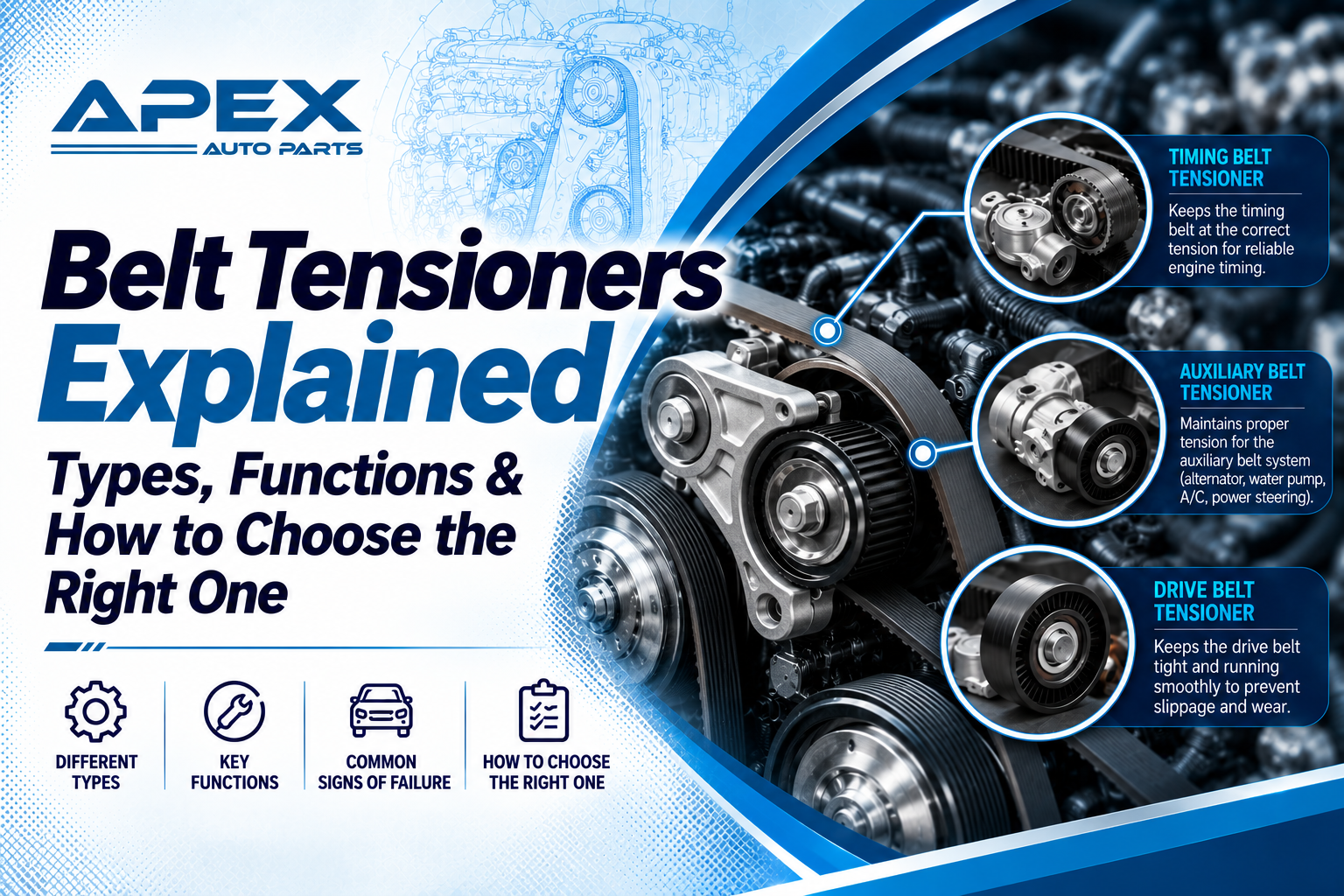
A belt tensioner may look like a small engine part, but it has an important job. It keeps the engine belt tight enough to run the parts connected to it without slipping, jumping, or coming loose. When the tension is wrong, even a healthy belt can wear quickly or cause other engine problems.
Modern engines can use more than one type of belt. Some use a timing belt to keep the crankshaft and camshaft working in the correct position. Others use an auxiliary belt to run parts such as the alternator, water pump, power steering pump, and air conditioning compressor. Each system needs the correct amount of tension.
This is where Belt Tensioners come in.
A good tensioner keeps the belt running smoothly as the engine changes speed. It also helps control vibration and keeps the belt correctly positioned on the pulleys. If the tensioner becomes weak, seized, damaged, or noisy, the belt may start slipping or moving from side to side.
At Apex Auto Parts, we supply engine parts for drivers, garages, mechanics, rebuilders, and trade customers. Belt system parts are one of those areas where correct fitment matters. A tensioner that looks almost identical to another one may still have a different spring force, pulley size, mounting position, or belt path.
This guide explains what belt tensioners do, the main types, common failure signs, how to choose the correct tensioner, and when related parts should also be replaced.
What Are Belt Tensioners?
Belt tensioners are parts designed to keep an engine belt at the correct tension while the engine is running.
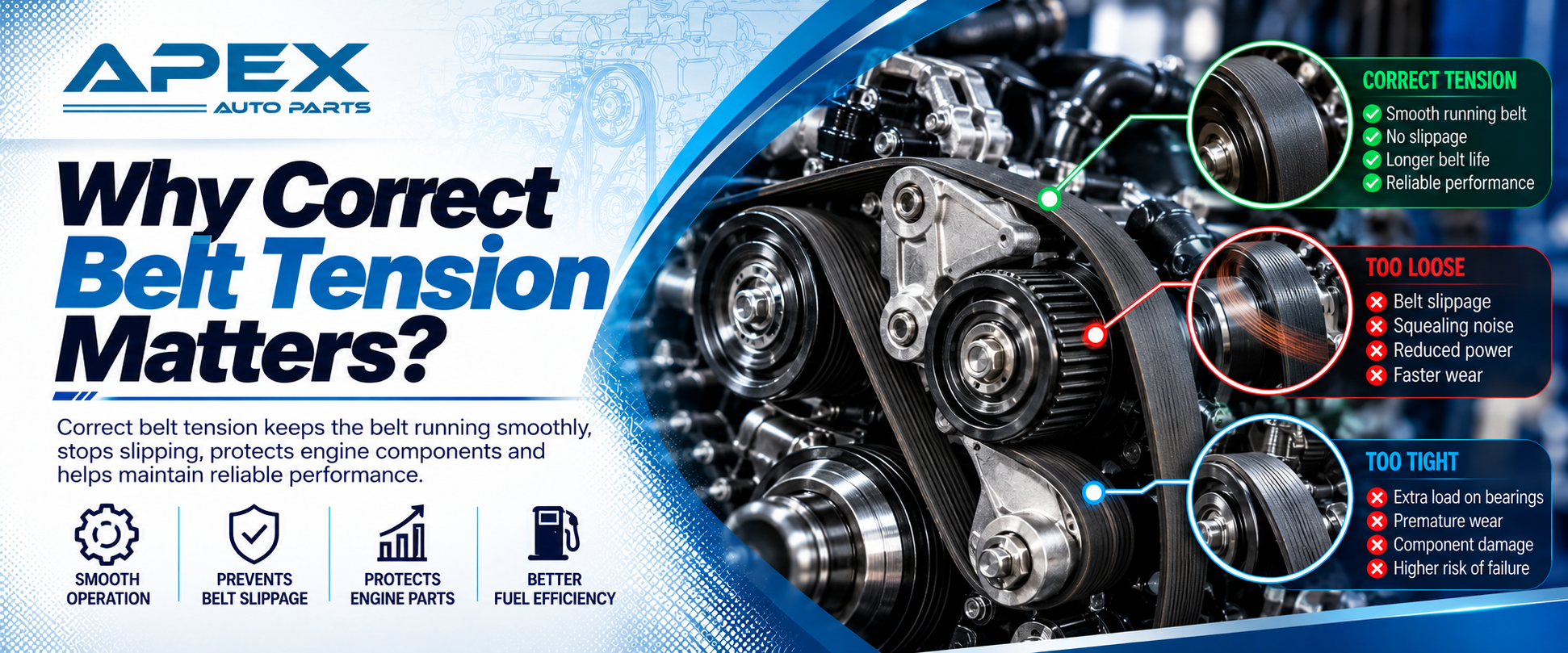
The belt cannot be too loose because it may slip on the pulleys. It also cannot be too tight because too much tension can put extra load on bearings, pulleys, pumps, and other engine parts.
The tensioner keeps the belt between these two extremes.
Some tensioners are automatic. They use an internal spring to keep steady pressure against the belt. Other systems use a manual adjustment where the mechanic sets the belt tension during installation.
The exact design depends on the engine.
A tensioner normally includes a metal arm, a spring mechanism, a mounting point, and a pulley. The pulley sits against the belt and keeps pressure on it.
This pulley is commonly called a belt tensioner pulley.
If the pulley bearing starts to fail, you may hear noise even if the tensioner spring itself is still working. This is why the whole tensioner system should be checked instead of replacing only the belt.
Why Correct Belt Tension Matters?
A belt works by gripping the surface of each pulley and transferring movement.
If the belt becomes loose, it may slip. This can stop the alternator from charging correctly, reduce water pump performance, affect power steering, or stop the air conditioning compressor from turning properly.
A slipping belt also creates heat.
That heat can damage the belt surface and make the rubber hard, shiny, or cracked.
If the belt is too tight, the problem is different. Excess pressure can damage bearings inside the alternator, water pump, idler pulley, and other driven parts.
Correct tension therefore protects both the belt and the parts around it.
A properly working drive belt tensioner helps the belt remain stable during idle, acceleration, and higher engine speeds. It also allows small movements as engine loads change.
Without this controlled movement, the belt system can become noisy and unstable.
What Is a Belt Tensioner Pulley?
A belt tensioner pulley is the rotating wheel fitted to the tensioner arm.
The belt runs across the surface of this pulley. As the tensioner arm applies pressure, the pulley helps keep the belt tight and aligned.
Inside the pulley is a bearing.
This bearing has to rotate thousands of times while the engine is running. Over time, it can wear, dry out, become loose, or seize.
A worn belt tensioner pulley may produce a whining, grinding, squeaking, or rattling sound.
Sometimes the pulley starts wobbling. This is serious because it can push the belt out of alignment.
If the pulley seizes completely, the belt may burn, break, or come off.
A mechanic should check the pulley by rotating it by hand after removing belt tension. It should turn smoothly without roughness, excessive play, or unusual noise.
Main Types of Belt Tensioners
Not every tensioner works in the same way.
The most common types are automatic spring tensioners, manual tensioners, and tensioners used as part of a timing system.
Automatic Belt Tensioner
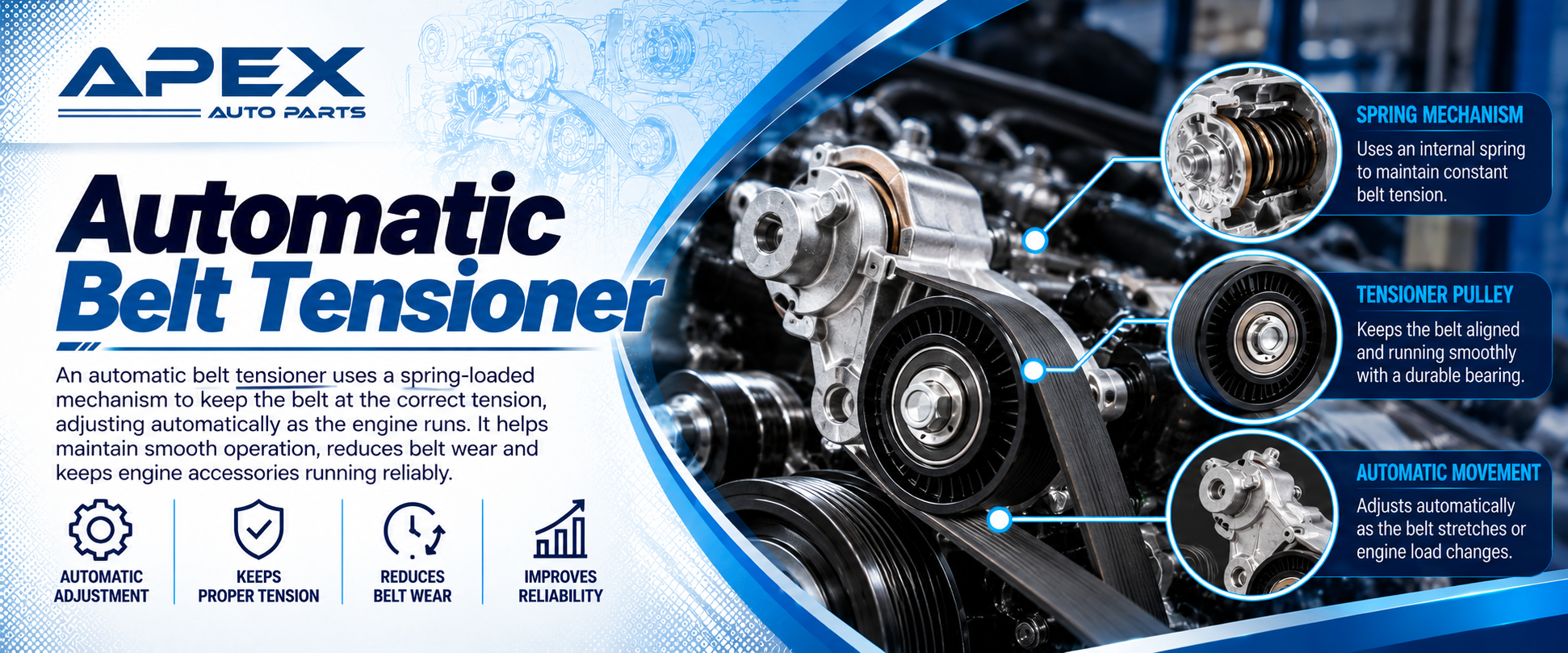
An automatic tensioner uses an internal spring.
The spring keeps pressure on the belt automatically as the belt stretches slightly with age.
This system is common on modern auxiliary belt systems.
The main advantage is that it does not need regular manual adjustment. However, the spring can become weak over time.
When that happens, the belt may begin moving too much.
A weak tensioner may still look fine from the outside, which is why movement should be checked while the engine is running.
Manual Belt Tensioner
A manual tensioner does not adjust itself.
The mechanic moves the tensioner or another component into the correct position and then tightens the mounting bolts.
This design can work well, but correct adjustment is important.
Too much tension can damage bearings. Too little tension can cause belt slip.
A tension gauge may be needed for some engines.
Timing Belt Tensioner
A timing belt tensioner is designed specifically for the engine timing system.
Its job is more serious because the timing belt controls the relationship between the crankshaft and camshaft.
If the timing belt becomes too loose, it may jump teeth on the sprocket.
When this happens, engine timing changes.
On many engines, this can cause the pistons and valves to hit each other. The result may be bent valves, damaged pistons, cylinder head damage, or complete engine failure.
This is why the timing belt tensioner is normally replaced together with the belt rather than reused.
What Is an Auxiliary Belt Tensioner?
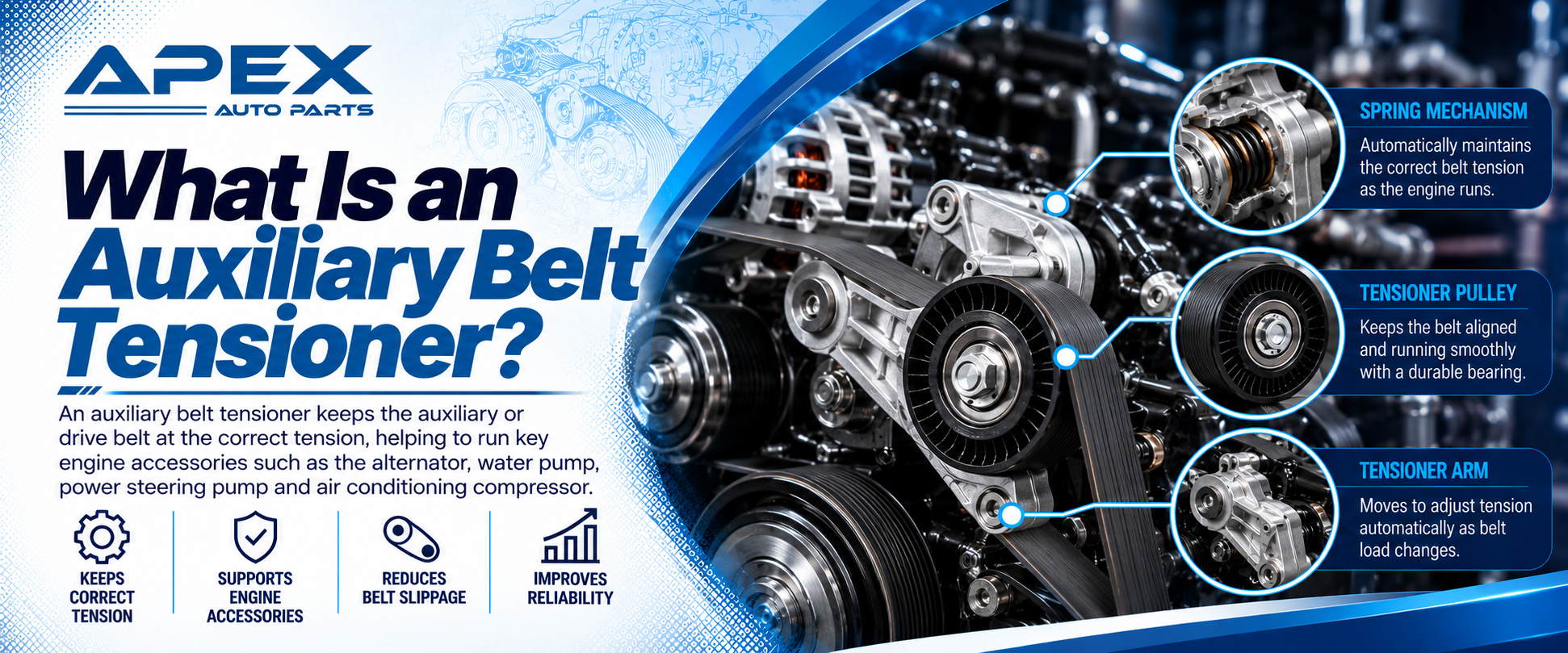
An auxiliary belt tensioner keeps the auxiliary belt correctly tensioned.
The auxiliary belt is also called the drive belt or serpentine belt on many vehicles.
Depending on the engine, this belt may operate:
- Alternator
- Air conditioning compressor
- Water pump
- Power steering pump
- Other accessories
The auxiliary belt tensioner usually uses a spring-loaded arm.
As the belt stretches slightly during normal use, the spring maintains pressure.
This helps the belt grip the pulleys correctly.
If he auxiliary belt tensioner becomes weak, the belt may squeal when the engine starts or when extra load is placed on the system.
For example, turning on the air conditioning may increase belt load and make the noise more noticeable.
What Is a Drive Belt Tensioner?
A drive belt tensioner performs the same basic job in the accessory drive system.
The wording used by manufacturers and parts suppliers can vary. Some call it an auxiliary tensioner, while others call it a drive belt tensioner.
The important thing is not the name alone.
The exact engine code and belt layout must be checked.
A drive belt tensioner may look similar to another tensioner but have a different pulley angle or spring strength.
Installing the wrong one may cause poor belt alignment.
That can lead to edge wear, belt noise, pulley damage, and early failure.
How Does a Belt Tensioner Work?
The basic idea is simple.
The tensioner presses a pulley against the belt.
This pressure keeps the belt tight enough to grip the other pulleys.
Automatic Belt Tensioners also move slightly while the engine is running.
This movement allows the system to react when engine speed changes.
For example, when the engine suddenly accelerates, the belt experiences a quick change in load. A working tensioner absorbs some of this movement.
The tensioner also helps control belt vibration.
Without this movement, the belt could flap between pulleys.
This can produce noise and increase wear.
The tensioner therefore does more than hold the belt tight. It keeps the whole belt system stable.
Common Signs of a Failing Belt Tensioner
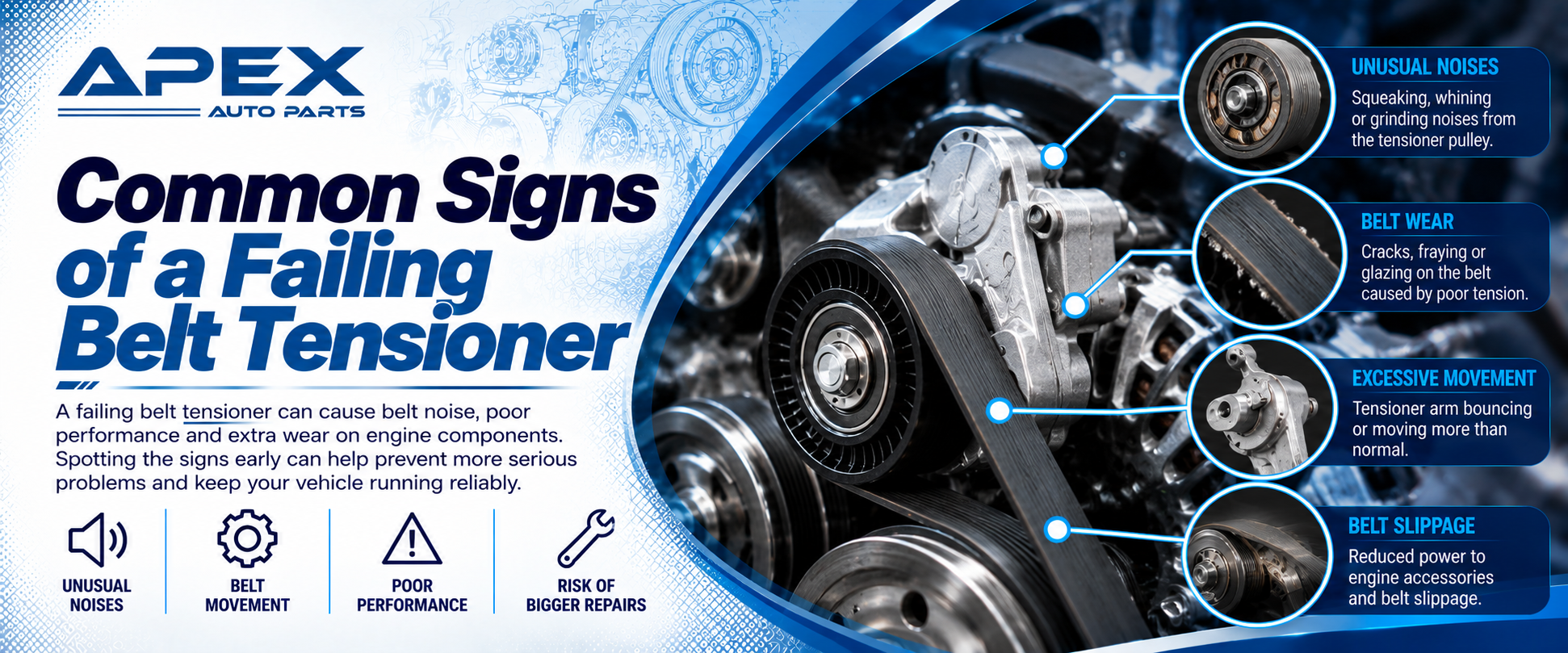
A failing tensioner often gives warning signs before complete failure.
The exact symptoms depend on which part of the tensioner is damaged.
One common sign is belt squeal.
If the spring becomes weak, the belt may start slipping.
You may hear the noise during cold starts, acceleration, or when electrical and air conditioning loads increase.
Another sign is visible movement.
When looking at the tensioner with the engine running, the arm should not bounce violently.
Small movement can be normal, but strong shaking may point to a worn tensioner, damaged pulley, incorrect belt, or another accessory problem.
Other signs include:
- Squeaking or grinding
- Belt moving from side to side
- Cracked or damaged belt edges
- Tensioner arm vibration
- Pulley wobble
- Burning rubber smell
- Battery warning light
- Engine temperature problems if the belt drives the water pump
A problem should be checked quickly because tensioner failure can cause the belt to come off completely.
Why Does a Belt Tensioner Fail?
Several things can cause tensioner failure.
Age is one of the most common reasons.
The spring inside the tensioner loses strength after years of movement and heat.
The pulley bearing can also be worn.
Heat from the engine bay slowly affects the grease inside the bearing.
Once the bearing becomes rough, the pulley may make noise.
Contamination is another cause.
Oil or coolant leaking onto the belt and tensioner can damage rubber surfaces and affect the pulley.
A misaligned accessory can also place extra stress on the tensioner.
If an alternator pulley, water pump bearing, compressor pulley, or idler pulley starts failing, the tensioner may move more than normal.
This is why simply replacing the tensioner may not fix the real problem.
A mechanic should inspect the full belt path.
The Difference Between an Idler Pulley and a Belt Tensioner
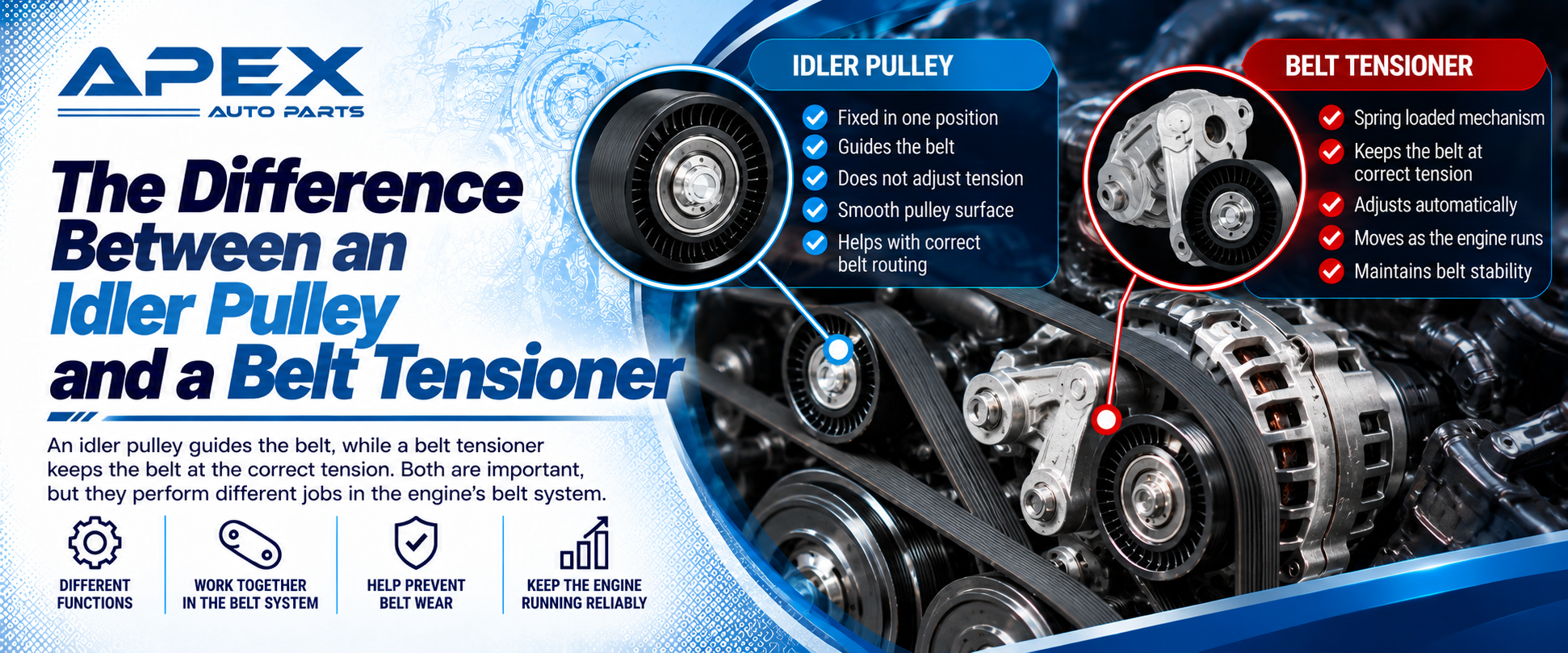
An idler pulley and belt tensioner pulley may look similar, but they do different jobs.
The idler pulley is normally fixed in one position.
Its main job is to guide the belt around the correct path.
The tensioner pulley is attached to a moving tensioner mechanism.
It applies tension to the belt.
Both use bearings, and both can fail.
A worn idler pulley may produce almost the same noise as a worn belt tensioner pulley.
This is why noise diagnosis should include both parts.
Should You Replace the Belt Tensioner With the Belt?
In many cases, yes.
This is especially true when replacing a timing belt.
A new belt fitted with an old tensioner may not last as long as expected.
The old tensioner has already completed the same mileage as the old belt.
Its spring and bearing have also been exposed to years of heat and movement.
For timing systems, it normally makes sense to replace the complete belt kit.
This may include:
- Timing Belt
- Tensioner
- Idler pulleys
- Water pump driven by the belt
- Related bolts where specified
For an auxiliary belt, the decision depends on condition.
If the drive belt tensioner is still strong and the pulley is smooth, it may not always need replacing.
However, on a high-mileage vehicle, replacing both parts together can reduce the chance of another repair soon afterwards.
Why Does the Water Pump Matter During Timing Belt Replacement?
On many engines, the water pump is driven by the timing belt.
If the water pump bearing fails later, the timing belt may need to be removed again.
This means paying for much of the same labour twice.
A failing water pump can also damage the belt.
For this reason, many timing kits are sold with a water pump.
A mechanic should check the engine design before making this decision.
Not every engine uses a belt-driven water pump.
What Is a TD5 Belt Tensioner?
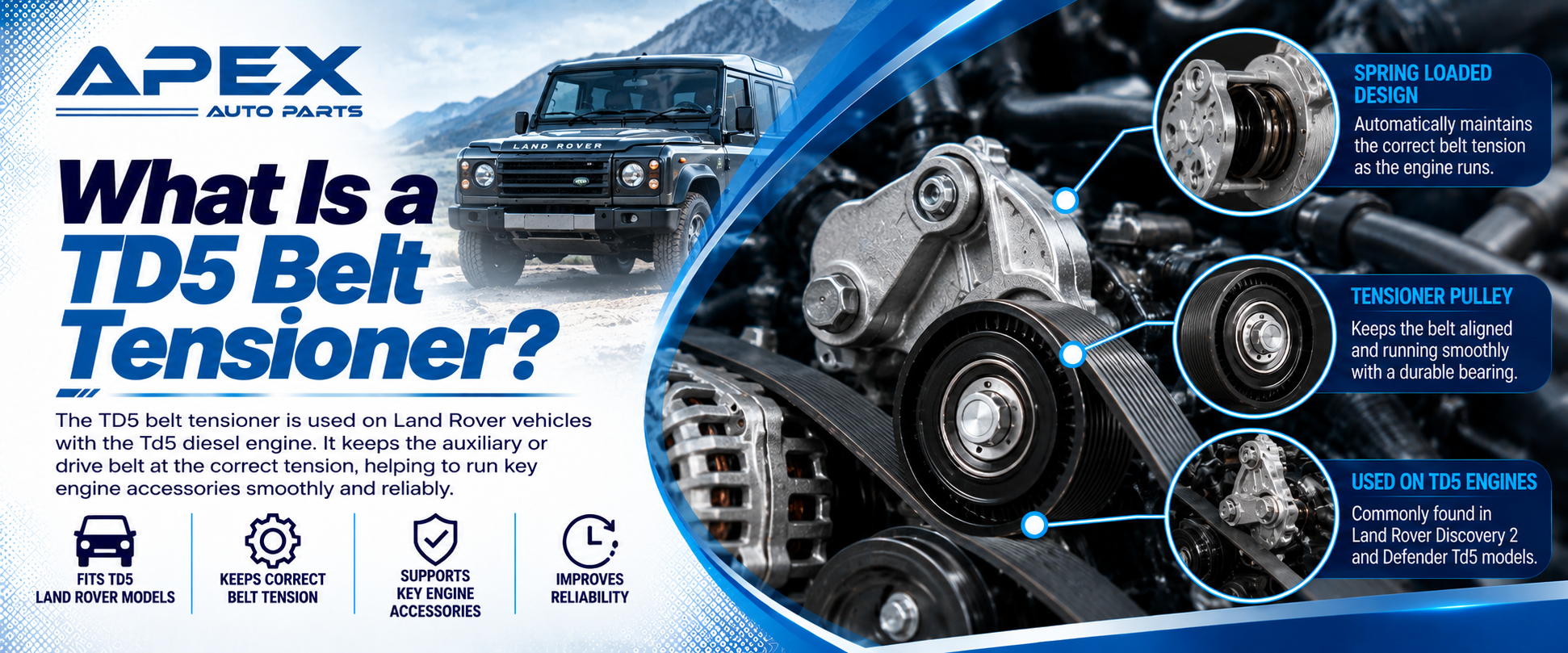
The TD5 belt tensioner is used on Land Rover vehicles fitted with the TD5 diesel engine.
The TD5 is well known in vehicles such as the Land Rover Discovery 2 and Defender.
The TD5 belt tensioner keeps the auxiliary drive belt correctly tensioned.
That belt helps operate engine accessories.
Like any automatic tensioner, the TD5 belt tensioner can wear with age.
Common signs may include squealing, rattling, visible movement, or poor belt alignment.
On older TD5 vehicles, it is also worth checking the surrounding pulleys and accessories because these vehicles may now have high mileage.
If you are replacing a TD5 belt tensioner, check the belt condition at the same time.
A cracked or glazed belt should not normally be reused.
At Apex Auto Parts, customers looking for Land Rover belt system parts can provide the registration, engine details, or old part number so the correct fitment can be checked.
How to Check a Belt Tensioner?
A proper inspection should begin with the engine switched off.
Look at the belt first.
Check for cracks, missing sections, frayed edges, oil contamination, and shiny surfaces.
Next, inspect the tensioner.
Look for unusual arm position or obvious damage.
If the belt is removed, rotate the belt tensioner pulley by hand.
It should feel smooth.
There should not be roughness, grinding, or excessive sideways movement.
The tensioner arm should move with steady resistance.
If it moves too easily or feels loose, the spring may be weak.
When the engine is running, the tensioner should not bounce heavily.
Heavy movement can point to another problem in the belt system.
How to Choose the Right Belt Tensioner?
Choosing the correct tensioner starts with identifying the vehicle properly.
Do not rely only on the make and model.
The same model may use different engines and belt systems during different production years.
The safest information includes:
- Vehicle registration
- VIN
- Engine code
- Production year
- Old part number
- Photos of the original tensioner
The pulley size matters.
The mounting position matters.
The spring force matters.
The belt path matters.
Even if two belt tensioners look almost identical, small differences can affect how the belt runs.
At Apex Auto Parts, fitment checks help reduce the risk of ordering the wrong tensioner.
This is especially useful on older BMW, Mercedes, Land Rover, Jaguar, and other vehicles where several engine options may exist.
Why Cheap Belt Tensioners Can Cost More Later?
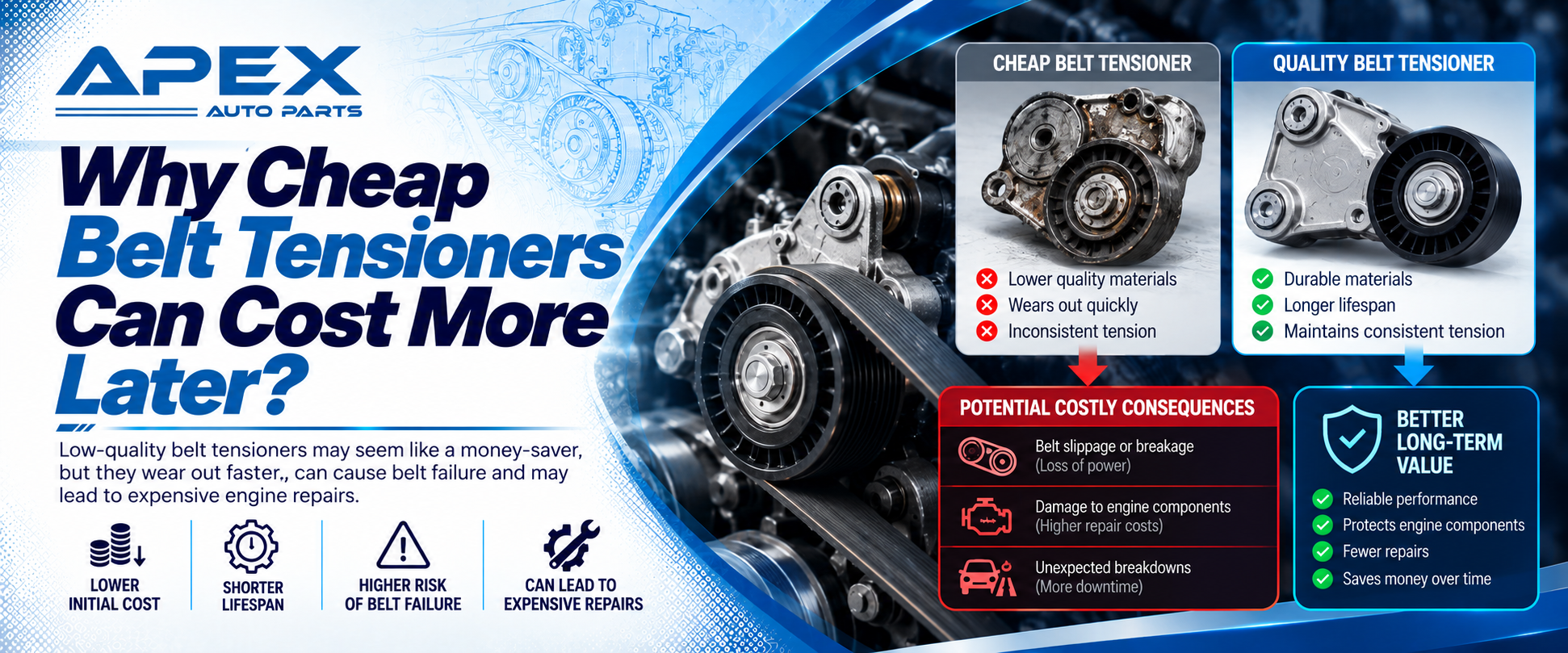
A tensioner is constantly working whenever the engine runs.
Poor quality bearings may wear early.
Weak springs may not keep enough pressure on the belt.
Poor machining can also create alignment problems.
A cheap tensioner that fails quickly may damage the belt or another pulley.
If the belt comes off while driving, the alternator may stop charging.
If the water pump is belt-driven, the engine may also overheat.
This is why price should not be the only factor.
Fitment and build quality are more important.
Belt Tensioner Noise Does Not Always Mean the Tensioner Is Bad
This is an important point.
A noisy belt system does not always mean the tensioner is faulty.
A seized alternator pulley can make the tensioner shake.
A worn compressor pulley can make a similar noise.
A damaged belt can squeal.
A bad water pump bearing can grind.
A misaligned pulley can create edge noise.
This is why a good mechanic does not automatically replace the tensioner.
The full system should be checked.
Removing the belt and rotating each pulley can help find the real source.
Can You Drive With a Bad Belt Tensioner?
You may be able to drive for a short time, but it is risky.
A weak tensioner can allow the belt to slip.
A damaged pulley bearing can seize without much warning.
If the belt breaks, several engine systems may stop working.
The battery warning light may appear because the alternator is no longer turning.
Power steering may become heavy on vehicles using a belt-driven pump.
The engine may overheat if the water pump is driven by the same belt.
For these reasons, a failing drive belt tensioner should not be ignored.
Belt Tensioner Replacement Tips
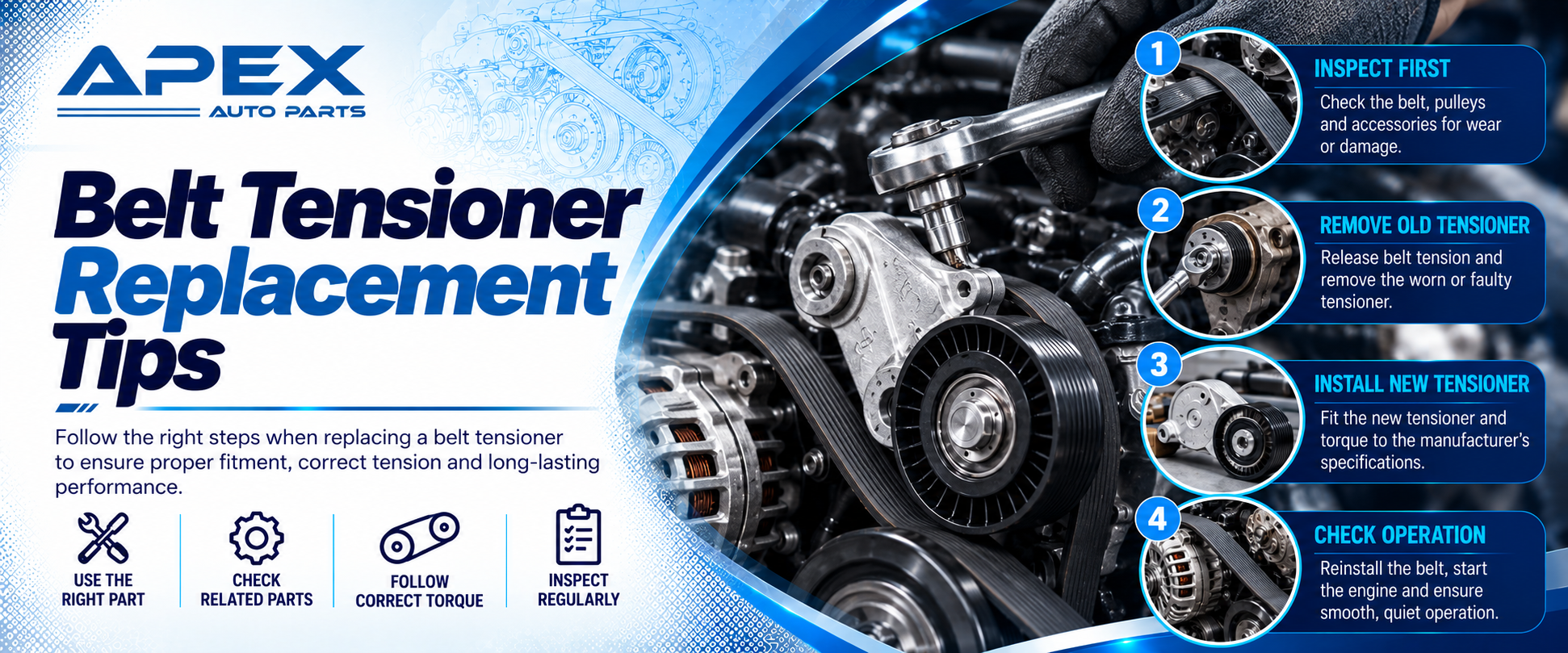
Replacing a tensioner is usually straightforward on many engines, but correct installation still matters.
Before removing the old part, check the belt routing.
Take a photo if needed.
Use the correct tool to release tension.
Do not force the tensioner beyond its normal travel.
Clean the mounting area.
Check all other pulleys before fitting the new part.
Install the correct belt and make sure every rib sits properly in the pulley grooves.
After installation, rotate the engine manually where required or start the engine and watch the belt carefully.
The belt should run straight.
There should be no strong vibration.
Why Correct Fitment Matters More Than Guessing?
Engine belt systems are designed very precisely.
A pulley only a few millimetres different in size can change belt tension or alignment.
A different mounting angle can cause the belt to run against the edge of a pulley.
The result may be noise, belt dust, frayed edges, or early failure.
This is why ordering by appearance is not enough.
A drive belt tensioner, auxiliary belt tensioner, belt tensioner pulley, or TD5 belt tensioner should always be matched correctly to the engine.
How Can Apex Auto Parts Help?
Apex Auto Parts supplies engine components and service parts for a wide range of vehicles.
For belt systems, this can include belt tensioners, timing belt kits, idler pulleys, belt tensioner pulley parts, drive belt tensioner units, auxiliary belt tensioner parts, water pumps, and related engine components.
The best way to get the correct part is to provide as much vehicle information as possible.
This can include your registration, VIN, engine code, old part number, and photos.
Correct fitment saves time.
It also helps avoid repeat labour and return costs.
Final Thoughts
Belt tensioners may be small parts, but they play a major role in keeping an engine belt system working correctly.
The tensioner keeps the belt tight, controls vibration, and helps the belt stay aligned.
A weak spring, worn bearing, damaged belt tensioner pulley, or seized tensioner can quickly damage the belt.
The timing belt tensioner is especially important because timing problems can cause serious internal engine damage.
The auxiliary belt tensioner and drive belt tensioner protect the accessory belt system, while the TD5 belt tensioner performs the same important job on Land Rover TD5 applications.
The main rule is simple.
Do not replace parts based only on noise.
Check the belt, tensioner, idler pulleys, accessory bearings, and alignment together.
When a replacement is needed, choose the correct part for the exact engine.
That is the safest way to keep the belt system reliable and prevent a small tensioner problem from becoming a much larger engine repair.
FAQS
1. What are Belt Tensioners used for?
Belt tensioners keep an engine belt at the correct tension while the engine runs. They stop the belt from becoming too loose or too tight. Correct tension helps prevent slipping, pulley damage, belt noise, and early wear. Automatic tensioners also adjust slightly as engine speed and belt load change.
2. How do I know if my drive belt tensioner is bad?
A failing drive belt tensioner may cause belt squealing, rattling, pulley wobble, heavy tensioner movement, or frayed belt edges. You may also notice a battery warning light or overheating if the belt stops driving important parts. The complete belt system should be checked before replacing the tensioner.
3. What happens if a belt tensioner pulley fails?
A failed belt tensioner pulley can become noisy, wobble, seize, or push the belt out of alignment. If the pulley locks completely, the belt may break or come off. This can stop the alternator, water pump, power steering pump, or other accessories depending on the engine design.
4. Should a tensioner be replaced with the timing belt?
Yes, the tensioner should usually be replaced when fitting a new timing belt. Both parts have normally covered the same mileage. Reusing an old tensioner can put the new belt at risk. Most mechanics fit a complete timing kit with a tensioner, idlers, and sometimes the water pump.
5. What is the difference between an auxiliary belt tensioner and an idler pulley?
An auxiliary belt tensioner applies pressure to keep the belt tight. An idler pulley normally stays fixed and guides the belt around its correct route. Both contain bearings and can make similar noises when worn, so a mechanic should inspect both parts before deciding which one needs replacement.
6. Can I drive with a faulty belt tensioner?
Driving with a faulty belt Tensioners are risky because the belt may slip, break, or come off. This can stop the alternator from charging and may cause overheating if the water pump uses the same belt. A noisy, loose, or wobbling tensioner should be checked as soon as possible.
7. Why does my belt squeal even after replacing the tensioner?
A new drive belt tensioner will not fix every belt noise. Squealing can also come from a worn belt, pulley misalignment, a seized alternator pulley, coolant contamination, oil contamination, or another accessory bearing. The full belt path should be inspected instead of replacing parts by guesswork.
8. When should a TD5 belt tensioner be replaced?
A TD5 belt tensioner should be replaced when it becomes noisy, weak, seized, damaged, or allows too much belt movement. On older Land Rover TD5 engines, check the auxiliary belt, idler pulleys, alternator, and other driven parts at the same time because age-related wear often affects several components.
9. Can a bad belt tensioner cause engine overheating?
Yes. If a worn auxiliary belt tensioner allows the belt to slip or come off, a belt-driven water pump may stop turning correctly. Coolant circulation can then fall, and engine temperature may rise quickly. Overheating can cause serious engine damage, so belt system faults should not be ignored.
10. How do I choose the correct belt tensioner?
Choose belt tensioners using the exact vehicle and engine details, not appearance alone. Check the registration, VIN, engine code, production year, and old part number where possible. Pulley size, mounting angle, belt path, and spring force can differ even between similar-looking tensioners.
References:
Gates
continental engine parts
automotive skf