
 info@apexautoparts.co.uk
 +44 203 915 7535
 Safe & Fast Shipping
 Whish List
 Compare
 Sign In



The BMW 4 Series is a popular choice for drivers who want something sportier than a normal family saloon without giving up comfort, technology, or everyday usability. Depending on the model, you can find the 4 Series as a coupé, convertible, or Gran Coupé, with petrol, diesel, and performance-focused engines across different generations.
A well-maintained BMW 4 Series can be a very enjoyable car to own, but maintenance matters. These cars use turbocharged engines, advanced cooling systems, electronic controls and many sensors. When everything is working correctly, the car feels smooth, powerful, and refined. When small problems are ignored, however, repair costs can increase quickly.
The BMW 4 Series engine reliability depends heavily on the exact engine, model year, mileage, and how the previous owner treated the car. Not every engine suffers from the same faults, so it is important to avoid treating every 420i, 420d, 430i or M440i as if the mechanical parts underneath are identical.
The current UK 420i Coupe, for example, uses a 1,998 cc four-cylinder turbocharged petrol engine producing 184 hp and 300 Nm. The current M440i XDrive Coupe uses a much larger 2,998 cc six-cylinder petrol engine with 48-volt mild hybrid assistance and a combined output of 392 hp. This shows why BMW 4 Series engine size and exact vehicle specification matter when servicing or ordering replacement components.
This guide looks at the common BMW 4 Series engine problems owners may face, the warning signs to watch for, and the practical steps that can help prevent smaller faults from becoming expensive repairs.
Why BMW 4 Series Maintenance Matters?
BMW engines are designed to deliver strong performance while also meeting modern fuel economy and emissions requirements. That means the engine does much more than simply burn fuel and turn the wheels. It relies on accurate oil pressure, cooling, turbo boost, ignition, fuel delivery, and electronic control.
This is why regular servicing is so important. A small problem in one system can affect several other parts of the engine. Low oil can increase turbo wear. A coolant leak can lead to overheating. A weak ignition coil can cause repeated misfires. A damaged intake hose can make the engine feel as though the turbocharger has failed even when the turbo itself is perfectly healthy.
BMW's own UK servicing programme includes engine oil servicing, air filters, petrol spark plugs and diesel fuel filters when required by the car's service schedule. That gives a good idea of which basic maintenance items should never be ignored.
The best way to keep a 4 Series reliable is not to wait until something breaks completely. Pay attention to changes in the way the engine sounds, starts, and performs. Early diagnosis normally costs much less than repairing damage after a fault has been left for months.
1. Engine Oil Leaks
Oil leaks are one of the first areas worth checking on an older or higher-mileage BMW 4 Series. The engine contains several seals and gaskets that have to cope with constant heating and cooling. Over time, rubber sealing materials can become harder and less flexible, which may allow oil to escape.
A small leak can begin as nothing more than a damp area around the engine. This is where many owners make the mistake of ignoring it. If there is no puddle underneath the car, they assume the leak is not important. The problem is that a slow leak can gradually lower the oil level and spread oil over other parts of the engine.
Low engine oil can cause serious internal wear because moving engine parts depend on a steady supply of lubrication. The turbocharger also relies on clean engine oil. If the oil level becomes too low or the oil is badly contaminated, turbo bearings and internal engine parts can suffer.
The best prevention is simple. Check the oil level regularly and do not wait until a dashboard warning tells you there is a problem. If the engine repeatedly needs oil between services, find out whether the oil is leaking externally or being used internally.
When buying a used 4 Series, inspect underneath the engine after a proper test drive. Fresh oil around covers, seals, or lower engine areas deserves further investigation before you agree to buy the vehicle.
2. Cooling System Leaks
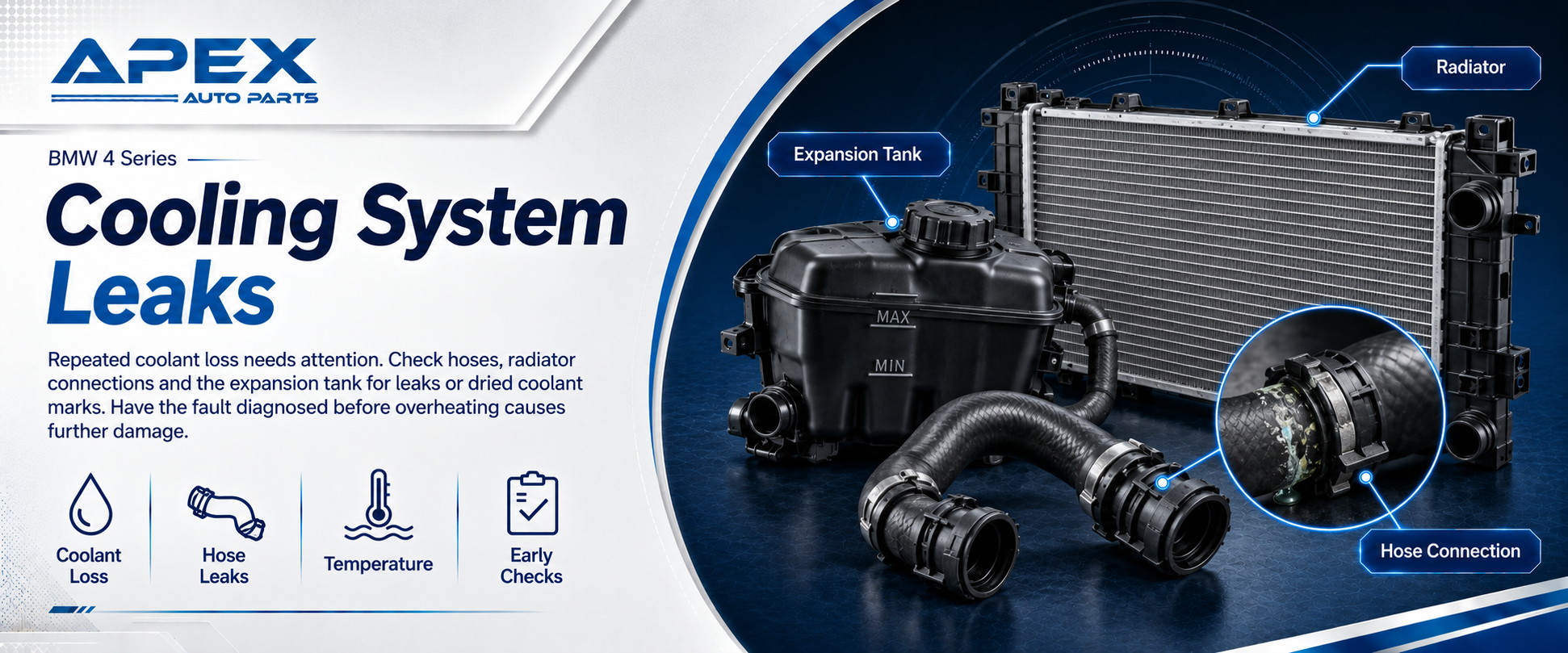
Cooling system problems can cause some of the most expensive BMW 4 Series engine problems if they are ignored.
The cooling system controls engine temperature by moving coolant through the engine and radiator. Modern BMW engines operate within a carefully managed temperature range. If coolant escapes or stops circulating correctly, the engine can overheat.
The cause may be relatively simple at first. A hose may leak. A plastic connection may become brittle. A thermostat or another cooling component may fail. If the coolant level drops far enough, however, the engine can become dangerously hot.
One of the easiest warning signs to spot is repeated coolant loss. If you find yourself topping up the cooling system every few weeks, the vehicle needs inspection. Coolant does not disappear for no reason.
You may also notice dried coolant marks around pipes and connections, a sweet smell after driving, or a temperature warning on the dashboard.
Do not keep driving an overheating BMW because you are only a few miles from home. Engine damage caused by overheating can cost far more than recovering the vehicle and repairing the original cooling system fault.
Good BMW 4 Series engine reliability depends heavily on keeping the cooling system healthy.
3. Water Pump and Thermostat Problems
The water pump and thermostat are both important parts of the cooling system.
The thermostat controls when coolant is allowed to circulate through different parts of the system. The water pump keeps that coolant moving. If either part stops working correctly, engine temperature can become difficult to control.
A thermostat stuck open may cause the engine to take too long to reach normal temperature. A thermostat that does not open correctly can contribute to overheating.
A weak water pump can create more serious problems because coolant may no longer circulate properly.
Depending on the engine, warning signs may include temperature warnings, coolant loss, unusual fan activity, or changes in heater performance.
Prevention does not mean replacing every cooling system part without reason. Instead, owners should pay attention to temperature behavior and investigate any coolant warning quickly.
If a cooling component needs replacement, make sure the exact engine is identified first. BMW 4 Series engine parts can vary across models and production years, even when two cars have similar badges.
4. Ignition Coil and Spark Plug Problems
Petrol BMW 4 Series engines use spark plugs and ignition coils to create controlled combustion inside each cylinder.
These parts are normal service and wear items, but when they begin failing, the symptoms can feel much more serious than they really are.
A weak ignition coil may cause hesitation, rough running, shaking at idle, or a warning light. Worn spark plugs can cause similar symptoms, especially when the engine is working harder under acceleration.
A misfire should not be ignored simply because the car still moves.
Repeated poor combustion can affect performance, fuel economy and other parts of the engine and exhaust system.
BMW includes spark plug servicing for petrol vehicles within its Service Inclusive programme when required by the vehicle's maintenance schedule.
The sensible approach is to follow the correct service schedule and replace worn plugs before they become a major source of poor running.
If the engine begins misfiring, have the affected cylinder diagnosed properly. Do not replace every ignition coil simply because one cylinder has shown a fault.
Good testing can identify whether the issue is the spark plug, coil, injector, or another engine problem.
5. Turbocharger and Boost Problems
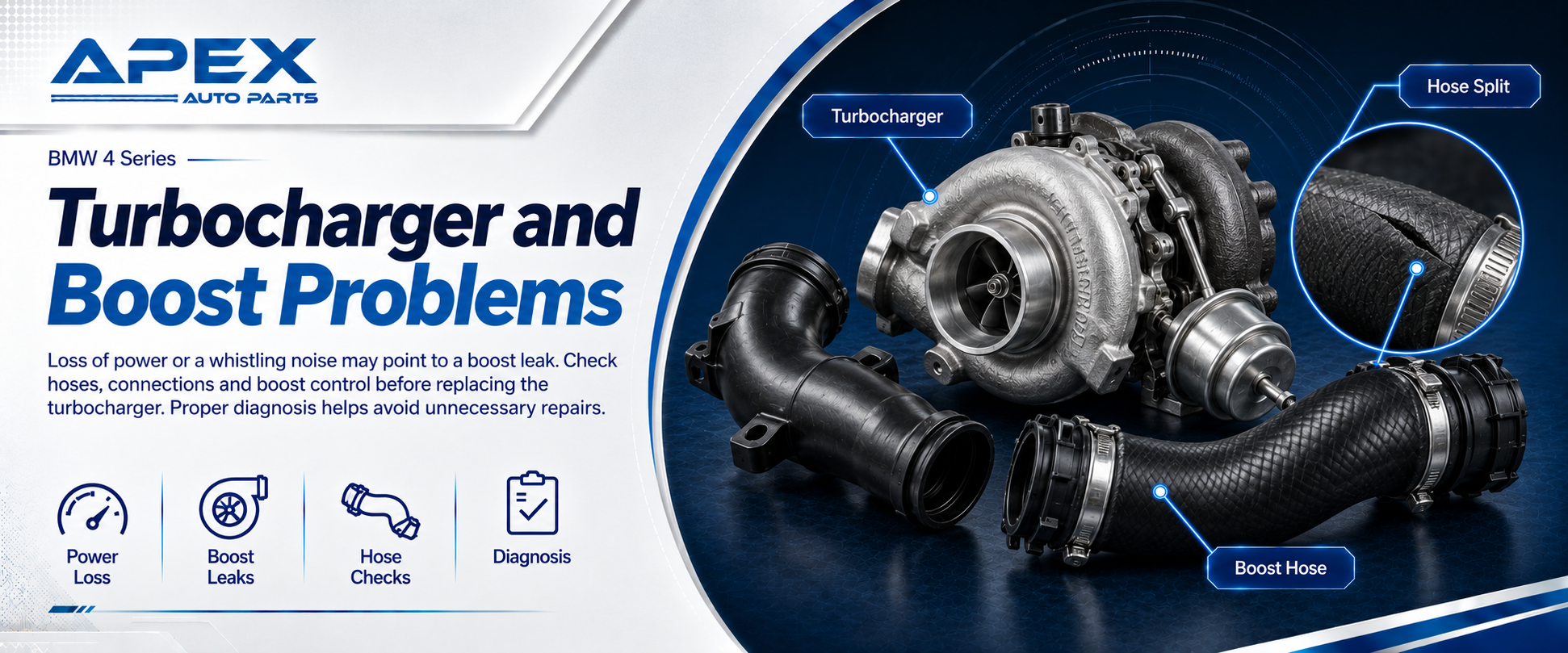
Most modern BMW 4 Series engines use turbocharging.
A turbocharger allows the engine to produce much more power without needing a very large engine capacity. The current BMW 420i Coupe, for example, produces 184 hp from a 1,998 cc four-cylinder petrol engine. At the other end of the range, the M440i uses a 2,998 cc six-cylinder engine with turbocharging and mild hybrid assistance.
Turbochargers operate at very high speeds and temperatures. Correct oil quality and regular oil servicing are therefore important.
Possible signs of a turbo-related fault include poor acceleration, unusual whistling, smoke or reduced power.
However, the turbo should not be blamed immediately.
A split intake pipe, damaged boost hose, loose connection or faulty sensor can create very similar symptoms. This is why replacing a turbocharger without diagnosis can become a very expensive mistake.
If the vehicle suddenly loses power, a mechanic should inspect the complete intake and boost system before major parts are ordered.
Maintaining the correct engine oil level is also one of the simplest ways to protect the turbocharger.
6. Intake and Air Leak Problems
The engine needs the correct amount of air to run properly.
On a turbocharged BMW, air moves through several pipes and connections before reaching the engine. If one of these develops a split or leak, the engine may receive less air than the control system expects.
The driver may notice hesitation, weak acceleration, or a warning light. Some cars may also enter a reduced power mode.
Air leaks can be difficult to find because a hose may look normal when the engine is switched off but open up under boost pressure.
A mechanic may need to pressure test or smoke test the intake system to find smaller leaks.
Prevention includes inspecting hoses during servicing and replacing damaged rubber parts before they fail.
This is also a good example of why a loss of power should not automatically lead to an expensive turbo replacement. Sometimes the real cause is a much cheaper hose or connection.
7. Fuel Injector Problems
Modern BMW engines rely on accurate fuel delivery.
The injectors have to provide the correct amount of fuel at exactly the right time. If an injector becomes restricted, leaks, or begins operating incorrectly, the engine may run roughly.
Possible symptoms include difficult starting, hesitation, poor fuel economy, misfires, and uneven idle.
The challenge is that these symptoms can also be caused by ignition faults, air leaks, fuel pressure problems, or sensors.
Replacing injectors without proper testing can therefore waste a lot of money.
A good mechanic will use diagnostic information along with fuel pressure and cylinder testing before deciding which part needs replacement.
Diesel versions also rely on regular fuel system maintenance. BMW includes diesel fuel filter service in its official servicing packages where required.
Using the correct fuel and keeping up with routine servicing can help protect the fuel system.
8. Timing Chain and Timing System Wear
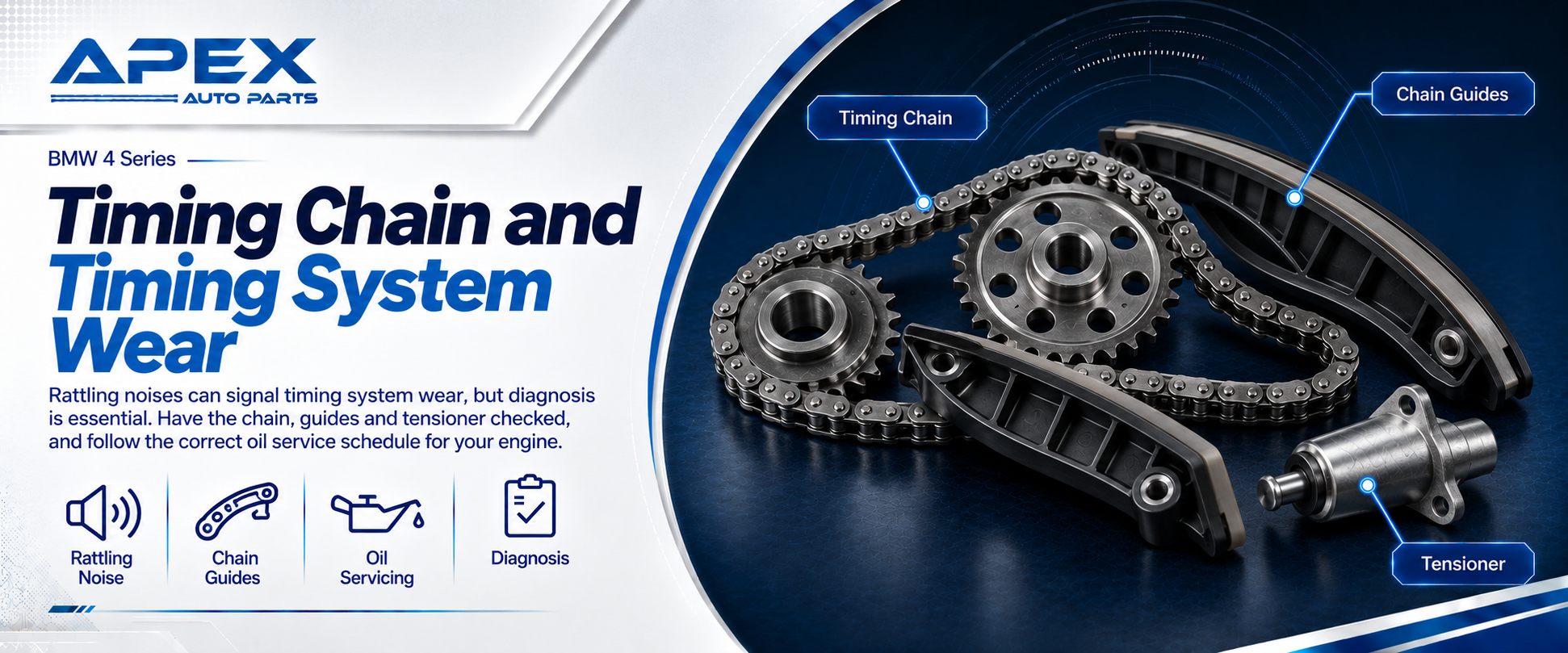
The timing system controls the movement of major internal engine parts.
If the timing becomes incorrect, the engine may run badly. A major timing failure can cause serious internal damage.
Different BMW 4 Series engines use different engine designs, so there is no single timing issue that applies to every model.
This is where online advice can sometimes become misleading. A problem associated with one older BMW engine may not apply to a newer 4 Series using a completely different unit.
Owners should pay attention to unusual mechanical rattles, especially during cold starts.
A timing system that depends on hydraulic tension and oil pressure can also suffer more wear when oil servicing is neglected.
Regular oil changes using the correct specification are therefore important.
If a strong rattling noise develops, especially when starting the engine cold, do not ignore it. A specialist should inspect the timing system before the vehicle is driven for long periods.
9. Oil Consumption
Oil consumption is not the same as an oil leak.
An external leak allows oil to escape from the engine onto another component or the road. Oil consumption happens when the engine uses oil internally during operation.
A small amount of oil use between services can occur depending on the engine and driving conditions. What matters is whether the amount becomes excessive or suddenly increases.
If you need to add oil frequently, keep a record of how much you are adding and how many miles the car has travelled.
Blue smoke from the exhaust can sometimes be linked with oil entering the combustion process, although smoke color alone is not enough for a proper diagnosis.
Possible causes of increased oil use can include turbocharger issues, seals, or internal engine wear.
The important thing is to investigate increasing oil consumption before the level becomes dangerously low.
Using the correct oil is also important because BMW engines are designed around specific oil requirements. BMW's official servicing programme includes engine oil changes and top-ups as part of routine maintenance.
10. Sensor and Engine Management Faults
Modern BMW engines use many sensors to control how the vehicle runs.
These sensors monitor engine speed, airflow, boost pressure, temperatures, fuel pressure, exhaust conditions and many other values.
A faulty sensor can cause poor performance even when the main mechanical parts of the engine are healthy.
Symptoms may include an engine warning light, reduced power, rough running or increased fuel consumption.
The biggest mistake is using diagnostic fault codes as a shopping list.
A fault code normally tells the mechanic which system has detected a problem. It does not always prove the sensor mentioned in the code has failed.
A damaged wire, air leak or another mechanical fault can produce a sensor reading that appears incorrect.
Proper diagnosis should therefore include checking live data and inspecting the system around the component.
This approach is far cheaper than replacing several BMW 4 Series engine parts until the warning light disappears.
11. Diesel EGR Problems
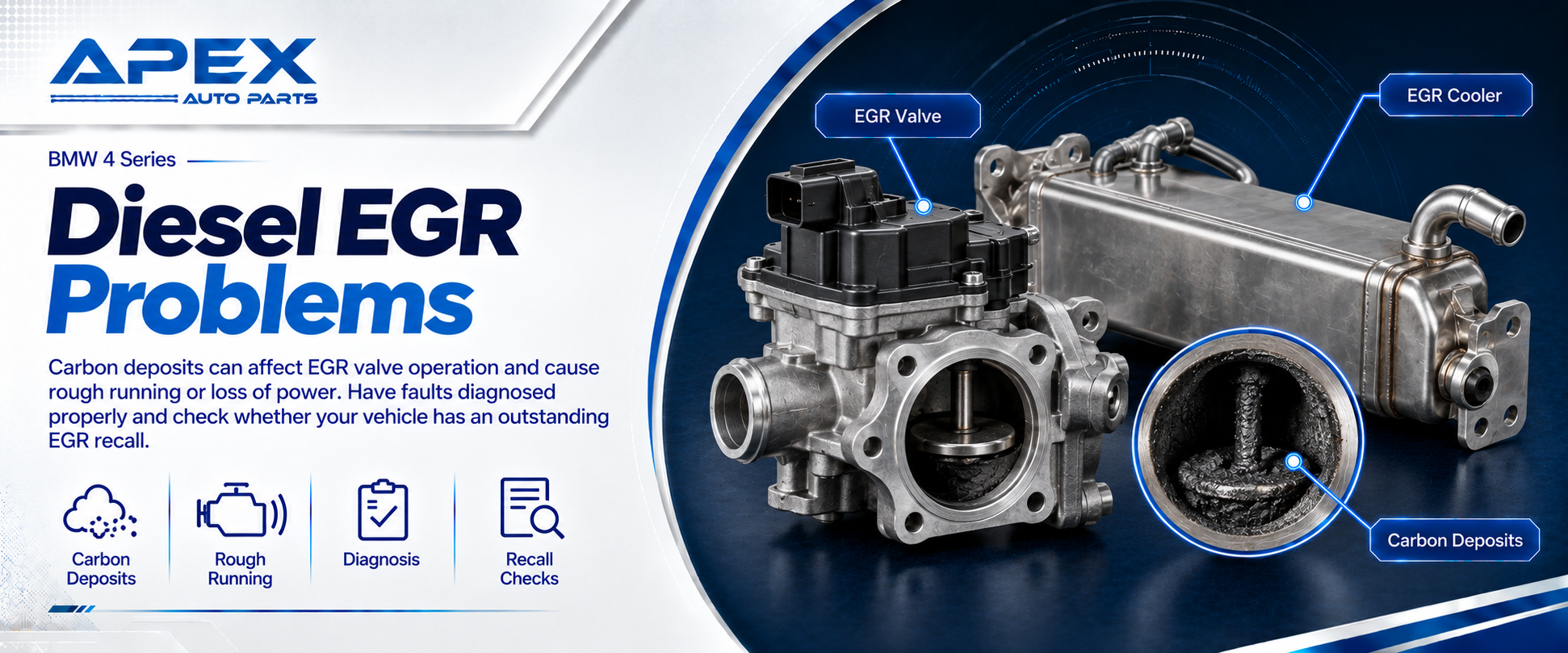
Diesel BMW 4 Series models have emissions systems that differ from petrol versions.
One of these is the exhaust gas recirculation system, usually called EGR.
The system allows a controlled amount of exhaust gas to return through the intake under certain operating conditions.
Over time, deposits can build up inside parts of the system.
A restricted or faulty EGR system may cause hesitation, reduced performance, warning lights, or poor fuel economy.
These symptoms can overlap with turbo, intake and sensor faults, so the system needs proper testing.
Regular longer journeys can be helpful for modern diesel vehicles because they allow the engine and emissions equipment to operate at full working temperature.
If your driving consists almost entirely of very short trips, a diesel 4 Series may not always be the ideal choice.
12. Diesel Particulate Filter Problems
Diesel models also use a diesel particulate filter, commonly known as a DPF.
The filter catches soot from the exhaust and periodically needs to burn that soot away through a cleaning process.
The process works best when the vehicle reaches suitable operating conditions.
Repeated short trips can prevent the filter from completing its cleaning cycle.
Over time, the filter can become more restricted.
A driver may then see a warning light, notice reduced performance, or experience higher fuel consumption.
The best prevention is correct vehicle use and regular servicing.
If a DPF warning appears, do not simply keep clearing the fault code.
Find out whether the filter is genuinely blocked or whether another engine fault is preventing the cleaning process from completing properly.
A thermostat problem, sensor issue, or engine fault can sometimes contribute to DPF trouble.
13. Mild Hybrid System Problems on Performance Models
Some newer BMW 4 Series versions use 48-volt mild hybrid technology.
The current M440i XDrive Coupe is one example. BMW's latest UK specification lists a 2,998 cc six-cylinder petrol engine combined with a small electric motor, producing a total system output of 392 hp and 540 Nm.
A mild hybrid does not work like a full electric car. The petrol engine still provides most of the power.
However, the additional electrical system means diagnosis can become more involved.
If a warning appears, the cause may come from the combustion engine, mild hybrid battery, starter generator, wiring or control software.
This is another reason replacement parts should not be chosen based only on a dashboard message.
A workshop needs suitable diagnostic equipment and a proper understanding of the 48-volt system.
Owners should also avoid allowing untrained people to work on electrical systems they do not understand.
14. Automatic Gearbox Behavior That Feels Like an Engine Problem
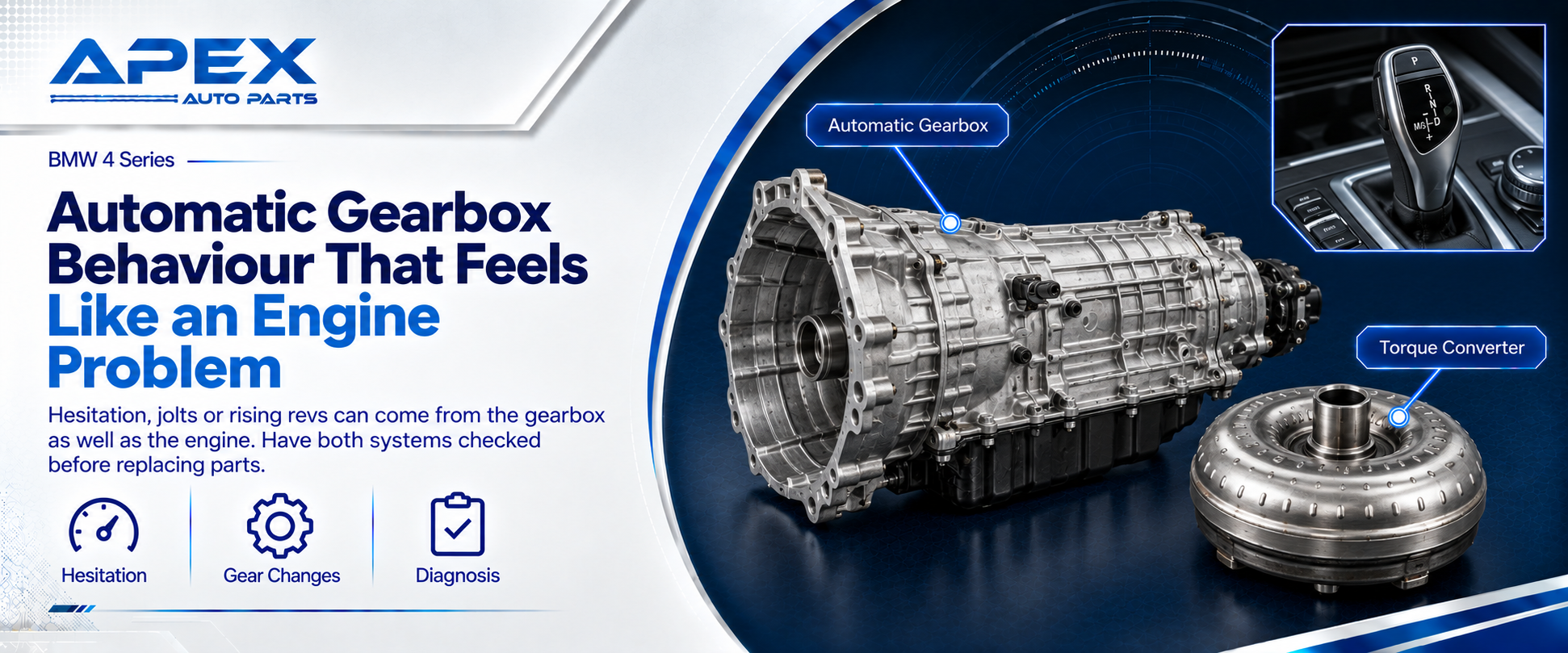
Not every performance problem comes from the engine.
The automatic gearbox can sometimes create symptoms that drivers mistake for BMW 4 series engine problems.
If the gearbox hesitates, changes gear roughly, or holds the wrong gear, the car may feel slow even though the engine itself is healthy.
Similarly, drivetrain problems can create vibration or jerking that feels as though the engine is misfiring.
This is why road testing matters during diagnosis.
A mechanic should look at engine behavior and gearbox behavior together.
If the engine produces correct power but the car does not deliver that power smoothly to the road, the fault may be elsewhere in the drivetrain.
This is particularly important when buying a used vehicle. Do not concentrate only on the engine bay while ignoring how the car changes gear.
15. Poor Previous Repairs
One of the biggest warning signs on any used BMW is poor previous workmanship.
Open the bonnet and look closely.
Loose wiring, damaged clips, cheap hoses, incorrect fasteners and excessive sealant can tell you that someone has been repairing the vehicle without much care.
A correctly fitted quality part can last for years.
A badly fitted part can create another problem within weeks.
Previous owners may also have modified the vehicle. Performance software, intake changes and other tuning work can affect engine reliability if they are not carried out properly.
If a heavily modified BMW has no supporting invoices or information about the work, treat it carefully.
A standard vehicle with clear maintenance history is often easier to judge than a modified one with unknown software and parts.
BMW 4 Series Engine Size Explained
The BMW 4 Series engine size depends on the exact model.
The current UK 420i Coupe uses a 1,998 cc four-cylinder petrol engine producing 184 hp and 300 Nm of torque. BMW pairs this engine with an eight-speed automatic gearbox and rear-wheel drive.
The current M440i XDrive Coupe uses a much larger 2,998 cc straight-six petrol engine. It also uses 48-volt mild hybrid assistance and all-wheel drive. BMW lists combined output at 392 hp and maximum torque at 540 Nm.
This shows why engine size alone does not tell you everything about performance or repair requirements.
Two engines with different capacities may use completely different turbochargers, ignition parts, cooling components, and electronic systems.
When ordering BMW 4 Series engine parts, the model badge is only the beginning. The exact engine and production details still need checking.
Does Engine Size Affect BMW 4 Series Reliability?
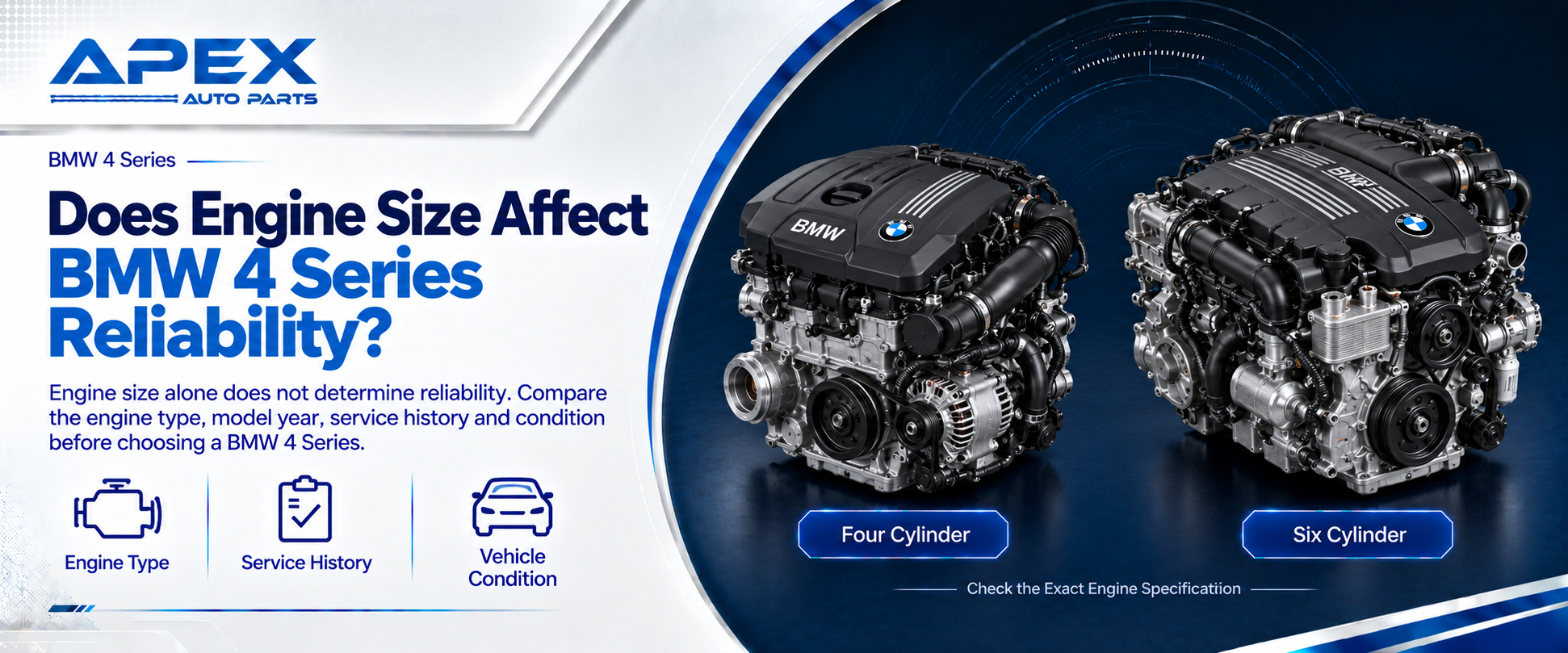
A larger engine is not automatically less reliable, and a smaller engine is not automatically more economical to repair.
The BMW 4 Series engine's reliability depends much more on engine design, maintenance history, driving conditions, and previous repair quality.
A well-maintained six-cylinder engine can remain healthy for a long time.
A neglected four-cylinder engine can develop serious problems much earlier.
The same principle applies to turbocharging.
A turbocharged engine is not automatically unreliable, but it does depend heavily on clean oil and correct servicing.
If you are buying a used 4 Series, do not choose a car only because someone online says one engine size is better.
Inspect the actual vehicle.
A complete service history, healthy cooling system and smooth-running engine are much more valuable than a lower mileage figure with no evidence of maintenance.
How to Improve BMW 4 Series Engine Reliability?
Improving the BMW 4 Series engine reliability does not require any secret trick.
Most of it comes down to good maintenance and paying attention.
Follow the vehicle's service requirements and do not stretch oil changes simply because the car still feels fine.
BMW's current Service Inclusive programme covers key maintenance items such as engine oil service, vehicle checks, air filters, spark plugs on petrol engines and fuel filters on diesel vehicles when required.
Check coolant and oil regularly.
If either level repeatedly falls, find the reason.
Allow the engine to reach normal temperature before demanding full performance, particularly during cold weather.
Investigate new noises early.
A new rattle, vibration, or hesitation is the engine telling you something has changed.
Some useful habits include:
- Check the engine oil regularly.
- Check coolant when the engine is cold.
- Follow the correct service schedule.
- Use oil that meets the correct specification.
- Repair leaks before they become severe.
- Investigate warning lights properly.
- Replace worn spark plugs when required.
- Keep diesel filters maintained.
- Use correctly matched replacement parts.
- Check for outstanding recalls.
BMW provides UK owners with recall information and states that authorized BMW service partners carry out applicable recall work free of charge.
What to Check Before Buying a Used BMW 4 Series?
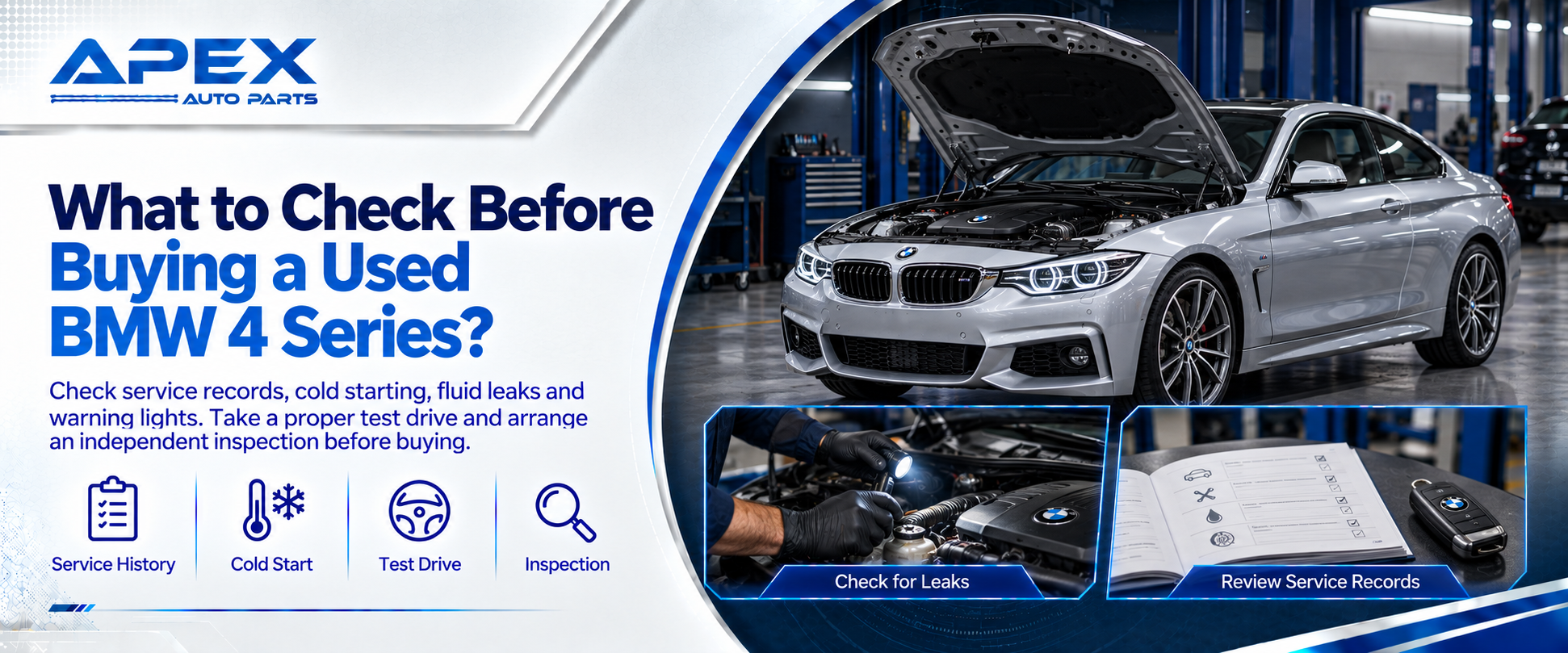
A used BMW 4 Series should ideally be inspected before the engine has been started that day.
Cold starting can reveal problems that disappear after the engine warms up.
Before starting the car, check the oil level and coolant level. Look around the engine bay for obvious leaks and poor repairs.
Start the engine and listen carefully.
The engine should settle into a smooth idle without heavy knocking or repeated shaking.
A brief change in sound during starting can be normal depending on the engine, but a strong mechanical rattle deserves inspection.
Take the vehicle for a proper test drive.
Do not spend the entire drive in slow traffic.
Allow the engine to warm up and test gentle and stronger acceleration where it is safe to do so.
Pay attention to gear changes, turbo response and warning messages.
After the drive, inspect the engine bay again. Fresh oil or coolant leaks are often easier to find after the vehicle has reached operating temperature.
Check the Service History Properly
Service history matters much more than many buyers realize.
A digital service record is useful, but repair invoices can tell you even more.
Look for evidence of engine oil services, spark plug replacement on petrol models, diesel fuel filter servicing, cooling system repairs and any larger engine work.
BMW's own servicing structure includes these key maintenance areas, so large gaps in the history should make you cautious.
If the seller says a major repair was completed, ask for paperwork.
A sentence such as "the turbo was changed last year" is much more useful when supported by an invoice showing who supplied the part and who fitted it.
Good records help you understand how the vehicle has been treated and what maintenance may be due next.
Buying BMW 4 Series Engine Parts
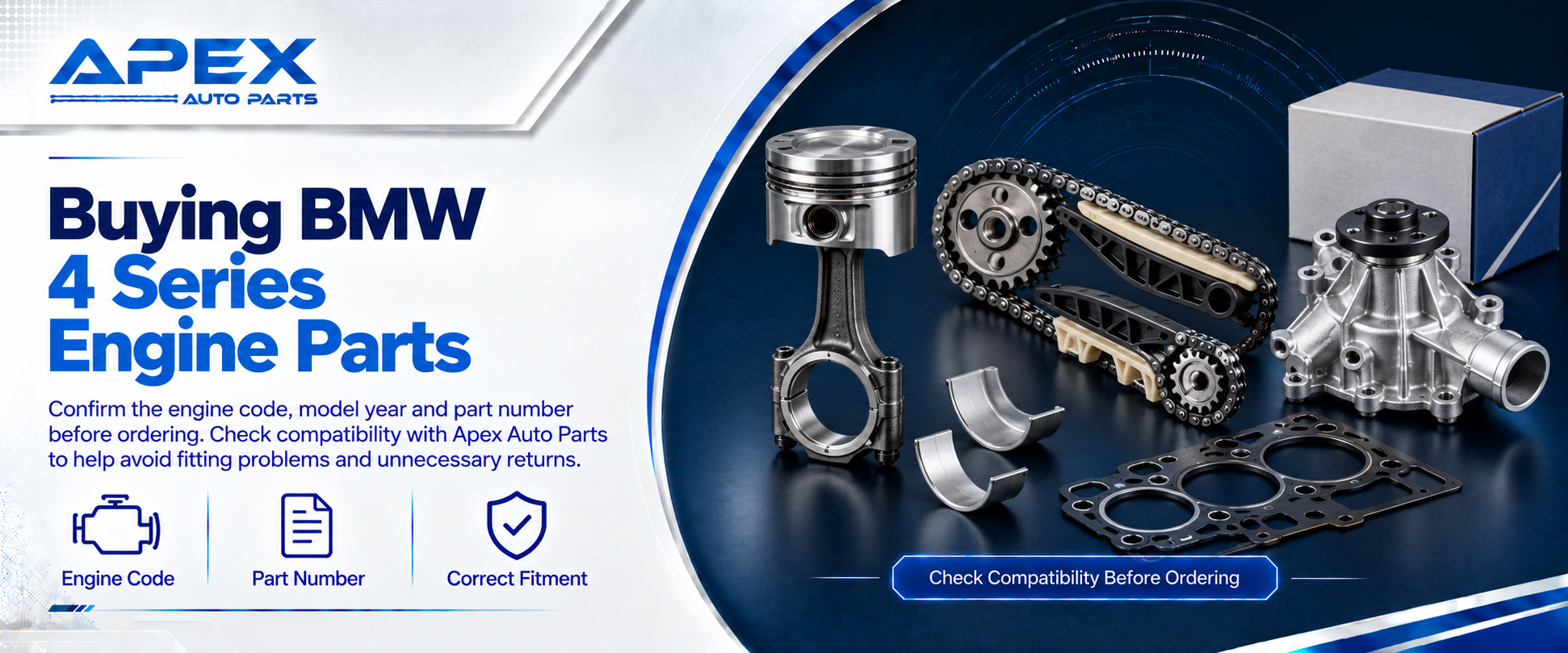
Correct identification is extremely important when buying BMW 4-series engine parts.
Do not order a component simply because the listing says it fits a BMW 4 Series.
The 4 Series has been produced with several petrol, diesel, and performance engines. Even cars with similar model names can use different parts depending on production date and engine version.
Before ordering, check:
- Vehicle registration
- VIN
- Model year
- Engine code
- BMW 4 Series engine size
- Existing part number where available
- Production date
This information helps reduce mistakes.
At Apex Auto Parts, matching the correct engine component to the vehicle details should come before simply supplying the first part that appears to fit.
Correct parts matching can prevent workshop delays, return costs and repeat labour.
This becomes especially important with sensors, gaskets, cooling parts, turbo components and internal engine parts where a small difference can make the component unsuitable.
Why Cheap BMW Engine Parts Can Cost More?
Price matters, but the cheapest BMW 4 Series engine parts are not always the cheapest repair.
Imagine replacing a cooling part that takes several hours to reach.
If the low-quality replacement fails shortly afterwards, you pay for the part again and may also have to pay the same labour again.
The same applies to sensors.
A poor sensor can send incorrect information to the engine control system and create warning lights or poor running even though the engine itself is healthy.
Cheap gaskets can begin leaking early.
Low-quality hoses can fail under heat and pressure.
The goal should be value rather than simply the lowest price.
Use correctly specified parts from trusted manufacturers and suppliers, especially when the part protects an expensive engine component.
Why Should Diagnosis Come Before Ordering Parts?
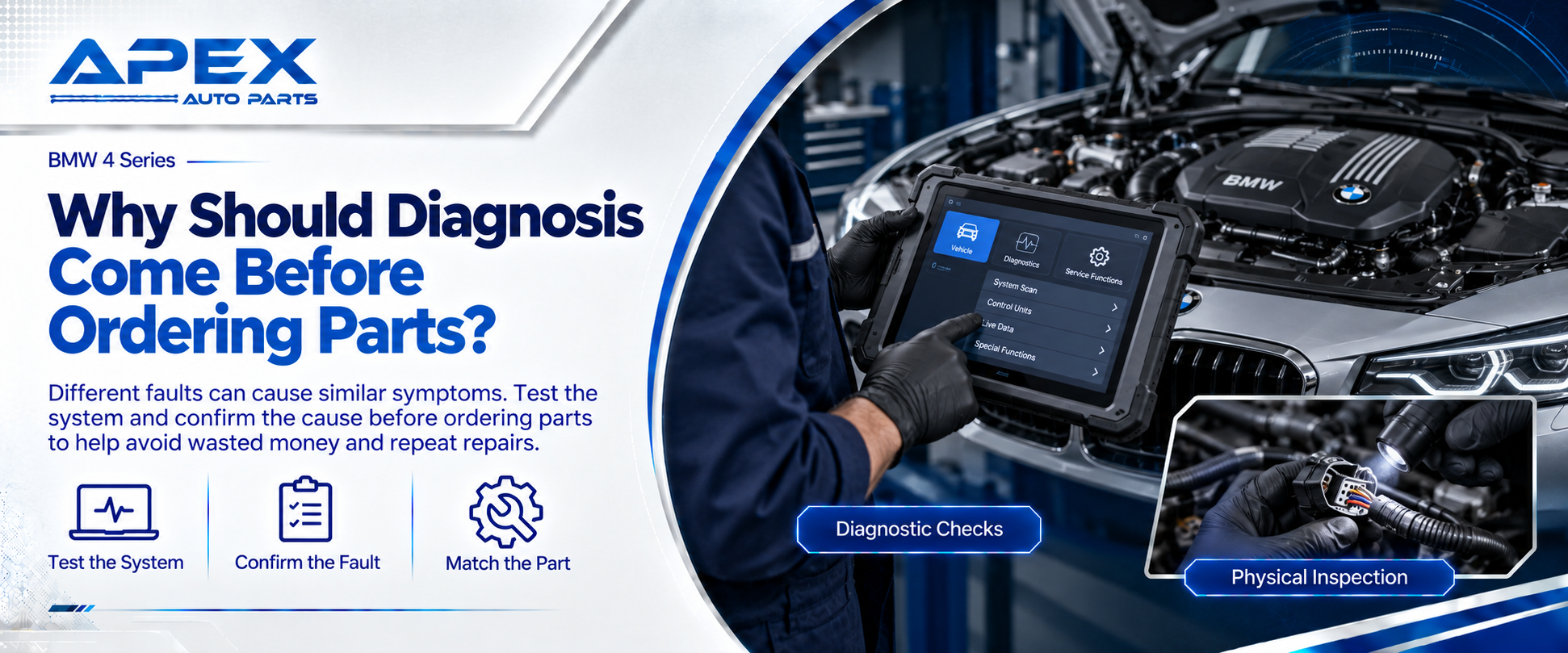
One of the easiest ways to waste money on a BMW is replacing parts based on guesses.
A vehicle loses power, so someone buys a turbocharger.
The fault remains.
Next, a sensor is replaced.
The problem is still there.
Eventually someone finds a small split in an intake hose.
A good diagnosis would have found the cheaper fault first.
The same thing happens with misfires. A driver may order injectors when the real problem is an ignition coil or spark plug.
Diagnostic codes are useful, but they need interpretation.
A mechanic should look at live readings, wiring, physical condition, and engine behavior before deciding what has failed.
At Apex Auto Parts, having a confirmed diagnosis also makes it easier to supply the correct replacement component.
Is a high-mileage BMW 4 Series a bad buy?
High mileage alone does not make a BMW 4 Series a bad car.
A vehicle that has covered high motorway mileage with regular servicing can sometimes be in better mechanical condition than a low-mileage car that has completed years of short trips and received poor maintenance.
Look at how the vehicle has been cared for.
A strong service history matters.
Check whether leaks were repaired quickly, whether the correct oil was used and whether cooling problems were dealt with properly.
A high-mileage vehicle may naturally need more suspension, seal and wear-related work, so you should still budget sensibly.
The important point is not to reject a car because of one number on the dashboard.
Conditions and history tell you much more.
Should You Buy a BMW 4 Series With an Engine Warning Light?
Buying a car with an engine warning light can be risky.
The seller may tell you it only needs a cheap sensor.
Sometimes that may be true.
The problem is that you do not know until the vehicle has been diagnosed properly.
A warning light can come from a simple electrical fault or something much more expensive.
If you are considering buying the car, arrange a diagnostic inspection before agreeing to the deal.
Ask for the fault codes and, more importantly, an explanation of what testing has been completed.
Do not calculate your purchase price around the seller's guess.
Calculate it around the actual fault.
Are BMW 4 Series Engines Expensive to Repair?
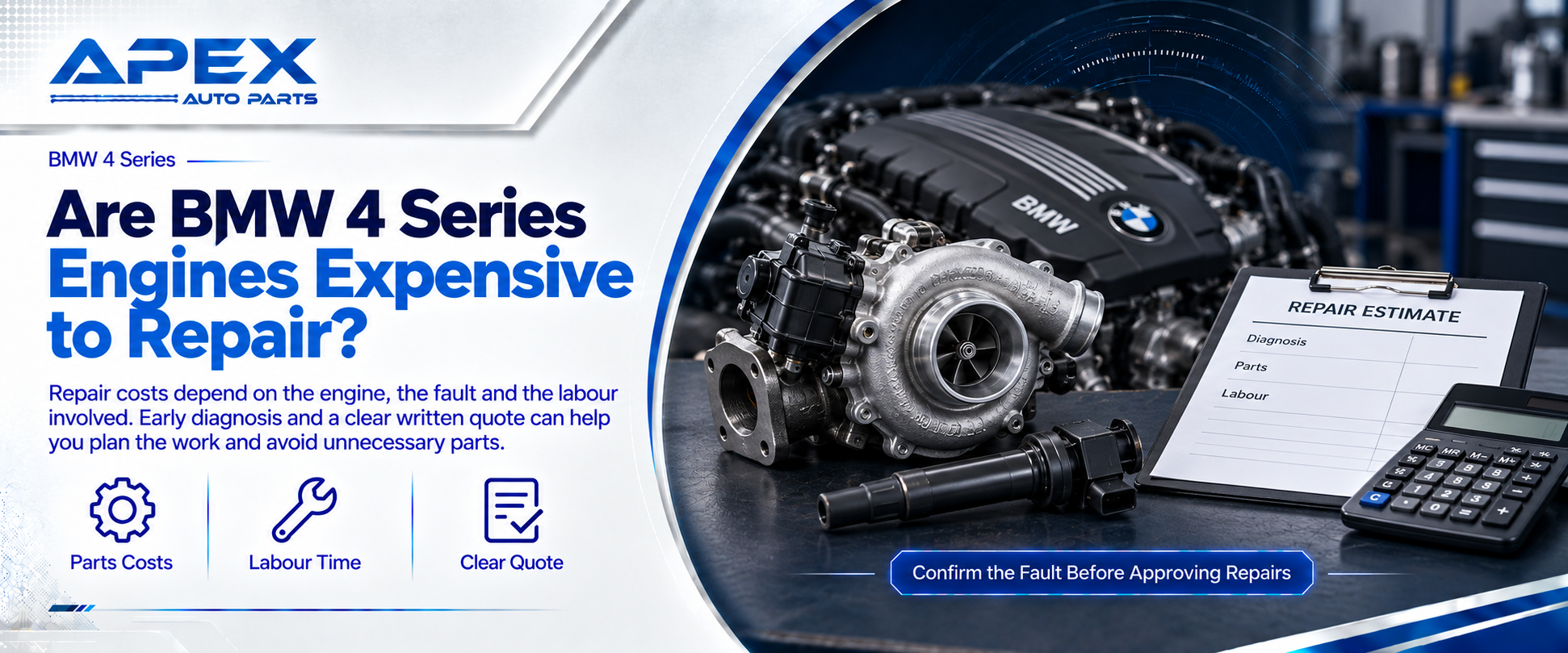
Repair cost depends heavily on what has failed.
Spark plugs, ignition coils and some sensors may be relatively straightforward.
A turbocharger, timing system or internal engine repairs can cost much more because both parts and labour may be expensive.
This is why prevention matters so much.
Spending money on regular oil servicing is cheaper than replacing a damaged turbo.
Repairing a coolant leak is cheaper than dealing with an overheated engine.
Replacing a worn ignition part early is cheaper than allowing a serious misfire to continue.
A well-maintained BMW is usually much easier to own than one where every repair has been delayed.
Final Thoughts
The BMW 4 Series can be a strong and enjoyable car when it is serviced correctly.
The most important BMW 4 Series engine problems to watch for include oil leaks, coolant loss, water pump or thermostat issues, ignition faults, turbo and boost problems, fuel system faults, timing system wear and sensor problems. Diesel owners also need to think about EGR and DPF conditions, while some newer performance models add mild hybrid systems that require suitable diagnostic equipment.
Not every 4 Series will develop these problems.
The BMW 4 Series engine reliability depends heavily on the exact engine, maintenance history, and how quickly faults are repaired.
Do not ignore small warning signs.
A little coolant loss today can become an overheating problem later. A minor oil leak can eventually lower the oil level enough to damage expensive components. A simple boost leak can be mistaken for a failed turbo if nobody checks the system properly.
The BMW 4 Series engine size also varies significantly. A current 420i Coupe uses a 1,998 cc four-cylinder petrol engine, while the current M440i XDrive uses a 2,998 cc six-cylinder mild hybrid petrol powertrain.
That variation is exactly why BMW 4 Series engine parts should always be matched using the correct vehicle details.
When replacement engine components are needed, suppliers such as Apex Auto Parts can help match parts to the correct model, engine and specification. Getting the right component the first time can save both money and workshop time.
Regular servicing, correct diagnosis and good-quality parts remain the simplest ways to keep a BMW 4 Series running properly for as long as possible.
FAQS
1. What are the most common BMW 4 Series engine problems?
Common BMW 4 Series engine problems can include oil leaks, coolant loss, ignition coil faults, worn spark plugs, turbo and boost issues, fuel delivery problems, and sensor faults. Diesel models can also develop EGR or DPF issues. The exact problems depend heavily on the engine, age, and maintenance history.
2. Is the BMW 4 Series engine reliable?
The BMW 4 Series engine reliability can be good when the car receives regular servicing and faults are repaired early. Correct oil, healthy coolant levels, and proper maintenance make a major difference. Reliability also varies between engine versions, so buyers should check the exact engine and its service history before purchasing.
3. What is the BMW 4 Series engine size?
The BMW 4 Series engine size varies by model. The current UK 420i Coupe uses a 1,998 cc four-cylinder petrol engine, while the M440i XDrive Coupe uses a 2,998 cc six-cylinder petrol engine with mild hybrid assistance. Other generations and models may use different petrol or diesel engines.
4. Why is my BMW 4 Series losing coolant?
Repeated coolant loss normally means there is a leak or another cooling system problem. Hoses, connections, the thermostat, water pump or other cooling parts may be involved. Do not keep topping up the system without finding the cause because low coolant can eventually cause overheating and serious engine damage.
5. Why is my BMW 4 Series engine shaking?
Engine shaking can be caused by ignition coils, worn spark plugs, injectors, air leaks or other engine management faults. Petrol engines often develop noticeable rough running when a cylinder begins misfiring. A proper diagnostic check should be completed before BMW 4 Series engine parts are ordered or replaced.
6. Can a BMW 4 Series turbo fail?
A BMW 4 Series turbocharger can wear or fail, but poor acceleration does not automatically mean the turbo is damaged. Split intake hoses, boost leaks, and sensor faults can create similar symptoms. The air and boost system should be tested before an expensive turbocharger is replaced.
7. How can I improve BMW 4 Series engine reliability?
Follow the correct service schedule, use suitable engine oil, maintain coolant levels and investigate warning lights quickly. Repair oil or coolant leaks before they become severe. BMW's servicing programme includes key items such as engine oil, air filters, petrol spark plugs and diesel fuel filters when required.
8. Are BMW 4-series engine parts expensive?
BMW 4 Series engine parts vary widely in price. Service items and some sensors can be relatively affordable, while turbochargers and internal engine components may cost much more. Proper diagnosis and correct parts matching help reduce unnecessary spending because you avoid replacing components that are still working properly.
9. Is a high-mileage BMW 4 Series worth buying?
A high-mileage BMW 4 Series can still be worth buying if it has a strong service history and has been maintained properly. Check oil and coolant condition, leaks, warning lights, and previous repair records. A well-serviced high-mileage car can be a better choice than a neglected lower-mileage example.
10. Where can I buy BMW 4-series engine parts?
You can source BMW 4 Series engine parts through specialist suppliers such as Apex Auto Parts. Before ordering, provide the VIN, model year, BMW 4 Series engine size and existing part number where possible. Correct identification helps prevent fitting problems, unnecessary returns, and wasted workshop labour.
References: