
 info@apexautoparts.co.uk
 +44 203 915 7535
 Safe & Fast Shipping
 Whish List
 Compare
 Sign In


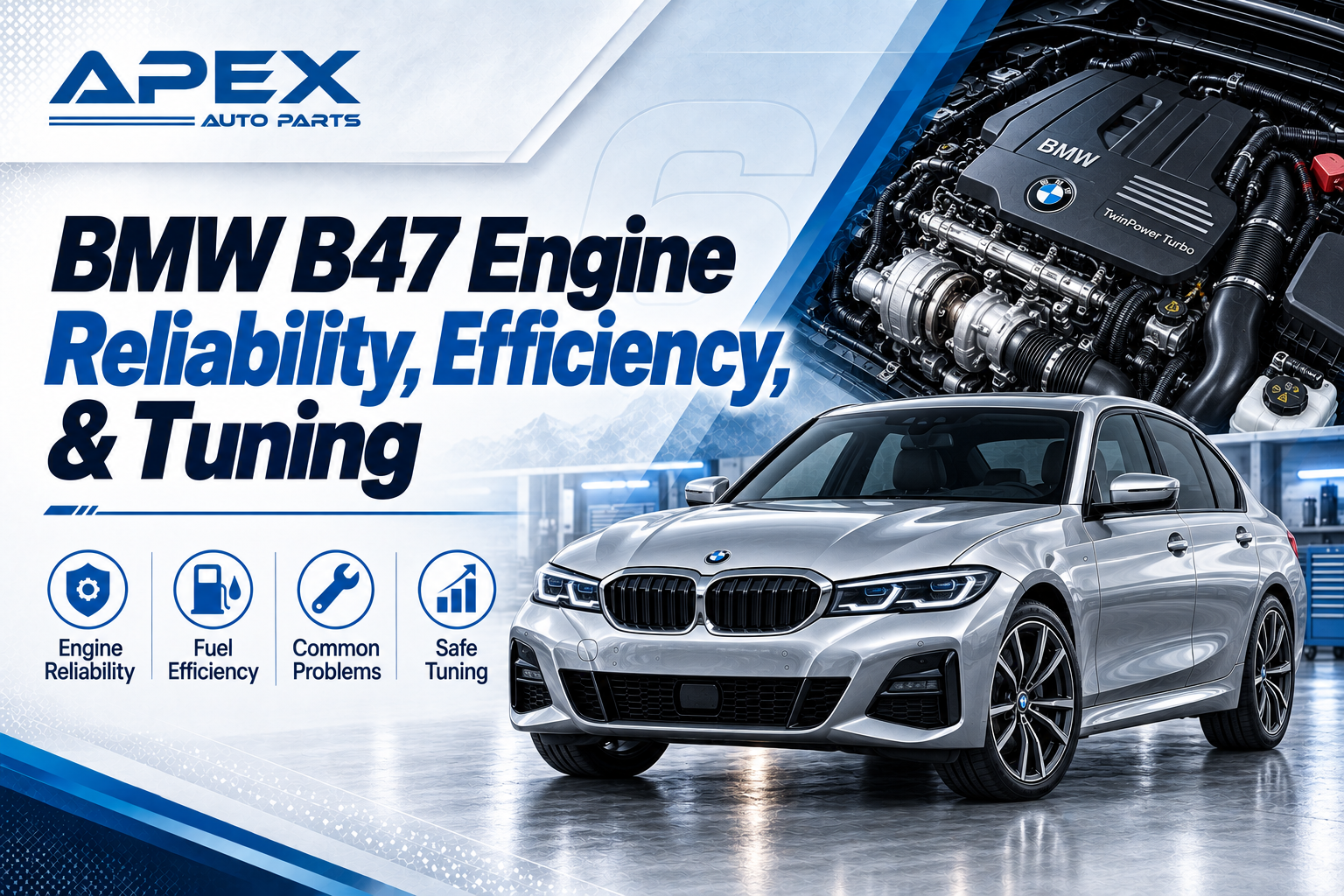
The BMW B47 is one of the best-known modern diesel engines used across the BMW range. It arrived as the replacement for the older N47 engine and brought several changes aimed at improving power, fuel economy, emissions, and everyday driving.
Drivers often choose a BMW with this engine because it offers strong pulling power without using too much fuel. It can feel smooth on the motorway, responds well when overtaking, and suits drivers who cover long distances. However, like any modern diesel engine, it needs the correct servicing and driving conditions.
This guide explains BMW B47 reliability, fuel efficiency, maintenance, common faults, and BMW B47 tuning. It also looks at the warning signs owners should never ignore. The aim is to help owners make informed repair choices instead of replacing parts based on guesswork.
What Is the BMW B47 Engine?
The BMW B47 is a four-cylinder turbo diesel engine that first appeared in the 2010s. It replaced the N47, which had become known for timing chain concerns in some vehicles.
Most versions use a 2.0-litre design, although BMW has produced the engine in different power levels. It can be found in many BMW cars, including versions of the 1 Series, 2 Series, 3 Series, 4 Series, 5 Series, X1, X2, X3 and other models.
The engine uses common rail fuel injection and a turbocharger to produce strong torque from low engine speeds. Some versions use one turbocharger, while higher output versions may use a more advanced turbo arrangement.
BMW has officially described its 2.0-litre TwinPower Turbo diesel as an aluminium four-cylinder engine using common rail injection and a turbocharger with variable turbine geometry. One 190-horsepower version produces 400 Nm of torque between 1,750 and 2,500 rpm.
These figures help explain why the engine feels strong without needing to be pushed hard. The useful torque arrives early, which makes the car easier to drive in traffic and more relaxed at motorway speeds.
Which BMW Models Use the BMW B47?
The BMW B47 has been fitted to a wide range of BMW cars. The exact engine version depends on the model, production year, power level, gearbox, and emissions standard.
It is commonly linked with model names such as 18d, 20d, and some 25d versions. However, a model badge alone is not enough to identify the exact engine. Two cars with the same badge may use different engine versions if they were built in different years.
Owners should check the vehicle identification number, engine code, and production date before ordering replacement parts. Components such as EGRvalve, turbocharger, injectors, sensors, water pump, and timing parts may differ between versions.
Apex Auto Parts can help customers check part suitability using vehicle and engine information. This simple check can prevent delays, fitting problems, and the cost of returning an incorrect component.
Understanding BMW B47 Reliability
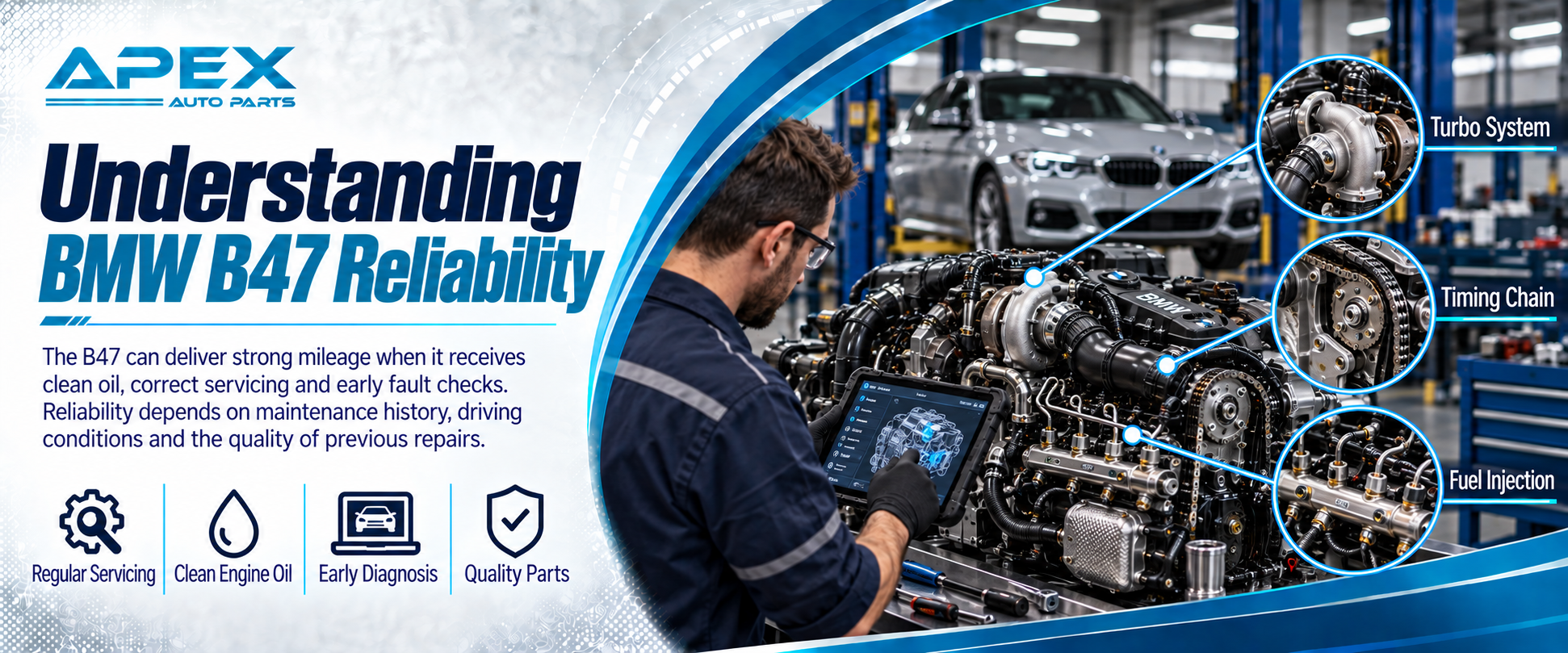
Overall, BMW B47 reliability is generally considered better than the earlier N47 engine when the engine receives proper care. BMW made changes to the design, including updates to the timing system and emissions equipment.
However, better does not mean fault-free. The engine still has many parts that operate under high heat and pressure. It also relies on sensors, electronic control units, and emissions systems to run correctly.
A well-maintained engine used for regular longer journeys may cover a high mileage without major internal damage. An engine that receives poor oil, delayed servicing or only short trips may develop expensive faults much earlier.
Service history matters more than the number shown on the mileometer. A car with 100,000 miles and good maintenance records may be a safer purchase than a car with 60,000 miles and missing history.
Drivers should also remember that reliability is affected by the rest of the vehicle. A warning light caused by a faulty sensor does not amble. The main engine has failed. Proper testing should come before any replacement decision.
Why Can the BMW B47 Be Fuel Efficient?
Fuel economy is one of the main reasons drivers choose the BMW B47. Diesel engines use fuel differently from petrol engines and usually perform well during steady motorway driving.
The engine produces strong torque at low speeds, so it does not need to rev heavily during normal use. The turbocharger also helps the engine create more power from its size.
BMW introduced the newer four-cylinder diesel family with a focus on reducing fuel use and emissions.
When the 190 horsepower 520d version appeared, BMW quoted combined fuel use as low as 4.1 litres per 100 kilometres under the test system used at the time. Actual fuel economy varies with the vehicle, route, weather, tyres, load and driving style.
A blocked air filter, weak thermostat, dirty intake, underinflated tyres or failed emissions sensor can increase fuel use. This is why a sudden drop in the economy should not be ignored. It may be an early sign of a fault.
Common BMW B47 Engine Problems
Modern diesel engines contain many systems that work together. A fault in one area can create symptoms that appear to come from somewhere else. Understanding common BMW B47 Engine Problems helps owners respond before a small issue becomes an expensive repair.
EGR Valve and EGR Cooler Trouble
The exhaust gas recirculation system sends a controlled amount of exhaust gas back into the engine. This helps reduce harmful emissions, but soot and oil vapour can collect inside the valve and intake system.
A dirty or sticking EGR valve may cause rough running, hesitation, reduced power, poor fuel economy, or an engine warning light. In some cases, the engine may enter a reduced power mode.
The EGR cooler also needs attention. Coolant loss, a sweet smell, or unexplained overheating may point towards a leak. Some BMW vehicles have been included in EGR-related recalls or technical actions, so owners should check their vehicle identification number through BMW’s official recall checker.
Do not replace the EGR valve only because a fault code mentions airflow. Split hoses, intake leaks, wiring faults, and dirty sensors can create similar readings.
Diesel Particulate Filter Blockage
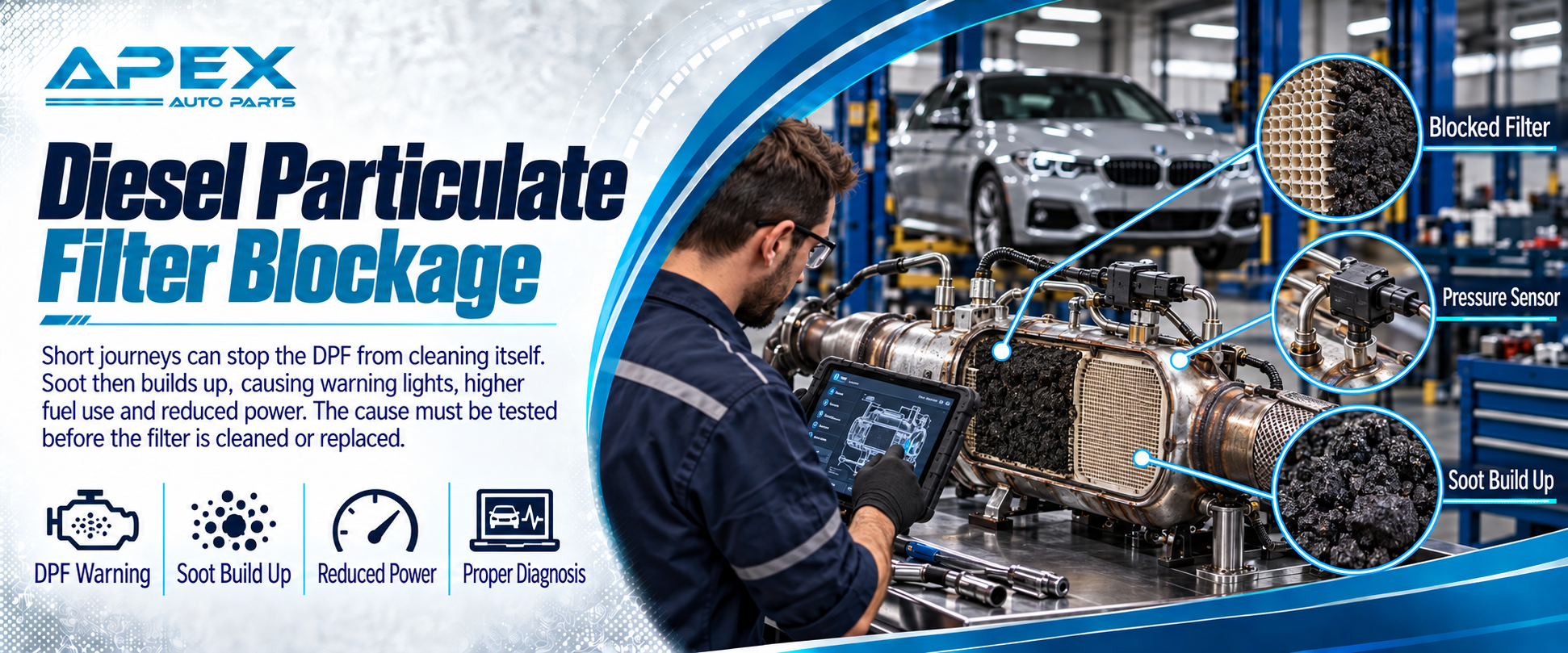
The diesel particulate filter traps soot from the exhaust. Once the filter reaches the correct temperature, the engine burns much of that soot through a process called regeneration.
Short trips can stop this process from finishing. Over time, soot builds up, and the filter becomes restricted. The driver may notice a warning light, higher fuel use, frequent cooling fan operation, or reduced power.
A blocked filter is not always the original problem. A weak thermostat, faulty pressure sensor, failed glow plug, injector issue, or EGR fault may prevent regeneration. Cleaning or replacing the filter without fixing the cause can lead to another blockage.
Timing Chain Wear
Timing chain trouble is less closely linked with the BMW B47 than with the older N47, but wear can still occur. No timing chain should be treated as a lifetime part without inspection.
Warning signs may include rattling from the engine, especially during a cold start, metal particles in the oil filter, or timing-related fault codes. A worn chain, guide, or tensioner can affect engine timing.
If the chain jumps or breaks, the pistons and valves may collide. This can cause serious internal damage. Any unusual metallic rattle should be checked by a BMW diesel specialist as soon as possible.
Turbocharger Problems
The turbocharger depends on clean engine oil and stable oil pressure. Long oil change gaps can allow dirt and deposits to damage its bearings. A blocked oil feed, intake leak, or damaged boost hose can also affect performance.
Possible symptoms include a whistle, siren-like noise, blue smoke, black smoke, slow acceleration, or a boost pressure fault. Oil around a hose does not always confirm turbo failure because a small amount of oil mist may enter the intake system normally.
A mechanic should test boost pressure, intake pipes, vacuum control, and oil flow before fitting a new turbocharger. Replacing the turbo without finding the cause may damage the new unit.
Coolant Leaks and Thermostat Faults
The cooling system controls engine temperature. A weak thermostat may cause the engine to run too cool, while a leak or failed water pump can lead to overheating.
Running too cool can reduce fuel economy and stop the diesel particulate filter from regenerating properly. Running too hot can damage seals, the cylinder head, and other costly parts.
Owners should watch for falling coolant levels, temperature warnings, heater changes, or dried coolant marks around hoses and housings. Never open the coolant cap while the engine is hot.
Injector and Fuel System Faults
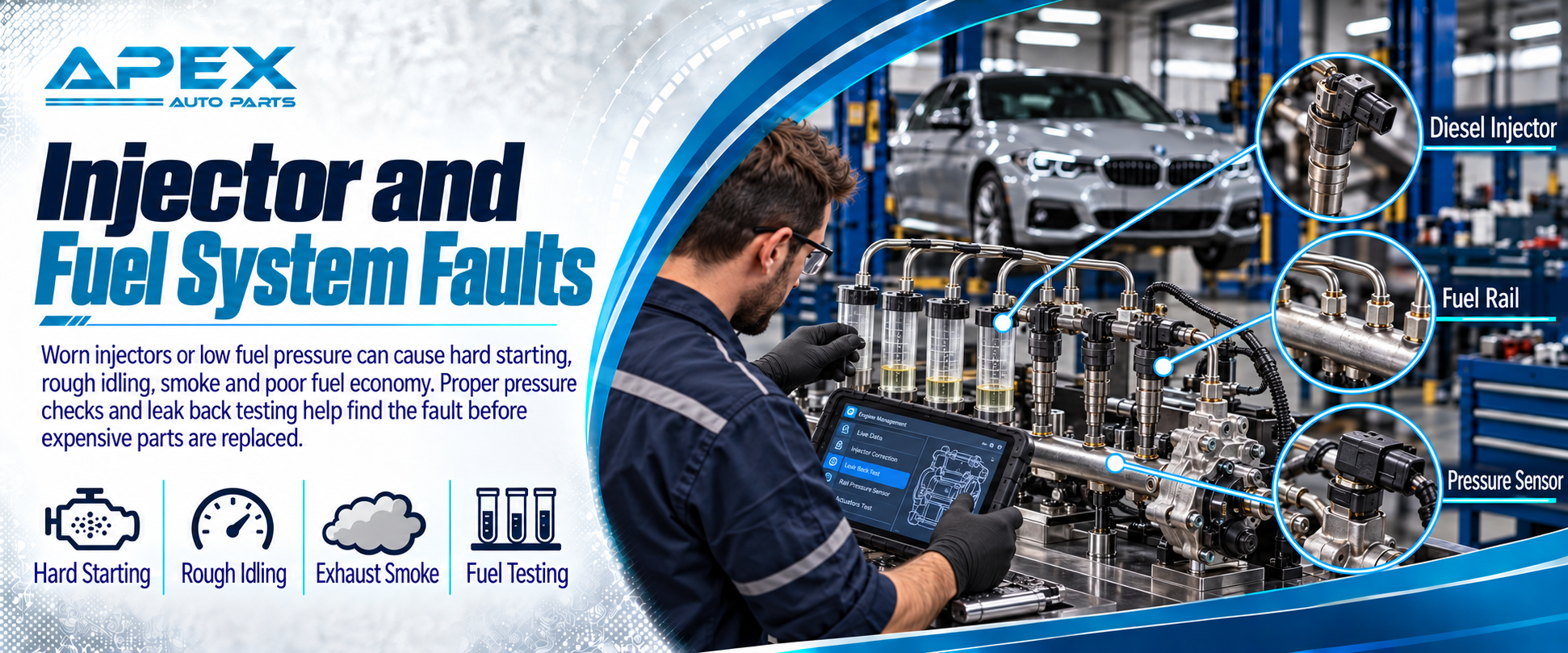
The BMW B47 uses a high-pressure common rail fuel system. Its injectors must deliver a very accurate amount of fuel at the correct time.
A worn injector may cause difficult starting, rough idling, diesel knock, smoke or poor fuel economy. However, these symptoms can also come from low fuel pressure, wiring faults or poor compression.
Injector correction values, fuel pressure readings and leak-back tests can help locate the real fault. Injectors should not be replaced as a complete set unless testing shows that this is necessary.
Intake Carbon Build-Up
Oil vapour and exhaust soot can form deposits inside the intake manifold. These deposits may restrict airflow or stop the swirl flaps from moving correctly.
The driver may notice slower response, uneven power, or an engine warning light. Cleaning may help if deposits are the cause, but the EGR system, breather system, and sensors should also be inspected.
AdBlue and Emissions Sensor Faults
Later versions may use an AdBlue system to reduce harmful exhaust gases. Pumps, heaters, injectors, and nitrogen oxide sensors can develop faults.
A warning may show that the car will not restart after a set distance. This message should never be ignored. Proper diagnostic testing is important because AdBlue faults can have several causes.
Warning Signs That Need Quick Attention
Some faults become much more expensive when the driver continues using the car.
Arrange a proper inspection if you notice:
- A metallic rattle during a cold start
- Frequent coolant loss
- Thick blue, black or white exhaust smoke
- A diesel particulate filter warning that keeps returning
- Sudden loss of power
- Oil pressure or temperature warnings
- Strong fuel smells around the engine
- Engine oil rising above the maximum mark
Stop the engine if an oil pressure warning appears or the temperature rises dangerously. Continuing to drive can turn a repairable fault into complete engine failure.
How to Improve BMW B47 Reliability?
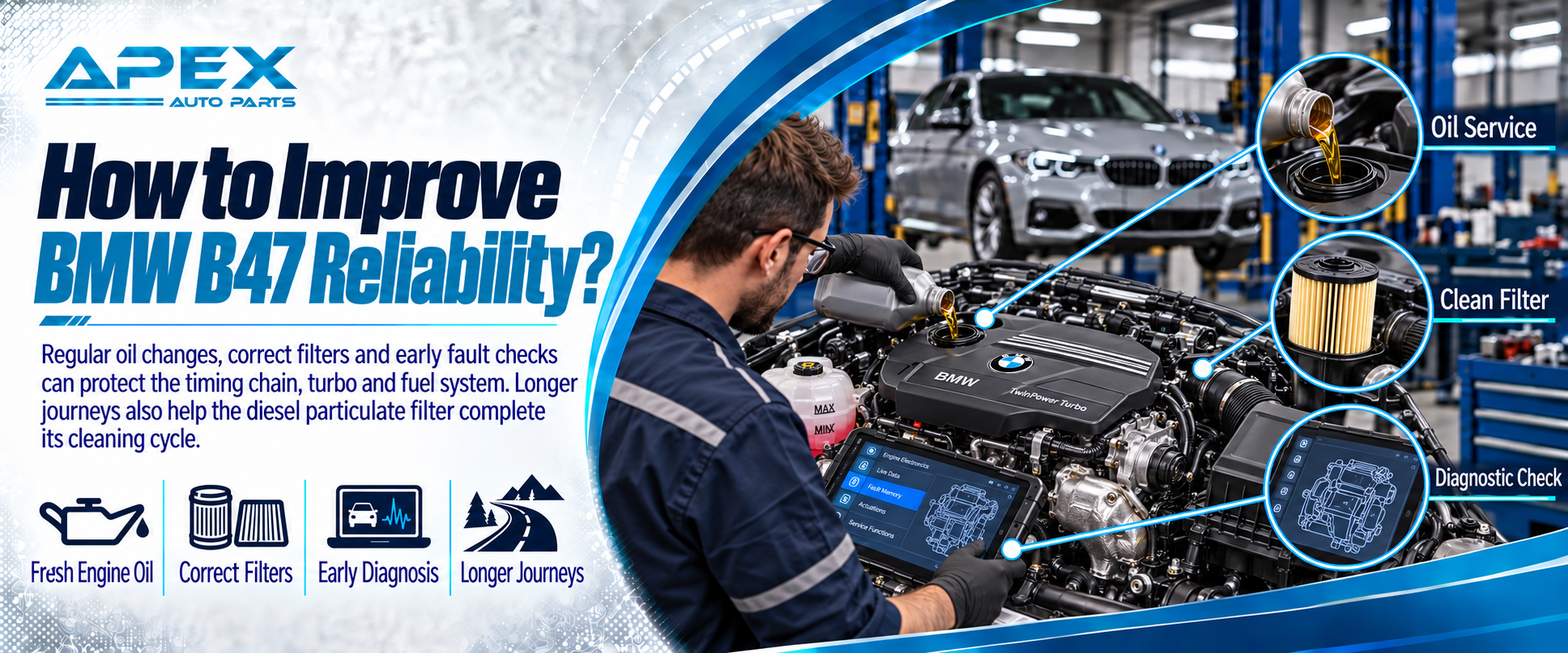
Good maintenance is the best way to improve BMW B47 reliability. The engine may be efficient, but it still depends on clean oil, correct temperatures, and working emissions equipment.
Use engine oil that meets the correct BMW approval for the exact vehicle. The grade printed on a random oil bottle is not enough. The required approval can vary by model and emissions system. BMW provides model-specific manuals through its Driver’s Guide service using the vehicle identification number.
Many careful owners choose shorter oil change gaps than the longest interval shown by the car, especially when the vehicle is used for short journeys or heavy traffic. Fresh oil protects the turbocharger, timing chai, and internal bearings.
Allow the engine to warm through normal gentle driving. There is no need to leave it idling for a long time. After a hard motorway run or heavy towing, give the turbo a short period of easier driving before switching off.
The following habits can help:
- Check the oil and coolant levels regularly.
- Use the correct fuel, filters and approved engine oil
- Allow regular longer journeys for filter regeneration.
- Investigate warning lights quickly.
- Repair boost, coolant and oil leaks early
- Keep service invoices and diagnostic records.
- Confirm the engine code before ordering parts.
BMW lists engine oil, vehicle checks, air filters and diesel fuel filters among its normal service items. Following the correct service plan gives the engine a much better chance of lasting well.
Is BMW B47 Tuning Safe?
BMW B47 Tuning can improve power and torque, but it also increases stress on the engine, turbocharger, gearbox, clutch, cooling system, and emissions equipment.
A healthy engine may handle a careful software adjustment, but tuning should never be used to hide a fault. If the car already has boost leaks, injector imbalance, a restricted filter, or cooling trouble, extra demand may make the problem worse.
Before any BMW B47 tuning, the car should receive a diagnostic scan and mechanical inspection. The technician should check oil condition, coolant level, boost control, fuel pressure, and diesel particulate filter loading.
Power gains vary by engine version. A mild tune may provide a smoother response and stronger middle-range pull. Larger changes may require upgraded hardware and create more heat.
Removing the diesel particulate filter, disabling the EGR system or switching off emissions warnings can make a road car illegal. It may also lead to MOT, insurance and resale problems. A responsible tuner should keep the vehicle safe, road legal and suitable for its normal use.
Owners should also tell their insurer about engine software changes. An undeclared modification could affect cover after an accident or theft.
Buying a Used BMW With a B47 Engine
A test drive should begin with a cold engine. A seller who warms the car before you arrive may hide starting noises, smoke, or rough running.
Listen for rattles and watch the exhaust when the engine starts. Check that the idle settles smoothly. During the drive, the engine should pull cleanly without hesitation, warning lights, or heavy smoke.
Look for service records, oil change invoices, and evidence of cooling system or emissions repairs. Check whether recall work is complete. Scan the vehicle for stored fault codes, but do not judge the car by codes alone. Some faults may have been cleared shortly before the sale.
Inspect the coolant level when the engine is cold. Look for oil leaks, damaged boost hoses, and signs of poor repairs. A professional inspection costs much less than replacing an engine, turbocharger, or diesel particulate filter.
Choosing Replacement Parts for a BMW B47
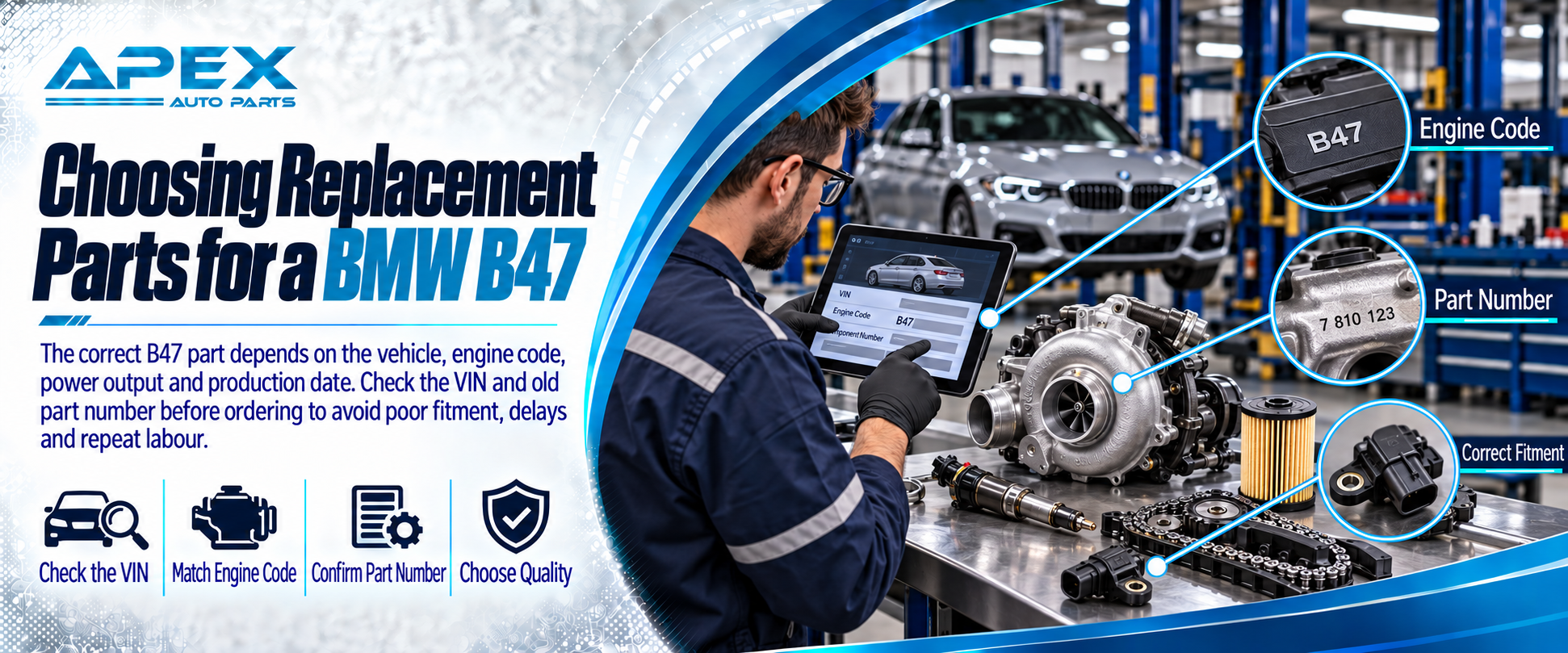
Part quality matters because many engine repairs require several hours of labour. Saving a small amount on a weak gasket, sensor, bearing or pump can lead to paying the labour charge again.
Before buying parts, collect the registration number, vehicle identification number, production year, engine code, power output and old part number where possible. Do not rely only on the model badge.
Apex Auto Parts supplies engine components for BMW repairs and can help customers check compatibility before ordering. This is especially useful for the BMW B47, as parts can change between power levels, production dates, and emissions versions.
Diagnosis must still come first. A fault code points towards a system, but it does not always identify the failed part. Testing saves money and reduces unnecessary replacements.
Is the BMW B47 a Good Engine?
The BMW B47 is a strong choice for drivers who cover regular motorway miles and maintain their cars properly. It offers useful torque, good fuel economy and a wide supply of replacement parts.
Its main risks come from the systems found on many modern diesels, including the EGR system, diesel particulate filter, turbocharger, cooling system and emissions sensors. Timing chain wear is also possible, although it is not viewed in the same way as the earlier N47 issue.
For the right driver, a well-serviced B47 can provide dependable and economical use. For someone who only drives short distances in town, a petrol or hybrid model may be more suitable.
FAQS
1. Is the BMW B47 engine reliable?
The BMW B47 is generally reliable when it receives regular oil changes, correct fluids, and suitable driving conditions. Problems often involve emissions equipment, cooling parts, sensors, or the turbo system rather than the main engine block. Service history and early diagnosis are more important than mileage alone.
2. What are the most common BMW B47 engine problems?
Common BMW B47 engine problems include EGR faults, diesel particulate filter blockage, coolant leaks, turbo wear, sensor failure, and intake carbon deposits. Timing chain wear can also happen, although it is less closely associated with this engine than with the older N47 diesel.
3. Does the BMW B47 have timing chain problems?
The BMW B47 can develop timing chain wear, but it is not known for the same level of concern as the earlier N47. Owners should listen for metallic rattling during cold starts. Any unusual chain noise needs quick inspection because a failed chain can cause serious internal engine damage.
4. How long can a BMW B47 engine last?
A well-maintained BMW B47 can cover high mileage, but there is no fixed lifespan for every engine. Oil quality, service gaps, journey type, driving style, and previous repairs all matter. An engine with regular maintenance and motorway use will often age better than one used only for short trips.
5. Is BMW B47 tuning worth doing?
BMW B47 Tuning may improve torque and throttle response, but the engine must be healthy first. A diagnostic scan should check the turbo, fuel system, cooling system, and diesel particulate filter. The software should remain safe, road legal, and suitable for the gearbox and other standard components.
6. Can short journeys damage the BMW B47?
Short journeys do not directly destroy the BMW B47, but repeated short use can prevent the diesel particulate filter from regenerating. This may cause soot blockage, higher fuel use, and warning lights. Regular longer drives help the engine reach the temperature needed for proper emissions system operation.
7. What oil should I use in a BMW B47?
Use oil with the exact BMW approval listed for your vehicle, not simply a matching thickness grade. The correct requirement can change with model, year, and emissions equipment. Check the vehicle handbook or BMW Driver’s Guide using the identification number before buying oil or arranging a service.
8. Why is my BMW B47 losing coolant?
Coolant loss may come from a hose, expansion tank, water pump, thermostat housing, radiator, or EGR cooler. Do not assume the head gasket has failed without testing. A cooling system pressure test can help find small leaks before overheating causes more serious and expensive engine damage.
9. Can a blocked DPF cause other BMW B47 engine problems?
Yes. A blocked filter can increase exhaust pressure, reduce performance, and place extra strain on the turbocharger. However, the blockage may be caused by another fault, such as a weak thermostat, a failed sensor, or an injector issue. The root cause must be repaired before cleaning or replacing the filter.
10. Is a high-mileage BMW B47 worth buying?
A high-mileage BMW B47 can be worth buying if it has strong service records, smooth performance, and no serious warning signs. Arrange a cold start, diagnostic scan, and professional inspection. A cared-for high-mileage car may be safer than a lower-mileage example with poor maintenance.
References:
press.bmwgroup
bmw.co