
 info@apexautoparts.co.uk
 +44 203 915 7535
 Safe & Fast Shipping
 Whish List
 Compare
 Sign In


The BMW X Series has grown from a single luxury SUV into a complete family of vehicles covering almost every size and type of premium SUV buyer. At one end sits the compact BMW X1, which is designed mainly for everyday family use and urban driving.
At the other end is the BMW X7, a much larger luxury SUV with three-row seating, powerful six-cylinder engines, and the ability to tow heavy loads. Between them are models such as the X2, X3, X5 and X6, each offering a different balance of performance, space, comfort and fuel efficiency.
This wide range also means there is no single BMW X Series engine. Depending on the model and production year, BMW has used three-cylinder petrol engines, four-cylinder petrol and diesel engines, straight-six petrol and diesel units, powerful V8 engines, mild hybrid systems and plug-in hybrid powertrains.
Electric versions such as the iX1 and iX2 sit alongside combustion-powered models as well, although they do not have conventional petrol or diesel engine parts.
For an owner or used buyer, this variety makes BMW X series engine reliability more complicated than simply asking whether BMW SUVs are reliable. A 1.5 litre X1 and a 4.4 litre V8 X6 M60i may both carry an X badge, but the engines are completely different in design, performance and repair cost. Even within the same model, BMW may offer petrol, diesel and hybrid versions with very different maintenance needs.
BMW X series engine problems also change depending on the exact engine. Petrol versions may develop ignition, cooling, or turbo-related faults. Diesels can add EGR and diesel particulate filter concerns. Plug-in hybrids combine a normal engine with an electric motor, battery, and additional cooling equipment. Correct diagnosis and accurate BMW X Series engine parts matching are therefore essential before any repair begins.
This guide explains the main BMW X models, their current UK engine choices, horsepower, performance and efficiency, while also looking at the reliability concerns that matter as these vehicles get older.
Understanding the BMW X Series Range
BMW uses the X name for its SUV and crossover range, but the numbers do more than show size. The X1 is the smallest mainstream model, followed by the more coupe-shaped X2. The X3 moves into the middle of the range and provides more cabin and luggage space, while the X5 is a much larger luxury SUV aimed at families, long-distance drivers and buyers who need stronger towing capability.
The X6 uses much of the mechanical thinking of the X5 but packages it in a more coupe-shaped body. It gives up some practicality in favour of a lower roof and sportier appearance. The X7 sits at the top of the normal X range and is designed for buyers who need maximum cabin space, strong performance and three-row luxury.
The BMW X4 also forms an important part of X Series history. It was developed as the coupe-shaped alternative to the X3, much like the X6 sits alongside the X5. However, it is no longer part of BMW UK’s main current new car X range in the same way as the newer X1, X2, X3, X5, X6 and X7. Used X4 models remain very common, so buyers looking at the complete X Series should still be aware of them.
The important point from a mechanic’s view is that the X badge does not identify the engine. Always work from the exact model, production year, engine code, and VIN before ordering BMW X Series engine parts.
BMW X1 Engine Specs and Performance
The BMW X1 is the entry point into the current X range, but modern versions offer far more engine choice and performance than early X1 models did. In the current UK range, one of the main petrol choices is the X1 S-Drive 20i.
It uses a 1,499 cc three-cylinder turbocharged petrol engine with 48-volt mild hybrid assistance. BMW lists total system output at 170 hp and 280 Nm, with a seven-speed automatic gearbox and front-wheel drive. It reaches 62 mph in around 8.3 seconds.
For drivers wanting more power, the X1 xDrive23i uses a 1,998 cc four-cylinder petrol engine with mild hybrid assistance. Total output reaches 218 hp and 360 Nm, while all-wheel drive helps put that power onto the road. BMW lists 0 to 62 mph in around 7.1 seconds.
The X1 M35i xDrive is much more performance-focused. It uses a 1,998 cc four-cylinder turbo petrol engine producing 300 hp and 400 Nm. BMW quotes 0 to 62 mph in around 5.4 seconds, which is very quick for a compact family SUV.
Diesel is still available as well. The X1 xDrive23d uses a four-cylinder diesel with mild hybrid support and develops 211 hp and 400 Nm. BMW quotes a combined fuel economy of roughly 56.5 to 58.9 mpg under WLTP testing, making this version particularly attractive to drivers who regularly cover longer motorway journeys.
Plug-in hybrids expand the range further. Depending on specification, the X1 can combine a 1.5-litre three-cylinder petrol engine with an electric motor for total outputs including 245 hp or 326 hp. The more powerful xDrive30e can reach 62 mph in around 5.6 seconds and offers roughly 47 to 50 miles of WLTP electric range.
BMW X1 Engine Reliability
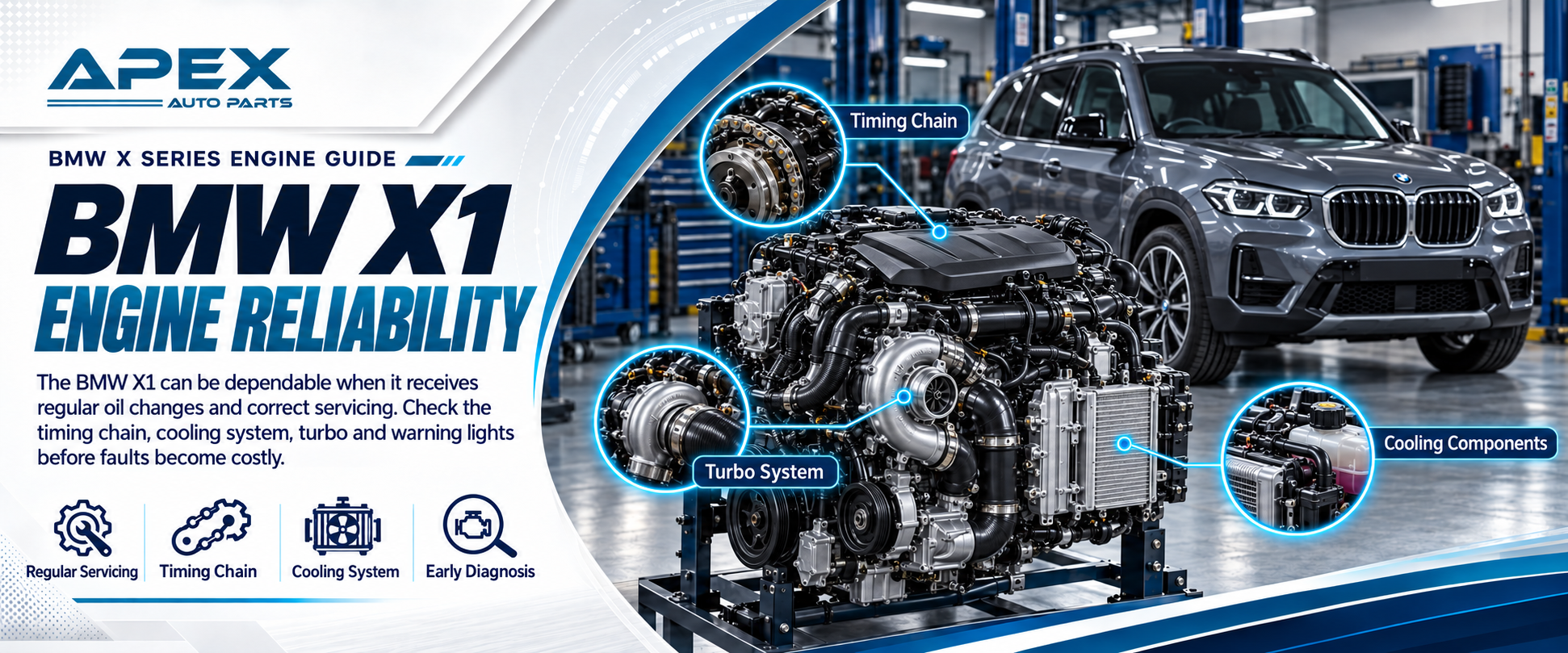
BMW X Series engine reliability in the X1 depends strongly on which generation and engine you buy. Older diesel models can suffer from the same types of emissions and timing-related concerns seen in other BMW diesels of their period, while newer petrol and mild hybrid models use different engine families and should not automatically be judged by older problems.
On modern turbo petrol versions, regular oil servicing and cooling system health remain important. A small coolant leak should never be left simply because the car still drives normally, while poor oil maintenance can put both the engine and turbocharger under unnecessary stress.
Plug-in hybrid models add another layer of complexity. The combustion engine still needs normal oil and cooling maintenance, but there is also an electric motor, high-voltage battery, and an additional electronic control system. If a warning appears, diagnosis needs to consider both the petrol side and the electrical side rather than treating every problem as a normal engine fault.
BMW X2 Engine Specs and Performance
The BMW X2 is mechanically related to the X1 but has a lower, more coupe-shaped body. It is aimed at drivers who want compact SUV practicality but prefer a sportier appearance. The current X2 sDrive20i uses a 1.5-litre three-cylinder turbo petrol engine supported by a 48-volt mild hybrid system. Total output is 170 hp and 280 Nm, with 0 to 62 mph taking around 8.3 seconds. BMW quotes a WLTP fuel economy of roughly 44.8 to 48.7 mpg depending on specification.
At the other end of the petrol range sits the X2 M35i xDrive. This model uses a 1,998 cc four-cylinder turbocharged petrol engine producing 300 hp and 400 Nm. BMW lists 0 to 62 mph in around 5.4 seconds and a top speed of 155 mph, making it significantly more performance-focused than the normal X2.
The X2 family also includes fully electric iX2 versions. The iX2 eDrive20 produces 204 hp, while the iX2 xDrive30 can produce 313 hp and 494 Nm. These versions obviously do not have conventional BMW X series engine parts such as spark plugs, injectors, or engine oil filters because propulsion comes from electric motors rather than a petrol or diesel engine.
That difference is increasingly important for workshops. Two vehicles that look almost identical from the outside can require completely different repair knowledge once the bonnet is opened.
BMW X2 Engine Reliability
The petrol X2 shares much of its modern engine technology with other compact BMW models, so reliability depends greatly on good servicing and correct diagnosis. Turbocharged small-capacity engines work hard to produce their power, which makes oil quality, cooling, and correct ignition performance particularly important.
If an X2 begins hesitating, losing power, or displaying an engine warning light, the turbocharger should not automatically be blamed. Air leaks, sensors, ignition coils, spark plugs, or fuel supply problems can create similar symptoms. Proper diagnostic work should be completed before expensive BMW X series engine parts are ordered.
The electric iX2 changes the reliability discussion because there is no combustion engine. Battery health, charging equipment, electric motor operation, and thermal management become much more important than traditional oil leaks or ignition problems.
BMW X3 Engine Specs and Horsepower
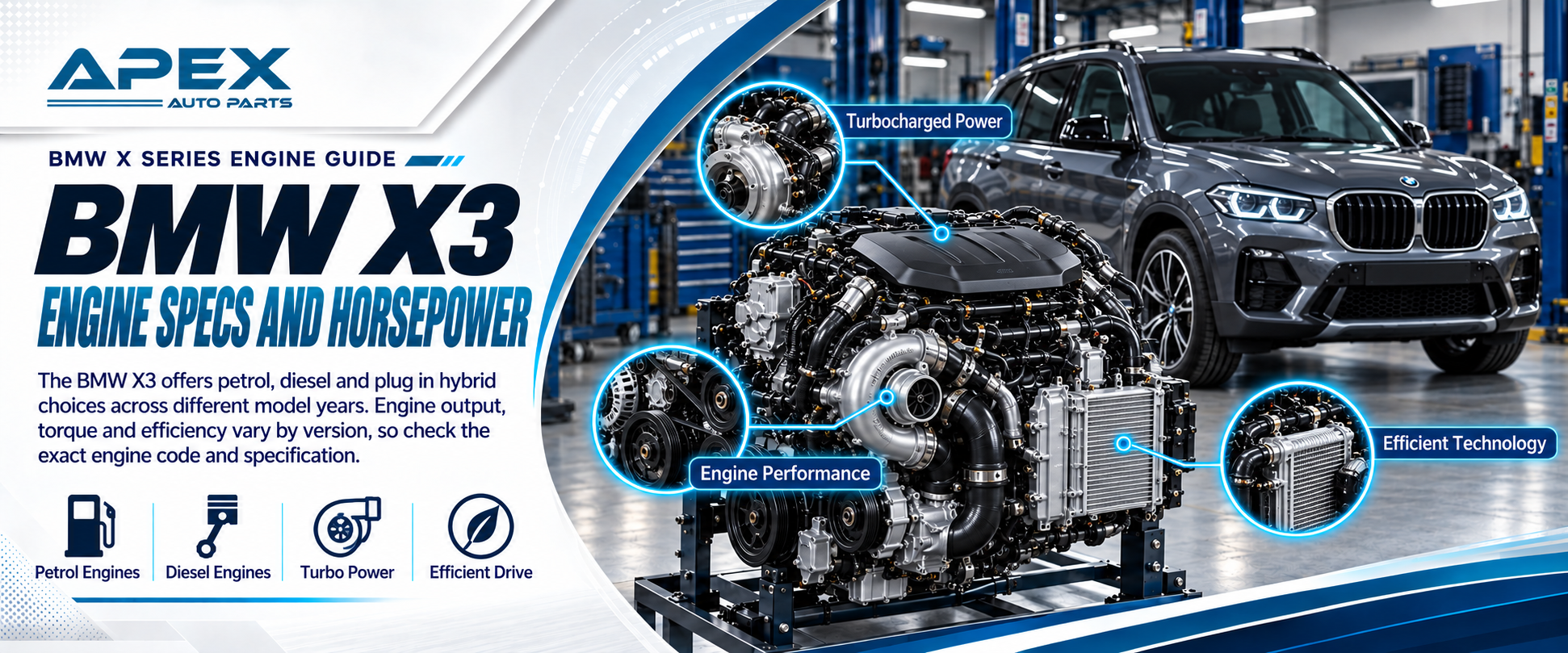
The BMW X3 is one of the most important models in the X range because it sits in the middle of the SUV market. It offers enough space for family use without becoming as large as an X5 or X7, and the latest generation has a broad engine range covering petrol, diesel and plug-in hybrid power.
The current X3 20 xDrive uses a 1,998 cc four-cylinder petrol engine with mild hybrid assistance. Total system output is 208 hp with 330 Nm, and BMW lists 0 to 62 mph in around 7.8 seconds. Combined WLTP fuel economy is roughly 39.2 to 40.4 mpg.
The X3 20d xDrive is the diesel alternative. It uses a 1,995 cc four-cylinder diesel producing 197 hp and 400 Nm. BMW quotes 0 to 62 mph in around 7.7 seconds and a combined economy of roughly 46.3 to 47.9 mpg. This makes the diesel particularly suitable for drivers covering high motorway mileage or regularly carrying heavier loads.
The X3 30e plug-in hybrid combines a 2.0-litre four-cylinder petrol engine with an electric motor for a total system output of 299 hp and 450 Nm. BMW lists 0 to 62 mph in around 6.2 seconds. This version gives owners the chance to complete shorter journeys using electric power while keeping a petrol engine available for longer journeys.
For much stronger performance, the X3 M50 xDrive uses a 2,998 cc straight-six petrol engine with mild hybrid assistance. Total output reaches 398 hp and 580 Nm, with BMW quoting 0 to 62 mph in only 4.6 seconds. Despite that level of performance, official combined WLTP fuel economy remains around 35.3 to 36.7 mpg.
BMW X3 Engine Reliability
BMW X Series engine reliability in the X3 varies greatly because the model has been sold for several generations with many different engines. Older examples may use engine families with well-known timing, cooling, or emissions concerns, while newer models use updated designs.
On petrol models, owners should pay attention to cooling system condition, oil leaks, ignition faults, and turbo-related symptoms. A rough idle can sometimes be caused by a simple ignition coil or spark plug rather than serious internal engine damage.
Diesel X3 models can be excellent long-distance vehicles, but the EGR system and diesel particulate filter need suitable driving conditions. A diesel used mainly for very short urban journeys may have more difficulty completing DPF regeneration than one that regularly spends time on the motorway.
The latest hybrid X3 adds a high-voltage battery and electric motor, so workshops need to think beyond traditional engine diagnosis. A power loss or warning message may come from the combustion engine, hybrid system, or electronic controls.
What About the BMW X4?
The BMW X4 is the coupe-shaped relative of the X3 and remains very common on the used market even though it is not part of BMW UK’s latest mainstream new X line-up in the same way as the X3.
Used X4 models have been offered with a wide range of petrol and diesel engines, including four-cylinder models, six-cylinder diesels and high-performance M versions. This means there is no single BMW X4 engine specification that represents every used example.
From a reliability point of view, the same rule applies as with the X3. Identify the exact engine before researching common faults. A four-cylinder diesel and a six-cylinder petrol X4 may share a body shape but can have completely different maintenance requirements.
When buying BMW X series engine parts for an X4, the VIN and engine code should always be checked. Using only the model badge can result in incorrect sensors, gaskets, cooling parts, or turbo components being supplied.
BMW X5 Engine Performance
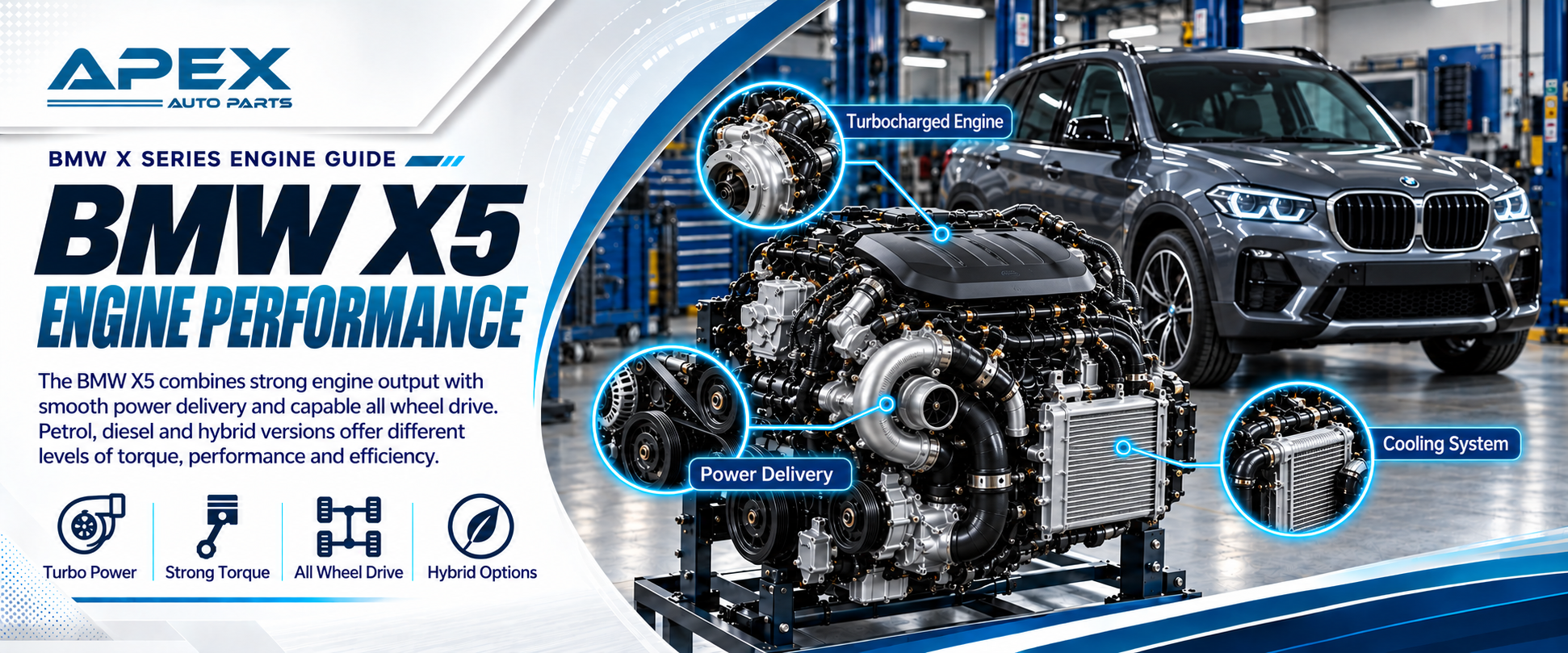
The BMW X5 is where the X Series moves into the larger luxury SUV class. It is heavier than the X1 or X3, but BMW uses stronger engines to make sure performance still feels effortless.
One of the most interesting current versions is the X5 xDrive50e plug-in hybrid. It combines a 2,998 cc six-cylinder petrol engine with a powerful electric motor. BMW lists total system output at 489 hp and 700 Nm, with 0 to 62 mph taking around 4.8 seconds.
That is impressive performance for such a large SUV, but the appeal of the hybrid is not just acceleration. Electric assistance can reduce fuel use when the battery is regularly charged, particularly on shorter journeys, while the six-cylinder petrol engine remains available for longer journeys.
The X5 has also traditionally been available with six-cylinder petrol and diesel engines, and performance versions take much higher output. For many owners, the six-cylinder engines provide the strongest balance because they offer enough torque for towing and motorway use without the extra complexity and fuel use of the most powerful V8 versions.
BMW X5 Engine Reliability
The X5 has been produced for many years, and BMW X-series engine problems vary significantly between generations. Older petrol engines may suffer cooling system or oil leak problems, while older diesels may have issues involving turbochargers, injectors, swirl systems, EGR components, or DPF equipment.
Later six-cylinder engines can provide very strong performance and good longevity when serviced correctly. The key is regular oil maintenance and dealing with cooling problems early.
The X5’s size also means engines may work harder when the vehicle is towing. If you are buying a used X5 that has regularly pulled a caravan or heavy trailer, check the cooling system and gearbox condition as well as the engine itself.
Plug-in hybrid versions add another important check. Make sure the charging system, high-voltage battery, and electric driving functions operate correctly. A vehicle can have a healthy petrol engine but still have a costly hybrid system fault.
BMW X6 Engine Specs and Horsepower
The BMW X6 uses the mechanical strength of a large BMW SUV but combines it with a lower coupe-style roofline. Its engine range is particularly strong, with six-cylinder petrol, six-cylinder diesel and V8 choices available in the current UK range.
The X6 xDrive40i uses a 2,998 cc six-cylinder petrol engine supported by 48-volt mild hybrid technology. BMW lists total system output at 381 hp and 540 Nm. It reaches 62 mph in around 5.4 seconds and returns roughly 31.7 to 32.8 mpg under combined WLTP testing.
The X6 xDrive30d uses a 2,993 cc six-cylinder diesel with mild hybrid assistance. Total output is 298 hp and 670 Nm, with 0 to 62 mph taking around 6.1 seconds. The official combined economy is roughly 37.7 to 39.2 mpg.
Drivers wanting stronger diesel performance can choose the xDrive40d, which produces a combined 352 hp and 720 Nm. It reaches 62 mph in around 5.5 seconds while returning a similar official fuel economy range to the 30d.
The M60i xDrive moves into V8 territory. Its 4,395 cc petrol engine works with mild hybrid assistance to produce 530 hp and 750 Nm. BMW quotes 0 to 62 mph in around 4.3 seconds. The trade-off is fuel use, with a combined WLTP economy of roughly 23.5 to 24.1 mpg.
BMW X6 Engine Reliability
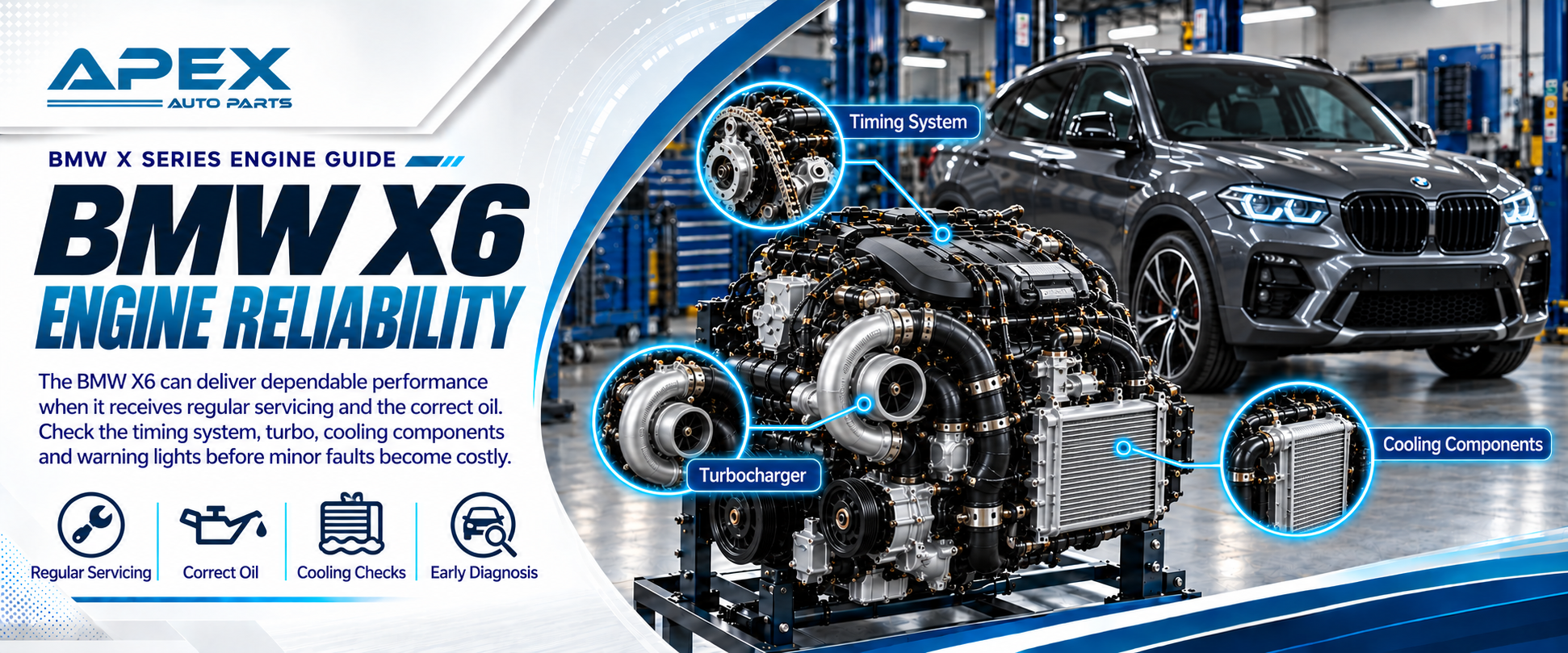
The six-cylinder versions of the X6 can make a great deal of sense for drivers who want strong performance without moving into the full complexity of the V8. BMW’s modern straight-six petrol and diesel engines can be strong when maintained correctly, but turbochargers, cooling systems and electronic controls still need attention as mileage rises.
The M60i uses a V8, which delivers exceptional performance but adds heat and complexity. More cylinders mean more ignition components, more fuel system hardware and a tighter engine bay. Even a repair involving a relatively inexpensive gasket can carry a high labour charge if access is difficult.
For diesel X6 models, DPF and EGR conditions should be checked. These engines suit long-distance driving particularly well because regular motorway use gives the exhaust system better opportunities to reach the temperatures needed for normal regeneration.
BMW X7 Engine Specs and Performance
The BMW X7 is the largest SUV in BMW’s mainstream X family. It is designed to carry more passengers and luggage than the smaller models while still providing the smooth acceleration expected from a luxury BMW.
The current X7 xDrive40i uses a 2,998 cc six-cylinder petrol engine with 48-volt mild hybrid assistance. BMW lists total output at 381 hp and 540 Nm, with all-wheel drive and an eight-speed automatic gearbox. Despite the X7’s size, it reaches 62 mph in around 5.8 seconds.
The official combined fuel economy for this version is around 26.9 to 29.4 mpg. That is naturally lower than the smaller X1 or X3 because the X7 is much larger and heavier. BMW lists the current xDrive40i at roughly 2,490 kg in kerb weight, which helps explain why even a powerful six-cylinder engine has to work harder.
The X7 can also tow up to 3,500 kg in the appropriate specification, which makes engine torque, cooling and drivetrain maintenance particularly important for owners using it as a heavy tow vehicle.
BMW X7 Engine Reliability
The X7 is a relatively modern vehicle compared with models such as the X5, so there is less very long-term reliability data from vehicles that have covered extreme mileage. However, the same basic maintenance principles still apply.
The six-cylinder petrol engine requires regular oil servicing and a healthy cooling system. Because the vehicle is heavy, any weakness in cooling can become more noticeable when towing or driving hard.
Owners also need to remember that the X7 is much more than an engine. Air suspension, xDrive, electronics, and driver assistance systems all contribute to the cost of ownership. A mechanically healthy engine does not automatically mean the whole vehicle will be inexpensive to maintain.
When buying used, complete service history is particularly valuable. A luxury SUV that has missed servicing because the previous owner wanted to save money can quickly become an expensive purchase.
Which BMW X Series Engine Offers the Best Performance?
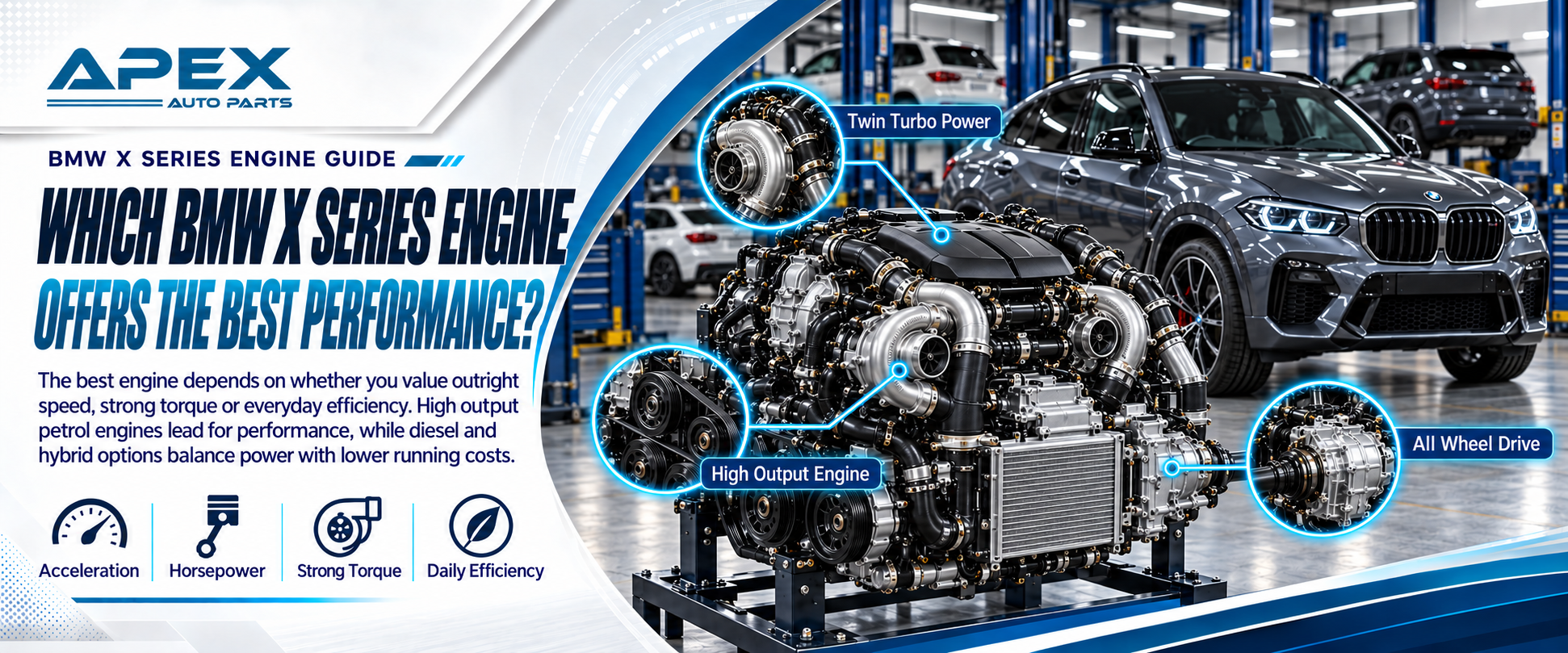
If maximum acceleration is the priority, the performance versions naturally sit at the top. Models such as the X6 M60i and other M-related X vehicles produce enormous horsepower and torque. Their engines can make large SUVs accelerate at speeds that would have been associated with sports cars not long ago.
However, maximum horsepower is not always the most useful type of performance. For everyday driving, a six-cylinder X3 M50 or X6 xDrive40i already provides enough acceleration to overtake confidently and cruise at motorway speeds without effort.
Diesel performance is also worth considering differently. A six-cylinder diesel may have less horsepower than a V8 petrol engine but can produce very strong torque at low engine speed. That makes it especially useful when towing or travelling long distances with a fully loaded vehicle.
The best performance engine is therefore the one that suits how the vehicle will actually be used.
Which BMW X Series Engine Is Most Efficient?
Efficiency varies enormously across the range because vehicle size and power make such a large difference.Among combustion-powered models, smaller X1 engines naturally use less fuel than large X6 or X7 engines. The current X1 xDrive23d, for example, is officially rated at roughly 56.5 to 58.9 mpg combined, while the V8 X6 M60i is closer to 23.5 to 24.1 mpg.
Plug-in hybrids can produce much higher official fuel economy figures, but these numbers need to be understood properly. Their efficiency depends heavily on how often the battery is charged. A driver who charges every night and mainly covers short journeys may use very little fuel. Someone who rarely plugs the vehicle in and regularly drives long distances may see very different results.
This is why efficiency should be judged according to real usage rather than one headline number.
BMW X Series Engine Reliability
BMW X Series engine reliability has improved in several areas as engine technology has developed, but modern vehicles have also become more complex. Newer engines can deliver more power from smaller capacities, while mild hybrid systems improve response and efficiency. At the same time, there are more sensors, electronic controls, and cooling circuits involved.
Reliability starts with oil servicing. Turbocharged engines need clean oil because the turbocharger and internal engine parts both depend on proper lubrication. Stretching oil intervals too far may save money in the short term but can increase wear over time.
Cooling is equally important. A coolant leak that costs relatively little to repair can become extremely expensive if it causes overheating. Any repeated coolant loss should therefore be diagnosed rather than treated with regular top-ups.
The exact engine family matters as well. Some older BMW engines have known timing, oil, or emissions issues that do not apply to newer engines. This is why advice found online should always be checked against the actual engine code.
Common BMW X Series Engine Problems
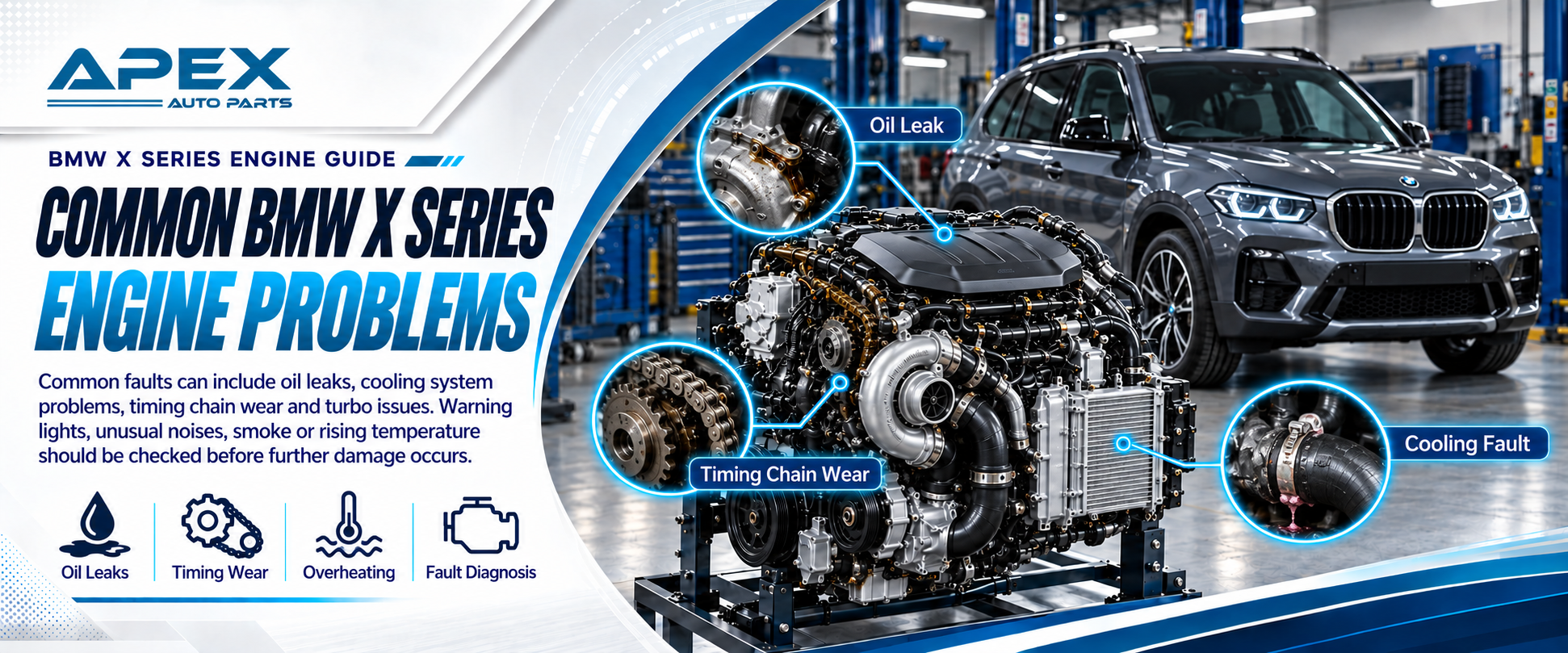
BMW X Series engine problems depend on the model and engine, but there are several general areas that owners should understand. Oil leaks can develop as gaskets and seals age, while cooling components such as hoses, pumps, and thermostats can eventually fail. Turbocharged petrol engines can suffer ignition, boost, or sensor faults, and diesels may develop EGR or DPF problems.
A major mistake is assuming that one symptom proves one part has failed. For example, weak acceleration does not automatically mean the turbocharger is damaged. A split hose, boost leak, or sensor can cause the same result. Rough running does not automatically mean the injectors are bad because ignition coils or spark plugs may be responsible.
Modern BMW diagnosis should therefore combine fault codes with physical testing. A diagnostic code tells you where the vehicle has noticed an unusual condition, but it does not always tell you which component caused it.
The more expensive the part, the more important this becomes. Replacing a turbo, injector set, or control unit based only on a guess can waste a large amount of money.
Oil Leaks and Oil Consumption
Oil leaks are common on many engines as mileage rises because seals and gaskets are exposed to years of heating and cooling. A small damp area may not immediately cause a problem, but it should still be monitored because leaks rarely fix themselves.
Oil consumption is slightly different because the engine may be using oil internally instead of leaking it externally. If the vehicle regularly needs oil added between services, keep track of how much is being used and over what mileage.
Blue smoke can sometimes point towards oil entering the combustion process, although it does not identify the exact cause on its own. Turbocharger seals, crankcase ventilation, or internal engine wear may all need consideration.
The most important thing is preventing the oil level from dropping too low. Turbocharged BMW engines can suffer serious damage if lubrication is lost.
Cooling System Problems
Cooling system health should be one of the first things checked on any used BMW X model. These are often heavy vehicles, and larger versions may tow trailers or caravans, placing additional load on the engine.
Coolant should remain at a stable level. If it repeatedly needs topping up, the system has a leak or another fault. Hoses, water pumps, thermostats, radiators and plastic connections can all become potential sources as the vehicle ages.
Do not continue driving when an overheating warning appears. Modern BMW engines can suffer very expensive damage if they are driven while excessively hot.
A recovery truck and cooling system repair may feel inconvenient at the time, but they are far cheaper than replacing an overheated engine.
Turbo and Boost Problems
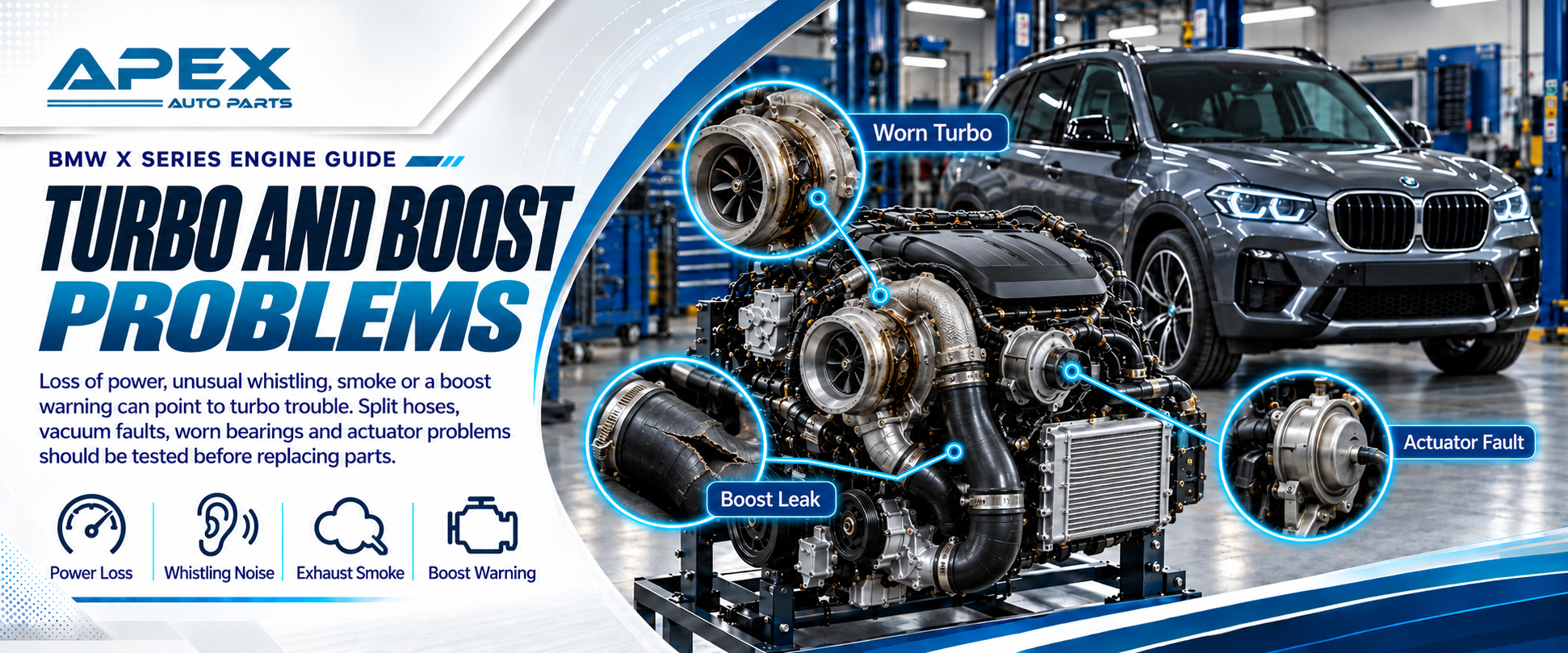
Turbocharging is used throughout much of the BMW X range because it allows strong power and torque without requiring extremely large engine capacities.
Turbochargers operate under very high heat and speed, which makes oil servicing critical. However, not every boost fault is a turbocharger failure.
The air path includes hoses, sensors, intercoolers, and control systems. A leak anywhere in this route can reduce boost pressure and make the vehicle feel slow.
Before a replacement turbocharger is ordered, the intake and boost system should be pressure tested where appropriate. This can reveal relatively cheap faults that would otherwise be missed.
This is especially useful on larger BMW X models where turbo replacement can involve substantial parts and labour costs.
Diesel EGR and DPF Problems
BMW diesel SUVs can be excellent for drivers covering long motorway distances because their strong torque suits heavy vehicles very well. Problems can arise when a modern diesel is used almost entirely for very short journeys.
The diesel particulate filter needs to reach suitable temperatures to burn away collected soot. If regeneration is repeatedly interrupted, soot can gradually build up. Warning lights, reduced power, and increased fuel use may eventually appear.
EGR components can also collect deposits over time. A restricted EGR system may cause hesitation or poor performance.
The important thing is to find out why the emissions system is having trouble. Replacing a DPF without fixing a thermostat, sensor, or EGR problem that prevented regeneration may only provide a temporary solution.
Petrol Ignition Problems
Petrol BMW X models use spark plugs and ignition coils. These are normal service and wear components, but a failing coil can make the engine feel seriously unhealthy.
The vehicle may shake at idle, hesitate under acceleration, or display an engine warning. If one cylinder is misfiring, the correct diagnostic process is to identify that cylinder and test the ignition and fuel components around it.
Replacing injectors immediately can be an expensive mistake when the problem is only a coil or worn spark plug.
Ignoring a serious misfire is also a bad idea because unburned fuel can eventually damage exhaust components.
Hybrid BMW X Series Problems?
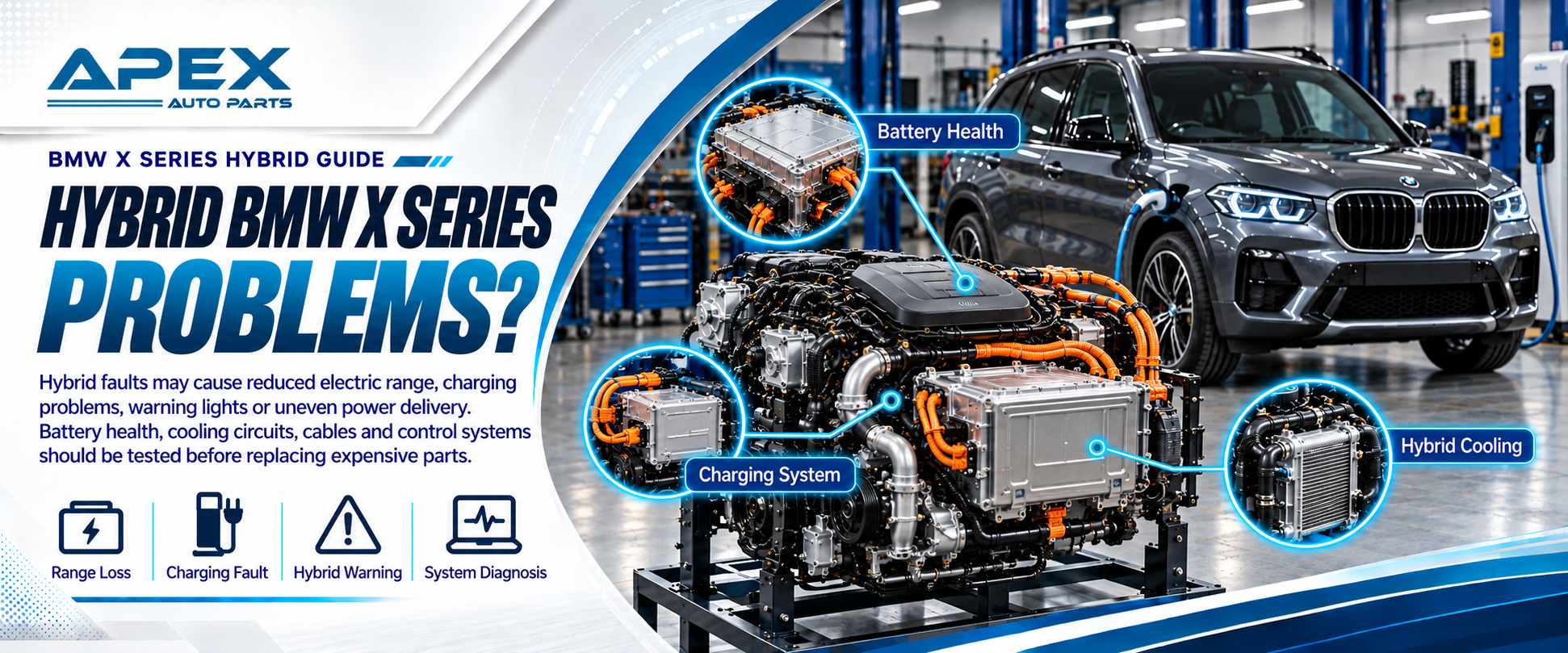
Plug-in hybrids combine a petrol engine with electric drive, which means owners need to think about two power systems rather than one. The combustion engine still requires normal oil and cooling maintenance, while the battery, electric motor and charging system have their own requirements.
A hybrid warning should therefore be diagnosed using equipment capable of reading the full vehicle. The problem may come from the petrol engine, but it could also be a charging or electrical fault.
Cooling also becomes more important because high-voltage batteries and electrical equipment need controlled temperatures just as combustion engines do.
Buying a used hybrid without checking whether it charges and drives electrically is a mistake. Both parts of the powertrain should be tested.
Why BMW X Series Engine Parts Must Be Matched Correctly?
The BMW X range shows exactly why parts should never be ordered based only on the model name. The X1 alone can use three-cylinder petrol, four-cylinder petrol, diesel, and plug-in hybrid powertrains. The X6 range stretches from six-cylinder diesels to a 4.4-litre V8.
That means BMW X series engine parts can differ greatly even between vehicles built in the same year. Sensors may use different connectors, gaskets can have different shapes, turbochargers may have different specifications, and cooling parts may change depending on engine output.
Before ordering parts, check the VIN, production year, engine code, and existing component number whenever possible. If the vehicle has been modified or had an engine replaced, additional checking may also be necessary.
At Apex Auto Parts, accurate vehicle information helps match components to the correct engine before they reach the workshop. This reduces incorrect orders, return costs, and the risk of a mechanic dismantling the engine only to discover that the replacement part does not fit.
Why Parts Quality Matters?
A cheap engine part does not always make a cheap repair. Labour can be a major part of the total cost, particularly on larger X models where the engine bay is crowded, and access can be difficult.
If a low-quality gasket fails after a few months, the workshop may need to repeat several hours of labour.
A weak cooling component can create an even more serious problem if its failure causes overheating.
Sensors also need to provide accurate information. A poor-quality sensor that sends incorrect readings may create warning lights or poor running even though the original mechanical fault has already been repaired.
The goal should be to use a correctly specified component from a reliable source rather than simply choosing the lowest advertised price.
What to Check Before Buying a Used BMW X Series?
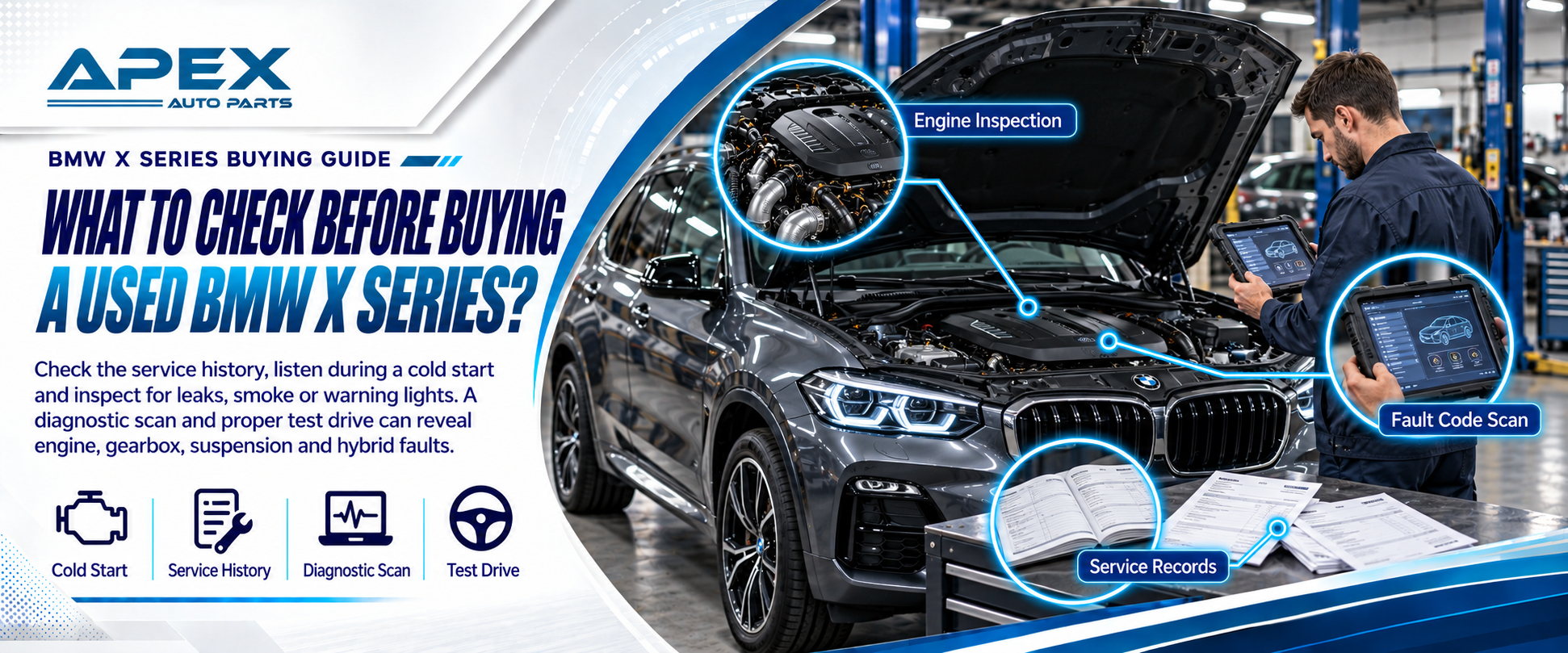
A used BMW X model should be inspected with the exact engine in mind rather than using the same checklist for every SUV. Begin with the service history and look for evidence of regular oil changes, cooling system repairs, and any larger engine work.
On diesel models, ask how the vehicle has usually been driven because regular long journeys are generally better suited to modern emissions systems than constant short trips. On plug-in hybrids, make sure there is evidence that both the petrol and electrical sides of the powertrain have been maintained.
Whenever possible, inspect the vehicle before the engine has been started. A cold start can reveal rattles, smoke, poor starting, or rough idle that may become less noticeable when the engine is warm. Check the oil and coolant levels before driving and inspect the engine bay for obvious leaks, damaged hoses, or signs of rushed previous repairs. The engine should settle into a smooth idle and should not produce heavy knocking or continuous smoke.
The test drive should be long enough for the engine and gearbox to reach full working temperature. Check acceleration at different speeds and make sure power arrives smoothly without warning messages. On an xDrive model, also pay attention to vibrations or drivetrain noises that could be mistaken for an engine issue. Once the drive is complete, inspect underneath and around the engine again because fresh leaks may only become visible after everything is hot.
A professional pre-purchase inspection is especially worthwhile on higher-performance models such as M-related X vehicles and V8-powered versions. A cheap purchase price can quickly become irrelevant if the car needs a turbocharger, major cooling repair, or internal engine work shortly after purchase.
Which BMW X Series Model Is Best for Everyday Driving?
For most everyday drivers, the X1 or X3 provides the easiest balance. They offer enough cabin space for normal family use without the size and fuel consumption of an X5, X6 or X7.
The X1 works particularly well in towns because it is easier to park and can achieve strong fuel economy in mild hybrid and diesel form. The X3 adds more space and feels more relaxed on longer journeys while remaining manageable on typical UK roads.
Drivers who need stronger towing capacity, more passenger space or a larger boot may find the X5 more suitable.
The X6 is more about design and performance than maximum practicality, while the X7 makes the most sense for buyers who genuinely need a large luxury SUV.
Choosing the smallest model that comfortably handles your needs can also reduce fuel, tyre and maintenance costs.
Which BMW X Series Is Best for Performance?
Performance buyers have several very strong choices.
The X1 and X2 M35i show that even BMW’s compact SUVs can produce 300 hp and reach 62 mph in roughly 5.4 seconds.
The X3 M50 moves performance higher with 398 hp and a 4.6-second 0-62 mph time, while also keeping useful family practicality.
The X6 M60i provides 530 hp and 750 Nm from its V8, giving much stronger acceleration while keeping the comfort of a large luxury SUV.
For most drivers, however, the middle performance versions already offer more speed than is required on public roads. A six-cylinder X3 or X6 can provide effortless overtaking without the fuel and servicing costs associated with the largest V8 engines.
Which BMW X Series Is Best for Fuel Economy?
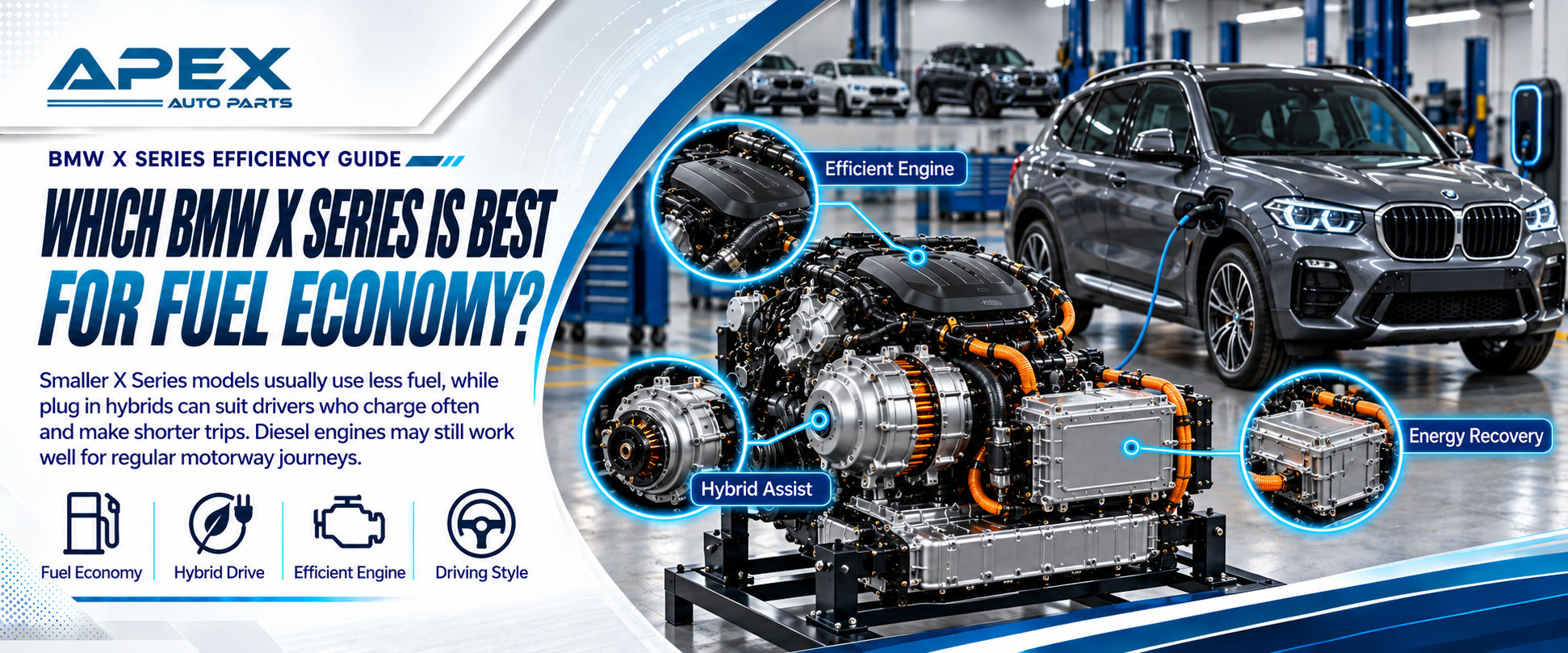
If fuel economy is the priority, smaller diesel and mild hybrid models are usually the strongest combustion engine choices. The current X1 xDrive23d can return around 56.5 to 58.9 mpg under official WLTP testing, while the X3 20d is rated at approximately 46.3 to 47.9 mpg.
Larger SUVs naturally use more fuel. The six-cylinder diesel X6 can still achieve around 37.7 to 39.2 mpg, which is respectable considering its size and performance. The V8 M60i drops considerably lower because of its 530 hp output.
Plug-in hybrids can be extremely efficient for drivers who charge regularly. The benefit becomes much smaller if the battery is rarely charged, so buying a PHEV only makes sense when your driving routine allows you to use its electric range.
Final Thoughts
The BMW X Series is now large enough that there is effectively an X model for almost every premium SUV buyer. The X1 offers compact dimensions and efficient engines, while the X2 adds a sportier body without moving far away mechanically.
The X3 provides a strong middle ground, and the X5 moves into the larger luxury SUV class. The X6 adds coupe styling and much stronger performance options, while the X7 provides maximum size and three-row luxury.
Engine choice is just as broad. Current models range from the X1’s 1.5-litre three-cylinder mild-hybrid petrol engine producing 170 hp to the X6 M60i’s 4.4-litre V8 producing 530 hp. Between those extremes are four-cylinder petrol and diesel engines, straight-six units, plug-in hybrids, and several different mild-hybrid systems.
That variation means BMW X series engine reliability cannot be reduced to one simple score. Some engines are naturally cheaper and easier to maintain than others, while high-performance V8 versions bring greater heat, complexity, and repair costs.
Diesels can provide excellent long-distance economy but need healthy DPF and EGR systems. Plug-in hybrids can reduce fuel use significantly for the right driver but add batteries, electric motors, and charging equipment to the maintenance picture.
BMW X series engine problems are often easier and cheaper to deal with when they are found early. Oil leaks, coolant loss, misfires, and loss of boost should be investigated rather than ignored. A small hose leak or ignition fault can sometimes feel like a much more serious problem, which is why diagnosis should always come before buying expensive components.
When BMW X series engine parts are required, identify the exact vehicle first. The VIN, engine code, production year, and part number are much more useful than simply saying the car is an X3 or X5. At Apex Auto Parts, accurate parts matching helps customers and workshops avoid incorrect components, repeat labour, and unnecessary delays.
The best BMW X model is therefore not automatically the largest or most powerful. It is the version that matches how you drive. Choose the right size, choose an engine suited to your mileage, and keep the maintenance up to date. That will do far more for long-term ownership than simply choosing the highest horsepower figure.
FAQS
1. Which BMW X Series model is the most reliable?
BMW X Series engine reliability depends more on the specific engine and service history than the model name alone. Four- and six-cylinder models with complete maintenance records can make strong used purchases. High-performance V8 versions can also be reliable, but their greater complexity usually means repairs and routine maintenance cost more.
2. What are the most common BMW X series engine problems?
BMW X series engine problems can include oil leaks, coolant leaks, turbo and boost faults, ignition problems, and sensor issues. Diesel models can also develop EGR and DPF problems, while plug-in hybrids add battery and electrical system issues. The exact faults depend heavily on the engine generation and how the vehicle has been maintained.
3. Which BMW X Series has the best fuel economy?
Among current combustion-powered UK models, smaller diesel versions are particularly efficient. The X1 xDrive23d is officially rated at around 56.5 to 58.9 mpg WLTP. Plug-in hybrids can show much higher official figures when they are regularly charged, and a large part of everyday driving is completed electrically.
4. Which BMW X Series has the most horsepower?
Horsepower depends on the exact performance model rather than simply the X number. Within the models discussed here, the current X6 M60i produces 530 hp and 750 Nm from its 4.4-litre V8 mild hybrid powertrain. BMW also offers dedicated full M SUVs in parts of the wider X family with even higher outputs.
5. Is the BMW X3 engine reliable?
A BMW X3 can provide good engine reliability when it receives regular oil servicing, correct cooling system maintenance, and early repairs. Reliability varies between generations because the X3 has used many different petrol and diesel engines. Used buyers should check the exact engine code rather than assuming every X3 has the same known problems.
6. Is the BMW X5 expensive to maintain?
An X5 normally costs more to maintain than a smaller X1 or X3 because it is larger, heavier, and often uses more powerful engines. Six-cylinder and hybrid versions can also contain more expensive components. Buying a well-maintained vehicle and diagnosing problems early can make a major difference to long-term ownership costs.
7. Are BMW diesel X Series engines reliable?
BMW diesel X models can be strong and efficient, particularly when used regularly for longer journeys. Owners need to maintain the turbo, fuel system, EGR, and diesel particulate filter properly. Repeated short journeys can make emissions-related problems more likely because the DPF may struggle to complete normal regeneration cycles.
8. Are BMW X series engine parts expensive?
BMW X series engine parts vary greatly in price. Service parts and some sensors may be relatively manageable, while turbochargers, cylinder heads, V8 components, and internal engine parts can be expensive. Correct diagnosis and accurate VIN-based parts matching help prevent money from being wasted on components that do not need replacing.
9. Which BMW X Series is best for performance and efficiency?
For buyers wanting both performance and reasonable efficiency, six-cylinder models can provide an excellent balance. The current X3 M50 produces 398 hp and reaches 62 mph in 4.6 seconds while returning roughly 35.3 to 36.7 mpg under official WLTP testing. The actual economy will depend heavily on driving conditions.
10. Where can I buy BMW X series engine parts?
BMW X series engine parts can be sourced through specialist suppliers such as Apex Auto Parts. Before ordering, provide the VIN, exact model, production year, engine code, and existing part number whenever possible. Accurate identification is important because BMW X models can use very different petrol, diesel, hybrid, and performance powertrains.
References:
bmw.co
Bmw group