
 info@apexautoparts.co.uk
 +44 203 915 7535
 Safe & Fast Shipping
 Whish List
 Compare
 Sign In

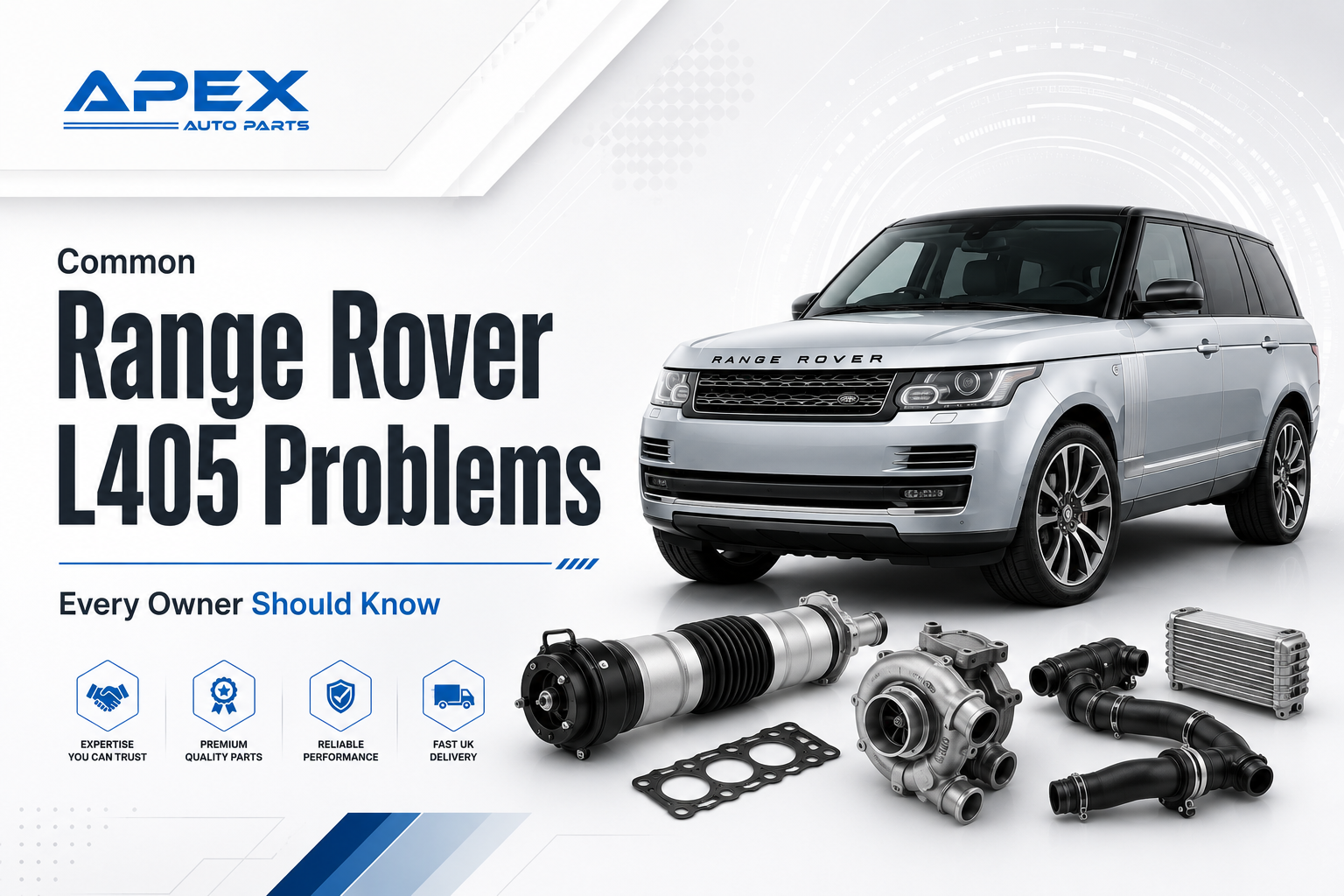
The Range Rover L405 is one of those cars people buy with both the heart and the head. It looks premium, drives smoothly, feels strong on the road, and gives that proper Range Rover comfort. But like most luxury SUVs, it can also become expensive if problems are ignored.
This blog is for owners, buyers, garages, and anyone thinking about buying one. The aim is simple: explain the real issues in plain words. No panic, no scare talk, and no fake promises. Just the problems a mechanic would want you to understand before spending money.
The Range Rover L405 was built from 2012 to 2021, with model years running from 2013 to 2021. It came with several engine choices, including a 3.0 diesel V6, a 4.4 diesel V8, a 5.0 petrol V8, a plug-in hybrid, and later inline-six options. That means the problems can change depending on engine, year, mileage, and service history.
This guide covers Range Rover L405 common problems, engine issues, buying checks, repair warning signs, and when a Range Rover L405 engine rebuild may make sense. It also explains where Apex Auto Parts fits in for UK drivers who need engine parts and repair support.
Why Does the Range Rover L405 Still Attract Buyers?
The Range Rover L405 replaced the L322 and brought a more modern feel. It was lighter, cleaner in design, and more refined than the earlier model. Many buyers still like it because it feels like a proper luxury SUV, not just a large car with a badge.
The cabin is quiet, the ride is soft, and the driving position feels special. On a long motorway drive, a good L405 can still feel calm and expensive. This is why people keep searching for used examples, even though repair costs can be high.
The main thing to understand is that this is not a cheap vehicle to run. Even if the purchase price has dropped, the repair cost has not dropped in the same way. It still needs proper servicing, good parts, and careful diagnosis.
A cheap Range Rover L405 can look tempting, but if it has a poor history, hidden faults, or engine wear, it can become costly very quickly. The best one to buy is usually not the cheapest one. It is the one with clear service records, clean running, and proof that repairs were done properly.
What Range Rover L405 Reliability Really Means?
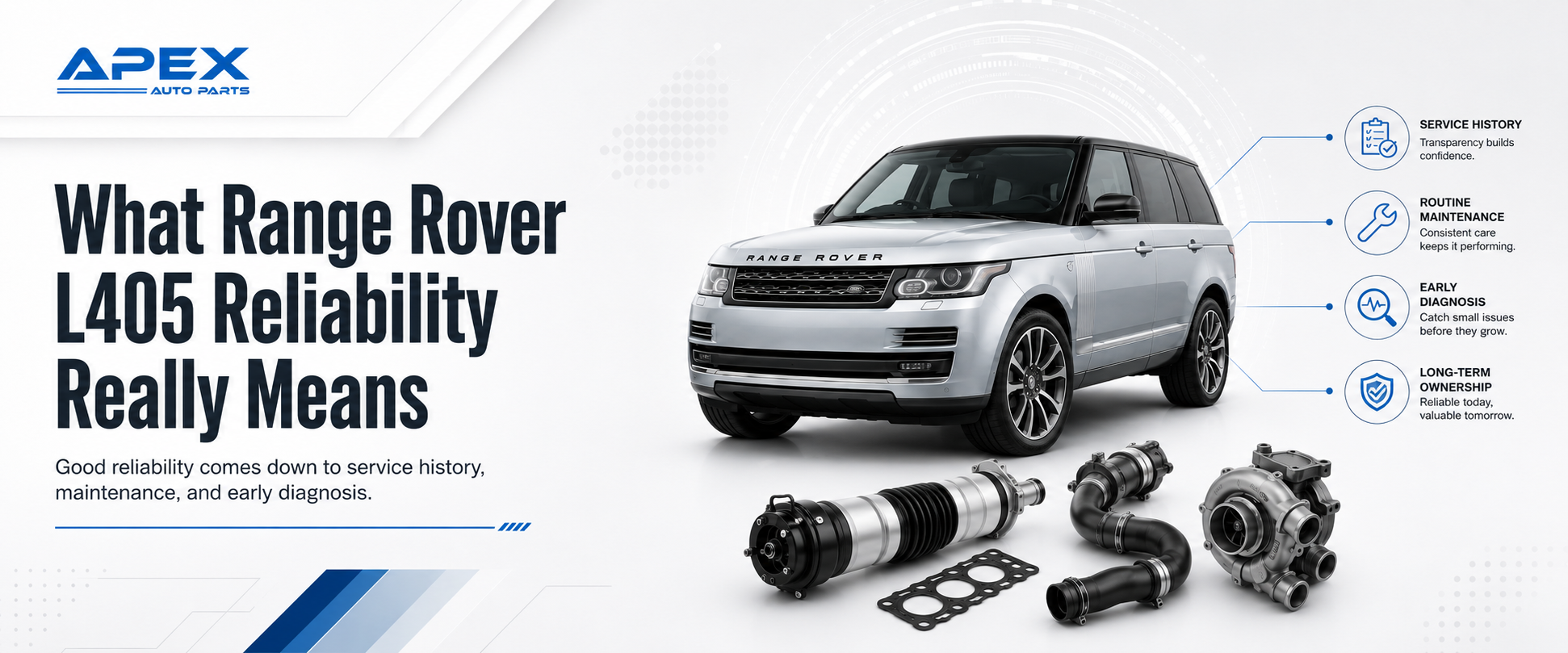
People often ask about Range Rover L405 reliability because they want to know if the car is worth buying. The honest answer is that it can be reliable, but only if it has been cared for properly.
This is not a small, simple car. It has air suspension, complex electronics, powerful engines, four-wheel drive parts, luxury features, sensors, control modules, and many moving parts. That means more things can go wrong compared with a basic family car.
A well-serviced Range Rover L405 can be a great car. A neglected one can bring warning lights, oil leaks, suspension faults, gearbox issues, electrical problems, and engine repairs. The vehicle itself is not the full problem. The real problem is poor maintenance.
Many owners keep driving even when small faults appear. That is where the costs grow. A small coolant leak can turn into overheating. A small oil leak can lead to low oil pressure. A blocked DPF can lead to poor running and turbo stress. A weak battery can create strange electrical faults.
So when people talk about Range Rover L405 reliability, they should not only ask, “Is it reliable?” A better question is, “Has this car been maintained well enough to be trusted?”
Range Rover L405 Engine Choices and What They Mean
The Range Rover L405 engine range is broad, so it is important to know which engine you are dealing with. The 3.0 diesel V6 is common in the UK and is often chosen for fuel economy and long-distance use. The 4.4 diesel V8 is liked for its strong torque and smoother power. The 5.0 petrol V8 is powerful and enjoyable, but fuel and repair costs can be high.
The plug-in hybrid versions can suit some drivers, but they add battery and hybrid system checks into the buying process. Later mild hybrid and inline-six models also bring newer technology, which can be good when it works well but costly if faults appear.
The Range Rover L405 engine should always be checked from cold. A warm engine can hide starting issues, smoke, noise, and rough idle. If you are buying one, try to see the car before it has been started that day.
A healthy engine should start cleanly, idle evenly, build power smoothly, and hold temperature without coolant loss. It should not knock, smoke heavily, smell of diesel or burnt oil, or leave fresh oil marks under the car.
Air Suspension Problems
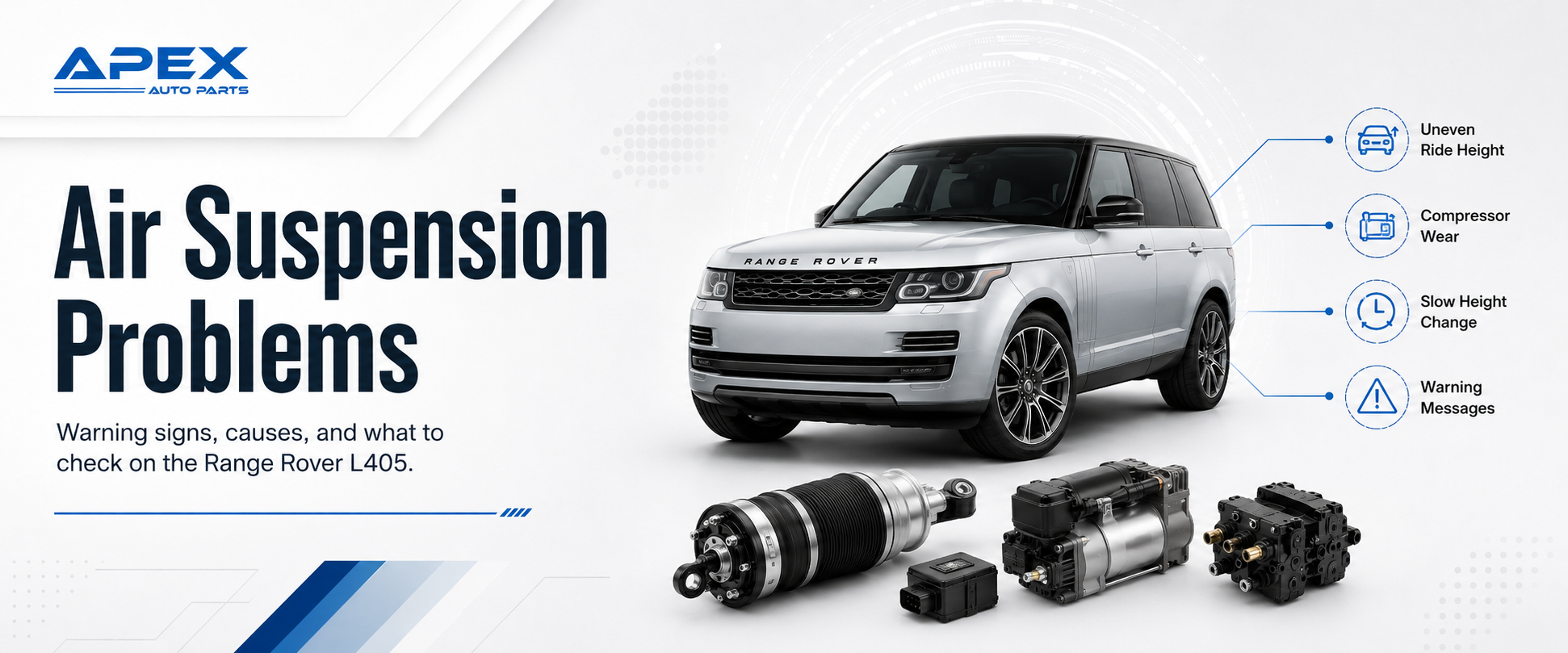
Air suspension is one of the most common areas to check on the Range Rover L405. It gives the car that soft, floating ride, but it is also a system with parts that wear out.
Common signs include one corner sitting low, the car dropping overnight, slow height adjustment, warning messages, compressor noise, or a ride that feels uneven. Sometimes the issue is an air spring. Sometimes it is the compressor, valve block, height sensor, or a leak in the system.
A weak air suspension system should not be ignored. If the compressor keeps working harder to lift the car, it can burn out. That means a small leak can turn into a larger repair bill.
Before buying, park the car on level ground and look at the height from all sides. Leave it for a while if possible. If one side drops, something needs checking. During a test drive, raise and lower the suspension and watch for slow movement or warning lights.
Buying guides and workshop fault lists often mention air suspension as one of the known L405 areas to inspect, along with electrical and body issues on some earlier cars.
Diesel Engine Problems
Diesel versions are popular in the UK, especially the 3.0 diesel and 4.4 diesel. They suit long journeys, motorway use, and towing. But they need good servicing and the correct oil.
Some diesel engine problems start with poor oil changes. Dirty oil can affect turbos, timing parts, bearings, and general engine life. If the service history is weak, be careful.
The 3.0 diesel needs close attention to oil level, oil pressure, coolant condition, timing noise, smoke, and bottom-end noise. Some owners report serious engine failures on neglected or unlucky engines. This is why a proper inspection matters before buying.
The 4.4 diesel V8 is strong and smooth, but it is still expensive to repair if problems appear. It has more parts, more labor time, and higher repair costs than a smaller engine.
Signs of diesel trouble can include:
- Rough cold start
- Blue, black, or white smoke
- Diesel smell
- Low power
- Poor fuel economy
- Knocking noise
- Oil warning light
- Coolant loss
- Turbo whistle
- Warning messages
If you see any of these signs, do not guess. Get the car checked properly before spending money on parts.
Turbo Problems
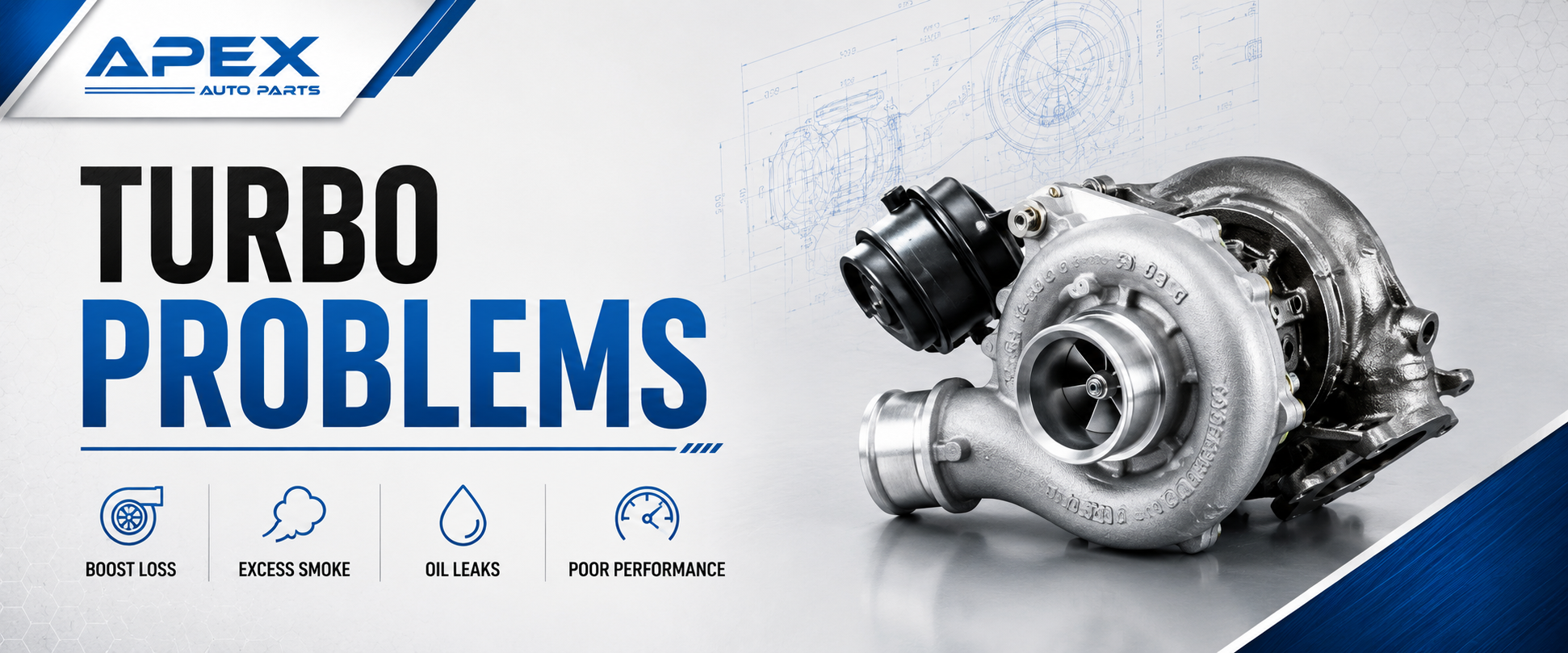
Turbo problems are common on many modern diesel engines, and the Range Rover L405 is no different. The turbo works under heat and pressure, so clean oil is very important.
A failing turbo may cause whining, smoke, poor boost, oil in the intake pipes, or loss of power. Sometimes the turbo itself is not the main fault. A split boost hose, blocked DPF, weak actuator, poor vacuum control, or EGR issue can create similar symptoms.
This is why diagnosis matters. Replacing a turbo without checking the reason for failure can lead to repeat damage.
A good mechanic will check boost pressure, oil feed, oil return, intake pipes, intercooler, DPF condition, EGR system, and engine breathing. If one of these is missed, the new part may not last.
For owners, the best habit is simple. Change oil on time, let the engine warm up before hard driving, and do not ignore smoke or boost faults.
Oil Leaks and Oil Cooler Issues
Oil leaks are among the most common Range Rover L405 problems. Some leaks are small, but they should still be taken seriously.
Oil can leak from gaskets, seals, oil cooler areas, turbo pipes, rocker covers, sump areas, and breather systems. In a large engine bay, leaks can be hard to trace because oil spreads across other parts.
A small oil leak may not stop the car today, but it can lead to a low oil level, burning smells, damaged rubber parts, and failed engine components if ignored.
Oil cooler leaks are also worth checking. If oil and coolant start mixing, the repair becomes more serious. Always check the coolant tank for oily marks and the oil cap for creamy residue. Not every mark means engine failure, but it should be checked.
When viewing a used Range Rover L405, look under the engine tray if possible. Many leaks are hidden by undertrays, so a clean engine bay does not always mean a leak-free engine.
Cooling System Problems
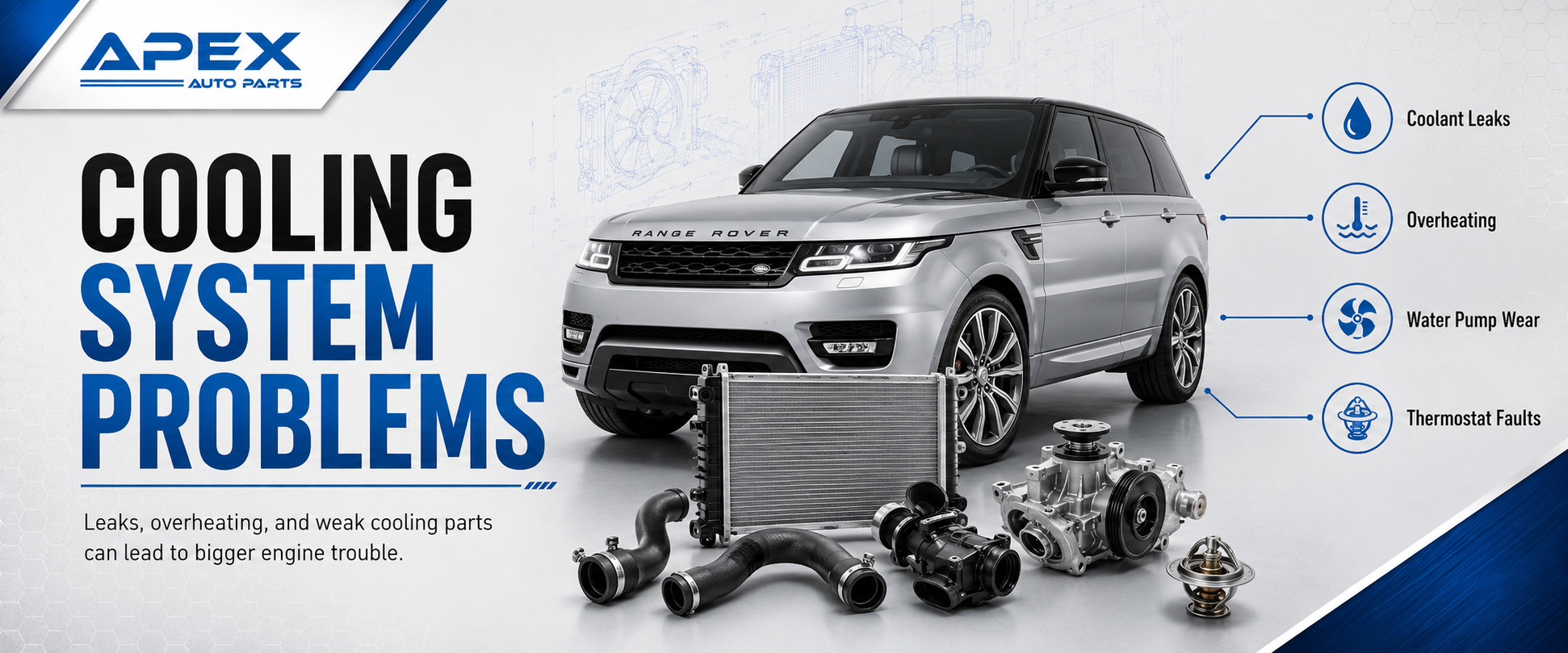
Cooling system care is very important on the Range Rover L405 engine. Overheating can damage any engine, even a strong one.
Common cooling issues include coolant leaks, weak water pumps, blocked radiators, old hoses, leaking thermostat housings, faulty temperature sensors, and poor coolant flow. V8 petrol models can also suffer from coolant-related faults that need early attention. Workshop guides often mention V8 coolant leaks as a known area to check.
The warning signs are not always dramatic at first. You may notice the coolant level dropping, the heater not working properly, a sweet smell, steam, or the temperature gauge acting strangely.
Do not keep topping up coolant without finding the leak. Coolant loss is not normal. If it keeps happening, there is a fault.
A proper cooling system check should include pressure testing and checking hoses, the radiator, the water pump, the thermostat, the expansion tank, and signs of coolant staining.
DPF and EGR Problems
Diesel versions of the Range Rover L405 can suffer from DPF and EGR problems, especially if used mainly for short town journeys.
The DPF catches soot from the exhaust. It needs enough heat to clean itself. If the car only does short trips, the system may not complete this process properly. Over time, soot builds up, and the engine may lose power or show warning lights.
The EGR system can also clog with soot and carbon. When this happens, the engine may feel rough, weak, or slow to respond.
Drivers often make the mistake of clearing a warning light without fixing the cause. That only delays the repair. If the DPF is blocked because the thermostat is weak, the car is doing short journeys, or an injector is overfilling, the problem will return.
A diesel Range Rover L405 is best suited to drivers who regularly take longer journeys. If your driving is mainly short trips, you need to be more careful with servicing and warning signs.
Gearbox and Driveline Issues
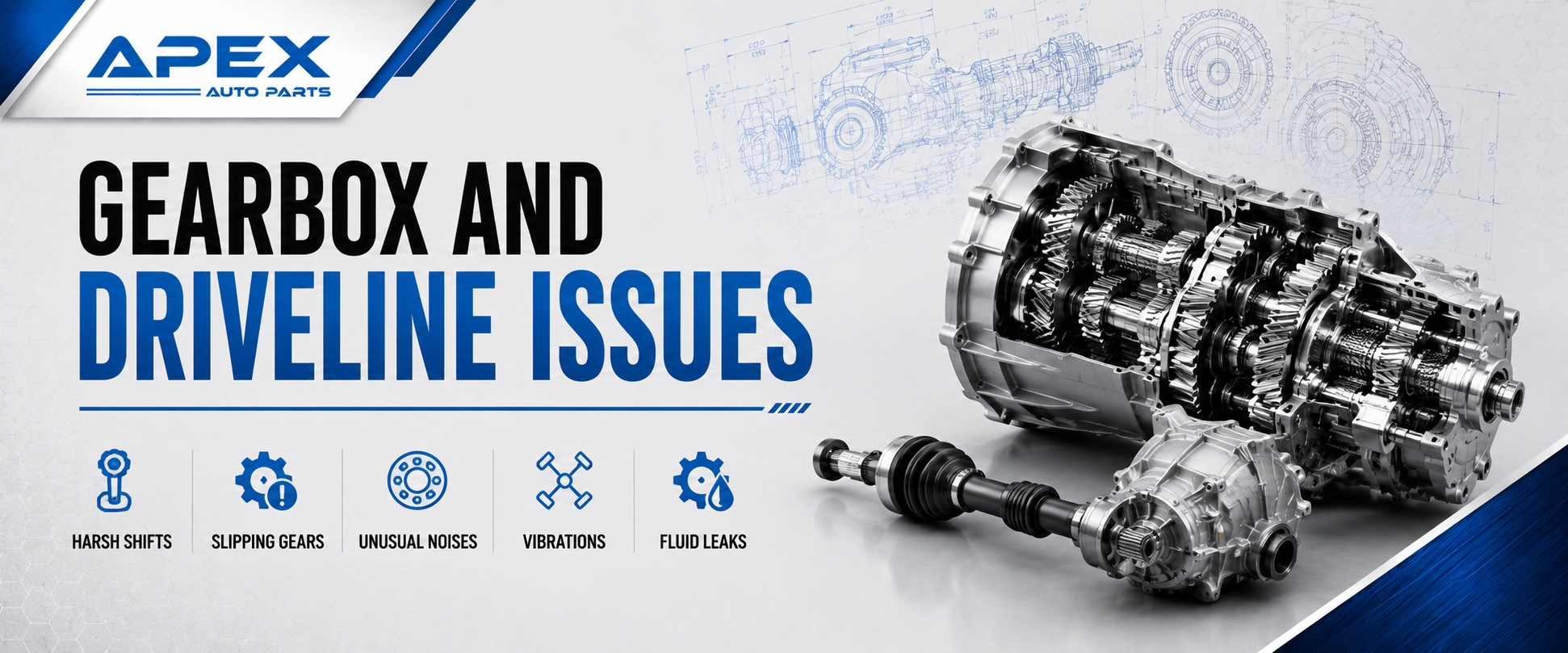
The Range Rover L405 uses an automatic gearbox, and a good one should feel smooth. Gear changes should not be harsh, delayed, or jerky.
Many owners forget that gearbox oil does not last forever. Even when a gearbox is described as sealed for life, real-life driving tells a different story. Heat, mileage, towing, and age all affect the oil.
Signs of gearbox issues include harsh shifts, flaring revs, delay when selecting drive or reverse, clunking, vibration, or warning messages.
The four-wheel drive system also needs checking. Listen for whining, clunks, or vibration from the transfer case, differentials, prop shafts, and drive shafts. These parts can be costly, so they should not be ignored during a test drive.
A strong engine does not make a bad gearbox cheap to fix. Always judge the whole car, not only the engine.
Electrical Problems and Battery Issues
Electrical problems can be frustrating on the Range Rover L405. A weak battery alone can cause warning lights, strange messages, sensor faults, and starting problems.
These cars depend on clean voltage. If the battery is old, the alternator is weak, or there is a drain, the car may show faults that look worse than they are. That does not mean all electrical issues are simple, but the battery should always be checked first.
Common electrical concerns can include infotainment faults, parking sensors, camera issues, keyless entry faults, seat controls, suspension messages, and module communication problems.
When buying, test everything. Do not assume buttons will be cheap to fix. Check windows, locks, mirrors, seats, air conditioning, the screen, the reversing camera, parking sensors, boot operation, lights, and all warning messages.
If there are many warning lights, walk away unless you have a clear report and repair cost.
What to Check Before Buying a Used Range Rover L405?
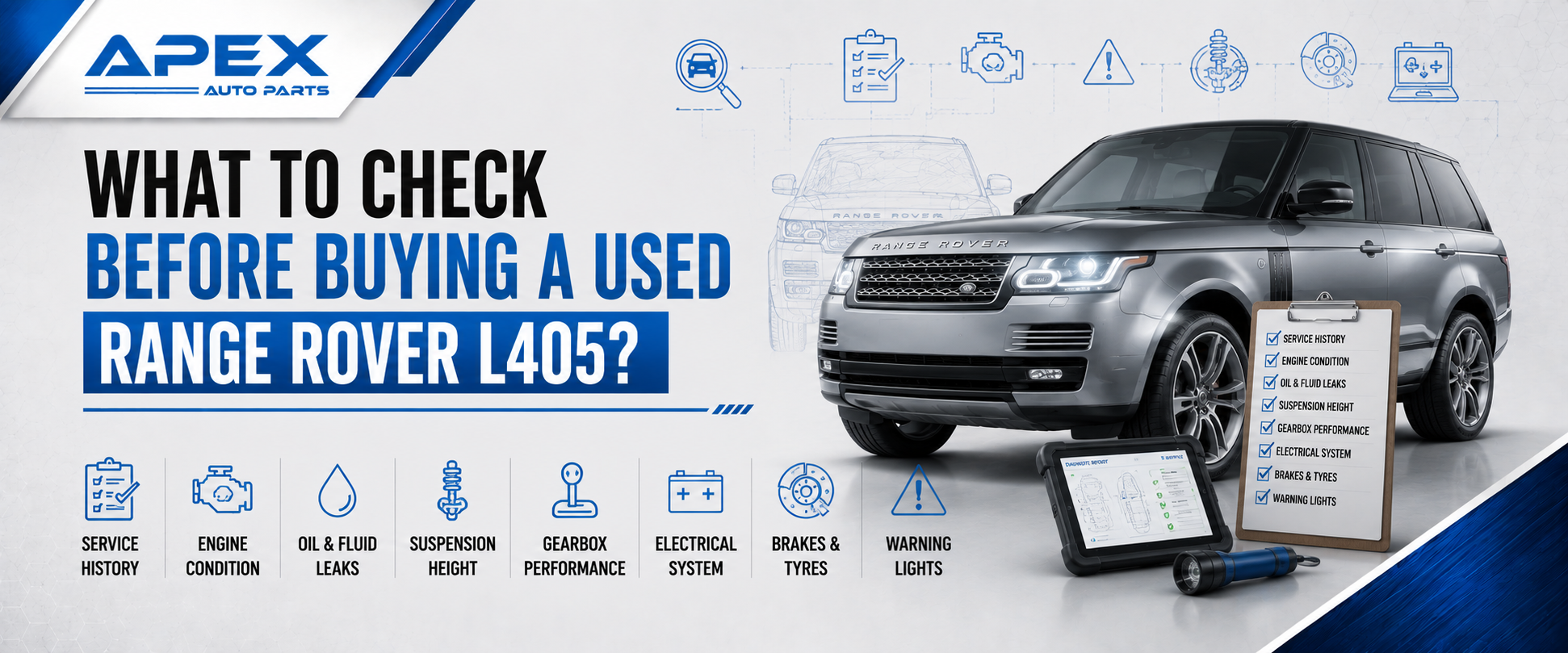
A proper pre-purchase check can save a lot of money. Do not rush because the car looks clean or has nice wheels. The expensive parts are under the body and inside the engine bay.
Key checks should include:
- Full service history
- Cold start behavior
- Smoke from exhaust
- Engine noise
- Oil leaks
- Coolant loss
- Gearbox smoothness
- Suspension height
- Warning lights
- Tire wear
- Brake condition
- MOT history
- DPF and EGR signs
- Battery health
- Repair invoices
A clean service book is good, but invoices are better. Invoices show what was actually replaced and when. Look for oil service records, timing work, turbo repairs, cooling system work, suspension repairs, gearbox servicing, and engine-related parts.
If the seller says, “They all do that,” be careful. Some noises may be normal, but smoke, coolant loss, heavy oil leaks, and warning lights are not things to ignore.
When a Range Rover L405 engine rebuild makes sense.
A Range Rover L405 engine rebuild may make sense when the engine has serious internal wear, but the rest of the vehicle is still worth saving. This can happen if the body, gearbox, interior, suspension, and electronics are in good condition.
An engine rebuild is not just replacing one broken part. It means opening the engine, checking internal damage, and replacing worn parts properly. Depending on the fault, this may include bearings, pistons, rings, timing parts, oil pumps, gaskets, seals, and other related parts.
A Range Rover L405 engine rebuild should only be done after proper diagnosis. You need to know why the engine failed. If the cause is not fixed, the rebuilt engine may fail again.
For example, if oil starvation caused damage, the oil pump, oil ways, pickup pipe, cooler, and related parts need checking. If overheating caused damage, the cooling system must be repaired before the engine goes back into use.
This is where quality parts matter. A rebuild is too much labor to waste on poor parts.
Where Apex Auto Parts Fits In?

Apex Auto Parts supplies car engine parts in the UK for drivers, garages, mechanics, and repair work. The website includes engine parts, rebuild kits, timing chain kits, oil pumps, crankshafts, bearings, and other repair-related items. It also helps customers search by vehicle details, engine code, VIN, or registration when they are not sure about fitment.
For a vehicle like the Range Rover L405, this matters because the wrong part can waste time and money. Engine repairs need the correct part, not just a part that looks similar.
Apex Auto Parts can fit naturally into the repair journey when an owner or garage needs parts for leaks, rebuild work, timing repairs, oil system repairs, cooling issues, or general engine maintenance.
The goal is not to sell parts before diagnosis. The goal is to help the repair happen properly once the fault is known. That is especially important with a luxury SUV where labor costs can be high.
If an engine part fails, replacing it with a poor-quality part can lead to repeat work. For owners, that means more labor, more downtime, and more stress. For garages, it can mean unhappy customers. Good parts and proper diagnosis go together.
Why People Search: Which BMW Has the Range Rover L405?
Some buyers type 'Which BMW has a Range Rover L405?' because they are mixing up two different Range Rover generations.
The clear answer is this: no BMW has a Range Rover L405. The L405 is a Range Rover model, not a BMW model. The confusion usually comes from older Range Rover L322 models, because early L322 versions used BMW engines, including the BMW M57 diesel and BMW M62 petrol V8. The L322 was the model before the L405.
So if someone asks which BMW has the Range Rover L405, they probably mean, “Which Range Rover used BMW engines?” That answer points more towards the older L322, not the L405.
This matters when buying parts. Do not order parts based only on internet comments. Always check the exact model, year, engine code, and part number.
How to Improve Range Rover L405 Reliability?
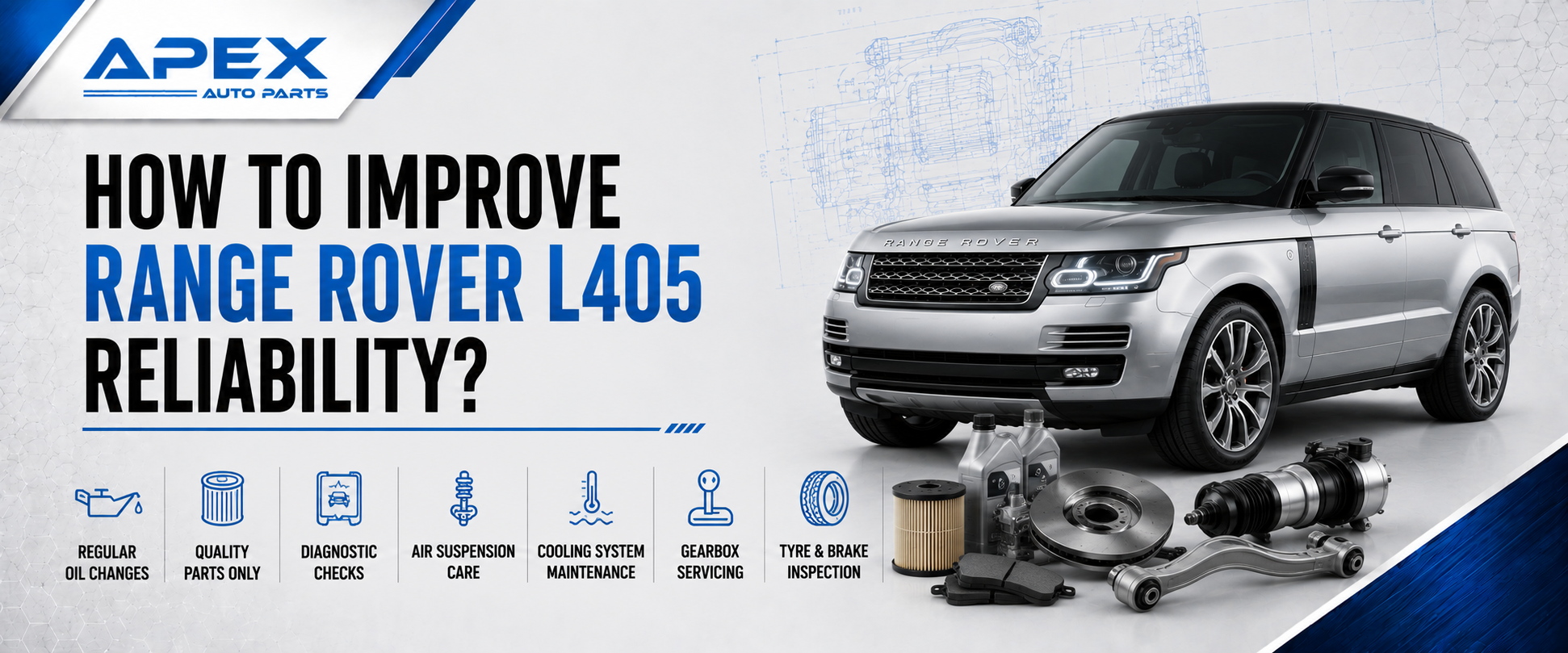
The best way to improve Range Rover L405 reliability is not magic. It is regular care, early checks, and no delay when warning signs appear.
Oil changes are the first step. Use the correct oil and change it on time. For diesel engines, oil condition is very important because it protects turbos, bearings, timing parts, and the bottom end.
The cooling system should also be watched closely. Never ignore coolant loss. If the car needs coolant often, find the leak. Overheating can turn a normal repair into engine damage.
The battery should be kept healthy. A weak battery can confuse the car and create warning messages. If the car is used less often, battery support may help.
Do not ignore small leaks. Oil, coolant, and boost leaks usually get worse. Fixing them early is cheaper than waiting until another part fails.
A simple owner routine helps:
- Check oil level often
- Watch coolant level
- Listen for new noises
- Scan warning codes early
- Keep service records
- Use correct parts
- Do not delay smoke or leak checks
A Range Rover L405 rewards good care. It punishes neglect.
Final Verdict on Range Rover L405 common problems
The Range Rover L405 is a luxury SUV with strong road presence, comfort, and power. It can still be a great car for the right owner. But it is not a car to buy blind.
The main Range Rover L405 common problems include air suspension faults, diesel engine issues, oil leaks, cooling system problems, DPF and EGR faults, turbo wear, gearbox concerns, electrical issues, and high repair costs when faults are ignored.
The Range Rover L405 engine can last well when it is serviced properly, but it needs the right oil, a clean cooling system, good parts, and early diagnosis. If major internal damage happens, a Range Rover L405 engine rebuild can be an option, but only when the rest of the car is worth saving, and the cause of failure is fully understood.
For UK owners, Apex Auto Parts can support engine repair and maintenance by helping supply suitable car engine parts. That becomes important when you are trying to keep a premium vehicle reliable without guessing on parts.
The best advice is simple. Buy carefully, check history, diagnose faults properly, and never ignore early warning signs. A good Range Rover L405 can still feel brilliant. A bad one can become a very expensive lesson.
FAQs
1. What are the most common Range Rover L405 problems?
The most common Range Rover L405 problems include air suspension faults, oil leaks, coolant loss, DPF issues, EGR buildup, turbo wear, gearbox problems, electrical faults, and battery-related warning lights. Many of these problems become worse when servicing is delayed or cheap parts are used.
2. Is Range Rover L405 reliability good or bad?
Range Rover L405 reliability depends mainly on care, service history, and mileage. A well-serviced car can be reliable and enjoyable. A neglected one can be very costly. Always check oil service records, cooling system health, suspension condition, gearbox behavior, and warning lights before buying.
3. Which Range Rover L405 engine is best?
The best Range Rover L405 engine depends on how you drive. The 4.4 diesel V8 is liked for strong torque, while the 3.0 diesel is common and more fuel-friendly. Petrol V8 models feel powerful but cost more to run. Condition matters more than engine choice.
4. Is a Range Rover L405 engine rebuild worth it?
A Range Rover L405 engine rebuild can be worth it if the rest of the car is clean, the gearbox is good, and the body and electronics are in strong condition. It only makes sense after proper diagnosis. The cause of engine failure must be fixed first.
5. Why does my Range Rover L405 lose coolant?
A Range Rover L405 can lose coolant due to leaking hoses, a weak water pump, radiator leaks, thermostat housing issues, expansion tank faults, or deeper engine problems. Do not keep topping it up without checking. Coolant loss can lead to overheating and serious engine damage.
6. Are air suspension faults common on the Range Rover L405?
Yes, air suspension faults are common on the Range Rover L405 as the car gets older. Warning signs include one side dropping, slow height changes, compressor noise, and suspension warning lights. The fault may be an air spring, compressor, valve block, sensor, or air leak.
7. What does the BMW Range Rover L405 mean?
The question of which BMW has the Range Rover L405 is often confused. No BMW has a Range Rover L405. The L405 is a Range Rover model. The confusion comes from older Range Rover L322 models, which used BMW engines in some early versions.
8. How can I improve Range Rover L405 reliability?
You can improve Range Rover L405 reliability with regular oil changes, correct oil, cooling system checks, battery care, early fault diagnosis, and quality replacement parts. Do not ignore smoke, leaks, warning lights, rough running, or suspension issues. Small problems are cheaper to fix early.
9. Should I buy a high-mileage Range Rover L405?
A high-mileage Range Rover L405 can be a good buy if it has a strong service history and clear repair records. Mileage alone is not the main issue. Poor maintenance is the real risk. Check engine noise, gearbox smoothness, suspension height, coolant loss, oil leaks, and warning lights.
10. Where can I get parts for Range Rover L405 engine repairs?
For Range Rover L405 engine repairs, use parts that match the exact model, year, engine code, and part number. Apex Auto Parts supplies car engine parts in the UK and can help owners and garages find suitable parts for repair, servicing, and engine-related maintenance.
References: